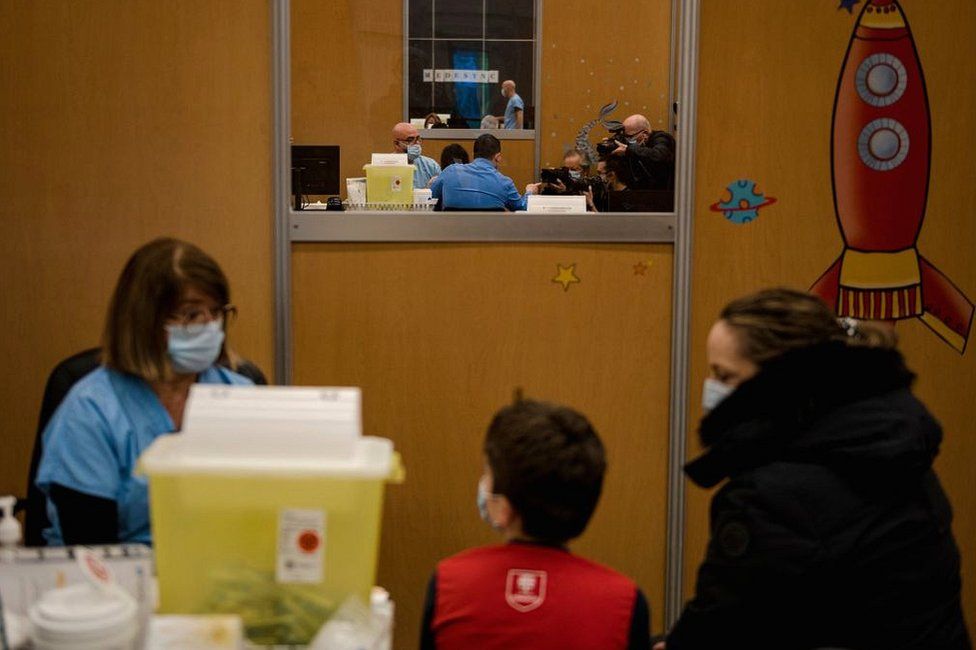
Blood markers of brain cell damage higher over short term in COVID-19 patients than in Alzheimer's patients, study finds

Patients hospitalized for COVID-19 had higher levels over the short term of blood proteins known to rise with neurological damage than non-COVID-19 patients diagnosed with Alzheimer’s disease, a new study finds.
Importantly, the current report, published online January 13 in Alzheimer’s & Dementia: The Journal of the Alzheimer’s Association, was conducted over two months early in the pandemic (March-May 2020). Any determination of whether patients with COVID-19 are at increased risk for future Alzheimer’s disease, or instead recover over time, must await the outcomes of long-term studies.
Led by researchers at NYU Grossman School of Medicine, the new study found higher levels of seven markers of brain damage (neurodegeneration) in COVID-19 patients with neurological symptoms than those without them, and much higher levels in patients that died in the hospital than in those discharged and sent home.
A second analysis found that a subset of the damage markers in patients hospitalized with COVID-19, over the short term were significantly higher than in patients diagnosed with Alzheimer’s disease, and in one case more than twice as high.
“Our findings suggest that patients hospitalized for COVID-19, and especially in those experiencing neurological symptoms during their acute infection, may have levels of brain injury markers that are as high as, or higher than, those seen in patients with Alzheimer’s disease,” says lead author Jennifer A. Frontera, MD, professor in the Department of Neurology at NYU Langone Health.
Study Structure/Details
The current study identified 251 patients that, although 71 years on age on average, had no record or symptoms of cognitive decline or dementia before being hospitalized for COVID-19. These patients were then divided into groups with and without neurological symptoms during their acute COVID-19 infection, when patients either recovered and were discharged, or died.


Read more →

Swapping just one food item per day can make diets substantially more planet-friendly

If your New Year’s resolution is to eat better for the planet, a new Tulane University study finds it may be easier than you think.
Americans who eat beef could slash their diet’s carbon footprint as much as 48 percent by swapping just one serving per day for a more planet-friendly alternative, according to a new study published in The American Journal of Clinical Nutrition.
Using real-world data from a survey of what more than 16,000 Americans eat in an average day, researchers from Tulane University School of Public Health and Tropical Medicine and the University of Michigan calculated how much of a difference people could make if they swapped one high-impact food item for similar, more sustainable options. They examined how the change would impact two metrics — their daily diets’ greenhouse gas emissions and water scarcity footprint, a measure of the irrigated water used to produce the foods they eat that takes into account regional variations in water scarcity.
The highest impact item in Americans’ diet is beef and around 20 percent of survey respondents ate at least one serving of it in a day. If they collectively swapped one serving of beef — for example, choosing ground turkey instead of ground beef — their diets’ greenhouse gas emissions fell by an average of 48 percent and water-use impact declined by 30 percent.
“People can make a significant difference in their carbon footprint with very simple changes — and the easiest one would be to substitute poultry for beef,” said lead author Diego Rose, a professor of nutrition and food security at Tulane University’s School of Public Health and Tropical Medicine.
The study also examined how the change would affect the overall environmental impact of all food consumption in the U.S. in a day — including the 80 percent of diets without any changes. If only the 20 percent of Americans who ate beef in a day switched to something else for one meal, that would reduce the overall carbon footprint of all U.S. diets by 9.6 percent and reduce water-use impacts by 5.9 percent.
Agricultural production accounts for about a quarter of global greenhouse gas emissions and about 70 percent of global freshwater withdrawals. For the study, researchers built an extensive database of the greenhouse gas emissions and water use related to the production of foods and linked it to a large federal survey that asked people what they ate over a 24-hour period.
Although swapping beef had the greatest impact, they also measured the impact of changing other items. Replacing a serving of shrimp with cod reduced greenhouse gas emissions by 34 percent; replacing dairy milk with soymilk resulted in an 8 percent reduction.
The greatest reduction in the water scarcity footprint came from replacing asparagus with peas, resulting in a 48 percent decrease. Substituting peanuts in place of almonds decreased the water scarcity footprint by 30 percent.
Although individual substitutions were the focus of the study, Rose said that addressing climate change must involve more than singular actions.
“The changes needed to address our climate problems are major. They are needed across all sectors and along all levels of human organization from international agencies to federal and state governments to communities and households,” Rose said. “Many individuals feel strongly about this and wish to change our climate problem through direct actions that they can control. This, in turn, can change social norms about both the seriousness of the problem and the potential solutions that can address it. Our study provides evidence that even simple steps can assist in these efforts.”
Story Source:
Materials provided by Tulane University. Note: Content may be edited for style and length.

Read more →

Covid-19: France to relax travel rules from the UK

SharecloseShare pageCopy linkAbout sharingImage source, ReutersFrance will relax its restrictions for those travelling from the UK from Friday, the government has announced. Vaccinated travellers will no longer need a compelling reason to enter France, and will not have to self-isolate when they arrive.But a negative Covid test, taken 24 hours before leaving the UK, will still be required for all those arriving. Travel companies welcomed the news – with Jet2 reporting a “sharp” spike in flight bookings to ski destinations.French holiday bookings surge after rule changeFrance brought in the restrictions on 18 December in an attempt to slow the spread of the Omicron variant.People who are not vaccinated will still need a compelling reason to enter France, and must still isolate for 10 days upon arrival.The country is battling a surge in Covid-19 infections. On Thursday, there were a record 368, 817 new cases and 341 deaths, according to Johns Hopkins University.How can I tell I have Omicron? What tests do I need to go on holiday?Half of Europe will catch Omicron – WHO Both holidaymakers and the travel industry have welcomed the change.Melissa Hamblett from Gloucester has had to reschedule a trip to Disneyland for their son Max’s birthday five times since they originally booked in 2020.”Our son doesn’t know the update yet, he’s at school right now,” she said. “He’s going to be so happy.”She said it has been “really disappointing” having to keep rescheduling. “I was convinced [it] would be happening again. I got bored of getting my hopes up.”Image source, Melissa HamblettEurostar welcomed the change and said it would increase the number of its services in the coming weeks, while Brittany Ferries called it a “great relief”.”I can only hope that we have seen the last border closure of the Covid crisis,” said Christophe Mathieu, boss of the ferry company. “Thousands of Brittany Ferries passengers have been disrupted and millions of pounds in income has been lost as a consequence of draconian measures like border closures.”Around 17 million British nationals visit France every year – and ABTA, which represents travel firms, said it was one of the most popular destinations for UK holidaymakers.”Thousands of people head there for ski breaks at this time of year, so this will be a huge relief for customers with holidays booked there for the next few weeks, who have been waiting anxiously for news,” said ABTA. “We are still waiting for more details from the French government on entry requirements such as the rules that will apply for children. Travellers should continue to monitor the Foreign Office travel advice.”Jet2 announced it was resuming flights to French ski destinations, with its boss adding: “This is the positive news that skiers and snowboarders have been looking forward to, and the spike in bookings for ski flights has been both sharp and immediate.”France tightened its restrictions earlier this month, making remote working compulsory for those who can, and limiting public gatherings for indoor events. Eating and drinking on long distance transport is banned, cafés and bars can provide table service only and nightclubs are closed.On Thursday, the French Senate approved a controversial pass, which requires people to be fully vaccinated to visit a range of spaces, including bars and restaurants. It also removes the option of showing a negative test to get in.Thousands protested against the pass on Saturday, with many angry at President Emmanuel Macron who has said he wants to “piss off” unvaccinated citizens.In total, 12.6 million people have been infected in France, and more than 127,000 have died.You may be interested in watching:This video can not be playedTo play this video you need to enable JavaScript in your browser.

Read more →

Jonathan Van-Tam: JVT's most memorable Covid advice and analogies

From pants and football to yoghurts and trains, Professor Sir Jonathan Van-Tam has used colourful language to advise people throughout the pandemic. But now, England’s deputy chief medical officer has now announced he’ll be leaving the role at the end of March.Watch our round-up of some of his best bits of pandemic advice and analogies.More on this story: Van-Tam to step down as government medical adviserVideo by health reporter Laura Foster.

Read more →

6m people on hospital waiting lists in England

SharecloseShare pageCopy linkAbout sharingImage source, Getty ImagesThe number of people on a hospital waiting list in England has hit 6 million for the first time, NHS data shows.Around one in 20 of those have been waiting more than a year.This figure is for the end of November and covers operations such as knee and hip surgery. That is before Omicron hit so it is likely these figures will have worsened.Meanwhile, waits in A&E reached record worst levels in December.Just over 73% of those who arrived at an emergency department were seen in four hours.

A modern browser with JavaScript and a stable internet connection are required to view this interactive.

How is the NHS in your area coping this winter?
Enter a postcode to find out. Eg ‘M50 2EQ’

Data not available

Data not available

Data not available

This trust does not currently supply A&E waiting time figures.

Data not available

Data not available

Data not available

Data not available

Data not available

Data not available

About the data

About the data

Ambulance queues
When patients arrive at hospital by ambulance they should be handed over within 15 minutes. This data shows the proportion of ambulance patients who waited 30 minutes or more, in the week shown. It comes from daily situation reports which are published weekly during the winter in England. As this is fast-turnaround data, the NHS says only minimal validation can be carried out but it is considered fit for purpose.
Scotland, Wales and Northern Ireland do not publish ambulance queue data.
A&E waits
Patients at A&E should be seen within four hours of arrival. This data shows the proportion of patients attending A&E who waited longer than four hours to be treated, discharged or admitted.
This data is published monthly for England and Wales and weekly for Scotland. Northern Ireland publishes its data quarterly and Winter 2021 is not yet available.
Bed waits and occupancy
If a patient at A&E needs to be admitted, the wait from decision to admit to being given a bed on a ward is recorded in England. The bed waits figure is the proportion of patients admitted via A&E who waited longer than four hours for a ward bed.
In Wales, bed wait data is not published, so the figure shown is the occupancy level in general and acute beds. Scotland and Northern Ireland do not publish bed wait or bed occupancy data.
NHS trusts and boards
Data for England is show by NHS trust, where the trust includes at least one hospital with a Type 1 A&E department. Type 1 means a consultant-led 24 hour A&E service with full resuscitation facilities.
When you enter a postcode for a location in England you will be shown a list of NHS trusts in your area. They will not necessarily be in order of your closest hospital as some trusts have more than one hospital. Data for Wales and Scotland are shown by NHS board.
Comparative data from two years ago is shown where available. However, where trusts have merged there is no like-for-like comparison to show. Bed occupancy data in Wales only goes back to April 2020.

If you can’t see the lookup, click hereRecord delays were also seen for those who needed a bed on a ward.More than 120,000 people who were admitted spent more than four hours waiting for a bed – nearly a third of the total. Nearly 13,000 waited over 12 hours – another record high since records began in 2010.NHS medical director Professor Stephen Powis said Omicron was putting huge pressures on hospitals not just because fo the numbers of patients being admitted – around 2,000 a day on average – but also because of staff absences.But he added: “Despite this, once again, NHS staff pulled out all the stops to keep services going for patients.”

Read more →

Canada: Unvaccinated father loses right to see his child

SharecloseShare pageCopy linkAbout sharingImage source, Getty ImagesA Canadian father who has not been vaccinated against Covid has temporarily lost the right to see his 12-year-old child.A judge ruled his visits would not be in the child’s “best interest”.It followed a request by the father to extend his visiting time during the holidays.The judgement is the first depriving a parent of access rights on immunisation grounds, a family law expert told Le Devoir newspaper.The judge’s decision, made at the end of last month in Quebec province, suspends the father’s visitation rights until February, unless he decides to get vaccinated.Canada party plane ‘idiots’ fly home to face musicQuebec requires jab for cannabis and liquor salesThe mother, who opposed the father’s initial request to extend his visitation time, told the court she had recently discovered he was unvaccinated, using his social media posts to show he was opposed to vaccines.The mother lives with her partner and two other children who are too young to be vaccinated.The judge said it was not “in the child’s best interest to have contact with their father” due to the recent increase in Covid cases in French-speaking Quebec.Quebec, which has seen the highest number of Covid-related deaths in Canada, announced earlier this week it would impose a tax on residents who are not vaccinated against Covid-19.Although nearly 90% of Quebec residents are vaccinated, they make up nearly a third of all hospital cases.

Read more →

Amtrak Pays $2 Million to Passengers With Disabilities Who Faced Obstacles at Stations

Under a settlement agreement, the railroad will also overhaul 135 train stations to make them accessible to all.Amtrak has paid more than $2 million to over 1,500 people with disabilities whom it discriminated against at nearly 80 train stations across the country, from Tuscaloosa to Topeka, the Justice Department announced on Wednesday.The payments are the first of several actions mandated by a settlement reached last year between the railroad and the Justice Department that requires Amtrak to rectify persistent barriers across its rail system to those with disabilities.Obstacles included narrow waiting areas, parking spaces without signs marking them as accessible, steep inclines for passenger platforms and track crossings, and toilets that didn’t accommodate wheelchairs, according to a lawsuit that the Justice Department brought against Amtrak alleging that those “failures” caused continued harm and violated federal civil rights law.Under the terms of the settlement, Amtrak must, over the next nine years, redesign 90 stations across the country to make them accessible to all passengers and start construction at 45 other stations. It must also train its staff to comply with the requirements of the Americans With Disabilities Act, a landmark civil rights law passed in 1990 that prohibits discrimination against people with disabilities.Those efforts will “bring both Amtrak and our nation one step closer to realizing the A.D.A.’s promise of equal opportunity for people with disabilities,” Kristen Clarke, an assistant attorney with the Justice Department’s Civil Rights Division, said in a statement.In a statement on Wednesday, Marc Magliari, an Amtrak spokesman, said the railroad had “made significant progress in bringing numerous facilities into higher levels of accessibility.” He added that it had budgeted more than $143 million for accessibility improvements at 43 stations this year.The company operates about 500 stations in 46 states and the District of Columbia, according to court documents.The Justice Department opened its investigation into Amtrak after it had received complaints about inaccessible train stations and a critical report in 2013 by the National Disability Rights Network, an advocacy group that investigated the railroad in relation to civil rights law and found that the railroad had “lagged far behind” other transportation providers in providing accessible services to customers with disabilities. Passengers, the report concluded, had been forced to “suffer embarrassment, discomfort, and other indignities” throughout the process of train travel, from purchasing a ticket to disembarking.“Inaccessible train stations are more than just an inconvenience,” Curt Decker, the group’s executive director, said in a statement on Wednesday. “Transportation is the linchpin of community integration.”

Read more →

The alcohol-free 'off-licence' helping with Dry January

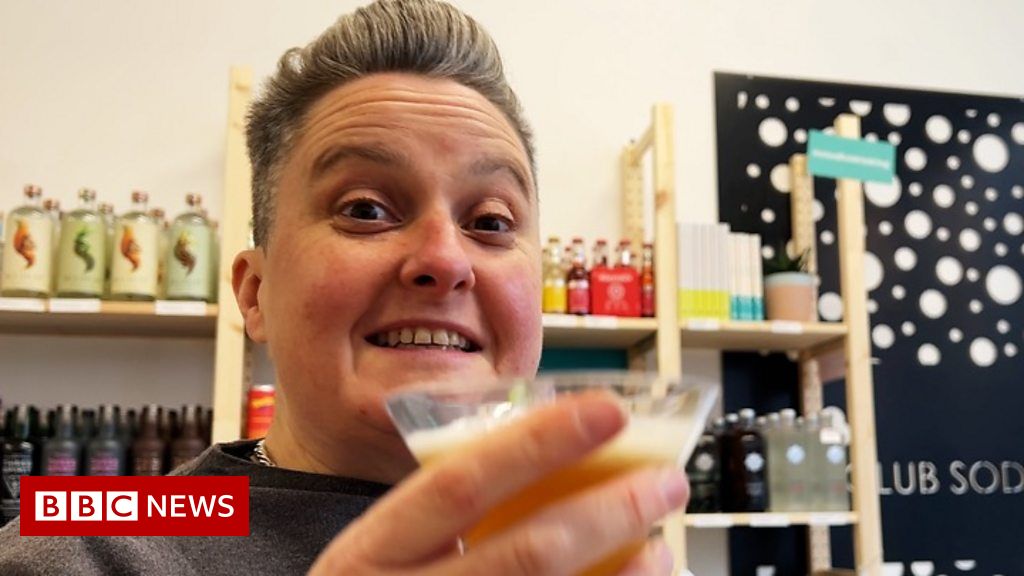
Laura Willoughby MBE gave up drinking 10 years ago because she felt it would take her to a dangerous place and it was affecting her mental health.The 47-year-old from Newham, east London, founded mindful drinking community Club Soda and opened an alcohol-free ‘off-licence’.The volume of no and low alcohol products in 2021 grew by almost 17% across the UK, according to IWSR Drinks Market Analysis, and one in seven adults planned to have a month off alcohol in January.Laura said: “You shouldn’t focus on what it is that you’re losing, but what you want to gain in your life.”Video by Jamie Moreland

Read more →