A case of mistaken identity: Researchers unmask cellular source of Barrett’s esophagus

For most cells within the body, identity is non-negotiable. A bladder cell cannot impersonate a blood cell. A liver cell remains a liver cell.
One of the rare exceptions has been thought to be a condition known as Barrett’s esophagus, in which the lining of the esophagus comes to resemble the lining of the small intestine. Though not harmful in itself, it is the biggest risk factor for the development of esophageal adenocarcinoma, a cancer at the junction of the esophagus and the stomach.
Two recent studies by Dana-Farber Cancer Institute scientists correct a longstanding misconception about the origins of Barrett’s esophagus, and in doing so may point to new avenues of treatment or prevention to lower the risk of esophageal cancer. The first study, published last year in the journal Gastroenterology, demonstrates that Barrett’s esophagus does not, in fact, involve esophageal cells turning into intestinal cells, but stomach cells adopting some of the characteristics of intestinal cells. The second study, published in the current issue of Genes and Development, traces the series of molecular events by which this occurs.
“Barrett’s esophagus is caused by long-term gastrointestinal reflux disease [GERD], in which stomach acid repeatedly flows back into the esophagus,” says Ramesh Shivdasani, MD, PhD, of Dana-Farber and Brigham and Women’s Hospital, the senior author of both papers. “Exposure to the acidic contents of the stomach produces changes in the cells where the stomach and esophagus meet. Very similar changes are seen in a condition called gastric intestinal metaplasia, or GIM, which occurs lower in the stomach.”
The changes are easily seen under a microscope. The inner lining of the digestive tract is made up of cells known as epithelial cells. In the esophagus, they take the form of squamous, or stratified, cells, which are layered horizontally, like bricks in a wall. In the intestine, they’re known as columnar cells, which resemble bricks stacked vertically. Stratified cells have a protective function, preventing harmful substances from coming in contact with underlying cells; columnar cells absorb nutrients from food. In people with Barrett’s esophagus, cells at the intersection of the esophagus and stomach, which should appear stratified, look exactly like columnar, intestinal cells.
In the Gastroenterology paper, Shivdasani and his colleagues investigated these seemingly intestinal cells at the molecular level. They focused on the cells’ chromatin — their DNA and its protein wrapping. Chromatin is organized like a length of yarn wound around multiple spools: where DNA is tightly coiled, genes are silent; where there’s more slack, genes are active. The pattern of coiled and uncoiled DNA within a cell indicates the cell’s core identity, its fundamental role within the body. Each type of cell — be it a brain, bone, or nerve cell — has a distinctive chromatin signature.

Read more →

Unexpected insight of lymphatic vessels in the heart

Scientists at the UNC School of Medicine led a study to advance the understanding of lymphatic vessels, which transport lymph, a clear fluid containing important molecules, immune cells and fluid, away from organs and tissues and back to the bloodstream. Although anatomists first described the lymphatic system centuries ago, scientists only recently developed the tools to tease apart its distinct and specialized roles in different organs.
In this study, published in Circulation Research, UNC School of Medicine researchers identified a protein called VE-cadherin as a key factor in the maintenance of lymphatic vessels serving the heart. Deleting VE-cadherin from the lymphatic vessels in newborn and adult lab mice caused the lymphatic vessels in the heart to regress and eventually disappear. They also found that these vessels were not functioning properly. Interestingly, loss of the cardiac lymphatic vessels was not associated with a worsened impairment of heart function, even after an experimentally induced heart attack.
“Everyone had assumed that cardiac lymphatic vessels would be critical for preventing the abnormal buildup of fluid in the heart after injury, but our work suggests that might not be the case,” said study senior author Kathleen Caron, PhD, professor and chair of the UNC Department of Cell Biology and Physiology. “Our work also underscores the fact that lymphatic vessels tend to have very specialized functions in different parts of the body.”
The scientists used a line of mice engineered so the gene for VE-cadherin can be selectively deleted from lymphatic cells at a chosen time. Prior studies found that loss of VE-cadherin has profound and diverse effects on the lymphatic vessels found in different organs, such as the gut and skin. However, the specific effects of VE-cadherin loss in lymphatic vessels in the heart had not been described.
In experiments led by UNC-Chapel Hill graduate students Natalie Harris and Natalie Nielsen, the researchers found that deleting the VE-cadherin gene in newborn mice, or even in adult mice, caused severe regression of cardiac lymphatic vessels. This was a striking observation on its own and demonstrated the importance of VE-cadherin in the maintenance of cardiac lymphatics. The researchers also identified some of the key molecular signaling pathways through which VE-cadherin exerts this maintenance effect.
But the researchers also used these cardiac-lymphatic-deficient mice as a new kind of model for studying the role of cardiac lymphatics in normal heart function and heart repair after injury. The findings here were quite unexpected.
Compared to the hearts of mice with normal cardiac lymphatics, the hearts with almost-no-lymphatics appeared to beat and pump blood normally. They did not accumulate fluid and swell up, as often happens to tissues in the body when local lymphatics are disrupted. This was surprising, given that the researchers demonstrated that these VE-cadherin deficient cardiac lymphatics were not functioning normally at baseline. Following an experimentally induced heart attack, the lymphatic-deficient hearts did not function any worse than did hearts with normal lymphatics.
Scientists who study the heart had widely assumed that cardiac lymphatics have important supporting roles in ordinary heart function but also in repair after injury. Numerous prior studies demonstrated that experimentally increasing the growth of cardiac lymphatics after a heart attack improves heart function. It was assumed that this effect was due to a prevention of fluid buildup and swelling, also called edema.
“This interesting mouse model tells us that preventing cardiac edema may not be the primary function of cardiac lymphatic vessels after injury,” said Caron, who is also a member of the UNC McAllister Heart Institute.
Based on their new findings, Caron and colleagues plan to explore whether lymphatic vessels perform other important functions in supporting the heart. For example, the lymphatic system, which includes lymph nodes connected together by a superhighway of lymphatic vessels, helps the immune system detect infections and injuries, mobilize proper responses, and traffic immune cells to and from tissues during the injury and repair process. Caron’s lab is now investigating these potential immune-related functions in heart lymphatic vessels.
The study was supported by grants from the National Institutes of Health (HL1290986, DK119145, T32HL069768, F31 HL143836, T32CA071341, T32GM133364-01A1, R35HL155656, RO1 HL142905) and from the American Heart Association.

Read more →

Researchers make important new findings about how to test cancer-fighting drugs

Researchers from Indiana University School of Medicine are discovering new ways to find out how effective a drug might be against cancer. Their findings are detailed in a new paper published by Science Advances.
“This paper completely changes the way we need to collect tumor tissues and test for drug sensitivity,” said Harikrishna Nakshatri, PhD, a senior author of the paper. Nakshatri is the Marian J. Morrison professor of breast cancer research at IU School of Medicine and a researcher with the Vera Bradley Foundation Center for Breast Cancer Research at the Indiana University Melvin and Bren Simon Comprehensive Cancer Center. Hal Broxmeyer, PhD, a distinguished professor at IU School of Medicine who passed away in December 2021, also contributed to this study.
Typically, tumors are collected and exposed to room oxygen, which is about 21 percent. However, different organs in the body have different oxygen levels. For example, the brain has 4.4 percent oxygen, blood 5.3 percent, and liver 5.4 percent. When cancer drugs are used on tumors in the clinical setting, they’re still in a patient’s body and are not exposed to ambient air.
“The oxygen level in our different parts of the body is almost half of what we find in ambient air,” Nakshatri said. “Oxygen can have a different effect on the function of different proteins in the tumors. They may get activated, lose their activity level, get degraded or get stabilized. We wanted to test the tumors in a way that more closely resembles how they are in the body, so we know more about what drugs to use.”
Researchers tested three different drugs on two different types of tumors. They split the tumors in half and tested one part in 5 percent oxygen, since that is an average oxygen level in the body, and exposed the other part to room oxygen before testing. They looked at the difference in the cancer stem cells, signaling pathways and how drugs behaved in the different oxygen levels. They found the sensitivy level of the tumor cells was different in 5 percent oxygen versus room oxygen.
“This is a study that is now raising more questions we need to answer,” Nakshatri said. “Why do the cells react differently? Are we screening the drugs against cancer cells the right way? If we screen for drugs at the physiologic oxygen level, are we going to find different drugs that we may have missed all these years by doing the experiments at 21 percent oxygen?”
In the future, researchers hope to study the different reactions tumors have to other various oxygen levels, like 1 percent or 20 percent. Nakshatri explained this kind of testing could act as another method of screening to determine a drug’s efficacy.
“Suppose we identify a drug with the way we are doing right now in room oxygen, then add another layer of testing in the lab where we keep the cells at the physiologic oxygen level and compare whether the drug is working or not,” Nakshatri said. “If it works, then we can move forward to the clinical setting and it increases the chances of the drug being successful.”
Other study authors from IU School of Medicine include Brijesh Kumar, PhD, Maegan Capitano, PhD, Yunlong Liu, PhD, Constance Temm, PhD, George Sandusky, PhD, and Amber Mosley, PhD. Read the full publication in Science Advances.
Story Source:
Materials provided by Indiana University School of Medicine. Original written by Christina Griffiths. Note: Content may be edited for style and length.

Read more →

Your gut senses the difference between real sugar and artificial sweetener

Your taste buds may or may not be able to tell real sugar from a sugar substitute, but there are cells in your intestines that can and do distinguish between the two sweet solutions. And they can communicate the difference to your brain in milliseconds.
Not long after the sweet taste receptor was identified in the mouths of mice 20 years ago, scientists attempted to knock those taste buds out. But they were surprised to find that mice could still somehow discern and prefer natural sugar to artificial sweetener, even without a sense of taste.
The answer to this riddle lies much further down in the digestive tract, at the upper end of the gut just after the stomach, according to research led by Diego Bohórquez, an associate professor of medicine and neurobiology in the Duke University School of Medicine.
In a paper appearing Jan. 13 in Nature Neuroscience, “we’ve identified the cells that make us eat sugar, and they are in the gut,” Bohórquez said. Infusing sugar directly into the lower intestine or colon does not have the same effect. The sensing cells are in the upper reaches of the gut, he said.
Having discovered a gut cell called the neuropod cell, Bohórquez with his research team has been pursuing this cell’s critical role as a connection between what’s inside the gut and its influence in the brain. The gut, he argues, talks directly to the brain, changing our eating behavior. And in the long run, these findings may lead to entirely new ways of treating diseases.
Originally termed enteroendrocrine cells because of their ability to secrete hormones, specialized neuropod cells can communicate with neurons via rapid synaptic connections and are distributed throughout the lining of the upper gut. In addition to producing relatively slow-acting hormone signals, the Bohórquez research team has shown that these cells also produce fast-acting neurotransmitter signals that reach the vagus nerve and then the brain within milliseconds.

Read more →

Astronomers find evidence for a second supermoon beyond our solar system

Astronomers have reported a second, super-sized moon orbiting a Jupiter-sized planet beyond our solar system. If confirmed, the sighting could mean that exomoons are as common in the universe as exoplanets, and that big or small, such moons are a feature of planetary systems. But it could be a long wait. The first-ever sighting of an exomoon four years ago is still awaiting confirmation, and verification of this newest candidate could be as equally long and contentious.
The discovery, published in Nature Astronomy, was led by David Kipping and his Cool Worlds Lab at Columbia University, which reported the first exomoon candidate in 2017.
“Astronomers have found more than 10,000 exoplanet candidates so far, but exomoons are far more challenging,” said Kipping, who has spent the last decade hunting for exomoons. “They are terra incognita.”
The team spotted the giant exomoon candidate orbiting the planet Kepler 1708b, a world 5,500 light-years from Earth in the direction of the Cygna and Lyra constellations. This new candidate is about a third smaller than the Neptune-sized moon that Kipping and his colleagues earlier found orbiting a similar Jupiter-sized planet, Kepler 1625b.
Both supermoon candidates are likely made of gas that has piled up under the gravitational pull caused by their enormous size, said Kipping. If one astronomer’s hypothesis is correct, the moons may have even started life as planets, only to be pulled into the orbit of an even bigger planet like Kepler 1625b or 1708b.
Both moons are located far from their host star, where there’s less gravity to tug at planets and strip off their moons. In fact, the researchers sought out cold, giant gas planets on wide orbits in their search for exomoons precisely because the analog in our own solar system, Jupiter and Saturn, have more than a hundred moons between them.

Read more →

COVID-19 linked to complications during pregnancy, study finds

Women who have Covid-19 towards the end of their pregnancy are vulnerable to birth-related complications.
They are more likely to have complications than those who get Covid-19 in the earlier stages of pregnancy or who haven’t had Covid-19 at all.
The findings show that preterm births, stillbirths and newborn deaths are more common among women who have the virus 28 days, or less, before their delivery date.
The majority of complications, which also include Covid-related critical care admissions, occurred in unvaccinated women, according to one of the first national studies of pregnancy and Covid-19.
Researchers say more should be done to increase vaccine uptake in pregnant women, whose vaccination rates are much lower than those of women in the general population.
The team analysed data relating to all pregnant women in Scotland. It included more than 87,000 women who were pregnant between the start of vaccination uptake in December 2020 and October 2021.

Read more →

Biden Announces 500 Million More Covid Tests Will be Purchased for Americans

WASHINGTON — President Biden on Thursday said he was directing his staff to purchase an additional 500 million coronavirus tests for distribution to Americans, doubling the government’s previous purchase as his administration scrambles to respond to the highly contagious Omicron variant.The announcement, which came when Mr. Biden delivered remarks on the pandemic, brings to one billion the total number of tests to be given away free of charge. “That will mean a billion tests in total to meet future demand,” Mr. Biden said. “And we’ll continue to work with the retailers and online retailers to increase availability.”But it is unclear when the tests will be available. Mr. Biden announced the first batch of 500 million tests just before Christmas, and the first batch from that announcement will not start being delivered until later this month, according to White House officials. Details about how Americans can request those tests, including a government-run test website, are slated to be unveiled on Friday.The president did not say when the new batch of 500 million tests will be manufactured and ready for distribution. But he said the at-home tests — along with more than 20,000 testing sites around the country — will help to meet the surging demand as people try to continue work, school and social life despite the rapid spread of the virus.“We’re on track to roll out a website next week where you can order free test shipped to your home,” he said, adding that people with medical insurance can also soon get reimbursed for the purchase of up to eight tests a month.Mr. Biden said his administration will also be announcing a plan next week to ensure that Americans have access to high-quality masks. Experts have said that KN95 and N95 masks protect better against the Omicron variant than the more common cloth or surgical masks.He did not provide any details about that effort during his remarks.The announcement about tests comes as the president also announced on Thursday that the administration is sending a total of 120 military medical personnel to six states, the beginning of a deployment of 1,000 service members to help hospitals deal with a surge in cases from the Omicron variant, White House officials said.Mr. Biden appeared alongside Lloyd J. Austin III, the defense secretary, and Deanne Criswell, the director of the Federal Emergency Management Agency, at the White House to detail the teams heading to hard-hit communities across the country. Mr. Biden said late last month that he would be tapping the military to help hospitals early in January.Officials said the new teams of doctors, nurses and other medical personnel would begin arriving at hospitals in Michigan, New Jersey, New Mexico, New York, Ohio and Rhode Island. They said the teams would help triage patients arriving at hospitals, allowing short-staffed emergency departments to free up space.The Coronavirus Pandemic: Key Things to KnowCard 1 of 4The latest Covid data in the U.S.

Read more →

The puzzle of America's record Covid hospital rate

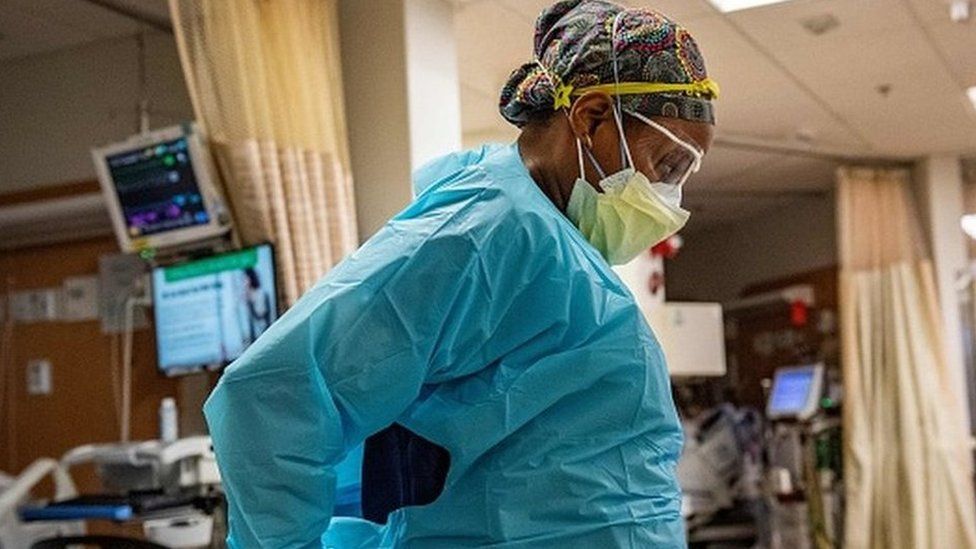
SharecloseShare pageCopy linkAbout sharingImage source, Getty ImagesEven as the Omicron variant sweeps around the world, public health officials have noted that, in most cases, the number of Covid patients in hospitals remains significantly lower than during previous pandemic surges.That’s not the case in the US, however, where the number of patients with the coronavirus currently in hospital has reached record numbers.According to data from the Department of Health and Human Services, 145,982 people were in hospital with the virus on 11 January, surpassing a previous record set in January 2021. On Thursday, US President Joe Biden was expected to announce plans to deploy military medical personnel to help in six of the states hardest hit by the influx of patients. Similarly, hospitals in large parts of neighbouring Canada have also seen surges, with Quebec reporting a pandemic high last weekend. So what is going on, and why might North America’s experience be different to South Africa and Europe so far?What do the numbers show?Let’s begin with this chart comparing how many people in several countries have been in hospital with Covid-19 during the pandemic. It’s adjusted to account for population size and represents a ratio of the number of infected hospital patients per million inhabitants. The various peaks represent times in which each nation was hit by a new Covid wave, including the initial outbreak and influx of hospital patients, last winter’s surge or the summer spike caused by the Delta variant. The green line, for example, shows how hard Italy was hit at both the beginning of the pandemic and again last year, reaching a high of 638 infected patients per million inhabitants on 23 November, 2020. On the right side of the chart, every country has experienced a large spike in Covid-infected hospital patients due to Omicron. What’s interesting, however, is to compare the rates each country is hitting now with those previous peaks. Half of Europe will catch Omicron – WHOUnvaccinated Canadian loses right to see his childFor Italy, France, and the UK, we see that the number of patients in hospital with Covid remains much lower than in previous waves. In the UK, 291 patients with coronavirus per million were in hospital on 10 January. Just under a year ago, the ratio stood at 576 per million. In France, the ratio stood at 347 per million on the same day, compared with a high of 490 in November. In the US, on the other hand, 411 US Covid-19 patients per million people were in hospital as of 9 January – surpassing a previous peak of 400 per million set on 14 January 2020. Similarly, the data shows that in Canada, 206 people were in hospital per million as of 11 January, compared to previous peaks of 118 in April and 128 in January 2021. What has the impact been on hospitals?Hospitals around the US have reported that the spike in infected patients has exacerbated pressure on facilities already strained by the pandemic.Dr Juan Reyes, the director of hospital medicine at George Washington University in Washington DC – which is among the US cities with the highest per capita hospital admissions rate – said that this surge “has been a lot more challenging” than previous ones.”The challenge that we’re feeling now is that it’s happening at a larger volume and things are a little bit tighter,” he told the BBC. “The difference now is a lot of fatigue, on healthcare workers and the population at large.” How US reached 800,000 Covid deathsQuebec to impose health tax on unvaccinatedDr Lewis Rubinson, the chief medical officer of Morristown Medical Center in New Jersey, reported that the current admissions surge “is about twice the size” of its previous high in the spring of 2020, despite less severe infections among patients.He attributed the rising numbers, partially, to increased testing of everyone who comes in the hospital for any reason. In the US, UK and Canada, newly admitted patients are tested for Covid regardless of what brought them to a hospital. Still, “the overall impact on hospitals by the sheer numbers is tremendous,” he said. “[If] you take off even a third of those, it’s still an enormous amount of patients that we’re tackling.”In the UK, this proportion of so-called incidental Covid cases has been estimated by National Health Service bosses to be between 20-30% of cases.What’s happened in South Africa?In South Africa – where the Omicron variant was first detected in November – researchers found that those infected with Omicron are less likely to be sent to hospital and more likely to recover quickly. While up-to-date data regarding the rate of Covid patients in hospital per capita is not available, many South African hospitals reported that the number was significantly less than during previous surges. The Steve Biko Academic Hospital in the City of Tshwane, for example, reported to the International Journal of Infectious Diseases that the number of infected patients was about half of that recorded before mid-November. Researchers believe that South Africa’s previous Covid-19 waves and relatively low vaccination rate meant that many residents had already likely been exposed and had built up some level of immunity.Why is the US different?Experts point to several reasons why the rate of Covid patients in hospital is higher in North America than in most other parts of the world.Professor David Larsen, an epidemiologist and global health expert at Syracuse University in New York, told the BBC that the US population is markedly different from that of both Europe and South Africa.”We have an older population than South Africa. That’s a big one,” he said. “[The US] is kind of similar in age structure to Europe. But there’s also a less healthy population than in Europe.”As examples, Dr Larsen noted that rates of hypertension and obesity – both of which are comorbidities that increase the risk of Covid – are higher in the US than in most other countries.Dr Larsen added that “it’s incredibly frustrating” to hear Americans downplay the ongoing threat of Omicron and believe that, like South Africa, the US may soon emerge from the current surge.”The seasonality is also different,” he said. “Omicron’s surge through South Africa was during their summer, and it’s hitting us in winter when we know more people gather indoors and there’s more transmission…it’s going to be bad.”Dr Mark Cameron, an associate professor in the department of population and quantitative health sciences at Case Western University in Ohio, told the BBC that he believes the US is suffering from “a perfect storm” of Covid-19, comorbidities, uneven access to healthcare and hostility to vaccines, masks, and other preventative measures.”When all of that ‘perfect storm’ nature of vulnerabilities that are unique to the US combine, you’ve got an outbreak of the virus that can quickly lead from increased cases to increased hospitalisations, which tax the local hospitals and health community.”Just over 63% of the US population is fully vaccinated, much lower than in the UK (71%) as well as Italy and France (both 75%). In Canada, almost 79% of the population is fully protected. Image source, Getty ImagesWhat about Canada?Dr Donald Vinh, an infectious disease specialist at McGill University Health Centre in Montreal, said that in Quebec – and other places across Canada – as many as half of all new hospital admissions are among the “inadequately vaccinated”.”As a percentage of the population, it’s a low number. Maybe 10% of the eligible population are not doubly vaccinated,” he said. “They tend to be clustered in urban dense spots. When you have highly transmissible variants and it can affect an inadequately vaccinated population, this leads to ongoing propagation and the high community transmissions we’re seeing.”Like the US, Dr Vinh said that he believes Canada is plagued by an “incongruent” public health policy when it comes to Covid-19.”In other words, there isn’t a single unified method in how we’re going to do things across the board,” he said. “It’s more regional than national, and because of that you have gaps. The consequences of that are people getting hospitalised.”What about the Delta variant?Doctors also warn that the high level of hospital admissions in the US and Canada may be due to the Delta variant being more prevalent in many areas.A study published in August by The Lancet Infectious Diseases – which investigated 43,000 patients in the UK – found that the Delta variant had more than double the risk of hospital admission than previous variants.Dr Monica Gandhi, an infectious diseases physician and professor at the University of California San Francisco, said that while she believes Delta patients form a significant portion of Covid-19 hospital admissions in the US, the true figure is hard to determine.”We don’t know how much Delta there is,” she told the BBC. “What the US has started to do is look at the number of new infections and sequences. Omicron is 95% of new infections, but we don’t know how much Delta we still have around.”In her own hospital, Dr Gandhi added, some patients “are sicker and some are less sick, and that feels very much like Delta and Omicron are both there”.What’s next?In many countries, researchers believe that the Omicron variant has begun to subside, possibly signalling the end of the increase in hospital patients with Covid. A computer model from researchers at the University of Washington, for example, has projected that the number of daily cases in the US will reach a high of 1.2 million by 19 January. Some researchers have predicted that cases may even peak sooner.In the short-term, however, experts believe that hospitals will continue feeling the strain of elevated patient numbers in both the US and Canada, even as they fall in other countries.”The situation is bad. There’s really no other word to describe it,” Dr Vinh said of the pandemic in Canada. “I would love to start seeing an inflection point that tells us we’re at the plateau, but right now all I’m seeing is a hill. It’s not even a hill anymore. It’s a wall.”Dr Larsen, for his part, said he believes that the US needs “more urgency around systemic change” to move past Covid-19.In the US, both Dr Cameron and Dr Gandhi suggested that they believe hospital admissions may peak in February or March. “It still could make for a miserable winter,” Dr Gandhi said. “I think that for the next month, life is going to be really hard in schools and hospitals.”

Read more →

Fastest DNA sequencing technique helps undiagnosed patients find answers in mere hours

A new ultra-rapid genome sequencing approach developed by Stanford Medicine scientists and their collaborators was used to diagnose rare genetic diseases in an average of eight hours — a feat that’s nearly unheard of in standard clinical care.
“A few weeks is what most clinicians call ‘rapid’ when it comes to sequencing a patient’s genome and returning results,” said Euan Ashley, MB ChB, DPhil, professor of medicine, of genetics and of biomedical data science at Stanford.
Genome sequencing allows scientists to see a patient’s complete DNA makeup, which contains information about everything from eye color to inherited diseases. Genome sequencing is vital for diagnosing patients with diseases rooted in their DNA: Once doctors know the specific genetic mutation, they can tailor treatments accordingly.
Now, a mega-sequencing approach devised by Ashley and his colleagues has redefined “rapid” for genetic diagnostics: Their fastest diagnosis was made in just over seven hours. Fast diagnoses mean patients may spend less time in critical care units, require fewer tests, recover more quickly and spend less on care. Notably, the faster sequencing does not sacrifice accuracy.
A paper describing the researchers’ work will publish Jan.12 in The New England Journal of Medicine. Ashley, associate dean of the Stanford School of Medicine and the Roger and Joelle Burnell Professor in Genomics and Precision Health, is the senior author of the paper. Postdoctoral scholar John Gorzynski, DVM, PhD, is the lead author.
Setting out to set a record
Over the span of less than six months, the team enrolled and sequenced the genomes of 12 patients, five of whom received a genetic diagnosis from the sequencing information in about the time it takes to round out a day at the office. (Not all ailments are genetically based, which is likely the reason some of the patients did not receive a diagnosis after their sequencing information was returned, Ashley said.) The team’s diagnostic rate, roughly 42%, is about 12% higher than the average rate for diagnosing mystery diseases.

Read more →

Infants with low-risk deliveries should not need antibiotics at birth, study suggests

Infants born via uncomplicated cesarean delivery, without labor or membrane rupture before delivery and no concern for infection, should not need antibiotics at birth, according to a study by researchers at Children’s Hospital of Philadelphia (CHOP). The findings, which were published today in Pediatrics, could help clinicians tailor the use of early antibiotics in newborns. Only those deemed at risk for infection should receive antibiotics, thereby reducing unnecessary use.
“Given the risks associated with early-onset sepsis in infants, it isn’t surprising that newborns are often administered antibiotics immediately after birth,” said first author Dustin D. Flannery, DO, MSCE, an attending neonatologist and clinical researcher at Children’s Hospital of Philadelphia. “However, our study shows that it is safe to withhold antibiotics in infants, including those born preterm, with low-risk delivery characteristics. Such infants are unlikely to be infected at birth, and can be spared the potential complications of systemic antibiotic exposure.”
Newborn infants are at risk for early-onset sepsis (EOS), a life-threatening infection that can occur within 72 hours after birth, due to exposure to bacteria during the birthing process. Predicting which infants will develop EOS, however, is challenging. This has led to an order of magnitude higher rate of antibiotic use compared to the rate of infants with confirmed infection. Prolonged antibiotic use among newborns is associated with serious adverse outcomes among preterm infants and potential longstanding complications among full term infants, underscoring the need for a better way to assess infection risk.
Since the primary way a newborn is exposed to bacteria is through the delivery process, the researchers decided to analyze delivery characteristics to see if they could help providers identify infants at lowest risk of EOS. In a retrospective study, they assessed all infants born between 2009 and 2014 at two Philadelphia birth hospitals who had a blood or cerebrospinal fluid culture obtained within 72 hours after birth. They examined medical record data for confirmed infection and for delivery characteristics, defining a “low-risk” delivery as a cesarean section, without rupture of amniotic membranes prior to delivery; an absence of labor or attempts to induce labor; and an absence of suspected or confirmed maternal intraamniotic infection or fetal distress.
The researchers also included infants born across the gestational age spectrum. Prior studies have assessed EOS risk in both extremely preterm (less than 28 weeks’ gestation) and full term (37 weeks or more) infants, but few have analyzed the risk among late and moderately preterm infants (28-36 weeks’ gestation), despite the fact that these infants make up the bulk of neonatal intensive care unit (NICU) admissions.
Overall, 7,549 infants had a culture drawn and were included in the study. Of these, 1,121 (14.8%) were born in a low-risk delivery setting and 6,428 (85.2%) were not. A total of 41 infants had confirmed cases of EOS; none of the infected patients were born in the setting of a low-risk delivery.
Even though no infants born in a low-risk delivery setting developed EOS, 80% of them were empirically treated with antibiotics. There was no difference between the low risk and non-low risk groups in the proportion of infants who received prolonged antibiotics, suggesting that clinicians did not appreciate or account for the lower risk of infection and stop antibiotics in the absence of confirmed infection.
“In the United States, an estimated 400,000 uninfected term infants receive empirical antibiotics at birth every year, and upwards of 90% of extremely preterm infants receive antibiotics,” Dr. Flannery said. “Our study shows that a well-defined subset of these infants should not need antibiotics, and clinicians can use delivery characteristics as a guide to prevent unnecessary antibiotic use and avoid potential complications of treatment.”
Story Source:
Materials provided by Children’s Hospital of Philadelphia. Note: Content may be edited for style and length.

Read more →