N95, KN95 or KF94? How to Find the Right Covid Mask
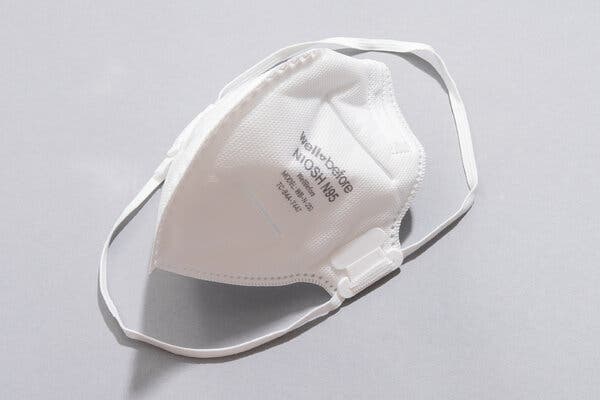
The fast-spread of the infectious Omicron variant has prompted many people to try to upgrade to a higher-quality medical mask. But that’s easier said than done.Anyone who has shopped for a mask online or in stores has discovered a dizzying array in a variety of shapes, sizes and colors. Knowing which mask to pick and making sure it’s not a counterfeit requires the sleuthing skills of a forensic investigator. And once you choose one, it’s still a gamble; many people discover they’ve ordered a mask that’s too big or too small for their face or just doesn’t fit right.“No one has made this easy, that’s for sure,” said Bill Taubner, president of Bona Fide Masks, the exclusive distributor in the United States for both Powecom and Harley KN95 masks, which are from China. “A lot of people end up doing a lot of research.”Unlike cloth masks, high-quality medical masks — called N95s, KN95s and KF94s — are made with layers of high-tech filtering material that trap at least 94 to 95 percent of the most risky particles. Under a microscope, the filters look like dense forests of tangled fibers that capture even the hardest-to-trap particles that can bounce around and escape the fibers of cloth masks. High-grade medical masks also have an electrostatically charged filter that helps attract and trap particles.Early in the pandemic, high-quality medical masks were in short supply. Now the problem is there are so many different masks for sale, it’s tough to know which ones have been tested and certified by government agencies, and which are counterfeit. We interviewed mask manufacturers, importers, public health officials and independent researchers for advice on choosing a medical mask. Here’s a guide.Choose your mask style.Masks come in different shapes and sizes. You’ll find “cup” style masks, “duck bill” masks and “flat-fold” masks. The best mask is the one that fits snugly against your face and is comfortable. Start by ordering in small quantities and try different styles to find the best one for your face. Many masks are described as “one size fits most.” But some come in small or larger sizes. “You’re not getting the full benefit of a respirator if you put it on and it’s not forming a seal to your face,” said Nicole Vars McCullough, vice president for personal safety at the 3M Company, a global mask manufacturer.N95 respiratorThe WellBefore N95 mask.Sarah Kobos/WirecutterThe N95 respirator mask is regulated by the National Institute for Occupational Safety and Health (NIOSH), a division of the Centers for Disease Control and Prevention. Almost all N95 masks use head straps — two elastic bands that wrap behind the head. If a mask claiming to be an N95 has ear loops, it’s most likely a fake. The C.D.C. has a guide for spotting fake N95s.KN95 respirator4CAir AireTrust Nano mask.Sarah Kobos/WirecutterThe KN95 is similar to the N95, but it has ear loops and is made to meet Chinese standards for medical masks. Some people prefer them for comfort, and because they come in smaller sizes. While you can find legitimate KN95 masks, the supply chain is riddled with counterfeits and there’s little regulation or oversight of the product. One study found that 60 percent of the supply of KN95s in the United States are counterfeit. Keep reading for ways to spot them.KF94Kyungin Flax KF94Sarah Kobos/WirecutterThe KF94 is a high-quality mask that folds flat and is made in Korea. It is designed specifically for the consumer market. The KF stands for “Korean filter,” and the 94 means it filters 94 percent of particles. The masks are heavily regulated in Korea, which lowers the risk of counterfeits. However, some fake masks made in China may be labeled KF94, so shoppers still need to do their homework.Masks for childrenThe mask market is particularly tricky for parents trying to find masks for children. No N95 mask has been approved for children, so any mask that claims to be an N95 for kids is a fake. However, N95s do come in S/M sizes that might work for some older children. KN95 and KF94 masks have styles made for children, so once you find one, you need to go through the same vetting process that you would use for an adult mask, using the links below.Buy from a reputable supplier.Big retailers like Home Depot and Lowes typically work directly with manufacturers approved by NIOSH or their distributors, so if you find an N95 mask in a major retail store you can be confident you’re getting the real thing. It’s a good idea to check manufacturer websites to see where they sell their products and who their authorized distributors are, Dr. McCullough said. 3M has a dedicated spot on its website to help consumers spot fake masks.Finding a reliable mask on Amazon is trickier because you’ll see legitimate masks mixed in with counterfeits, although the differences won’t alway be obvious. If you must use Amazon, try to shop directly in the on-site stores of mask makers like 3M or Kimberly-Clark. (You can usually find a link to a maker’s online store right below a product name.)If you’re buying a KF94 on Amazon, look closely at the packaging to make sure it’s made in Korea and includes the required labeling (see below for more details). Aaron Collins, an engineer who routinely tests masks and who has gained a YouTube following as “Mask Nerd,” recommends buying KF94s from Korean beauty product importers like Be Healthy or KMact. Once you learn the names of a few KF94 manufacturers, you can try to find their websites to learn where they are sold. For instance, Happy Life lists its five U.S. distributors on its home page.You can sometimes find N95 and KN95 masks for sale directly on the website of a mask maker, like Demetech and Armbrust USA. You can also look for companies that are exclusive distributors of KN95 masks, like Bona Fide Masks. The nonprofit site Project N95 is also a reliable place to shop.Check labels and printing.Legitimate N95s and KN95s are required to have specific text stamped on the front of the mask. Although you may find one in a fun color, masks that are printed with fancy designs or don’t have text stamped on them are probably fake.Your N95 should be stamped with “NIOSH,” as well as the company name, the model and lot numbers, and something called a “TC approval” number, which can be used to look up the mask on a list of approved ones. The C.D.C. has created an infographic showing you the printing to look for on your N95.KN95 and N95 masks are required to have specific text stamped on the front. Charlie Rubin for The New York TimesA legitimate KN95 should also be stamped with text, including the name of the manufacturer, the model, and “GB2626-2019,” which is a reference to a quality control standard approved by the Chinese government.The KF94 won’t be stamped with text, but the package should say “Made in Korea” and include the product name, manufacturer and distributor name. The package will also have an expiration date and a lot number printed on it. (Medical masks that carry an electrostatic charge all have expiration dates.) If your mask comes from a Korean importer, the information on the package will be in Korean, but many companies have begun to create English-language packaging.Use trusted sources.A number of resources have sprung up to help people navigate the mask-buying process. Project N95 is a nonprofit known for vetting its mask suppliers. Mr. Collins, the Mask Nerd, has created a number of lists and resources for mask buyers. You can check out his Twitter feed, his YouTube channel and a spreadsheet he has created of nearly 450 different masks and how they performed in his tests.Mr. Collins may be best known for his list of children’s masks. While there is no N95 mask for kids approved in the United States, mask makers in China and Korea have created KN95s and KF94s for children, including some with child-friendly colors and prints. Mr. Collins created a video “primer for parents” about finding a high-quality mask for kids that has more than 100,000 views.“I had retired from mask testing,” Mr. Collins said, noting that he doesn’t receive any compensation for his work. “But I came out of retirement to do the kids video. The only place I’ve seen a list of test data is unfortunately me.”Wirecutter, a product review site owned by The New York Times, has a guide for buying medical masks, one for buying children’s masks and a list of 12 red flags that might signal your mask is a counterfeit.Do your research.It’s not easy, but the C.D.C. has a few lists you can use to confirm a mask has been vetted. A note of caution: If you don’t find a particular mask, make sure you’ve looked it up the correct way. For instance, a Gerson N95 mask won’t be found under the letter “G.” It’s listed under “L” because the full name of the company that makes it is Louis M. Gerson.For N95 masks, go to the C.D.C.’s alphabetical list of NIOSH-approved respirators. You can also look up the TC approval number using the certified equipment list.For KN95 masks, you can use two checklists from the Food and Drug Administration. The F.D.A. created these lists early in the pandemic, when the agency issued an emergency use authorization that allowed health workers to use KN95 masks because of a shortage of N95s. Now that the N95 supply is adequate, the agency has revoked the authorization for these workers, but other people can still use KN95s. While the list is now a bit outdated, finding your mask on it adds reassurance that it’s less likely to be counterfeit — with the caveat that there’s no longer official U.S. oversight for any of these firms.Use this F.D.A. list to find KN95 masks made in China, and this list for KN95 masks made in other countries.

Read more →
Nuclei-free cells prove utility in delivering therapeutics to diseased tissues

Researchers at University of California San Diego School of Medicine and Moores Cancer Center at UC San Diego Health report successfully removing the nucleus out of a type of ubiquitous cell, known as enucleation, then using the genetically engineered cell as a unique cargo-carrier to deliver therapeutics precisely to diseased tissues.
The findings published in the December 20, 2021 issue of Nature Biomedical Engineering.
Precisely targeting and delivering drugs or therapies to diseased cells and tissues significantly boosts therapeutic benefit while decreasing side effects. In the new study, a team led by senior author Richard Klemke, PhD, professor of pathology at UC San Diego School of Medicine, genetically modified mesenchymal stromal cells (MSCs) to boost their disease-seeking behavior, then removed their nuclei while retaining organelles that produce energy and proteins needed for therapeutic functions.
In mouse models of acute inflammation and of pancreatitis, researchers engineered the enucleated cells, dubbed “Cargocytes,” with an anti-inflammatory cytokine — a signaling protein that spurs the immune response and can reduce inflammation and related disease and then systemically administered them into mice where they produced bioactive therapeutics at high levels in their targeted locations for several days, ameliorating the disease.
“These Cargocytes retain most of their cellular functionality, but now also possess greatly enhanced capacity to carry and deliver therapeutics specifically to targeted tissues in a safe manner,” said Klemke. “That opens the possibility of treating diseases by delivering drugs precisely where they can do the most good, with less likelihood of unwanted side effects caused by those drugs going elsewhere.”
The authors said the use of enucleated, modified MSCs has several advantages over approaches that employ intact cells as delivery vehicles.
First, it is difficult to get regulatory approval for clinical use of extensively engineered stem cells, which also possess the ability to proliferate and differentiate, due to safety concerns.
Second, primary cells collected from donors for therapeutic delivery purposes have limited bioengineering and therapeutic capacities.
Third, Cargocytes have a more defined and predictable fate after administration to the body because they cannot perform new gene transcription, eliminating the possibility that they may produce unwanted factors, differentiate into unwanted cell types or graft onto tissues in undesirable ways.
“What this means is that what we engineer ex vivo, in the lab, will correctly work in vivo, inside the body,” said Klemke. “This makes the use of Cargocytes more precise and reliable for clinical applications.”
Klemke said next steps involve optimizing the ability of Cargocytes to deliver multiple different therapeutics to diseased tissues in vivo, explore opportunities to engineer and enucleate other cell types, such as immune cells, and develop a similar approach to seek out and eradicate metastatic cancers that have spread throughout the body.
Co-authors include: Huawei Wang, Christina N. Alarcon, Bei Liu, Felicia Watson, Stephen Searles, Calvin K. Lee, Willie Pi, Dale Allen and Jack D. Bui, all at UC San Diego; and Jeremy Keys and Jan Lammerding, Cornell University.
Story Source:
Materials provided by University of California – San Diego. Original written by Scott La Fee. Note: Content may be edited for style and length.

Read more →

For Coronavirus Testing, the Nose May Not Always Be Best

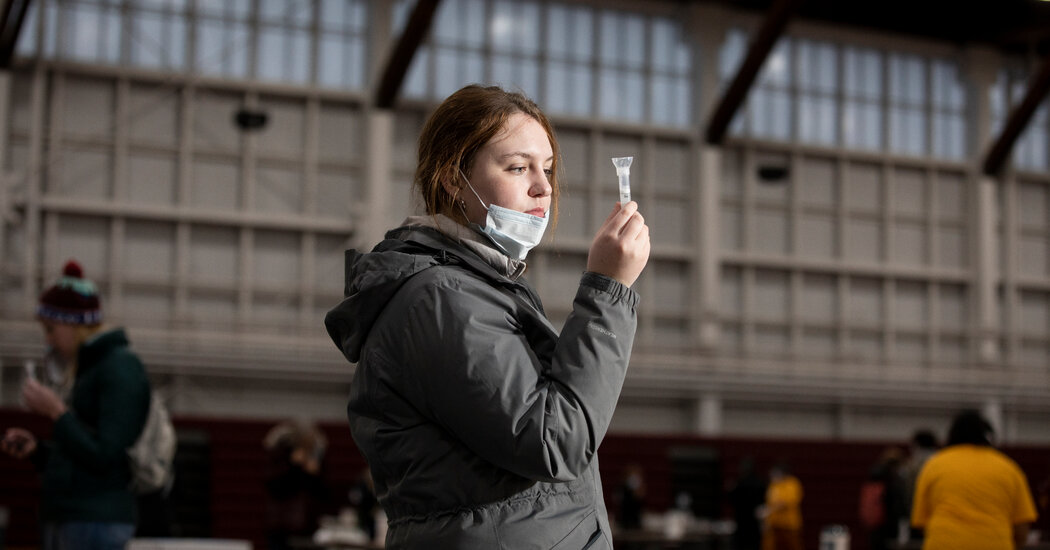
As Omicron spreads, some experts are calling for a switch to saliva-based tests, which may detect infections days earlier than nasal swabs do.Over the past two years, diagnosing a coronavirus infection has often required probing the nose. Health care workers have inserted slender swabs deep into the recesses of Americans’ nasal passages, while at-home test kits have asked us to master the shallow double-nostril twirl.“The traditional approach to diagnosing respiratory infections has been to go after the nose,” said Dr. Donald Milton, an expert on respiratory viruses at the University of Maryland.But the rapid spread of the Omicron variant, and questions about the sensitivity of at-home tests, have rekindled a debate over whether the best way to detect the virus is to sample a different site: the mouth.“The virus shows up first in your mouth and throat,” Dr. Milton said. “That means that the approach we’re taking to testing has problems.”Collecting samples of saliva, or swabbing the inside of the mouth, could help identify people who are infected with the virus days earlier than nasal swabs do, some research suggests.The science is still evolving, and the data paint a complex picture, suggesting that saliva-based tests have limitations of their own. Many labs are not currently set up to process saliva, nor are the at-home antigen tests available in the United States authorized for it.But even the saliva skeptics acknowledge that oral specimens have some unique advantages. And with Omicron on the march, some experts say that testing companies, labs and federal officials should be working more urgently to determine the best sample sites and types for the virus.“We need to be adaptable,” said Anne Wyllie, a microbiologist at the Yale School of Public Health, who is one of the developers of SalivaDirect, a noncommercial P.C.R. testing protocol. “I see so many either labs, or governments who are so fixated on a certain sample type or a certain test that even with changing data or test preferences, they don’t make the necessary adaptations to their testing programs.”The case for salivaRapid-result saliva collection kits being assembled at a facility in Draper, Utah.George Frey/Agence France-Presse — Getty ImagesScientists began investigating saliva testing in the early months of the pandemic. They were eager to find a testing method that would be more comfortable than the deep nasopharyngeal swabs that were the standard at the time and that would not require trained health care workers or nasal swabs, both of which were in short supply. With saliva, people could simply spit into a tube and hand it over for processing.Some laboratory professionals were skeptical that saliva testing would be a reliable way to detect infection.“There were concerns initially that saliva was not the gold standard sample, that it wasn’t the most sensitive sample,” said Glen Hansen of the clinical microbiology and molecular diagnostics laboratory at Hennepin County Medical Center in Minnesota.But by the fall of 2020, dozens of studies had suggested that saliva was a suitable sample for testing.“There’s been a growing body of evidence that at the very least, saliva performs well — it’s as good as, if not better, when it’s collected properly, when it’s processed properly,” Dr. Wyllie said.Evidence also emerged that the virus tended to appear in saliva before it built up in the nose, suggesting that saliva samples might be the best way to detect infections early.Dr. Milton and his colleagues recently found that in the three days before symptoms appear and the two days after, saliva samples contained about three times as much virus as nasal samples and were 12 times as likely to produce a positive P.C.R. result. After that, however, more virus began accumulating in the nose, according to the study, which has not yet been published in a scientific journal.The Food and Drug Administration has now authorized numerous saliva-based P.C.R. tests, which have proven popular for screening students in schools.“Saliva really has turned out to be a valuable specimen type, and one that has increasingly been advocated as a primary testing sample,” Dr. Hansen said.Saliva’s advantages may be more pronounced with Omicron, which appears to replicate more quickly in the upper respiratory tract and have a shorter incubation period than earlier variants. Any testing method that can reliably detect the virus earlier is particularly valuable, experts said.“I think Omicron has really changed the testing game because of how quickly the virus replicates and how quickly it spreads,” said Dr. Robby Sikka, who chairs the Covid-19 Sports and Society Working Group and who helped bring saliva testing to the N.B.A. in 2020. (Both Dr. Sikka and Dr. Wyllie serve as unpaid board members for SalivaDirect.)Some experts have also theorized that Omicron may be better at replicating in the cells of the mouth and throat than other variants have been.A team of South African researchers recently found that while nasal swabs performed better than saliva swabs when detecting the Delta variant, the opposite was true for Omicron. (The study, which used P.C.R. tests, has not yet been reviewed by experts.)More research is needed, and another small new study, conducted at a San Francisco testing site during an Omicron surge, was less encouraging. Of the 22 people who tested positive on a rapid antigen test using standard nasal swabs, only two tested positive when their inner cheeks were swabbed. The scientists are currently studying whether throat swabs perform better.The complicationsSaliva also has trade-offs. While the virus appears to build up in saliva early, the nose may be a better place to detect it later in the course of infection.Researchers at the California Institute of Technology found that while the virus often spiked first in saliva, it ultimately rose to higher levels in the nose. Their results suggest that highly sensitive tests, like P.C.R. tests, may be able to pick up infections in saliva days earlier than they do in nasal swabs, but that less-sensitive tests, like antigen tests, might not.The Coronavirus Pandemic: Key Things to KnowCard 1 of 5The latest Covid data in the U.S.

Read more →

Being in space destroys more red blood cells

A world-first study has revealed how space travel can cause lower red blood cell counts, known as space anemia. Analysis of 14 astronauts showed their bodies destroyed 54 percent more red blood cells in space than they normally would on Earth, according to a study published in Nature Medicine.
“Space anemia has consistently been reported when astronauts returned to Earth since the first space missions, but we didn’t know why,” said lead author Dr. Guy Trudel, a rehabilitation physician and researcher at The Ottawa Hospital and professor at the University of Ottawa. “Our study shows that upon arriving in space, more red blood cells are destroyed, and this continues for the entire duration of the astronaut’s mission.”
Before this study, space anemia was thought to be a quick adaptation to fluids shifting into the astronaut’s upper body when they first arrived in space. Astronauts lose 10 percent of the liquid in their blood vessels this way. It was thought astronauts rapidly destroyed 10 percent of their red blood cells to restore the balance, and that red blood cell control was back to normal after 10 days in space.
Instead, Dr. Trudel’s team found that the red blood cell destruction was a primary effect of being in space, not just caused by fluid shifts. They demonstrated this by directly measuring red blood cell destruction in 14 astronauts during their six-month space missions.
On Earth, our bodies create and destroy 2 million red blood cells every second. The researchers found that astronauts were destroying 54 percent more red blood cells during the six months they were in space, or 3 million every second. These results were the same for both female and male astronauts.
Dr. Trudel’s team made this discovery thanks to techniques and methods they developed to accurately measure red blood cell destruction. These methods were then adapted to collect samples aboard the International Space Station. At Dr. Trudel’s lab at the University of Ottawa, they were able to precisely measure the tiny amounts of carbon monoxide in the breath samples from astronauts. One molecule of carbon monoxide is produced every time one molecule of heme, the deep-red pigment in red blood cells, is destroyed.

Read more →

Cellular receptors identified for eastern equine encephalitis

A new study led by researchers at Harvard Medical School has identified a set of cellular receptors for at least three related alphaviruses shared across mosquitoes, humans, and animals that host the virus.
Going a step further, the researchers tested a “decoy” molecule that successfully prevented infection and slowed disease progression in a series of experiments in cells and animal models, an important first step toward developing preventive and curative medicines against these highly pathogenic viruses with pandemic potential.
The results were published December 20 in Nature.
Understanding the basic biology of a virus’s life cycle is crucial to finding a way to prevent an illness, and building such foundational knowledge before an outbreak is essential for preparing for future outbreaks, said study senior author Jonathan Abraham, assistant professor of microbiology in the Blavatnik Institute at HMS and an infectious disease specialist at Brigham and Women’s Hospital.
“Understanding how a virus enters and infects a cell is as basic as it gets,” he said. “Viral entry into human or other mammalian cells marks the beginning of the infection and eventually disease, and is a great place to begin looking for potential preventive strategies and curative medications.”
The alphaviruses the researchers studied, including EEEV, have a history of causing deadly, if short-lived, outbreaks, but little is known about how the virus attacks host cells. Only a few other receptors related to infection from alphaviruses have been identified. This gap in knowledge is one of the reasons for the lack of targeted treatments for these lethal viruses, Abraham said.

Read more →

Scientists uncover 'resistance gene' in deadly E. coli

Scientists have pinpointed a gene that helps deadly E. coli bacteria evade antibiotics, potentially leading to better treatments for millions of people worldwide.
The University of Queensland-led study found a particular form of the bacteria — E. coli ST131 — had a previously unnoticed gene that made it highly resistant to commonly prescribed antibiotics.
Professor Mark Schembri, from UQ’s School of Chemistry and Molecular Biosciences, said this ‘resistance gene’ can spread incredibly quickly.
“Unlike gene transfer in humans, where sex is required to transfer genes, bacteria have genetic structures in their cells — called plasmids — that are traded quickly and easily between each other,” Professor Schembri said.
“This resistance gene is in one such plasmid and is swiftly making E. coli ST131 extremely resistant to widely prescribed fluoroquinolone antibiotics.
“These antibiotics are used to treat a wide range of infections, including urinary tract infections (UTIs), bloodstream infections and pneumonia.

Read more →

Biologists pinpoint key factor in immune system response to viral infection

The COVID-19 pandemic has underscored the urgency for science to continue unraveling how viruses infect and how immune systems respond to such threats.
University of California San Diego researchers studying how small worms defend themselves against pathogens have discovered a gene that acts as a cell’s first-line response against infection. Division of Biological Sciences Postdoctoral Scholar Vladimir Lažetic, Professor Emily Troemel and their colleagues at UC San Diego and the New York University Grossman School of Medicine identified the key role of “ZIP-1,” a protein called a transcription factor, which helps convert genetic information from DNA to messenger RNA.
The finding, published Jan. 10 in Nature Communications, could have implications for identifying similar genes that control immune responses to infection in humans.
“By better understanding immunity against viral infection we can identify new ways to treat viral infection,” said Troemel, a professor in the Section of Cell and Developmental Biology. “The new antiviral factor that we’ve identified is giving us a better handle on immunity and how worms are fighting off viral infections. Worms sense an RNA virus in a way that’s similar to how humans sense an RNA virus like coronavirus.”
The researchers studied Caenorhabditis elegans, a tiny roundworm with a transparent body that allows scientists to closely monitor how an infection invades a living animal. Lažeti? used a fluorescent tracking method to identify which parts of the roundworm’s cells are involved in an infection response. He was surprised to find that ZIP-1 emerged so early in the defense process. In addition to viruses, ZIP-1 jumpstarted defenses to infection by a cell-invading fungus as well, the data revealed.
“We found that the subset of genes controlled by ZIP-1 is important for immunity, but not for some other phenotypes that we see in other animals that have activated this immune response,” said Lažeti?, who noted that the ZIP-1 name comes from its predicted zipper-like structure. “We also observed that ZIP-1 is activated by a previously described receptor that is important for triggering antiviral immunity, both in mammals and in C. elegans, so there are links that can be made with human immunity.”
For Troemel, the most surprising aspect of the results was finding that ZIP-1 acts as a centralized hub for immune response against a number of threats.
“A virus, a fungus and heat stress are all so different, but we found that they’re all going through the same central ZIP-1 hub to turn on a set of immune genes,” said Troemel. “Understanding the early role of ZIP-1 is important because we know that timing matters so much in terms of immune response. That’s one of the lessons we have learned with COVID. If you have an early interferon response, that tends to correlate very well with fighting off the infection.”
Troemel’s lab is now probing the details of the discovery further, including investigating how the receptor that worms use to sense a virus, which is similar to a receptor that humans use in immune response, communicates with ZIP-1 in the defense process.
“Revolutions in biology oftentimes have come from understanding how simple organisms cope with threats such as infection,” said Troemel. “Studies that might seem abstract can lead to groundbreaking discoveries.”
Story Source:
Materials provided by University of California – San Diego. Note: Content may be edited for style and length.

Read more →

Mathematical model may help improve treatments and clinical trials of patients with COVID-19 and other illnesses

Investigators who recently developed a mathematical model that indicated why treatment responses vary widely among individuals with COVID-19 have now used the model to identify biological markers related to these different responses. The team, which was led by scientists at Massachusetts General Hospital (MGH) and the University of Cyprus, notes that the model can be used to provide a better understanding of the complex interactions between illness and response and can help clinicians provide optimal care for diverse patients.
The work, which is published in EBioMedicine, was initiated because COVID-19 is extremely heterogeneous, meaning that illness following SARS-CoV-2 infection ranges from asymptomatic to life-threatening conditions such as respiratory failure or acute respiratory distress syndrome (ARDS), in which fluid collects in the lungs. “Even within the subset of critically ill COVID-19 patients who develop ARDS, there exists substantial heterogeneity. Significant efforts have been made to identify subtypes of ARDS defined by clinical features or biomarkers,” explains co-senior author Rakesh K. Jain, PhD, director of the E.L. Steele Laboratories for Tumor Biology at MGH and the Andrew Werk Cook Professor of Radiation Oncology at Harvard Medical School (HMS). “To predict disease progression and personalize treatment, it is necessary to determine the associations among clinical features, biomarkers and underlying biology. Although this can be achieved over the course of numerous clinical trials, this process is time-consuming and extremely expensive.”
As an alternative, Jain and his colleagues used their model to analyze the effects that different patient characteristics yield on outcomes following treatment with different therapies. This allowed the team to determine the optimal treatment for distinct categories of patients, reveal biologic pathways responsible for different clinical responses, and identify markers of these pathways.
The researchers simulated six patient types (defined by the presence or absence of different comorbidities) and three types of therapies that modulate the immune system. “Using a novel treatment efficacy scoring system, we found that older and hyperinflamed patients respond better to immunomodulation therapy than obese and diabetic patients,” says co-senior and corresponding author Lance Munn, PhD, who is the deputy director of the Steele Labs and an associate professor at HMS. “We also found that the optimal time to initiate immunomodulation therapy differs between patients and also depends on the drug itself.” Certain biological markers that differed based on patient characteristics determined optimal treatment initiation time, and these markers pointed to particular biologic programs or mechanisms that impacted a patient’s outcome. The markers also matched clinically identified markers of disease severity.
For COVID-19 as well as other conditions, the team’s approach could enable investigators to enrich a clinical trial with patients most likely to respond to a given drug. “Such enrichment based on prospectively predicted biomarkers is a potential strategy for increasing precision of clinical trials and accelerating therapy development,” says co-senior author Triantafyllos Stylianopoulos, PhD, an associate professor at the University of Cyprus.
Other co-authors include Sonu Subudhi, Chrysovalantis Voutouri, C. Corey Hardin, Mohammad Reza Nikmaneshi, Melin J. Khandekar and Sayon Dutta from MGH; and Ankit B. Patel and Ashish Verma from Brigham and Women’s Hospital.
Funding for the study was provided by the National Institutes of Health, Harvard Ludwig Cancer Center, Niles Albright Research Foundation and Jane’s Trust Foundation. Voutouri is a recipient of a Marie Sk?odowska Curie Actions Individual Fellowship.
Story Source:
Materials provided by Massachusetts General Hospital. Note: Content may be edited for style and length.

Read more →

Systematically examining the way spatial structure influences the evolution of cancer

Dr Robert Noble, a Lecturer in Mathematics in the School of Mathematics, Computer Science and Engineering (SMCSE) believes that characterising the way, manner or pattern of evolution in tumours is important for clinical forecasting and optimising cancer treatment.
Dr Noble and his colleagues in Professor Niko Beerenwinkel’s research group at ETH Zurich, have published a new study in Nature Ecology & Evolution, which is the first to systematically examine how spatial structure influences tumour evolution.
To do this the group developed a computational model with the flexibility to simulate alternative spatial structures and types of cell dispersal. They then ran thousands of simulations with different structures and parameter values and compared the results to recent, state-​of-the-art DNA sequencing data from actual human tumours.
The team found that the diverse spatial structures of human tumours can cause them to evolve in vastly different ways. The computer model predictions are consistent with clinical data for cancer types with matching structures.
Dr Noble says that one of the major challenges in cancer research “is inferring the properties of a tumour based on limited genetic information. To understand this problem, consider a sports analogy. Suppose you’re told only that in a head-​to-head game, Team A scored twice as often as Team B. Can you figure out how much better Team A is than Team B, so you can predict the outcomes of future contests?”
“One way to answer this question is to use a computer model, in which each team is assigned a probability of scoring on each attempt. After trying many different settings, you can conclude that the most likely scoring probabilities are those for which the simulation outcomes resemble the actual game result. Although you can never be sure what the true probabilities are, you can at least find their most likely ranges.”
However, knowing the ratio of the final scores is not enough. In high-​scoring basketball, for instance, it’s unlikely that one team will score twice as many points as their opponents unless they are vastly superior. In football, by contrast, it’s not unusual for the better team to lose 2-1 by a stroke of bad luck. To make accurate inferences, you need to know the rules of the game.
Much as sports teams compete to score points, so groups of closely related cells — known as clones — compete within tumours for the space and resources they need to survive and multiply. Oncologists use genetic sequencing to determine the relative sizes of these clones when a patient comes to the clinic. If one clone is larger than another then it might be because its cells have so-​called “driver” mutations that cause them to proliferate faster.
But the effect of mutations on tumour development depends on how cells interact with one another, which is governed by the tumour’s spatial structure. Much as coronavirus spreads more slowly when people stay home and avoid mixing, so driver mutations spread more slowly within tumours if cells are confined to small patches, with only rare movement between patches. The rules matter in this game, too.
Dr Noble says that discoveries revealed in the recent research paper “have important implications for interpreting cancer genetic data.”
A major goal of modern cancer research is to characterise the evolutionary process within tumours. We have shown that to get an accurate picture of what’s going on, you need to account for each tumour’s particular spatial structure. By mechanistically connecting tumour architecture to the mode of tumour evolution, our work provides the blueprint for a new generation of patient-​specific models for forecasting tumour progression and for optimising therapy.
Story Source:
Materials provided by City University London. Note: Content may be edited for style and length.

Read more →

The first AI breast cancer sleuth that shows its work

Computer engineers and radiologists at Duke University have developed an artificial intelligence platform to analyze potentially cancerous lesions in mammography scans to determine if a patient should receive an invasive biopsy. But unlike its many predecessors, this algorithm is interpretable, meaning it shows physicians exactly how it came to its conclusions.
The researchers trained the AI to locate and evaluate lesions just like an actual radiologist would be trained, rather than allowing it to freely develop its own procedures, giving it several advantages over its “black box” counterparts. It could make for a useful training platform to teach students how to read mammography images. It could also help physicians in sparsely populated regions around the world who do not regularly read mammography scans make better health care decisions.
The results appeared online December 15 in the journal Nature Machine Intelligence.
“If a computer is going to help make important medical decisions, physicians need to trust that the AI is basing its conclusions on something that makes sense,” said Joseph Lo, professor of radiology at Duke. “We need algorithms that not only work, but explain themselves and show examples of what they’re basing their conclusions on. That way, whether a physician agrees with the outcome or not, the AI is helping to make better decisions.”
Engineering AI that reads medical images is a huge industry. Thousands of independent algorithms already exist, and the FDA has approved more than 100 of them for clinical use. Whether reading MRI, CT or mammogram scans, however, very few of them use validation datasets with more than 1000 images or contain demographic information. This dearth of information, coupled with the recent failures of several notable examples, has led many physicians to question the use of AI in high-stakes medical decisions.
In one instance, an AI model failed even when researchers trained it with images taken from different facilities using different equipment. Rather than focusing exclusively on the lesions of interest, the AI learned to use subtle differences introduced by the equipment itself to recognize the images coming from the cancer ward and assigning those lesions a higher probability of being cancerous. As one would expect, the AI did not transfer well to other hospitals using different equipment. But because nobody knew what the algorithm was looking at when making decisions, nobody knew it was destined to fail in real-world applications.

Read more →