Covid: WHO warns pandemic not over amid Europe case records

SharecloseShare pageCopy linkAbout sharingImage source, Getty ImagesThe head of the World Health Organisation (WHO) has issued a warning to world leaders that the coronavirus pandemic “is nowhere near over”. Dr Tedros Adhanom Ghebreyesus cautioned against the assumption that the newly dominant Omicron variant is significantly milder and has eliminated the threat posed by the virus. The intervention comes as some European nations saw record new case numbers.France reported nearly half a million new daily cases on Tuesday.For the first time since the start of the pandemic, more than 100,000 new infections were recorded in Germany within 24 hours on Wednesday.Speaking during a news conference at the WHO’s headquarters in Geneva, Dr Tedros told reporters that the Omicron variant had led to 18 million new infections across the world over the past week.While the variant may prove to be less severe on average, “the narrative that it is a mild disease is misleading,” he said.”Make no mistake, Omicron is causing hospitalisations and deaths, and even the less severe cases are inundating health facilities.” What’s really going on with Covid deaths data?Endemic Covid: Is the pandemic entering its endgame?Omicron: Has the winter wave peaked already?He warned global leaders that “with the incredible growth of Omicron globally, new variants are likely to emerge, which is why tracking and assessment remain critical”. “I remain particularly concerned about many countries that have low vaccination rates, as people are many times more at risk of severe illness and death if they are unvaccinated,” he added. The WHO’s emergencies director, Dr Mike Ryan, also warned that Omicron’s increased transmissibility is likely to drive a rise in hospitalisations and deaths, especially in nations where fewer people are vaccinated.”An exponential rise in cases, regardless of the severity of the individual variants, leads to inevitable increase in hospitalisations and deaths,” he said. Record daily case rises in EuropeNew coronavirus infections have been growing across Europe as the new Omicron variant takes hold across the continent.In Denmark, officials reported a record 33,493 new daily cases of Covid-19 on Tuesday, while health authorities in Italy recorded 228,179 new infections, up from 83,403 the previous day. In Germany a record 112,323 new cases were reported on Wednesday, and the incidence rate of cases per 100,000 people also climbed to a new high of 584.4 over the past week.France meanwhile reported 464,769 new daily infections on Tuesday, more than four times higher than Monday’s figure of 102,144 and a daily record for the pandemic. Infections have now climbed past a weekly average of over 300,000 new cases per day. Image source, Getty ImagesAmid the latest surge, French ministers are also facing a dispute with teachers’ unions, who have called for a second major strike this week to protest against the government’s Covid testing and isolation protocols, which they say are severely disrupting classes.The move follows a one-day walkout last week that saw half of the country’s primary schools close.Teachers say class disruptions have become unmanageable, with many parents struggling to get vaccination appointments for their children and long lines forming outside pharmacies as students wait for tests. French education minister Jean-Michel Blanquer. meanwhile. is facing calls to resign after it emerged he had announced a strict Covid-testing protocol for schools while he was on holiday in Ibiza.There are however some early indications that the Omicron wave may have already peaked in some European countries. In Ireland new cases have started to fall in recent days, with health minister Stephen Donnelly telling public broadcaster RTÉ that restrictions introduced over Christmas and the New Year period could be loosened by the end of the month. Spanish government data has shown that new infections have started to fall for first time since the Omicron wave began two and a half months ago – although experts warned about reading too much into the data.And in the UK, government ministers are set to review coronavirus restrictions on Wednesday amid a decline in daily infections.This video can not be playedTo play this video you need to enable JavaScript in your browser.

Read more →

Exercise addicts urged to build in rest days

SharecloseShare pageCopy linkAbout sharingImage source, Getty ImagesA mental health charity is reminding people that while exercise is a good thing, some people are taking it too far, often as an antidote to the stress and anxieties of life. Mind says some push on, even if they are injured or unwell: keeping fit can become an obsession.During the first Covid lockdown, exercise was one routine people could still do. Some, like 21-year-old Catherine, became over-reliant on it. “Like many people, I was on furlough during lockdown. My days lacked structure and routine so I started exercising.Image source, Mind”This was helpful at first. After all, we were being advised by the government to spend 30 minutes outdoors doing exercise. However, I started becoming intensely focused on my workouts.”Catherine started to feel that no amount of exercise was enough: “Sometimes, I exercised in secret. Before I knew it, exercise became the sole purpose for my day.”I had little physical interaction with people because of lockdown and I didn’t feel comfortable telling them how much I was working out. I was scared about telling those close to me out of fear they’d stop me exercising.”Catherine eventually confided in her mother, who helped her monitor how much she was doing.”It was extremely difficult to break the cycle. I found other ways to manage my emotions outside of exercising. I also tried new activities, like baking.”Estelle (not her real name), who is 31 and from Yorkshire, began her obsession with exercise after losing her job and experiencing suicidal feelings. “Being alone with my thoughts was impossible for me, and the only coping mechanism I knew that didn’t cause active harm to me was exercise. Within a couple of months I realised that I was starting to lose a lot of weight, and that somehow my hour of exercising a day had spiralled. “Naturally, with so much wear and tear on my body, I began to develop a series of soft tissue injuries. I would generally train through the injuries, feeling like I had no choice but to carry on despite the pain and damage, until they became so bad I was unable to move.”The pandemic lockdown exacerbated things for her, but, like Catherine, she received support. “I still love exercise, and I would never give it up for the world, but learning to cope with negative emotions and understanding where my drive to be active comes from has changed my relationship with physical activity. Health and wellbeing are about balance, and sometimes that means running a marathon, but other times it means lying on the sofa.” Mind says signs of over-exercising include:When you can’t stop exercising without feeling distressed When exercise is affecting your job or relationships When you don’t take breaks despite feeling tired, injured or unwell When you’re exercising hard every day, or several times a day When you’re making excuses to be active When you feel that physical activity is the most important thing in your lifeHayley Jarvis, head of physical activity for Mind, said: “What we’ve seen during the pandemic is that a lack of access to our usual forms of support, including family and friends, as well as more time working from or being at home, has been really tough. “In that time we have seen increasing reports that some of us have been coping by becoming overly reliant on exercise as the main way to manage our mental health. This is leading to some people being at risk of over-exercising, or exercise addiction.” Other tips include:Mix it up: Try some low impact exercise like walking, yoga or stretching – any activity that doesn’t work your muscles too hard Connect: Try activities or hobbies that allow you to have a rest from your normal routine – choose something that helps you feel good Set realistic goals: Pick ones that aren’t based around your weight or shape. Be kind to yourself. Not every day will lead to a personal best, and that’s OKMaintain a balance: Be mindful of the exercise you do – it might help to keep an activity diary to ensure you’re getting the right mixMindThe BBC is not responsible for the content of external sites.

Read more →

Astrocyte studies reveal harmful changes in amyotrophic lateral sclerosis

Scientists at the Francis Crick Institute have revealed harmful changes in supporting cells, called astrocytes, in Amyotrophic Lateral Sclerosis (ALS) in two publications in Brain and Genome Research.
ALS, also known as motor neuron disease, is a rapidly progressing degenerative disease of the nervous system, meaning patients suffer loss of strength, speech and eventually the ability to breathe. There are currently no effective treatments and tragically most people die within 3 to 5 years.
When healthy, astrocytes help protect and nurture surrounding motor neurons. However, while recent findings from ALS patients have indicated astrocytes may contribute to the disease, how they go about this remains unclear.
Toxic astrocyte changes in ALS
In the first paper, published in Genome Research (in December), the researchers analysed all existing public datasets of astrocytes in ALS, spanning both human and mouse models. Using this meta-analysis approach, they found that in ALS, astrocytes become pro-inflammatory, which is toxic to neighbouring motor neurons.
ALS astrocytes were also found to lose important protective functions, notably the ability to uptake a substance called glutamate. This leads to a build-up of glutamate, which damages motor neurons.

Read more →

COVID-19: Small study found no evidence of transmitting virus through breastfeeding

There is no evidence of recently infected mothers transmitting infectious SARS-CoV-2 through breastmilk to their baby, reports a study published in the journal Pediatric Research. The authors found that, whilst a low proportion of breastmilk contained COVID-19 genetic material, this did not translate into the presence of infectious replicating viral particles or lead to evidence of clinical infection with SARS-CoV-2 in breastfeeding infants.
Authors from the University of California (California, USA) analysed breastmilk samples from 110 lactating women who donated to the Mommy’s Milk Human Milk Biorepository at the University of California, San Diego between March and September 2020. Of the 110 women included, 65 had a positive COVID-19 test, while 9 had symptoms but tested negative, and 36 were symptomatic but were not tested.
Paul Krogstad and colleagues found SARS-CoV-2 genetic material (RNA) in the breastmilk of 7 women (6%) with either confirmed infection or who reported being symptomatic. A second breastmilk sample taken from these 7 women between one and 97 days later did not contain any SARS-CoV-2 RNA. The authors did not find any infectious SARS-CoV-2 genetic material known as SgRNA, which is an indicator of virus replication, in the 7 breastmilk samples and when culturing other samples. There was no clinical evidence of infection in the infants who were breastfed by the 7 mothers with SARS-CoV-2 RNA in their milk.
The authors caution that the sample size is low in this study and may not capture all the potential factors that predict the presence of SARS-CoV-2 RNA in breastmilk. However, it is the largest study at this time to analyse breastmilk and provides evidence that breastfeeding from women proven or suspected to have had SARS-CoV-2 infection does not lead to COVID-19 infection in their infants.
Paul Krogstad, lead author, said: “Breastmilk is an invaluable source of nutrition to infants. In our study, we found no evidence that breastmilk from mothers infected with COVID-19 contained infectious genetic material and no clinical evidence was found to suggest the infants got infected, which suggests breastfeeding is not likely to be a hazard.”
The authors conclude that their study adds to the evidence that women who are infected with COVID-19 and are breastfeeding their child have no risk of transmitting the virus through their breastmilk.
Story Source:
Materials provided by Springer. Note: Content may be edited for style and length.

Read more →

New Government Website for Ordering Covid Tests Is Active

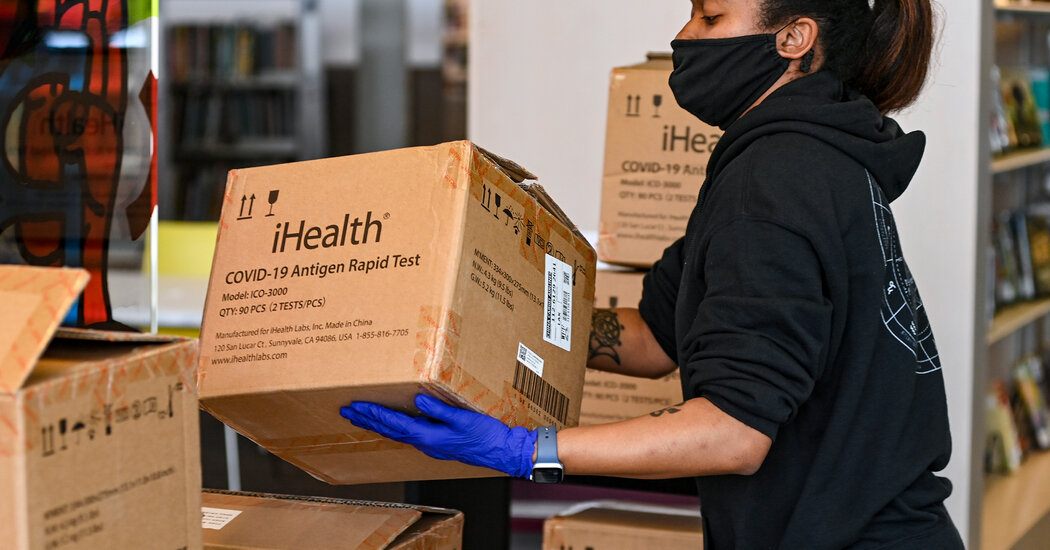
Visitors can go to covidtests.gov and click through to a Postal Service web page where they can order four tests per household, free of charge.WASHINGTON — The Biden administration’s new website allowing people to order up to four free at-home coronavirus tests quietly went live on Tuesday — a day in advance of its formal launch — and demand already appeared to be significant.A combined total of more than 1 million visitors were on the home page and the ordering page of covidtests.gov at one point Tuesday evening — more than 40 times as many as were on the government site with the next highest traffic, the U.S. Postal Service’s package-tracking page, according to analytics.usa.gov, which monitors traffic on participating federal websites.At a White House news conference on Tuesday, President Biden’s press secretary, Jen Psaki, said the official launch would take place on Wednesday morning, but that the site had begun taking orders during what she described as a “beta testing phase” conducted by the U.S. Digital Service, the government’s technology support division.Also on Wednesday, the White House will announce that it is making 400 million “high quality,” nonsurgical N95 masks available, free of charge, at community health centers and retail pharmacies across the nation. The masks will be released from the Strategic National Stockpile, officials said, calling the effort the “largest deployment of personal protective equipment in U.S. history.”The two moves show that the Biden administration is trying to step up its coronavirus response as the highly infectious Omicron variant drives a spike in cases across the nation. The administration at first resisted the idea of sending tests to Americans’ homes, but it has now enlisted the U.S. Postal Service to handle orders and deliveries.But it wasn’t long before the pilot testing revealed some apparent glitches.Some people living in apartment buildings said they were blocked from ordering tests if other tenants had already put in requests for the same building. Some who receive their mail at post office boxes also reported confusion in ordering, because the site includes a disclaimer that says orders would ship only to valid residential addresses.In a statement, the Postal Service said the problems were confined to “a small percentage of orders” and recommended that customers file a service request or contact the Postal Service help desk at 1-800-ASK-USPS (1-800-275-8777).Still, it was frustrating for those who had difficulty ordering. Gina Lindo, 46, easily ordered four tests for herself from the federal website on Tuesday afternoon, requesting that they be sent to her single-family home on Long Island. But when Ms. Lindo tried to order tests for her parents, who live in an apartment in Queens, she got an error message.“Home Covid-19 tests have already been ordered for this address,” the message read. “We are unable to process duplicate orders for the same address.”Ms. Lindo said she had immediately called her mother to ask if she had already ordered the tests. She had not, but an upstairs neighbor had, they learned.“They haven’t been able to get tests, they are sold out everywhere,” Ms. Lindo said. “I know it’s probably a line in the code on the USPS website that needs to be changed, but I really do hope that they change it quickly so that we can order the tests.”Her mother teaches English as a second language at a senior center once a week, she said, and wants to test regularly for that reason. She and Ms. Lindo’s father, who are both in their 70s, also hope to take home tests before their grandson’s upcoming 16th birthday party, and before upcoming appointments with their doctors.Mr. Biden has experience with fumbled website rollouts. When he was vice president, he and President Barack Obama presided over the disastrous launch of healthcare.gov, the online health-insurance marketplace created by the Affordable Care Act. Jeff Zients, who is now Mr. Biden’s coronavirus response coordinator, was brought in to rescue the troubled site, which crashed repeatedly under a crush of early users. The U.S. Digital Service was created in its aftermath.The Coronavirus Pandemic: Key Things to KnowCard 1 of 4The Omicron surge.

Read more →

Should bad science be censored on social media?

SharecloseShare pageCopy linkAbout sharingImage source, Getty ImagesHow do you solve a problem like bad information?When it comes to understanding science and making health decisions, it can have life-or-death consequences. People dissuaded from taking vaccines as a result of reading misleading information online have ended up in hospital or even died. And inaccurate or completely made-up claims about 5G and the origins of Covid-19 have been linked to violence and vandalism. But completely removing information can look a lot like censorship, especially for scientists whose careers are based on the understanding that facts can and should be disputed, and that evidence changes. The Royal Society is the world’s oldest continuously operating scientific institution, and it is attempting to grapple with the challenges posed by our newest ways of communicating information. In a new report, it advises against social media companies removing content that is “legal but harmful”. Instead, the report authors believe, social media sites should adjust their algorithms to prevent it going viral – and stop people making money off false claims.But not everyone agrees with that view – especially researchers who are experts in tracking the way misinformation spreads online, and how it harms people. The Center for Countering Digital Hate (CCDH) maintains there are cases when the best thing to do is to remove content when it is very harmful, clearly wrong and spreading very widely.The team points to Plandemic – a video that went viral at the start of the pandemic, making dangerous and false claims designed to scare people away from effective ways of reducing harm from the virus, like vaccines and masks, and was eventually taken down. Social media companies were better primed for the video’s sequel Plandemic 2, which fell flat after being restricted on major platforms, having nothing like the same reach as the first video. “It’s a political question…what balance we see between individual liberties and some form of restrictions on what people can and cannot say,” says Prof Rasmus Kleis Nielsen, director of the Reuters Institute for the Study of Journalism at the University of Oxford.Prof Nielsen acknowledges that, although it’s a relatively small part of people’s media diets, science misinformation can lead to disproportionate harm.But, he adds, given a lack of trust in institutions is a big driver of misinformation: “I imagine that there are quite a lot of citizens who would have their worst suspicions confirmed about how society works, if established institutions took a much more hands-on role in limiting people’s access to information.”Image source, Getty Images’Harder to reach’Echoing this concern, the Royal Society says: “Removing content may exacerbate feelings of distrust and be exploited by others to promote misinformation content.” This “may cause more harm than good by driving misinformation content…towards harder-to-address corners of the internet.”The fact that those corners are “harder to reach”, though, is arguably part of the point. It reduces the risk that someone who is not already committed to potentially harmful beliefs, and isn’t seeking them out, will be exposed to them by chance.Some of the violent protests that were driven at least in part by conspiracies had their origin not in obscure corners of the internet, but on Facebook. And there is little clear evidence that removing content drives people further into harmful beliefs. Change the algorithm Scientific misinformation is nothing new. The HIV misinformation still circulating in 2021The incorrect belief in a link between the MMR vaccine and autism came from a published (and later retracted) academic paper, while widespread unevidenced beliefs in the harm of water fluoridation were driven by the print media, campaign groups and word of mouth.What’s changed is the speed at which false facts travel, and the huge numbers of people who can end up reading them.Rather than removing content, one way suggested by the report’s authors of tackling misinformation is making it harder to find and share, and less likely to appear automatically on someone’s feed.This video can not be playedTo play this video you need to enable JavaScript in your browser.This, Prof Gina Neff, a social scientist at the Oxford Internet Institute explained, was to “ensure that people still can speak their mind” – they just aren’t guaranteed an audience of millions. “They can still post this information, but the platforms don’t have to make it go viral.” Fact-checkingThe Institute for Strategic Dialogue (ISD), a think tank which monitors extremism, points out a substantial proportion of misinformation relies on the appropriation and misuse of genuine data and research. “This is sometimes more dangerous than outright false information, because it can take substantially longer to debunk by explaining how and why this is a misreading or misuse of the data,” its spokesperson says. That’s where fact-checking comes in – another tool which the Royal Society supports.One of the most common pieces of vaccine misinformation over the past year – which the BBC has repeatedly fact-checked – was the notion that people are being harmed in high numbers by the jab. This claim is based on a misinterpretation of real figures. De-platforming individualsThe ISD says research has shown that a small group of accounts spreading misinformation had a “disproportionate influence on the public debate across social media”.”Many of these accounts have been labelled by fact-checkers as sharing false or misleading content on multiple occasions, yet remain live.”The Royal Society did not investigate removing the accounts of “influencers” who are especially prolific spreaders of harmful misinformation. But this is seen as an important tool by many disinformation experts, and research into ISIS and the far-right suggests it can be successful. When David Icke, a prolific spreader of Covid misinformation as well as anti-Semitic conspiracy theories, was removed from YouTube, research from the CCDH found his ability to reach people was considerably reduced.While his videos remained on alternative video-hosting platform BitChute, their views fell from 150,000 on average before the YouTube ban to 6,711 afterwards. On YouTube, 64 of his videos had been viewed 9.6 million times. Research from Cardiff University, found that the de-platforming of Kate Shemirani, a former nurse and prolific spreader of Covid misinformation, decreased her reach in the short term. This video can not be playedTo play this video you need to enable JavaScript in your browser.”Part of the issue is that current models of de-platforming need to be developed. It’s not enough to just take down a piece of content, or a small number of accounts,” one of the paper’s authors – Prof Martin Innes – explains. Research from organised crime and counter-terrorism shows the need to disrupt the whole network, he says.But he believes “this level of sophistication isn’t embedded yet” in the way we tackle disinformation that could put people in danger.

Read more →

COVID-19 may cause fetal inflammation even in absence of placental infection, researchers report

Researchers at the Wayne State University School of Medicine and the National Institutes of Health’s Perinatology Research Branch in Detroit have found that SARS-CoV-2, the virus that causes COVID-19, may cause fetal inflammation even in the absence of placental infection.
Pregnant women have a higher risk of severe illness if infected with COVID-19. Infection increases the risk of preterm birth, stillbirth and preeclampsia.
“Maternal-fetal immune responses in pregnant women infected with SARS-CoV-2,” published today in the journal Nature Communications, reports that COVID-19 infection during pregnancy may cause inflammatory immune responses in the fetus, even if the virus does not infect the placenta.
The study, conducted by Nardhy Gomez-Lopez, Ph.D., associate professor of the WSU Department of Obstetrics and Gynecology, and section head of the Maternal-Fetal Immunobiology Unit, and Roberto Romero, M.D., D.Med.Sci., chief of the NIH’s Perinatology Research Branch, based at the Wayne State University School of Medicine, and professor of Molecular Obstetrics and Genetics at the WSU School of Medicine, details changes in antibodies, immune cell types and inflammatory markers in maternal blood, umbilical cord blood and placental tissues.
“We found that in pregnant mothers who contract the virus, SARS-CoV-2 induces a fetal immune response even in the absence of placental infection or symptoms in the newborn. The potential long-term effects of this inflammatory process on infants requires further study,” Dr. Gomez-Lopez said.
The researchers evaluated 23 pregnant women. Twelve tested positive for SARS-CoV-2, and of those, eight were asymptomatic, one had mild symptoms and three had severe COVID-19. After delivery, the researchers compared immune responses between mothers and their newborns by comparing maternal blood and umbilical cord blood. Inflammatory immune responses triggered by the virus were observed in women, their newborns and placental tissues regardless of whether the mothers displayed symptoms.
The study team described the following observations: Pregnant women with SARS-CoV-2 had a reduction in an immune cell type called T-cells, which helps drive antiviral responses. Infected mothers developed antibodies against the virus whether or not they had symptoms, and some of these antibodies were found in the umbilical cord blood. Infected mothers had a higher level of immune activity markers (i.e., cytokines) in blood regardless of symptoms. The elevated cytokines are interleukin-8, interleukin-15 and interleukin-10. Infants born to infected mothers, even if the mother had no symptoms, had an inflammatory response reflected by higher levels of interleukin-8. This elevation was observed even though the fetus presumably did not have COVID-19. While the virus was absent in placentas, the placentas from infected mothers had altered ratios of immune cell types. The researchers also found altered immune activity (measured by changes in RNA transcripts) in the placenta and cord blood of infants born to infected mothers. These findings indicate that the neonatal immune system is affected by maternal infection by SARS-CoV-2 even if the virus is not detected in the placenta.”This study provides insight into the maternal-fetal immune responses triggered by SARSCoV-2 and emphasizes the rarity of placental infection,” Dr. Romero said. “Most pregnant women with SARS-CoV-2 infection are asymptomatic or only experience mild symptoms. Regardless, in the first six months of the COVID-19 pandemic, it was documented that infected pregnant women are at an increased risk for hospitalization, mechanical ventilation, intensive care unit admission and preterm birth, but rates of maternal mortality were reported to be similar between pregnant and non-pregnant women. More recently, it has been clearly shown that pregnant women are at high risk for severe disease and death, as well as preterm birth. Investigating host immune responses in pregnant women who are infected, even if they are asymptomatic, is timely.”
These latest findings will help researchers better understand COVID-19 during pregnancy. The authors noted that the potential long-term effects of this inflammatory process on infants requires further study.
This research was supported by the Perinatology Research Branch, Division of Obstetrics and Maternal-Fetal Medicine, Division of Intramural Research, Eunice Kennedy Shriver National Institute of Child Health and Human Development, National Institutes of Health, U.S. Department of Health and Human Services (NICHD/NIH/DHHS) under Contract No. HHSN275201300006C. This research was also supported by the Wayne State University Perinatal Initiative in Maternal, Perinatal and Child Health.

Read more →

Researchers pinpoint how Zika virus evades cell's antiviral response

The world knows SARS-CoV-2 intimately now, but there are more than 200 virus species capable of infecting humans and causing disease. And they all want to do the same thing: invade the host cells, hijack each cell’s machinery and reproduce. The human immune response system has numerous levels of robust defense, but many invading pathogens — as we are seeing now with the omicron variant — have a way to break through.
In a new study of the Zika virus, Northwestern University scientists have discovered a key mechanism used by the virus to evade the antiviral response of the cell it is attacking. This finding contributes to a better understanding of how viruses infect cells, overcome immune barriers and replicate — information that is essential for fighting them.
Zika virus is responsible for one of the most recent viral disease outbreaks prior to SARS-CoV-2, andthere are no vaccines or drugs for Zika disease.The Northwestern research reveals how the virus suppresses interferon signaling — a key player in initiating the antiviral immune response — to gain access to the cells. Identification of this specific virus-hostinteraction offers a new target for antiviral therapeutics.
“Here we looked at a Zika virus protein known to inhibit the antiviral response,” said Curt Horvath, the paper’s corresponding author. “Interferon signaling is the cell’s immediate response to an invader. If Zika can block this first line of defense, it can replicate in the cell.”
Horvath and his lab study the ability of a virus to suppress the human antiviral response. He is professor of molecular biosciences in the Weinberg College of Arts and Sciences and professor of medicine and of microbiology-immunology at Northwestern University Feinberg School of Medicine.
The study was published recently in the Journal of Virology.
“Zika is a simpler virus than SARS-CoV-2, but SARS-CoV-2 does a lot of the same things to suppress the antiviral response,” Horvath said. “SARS-CoV-2 also does much more, which is one of the reasons it’s more harmful to us. Understanding how one virus escapes or modifies the host antiviral response may help us learn about other viruses and also contribute to pandemic preparedness.”

Read more →

Research team identifies new mechanism for protecting DNA

Researchers from Case Western Reserve University have identified a new mechanism by which a protein known for repairing damaged DNA also protects the integrity of DNA by preserving its structural shape.
The discovery, involving the protein 53BP1, offers insight into understanding how cells maintain the integrity of DNA in the nucleus, which is critical for preventing diseases like premature aging and cancer.
A research team led by Youwei Zhang, an associate professor of pharmacology at the Case Western Reserve School of Medicine and a member of the Molecular Oncology Program at the Case Comprehensive Cancer Center, conducted the study. The findings were published (Jan. 18, 2022) in Nature Communications.
DNA, or deoxyribonucleic acid, is the chemical name for the molecule that carries genetic instructions in all living things.
53BP1 is a large protein known for determining how cells will repair a particular type of DNA damage — DNA double-strand break (DSB), in which the two strands of DNA are both broken, leaving a free DNA end floating around in the cell’s nucleus.
When DSB occurs, if not repaired, DNA ends could fuse to what it should not under normal conditions, which leads to the disruption of genetic information. In the short term, cells with unrepaired DNA may kill themselves off; but if a cell lost this self-surveillance, it may start the journey toward cancer.

Read more →

Guiding the treatment of critically ill patients

New research on intravenous fluids used in intensive care shows that commonly used saline is as effective at keeping people alive and their organs functioning as more expensive balanced solutions.
The results not only provide doctors with greater certainty about the safety and benefits of saline solution, but also have broader implications for treatment availability and costs around the world.
“Just about every patient admitted to the Intensive Care Unit (ICU) will receive intravenous fluids for resuscitation or as part of standard treatment,” said Professor Simon Finfer AO, an ICU physician and senior researcher at The George Institute.
“However, the best choice of fluid has been a longstanding issue of debate as some fluids were approved and licensed for use based on trials in small numbers of patients looking only at short term outcomes.”
Plasma-Lyte 148® is a type of intravenous fluid that more closely matches the body’s normal levels of certain minerals, known as balanced multi-electrolyte solutions, or BMES. Use of BMES has increased since concerns were raised about increased rates of kidney injury and death associated with saline although this had not been proven in clinical trials.
To address this uncertainty and to help doctors choose the best fluid for their patients, George Institute researchers designed and led a large clinical trial — the Plasma-Lyte 148® versUs Saline (PLUS) study — involving over 5,000 patients across 53 sites in Australia and New Zealand.

Read more →