Scientists trace the path of radioactive cesium in the ecosystem of Fukushima

In the aftermath of the Fukushima nuclear accident, the Japanese government performed intensive decontamination in the human-occupied parts of the affected area by removing soil surface layers. But a major affected region consists of dense, uninhabited forests, where such decontamination strategies are not feasible. So, finding ways to avoid the spread of radioactive contaminants like radiocesium to areas of human activity that lie downstream to these contaminated forests is crucial.
The first step to this is to understand the dynamics of radiocesium flow through forest-stream ecosystems. In the decade since the accident, a vast body of research has been dedicated to doing just that. Scientists from the National Institute of Environmental Studies, Japan, sifted through the data and detangled the threads of individual radiocesium transport processes in forest-stream ecosystems. “We identified that radiocesium accumulates primarily in the organic soil layer in forests and in stagnant water in streams, thereby making them potent sources for contaminating organisms. Contamination management in these habitats is crucial to provisioning services in forest-stream ecosystems,” says Dr. Masaru Sakai, who led the study. The findings of this study was made available online on 6 July 2021 and published in volume 288 of the journal Environmental Pollution on 1st November 2021.
The research team reviewed a broad range of scientific research on radiocesium in forests and streams to identify regions of radiocesium accumulation and storage. After the accident, radiocesium was primarily deposited onto the forest canopy and forest floor. This radiocesium reaches the earth eventually — through rainfall and falling leaves — where it builds up in the upper layers of the soil. Biological activities, such as those of detritivores (insects and fungi that live off leaf debris etc.) ensure that radiocesium is circulated through the upper layers of the soil and subsequently incorporated into plants and fungi. This allows radiocesium to enter the food web, eventually making its way into higher organisms. Radiocesium is chemically similar to potassium, an essential mineral in living organisms, contributing to its uptake in plants and animals. “Fertilizing” contaminated areas with an excess of potassium provides an effective strategy to suppress the biological absorption of radiocesium.
Streams and water bodies in the surrounding area get their share of radiocesium from runoff and fallen leaves. Most radiocesium in streams is likely to be captured by the clay minerals on stream beds, but a small part dissolves in the water. Unfortunately, there is little information on the relationship between dissolved radiocesium and aquatic organisms, like fish, which could be important to the formulation of contamination management strategies. Radiocesium in streams also accumulates in headwater valleys,pools, and other areas of stagnant water. Constructions such as reservoir dams provide a way to effectively trap radiocesium but steady leaching from the reservoir sediments causes re-contamination downstream.
This complicated web of radiocesium transport is hard to trace, making the development of a one-stop solution to radiocesium contamination impossible. Dr. Sakai and team recommend interdisciplinary studies to accelerate a full understanding of radiocesium pathways in forest-stream ecosystems so that measures can be developed to reduce future contamination. “This review can serve as basal knowledge for exploring future contamination management strategies. The tangled radiocesium pathways documented here may also imply the difficulties of creating successful radiation contamination management strategies after unwished-for nuclear accidents,” explains Dr. Sakai.
Nuclear power is often touted as a solution to the energy crisis, but it is important to plan response measures to unpredictable contamination events. To address the essential need for clean energy in view of the climate crisis, contamination management in societies depending on nuclear power is integral. Fully understanding the behavior of radiocesium in ecosystems can not only lead to the successful management of existing contamination but can also ensure the swift containment of potential future accidents.
Story Source:
Materials provided by National Institute for Environmental Studies. Note: Content may be edited for style and length.

Read more →

Aerobic fitness of elite soccer players linked to player positions

Researchers have linked the fitness of elite soccer players to the positions they play.
The ability to make this assessment can help coaches regulate individual training loads based on player position, according to a recent study.
The study found that all positions on a soccer pitch except centre backs showed a strong association between aerobic power training and high-intensity performance.
“It is perhaps not surprising because centre backs cover less distance and perform fewer power events than other field positions,” said Matteo Masucci, a PhD candidate in Kinesiology and Health Sciences at the University of Waterloo. “Centre backs face the pitch and control the situation. They have a slower pace and play more of a mental or tactical game. Midfielders analyze everything in front and behind them and must react in both these directions. Strikers need to express maximal effort to get a shot off at the right time.”
Researchers worked with data from 62 Italian Serie A soccer players over a full season between 2014-15 and 2018-19 and tested whether targeted treadmill training and lactate blood samples from the players’ earlobes properly assessed aerobic fitness — the overall amount of energy required to perform a high-power event like acceleration or deceleration.
“When paired with videos of on-field performance, our analysis showed that the link between aerobic fitness and repeated high-intensity sequences in a game varied with the position a soccer competitor played,” said Masucci, who is also a soccer coach.
It was found that during a 90-minute game, an elite soccer player can make up to 1,400 activity changes and up to 200 short multidirectional high-intensity efforts, necessitating physical conditioning not only in terms of speed but in movement pattern changes as well.
Previous studies have investigated the association between aerobic fitness and soccer, but only in the speed category. Masucci said because of the acceleration and deceleration that elite soccer players must expend, as well as the time it takes to recover from high-intensity sequences, it is also important to study high-power events that are not related to speed.
“These findings mean that coaches can use lactate blood samples and incremental treadmill assessments to provide valuable information about soccer players,” Masucci said. “Players who have a high metabolic power distance cut-off equal to or higher than 1,450 m for centre backs, 1,990 m for full-backs, 2,170 m for midfielders and 1,670 m for forwards could be considered as having superior aerobic fitness. Therefore, when planning training and game strategy, coaches should consider these individual differences in physiological and physical performance.”
The study, Relationship between aerobic fitness and metabolic power metrics in elite male soccer players, was led by Vincenzo Manzi (Università Telematica Pegaso), and co-authored by Masucci, Giuseppe Annino, Cristian Savoia, Giuseppe Caminiti, Elvira Padua, Rosario D’Onofrio and Ferdinando Iellamo. It was published in the journal Biology of Sport.
Story Source:
Materials provided by University of Waterloo. Note: Content may be edited for style and length.

Read more →

Food labeling is lacking in online grocery retailers

Online food retailers do not consistently display nutrition information on their websites — and U.S. laws are lagging behind in mandating the same labeling required for foods sold in brick-and-mortar stores, according to a new analysis by researchers from the NYU School of Global Public Health and the Friedman School of Nutrition Science and Policy at Tufts University.
“Information required to be provided to consumers in conventional grocery stores is not being uniformly provided online — in fact, it only appears on roughly a third of the online grocery items we surveyed,” said Jennifer Pomeranz, an assistant professor of public health policy and management at the NYU School of Global Public Health and lead author of the study, which was published in Public Health Nutrition.
“Our study shows that the online food shopping environment today is a bit of a ‘Wild West,’ with incomplete and inconsistent provision of required nutrition information to consumers,” said Dariush Mozaffarian, dean of the Friedman School and the study’s senior author. “Online shopping will only continue to grow, and this creates an excellent opportunity to positively influence consumers to make healthy and safe choices. We need to leverage this chance to help make progress against the nutrition-related health crisis in this country.”
Online grocery shopping was already rapidly growing before COVID-19 emerged, but the pandemic has greatly accelerated its use. From 2019 to 2020, online grocery sales in the U.S. tripled from 3.4% to 10.2% of total grocery sales, and are projected to reach 21.5% of total sales by 2025. In addition, the United States Department of Agriculture (USDA) started a pilot program in 2019 to allow Supplemental Nutrition Assistance Program (SNAP) participants to purchase groceries online.
However, this rapid growth in online grocery shopping has outpaced regulatory attention to information appearing on foods sold online. While U.S. law requires nutrition facts, allergen information, and ingredient lists to appear on the physical packaging of food products, these regulations do not currently extend to online retailers. As a result, crucial health and safety information may not be available to online grocery shoppers.
To better understand the landscape of what information appears with online groceries, the researchers analyzed 10 major products across nine major online grocery retailers to identify what information is displayed. They focused on bread, cereals, and drinks — packaged foods that are required by the Food and Drug Administration (FDA) to have a standardized information panel disclosing nutrition facts, a list of ingredients, common food allergens, and, for fruit drinks, the percent juice. The researchers also reviewed the federal government’s legal authorities and limitations for requiring online food retailers to disclose nutrition information.

Read more →

Can individuals' walking pace impact their heart failure risk?

In a study in the Journal of the American Geriatrics Society of postmenopausal women, those who reported a faster walking pace had a lower risk of developing heart failure.
Among 25,183 women ages 50-79 years, there were 1,455 heart failure hospitalization cases during a median follow-up of 16.9 years. Compared with women who walked at a casual pace, those who walked at an average pace or a fast pace had 27% and 34% lower risks of heart failure, respectively.
Fast walking for less than 1 hour per week was associated with the same risk reduction of heart failure as average or casual walking for more than 2 hours per week.
“This study confirms other studies demonstrating the importance of walking speed on mortality and other cardiovascular outcomes,” said senior author Charles B. Eaton, MD, MS, of the Warren Alpert Medical School of Brown University. “Given that limited time for exercise is frequently given as a barrier to regular physical activity, walking faster but for less time might provide similar health benefits as the recommended 150 minutes per week of moderate physical activity.”
Story Source:
Materials provided by Wiley. Note: Content may be edited for style and length.

Read more →

Nano bubbles could treat, prevent current and future strains of SARS-CoV-2

Scientists at Northwestern Medicine and The University of Texas MD Anderson Cancer Center have identified natural nano-bubbles containing the ACE2 protein (evACE2) in the blood of COVID-19 patients and discovered these nano-sized particles can block infection from broad strains of SARS-CoV-2 virus in preclinical studies.
The evACE2 acts as a decoy in the body and can serve as a therapeutic to be developed for prevention and treatment for current and future strains of SARS-CoV-2 and future coronaviruses, the scientists said. Once developed as a therapeutic product, it can benefit human beings as a biological treatment with minimal toxicities.
The study is the first to show evACE2 proteins are capable of fighting the new SARS-CoV-2 variants with an equal or better efficacy than blocking the original strain. The researchers found these evACE2 nano bubbles exist in human blood as a natural anti-viral response. The more severe the disease, the higher the levels of evACE2 detected in the patient’s blood.
The paper will be published in Nature Communications Jan. 20.
“Whenever a new mutant strain of SARS-CoV-2 surges, the original vaccine and therapeutic antibodies may lose power against alpha, beta, delta and the most recent omicron variants,” said study co-senior author Dr. Huiping Liu, an associate professor of pharmacology and of medicine at Northwestern University Feinberg School of Medicine and a Northwestern Medicine physician. “However, the beauty of evACE2 is its superpower in blocking broad strains of coronaviruses, including the current SARS-CoV-2 and even future SARS coronaviruses from infecting humans.”
“Our mouse studies demonstrate the therapeutic potential of evACE2 in preventing or blocking SARS-CoV-2 infection when it is delivered to the airway via droplets,” Liu said.

Read more →

Dementia: How to prevent cognitive decline

Physical activity, nutrition and cognitively stimulating activities are all known to be good ways to prevent Alzheimer’s disease and dementia. And older adults at risk can access a variety of lifestyle services to that end, including diet regimes and exercises for their body and mind.
Now an international team of researchers led by Université de Montréal psychology professor Sylvie Belleville has determined how many of those intervention sessions are needed prevent cognitive decline in people at risk: only about a dozen.
Published in Alzheimer’s & Dementia : The Journal of the Alzheimer’s Association, the study by Dr. Belleville and colleagues at the universities of Toulouse and Helsinki show that 12 to 14 sessions are all that’s were needed to observe an improvement in cognition. Until now, the number of sessions or “doses” needed for optimal effect has been unknown.
“In pharmacological studies, every effort is made to define an optimal treatment dose needed to observe the expected effects, ” said Belleville, a neuropsychologist and researcher at the research centere of the UdeM-affiliated Institut universitaire de gériatrie de Montréal. “This is rarely done in non-pharmacological studies, especially those on the prevention of cognitive decline, where little information is available to identify this dose.
“Defining an optimal number of treatment sessions is therefore crucial.,” she continued. “Indeed, proposing too few sessions will produce no noticeable improvement effects, but too many sessions is also undesirable as these interventions are costly. They are costly both for the individual who follows the treatments, in terms of time and involvement, and for the organization offering these treatments.”
The study is based on a secondary analysis of data from the three-year Multidomain Alzheimer Preventive Trial (MAPT) and looked at 749 participants who received a range of interventions aimed at preventing cognitive decline. These included dietary advice, physical activity and cognitive stimulation to improve or maintain physical and cognitive abilities.
People’s individuality important
In their research, Belleville’s team noted that people’s individuality should be considered when determining the optimal treatment dose.
In their study, the researchers evaluated the effects of the sessions in terms of each participant’s age, gender, education level, and cognitive and physical condition. The relationship between the “dose” each received and their cognitive improvement was then analyzed.
The main results show an increase with dose followed by a plateau effect after 12 to 14 sessions. In other words, you need enough dose to see an effect but offering more than 12 to 14 sessions of treatment does not mean better results. That said, participants with lower levels of education or more risk factors for frailty did benefit from more sessions.
The conclusion? It’s important to identify and target an optimal dose and to customize the treatment for each individual, the researchers say. Not only is “dosage” an important component of behavioural interventions, it can also provide valuable information when time and money are limited, helping public-health agencies develop effective prevention programs and offer guidance to older adults and clinicians.
Story Source:
Materials provided by University of Montreal. Note: Content may be edited for style and length.

Read more →

First clinical-grade transplant of gene-edited pig kidneys into brain-dead human

The University of Alabama at Birmingham Marnix E. Heersink School of Medicine announces today the first peer-reviewed research outlining the successful transplant of genetically modified, clinical-grade pig kidneys into a brain-dead human individual, replacing the recipient’s native kidneys. These positive results demonstrate how xenotransplantation could address the worldwide organ shortage crisis.
In the study published in the American Journal of Transplantation, UAB researchers tested the first human preclinical model for transplanting genetically modified pig kidneys into humans. The study recipient had two genetically modified pig kidneys transplanted in his abdomen after his native kidneys were removed. The organs were procured from a genetically modified pig at a pathogen-free facility.
“Along with our partners, we have made significant investments in xenotransplantation for almost a decade hoping for the kinds of results published today,” said Selwyn Vickers, M.D., dean of the UAB Heersink School of Medicine and CEO of the UAB Health System and UAB/Ascension St. Vincent’s Alliance. “Today’s results are a remarkable achievement for humanity and advance xenotransplant into the clinical realm. With this study, our research teams have also demonstrated that the decedent model has significant potential to propel the xenotransplantation field forward.”
For the first time, the pig kidneys transplanted were taken from pigs that had been genetically modified with 10 key gene edits that may make the kidneys suitable for transplant into humans. This process demonstrates the long-term viability of the procedure and how such a transplant might work in the real world. The transplanted kidneys filtered blood, produced urine and, importantly, were not immediately rejected. The kidneys remained viable until the study was ended, 77 hours after transplant.
“This game-changing moment in the history of medicine represents a paradigm shift and a major milestone in the field of xenotransplantation, which is arguably the best solution to the organ shortage crisis,” said Jayme Locke, M.D., director of the Comprehensive Transplant Institute in UAB’s Department of Surgery and lead surgeon for the study. “We have bridged critical knowledge gaps and obtained the safety and feasibility data necessary to begin a clinical trial in living humans with end-stage kidney failure disease.”
Gene editing in pigs to reduce immune rejection has made organ transplants from pigs to humans possible, which could offer help to thousands of people who face organ failure, disease or injury. The natural lifespan of a pig is 30 years, they are easily bred and can have organs of similar size to humans.

Read more →

Researchers simulate SARS-COV-2 transmission and infection on airline flights

A study published in Indoor Air simulated the transmission of SARS-CoV-2, the virus that causes COVID-19, on a flight from London to Hanoi and on another flight from Singapore to Hangzhou.
When simulating the dispersion of droplets of different sizes generated by coughing, talking, and breathing activities in an airline cabin by an infected person, researchers found that SARS-CoV-2 virus contained in such droplets traveled with the cabin air distribution and was inhaled by other passengers.
The scientists counted the number of viral copies inhaled by each passenger to determine infection. Their method correctly predicted 84% of the infected/uninfected cases on the first flight. The team also found that wearing masks and reducing conversation frequency between passengers could help to reduce the risk of exposure on the second flight.
“We are very pleased to see that our model validated by experimental data can achieve such a high accuracy in predicting COVID-19 transmission in airliner cabins,” said corresponding author Dayi Lai, PhD, Associate Professor and Associate Head of the Department of Architecture, School of Design of Shanghai Jiao Tong University, in China. “Also, it’s important to know that wearing masks makes a significant impact on reducing the transmission.”
Story Source:
Materials provided by Wiley. Note: Content may be edited for style and length.

Read more →

Kidneys From a Genetically Altered Pig Are Implanted in a Brain-Dead Patient

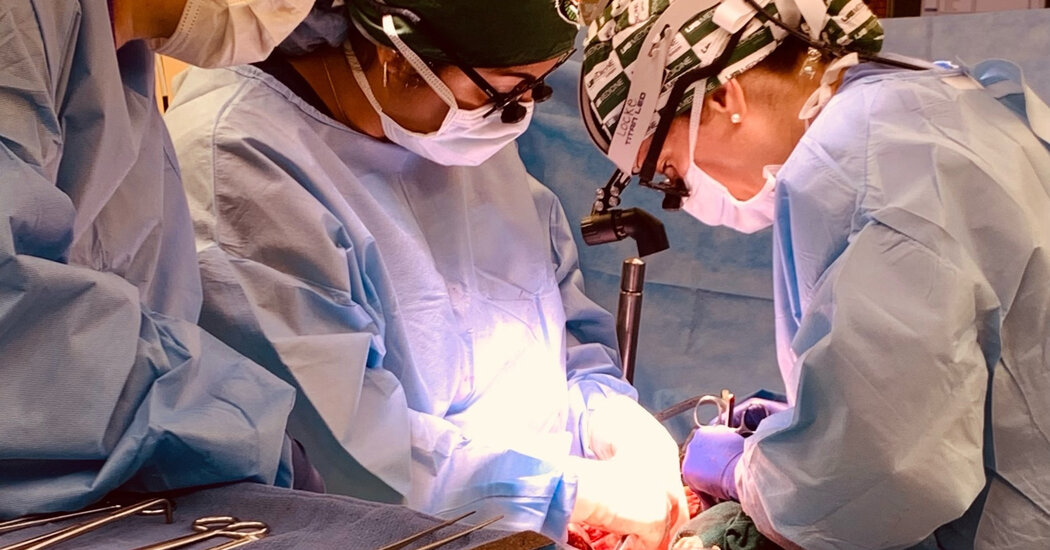
Surgeons at the University of Alabama at Birmingham said they hoped to start clinical trials with kidney patients later this year.Surgeons at the University of Alabama at Birmingham reported on Thursday that they had for the first time successfully transplanted kidneys from a genetically modified pig into the abdomen of a 57-year-old brain-dead man.The announcement was the latest in a series of remarkable feats in organ transplantation. Earlier this month, surgeons at the University of Maryland transplanted a heart from a genetically modified pig into a 57-year-old patient with heart failure. That patient is still alive and under observation.In September, surgeons at NYU Langone Health attached a kidney from a genetically modified pig to a brain-dead individual who was being maintained on a ventilator. Though it remained outside the body, the kidney worked normally for 54 hours, making urine and creatinine, a waste product.The U.A.B. surgery was reported in The American Journal of Transplantation, the first time a pig-to-human organ transplantation has been described in a peer-reviewed medical journal.According to the surgical team, the pig kidneys started functioning and making urine after about 23 minutes and continued to do so for three days, though one kidney made more urine than the other.The patients’s own kidneys were removed, and there were no signs indicating rejection of the pig organs.Dr. Jayme Locke, the lead surgeon, said that the procedure had closely followed all of the steps of a regular human-to-human transplant operation and that critical safety questions had been addressed, laying the groundwork for a small clinical trial with live patients that she hoped to begin by the end of the year.Many of the previous operations have been unique experiments, not part of ongoing trials.“Our goal is not to have a one-off, but to advance the field to help our patients,” said Dr. Locke, who is director of U.A.B.’s Incompatible Kidney Transplant Program. “What a wonderful day it will be when I can walk into clinic and know I have a kidney for everyone waiting to see me.”Alabama has one of the highest rates of chronic kidney disease in the nation: 2,348 cases per million residents. Often a result of diabetes or high blood pressure, kidney disease is most common in older adults, but it disproportionately affects people of color, women, and those with less education and lower incomes.In Alabama, kidney disease rates are unusually high in adults ages 45 to 64. Kidney patients who do not receive transplants from a compatible donor must undergo dialysis treatments about three times a week, for several hours each time.Read More About Organ TransplantsRecent Breakthroughs: In groundbreaking procedures, surgeons successfully transplanted a heart and attached a kidney from genetically modified pigs to human patients.Solving the Shortage: Thanks to genetically engineered pigs, the donor-organ shortage could be a thing of the past, though considerable hurdles remain.Accepting New Organs: Transplant patients must take damaging anti-rejection drugs for the rest of their lives. Researchers hope to trick the immune system instead.“Kidney failure is refractory, severe and impactful, and we think it needs a radical solution,” Dr. Locke said. She hopes to be able to offer pig kidney transplants to her patients within five years, as long as “we hit every milestone, and there are no setbacks.”In the paper, she and the other authors thanked the family of the brain-dead individual, James Parsons, for consenting to the research and said they would name this type of study after Mr. Parsons, a registered organ donor from Huntsville who sustained his injury during a motorcycle race in September.Relatives described Mr. Parsons as a gregarious person who loved helping people whenever he could. The family agreed to the research immediately.“He would be thrilled so many people stand to benefit,” Mr. Parsons’s sister, Amy Parsons Vaughn, said in an interview. “So many people need a kidney.”James Parsons, an avid motorcycle racer, was injured during a race in September.via family of Jim ParsonsMore than a half million Americans have end-stage kidney disease and depend on dialysis. A transplant is the best treatment for kidney failure, but an acute shortage of donor organs leaves that option out of reach for the vast majority of patients.More than 90,000 people were on waiting lists for a kidney as of last summer. The wait can be long: Fewer than 25,000 kidney transplants are done in the United States each year, and more than a dozen people on the waiting list die each day.Researchers have long sought to grow organs in pigs that are suitable for transplantation into humans, and in recent years new technologies like cloning and genetic engineering have brought that vision closer to reality.Xenotransplantation, the practice of implanting animal organs in humans, has progressed in fits and starts for decades. Over the last few months, however, surgeons in the field have reported a string of new accomplishments.At NYU Langone in September, surgeons experimented with a kidney removed from a pig that had been genetically altered so that its tissue would not prompt an aggressive human rejection response. The kidney was attached to the patient’s thigh and seemed to work, functioning as a kidney should, making urine and creatinine, a waste product, for 54 hours.But the most stunning such procedure occurred at University of Maryland Medical Center in early January. The patient, David Bennett Sr., had exhausted all other treatment options and was given a genetically modified pig’s heart.He was weaned from a heart-lung bypass machine on Jan. 11. He is doing well and has not rejected the animal’s organ, said Dr. Muhammad Mohiuddin, the scientific director of the University of Maryland cardiac xenotransplantation program.“It’s been 12 days now, and he’s progressing — the heart is beating like a new heart,” Dr. Mohiuddin said. “It’s like we put a BMW engine in a 1960s car.”The heart Mr. Bennett received was taken from a pig whose genome had undergone 10 alterations, including the removal of four genes to prevent rejection and to prevent continued growth of the organ.In addition, six human genes were inserted into the donor pig’s genome to make its organs more tolerable to the human immune system.The pigs were provided by Revivicor, a subsidiary of United Therapeutics Corporation, which helped fund the research and provided grant money supporting the salaries of Dr. Paige Porrett, the first author of the paper describing the kidney transplant and an associate professor of transplantation surgery at U.A.B., as well as Dr. Locke and two other study authors. Four of the other authors on the paper are Revivicor employees.The fact that these pig organs are not being rejected is a major achievement, experts said.“The biggest fear in the xenotransplant community was of hyper-acute immune rejection — that you put in the new organ and the body would immediately reject it,” Dr. Mohiuddin said.Dr. Robert Montgomery, the director of the NYU Langone Transplant Institute, said he welcomed the opportunity to learn more about xenotransplantation through work done at other centers.“I’m particularly interested in what new information we can learn about the function of the kidneys, given the significant differences in the genetic modifications and transplantation process from the studies we performed,” he said.He and other surgeons at NYU Langone attached another pig kidney to a brain-dead patient on Nov. 22, he said.Dr. Locke said that she had taken care to make sure that the experimental kidney operation at U.A.B. closely mirrored a standard allotransplantation, or human-to-human transplant.The pig’s organs were removed in a sterile operating facility that meets human hospital certification standards. A compatibility test, standard before any transplant operation, was developed to make sure the brain-dead person did not already have antibodies to the pig organ that would cause rejection.The surgeons also removed Mr. Parsons’s kidneys in order to ascertain that his urine was indeed being made by the pig’s kidney and administered only standard immunosuppressant drugs that were already widely in use in allotransplants.“This is part of a larger program to make sure we can move this into living people in a responsible way,” said Dr. Porrett, who is director of clinical translational research for the U.A.B.’s transplant institute.“We wanted to take the whole thing out for a test drive in a human, so that when we offer it to patients we can look them in the eye and say that we did the most we could do to make sure we know how this will work.”

Read more →