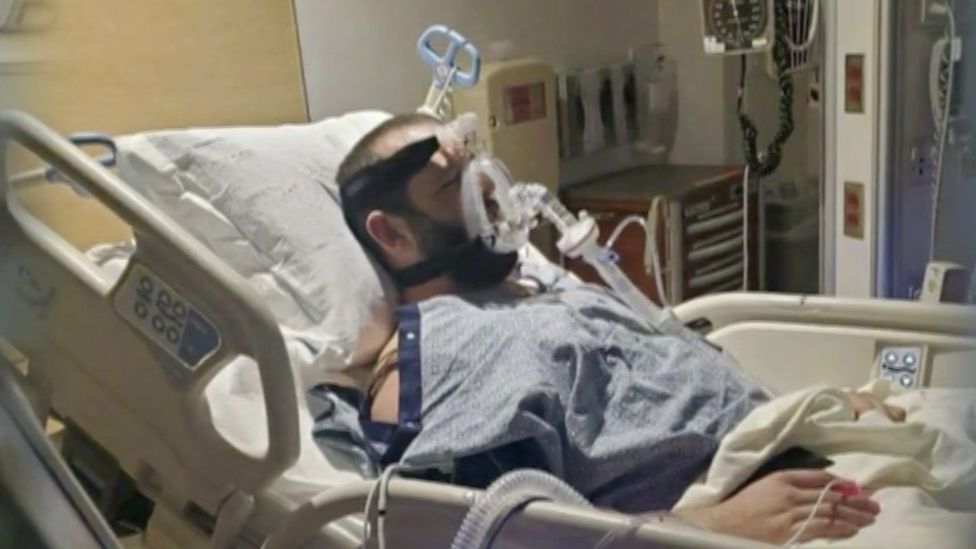
Unvaccinated man denied heart transplant by Boston hospital

SharecloseShare pageCopy linkAbout sharingImage source, CBSA US hospital has rejected a patient for a heart transplant at least in part because he is not vaccinated against Covid-19.DJ Ferguson, 31, is in dire need of a new heart, but Brigham and Women’s Hospital in Boston took him off their list, said his father, David.He said the Covid vaccine goes against his son’s “basic principles, he doesn’t believe in it”.The hospital said it was following policy.Brigham and Women’s Hospital told the BBC in a statement: “Given the shortage of available organs, we do everything we can to ensure that a patient who receives a transplanted organ has the greatest chance of survival.”A spokesman said the hospital requires “the Covid-19 vaccine, and lifestyle behaviours for transplant candidates to create both the best chance for a successful operation and to optimise the patient’s survival after transplantation, given that their immune system is drastically suppressed”.The hospital’s carefully worded statement may suggest other factors lie beyond the patient’s unvaccinated status for his ineligibility, but it refused to discuss specifics, citing patient privacy.The hospital added that most of the 100,000 people on waitlists for organ transplants will not receive an organ within five years because of the shortage of available organs. Daily US death toll from Covid now matches DeltaMr Ferguson has been in hospital since last Thanksgiving weekend, 26 November 2021, and he suffers from a hereditary heart issue that causes his lungs to fill with blood and fluid, according to a GoFundMe.The organiser of the fundraiser said Mr Ferguson was concerned he could experience cardiac inflammation – a potential side effect from coronavirus vaccination that the US Centers for Disease Control and Prevention (CDC) emphasises is rare and temporary – and that it might prove dangerous given the weakness of his heart.The CDC encourages transplant recipients and those in their immediate circles to get fully vaccinated and boosted.Dr Arthur Caplan, head of medical ethics at NYU Grossman School of Medicine, told CBS News that after any organ transplant a patient’s immune system is all but shut down and even a common cold can prove fatal.”The organs are scarce, we are not going to distribute them to someone who has a poor chance of living when others who are vaccinated have a better chance post-surgery of surviving,” said Dr Caplan.’I lost my job for being unvaccinated’What’s the risk of Covid for unvaccinated Americans?US man gets pig heart in world-first transplantA father-of-two with a third child on the way, Mr Ferguson remains at the hospital, said his loved ones.His family has suggested he is too weak to be transferred to a different hospital and is “running out of time”.”My boy is fighting pretty damn courageously and he has integrity and principles he really believes in and that makes me respect him all the more,” said David Ferguson.”It’s his body. It’s his choice.”It is not the first time an unvaccinated American has faced healthcare obstacles in recent weeks.Earlier this month, a Minnesota woman sued her local hospital after doctors tried to take her unvaccinated husband off the ventilator he had been on for two months.Just over 63% of the US population is double-jabbed and about 40% of Americans have received a third booster dose.

Read more →

Large study provides reassurance that COVID-19 vaccination does not affect fertility or early pregnancy

Vaccination against COVID-19 did not affect fertility outcomes in patients undergoing in-vitro fertilization (IVF), a new study has found. The findings, which were published in Obstetrics & Gynecology (the Green Journal), add to the growing body of evidence providing reassurance that COVID-19 vaccination does not affect fertility.
Investigators at the Icahn School of Medicine at Mount Sinai (Icahn Mount Sinai), New York City, and Reproductive Medicine Associates of New York (RMA of New York) compared rates of fertilization, pregnancy, and early miscarriage in IVF patients who had received two doses of vaccines manufactured by Pfizer or Moderna with the same outcomes in nonvaccinated patients.
“This is one of the largest studies to review fertility and IVF cycle outcomes in patients who received COVID-19 vaccinations. The study found no significant differences in response to ovarian stimulation, egg quality, embryo development, or pregnancy outcomes between the vaccinated compared to unvaccinated patients.” saidDevora A. Aharon, MD, first author of the study. Dr. Aharon is a fellow in reproductive endocrinology and infertility at Icahn Mount Sinai and RMA of New York. “Our findings that vaccination had no impact on these outcomes should be reassuring to those who are trying to conceive or are in early pregnancy.”
The study involved patients whose eggs were collected from the ovaries and fertilized by sperm in a laboratory, creating embryos that were frozen and later thawed and transferred to the womb, and patients who underwent medical treatment to stimulate the development of eggs. The two groups of patients who underwent frozen-thawed embryo transfer — 214 vaccinated and 733 unvaccinated — had similar rates of pregnancy and early pregnancy loss. The two groups of patients who underwent ovarian stimulation — 222 vaccinated and 983 unvaccinated — had similar rates of eggs retrieved, fertilization, and embryos with normal numbers of chromosomes, among several other measures.
The authors of the study anticipate that the findings will ease the anxiety of people considering pregnancy.”By leveraging science and big data, we can help reassure patients of reproductive age and enable them to make the best decisions for themselves. It will give people comfort to know that the COVID-19 vaccine does not affect their reproductive potential,” said senior author Alan B. Copperman, MD, FACOG, division director andclinical professor of obstetrics, gynecology and reproductive science at Icahn Mount Sinai and director of RMA of New York, which is recognized internationally as a leading center of reproductive medicine.
The patients in the study were treated at RMA of New York between February and September 2021. Patients undergoing IVF treatment are closely tracked, enabling the researchers to capture early data on the implantation of embryos in addition to pregnancy losses that might be undercounted in other studies.
The publication of the new study coincides with the surge of the highly contagious Omicron variant.Previous studies have found that COVID-19 vaccination helped protect pregnant people — for whom COVID-19 substantially increases the risk of severe illness and death — from severe illness, conferred antibodies to their infants, and did not raise the risk of preterm birth or fetal growth problems.
Story Source:
Materials provided by The Mount Sinai Hospital / Mount Sinai School of Medicine. Note: Content may be edited for style and length.

Read more →

Covid: Netherlands to ease restrictions despite rising case numbers

SharecloseShare pageCopy linkAbout sharingImage source, Getty ImagesThe Dutch government has said it will ease its Covid-19 restrictions, among Europe’s toughest, from Wednesday. Dutch hospitality settings, including bars, restaurants and museums, have been shut since 18 December in a bid to curb the spread of the Omicron variant. But despite the restrictions, Covid-19 cases have continued to increase, with some 60,000 now recorded per day. Prime Minister Mark Rutte told a news conference that the country was “taking a risk” in easing the restrictions.Mr Rutte, who has faced growing calls for a relaxation of restrictions in recent weeks amid falling deaths and admissions to intensive care, added that the new rules will be effective until 8 March. Cafes, bars and restaurants will be allowed to open until 10pm, though patrons will be required to show proof of vaccination or recent recovery from a coronavirus infection to gain entry. Nightclubs will remain closed, and capacity at sporting and cultural events will be limited to 1,250 people. The reopening follows a wave of anger from many hospitality sector employees, who were left disappointed by the government’s decision to allow shops, gyms, hairdressers and sex workers to resume business on 15 January while their sector was kept in lockdown. Cafes in several cities opened in defiance of the restrictions the weekend before last, and dozens of museums and theatres opened as beauty salons for a day in protest.Public support for the strict measures has also waned steadily over the past month and large demonstrations against the rules have become more frequent in the capital, Amsterdam. Mr Rutte alluded to this anger during his news conference, telling reporters that the government was “consciously looking for the limits of what is possible, because of the great tensions and cries for help in recent days”.Meanwhile, Health Minister Ernst Kuipers warned that the virus is “not the flu”, but said that relaxing the curbs was important. “Living for longer with restrictive measures harms our health and our society,” he said. Despite the the harsh restrictions, new coronavirus cases have continued to rise. On Tuesday, the National Institute for Health (RIVM) reported a record 366,120 cases for the previous week, a rise of 51%.Nearly 90% of people in the Netherlands have now been vaccinated. But the country has lagged behind its western European neighbours in the rollout of its booster vaccine programme, with just 57% of people coming forward for their shot. You might also be interested in: This video can not be playedTo play this video you need to enable JavaScript in your browser.

Read more →

Stem cell discoveries hold potential to improve cancer treatment

Two recent discoveries by stem cell scientists at Cedars-Sinai may help make cancer treatment more efficient and shorten the time it takes for people to recover from radiation and chemotherapy.
In the first study, published in the journal Blood, investigators discovered a protein that is expressed by blood stem cells that could aid in identifying, studying and deploying the cells for treatments.
“We show that this protein, syndecan-2, identifies primitive blood stem cells and it regulates stem cell function,” said John Chute, MD, director of the Division of Hematology and Cellular Therapy at Cedars-Sinai and senior author of the study.
Blood stem cells are found in small quantities in the bone marrow and in peripheral blood — the type that travels through the heart, arteries, capillaries and veins. These stem cells are of interest to scientists because they produce all blood cells and immune cells in the body. They are used in the curative treatment of people with leukemia and lymphoma.
This approach faces a major challenge: Hematopoietic stem cells make up less than 0.01% of cells in the bone marrow and peripheral blood, and there is not yet a good way to separate them from other cells. This means that when people receive infusions of bone marrow and peripheral blood cells, they get a tiny number of stem cells that are therapeutic along with a lot of other cells that are not.
To study this phenomenon, investigators at the Chute laboratory led by first author Christina M. Termini, PhD, extracted bone marrow cells from adult mice and ran the samples through a device that can detect hundreds of different types of cells based on the proteins that live on their surfaces.This process revealed that hematopoietic stem cells have a high concentration of syndecan-2, which is part of a family of proteins called heparan sulfate proteoglycans, on the cell surface.

Read more →

Faulty BRCA genes linked to prostate and pancreatic cancers

Faulty versions of the BRCA1 and BRCA2 genes are well known to increase the risk of breast cancer in men and women, and in ovarian cancer. Now BRCA1 and BRCA2 have been linked to several other cancers, including those that affect men.
A study published today in the Journal of Clinical Oncology has provided the strongest evidence to date of these links and helped researchers estimate more accurately the associated risk.
Since these genes were discovered in the mid 90s, numerous studies have explored possible links between BRCA1 and BRCA2 mutations and other cancers. However, these studies had small sample sizes, resulting in imprecise estimates of cancer risk. Being able to estimate the risks accurately is important for informing cancer prevention and screening strategies and providing genetic counselling to those at greatest risk. BRCA mutations are uncommon, affecting around 1 in 300-400 people in the population.
To further investigate these risk estimates, a team led by researchers at the University of Cambridge, funded by Cancer Research UK, analysed data from almost 3,200 families with one or more members with the BRCA1 mutation and almost 2,200 families with members carrying the BRCA2 mutation. The families had all been recruited to the Consortium of Investigators of Modi?ers of BRCA1/2. The researchers examined the associations with 22 primary cancers.
From the data, the researchers estimated that men who carry a BRCA2 mutation have a 27% risk of developing prostate cancer by the time they are 80 years old, more than double the rate compared to non-carriers. BRCA1 mutations were not associated with an increase in prostate cancer risk.
Carrying a defective copy of either BRCA1 or BRCA2 more than doubled an individual’s risk of pancreatic cancer to 2.5-3% by age 80.

Read more →

After a Mastectomy, Moving Between Gratitude and Grief

Getting diagnosed with a breast cancer gene mutation at 32 was a gift, but left room for disappointment too.I lay on my back and opened my robe, just as I’d done for every other appointment. But when the doctor prodded my new breasts with her fingertips, I felt naked for the first time. Thin, sloping scars were exposed on my chest, where a surgeon had removed my nipples, but left a smaller version of my areolas.“If you ever want tattoos, I know a guy named Vinnie in Baltimore. He’s good,” my gynecologic oncologist said as she helped me sit up on the exam table.“Thanks, but I think I’m good,” I said. My answer was a reflex. I’d had a preventive double mastectomy with reconstruction — two surgeries five months apart — during a pandemic, with three kids at home. I couldn’t fathom driving to Baltimore for 3-D nipple tattoos.My middle child, Tophs, had helped us discover the BRCA mutation. His puzzling medical symptoms, including dangerously low blood sugar and growth failure, led doctors to order a genetic test of more than 20,000 of his genes. I never expected that my 4-year-old son carried a BRCA2 mutation, and, as it turned out, so did I.I was 32, and the diagnosis — an increased lifetime risk of developing breast cancer (up to 85 percent) and ovarian cancer (up to 27 percent) — was devastating. Because the cancers associated with BRCA mutations develop in adulthood, my son’s care didn’t change, but my medical team expanded overnight.I immediately entered a high-risk program at the University of Virginia’s Emily Couric Clinical Cancer Center, and met my gynecologic oncologist, breast surgeon and plastic surgeon. They showed me photographs of women’s torsos before and after surgery. We discussed my family tree, which was marked by a variety of cancers on one side. Having a BRCA mutation doesn’t mean you’ll get cancer. It just means you have to weigh whether you want to spend the rest of your life under surveillance (alternating breast M.R.I.s and mammograms every six months) or take things into your own hands with a major preventive surgery.Myself, I waited four years to decide. First, I had one last baby and nursed her until the fat filled her thighs and made delightful pockets around her elbows. I took time to write essays and landed a book deal. I prayed, and waited for guidance on timing. Then, before the baby turned 4, I read a piece by the late writer Elizabeth Wurtzel on breast cancer and her words nudged me over the edge: “I could have avoided all this if I had been tested for the BRCA mutation,” she wrote.I had that chance; I could still get ahead of the cancer. I called to schedule the surgery and reminded myself that along with decreasing my risk of breast cancer, I’d also get a “free” breast reduction and lift. It was a vain silver lining, but I clung to it.***I’m a year out from my two breast surgeries. They call me a “previvor,” meaning I have a genetic predisposition to cancer, but haven’t developed it. My lifetime risk of getting breast cancer has been reduced by at least 90 percent. I’m confident I made the right decision for me, though most days I don’t feel especially brave or empowered. Grateful? Yes. But when I quiet all “shoulds” and expectations in my head for a moment, I hear a call from within to survey the changes to my body. To allow myself room for wonder and even disappointment when I look down at my chest. I ask myself for permission to grieve.During my breast reconstruction, the plastic surgeon suctioned fat from my thighs and flanks and inserted it around the implants to make them appear more natural. It left my thighs dark purple with bruises, the pain far worse than I’d imagined. Over time, the bruises disappeared, but so did the fat placed around the implants; my body reabsorbed it. Now when I take off my bra, I see ridges and dimples that can’t be smoothed without a third surgery. My breasts have more lift and are smaller than they were after nursing three kids, and without nipples I’ll never again have to buy breast petals to wear with a strapless dress. But it’s also true that the holes where drains were inserted during my mastectomy left behind pock marks that remind me of cigarette burns when I glimpse them in the mirror.“You’ll do great,” people said. “You’ll feel so relieved.” I needed their voices, echoing as doctors rolled me into the operating room. All things considered, I did do pretty great, I have little to complain about.Yet, can my body hold two truths? Do I have room, between the asymmetry of my new breasts and my clean bill of breast health, to lament? To say: I’ve lost something, too. After having kids, my breasts sagged, looked worn out, but they never appeared unnatural. They were mine. Now when I undress in my closet with my back turned, it’s not just that I’m prone to shame. I’m also taking space to relearn my body, how it feels to live in a place that’s been rearranged. Doesn’t each of us, at some point in our lives, have to confess: I thought this body was one thing, it turns out it’s another.***Previvor. It’s a privilege, no doubt, a deep bow to science and, for me, to God. I cannot help but look around at friends who already have cancer and never got a chance to pre-empt anything. We call that perspective, right? But if I told you I knew how to navigate the psychological terrain between honoring others’ harrowing stories and my own, I’d be lying. It can’t be healthy to hide behind gratitude without acknowledging that sometimes I feel like the subject of a Cubist portrait — a woman made of fragments pieced together, almost recognizable as her own. I’m looking for space, as a previvor, to mourn. A space where I can stop and consider that my scars are signs of relief but also collateral damage from a choice I made. I am fortunate and disappointed, indebted and sad.I may never have breasts fit for Playboy, but recently I’ve reconsidered my “Thanks, I’m good” approach to nipple tattoos. Now that my skin has healed and I’ve had some distance from the trauma of surgery, I’m more open to the idea of making my breasts beautiful to me. Maybe it’s vain, but maybe it’s not ungrateful to want my breasts to look more polished or complete.The other day I ordered a temporary tattoo print — a mix of cool blues and greens, a dab of lavender, coral and pink — called “Confetti Floral.” Back when I first visited the plastic surgeon, he’d shown me photos of women who chose to have intricate designs, rather than nipples, inked on their chests. I couldn’t appreciate their artistic decisions then; I was drowning in new information. Now I’m standing somewhere between perspective and grief, and perhaps this area is just to reimagine my body and its beauty. I keep the fake tattoo in its plastic film on a bookshelf in my office, as a reminder that I have options. In time, as I parse what matters to me from what can be discarded, maybe I’ll give Vinnie a call and ask if he takes special orders.Taylor Harris is a writer based in Pennsylvania and the author of “This Boy We Made: A Memoir of Motherhood, Genetics, and Facing the Unknown.”

Read more →

Genes newly linked to longer human lifespan

A group of genes that play an essential role in building components of our cells can also impact human lifespan, finds a new study led by UCL researchers.
The genes have previously been found to extend lifespan in small organisms, such as making fruit flies live 10% longer, but this is the first time scientists have demonstrated a link in people as well, as they report in a new Genome Research paper.
Co-lead author Dr Nazif Alic (UCL Institute of Healthy Ageing) said: “We have already seen from extensive previous research that inhibiting certain genes involved in making proteins in our cells, can extend lifespan in model organisms such as yeast, worms and flies. However, in humans, loss of function in these genes has been seen to cause diseases, such as developmental disorders known as ribosomopathies.
“Here, we have found that inhibiting these genes may also increase longevity in people, perhaps because they are most useful early in life before causing problems in late life.”
The genes are involved in the protein synthetic machinery of our cells, which is essential for life, but the researchers say it may be that we do not need as much of its effect late in life. The genes appear to be an example of antagonistic pleiotropy, where genes that shorten our lives are selected for in evolution if they help us early in life and through our child-bearing years.
The researchers reviewed genetic data from previous studies involving 11,262 people who had lived an exceptionally long life, to an age above the 90th percentile of their cohort. They found that people with reduced activity of certain genes were more likely to live very long lives. The genes are linked to two RNA polymerase enzymes (Pols) that transcribe ribosomal and transfer RNAs, namely Pol I and Pol III, as well as the expression of ribosomal protein genes.
The scientists found evidence that the genes’ effects were linked to their expression in specific organs, including abdominal fat, liver, and skeletal muscle, but also found that the effect on longevity went beyond just associations with any specific age-related diseases.
The findings add to the evidence that drugs such as rapamycin, an immune regulator which acts to inhibit Pol III, may be helpful to promote healthy lifespan.
Professor Karoline Kuchenbaecker (UCL Genetics Institute) said: “Ageing research in model organisms, such as flies, and in humans are often separate efforts. Here we are trying to change this. In flies we can experimentally manipulate ageing genes and investigate mechanisms. But ultimately, we want to understand how ageing works in humans. Bringing the two fields together using methods such as Mendelian Randomisation has the potential to overcome the limitations of both fields.”
The study was funded by the Biotechnology and Biological Sciences Research Council and Wellcome.
Story Source:
Materials provided by University College London. Note: Content may be edited for style and length.

Read more →

Hospitalization for COVID-19 linked to greater risk of later readmission or death

A large study conducted in England found that, compared to the general population, people who had been hospitalized for COVID-19 — and survived for at least one week after discharge — were more than twice as likely to die or be readmitted to the hospital in the next several months. Krishnan Bhaskaran and colleagues from the London School of Hygiene and Tropical Medicine, University of Oxford and clinical software provider TPP present these findings in the open-access journal PLOS Medicine.
Previous research has suggested that people with COVID-19 may face a greater risk of health issues for several months following their initial infection. However, evidence on this topic remains limited.
To help clarify long-term health risks for people with COVID-19, Bhaskaran and colleagues focused on those who had been hospitalized for the disease. The researchers conducted a statistical analysis of electronic health records from the database OpenSAFELY, evaluating data on nearly 25,000 patients who had been discharged after being hospitalized for COVID-19 in 2020, and for comparison, more than 100,000 members of the general population.
The analysis showed that, compared to the general population, people who had been hospitalized for COVID-19 and lived for at least one week after discharge had twice the overall risk of hospital readmission or death in subsequent months. They also faced nearly five times the risk of death from any cause.
In order to account for risks after hospitalization for an infectious disease, the researchers also considered data from more than 15,000 people who had been hospitalized for influenza in 2017-19. Statistical analysis found that, compared to the influenza patients, COVID-19 patients faced a slightly lower combined risk of hospitalization or death overall. However, people who had been hospitalized for COVID-19 had a greater risk than influenza patients of death from any cause, a greater risk of hospital readmission or death resulting from their initial infection, and a greater risk of death due to dementia.
Overall, these findings align with other research showing increased risks of subsequent health issues for people who have had COVID-19. The authors suggest these risks could be mitigated by policies to increase monitoring of COVID-19 patients after discharge and to raise awareness of potential complications.
Bhaskaran adds, “Our findings suggest that people who have had a severe case of COVID-19 requiring a hospital stay are at substantially elevated risk of experiencing further health problems in the months after their hospitalisation; it is important that patients and their doctors are aware of this so that any problems that develop can be treated as early as possible. Our findings also highlight the importance of getting vaccinated, which is the best tool we have for preventing severe COVID-19 in the first place.”
Story Source:
Materials provided by PLOS. Note: Content may be edited for style and length.

Read more →

Why Does Alcohol Mess With My Sleep?

A couple of glasses of wine or a few drinks in the evening will probably make you fall asleep faster than normal. Who among us hasn’t left the dishes for the next morning or neglected a skin-care routine after a dinner party or festive night out?But even if you thud into dreamland, there’s a good chance that too much alcohol will mean a fitful night of sleep. That’s because alcohol disrupts what’s known as your sleep architecture, the normal phases of deeper and lighter sleep we go through every night. A night of drinking can “fragment,” or interrupt, these patterns, experts say, and you may wake up several times as you ricochet through the usual stages of sleep.“You pay for it in the second half of the night,” said Dr. Jennifer Martin, a psychologist and professor of medicine at the University of California, Los Angeles. Alcohol is “initially sedating, but as it’s metabolized, it’s very activating.”Here’s how it breaks down. In the first half of the night, when fairly high levels of alcohol are still coursing through your bloodstream, you’ll probably sleep deeply and dreamlessly. One reason: In the brain, alcohol acts on gamma-aminobutyric acid, or GABA, a neurotransmitter that inhibits impulses between nerve cells and has a calming effect. Alcohol can also suppress rapid eye movement, or REM sleep, which is when most dreaming occurs.Later in the night, as alcohol levels drop, your brain kicks into overdrive. You may toss and turn as your body undergoes a rebound arousal. “As the levels decline, you’re going to get more issues with the fragmentation,” said Dr. R. Nisha Aurora, a member of the board of directors of the American Academy of Sleep Medicine. You’ll also probably have more vivid or stressful dreams and — because fitful sleep means that you’re waking up more regularly — you are more likely to remember them.Alcohol is also a diuretic, a substance that increases urine output, which means you may find yourself waking up to go to the bathroom. “You are going to have to pee more often,” said Dr. Bhanu Prakash Kolla, an associate professor of psychiatry and a consultant at the Center for Sleep Medicine at the Mayo Clinic in Rochester, Minn. “Moderate amounts of alcohol, especially wine and spirits, have an early diuretic effect, especially in the elderly,” he added. It’s unclear whether the urge to urinate wakes you up, or if you’re just more attuned to your body in the second half of the night because you’re sleeping more fitfully.People may also snore more after they drink. Alcohol is a muscle relaxant and relaxes the muscles in your upper airways, disrupting normal breathing. Drinking can be especially dangerous for people with obstructive sleep apnea, who wake up many times during the night as their airways momentarily collapse.Most experts agree that drinking will mess with your sleep, no matter your age or gender. And because alcohol depresses the central nervous system, experts caution against using it with sleep aids such as Ambien, Tylenol PM, Benadryl or even supplements like melatonin.“Alcohol is a sedative,” said Dr. Ilene M. Rosen, a sleep medicine doctor and associate professor of medicine at the Perelman School of Medicine at the University of Pennsylvania. “I would not use any sedative hypnotic, whether over-the-counter or not, when you’re drinking alcohol.”Some people drink closer to bedtime to help them get to sleep. But that can start a dangerous cycle of more fragmented sleep, followed by heavier drinking. “I do see a lot of people who self-medicate for insomnia with alcohol, which is definitely not a good practice,” said Dr. Sabra Abbott, an assistant professor of neurology in sleep medicine at Northwestern University Feinberg School of Medicine. Sustained nightly drinking can establish worrying patterns that can persist even after people have stopped drinking.To help assess how alcohol may be affecting your sleep, experts recommend an alcohol-free reset period, or what Dr. Martin called “an alcohol holiday,” lasting at least two weeks. “It can be very eye-opening to appreciate how much alcohol affects your sleep,” she said. A lot of people who think they have insomnia, she said, may just be drinking too much or too close to bedtime.“It turns out that if they don’t drink, they sleep much better,” said Dr. Martin, who is also a spokeswoman for the American Academy of Sleep Medicine. After the “holiday,” she said, “they can just make a more informed decision about how much — and how often — they consume alcohol.”Experts also suggest building in a buffer zone of at least a few hours between drinking and bedtime. A nightcap is not your friend. “It’s probably OK to have a glass of wine with dinner four hours before bed,” Dr. Abbott said. Or maybe limit your drinking to happy hour or the appetizer course.Alcohol can mess with your morning routine, too. “People may turn to stimulants” like caffeine, drinking coffee well into the afternoon, said Dr. Armeen Poor, a pulmonary and critical care physician at Metropolitan Hospital Center in New York and clinical assistant professor of medicine at New York Medical College.“That makes it harder to fall asleep at night,” he said. “And then you need more of that sedative, and then it just goes around and around and around.”

Read more →

Fat injections could treat common cause of foot pain, plantar fasciitis

A novel technique that transplants a patient’s own fat into the sole of their foot could offer relief to those suffering from a common and painful condition called plantar fasciitis, according to University of Pittsburgh School of Medicine researchers.
In a pilot study, published today in Plastic and Reconstructive Surgery and led by a wife-and-husband team, the fat injection procedure improved symptoms of plantar fasciitis in patients, laying the groundwork for a larger clinical trial.
“We developed this procedure to harness the regenerative properties of fat,” said Jeffrey Gusenoff, M.D., professor of plastic surgery at Pitt. “In this proof-of-concept study, we showed that fat injections into the foot reduced heel pain, helped patients get back to doing sports and activities and boosted quality of life.”
Plantar fasciitis, or PF, is one of the most common causes of heel pain, affecting about 2 million people in the United States. It’s caused by inflammation of the plantar fascia, connective tissue that runs from the heel to the toes and supports the foot arch.
“Plantar fasciitis is exceptionally painful,” said Beth Gusenoff, D.P.M., clinical assistant professor of plastic surgery at Pitt. “When you get up from a sitting position or from sleeping, it’s a sharp, searing pain that some people describe as being like a nail going right through their heel.”
The acute form of PF can be treated with stretching, shoe orthotics or cortisone injections. But about 10% of patients progress to the chronic form in which the foot’s collagen degenerates and the plantar fascia thickens. For these patients, surgical release of the plantar fascia with a small cut can help, but this surgery comes with risks, according to Beth Gusenoff.

Read more →