Gene regulation: How long do proteins bind?

In an article in the scientific journal Science, researchers at Uppsala University show how a DNA-binding protein can search the entire genome for its target sequence without getting held up on the way. The result contradicts our current understanding of gene regulation — the genetic code affects how often the proteins bind, but not for how long.
Over an organism’s lifetime, its genome changes very little. What does change, constantly, are which proteins the cell produces in response to damage, changes in the environment, or stages in the reproductive cycle. The protein production is regulated by DNA-binding proteins that have evolved the ability to turn different genes on or off. Because the environment can change quickly, rapid adaptation is key. The DNA-binding proteins must find the correct DNA code among millions of base pairs, and do so fast.
When DNA-binding proteins search the genetic code for their target sequence, they slide along the DNA helix to speed up the process. When they finally find the right spot, they stay there; the interaction with the “correct” sequence prevents them from sliding along. This mechanism has been widely accepted to describe the search process. It is an appealing hypothesis, yes, but it presents an annoying problem — the DNA code is full of “almost correct” sequences. If the time a protein resides on a particular DNA motif was determined by the sequence, the searching proteins would constantly linger on sequences that resembled their target.
“If the textbook explanation was correct, the DNA-binding proteins would get stuck all the time off target. Gene regulation would be very ineffective, but we know from previous studies that this is not the case. Our favorite protein, LacI, finds its target sequence among 4.6 million base pairs in a matter of minutes,” says Emil Marklund, one of the researchers behind the discovery.
In an attempt to resolve this paradox, the researchers allowed the DNA-binding protein LacI to slide back and forth on thousands of different DNA sequences mounted on a microchip. A fluorescent molecule was attached to the LacI protein and made it possible to measure how fast LacI adhered to the different sequences and how quickly it was released. The result was striking. Contradicting previous assumptions, the DNA sequence had little effect on how long LacI remained bound to the DNA. However, it was much more likely that the sliding LacI was held up briefly when the sequence was similar to the target sequence. In other words, DNA-binding proteins often leave also the sequence they are intended to regulate, but at the target site, they all but always make a very short journey before finding their way back again. On the macroscopic time scale, this looks like a stable interaction.
“Our result, that DNA-binding proteins bind often rather than protractedly, explains how LacI can slide on the DNA sequence in search of its target without getting held up unnecessarily. LacI regulates the uptake of lactose in bacteria, but is of course just an example. The hundreds of different transcription factors that regulate our own genes likely act according to a similar principle,” says Johan Elf, Professor at the Department of Cell and Molecular Biology at Uppsala University and the national research infrastructure SciLifeLab.
Story Source:
Materials provided by Uppsala University. Original written by Linda Koffmar. Note: Content may be edited for style and length.
Read more →

3rd Shots Reduce Hospitalization Risk in Immuncompromised People, C.D.C. Report Says

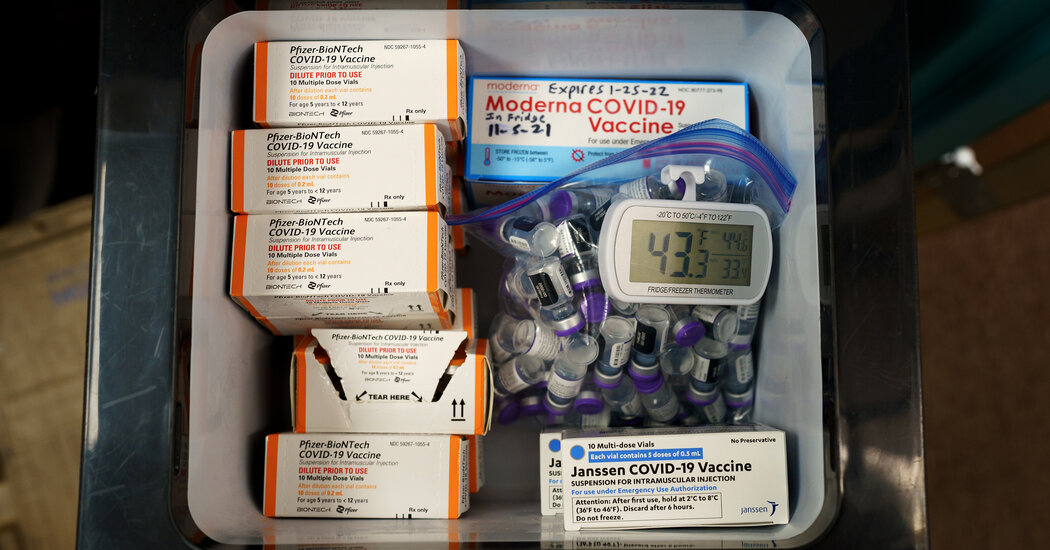
Third shots of coronavirus vaccines significantly reduced the risk that people with weakened immune systems would be hospitalized with Covid, the Centers for Disease Control and Prevention reported on Thursday, reinforcing the case for additional doses in that group.The Pfizer-BioNTech and Moderna vaccines were roughly 88 percent effective against hospitalizations in immunocompromised people who had received a third dose, compared with 69 percent effective in immunocompromised people with only two doses, the agency said.The data came from a study of people treated at 21 American hospitals from August to mid-December, a period when the Delta variant was dominant. But third doses have also been shown to bolster people’s defenses against severe outcomes from Omicron, even if the overall protection against that variant is weaker.The latest C.D.C. study also added to the considerable evidence that third doses bolster the defenses of people with stronger immune systems. Three doses of the Pfizer-BioNTech or Moderna vaccines were roughly 97 percent effective in preventing hospitalizations in that group, compared with 82 percent effective among two-dose recipients.But there have been fewer studies on the real-world impact of additional doses in people with weakened immune systems. Those people — the C.D.C. estimates there are about seven million in the country — can be born with faulty immune systems or, in other cases, experience a weakening of their immune defenses because of treatments for diseases like cancer.Many of them produce fewer antibodies in response to a vaccination or an infection, leaving them susceptible to the virus and to higher risks of serious illness.In August, federal regulators authorized a third Pfizer-BioNTech or Moderna dose at least four weeks after the second dose for some immunocompromised people. Health authorities considered the additional dose for this group an integral part of their primary immunization series, rather than a booster shot.In October, the C.D.C. said that immunocompromised people could also get a booster shot as soon as early 2022 — a fourth dose of vaccine — as a way of enhancing or restoring protection. But some of those people have said that pharmacies or hospitals have refused them the additional doses.For immunocompromised people with a single shot of the Johnson & Johnson vaccine, the C.D.C. advises a booster dose of the Moderna or Pfizer-BioNTech shots.The new study evaluated roughly 1,100 adults with weakened immune systems and 1,900 other adults. The C.D.C. said that future studies should look at the protection afforded by additional doses against the Omicron variant in immunocompromised people, as well as the durability of that protection.

Read more →

Another pandemic challenge for nurses: Sleep problems

More than half of nurses had difficulty sleeping during the first six months of the COVID-19 pandemic — and getting less sleep increased their odds of experiencing anxiety and depression, according to a new study led by researchers at NYU Rory Meyers College of Nursing.
“Nurses are already at risk for higher rates of depression and insufficient sleep compared to other professions, thanks to the stress of patient care and the nature of shift work. The pandemic seems to have further exacerbated these issues to the detriment of nurses’ well-being,” said Amy Witkoski Stimpfel, PhD, RN, assistant professor at NYU Rory Meyers College of Nursing and the lead author of the study, which was published in the Journal of Occupational and Environmental Medicine.
Nurses have faced unparalleled challenges working on the frontlines of the COVID-19 pandemic, including staffing shortages, an early lack of personal protective equipment (PPE), and witnessing widespread suffering and death. Research is beginning to reveal the impact of these ongoing stressors on nurses’ mental health and well-being.
In this study, the researchers surveyed 629 nurses and interviewed 34 nurses from June through August 2020. The nurses, who worked across healthcare settings in 18 states, were asked about their experiences working during the first six months of the pandemic in the U.S.
The survey revealed high rates of depression (22 percent), anxiety (52 percent), and insomnia (55 percent) among nurses. Notably, difficulty sleeping was both a contributing factor to and an outcome of poor mental health.
Only sleeping for five hours or less before a shift increased the odds of depression, anxiety, and insomnia. However, nurses also described how anxiety and thinking about stressful working conditions — understaffing, being redeployed to a COVID unit, lack of PPE, and many patient deaths — led to difficulty falling asleep and waking up at night. In addition to stress-related sleep problems, changes in nurses’ work schedules from either working extra hours or abruptly switching between day and night shifts led to nurses getting fewer hours of sleep.
“We found that sleep problems were interwoven with anxiety and depressive symptoms,” said Witkoski Stimpfel. “Prior research supports this bidirectional relationship between sleep and mental health. We know that getting sufficient sleep fosters mental and emotional resilience, while not getting enough sleep predisposes the brain to negative thinking and emotional vulnerability.”
To better support nurses and their well-being, the researchers urge employers to take action to address work stress and factors that influence sleep. In addition to making sure that nurses have the resources like staffing, beds, and PPE to effectively do their jobs, employers can offer training on stress management and provide referrals to mental healthcare professionals for those in need. Employers should also pay attention to scheduling, ensuring nurses have time away from work, protecting them from excessive overtime hours and shifts that quickly switch between day and night, and offering flexible working arrangements.
“Our findings help us better understand the difficulty nurses are facing — and why some nurses are leaving their jobs or the field altogether — but also reveal opportunities for hospitals and other employers to support this critical workforce,” said Witkoski Stimpfel.
Additional study authors include Lloyd Goldsamt and Victoria Vaughan Dickson of NYU Meyers and Lauren Ghazal of the University of Michigan. The research was supported by an NYU COVID-19 Research Catalyst grant.
Story Source:
Materials provided by New York University. Note: Content may be edited for style and length.

Read more →

Pancreatic cancer cells feed off hyaluronic acid

Hyaluronic acid, or HA, is a known presence in pancreatic tumors, but a new study from researchers at the University of Michigan Health Rogel Cancer Center shows that hyaluronic acid also acts as food to the cancer cells. These findings, recently published in eLife, provide insight into how pancreatic cancer cells grow and indicate new possibilities to treat them.
“A central driving theme in my research lab is that pancreatic cancer doesn’t respond to the common arsenal of treatment approaches. We need to think about this challenge differently,” said Costas Lyssiotis, Ph.D., the lead investigator on the study. He and his team study the metabolism of pancreatic cancer in preclinical models:how cells obtain nutrients and the spectrum of nutrients they utilize to fuel growth and enable therapeutic resistance.
The tumor microenvironment, or the cells that make up the tumor, are a combination of many different cell types, some malignant, some not. A pancreatic tumor’s microenvironment is highly stromal, meaning the mass itself is mostly comprised of connective tissue and non-cancerous immune cells.
“Stroma occurs in the body’s natural scarring process,” Lyssiotis explained. “As these scars are formed, an abundance of hyaluronic acid gets released.”
Hyaluronic acid — a polymer or long chain of sugars — is great at attracting and retaining water. When a lot of it is present, pancreatic tumors become hyperdense, collapsing veins and blood flow. Lyssiotis says these tumors become very hard.
“It’s not that there aren’t veins or arteries inside the tumor. But the vasculature that is there can’t withstand the extreme pressure.”
Most studies of hyaluronic acid in pancreatic cancer have focused on its role in creating this density. A recent unsuccessful clinical trial even explored ways to degrade hyaluronic acid and release pressure on the tumors to allow the vasculature to expand and deliver drugs, which are typically difficult to administer given the lack of blood flow.

Read more →

Tumors dramatically shrink with new approach to cell therapy

Northwestern University scientists have developed a new tool to harness immune cells from tumors to fight cancer rapidly and effectively.
Their findings, to be published January 27 in the journal Nature Biomedical Engineering, showed a dramatic shrinkage in tumors in mice compared to traditional cell therapy methods. With a novel microfluidic device that could be 3D printed, the team multiplied, sorted through and harvested hundreds of millions of cells, recovering 400% more of the tumor-eating cells than current approaches.
Most treatments for cancer involve toxic chemicals and foreign substances, which cause harmful side effects and weaken the body’s immune response. Using tissue from one’s own body can eliminate side effects and risk of rejection, and many disease therapies in regenerative medicine and cancer treatment have gained traction in the clinic. But sometimes the wheels skid.
“People have been cured in the clinic of advanced melanoma through treatment with their own immune cells that were harvested out of tumor tissue,” said Shana O. Kelley, a pioneer in translational biotechnology and corresponding author on the paper. “The problem is, because of the way the cells are harvested, it only works in a very small number of patients.”
Kelley is the Neena B. Shwartz Professor of Chemistry and Biomedical Engineering at the Northwestern University Weinberg College of Arts and Sciences and McCormick School of Engineering, and a professor of biochemistry and molecular genetics at Northwestern University Feinberg School of Medicine.
The cells of interest, called tumor-infiltrating lymphocytes (TILs), are natural immune cells that invade tumor tissue by engaging cells in a form of hand-to-hand combat that looks like someone using insecticide on a weed. But, in this scenario, previous researchers have been attacking the weeds with a half-expired cannister of chemicals.

Read more →

Living near or downwind of unconventional oil and gas development linked with increased risk of early death

Elderly people living near or downwind of unconventional oil and gas development (UOGD) — which involves extraction methods including directional (non-vertical) drilling and hydraulic fracturing, or fracking — are at higher risk of early death compared with elderly individuals who don’t live near such operations, according to a large new study from Harvard T.H. Chan School of Public Health.
The results suggest that airborne contaminants emitted by UOGD and transported downwind are contributing to increased mortality, the researchers wrote.
The study will be published on January 27, 2022 in Nature Energy.
“Although UOGD is a major industrial activity in the U.S., very little is known about its public health impacts. Our study is the first to link mortality to UOGD-related air pollutant exposures,” said Petros Koutrakis, professor of environmental sciences and senior author of the study. Added co-author Francesca Dominici, Clarence James Gamble Professor of Biostatistics, Population, and Data Science, “There is an urgent need to understand the causal link between living near or downwind of UOGD and adverse health effects.”
UOGD has expanded rapidly over the past decade. As of 2015, according to the study, more than 100,000 UOGD land-based wells were drilled using directional drilling combined with fracking. Roughly 17.6 million U.S. residents currently live within one kilometer of at least one active well. Compared with conventional oil and gas drilling, UOGD generally involves longer construction periods and larger well pads (the area occupied by equipment or facilities), and requires larger volumes of water, proppants (sand or other materials used to keep hydraulic fractures open), and chemicals during the fracking process.
Prior studies have found connections between UOGD activities and increased human exposure to harmful substances in both air and water, as well as connections between UOGD exposure and adverse prenatal, respiratory, cardiovascular, and carcinogenic health outcomes. But little was known about whether exposure to UOGD was associated with mortality risk in the elderly, or about exactly how exposure to UOGD-related activities may be contributing to such risk.
To learn more, the researchers studied a cohort of more than 15 million Medicare beneficiaries — people ages 65 and older — living in all major U.S. UOGD exploration regions from 2001 to 2015. They also gathered data from the records of more than 2.5 million oil and gas wells. For each Medicare beneficiary’s ZIP code and year in the cohort, the researchers used two different statistical approaches to calculate what the exposure to pollutants would be from living either close to UOGD operations, downwind of them, or both, while adjusting for socioeconomic, environmental, and demographic factors.
The closer to UOGD wells people lived, the greater their risk of premature mortality, the study found. Those who lived closest to wells had a statistically significant elevated mortality risk (2.5% higher) compared with those who didn’t live close to wells. The study also found that people who lived near UOGD wells as well as downwind of them were at higher risk of premature death than those living upwind, when both groups were compared with people who were unexposed.
“Our findings suggest the importance of considering the potential health dangers of situating UOGD near or upwind of people’s homes,” said Longxiang Li, postdoctoral fellow in the Department of Environmental Health and lead author of the study.
Other Harvard Chan School co-authors of the study included Falco Bargagli-Stoffi, Joel Schwartz, Brent Coull, John Spengler, Yaguang Wei, and Joy Lawrence.
Support for the study came from the U.S. Environmental Protection Agency (EPA) grant RD-835872, the National Institutes of Health (NIH) grant R01 MD012769, and the Climate Change Solutions Fund at Harvard University.

Read more →

Child masking associated with reduced COVID-19 related child care closures

A new Yale study found that child care programs in the United States that practiced child masking early in the COVID-19 pandemic (May-June 2020) experienced a 13% reduction in program closure within the following year, and continued child masking throughout the one-year study period was associated with a 14% reduction in program closure.
The first-of-its-kind study of child masking, publishing Thursday in JAMA Network Open, a peer-reviewed journal of the American Medical Association, followed the experiences of 6,654 center-based and home-based child care professionals from all 50 states during a one-year period (May/June 2020 through May/June 2021). It was part of a series of studies aimed at informing policies regarding the health and wellbeing of children in child care programs, as well as the 1.1 million child care professionals who care for them.
It is believed to be the first large-scale longitudinal study of the potential effects of various safety measures used to reduce the spread of COVID-19 in child care programs and keep this essential service open for working families.
The findings come at a time when child masking in schools and child cares continues to be hotly debated, particularly as a surge in cases related to the omicron variant has led to a wave of child care disruptions, affecting millions of American families.
During the study period, 43% of child care programs had closed at least temporarily due to a suspected or confirmed case of COVID-19 in either a child or staff member, researchers said. Although several safety measures were studied (e.g., adult and child masking, 6-foot distancing, staggered arrivals and departures, outdoor drop-off and pick-up), child masking emerged as the strategy most associated with reduced child care closure rates, keeping children in safe learning and care environments and allowing working parents and child care providers to remain employed, researchers said. Six-foot distancing of seating and cots in child care facilities, when used over the one-year period, was associated with a 7% reduction in the odds of COVID-19-related child care closure. The study controlled for the degree of local COVID-19 transmission in the community.
“We have been seeing increased numbers of children, especially young children not yet able to be vaccinated against COVID-19, admitted to our children’s hospital,” said Thomas Murray, associate medical director for infection prevention at Yale New Haven Children’s Hospital and the study’s lead author. “It is heartening to know that following child masking recommendations for children two years and older may be an effective means for keeping young children in child care programs and potentially lowering their risk for COVID-19.”
Although the study provides encouraging evidence for the effectiveness of child masking, only 9% of child care programs required children two years and older to wear face masks during the early months of the COVID-19 pandemic. That percentage increased to 33% by May and June 2021. Masking rates were much higher for staff members, with 64% reporting that all adult staff were wearing masks in May and June 2021.

Read more →

Curtailed sleep may alter how intense exercise stresses the heart

In a new study, participants underwent an intense bout of exercise after both normal sleep and after three nights of curtailed sleep. When they exercised after curtailed sleep, the levels of the heart injury biomarker troponin increased slightly more, compared with when the participants performed exercise in their well-rested condition. The study is a smaller pilot study and it is not yet possible to determine if the findings may be of relevance for cardiovascular health. The study is published in the journal Molecular Metabolism.
Previous epidemiological studies have demonstrated that, at the population level, chronically disrupted and shortened sleep increases the risk of several cardiovascular diseases, such as high blood pressure and myocardial infarction. In contrast, physical exercise can reduce the risk of cardiovascular disease. However, it has been unknown whether controlled sleep restriction can modulate cardiac stress during strenuous exercise.
“Exercise is great for the heart, while lack of sleep can adversely impact the cardiovascular system. But it has been unknown whether shortened sleep can modulate the physiologic stress that intense exercise seems to have on the cells of the heart,” says Jonathan Cedernaes, physician and associate professor of medical cell biology at Uppsala University, who led the study.
A specific type of the protein troponin is found in the heart’s muscle cells. Low amounts of troponin can be released after high-intensity training. Levels of troponin are routinely determined in the clinic, as significantly higher levels are seen in the setting of acute cardiovascular events.
“Higher blood levels of troponin after exercise have been linked to a relative increased prospective risk of cardiovascular diseases. It is not really known what the mechanism is, but at the same time, we know that one’s cardiovascular health is modulated through an interplay of lifestyle factors. We therefore thought it would be important to investigate whether the release of troponin during exercise can be affected by sleep restriction. One reason is the fact that many occupations entail work that disrupts sleep, such as for healthcare workers,” says Cedernaes.
Previous studies have found that exercise can counteract certain adverse effects of curtailed sleep on metabolism. Furthermore, data at the population level indicate that exercise can counteract the negative effects of chronic sleep loss on the cardiovascular system.

Read more →

COVID-19 exposure possible outside of home isolation rooms

A Rutgers study has detected tiny airborne particles containing RNA from the SARS-CoV-2 that causes COVID-19, both inside and outside of the rooms in which infected people were self-isolating at home. This finding suggests that airborne transmission beyond the isolation rooms in homes may pose a risk of infection to other home occupants.
The study, published in the journal Annals of the American Thoracic Society, is the first report of household air contamination with SARS-CoV-2 RNA under typical daily living conditions when a household member is infected. Airborne transmission in crowded living conditions may be one reason for higher rates of COVID-19 infection among people with lower incomes.
“Risk of infection from larger respiratory droplets that rapidly settle onto surfaces, typically within two meters of the source, can be reduced by hand-washing, social distancing and face masks, but the tiny respiratory particles that stay suspended in air for hours, require air filtration, ventilation or better masks for prevention,” said lead author Howard Kipen, a professor at Rutgers School of Public Health and director of Clinical Research and Occupational Medicine at the Environmental and Occupational Health Sciences Institute.
The researchers collected air samples from 11 homes in rooms where a newly infected person was isolating, as well as in an adjacent common room to test for the presence of three SARS-CoV-2-specific genes in airborne particles. The researchers found positive air samples for at least one of three virus genes in six of the 11 isolation rooms and in six of the nine common rooms. Seven of these nine homes reported no other cases in the home.
To better understand how the virus spreads in the home, participants were asked to record their time in the isolation room and the common room. “We discovered that many did not strictly adhere to self-isolation, with eight of the 11 infected study participants reporting spending from a few hours to 14 hours in the common room and five of 11 participants reporting spending time in other areas of the home,” Kipen said. Additionally, in four of the homes other residents were also positive or had symptoms.
“Our indoor air sampling data clearly demonstrated that measurable airborne SARS-CoV-2 RNA was present in the air in the homes of most infected people, not only in the isolation room, but, importantly, elsewhere in the home,” Kipen said. “The findings show that tiny airborne particles containing SARS-CoV-2 RNA can be found in homes of infected individuals beyond the room where they are supposedly self-isolating.”
Other Rutgers authors include Robert J. Laumbach, Gediminas Mainelis, Kathleen G. Black, Nirmala T. Myers, Pamela Ohman-Strickland, Shahnaz Alimokhtari, Shirin Hastings, Alicia Legard, Adriana de Resende, Leonardo Calderón and Frederic T. Lu.
Story Source:
Materials provided by Rutgers University. Original written by Patti Verbanas. Note: Content may be edited for style and length.

Read more →

Light therapy fast-tracks healing of skin damage from cancer radiation therapy

Light therapy may accelerate the healing of skin damage from radiation therapy by up to 50%, according to a recent University at Buffalo-led study.
The research found that photobiomodulation — a form of low-dose light therapy -lowered the severity of skin damage from radionecrosis (the breakdown of body tissue after radiation therapy), reduced inflammation, improved blood flow and helped wounds heal up to 19 days faster.
The findings, published on Dec. 28 in Photonics, follow prior reports on the effectiveness of light therapy in improving the healing of burn wounds and in relieving pain from oral mucositis caused by radiation and chemotherapy.
The research was led by Rodrigo Mosca, PhD, visiting fellow from the Nuclear and Energy Research Institute (IPEN) and the Federal University of Rio de Janeiro, both in Brazil. Carlos Zeituni, PhD, professor at IPEN and the Federal University of Rio de Janeiro, is a senior author.
“To our knowledge, this is the first report on the successful use of photobiomodulation therapy for brachytherapy,” said senior author Praveen Arany, DDS, PhD, assistant professor of oral biology in the UB School of Dental Medicine. “The results from this study support the progression to controlled human clinical studies to utilize this innovative therapy in managing the side effects from radiation cancer treatments.”
Brachytherapy is a form of radiation therapy where a radiation source is implanted within the cancer tissue, exposing surrounding healthy tissue to lower doses of radiation than through teletherapy, a form which fires a beam of radiation through the skin to reach the tumor. Although brachytherapy has improved the precision and safety of cancer care, skin damage is still an unfortunate side effect.
Similar to burn wounds, radionecrosis may cause inflammation and scarring and hinder blood flow. Current treatments to manage radionecrosis include routine wound care, pain medication and, in some cases, surgery.
Previous research conducted by Arany’s lab found that photobiomodulation promotes healing by activating TGF?beta 1, a protein that controls cell growth and division by stimulating various cells involved in healing, including fibroblasts (the main connective tissue cells of the body that play an important role in tissue repair) and macrophages (immune cells that lower inflammation, clean cell debris and fight infection).
The new study, completed in an animal model, examined the effectiveness of both near-infrared and red LED light at improving the healing of skin damage during radiation therapy.
Without photobiomodulation, wounds took an average of 61 days to heal. Using near-infrared light therapy, healing occurred within an average of 49 days. Healing occurred the fastest when using red light therapy, at an average of 42 days.
“For over 40 years, photobiomodulation has been known to accelerate the healing of acute and chronic wounds, triggering cellular processes that control inflammation, pain signaling, and tissue regeneration and repair,” said Mosca.
Research suggests that the effects of photobiomodulation does not extend to tumor cells, likely due to their perturbed metabolic and regulatory signaling, adds Arany.
Story Source:
Materials provided by University at Buffalo. Original written by Marcene Robinson. Note: Content may be edited for style and length.

Read more →