New atomistic level insight into drug-target residence time

A new study from the University of Eastern Finland and the University of Tübingen helps to explain what defines how long a drug molecule stays bound to its target.
When a drug molecule binds to its target protein, it stays bound for some time before eventually unbinding the target. The actual time how long a drug molecule resides bound to its target varies among compounds. The lifetime of the drug-target complex may play a crucial role in drug efficacy, as a long target residence time can, in some cases, be important for drug efficacy. Therefore, understanding its underlying causes enables more rational drug design.
In the new study, researchers from the University of Eastern Finland and the University of Tübingen identified the key elements driving for a long or a short target residence time among similar small molecule kinase inhibitors on the atomistic level. The findings were published in Nature Communications.
Dozens of small molecule kinase inhibitors have already been approved for clinical use, most of them for the treatment of cancer.
“Initially, we were interested in what causes the discrepancy in the target residence time between two similar small molecule kinase inhibitors,” says Senior Researcher, lead author Tatu Pantsar from the University of Eastern Finland.
Prof. Stefan Laufer’s group at the University of Tübingen has designed, synthesized and biologically characterized numerous small molecule kinase inhibitors for a protein kinase called p38a MAPK, which enabled this research.

Read more →

Post-mortem interval of human skeletal remains accurately determined by means of non-destructive techniques

A UPV/EHU study has for the first time determined the post-mortem interval of human skeletal remains using real samples, which has been made possible by the combination of two non-destructive analytical tools: Raman spectroscopy and chemometrics. This opens up new avenues for dating in the field of forensic medicine and anthropology.
In the field of forensic analysis there is a significant demand for objectively determining the post-mortem interval (PMI) when human skeletal remains are discovered. So far, a whole range of techniques have been used to establish the approximate time that has elapsed since the death of the individual, but they have significant drawbacks in terms of reliability and accuracy: they provide an approximate interval but not an exact date; they are relatively invasive techniques, which require staining or removal of a part of the bone, etc.
“The aim of this research was precisely to come up with a method capable of determining the relatively accurate post-mortem interval in human remains by using non-destructive measurements,” said Luis Bartolomé, technician in the UPV/EHU’s SGIker Central Analysis Service (SCAB).
So “we analysed a set of 53 actual human skeletal remains with a known post-mortem interval provided by the Department of Legal Medicine, Toxicology and Physical Anthropology of the University of Granada. Using actual samples for the first time, we built and validated a model by combining two non-destructive tools: Raman spectroscopy and chemometrics,” explained the author of the paper.
“Raman spectra,” Bartolomé went on to explain, “contain physico-chemical information on nearly all the components of the sample; however, due to their complexity, in most cases it is not possible to differentiate between all the information they contain. Chemometrics is capable of extracting the parameters of interest from the spectra through mathematical and statistical methods.”
“By combining both techniques, we have been able to build a model in which the Raman spectrum of each set of skeletal remains analysed is associated with a post-mortem interval. Relating the spectrum to a time interval is no easy task and for this we used statistical models and logarithms that allow us to relate each spectrum to a time. So when we receive human skeletal remains for which we don’t know the time that has elapsed since death, what we do is an interpolation by inserting these data into the validated model, and that way a relatively accurate post-mortem interval can be obtained,” explained Luis Bartolomé. “The data recorded in the model developed provides valuable, potentially useful, versatile information,” he stressed.
According to the UPV/EHU researcher, “the combination of both techniques is a significant achievement for forensic medicine and anthropology. However, there is always room for improvement as these types of models perform better the more samples there are and the more varied they are; the model includes more heterogeneity and responds more robustly to a wider range of cases.”
Story Source:
Materials provided by University of the Basque Country. Note: Content may be edited for style and length.

Read more →

Even light drinking can be harmful to health

Drinking less than the UK’s recommended limit of 14 units of alcohol per week still increases the risk of cardiovascular issues such as heart and cerebrovascular disease, according to new research published in the journal Clinical Nutrition.
Academics from Anglia Ruskin University (ARU) examined hospitalisations related to cardiovascular events among more than 350,000 UK residents aged between 40 and 69 from data obtained from the UK Biobank study.
The sample included 333,259 people who drank alcohol. Participants had been asked about their overall weekly alcohol intake and their intake of specific types of alcohol including beer, wine and spirits. Those participants were followed up for a median of approximately seven years, capturing all incidents where patients had been hospitalised through cardiovascular events.
Anyone who had suffered a previous cardiovascular event was excluded from the analysis, as were former drinkers or those who had not completed information on alcohol intake.
The analysis found that, for those participants that drank less than 14 units of alcohol per week — the limit recommended by the UK’s Chief Medical Officers — each additional 1.5 pints of beer at 4% strength (alcohol by volume) is associated with a 23% increased risk of suffering a cardiovascular event.
The authors argue that biases in existing epidemiological evidence have resulted in the widespread acceptance of the “J-shaped curve” that wrongly suggests low to moderate alcohol consumption can be beneficial to cardiovascular health.
These biases include using non-drinkers as a reference group when many do not drink for reasons of existing poor health, pooling of all drink types when determining the alcohol intake of a study population, and embedding the lower risk observed of coronary artery disease among wine drinkers, potentially distorting the overall cardiovascular risk from the drink.
Lead author Dr Rudolph Schutte, course leader for the BSc Hons Medical Science programme and Associate Professor at ARU, said:
“The so-called J-shaped curve of the cardiovascular disease-alcohol consumption relationship suggesting health benefit from low to moderate alcohol consumption is the biggest myth since we were told smoking was good for us.
“Among drinkers of beer, cider and spirits in particular, even those consuming under 14 units a week had an increased risk of ending up in hospital through a cardiovascular event involving the heart or the blood vessels. While we hear much about wine drinkers having lower risk of coronary artery disease, our data shows their risk of other cardiovascular events is not reduced.
“Biases embedded in epidemiological evidence mask or underestimate the hazards associated with alcohol consumption. When these biases are accounted for, the adverse effects of even low-level alcohol consumption are revealed.
“Avoiding these biases in future research would mitigate current confusion and hopefully lead to a strengthening of the guidelines, seeing the current alcohol guidance reduced.”
Story Source:
Materials provided by Anglia Ruskin University. Note: Content may be edited for style and length.

Read more →

New blood test combined with image-based prostate cancer screening reduces harms and costs

The combination of a novel blood test and magnetic resonance imaging (MRI) can reduce overdiagnosis of low-risk cancers as well as societal costs in prostate cancer screening, according to a cost-effectiveness study from Karolinska Institutet published in the journal European Urology. The results provide support for organised prostate cancer testing in Sweden, researchers say.
A barrier to the introduction of nationwide prostate cancer screening has been that PSA (prostate-specific antigen) tests combined with traditional biopsies result in the detection of numerous minor low-risk tumours. MRI has been shown to reduce this overdiagnosis but presents a challenge due to limited health resources. The STHLM3MRI trial has previously shown that a blood test called Stockholm3, developed by researchers at Karolinska Institutet, can reduce the number of MRIs by a third for a single screening occasion. Now, the same research group reports that this combination is also considered cost-effective in Sweden compared with both no screening and PSA test in MRI-based screening.
Further reduction in MRI
“Our latest results show that using Stockholm3 reduces the number of MRIs over a lifetime by 60 per cent. This also avoids unnecessary biopsies by 9 per cent, which reduces the overdiagnosis of low-risk cancers,” says Mark Clements, associate professor at the Department of Medical Epidemiology and Biostatistics, Karolinska Institutet, who is responsible for the cost-effectiveness study.
The analysis predicted that MRI-based screening combined with PSA or Stockholm3 would reduce prostate cancer-related deaths by 7-9 per cent over a lifetime compared with no screening at all. The health economic evaluation showed that, compared with no screening, screening with PSA followed by Stockholm3 and MRI in high-risk individuals is classified as a moderate cost per quality-adjusted life-years (QALY) gained as defined by the Swedish National Board of Health and Welfare. Furthermore, PSA combined with MRI is classified as a very high cost per QALY gained compared with Stockholm3 combined with MRI.
“This new combination with Stockholm3 can save healthcare resources and reduce societal costs while maintaining the health benefits from early detection of prostate cancer. This presents an interesting option for prostate cancer screening in Sweden,” says Shuang Hao, PhD student at the Department of Medical Epidemiology and Biostatistics, Karolinska Institutet and the first author of the study.
Support for OPT in Sweden
Several regions in Sweden have started to plan and implement pilot projects for organised prostate cancer testing (OPT) through the regional cancer centres. The National OPT Working Group has recommended that the OPT pilots investigate the use of different strategies for prostate cancer screening.
“Our evidence provides support for using Stockholm3 as an additional test in MRI-based screening, which could be evaluated through one of the OPT pilots,” says Tobias Nordström, associate professor of urology at the Department of Clinical Sciences, Danderyd Hospital at Karolinska Institutet, who is the principal investigator for the STHLM3MRI trial and a co-author of the cost-effectiveness study.
Wider application to other countries
The current health economic evaluation is specific to Sweden, but the simulation model used in this study is open source and can be readily adapted to assess the use of Stockholm3 and MRI in other countries. The Stockholm3 test is available for clinical use in Sweden, Norway, Denmark, Finland, Spain and Germany, and will be made available in additional European countries in 2022.
The research was financed by the Swedish Research Council, the Swedish e-Science Research Centre (SeRC), the Swedish Prostate Cancer Federation, Karolinska Institutet and The Swedish Cancer Society. One of the co-authors, Henrik Grönberg, has five prostate cancer diagnostic-related patents pending. Another co-author, Martin Eklund, is named on four of these patent applications. Karolinska Institutet collaborates with A3P Biomedical in developing the technology for the Stockholm3 test. Henrik Grönberg, Martin Eklund and Tobias Nordström own shares in A3P Biomedical.
Story Source:
Materials provided by Karolinska Institutet. Note: Content may be edited for style and length.

Read more →

Hyperimmune intravenous immunoglobulin does not improve outcomes for adults hospitalized with COVID-19, study finds

A clinical trial has found that the combination of remdesivir plus a highly concentrated solution of antibodies that neutralize SARS-CoV-2, the virus that causes COVID-19, is not more effective than remdesivir alone for treating adults hospitalized with the disease. The trial also found that the safety of this experimental treatment may vary depending on whether a person naturally generates SARS-CoV-2-neutralizing antibodies before receiving it. The results of the multinational Phase 3 trial were published today in the journal The Lancet.
The National Institute of Allergy and Infectious Diseases (NIAID), part of the National Institutes of Health, sponsored and funded the trial, called Inpatient Treatment with Anti-Coronavirus Immunoglobulin, or ITAC. The trial was conducted by the NIAID-funded International Network for Strategic Initiatives in Global HIV Trials (INSIGHT). Mark Polizzotto, M.D., Ph.D., head of the Clinical Hub for Interventional Research at the College of Health & Medicine of The Australian National University in Canberra, led the trial.
The antibody solution tested in the ITAC trial was anti-coronavirus hyperimmune intravenous immunoglobulin, or hIVIG. The antibodies in anti-coronavirus hIVIG came from the liquid portion of blood, or plasma, donated by healthy people who had recovered from COVID-19. These antibodies were highly purified and concentrated so that the anti-coronavirus hIVIG consistently contained several times more SARS-CoV-2 neutralizing antibodies than typically found in the plasma of people who have recovered from COVID-19.
“In our quest to find safe and effective treatments for COVID-19, we had hoped that adding anti-coronavirus hIVIG to a remdesivir regimen would give the immune system a boost to help suppress the virus early in the course of hospitalization,” said NIAID Director Anthony S. Fauci, M.D. “Unfortunately, the ITAC trial demonstrated that this strategy did not improve the health of adults hospitalized with COVID-19 and may be harmful for a certain subset of patients. Studies testing this strategy in non-hospitalized adults earlier in the course of infection are underway.”
Four companies collaborated to provide anti-coronavirus hIVIG for the trial: Emergent BioSolutions of Gaithersburg, Maryland; Grifols S.A. of Barcelona; CSL Behring of King of Prussia, Pennsylvania; and Takeda of Tokyo.
Remdesivir is a broad-spectrum antiviral currently approved by the U.S. Food and Drug Administration and recommended for treating certain patients with COVID-19 based on data from several randomized clinical trials, including the NIAID-sponsored Adaptive COVID-19 Treatment Trial (ACTT-1). FDA granted the approval to Gilead Sciences, Inc. of Foster City, California.
The ITAC study team enrolled nearly 600 hospitalized adults aged 18 years or older who had COVID-19 symptoms for up to 12 days and did not have life-threatening organ dysfunction or organ failure. Enrollment took place at 63 sites in 11 countries in Africa, Asia, Europe, North America and South America between October 2020 and February 2021. Study participants were assigned at random to receive infusions of either anti-coronavirus hIVIG and remdesivir or a placebo and remdesivir. Neither the participants nor the study team, except for pharmacists who prepared the infusions, knew who received which treatment regimen until the end of the trial. All participants also received supportive care reflecting local practice and national guidelines.
The main goal of the trial was to compare the health status of participants seven days after beginning treatment with hIVIG plus remdesivir with that of participants seven days after beginning treatment with remdesivir alone. The primary endpoint was an ordinal outcome with seven mutually exclusive categories ranging from no limiting symptoms due to COVID-19, to death. Safety was assessed at day seven with a composite outcome that included death, serious adverse events including organ failure and serious infections, and severe events that made performing basic functions impossible.
The ITAC investigators found that participants who received hIVIG plus remdesivir did not have better health status seven days after beginning treatment compared with participants who received remdesivir alone. Similarly, participants who received hIVIG plus remdesivir had no improvement in other clinical outcomes during the 28-day follow-up period compared to those who received remdesivir alone.
The investigators also found no overall difference in safety at day seven for people who received hIVIG plus remdesivir compared to those who received remdesivir alone. However, the researchers additionally undertook a pre-specified subgroup analysis of safety among participants who had developed SARS-CoV-2 neutralizing antibodies before receiving hIVIG. In this group, the odds of a worse safety outcome at day seven were 1.6 times as high for people who received hIVIG as for those who did not. Further research is needed to understand why. The difference was no longer apparent at day 28.
The ITAC trial was associated with the Accelerating COVID-19 Therapeutic Interventions and Vaccines (ACTIV) public-private partnership. Further information about the trial is available in this NIAID press release (https://www.niaid.nih.gov/news-events/nih-clinical-trial-testing-hyperimmune-intravenous-immunoglobulin-plus-remdesivir-treat) and at ClinicalTrials.gov under study identifier NCT04546581.

Read more →

Live cells discovered in human breast milk could aid breast cancer research

The study was led by researchers from the Wellcome-MRC Cambridge Stem Cell Institute (CSCI) and the Department of Pharmacology at the University of Cambridge.
Breast tissue is dynamic, changing over time during puberty, pregnancy, breastfeeding, and aging. The paper, published today in the journal Nature Communications, focuses on the changes that take place during lactation by investigating cells found in human milk.
This research, led by Dr Alecia-Jane Twigger of CSCI, found that the cells in milk, once thought to be dead or dying, are in fact very much alive. These living cells provide researchers with the chance to study not only the changes that occur in mammary tissues during lactation, but also insight into a potential early indicator of future breast cancer development.
“I believe that by studying human milk cells, we will be able to answer some of the most fundamental questions around mammary gland function such as: how is milk produced? Why do some women struggle to make milk? and what strategies can be employed to improve breastfeeding outcomes for women?” said Dr Alecia-Jane Twigger at the Wellcome-MRC Cambridge Stem Cell Institute who led the study.
The researchers collected voluntary breast milk samples from lactating women, as well as samples of non-lactating breast tissue donated from women who elected to have aesthetic breast reduction surgery. Using single-cell RNA sequencing analysis, the team conducted a novel comparison of the composition of the mammary cells taken using these two methods, identifying the distinctions between lactating and non-lactating human mammary glands.
While accessing breast tissue for study relies on donors already undergoing surgery, breast milk samples are much simpler to acquire. Breast milk donors are engaged via midwives or women’s networks (an undertaking made more challenging by the pandemic) and agree to share their samples over time. Typical daily production for lactating women is between 750-800ml, and the sample size for Twigger’s research is on average a mere 50ml, an amount which can contain hundreds of thousands of cells for study.
By collecting these samples donated by breastfeeding women — samples now known to contain living and viable cells — researchers have the opportunity to capture dynamic cells in a non-invasive way. This greater ease of access to breast cells can open the door to more studies on women’s health in the future.
“The first time Alecia told me that she found live cells in milk I was surprised and excited about the possibilities. We hope this finding will enable future studies into the early steps of breast cancer,” said Dr Walid Khaled, at the Wellcome-MRC Cambridge Stem Cell Institute and University of Cambridge’s Department of Pharmacology, who was also involved in the study.
This paper and its findings are part of the Human Breast Cell Atlas project funded by the MRC.
Story Source:
Materials provided by University of Cambridge. The original text of this story is licensed under a Creative Commons License. Note: Content may be edited for style and length.

Read more →

A new poll asks: Why do some vaccinated people not get boosters?

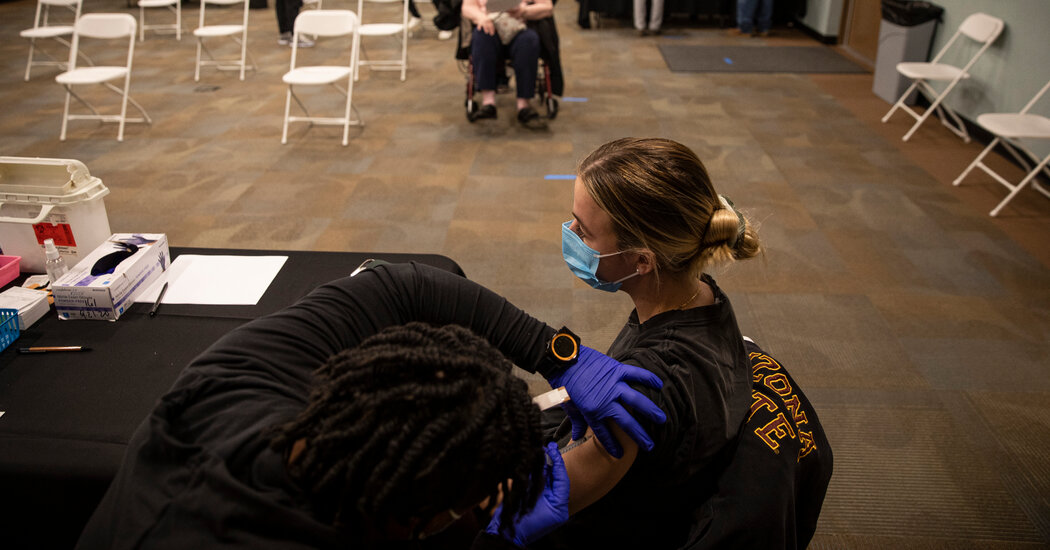
Seven in 10 adults in America who are likely eligible for a Covid booster have received one, according to a monthly survey that explores the public’s opinion about coronavirus vaccines.“The uptake is very high compared to the initial vaccine rollout,” said Liz Hamel, who directs polling for the Kaiser Family Foundation, which conducts the monthly assessment. She said that most of the people who had made a commitment to being vaccinated were willing to get a booster.People 65 and older were most likely to report being boosted, the report found.But among all adults surveyed, including the unvaccinated, only 42 percent said they were boosted.“That means a very significant chunk of the population is not fully protected,” Ms. Hamel said.The lag reflects a pervasive pandemic fatigue that emerged elsewhere in the Kaiser poll. More than three in four adults said they believed it was inevitable that most people in the United States will contract Covid. More people reported feeling worried about the impact of the Omicron variant on the economy and hospitals than on their personal health.The poll was based on a telephone survey of 1,536 adults conducted from Jan. 11 to 23. Its booster rates are higher than those reported by the Centers for Disease Control and Prevention. According to the C.D.C.’s data, about half of fully vaccinated adults in the country have received a booster.The Kaiser survey also delved into the motivations behind people’s decisions around the booster. Among respondents who were vaccinated but not yet boosted, about 60 percent said that the Omicron variant had not made much of an impact either way on their decision whether to get the extra shot.Since the initial booster rollout in November, Black and Hispanic adults have lagged behind white adults. But when unboosted people were asked whether they intended to get one, about 40 percent said they would as soon as possible, a view echoed equally across racial lines.Those findings suggest that the racial gap may be due in part to lack of access, Ms. Hamel said.Among surveyed adults who would “definitely not” or “only if required” get a booster, 22 percent said their chief reason was that they felt they didn’t need it or didn’t feel at risk from Covid. Another 19 percent said they didn’t feel that a booster would be effective, noting that vaccinated people are still coming down with Covid.Conversely, among those not yet boosted but inclined to get the extra shot, the chief explanation they gave was pragmatic: Seventeen percent said they were not eligible because not enough time had passed since their last vaccine, and 12 percent said they had been too busy.Political affinity remained a significant fault line along the vaccine divide. Among people who were vaccinated but had not gotten a booster, 58 percent of Democrats said they would get one as soon as they could, while only 18 percent of Republicans said they would. About half of vaccinated Republicans who were not yet boosted said they either would definitely not get one or would do so only if required.But this month’s poll revealed a topic that managed to breach the partisan divide. When asked how they felt about the pandemic after nearly two years, Democrats, Independents and Republicans all gave two responses in equal and overwhelming numbers: “Tired” and “frustrated.”

Read more →

Infant deaths from RSV are much higher than previously known

A new study found that nearly one in ten of all deceased infants under 6 months old were infected with Respiratory Syncytial Virus (RSV). Two-thirds of infant fatalities from RSV occurred in the community and would have been excluded from mortality estimates based on hospital data.
RSV is a common virus that produces cold-like symptoms and is merely a nuisance for the vast majority of people who contract it. But for babies — especially infants in low- and middle-income countries who lack adequate access to medical care — the virus can be fatal.
Prior research has estimated that about 120,000 infants die from RSV each year, but this figure is based on modeling conducted in hospital-based settings and does not account for RSV deaths that occur in the community, which are not captured in hospital-based surveillance.
Now, a new study led by Boston University School of Public Health (BUSPH) researchers has found that the true burden of RSV infant mortality is substantially higher than what was previously believed.
Published in the journal The Lancet Global Health, the study used systematic surveillance to measure the presence of RSV among infants who died in medical facilities or in the community and found that the virus was present in 7 to 9 percent of infants under 6 months old and was primarily concentrated in infants under 3 months old.
Notably, two-thirds of these deaths occurred in the community — i.e., among infants who never received medical care in a hospital and were overlooked in previous facility-based surveillance.

Read more →

Players needed to solve puzzles and help advance cancer research

Scientists in Barcelona have today launched GENIGMA, a videogame that enlists players to solve puzzles while generating real-world scientific data that can detect alterations in genomic sequences and ultimately advance breast cancer research.
The game, out today on iOS and Android and available in English, Spanish, Catalan and Italian, is the result of a two-and-a-half-year long citizen science project developed by a team of researchers at the Centre for Genomic Regulation (CRG), the Centro Nacional de Análisis Genómico (CNAG-CRG) and game professionals.
The game was created to boost worldwide research efforts that depend on cancer cell lines, a critical resource used by scientists to study cancer and test new drugs to treat the disease. One of the limitations of cancer cell lines are a lack of high-resolution genome reference maps, which are necessary to help researchers interpret their scientific results, for example pinpointing the location of genes of therapeutic interest or potential mutation sites.
“Cell lines are responsible for the discovery of vaccines, chemotherapies for cancer or IVF for infertility. This makes them a pillar of modern biology,” explains ICREA Research Professor Marc A. Marti-Renom, with dual affiliation at the CRG and CNAG-CRG and whose research underpins GENIGMA. “However, the lack of genome reference maps limits current scientific progress. It’s like asking people to navigate modern cities using maps from the past. With the help of other people, we can update these maps, which will allow us to make fast progress in breast cancer research.”
Professor Marti-Renom’s research group has developed methods to create genomic reference maps by visualising the genome in three-dimensional space. However, this requires significant time and resources to train artificial intelligence, as well as vast computational power.
The researchers launched GENIGMA because they believe that data generated by players could be a more effective method of updating the reference maps compared to using AI alone. The ‘herd intelligence’ of players can also provide creative solutions in ways that AI might not be able to.

Read more →

Can wearable technology predict the negative consequences of drinking?

“How much have you had to drink?” might seem like a simple question, but it is not always easy to answer. Although there are general guidelines about responsible alcohol consumption, a person’s level of intoxication depends not only on the number of drinks they consume but also on the alcohol content of those drinks and other factors.
In a new article in Alcoholism: Clinical and Experimental Research, researchers in Penn State’s Department of Biobehavioral Health demonstrated how wearable sensors can augment researchers’ understanding of when drinking will lead to negative consequences. The researchers measured intoxication with an ankle bracelet that can detect alcohol concentration from imperceptible amounts of sweat.
Michael Russell, assistant professor of biobehavioral health, led the research project.
“Understanding how much alcohol you have consumed is nuanced,” Russell said. “For example, if Person A drinks a 16-ounce pint of craft beer with a 10% alcohol content, Person B drinks a 12-ounce can of light beer with a 4% alcohol content, and Person C drinks a large mixed drink made with several types of liquor, how many drinks have they all had? What if Person A weighs 110 pounds, Person B 220 pounds, and Person C 185 pounds? Does the answer change?
“By using wearable technology to predict alcohol-related consequences — which range from automobile accidents to hangovers to missing work to sexual assault and beyond — we can begin to prevent alcohol-related consequences. Our research shows that wearable sensors can be used to help people understand when their drinking is becoming risky.”
Measuring intoxication through the skin
Sensors that measure alcohol concentration through the skin, known as transdermal alcohol-concentration sensors, provide more data than periodic breathalyzer results or self-reported drinking measurements. Sensors can record a person’s peak intoxication level, the rate at which someone becomes intoxicated, and how much alcohol was in their system and for how long.

Read more →