Tribes Reach $590 Million Opioid Settlement With J. & J. and Distributors
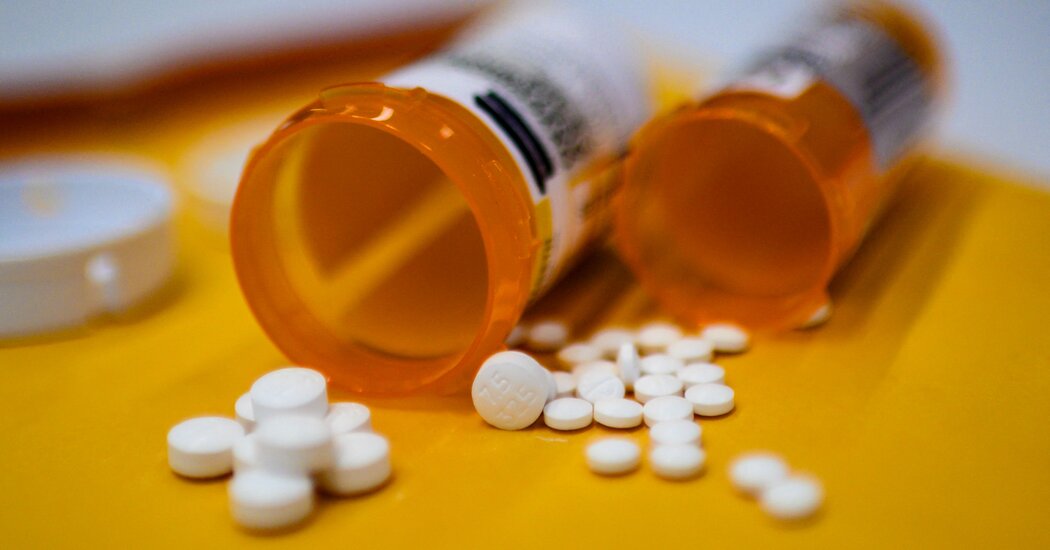
Money from the tentative deal would go toward addiction and treatment and would be overseen by Native American tribal leaders.Hundreds of Native American tribes that have suffered disproportionately high addiction and death rates during the opioid epidemic agreed on Tuesday to a tentative settlement of $590 million with Johnson & Johnson and the country’s three largest drug distributors.Together with a deal struck last fall between the distributors and the Cherokee Nation for $75 million, the tribes will be paid a total of $665 million.Additional money has also been committed to them by Purdue Pharma in a settlement currently in mediation.“We are not solving the opioid crisis with this settlement, but we are getting critical resources to tribal communities to help address the crisis,” said Steven Skikos, the top lawyer for the tribes.Tuesday’s settlement, announced in the U.S. District Court in Cleveland, seat of the national opioid litigation, is similar to one struck with the states and local governments last summer.If, as expected, most tribes sign on, the deal would be notable for its size as well as its acknowledgment of the 574 federally recognized tribes as a distinct litigating entity. Their voices have traditionally been excluded or downplayed in earlier national settlements involving the states, such as Big Tobacco.Roughly 15 percent of the total will go toward legal fees and costs but the bulk will be directed to addiction treatment and prevention programs, to be overseen by tribal health care experts.“My tribe has already committed to use any proceeds to confront the opioid crisis,” said Chairman Aaron Payment of the Sault Ste. Marie tribe of Chippewa in Michigan, which has 45,000 members. “The impact of the opioid epidemic is pervasive, such that tribes need all the resources we can secure to make our tribal communities whole once again.”A signature achievement of this deal is the timetable, which is far more compressed than the one struck last summer with states and local governments. Johnson & Johnson will pay the tribes its $150 million portion over two years; the distributors will pay $440 million over six and a half years.By contrast, the drug manufacturer will pay thousands of local governments and states $5 billion over nine years, with the distributors — AmerisourceBergen, Cardinal Health and McKesson — paying $21 billion over 18 years.The distributors did not respond to requests for comment. Johnson & Johnson said that the settlement did not represent an admission of wrongdoing. The company said that it would continue to defend itself in other cases.Although about 175 tribes filed cases against these and other pharmaceutical industry companies, the rest of the 574 tribes will benefit as well. Tribes range in population size from roughly 400,000 to a mere handful of people. According to 2018 census data, 6.8 million people identify as American Indian or Alaska Native, or 2.1 percent of the American population, of which slightly less than half live on or near tribal lands and are likely eligible to receive tribal services such as health care.But American Indians and Alaska Natives have endured disproportionately high opioid-related overdose deaths, by many metrics. In 2016, for example, Oglala Lakota County in South Dakota, home to the Oglala Lakota tribe, had an opioid-related death rate of 21 people per 100,000, more than twice the state average. According to one study, pregnant American Indian women were up to 8.7 times more likely than pregnant women from other groups to be diagnosed with opioid dependency or abuse.Lloyd B. Miller, a lead lawyer for the tribes, said that the settlement “provides outsized funding as compared to the states on a per-capita basis because the opioid disaster caused outsized and disproportionate devastation across tribal communities.”The agreement will go forward when 95 percent of the litigating tribes by population have formally agreed to it.

Read more →
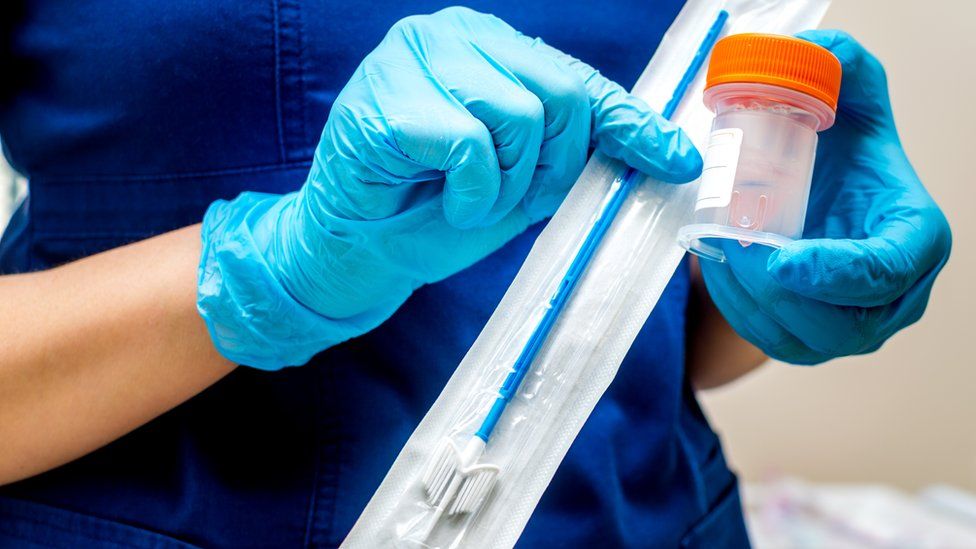
Smear tests might help pick up ovary and breast cancers

SharecloseShare pageCopy linkAbout sharingImage source, Getty ImagesCells collected during smear tests for cervical cancer might be useful for detecting early tumours elsewhere, such as in the breasts and ovaries, research suggests.Scientists say they have found tell-tale signatures in these neck-of-the-womb cells linked to other cancers.Looking for these patterns could provide a warning doctors can act on, they say in the journal Nature Communications. Experts recommend larger trials. Women are already invited for routine cervical-cancer checks and, every few years after the age of 50, breast-screening mammogram scans. Early cancers are easier to treat.But despite much research, there is still no reliable screening test for early ovarian cancer. These tumours are often more advance and harder to treat when they are found. ‘Waxes don’t save your lives, smear tests do’Women with ovarian cancer told ‘just overweight’Rower with incurable cancer breaks Atlantic recordCells that turn cancerous often show distinctive early changes at the molecular level. And researchers believe they have found some in smear-test samples that could help identify women at higher risk of specific other cancers, not just cancer of the cervix.To identify down the most important ones linked to breast and ovarian cancer, Prof Martin Widschwendter and colleagues analysed cervical smear cell samples from:242 women with and 869 without ovarian cancer329 women with and 869 without breast cancer They now recommend studies with more women to confirm their results.Prof Widschwendter told BBC News: “What we are talking about is identifying women at higher risk who might not otherwise know it. “They can then have additional cancer checks. “It’s a bit like checking blood pressure to see who is at risk of heart problems.”The work was funded by The Eve Appeal research charity that hopes to dive improved treatments for gynaecological cancers.’Larger trials’Dr Julie Sharp, from Cancer Research UK, said: “Screening for cervical cancer is already an invaluable tool, so it’s interesting to see if cell samples taken through screening could be used in future to detect other cancers.”However, we need further research to see how accurate this method is at detecting women with ovarian and breast cancer. “Like the authors of this research, we look forward to seeing larger trials over longer periods to establish whether cervical cells could diagnose other cancers at an earlier stage.”About 20 women a day are diagnosed with ovarian cancer in the UKIt often causes symptoms similar to other more common and less serious conditions, including:persistent bloating or a swollen tummyfeeling full quickly and/or loss of appetitepain in the lower tummy area, pelvis or backpassing urine more often than usualand occasionally:extreme tirednessweight loss or gain changes in bowel habits If you regularly have one or more of these symptoms, which are not normal for you, it is important to book an appointment with your GP.Breast and cervical screening is also recommended for some trans or non-binary people. Talk to your GP or gender-identity clinic about this. Men can develop breast cancer too and should not ignore symptoms such as a lump. The Eve AppealNature CommunicationsThe BBC is not responsible for the content of external sites.

Read more →

Single-use sensor strips detect cerebrospinal fluid leaks

Developing rapid clinical testing for cerebrospinal fluid (CSF) leaks after trauma, surgery, tumors, and other defects are vital, because such leaks can cause life-threatening conditions, such as meningitis and intercranial infection.
Detecting such leaks using primary conventional methods, such as immunofixation electrophoresis (IFE) and enzyme-linked immunosorbent assay (ELISA), require hours or days to turn around results. Secondary methods, such as optical techniques that rely on MRI, often fail to identify the specific leak site.
In Journal of Vacuum Science & Technology B by AIP Publishing, researchers from the University of Florida and Yang Ming-Chiao Tung University developed a single-use sensor strip that can be used with a circuit board, like a hand-held glucometer, to detect cerebrospinal fluid leaks.
Cerebrospinal fluid is present in the brain and spinal cord and provides critical physiological functions, such as shock absorption and waste removal. CSF directly links extracranial space to subarachnoid space, a compartment within which are the major cerebral blood vessels.
In addition to trauma, surgery and congenital defects, CSF leaks are likely to occur because of obesity, high intercranial pressure, and obstructive sleep apnea. Cerebrospinal leaks can come out through the nose or the ears.
“We were surprised to find out that our detection method could not only provide the result within one second, but our detection limit was also a lot more sensitive for a very diluted concentration than existing detection methods,” said co-author Minghan Xian.
The researchers collected nine human clinical samples from a Florida hospital and introduced the test fluid into a small liquid channel on the tip of the sensor strips. The liquid channel held electrodes, which contained antibodies on the surface specific to proteins found only in human cerebrospinal fluid. Once the test fluid was inserted into the liquid channel, a few short electrode pulses were sent through the electrodes. The circuit board then analyzed the signal and produced a four-digit number that correlates to the concentration of the protein, called beta-2-transferrin, found in CSF.
The researchers were able to detect beta-2-transferrin in the fluid sample even when other proteins and salts were present and from samples across different patients.
The researchers used similar technology to detect proteins in SARS-CoV2, the virus that causes COVID-19. Their next phase of research will focus on detecting various cancer and heart disease biomarkers.
Story Source:
Materials provided by American Institute of Physics. Note: Content may be edited for style and length.

Read more →

More predictive in vitro assays may improve nanomedicine

Messenger RNA (mRNA) vaccines are a prime example of the promising field of nanomedicine. But progress in the design and application of nanoparticles as efficient delivery vehicles for biopharmaceutics containing nucleic acid or protein drug substances is, unfortunately, remarkably slow.
One recent obstacle to drug delivery research is an observed weak correlation between in vitro (outside a living organism) and in vivo(inside a living organism) performance. This problem was not clear in early stages, when cellular delivery of a drug nanocarrier was tested primarily within standard cell culture. With advanced pharmacological in vivo studies emerging in mice or human patients, the low reliability and validity of cell culture testing for therapeutic applications is becoming apparent.
When nanoparticles are applied intravenously, they face several obstacles that differ from in vitro situations, such as when they meet blood components. Nanoparticles are usually covered by a biomolecular multilayer (a protein corona), which alters the physiochemical properties, pharmacokinetics, and toxicity profile of the nanoparticles.
In Biophysics Reviews, from AIP Publishing, researchers in Germany provide a cutting-edge characterization of the protein corona formed around nanoparticles and its impact on the physiochemical and biological properties of these nanoparticles.
“When predicting in vivoperformance from in vitro data, it is recommended to combine several analytical and biological characterization methods to get more detailed insight into the in vivo characteristics and behavior of the nanoparticles,” said Simone Berger, a co-author from Ludwig Maximilian University of Munich.
The choice of the biofluid — serum, plasma, or full blood, and animal in origin — and establishment of standardized protocols are of great importance for more consistent, robust, and comprehensive preclinicalstudies to derive structure-activity relationships and in vitro/in vivocorrelations.
“The knowledge gained about protein corona formation can be exploited to optimize carriers for nanomedical application,” Berger said.
Information like in vivo biodistribution and off-target effects cannot be obtained from in vitro experiments, the researchers point out. But new high-throughput screening methods like the barcoding system can make in vivoinvestigations more effective, economical, and ethical.
Some uncertainty remains about translatability from small to large animals and humans, but bioinformatics could help identify best-fitting animal models for certain diseases.
“Alternatives to animal models, such as microfluidic ‘human-organ-on-a-chip’ technology or computational predictions, may be promising strategies for replacing animal studies in the future,” Berger said.
Nanomedicine shows “great potential to revolutionize the therapeutic landscape with a broad range of applications like cancer vaccines/immunotherapy or treatment of genetic disorders,” said Berger. “With proper and more predictive in vitro assays, the preclinical pipeline will become more efficient, faster, and economic. And importantly, animal experiments can be replaced or at least reduced.”
Story Source:
Materials provided by American Institute of Physics. Note: Content may be edited for style and length.

Read more →

Novel nanoparticle SARS-CoV-2 vaccine combines immune focusing and self-assembling nanoparticles to elicit more potent protection

The first generation of COVID-19 vaccines have been highly effective, but also have limitations: their efficacy can wane without a booster shot, and they may be less effective against some variants. Now scientists at The Wistar Institute have developed a more targeted vaccine that, in animal studies, shows stronger, broader, and more durable protection in a single, low dose.
The vaccine combines three technologies — immune focusing, self-assembling nanoparticles, and DNA delivery — into a single platform for the first time. In addition to its other advantages, the vaccine could be stored at room temperature, making it potentially easier to transport to remote or developing locations than existing mRNA vaccines, which require specialized cold storage.
“This is among the first next-generation vaccines that will have more advanced features and broader protection,” said Daniel Kulp, Ph.D., associate professor in the Vaccine & Immunotherapy Center at The Wistar Institute and corresponding author of the study.
The paper, “Nucleic acid delivery of immune-focused SARS-CoV-2 nanoparticles drive rapid and potent immunogenicity capable of single-dose protection,” was published in the journal Cell Reports.
Existing vaccines include an unmodifided receptor binding domain of SARS-CoV-2 spike protein. The new vaccine includes a rationally engineered receptor binding domain using computational and structure-based design methodologies. The energinered receptor binding domain blocks ‘immune distracting’ sites and can therefore elicit stronger levels of protective, neutralizing antibodies.
Researchers then used naturally self-assembling proteins to form nanoparticles which display these highly engineered immunogens. By arranging themselves into structures that resemble an actual virus, the nanoparticles are more easily recognized by the immune system and transported to the germinal centers, where they activate B cells which produce protective antibodies.

Read more →

Urgent investment needed in deadly disease

Researchers are calling for urgent investment in the prevention of a devastating emerging disease that kills tens of thousands of people each year.
A global systematic review led by the University of Otago’s Professor John Crump and Dr Christian Marchello, of the Centre for International Health, and published today in the Lancet Infectious Diseasesjournalreports on the frequency of a range of serious complications and very high risk for death among patients with found non-typhoidal Salmonella invasive disease.
Non-typhoidal Salmonella invasive disease is an emerging neglected infectious disease that affects mainly young children and immunocompromised adults in sub-Saharan Africa. It affects more than half a million people a year and is fatal in 15 per cent of cases — about 77,500 deaths worldwide annually.
On behalf of the global Vacc-iNTS Consortium, Professor Crump, Dr Marchello, and Dr Megan Birkhold, of the University of Maryland School of Medicine, investigated the complications and mortality associated with the disease. The Consortium — which has 12 partners from eight different countries including Burkina Faso, Ghana, Kenya and Malawi — aims to advance the clinical development of an innovative vaccine to tackle the serious and often fatal infection.
“Despite being a leading serious bacterial disease in countries of sub-Saharan Africa, non-typhoidal Salmonella invasive disease is not widely known or appreciated and burden of disease estimates need improving,” Professor Crump says.
In high-income countries, like New Zealand, non-typhoidal Salmonella is best known as a cause of food poisoning, where patients usually recover without treatment.

Read more →

Hepatitis E virus defies alcohol-based hand disinfectants

The hepatitis E virus (HEV) can cause serious liver inflammation and is the most common cause of acute virus-mediated hepatitis worldwide. Infection can be prevented through appropriate hygiene measures. Scientists from TWINCORE, Centre for Experimental and Clinical Infection Research, the Hannover Medical School (MHH) and the Ruhr Universität Bochum (RUB), together with partners from industry, have investigated the effectiveness of various common hand disinfectants against HEV. They were able to show that most formulations do not completely inactivate the virus.
They have now published these results in the Journal of Hepatology from 24 january 2022.
Infection from pork
In Germany and Europe, HEV has its natural reservoir in pigs. The infection can spread from animals to humans, which is called a zoonosis. This often happens through incompletely heated or raw meat products such as minced meat. In tropical regions of the world, infections occur via contaminated water, sometimes causing large outbreaks. “Some of these infections could possibly be prevented with the right hygiene measures,” says Dr. Patrick Behrendt, physician in the Department of Gastroenterology, Hepatology and Endocrinology at the MHH and head of the junior research group “Translational Virology” at TWINCORE. This includes, above all, correct hygienic hand disinfection in everyday clinical practice when dealing with hepatitis E patients and infected animals.
Together with the team of Professor Eike Steinmann, head of the Department of Molecular and Medical Virology at RUB, Behrendt has investigated whether common hand disinfectants can render the virus harmless. “We tested the effect of the alcohols ethanol and propanol, both individually and in the mixing ratios recommended by the WHO, and also commercial hand disinfectants,” says Steinmann. “However, only one product that contained another component was effective.”
Alcohol alone is not effective
Normally, HEV occurs non-enveloped and, like all non-enveloped viruses, is very resistant to chemical influences. However, virus particles circulating in the blood of patients are surrounded by a lipid envelope. “Not all disinfectants are effective against enveloped and non-enveloped viruses at the same time,” says Steinmann. “We used both forms of HEV for our tests.”
Although some of the disinfectants tested are certified to inactivate both enveloped and non-enveloped viruses, they were not sufficiently effective against HEV. “The alcoholic components dissolve the lipid envelope, but the resulting “naked” viruses are still infectious,” says Behrendt. So HEV is literally hard to break down. The decisive advantage was a product that contains phosphoric acid as well as alcohol. This neutralised all the virus particles sufficiently.
“We were able to show that HEV can resist most common hand disinfectants,” says Behrendt. “We hope that these findings will be taken into consideration in the future when hygiene measures are recommended for handling contaminated meat products and in HEV outbreak situations.”
Story Source:
Materials provided by Ruhr-University Bochum. Note: Content may be edited for style and length.

Read more →

On the spot drug delivery with light-controlled organic microswimmers

Science Fiction novelists couldn’t have come up with a crazier plot: microrobots streaming through blood or through other fluids in our body which are driven by light, can carry drugs to cancer cells and drop off the medication on the spot. What sounds like a far-fetched fantasy, is however the short summary of a research project published in the journal Science Robotics. The microswimmers presented in the work bear the potential to one day perform tasks in living organisms or biological environments that are not easily accessible otherwise. Looking even further ahead, the swimmers could perhaps one day help treat cancer or other diseases.
In their paper “Light-driven carbon nitride microswimmers with propulsion in biological and ionic media and responsive on-demand drug delivery,” a team of scientists from the Max Planck Institute for Intelligent Systems (MPI-IS) and its neighboring institute, the Max Planck Institute for Solid State Research (MPI-FKF), demonstrate organic microparticles that can steer through biological fluids and dissolved blood in an unprecedented way. Even in very salty liquids, the microswimmers can be propelled forward at high speed by visible light, either individually or as a swarm. Additionally, they are partially biocompatible and can take up and release cargo on demand. At MPI-IS, scientists from the Physical Intelligence Department led by Metin Sitti were involved and at MPI-FKF, scientists from the Nanochemistry Department led by Bettina Lotsch.
Designing and fabricating such highly advanced microswimmers seemed impossible up until now. Locomotion by light energy is hindered by the salts found in water or the body. This requires a sophisticated design that is difficult to scale up. Additionally, controlling the robots from the outside is challenging and often costly. Controlled cargo uptake and on-the-spot delivery is another supreme discipline in the field of nanorobotics.
The scientists used a porous two-dimensional carbon nitride (CNx) that can be synthesized from organic materials, for instance, urea. Like the solar cells of a photovoltaic panel, carbon nitride can absorb light which then provides the energy to propel the robot forward when light illuminates the particle surface.
High ion tolerance
“The use of light as the energy source of propulsion is very convenient when doing experiments in a petri dish or for applications directly under the skin,” says Filip Podjaski, a group leader in the Nanochemistry Department at MPI-FKF. “There is just one problem: even tiny concentrations of salts prohibit light-controlled motion. Salts are found in all biological liquids: in blood, cellular fluids, digestive fluids etc. However, we have shown that our CNx microswimmers function in all biological liquids — even when the concentration of salt ions is very high. This is only possible due to a favorable interplay of different factors: efficient light energy conversion as the driving force, as well as the porous structure of the nanoparticles, which allows ions to flow through them, reducing the resistance created by salt, so to speak. In addition, in this material, light favors the mobility of ions — making the particle even faster.”
Having shown the swimmers are salt-tolerant, the team then tackled the challenge to use them as drug carriers. “This is also possible due to the material’s porosity,” Varun Sridhar explains. He is a postdoctoral researcher at MPI-IS and the first author of the publication. He and his team loaded the small pores of the swimmers with the anti-cancer drug Doxorubicin. “The particles adsorbed the drug like a sponge, up to unprecedentedly high amounts of 185% of the carrier mass while staying stably bound to the carbon nitride — even longer than a month. We then showed that controlled release of the drug is possible in a fluid with an acidic pH level. In addition, we were able to illuminate the microswimmers and thus release the drug, regardless of a change in pH. And even when loaded to full capacity, the swimmer did not slow down significantly, which is great.”

Read more →

How fuel poverty 'gets under the skin'

The rocketing price of fuel could be making people’s physical and mental health worse — according to a new study from the University of East Anglia.
Researchers investigated how fuel poverty — not having enough money to heat your home — impacts health and wellbeing.
They found that not being able to keep homes warm enough affects people’s levels of life satisfaction.
But they also found that it impacts people’s physical health by causing higher levels of inflammation, measured by fibrinogen, a blood-based biomarker.
Dr Apostolos Davillas, from UEA’s Norwich Medical School, said: “We know that exposure to cold temperatures is associated with increased blood pressure, inflammation and cardiovascular mortality risks regardless of age or gender.
“But until now there has been limited research into the mental and physical health impacts of fuel poverty.”
The research team studied data from a nationally representative sample of 6,854 participants involved in Understanding Society, the UK Household Longitudinal Study.

Read more →

First virus infection linked with infections later in life

Asymptomatic viral infections in the first days and weeks of a baby’s life are associated with an increased risk of respiratory infections later in life, research suggests.
Viruses were found to interact with newborns’ immune systems and microbiomes — the community of microbes that live in our body — in a way that affected both a child’s risk and number of subsequent infections.
Prevention of such early viral infections, or strengthening immune systems with specially designed probiotics, may avert this risk, experts say.
The microbiome of a newborn baby can be influenced by many things, including delivery method — vaginal or caesarean section — breastfeeding, antibiotics and the hospital environment.
Respiratory infections are a major health concern. They are responsible for 15 per cent of deaths for children under the age of five globally and are one of the three main causes of doctors’ visits and hospital admittance in the first years of life.
Researchers from the University of Edinburgh and University Medical Center Utrecht examined mucosa samples taken from inside the noses of 114 babies at various stages of life as part of the Microbiome Utrecht Infant Study, which has been running for six years.

Read more →