Vuity Review: I Swapped My Reading Glasses for Magical Eyedrops
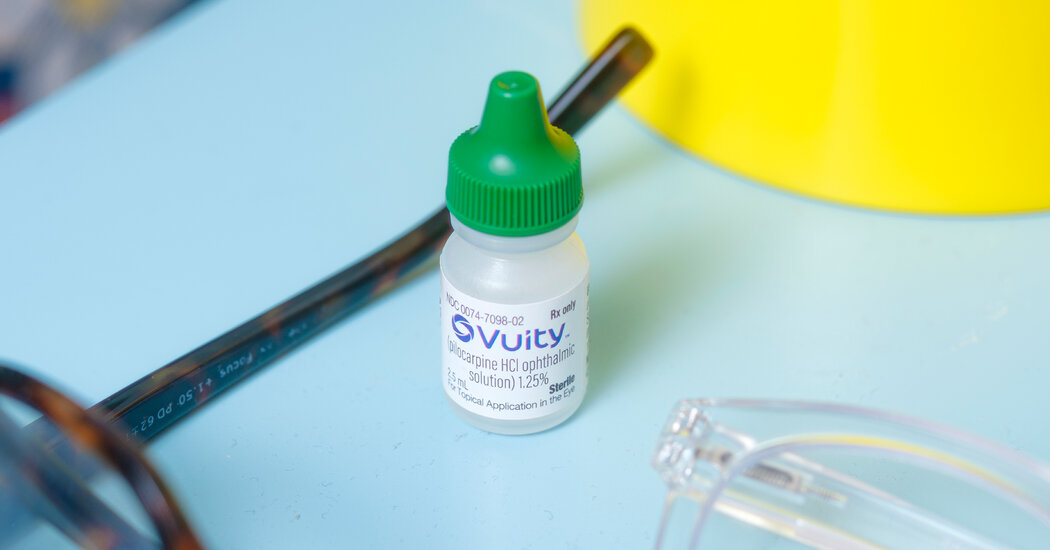
Vuity, taken daily, promises clear vision for up to 10 hours. But does it work?I never set out to become a middle-aged woman known for jazzy eyewear but that’s exactly who I am.Like many 40- and 50-something people, I have presbyopia, a condition that makes it difficult to see what’s right in front of me. Words and people look a little bit smudged around the edges, sometimes to a dizzying degree, like a watercolor painted with a sodden brush.Now, in addition to the contact lenses I’ve worn since sixth grade to correct nearsightedness, I wear reading glasses to keep the close-up world crisp. I own a dozen pairs in all shapes and sizes, with a bias toward big frames in primary colors — think Sally Jessy Raphael, Carrie Donovan and Iris Apfel. I stash glasses in my desk drawer, sock drawer and junk drawer, at the bottom of my bag and in my car, between couch cushions and under a pile of mail, on my bedside table and on top of my head. Still, I can never find a pair when I need one, and I’m never sure what strength I need. It depends on the brand, the quality of the lenses and the brightness of the room where I’m sitting. I read for a living — I’m an editor at The New York Times Book Review — so I need to be able to see words on a page! Clearly!At 38, wearing reading glasses was a fun way to express my individuality and free-spiritedness (or to summon the free spirit I wish I had). At 48, I’ve become so dependent on them, they’ve lost some appeal. I constantly miss texts and emails because I’m on the go and can’t see my phone. Yes, I’ve increased the font size, but sometimes I don’t want my kids to be able to read my screen from across the room.So when I heard about Vuity, a new type of eye drop for people with age-related blurred vision, I was eager to give it a try. From an article in the Times, I learned that “a single Vuity drop in each eye improved trial subjects’ close-range vision for six hours and improved their intermediate vision — important for computer work — for 10 hours,” though each person’s experience will vary.After a quick eye exam, my optometrist gave me a prescription, warning that the drops might not work because I’ve worn reading glasses for so long, my eyes are accustomed to them. She said we could talk about options other than “cheaters” at our next appointment. (I try avoid this word unless I’m referring to the frumpy half-glasses I wear while knitting; it strikes me as the “dungarees” of the eye world.) The only ones I know of are bifocals (now rebranded as progressives) or monovision, where you wear two different types of contact lens — one for seeing close up, one for distance — and let your eyes find a middle ground.Vuity isn’t covered by insurance, since it isn’t considered a medical necessity, so I paid $101.99 at CVS for a bottle about the length of my pinkie finger from knuckle to tip. I’ve swallowed prenatal vitamins that weren’t much smaller. I zipped the drops into the change purse in my wallet and drove home with my 18-year-old son, who thinks my collection of creative eyewear is “mad weird.”Sitting on the couch in my living room, I put one drop in each eye, as directed by my doctor. Nothing happened, which wasn’t surprising; I knew my eyeballs needed a bit of time to marinate. Miracles take time.Each day, Ms. Egan chooses from her wide selection of reading glasses. “I try to mix it up,” she said.Desmond Picotte for The New York TimesFig Newton, the writer’s 12-year-old terrier mix, thought a bottle of Vuity might make a nice snack.Desmond Picotte for The New York TimesAbout 20 minutes later, I was waiting for my 14-year-old daughter in the parking lot outside her dance studio, I got a text from my husband at home. It said, “Fig got your eye drops. I think I rescued them, but I’m not sure.” Fig Newton is our incorrigible 12 year-old terrier mix, who has a taste for cardboard, plastic and non-potable liquids.I felt twin flashes of annoyance and concern, then the thunderclap of an epiphany: I was reading my texts without glasses! In a dark car! I could see the full palette of emojis, right down to stripes on the zebra and holes in the Swiss cheese.It wasn’t exactly the moment when the Velveteen Rabbit realizes he’s real, but it still felt momentous.That night, in the bright warmth of our dining room, I realized my texts were fuzzy again. I knew the drops could wear off in a matter of hours, and you can only use them once a day. But I still held my phone, then a book, at an arm’s length, exacerbating my double chin, not wanting to surrender to glasses. I felt like Charlie in “Flowers for Algernon,” slowly reverting back to my old self.To make matters worse, the whites of my eyes had a pink tinge. Picture Campbell’s tomato soup when you add an extra can of milk. My 20-year-old daughter assured me I did not look high: “But your eye bags are bigger than usual,” she said.The next morning, I put in the drops as soon as I woke up. This time, I waited the recommended 10 minutes before popping in my contacts. I had not been able to read the microscopic instructions the first go-round, so missed that detail. For someone as nearsighted as I am (my lens prescription is -9.50 in each eye), with an outdated pair of regular glasses, this extra time would have been worthwhile had Vuity worked as promised. It didn’t.Not only did my eyes retain their bloodshot, rheumy cast during the five days I used the drops, my close-up vision never improved significantly enough to make reading glasses redundant. The drops burned as they went in, too. I’m not talking about an acid kind of pain, more like a lash in your eye, but still unpleasant.Vuity did come in handy when I walked Fig within a few hours of taking a dose. I could pause on a corner, peek at my phone and make sense of what I saw without fumbling around in my pocket for a pair of glasses that would fog up the instant they touched my skin.But overall, the drops did not pull their weight enough to justify spending approximately $3 per day for a 30-day supply. And they most certainly did not offer the extended clarity I need when I’m reading. I kept giving the drops another chance until it occurred to me that I’d never revisit a toothpaste that gave me bad breath or a moisturizer that made me itch.One of the best perks of middle age is perspective: You see things as they’re meant to be seen, whether they’re right in front of you or not. Wisdom provides the gift of clarity, even if your corneas and pupils don’t behave the way they’re supposed to. That gray hair, those eye bags? They’re my stripes, earned with the help of time, worry, tears and smiles, plus a little boost from genetics. For now, I’ll continue to accessorize myself with the biggest, brightest, weirdest glasses I can find.

Read more →
What the 'Active Grandparent Hypothesis' Tells Us About Aging Well

The need for healthy, active grandparents who can help with child-rearing may be encoded in our genes. Why is physical activity so good for us as we age? According to a novel new theory about exercise, evolution and aging, the answer lies, in part, in our ancestral need for grandparents.The theory, called the “Active Grandparents Hypothesis” and detailed in a recent editorial in Proceedings of the National Academy of Sciences, suggests that in the early days of our species, hunter-gatherers who lived past their childbearing years could pitch in and provide extra sustenance and succor to their grandchildren, helping those descendants survive. The theory also makes the case that it was physical activity that helped hunter-gatherers survive long enough to become grandparents — an idea that has potential relevance for us today, because it may explain why exercise is good for us in the first place.Most of us probably think we already know why we should exercise. We have ample evidence that physical activity of almost any kind improves heart health, reduces the risks and severity of multiple diseases and in many ways just makes us feel better.But those benefits explain how exercise is good for us, “not why,” said Daniel Lieberman, an evolutionary biologist at Harvard University and the lead author of the editorial. Dr. Lieberman, an authority on the role of physical activity in human evolution, was an author of a seminal 2004 study in Nature about the role of distance running in human evolution that helped to spawn the barefoot running movement. He is also the author of the 2021 book “Exercised.”Recently, he began to wonder why moving seems to have such a different impact on us compared to other primates. Studies by Dr. Lieberman and others have found that wild and captive apes typically walk for fewer than two miles a day, less than the average American adult, who walks about two-and-a-half miles a day, and far less than modern hunter-gatherers, such as the Hadza of Tanzania, who often cover six miles or more a day. But despite this relative languor, apes rarely develop the kinds of disorders tied to inactivity in humans, such as heart disease, arthritis and diabetes. They manage to remain healthy without much activity, while we generally cannot.On the other hand, we typically outlive apes and most other mammals. Hunter-gatherers, whose life spans are thought to mimic those of our forebears, often live well into their 70s (provided they survive early childhood). This is well past the age of childbearing, at least for women, which is unusual in nature.A famous 1998 paper, also published in Proceedings of the National Academy of Sciences, proposed that women evolved to live well past menopause to help ensure that successive generations thrive. This idea, known as the Grandmother Theory and widely accepted by anthropologists today, describes how mothers provide food and care to their children and then, when their children have children, help to feed and care for those babies, ensuring the success of future generations.But Dr. Lieberman and his colleagues felt the Grandmother Theory left some questions unanswered about what it was that allowed humans to live so long, compared to most other species. That’s where physical activity came in.Early humans had to move around often to hunt for food, the thinking goes, and those who moved the most and found the most food were likeliest to survive. Over eons, this process led to the selection of genes that were optimized by plentiful physical activity. Physical activity likewise appears to jump-start various cell processes controlled by genes that help to promote health. In this way, evolution favored the most active tribespeople, who tended to live the longest and could then step in to help with the grandchildren, furthering active families’ survival.In other words, exercise is good for us, they point out in their new paper, because long ago, the youngest and most vulnerable humans needed grandparents, and those grandparents needed to be vigorous and mobile to help keep the grandkids nourished. Crucially, the new Active Grandparents paper also delves into what it is about physical activity that makes it still so necessary for healthy aging today. For one thing, moving around uses up energy that might otherwise be stored as fat, which, in excess, can contribute to diseases of modern living, such as Type 2 diabetes, Dr. Lieberman and his co-authors write.Activity also sets off a cascade of effects that strengthen us. “Exercise is a kind of stress,” Dr. Lieberman told me. It slightly tears muscles and strains blood vessels and organs. In response, a large body of exercise science shows, our bodies initiate a variety of cellular mechanisms that fix the tears and strains and, in most cases, overbuild the affected parts. “It’s as if you spill coffee on the floor, clean it up, and your floor winds up cleaner than it was,” Dr. Lieberman said. This interior overreaction probably is especially important when we are older, he continued. Without exercise and the accompanying repairs, then, aging human bodies work less well. We wear down. We cannot care for the grandkids.Fundamentally, Dr. Lieberman said, lack of exercise during aging explains why there is a difference between the human life span — how many years we live — and health span — how many of those years we remain in generally good health.“They used to be the same thing,” Dr. Lieberman said. An inactive early human would not stay healthy and probably die early. Today, many of us can remain inactive and survive into old age, but the chances are we will not remain fully healthy if we do. Our genetic inheritance and history as humans require exercise and movement, Dr. Lieberman said. “Retirement is not the time to slow down.”This idea that we can, should and even must stay active as we age, thanks to human evolution, is at the heart of the Active Grandparents Hypothesis. Beguiling as the hypothesis is, however, it is just a theory and almost impossible to test.And some experts question some of its assumptions. The Aging Grandparent Hypothesis does not differentiate between men and women, said Kristen Hawkes, a distinguished professor of anthropology at the University of Utah who was the primary author of the Grandmother Theory. She pointed out that her group’s original research about longevity and grandparents focused on grandmothers, after the childbearing years. Grandfathers can procreate deep into old age, so their roles in extended families and their evolutionary history would be different than those of grandmothers, she said.The hypothesis also suggests that physical activity affects people in ways that may be unique to humans. “But physical activity helps improve health span in other species, like mice,” said Michael Gurven, an anthropologist at the University of California, Santa Barbara, who studies biology and evolution and is working on a book about longevity in hunter-gatherers. Still, he said, “There’s no doubt habitual physical activity can improve health. I like how this paper doesn’t take that fact for granted, but instead focuses on the simple question: Why?”The answer Dr. Lieberman and his co-authors settled on is worth keeping in mind as 2022 ripens and we add more months and years to our lives. “We’ve been selected” through evolution to be active, Dr. Lieberman said. And being physically active may help to ensure “the span of our good health matches the span of our lives.”

Read more →

Biden Promised 500 Million Free Covid Tests. Then He Had to Find Them.

Millions of Americans are now receiving tests through the new mail program, which health experts said came too late to meet demand during the brunt of Omicron wave.WASHINGTON — As the United States saw a nearly vertical increase in coronavirus cases in late December and a growing backlash over a shortage of rapid tests, President Biden promised that his administration would mail 500 million of them to Americans, free of charge.There was a major hitch: The administration had yet to secure a single test kit for the program. The announcement sent officials hunting for stockpiles in warehouses around the country and uncommitted supply from large manufacturers.Today the federal government is mailing tens of millions of rapid tests requested through a new Postal Service website that has sustained heavy traffic, with roughly 60 million households ordering the tests so far, according to the White House. The nation has a little more than twice that many households overall, suggesting enormous interest. Orders are limited to four per household for now.Testing shortages have bedeviled the government since the beginning of the pandemic, and the resurgent supply of at-home tests, which deliver results in about 15 minutes, may be coming too late, given that the Omicron variant has already peaked in many regions. But the home deliveries, and broadened access to tests overall, represent a striking turnaround for an administration that had struggled to meet demand as it focused largely on vaccination.It succeeded partly by turning to a cast of new players in a fast-expanding market, including one company that had never before made rapid tests. The administration also spent billions late last summer and in the fall purchasing tests directly from manufacturers, and sped up the process for reviewing and authorizing new tests.Mr. Biden’s announcement days before Christmas came as tests had all but disappeared from retail shelves. The world’s largest testing manufacturers, which were already racing to meet skyrocketing demand from public and commercial buyers around the world, could not possibly provide that many tests for Americans on such short notice.A testing site in Atlanta on Wednesday. It is unclear whether a better supply of rapid tests could have contained a variant as infectious as Omicron.Dustin Chambers for The New York TimesSo the administration turned at first to several little-known companies that had supplies of federally authorized tests in warehouses, ready to ship. One of them, Medea Inc., in Pleasanton, Calif., had previously imported vodka bottles equipped with LED lights promoted by Shaquille O’Neal, drawing ridicule from a top Republican senator at a recent hearing.By mid-January, the administration announced a series of much larger contracts with test manufacturers — and a plan to double the number of free tests that Mr. Biden planned to send Americans, bringing the total to a billion.The contractors for the program have committed to providing more than 550 million tests, a White House spokesman said. They include Illinois-based Abbott Laboratories, which makes a popular at-home test called BinaxNOW and is receiving about $300 million; Roche, the Swiss pharmaceutical giant that is distributing tests made by a Korean manufacturer and is being paid roughly the same amount; and the German company Siemens Healthineers. Roche and Siemens received federal clearance for their tests in December.The administration made its biggest bet — with a $1.3 billion contract — on iHealth, a company based in Sunnyvale, Calif., that until late last year had never made a rapid test. Now it is a major supplier not just to the federal government, but also to states and cities. (The administration announced another order with the company on Friday, purchasing nearly 105 million more test kits.)The company, which previously focused on making medical devices like forehead thermometers, got authorization from the Food and Drug Administration for its test in November. Its Chinese manufacturer has since hired 16,000 additional workers and is sending more than 10 million tests a day to the United States on cargo jets, according to Jack Feng, iHealth’s chief operating officer.Scientists are still studying how sensitive the at-home tests are in identifying the Omicron variant.Jeenah Moon for The New York TimesAbbott said it manufactured 70 million tests in January and would ramp up to 100 million a month by March. Mr. Feng said iHealth was currently making 300 million tests per month.Officials said the federal government contracted for as many tests as the companies could make, as long as they did not interrupt other orders. Mr. Feng said the Biden administration set its sights on iHealth because more established manufacturers had already committed their near-term supply to other customers around the globe.“We are only focused on the U.S. market,” he said.When Mr. Biden took office last winter as the virus raged, he vowed to make testing cheap and easily accessible. He formed what he called a “pandemic testing board” to improve supply and access, but its work remained all but invisible. While the first over-the-counter rapid antigen test was authorized in December 2020, they did not become readily available in pharmacies until last spring.Some experts have said that the F.D.A. was slow to review and authorize new tests last year because of meticulous standards that made swift market growth challenging, even in a public health emergency. In the fall, the agency worked with the National Institutes of Health to introduce an accelerated review process that has allowed regulators to clear tests within days of receiving final data.There are now 14 authorizations of over-the-counter rapid antigen tests, compared with around a half-dozen at the end of the summer.The Biden administration could have also moved more aggressively by making larger, European-style investments in at-home tests earlier in 2021, some experts said, guaranteeing a larger, more stable market for manufacturers and allowing the administration to stockpile for future variant-driven surges.The administration did make a targeted effort last year to supply tests, said Tom Inglesby, the White House testing coordinator. He cited billions of dollars worth of rapid and lab tests delivered to schools and long-term care facilities.“It’s kind of portrayed that somehow that the government stopped being interested in testing,” Mr. Inglesby said. “Absolutely not true.”By the spring and early summer, virus cases had fallen significantly, and demand for at-home testing cratered. Abbott discarded heaps of test supplies in Maine and temporarily shuttered its Illinois factory. At the time, the Centers for Disease Control and Prevention said that fully vaccinated people exposed to the virus did not need to test unless they displayed symptoms, guidance that was later reversed.The administration did not make its most substantial commitments to at-home testing until late summer and fall, when fewer tests were authorized. In September and October, the administration pledged $3 billion to guarantee purchases of at-home tests, helping companies such as Abbott and Quidel keep supply lines open, officials said.The investment is now paying off, White House officials said, as tests return to pharmacy shelves and are sent to community clinics and schools.President Biden was under intense pressure to rectify an acute shortage of at-home tests, as the Omicron variant was driving cases to record levels.Doug Mills/The New York TimesMr. Inglesby said the administration’s $3 billion investment had propped up test makers when demand was substantially lower in the late summer and fall. The number of over-the-counter tests available to the U.S. market grew from 25 million in August to 375 million last month, with another increase projected for February, he said. That inventory is separate from the tests in the administration’s mail program.The Coronavirus Pandemic: Key Things to KnowCard 1 of 4Omicron in retreat.

Read more →

Tonga to enter lockdown after Covid cases detected

SharecloseShare pageCopy linkAbout sharingImage source, EPATonga will go into lockdown after several cases of Covid were recorded in the capital city Nuku’alofa. Prime Minister Siaosi Sovaleni said on Tuesday that two cases were detected at the port, where humanitarian aid has been arriving following the recent volcanic eruption and tsunami.Tongan radio station Broadcom FM reported on Wednesday another three cases had been detected in a family.The South Pacific nation had previously been virus-free.So far, all aid deliveries there have been handled using contactless protocols to stop the virus spreading. In a national address late on Tuesday, Mr Sovaleni said Tonga would enter lockdown from 6PM local time (0500 GMT) Wednesday, with the situation reviewed every 48 hours.”The most important issue at the moment is to slow down and stop those who have been affected,” he said, adding that “no boat will be allowed to go from one island to another, no more (domestic) aeroplane flights”.Drew Havea, chair of the Civil Society Forum of Tonga, said: “We assume the worst, that there are going to be more.”I think the hope now is that we all stick together and find out how big this thing is for Tonga,” he told the BBC from Nuku’alofa. The remote island nation was one of the few places in the world to escape relatively unscathed from Covid, after it closed its borders to the outside world in early 2020. But after a volcanic eruption triggered a tsunami that devastated the nation, Tonga has been heavily dependent on foreign aid – led by countries like Australia and New Zealand – for supplies of fresh drinking water, shelter kits and rescue equipment. Authorities had stressed the need for all foreign aid deliveries to be handled using strict “no-contact” protocols, including leaving humanitarian supplies in isolation for three days before they are handled by Tongans. Last week however, a Covid outbreak hit the HMAS Adelaide – a crucial Australian relief ship bound for the island nation – infecting 23 of the estimated 600 crew members. The ship eventually docked at the capital’s port. The Tongan government is investigating but says it does not believe there is a link to the vessel. The ship will take back samples from the Tongan cases so that an Australian health facility can assess the strain and find out which country it came from.At least 83% of Tonga’s 106,000 strong population have received double doses of the Covid vaccine. However, the remoteness of some of these island communities, many with limited healthcare resources, makes them particularly vulnerable to an outbreak.You may also be interested in:This video can not be playedTo play this video you need to enable JavaScript in your browser.

Read more →

Pfizer Asks F.D.A. to Clear 2 Vaccine Doses for Young Children as a Start

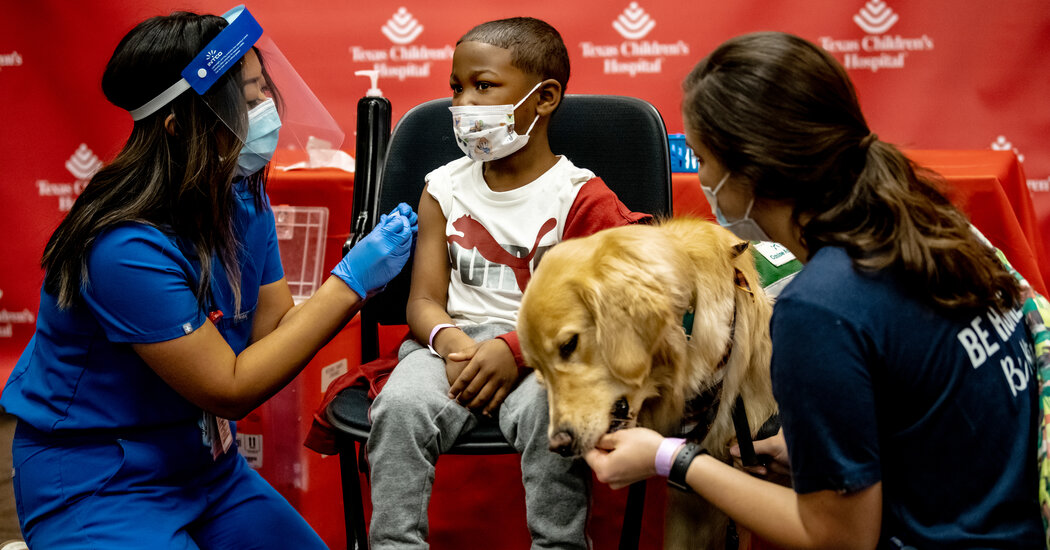
The Food and Drug Administration asked to review Pfizer’s data on two doses now, while the company continues to assess whether three doses would be more effective.WASHINGTON — Pfizer and its partner, BioNTech, asked the Food and Drug Administration on Tuesday to authorize two doses of their coronavirus vaccine for children younger than 5 while the companies continue to research whether three doses would be more effective for the age group.In a highly unusual move, federal regulators pressed the companies to submit the request even though two doses failed to produce the hoped-for immune response among children 2 to 4 years old in a clinical trial. Only children between 6 months and 2 years old demonstrated an immune response comparable to that of older teenagers and young adults, the standard for a successful trial.The request for emergency authorization comes as the highly contagious Omicron variant has led to record numbers of infections. The under-5 group includes more than 19 million children, the only Americans not yet eligible for vaccination.The disappointing trial results, announced in December, prompted the companies to test a third low dose of the shot in that age group. But rather than wait until the end of March for the results, federal regulators decided to encourage Pfizer to apply for authorization of a two-dose regimen now in hopes of getting a head start on the vaccination effort.In meetings about the strategy, government officials argued that two doses had proved safe, even if they failed to produce an immune response in the whole age group, according to multiple people familiar with the discussions. Children in the trial received one-tenth of the adult dose.If children can get an initial injection this month, some officials reasoned, they will be ready for a third dose by the time researchers get what they hope will be successful results from the three-dose trial. The first two doses would be spaced three weeks apart, followed by a third dose two months after the second.Dr. Janet Woodcock, the acting F.D.A. commissioner, and Dr. Peter Marks, an agency regulator who oversees its vaccines office, said on Tuesday that it was important to act quickly given the surge in Omicron cases, which has now peaked in many parts of the country, and the likelihood that other variants would follow.An emergency meeting of the F.D.A.’s advisory group of outside experts is scheduled for Feb. 15, when they will discuss the request and make a recommendation. In an interview Tuesday, Dr. Paul A. Offit, a member of the group and director of the Vaccine Education Center at Children’s Hospital of Philadelphia, suggested that regulators could be short-circuiting the normal process without a clear rationale.“It doesn’t make sense we would approve a two-dose vaccine on the assumption the third dose would make up for deficiencies of the two doses,” he said.Albert Bourla, Pfizer’s chairman and chief executive, said in a statement that “ultimately, we believe that three doses of the vaccine will be needed for children 6 months through 4 years of age to achieve high levels of protection against current and potential future variants.” But he said that if two doses are authorized in the meantime, “parents will have the opportunity to begin a Covid-19 vaccination series for their children while awaiting potential authorization of a third dose.”Pfizer and BioNTech’s study of younger children was intended to measure immune responses, not the vaccine’s efficacy in preventing infections or severe cases of Covid-19. But because some children in the trial became infected, researchers got indications of how well the vaccine worked to stave off the virus, two people familiar with the study said. A similar development occurred in the companies’ study of their vaccine in 5- to 11-year-olds, which overlapped with a crushing wave of the Delta variant.One person familiar with the data, who spoke on condition of anonymity, said children 2 to 4 years old who were given two shots were infected at a rate 57 percent lower than the children in the placebo group. Children 6 months to 2 years old who got shots were infected at a rate 50 percent lower than the placebo group. There were fewer than 100 cases of symptomatic infection — a small fraction of the participants overall — and the margins of error were wide, that person said.The data also suggested that the vaccine better protected the children against infection from Delta than from Omicron. Omicron is better than Delta at evading the protection of both the Pfizer-BioNTech and Moderna vaccines in adults.The regulators’ strategy seemed based in part on the likelihood that the Pfizer-BioNTech’s three-dose trial would prove successful. Several experts, including Dr. Yvonne Maldonado, a Stanford professor of pediatric infectious diseases, said the history of vaccines suggested that a third dose would, in fact, enhance the immune response.“There’s almost no conceivable hypothesis where a third dose would be worse,” said Dr. Maldonado, a lead investigator at the Stanford site of Pfizer-BioNTech’s pediatric vaccine trials. “At worst it could be no different. So it might just be that two doses is the best you’re going to get.”Dr. H. Cody Meissner, another member of the F.D.A. advisory committee and chief of the pediatric infectious diseases division at Tufts Children’s Hospital, said he was open minded about the F.D.A.’s approach. But he said he worried about whether rare side effects might be missed in small-scale trials. The Pfizer-BioNTech trial included about 1,200 children younger than 2, and about 1,500 between 2 and 4, according to people familiar with the study’s design.The panel’s decision “will partly depend on what are the rates of hospitalization and severe disease in this age group,” Dr. Meissner said, “and what our sense is in terms of potential harm” should the two-dose regimen be authorized.The Coronavirus Pandemic: Key Things to KnowCard 1 of 4Omicron in retreat.

Read more →

Magnetic seeds used to heat and kill cancer

Scientists at UCL have developed a novel cancer therapy that uses an MRI scanner to guide a magnetic seed through the brain to heat and destroy tumours.
The therapy, demonstrated in mice, is called “minimally invasive image-guided ablation” or MINIMA and comprises a ferromagnetic thermoseed navigated to a tumour using magnetic propulsion gradients generated by an MRI scanner, before being remotely heated to kill nearby cancer cells.
Researchers say the findings, published in Advanced Science, establish ‘proof-of-concept’ for precise and effective treatment of hard-to-reach glioblastoma, along with other cancers such as prostate, that could benefit from less invasive therapies.
Senior author, Professor Mark Lythgoe (UCL Centre for Advanced Biomedical Imaging) said: “MINIMA is a new MRI-guided therapy that has the potential to avoid traditional side effects by precisely treating the tumour without harming healthy tissues. Because the heating seed is magnetic, the magnetic fields in the MRI scanner can be used to remotely steer the seed through tissue to the tumour. Once at the tumour, the seed can then be heated, destroying the cancer cells, while causing limited damage to surrounding healthy tissues.”
In the study, the UCL team demonstrate the three key components of MINIMA to a high level of accuracy: precise seed imaging; navigation through brain tissue using a tailored MRI system, tracked to within 0.3 mm accuracy; and eradicating the tumour by heating it in a mouse model.
Ferromagnetic thermoseeds are spherical in shape, 2 mm in size and are made of a metal alloy; they are implanted superficially into tissue before being navigated to the cancer.

Read more →

Alan A. Stone, 92, Dies; Challenged Psychiatry’s Use in Public Policy

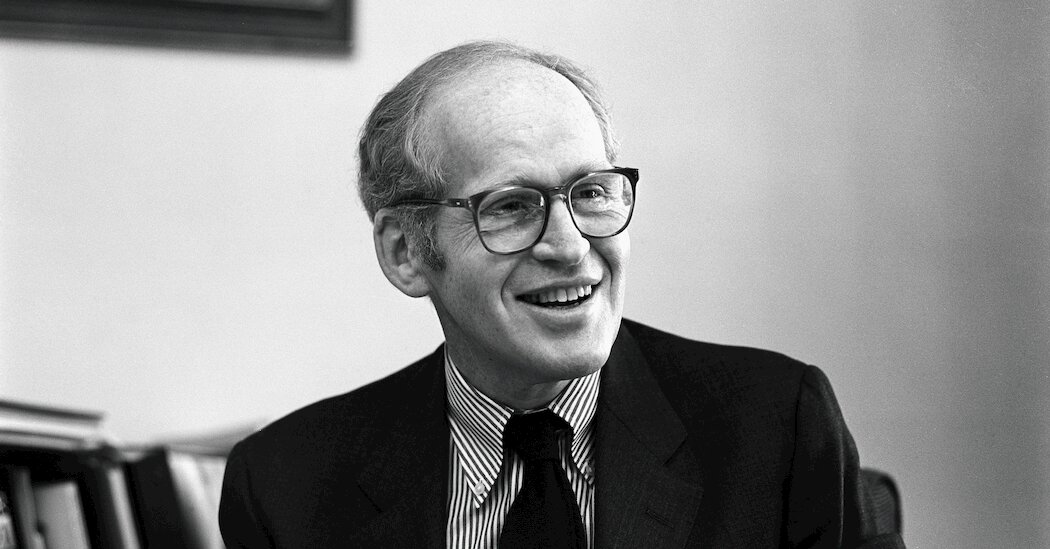
An iconoclastic thinker, he greatly influenced the evolution of psychiatric ethics, and guided the decision to take homosexuality off the list of mental disorders.Alan A. Stone, an iconoclastic scholar who used his dual tenured appointments at Harvard’s law and medical schools to exert a powerful influence on the evolution of psychiatric ethics over the last half-century, died on Jan. 23 at his home in Cambridge, Mass. He was 92.His son Douglas said the cause was laryngeal cancer.Dr. Stone trained as a psychiatrist and as a psychoanalyst and began teaching at Harvard Law School in the late 1960s, just as the foundations of both fields were coming under scrutiny.He was at the forefront of questions about how psychiatry is used as a tool of public policy; for example, he criticized the role psychiatrists played in laws that banned abortion based on claims about a woman’s mental health, and in the involuntary commitment of millions of Americans to public mental institutions.As psychiatrists began to build careers as expert witnesses in criminal trials, he made enemies by opposing the practice, and by refusing to take the stand himself. That didn’t stop him from becoming the president of the American Psychiatric Association in 1979, a post where, among other things, he guided the decision to remove homosexuality from the profession’s list of mental disorders.Despite his lack of a law degree, Dr. Stone was widely considered one of the best and most popular professors on Harvard’s legal faculty. He often taught courses with the criminal lawyer Alan M. Dershowitz, on subjects ranging from criminal insanity to Shakespeare.“They were this perfect yin and yang,” the former New York City schools chancellor Joel Klein, who took one of their courses as a law student, said in a phone interview. “Dershowitz was doing what every good Harvard Law School professor does, emphasizing the rational, and what Stone was doing was saying, ‘That’ll get you part of the way down the road, but what about X?’”Many former students, including Mr. Klein, cited Dr. Stone not just as an exemplary teacher but also as a profound influence on their careers, precisely because his approach differed from the legalistic thinking expounded by other faculty members. His colleagues tended to agree.“For him the world was never right or wrong,” Mr. Dershowitz said. “It was always ‘why?’”In part because of his capacity for thorough, critical thinking, the Department of Justice invited Dr. Stone to join a multidisciplinary panel that would examine the 1993 raid by federal agents on a compound near Waco, Texas, that was occupied by a religious sect called the Branch Davidians. Four agents and 76 members of the sect were killed, and Dr. Stone’s panel was charged with assessing whether the tragedy could have been avoided.But very early on, Dr. Stone came to believe that their job was in fact to rubber-stamp the government’s own self-exculpatory assessment. He publicly criticized the Justice Department when it refused to give him classified material, and he refused to sign the final review until he was allowed to submit his own dissenting report.He remained a vocal critic of the government throughout the 1990s, and in 1999 he called for the surviving Branch Davidians, several of whom had been sentenced to prison, to be pardoned.“The Branch Davidians were more victims than culprits,” he wrote in The Wall Street Journal that year.Dr. Stone made more enemies in 1995 when he declared that Freudian psychoanalysis was no longer useful as a science and was best relegated to the humanities, where it could be used to evaluate works of art.“Psychoanalysis, both as a theory and as a practice, is an art form,” he said in a speech to the American Academy of Psychoanalysis. “I do not think psychoanalysis is an adequate form of treatment.”Though legions of psychoanalysts took exception, to Dr. Stone that assessment was no insult — he considered art and psychiatry to be closely intertwined, and mutually supportive. In addition to teaching classes on the law and literature, he was for years a film critic for Boston Review, using his professional insights to tease apart movies like “Million Dollar Baby” (2004), which he argued was a story about the ethics of euthanasia, and “The Tree of Life” (2011), which he hailed for its treatment of Oedipal conflicts.Later still, he decried his profession for its complicity in the so-called war on terror under George W. Bush, when psychiatrists were employed in “enhanced interrogation” sessions that, Dr. Stone said, amounted to torture.“What American law and American psychiatrists and psychologists need to do now,” he wrote in The New York Times in 2005, “is to reassert our basic norms of decent and ethical conduct, which seem to have collapsed in our response to 9/11.”Dr. Stone in 2017. He once argued that psychoanalysis was no longer useful as a science and was best relegated to the humanities, where it could be used to evaluate works of art.Dana SmithAlan Abraham Stone was born on Aug. 15, 1929, in Boston. His father, Julius, was a lawyer, and his mother, Betty (Pastan) Stone, was a homemaker. All four of his grandparents were Jewish immigrants from Lithuania.Along with his son Douglas, he is survived by his partner, Laura Maslow-Armand; another son, David; six grandchildren; and two great-grandchildren. His wife, Sue (Smart) Stone, died in 1996. His daughter, Karen Stone Zieve, died in 1988.His parents led a liberal household, taking in Jewish refugees during the 1930s while also weathering antisemitic prejudice; despite clear qualifications, his father struggled to get a low-level judgeship.He attended Boston Latin School and Harvard, where he majored in social relations. He also played right tackle on the varsity football team; among his teammates on the 1947 roster was Robert F. Kennedy.He graduated in 1950 and received his medical degree from Yale in 1955. He conducted his residency at McLean Hospital in Belmont, Mass., a suburb of Boston, and trained in psychoanalysis at the Boston Psychoanalytic Society and Institute.At one point, he made an exception to his refusal to testify as an expert witness. Justice Anthony Kennedy of the Supreme Court staged a “trial” for Hamlet in 1994, on the premise that he had survived the play’s bloody ending and was now charged with murdering Polonius, his uncle’s counselor.The question, as Justice Kennedy constructed it, was not whether Hamlet had killed Polonius — that’s clear in the play — but whether he was not guilty by reason of insanity. Mr. Klein, Dr. Stone’s former student, was working in the White House at the time, and he suggested his old professor as an expert witness for the prosecution.The mock trial was conducted several times (in most instances the jury deadlocked), including in 1996 at Boston University.When asked at that event whether he had made himself familiar with the “record” in the case — that is, the play itself — Dr. Stone responded, “Yes, and I agree with the justice that it’s well written.”

Read more →

Paternal alcohol use increases frequency of fetal development issues

Prenatal visits have traditionally focused almost exclusively on the behavior of mothers, but new research from the Texas A&M College of Veterinary Medicine & Biomedical Sciences (CVMBS) continues to suggest that science should be looking more closely at the fathers’ behavior as well.
Dr. Michael Golding, an associate professor in the CVMBS’ Department of Veterinary Physiology & Pharmacology (VTPP), has spent years investigating the father’s role, specifically as it relates to drugs and alcohol, in fetal development.
Golding says a number of publications have shown that males pass down more than just their genetics, but exactly how that process works and the consequences of it remain largely unknown.
“When you look at the data from throughout human history, there’s clear evidence that there’s something beyond just genetics being inherited from the male,” Golding said. “So, if that data is solid, we’ve got to start looking more at male behavior.
“Say you had a parent who was exposed to starvation — they could pass on what you might call a ‘thriftiness,’ where their kids can derive more nutrition from less food,” he said. “That could be a positive if they grow up in a similar environment, or they could grow up in a time when starvation isn’t an issue and they might be more prone to obesity or metabolic syndromes. That kind of data is clearly present in clinical data from humans.”
Golding’s study of how things beyond genes, such as behavior and environment, affect development is called epigenetics, and one of the big questions in the search for answers on how male prenatal behavior can impact fetal growth has been how exactly these epigenetic factors manifest.

Read more →

The myth of a 'super-charged' immune system

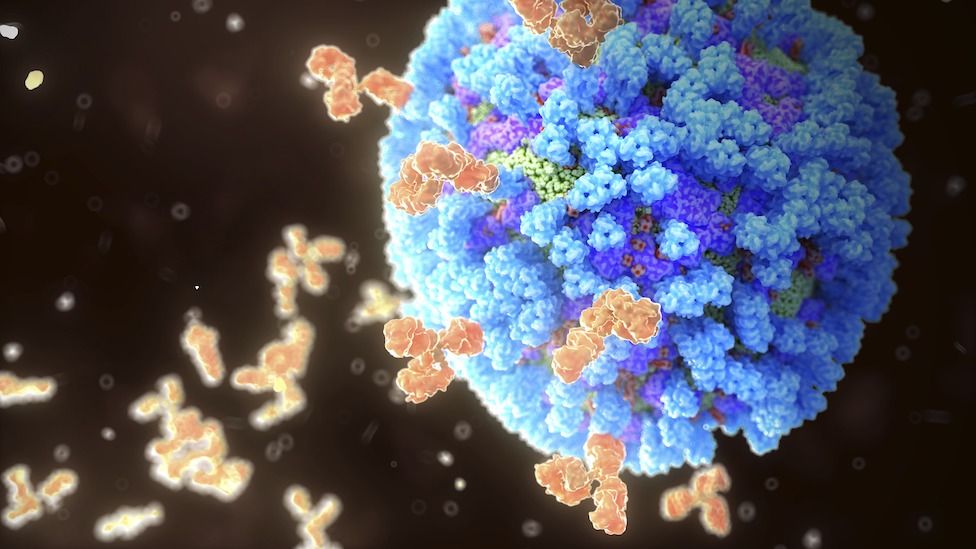
SharecloseShare pageCopy linkAbout sharingImage source, SCIENCE PHOTO LIBRARYSuddenly we are all talking about immunity – but how much do we really understand? Science writer and YouTuber Philipp Dettmer unpicks one of the most common misconceptions.Next time you wake up feeling a bit under the weather, spare a thought for the army of soldiers fighting millions of enemies on your behalf.Inside the fortress of your body.While intruders attack hundreds of thousands of your cells, your immune system is organising complex defences, communicating over vast distances and dishing out a swift death to millions, if not billions, of these invaders. All the while you are standing in the shower, mildly annoyed at being sick.What you are feeling – the snotty nose, the raised temperature, the sore throat, the general feeling of being a bit “off” – is actually the effect of this battle going on out of sight.The immune system is complicated in the sense that climbing Mount Everest is a nice stroll through nature. It is the most complex biological system in the human body, other than the brain.And it’s being talked about now more than ever before. The pandemic has introduced a new vocabulary into our lives. We talk about natural immunity in people who have recovered from Covid and immunity from vaccines.Jabs, boosters, side effects… these are suddenly subjects of conversation as common as the weather.But talking more about immunity doesn’t necessarily mean we understand it more. Let’s take an example. Perhaps the biggest misconception is the preoccupation society has with attaining a strong, “super-charged” immune system.Image source, SCIENCE PHOTO LIBRARYThe internet is filled with products that promise to do exactly that. From infused coffee to protein powder, from mystical roots dug up in the Amazon rainforest to vitamin pills, the list is endless.But what a lot of people fail to understand is that the immune system can be dangerous. It’s not a thing we want to be unleashed inside us without limits. In a world where self-improvement is big business, the idea of charging up your immune system is very appealing – but it’s not a strong immune system we want, but a balanced one that keeps all the different systems in check. We are talking about a complex and interconnected collection of hundreds of bases and recruitment centres all over your body. They are connected by a superhighway, a network of vessels, as similarly vast and omnipresent as your cardiovascular system. Is my Covid vaccine wearing off?On top of organs and infrastructure, billions of immune cells patrol either these superhighways or your bloodstream and are ready to engage your enemies when called upon. Billions more sit guard in the tissue of your body that borders your outsides waiting for invaders to cross them. There are also trillions of protein weapons that you can think of as land mines. Your immune system also has dedicated universities where cells learn who to fight and how, complete with the largest biological library in the universe, able to identify and remember every possible invader that you may ever encounter in your life.At its very core, the immune system is a tool to distinguish the other from the self. It does not matter if the other means to harm you or not. If the other is not on a very exclusive guest list that grants free passage, it has to be attacked and destroyed because the other might harm you.The foot soldiers keeping you healthyImage source, Getty ImagesMacrophages – devour dead cells and living enemies, coordinate defences and heal woundsMast cells – filled with tiny bombs that containing potent chemicals that cause local inflammationDendritic cells – like an intelligence officer, it gathers samples from dead intrudersMonocytes – type of white blood cell that can transform into macrophage or dendritic cell Natural killer cells – hunt two types of enemies: cells infected by viruses and cancer cellsNeutrophils – all-purpose weapons system engineered to quickly deal with enemies especially bacteriaEosinophil – causes inflammation, battles parasites, activates other cellsBasophil – like mast cells and eosinophils, they prolong an allergic reactionT cells – they do many things including orchestrating other cells and killing cancer cellsB cells – produce antibodies and activate other cellsYou’ve probably got the picture by now – it’s a highly complex system made up of many different components. A well-functioning immune system is very good at using just the right amount of force for any given infection. So the idea of strengthening these systems to be more aggressive is ridiculous. Instead of a rugby player smashing into things, you want it to be a ballet dancer – highly trained, precise and able to strike with ease but dancing in harmony with the music.There is an old Greek word homeostasis, the balance of all things, which is what we should strive for.It’s such an intricate system, so many things could go wrong if it was made more powerful. It could overreact to a minor infection. This misunderstanding is partly because people lack a good mental image of what the term means. They think of it as an energy shield that you can charge up. But it’s not a thing at all, it’s a multitude of things. The controversial cells that saved millions of livesThe race to understand ‘immune amnesia’In reality, nobody knows how many cells of which kinds and at what activity level are necessary to have your immune system work optimally. Anybody who says that they know what is needed is probably trying to sell you something.At least for now, there are no scientifically proven ways to make your immune system more aggressive through a superfood or pill. And if there were, it would be very dangerous to use them without medical supervision.People prefer easy, quick solutions but health depends on very boring things that people don’t want to hear. Exercise, a balanced diet and reduced stress. We all know these are good for us but we don’t want to do it.Image source, Getty ImagesThe most important thing is to eat a diet that provides you with all the vitamins and nutrients your body needs, for example fruits and vegetables. Your immune system constantly makes many billions of new cells and they need feeding. The positive health effects of even moderate regular exercise have been known for a long time. Good circulation allows your cells and immune proteins to move more efficiently and freely, which makes them do their job better. Exercise can also slow down its decline in old age.Leading less stressful lives has tangible benefits to our health in many ways, and one of them is the immune system. Without going into too much detail, stress can set off chains of events that disrupt the work and the balance of that system.So why do some people seem to get colds and flus more than others? There are three reasons for that.The reality is we are not the same. Lifestyle choices do matter. Maybe you smoke or you don’t eat as well as others. Maybe you have a very stressful job or a job that exposes you to viruses, or perhaps you just don’t get off the couch. And there’s genetics. Everyone is a bit different. One person might be better at fighting viruses and another better at fighting bacteria. And thirdly there’s perception. Everyone claims to know someone who says they never get sick but that’s not true. So maybe the next time you do wake up with a runny nose or a bit of a sweat, spare a thought for the army of helpers that’s keeping you alive.And instead of cursing your luck, maybe give thanks.Philipp Dettmer is author of a new book Immunity and creator of Kurzgesagt which is one of the most popular science channels on YouTube

Read more →