Blood pressure warning over long-term paracetamol use
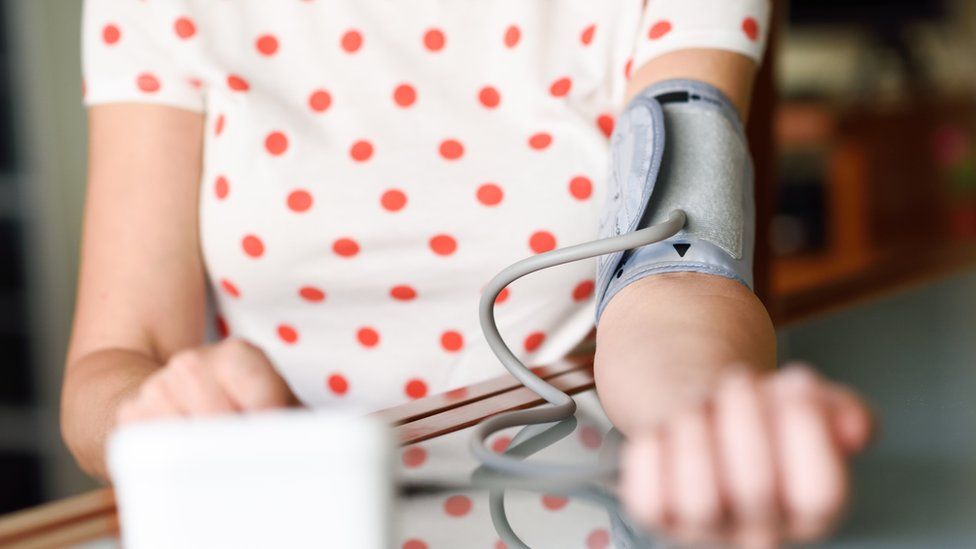
SharecloseShare pageCopy linkAbout sharingImage source, Getty ImagesPeople with high blood pressure who take paracetamol on prescription could be increasing their risk of heart attacks and strokes, a study suggests.Doctors should think about the risks and benefits to patients taking it over many months, the University of Edinburgh researchers say.Taking the painkiller for headaches and fevers is safe, they stress.Other experts say research in more people over a longer timeframe is needed to confirm the findings.Paracetamol is widely used around the world as a short-term remedy for aches and pains but also prescribed to manage chronic pain, despite little evidence of its benefit for long-term use.Half a million people – one out of every 10 – in Scotland were prescribed the painkiller in 2018. High blood pressure affects one out of every three people in the UK. The study tracked 110 volunteers, two-thirds of whom were taking drugs for high blood pressure, or hypertension.In a randomised trial, they were asked to take 1g of paracetamol four times a day for two weeks – a common dose for patients with chronic pain – and then dummy pills, or placebo, for another two weeks.Image source, Getty ImagesThe trial showed paracetamol increased blood pressure, “one of the most important risk factors for heart attacks and strokes” much more than a placebo, Edinburgh clinical pharmacologist Prof James Dear said. The researchers advise doctors to start patients with chronic pain on as low a dose of paracetamol as possible and keep a close eye on those with high blood pressure and at risk of heart disease.Lead investigator Dr Iain MacIntyre, clinical pharmacology consultant, at NHS Lothian, said: “This is not about short-term use of paracetamol for headaches or fever, which is, of course, fine.” ‘Many unknowns’Dr Dipender Gill, clinical pharmacology and therapeutics lecturer, at St George’s, University of London, said the study, published in the journal Circulation, had found “a small but meaningful increase in blood pressure in a white Scottish population” but “many unknowns remain”.”Firstly, it is not clear whether the observed increase in blood pressure would be sustained with longer term use of paracetamol,” he said.”Secondly, it is not known for certain whether any increase in blood pressure attributable to paracetamol use would lead to an increased risk of cardiovascular disease.”A large US study previously found a link between long-term paracetamol use and increased risk of heart attacks – but it could not prove one caused the other. And other smaller studies have been unable to confirm the link.The Edinburgh team said they could not explain how paracetamol would raise blood pressure but their findings should lead to a review of long-term paracetamol prescriptions.These were previously considered safer than non-steroidal anti-inflammatory painkillers, such as ibuprofen, which are thought to raise blood pressure in some people. The British Heart Foundation, which funded the study, said doctors and patients should regularly rethink whether any medication, even something “relatively harmless like paracetamol”, was needed.Dr Richard Francis, from the Stroke Association, said further research in people with normal, healthy blood pressure, over a longer timeframe, was needed “to confirm the risks and benefits of using paracetamol more widely”.High blood pressure (Hypertension)Paracetamol for adults- painkiller to treat aches, pains and fever – NHSThe BBC is not responsible for the content of external sites.

Read more →

'Bionic' pacemaker reverses heart failure

A revolutionary pacemaker that re-establishes the heart’s naturally irregular beat is set to be trialled in New Zealand heart patients this year, following successful animal trials. “Currently, all pacemakers pace the heart metronomically, which means a very steady, even pace. But when you record heart rate in a healthy individual, you see it is constantly on the move,” says Professor Julian Paton, a lead researcher and director of Manaaki Manawa, the Centre for Heart Research at the University of Auckland.
Manaaki Manawa has led the research and the results have just been published in leading journal Basic Research in Cardiology.
“If you analyse the frequencies within your heart rate, you find the heart rate is coupled to your breathing. It goes up on inspiration, and it goes down on expiration, and that is a natural phenomenon in all animals and humans. And we’re talking about very ancient animals that were on the planet 430 million years ago.”
Twelve years ago, Paton was a member of a group of scientists who decided to investigate the function of this variability. They made a mathematical model that predicted it saved energy. That made them question why a metronomic heartbeat was used in heart-failure patients who lacked energy. They asked, “Why aren’t we pacing them with this variability?”
All cardiovascular disease patients lose the heart rate variability, which is an early sign that something is going wrong. “People with high blood pressure, people with heart failure, their heart rate is not being modulated by their breathing. It may be a little bit, but it’s very, very depressed, very suppressed,” Paton says. “We decided that we would put the heart rate variability back into animals with heart failure and see if it did anything good.”
Following positive signals in rats, the latest published research was on a large animal model of heart failure, performed by Dr Julia Shanks and Dr Rohit Ramchandra.

Read more →

Glaucoma: Seeing the light at the end of the (nano)tunnel

Reduced blood flow and impaired neurovascular coupling are well-known features of glaucoma, the main cause of non-curable blindness affecting 80 million people worldwide in 2020.
The mechanisms underlying these abnormalities are now unveiled, thanks to new research by a team led by Adriana Di Polo, professor of neuroscience and ophthalmology at Université de Montréal.
The study was published this week in the Proceedings of the National Academy of Sciences.
The findings by Luis Alarcon-Martinez and Yukihiro Shiga, both postdoctoral fellows in Di Polo’s laboratory and first co-authors of the study, reveal that nanotubes connecting pericytes are damaged in glaucoma leading to neurovascular deficits.
Pericytes are cells that have the ability to control the amount of blood passing through a single capillary simply by squeezing and releasing it. They are wrapped around the capillaries, the thinnest blood vessels in all organs of the body.
In living animals, as in humans, the retina uses the oxygen and nutrients contained in the blood to function properly. This vital exchange takes place through capillaries.

Read more →

Genetically informed atlases reveal new landscapes in brain structure

An international team of scientists has used atlases of the human brain informed by genetics to identify hundreds of genomic loci. Loci is plural for locus, and in genetics indicates the physical location of a gene or variant on a chromosome.
The work was led by Chi-Hua Chen, PhD, associate professor in the Department of Radiology at UC San Diego School of Medicine. The findings are published in the February 3, 2022 online issue of Science.
“The complexity of the human brain has equally eluded and fascinated scientists for centuries,” said first author Carolina Makowski, PhD, a postdoctoral fellow working with Chen.
“A large part of how our brain is shaped boils down to what is entwined in our DNA. The last decade has seen a flourish in studies mapping different regions of the brain to unique genetic codes that naturally vary in the population. The way these brain regions are defined, however, can have an important impact on findings, something that we highlight in this work.”
By and large, construction of the human brain is determined by heredity, though factors like environmental exposures also play a role, particularly during sensitive periods of neurodevelopment during childhood. Large-scale MRI and genetic datasets have increasingly illuminated the common genetic variants that help build the human cerebral cortex — the outer, layered sheet of wrinkled tissue associated with humans’ highest mental capabilities, such as language, memory, perception, awareness and consciousness.
The latest study goes further, using genetically informed brain atlases in genome-wide association studies (GWAS) of regional cortical surface area and thickness in 39,898 adults and 9,136 children. GWAS are studies that scan complete sets of DNA or genomes of many people to find genetic variations, usually those that may be associated with a particular disease.

Read more →

Research team's mask strategy passes muster

Masks to protect people from illness come in all shapes and sizes. Unfortunately.
During the early stages of the COVID-19 pandemic, a team at Rice University’s George R. Brown School of Engineering and the University of Texas MD Anderson Cancer Center went looking for and found a way to make standard surgical masks better at keeping out small airborne droplets that might contain the SARS-CoV-2 virus.
They came up with an easily manufactured adhesive silicone harness that allows light surgical masks to match and sometimes exceed the federal safety standards for N95 and KN95 masks.
A study led by Jeannette Ingabire, a Systems, Synthetic and Physical Biology graduate student in the Rice lab of electrical and computer engineer Jacob Robinson, appears in JAMA Network Open, part of the American Medical Association group of journals.
The team won a small grant in the first round of awards from Rice’s COVID-19 Research Fund to make surgical masks better suited to the crisis. “N95s were hard to get at the time, so it seemed logical to improve the flimsy surgical masks you see in hospitals,” Robinson said. “Now, of course, good masks are easier to get, but you never know when our solution will be needed.”
The project began when co-author Dr. Sahil Kapur, an assistant professor in the Department of Plastic Surgery at MD Anderson, approached Rice engineers with an idea for a harness to make surgical masks fit more snuggly around the face.

Read more →

Mechanical hearts can regenerate some heart tissue

Mechanical hearts spur some regeneration in dormant parts of failing hearts, according to a UT Southwestern pilot study that shows promise for developing regenerative heart therapies.
“This is by all accounts a small study, but it represents the first evidence that mechanical hearts, which are tried and true, approved treatments for end-stage heart failure patients, can generate new muscle tissue in the failing human heart,” said lead author Hesham Sadek, M.D., Ph.D., Professor of Internal Medicine, Biophysics and Molecular Biology.
His findings, published in the American Heart Association flagship journal Circulation, found that left ventricular assist devices (LVADs), widely accepted in cardiology as life-saving interventions, showed metabolic reactivation in myocardial areas that had little or even no activity.
“What we need to do now is replicate these results in larger studies,” Dr. Sadek said. “If this holds true in larger studies, mechanical hearts might emerge as a regenerative therapy to reverse heart failure, which is the holy grail in heart failure treatment.”
Dr. Sadek has broken extensive ground in this area of cardiology research with studies of heart regeneration in mice that were published in the journals Nature and Science. Cell reported his findings that oxygen metabolism causes DNA damage in heart cells that shuts down their ability to regenerate.
Vlad Zaha, M.D., Ph.D., Assistant Professor of Internal Medicine, co-led the study with Dr. Sadek.
“This study found evidence of regeneration in the parts of the heart that would be considered dead,” Dr. Zaha said. “It’s a promising finding that will lead to further investigations to replicate the results at larger scale, and — if confirmed — to explore potential new therapies to amplify this process in the context of LVAD support.”
The pilot study of four patients, ages 39-59, who were taking medications for heart failure measured metabolic activity by tracking a radiolabeled sugar molecule called F-fluorodeoxyglucose (FDG) in the heart. This FDG signal is considered a marker of “viable,” or alive, heart tissue.
Positron emission tomography (PET) imaging tracked FDG uptake every six months for up to 18 months. All participants exhibited some degree of increase in FDG uptake in areas of previous metabolic inactivity at their baseline, which is suggestive of possible myocardial regeneration. Among the four patients, the increase in FDG uptake from their baseline ranged from 1.87% to 23.80%.
The study was funded in large part by UT Southwestern’s Hamon Center for Regenerative Science and Medicine and the Leducq Foundation. Other UTSW researchers who contributed to the study include Mark Drazner, M.D., Pradeep Mammen, M.D., and Chao Xing, Ph.D.
Story Source:
Materials provided by UT Southwestern Medical Center. Note: Content may be edited for style and length.

Read more →

Researchers discover repair properties of a protein critical for wound-healing in gut diseases

An international team led by the Case Western Reserve University School of Medicine has discovered novel properties of the protein Gasdermin B that promotes repair of cells lining the gastrointestinal tract in people with chronic inflammatory disorders like Crohn’s disease and ulcerative colitis.
The new findings, recently published in the journal, Cell, are significant because the impact of Gasdermin B (GSDMB) on healing epithelium — a type of body tissue that lines the organs that have direct contact with the external environment — will play a key role in research on wound formation and designing novel therapeutics to enhance wound repair, said Theresa Pizarro, lead study author and the Louis Pillemer Professor of Experimental Pathology at the School of Medicine. In addition to medical school colleagues on campus, researchers included scientists from Cleveland Clinic, Texas, England and Greece.
Gasdermin B
Gasdermins are a family of proteins known to cause pyroptosis — a type of cell death usually triggered by infections and inflammation that contributes to conditions like ulcerative colitis and Crohn’s disease.
Within that protein family, Gasdermin B (GSDMB), unlike other gasdermin proteins, doesn’t cause pyroptosis, especially in epithelial cells, but instead contributes to keeping the gastrointestinal tract healthy — a significant discovery for the development of future therapeutic treatments.
Previous research has shown that individuals carrying genetic variations of Gasdermin B have an increased risk of developing inflammatory disorders like asthma or inflammatory bowel disease (IBD).

Read more →

Wastewater monitoring for public health

Since September 2020, University of California, Davis, researchers have been monitoring wastewater on the UC Davis campus and in the city of Davis for COVID-19 through the Healthy Davis Together program. A new article published Feb. 8 in Proceedings of the National Academy of Sciences reviews their experiences and the advantages and limitations of wastewater testing as a public health tool in the COVID-19 pandemic.
Assistant Professor Heather Bischel and doctoral student Hannah Safford, Department of Civil and Environmental Engineering, and Karen Shapiro, associate professor in the School of Veterinary Medicine, manage the city/campus wastewater monitoring program, which now includes collections weekly, triweekly or daily from over 50 sites distributed across the UC Davis campus and city of Davis sewer networks. Their results have supported the return of students to campus and helped officials understand the spread of COVID-19 in the community.
“Continued deployment of wastewater-based epidemiology in ways that take into account the needs of decision makers, and pragmatically weigh costs and benefits, will no doubt do much to help end the pandemic,” they wrote.
Advantages and limitations
Because infected people begin excreting virus days before developing symptoms, wastewater monitoring can provide an early warning of infection in the community. The approach is also more cost-effective than large-scale individual clinical testing when it comes to gathering data on disease levels in a region.
But as Safford, Shapiro and Bischel explained, wastewater monitoring also has limitations. It is less effective as an early-warning system when community transmission is high. And while relatively inexpensive, wastewater monitoring is not cost-free. It requires specialized equipment such as autosamplers, as well as staff to collect, process and analyze samples. Investing in wastewater monitoring can also divert time and resources from other efforts.
Finally, deciding how to act on wastewater data can be challenging, as the results do not show who may be infected: They can only point to a neighborhood or a building complex (such as a university dorm) of possible concern. In Davis, Healthy Davis Together has used wastewater data to strategically target email, text alerts and incentives encouraging Davis residents to get tested when local virus levels are on the rise.
The PNAS piece includes a series of recommendations for using wastewater monitoring in COVID-19 response. These include avoiding redundancy with clinical testing, thoughtful design of sampling and data-analysis plans, defining action thresholds, monitoring fewer sites but more frequently, building on existing infrastructure and being prepared to adapt and communicate with other practitioners, epidemiologists and public health officials.
Story Source:
Materials provided by University of California – Davis. Original written by Andy Fell. Note: Content may be edited for style and length.

Read more →

Poor sleep can triple risk for heart disease

Individual aspects of poor sleep can be detrimental to heart health. But if you combine them, the risk of heart disease can increase by as much as 141 percent. That’s the finding of a new study published in the journal Scientific Reports.
The University of South Florida-led study reviewed sleep data of 6,820 U.S. adults with an average age of 53 who self-reported their sleep characteristics and heart disease history. Among the participants, 633 also wore a research device (actigraphy) around their wrist that captured sleep activity.
Researchers focused on multiple aspects of sleep health, such as regularity, satisfaction, alertness during waking hours, timing of sleep, sleep efficiency and sleep duration and linked them to physician-diagnosed heart disease. They found that each additional increase in self-reported sleep health problems was associated with a 54 percent increased risk of heart disease. The estimated risk of heart disease associated with an increase in sleep health problems was much higher for those who provided sleep data by both self-report and the research device. They had a 141 percent increase — a figure that could be perceived to be more accurate.
“These findings show the importance of assessing ‘co-existing sleep health problems’ within an individual to capture the risk of heart disease. This is one of the first studies showing that, among well-functioning adults in midlife, having more sleep health problems may increase the risk of heart disease,” said lead author Soomi Lee, assistant professor of aging studies and director of the STEALTH lab at USF. “The higher estimated risk in those who provided both self-report and actigraphy sleep data suggests that measuring sleep health accurately and comprehensively is important to increase the prediction of heart disease.”
The research team asked participants about their health, including if their physician confirmed a heart condition such as arrythmia, heart murmur or an enlarged heart. High blood pressure was not considered a diagnosis as it’s labeled a risk factor for heart disease rather than a heart disease condition. They also controlled for family history of heart disease and sociodemographic factors, such as race, sex, smoking, depression and physical activity.
Researchers found that while women reported having more sleep health problems, men were more likely to suffer heart disease — yet gender did not impact the overall correlation between the two factors. They also found that Black participants had more sleep health problems and a higher prevalence of heart disease than white participants, but the strong association between sleep health and heart disease did not differ by race in general.
Lee says while sleep health is important for all ages, the team focused on middle adulthood as it spans for a longer period of time and consists of diverse and more stressful life experiences due to work and family roles. This is also when precursors for heart disease and age-related sleep issues begin to arise.
Since sleep health can be modified, researchers say these findings can contribute to future prevention strategies to mitigate the risk of heart disease, which is the leading cause of death in the U.S.
Story Source:
Materials provided by University of South Florida (USF Innovation). Note: Content may be edited for style and length.

Read more →

Where mental health help is scarce, telehealth makes a big difference

When the nearest psychiatrist’s office is dozens or even hundreds of miles away, a virtual connection may be enough to help people living with serious mental health conditions get effective care through their local primary care clinic, a new study shows.
The randomized study of just over 1,000 people with post-traumatic stress disorder, bipolar disorder or both conditions shows that most patients engaged with either of two types of telehealth. The study also gives insights into which patients might need additional support when getting such care.
Half of the patients connected directly with a far-away psychiatrist and psychologist, while the other half mostly engaged with team members at the local primary care clinic who received guidance from distant psychiatrist.
Either way, most patients responded well to medication and/or psychotherapy (sometimes called ‘talk therapy’) for their condition.
One major difference emerged: Those patients who were assigned to get a form of psychotherapy from a specially trained nurse or social worker on staff at their local clinic ended up completing 60% more such sessions than those who were assigned to connect with a psychologist via video. The ongoing in-person contact with their nurses or social workers checking on their other health needs may have been a contributing factor.
The findings, published in the Journal of General Internal Medicine, come from the Study to Promote Innovation in Rural Integrated Telepsychiatry, or SPIRIT trial, which involved patients from 24 safety-net clinics in Michigan, Washington and Arkansas.

Read more →