Digital toolbox may help diagnose dementia earlier

Detecting cognitive changes early in the onset of dementia would be a game-changer for thousands impacted by the disease and would allow for interventions well before significant brain changes occur.
While cognitive function is often measured using paper and pencil tests with scores calculated by the number of correct answers, this number (score) omits a lot of information about the process a person uses to answer a question that might reveal important information about their brain function.
In a new study from Boston University Schools of Medicine (BUSM) and Public Health (BUSPH), participants were tested using a digital pen that recorded the entire process of completing the cognitive test and allowed the researchers to pick up subtle measures of cognitive function beyond what is captured in traditional scoring.
“Rather than just being able to say that someone performed poorly on a cognitive test, these digital metrics allow us to delve further into the specific cognitive and physical functions that may be underlying poor test performance for a specific individual,” said corresponding author Mandy (Mengtian) Du, PhD, a former graduate student at BUSPH.
Participants were asked to connect a series of dots spread out across a page in sequential numerical order (1, 2, 3, etc.) or to alternate between numbers and letters (such as 1, A, 2, B, and so on) while using a digital pen which records the movement of the pen across specialized paper and allows for a time-stamped playback of the entire drawing process. The researchers used the digital pen data to derive measures of drawing time, meaning the amount of time that the pen was used to draw on the paper and thinking time, or the time that the pen was held stationary and the participant was planning their next move.
According to the researchers, the digital pen data also allowed them to quantify the number of segments or straight lines that the participant used to complete the connections between the dots. They then looked at how these novel digital metrics were associated with other tests of cognitive and physical function. They found that the digital metrics were associated with specific cognitive functions such as processing speed, auditory attention, learning and working memory and physical functions such as walking speed and grip strength.
“We use our brains to carry out all of the activities in our daily lives. With digital technologies, such as digital pens or even our smart phones and activity trackers, we have the ability to record high-precision data on our cognitive behaviors every day,” added coauthor Stacy Andersen, PhD, assistant professor of medicine at BUSM.
The researchers hope they will eventually be able to take what they have learned about early, subtle digital markers of cognitive impairment and assess cognitive health through the technologies that are used every day.
These findings appear online in the journal Alzheimer’s & Dementia: Diagnosis, Assessment & Disease Monitoring, a journal of the Alzheimer’s Association.
Funding for this study was provided by the National Institute on Aging (K01AG057798 to S.L.A., 5U19AG063893 5U01AG023749 to S.C., 5U01AG023755 to T.T.P., 5U01AG023712, 5U01AG023744, 5U01AG023746); and the Marty and Paulette Samowitz Foundation to T.T.P.

Read more →

Unusual partners aid blood vessel growth

Insufficient oxygen to an area like the heart or legs, called hypoxia, is a cue to our bodies to make more blood vessels, and scientists have found some unusual partners are key to making that happen.
The endothelial cells that line existing blood vessels are essential to making new blood vessels, and they’ve found that two receptors on the surface of those cells come together then dive inside to enable the new growth, called angiogenesis, the Medical College of Georgia scientists report in the journal Nature Cell Biology.
As the name implies, vascular endothelial growth factor receptor 2, or VEGFR2, typically binds to VEGF, a signaling protein that enables new blood vessel growth, to go inside the cells. CTR1 enables copper, an essential mineral key to many important body functions, including angiogenesis, to also go inside.
Corresponding authors Dr. Masuko Ushio-Fukai, vascular biologist, and Dr. Tohru Fukai, vascular biologist and cardiologist, say that in the face of hypoxia, VEGF is naturally stimulated outside the cell, then in turn activates NADPH oxidase, a family of enzymes that generate reactive oxygen species, or ROS — in this case the good kind that enables cell signaling.
They’ve shown for the first time the step that happens next: ROS then quickly modifies CTR1, which prompts the VEGF receptor and this copper transporter to bind to each other on the cell surface and move inside the cell so the sustained VEGFR2 signaling that is essential to new blood vessel development happens.
When they knocked down the copper transporter, angiogenesis was severely impaired, Fukai says. They’ve also used the gene editing ability of CRISPR-Cas9 to make CTR1 unmodifiable and angiogenesis was again significantly reduced.

Read more →

Natural gas flares likely source of respiratory illness spike

Flaring of natural gas from oil wells appeared to cause an increase of around 11,000 hospital visits for respiratory reasons in North Dakota up to 60 miles away from oil drilling sites, according to new research.
The paper, recently published in the Journal of Public Economics, examines the environmental health costs of flaring, or burning natural gas by-products during crude oil extraction, in North Dakota between 2007 and 2015, the early days of the state’s oil boom.
Researchers found evidence of a causal link between natural gas flaring and increases in hospital visits for respiratory health. They estimate that a 1% increase in flared natural gas increases the hospitalization rate by 0.73%
“The shale oil boom in North Dakota happened so quickly, and the area is so far from other oil drilling locations, they didn’t have the infrastructure to process and clean the natural gas,” said lead author Wesley Blundell, an assistant professor in Washington State University’s School of Economic Sciences. “The data shows a rapid increase in flaring and a significant impact on human health with the increase in hospital visits.”
The researchers looked at drilling and GPS data to map where flaring occurred, then reviewed hospitalization records, using anonymous hospital data of health codes for external respiratory reasons for the visits.
Blundell and co-author Anatolii Kokoza also investigated whether the increase in hospital visits was caused by the flaring, or merely correlated with the issue. They eliminated many other potential causes, including the increase from more vehicles being driven due to the oil boom or from more people moving into the area.

Read more →

Study of rare disease reveals insights on immune system response process

In laboratory experiments involving a class of mutations in people with a rare collection of immune system disorders, Johns Hopkins Medicine researchers say they have uncovered new details about how immune system cells respond to disease-causing bacteria, fungi and viruses such as SARS-CoV-2.
The findings, the scientists report, reveal a critical step in the molecular circuitry inside what are known as B and T cells that mobilizes the immune system to fight off foreign invaders. Though the researchers studied rare disease mutations, they believe the findings point to subtle genetic variations among all human populations that may help explain the wide variability in individual responses to infections.
Reporting Feb. 18 in iScience, the researchers focused on the cell biology and genetics of three inherited conditions classified as primary immunodeficiency syndromes, which are caused by mutations in the CARD11 gene in B and T immune cells. People with the syndromes are unable to mount immune defenses to pathogens, and are prone to life-threatening fungal infections, pneumonia, upper respiratory infections, and food and environmental allergies.
The culprit, an altered version of the CARD11 gene, fails to activate a signaling pathway that in turn spurs the immune system to recognize pathogens and launch defenses against them. The pathway is the same one activated by most vaccines.
Normally, the CARD11 gene encodes instructions for a cluster of proteins called an oligomer. When one or both copies of a gene is mutated, producing an abnormal form of the oligomer, the faulty copy overrides the potential to launch protective responses. Unlike some other gene mutations, in which one normal, functional copy of a gene can provide some protection, some CARD11 mutations severely impact the oligomer regardless of whether one or both gene copies are mutated.
“Proteins in an oligomer sometimes need every protein subunit in the cluster to be fully functional for it to do its job,” says Joel Pomerantz, Ph.D., associate professor of biological chemistry at the Johns Hopkins University School of Medicine. “In certain CARD11-related syndromes, one bad copy of the gene can disrupt the whole cluster.”
To pinpoint how this happens, Pomerantz and Jacquelyn Bedsaul, the study report’s first author and a graduate student at Johns Hopkins, focused on identifying which step in the signaling cascade requires all of the CARD11 protein subunits in the cluster to be functional.

Read more →

Covid may cause changes in the brain, a new study finds.

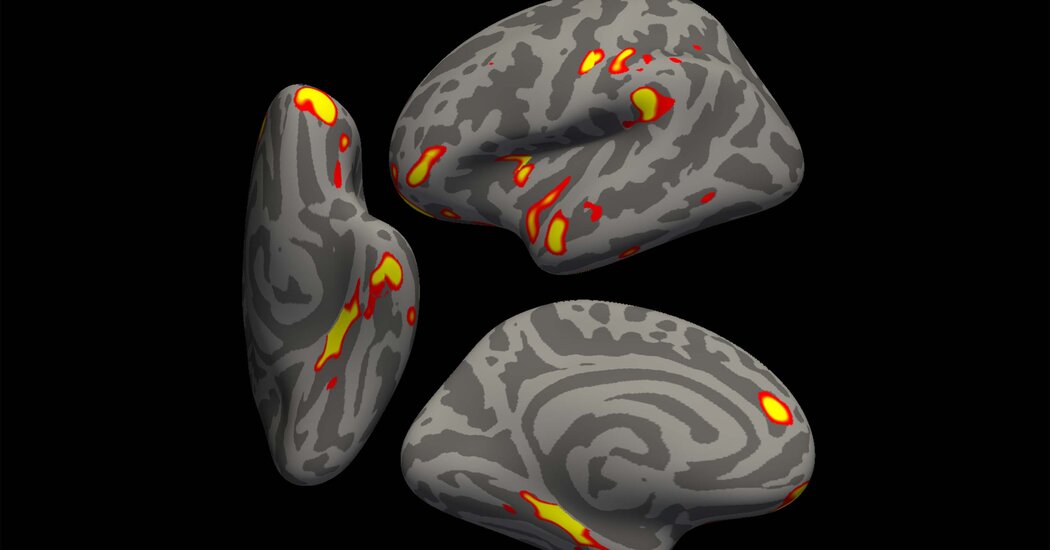
Covid-19 may cause greater loss of gray matter and tissue damage in the brain than naturally occurs in people who have not been infected with the virus, a large new study finds.The study, published Monday in the journal Nature, is believed to be the first involving people who underwent brain scans both before they contracted Covid and months after. Neurological experts who were not involved in the research said it was valuable and unique, but they cautioned that the implications of the changes were unclear and did not necessarily suggest that people might have lasting damage or that the changes might profoundly affect thinking, memory or other functions.The study, involving people aged 51 to 81, found shrinkage and tissue damage primarily in brain areas related to sense of smell; some of those areas are also involved in other brain functions, the researchers said.“To me, this is pretty convincing evidence that something changes in brains of this overall group of people with Covid,” said Dr. Serena Spudich, chief of neurological infections and global neurology at the Yale School of Medicine, who was not involved in the study.But, she cautioned: “To make a conclusion that this has some long-term clinical implications for the patients I think is a stretch. We don’t want to scare the public and have them think, ‘Oh, this is proof that everyone’s going to have brain damage and not be able to function.’”

Read more →

Revolutionary heart-thymus combined transplant success

SharecloseShare pageCopy linkAbout sharingImage source, Stephanie LopezUS doctors say a young boy called Easton has made medical history by becoming the first person in the world to receive a combined heart and thymus transplant. The pioneering procedure was done to save his life, but could also revolutionise the field of organ transplantation, they hope. The donated thymus tissue should help stop his body rejecting the new heart. Months on from the surgery, tests reveal Easton is progressing well. The thymus tissue is working, meaning his body is building critical immune cells which might ultimately reduce or even eliminate the need for him to take lifelong anti-rejection drugs. One of his doctors, Joseph Turek from Duke University Hospital, said: “We are very excited about it. This concept of tolerance has always been the holy grail in transplantation, and we are now on the doorstep. Image source, Getty Images”This has the potential to change the face of solid organ transplantation in the future.”The thymus gland helps the development of T-cells, which fight foreign substances in the body. It teaches these immune cells what is “self” and what isn’t, and therefore what can be attacked. Giving Easton cultured thymus tissue from the same donor who gave him a heart, should help his body adopt the new tissues, his doctors believe. Easton’s storyEaston was born with a weak heart as well as problems with his immune system. He spent his first seven months in hospital – some of it on life support – and needed numerous heart operations. as well as treatment for recurrent infections that his body was unable to fight on its own. His mother, Kaitlyn Sinnamon, recalls: “It helped some, but it was basically a band aid for us to make it through transplant.”His doctors applied to the medical regulatory body, the FDA, to carry out an experimental type of transplant that hadn’t been done in combination before, as far as they knew. Since Easton needed a new heart and, independently, a new thymus gland, the FDA granted approval for the procedures that went ahead in August 2021, when Easton was six months old. Image source, Stephanie LopezDr Turek said: “This was very serendipitous. We had the expertise to do both.”The work we had done in the laboratory was based around using thymus along with heart transplantation in order to develop tolerance – so basically retraining the immune system and having the thymus of the same donor and heart grow up together.”We thought this was an opportunity for Easton. This could be applied to all solid organs down the road potentially if this works.”Much more research is needed before then, including checking if it is viable to remove and replace the thymus in people who have one that is already fully functioning. The medical team plan to wean Easton off the immunosuppressive drugs at some point, to see how he progresses.Kaitlyn said: “I hope that as he gets older he gets to be proud of his scars, and know that he not only got to save his own life, but got to save other people’s lives as well.”More on this storyUS man gets pig heart in world-first transplantPig kidney transplanted into brain-dead personDuke HealthThe BBC is not responsible for the content of external sites.

Read more →

Shane Warne: Do liquid diets work and are they safe?

SharecloseShare pageCopy linkAbout sharingImage source, Getty ImagesShane Warne, who died from natural causes on Friday, had reportedly been on a liquid diet for 14 days – to try to lose weight quickly. Days before he died, he tweeted an old photo, saying: “The goal by July is to get back to this shape from a few years ago.”Friends have said it was a regime he had tried several times before, although there is no evidence it was linked to his sudden death.So how safe are these diets and what is their effect on the body?There are many different kinds of liquid diets but they all have the same aim – to lose weight quickly by eating fewer calories.They range from fashionable fruit and vegetable juice drinks that promise to detox and cleanse the body to low-calorie shakes and soups.But experts warn these extreme diets carry health risks and are unsuitable for most people.Shane Warne died from natural causes, police sayWarne’s life and career in picturesHurley pays tribute to ‘beloved lionheart’ WarneThe NHS recommends its 800-calories-a-day diet for certain groups only, particularly obese or severely obese people managing type-2 diabetes.Tried and tested, it comes with lots of support and medical supervision – but this is seldom the case with other liquid diets found online.”Juice diets appeal to people because they want a quick fix – but dieting is really hard,” Aisling Pigott, of the British Dietetic Association, says.”There is a role for them – but it’s not one size fits all.”It’s concerning when they are marketed at people who are a healthy weight.”Operation shred has started (10 days in) & the goal by July is to get back to this shape from a few years ago ! Let’s go 💪🏻👏🏻 #heathy #fitness #feelgoodfriday pic.twitter.com/EokgT2Hyhz— Shane Warne (@ShaneWarne) February 28, 2022
The BBC is not responsible for the content of external sites.View original tweet on TwitterFruit and vegetable juice provides lots of minerals and vitamins – but very little protein or fat.Even fibre would be in short supply unless the whole fruit, including the skin and seeds, was pulped and added.”You’d feel drained and exhausted after a week,” Dr Gail Rees, associate professor of human nutrition, at the University of Plymouth, says.A diet that is not nutritionally balanced is not giving the body everything it needs – and “could be very damaging” in the long term.Iron reserves would be used up, which could lead to anaemia in women, muscle mass would be depleted and the gut, lungs and liver would have to work harder to keep the body functioning normally.Other potential side-effects include headaches, dizziness, extreme tiredness, diarrhoea or constipation.Fruit juices, which contain lots of naturals acids, can also wear away enamel on teeth and a lack of calorie intake can make breath smell different.Losing weight quickly is possible on a liquid diet but the biggest challenge, according to Ms Pigott, is “yo-yo risk” – the danger of piling weight back on again when food intake returns to normal.Image source, Getty ImagesFad diets are “part of a toxic diet culture” encouraging negative attitudes to food and often leading to weight gain not loss, she says.And she recommends listening to your own body, going back to basics and setting achievable goals that work in the long term, not just for a week.’Weight cycling'”Extreme diets are not a sustainable solution for losing weight in the long term, as much of the weight that is lost is likely to be water or lean muscle,” Dr Simon Steenson, of the British Nutrition Foundation, says.”These types of crash diets may also lead to some health risks as well, such as a higher risk of developing gall stones.”Dr Steenson also warns of “weight cycling” – a pattern of losing and regaining weight with fad diets – which can have negative health effects itself.A better option to lose weight, he says, is to aim for a varied and balanced diet, including lots of fruit, vegetables, wholegrains, beans, nuts and seeds, plus finding ways to be active throughout the day.Dr Rees recommends removing alcohol, crisps, biscuits and takeaway food from your diet, which are all supplying unwanted calories, rather than focusing on a quick “liquid diet” fix.And if you have any underlying health conditions, always check with a GP or dietitian before starting a diet.Carried out in the right way, in suitable people, liquid diets can work – but for most people, they are very difficult to follow and may be unnecessarily risky.More on this storyShane Warne died from natural causes, police say’I beat diabetes with 200-calorie drinks’Shake diet offered on NHS to fight type 2 diabetes8 tips for healthy eating – NHSVery low calorie diets – NHSBritish Dietetic Association Homepage – British Dietetic Association (BDA)The BBC is not responsible for the content of external sites.

Read more →

Covid vaccines not linked to deaths, major US study finds

SharecloseShare pageCopy linkAbout sharingImage source, ReutersA major study of vaccine side-effects in the US found no link between two Covid jabs and the number of deaths recorded after vaccination.The Centres for Disease Control and Prevention (CDC) said 92% of reported side-effects after the Pfizer and Moderna vaccines were mild.About 4,500 people died after being vaccinated, in the US, up to June 2021.But no unusual patterns in the data were detected that might suggest a link to the vaccine itself. Study author Dr Tom Shimabukuro said: “[It’s] reassuring that reactions to both mRNA vaccines are generally mild and subside after one or two days – confirming reports from clinical trials and post-authorisation monitoring.”Heart inflammation Researchers looked at “adverse events” from nearly 300 million vaccine doses given in the US between December 2020 and June 2021. Members of the public, healthcare providers and drug companies can report any possible side-effect, using the Vaccine Adverse Event Reporting System (VAERS), run by the CDC and the US Food and Drug Administration (FDA).A second method, V-safe, allows individuals to fill out a survey on their smartphone in the months after after vaccination. Both systems rely on individuals deciding to self-report an adverse event.The results of the study are published in the Lancet medical journal:From the VAERS data, the CDC received more than 340,000 reports of adverse events after vaccination, with 92% registered as mildThe most common side effects were headaches, fatigue, fever and chillsOf the more than 22,000 events recorded as serious, the most common was shortness of breathOther serious events, including a form of heart inflammation known as myocarditis, have already been identified following both the Pfizer and Moderna vaccinations, although that side-effect is very rare. Because Covid jabs were originally authorised in the United States under emergency-use provisions, healthcare providers are required to report all deaths following vaccination, whether a doctor suspects a “plausible” link or not.About 4,500 deaths were recorded in the six months to June 2021, more than 80% among people aged 60 and over. Death rates”The rapid pace at which Covid-19 vaccines were administered under emergency use, especially among older populations, was unprecedented,” the CDC’s Dr David Shay said.”Due to their age, this group already has a higher baseline mortality rate than the general population and our results follow similar patterns of death rates for people in this age group following other adult vaccinations.”The researchers said less than 1% of people who filled out the V-safe survey had sought any medical care following vaccination.Dr Elizabeth Phillips, a professor of medicine, at Vanderbilt University, who was not involved in the study, said: “Reassuringly, the six-month VAERS data supports that – although approximately one in 1,000 individuals vaccinated may have an adverse effect, most of these are non-serious.”For adverse events of special interest, it is reassuring that there were no unexpected [safety] signals other than myocarditis and anaphylaxis, already known to be associated with mRNA vaccines.”LOOK-UP TOOL: How many cases in your area?SYMPTOMS: What are they and how to guard against them?YOUR QUESTIONS: We answer your queriesGLOBAL SPREAD: How many worldwide cases are there?TREATMENTS: What progress are we making to help people?

Read more →

Communities with higher levels of racial prejudice have worse health outcomes

People who live in communities with higher levels of racial prejudice have worse health outcomes, including more heart disease and mental health problems and higher overall mortality rates, according to research published by the American Psychological Association.
The researchers conducted a systematic review of fourteen papers that used data gathered from Google, Twitter and other big-data sources to look at how prejudice and health are intertwined in communities across the United States.
“Racism is gaining recognition as a fundamental driver of health inequities,” said lead study author Eli Michaels, MPH, a doctoral candidate at the University of California, Berkeley. “Leveraging big data to capture area-level racial prejudice is one innovative approach to measuring the overall racial climate in which people live, work, play and pray. The studies included in this review revealed that living in an area with high levels of racial prejudice may harm health and widen racial health inequities.”
The research was published in the journal Health Psychology.
The studies in the review used a variety of sources to measure community-level racial prejudice and included tens of millions of data points from large-scale surveys, internet searches and social media. Three studies analyzed data from Google Trends on how often users’ searches included a racial slur. Four studies analyzed data from Twitter on tweets that included negative sentiments toward people of color. Three studies used data from the General Social Survey, a nationally representative survey of social and political attitudes in the United States. And four studies used data from Project Implicit, an online tool that assesses people’s implicit biases toward various groups. All of the data were coded by geographic area.
The studies examined how these different indicators of area-level racial prejudice correlated with health outcomes among individuals living in those areas, including mortality rates, adverse birth outcomes for mothers and infants, cardiovascular outcomes, mental health and overall self-rated health. All of the studies found an association between communities’ levels of racial prejudice and adverse health outcomes for the people of color who lived there; four studies also showed a similar association among white residents (two studies showed a smaller but still harmful effect on whites compared with people of color).
“The majority of research on racial discrimination and health to date has focused on experiences at the individual level,” said Amani M. Allen, PhD, MPH, a professor of community health sciences and epidemiology at the University of California Berkeley School of Public Health and senior author of the study.
“The emerging body of work examined in this review is an important step in going above the level of the individual to capture the context of place and how it may impact the health of people living in those places,” Allen said. “As we see from this review, living in an environment with an overall climate that is prejudiced against people of color is not only bad for racially marginalized groups, but for everyone. Area-level racial prejudice is a social determinant of population health.”
There are various theories as to how community racial prejudice may harm health, according to the researchers. One is that at an individual level, living in a community with more prejudice could increase the number of prejudiced interactions that a person experiences, causing harmful stress. At the community level, more racial prejudice may erode social capital — defined as “the norms of reciprocity, trust and social obligation” in a community — leading to less social and emotional support to buffer stressful life events and less political support for policies and programs that could enhance the health and welfare of all community members.
More research is needed to disentangle these various factors that may tie community-level racial prejudice to adverse health outcomes for communities overall and for people of color in particular, according to the researchers.
“Because racism is multidimensional, dismantling it and its effects on health will require multidimensional solutions,” Michaels said. “Research identifying the root causes of, and testing interventions to shift, our collective prejudice is an urgent priority.”
Story Source:
Materials provided by American Psychological Association. Note: Content may be edited for style and length.

Read more →

New risk algorithm would improve screening for prostate cancer

Calculating a person’s risk of developing prostate cancer using results from two blood markers would improve the accuracy of screening for the disease, reports a new study led by a UCL researcher.
Prostate cancer is the most common form of cancer in men, with more than 10,000 men dying from the disease every year in the UK, but there is currently no national screening programme.
That is partly because the current best first-line test — a blood test that detects raised levels of the prostate-specific antigen (PSA) — is not wholly reliable, missing some harmful cancers as well as giving false positives. False positives include not just false alarms where there is no cancer but the discovery of harmless cancers that are unnecessarily treated.
In a new study, published in the Journal of Medical Screening, researchers developed an algorithm estimating a person’s risk of developing prostate cancer based on age and the levels of two prostate cancer markers, PSA and hK2 (human kalliknein peptidase).
They tested how well the algorithm could predict prostate cancer by comparing blood samples of men who later died after a prostate cancer diagnosis with those who were never diagnosed with the disease.
They found that, by setting a risk threshold above which men are counted as “screen positive,” the approach would reduce the number of false positives by three quarters compared to a standard PSA test, while catching the same proportion of cancers.

Read more →