Scientists discover body's natural alarm to battle blood loss

University of Virginia School of Medicine scientists have discovered a cluster of cells in the brainstem that controls the body’s response to severe blood loss, a finding which could benefit efforts to develop new treatments for traumatic injuries.
The discovery pinpoints a collection of neurons that drives a response that maintains blood pressure during blood loss. However, severe blood loss eventually causes cardiovascular collapse — a condition termed “decompensated hemorrhage” marked by an abrupt and dangerous loss of blood pressure — and the new results shed light on why that happens.
“During blood loss, the brain coordinates a cardiovascular response that supports blood flow to critical organs, like the heart and brain,”said researcher George Souza, PhD, of UVA’s Department of Pharmacology. “Our study shows that the cardiovascular response to blood loss depends on changes in the activity of a few hundred neurons in the brainstem.”
Under Pressure
The new results, from UVA’s Stephen Abbott, PhD, and collaborators, shed light on an important process the body uses to maintain its blood pressure. The neurons Abbott and his team describe — properly known as “adrenergic C1 neurons” — monitor blood pressure and swing into action during blood loss. When the neurons detect blood loss, they increase nerve activity that constricts blood vessels and maintains proper blood pressure.
The scientists were able to determine this using advanced imaging and a technique called optogenetics that allows for the remote control of neurons using light. Their research revealed that the C1 neurons are hyperactive during blood loss, and this maintains blood pressure. But these neurons become inactive with severe blood loss, resulting in cardiovascular collapse.
Decompensated hemorrhage is the prelude to hemorrhagic shock, in which the body begins to shut down. But the scientists found that re-activating the C1 neurons in lab rats restored both blood pressure and heart rate.
“Our study indicates that reactivating the brain pathways controlling blood pressure during decompensated hemorrhage effectively reverses cardiovascular collapse. We think this indicates that neuromodulation of the pathways described by our study could be a beneficial adjunct therapy for low blood pressure following blood loss,” said Abbott, of UVA’s Department of Pharmacology.
The scientists note that there may be several factors that contribute to the decline in the activity of the C1 neurons during the onset of decompensated hemorrhage. More research on that front is needed. But the team’s findings identify important new directions for that future research.
“These findings illuminate the importance of the brain-body interactions during blood loss and provide a new perspective for the underlying cause of cardiovascular collapse,” Abbott said.
The work was supported by the American Heart Association, grant 19POST34430205, and the National Institutes of Health, grants HL148004, HL28785 and HL074011.
Story Source:
Materials provided by University of Virginia Health System. Note: Content may be edited for style and length.

Read more →

Stroke treatments safe and effective for people with existing disability or dementia, study suggests

According to a new American Heart Association scientific statement, people with dementia or a pre-existing disability who receive timely and appropriate treatment for ischemic stroke (caused by a blood clot) may avoid additional disability and the subsequent health and financial impacts of stroke. The scientific statement, which published online today in the Association’s journal Stroke, is an expert analysis of current research and may inform future clinical practice guidelines.
The statement reports that people with preexisting disability and dementia often experience delays in having their stroke symptoms recognized. In addition, when being assessed, the challenges of their disabilities or dementia may cloud the stroke assessment process, which may lead to clinicians thinking the stroke is more severe and beyond the window for optimal treatment. This often results in delayed treatment or no treatment, which, in turn may lead to additional disabilities and less likelihood to return to pre-stroke levels of daily living skills.
“The long-term consequences and costs of additional disabilities due to untreated stroke in people with pre-existing neurological deficits are staggering,” said Mayank Goyal, M.D., Ph.D., chair of the scientific statement writing committee and clinical professor in the department of radiology and clinical neurosciences at the University of Calgary in Alberta, Canada. The statement cites previous research indicating 79% of people with pre-stroke disability lived an average of 16 months after a stroke, and one-third of them needed to move to an assisted living facility instead of returning home after hospitalization and treatment.
Some evidence suggests people with pre-stroke dementia or disability also have a higher risk of death after clot-busting medications for stroke, however, the findings are inconsistent and require additional research. The statement notes that treatment risk is unique for each individual and would be higher for people with preexisting disability or dementia who have had previous microbleeds or white matter damage in the brain, visible on brain imaging such as a CT or MRI.
Several biases, such as ableism or therapeutic nihilism (believing there’s no hope for effective treatment), may influence health care decision-making when considering stroke treatment for people with a disability or dementia. The writing group suggests increased awareness of potential biases and the statement’s guidance may help physicians improve patient-centered stroke care for all people including those who have a pre-existing disability or dementia.
In the U.S., 22% of adults report having a physical, cognitive or intellectual disability. Understanding the best treatment options for ischemic stroke (caused by a blood clot) that minimizes additional disability and reduces long-term health and economic consequences is essential.

Read more →

Potential therapy may boost chemoimmunotherapy response in bladder cancer

Adding an anti-inflammatory medication to immunotherapy and standard chemotherapy drugs may provide long-term suppression of aggressive bladder tumor growth, according to a proof-of-concept study led by Cedars-Sinai Cancerinvestigators. The findings, made in laboratory mice, were published TK in the peer-reviewed journal Nature Communications.
The researchers’ previous work, led by Cedars-Sinai scientist Keith Syson Chan, PhD — the study’s corresponding author — found that the combined use of the chemotherapy drugs gemcitabine and cisplatin is unable to activate a patient’s own immune response to cancer. They also found that chemotherapy prompts the overwhelming release of an inhibitory signal, or brake, that suppresses an immune response by counteracting “go” signals. When the investigators added the anti-inflammatory drug celecoxib to gemcitabine to remove the brake, they were able to shift the balance toward the “go” signals, improving the immune response in laboratory mice.
Building on those findings, the researchers discovered a mechanism that may drive the immune-dampening effect of chemotherapy and determined how to counteract it, therefore activating a longer-lasting immune response.
“These results are significant because the novel drug combination of an anti-inflammatory medication like celecoxib, chemotherapy and immunotherapy potentially can increase the chemoimmunotherapy response in patients with muscle-invasive bladder cancer,” said Fotis Nikolo, PhD, a project scientist at Cedars-Sinai Cancer and first co-author of the study. “We’re also hopeful that our findings will be relevant to other cancer types.”
Muscle-invasive bladder cancer is aggressive and more likely to spread to other parts of the body, according to the Urology Care Foundation. Each year, more than 83,000 new U.S. cases of bladder cancer are diagnosed in men and women. About one quarter of those newly diagnosed have the muscle-invasive type.
Past and Present Treatments
Since the 1940s, the main treatment for killing cancer cells has involved chemotherapy drugs, which kill the cells directly. But many of the current drugs fail to induce the most efficient form of cell death, known as immunogenic cell death, which activates the release of a protein that instructs the patients’ own immune cells to kill the invading cancer cells. This “go” signal prompts immune cells — called dendritic cells — to activate T cells to eradicate tumors. Instead, most current chemotherapies for pancreatic, bladder, breast and ovarian cancers not only are non-immunogenic, they suppress the immune system.

Read more →

Octopus-like tentacles help cancer cells invade the body

With help from the best tweezers in the world a team of researchers from the University of Copenhagen has shed new light on a fundamental mechanism in all living cells that helps them explore their surroundings and even invade tissue. Their discovery could have implications for research into cancer, neurological disorders and much else.
Using octopus-like tentacles, a cell pushes toward its target, a bacterium, like a predator tracking down its prey. The scene could be playing out in a nature programme. Instead the pursuit is being observed at the nano-scale through a microscope at the University of Copenhagen’s Niels Bohr Institute. The microscope recording shows a human immune cell pursuing and then devouring a bacterium.
With their new study, a team of Danish researchers has added to the world’s understanding of how cells use octopus-like tentacles called filopodia to move around in our bodies. This discovery about how cells move had never been addressed. The study is being published today in the journal, Nature Communications.
“While the cell doesn’t have eyes or a sense of smell, its surface is equipped with ultra-slim filopodia that resemble entangled octopus tentacles. These filopodia help a cell move towards a bacterium, and at the same time, act as sensory feelers that identify the bacterium as a prey,” explains Associate Professor Poul Martin Bendix, head of the laboratory for experimental biophysics at the Niels Bohr Institute.
The discovery is not that filopodia act as sensory devices — which was already well established — but rather about how they can rotate and behave mechanically, which helps a cell move, as when a cancer cell invades new tissue.
“Obviously, our results are of interest to cancer researchers. Cancer cells are noted for their being highly invasive. And, it is reasonable to believe that they are especially dependent on the efficacy of their filopodia, in terms of examining their surroundings and facilitating their spread. So, it’s conceivable that by finding ways of inhibiting the filopodia of cancer cells, cancer growth can be stalled,” explains Associate Professor Poul Martin Bendix.

Read more →

Teenage social media use linked to less life-satisfaction for some

SharecloseShare pageCopy linkAbout sharingImage source, Getty ImagesThe more time girls aged between 11 and 13 spend on social media, the less likely they are to be satisfied with life a year later, a study suggests.The UK study, in Nature Communications, shows the same pattern for boys aged 14 to 15, and 19-year-old boys and girls.Scientists speculate the vulnerability to social media at particular ages may be linked to brain, hormonal and social changes during adolescent development.They say more research is needed to fully understand and prove the link. Researchers, from the Universities of Cambridge and Oxford and the Donders Institute for Brain, Cognition and Behaviour, say social media companies need to share more of their own data with scientists to allow further research. Experts say social media can be a force for good, such as helping young people maintain social contact during the Covid pandemic.’Brain development’Lead researcher Dr Amy Orben said the link between social media use and mental wellbeing was very complex, with studies so far showing mixed results. She added: “Changes within our bodies, such as brain development and puberty, and in our social circumstances appear to make us vulnerable at particular times of our lives.”We can now focus on the periods of adolescence where we know we might be most at risk, and use this as a springboard to explore some really interesting questions.”Researchers examined a large UK household survey of more than 72,000 people, who were asked to report how satisfied they were with life and how much time they spent talking to friends on social media on a typical day. They were surveyed up to seven times between 2011 and 2018. Young adolescents showed the most negative relationship between social media use and life satisfaction overall. The self-reported survey found:The 16 to 21-year-olds who said they had no or very high (more than seven hours) daily social media use reported lower life satisfaction than those who used up to three hoursThose younger than that showed a different pattern – with life satisfaction generally declining with greater social media use Scientists then focused on a smaller group of 17,409 10 to 21-year-olds to investigate whether present day social media use has an impact on future life satisfaction. They looked at snapshot surveys of each person’s self-reported life-satisfaction and self-reported social media use over seven years. The study suggests among girls aged 11 to 13, those who used social media more than average compared to their peers in one year were at greater risk of being less satisfied with life a year later.Researchers say their work cannot predict which individuals are most at risk. And they say many other factors – such as the exact nature of social media content and the people they are interacting with online – will have an impact on teenage well-being too. They accept for some people, social media will have an overall positive impact, allowing them to connect with friends and find valuable support. Prof Bernadka Dubicka, an expert in child mental health at the University of Manchester, said: “This is an interesting study, reflects the complexity seen in vulnerable adolescents in clinical practice, and finally moves away from the unhelpful dichotomy about whether social media is or isn’t harmful. “This study only covers a period up to 2018 – since then, social media use has become ever more prominent in young people’s lives, particularly during the pandemic, and emotional difficulties, notably in older adolescent girls, have risen significantly. “It will be vital to build on this research to understand both the harmful as well as supportive role of social media in young people’s lives.”More on this storyTeens ‘rebelling against social media’Social media gets in the way of teens’ sleep and exerciseSocial media ‘torment’ for teens

Read more →

Does Social Media Make Teens Unhappy? It May Depend on Their Age.

A large study in Britain found two specific windows of adolescence when some teenagers are most sensitive to social media.Over the past few years, as the cold glow of a smartphone has followed more and more adolescents from bedroom to school and back again, parents have fretted over the technology’s influence. And no wonder, with Facebook researchers covertly studying how its apps erode girls’ body image, doctors describing TikTok-induced tic disorders, and prosecutors and lawmakers pledging to hold social media companies responsible for harming children.But in the background, a quieter scientific discussion has questioned whether social media is doing much harm at all. While a few researchers have claimed that digital technology is a powerful, causal factor in the rising rates of mental health problems, others have countered that the risk of harm for most teenagers is tiny — about the equivalent influence on well-being as wearing eyeglasses or regularly eating potatoes, one group calculated.Now, the authors of the eyeglass paper have published a large, multiyear study providing what independent experts said was an unusually granular and rigorous look at the relationship between social media and adolescents’ feelings about life.Analyzing survey responses of more than 84,000 people of all ages in Britain, the researchers identified two distinct periods of adolescence when heavy use of social media spurred lower ratings of “life satisfaction”: first around puberty — ages 11 to 13 for girls, and 14 to 15 for boys — and then again for both sexes around age 19.Like many previous studies, this one found that the relationship between social media and an adolescent’s well-being was fairly weak. Still, it suggested that there were certain periods in development when teenagers may be most sensitive to the technology.“We actually considered that the links between social media and well-being might be different across different ages — and found that that is indeed the case,” said Amy Orben, an experimental psychologist at Cambridge University, who led the study.For most adolescents in the United States, screens are a big part of life. Nine out of 10 American teenagers have a smartphone, and they are spending many hours a day staring at it — watching videos, playing games and communicating through social media, recent surveys show.As social media use among teenagers has exploded over the past two decades, so too have rates of depression, anxiety and suicide, leading scientists to wonder if these striking trends could be related.Some have suggested that social media may have an indirect effect on happiness by displacing other activities, like in-person interactions, exercise or sleep, that are crucial for mental and physical health. Heavy social-media use seems to disturb adolescent sleep patterns, for example.Still, research looking for a direct relationship between social media and well-being has not found much.“There’s been absolutely hundreds of these studies, almost all showing pretty small effects,” said Jeff Hancock, a behavioral psychologist at Stanford University who has conducted a meta-analysis of 226 such studies.What is notable about the new study, said Dr. Hancock, who was not involved in the work, is its scope. It included two surveys in Britain totaling 84,000 people. One of those surveys followed more than 17,000 adolescents ages 10 to 21 over time, showing how their social media consumption and life-satisfaction ratings changed from one year to the next.“Just in terms of scale, it’s fantastic,” Dr. Hancock said. The rich age-based analysis, he added, is a major improvement over previous studies, which tended to lump all adolescents together. “The adolescent years are not like some constant period of developmental life — they bring rapid changes,” he said.The study found that during early adolescence, heavy use of social media predicted lower life-satisfaction ratings one year later. For girls, this sensitive period was between ages 11 and 13, whereas for boys it was 14 and 15. Dr. Orben said that this sex difference could simply be because girls tend to hit puberty earlier than boys do.“We know that adolescent girls go through a lot of development earlier than boys do,” Dr. Orben said. “There are a lot of things that could be potential drivers, whether they’re social, cognitive or biological.”Both the boys and girls in the study hit a second period of social media sensitivity around age 19. “That was quite surprising because it was so consistent across the sexes,” Dr. Orben said. Around that age, she said, many people go through major social upheaval — like starting college, working in a new job or living independently for the first time — that might change the way they interact with social media, she said.Although the new report drew from richer data sets than previous studies did, it nevertheless lacked some information that would be helpful in interpreting the results, experts said. Waiting a whole year between responses is not ideal, for example. And although the surveys asked how much time the participants spent communicating on social media, they did not ask how they used it; talking to strangers while simultaneously playing a video game might lead to different effects than texting with a group of friends from school.Taken together with past work, the findings suggest that while most teenagers are not affected much by social media, a small subset could be significantly harmed by its effects. But it is impossible to predict the risks for an individual child.“For your 12-year-old, what does that mean for them? It’s hard to know,” said Michaeline Jensen, a clinical psychologist at the University of North Carolina at Greensboro. Given the small effect seen in the study, “very few of these kids would be going from normal functioning to clinical levels of depression,” she said. But “that’s not to say that none of them would.”Dr. Jensen pointed out that the study also found a link in the opposite direction: For all ages, participants who felt bad about their lives wound up spending more time on social media a year later. This suggests that for some people the technology may be a coping mechanism rather than the cause of their gloom.All these experts said that they were often frustrated by the public debates about social media and children, which so often inflate the platforms’ harms and ignore the benefits.“It carries risks — peer influence, contagion, substance use,” Dr. Jensen said. “But it can also carry lots of positive things,” like support, connection, creativity and skill mastery, she added. “I think a lot of times that does get overlooked because we’re so focused on risks.”

Read more →

Concerns rise as a U.S. reimbursement fund for testing and treating the uninsured for the virus stops taking claims.

As the White House pleads with Republicans in Congress for emergency aid to fight the coronavirus, the federal government said that a fund established to reimburse doctors for care for uninsured Covid patients was no longer accepting claims for testing and treatment “due to lack of sufficient funds.”Some U.S. health care providers are informing uninsured people they can no longer be tested for the virus free of charge, and will have to pay for the service.Quest Diagnostics, which operates one of the largest networks of testing sites and laboratories in the United States, last week began to notify clients that the reimbursement was no longer available, Kimberly B. Gorode, a spokesperson for the chain, said on Sunday.Patients “are being told they can’t get it for free,” she said. Uninsured people will now have to pay $125 to be tested at Quest Diagnostics, while other testing services may charge up to $195.Customers enrolled in a private insurance plan, or covered by Medicare or Medicaid, are not affected, she said.The federal Covid uninsured program was established in 2020 to pay the medical bills of coronavirus patients who lack health coverage. Early this year, during the Omicron wave, the program allowed leading laboratories to perform 500,000 tests a month free of charge to uninsured individuals, according to the American Clinical Laboratory Association.In 2021, the program spent $130 million to reimburse providers for testing, treating and vaccinating uninsured people.Around 31.2 million Americans are uninsured, according to federal data in 2020. Uninsured people were more likely to be people of color or from low-income families.The White House recently requested $22.5 billion in emergency Covid aid, but Republicans in Congress have said they will not approve another aid package unless the White House finds another way to source the funds and lawmakers were still struggling to break through the impasse. An initial deal to use about $7 billion in state government coronavirus aid to help pay for a smaller, $15.6 billion package collapsed earlier this month when rank-and-file House Democrats and governors objected to clawing back that money.On Wednesday, the federal Heath Resources and Services Administration stopped accepting claims for testing and treatment for uninsured patients. On April 6, the agency will stop reimbursing providers for vaccinating uninsured people.Top federal health officials reiterated their concerns on Wednesday about the impact of stalled funding amid the spread of BA.2, a highly transmissible Omicron subvariant accounting for about 35 percent of new U.S. cases and a form of the virus similar to the version that swept through the nation this winter.Xavier Becerra, the health and human services secretary, warned last week that reimbursements for testing were ending.“Continued execution requires continued support from Congress,” he said, referring to President Biden’s recently released Covid response plan. “And at this stage, our resources are depleted.”Pharmacies operate 20,000 testing sites across the country, and, until this month, many have used federal emergency funds to provide tests and vaccinations to uninsured Americans.“This places health care providers in an extremely tenuous position,” the National Association of Chain Drug Stores wrote in a recent letter to the White House and congressional leaders.Cutting off funding “could create extreme confusion at the pharmacy counter,” the letter said, and “could result in the tragedy of increasing disparities in access to critically needed care and patients forgoing care.”The American Hospital Association urged Congress to release relief funds, describing the uninsured program as one of the services “essential to our country’s ability to respond to Covid-19.”In some cases, county, state or other federal programs may provide an alterative for uninsured people.

Read more →

Kenya to receive millions seized in Jersey to help fight Covid

SharecloseShare pageCopy linkAbout sharingImage source, The StandardMillions of dollars of public funds allegedly stolen by two of Kenya’s richest men are being returned to the country to buy life-saving Covid-19 equipment following a landmark agreement. The deal with Jersey, a self-governing island in the English Channel, has been hailed as “a victory for the people of Kenya” by its High Commissioner in the UK, Manoah Esipisu. The entangled web of connections that eventually ended in this deal first emerged following a divorce case.Back in 2006, Samuel Gichuru, the wealthy boss of Kenya’s power company, and his wife Salome Njeri were divorced.When it came to splitting up their assets, Ms Njeri felt she was not getting her fair share.She alleged some of her husband’s assets were being hidden from the proceedings and, in court, listed details of accounts she said belonged to Mr Gichuru in Jersey, which is often associated with secretive offshore banking and a low-tax environment. That sparked a nine-year investigation by the Jersey authorities across 12 jurisdictions.As part of that investigation, in 2011, they accused Mr Gichuru and former Finance Minister Chris Okemo of taking kickbacks from multinationals which were sent to a Jersey-registered company.The Jersey authorities issued arrest warrants for both men and have been waiting for their extradition from Kenya ever since.The economic crimes they were accused of included a deal with a Finnish firm to construct a power station near Mombasa, Kenya’s second largest city, and taking millions of pounds in kickbacks from British, Norwegian and German engineering firms, as well as a US communications giant.Despite repeated attempts to contact them by the BBC, both men and their lawyers would not comment on the allegations levelled against them.However in 2016, the Jersey-registered company Windward Trading Limited pleaded guilty to four counts of money laundering in a Jersey court.The court ruled that the company, whose ultimate owner was Mr Gichuru, should be stripped of more than $4.9m (£3.6m) in assets for money laundering. It is the majority of this money that allegedly came from corrupt activities in Kenya between 1999 and 2002 that is now being returned to the country.Image source, AFPThat was made possible by a 2018 agreement signed in Kenya by then UK Prime Minister Theresa May, Kenyan President Uhuru Kenyatta and the Swiss and Jersey governments.In the deal, it was established that allegedly stolen assets could be returned to Kenya, provided they were used exclusively for development projects.This arrangement, known as the Framework for the Return of Assets from Corruption and Crime to Kenya (Fracck), was hailed by the UN as “innovative” and “novel”.It gives the Jersey authorities a licence to unfreeze money they believe was stolen and send it back before those accused of stealing it go on trial.”The question for us [in Jersey] was: should we wait for a convoluted judicial process based on the actions of two individuals, which… have been shown to be illegal in the Jersey court? Or should we allow the money to return for the benefit of the citizens of Kenya?” Senator Ian Gorst, Jersey’s Minister for External Relations, explained.The handing over of Mr Gichuru’s allegedly stolen millions back to ordinary Kenyans is Fracck’s first test.Spending it in a transparent and accountable way is the job of Crown Agents, the not-for-profit international development company.Its boss Fergus Drake told the BBC that he was in contact with Kenya’s health ministry to assess what was needed in the fight against Covid-19.He said it wanted “specific lab equipment to test for Covid-19” and ancillary equipment “like micro-tubes, PCR tests, and other kit”.Mr Drake expects to deliver the vital equipment to half a dozen hospitals in around two months, subject to supply chain bottlenecks.He said boosting testing would allow Kenyans to better manage the pandemic and know which areas are in urgent need of vaccines.At present, less than 20% of Kenyans are fully vaccinated.Image source, AFPMr Drake acknowledged that the sum of money which he is disbursing – $3.5m – will not go “that far” in terms of a country’s response to Covid-19, but he hoped this type of “targeted” help will have an “exponential impact” against the virus.Campaigners believe that the Fracck is a model for a new way that ill-gotten gains can be returned.The UK is also a signatory to another agreement – the UN Convention against Corruption – so is obliged to return criminal funds where conditions to do so are met.But according to Steve Goodrich, head of research and investigations at Transparency International (TI) UK, returns from the UK often do not go directly to development projects.He pointed to the return of money laundered by former Nigerian Delta state Governor James Ibori in 2012 which was given to the federal government there. And he was concerned that repatriated funds could get lost to corruption. So Mr Goodrich said this case was “a step in the right direction”.But, he added, to have “a credible deterrent” against those looking to stash their stolen money in the UK, he said the government “really needs to up its game” on asset recovery.For example, he said the UK should start by looking at what he believed was “over £5bn-worth of British property bought with suspect funds”.This episode also focuses attention on Kenya’s fight against corruption at home. The country is ranked 128th in the world in TI’s perceptions of corruption index, with public officials and business people open to bribery.There are just months left before President Kenyatta is due to stand down, having pledged to make fighting corruption part of his legacy. As part of that, politicians and public officials are currently being asked to declare their wealth, with anti-corruption auditing in place.BBCThese are funds looted from Kenyans and with this agreement, these funds are being returned to assist the Kenyan people”Manoah EsipisuKenyan High Commissioner in the UKKenya’s High Commissioner, Mr Esipisu, who was once the president’s spokesman, told the BBC the Fracck agreement was a “huge contribution” to the president’s agenda as it sent a signal that “corrupt people will not be safe simply because they hide their money abroad”.He added, passionately, that “these are funds stolen from Kenyans, looted from Kenyans, and with this agreement, these funds are being returned to assist the Kenyan people for whom they were meant in the first instance. So this is a victory for the Kenyan people.”With the funds now on their way from Jersey to Kenya, the focus turns to the possible extradition from Kenya to Jersey of the two accused men.At the beginning of February, extradition proceedings finally got under way in Nairobi’s City Magistrates’ Court, after a 10-year legal battle over whether the government’s chief legal officer or the public prosecutor should be leading the case.Kenya’s department for public prosecution is now in charge of the process and its Deputy Director Victor Mule said the next hearing was expected in May.He believed it would not take another 10 years to resolve.Mr Gichuru’s lawyer chose not to comment on the ongoing legal process when contacted by the BBC.Jersey Senator Mr Gorst concedes there were shortcomings which allowed this allegedly stolen money to enter the island in the first place.He warned any future perpetrators that its regulations had been tightened but that any ill-gotten funds which did get through would be located and “we will return it to the citizens to whom it belongs”.You may also be interested in:’How we found a dead leader’s hidden loot’Africa’s richest woman ‘ripped off her country’Tax haven secrets of ultra-rich exposedThis video can not be playedTo play this video you need to enable JavaScript in your browser.

Read more →

Beatings and forced abortions: Life in a North Korea prison

SharecloseShare pageCopy linkAbout sharingThis video can not be playedTo play this video you need to enable JavaScript in your browser.After crawling into her cell, Lee Young-joo was ordered to sit cross-legged with her hands on her knees. She was not allowed to move for up to 12 hours a day. A slight shuffle or a hushed whisper to her cell mates would be harshly punished. She had limited access to water and was given only a few ground corn husks to eat.”I felt like an animal, not a human,” she said.She told the BBC she spent hours being interrogated for doing something many of us take for granted – leaving her country. She was trying to escape North Korea in 2007 and was caught in China and sent back.Reality Check: North Korea’s secretive prison systemHow harsh is prison in North Korea?North Korea’s sidelined human rights crisisShe spent three months at the Onsong Detention Centre in North Korea near the Chinese border, waiting to be sentenced.As she sat in her cell she listened for the “clack clack clack” of the metal tips of the guard’s boots as he patrolled outside. Backwards and forwards he went. As the sound went further away, Young-joo took a chance and whispered to one of her cell mates.Image source, Korea Future”We would talk about plans for another defection, plans to meet with brokers, these were secretive talks.”Prison was supposed to deter people from escaping North Korea – it clearly didn’t work on Young-joo or on her cell mates. Most were waiting to be sentenced for trying to leave the country. But Young-joo’s plans had been overheard. “The guard would ask me to come to the cell bars and put out my hands, then he started beating my hands with a key ring until it got all bloated and blue. I didn’t want to cry out of pride. These guards consider those of us who tried to leave North Korea as traitors. “You could hear others getting beaten because of the cells sharing this corridor. I was in cell three but I could hear beatings from cell 10.”A system of suppressionYoung-joo is one of more than 200 people who have contributed to a detailed investigation by Korea Future into violations of international law within North Korea’s prison system. The non-profit organisation has identified 597 perpetrators linked to 5,181 human rights violations committed against 785 detainees in 148 penal facilities. The evidence has been gathered and put in a database in the hope that one day those responsible can be brought to justice.North Korea has always denied allegations of human rights abuses. The BBC has attempted to contact a representative from North Korea to respond to this investigation but received no reply.The group has also created a 3D model of the Onsong detention centre to allow people to see the conditions for themselves. Image source, Korea FutureKorea Future co-director in Seoul, Suyeon Yoo told the BBC that the prison system and the violence within it was being used to “suppress a population of 25 million people”.”In every interview we conduct, we witness how this has impacted human lives. One interviewee cried as she recounted witnessing the killing of a newborn baby.” Multiple allegations of abusesNorth Korea is currently more isolated from the world than it has ever been. The country has been ruled by the Kim family for three generations, and its citizens are required to show complete devotion to the family and its current leader, Kim Jong-un.The Covid pandemic has brought even stricter controls both within the country and at the border. Tougher prison sentences have been imposed on those who try to get a glimpse of the outside world – including those who watch foreign dramas or films.The pattern of violence within the system is repeated in testimony after testimony and in prison after prison.There are multiple allegations of rape and other forms of sexual assault. Survivors also told the organisation they were forced to undergo abortions. In one case in North Hamgyong Provincial Holding Centre, an interviewee witnessed a fellow detainee being forced to have an abortion while eight months pregnant. She claims the baby survived, but was drowned in a basin of water.Image source, Korea FutureThere are five cases where witnesses describe executions.One step closer to justiceYoung-joo was eventually sentenced to three-and-a-half years in prison. “I was worried whether I would still be alive by the time I finished my sentence,” she said. “When you go into these places, you have to give up being human to endure and survive,” she says.Saerom was also in Onsong Detention Centre in 2007, but she recalled that the beatings at the State Security prisons were worse.”They beat your thigh with a wooden stick. You walk in but you crawl out. I couldn’t look at other people being beaten and if I turned my head away they would make me look at it. They kill your spirit.””If there is a way, I want them to be punished,” Saerom told us as she recounted the recurring nightmare of her time in prison. She said she now takes pleasure in every moment of happiness in her new life in South Korea.Prosecuting these cases will be difficult, however this investigation has had input from experts from the International Criminal Court. The evidence will also be admissible in court and it is being made freely available.Saerom and Young-joo both told us that they hope this report will bring them a step closer to the justice they crave.You may also be interested in: This video can not be playedTo play this video you need to enable JavaScript in your browser.More on this storyHow harsh is prison in North Korea?

Read more →

Shanghai Covid: China announces largest city-wide lockdown

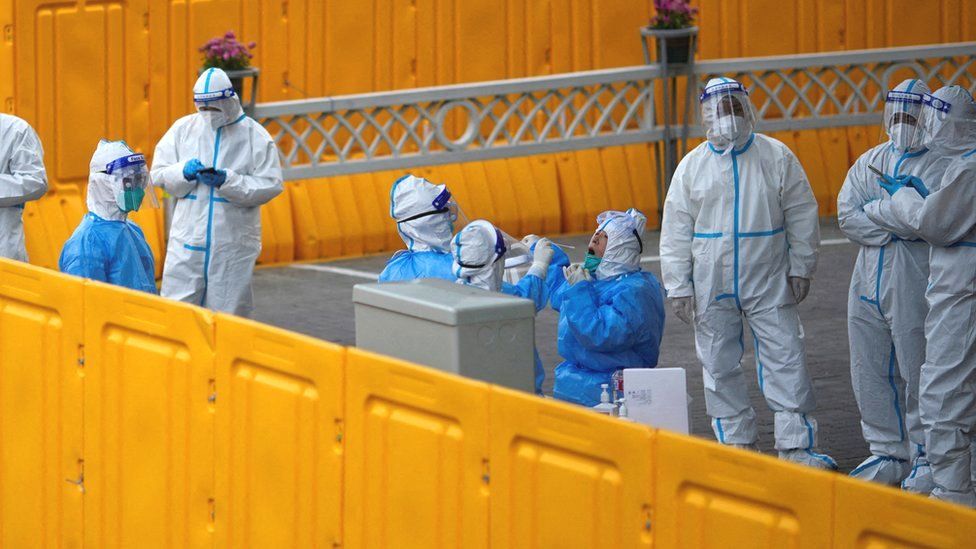
SharecloseShare pageCopy linkAbout sharingImage source, ReutersChina has announced its biggest city-wide lockdown since the Covid outbreak began more than two years ago. The city of Shanghai will be locked down in two stages over nine days while authorities carry out Covid-19 testing. The important financial hub has battled a new wave of infections for nearly a month, although case numbers are not high by some international standards. Authorities had so far resisted locking down the city of some 25 million people to avoid destabilising the economy. But after Shanghai recorded its highest daily number of cases on Saturday since the early days of the pandemic, authorities appear to have changed course. The lockdown will happen in two stages, with the eastern side of the city under restrictions from Monday until 1 April, and the western side from 1-5 April. Public transport will be suspended and firms and factories must halt operations or work remotely, authorities said. The city government published the instructions on its WeChat account, asking the public “to support, understand and cooperate with the city’s epidemic prevention and control work”. How is China’s zero-Covid strategy changing?Omicron vs Zero-Covid: How long can China hold on?Other lockdowns during the pandemic have affected entire Chinese provinces, though people could often still travel within those regions. But Shanghai, due to its high population density, is the largest single city to be locked down to date.It is China’s commercial capital and by some calculations the biggest city in the country – but is now one of the worst-hit areas as China fights to contain a resurgence of the virus with Omicron, leading to a spike in new cases.Officials had until now said the eastern Chinese port and financial hub must keep running for the good of the economy. The staggered approach to this lockdown means half the city will remain functioning at a time.Millions of residents in other Chinese cities have been subjected to citywide lockdowns, often after a relatively small number of Covid cases. In a city that’s been on its knees for two weeks, parts of it reduced to something like a ghost town, the streets are now suddenly busy with panic shoppers. I’ve been out and seen queues stretching out of shop doors as people stock up before the lockdown starts early on Monday. The subway station at the end of my road, newly opened just a few months ago, will be shut on Monday. Public transport will stop and all residents will be subject to mass city-wide Covid testing. Almost 25 million people will be affected; the eastern side of the city first, then at the end of next week the western side. Wuhan was sealed off at the very outset of this pandemic. Before Christmas it was Xi’an. Now China’s commercial and financial capital is being shut. Just a few days ago officials here said Shanghai was too big and too important to lock down. The question now on many residents’ lips will be whether nine days is enough.Challenge to zero-CovidThe recent surge in cases in China, although small compared to some countries, is a significant challenge to China’s “zero-Covid” strategy, which uses swift lockdowns and aggressive restrictions to contain any outbreak. The policy sets China apart from most other countries which are trying to live with the virus. But the increased transmissibility and milder nature of the Omicron variant has led to questions over whether the current strategy is sustainable in the long run. Some Shanghai residents have complained about the seemingly endless cycles of testing, suggesting that the cost of zero-Covid had become too high. China’s national health commission reported more than 4,500 new domestically transmitted cases on Sunday.More on this storyHow is China’s zero-Covid strategy changing?Omicron vs Zero-Covid: How long can China hold on?The economic cost of China’s zero-Covid policy

Read more →