Is 30 Minutes of Exercise a Day Enough?

Science says you may need less exercise than you think to live a long and healthy life.For anyone interested in the relationship between exercise and living longer, one of the most pressing questions is how much we really need to stay healthy. Is 30 minutes a day enough? Can we get by with less? Do we have to exercise all in one session, or can we spread it throughout the day? And when we’re talking about exercise, does it have to be hard to count?For years, exercise scientists tried to quantify the ideal “dose” of exercise for most people. They finally reached a broad consensus in 2008 with the Physical Activity Guidelines for Americans, which were updated in 2018 after an extensive review of the available science about movement, sitting and health. In both versions, the guidelines advised anyone who was physically able to accumulate 150 minutes of moderate exercise every week, and half as much if it is intense.But what’s the best way to space out those weekly minutes? And what does “moderate” mean? Here’s what some of the leading researchers in exercise science had to say about step counts, stairwells, weekend warriors, greater longevity and why the healthiest step we can take is the one that gets us off the couch.Aim for the 150-minute sweet spot.“For longevity, 150 minutes a week of moderate to vigorous intensity physical activity clearly is enough,” said Dr. I-Min Lee, a professor of epidemiology at the Harvard T.H. Chan School of Public Health. She has extensively studied movement and health and helped draft the current national physical activity guidelines.For practical purposes, exercise scientists often recommend breaking that 150 minutes into 30-minute sessions of speedy walking or a similar activity five times a week. “It is quite clear from numerous large-scale, well-conducted epidemiological studies that 30 minutes of moderate-intensity activity most days lowers the risk of premature death and many diseases, such as stroke, heart attack, Type 2 diabetes and many types of cancer,” said Ulf Ekelund, a professor specializing in physical activity epidemiology at the Norwegian School of Sports Sciences in Oslo, who has led many of those studies.Moderate exercise, he continued, means “activities that increase your breathing and heart rate, so the exertion feels like a five or six on a scale between one and 10.” In other words, pick up the pace a bit if your inclination is to stroll, but do not feel compelled to sprint.Consider exercise snacks.You also can break up your exercise into even smaller segments. “It doesn’t matter whether exercise is done in a long, continuous 30-minute session or is dispersed across the day in shorter sessions,” said Emmanuel Stamatakis, an exercise scientist at the University of Sydney in Australia who studies physical activity and health.Recent studies overwhelmingly show that we can accumulate our 150 weekly minutes of moderate exercise in whatever way works best for us, he said. “Many people may find it easier and more sustainable to squeeze in a few dozen one-minute or two-minute walks between work tasks” or other commitments. “There is no special magic to a sustained 30-minute session of exercise” for most health benefits.Think of these bite-size workouts as exercise snacks, he said. “Activities like bursts of very fast walking, stair climbing and carrying shopping bags provide excellent opportunities for movement snacks.” To concentrate the health benefits of these workout nuggets, he added, keep the intensity relatively high, so you feel somewhat winded.Conceivably, you also could cram all of your exercise into long Saturday and Sunday workouts. In a 2017 study by Dr. Stamatakis and colleagues, people who reported exercising almost entirely on weekends were less likely to die prematurely than those who said they rarely exercised at all. But being a weekend warrior has drawbacks. “It is certainly not ideal to spend the workweek totally sedentary and then try to compensate” over the weekend, Dr. Stamatakis said. You miss many of the health benefits of regular exercise, such as improved blood-sugar control and better moods, on the days you do not work out, he said. You also increase your risk of exercise-related injuries.Count your steps.The exercise recommendations remain the same if you measure your exercise in steps instead of minutes. For most people, “150 minutes of exercise a week would translate into about 7,000 to 8,000 steps a day,” Dr. Lee said. In a large-scale new study by Dr. Lee and Dr. Ekelund of the relationship between steps and longevity, published in March in The Lancet, the optimal step count for people younger than 60 was about 8,000 to 10,000 a day, and for those 60 and over, it was about 6,000 to 8,000 a day.Consider more.Of course, these recommendations about steps and minutes focus on health and life spans, not physical performance. “If you want to run a marathon or a 10K race as fast as possible, you need much more exercise,” Dr. Ekelund said.The recommended 150 minutes a week also may be too little to stave off weight gain with age. In a 2010 study of almost 35,000 women that was spearheaded by Dr. Lee, only those who walked or otherwise exercised moderately for about an hour a day during middle age maintained their weight as they became older.So, if you have the time and inclination, move more than 30 minutes a day, Dr. Lee and the other scientists said. In general, according to her research and other studies, the more active we are, well beyond 30 minutes a day, the more our risks of chronic diseases drop and the longer our lives may be.But any activity is better than none. “Every single minute counts,” Dr. Ekelund said. “Walking up the stairs has health benefits, even if it only lasts for one or two minutes, if you repeat it regularly.”Gretchen Reynolds will be taking time off from the PhysEd column to work on a book. In the meantime, follow her on Twitter (@gretchenreynold) or look for her on the running trails and bike paths.

Read more →

Inside a Campaign to Get Medicare Coverage for a New Alzheimer’s Drug

The Alzheimer’s Association has pushed relentlessly to get broad access to Aduhelm, despite safety risks and uncertain evidence that it helps patients.The day after Medicare officials announced a preliminary decision to sharply limit coverage of the controversial new Alzheimer’s medication Aduhelm, citing its unclear benefit and serious safety risks, the nation’s most prominent Alzheimer’s advocacy organization convened its policy team.The agenda: fighting Medicare’s proposal.“This is our top priority,” Robert Egge, the association’s chief public policy officer, said at the Jan. 12 session, according to recordings obtained by The New York Times.The next day, the chief executive, Harry Johns, took the mission to the entire staff, saying, “You can count on us being relentless.”Medicare’s proposal to pay for Aduhelm only for participants in randomized clinical trials was welcomed by many Alzheimer’s experts and other doctors. They say it would protect patients and families whose desperation might lead them to try anything, while also rigorously evaluating whether Aduhelm actually works.But the Alzheimer’s Association and similar groups, along with Aduhelm’s manufacturer, Biogen, strongly object. They say that Aduhelm, a monoclonal antibody that is the first drug approved for Alzheimer’s in 18 years, should be covered for anyone with mild Alzheimer’s-related cognitive decline and that usage decisions should rest with patients and their doctors.The association’s campaign makes little mention of Aduhelm’s safety risks and uncertain benefit, arguing that restricting coverage of an F.D.A.-approved drug is “shocking discrimination against everyone with Alzheimer’s disease.”With Medicare’s final decision due by April 11, the group has organized tweets directed at President Biden, emails directed at Congress, and ads on social media and websites including Univision, Essence and Martha Stewart.It has orchestrated over 400 meetings in which people with Alzheimer’s, their family members or supporters have implored their members of Congress to press the Centers for Medicare and Medicaid Services (C.M.S.) to broadly cover the drug. In sessions prepping for those meetings, association officials suggested that people say versions of phrases like “I have a fatal disease and I want more time with my family” and to discuss “how access to F.D.A.-approved treatments will impact me and my family.”Leaders also encouraged people to submit comments to C.M.S. in ways that weren’t scripted. “It is important that individuals not use our talking points,” Beth McMullen, senior director of grassroots advocacy, instructed at one meeting. Employees filing comments “cannot submit as a staff member of the Alzheimer’s Association,” she said.The push reflects growing activism by advocacy groups involved in various diseases, which sometimes campaign for therapies despite medical experts’ concerns about insufficient data. Some are partially funded by pharmaceutical companies. In fiscal year 2021, the Alzheimer’s Association received $1.6 million from manufacturers developing monoclonal antibodies, including $487,500 from Biogen.Biogen, Aduhelm’s manufacturer, gave the Alzheimer’s Association $487,500 in fiscal year 2021.C.J. Gunther/EPA, via ShutterstockOther Alzheimer’s advocacy groups are also campaigning, including UsAgainstAlzheimer’s. It has run television ads featuring patients and has written in strident language to C.M.S. that “the government would be consigning millions of Americans to inevitable decline and death, with no possibility of appeal.” The Alliance for Aging Research led a rally of about 100 people outside the Department of Health and Human Services, which houses C.M.S. (Afterward, about half the alliance’s scientific advisory board quit in opposition to the group’s position.)Understand the New Alzheimer’s Drug AduhelmF.D.A. Approval: The agency approved the first new Alzheimer’s treatment in 18 years despite fierce debate over whether it works.Potential Safety Risks: Concerns over Aduhelm intensified after a 75-year-old woman in a clinical trial developed brain swelling and died.Medicare Limits: Officials said the federal program should cover the drug only for patients who are participating in approved clinical trials.Understand Alzheimer’s: Get answers to common questions about the disease, which affects about 30 million people globally.Medicare’s coverage proposal came after Aduhelm, an expensive monthly infusion that also has the scientific name aducanumab, was approved in June by the Food and Drug Administration despite contradictory scientific results. Participants in one clinical trial appeared to experience slight slowing of cognitive decline, while patients in a nearly identical trial didn’t appear to benefit at all. About 40 percent of patients on the dosage later approved experienced brain swelling or brain bleeding, often mild, but sometimes serious. Both a council of senior F.D.A. officials and the agency’s independent advisory committee had said there wasn’t enough evidence for approval. Questions about the approval, and whether the F.D.A. worked too closely with Biogen, have prompted investigations by congressional committees, the Health and Human Services department’s inspector general, the Federal Trade Commission and the Securities and Exchange Commission. Major medical centers, including the Cleveland Clinic, have declined to offer Aduhelm.After C.M.S. announced its proposal, Dr. Lee Fleisher, the agency’s chief medical officer, said, “Our foremost goal is to protect beneficiaries from potential harm from an intervention without known benefits in the Medicare population.”The proposal has attracted extraordinary interest, with C.M.S. receiving 9,957 comments, some organized by advocacy groups on both sides of the debate.The Alzheimer’s Association, with revenue of about $400 million, is highly influential in the Alzheimer’s field: It runs an international conference, provides research grants and publishes a journal.In recordings of the staff meeting and two prep sessions, association officials didn’t mention Aduhelm’s safety risks.In an interview, Mr. Johns, the chief executive, said, “We take the safety concerns seriously,” adding, “The risks are real, but they’re not worse than treatments that are covered by Medicare today.” He proposed that patients enroll in a registry where negative effects could be reported. But many experts say that wouldn’t sufficiently evaluate the drug. At the staff meeting, Maria Carrillo, the association’s chief science officer, addressed issues of whether Aduhelm works by saying, “One of the questions that you may be asked, or maybe you’re asking yourself is: Is the scientific evidence sufficient to conclude” that Aduhelm and similar monoclonal antibodies “improve health outcomes for Medicare beneficiaries?” The answer, she said, was “yes.”While some patients enthusiastically back the association’s efforts, its stance troubles some longtime supporters of the organization, including Dr. Daniel Gibbs, a retired neurologist in Portland, Ore., with early-stage Alzheimer’s. Dr. Daniel Gibbs, a retired neurologist with early-stage Alzheimer’s, agrees with Medicare’s proposed restrictions on Aduhelm.Amanda Lucier for The New York TimesHe participated in an aducanumab trial, experiencing brain swelling and bleeding that required treatment in an intensive care unit. “I want aducanumab to be successful, and I really think that it might be useful,” he said. However, he added, he considers Medicare’s proposed restrictions appropriate.He called the Alzheimer’s Association campaign “shocking and irresponsible” and said he’ll stop donating to the organization, except for his local chapter. “The vast majority of experts in Alzheimer’s are not on the side of the Alzheimer’s Association,” he said.Several members of the association’s scientific and medical advisory group said they had concluded the drug shouldn’t yet be approved. Still, the association pushed for approval.The F.D.A. itself acknowledged the unclear benefit when it greenlighted Aduhelm under “accelerated approval,” which allows authorization of unproven drugs for serious diseases with few treatments, if the drug affects a biological mechanism in a way considered “reasonably likely to predict clinical benefit.”The agency’s justification was that Aduhelm targets a protein, amyloid, that forms plaques in the brains of Alzheimer’s patients. But many Alzheimer’s experts say that years of data have not shown that reducing amyloid can slow cognitive decline.In the association staff meeting, Dr. Carrillo described experts who criticized Aduhelm’s approval as “naysayers” who “are mainly anti-amyloid researchers, in conflict, in my view.”Several scientists critical of Aduhelm’s approval support the idea that targeting amyloid might help patients; they simply found Aduhelm’s results unconvincing.Mr. Egge, the chief public policy officer, did say at one meeting: “It’s not certain that this first treatment will work, certainly, for everybody, but it could.” He said that it’s common to have “first treatments making marginal differences” but that later drugs often work better. Mr. Johns said the association and its lobbying affiliate, the Alzheimer’s Impact Movement, have spent hundreds of thousands of dollars on the campaign.At the staff meeting, Mr. Johns addressed another issue: “Of course, you’ll hear people claim that we’re doing this because we receive some funding from the pharmaceutical industry or these companies.”He said corporate contributions “are very small, less than 1 percent of our total revenue,” adding, “We would never be affected by any kind of fund-raising.”One attendee asked: “Since the amount of funding we receive from biotech companies is so low, why not refuse to take it and take away the appearance of possible conflicts of interest?”Mr. Johns replied, “We’ve contemplated this many times,” but concluded it would have unintended consequences, like preventing the organization from accepting corporate matching contributions for participants in association fund-raising walks who happened to work at pharmaceutical companies.In the interview, Mr. Johns echoed these explanations. Asked if association officials had communicated with Biogen since Medicare’s proposal, he said, “I think probably some of our folks have had a conversation or more along the way” and that Biogen’s staff “occasionally pass along a piece of information, but I can tell you that we just don’t coordinate with them.”In the recordings, association officials told advocates that their annual meetings with local members of Congress would involve different “asks” than usual: They should request that lawmakers give a floor speech, write to C.M.S., or post on social media to urge Medicare to broadly cover Aduhelm and any other F.D.A.-approved Alzheimer’s treatment.One official, Jennifer Pollack, suggested that advocates should give congressional staff a “leave-behind” that included a sample letter, and social media posts drafted by the association and “sample talking points for a floor speech.”Kate Johnson, another official, told advocates: “If you do not know the answer to a question, that is totally OK.” In that case, “please always revert to our safest phrase,” which, she said, was: “‘I’m not sure, but I can pass that question on to a staffer at the Alzheimer’s Association who can provide some more information.’”She also urged advocates to take photos or screenshots of the congressional meetings to post on social media, tagging the lawmaker to show “we’re not going to give up on the issues that we’re passionate about.”Christopher Masak, director of advocacy, role-played being an Alzheimer’s patient’s son meeting with a lawmaker.“My mom is living with a fatal disease, and the bottom line is, I want more time,” his character said, adding, “Thinking of people like my mom who can’t access this medication, it just, it breaks my heart.”Medicare officials said that limiting coverage to clinical trial participants is especially important because Aduhelm is intended for people with early mild disease, who could potentially be sacrificing years of remaining function and quality of life if a drug’s harms outweigh any benefit.Mr. Johns said he understood the view that “risk could be better tolerated later in the disease” but said that the milder early period is the time many people most want to try to extend. C.M.S. officials also said Aduhelm data isn’t sufficiently representative because most trial participants were white, while Blacks and Latinos have greater Alzheimer’s risk. So, Medicare’s proposal requires that new clinical trials reflect racial and ethnic diversity.Association officials said Medicare’s proposal could have the opposite effect because people in underserved communities might have less access to clinical trial sites.A few issues mentioned by advocacy groups have also been raised by those who don’t oppose limiting coverage for Aduhelm. One is that, as currently worded, Medicare’s decision would apply to all monoclonal antibodies for Alzheimer’s, several of which are in late-stage trials and may soon be considered for F.D.A. approval.“It is essentially denying access to all current and future F.D.A.-approved treatments targeting amyloid in those living with Alzheimer’s disease,” Ms. Pollack said in one recording.The American Academy of Neurology wrote to C.M.S. calling the proposal to cover only patients in clinical trials “prudently designed to investigate the safety and effectiveness,” but asked that it be limited only to Aduhelm. In a statement, a C.M.S. spokeswoman, Beth Lynk, said coverage criteria could be re-evaluated for subsequent monoclonal antibodies. “C.M.S. intends to be nimble and respond to new evidence as it is made available — especially related to the clinical benefit of future therapeutics,” she said.Mr. Johns, who said that he recently attended three meetings with C.M.S. officials, including one with the agency’s administrator, indicated in the interview that the association wouldn’t be satisfied if Medicare’s restrictions applied only to Aduhelm, saying, “We absolutely believe there is sufficient evidence to provide coverage for the first approved treatment.”Advocacy groups’ efforts have gotten some lawmakers’ attention. Recently, a bipartisan group of 40 House members wrote asking C.M.S. to provide broad coverage.Earlier, 78 House Republicans sent a letter criticizing C.M.S.’s proposal, quoting the Alzheimer’s Association and UsAgainstAlzheimer’s. Both advocacy groups were described on Senator Susan Collins’s website as supporting a letter she and another Republican, Senator Shelley Moore Capito, wrote.Some lawmakers, including Democrats, have tweeted a version of the association’s language.But other lawmakers praised Medicare’s proposal, including Representatives Carolyn B. Maloney and Frank Pallone, Democrats who chair committees investigating the F.D.A.’s approval of Aduhelm.Mr. Johns said he didn’t know of any lawmakers who had switched from supporting to opposing Medicare’s proposal. But he said the association’s congressional meetings “have had positive outcomes, even for people who might still have a different opinion. There is at least a different level of understanding.”He declined to provide the number of tweets, letters or other measures of the campaign’s reach, saying: “There are those who are working against access. We are not inclined to share details of our tactical approaches with them. Our activities will be measured by outcomes that grant those with Alzheimer’s disease access to current and future F.D.A.-approved treatments without unnecessary barriers.”

Read more →

Brain Injury: ‘They leave their walking frames and they’re free’

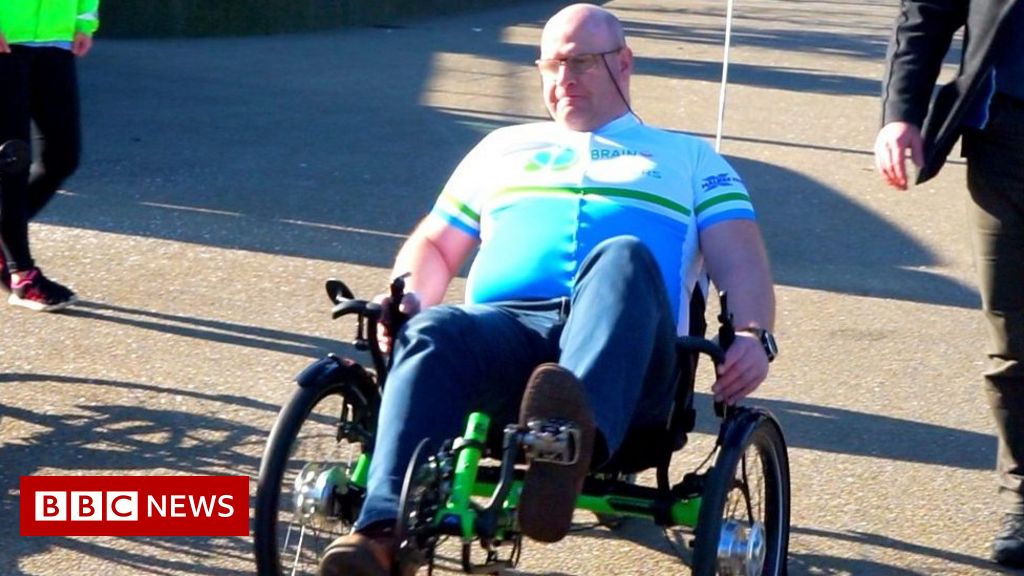
Graham Hill was a keen cyclist before he discovered he had a brain tumour in 2012. The 48-year-old spent months in hospital recovering. Surgery had impacted the father-of-two’s balance and ability to walk more than a short distance. The County Antrim man believed his cycling days were over until he joined the Pedal Power Cycling Club, run by Brain Injury Matters. The group uses adapted bikes to cater for those with a brain injury. It is a joint project with cycling and walking charity Sustrans, which provides a number of bikes including side-by-side tandems. Physiotherapist Dr Jonathan McCrea, head of services at Brain Injury Matters, said: “It is one of the most spine-tingling moments when you see people who have had profound life-changing injuries come here. “They have lost their sense of self and all of sudden they leave their walking frames behind, get on the bikes and they’re free.” Video journalist: Niall McCracken

Read more →

Diagnosing sports-related concussions may be harder than thought

The tool being used to diagnose concussions might be overestimating the condition and wrongly identifying symptoms like fatigue and neck pain caused from intense exercise and not a brain injury, according to Rutgers researchers.
This new research raises new questions about the Sport Concussion Assessment Tool (SCAT), a questionnaire widely used along with other methods to diagnose concussions sustained during sports. Findings were presented at the American Physiological Society annual meeting April 5.
“Our findings highlight the importance of considering the effects of exercise and fatigue in assessing concussions in athletes on the field,” said the study’s first author, Stephanie Iring, a doctoral candidate in the laboratory of Jorge Serrador, an associate professor at the Rutgers School of Health Professions. “While players with a head impact may report more symptoms generally, we have to be cautious in using all symptoms on the assessment since some are common after intense exercise even when there was no head impact.”
A concussion is a traumatic brain injury usually caused by a blow to the head. Although not typically life-threatening, the effects can be serious and long-lasting. About 3.8 million sports-related concussions are reported each year in the United States.
SCAT is a tool designed for use by medical professionals to determine whether a player has suffered a concussion. The assessment includes questions about “red flag” symptoms such as neck pain, headache, muscle weakness and vision problems in addition to tests to assess memory loss and other symptoms.
In previous studies of the tool, researchers compared symptoms in athletes who experienced a blow to the head with people who have been at rest. For the new study, researchers compared SCAT scores in rugby players who had sustained a blow to the head with teammates who had just played an intense rugby match but did not have a head impact. They assessed 209 players, 80 of whom had experienced a head impact and 129 who had not.
Compared with those who did suffer a head injury, those who did have a head injury had significantly more symptoms on the SCAT assessment, reporting 26 symptoms on average. Non-injured players reported about nine symptoms. However, many players without a head injury had symptoms similar to those reported by head-injured players, including fatigue and neck pain.
“Our data shows that exertion during a match increased the number and severity of self-reported symptoms in control players even though they had not experienced a head impact,” Iring said. “This could lead to difficulty differentiating these players from those that had experienced a head impact when using on-field assessments.”
Some symptoms, including headache and “not feeling right,” were more closely associated with having a head injury. This suggests these symptoms might be a stronger indicator of concussion in players who have just finished an intense game, according to researchers. In addition to headache, other symptoms more common in those with a head injury included cognitive-sensory effects, emotional-affective symptoms and hypersensitivity. The researchers suggested further studies are needed to examine how these components can be used along with current physiological measures to better assess a concussion in athletes.
Story Source:
Materials provided by Rutgers University. Original written by Patti Verbanas. Note: Content may be edited for style and length.

Read more →

Genetic 'hotspots' that speed up and slow down brain aging could provide new targets for Alzheimer's drugs

Researchers from a USC-led consortium have discovered 15 “hotspots” in the genome that either speed up brain aging or slow it down — a finding that could provide new drug targets to resist Alzheimer’s disease and other degenerative brain disorders, as well as developmental delays.
The research appears online today in Nature Neuroscience.
“The big game-changer here is discovering locations on the chromosome that speed up or slow down brain aging in worldwide populations. These can quickly become new drug targets,” said Paul Thompson of USC, a lead author on the study and the co-founder and director of the ENIGMA Consortium. “Through our AI4AD (Artificial Intelligence for Alzheimer’s Disease) initiative we even have a genome-guided drug repurposing program to target these and find new and existing drugs that help us age better.”
ENIGMA is working group based at USC that is exploring a vast trove of brain data and has published some of the largest-ever neuroimaging studies of schizophrenia, major depression, bipolar disorder, epilepsy, Parkinson’s disease, and even HIV infection.
To discover the hotspots, or genomic loci, more than 200 ENIGMA-member scientists from all over the world looked for people whose brains were scanned twice with MRI. The scans provided a measure of how fast their brains were gaining or losing tissue in regions that control memory, emotion and analytical thinking.
A million markers screened
After computing brain tissue change rates in 15,000 people of all ages, researchers screened a million markers in their genomes to detect 15 genomic loci — specific, physical locations of genes or other DNA sequences on a chromosome — that were speeding up brain tissue changes.

Read more →

Molecules produced by cells in response to stress may be indicators of various diseases

Certain small RNAs called tDRs can be found inside and outside cells during stress responses to different diseases. Researchers have created an atlas of the stress signatures for tDRs that might be used as markers of disease and identify new disease-causing pathways.
The body’s ability to respond to various types of stress is essential for maintaining health, and failure of such adaptive stress responses can trigger or worsen numerous diseases. New research led by investigators at Massachusetts General Hospital (MGH) and published in Advanced Science reveals that cells often release certain RNA molecules called tDRs in response to stressors, and that different tDRs may serve as markers of cellular stress in different diseases.
“RNA molecules have long been known to be the messenger between DNA (the genetic code) and proteins (the functional molecules of the cell); however, the past decade has seen investigators discover new functions of RNAs that do not translate into proteins — the so-called non-coding RNAs,” says senior author Saumya Das, MD, PhD, co-director of the Resynchronization and Advanced Cardiac Therapeutics Program at MGH.
Das notes that there’s a growing list of non-coding RNAs with diverse functions, and among these, a new class of RNAs has been found to arise from so-called transfer RNAs that normally function to help make proteins from classic messenger RNAs. These RNAs, called tRNA-derived small RNAs (tDRs), appear to be generated when larger “parent” tRNAs are cut into smaller versions by stress-activated enzymes.
By studying a variety of human and rat cells under three stressors — nutritional deprivation, low oxygen and oxidative stress — that are often present in many disease states, Das and his colleagues generated a comprehensive landscape of tDRs that can be found inside cells (cellular) and outside cells (extracellular) during different stress responses. They also found that key proteins called RNAses are important for the generation and stability of extracellular tDRs.
“While tDRs play important roles in cellular functions, we have also found that tDRs are released by cells where they may serve as markers of cellular stress in different diseases,” says lead author Guoping Li, PhD, an instructor in medicine at MGH and Harvard Medical School. “We saw that different types of stress signals can affect the cellular and extracellular tDRs in different types of cells, and that there are ‘signatures’ of these stress signals.”
The team created an atlas of the stress signatures for both cellular and extracellular tDRs that can be used not only as indicators of disease but also as a starting point for scientists who are interested in studying the roles of distinct tDRs in cancer, fibrosis, and other conditions. Das and colleagues are focusing on one such tDR and its role in kidney disease.
The study’s co-authors include Guoping Li, Aidan C. Manning, Alex Bagi, Xinyu Yang, Priyanka Gokulnath, Michail Spanos, Jonathan Howard, Patricia P. Chan, Thadryan Sweeney, Robert Kitchen, Haobo Li, Brice D. Laurent, Sary F. Aranki, Maria I. Kontaridis, Louise C. Laurent, Kendall Van Keuren-Jensen, Jochen Muehlschlegel, and Todd. M. Lowe.
This work was supported by the American Heart Association and the National Institutes of Health.
Story Source:
Materials provided by Massachusetts General Hospital. Note: Content may be edited for style and length.

Read more →

Sugar-coated nanoparticles target macrophages, reverse pulmonary fibrosis

Scientists at the University of Illinois Chicago have developed a treatment for pulmonary fibrosis by using nanoparticles coated in mannose — a type of sugar — to stop a population of lung cells called macrophages that contribute to lung tissue scarring. The cell-targeting method holds promise for preventing this severe lung scarring disease, which can result in life-threatening complications like shortness of breath. 
The researchers say that the treatment is not yet ready to be tested in clinical trials, but its success in relevant animal models is a promising sign that it may be possible to treat the disease — for which there are very limited and imprecise treatments available. 
A major cause of lung fibrosis is the activation of harmful immune cells that cause excessive inflammation.
“The body’s inflammatory processes are very complex and finding treatments for diseases that result from lingering or excessive inflammation are very difficult because the treatments that prevent harmful inflammation also, unfortunately, prevent helpful inflammation which fights infections and heals injuries,” said Abhalaxmi Singh, visiting research assistant professor in the department of pharmacology and regenerative medicine at the UIC College of Medicine. “To have a targeted treatment that addressed a root cause of harmful inflammation work in an animal model is exciting.” 
The coated nanoparticle treatment stops fibrosis by binding to a subset of macrophages, a type of white blood cell found in all organs, that have a receptor for mannose, a sugar molecule. This receptor, called CD206, is hyper-expressed in patients with pulmonary fibrosis.
The scientists found that the macrophages that cause lung fibrosis have very high levels of mannose. In pulmonary fibrosis, macrophages go through a transition that releases cytokines and promotes scarring. Singh and her colleagues characterized the surfaces of these scar-promoting macrophages and the CD206 mannose receptor and designed a nano-vehicle to target these receptors. 
When the sugar-coated nanoparticle binds to the cell’s receptor, it delivers the nucleotide — a fragment of silencing RNA (siRNA) targeting transforming growth factor beta (TGFB) — which the researchers loaded into the nanoparticle. SiRNA targeting TGFB is a cell signaling pathway known to be involved with pulmonary fibrosis. Once in the cell, the nucleotide blocks the macrophage’s ability to make excessive amounts of proteins, such as collagen, involved with scar formation. 
“Macrophages are exciting, complex cells and the approach Dr. Singh and our team took in coating the nanoparticle with sugar to bind to the mannose receptor is an intriguing and precise way to ensure targeted delivery of a silencing RNA treatment to this subset of cells that contribute to fibrosis,” said Asrar Malik, Schweppe Family Distinguished Professor and head of the department of pharmacology and regenerative medicine. 
The team has already started testing the treatment in human lung tissue samples with colleagues at the University of California at San Francisco. 
The nanoparticle used in the experiments is formulated from a protein called albumin, and it is a platform the scientists are studying as a tool to deliver therapeutics for a variety of conditions. 
Malik’s team first discovered that albumin nanoparticles can be used to suppress inflammation in a precision medicine manner. Their original discovery was reported in a 2014 Nature Nanotechnology research article. The inventors subsequently established Nano Biotherapeutics, an independent startup company supported by a National Institutes of Health phase II Small Business Technology Transfer grant to attract the partners and investors needed to bring the innovation to market.
Story Source:
Materials provided by University of Illinois Chicago. Note: Content may be edited for style and length.

Read more →

Reproductive factors and dementia risk

Pregnancy, long reproductive span, and older age at menopause are associated with a lower risk of dementia in women, according to a study publishing April 5 in the open access journal PLOS Medicine. Inversely, hysterectomy, younger age of first birth, and younger or older than average age at first period were associated with greater dementia risk. The study suggests that reproductive and hormonal factors may be involved in dementia risk, but observed a similar association between the number of children and dementia risk in women and men, suggesting that the physical experience of childbearing may not account for risk variation.
Dementia rates are increasing around the world, with some studies reporting a higher incidence in women than men, yet there is a limited evidence base on reproductive factors and the risk of dementia. Jessica Gong at The George Institute for Global Health, Australia, and colleagues used data from the UK Biobank to examine the risk of all cause dementia and reproductive factors in 273,240 women as well as the number of children in those women and in 228,965 men.
After controlling for age, socioeconomic status, smoking, body mass index (BMI), and other elements, certain events related to shorter cumulative exposure to internally produced estrogen — such as older than average age at first period, younger than average age at menopause, and having a hysterectomy — were associated with higher dementia risk. Pregnancy, even aborted pregnancy, longer reproductive span, older age at menopause, and use of contraceptive pills were associated with a lower risk of all-cause dementia. For both men and women, compared with having two children, having no children or four or more were apparently associated with greater risk of dementia.
The study has limitations including the retrospective reporting on reproductive factors that can be subject to bias, and the fact that UK Biobank is a relatively healthy cohort of affluent people of white British ancestry so may not be representative of a broader population.
Gong adds, “Reproductive events related to shorter exposure to endogenous estrogen in women were associated with higher dementia risk, and these findings highlight the vulnerability in dementia risk pertaining to women. However, the similar association between the number of children and dementia risk observed for women and men indicates that the risk variation in women may be more related to social and behavioural factors in parenthood, rather than biological factors involved in childbearing.”
Story Source:
Materials provided by PLOS. Note: Content may be edited for style and length.

Read more →

People with epilepsy live shorter lives

On average, people with epilepsy live 10-12 years fewer than those who do not have the condition. Excess mortality is particularly pronounced among people with epilepsy and mental disorders. This is shown by research from Aarhus University.
50,000 Danes live with epilepsy, which is one of the most frequently occurring neurological diseases. New research now shows that people with epilepsy die significantly earlier than people without — on average they live 10-12 years less.
“The significantly reduced life expectancy is found both in people who develop epilepsy as a result of an underlying condition, such as brain cancer or stroke, and in those who develop epilepsy without an obvious underlying cause,” explains Julie Werenberg Dreier, who is senior researcher at the National Centre for Register-based Research at Aarhus University and one of the researchers behind the study.
Wide range of causes of death
The average reduction in life expectancy was 12 years for men with epilepsy and 11 years for women. Excess mortality is particularly pronounced among people with epilepsy and mental disorders, where life expectancy was on average reduced by up to 16 years.
“We discovered that the reduced life expectancy for people with epilepsy was related to a wide range of causes of death which don’t just include the neurological, but also cardiovascular diseases, psychiatric disorders, alcohol related conditions, accidents and suicide,” says Jakob Christensen. He is clinical associate professor at Aarhus University and consultant at the Department of Neurology at Aarhus University Hospital, and is also one of the researchers behind the study.

Read more →

Miniature brain models: Understanding autism

To better understand the causes of autism spectrum disorders (ASD) it is crucial to look at what is happening in the brain during development. The closest we come to observing human brains this early is by using organoids — miniature models of organs. With their help, scientists at the Institute of Science and Technology Austria (ISTA) discovered how mutations in a high-risk gene of autism disrupt important developmental processes.
Several hundred genes are associated with autism spectrum disorders. Some patients are only mildly affected, while others have severe disabilities. In addition to characteristic symptoms like difficulties in social interaction and communication with other people, as well as repetitive-stereotypic behaviors, patients with mutations of the gene CHD8 oftentimes have intellectual disabilities and macrocephaly — an unusually large brain. How CHD8 causes these symptoms has long been unclear.
Tiny artificial brains
Since CHD8 mutations affect the brain at a very early stage of its development, it has proven difficult for scientists to get the full picture. Over the past years, many researchers therefore used mice as model organisms to better understand what is going on. “But mice with a CHD8 mutation barely showed the symptoms human patients are showing. The effects in mice are not comparable to humans. We needed some kind of human model,” Professor Gaia Novarino explains.
Together with collaborators from the Italian Human Technopole institute, the European Institute of Oncology, and the University of Milan, as well as the Allen Institute for Brain Science, USA, Novarino and her team at ISTA turned to organoids. These simplified miniature versions of organs are made from stem cells, which have the ability to become almost every other type of cell. By creating the right circumstances and giving the proper input at just the right time, the scientists were able to mimic developmental processes to create basic versions of brain tissue the size of lentils. “Organoids are the only way you can study human brain development at such an early phase,” says Bárbara Oliveira, postdoc in the Novarino group and one of the authors of the study.
CHD8 mutations disrupt balance of neuron production
In petri dishes the team created brain organoids with and without mutations of the gene CHD8. “After some time, we could see by eye that the mutant organoids were much bigger. That was the first evidence that the model works,” her colleague and co-author, PhD student Christoph Dotter, describes. Like patients with a CHD8 mutation, the organoids were showing signs of brain overgrowth.
Getting an overview of all the cell types in the organoids, the team notices something very early on: The mutant organoids started to produce a specific type of neurons, inhibitory neurons, much earlier than the control group. So called excitatory neurons, however, were produced later. Furthermore, the mutant organoids produced much more proliferating cells that later on produce a larger amount of this kind of neurons. Over all, the scientists concluded, this leads to them being significantly bigger than the organoids without CHD8 mutations correlating with patient’s macrocephaly.
Starting to understand our brain
Like previous studies by the Novarino group, their recent study shows just how important time is when studying autism. “Looking at different time points gives us the information that what you see in the end might not be the full picture of how the brain of a patient developed — much more might have happened before,” says Novarino. “We still have a limited understanding of how different trajectories affect functions of the brain.” To one day help patients with a CHD8 mutation, the basics of brain development need to be better understood. By reproducing genetic and clinical features from ASD patients in brain organoids, the Novarino group was able to make an important contribution.

Read more →