Endometriosis: Lowestoft woman hopes to set up support group

A woman who suffers “debilitating” period pains says she hopes to set up a support group to help others.Karina Wilson, 27, from Lowestoft, Suffolk, said endometriosis had affected “every single aspect of my life” and at times had left her bed-bound.It is a condition where tissue similar to the lining of the womb starts to grow in other places, such as the ovaries and fallopian tubes, causing severe pain.”Endometriosis needs to be talked about more because it’s much more common than people think,” said Miss Wilson.The NHS says it is a long-term condition that can affect women of any age, but there are treatments that can help.Endometriosis UK says diagnosis can be difficult and often delayed, with recent research showing an average of seven-and-a-half years between women first seeing a doctor and receiving a firm diagnosis.Find BBC News: East of England on Facebook, Instagram and Twitter. If you have a story suggestion email eastofenglandnews@bbc.co.uk

Read more →

Miscarriage: Tens of thousands have PTSD symptoms

SharecloseShare pageCopy linkAbout sharingThis video can not be playedTo play this video you need to enable JavaScript in your browser.Tens of thousands of women in the UK may be experiencing symptoms of post-traumatic stress disorder (PTSD) after miscarriages each year, a leading researcher warns.Prof Tom Bourne estimates the number affected could run to 45,000 annually. But he says most are not given prompt psychological support that could help prevent PTSD developing. His team is trying out a variety of new approaches – including virtual reality – to help address the issue. Kellie’s story: ‘I felt so alone after my baby died’Kellie Cunningham lost her baby boy five months into her pregnancy in 2017. She named him Henry. “It changed my life,” she says. “I went into hospital one person and came out a totally different person.” Kellie said she did not get any NHS follow-up or mental health support after she left hospital, and went on to develop PTSD, only picked up by a support group led by the baby loss charity, Sands.She began to pay for her own therapy. “I was just left to pack up my things in hospital that day, take the little memory box they gave me, and leave the building. I felt so alone.Image source, Kellie Cunningham”People think because your baby never lived, you cannot feel a close bond with them.”But as soon as you find out you are pregnant, you are planning your futures. For that to be taken away from you in a second has a big impact,” she said. Kellie now raises money for Sands, and is a befriender for the charity, helping other women who have lost babies. She continues to suffer with PTSD and anxiety five years after the loss of Henry. “I strongly believe if I had been given support when I left the hospital I would not have ended up with PTSD, or still be in therapy, years later.”Estimates suggest there are about 250,000 miscarriages in the UK each year, with most occurring in the first three months of pregnancy. But miscarriage rates are not officially monitored in the UK, or most countries around the world, making it very difficult to know the true scale of pregnancy loss and the psychological impact that follows.Prof Bourne, who works at Tommy’s National Centre for Miscarriage Research at Imperial College London, has studied this for many years.In one of the largest studies of its kind, published in 2019, he attempted to estimate just how common PTSD symptoms are.The surveys focused on women at three London hospitals who experienced miscarriages in the first three months of pregnancy, and some who had ectopic pregnancies – where the baby develops outside the womb and cannot survive.Of 338 women who completed the study, approximately 18% had some symptoms of post traumatic stress nine months after their loss.If these numbers were replicated around the UK, some 45,000 women would experience symptoms of PTSD each year, according to Prof Bourne’s calculations.But he says this is likely to be an under-estimate, because the research did not look at miscarriages that happened at home or those that happen later in pregnancy. Symptoms of PTSD are wide-ranging and can include:Reliving aspects of what happened, such as having flashbacks and intrusive thoughtsAlertness or feeling on edge, such as being easily upset or angry and experiencing a feeling of extreme alertness Avoiding feelings or memories, including turning to alcohol or drugs or feeling physically numb or detached from your bodyDifficult beliefs or feelings, including blaming yourself and feeling like nowhere is safeSOURCE: MindTherapies available on the NHS include talking ones such as trauma-focused cognitive behavioural therapy, eye movement desensitisation and reprocessing, and sometimes medication. But the Miscarriage Association says there is an urgent need for better access to talking and other psychological therapies for those affected. At present, most women have to ask for help themselves rather than support being in place.Prof Bourne believes there needs to be more research into other ways of helping people experiencing loss. One idea his team is experimenting with is offering women virtual reality headsets during miscarriage procedures. It builds on previous work that shows VR headsets can help reduce pain during some medical procedures. Researcher Dr Nina Parker says the aim is “to transport them to sort of a more calm, virtual reality world for distraction from the pain and anxiety during the procedure”.She adds: “There is nothing that we are ever going to be able to do that takes away from the loss and the trauma of losing pregnancy and having a miscarriage. “But if we can do everything that we can to minimise any additional trauma we might be adding to in the interactions that are had within the hospital, then we are obligated to do that.”Image source, ?????Meera had a miscarriage before Christmas and was offered use of the VR headset at Queen Charlotte’s hospital in London. She said she was glad to use it while having what’s called a manual vacuum aspiration procedure to remove pregnancy tissue from the womb – and would encourage others to try it.”I shed a tear but without feeling suffocated or overwhelmed by what was happening because I felt I was in this other space, watching this totally different scene,” she said.”But I still felt present for what was happening to me, which was important to me too.” Dr Parker is also investigating whether immersing people in brief tasks – such as playing a modified computer game or listening to a podcast – immediately after recalling a painful memory, can help prevent PTSD and other psychological problems developing. The theory is that getting someone to do a task in this way could have an impact on the way the brain processes difficult intrusive memories, and may help prevent them from developing more distressing and persistent symptoms. A Department of Health spokesperson said: “We’re committed to making the NHS the safest place in the world for maternity care and supporting anyone who experiences a miscarriage.”A maternity disparities taskforce was launched recently to ensure all mothers and babies receive the best care.The government said it had also set up 26 maternal mental health hubs for 24,000 more expectant or bereaved mothers to access treatment for a range of mental health issues in England.The BBC Action Line has details of organisations offering support.Follow Tulip on TwitterMore on this storyMiscarriage: ‘I was in pain – they did not listen’Pregnancy loss podcasters: ‘I’d cry in the car’Virtual reality game aids burns victimsRelated Internet LinksPTSD and birth trauma – Mind.websiteTogether, for every baby – Charity for Babies Tommy’s.websiteSands Stillbirth and neonatal death charity.websiteThe BBC is not responsible for the content of external sites.

Read more →

Keep your waist to less than half your height, guidance says

SharecloseShare pageCopy linkAbout sharingImage source, Getty ImagesPeople should be encouraged to measure their waist to check they don’t have too much dangerous fat around their middle, updated guidelines say.An adult’s waist should be less than half their height to reduce health risks, health body NICE recommends.Measuring body mass index (BMI) is also useful – but doesn’t take into account excess weight around the abdomen.This increases the risk of conditions such as type 2 diabetes, high blood pressure, heart disease and stroke.New draft guidance from the National Institute for Health and Care Excellence (NICE) says people from some Asian and black ethnic groups are more prone to this type of fat build-up around the waist, which is called “central adiposity”. They should use lower BMI thresholds for obesity to help predict their specific health risks.But NICE warns that even those in a healthy BMI weight category could be carrying too much weight around the waist.Pandemic weight gain averages half a stone – surveyAre middle-aged people more unhealthy than ever?Weight-loss jab recommended on NHS “Explain to people that to measure their waist, they should find the bottom of their ribs and the top of their hips, wrap a tape measure around the waist midway between these points and breathe out naturally before taking the measurement,” say the guidelines on identifying people who are overweight and obese.If you’re 175cm (5ft 9 inches) tall, for example, then your waist measurement should be less than 87.5cm (34 inches) – or half your height.Measuring waist-to-height ratio can be used for both sexes and all ethnic groups, as well as highly muscular adults, it adds.But waist circumference measurements are not accurate in people with a BMI over 35, pregnant women or children under two.Disease riskThe latest estimates for England suggest that 28% of adults are obese and a further 36% are overweight – a problem that is costing the NHS more than £6bn.Professor Naveed Sattar, professor of metabolic medicine at the University of Glasgow, said whether this new message gets taken up is “uncertain” but he said it never harms to try “new ways” to get people to think about their health.Other experts say measuring the waistline doesn’t work for people who are very short or older people over 60 who may have lost height with ageing.But Professor Rachel Batterham, consultant in obesity, diabetes and endocrinology, who is on the guidelines committee, said: “Increased fat in the abdomen increases a person’s risk of developing several life-limiting diseases including type 2 diabetes and heart disease. “Waist-to-height ratio is a simple, easy-to-use measure that identifies people who are at increased health risk and would benefit from weight management support to improve their health.”‘Be sensitive’In the guidance, GPs and nurses are advised to ask someone’s permission before talking about their weight, and also to “discuss it in a sensitive manner”.Advice on managing weight is usually tailored to the individual and focuses on improving their diet and getting them to exercise more, in addition to potential treatments and surgery.Dr Paul Chrisp, director of the centre for guidelines at NICE, said the updated draft guidelines help people understand what factors affect their health and how to address them.Healthcare professionals and the public can comment on the proposed recommendations in the guidelines before they are published in May.The updated guidelines say doctors should also consider using waist-to-height ratio in children and young people aged over five to assess and predict health risks. During the pandemic, there was a substantial rise in obesity in children in England with 25% classed as obese by the time they leave primary school, according to recent NHS data.Dr Nivedita Aswani, consultant paediatrician specialising in diabetes and weight management at Sheffield Children’s Hospital, said even young children were at risk of the effects of fat in the abdomen. What is a healthy body mass index (BMI)?healthy weight: BMI 18.5 kg/m2 to 24.9 kg/m2overweight: BMI 25 kg/m2 to 29.9 kg/m2obesity class 1: BMI 30 kg/m2 to 34.9 kg/m2obesity class 2: BMI 35 kg/m2 to 39.9 kg/m2obesity class 3: BMI 40 kg/m2 or moreBMI healthy weight calculatorMore on this storyWeight-loss jab recommended on NHSHigh Street pharmacies to help people lose weightPandemic sees big rise in obese childrenLiving with obesity: Hard-wired to store fatRelated Internet LinksCardiovascular disease – NHSBMI healthy weight calculatorThe BBC is not responsible for the content of external sites.

Read more →

Rejuvenation of woman's skin could tackle diseases of ageing

SharecloseShare pageCopy linkAbout sharingImage source, Fátima SantosResearchers have rejuvenated a 53-year-old woman’s skin cells so they are the equivalent of a 23-year-old’s.The scientists in Cambridge believe that they can do the same thing with other tissues in the body.The eventual aim is to develop treatments for age-related diseases such as diabetes, heart disease and neurological disorders.The technology is built on the techniques used to create Dolly the cloned sheep more than 25 years ago.The head of the team, Prof Wolf Reik, of the Babraham Institute in Cambridge, told BBC News that he hoped that the technique could eventually be used to keep people healthier for longer as they grow older.”We have been dreaming about this kind of thing. Many common diseases get worse with age and to think about helping people in this way is super exciting,” he said.Prof Reich stressed though that the work, which has been published in the journal eLife, was at a very early stage. He said that there were several scientific issues to overcome before it could move out of his lab and into the clinic. But he said that demonstrating for the first time that cell rejuvenation is possible was a critical step forward.The origins of the technique stem from the 1990s, when researchers at the Roslin Institute just outside Edinburgh developed a method of turning an adult mammary gland cell taken from a sheep into an embryo. It led to the creation of Dolly the cloned sheep.The Roslin team’s aim was not to create clones of sheep or indeed humans, but to use the technique to create so-called human embryonic stem cells. These, they hoped, could be grown into specific tissues, such as muscle, cartilage, and nerve cells to replace worn-out body parts. The Dolly technique was made simpler in 2006 by Prof Shinya Yamanaka, then at Kyoto University. The new method, called IPS, involved adding chemicals to adult cells for around 50 days. This resulted in genetic changes that turned the adult cells into stem cells.In both the Dolly and IPS techniques, the stem cells created need to be regrown into the cells and tissues the patient requires. This has proved difficult and despite decades of effort, the use of stem cells to treat diseases is currently extremely limited.Prof Reik’s team used the IPS technique on 53-year-old skin cells. But they cut short the chemical bath from 50 days to around 12. Dr Dilgeet Gill was astonished to find that the cells had not turned into embryonic stem cells – but had rejuvenated into skin cells that looked and behaved as if they came from a 23-year old.He said: “I remember the day I got the results back and I didn’t quite believe that some of the cells were 30 years younger than they were supposed to be. It was a very exciting day!” The technique cannot immediately be translated to the clinic because the IPS method increases the risk of cancers. But Prof Reik was confident that now it was known that it is possible to rejuvenate cells, his team could find an alternative, safer method.”The long-term aim is to extend the human health span, rather than the lifespan, so that people can get older in a healthier way,” he said.Prof Reik says some of the first applications could be to develop medicines to rejuvenate skin in older people in parts of the body where they have been cut or burned – as a way to speed up healing. The researchers have demonstrated that this is possible in principle by showing that their rejuvenated skin cells move more quickly in experiments simulating a wound.Image source, Science Photo LibraryThe next step is to see if the technology will work on other tissues such as muscle, liver and blood cells.Prof Melanie Welham, who is the executive chairman of the Biotechnology and Biological Sciences Research Council, which part-funded the research that led to Dolly the sheep, told BBC News that the long-stalled clinical benefits of the technology may not be that far away.”If similar approaches or new therapies could rejuvenate immune cells, which we know become less responsive as we age, then in the future it might be possible to boost people’s response to vaccination as well as their ability to fight infections.”The big question is whether research efforts in this area would lead to a method of whole-body regeneration, an elixir of youth or an anti-ageing pill. Prof Reik said this idea was not completely far-fetched.”The technique has been applied to genetically modified mice and there are some signs of rejuvenation. One study showed signs of a rejuvenated pancreas, which is interesting for its potential to tackle diabetes.”But Prof Robin Lovell-Badge, of the Crick Institute in London, believes that the scientific hurdles between Prof Reik’s result in the lab and even the simplest clinical applications are considerable. Nor does he think it will be a trivial process to translate the rejuvenation process to other types of tissue or indeed an anti-ageing pill.”If you find other chemicals to do the same thing, then that would be good, but they may be just as bad. So it is ambitious to think you are going to find these chemicals easily and that they are going to be safer.”It is also quite possible that other types of cells would require different conditions that may be hard to control. And whether you could do it with the whole body safely would be such a long way off, that I would think it would be pure speculation.”Follow Pallab on Twitter

Read more →

Medicare Officially Limits Coverage of Aduhelm to Patients in Clinical Trials

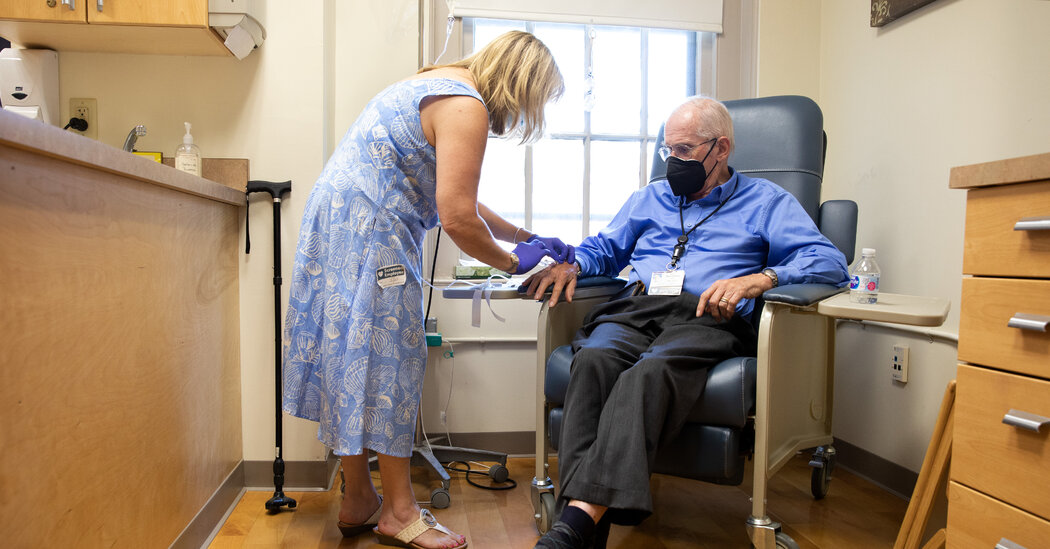
Officials cited data showing the new Alzheimer’s drug has serious safety risks and may not help patients.For the past few months, Medicare officials have been inundated with impassioned pleas about how to handle coverage of the controversial new Alzheimer’s drug Aduhelm.Advocacy groups for patients have said the federal insurance program for people 65 and over must pay for a drug approved by the Food and Drug Administration. Many Alzheimer’s doctors and experts cautioned against broadly covering a treatment that scientific evidence shows has uncertain benefit and serious safety risks. Individual patients and families weighed in on both sides with emotional statements.On Thursday, Medicare officials announced their final decision. The program will cover Aduhelm only if people receive it as participants in a clinical trial, likely a small percentage of the estimated 1.5 million people in the United States who have mild Alzheimer’s-related cognitive decline, the condition Aduhelm was approved to treat.Chiquita Brooks-LaSure, the administrator of the Centers for Medicare and Medicaid Services said the decision was intended to protect patients while gathering data to indicate whether Aduhelm, an expensive monoclonal antibody given as a monthly infusion, could actually help them by slowing the pace of their cognitive decline.“It’s our obligation at C.M.S. to really make sure it’s reasonable and necessary,” Ms. Brooks-LaSure said in an interview Thursday. “The vast majority” of the approximately 10,000 comments the agency received on its website, she said, were in favor of “really limiting coverage of Aduhelm to a really controlled space where we could continue to evaluate its appropriateness for the Medicare population.”A major issue for Medicare had been how to deal with other similar drugs for Alzheimer’s, several of which are likely to be considered for F.D.A. approval soon. In a proposal in January, C.M.S. had said it would cover them in the same way as Aduhelm because it typically made coverage decisions for an entire class of drugs.People in favor of wider access to Aduhelm held a rally outside the Department of Health and Human Services last month.Kenny Holston for The New York TimesBut after both experts and advocacy groups raised concerns, Medicare officials said Thursday that they would not automatically apply the same restrictions to each new drug. If, unlike with Aduhelm, the F.D.A. finds that there is clear evidence that a drug can help patients, Medicare would cover it for all eligible patients and would only impose a requirement that the patients’ experience be tracked.Dr. Lee Fleisher, the chief medical officer at C.M.S., said the two-track way of dealing with the fast-developing field of Alzheimer’s therapies, a program called Coverage with Evidence Development, “is meant to be nimble and really respond to any new drugs in this class that are in the pipeline, and do demonstrate clinical benefit.”The decision is extremely unusual for Medicare, which almost always automatically pays for drugs that the F.D.A. has approved, at least for the medical conditions designated on labels. Understand the New Alzheimer’s Drug AduhelmF.D.A. Approval: In a contentious decision, the agency approved the first new Alzheimer’s treatment in nearly two decades. A Fierce Debate: Alzheimer’s patients are desperate for new options, but some scientists say there isn’t enough evidence Aduhelm works.Potential Safety Risks: Concerns over Aduhelm intensified after a 75-year-old woman in a clinical trial developed brain swelling and died.Medicare Limits: Officials said the federal program should cover the drug only for patients who are participating in approved clinical trials.The Campaign for Coverage: A powerful Alzheimer’s advocacy group is pushing relentlessly for broad Medicare access to the drug.But Aduhelm’s path has been very unusual, too. The F.D.A. itself acknowledged that it was unclear if the drug was beneficial when it approved Aduhelm last June. It greenlighted the drug under a program called “accelerated approval,” which allows authorization of drugs that have uncertain benefit if they are for serious diseases with few treatments and if the drug affects a biological mechanism in a way considered reasonably likely to help patients.The clinical trial evidence reviewed by the F.D.A. showed that patients in one trial appeared to experience slight slowing of cognitive decline, while patients in a nearly identical trial didn’t appear to benefit at all. About 40 percent of patients on the dosage later approved experienced brain swelling or brain bleeding, often mild, but sometimes serious. Both a council of senior F.D.A. officials and the agency’s independent advisory committee had said there wasn’t enough evidence for approval.The drug, manufactured by Biogen, takes the form of a monthly intravenous infusion.Pool photo by Jessica RinaldiQuestions about the approval, and whether the F.D.A. worked too closely with Biogen, Aduhelm’s manufacturer, have prompted investigations by congressional committees, the Health and Human Services department’s inspector general, the Federal Trade Commission and the Securities and Exchange Commission. Major medical centers, including the Cleveland Clinic, have declined to offer Aduhelm. As a result of concerns raised by Alzheimer’s experts and some groups, Medicare officials announced several other changes to their earlier proposal. Instead of requiring randomized controlled trials approved by C.M.S., Medicare will cover participants in any trial approved by the F.D.A. or the National Institutes of Health. It will allow those trials to be conducted in a broader array of locations, not just hospital settings, and to include people with other neurological conditions like Down syndrome, many of whom develop Alzheimer’s but had been excluded from the earlier proposed plan.The trials will still need to comply with a Medicare requirement to recruit a racially and ethnically diverse group of participants, contrasting with the previous trials of Aduhelm, in which most participants were white.In the trials, “the manufacturers will have to come to us with how are they going to include all patients that represent the Medicare population, and how are they going to ensure that all of these patients are getting appropriate medical treatment and monitoring of their treatment while they’re in each of these studies,” Tamara Syrek Jensen, the director of coverage and analysis for C.M.S.’s Center for Clinical Standards and Quality, said in an interview.The F.D.A. has also required Biogen to conduct another clinical trial to determine if the drug provided any evidence of benefit, but it said that in the years it will take for that trial to be completed, Aduhelm would be available to patients. Under Thursday’s decision, Medicare would cover the costs for participants in Biogen’s trial. Medicare’s coverage evaluation team makes decisions without considering the cost of a drug, but the Aduhelm decision could ease some concerns about how covering the drug might affect the pocketbooks of the country’s millions of Medicare beneficiaries.Counterprotesters at the Aduhelm rally in Washington in March.Kenny Holston for The New York TimesLast year, Medicare’s actuarial division, acting without knowing what the coverage decision would be, imposed one of the biggest-ever increases in Medicare Part B premiums for 2022, partly driven by the possibility of coverage for Aduhelm, which at the time was priced by its manufacturer at $56,000 a year.Since then, Biogen, facing weak sales of the drug after many hospitals and doctors would not prescribe it, lowered the price to $28,800 a year, still much higher than many analysts have said is warranted.Xavier Becerra, secretary of health and human services, had said that he would consider lowering premiums after the final coverage decision for Aduhelm was made, adding that “We’re going to make sure that seniors don’t pay more than they have to.”In the interview Thursday, Ms. Brooks-LaSure, the C.M.S. administrator, said “The secretary told us to look at it, and we are going to engage in the process of reviewing the Part B premium.”Advocacy groups, several of which receive some funding from Biogen and other pharmaceutical companies, had campaigned vigorously for broad Medicare coverage. These groups said patients should be able to decide with their doctors whether to try an F.D.A.-approved drug and claimed it was discriminatory to only reimburse participation in clinical trials that may not be easily accessible to many patients.“We just can’t let it stand as it is,” Harry Johns, the chief executive of the Alzheimer’s Association, told the organization’s staff, according to a recording of the meeting obtained by The New York Times.In an interview before the Medicare announcement, Mr. Johns indicated that the association wouldn’t be satisfied if Medicare’s restrictions applied only to Aduhelm, saying, “We absolutely believe there is sufficient evidence to provide coverage for the first approved treatment.”

Read more →

Kisspeptin: A new drug to treat liver disease?

A hormone that triggers puberty and controls fertility in humans might be developed as a treatment for non-alcoholic fatty liver disease, according to new Rutgers research.
The study, appearing in the Journal of Clinical Investigation, provides powerful evidence that a modified version of the naturally occurring hormone kisspeptin can be used to treat non-alcoholic fatty liver disease (NAFLD). Globally, NAFLD is the most common form of chronic liver disease that affects children and adults and is linked to the rise in obesity and Type 2 diabetes.
NAFLD is known as a “silent” disease because it starts off with few or no symptoms. It begins with the accumulation of fat in the liver, resulting in a condition known as ‘fatty liver’. As the disease worsens, the liver becomes inflamed resulting in non-alcoholic steatohepatitis (NASH). This is followed by fibrosis and cirrhosis, where the liver becomes scarred and irreversibly damaged. A subset of NASH patients with cirrhosis will also develop liver cancer. Currently, there are no approved therapeutics to treat NASH.
Study lead investigator, Moshmi Bhattacharya, an associate professor in the Department of Medicine at the Rutgers Robert Wood Johnson Medical School, has spent over 15 years studying kisspeptin in health and disease. Kisspeptin, encoded by the KISS1 gene, was discovered in Hershey, Pa. and named for the iconic Hershey chocolate “kisses.” In addition to playing key roles in pubertal development and maintaining reproductive function, kisspeptin has also been linked to appetite and sexual attraction.
Bhattacharya along with co-author Andy Babwah, an associate professor in pediatrics at Rutgers Robert Wood Johnson Medical School, initiated this study to decipher the roles of kisspeptin in the liver, under healthy and obese conditions. The study’s first author, Stephania Guzman, is a Ph.D. candidate in Rutgers Molecular Biosciences Graduate Program. This collaborative study also included researchers led by Waljit Dhillo at the Imperial College London, U.K.
The researchers fed mice a high-fat, high-sugar ‘Western’ diet to induce obesity and NAFLD. The study showed that kisspeptin given to these mice protected them from the development of fatty liver, NASH and fibrosis. Kisspeptin works by binding its receptor, a protein called KISS1R. The study also showed that when KISS1R is deleted from liver cells, kisspeptin cannot function and mice on western diet develop fatty liver. These experiments uncover a powerful relationship between kisspeptin and the reduction of liver fat and fibrosis.
The study found: Kisspeptin helps reduce fat deposited in the liver and reverse more advanced disease. The mechanism by which kisspeptin functions in the liver is now understood. Blood kisspeptin levels change in human NAFLD patients and in a mouse model of NAFLD.”This work shows the kisspeptin receptor signaling pathway has a potential therapeutic role in NAFLD,” said co-author, Vinod K Rustgi, director of hepatology and a Distinguished Professor of Medicine at the Rutgers Robert Wood Johnson Medical School. “It does this by protecting against the development of fat in the liver and reducing inflammation and fibrosis. As such, it has the potential to favorably impact the health and lives of millions of patients around the globe.”
Story Source:
Materials provided by Rutgers University. Note: Content may be edited for style and length.

Read more →

An immune ‘fingerprint’ reveals path for better treatment of autoimmune diseases

‘We analysed the genomic profile of over one million cells from 1,000 people to identify a fingerprint linking genetic markers to diseases such as multiple sclerosis, rheumatoid arthritis, lupus, type 1 diabetes, spondylitis, inflammatory bowel disease, and Crohn’s disease,’ says Professor Joseph Powell, joint lead author at the Garvan Institute of Medical Research. ‘We were able to do this using single cell sequencing, a new technology that allows us to detect subtle changes in individual cells,’ he says.
The discovery could help individuals find tailored treatments that work for them and guide the development of new drugs.
The study by researchers in Sydney, Hobart, Melbourne, Brisbane and San Francisco helps us understand why some treatments work well in some patients, but not in others. It’s the largest study to date to link disease-causing genes to specific types of immune cells.
A trial is now underway in Sydney with Crohn’s disease patients to predict which treatments will work for specific patients.
‘Some autoimmune diseases can be notoriously difficult to treat,’ says Professor Powell.
‘Because of our immune system’s complexity, and how vastly it varies between individuals, we don’t currently have a good understanding of why a treatment works well in some people but not in others,’ he says.

Read more →

Cell biology: How mitochondria report stress

LMU researchers have discovered the mechanism by which the protein DELE1 detects organelle stress. This offers a possible new approach for treating neurodegenerative diseases.
Researchers have long posited a link between dysfunctions in mitochondria, little organelles in the interior of cells, and the aging process and age-related illnesses, such as Alzheimer’s disease. “Many such illnesses cannot be cured — partly because we don’t yet understand fundamental mechanisms,” says Professor Lucas Jae from LMU’s Gene Center Munich.
Frequently, the mitochondrial dysfunction is triggered by various forms of stress — this much is known. Stress can come from the cell or originate in the mitochondrion itself, such as through reactive oxygen species, which occur during cellular respiration. Although they have their own genome, mitochondria are incapable of responding independently to stress. “This means that disturbances must be reported to the rest of the cell,” explains Dr. Evelyn Fessler from the Gene Center Munich.
In Nature Communications, Fessler and Jae, together with Luisa Krumwiede, describe a mechanism whereby a special protein in humans, DELE1, detects various kinds of stress while being imported into mitochondria and reports them to the cell. This can lead to different responses, such as repairs or induced cell death.
Known molecule, unknown mechanism
Two years ago, Jae’s team explored the question as to how mitochondrial stress is actually reported to the cell. The researchers found a new signaling pathway consisting of the proteins OMA1, DELE1, and HRI, which looks after such tasks. “So we knew which factors recognize mitochondrial stress, but we didn’t understand key aspects,” recalls Jae. “How does the DELE1 signal travel from the mitochondrion into the cytoplasm of the cell? And how can DELE1, as an individual protein, detect the many different types of stress?”
Now the researchers have found answers. DELE1 is continuously imported into the mitochondria and processed by proteases. Deep inside the mitochondria, DELE1 is then quickly degraded. As such, there are molecules constantly passing through the outer and inner membranes of mitochondria in order to be imported.
Mitochondrial stress causes this importing process to fail. New DELE1 molecules are arrested on their way into the mitochondria and, depending on the source of the disturbance, are either cut by OMA1 or remain uncleaved outside the organelles. In any case, the portion of the DELE1 protein that possesses the signaling effect is unmasked in the cytosol. “All the different types of stress lead to one of the sub-steps involved in the importing and processing of DELE1 coming to a halt,” summarizes Jae. This is how mitochondrial stress is detected.
DELE1 also recognizes dysfunctions in the mitochondrial enzymes PITRM1 and MPP. In neurodegenerative diseases, these enzymes are mutated. “Specifically in connection with such defects, we have observed that it’s important for cellular survival for DELE1 to detect the problem and inform the cell,” notes Jae.
What happens next? “Now that we understand the mechanism, we can investigate many different scenarios,” reports Fessler. The researchers want to discover how the decision is made as to whether a cell enters a repair phase due to a stress response or goes into programmed cell death, because otherwise it would present a danger. They also hope to be able to modulate the signaling pathway such that it favors cellular survival in times of mitochondrial stress: a possible approach for treating neurodegenerative diseases.

Read more →

Two DNA defense systems behind resilience of 7th cholera pandemic

Cholera is caused by the bacterium Vibrio cholerae, a waterborne pathogen that infects the gut of humans through contaminated water and food. When ingested, V. cholerae colonizes the gut’s inner surface, causing a watery diarrhea, that if left untreated, can lead to severe dehydration and death.
Cholera is still a problem, especially in less-developed or crisis-hit regions. The WHO reports that the ongoing seventh cholera pandemic is still responsible for up to four million infections, and up to 143,000 deaths each year.
Horizontal gene transfer
Only a few strains of V. cholerae can cause pandemic disease, with most being harmless aquatic organisms. This is because the pandemic strains have acquired specialized “toolboxes” of genes and other genetic elements called “pathogenicity islands,” which can turn the bacterium into a pathogen.
Strains that cause cholera pandemics have acquired pathogenicity islands through a process known as “horizontal gene transfer,” by which bacteria share genes both within and across species. Horizontal gene transfer is a powerful driver of bacterial evolution because it can quickly endow bacteria with new abilities that help them adapt and survive. But it is also indiscriminate, passing on genes that are unnecessary or even harmful to their new host.
Horizontal gene transfer often involves plasmids — self-replicating circular pieces of DNA found in bacteria that can carry up to hundreds of genes. But strains of V. cholerae that are causing the currently ongoing 7th pandemic of choleraonly rarely carry plasmids while plasmids are abundant in related strains isolated from the environment instead of patients.

Read more →