Ethical challenges in microbiome research

A human rights activist and a group of anthropologists and human biologists are casting a critical lens on the way that microbiome research is conducted with Indigenous peoples.
While this isn’t the first time that a call for more ethical research engagement in the biological sciences has been sounded, this approach, published in the May 16 issue of Nature Microbiology, is the first to engage the microbiome sciences from an interdisciplinary perspective.
An international group of authors from UNLV, The University of Arizona, the University of Oklahoma, and the University of Vienna, argue that the collection of microbiome data from Indigenous communities poses a series of ethical challenges that must be addressed.
The human microbiome is the collection of all microbes (bacteria, archaea, fungi, viruses, and their genes) that live on and in our bodies. Some microorganisms are beneficial and their study might lead to therapeutic benefits for a range of diseases (like treatment for inflammatory bowel disease, diabetes, or pathogen infections). The desire to identify which of these microorganisms might hold the key to unlocking treatments for global health burdens in the West has led to a push for more biological sampling in low- to middle-income countries, including more work with the world’s Indigenous communities.
The authors argue that scientists target populations perceived to have less exposure to environmental toxins or who consume a “wild” diet similar to that of our ancestors, something they say is not only scientifically inaccurate, but also disrespectful to communities.
“It isn’t possible to ‘rewild’ our diets or our bodies,” says senior author, Alyssa Crittenden, an associate professor of anthropology at UNLV. “There isn’t one ancestral microbiome — and even if there were, we can’t somehow recreate it in the 21st century by studying particular groups of people.”
Drawing upon years of varied work (from anthropology to genomics to Indigenous human rights law), the authors provide actionable suggestions to address the logistical and ethical quandaries of collecting biological data from Indigenous communities.
Work in the microbiome sciences “has the ability to either benefit study populations, or to further marginalize them in their own nations and beyond,” says lead author Shani Mangola, a Hadzabe human rights activist and Indigenous community leader, in the paper. The authors assert that despite the long history of exploitation and legacies of colonialism inherent in extractive biological research, there is a way to engage in more ethical research.
They urge researchers to include and collaborate with participants from the outset — from project development through to publication, data management, and profit sharing. They also call for abandonment of the falsehood that gut microbiota of Indigenous communities, specifically hunter-gatherers, are somehow representative of our species’ ancestral state — an argument that, by extension, places participant communities closer to that ancestral state as well.
While there is no universal approach, the authors state that the critical first step is transparent dialogue with communities and the development of inclusive research infrastructure that addresses the needs of those providing the samples as well as those collecting them.
Story Source:
Materials provided by University of Nevada, Las Vegas. Note: Content may be edited for style and length.

Read more →

Precursor of spine and brain forms passively

In the human embryo, the neural tube forms between the 22nd and 26th day of pregnancy. Later, the brain and spinal cord will develop from this tube. The neural tube forms when an elongated flat tissue structure, the neural plate, bends lengthwise into a U shape and closes to form a tube. What drives this development is not yet clear. Researchers in the group of Dagmar Iber, Professor of Computational Biology at the Department of Biosystems Science and Engineering at ETH Zurich in Basel, have now been able to show that the surrounding tissue is likely to play a significant role by exerting pressure from the outside.
The formation of the neural tube is an extremely important step in embryonic development, as ETH Professor Iber points out. In about one in a thousand embryos, this tube does not form completely. These children are born with a spinal malformation called spina bifida (from the Latin for “split spine”); in extreme cases, they are born with an “open back” (spina bifida aperta) that requires surgery. Not least in order to better prevent this kind of birth defect, scientists would like to understand neurulation — the process of forming the neural tube — in as much detail as possible.
“In recent decades, this question has been the focus of intense research,” says Roman Vetter, a scientist in Iber’s group and co-?author of the new study, which the researchers are now publishing in the journal PNAS. It is known that linear regions in the middle and on the sides of the neural plate are particularly strongly curved. These regions are called hingepoints. Until now, scientists assumed that local biochemical signals in the cells of the neural plate lead to the formation of these hingepoints, and that the hingepoints play an active role in the formation of the neural tube. However, there has been no explanation as to why the hingepoints form exactly where they do.
Computer modelling leads the way
The ETH researchers now postulate an alternative mechanism, according to which the neural plate does not actively bend itself, driven by the hingepoints, to form a tube. Rather, the neural plate initially adopts a slightly curved shape for anatomical reasons. Subsequently, the tissue lying either side of the neural plate (ectoderm and mesoderm) expands. This applies pressure to the neural plate from the side and causes it to passively form into a tube.
The researchers arrived at these findings with the help of computational modelling. Using existing image data from human and mouse embryos, the researchers created a computer model of neurulation based on the physical laws of nature. They then used a supercomputer at ETH Zurich to simulate several possible mechanisms for forming the neural tube.

Read more →

CRISPR-Cas9 gene editing approach can alter the social behavior of animals

Georgia State University scientists have created gene-edited hamsters for studies of social neuroscience and have found that the biology behind social behavior may be more complex than previously thought.
A team of Georgia State University researchers led by Regents’ Professor of Neuroscience H. Elliott Albers and Distinguished University Professor Kim Huhman used CRISPR-Cas9 technology to eliminate the actions of a neurochemical signaling pathway that plays a critical role in regulating social behaviors in mammals. Vasopressin and the receptor that it acts on called Avpr1a regulates social phenomena ranging from pair bonding, cooperation, and social communication to dominance and aggression. The new study, published in the Proceedings of the National Academy of Sciences (PNAS), finds that knocking out the Avpr1a receptor in hamsters, and thus effectively eliminating vasopressin’s action on it, dramatically altered the expression of social behavior in unexpected ways.
“We were really surprised at the results,” Albers said. “We anticipated that if we eliminated vasopressin activity, we would reduce both aggression and social communication. But the opposite happened.”
Instead, the hamsters without the receptor showed much higher levels of social communication behavior than did their counterparts with intact receptors. Even more interesting, the typical sex differences observed in aggressiveness were eliminated with both male and female hamsters displaying high levels of aggression towards other same-sex individuals.
“This suggests a startling conclusion,” Albers said. “Even though we know that vasopressin increases social behaviors by acting within a number of brain regions, it is possible that the more global effects of the Avpr1a receptor are inhibitory.
“We don’t understand this system as well as we thought we did. The counterintuitive findings tell us we need to start thinking about the actions of these receptors across entire circuits of the brain and not just in specific brain regions.”
The hamsters used in the research were Syrian hamsters, which have become increasingly important for studies of social behavior, aggression and communication. They are the species in which vasopressin was first demonstrated to influence sociality. Hamsters provide a powerful model for the studies of social behavior because their social organization is far more similar to humans than that observed in mice, even though mice are the most common laboratory animal used. Hamsters are unique research animals in other ways as well, explained Huhman, who is Associate Director of the Neuroscience Institute at Georgia State.
“Their stress response is more like that of humans than it is other rodents. They release the stress hormone cortisol, just as humans do. They also get many of the cancers that humans get,” she said. “Their susceptibility to the SARS-CoV-2 virus that causes COVID-19 makes them the rodent species of choice because they are vulnerable to it just as we are.”
The work using CRISPR in hamsters was a significant step forward, say both researchers. “Developing gene-edited hamsters was not easy,” Albers said. “But it is important to understand the neurocircuitry involved in human social behavior and our model has translational relevance for human health. Understanding the role of vasopressin in behavior is necessary to help identify potential new and more effective treatment strategies for a diverse group of neuropsychiatric disorders ranging from autism to depression.”
Story Source:
Materials provided by Georgia State University. Note: Content may be edited for style and length.

Read more →

Cutting air pollution emissions would save 50,000 US lives, $600 billion each year

Eliminating air pollution emissions from energy-related activities in the United States would prevent more than 50,000 premature deaths each year and provide more than $600 billion in benefits each year from avoided illness and death, according to a new study by University of Wisconsin-Madison researchers.
Published today in the journal GeoHealth, the study reports the health benefits of removing dangerous fine particulates released into the air by electricity generation, transportation, industrial activities and building functions like heating and cooking — also major sources of carbon dioxide emissions that cause climate change, since they predominantly rely on burning fossil fuels like coal, oil, and natural gas.
“Our work provides a sense of the scale of the air quality health benefits that could accompany deep decarbonization of the U.S. energy system,” says Nick Mailloux, lead author of the study and a graduate student at the Center for Sustainability and the Global Environment in UW-Madison’s Nelson Institute for Environmental Studies. “Shifting to clean energy sources can provide enormous benefit for public health in the near term while mitigating climate change in the longer term.”
Working with scientists specializing in air quality and public health, Mailloux used a model from the U.S. Environmental Protection Agency to determine the health benefits from a complete reduction in emissions of fine particulate matter and of sulfur dioxide and nitrogen oxides. These compounds can form particulate matter once released into the atmosphere.
These pollutants contribute to health problems such as heart disease, stroke, chronic obstructive pulmonary disease, lung cancer and lower respiratory infections that can dramatically shorten lifespans. Doing away with these pollutants would save about 53,200 lives each year in the US, providing about $608 billion in benefits from avoided healthcare costs and loss of life, according to the researchers’ analysis.
The researchers also studied the health effects if regions of the country were to act independently to reduce emissions instead of as part of a concerted nationwide effort. The effects can differ widely in different parts of the US, in part because of regional variations in energy use and population.
The Southwest, a region comprising Arizona, California and Nevada, would retain 95 percent of the benefits if it moved alone to eliminate fine particle emissions.
“In the Mountain region, though, most of the benefit of emissions removal is felt somewhere else,” Mailloux says. “Just 32 percent of the benefit remains in states in the Mountain region. This is partly because there are large population centers downwind of the Mountain region that would also benefit.”
Every region of the country sees more benefit from nationwide action than from acting on their own to reduce emissions.
“The Great Plains, for example, gets more than twice as much benefit from nationwide efforts as it does from acting alone,” says Mailloux. “The more that states and regions can coordinate their emissions reductions efforts, the greater the benefit they can provide to us all.”
The researchers hope that by describing the near-term payoffs on top of the threats of more distant climate impacts, the new study motivates more action on climate change.
“Our analysis is timely, following last month’s report from the UN Intergovernmental Panel on Climate Change that called for urgent action to transform the world’s energy economy,” says Jonathan Patz, senior author of the study and a UW-Madison professor in the Nelson Institute and Department of Population Health Sciences. “My hope is that our research findings might spur decision-makers grappling with the necessary move away from fossil fuels, to shift their thinking from burdens to benefits.”
Story Source:
Materials provided by University of Wisconsin-Madison. Original written by Chris Barncard. Note: Content may be edited for style and length.

Read more →

How Often Can You Be Infected With the Coronavirus?

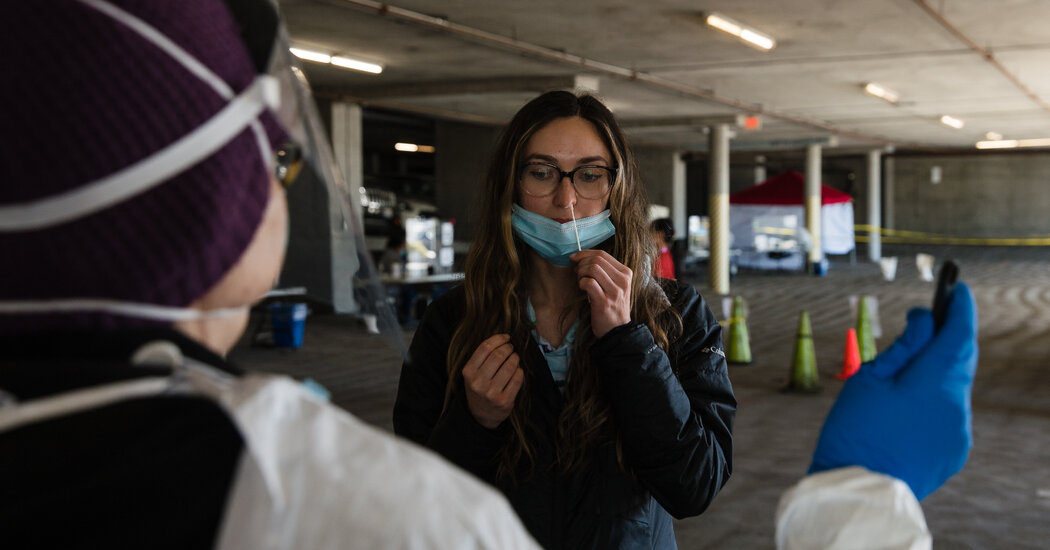
The spread of the Omicron variant has given scientists an unsettling answer: repeatedly, sometimes within months.A virus that shows no signs of disappearing, variants that are adept at dodging the body’s defenses, and waves of infections two, maybe three times a year — this may be the future of Covid-19, some scientists now fear.The central problem is that the coronavirus has become more adept at reinfecting people. Already, those infected with the first Omicron variant are reporting second infections with the newer versions of the variant — BA.2 or BA2.12.1 in the United States, or BA.4 and BA.5 in South Africa.Those people may go on to have third or fourth infections, even within this year, researchers said in interviews. And some small fraction may have symptoms that persist for months or years, a condition known as long Covid.“It seems likely to me that that’s going to sort of be a long-term pattern,” said Juliet Pulliam, an epidemiologist at Stellenbosch University in South Africa.“The virus is going to keep evolving,” she added. “And there are probably going to be a lot of people getting many, many reinfections throughout their lives.”It’s difficult to quantify how frequently people are reinfected, in part because many infections are now going unreported. Dr. Pulliam and her colleagues have collected enough data in South Africa to say that the rate is higher with Omicron than seen with previous variants.This is not how it was supposed to be. Earlier in the pandemic, experts thought that immunity from vaccination or previous infection would forestall most reinfections.The Omicron variant dashed those hopes. Unlike previous variants, Omicron and its many descendants seem to have evolved to partially dodge immunity. That leaves everyone — even those who have been vaccinated multiple times — vulnerable to multiple infections.“If we manage it the way that we manage it now, then most people will get infected with it at least a couple of times a year,” said Kristian Andersen, a virologist at the Scripps Research Institute in San Diego. “I would be very surprised if that’s not how it’s going to play out.”The new variants have not altered the fundamental usefulness of the Covid vaccines. Most people who have received three or even just two doses will not become sick enough to need medical care if they test positive for the coronavirus. And a booster dose, like a previous bout with the virus, does seem to decrease the chance of reinfection — but not by much.At the pandemic’s outset, many experts based their expectations of the coronavirus on influenza, the viral foe most familiar to them. They predicted that, as with the flu, there might be one big outbreak each year, most likely in the fall. The way to minimize its spread would be to vaccinate people before its arrival.Instead, the coronavirus is behaving more like four of its closely related cousins, which circulate and cause colds year round. While studying common-cold coronaviruses, “we saw people with multiple infections within the space of a year,” said Jeffrey Shaman, an epidemiologist at Columbia University in New York.Clem Williams, 76, received a booster shot in Durham, N.C., this month.Veasey Conway for The New York TimesIf reinfection turns out to be the norm, the coronavirus is “not going to simply be this wintertime once-a-year thing,” he said, “and it’s not going to be a mild nuisance in terms of the amount of morbidity and mortality it causes.”Reinfections with earlier variants, including Delta, did occur but were relatively infrequent. But in September, the pace of reinfections in South Africa seemed to pick up and was markedly high by November, when the Omicron variant was identified, Dr. Pulliam said.Reinfections in South Africa, as in the United States, may seem even more noticeable because so many have been immunized or infected at least once by now.“The perception magnifies what’s actually going on biologically,” Dr. Pulliam said. “It’s just that there are more people who are eligible for reinfection.”The Omicron variant was different enough from Delta, and Delta from earlier versions of the virus, that some reinfections were to be expected. But now, Omicron seems to be evolving new forms that penetrate immune defenses with relatively few changes to its genetic code.“This is actually for me a bit of a surprise,” said Alex Sigal, a virologist at the Africa Health Research Institute. “I thought we’ll need a kind of brand-new variant to escape from this one. But in fact, it seems like you don’t.”An infection with Omicron produces a weaker immune response, which seems to wane quickly, compared with infections with previous variants. Although the newer versions of the variant are closely related, they vary enough from an immune perspective that infection with one doesn’t leave much protection against the others — and certainly not after three or four months.Still, the good news is that most people who are reinfected with new versions of Omicron will not become seriously ill. At least at the moment, the virus has not hit upon a way to fully sidestep the immune system.“That’s probably as good as it gets for now,” Dr. Sigal said. “The big danger might come when the variant will be completely different.”Each infection may bring with it the possibility of long Covid, the constellation of symptoms that can persist for months or years. It’s too early to know how often an Omicron infection leads to long Covid, especially in vaccinated people.To keep up with the evolving virus, other experts said, the Covid vaccines should be updated more quickly, even more quickly than flu vaccines are each year. Even an imperfect match to a new form of the coronavirus will still broaden immunity and offer some protection, they said.“Every single time we think we’re through this, every single time we think we have the upper hand, the virus pulls a trick on us,” Dr. Andersen said. “The way to get it under control is not, ‘Let’s all get infected a few times a year and then hope for the best.’”

Read more →

Circuit model may explain how deep brain stimulation treats Parkinson's disease symptoms

People with Parkinson’s disease and their doctors confront many unknowns, including the answer to exactly how deep brain stimulation (DBS) relieves some of the motor symptoms patients experience. In a new study, scientists at Boston University and The Picower Institute for Learning and Memory at MIT present a detailed model explaining the underlying circuit dynamics, providing an explanation that, if experimentally confirmed, could improve the therapy further.
Among the things that are known about Parkinson’s disease is that a deficit of the neuromodulator dopamine is associated with abnormally high beta-frequency rhythms (brain waves at a frequency of about 20 Hz). DBS, involving the delivery of high-frequency electrical stimulation to a region called the subthalamic nucleus (STN), apparently suppresses these elevated beta rhythms, restoring a healthier balance with other rhythm frequencies and better movement control.
The new biophysically-based computational model described in the Proceedings of the National Academy of Sciences posits that the beneficial effect of DBS arises from how it interrupts a vicious cycle promoting runaway beta in a circuit loop between the STN and a region called the striatum. In 2011, study co-author Michelle McCarthy, research assistant professor of mathematics and statistics at BU, used mathematical models to show how, in the absence of dopamine, runaway beta might arise in the striatum from excessive excitement among striatum-dwelling cells called medium spiny neurons (MSNs).
The model, led by Picower Institute postdoc Elie Adam, builds on McCarthy’s finding. Joining Adam and McCarthy are co-authors Emery N. Brown, Edward Hood Taplin Professor of Medical Engineering and Computational Neuroscience at MIT and Nancy Kopell, William Fairfield Warren Distinguished Professor of Mathematics and Statistics at BU. The quartet’s work posits that under healthy conditions, with adequate dopamine, cells in the striatum called fast-spiking interneurons (FSIs) can produce gamma-frequency rhythms (30-100 Hz) that regulate the beta activity of the MSNs. But without dopamine, the FSIs are unable to limit the MSN activity and beta comes to dominate a whole circuit loop connecting the STN to the FSIs, to the MSNs, to other regions and then back to the STN.
“The FSI gamma is important to keep the MSN beta in check,” Adam said. “When dopamine levels go down, the MSNs can produce more beta and the FSIs lose their ability to produce gamma to quench that beta, so the beta goes wild. The FSIs are then bombarded with beta activity and become conduits for beta themselves, leading to its amplification.”
When DBS high-frequency stimulation is applied to the STN, the model shows, that replaces the overwhelming beta input received by the FSIs and restores their excitability. Reinvigorated and freed from those beta shackles, the interneurons resume producing gamma oscillations (at about half the DBS stimulation frequency, typically at 135 Hz) that then suppress the beta activity of the MSNs. With the MSNs no longer producing too much beta, the loop leading back to the STN and then to the FSIs is no longer dominated by that frequency.
“DBS stops the beta from propagating towards FSIs so that it is no longer amplified, and then, by additionally exciting FSIs, restores the ability of FSIs to produce strong gamma oscillations, that will in turn inhibit beta at its source,” Adam said.
The model reveals another important wrinkle. Under normal circumstances, different levels of dopamine help shape the gamma produced by the FSIs. But the FSIs also receive input from the brain’s cortex. In Parkinson’s disease, where dopamine is absent and beta becomes dominant, the FSI’s lose their regulatory flexibility, but amid DBS, with beta dominance disrupted, the FSIs can instead become modulated by input from the cortex even with dopamine still absent. That allows them a way to throttle the gamma they provide to the MSNs, and enable a harmonious expression of beta, gamma and theta rhythms.
By providing a deep physiology-based explanation of how DBS works, the study may also offer clinicians clues to how to make it work best for patients, the authors said. The key is finding the optimal gamma rhythms of the FSIs, which may vary a bit from patient to patient. If that can be determined, then tuning the DBS stimulation frequency to promote that gamma output should ensure the best results.
Before that can be tested, however, the model’s fundamental findings need to be validated experimentally. The model makes predictions necessary for such testing to proceed, the authors said.
The National Institutes of Health provided funding for the research.

Read more →

Weights can be weapons in battle against obesity

People battling with their weight who are unable to do aerobic exercise can hit the gym instead and still see positive results.
Despite the commonly held belief aerobic exercise is essential for weight loss, an Edith Cowan University (ECU) study conducted at the Exercise Medicine Research Institute (EMRI) has found resistance training can also have positive results — in conjunction with reducing calorie intake.
Lead researcher and PhD student Pedro Lopez said the findings showed resistance training can have a significant effect on fat mass, muscle mass and weight loss.
“Usually when we talk about obesity, body composition or weight loss, we only hear about aerobic exercise,” he said.
“This paper shows we can use resistance training and achieve meaningful effects with a diet based on caloric reduction. We can reduce body fat percentage, whole-body fat mass, body weight and BMI.
“If you’re comparing the literature, these effects are similar to aerobic exercise with caloric restriction in adults who are overweight or obese.”
Mr Lopez said it was important people battling obesity had options beyond just aerobic exercise to lose weight.

Read more →

Artery stiffness may predict Type 2 diabetes risk better than BP and standard risk factors

Arterial stiffness was a better predictor of future risk of Type 2 diabetes than blood pressure, and people with a combination of high blood pressure and stiffer arteries had the highest risk of developing diabetes, according to new research published today in Hypertension, a peer-reviewed journal of the American Heart Association.
According to the U.S. Centers for Disease Control and Prevention, more than 37 million people in the U.S. in 2019 had diabetes, of which, approximately 90-95% of them had Type 2 diabetes. The prevalence of the condition in the U.S. continues to rise due to unhealthy lifestyles and the aging population. Type 2 diabetes can lead to heart disease, kidney disease, stroke and premature death.
“Identification of individuals at high risk of developing Type 2 diabetes is of utmost importance since early intervention can help prevent the onset and slow the progress of the condition,” said Anxin Wang, Ph.D., senior study author and a researcher at the China National Clinical Research Center for Neurological Diseases at Beijing Tiantan Hospital in Beijing, China.
Previous studies have found that hypertension, or high blood pressure, is a risk factor for Type 2 diabetes. Arterial stiffness, a common finding in people with high blood pressure, is also associated with insulin resistance and Type 2 diabetes.
“Since people with either hypertension or arterial stiffness tend to have a higher risk of developing Type 2 diabetes, we investigated which of these factors may be more effective in predicting an individual’s future risk of Type 2 diabetes,” Wang said.
Researchers examined health data from 11,156 participants of the Kailuan study, an ongoing, prospective study of more than 100,000 adults aged 18 to 98 years in Tangshan, China. The study began in 2006 and tracks adults at 11 hospitals in the Kailuan community. Resting blood pressure measurements and fasting blood samples were taken every two years, and measurements of artery wall stiffness were added in 2010. Artery wall stiffness was calculated by using brachial-ankle pulse wave velocity, a standard technique that uses a blood pressure cuff placed on a participant’s arm and ankle to measure the rate at which pressure waves move down the blood vessels.

Read more →

Smart pacifier developed to monitor infant health in the hospital

A wireless, bioelectronic pacifier could eliminate the need for invasive, twice-daily blood draws to monitor babies’ electrolytes in Newborn Intensive Care Units or NICUs.
This smart pacifier can also provide more continuous monitoring of sodium and potassium ion levels. These electrolytes help alert caregivers if babies are dehydrated, a danger for infants, especially those born prematurely or with other health issues.
Researchers tested the smart pacifier on a selection of infants in a hospital, and the results were comparable to data gained from their normal blood draws. They detailed their findings in a proof-of-concept study published in the journal Biosensors and Bioelectronics.
“We know that premature babies have a better chance of survival if they get a high quality of care in the first month of birth,” said Jong-Hoon Kim, associate professor at the Washington State University School of Engineering and Computer Science and a co-corresponding author on the study. “Normally, in a hospital environment, they draw blood from the baby twice a day, so they just get two data points. This device is a non-invasive way to provide real-time monitoring of the electrolyte concentration of babies.”
The blood-draw method can be potentially painful for the infant, and it leaves big gaps in information since they are usually done once in the morning and once in the evening, Kim pointed out. Other methods have been developed to test an infants’ saliva for these electrolytes, but they involve bulky, rigid devices that require a separate sample collection.
Using a common, commercially available pacifier, the researchers created a system that samples a baby’s saliva through microfluidic channels. Whenever the baby has the pacifier in their mouth, saliva is naturally attracted to these channels, so the device doesn’t require any kind of pumping system.
The channels have small sensors inside that measure the sodium and potassium ion concentrations in the saliva. Then this data is relayed wirelessly using Bluetooth to the caregiver.
For the next step of development, the research team plans to make the components more affordable and recyclable. Then, they will work to set up a larger test of the smart pacifier to establish its efficacy.
Kim said development of this device is part of a broader effort to help make NICU treatment less disruptive for their tiny patients.
“You often see NICU pictures where babies are hooked up to a bunch of wires to check their health conditions such as their heart rate, the respiratory rate, body temperature, and blood pressure,” said Kim. “We want to get rid of those wires.”
Along with Kim, co-authors on this study include researchers from Georgia Institute of Technology, Pukyong National University and Yonsei University College of Medicine in South Korea as well as WSU.
Story Source:
Materials provided by Washington State University. Original written by Sara Zaske. Note: Content may be edited for style and length.

Read more →

Covid mask rule partially eased for EU air travel

SharecloseShare pageCopy linkAbout sharingImage source, Getty ImagesFace masks are no longer required for passengers flying to many EU destinations, but Germany, Greece, Italy and Spain are among countries keeping the mask rule.The EU’s easing from Monday is in line with changing Covid guidance on public transport across Europe.France has lifted the face mask obligation on planes, trains and buses.But Italy requires passengers to keep wearing the more protective FFP2 masks on public transport until 15 June.In the 27-nation EU, the other countries that still require face masks on flights are: Portugal, Austria, Cyprus, Estonia, Lithuania, Malta, the Netherlands and Luxembourg.The EU-wide easing was announced last week by the European Union Aviation Safety Agency (EASA), whose executive director Patrick Ky said “it is a relief to all of us that we are finally reaching a stage in the pandemic where we can start to relax the health safety measures”.EASA says vulnerable passengers should continue wearing FFP2 masks and passengers generally should try to observe social distancing where possible.Face masks are no longer compulsory on flights to the UK and US.The new guidance across the EU came with some cautionary advice from the European Centre for Disease Prevention and Control (ECDC).ECDC director Andrea Ammon said that although the wearing of masks would no longer be compulsory, it was important to remember that “together with physical distancing and good hand hygiene, it is one of the best methods of reducing transmission”.”Further, as of 16 May 2022, aircraft operators, during their pre-flight communications as well as during the flight, should continue to encourage their passengers and crew members to wear face masks during the flight as well as in the airport, even when wearing a face mask is not required,” the ECDC said.Face mask rule change for some EasyJet flightsHeathrow Airport drops Covid face mask rulesMore on this storyRyanair prices to rise for European summer tripsUS judge throws out Biden’s traveller mask mandateHeathrow Airport drops Covid face mask rules

Read more →