Researchers discover mechanism linking mutations in the 'dark matter' of the genome to cancer

For many years, the human genome was viewed as a book of life in which sections of great eloquence and economy of expression were interspersed with vast stretches of gibberish. The legible sections contained the code for making cell proteins; the other regions, representing about 90% of the entire genome, were dismissed as “junk DNA,” having no discernable purpose.
Research has taught scientists otherwise. Far from being useless filler, many non-coding sections have been shown to play a key role in regulating gene activity — increasing or decreasing it as needed. For cancer scientists, this has raised questions of its own: if mutations in coding regions cause cells to make flawed proteins, what do mutations in non-coding regions do? How does a mutation in the hinterlands of the genome — in areas devoid of genes — contribute to cancer?
Given that non-coding regions are involved in gene regulation, researchers have hypothesized, naturally, that mutations in these zones play havoc with gene activity in ways conducive cancer. Study after study, however, has found this generally not to be the case, leaving the biological impact of non-coding mutations something of a mystery.
Thinking locally
In a new paper in the journal Nature Genetics, Dana-Farber investigators provided an answer. They did so by the scientific equivalent of thinking locally — narrowing the scope of their investigation to the specific DNA in which non-coding mutations occur. They found that in the overwhelming number of cases examined, such mutations have an epigenetic effect — that is, they change how tightly the DNA at those locations is wrapped. That, in turn, affects how open those locations are to binding to other sections of DNA or certain proteins, all of which can influence the activity of genes involved in cancer.
The discovery reveals, for the first time, a pervasive biological mechanism by which non-coding mutations can influence cancer risk. It also opens the way to therapies that, by disrupting that mechanism, can reduce at-risk people’s likelihood of developing certain cancers.

Read more →

Stress accelerates immune aging, study finds

Stress — in the form of traumatic events, job strain, everyday stressors and discrimination — accelerates aging of the immune system, potentially increasing a person’s risk of cancer, cardiovascular disease and illness from infections such as COVID-19, according to a new USC study.
The research, published June 13 in the Proceedings of the National Academy of Sciences (PNAS), could help explain disparities in age-related health, including the unequal toll of the pandemic, and identify possible points for intervention.
“As the world’s population of older adults increases, understanding disparities in age-related health is essential. Age-related changes in the immune system play a critical role in declining health,” said lead study author Eric Klopack, a postdoctoral scholar in the USC Leonard Davis School of Gerontology. “This study helps clarify mechanisms involved in accelerated immune aging.”
As people age, the immune system naturally begins a dramatic downgrade, a condition called immunosenescence. With advanced age, a person’s immune profile weakens, and includes too many worn-out white blood cells circulating and too few fresh, “naive” white blood cells ready to take on new invaders.
Immune aging is associated not only with cancer, but with cardiovascular disease, increased risk of pneumonia, reduced efficacy of vaccines and organ system aging.
But what accounts for drastic health differences in same-age adults? USC researchers decided to see if they could tease out a connection between lifetime exposure to stress — a known contributor to poor health — and declining vigor in the immune system.

Read more →

Nanoparticle sensor can distinguish between viral and bacterial pneumonia

Many different types of bacteria and viruses can cause pneumonia, but there is no easy way to determine which microbe is causing a particular patient’s illness. This uncertainty makes it harder for doctors to choose effective treatments because the antibiotics commonly used to treat bacterial pneumonia won’t help patients with viral pneumonia. In addition, limiting the use of antibiotics is an important step toward curbing antibiotic resistance.
MIT researchers have now designed a sensor that can distinguish between viral and bacterial pneumonia infections, which they hope will help doctors to choose the appropriate treatment.
“The challenge is that there are a lot of different pathogens that can lead to different kinds of pneumonia, and even with the most extensive and advanced testing, the specific pathogen causing someone’s disease can’t be identified in about half of patients. And if you treat a viral pneumonia with antibiotics, then you could be contributing to antibiotic resistance, which is a big problem, and the patient won’t get better,” says Sangeeta Bhatia, the John and Dorothy Wilson Professor of Health Sciences and Technology and of Electrical Engineering and Computer Science at MIT and a member of MIT’s Koch Institute for Integrative Cancer Research and Institute for Medical Engineering and Science.
In a study of mice, the researchers showed that their sensors could accurately distinguish bacterial and viral pneumonia within two hours, using a simple urine test to read the results.
Bhatia is the senior author of the study, which appears this week in the Proceedings of the National Academy of Sciences. Melodi Anahtar ’16, PhD ’22 is the lead author of the paper.
Signatures of infection
One reason why it has been difficult to distinguish between viral and bacterial pneumonia is that there are so many microbes that can cause pneumonia, including the bacteria Streptococcus pneumoniae and Haemophilus influenzae, and viruses such as influenza and respiratory syncytial virus (RSV).

Read more →

Research sheds light on how bacteria communicate their way to causing infection

Oregon State University scientists have identified proteins that prevent a bacterial cell from becoming misguided by its own messaging, allowing it to instead wait for collective communication from its group.
The research is important because understanding this type of signaling, known as quorum sensing and integral to bacterial pathogens, opens the door to potential new drugs that can disrupt it and thwart infection.
Findings were published today in the Proceedings of the National Academy of Sciences.
Martin Schuster, a professor in OSU’s Department of Microbiology in the colleges of Science and Agricultural Sciences, and doctoral student Parker Smith study quorum sensing in the pathogen Pseudomonas aeruginosa, a gram-negative bacterium that displays a variety of social behaviors.
P. aeruginosa, a common cause of lung and wound infections among hospital patients and people with weakened immune systems, is a model organism for quorum sensing research with a well understood signaling circuit, the scientists said.
“Sometimes single-celled organisms need to work together with other cells,” Schuster said. “Bacteria and other single-celled microbes can coordinate behaviors and act as a group via quorum sensing, in which cells produce and sense a small chemical signal that is shared within the population.”
As the signal is released from cells and reaches a high enough concentration in their environment, a quorum is achieved — certain genes are simultaneously activated and specific group behaviors are set in motion, Smith said.

Read more →

New study shows potential of UK Biobank to inform genetic disease research

A new study by RCSI University of Medicine and Health Sciences examining population genetics across Europe has analysed the diverse ancestries of people living in the UK. This knowledge has the potential to inform future health research on genetic factors leading to disease.
The study, led by researchers at the RCSI School of Pharmacy and Biomolecular Sciences and the SFI FutureNeuro Research Centre, has been published in Proceedings of the National Academy of Sciences.
The RCSI and FutureNeuro researchers used the UK Biobank, a database of genetic and health information of over 500,000 participants from the UK, to examine population genetics and ancestry across Europe.
The study analysed the genetic ancestry data of individuals in the UK Biobank who reported having a European birthplace outside of the UK – about 1% of the dataset. Researchers catalogued where individuals shared segments of their genome with other individuals, meaning they had a common ancestor within the past 3,000 years.
With this information, the researchers could group individuals with more segments in common than on average into three branches, corresponding to southern, central-eastern, and northwestern Europe.
By studying the patterns of the genome sharing, the researchers were able to infer historical patterns such as population size and how genetically isolated specific European regions are, relative to each other. In general, people from southern Europe were found to have less in common genetically with each other than in other areas, due to the larger population sizes and therefore usually greater number of ancestors in the region.
An exception to this was Malta which, being an island, was found to have a smaller pool of ancestors. This is the first large sample analysis of Maltese population genetics. Identifying European regions such as Malta with specific histories of genetic isolation could potentially aid the discovery of genetic factors contributing to disease.  
In addition to building and expanding upon previous knowledge in Europe, the results present the UK Biobank as a source of diverse ancestries beyond the UK. This has the potential to complement and inform researchers interested in specific communities or regions across Europe and the world.
Professor Gianpiero Cavalleri, Professor of Human Genetics at RCSI, Deputy Director of FutureNeuro and senior author on the paper, commented: “This research has shown the diversity of European ancestries sampled by the UK Biobank and has enabled us show the “big picture” of the genetic landscape of Europe, including new insights into communities such as within Malta. This work suggests similar gains of knowledge could be found within non-European ancestry groups using the UK Biobank, groups that are typically excluded from genetic analyses.”
Dr Edmund Gilbert, NUI Posdoctoral Fellow and first author on the paper, commented: “The power of the large sample size of and scale of information on the participants in the UK Biobank has allowed us to show the diversity of genetic histories across the European continent. With new sequencing data becoming available from the UK Biobank, our work lays a foundation for informed analysis of rare and functional variation in ancestries in the UK and beyond.”
The research was conducted using the publicly available UK Biobank resource. It was supported by the NUI Post-Doctoral Fellowship in the Sciences and Engineering and Science Foundation Ireland, via the FutureNeuro Research Centre and the Centre for Research Training in Genomics Data Science.
Story Source:
Materials provided by RCSI. Note: Content may be edited for style and length.

Read more →

The Health Effects of Extreme Heat

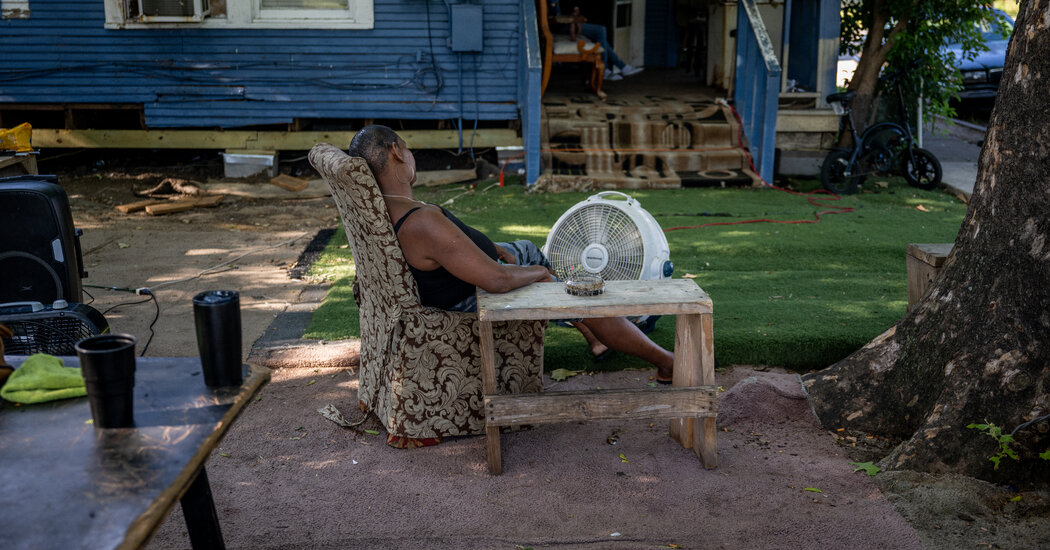
Researchers are drilling down into the ways life on a hotter planet will tax our bodies, and looking for protections that, unlike air-conditioning, don’t make the problem worse.When W. Larry Kenney, a professor of physiology at Pennsylvania State University, began studying how extreme heat harms humans, his research focused on workers inside the disaster-stricken Three Mile Island nuclear plant, where temperatures were as high as 165 degrees Fahrenheit.In the decades that followed, Dr. Kenney has looked at how heat stress affects a range of people in intense environments: football players, soldiers in protective suits, distance runners in the Sahara.Of late, however, his research has focused on a more mundane subject: ordinary people. Doing everyday things. As climate change broils the planet.Heat advisories and excessive heat warnings were in effect on Monday across much of the eastern interior of the United States, following a weekend of record-smashing heat in the country’s Southwest. The heat will move farther Northeast in the next few days, according to the National Weather Service, into the upper Mississippi Valley, western Great Lakes and Ohio Valley. With severe heat waves now affecting swaths of the globe with frightening regularity, scientists are drilling down into the ways life in a hotter world will sicken and kill us. The aim is to get a better grip on how many more people will be afflicted by heat-related ailments, and how frequent and severe their suffering will be. And to understand how to better protect the most vulnerable.One thing is for sure, scientists say: The heat waves of the past two decades are not good predictors of the risks that will confront us in the decades to come. Already, the link between greenhouse-gas emissions and sweltering temperatures is so clear that some researchers say there may soon no longer be any point trying to determine whether today’s most extreme heat waves could have happened two centuries ago, before humans started warming the planet. None of them could have.And if global warming is not slowed, the hottest heat wave many people have ever experienced will simply be their new summertime norm, said Matthew Huber, a climate scientist at Purdue University. “It’s not going to be something you can escape.”A construction worker took a water break during a heat wave in Boston in 2021.Brian Snyder/ReutersWhat’s tougher for scientists to pin down, Dr. Huber said, is how these climatic shifts will affect human health and well-being on a large scale, particularly in the developing world, where huge numbers of people are already suffering but good data is scarce. Heat stress is the product of so many factors — humidity, sun, wind, hydration, clothing, physical fitness — and causes such a range of harms that projecting future effects with any precision is tricky.There also haven’t been enough studies, Dr. Huber said, on living full time in a warmer world, instead of just experiencing the occasional roasting summer. “We don’t know what the long-term consequences of getting up every day, working for three hours in nearly deadly heat, sweating like crazy and then going back home are,” he said.The growing urgency of these issues is drawing in researchers, like Dr. Kenney, who didn’t always think of themselves as climate scientists. For a recent study, he and his colleagues placed young, healthy men and women in specially designed chambers, where they pedaled an exercise bike at low intensity. Then the researchers dialed up the heat and humidity.They found that their subjects started overheating dangerously at much lower “wet-bulb” temperatures — a measure that accounts for both heat and mugginess — than what they had expected based on previous theoretical estimates by climate scientists.Effectively, under steam-bath conditions, our bodies absorb heat from the environment faster than we can sweat to cool ourselves down. And “unfortunately for humans, we don’t pump out a lot more sweat to keep up,” Dr. Kenney said.Heat is climate change at its most devastatingly intimate, ravaging not just landscapes and ecosystems and infrastructure, but the depths of individual human bodies.Heat’s victims often die alone, in their own homes. Apart from heatstroke, it can cause cardiovascular collapse and kidney failure. It damages our organs and cells, even our DNA. Its harms are multiplied in the very old and very young, and in people with high blood pressure, asthma, multiple sclerosis and other conditions.When the mercury is high, we aren’t as effective at work. Our thinking and motor functions are impaired. Excessive heat is also associated with greater crime, anxiety, depression and suicide.Children suffering from heat stroke received treatment at the Tej Bahadur Sapru Hospital in Prayagraj, India, in May.Rajesh Kumar Singh/Associated PressThe toll on the body can be strikingly personal. George Havenith, director of the Environmental Ergonomics Research Center at Loughborough University in England, recalled an experiment years ago with a large group of subjects. They wore the same clothes and performed the same work for an hour, in 95 degree heat and 80 percent humidity. But by the end, their body temperatures ranged from 100 degrees to 102.6 degrees Fahrenheit.“A lot of the work we’re doing is trying to understand why one person ends up on one side of the spectrum and the other one on the other,” he said.For years, Vidhya Venugopal, a professor of environmental health at Sri Ramachandra University in Chennai, India, has been studying what heat does to workers in India’s steel plants, car factories and brick kilns. Many of them suffer from kidney stones caused by severe dehydration.One encounter a decade ago has stayed with her. She met a steelworker who had been working 8-to-12-hour days near a furnace for 20 years. When she asked him how old he was, he said 38 to 40.Understand the Latest News on Climate ChangeCard 1 of 5Great Salt Lake.

Read more →

Risk for miscarriage and failure of in vitro fertilization can be predicted

A woman’s risk of suffering one of the most common types of miscarriages can be predicted based on a specialized analysis of her genome, according to a Rutgers study.
Scientists said this insight could allow patients and clinicians to make better-informed decisions regarding reproductive choices and fertility treatment plans.
Reporting in the science journal Human Genetics, Rutgers researchers describe a technique combining genomic sequencing with machine-learning methods to predict the possibility a woman will undergo a miscarriage because of egg aneuploidy — a term describing a human egg with an abnormal number of chromosomes.
Infertility is a major reproductive health issue that affects about 12 percent of women of reproductive age in the U.S. Aneuploidy in human eggs accounts for a significant proportion of infertility, causing early miscarriage and in vitro fertilization (IVF) failure.
Recent studies have shown that genes predispose certain women to aneuploidy, but the exact genetic causes of aneuploid egg production have remained unclear. The Rutgers study is the first to evaluate how well individual genetic variants in the mother’s genome can predict a woman’s risk of infertility.
“The goal of our project was to understand the genetic cause of female infertility and develop a method to improve clinical prognosis of patients’ aneuploidy risk,” said Jinchuan Xing, an author of the study and an associate professor in the genetics department at the Rutgers School of Arts and Sciences. “Based on our work, we showed that the risk of embryonic aneuploidy in female IVF patients can be predicted with high accuracy with the patients’ genomic data. We also have identified several potential aneuploidy risk genes.”
Working with Reproduction Medicine Associates of New Jersey, an IVF clinic in Basking Ridge, N.J., the scientists were able to examine genetic samples of patients using a technique called “whole exome sequencing,” which allows researchers to home in on the protein coding sections of the vast human genome. Then they created software using machine learning, an aspect of artificial intelligence in which programs can learn and make predictions without following specific instructions. To do so, the researchers developed algorithms and statistical models that analyzed and drew inferences from patterns in the genetic data.
As a result, the scientists were able to create a specific risk score based on a woman’s genome. The scientists also identified three genes — MCM5, FGGY and DDX60L – that, when mutated, are highly associated with a risk of producing eggs with aneuploidy.
While age is a predictive factor for aneuploidy, it is not a highly accurate gauge because aneuploidy rates within individuals of the same age can vary dramatically. Identifying genetic variations with more predictive power arms women and their treating clinicians with better information, Xing said.
“I like to think of the coming era of genetic medicine when a woman can enter a doctor’s office or, in this case, perhaps, a fertility clinic with her genomic information, and have a better sense of how to approach treatment,” Xing said. “Our work will enable such a future.”
Other Rutgers researchers involved in the study include Siqi Sun, Katarzyna Tyc, Xiaolong Cao, Yana Bromberg and Karen Schindler of the Department of Genetics; and Maximilian Miller and Yanran Wang of the Department of Biochemistry and Microbiology.
Story Source:
Materials provided by Rutgers University. Original written by Kitta MacPherson. Note: Content may be edited for style and length.

Read more →

New way of generating insulin-producing cells

Researchers at Karolinska Institutet in Sweden show how a molecule that they have identified stimulates the formation of new insulin-producing cells in zebrafish and mammalian tissue, through a newly described mechanism for regulating protein synthesis. The results are published in Nature Chemical Biology.
“Our findings indicate a new potential target for treating diabetes, in that we demonstrate a possible way of stimulating the formation of new insulin-producing cells,” says the study’s last author Olov Andersson, senior researcher at the Department of Cell and Molecular Biology at Karolinska Institutet.
Both type 1 and type 2 diabetes are characterised by raised levels of blood sugar, the result of low levels of endogenous insulin, the hormone needed for glucose uptake from the blood, or a physiological inability to utilise the insulin secreted — or both.
Insulin injections and glucose-lowering drugs can control the disease, but not cure it.
Regeneration of pancreatic β cells
“One alternative could be a treatment that regulates blood glucose by increasing the number of insulin-producing pancreatic β cells, so we’re researching the possible regeneration of these cells,” says the study’s first author Christos Karampelias, former doctoral student at the Department of Cell and Molecular Biology at Karolinska Institutet.

Read more →

RNA exosome key for B cell development

New research from UT Southwestern suggests that RNA exosomes — the cellular machines that degrade old molecules of RNA — play a key role in the development of B cells, which are critical to the immune system’s ability to protect against infection. The findings, published in Science Immunology, explain why patients with rare mutations in a gene that codes for this machinery are often immunodeficient and could offer new approaches to treat autoimmune diseases.
“It was quite a surprise for us to find that this gene, whose role was well known as part of a disposal system for RNA, is also critical for a very important part of our immune system,” said study leader Nan Yan, Ph.D., Professor of Immunology and Microbiology at UT Southwestern and a member of the Harold C. Simmons Comprehensive Cancer Center.
Many patients with a rare disease tied to RNA exosome deficiency, known as trichohepatoenteric syndrome (THES), also develop B-cell immunodeficiency and experience recurrent infections. Although researchers have long known that THES is associated with mutations in exosome-encoding genes known as SKIV2L and TTC37, the molecular basis of the disease has been unknown.
To better understand the role of SKIV2L in THES, Dr. Yan’s research team in the Department of Immunology and colleagues at the Primary Immunodeficiency Clinic at UTSW and Children’s Medical Center Dallas studied a THES patient who carried this mutation and was part of a clinical research study led by Christian Wysocki, M.D., Ph.D., Associate Professor of Pediatrics. In addition to the usual clinical features of THES, a multi-organ disorder with symptoms including small size at birth, intractable diarrhea, distinctive “wooly” hair, and liver diseases, this patient had a severely low blood count of B cells.
Researchers then generated mice whose SKIV2L gene had been deleted in bone marrow stem cells that generate B cells. The animals also had B-cell deficiencies; further research showed that the B cells never matured because a key part of their development — in which progenitor cells randomly recombine genetic material to create a diverse B-cell pool — did not occur.
Dr. Yan explained that this appears to be related to SKIV2L’s role in RNA degradation. In a separate finding published in the same issue of Science Immunology, researchers at Columbia University showed mutations in other components of the RNA exosome also cause B-cell deficiency. These mutations render RNA exosomes nonfunctional, causing cells to selectively retain RNA, particularly the non-coding form that doesn’t produce proteins. When B-cell progenitors become gunked up with excessive non-coding RNA, they can’t mature into functional B cells.
Taken together, the findings suggest that THES might be treated with a bone marrow transplant, replacing faulty B-cell progenitors that carry a genetic mutation with healthy ones. They also suggest that SKIV2L could offer a new target for fighting autoimmune diseases such as lupus, in which overactive B cells play a key role. By inhibiting the activity of this gene, Dr. Yan explained, it may be possible to control the number of B cells, lowering the intensity of autoimmune attack.
Dr. Yan is the Rita C. and William P. Clements, Jr. Scholar in Medical Research.
Other UTSW researchers who contributed to this study include Kun Yang (first author), Jie Han, Jennifer G. Gill, Jason Y. Park, Meghana N. Sathe, Jyothsna Gattineni, and Tracey Wright. M. Teresa de la Morena of the University of Washington also contributed.
This research was supported by grants from the National Institutes of Health (AI153576) and the Burroughs Wellcome Fund.
Story Source:
Materials provided by UT Southwestern Medical Center. Note: Content may be edited for style and length.

Read more →

Pediatric liver disease increases risk of developing type 2 diabetes

Nonalcoholic fatty liver disease (NAFLD) is the most common pediatric liver disease, affecting 5 to 8 million children in the United States. In NAFLD, the cells of the liver store large fat droplets, which can affect the function of the liver. Physicians have long observed a relationship between NAFLD and type 2 diabetes in adults, but much less is known about a similar connection in children.
Rates of type 2 diabetes have doubled in children over the past 20 years. Children with NAFLD have features of insulin resistance, a key characteristic of type 2 diabetes, and so may be at risk for developing the disease.
“There is a growing public health crisis as children with diabetes mature into adults with diabetes. We need to better understand how NAFLD contributes to type 2 diabetes risk in children so that we can actively work to prevent it,” said Jeffrey Schwimmer, MD, professor of pediatrics at University of California San Diego School of Medicine and director of the Fatty Liver Clinic at Rady Children’s Hospital-San Diego.
In a new study, published June 13, 2022 in Clinical Gastroenterology and Hepatology, a national team of researchers, led by senior author Schwimmer, provide hard numbers describing the connection between NAFLD and diabetes risk, finding that among 892 children with NAFLD enrolled in the Nonalcoholic Steatohepatitis Clinical Research Network, type 2 diabetes was present in 6.6 percent of the children at initial assessment, with the incidence rate increasing 3 percent annually over the next four years.
By the end of the study, one in every six children had developed type 2 diabetes.
“This is alarming because type 2 diabetes in youth is a much more aggressive disease than in adults, with more immediate and serious complications and outcomes,” said Schwimmer.
The authors also identified specific factors that increase the risk of type 2 diabetes in children with NAFLD: sex (females were more likely to develop type 2 diabetes), severity of obesity and the amount of fat and scar tissue in the liver.
“These findings have clinical implications for gastroenterologists caring for children with NAFLD,” Schwimmer said. “They should be aware of the risk and provide monitoring, anticipatory guidance and lifestyle interventions that help their patients avoid developing type 2 diabetes.”
Co-authors include: Kimberly P. Newton and Cynthia Behling, UC San Diego; Laura Wilson, Johns Hopkins University; Nancy A. Crimmins and Stavros Xanthakos, Cincinnati Children’s Hospital Medical Center and University of Cincinnati; Mark Fishbein, Ann & Robert H. Lurie Children’s Hospital of Chicago; Jean Molleston, Riley Children’s Hospital, Indianapolis.
Story Source:
Materials provided by University of California – San Diego. Original written by Scott LaFee. Note: Content may be edited for style and length.

Read more →