Dr. Paul M. Ellwood Jr., Architect of the H.M.O., Is Dead at 95

Often called the father of the health maintenance organization, he coined the term in 1970, envisioning a system that would compete for patients by providing the best care at the lowest price.Dr. Paul M. Ellwood Jr., who changed the way millions of Americans receive private medical services by developing — and naming — the model for managed care known as the health maintenance organization, died on Monday in Bellingham, Wash. He was 95.His wife, Barbara Ellwood, said his death, at a care center, was caused by organ failure.Dr. Ellwood, who gave up practicing pediatric neurology in the late 1960s to devote himself to national health reform, was often called the father of the H.M.O., although many others made important contributions to the concept and some localized prepaid health plans had existed for decades.But it was Dr. Ellwood who conceived of — and in 1970 coined the term H.M.O. to describe — a partnership in which doctors are paid for the number of patients they see, not for each service given, and whose enrolled members are guaranteed access to network doctors and comprehensive care for fixed annual premiums.Dr. Ellwood envisioned large nonprofit organizations that would compete for patients by providing the best care at the lowest price and that would contain costs by keeping patients healthy to begin with, through an emphasis on preventive medicine, like regular physical exams, well-baby checkups, mammograms and immunizations.The elements of a system based on market forces were not new, but the integrated concept was.His plan got a fateful hearing in a chance meeting on an airplane with a Nixon administration official, and after extensive consultations with the White House, it became a cornerstone of national policy, with the aim of giving consumers a wider choice of health plans, stimulating cost-saving competition and raising the quality of care.Many of Dr. Ellwood’s ideas were incorporated into the Health Maintenance Organization Act of 1973. It required employers with 25 or more workers to offer H.M.O. options with their health insurance plans, and provided for incentives to start or expand H.M.O.s. Businesses, workers and unions were attracted by the cost-containment features in the law, and after a slow start, millions of Americans signed up.More than 70 million people in the United States are enrolled in H.M.O.s., which take many forms under an array of federal and state regulations. In a nation where medical expenditures exceed $3.6 trillion annually — 18 percent of the gross domestic product — H.M.O.s are among the most dominant and least expensive providers of medical care, although their impact on overall costs is still debated.H.M.O.s say they provide high-quality services while cutting overlapping medical consultations and unnecessary treatments and hospitalizations. But for decades critics have argued that prepaid plans invite cursory examinations and skimpy care. Studies have shown that elderly and poor patients fare worse in H.M.O.s, and some patients complain that the rules unfairly limit their choice of doctors and their access to specialists and costlier treatments.Dr. Ellwood, too, worried about the effects of cost controls on quality of care, especially after federal and state policy changes encouraged the growth of for-profit H.M.O.s. As H.M.O.s grew, merged and became enormously profitable, he repeatedly voiced disappointment with the way his original ideas had worked out in practice.“Only a portion of the dream that I had for the American health care system has been realized,” he told The New York Times in 1996. “There’s a huge piece of unfinished business.”Paul Murdock Ellwood Jr. was born on July 16, 1926, in San Francisco, one of two children of his namesake and Mary (Logan) Ellwood. He grew up in Oakland, where his mother was a nurse and his father was a family doctor who cared for impoverished patients and made house calls well into his 80s.After graduating from Oakland High School, Paul joined the wartime Navy and was a pharmacist’s mate in the Philippines from 1944 to 1946. At Stanford University, he earned a bachelor’s degree in 1949 and a medical degree in 1953.He began his internship in pediatric neurology at the University of Minnesota but was soon posted to the Sister Kenny Institute in Minneapolis, where he took charge of a polio clinic. He eventually became director of the institute and a professor at the university. After the development of polio vaccines, the clinic became a rehabilitation hospital, the American Rehabilitation Foundation, and began filling its beds by admitting children with learning disabilities.One night on his rounds, Dr. Ellwood found weeping children pleading to go home. “I realized these children didn’t really need to be in the hospital,” he recalled. “The only reason they were there was because that’s how their bills were being paid” — insurance companies would pay for care only if the children were hospitalized. “There’s something crazy about incentive here,” he thought. Pondering incentives, he recognized that doctors made more money if they performed more services, whether needed or not; that most doctors and hospitals benefited from the illness of patients, not their health; and that they were organized to react to illness, not prevent it.In the 1960s, while still working for the American Rehabilitation Foundation, Dr. Ellwood formed a health policy research group called Interstudy, which explored ways to apply business management techniques to improve health care and cut costs. It set up an H.M.O. that years later became United Health Group, now one of the nation’s largest health companies.In the early 1970s, Dr. Ellwood, having given up his medical career, moved to Wyoming, got into real estate and founded the Jackson Hole Group — a cohort of doctors, economists, academics and policymakers who met at his home periodically for decades to talk about new health care strategies.The group produced many reports, but its most notable was used by Bill Clinton in his 1992 presidential campaign, when he pledged to reform a health care system of runaway costs and uninsured millions. After Mr. Clinton’s election, Dr. Ellwood, the economist Alain C. Enthoven and others devised the blueprint for the administration’s “managed competition” health reform proposal.It would have banded businesses and individuals into cooperatives to buy insurance from partnerships of doctors, hospitals and insurers competing for the business, and it would have covered almost all uninsured Americans. The plan, shepherded by Hillary Clinton, failed in 1994, but by then Dr. Ellwood and his colleagues had distanced themselves from the plan over conflicts about the levels of regulation it would have imposed.Dr. Ellwood, who lived in Bellingham, north of Seattle, retired as president of the Jackson Hole Group in 2002. He and his first wife, Elizabeth Ann (Schwenk) Ellwood, had three children, Deborah, Cynthia and David. They divorced in 1990 and Elizabeth Ann later died. In 2000, he married Barbara Winch. In addition to his wife, Dr. Ellwood is survived by his three children and five grandchildren.In later years he championed what he called “outcomes management” — a national database to show how the treatment of patients actually works out. Without such measures, he argued, health care providers and policymakers had no way of knowing whether care was being compromised to cut costs, and no way to evaluate proposals for reforms.Dr. Ellwood generally favored President Barack Obama’s Affordable Care Act, although he worried that it included some of the “fatal weaknesses” of H.M.O.s, as he put it in a 2010 interview with Dr. Anthony R. Kovner, and that its implementation would face “formidable barriers — too many options and loopholes, and a vastly more savvy and aggressive medical-industrial complex.”In that interview, Dr. Ellwood proposed a national health institution modeled on the Federal Reserve, which tracks and regulates the economy.“We need a similar thing in health care,” he said. “We have to create an agency to collect health outcomes data, isolate it from the rest of the government and the rest of the health system, and then use its findings to determine what it is that’s worth spending public or private money on for health care.”Maia Coleman contributed reporting.

Read more →

New model helps identify mutations that drive cancer

Cancer cells can have thousands of mutations in their DNA. However, only a handful of those actually drive the progression of cancer; the rest are just along for the ride.
Distinguishing these harmful driver mutations from the neutral passengers could help researchers identify better drug targets. To boost those efforts, an MIT-led team has built a new computer model that can rapidly scan the entire genome of cancer cells and identify mutations that occur more frequently than expected, suggesting that they are driving tumor growth. This type of prediction has been challenging because some genomic regions have an extremely high frequency of passenger mutations, drowning out the signal of actual drivers
“We created a probabilistic, deep-learning method that allowed us to get a really accurate model of the number of passenger mutations that should exist anywhere in the genome,” says Maxwell Sherman, an MIT graduate student. “Then we can look all across the genome for regions where you have an unexpected accumulation of mutations, which suggests that those are driver mutations.”
In their new study, the researchers found additional mutations across the genome that appear to contribute to tumor growth in 5 to 10 percent of cancer patients. The findings could help doctors to identify drugs that would have greater chance of successfully treating those patients, the researchers say. Currently, at least 30 percent of cancer patients have no detectable driver mutation that can be used to guide treatment.
Sherman, MIT graduate student Adam Yaari, and former MIT research assistant Oliver Priebe are the lead authors of the study, which appears today in Nature Biotechnology. Bonnie Berger, the Simons Professor of Mathematics at MIT and head of the Computation and Biology group at the Computer Science and Artificial Intelligence Laboratory (CSAIL), is a senior author of the study, along with Po-Ru Loh, an assistant professor at Harvard Medical School and associate member of the Broad Institute of MIT and Harvard. Felix Dietlein, an associate professor at Harvard Medical School and Boston Children’s Hospital, is also an author of the paper.
A new tool
Since the human genome was sequenced two decades ago, researchers have been scouring the genome to try to find mutations that contribute to cancer by causing cells to grow uncontrollably or evade the immune system. This has successfully yielded targets such as epidermal growth factor receptor (EGFR), which is commonly mutated in lung tumors, and BRAF, a common driver of melanoma. Both of these mutations can now be targeted by specific drugs.

Read more →

Gene discovery indicates motor neuron diseases caused by abnormal lipid processing in cells

A new genetic discovery adds weight to a theory that motor neurone degenerative diseases are caused by abnormal lipid (fat) processing pathways inside brain cells. This theory will help pave the way to new diagnostic approaches and treatments for this group of conditions. The discovery will provide answers for certain families who have previously had no diagnosis.
Motor neurone degenerative diseases (MNDs) are a large family of neurological disorders. Currently, there are no treatments available to prevent onset or progression of the condition. MNDs are caused by changes in one of numerous different genes. Despite the number of genes known to cause MNDs, many patients still remain without a much-needed genetic diagnosis.
A University of Exeter team led by Professor Andrew Crosby and Dr Emma Baple has a long history of research in motor neurone degenerative diseases. The team developed a hypothesis to explain a common cause of MNDs stemming from their discovery of 15 genes responsible for MNDs. The genes they identified are all involved in processing lipids — in particular cholesterol — inside brain cells. in the new hypothesis published in the leading neurology journal Brain, describes the specific lipid pathways that the team believe are important in the development of MNDs.
Now, the team has identified a further new gene — named “TMEM63C” — which causes a degenerative disease that affects the upper motor neurone cells in the nervous system. Also published in Brain, their latest discovery is important as the protein encoded by TMEM63C is located in the region of the cell where the lipid processing pathways they identified operate. This further bolsters the hypothesis that MNDs are caused by abnormal processing of lipids including cholesterol.
Professor Andrew Crosby, at the University of Exeter, said: “We’re extremely excited by this new gene finding, as it is consistent with our hypothesis that the correct maintenance of specific lipid processing pathways is crucial for the way brain cells function, and that abnormalities in these pathways are a common linking theme in motor neurone degenerative diseases. It also enables new diagnoses and answers to be readily provided for families affected by some forms of MND”
MNDs affect the nerve cells that control voluntary muscle activity such as walking, speaking and swallowing. There are many different forms of MNDs which have different clinical features and severity. As the condition progresses, the motor neurone cells become damaged and may eventually die. This leads to the muscles, which rely on those nerve messages, gradually weakening and wasting away.

Read more →

Single brain scan can diagnose Alzheimer's disease

The research uses machine learning technology to look at structural features within the brain, including in regions not previously associated with Alzheimer’s. The advantage of the technique is its simplicity and the fact that it can identify the disease at an early stage when it can be very difficult to diagnose.
Although there is no cure for Alzheimer’s disease, getting a diagnosis quickly at an early stage helps patients. It allows them to access help and support, get treatment to manage their symptoms and plan for the future. Being able to accurately identify patients at an early stage of the disease will also help researchers to understand the brain changes that trigger the disease, and support development and trials of new treatments.
The research is published in the Nature Portfolio Journal, Communications Medicine, and funded through the National Institute for Health and Care Research (NIHR) Imperial Biomedical Research Centre.
Alzheimer’s disease is the most common form of dementia, affecting over half a million people in the UK. Although most people with Alzheimer’s disease develop it after the age of 65, people under this age can develop it too. The most frequent symptoms of dementia are memory loss and difficulties with thinking, problem solving and language.
Doctors currently use a raft of tests to diagnose Alzheimer’s disease, including memory and cognitive tests and brain scans. The scans are used to check for protein deposits in the brain and shrinkage of the hippocampus, the area of the brain linked to memory. All of these tests can take several weeks, both to arrange and to process.
The new approach requires just one of these — a magnetic resonance imaging (MRI) brain scan taken on a standard 1.5 Tesla machine, which is commonly found in most hospitals.

Read more →

New effective combination therapy for pediatric T-acute leukemia

Acute lymphoblastic leukemia (ALL) is the most common cancer affecting children. The T-ALL form of leukemia that emerges from early T lineage cells has a poorer prognosis than B-lineage ALL. The prognosis for relapsed T-ALL is very poor and new therapies are sorely needed. A joint study by Tampere University’s Faculty of Medicine and Health Technology in Finland, the Massachusetts General Research Institute, and the Harvard Stem Cell Institute discovered a new combination of drugs that is effective against T-ALL.
The finding is based on a previous discovery made by the Tampere University research group where the general tyrosine kinase inhibitor dasatinib was found to be effective in approximately one third of the tested patient samples.
In the treatment of leukemia, the efficacy of a single drug is usually lost quickly, so the new study searched for drug combinations that would have an enhanced synergistic effect with dasatinib. This was the case with temsirolimus, a drug that inhibits a parallel signalling pathway. The combination of the two drugs was more effective in eradicating leukemia cells in zebrafish and human disease than using a single drug.
“During this study, we developed a new drug screening method for the rapid assessment of drug responses in zebrafish leukemia samples. In this screen, an effective drug combination was found, which was later confirmed by several cell line models, patient samples and human leukemias grown in mice,” says PhD Saara Laukkanen, the first author of the study.
“This has been a long project, taking 4-5 years, and as a result, we now understand the mechanism of action of these drugs at molecular level in T-ALL,” Laukkanen adds.
During the project, she spent six months as Visiting Researcher in the Department of Pathology at Massachusetts General Hospital in Boston with Professor David Langenau’s research group, with whom the project was carried out. She worked extensively with PhD Alexandra Veloso, a research fellow in the Langenau team and co-lead author on the work.
“This is a promising new treatment option for T-acute leukemia. The next step is to take the discovery into clinical practice for patients with relapsed or refractory disease via early phase clinical trials,” says Research Director Olli Lohi, MD, PhD, from Tampere University and Tays Hospital’s Cancer Centre.
“The development of precision treatments is slow and requires accurate knowledge of the molecular mechanisms that cause and maintain disease. Here we utilized a specific dependency of T-ALL cells on certain signalling routes that the combination of dasatinib and temsirolimus shuts off,” Lohi says.
The study was published in Blood. In addition to researchers at Tampere University and Harvard Stem Cell Institute, researchers from the Universities of North Carolina, Eastern Finland and Helsinki also participated in the study.
Story Source:
Materials provided by Tampere University. Note: Content may be edited for style and length.

Read more →

Think All Viruses Get Milder With Time? Not This Rabbit-Killer.

The myxoma virus, fatal to millions of Australian rabbits, is a textbook example of the unexpected twists in the evolution of viruses and their hosts.As the Covid death rate worldwide has fallen to its lowest level since the early weeks of the pandemic in 2020, it may be tempting to conclude that the coronavirus is becoming irreversibly milder. That notion fits with a widespread belief that all viruses start off nasty and inevitably evolve to become gentler over time.“There’s been this dominant narrative that natural forces are going to solve this pandemic for us,” said Aris Katzourakis, an evolutionary biologist at the University of Oxford.But there is no such natural law. A virus’s evolution often takes unexpected twists and turns. For many virologists, the best example of this unpredictability is a pathogen that has been ravaging rabbits in Australia for the past 72 years: the myxoma virus.Myxoma has killed hundreds of millions of rabbits, making it the most deadly vertebrate virus known to science, said Andrew Read, an evolutionary biologist at Pennsylvania State University. “It’s absolutely the biggest carnage of any vertebrate disease,” he said.After its introduction in 1950, myxoma virus became less lethal to the rabbits, but Dr. Read and his colleagues discovered that it reversed course in the 1990s. And the researchers’ latest study, released this month, found that the virus appeared to be evolving to spread even more quickly from rabbit to rabbit.“It’s still getting new tricks,” he said.Scientists intentionally introduced the myxoma virus to Australia in the hopes of wiping out the country’s invasive rabbit population. In 1859, a farmer named Thomas Austin imported two dozen rabbits from England so he could hunt them on his farm in Victoria. Without natural predators or pathogens to hold them back, they multiplied by the millions, eating enough vegetation to threaten native wildlife and sheep ranches across the continent.In the early 1900s, researchers in Brazil offered Australia a solution. They had discovered the myxoma virus in a species of cottontail rabbit native to South America. The virus, spread by mosquitoes and fleas, caused little harm to the animals. But when the scientists infected European rabbits in their laboratory, the myxoma virus proved astonishingly lethal.The rabbits developed skin nodules packed with viruses. Then the infection spread to other organs, usually killing the animals in a matter of days. This gruesome disease came to be known as myxomatosis.The Brazilian scientists shipped samples of the myxoma virus to Australia, where scientists spent years testing it in labs to make sure it posed a threat only to rabbits and not other species. A few scientists even injected myxoma viruses into themselves.After the virus proved safe, researchers sprayed it into a few warrens to see what would happen. The rabbits swiftly died, but not before mosquitoes bit them and spread the virus to others. Soon, rabbits hundreds of miles away were dying as well.Shortly after myxoma’s introduction, the Australian virologist Dr. Frank Fenner started a careful, long-term study of its carnage. In the first six months alone, he estimated, the virus killed 100 million rabbits. Dr. Fenner determined in laboratory experiments that the myxoma virus killed 99.8 percent of the rabbits it infected, typically in less than two weeks.The myxoma virus, spread through mosquito and fleas, as seen through a transmission electron micrograph. David Gregory and Debbie Marshall/Wellcome Images/Science SourceYet the myxoma virus did not eradicate the Australian rabbits. Through the 1950s, Dr. Fenner discovered why: The myxoma virus grew less deadly. In his experiments, the most common strains of the virus killed as few as 60 percent of the rabbits. And the rabbits the strains did kill took longer to succumb.This evolution fit with popular ideas at the time. Many biologists believed that viruses and other parasites inevitably evolved to become milder — what came to be known as the law of declining virulence.“Longstanding parasites, by the process of evolution, have much less of a harmful effect on the host than have recently acquired ones,” the zoologist Gordon Ball wrote in 1943.According to the theory, newly acquired parasites were deadly because they had not yet adapted to their hosts. Keeping a host alive longer, the thinking went, gave parasites more time to multiply and spread to new hosts.The law of declining virulence seemed to explain why myxoma viruses became less lethal in Australia — and why they were harmless back in Brazil. The viruses had been evolving in South American cottontail rabbits much longer, to the point that they caused no disease at all.But evolutionary biologists have come to question the logic of the law in recent decades. Growing milder may be the best strategy for some pathogens, but it is not the only one. “There are forces that can push virulence in the other direction,” Dr. Katzourakis said.Dr. Read decided to revisit the myxoma virus saga when he started his laboratory at Penn State in 2008. “I knew it as a textbook case,” he said. “I started thinking, ‘Well, what’s happening next?’”No one had systematically studied the myxoma virus after Dr. Fenner stopped in the 1960s. (He had good reason to abandon it, as he had moved on to help eradicate smallpox.)Dr. Read arranged for Dr. Fenner’s samples to be shipped to Pennsylvania, and he and his colleagues also tracked down more recent myxoma samples. The researchers sequenced the DNA of the viruses — something that Dr. Fenner could not do — and carried out infection studies on lab rabbits.When they tested the viral lineages that had been dominant in the 1950s, they found that they were less lethal than the initial virus, confirming Dr. Fenner’s findings. And the fatality rate stayed relatively low through the 1990s.But then, things changed.Newer viral lineages killed more of the lab rabbits. And they often did so in a new way: by shutting down the animals’ immune systems. The rabbits’ gut bacteria, normally harmless, multiplied and caused lethal infections.“It was truly scary when we first saw that,” Dr. Read said.Rabbits around a waterhole at the myxomatosis trial enclosure on Wardang Island, Australia, in 1938. While the virus was not serious in South African rabbits, it was fatal in Australia.National Archives of AustraliaStrangely, wild rabbits in Australia have not suffered the grisly fate of Dr. Read’s laboratory animals. He and his colleagues suspect that the new adaptation in the viruses was a response to stronger defenses in the rabbits. Studies have revealed that Australian rabbits have gained new mutations in genes involved in the first line of disease defense, known as innate immunity.As the rabbits developed stronger innate immunity, Dr. Read and his colleagues suspect, natural selection, in turn, favored viruses that could overcome this defense. This evolutionary arms race erased the advantage the wild rabbits had briefly enjoyed. But these viruses proved even worse against rabbits that had not evolved this resistance, such as those in Dr. Read’s laboratory.And the arms race is still unfolding. Roughly a decade ago, a new lineage of myxoma viruses emerged in southeastern Australia. This branch, dubbed Lineage C, is evolving much faster than the other lineages.Infection experiments suggest that new mutations are allowing Lineage C to do a better job of getting from host to host, according to the latest study by Dr. Read and his colleagues, which has not yet been published in a scientific journal. Many infected rabbits display a strange form of myxomatosis, developing massive swellings on their eyes and ears. It is precisely these places where mosquitoes like to drink blood — and where the viruses may have a better chance of reaching a new host.Virologists see some important lessons that the myxoma virus can offer as the world grapples with the Covid pandemic. Both diseases are influenced not only by the genetic makeup of the virus, but the defenses of its host.As the pandemic continues its third year, people are more protected than ever thanks to the immunity that has developed from vaccinations and infections.But the coronavirus, like myxoma, has not been on an inevitable path to mildness.The Delta variant, which surged in the United States last fall, was more deadly than the original version of the virus. Delta was replaced by Omicron, which caused less severe disease for the average person. But virologists at the University of Tokyo have carried out experiments suggesting that the Omicron variant is evolving into more dangerous forms.“We don’t know what the next step in evolution will be,” Dr. Katzourakis warned. “That chapter in the trajectory of virulence evolution has yet to be written.”

Read more →

Covid Cases Surge but Deaths Stay Near Lows

Most Americans now carry some immune protection, experts said, whether from vaccines, infection or both.For two years, the coronavirus killed Americans on a brutal, predictable schedule: A few weeks after infections climbed so did deaths, cutting an unforgiving path across the country.But that pattern appears to have changed. Nearly three months since an ultra-contagious set of new Omicron variants launched a springtime resurgence of cases, people are nonetheless dying from Covid at a rate close to the lowest of the pandemic.The spread of the virus and the number of deaths in its wake, two measures that were once yoked together, have diverged more than ever before, epidemiologists said. Deaths have ticked up slowly in the northeastern United States, where the latest wave began, and are likely to do the same nationally as the surge pushes across the South and West. But the country remains better fortified against Covid deaths than earlier in the pandemic, scientists said.Because so many Americans have now been vaccinated or infected or both, they said, the number of people whose immune systems are entirely unprepared for the virus has significantly dwindled.“In previous waves, there were still substantial pockets of people who had not been vaccinated or exposed to the virus, and so were at the same risk of dying as people at the beginning of the pandemic,” said Dr. David Dowdy, an epidemiologist at Johns Hopkins Bloomberg School of Public Health. “Those pockets don’t exist anymore.”That turn in the pandemic has nevertheless left many Americans behind.Older people make up a larger share of Covid deaths than they did last year. The virus continues to kill unvaccinated people at much higher rates than vaccinated people, despite many unvaccinated people having some protection from prior infections. And those with weakened immune systems also face greater risks.Covid is still killing an average of 314 people daily, one-tenth the number who were dying every day in January 2021, but, even so, an awful toll. At that rate, the virus is killing more than twice as many Americans every day as suicide or car crashes are. And many of those who survive the virus are debilitated, some of them for long after their infections.With the country’s resources for fighting the virus drying up and many Americans forgoing booster shots, the decoupling of cases and deaths may not last. Immunity will wane and a more evasive variant could cut into people’s residual protection against severe disease.Elmhurst Hospital Center in Queens, N.Y., was considered the epicenter of the virus at the start of the pandemic.Dave Sanders for The New York TimesThe Rose River Memorial in Los Angeles, created in 2021 by the artist Marcos Lutyens, honored lives taken by Covid.Isadora Kosofsky for The New York Times“As the time since people got vaccinated becomes longer and longer, the efficacy of the immune response will be lessened,” said Dr. Abraar Karan, an infectious disease physician at Stanford University. “We can be caught off guard later this year.”The link between Covid cases and deaths started weakening over the winter, scientists said, but the sheer volume of Americans getting infected meant that fatalities still soared.This spring, Covid has been killing fewer Americans daily than during any period except the summer of 2021. The country is now recording 10 times as many cases as it was at that time, indicating that a smaller share of cases are ending in death.By some estimates, the case fatality rate — the share of recorded Covid cases that prove deadly — is one-third lower than it was last summer and one-quarter lower than it was in December. Recorded cases always understate actual infection levels, and the prevalence of at-home testing these days has made that especially true.To account for those problems, Dr. Dowdy looked at the proportion of reported test results that are positive, a figure known as test positivity. That measure, too, is imperfect, but it reflects the enormous numbers of Americans who recently contracted the virus; some scientists estimate that the current wave of cases is the second-largest of the pandemic.By his rough calculations, Dr. Dowdy estimated that the ratio of deaths to test positivity fell threefold from the early days of the pandemic to January 2022, and fourfold from January 2022 to this spring.“What we’re seeing is that the average case of Covid-19 is becoming much milder,” he said.That is a better reflection of gains in immunity than it is of any intrinsic weakening of the virus, scientists said. Government estimates of the share of Americans who have contracted the virus jumped from one-third in December 2021 to well over one-half two months later.The country paid a staggering price: Some 200,000 people were killed by Covid this winter and large numbers beyond that were seriously sickened. But those who survived infections emerged with immune systems that had learned to better deal with the virus.Relatives hold the hand of Carmen Evelia Toro, 74, as she dies from Covid in Queens in April 2020.Victor J. Blue for The New York Times“Our level of community immunity heading into this wave was much higher than it’s ever been due to the combination of infection and vaccination,” said Dr. Joe Gerald, an associate professor of public health at the University of Arizona. “A lot of people who weren’t vaccinated, and were infection-naive — most of them were infected with Omicron over the period from January to early March.”In the Northeast, where the Omicron subvariants first took hold this spring, deaths climbed as cases surged. In New York, the daily average of Covid deaths rose from eight in April to about 24 in mid-June. Daily deaths in New England increased from five to a peak of 34 over the same period.But across the United States, where cases have been climbing since early April, deaths have remained roughly level. In each previous wave, national Covid deaths surged several weeks after cases did.“I think it’s somewhat reassuring that deaths didn’t really spike as they had during earlier points of the pandemic,” said Jennifer Nuzzo, an epidemiologist at Brown University.Virginia Pitzer, an epidemiologist at the Yale School of Public Health, said that shift stemmed in part from a growing share of cases occurring in people who were fully vaccinated, previously infected or both. In Arizona, for instance, the share of Covid cases being recorded in vaccinated people grew to 60 percent in April from 25 percent five months earlier.In a country as large as the United States, every Covid wave is also a collection of staggered regional surges, complicating national trends. In early May, for example, continued declines in Covid deaths in the South and the West from the wintertime Omicron wave might have helped to obscure rising mortality levels in the Northeast.Some states have also moved from reporting Covid deaths daily to doing so weekly, and they have only slowly caught up from holiday reporting breaks, causing more frequent daily swings in the data.And some states said that so many residents had died from Covid this winter that it took them weeks to report all of those deaths publicly. That, too, could have affected the national death curve.“Our surveillance system in the U.S. is not as strong as it should be or could be,” Dr. Gerald said, “and it does make it more difficult for us to understand the pace and trajectory of the outbreak.”There are a number of possible reasons that Covid deaths have not fallen even further. With infection levels so high and few precautions being taken, the virus is inevitably reaching people who are more vulnerable because of their vaccine status, age or underlying conditions. And even as some people gain immune protection during the pandemic, others become more susceptible to bad outcomes as they age or develop weakened immune systems.Hospital admissions are still climbing nationally, making it likely that increases in deaths will gradually follow, epidemiologists said.Shannon Stapleton/ReutersThe country’s stagnant booster campaign has also left many older people at a long distance from their last shot and so vulnerable to the effects of waning immunity.“Overall, the people who’ve been coming through with Covid are much, much less sick than they were even this winter,” said Dr. Megan Ranney, an emergency physician at Brown University. “It feels like almost a different disease for folks, with the exception of people who are really old, who are unvaccinated or who are immunosuppressed.”Disparities in access to booster shots and antiviral pills have also put some Americans at higher risk. Black and Hispanic people eligible for boosters have received the shots at lower rates than white people have, reflecting what some epidemiologists describe as limited efforts in some states to put boosters within easy reach. Patients who do not have primary care doctors, or who live far from pharmacies, can also struggle to get antiviral pills.The number of hospitalized Covid patients is still climbing nationally, making it likely that increases in deaths will gradually follow, epidemiologists said. It is unclear how hard the wave will hit less-vaccinated regions, like the South, where immunity from past infections has also grown.“Unfortunately, vaccination rates in many southern states are among the lowest in the country,” said Jason Salemi, a professor of epidemiology at the University of South Florida. “But there is certainly a lot of immunity built up through prior infection.”Even as fewer cases turn deadly, the unprecedented number of infections this winter and spring has created significant problems of its own. In the United States, one in five adult survivors of Covid under 65 has dealt with some version of long Covid, a recent study found. Many people have missed work, including doctors, whose absences this spring have periodically strained hospitals that already had staffing problems.Dr. Karan, of Stanford, said that he had lingering symptoms from a January bout with Covid until April. A month later, he was infected again. As of last week, he said, with the subvariant surge hitting California, his team of five doctors at one of the hospitals where he works had been reduced to two because of Covid absences, forcing delays to consultations for some patients.In the Northeast, where cases have been falling for several weeks, Dr. Ranney said that Covid patients had generally been spending less time in the hospital during the latest wave.They had also been presenting differently, she said. In previous surges, patients’ most pressing difficulties tended to be the direct result of Covid, like low oxygen levels or severe pneumonia. This spring, she said, more patients needed care because Covid had exacerbated underlying conditions, like diabetes or heart trouble.“This wave feels qualitatively and quantitatively different,” Dr. Ranney said. “We’re not seeing our I.C.U. get filled up with patients who are gasping for breath or who are on death’s door.”Sarah Cahalan

Read more →

Tattoo Artists Face a Grayer Palette in Europe

Along a bare torso and down a thigh, the sun glints through ocean waters and bathes coral and fish in aqueous light. On a lower leg, vivid frogs tense, as if preparing to jump from dewy leaves. A mischievous child with twinkling blue eyes stares out from an inner bicep.In his home studio in the northern Italian village of Grado, Alex De Pase reviewed photographs of some of the thousands of designs he had inked over his career as a tattoo artist. But these skinscapes might not be possible to replicate in 2023 — at least not with the same set of colors.New regulations on tattoo inks and permanent makeup that began taking effect across the European Union this January were meant to reduce the risk of including ingredients that could be health hazards. The regulations have also caused the biggest shakeup of the industry in memory, with ink manufacturers reformulating entire product lines to comply.The possibility of even more disruption hangs over artists’ heads next year, when bans go into effect on green and blue pigments that ink manufacturers say may be impossible to replace. This has provoked an uproar among tattooists who have argued the restrictions are overbroad, sew unnecessary concern among clients and undermine their art.Europe’s regulations could portend changes in the United States, where the Food and Drug Administration has some oversight of inks and pigments. Last November, when Dr. Linda Katz, director of the agency’s Office of Cosmetics and Colors, gave a presentation at a conference on tattoo safety in Berlin and was asked whether the country would align its regulations with Europe’s, she responded: “That remains to be seen, and we’re working on that area itself.”Mr. De Pase, who is known for the photorealism of his tattoos — particularly his portraits — which he inks in his home studio, says he carefully mixes different shades to achieve the subtleties of skin tone. “I’m well-known because of my color tattoos,” he said. “For me, this is an issue.”One of Mr. De Pase’s customers, who got his first tattoo in the studio five years ago.Ciril Jazbec for The New York TimesMr. De Pase, who owns nine parlors, spent a few weeks working only in black and gray while looking for new inks. “For me this is an issue,” he said.Ciril Jazbec for The New York TimesTattoo Trends and ToxicologyOnce the rebellious mark of sailors and bikers, tattoos long ago shed any vestige of being a fringe art form. Surveys indicate about a quarter of Europeans aged 18 to 35 and nearly one-third of American adults sport tattoos. Given all that inked flesh, documented complications are relatively uncommon and typically involve bacterial infections or allergic reactions. But regulators have not kept up with the popularity of body art: Only a few European countries exert national oversight of tattoo inks. Until this year, there were no binding standards across the European Union.Modern tattoo inks are complex concoctions. They include insoluble pigments that provide shade or color, binding agents to keep the pigments suspended in liquid as they are transferred to the skin and water and other solvents such as glycerin and alcohol that influence the ink’s qualities, along with preservatives and other additives.Upon injection, some pigment remains permanently in the skin, but it can also migrate to the lymph nodes. When exposed to sunlight or during laser removal, pigments may also cleave into new, potentially more toxic compounds and circulate throughout the body.Over the years, traditional ink manufacturers have incorporated heavy metals such as barium and copper into their pigments to create a widening palette of colors, and neurotoxic agents like cadmium, lead and arsenic have been documented in some inks in high concentrations. These elements may also be found in so-called vegan inks, which merely exclude animal-derived glycerins and other ingredients.Since 2015, Europe has required manufacturers to label inks indicating hazardous ingredients they contain. But because raw pigments are manufactured at industrial scale for use in all manner of products, including clothing and automobiles, they are not always of a purity one might hope for in a substance injected into one’s skin.Past works by Mr. De Pase. He is known for his photorealistic tattoos.Ciril Jazbec for The New York TimesAlessio Vettori, a customer whose legs sport De Pase designs. Ciril Jazbec for The New York TimesInes Schreiver, co-director of the Federal Institute for Risk Assessment in Germany that focused on the toxicology of tattoos, said that basic questions about the body’s exposure to the inks remained unanswered. Among the unknowns are how much ink enters the body, the relationship between that exposure and adverse reactions that occasionally follow and any illness that may emerge years later.“I would not use the word ‘safe’ or ‘unsafe’ to describe tattooing,” she said. “I tell my friends to inform themselves about possible side effects and about the uncertainties.”After lengthy deliberations by the European Chemicals Agency, the European Commission opted to focus on substances known to be hazardous, banning a long list of chemicals already prohibited for use in cosmetics and sharply limiting the concentrations of certain corrosive or irritating compounds.The ban included two pigments, Blue 15:3 and Green 7, based in part on decades-old research that linked their use in hair dyes with elevated risk of bladder cancer. Acknowledging ink manufacturers’ objections that there were no substitutes for those pigments but lacking evidence to affirm their safety, the commission delayed its prohibition until next year.“The substances are injected into the human body for permanent and prolonged contact — for life,” said Ana María Blass Rico, a commission policy officer. “So that’s why it’s so protective.”Dr. Jørgen Serup, a Danish dermatologist who since 2008 has run a renown “tattoo clinic” at Copenhagen’s Bispebjerg Hospital, said regulations were overdue. But in his opinion, these were poorly targeted, proscribing many substances that would never be used in tattoos while failing to address known problems like bacterial contamination of inks during production. Among thousands of patients he treated for complications, he found that red was more commonly associated with allergic reactions. “There is, from the clinical side, no reason really to ban blue and green,” he said.Regulators are in a difficult position, according to Lesliam Quirós-Alcalá, an assistant professor at Johns Hopkins Bloomberg School of Public Health and an expert on chemical exposures and their potential health effects. There are over 40,000 chemicals known to be in commercial use, and little is known about the hazards they pose. Furthermore, those hazards may differ for a person based on many factors including their level of exposure to the substance, genetic predisposition and pre-existing disease. “No scientist could tell you right now that this is the chemical you have to worry about the most,” she said.Sample batches of new inks were produced at the World Famous Tattoo Ink manufacturing facility in Blythewood, S.C.Juan Diego Reyes for The New York TimesA batch of blue being brewed at World Famous Tattoo Ink, where chemists have worked to find a suitable substitute for the blue dye that was banned.Juan Diego Reyes for The New York TimesBut banning substances and leaving industry to find substitutes isn’t necessarily a solution, either. “It’s not uncommon for us to replace chemicals that we know could increase the risk of adverse health effects with regrettable alternatives,” Ms. Quirós-Alcalá said.The United States has taken a more hands-off approach than Europe has. The F.D.A. has the regulatory authority to approve pigments as safe, but no tattoo ink manufacturer has sought that designation, and no U.S. ink manufacturer has been required to disclose ingredients either.With less oversight over the broader category of cosmetics, the agency is generally limited to pursuing adulterated or mislabeled products and issuing safety alerts. Consumer advocates have called on Congress to update the 83-year-old Food, Drug and Cosmetics Act to grant the agency greater oversight, to little avail. In response to questions, the agency provided a written statement indicating it was aware of the European regulations but had not assessed the risk of the restricted pigments.Adapt or Fight BackTattooists, suddenly concerned that their art form might be in peril, protested the regulations. In October 2020, some launched a petition to “Save The Pigments,” which spread through the global community of tattoo artists and their extensive social media followings. To date, the petition has garnered more than 178,000 signatories.Among those sharing the petition was Mario Barth, chief executive of Intenze Tattoo Ink, a Las Vegas-based ink manufacturer. He said the industry could have headed off the regulations by developing its own standards, and he blamed a lack of cooperation on ink manufacturers still prone to viewing themselves as counterculture loners. “So, the people who had no clue about it just said, ‘OK, then, let’s just ban it all.’”In the United States, where many tattoo inks used in Europe are produced, manufacturers rushed to reformulate their products to meet the new standards. One of the leading suppliers, World Famous Tattoo Ink, has a new facility in Greenville, S.C., where each month in a sterile clean room, 400,000 bottles are filled and packaged.Lou Rubino of World Famous Tattoo revealing his design, a tattoo machine built by the late artist Franklin Paul Rogers for Lou Rubino Sr.Juan Diego Reyes for The New York TimesMr. Rubino estimated that creating new inks to comply with the regulations had cost his company millions of dollars so far.Juan Diego Reyes for The New York TimesDispensing tubes for making a single color batches of ink before the final mixing process.Juan Diego Reyes for The New York TimesQuality analysis being performed on sample batches of inks at World Famous Tattoo Ink.Juan Diego Reyes for The New York TimesThe owner, Lou Rubino, opened his first tattoo supply shop on St. Marks Place in New York in 1998, shortly after the City Council lifted a longstanding ban on tattooing so that underground artists could work openly again. At the time, the company made its inks in a warehouse on Long Island. “I used to have people that would sit there filling the bottles with a commercial iced tea container with a spout on the bottom,” he recalled.World Famous had updated its products previously, for example to remove a formaldehyde-based preservative that had been banned in Switzerland. But Mr. Rubino said the new regulations have required far-reaching changes, forcing the company to pay laboratories extra to assess whether the products met the allowable limits for the chemicals. Because World Famous did not test its products on animals, employees and their families and friends volunteered their skin to gauge the performance of the new inks.Although World Famous had been exploring replacements for the banned pigments, Mr. Rubino said they had not yet found any suitable substitutes. “If that doesn’t work out, there’s going to be a lot less blue and green in tattoos,” he said.Creating new inks to comply with the regulations cost the company millions of dollars, he estimated — and he could not say whether the results were safer. “We’re not sure yet if these are better or worse because we’re adding other things in that have not been used before in tattooing.”Nordic Tattoo Supplies, which distributes inks across Europe, said World Famous’s color products were the first set in compliance with the new regulations that went on sale in early January — at more than double the price of their previous inks. Nevertheless, demand far exceeded supply, and they had to ration the quantity sold per customer. A spokesperson for Nordic, Jenni Lehtovaara, said the situation was improving as other manufacturers brought new compliant inks to market, but the selection remained limited. “We do not have the same palettes available as in the past, not even close.”Mr. De Pase, who also owns a chain of nine tattoo parlors, said the staff threw out their old color inks at the end of 2021 and spent the first three weeks of this year working only in black and gray. Now, his studios are spending about 5,000 euros a month, about $5,200, to stock new colored inks. Mr. De Pase was satisfied with their performance, but he said it would take years to see how they endured in the skin of his customers.“Safety must come first,” he said, but that needs to be balanced against some tolerance for risk. He observed that a tobacco shop facing one of his studios sells cigarettes and cigars all day long. “There is a fine line.”Mr. De Pase and his customer Emanele Gressani preparing for a new tattoo in his home studio in Grado, Italy. Ciril Jazbec for The New York Times

Read more →

C.D.C. Is Expected to Recommend Vaccines for Young Children

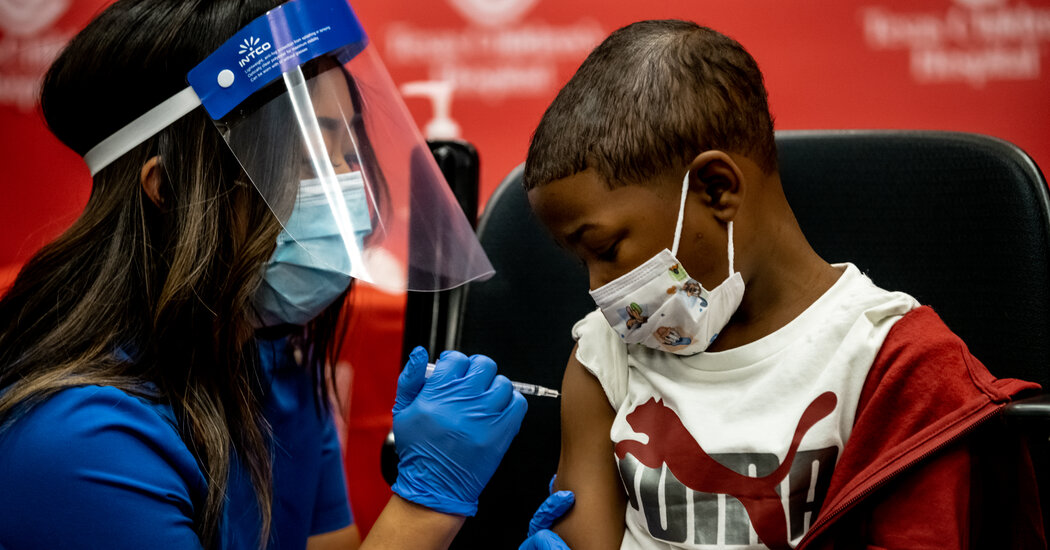
The Centers for Disease Control and Prevention on Saturday recommended Covid vaccines for children as young as 6 months, who were among the last Americans to qualify for the shots. Parents should be able to start getting young children immunized as soon as Tuesday.Federal regulators now have authorized the Moderna vaccine for children ages 6 months through 5 years, and the Pfizer-BioNTech vaccine for children ages 6 months through 4 years. (Pfizer-BioNTech’s vaccine has been available to children ages 5 and older since November.)All children 6 months and older, including those who have already been infected with the coronavirus, should get a Covid vaccine, Dr. Rochelle P. Walensky, the C.D.C.’s director, said in a statement.“Together, with science leading the charge, we have taken  another important step  forward  in our nation’s fight against Covid-19,” she said. “We know millions of parents and caregivers are eager to get their young children vaccinated, and with today’s decision, they can.”   Following meetings on Friday and Saturday, the agency’s scientific advisers strongly backed the vaccines, despite reservations about the paucity of data, especially regarding the efficacy of the Pfizer-BioNTech vaccine. The C.D.C. panel heard evidence supporting the effectiveness of the vaccines in the youngest children, but repeatedly pressed Pfizer on its estimates and noted that three doses of that vaccine would be needed, compared with two doses of the Moderna vaccine.Both vaccines are safe, and both produced antibody levels similar to those seen in young adults. But the C.D.C. advisers wrestled with the difficulty of recommending two very different vaccines for the same population.“The implementation of these two rollouts is going to be incredibly challenging,” said Katelyn Jetelina, a public health expert and author of the widely read newsletter “Your Local Epidemiologist.”“There’s going to have to be a lot of proactive communication about the difference between the two and the implications of taking one over the other,” she said.In its clinical trials, Moderna found that two shots of its vaccine, each with one-fourth of the adult dose, produced antibody levels that were at least as high as those seen in young adults.The company estimated the vaccine’s efficacy against symptomatic infection at about 51 percent among children ages 6 to 24 months, and 37 percent among children ages 2 through 5.The side effects were minor, although about one in five children experienced fevers. Efficacy against severe disease and death is assumed to be higher, similar to the effects seen in adults.Based on those data, the F.D.A. authorized two shots of the Moderna vaccine, spaced four weeks apart.The Pfizer-BioNTech vaccine also produced a strong immune response, but only after three doses, company officials told the scientific advisers on Friday.Two doses of the vaccine were inadequate, they said — justifying the F.D.A.’s decision in February to delay authorizing the vaccine until regulators had data regarding three doses. Two doses may not have been enough because the company gave the children just one-tenth of the adult dose in each shot, some advisers said.The vaccine has an overall efficacy of 80 percent in children under 5, Pfizer’s scientists claimed on Friday. But that calculation was based on just three children in the vaccine group and seven who received a placebo, making it an unreliable metric, the C.D.C.’s advisers noted.“We should just assume we don’t have efficacy data,” said Dr. Sarah Long, an infectious diseases expert at Drexel University College of Medicine. But Dr. Long said she was “comfortable enough” with other data supporting the vaccine’s potency.Three doses of the Pfizer vaccine produced antibody levels comparable to those seen in young adults, suggesting that it is likely to be just as effective.“The Pfizer is a three-dose series, but as a three-dose series, it’s quite effective,” said Dr. William Towner, who led vaccine trials for both Moderna and Pfizer at Kaiser Permanente in Southern California.Either vaccine would be better than none, Dr. Towner added. He predicted that some parents may opt for Moderna because bringing children to a pediatrician for two shots is easier than arranging for them to receive three.The Pfizer vaccine was authorized for children 5 to 11 in November, but fewer than 30 percent in that age group have received two shots. In surveys conducted by the C.D.C., about half of parents said in February that they would vaccinate their children, but by May, only one-third of parents said they intended to do so.The advisers debated whether vaccination enhances protection against severe disease in children who have already been infected. There is little information available from children aged 5 to 11, because of the poor uptake of vaccines in that age group.But in adults, an infection with the earlier Omicron variant has not been enough on its own to protect from the newer versions.Vaccinations would still be needed to protect children from future variants, the experts concluded. “That combined protection is really the safest and the most effective,” said Dr. Sara Oliver, a C.D.C. scientist who led the discussion on Saturday.Parents of the youngest children may be more willing to opt for a Covid vaccine if it can be offered alongside other routine immunizations, Dr. Towner said.“That’s the area that a lot of people are not sure of right now,” he said. “I’m hoping there’ll be some guidance offered around that.”

Read more →