Untangling the role of tau in Alzheimer's disease

Alzheimer’s disease is a brain disorder that causes neurons to die, slowly destroying memory and thinking skills. It’s the most common type of dementia, impacting an estimated 50 million people worldwide. Despite its prevalence, the causes remain poorly understood and treatment options are limited.
Now, a team of scientists in Japan has revealed how excess tau — a key protein implicated in Alzheimer’s disease — impairs signaling between neurons in the brains of mice. The study, published recently in eLife, could open new pathways for treating the symptoms and even halting the progression of Alzheimer’s disease and other neurodegenerative disorders.
Tau is produced in neurons, where it binds to and promotes the assembly of microtubules — long, thin filaments that maintain cell structure and provide pathways for transport within the cell. Tau usually exists in either this bound state, or it is dissolved in the liquid that fills the cell.
However, in some neurological disorders, most famously in Alzheimer’s disease, levels of soluble tau in certain brain regions become too high, and it aggregates into insoluble structures called neurofibrillary tangles.
“A lot of scientists focus on the impact of these visible neurofibrillary tangles that are a hallmark of Alzheimer’s, but actually, it’s the invisible levels of soluble tau that correlate most closely with cognitive decline,” said Professor Tomoyuki Takahashi, senior author of the study, and head of the Cellular and Molecular Synaptic Function Unit at OIST.
The research began ten years ago, when his team looked at the effect of high levels of soluble tau on signal transmission at the calyx of Held — the largest synapse in mammalian brains. Synapses are the places where two neurons make contact and communicate. When an electrical signal arrives at the end of a presynaptic neuron, chemical messengers, known as neurotransmitters, are released from membrane ‘packets’ called vesicles into the gap between neurons. When the neurotransmitters reach the postsynaptic neuron, they trigger a new electrical signal.

Read more →

Increase in leptin levels in preeclampsia prompts cardiovascular cascade that puts mother and baby at risk

Before a baby is ever born, critical supply chain problems with nutrition and oxygen can result in premature birth or even death and increase the child and mother’s lifelong risk of cardiovascular disease.
Scientists have found that a midgestation increase in the hormone leptin, which most of us associate with appetite suppression, produces problematic blood vessel dysfunction and restriction of the baby’s growth in preeclampsia that put mother and baby at risk.
It’s known that about 20 weeks into a pregnancy, women with preeclampsia experience an increase in the production of leptin by the placenta but the consequences have been unknown.
“It’s kind of emerging as a marker of preeclampsia,” says Dr. Jessica Faulkner, vascular physiologist in the Department of Physiology at the Medical College of Georgia and corresponding author of the study in the journal Hypertension.
Leptin, mostly produced by fat cells, is also produced by the temporary organ, the placenta, which enables the mom to supply her developing baby with nutrients and oxygen, Faulkner says. Leptin levels steadily increase in a healthy pregnancy, but specifically what leptin is doing even normally in this scenario is unclear. There is some evidence it’s a natural nutrient sensor in reproduction or maybe a way to enable new blood vessel growth and/or to stimulate growth hormone for usual development.
“But in preeclamptic patients leptin levels go up more than they should,” Faulkner says.

Read more →

Scarless skin grafting using mussel adhesive protein

One of the biggest concerns for patients undergoing skin grafting is scarring post-surgery and the regeneration of transplanted skin. The depth of scarring after suturing varies depending on the skill of the medical personnel performing the skin grafting, and wound healing at the suture site requires over a month. Recently, a Korean research team has drawn attention for developing a bioadhesive based on the mussel adhesive protein (MAP) that enables quick healing of wounds with minimum scarring. Skin transplantation using this adhesive can effectively revive skin without using sutures.
A research team led by Professor Hyung Joon Cha, Woo Hyung Park and Ph.D. candidate Jae Yun Lee from the Department of Chemical Engineering at POSTECH has developed a bioadhesive for skin grafting containing two types of drugs in collaboration with Dr. Hyo Jeong Kim of the Korea Research Institute of Chemical Technology.
These research findings, proposing a new system for scarless skin grafting, were recently published in the Chemical Engineering Journal.
The research team developed the bioadhesive by introducing allantoin and epidermal growth factor in a mussel adhesive protein coacervate. Upon application of this bioadhesive, the two drugs are successively released, according to the stage of the wound healing process, and regenerate the skin.
Results of the study indicate that the wound area recovered more efficiently than when treated with sutures used in current skin grafting. In particular, loss of hair follicles in the transplanted area was minimal, while collagen and major skin factor levels were effectively revived.
A characteristic of this bioadhesive is that unlike sutures, it leaves minimal scarring on the wound area and is harmless to the human body because it utilizes mussel adhesive protein, a biomaterial.
Professor Hyung Joon Cha explained, “We used the mussel adhesive protein — a biomaterial that originated in Korea — in the newly developed bioadhesive for skin grafting that resulted in minimal scarring and promoted skin regeneration.” He added, “This new system will be effectively applicable in the transplantation of various affected areas requiring tissue regeneration.”
This study was supported by the Health Technology Research and Development Project of the Ministry of Health and Welfare of Korea. The technology of the mussel adhesive protein (MAP) has undergone a technology transfer to Nature Gluetech Co. Ltd, and among these, “FIxLight,” a medical adhesive for extra-epidermal soft tissue, is undergoing human clinical trials. The commercialization and development of the medical adhesive coacervate is in progress.
Story Source:
Materials provided by Pohang University of Science & Technology (POSTECH). Note: Content may be edited for style and length.

Read more →

Listeria-based booster improves vaccine's protection against recurring colon cancer

Colorectal, pancreatic, esophageal and stomach cancers — some of the deadliest kinds of cancer — have high recurrence rates where the cancer comes back even after successful surgery or radiation treatment.
To combat these treatment-resistant cancers, Thomas University Jefferson researchers led by Adam Snook, PhD, an associate professor of pharmacology and experimental therapeutics, instead use what are, in essence, vaccines to train patients’ immune systems to keep the cancer from coming back. Typically, the vaccines use either modified viruses or modified bacteria.
Now new research from Dr. Snook’s lab shows in an animal model that using viral and bacterial vaccine approaches together is safe and far more effective at fighting the cancer than either approach by itself.
“The vaccine platforms are not unique,” says Dr. Snook who is also a researcher at the Sidney Kimmel Cancer Center — Jefferson Health. “But nobody’s put them together into a combination vaccine, yet that’s when we saw the immune response really take off.”
In previous work, Dr. Snook and his team used a modified form of a common virus known as adenovirus as the backbone of a cancer vaccine that trains patients’ immune systems to identify and attack a unique colorectal cancer molecule called GUCY2C (pronounced goosey-toosey). This vaccine treatment, dubbed Ad5.F35-GUCY2C, is currently in Phase II clinical trials.
Although the adenovirus-based vaccine approach stimulates a highly effective immune response in patients, the effect doesn’t last. To create the best possible immune response, vaccines often require additional doses. However, once introduced, the body becomes familiar with the adenovirus and as a result does not produce the same kind of immune response with additional doses. To keep the primed immune system pumping out cancer-fighting immunity, the body needed a different kind of booster.

Read more →

Teens Are Getting Sick From Products With High THC Levels

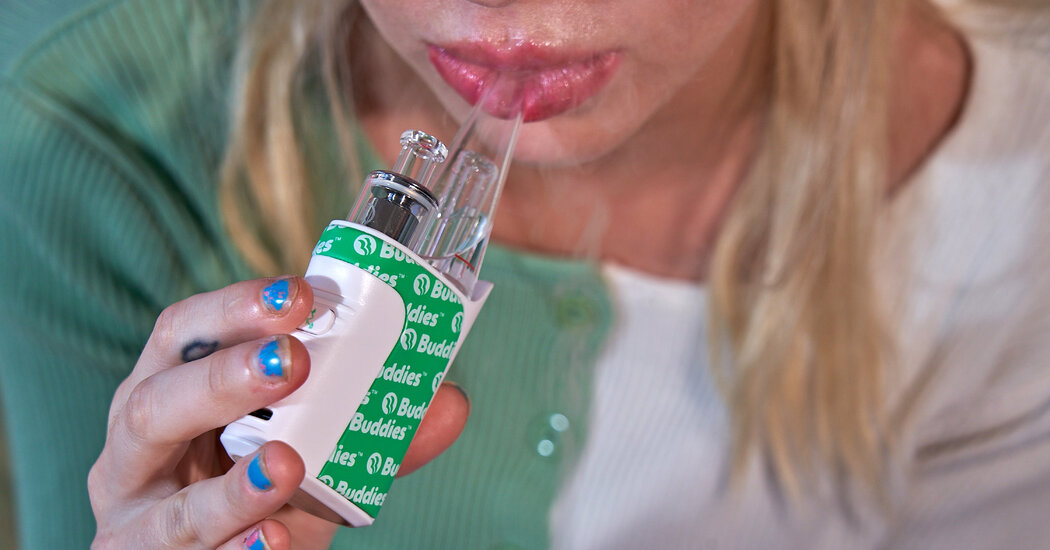
With THC levels close to 100 percent, today’s cannabis products are making some teenagers highly dependent and dangerously ill.Elysse was 14 when she first started vaping cannabis.It didn’t smell, which made it easy to hide from her parents. And it was convenient — just press a button and inhale. After the second or third try, she was hooked.“It was insane. Insane euphoria,” said Elysse, now 18, whose last name is being withheld to protect her privacy. “Everything was moving slowly. I got super hungry. Everything was hilarious.”But the euphoria eventually morphed into something more disturbing. Sometimes the marijuana would make Elysse feel more anxious, or sad. Another time she passed out in the shower, only to wake up half an hour later.This was not your average weed. The oil and waxes she bought from dealers were typically about 90 percent THC, the psychoactive component in marijuana. But because these products were derived from cannabis, and nearly everyone she knew was using them, she assumed they were relatively safe. She began vaping multiple times per day. Her parents didn’t find out until about one year later, in 2019.“We got her in a program to help her with it. We tried tough love, we tried everything, to be honest with you,” Elysse’s father said of her addiction.Starting in 2020 she began having mysterious bouts of illness where she would throw up over and over again. At first she and her parents — and even her doctors — were baffled. During one episode, Elysse said, she threw up in a mall bathroom for an hour. “I felt like my body was levitating.”Another time she estimated that she threw up at least 20 times in the span of two hours.It wasn’t until 2021, after a half dozen trips to the emergency room for stomach illness, including some hospital stays, that a gastroenterologist diagnosed her with cannabinoid hyperemesis syndrome, a condition that causes recurrent vomiting in heavy marijuana users.Although recreational cannabis is illegal in the United States for those under 21, it has become more accessible as many states have legalized it. But experts say today’s high-THC cannabis products — vastly different than the joints smoked decades ago — are poisoning some heavy users, including teenagers.Marijuana is not as dangerous as a drug like fentanyl, but it can have potentially harmful effects — especially for young people, whose brains are still developing. In addition to uncontrollable vomiting and addiction, adolescents who frequently use high doses of cannabis may also experience psychosis that could possibly lead to a lifelong psychiatric disorder, an increased likelihood of developing depression and suicidal ideation, changes in brain anatomy and connectivity and poor memory.But despite these dangers, the potency of the products currently on the market is largely unregulated.‘I felt so trapped.’In 1995, the average concentration of THC in cannabis samples seized by the Drug Enforcement Administration was about 4 percent. By 2017, it was 17 percent. And now cannabis manufacturers are extracting THC to make oils; edibles; wax; sugar-size crystals; and glass-like products called shatter that advertise high THC levels in some cases exceeding 95 percent.Brightly colored vapes alongside a container of cannabis resin wax. In recent years, products like waxes — many containing more than 90 percent THC — have become increasingly popular.Michelle Groskopf for The New York TimesA liquid live resin in a girl’s bedroom. Some concentrated cannabis products are designed to look like juice boxes to highlight their fruity flavors.Michelle Groskopf for The New York TimesMeanwhile, the average level of CBD — the nonintoxicating compound from the cannabis plant tied to relief from seizures, pain, anxiety and inflammation — has been on the decline in cannabis plants. Studies suggest that lower levels of CBD can potentially make cannabis more addictive.THC concentrates “are as close to the cannabis plant as strawberries are to frosted strawberry pop tarts,” Beatriz Carlini, a research scientist at the University of Washington’s Addictions, Drug and Alcohol Institute, wrote in a report on the health risks of highly concentrated cannabis.Although cannabis is legal for recreational use in 19 states and Washington, D.C., and for medical use in 37 states and D.C., only Vermont and Connecticut have imposed caps on THC concentration. Both ban concentrates above 60 percent, with the exception of pre-filled cartridges, and do not permit cannabis plant material to exceed 30 percent THC. But there is little evidence to suggest these specific levels are somehow safer.“In general, we do not support arbitrary limits on potency as long as products are properly tested and labeled,” Bethany Moore, a spokeswoman for the National Cannabis Industry Association, said in a statement. She added that the best way to keep marijuana away from teens is to implement laws that allow the cannabis industry to replace illegal markets, which do not adhere to age restrictions, state-mandated testing or labeling guidelines.The Food and Drug Administration has sent warnings about various cannabis products, including edibles, but so far federal regulators haven’t taken action to curb potency levels because cannabis is federally illegal, said Gillian Schauer, the executive director of the Cannabis Regulators Association, a nonpartisan nonprofit organization that convenes government officials involved in cannabis regulation across more than 40 states and territories.California lawmakers are now considering adding a mental health warning label to cannabis products specifying that the drug may contribute to psychotic disorders.National surveys suggest that marijuana use among 8th, 10th and 12th graders decreased in 2021, a change partly attributed to the pandemic. However, over the two-year interval from 2017 to 2019, the number of kids who reported vaping marijuana over the last 30 days rose among all grades, nearly tripling among high school seniors. In 2020, 35 percent of seniors, and as many as 44 percent of college students, reported using marijuana in the past year.Elysse got sober before entering college but soon found that seemingly everyone on her dorm floor habitually used weed.“Not only carts,” she said, referring to the cannabis cartridges used in vape pens, “but bongs, pipes, bowls — absolutely everything.” Each morning, she found students washing their bongs in the communal bathroom at 8 a.m. to prepare for their “morning smoke.”After a few weeks, she began vaping concentrated THC again, she said, and also started having dark thoughts, occasionally sitting alone in her room and sobbing for hours.“I felt so trapped,” said Elysse, who has now been clean for nearly two months. “This is not fun in any way anymore.”Teens are particularly affected by cannabis.Michael McDonell, an addiction treatment expert at the Washington State University college of medicine, said that more research is needed to better understand how much more prevalent psychosis and cannabinoid hyperemesis syndrome have become among teenagers and others using high potency products.Even so, he added, “we definitely know that there’s a dose-dependent relationship between THC and psychosis.”One rigorous study found that the risk of having a psychotic disorder was five times higher among daily high potency cannabis users in Europe and Brazil than those who had never used it.A couple with cannabis vape pens. In 2020, 35 percent of high school seniors, and as many as 44 percent of college students, reported using marijuana in the past year.Michelle Groskopf for The New York TimesAnother study, published in 2021 in JAMA Psychiatry, reported that, in 1995, only 2 percent of schizophrenia diagnoses in Denmark were associated with marijuana use, but by 2010 that figure had risen to 6 to 8 percent, which researchers associated with increases in the use and potency of cannabis.Cannabinoid hyperemesis syndrome, which can often be alleviated by hot baths and showers, is also linked to prolonged, high-dose cannabis use. As with psychosis, it’s unclear why some people develop it and others do not.Dr. Sharon Levy, the director of the Adolescent Substance Use and Addiction Program at Boston Children’s Hospital, said there is “no doubt that higher concentration products are increasing the number of people who have bad experiences with cannabis.”When her clinic opened in 2000, marijuana was illegal in Massachusetts. At the time, Dr. Levy said far fewer kids came in with psychotic symptoms “and we almost never saw cannabis hyperemesis syndrome.”Now, she said, those numbers are shooting up. Psychotic symptoms while high can include hallucinations, trouble distinguishing between fantasy and reality, strange behaviors (one young man would spend his days tying plastic bags into knots) or voices talking to them in their head, she added.If a teenager displays these symptoms, getting that person off cannabis “becomes an emergency,” she said. “Because maybe, just maybe they’ll clear up, and we’re preventing someone from developing a lifelong psychiatric disorder.”‘Oh well, it’s just weed.’Laura Stack, who lives in Highlands Ranch, Colo., said that when her son Johnny first confessed to using marijuana at the age of 14, she said to herself, “Oh well, it’s just weed. Thank God it wasn’t cocaine.”She had used marijuana a couple of times in high school and cautioned him that marijuana would “eat your brains cells.” But at the time she wasn’t overly concerned: “I used it, I’m fine, what’s the big deal?”“But I had no idea,” she added, referring to how marijuana has changed in recent years. “So many parents like me are completely ignorant.”Initially, her son did not have any mental health problems and excelled in school. But he eventually started using high potency marijuana products multiple times a day, and this, Ms. Stack said, “made him completely delusional.”By the time he reached college, he had been through various addiction treatment programs. He had become so paranoid that he thought the mob was after him and his college was a base for the F.B.I., Ms. Stack said. At one point, after he moved out of his childhood home, he threatened to kill the family dog unless his parents gave him money. His mother later discovered that Johnny had obtained his own medical marijuana card when he turned 18 and had begun dealing to younger kids.After several stays at mental hospitals, the doctors determined that Johnny had a severe case of THC abuse, Ms. Stack said. He was prescribed an anti-psychotic medication, which helped — but then he stopped taking it. In 2019, Johnny died after jumping from a six-story building. He was 19. A few days before his death, Ms. Stack said, Johnny had apologized to her, saying that weed had ruined his mind and his life, adding, “I’m sorry, and I love you.”A recent study found that people who used marijuana had a greater likelihood of suicidal ideation, plan and attempt than those who did not use the drug at all. Ms. Stack now runs a nonprofit called Johnny’s Ambassadors that educates communities about high-THC cannabis and its effect on the adolescent brain.There’s ‘no known safe limit.’It can be difficult to pinpoint exactly how much THC enters someone’s brain when they’re using cannabis. That’s because it’s not just the frequency of use and THC concentration that affect dosage, it’s also how fast the chemicals are delivered to the brain. In vaporizers, the speed of delivery can change depending on the base the THC is dissolved in, the strength of the device’s battery and how warm the product becomes when it’s heated up.Higher doses of THC are more likely to produce anxiety, agitation, paranoia and psychosis.“The younger you are, the more vulnerable your brain is to developing these problems,” Dr. Levy said.Youths are also more likely to become addicted when they start using marijuana before the age of 18, according to the Substance Abuse and Mental Health Services Administration.Furthermore, there is growing evidence that cannabis can alter the brain during adolescence, a period when it is already undergoing structural changes. Until more is known, researchers and clinicians recommend postponing cannabis use until later in life.“I have kids asking me all the time, ‘What if I do this just once a month, is that OK?’” Dr. Levy said. “All I can tell them is that there’s no known safe limit.”Dr. McDonell agreed that avoiding drug use entirely is always the safest option, but said that some kids might require a more nuanced conversation. He advised having open discussions about drugs with middle-schoolers and teenagers, while also educating them about the dangers of high potency cannabis products compared to those that are mostly made of CBD.“I think that’s something we’re all struggling with as a community,” he added. “How do we get this information to parents and kids fast enough?”

Read more →

Maradona: Medical staff to be tried for football legend's death

SharecloseShare pageCopy linkAbout sharingImage source, Getty ImagesEight medical personnel are to stand trial accused of criminal negligence in the death of legendary Argentinian footballer Diego Maradona.A judge has ordered a culpable homicide trial after a medical panel found Maradona’s treatment was rife with “deficiencies and irregularities”.Maradona died in November 2020 of a heart attack in Buenos Aires, aged 60.He had been recovering at home from surgery on a brain blood clot earlier that month.A few days after his death Argentine prosecutors launched an investigation into the doctors and nurses involved in his care.Maradona’s extraordinary life in picturesObituary – Argentina’s flawed football iconLast year, the panel of 20 experts appointed to examine his death found Maradona’s medical team acted in an “inappropriate, deficient and reckless manner”.It also concluded that the footballer “would have had a better chance of survival” with adequate treatment in an appropriate medical facility, according to the court ruling.Among those facing charges are Maradona’s neurosurgeon and personal doctor, Leopoldo Luque, a psychiatrist and psychologist, two doctors, two nurses and their boss. They have all denied responsibility for his death.All eight will be tried on a legal definition of homicide based on negligence committed in the knowledge that it may lead to a person’s death.The crime can hold a sentence of eight to 25 years in prison, according to Argentina’s penal code. A date for the trial is yet to be set.Image source, Getty ImagesMario Baudry, a lawyer for one of Maradona’s sons, told Reuters that the football legend was “in a situation of helplessness” by the time of his death.”As soon as I saw the cause, I said it was homicide. I fought for a long time and here we are, with this stage completed,” he said.The legal proceedings were prompted by a complaint filed by two of Maradona’s daughters. They raised concerns about their father’s treatment after the brain operation.This video can not be playedTo play this video you need to enable JavaScript in your browser.In an emotional press conference in November 2020, Dr Luque cried, saying he had done all he could to save the life of a friend.At one point, the doctor shot back at reporters: “You want to know what I am responsible for? For having loved him, for having taken care of him, for having extended his life, for having improved it to the end.”The doctor said he had done “everything he could, up to the impossible”.Diego Maradona is largely considered to be one of the greatest footballers to ever play the game. He was captain when Argentina won the 1986 World Cup, scoring the famous ‘Hand of God’ goal against England in the quarter-finals. During the second half of his career, Maradona struggled with cocaine addiction and was banned for 15 months after testing positive for the drug in 1991.The news of his death threw the football world – and his home country of Argentina – into deep mourning, with many thousands of people queuing for hours to walk by his coffin at the presidential palace in Buenos Aires. Not even the most fanatical Maradona supporter would deny the damage that years of addiction had done to his body or the debilitating effects of his gruelling brain surgery. Yet there was a sense in Argentina that, aged just 60, probably the greatest player ever to have graced the pitch was taken before his time. As the demands for answers grew with each revelation about his treatment, the subsequent findings by the medical panel were damning in the extreme.The outpouring of grief and respect in Argentina following Maradona’s death is still fresh in the memory – when thousands of fans trooped past his flag-draped coffin in tears in the presidential palace over three days of national mourning. It was far earlier than they had wanted to say goodbye to him. These charges may at least provide them with answers over the exact circumstances behind the death of one of Argentina’s greatest sons. More on this storyMaradona care inadequate, medical report saysMaradona autopsy shows no drink or drugsMaradona: An extraordinary life in pictures

Read more →

Surgeons develop new technique to reduce Adam's apple without neck scar

Doctors at the UCLA Gender Health Program have developed a technique to reduce an Adam’s apple bump without leaving a scar on the patient’s neck.
The advance could be an important and welcome one for transgender women and nonbinary people, for whom a neck scar can be a telltale sign of their surgery — often exposing them to discrimination, hate and violence.
A study by the surgeons who developed the technique was published in the journal Facial Plastic Surgery & Aesthetic Medicine. Reviewing outcomes for 77 people who underwent the surgery at UCLA Health facilities, the authors concluded that the procedure is an effective way to optimize care for people receiving gender-affirming surgery.
Specifically, they found that the procedure — which can be performed in 90 minutes by one surgeon — is effective at removing the Adam’s apple, that it can be performed using only the equipment already available in most surgical suites in addition to a few other inexpensive tools, and that it could be readily adopted by plastic surgeons and throat surgeons.
The procedure is called “scarless” tracheal shave, thanks to the lack of a scar on the patient’s neck, although in actuality, it does create a small, hidden scar on the inside of the patient’s lip. That’s the location through which a surgeon inserts cartilage-trimming forceps and a polishing tool to shave down the extra cartilage that forms the Adam’s apple.
“There will always be a scar with any surgery, but this procedure creates a scar that only a dentist would see,” said Dr. Abie Mendelsohn, associate professor of head and neck surgery at the David Geffen School of Medicine at UCLA, and the study’s senior author. “It represents a massive shift in the ability to provide optimal gender-affirming care for patients.”
Mendelsohn said many transgender people fear going about the activities of daily life due to the threat of being “clocked,” or being identified as a trans person by others, against their wishes.

Read more →

Blood test developed to predict liver cancer risk

An estimated one-quarter of adults in the U.S. have nonalcoholic fatty liver disease (NAFLD), an excess of fat in liver cells that can cause chronic inflammation and liver damage, increasing the risk of liver cancer. Now, UT Southwestern researchers have developed a simple blood test to predict which NAFLD patients are most likely to develop liver cancer.
“This test lets us noninvasively identify who should be followed most closely with regular ultrasounds to screen for liver cancer,” said Yujin Hoshida, M.D. Ph.D., Associate Professor of Internal Medicine in the Division of Digestive and Liver Diseases at UTSW, a member of the Harold C. Simmons Comprehensive Cancer Center, and senior author of the paper published in Science Translational Medicine.
NAFLD is rapidly emerging as a major cause of chronic liver disease in the United States. With rising rates of obesity and diabetes, its incidence is expected to keep growing. Studies have found that people with NAFLD have up to a seventeenfold increased risk of liver cancer. For NAFLD patients believed to be most at risk of cancer, doctors recommend a demanding screening program involving a liver ultrasound every six months. But pinpointing which patients are in this group is challenging and has typically involved invasive biopsies.
Naoto Fujiwara, M.D., Ph.D., Research Scientist in the Hoshida lab, and his colleagues wondered whether blood samples from NAFLD patients could reveal those at highest risk of hepatocellular carcinoma (HCC), the most common form of liver cancer. In the new study, they analyzed samples from 409 NAFLD patients to reveal a set of 133 genes that were expressed at levels higher or lower than average in the livers of patients who developed HCC over a 15-year follow-up period. The patients were then stratified into high- and low-risk groups based on how much these genes were expressed. Over 15 years after the samples were taken, 22.7% of those in the high-risk group were diagnosed with HCC while no patients in the low-risk group were diagnosed.
“This test was especially good at telling us who was in that low-risk group,” said Dr. Hoshida, who directs UTSW’s Liver Tumor Translational Research Program. “We can much more confidently say now that those patients don’t need to be followed very closely.”
The researchers also converted the liver gene panel into four proteins whose levels could be measured in blood samples for easier risk assessment. When patients were stratified into high- and low-risk groups based on these proteins, 37.6% of patients in the high-risk group were diagnosed with HCC during the 15-year follow-up period while no patients in the low-risk group were diagnosed.
Most of the genes and proteins found to be predictive of HCC risk were immune and inflammatory molecules, which points toward the importance of inflammation in HCC development. Moreover, the researchers showed that levels of the molecules changed in conjunction with therapies known to decrease liver inflammation and HCC risk, including bariatric surgery, cholesterol drugs, and an immunotherapy.
“This means we could actually use these panels of molecules to track how well patients are doing over time or to inform potential effectiveness of medical interventions to reduce liver cancer risk,” said Dr. Hoshida. For instance, the protein blood test, dubbed PLSec-NAFLD, is already being used to monitor the effectiveness of a cholesterol drug in reducing liver cancer risk in an ongoing clinical trial.
Dr. Hoshida’s team is planning to continue assessing the utility of PLSec-NAFLD in larger groups of patients around the world. They also say that in the future, blood tests could be developed to measure cancer risk in other major liver diseases such as hepatitis B and alcoholic liver disease.
Other UTSW researchers who contributed to this study include Naoto Kubota, Bhuvaneswari Koneru, Cesia Marquez, Arun Jajoriya, Gayatri Panda, Tongqi Qian, Shijia Zhu, Xiaochen Wang, Shuang Liang, Zhenyu Zhong, Amit Singal, Jorge Marrero, Indu Raman, and Quan-Zhen Li.
The study was funded by the National Institutes of Health (R01DK099558, R01CA233794, U01CA226052, U01CA230694, and R01CA222900), the Cancer Prevention and Research Institute of Texas (RR180016, RR180014, and RP200197), the American Association for the Study of Liver Diseases (AASLDF 50028), a Uehara Memorial Foundation Postdoctoral award, AMED (JP21fk0210090 and JP21fk0210059), KAKENHI (21H02892), European Commission (ERC-2014-AdG-671231 and ERC-2020-ADG-101021417), and Inserm Plan Cancer and TheraHCC 20.

Read more →

Process to customize molecules does double duty

Inspired by your liver and activated by light, a chemical process developed in labs at Rice University and in China shows promise for drug design and the development of unique materials.
Researchers led by Rice chemist Julian West and Xi-Sheng Wang at the University of Science and Technology of China, Hefei, are reporting their successful catalytic process to simultaneously add two distinct functional groups to single alkenes, organic molecules drawn from petrochemicals that contain at least one carbon-carbon double bond combined with hydrogen atoms.
Better yet, they say, is that these alkenes are “unactivated” — that is, they lack reactive atoms near the double bond — and until now, have proven challenging to enhance.
The chemical pathway detailed in the Journal of the American Chemical Society could simplify the creation of a library of precursors for the pharmaceutical industry and enhance the manufacture of polymers.
West, whose lab designs synthetic chemistry processes, said the initial inspiration came from an enzyme, cytochrome P450, the liver uses to eliminate potentially harmful molecules.
“These enzymes are sort of buzzsaws that grind up molecules before they can get you into trouble,” he said. “They do this through an interesting mechanism called radical rebound.”
West said P450 finds carbon-hydrogen bonds and removes the hydrogen, leaving a carbon-centered radical that includes an unpaired electron.

Read more →

ALS may be linked to both the immune and central nervous systems

The immune system may play a fundamental role along with the central nervous system in amyotrophic lateral sclerosis (ALS), also known as “Lou Gehrig’s disease,” Mount Sinai researchers report. Their study, published on June 22 in Nature, could have significant implications for diagnosing and treating the devastating neurodegenerative disease.
Until now, studies of ALS have focused on the central nervous system. But the Mount Sinai team reported both immune and nervous system dysfunctions in animal models and patients with ALS4, a juvenile and slowly progressive form of ALS, which is caused by mutations in the gene SETX.
“We learned that mutations in SETX need to be expressed in both the nervous and immune systems to generate motor impairment in mice, and that dysfunction in the adaptive immune system characterizes ALS4 in mice as well as humans,” says Laura Campisi, PhD, Assistant Professor of Microbiology at the Icahn School of Medicine at Mount Sinai, and co-lead author of the study with Ivan Marazzi, PhD, Associate Professor of Microbiology at Icahn Mount Sinai.
Further evidence of immune system involvement, she adds, was detected in the high concentration of CD8 T cells — which are usually involved in the destruction of tumors and cells in the body that harbor pathogens — in the spinal cord and peripheral blood of ALS4 mice and patients. Those increased CD8 T cell populations, known as TEMRA (terminally differentiated effector memory), correlate with ALS4 disease progression.
ALS is characterized by the progressive death of motor neurons, which severely impacts the functional ability of patients in a host of ways, including preventing the movement of arms and legs, speech, swallowing, and, eventually, breathing. There is no treatment or cure for ALS. Researchers have focused their efforts over the years on neurons, though more recent studies have shown evidence of interaction between the central nervous and immune systems, long considered separate compartments.
The Mount Sinai study, in collaboration with neurobiologist Albert La Spada, MD, PhD, from the University of California, Irvine, is one of the first to address whether the adaptive immune system, which builds up the body’s protection as it is exposed to foreign pathogens, could be linked to some forms of ALS.
“There is a great need to understand if neurodegeneration is caused or aggravated by immune dysfunction,” explains Dr. Campisi.
For their study, researchers analyzed mice and human samples with state-of-the-art technologies like mass and spectral cytometry and single-cell sequencing. “Our finding that peculiar immune signatures distinguish different forms of ALS could be significant for designing ‘personalized’ treatments tailored to specific subgroups of patients,” she notes.
An added advantage is that dysfunctional CD8 T cells linked to ALS4 can be detected in the peripheral blood, which is easily accessible compared to cerebrospinal fluid, which requires an invasive procedure for collection. Another observation by the Mount Sinai team — that TEMRA CD8 T cells associated with ALS4 protect mice against glioma, a type of cancer that occurs in the brain — opens the door to further therapeutic research in this area.
“Our discovery of a link between the immune and central nervous systems in ALS4 disease has immediate implications for other types of ALS, other neurodegenerative disorders, and for cancer,” said Dr. Marazzi. “In addition to making important inroads into the pathogenesis of ALS, our work underscores the pioneering work of Mount Sinai researchers in the fields of neuroscience and immunology.”

Read more →