Novel HIV combination therapies could prevent viral escape and rebound

Carefully designed cocktails of broadly neutralising antibodies (bNAbs) could help treat HIV while minimising the risk of the virus escaping treatment, suggests a study published today in eLife.
The study shows that computational approaches to selecting combinations of bNAbs based on viral genetics could help prevent viral escape, making HIV treatment more effective. It may also offer a strategy for designing effective combinations of bNAbs for treating other rapidly evolving pathogens.
bNAbs offer a promising new tool to treat or potentially cure infections with rapidly evolving viruses such as HIV. Clinical trials using a single bNAb to treat HIV have shown that some viral strains may survive the treatment and lead to a rebound of viruses in the blood. Combinations of bNAbs may therefore be a more effective approach, but finding the best combinations is a challenge.
“For our study, we proposed using a computational approach to predict the effectiveness of bNAb combinations based on the HIV genetics,” says Colin LaMont, a researcher at the Max Planck Institute for Dynamics and Self-Organization in Göttingen, Germany.
LaMont and colleagues used high-throughput sequencing to analyse the genetics of HIV viruses collected over 10 years from 11 untreated patients with HIV. The team used this data to predict which viral strains might be able to escape treatment with different bNAbs and whether dodging bNAbs was associated with a survival cost. Next, using computational methods, they applied the knowledge gained to predict viral rebounds in three real-life trials of bNAbs.
Finally, the team used their computational approach to find a combination of bNAbs that is least likely to allow any virus to escape. They also found that some bNAbs, such as 10-1074, are better against diverse populations of viruses because mutations that allow viruses to escape also make the virus less likely to survive. Others, including PGT121, are more effective against less diverse viral populations because mutations that enable escape are rare. Overall, the results suggested that the optimal combination includes three bNAbs: PG9, PGT151 and VRC01.
“We’ve shown the combination of PG9, PGT151 and VRC01 reduces the chance of viral rebound to less than 1%,” LaMont says. “It does this by targeting three different regions of the virus’ protective outer wrapping, or envelope.”
“Combining bNAbs, administered via intravenous infusion every few months, with current antiretroviral therapies (ART) that require daily doses could further improve long-term HIV treatment success,” suggests senior author Armita Nourmohammad, Assistant Professor in the Department of Physics at the University of Washington, Seattle.
ART reduces the ability of HIV to multiply and create new variants, limiting the genetic diversity of the viral population and lowering the likelihood for emergence of bNAb escape variants. The authors say that more studies are needed to confirm the potential benefits of combining ART and bNAbs.
“Our study shows that leveraging genetic data can help us design more effective HIV therapies,” Nourmohammad concludes. “Our approach may also be useful for designing therapies against other rapidly evolving agents that cause disease, such as the Hepatitis C virus, drug-resistant bacteria, or cancer tumour cells.”
Story Source:
Materials provided by eLife. Note: Content may be edited for style and length.

Read more →

COVID-19 transmission in geriatric acute care shows need for enhanced infection control and prevention measures

Researchers in Switzerland and the UK have found that in COVID-19 isolation wards less transmission of the virus occurred between patients and healthcare workers than expected, according to a study published today in eLife.
However, the team found that the highest source of new hospital-acquired infections tended to be transmitted by healthcare professionals working on other wards when an outbreak occurred. The findings highlight gaps in infection control practices between different acute care wards.
Hospital-acquired cases of severe acute respiratory syndrome coronavirus 2 (SARS-CoV-2) in geriatric institutions and long-term care facilities (LTCF) are thought to account for large proportions of declared COVID-19 deaths worldwide. However, there is ongoing uncertainty about transmission chains in these environments and the respective roles of healthcare professionals and patients in spreading the virus.
“Because the reservoir of SARS-CoV-2 in healthcare environments may contribute to amplifying the pandemic, we need to better understand transmission dynamics in these settings,” says lead author Mohamed Abbas, Senior Research Associate at the Infection Control Programme, Geneva University Hospitals, Switzerland, and Honorary Clinical Research Fellow at the MRC Centre for Global Infectious Disease Analysis, Imperial College London, UK. “Detecting and defining cases is crucial in settings with a high patient turnover, or where patients are admitted from the community and both COVID-19 and non-COVID-19 cases are cared for in the same institution. If we can determine the sources of infection and transmission pathways, we can improve infection prevention and control strategies.”
The team set out to reconstruct the transmission dynamics in several hospital-based outbreaks of COVID-19 that involved patients and healthcare workers in the Swiss university-affiliated Hospital of Geriatrics, which has 196 acute-care and 100 rehabilitation beds. During the first wave of the pandemic in 2020, 176 acute care beds were dedicated to patients with COVID-19 who did not require intensive care. At the same time, other patients were admitted for non-COVID-19 indications and shared access to rehabilitation beds with patients convalescing from COVID-19.
To look at the transmission between patients and healthcare workers on these wards, the team used a mathematical model incorporating information on contact networks between patients and healthcare professionals. They considered the time between infections (in an infector/infectee pair) and a model of genetic sequence evolution, which shows whether one infection has arisen from another. They then compared this with the transmission dynamics they expected to see at random from healthcare workers and patients on the COVID-19 ward.
Of the SARS-CoV-2 positive cases, 127 cases were in healthcare workers operating in dedicated COVID-19 wards, 36 cases were healthcare workers in non-COVID-19 wards where outbreaks occurred, and 48 patients contracted the virus while in a ward where an outbreak occurred.
Most patient-to-patient transmission involved patients having shared a ward, rather than sharing a room. Patients in a ward where there had been an outbreak were twice as likely than expected to be infected by other patients with hospital-acquired COVID-19. Similarly, healthcare workers were more than twice as likely to be infected by another healthcare professional working on a ward that had an outbreak, than from one of the COVID-19 wards. The data also suggest that healthcare workers on a ward with an outbreak went on to cause more secondary cases of COVID-19 than patients with hospital-acquired COVID-19 did.
“Our study shows transmission dynamics among healthcare workers differ according to whether they worked in COVID-19 wards or wards where outbreaks occurred. This could suggest that those working on COVID-19 wards were concerned about becoming infected and applied infection control measures rigorously, whereas those working on non-COVID wards may have underestimated the risk of transmission,” concludes senior author Stephan Harbarth, Professor of Infectious Diseases at the Infection Control Programme, Geneva University Hospitals. “Strategies to prevent SARS-CoV-2 transmission in geriatric settings should take into account the potential for patient-to-patient transmission and the transmission dynamics between healthcare workers in non-COVID-19 wards, which may differ considerably from those in dedicated COVID-19 wards.”
Story Source:
Materials provided by eLife. Note: Content may be edited for style and length.

Read more →

The zinc link: Unraveling the mechanism of methionine-mediated pluripotency regulation

Differentiation of pluripotent stem cells (PSCs) is regulated through a methionine-mediated mechanism, which has now been pinpointed by Tokyo Tech researchers. They have revealed that zinc (Zn) plays a crucial role in PSC potentiation. They used these insights to design a protocol to convert PSCs into insulin-producing pancreatic β cells — a high-potential diabetes therapy.
Stem cell research has gained a lot of attention in the world of medical therapeutics. Pluripotent stem cells (PSCs) can self-renew and transform into different types of cells in the body via a process called differentiation. These cells have manifold applications, such as disease modeling, drug discovery, and cell replacement therapy.
One area of focus in PSC research is diabetes treatments. A common characteristic of diabetes is having ineffective or overworked pancreatic β cells — cells that produce insulin. Controlling the differentiation of PSCs to produce β cells is one of the major goals of research in the field. Previous studies have shown that methionine, an amino acid, plays a major role in the differentiation of PSCs. But the precise mechanism behind this has been, thus far, unknown.
To find the missing piece of this puzzle, a team of researchers from Japan, led by Prof. Shoen Kume from Tokyo Institute of Technology (Tokyo Tech), delved deeper into the methionine-mediated regulation of PSC pluripotency. In a recent study published in Cell Reports, the researchers revealed that cellular zinc (Zn) content played a crucial role in stem cell differentiation. Prof. Kume explains, “Earlier research in the area has shown that if we culture PSCs in a medium which is deficient in methionine, it leads to a reduction in intracellular S-adenosyl methionine or SAM, which renders PSCs in a state of potentiated differentiation. But our study further identified that zinc (Zn) is a downstream target of methionine metabolism and it can potentiate pluripotency in undifferentiated PSCs.”
In this study, the research team first cultured PSCs in a methionine-deprived environment. They found that methionine-deprivation not only reduced the intracellular protein-bound Zn levels in cells, but that it also upregulated SLC30A1, a gene that produces an important Zn transport protein.
The team then cultured hiPSCs under low Zn concentrations. They discovered that a Zn-deprived medium partially mimicked methionine deprivation and led to a decrease in cell growth and an increase in potentiated differentiation. They also found that the Zn deprived state also altered the methionine metabolism profile and eliminated undifferentiated hiPSCs. These results indicated that methionine deprivation-induced differentiation takes place by lowering the Zn content in cells.
Using the insights, the team then developed a methodology for generating insulin-producing pancreatic β cells. “β cell transplantation is a promising treatment for diabetes, but there is a paucity of donor cells for the treatment, as well as immune-related complications that can arise from this treatment. Using PSCs to produce genetically-matching β cells is a way to overcome this,” explains Prof. Kume.
These findings indicate a link between Zn mobilization and methionine-induced potentiation of PSCs and provide clear a direction for future research in the field of stem cell therapies.
Story Source:
Materials provided by Tokyo Institute of Technology. Note: Content may be edited for style and length.

Read more →

Do Cancer Centers Push Too Many Tests?

Studies found that centers provided incomplete or unbalanced information, which could lead to unnecessary screenings and health complications in older adults.Say a postcard arrives in the mail, a reminder to make an appointment for a mammogram. Or a primary care doctor orders a PSA test to screen a man for prostate cancer, or tells him that because of his years of smoking, he should be screened for lung cancer.These patients, trying to be informed customers, may look online for a cancer center to learn more about screening, when it is recommended and for whom.It might not be the best move. Medical societies and the independent U.S. Preventive Services Task Force publish guidelines about who should be screened for lung, prostate and breast cancers and how frequently, among many other prevention recommendations. But websites for cancer centers often diverge from those recommendations, according to three studies published recently in JAMA Internal Medicine.Researchers found that some sites discussed the benefits of screening but said little about the harms and risks. Some offered recommendations about the age at which to start screening but glossed over when to stop — an important piece of information for older adults.“If we acknowledge that these websites are important sources of information, based on screening according to the guidelines we have room for improvement,” said Dr. Behfar Ehdaie, a urologist at Memorial Sloan Kettering Cancer Center in New York and an author of the study on prostate cancer screening recommendations.Screening refers to tests for patients with no symptoms or evidence of disease, including prostate-specific antigen tests, mammograms, colonoscopies and CT scans.The researchers analyzed more than 600 cancer center websites that provided recommendations for prostate screening, and found that more than one-quarter recommended that all men be screened. More than three-quarters did not specify an age at which to stop routine testing.Yet guidelines from both the Preventive Services Task Force and the American Urological Association state that men over 70 should not be routinely screened, because, according to the Task Force guidelines, “the potential benefits do not outweigh the expected harms.”For men aged 55 to 69, both groups urge individual decisions after a discussion with a clinician about benefits and harms. Neither group, though, recommends routine screening for younger men at average risk.Moreover, the study reported, 62 percent of cancer center websites did not include information on the potential harms of screening. Because prostate cancer grows slowly, it often causes no problems. But detection and treatment can lead to complications from surgery or radiation, including lower quality of life from incontinence and sexual dysfunction.New Developments in Cancer ResearchCard 1 of 7Progress in the field.

Read more →

When did the genetic variations that make us human emerge?

The study of the genomes of our closest relatives, the Neanderthals and Denisovans, has opened up new research paths that can broaden our understanding of the evolutionary history of Homo sapiens. A study led by the University of Barcelona has made an estimation of the time when some of the genetic variants that characterise our species emerged. It does so by analysing mutations that are very frequent in modern human populations, but not in these other species of archaic humans.
The results, published in the journal Scientific Reports, show two moments in which mutations accumulated: one around 40,000 years ago, associated with the growth of the Homo sapiens population and its departure from Africa, and an older one, more than 100,000 years ago, related to the time of the greatest diversity of types of Homo sapiens in Africa.
“The understanding of the deep history of our species is expanding rapidly. However, it is difficult to determine when the genetic variants that distinguish us from other human species emerged. In this study, we have placed species-specific variants on a timeline. We have discovered how these variants accumulate over time, reflecting events such as the point of divergence between Homo sapiens and other human species around 100,000 years ago,” says Alejandro Andirkó, first author of this article, which was part of his doctoral thesis at the UB.
The study, led by Cedric Boeckx, ICREA research professor in the section of General Linguistics and member of the Institute of Complex Systems of the UB (UBICS), included the participation of Juan Moriano, UB researcher, Alessandro Vitriolo and Giuseppe Testa, experts from the University of Milan and the European Institute of Oncology, and Martin Kuhlwilm, researcher at the University of Vienna.
Predominance of behavioural and facial-related variations
The results of the research study also show differences between evolutionary periods. Specifically, they highlight the predominance of genetic variants related to behaviour and facial structure — key characteristics in the differentiation of our species from other human species — more than 300,000 years ago, a date that coincides with the available fossil and archaeological evidence. “We have discovered sets of genetic variants which affect the evolution of the face and which we have dated between 300,000 and 500,000 years ago, the period just prior to the dating of the earliest fossils of our species, such as the ones discovered at the Jebel Irhoud archaeological site in Morocco,” notes Andirkó.

Read more →

Booster shots offset some of Omicron immune evasion tactics

Although Omicron subvariants of the SARS-CoV-2 pandemic coronavirus have evolved to evade antibody responses from the primary COVID-19 vaccine series, a new laboratory study suggests current vaccine boosters may elicit sufficient immune protection against severe Omicron-induced COVID-19 disease. The project assessed a comprehensive panel of vaccines available in the United States and around the world, as well as immunity acquired through previous infection.
The international research team was led by the lab of David Veesler, associate professor of biochemistry at the University of Washington School of Medicine in Seattle and an investigator at the Howard Hughes Medical Institute.
The findings are published as an Early Release paper Tuesday, July 19, in Science. The lead authors are John E. Bowen and Amin Addetia, both in the UW Medicine biochemistry department.
“The development of lifesaving vaccines is regarded as one of humanity’s greatest medical and scientific achievements, which is exemplified by COVID-19 vaccines,” the project team noted. The protective immunity generated by the primary vaccine series or prior infection has been severely blunted by Omicron subvariants. A booster dose, regardless of the type of COVID-19 vaccine, brings neutralizing antibodies against all the Omicron subvariants to appreciable levels, this latest study shows
The findings come at a time when the United States government is considering recommending second boosters for adults under age 50, due to rising infection rates and the enhanced transmissibility of Omicron BA.5.
This study’s results are consistent with other research evidence that a third vaccine dose expands existing memory B cells in our bodies specific for the surface protein mediating entry into cells (called the spike protein) of the SARS-CoV-2 pandemic coronavirus, as well as inducing new memory B cells. This leads to production of antibodies with enhanced potency against the Omicron subvariants.

Read more →

Nasal sprays will be essential to thwart variants, COVID-19 research confirms

Those widely available COVID-19 vaccinations keeping the majority of the population free from serious illness will not be enough to stop the spread of the virus and its variants, new University of Virginia collaborative research indicates.
Just as science has begun to suspect, the shots will need a boost from a nasal spray.
“Our data suggest that an intranasal vaccine-boosting strategy will be critical to protect people against emerging variants of concern,” said Jie Sun, the Harrison Distinguished Teaching Professor of Medicine at UVA. Sun serves in the Division of Infectious Diseases and International Medicine and associate directs the University’s Carter Immunology Center.
Published Tuesday in the journal Science Immunology, Sun and colleagues’ research fully documents for the first time the underperforming immune response in the airways of people with COVID-19 vaccinations compared to those with natural infection.
The leading vaccines in public use are called “mRNA vaccines” because they take inspiration from messenger ribonucleic acid, the delivery system that facilitates biological replication. But the mRNA in the vaccines is not derived from a live virus. Instead, the molecule is synthesized in a lab to resemble an invader, enough so that the body can recognize the real thing in the future. However, with these vaccines, “the message” now appears to be largely confined to the blood.
Bloodstreams get strongly ramped up by the vaccine, while the mucosal linings experience moderate or little neutralizing antibody response, the study found.

Read more →

Heatwave: Ferocious European heat heads north

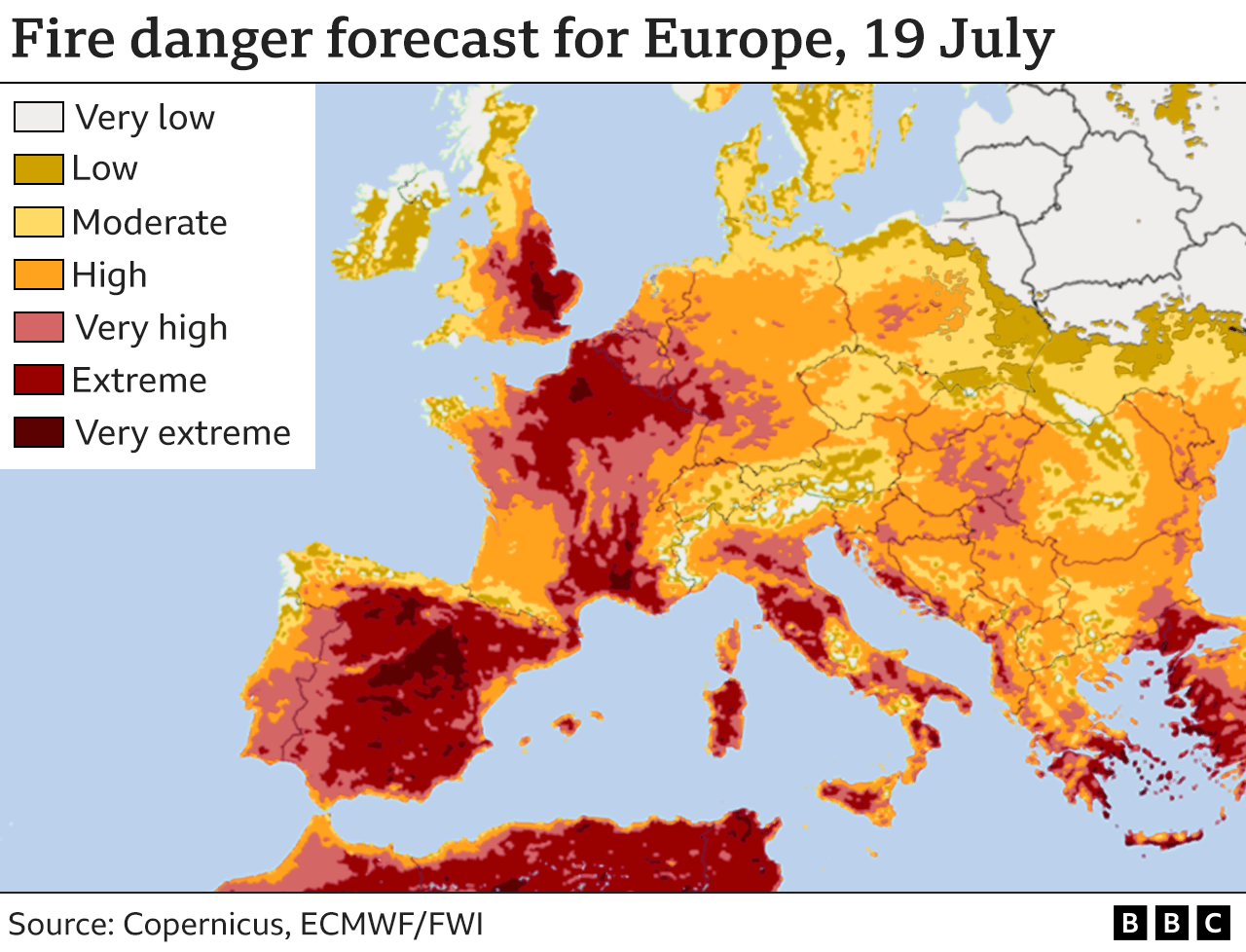
Published2 hours agoSharecloseShare pageCopy linkAbout sharingThis video can not be playedTo play this video you need to enable JavaScript in your browser.Sweltering temperatures hit much of Western Europe on Tuesday as a ferocious heatwave headed north.The UK hit its highest ever temperature of 40.2C, according to provisional Met Office figures, and forecasters warned temperatures were still climbing.Extreme heat warnings were issued in France and record July temperatures were reported in the Netherlands.Deadly wildfires in France, Portugal, Spain and Greece have forced thousands of people to evacuate their homes.Two people were killed by forest fires in Spain’s north-western Zamora region and trains in the area were halted because of fire near the tracks. An elderly couple died while trying to escape fires in northern Portugal.Heatwaves have become more frequent, more intense, and last longer because of human-induced climate change. German Environment Minister Steffi Lemke said the climate crisis meant the country had to rethink its preparations for very hot weather, drought and flooding.Wildfires were still burning a day after several French cities including Nantes in the west saw their hottest-ever day.More than 30,000 people have had to flee, with several camp sites destroyed and emergency shelters set up for evacuees. Gironde, a popular tourist region in the south-west, has been hit particularly badly, with firefighters from across France battling to control two blazes that have destroyed 19,300 hectares (47,700 acres) of land in the past week. The city of Bordeaux was blanketed by smoke early on Tuesday as the wind changed direction.”It’s a monster like an octopus, and it’s growing and growing and growing in the front, in the back, on both sides,” said Jean-Luc Gleyze, Gironde’s regional president. Image source, Sira Thierij/BBCThe hottest temperatures have now moved to the north and east. Hundreds of people have had to leave their homes in the far north-west of Brittany, and fire has destroyed 1,400 hectares of vegetation. A dozen animals at the zoo in La Teste-de-Buch died of stress and from the high temperatures, the government said. In a complex operation involving vets, zookeepers and others, 363 animals that could be moved were driven in convoys to Bordeaux-Pessac zoo 65km (40 miles) away.The UK’s Met Office said 40.2C°C was provisionally recorded at Heathrow Airport west of London on Tuesday, and forecasters warned temperatures were still climbing in many places. Extreme heat warnings have been issued covering central, northern and south-east England.UK heatwave set to peak with record high of 42C How do you keep cool when temperatures reach 41C?Forecasters say the heatwave is heading north, with the mercury expected to hit 40C in the far south of Belgium as well as western and southwestern Germany. A fire broke out in dunes at the Belgian resort of De Haan, setting several vehicles alight.Germany’s DWD weather service recorded a national record temperature of 41.2C in the city of Duisburg in July 2019 and spokesman Andreas Friedrich said similar highs were possible on Tuesday in similar areas along the River Rhine.The Netherlands saw one of its hottest days on record on Tuesday with 38.9C in Maastricht, forecasters said, warning that temperatures were continuing to rise.Image source, MIGUEL PEREIRA DA SILVA/EPA-EFEIn Spain and Portugal, more than 1,000 deaths have been attributed to the heat in recent days. A forest fire in Losacio in the north-west left one firefighter dead on Sunday and the body of a 69-year-old shepherd was found on Monday.Warnings of ‘heat apocalypse’ in parts of France BBC reporters on the ground in Europe as fires rageTemperatures in Portugal hit 47C on Thursday – a record for July. Most of the country has been placed under high fire danger by the national meteorological office IPMA.Several villages were evacuated as a fire spread in the Murça area of northern Portugal, and a man and a woman in their 70s died in their car while trying to flee the flames. Firefighters were fighting the blaze on three fronts and a local mayor said more than 3,000 hectares had been burned. Authorities are anxious to avoid a repeat of 2017, when 66 people were killed in wildfires. This video can not be playedTo play this video you need to enable JavaScript in your browser.In Spain, at least 20 fires are burning out of control. A passenger filmed the moment the train he was travelling on came to a temporary halt – as fires raged on both sides of the carriage near the northern border with Portugal.Forecasters in Italy are warning of temperatures as high as 40 to 42C between Wednesday and Friday. The effects of climate change in Europe were highlighted earlier this month when a melting glacier triggered an avalanche that killed 11 people. Now experts at Italy’s IlMeteo warn that new crevasses are opening up on Alpine peaks and that ice is melting even on Western Europe’s highest mountain, Mont Blanc.The world has already warmed by about 1.1C since the industrial era began and temperatures will keep rising unless governments around the world make steep cuts to emissions.More on this storyWhere is this hot weather coming from?4 days agoFirefighters battle wildfire in France1 day agoToxic wildfire smoke rips through Morocco4 days ago

Read more →

AI tech to automate process of denture design and enhance treatment efficiency without compromising accuracy

Loss of permanent teeth is usually caused by dental diseases or trauma and is common in the global population, especially among the elderly due to aging and relatively poorer oral health.
Failure to replace a missing tooth not only affects facial aesthetic and chewing function, but it may also lead to jawbone loss and shifting to teeth, which may cause malocclusion and bite irregularities that could have a significant impact on the health of the remaining teeth, gums, jaw muscles and jaw points.
Artificial teeth, also known as bridges and dentures, are prosthetic devices used to replace missing teeth. It is essential for the false teeth to resemble the patient’s original tooth so that the patient can retain his or her original appearance, chewing function, oral and physical health.
Currently, the process of designing and creating dentures is highly time-consuming as the existing computerised design process requires tedious manual inputs, teeth occlusion information collection as well as multiple denture fitting procedures due to limited accuracy of exciting technologies.
Researchers from the Faculty of Dentistry at the University of Hong Kong (HKU) and the Department of Computer Science of Chu Hai College of Higher Education, collaborated to develop a new approach using artificial intelligence to automate the design of individualised dentures, in order to enhance the treatment efficiency and improve patient experience.
The AI technology used in the process was based on 3D Generative Adversarial Network (3D-GAN) algorithm and tested on 175 participants recruited at HKU. The study shows that AI technology could reconstruct the shape of a natural healthy tooth and automate the process of false teeth design with high accuracy.
“The 3D GAN algorithm was selected due to its superior performance on 3D object reconstruction compared to other AI algorithms. In the preliminary study, 3D GAN was able to rebuild similar shapes to the original teeth for 60% of the cases. It is expected to mature with more AI training data,” co-Investigator, Dr Reinhard Chau explained.
The new approach only requires the digital model of a patient’s dentition to function. It can learn the features of an individual’s teeth from the rest of the dentition and generate a false tooth that looks like the missing tooth.
“This will facilitate the treatment workflow for dentists in replacing a missing tooth, as the preparation and fitting process will require minimal time, and a patient will not need to stay at the clinic for long hours,” said Principal Investigator Dr Walter Lam.
The study entitled “Artificial intelligence-designed single molar dental prostheses: A protocol of prospective experimental study” is published in the journal PLoS ONE. The preliminary results of the study were presented in the recent International Association of Dental Research (IADR) General Session. The study won the IADR Neal Garrett Clinical Research Prize and First runner-up in the 2022 IADR-SEA Hatton Award — Senior Category.
Story Source:
Materials provided by The University of Hong Kong. Note: Content may be edited for style and length.

Read more →

Vitamin B6 supplements could reduce anxiety and depression

Taking high-dose Vitamin B6 tablets has been shown to reduce feelings of anxiety and depression by new research.
Scientists at the University of Reading measured the impact of high doses of Vitamin B6 on young adults and found that they reported feeling less anxious and depressed after taking the supplements every day for a month.
The study, published in the journal Human Psychopharmacology: Clinical and Experimental, provides valuable evidence to support the use of supplements thought to modify levels of activity in the brain for preventing or treating mood disorders.
Dr David Field, lead author from the School of Psychology and Clinical Language Sciences at the University of Reading, said: “The functioning of the brain relies on a delicate balance between the excitatory neurons that carry information around and inhibitory ones, which prevent runaway activity.
“Recent theories have connected mood disorders and some other neuropsychiatric conditions with a disturbance of this balance, often in the direction of raised levels of brain activity.
“Vitamin B6 helps the body produce a specific chemical messenger that inhibits impulses in the brain, and our study links this calming effect with reduced anxiety among the participants.”
While previous studies have produced evidence that multivitamins or marmite can reduce stress levels, few studies have been carried out into which particular vitamins contained within them drive this effect.

Read more →