In Rural America, Covid Hits Black and Hispanic People Hardest
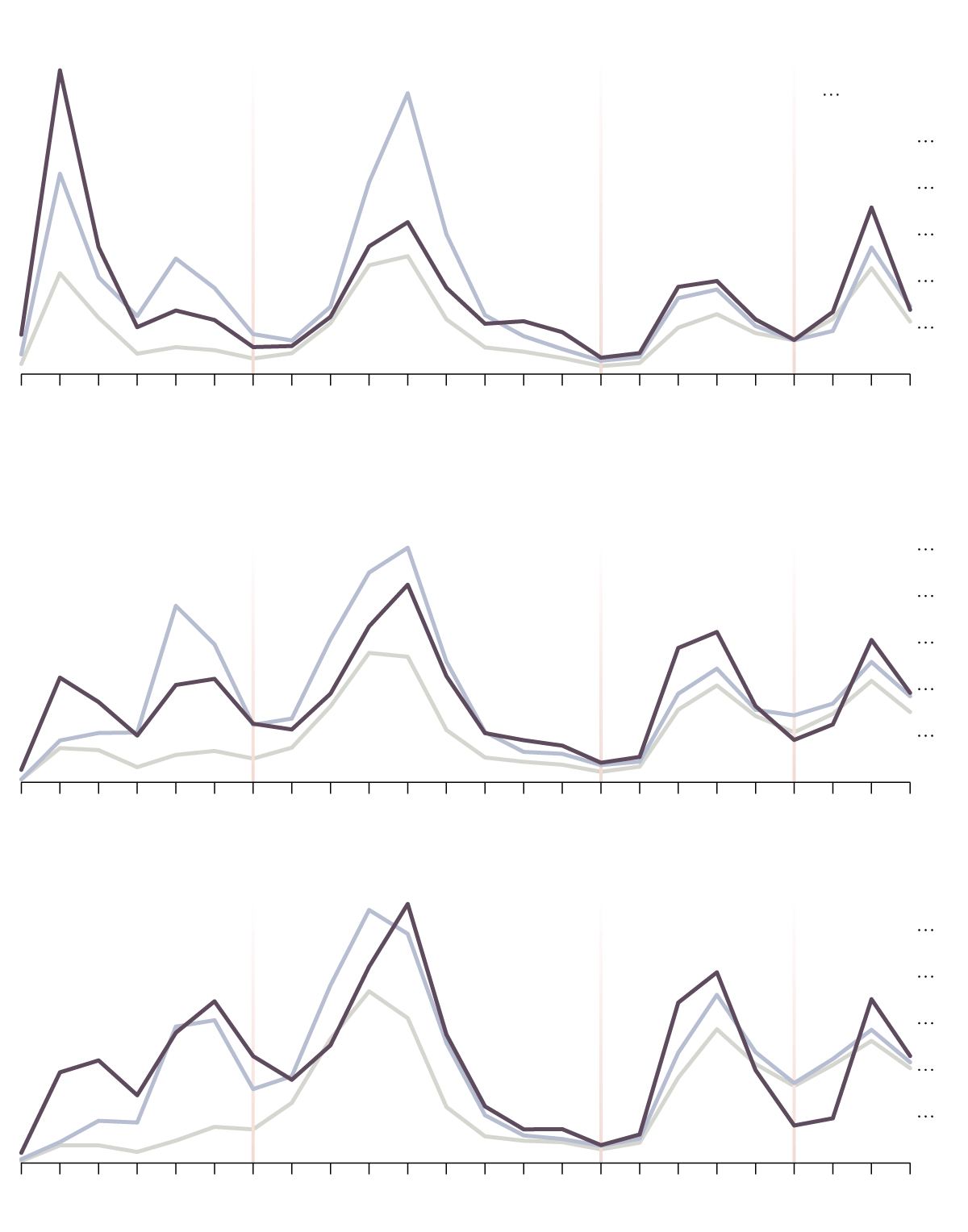
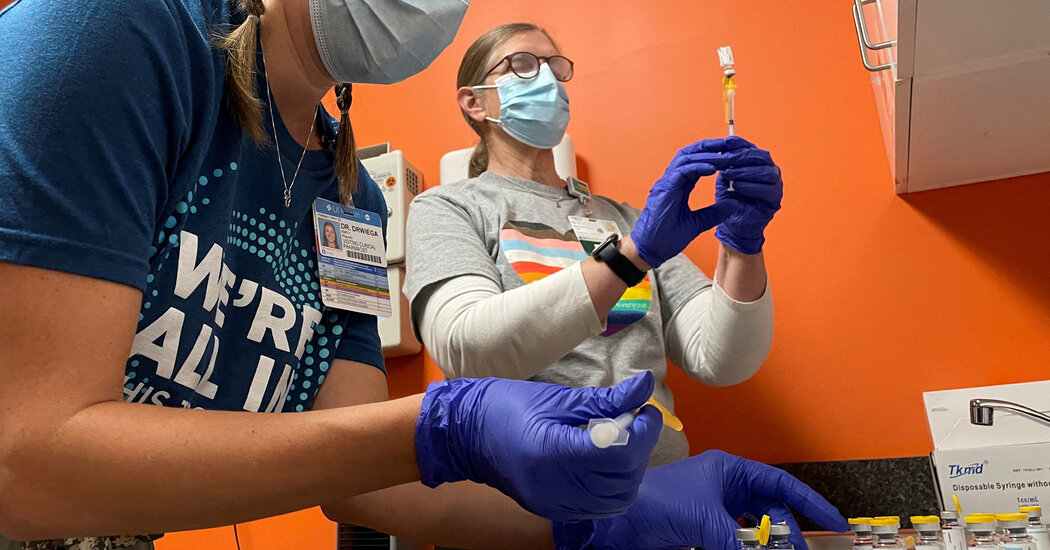
At the peak of the Omicron wave, Covid killed Black Americans in rural areas at a rate roughly 34 percent higher than it did white people.The coronavirus pandemic walloped rural America last year, precipitating a surge of deaths among white residents as the virus inflamed longstanding health deficits there.But across the small towns and farmlands, new research has found, Covid killed Black and Hispanic people at considerably higher rates than it did their white neighbors. Even at the end of the pandemic’s second year, in February 2022, overstretched health systems, poverty, chronic illnesses and lower vaccination rates were forcing nonwhite people to bear the burden of the virus.Black and Hispanic people in rural areas suffered an exceptionally high toll, dying at far higher rates than in cities during that second year of the pandemic.In towns and cities of every size, racial gaps in Covid deaths have narrowed. That has been especially true recently, when major gains in populationwide immunity have tempered the kind of pressure on health systems that appears to hurt nonwhite Americans the most.With coronavirus deaths climbing, though, and health officials bracing for an even deadlier winter, scientists warned that efforts so far to close the racial gap in vaccination rates had not been enough to insulate nonwhite people from the ravages of major Covid waves.Nowhere were those difficulties more pronounced than in rural areas. Black, Hispanic and Native American people in those places recorded the deadliest second year of the pandemic of any large racial or ethnic groups anywhere in the United States, according to the new research, which was led by Andrew Stokes, an assistant professor of global health at Boston University.In those communities, the Biden administration’s reassurances that every Covid death is now preventable jar with the difficulties of obtaining medical care.Rural pharmacies are often few and far between, making it difficult for poorer and less mobile residents to receive critical antiviral pills.Doctors said that some Black patients, especially those who are uninsured or far from hospitals, wait too long before seeking help to benefit from new treatments.And Black and Hispanic people have received booster shots at lower rates, a consequence of what some physicians describe as a lack of awareness stemming from cutbacks to public messaging, especially in conservative states.Read More on the Coronavirus PandemicYoung Children: In a new survey, a majority of American parents said they would refuse the coronavirus vaccine for their children, citing concern with the shot’s side effects.Periods: Nearly half of the participants in a recent study reported a heavier flow while menstruating after receiving the Covid vaccine. But experts said there was no cause for alarm.Boosters: The U.S. government has greenlit new vaccines to defend against the latest Omicron variants. But will the shots arrive too late?The Rise of BA.5: As the Omicron subvariant leads to a surge of new infections across the country, New Yorkers seem less inclined to get themselves into high alert mode again.“The national vibe is that everyone should now be in a position to do what they need to protect themselves from the virus,” said Bobby Jenkins, the mayor of Cuthbert, Ga., a mostly Black town whose only hospital closed six months into the pandemic. “But not everyone’s in a position to do that yet.”Racial disparities in Covid deaths have narrowed for several reasons, scientists said. The early vaccine rollout prioritized older Americans, who are disproportionately white. But over the last year, primary vaccinations for Black and Hispanic people climbed at roughly double the pace of white rates.The rate for Hispanic people, 54 percent, now exceeds that for white people, which is 50 percent. The Black vaccination rate, 43 percent, still lags, but the gap has diminished.Patients waited for Covid testing at the North Sunflower Medical Center in Ruleville, Miss.Rory Doyle for The New York TimesThe virus also infected and killed Black and Hispanic people at such greater rates in the pandemic’s first year — at one point in 2020, Black rural dwellers were dying at roughly six times the rate of white dwellers — that it may have had fewer targets by Year 2.Those changes have been so profound that among the oldest Americans, white Covid death rates have recently exceeded those of Black people, according to Centers for Disease Control and Prevention data.But the shrinking of the racial gap is partly because of a worsening of the pandemic for white people rather than serious advances for Black or Hispanic Americans. White Covid death rates climbed by 35 percent from the first to second year of the pandemic, the C.D.C. found. Over that period, death rates fell by only 1 percent in Hispanic people and 6 percent in Black people.“It’s not a movement toward equity,” said Alicia Riley, a sociologist at the University of California, Santa Cruz. “It’s that white people started getting and dying of Covid more.”The national picture has also disguised a shift that has as much to do with geography as with race, Dr. Stokes said. As the brunt of the pandemic shifted in late 2020 from big cities to rural areas, which have a bigger share of white residents, the national tally of Covid deaths naturally came to include more white people.But within rural areas, Covid deaths were apportioned at greater rates to nonwhite people, just as they were in big cities and in small or medium ones, Dr. Stokes’s team found. He used C.D.C. counts of Covid death certificates up until February, avoiding more recent and potentially incomplete data, and took into account the older age of the white population.At the worst of the Omicron wave this winter, Black and Hispanic death rates exceeded those of white people in towns and cities of every size, just as they had at the peak of every previous virus outbreak.Black death rates at this winter’s peak were greater than those of white people by 34 percent in rural areas, 40 percent in small or medium cities and 57 percent in big cities and their suburbs. The racial gap was so large in cities because white urbanites have died from Covid at vastly lower rates than white people in rural areas for most of the pandemic.

Read more →
Covid in China: Million in lockdown in Wuhan after four cases

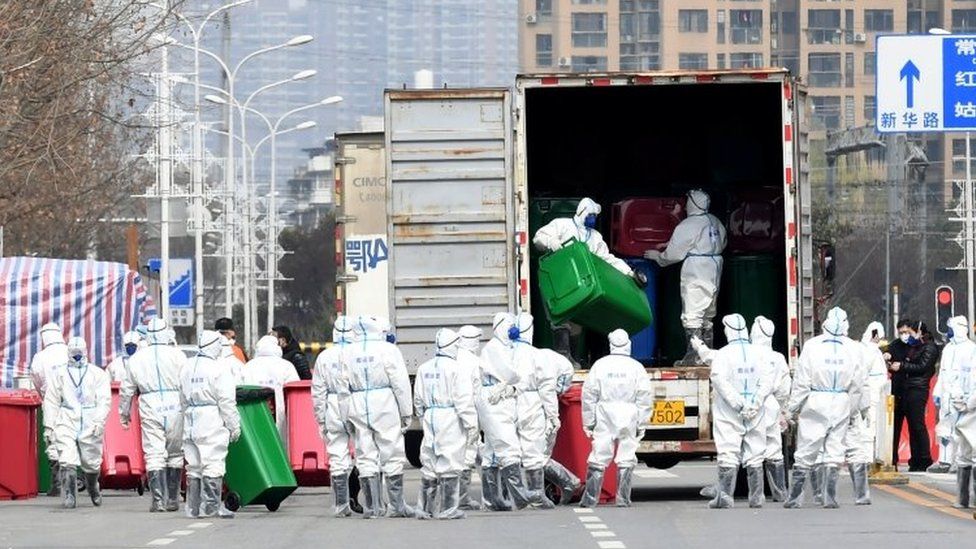
Published1 day agoSharecloseShare pageCopy linkAbout sharingImage source, ReutersAlmost one million people in a suburb of Wuhan – China’s central city where the coronavirus was first recorded – have been placed under lockdown.Jiangxia district residents have been ordered to stay inside their homes or compounds for three days after four asymptomatic Covid cases were detected.China follows a “zero Covid” strategy, including mass testing, strict isolation rules and local lockdowns.This has resulted in far fewer deaths than in many other countries.But the strategy is facing growing opposition as people and businesses continue to face the strain of restrictions.In Wuhan, a city of 12 million people, regular testing uncovered two asymptomatic cases two days ago.Two more cases were found through contact tracing, and shortly after the lockdown order was issued.Wuhan became known around the world in early 2020 as the first place scientists detected the new coronavirus – and the first city to be put under harsh restrictive measures. At the time, the wider world was shocked by the strict lockdown, but many cities and countries were soon forced to impose their own similar measures. Later, China became known as a Covid success story, with restrictions lifted much earlier than in many other countries. But that has changed again, with China pursuing a “zero Covid” strategy resulting in frequent local lockdowns, rather than trying to live with the virus as in most other countries. Zero Covid dominates life in China.Travel decisions, sport choices, the timing of a day’s activities and, in some cases, even the ability to find work are all dependant on Covid.The rest of the world may have moved on, but in China it’s testing, scanning, showing scans, more testing, scanning again, planning for the next test etc etc.One day this may end but right now there is not the slightest hint that it’s just around the corner.The threat of being locked down or being denied permission to leave a city constantly hangs over the entire population.In the cities which have had the longest, most strict lockdowns there is fatigue over the Covid threat.For the tens of millions of people living in places like Jilin City, Changchun, Xi’an and Shanghai, the idea of being ordered to stay at home again for months at a time seems unbearable.China’s zero Covid approach has prevented hospitals from being swamped by infected patients and it has kept death rates much lower that they would have been otherwise – but, at some point, China will have to find a way to move forward.If it doesn’t, the economy will sink.Most importantly, there is the Communist Party Congress to get through in autumn, and the country’s low vaccination rates have to be improved, especially among older people. It is the only way out.Last month, Shanghai – China’s giant financial capital with nearly 25 million residents – finally emerged from a strict two-month lockdown, though residents are adapting to a “new normal” of frequent mass testing. A rising number of Chinese companies and factory production lines are maintaining a closed-loop system in order to follow the goal of completely eliminating Covid.In order to keep parts of the economy open, employees have been told to live temporarily in their workplaces to minimise contact between work and home.Zero Covid holds danger for China’s XiCovid origin studies say evidence points to marketEarlier this week, scientists said there was “compelling evidence” that Wuhan’s Huanan seafood and wildlife market was at the centre of the Covid outbreak.  Two peer-reviewed studies re-examined information from the initial outbreak in the city.One of the studies shows that the earliest known cases were clustered around that market. The other uses genetic information to track the timing of the outbreak. It suggests there were two variants introduced into humans in November or early December 2019.Together, the researchers said this evidence suggests that the virus was present in live mammals that were sold at Huanan market in late 2019. They said it was transmitted to people who were working or shopping there in two separate “spill-over events”, where a human contracted the virus from an animal.One of the researchers involved, virologist Prof David Robertson from the University of Glasgow, told BBC News that he hoped the studies would “correct the false record that the virus came from a lab”.China has seen more than 2.2 million cases and 14,720 deaths since the pandemic began in 2019, according to America’s Johns Hopkins University. You might also be interested in:This video can not be playedTo play this video you need to enable JavaScript in your browser.More on this storyBlind masseurs struggle after Shanghai lockdown20 JulyCovid origin studies say evidence points to market2 days agoZero Covid holds danger for China’s Xi8 JulyChinese officials sorry for Covid-19 break-ins19 JulyTourists stuck in China resort city after lockdown19 July

Read more →

Madhya Pradesh Covid-19: Thirty India students vaccinated with one syringe

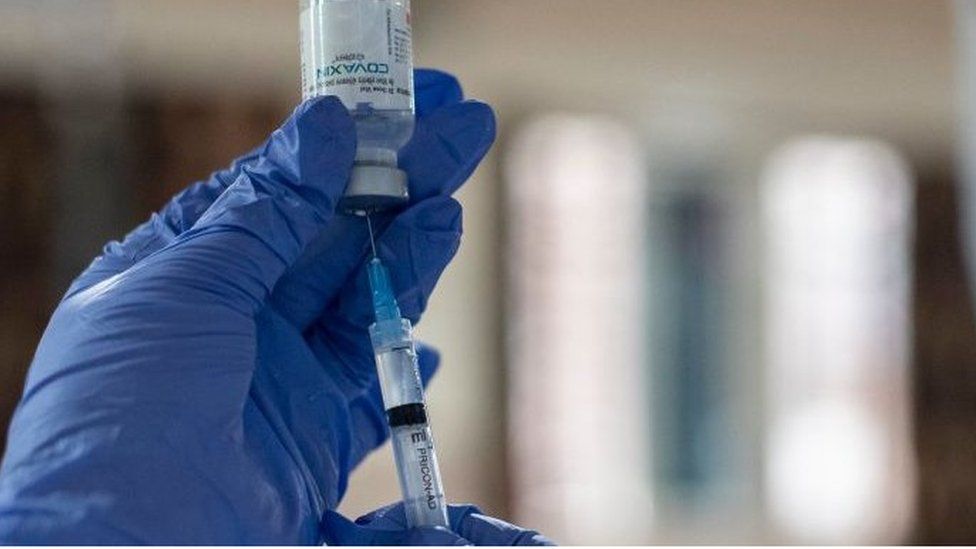
Published3 hours agoSharecloseShare pageCopy linkAbout sharingImage source, Getty ImagesA health official is being investigated for vaccinating 30 students with a single syringe in the central Indian state of Madhya Pradesh.The incident took place in a school in Sagar district where children were being given Covid-19 vaccines.India’s health ministry mandates a “one needle, one syringe, only one time” protocol for Covid-19 vaccines.India has administered over 2.03bn Covid-19 vaccines so far.Single-use disposable syringes are widely used in India to avoid the spread of deadly diseases like HIV. However, there have been multiple incidents in the past where a single syringe has been reused in hospitals due to a shortage of equipment.Jitendra Rai, who was vaccinating the children, told the media that he was only given one syringe by the health department and he was just following orders.Parents who had accompanied their children spotted the issue and reported it to the school authorities.When state officials reached the school, Mr Rai was missing from the school and his phone was turned off. The state’s health department has registered a case of negligence against him. Meanwhile, it has also started an inquiry against the official responsible for dispatching equipment for the vaccination drive.A spokesperson from the opposition Congress party has demanded that the state’s health minister should resign over the incident.India is the second country after China to have crossed the two-billion Covid vaccines mark. In July, the government announced a 75-day free Covid booster dose programme for all adults to mark India’s 75th independence anniversary.According to India’s health ministry, 98% of adults have received at least one dose of the Covid vaccine, while 90% have been fully vaccinated.On Wednesday, the country reported 18,313 daily cases for the past 24 hours and 57 Covid-related deaths.More on this storyWhy did India rush to approve a homegrown vaccine?5 January 2021The children whose friends are small Zoom squares5 February

Read more →

Face shields don't give high level COVID protection, study shows

If you wore a face shield during the pandemic, it probably didn’t give you a high level of protection against Covid, according to new research from the University of East Anglia.
A study published today compared 13 styles of face shield in controlled laboratory settings.
While all the face shields provided some protection, none gave high levels of protection against external droplets.
As well as studying face shields in the lab, the research team surveyed people including health workers in middle income countries (Brazil and Nigeria) about their views on face shields as PPE.
Prof Paul Hunter, from UEA’s Norwich Medical School, said: “Face shields have been popular because they don’t hinder breathing, they allow more natural communication than face masks and they provide splash protection.
“They were widely used through the Covid pandemic. But until now there hasn’t been a great deal of evidence about how protective they really are — particularly taking into account how people use them in the real world, and especially in poorer parts of the world.

Read more →

Most high blood pressure in children and teenagers is linked with unhealthy lifestyle

Inactivity, diets high in sugar and salt, and excess weight account for nine in ten cases of high blood pressure in children and adolescents, according to a consensus paper by heart health experts published today in European Heart Journal, a journal of the European Society of Cardiology (ESC). The document, which focuses on hypertension in 6 to 16 year-olds, recommends that families get healthy together.
“Parents are significant agents of change in the promotion of children’s health behaviours,” said first author Professor Giovanni de Simone of the University of Naples Federico II, Italy. “Very often, high blood pressure and/or obesity coexist in the same family. But even when this is not the case, it is desirable that lifestyle modifications involve all family members.”
Dietary recommendations for treating high blood pressure in children include emphasising fresh vegetables, fruits, and other high fibre foods, limiting salt intake, and avoiding sugar-sweetened drinks and saturated fat. Children and adolescents should do at least one hour of moderate-to-vigorous physical activity every day, such as jogging, cycling or swimming, and spend no more than two hours a day on sedentary activities. “Parents should monitor the amount of time their children spend watching TV or using smartphones and suggest active alternatives,” said Professor de Simone.
Realistic goals should be set for weight, diet, and physical activity that focus on the aspects needing the most improvement. “Recording weight, eating habits and exercise over time — but without becoming obsessive — can help young people and their families to track progress towards their goals,” said Professor de Simone.
A “health-promoting reward system” is recommended. Professor de Simone said: “Ideal incentives are those that increase social support and reinforce the value of targeted behaviours, such as a family bike ride or a walk with friends.”
The document refers to childhood obesity and hypertension as “insidious siblings” which gradually become a serious health hazard. Studies have shown that childhood hypertension is becoming more common and that part of the increase can be explained by obesity, particularly abdominal obesity. It is estimated that less than 2% of normal weight children are hypertensive, compared to 5% of overweight and 15% of obese children. Professor de Simone said: “The rise in childhood hypertension is of great concern as it is associated with persistence of hypertension and other cardiovascular problems during adulthood.”
Early diagnosis of elevated blood pressure is crucial so that it can be managed with lifestyle and, if needed, medications. Even one blood pressure measurement by a doctor or nurse can identify children with high blood pressure, but a second visit is recommended for confirmation. Professor de Simone said: “Screening should be performed in the primary care setting at least yearly, regardless of symptoms. This is because hypertension in children, as in adults, is usually asymptomatic.”
When blood pressure measurements point to hypertension, a medical history and physical examination are needed to determine potential causes and identify behaviours that can be modified. Information includes family history of hypertension and cardiovascular disease, birth weight and gestational age; details on lifestyle such as smoking, salt intake, alcohol consumption, physical exercise and leisure time activities; and possible symptoms including headache, nosebleeds, vertigo, visual impairment, low school performance, attention difficulties, shortness of breath, chest pain, palpitations and fainting.
In the early stages, treatment of childhood hypertension should focus on education and behaviour change. If blood pressure goals are not achieved, a single low-dose drug should be introduced. If one drug is ineffective, small doses of two drugs may be needed.
The authors call for public health agencies to prioritise prevention and management of hypertension in children and adolescents. For example, campaigns to increase awareness of the risks of high blood pressure in young people and the positive impact of a healthy lifestyle including physical activity, a nutritious diet low in salt and sugar, and not smoking. Other recommended actions include protected time for children on TV and social media without promotion of junk food or potentially deleterious lifestyle habits.
The consensus document was prepared by the ESC Council on Hypertension, European Association of Preventive Cardiology, European Association of Cardiovascular Imaging, Association of Cardiovascular Nursing & Allied Professions, ESC Council for Cardiology Practice, and Association for European Paediatric and Congenital Cardiology.

Read more →

AI performs as well as medical specialists in analyzing lung disease, research shows

A Nagoya University research group has developed an AI algorithm that accurately and quickly diagnoses idiopathic pulmonary fibrosis, a lung disease. The algorithm makes its diagnosis based only on information from non-invasive examinations, including lung images and medical information collected during daily medical care.
Doctors have waited a long time for an early means of diagnosing idiopathic pulmonary fibrosis, a potentially fatal disease that can scar a person’s lungs. Except for drugs that can delay the disease’s progression, established therapies do not exist. Since doctors face many difficulties diagnosing the disease, they often have to request a specialist diagnosis. In addition, many of the diagnostic techniques, such as lung biopsy, are highly invasive. These investigative measures may exacerbate the disease, increasing a patient’s risk of dying.
Taiki Furukawa, Assistant Professor of the Nagoya University Hospital, in collaboration with RIKEN and Tosei General Hospital, has developed a new technology to diagnose idiopathic pulmonary fibrosis. Using artificial intelligence (AI), the group analyzed medical data from patients in Tosei General Hospital’s interstitial pneumonia treatment facility, collected during normal care. They found that their AI diagnosed idiopathic pulmonary fibrosis with a similar level of accuracy as a human specialist. They published their results in the journal Respirology.
Despite finding that their AI performed just as well as experts, the team stress that they do not see it as replacing medical professionals. Instead, they hope that specialists will use AI in medical treatment to ensure that they do not miss opportunities for early treatment. Its use would also avoid invasive procedures, such as lung biopsies, which could save lives.
“Idiopathic pulmonary fibrosis has a very poor prognosis among lung diseases,” Furukawa says. “It has been difficult to diagnose even for general respiratory physicians. The diagnostic AI developed in this study would allow any hospital to get a diagnosis equivalent to that of a specialist. For idiopathic pulmonary fibrosis, the developed diagnostic AI is useful as a screening tool and may lead to personalized medicine by collaborating with medical specialists.”
Furukawa is excited about the possibilities: “The practical application of diagnostic AI and collaborative diagnosis with specialists may lead to a more accurate diagnosis and treatment. We expect it to revolutionize medical care.”
This study was supported by JSPS KAKENHI, Grant/Award Number: JP19110253; The Hori Science and Arts Foundation; The Japanese Respiratory Foundation.
Story Source:
Materials provided by Nagoya University. Note: Content may be edited for style and length.

Read more →

Potentially Deadly Bacteria Detected in U.S. Soil for First Time

The bacteria, Burkholderia pseudomallei, was found along the Gulf Coast region of Southern Mississippi. Previously, it had been detected in parts of Asia and Australia.A potentially deadly bacteria was found for the first time in water and soil samples in the United States, prompting the Centers for Disease Control and Prevention to alert doctors and public health experts throughout the country on Wednesday to take it into consideration when examining patients.The bacteria, Burkholderia pseudomallei, was detected in the Gulf Coast region of Southern Mississippi. Exposure to the bacteria can cause melioidosis, a “rare and serious disease,” according to the C.D.C.; about one in every 4,600 people exposed are found to have the disease, according to a study from 2019. The study also found that about 90,000 people die annually from melioidosis.“Once well-established in the soil, B. pseudomallei cannot feasibly be removed from the soil,” the C.D.C wrote in its health advisory. “Public health efforts should focus primarily on improving identification of cases so that appropriate treatment can be administered.”The samples show that the bacteria has been present in the Mississippi region since at least 2020, when one person in the Gulf Coast region was found to have melioidosis, though it is unclear exactly how long Burkholderia pseudomallei, also known as B. pseudomallei, has been in the area.The bacteria has previously been found in regions with tropical and subtropical climates around the world, like South and Southeast Asia, northern Australia and parts of Central and South America. The C.D.C. said that modeling showed that southern Mississippi’s climate was also conducive to growing it.The environmental sampling in Mississippi was conducted after two patients in the area received diagnoses of melioidosis, two years apart — one in July 2020, the other in May 2022. The unnamed individuals were not related, the C.D.C said, but lived in “close geographical proximity,” and had not recently traveled out of the United States. Genomic sequencing data showed that both people had been infected by the same novel strain from the Western Hemisphere, officials said. Both patients were hospitalized and recovered after antibiotic therapy.Last month, the Mississippi State Department of Health and C.D. C collected environmental samples of soil, water and plant matter from the patients’ properties, household products and nearby areas they frequented.The bacteria can infect animals and people through direct contact or through cuts and wounds. The risk of spreading from person to person is low, officials said. Symptoms usually occur between one day to three weeks after exposure.Most melioidosis cases occur outside of the United States, the C.D. C said. But last year, four people in four different states were infected with melioidosis after using contaminated aromatherapy spray sold at Walmart. Two of the four people died, officials said.Melioidosis symptoms are nonspecific and vary from person to person, the C.D. C said, but symptoms include fever, localized pain or swelling, chest pain and headaches. People with diabetes, excessive alcohol use, chronic lung disease, chronic kidney disease and immunosuppressive conditions are more susceptible to the bacteria. Officials said a quick diagnosis and antibiotics were crucial.B. pseudomallei isn’t the only thing found in soil that can also cause illness.Valley fever, also called coccidioidomycosis, is an infection caused by a fungus that lives in the soil in the southwestern United States and parts of Mexico and Central and South America. It is contracted by breathing in the microscopic fungal spores from the air, although most people who breathe in the spores do not get sick, the C.D.C. said. In 2019, about 20,000 cases were reported to the agency, most from people living in Arizona or California.

Read more →

U.S. to Distribute 800,000 Doses of Monkeypox Vaccine

The doses were withheld pending an F.D.A. review, which has now been completed.Easing a shortfall that has plagued the fight against monkeypox for weeks, the Food and Drug Administration announced on Wednesday that it had cleared nearly 800,000 additional doses of vaccine for use. The Biden administration said it would announce allocations for states and jurisdictions on Thursday.The new doses should greatly expand the supply in the United States, but some experts questioned whether they would be enough to meet the demand. Since May, the country has confirmed 3,600 cases, among the highest tallies in the world, and the figure is almost certainly an underestimate.Stores of Jynneos, the monkeypox vaccine, have been constrained since the start of the outbreak. The vaccine is made by Bavarian Nordic, a small company in Denmark.Although federal agencies helped develop Jynneos, the strategic national stockpile held just a few thousand doses when the outbreak began, and the Biden administration has moved slowly in acquiring more.American officials have now ordered nearly seven million doses, which will arrive in batches over the next months. So far, the administration has shipped about 320,000 doses to states.The F.D.A. said on Wednesday that it had completed an inspection of Bavarian Nordic’s manufacturing plant in Denmark earlier this month and had determined that the vaccine produced there met its standards.Given the rising need, the agency said it had “facilitated the shipment of manufactured doses” to the United States, but declined to say whether the doses had arrived in the country.“Aggressively responding to the monkeypox outbreak is a critical priority,” Xavier Becerra, secretary of the Department of Health and Human Services, said in a statement.“H.H.S. is working to make these doses available to states and jurisdictions as soon as possible to fulfill their needs and will announce allocations tomorrow,” he added.Assuming the doses are quickly distributed, they should ease at least some of the shortages. The supply now is “probably sufficient to meet the most pressing need,” said Tinglong Dai, an expert in vaccine supply at Johns Hopkins University.What to Know About the Monkeypox VirusCard 1 of 6What is monkeypox?

Read more →

Metaphor and images should be used alongside traditional medical scales for patients to describe pain

Patients should be able to use images and metaphors alongside traditional medical scales to describe their pain to doctors, a new study says.
Pain cards with pictures to describe feelings and poetry can all help people portray chronic pain more meaningfully, according to the research
Doctors will get a better understanding of the impact of pain — and patients will be better able to express how they feel.
Giving patients other ways of expressing the impact of pain could help to reveal important information which will aid diagnosis or allow doctors to give better support.
Pain charts and visual-linguistic scales were developed during the twentieth century to help doctors and patients measure pain. But asking people to report pain in this way can be challenging for some.
Researchers have said only using scales “displaces the patient’s own story, sidesteps the issue of pain’s private meaning, and disrupts the potential for humane communication between patient and doctor.”
The research, by Nicole Miglio from the University of Milan and the University of Haifa and Jessica Stanier from the University of Exeter, is published in the journal Frontiers in Pain Research.

Read more →

F.D.A. Tobacco Science Official Takes Job at Philip Morris

The agency official headed an office that plays a key role in deciding whether to approve e-cigarettes and other products aimed at reducing smoking.A Food and Drug Administration official with considerable power over authorization decisions for e-cigarettes and products aimed at curbing smoking resigned on Tuesday to work for Philip Morris International, the global tobacco conglomerate and maker of Marlboros.The official, Matt Holman, was chief of the office of science in the agency’s Center for Tobacco Products. In a memo to the staff on Tuesday, Brian King, the center’s director, wrote that Dr. Holman had announced that he would be leaving — effective immediately — to join Philip Morris. The memo said Dr. Holman had been on leave and, consistent with agency ethics policies, had recused himself from all tobacco center work “while exploring career opportunities outside of government.”Mr. King lauded Dr. Holman’s 20 years of work at the F.D.A., where he has in recent years been “preparing for and overseeing review” of marketing applications for e-cigarettes and other nicotine-delivery products. Dr. Holman said in an interview on Wednesday that his exact role at Philip Morris had so far been broadly defined but added that he would work on tobacco harm-reduction efforts and provide some input on regulatory submissions to the agency.His resignation adds further turmoil to the agency’s tobacco control division, which is undergoing a review ordered by Dr. Robert Califf, the agency’s commissioner. The division also lost its longtime director, Mitch Zeller, who retired in April.To critics, Dr. Holman’s move is a particularly concerning example of the “revolving door” between federal officials and the industries they regulate, in this case, one that has garnered a high degree of public distrust. It has also raised questions about agency approvals, including that of Philip Morris’s IQOS, a “heat-not-burn” tobacco device, which some researchers have found troubling. IQOS is not sold on the U.S. market now because of patent litigation, but if those were resolved, the device would face fresh F.D.A. reviews.Federal rules governing “revolving door” career moves do not prevent an official from overseeing regulatory matters one week and joining a corporation with products under review the next.“This is legal. That’s the bottom line,” said Dr. Michael Carome, director of the Public Citizen health research group. “It’s this type of revolving door move that really undermines public confidence in the agency.”The federal rules do ban Dr. Holman from appearing before the F.D.A. on matters in which he “participated personally and substantially during government service.”Dr. HolmanU.S. Food and Drug AdministrationDr. Holman said that he consulted with agency ethics lawyers before starting job discussions earlier this month. He said he was drawn to Philip Morris because he viewed the company as being committed to the goal of moving cigarette smokers to noncombustible and less harmful products.“They are taking the actions that I think would align with such a goal,” Dr. Holman said. “And that’s what really drew my attention to P.M.I. I’m going there not to help them sell more cigarettes, but the opposite.”He brushed off “revolving door” criticisms, saying that if that were his motivation, he could have left the agency for industry many years ago. But lawmakers and some public health experts criticized Dr. Holman’s choice and its effect on the F.D.A.’s decision-making.“It is embarrassing for the F.D.A., which sees itself as a public health agency, to have its employees go to a company that is a leading manufacturer of death,” said Micah Berman, an associate professor of public health and law at Ohio State University.Representative Raja Krishnamoorthi, a Democrat of Illinois, was equally critical. “The revolving door between F.D.A. and the industries it is tasked with regulating is extremely disturbing,” he said in a statement. “While some, including P.M.I., may argue that their hire is evidence of P.M.I.’s alleged commitment to taking the health impacts of its products more seriously, I won’t hold my breath.”As head of the F.D.A. science office, Dr. Holman played a key role in approvals of electronic cigarettes and similar devices, which manufacturers have had to submit for review to stay on the market in recent years.IQOS, the Philip Morris product that Altria has a license to distribute in the United States, was one of the approved products. It is sold in Korea, Japan and other countries. A company spokesman said U.S. sales were expected to resume next year, but it must undergo new agency reviews before that.Critics of the IQOS approval include Stanton Glantz, a retired professor of medicine, and his colleagues at the University of California, San Francisco, who published a study saying the device contained toxins, some potentially carcinogenic and some at higher levels than in combustible cigarettes. The agency’s approval “disregarded valid scientific evidence and misapplied the public health standard mandated by law,” the study in the journal Tobacco Control concluded.Dr. Glantz said on Wednesday that Dr. Holman ignored another major study showing that e-cigarette use — outside of controlled studies of quitting efforts — was not associated with reduced rates of smoking. He said approvals have done little to deal with the problem of dual-use, or using cigarettes and e-cigarettes, which is worse for overall health. Of Dr. Holman’s departure, Dr. Glantz said, “good riddance.”“He’s the one who signed off on these approvals,” he said. “They deal with all of these issues by ignoring it, by relying on out-of-date studies.”Among the F.D.A.’s recent controversies was the decision in June to deny marketing authorization to Juul Labs’ e-cigarettes. Since then, the agency has relented, announcing a review of its decision.In a court filing, Juul cited the authorization granted to Philip Morris as a reason it would likely prevail, saying IQOS was approved even though a dozen chemicals in IQOS aerosols were “‘potentially genotoxic and/or carcinogenic’ and were ‘present in higher concentration[s]’ than in combustible cigarette smoke.”Dr. Holman said many agency decisions have their critics, but he believed IQOS authorization was warranted on a full review of the data.Philip Morris said in a statement that Dr. Holman “is committed to helping existing adult smokers access scientifically substantiated smoke-free alternatives while protecting youth. We are looking forward to him joining our team as we continue to pursue a smoke free future.”The company also recently hired Keagan Lenihan, a former F.D.A. chief of staff, as a vice president of government affairs.

Read more →