A new learning method could help people with autism improve visual perception capabilities

A new study from Tel Aviv University proposes a new learning method for people with autism that may accelerate the learning process and even significantly improve capabilities in terms of visual perception. According to the researchers, improving the perceptual capacity of people with autism is often a challenge, which usually requires long and tedious training alongside additional learning challenges that characterizes autism, such as the ability to generalize learning to new situations.
The new method proposed by the researchers is based on utilizing “memory flashes,” which consists of exposing a person for just a few seconds to a task that has already been learned. In comparison to standard teaching practice which reinforce length and repetition of new skills, the new method demonstrated success in improving both the visual perception capabilities and the generalization of learning — that is, excelling in a similar task in conditions they have not learned before — for people with autism.
The study was conducted by doctoral student Shira Klorfeld-Auslender and Prof. Nitzan Censor from the School of Psychological Sciences and the Sagol School of Neuroscience at Tel Aviv University, in collaboration with Prof. Ilan Dinstein and his team from Ben-Gurion University. The study was published in the journal Current Biology.
Prof. Censor explains: “In my laboratory we focus on the study of learning in humans, and already today we know that a large part of learning does not happen in formal training settings but afterwards, in processes of assimilation and reinforcement of memory that occur ‘offline’; for example, when our brain is asleep. However, standard teaching methods still advocate an approach where longer practice equals better learning: if you want to play the piano, you should practice playing the piano for many hours every day until the playing becomes second nature to you. We have identified an alternative learning mechanism that uses ‘memory flashes’ — a brief exposure to a task that has already been learned — in order to assimilate and generalize skill developed. ”
In the study, the research team examined about 30 high-functioning adults with autism who were asked to learn a visual task (for example, identifying the direction of lines that appear for a few milliseconds on the screen). However, instead of repeating the task for a long time each day, the examinees in the main experimental group learned the task in depth on the first day, and in the following days were exposed to the visual stimulus for only a few seconds. At the end of the process, although the study participants studied the task for a minimal amount of time, their performance improved significantly, by about 20-25%, similar to multiple-repetition learning and similar to the achievements of subjects without autism.
Moreover, even when presented with a task under new, unlearned conditions (for example, when the stimulus learned is in a new location), the examinees who learned the memory flash method performed better than those in the control group; that is, they knew how to generalize the skills learned in the first task. The participants’ success in generalizing the learning to other situations is considered quite significant, as these are skills that people with autism have great difficulty with.
“We have already proven in previous studies that processes of learning assimilation can be improved through flashes of memory,” says Prof. Censor. “We have shown that it does not take prolonged practice time to assimilate the task — it is enough to flash it for a few seconds to stimulate the relevant brain network, and the brain will then assimilate the material on its own. In this case we tested people with autism. People with autism often have difficulty learning and generalizing repetitive learning, that is, using tools that have also been learned in new tasks. Through short flashes of visual stimulus in the task learned, we were able to produce learning that is identical to repetitive learning in terms of its effectiveness; meaning, we significantly shortened the learning time. The added value is the ability to generalize: the examinees performed a task under new conditions, as if they had fully learned it. ”
According to Prof. Censor, the new method may have significant potential implications in a wide range of areas. “The new study could pave the way for more meaningful approaches to learning for people with autism, in a wide variety of tasks. In addition, the method may help in rehabilitation after neurological injuries, that is, in training the brain to regenerate the damaged connections, through shorter training. ”
Story Source:
Materials provided by Tel-Aviv University. Note: Content may be edited for style and length.

Read more →

Insight into how congenital heart defects manifest

About one percent of the world population is born with a congenital heart defect, which affects about 40,000 U.S. births each year, but how these particular birth defects come about is largely unknown.
In an effort to learn more about how the heart develops, researchers at the University of Maryland School of Medicine (UMSOM) have determined that the cells lining the heart direct the cardiac muscle to grow until the heart reaches its full size. They also outlined the complex mechanism that regulates this process, which requires two sets of brakes to be bypassed for the heart to develop properly.
The researchers say these findings explain a bit more about what can go wrong during development that can lead to heart birth defects and may also help develop better techniques for regenerating heart tissue.
“To recover from disease, you need to figure out how to do heart regeneration. At this time, no one can regenerate an entire heart, mostly because they have been focused on using the heart muscle to grow more heart muscle cells,” said Deqiang Li, PhD, Assistant Professor of Surgery at the University of Maryland School of Medicine in the Center for Vascular & Inflammatory Diseases. “Our findings suggest that we may need other cells from the heart, such as the epicardium (the cells lining the heart), to give the necessary instructions for the heart muscle to grow bigger.”
The mechanism the team described was published on June 20 in Circulation Research.
The gene regulator histone deacetylase 3 (HDAC3, for short) was known to be important for development in the heart muscle cells, but whether it played specific role in the separate layer of cells lining the heart was unknown. To explore the role of HDAC3 in heart development, the researchers genetically engineered mice to lack HDAC3 only in the cells lining the heart. In fetal mice, they found that these hearts without HDAC3 in the heart lining had thinner, compact walls in the heart’s ventricles — basically, it seemed like the hearts did not grow enough.

Read more →

Diets higher in calcium and potassium may help prevent recurrent symptomatic kidney stones

Kidney stones can cause not only excruciating pain but also are associated with chronic kidney disease, osteoporosis and cardiovascular disease. If you’ve experienced a kidney stone once, you have a 30% chance of having another kidney stone within five years.
Changes in diet are often prescribed to prevent recurrent symptomatic kidney stones. However, little research is available regarding dietary changes for those who have one incident of kidney stone formation versus those who have recurrent incidents.
Mayo Clinic researchers designed a prospective study to investigate the impact of dietary changes. Their findings show that enriching diets with foods high in calcium and potassium may prevent recurrent symptomatic kidney stones.
Dietary factors were based on a questionnaire administered to 411 patients who had experienced first-time symptomatic kidney stones and a control group of 384 people — all of whom were seen at Mayo Clinic in Rochester and Mayo Clinic in Florida between 2009 and 2018. The findings, which were published in Mayo Clinic Proceedings, show that lower dietary calcium and potassium, as well as lower intake of fluids, caffeine and phytate, are associated with higher odds of experiencing a first-time symptomatic kidney stone.
Of the patients who had first-time stone formation, 73 experienced recurrent stones within a median of 4.1 years of follow-up. Further analysis found that lower levels of dietary calcium and potassium predicted recurrence.
“These dietary findings may have particular importance because recommendations for preventing kidney stones have been based primarily on dietary factors associated with first-time rather than recurrent stone formation,” says Andrew Rule, M.D., a Mayo Clinic nephrologist and senior author of the study. “Patients may not be likely to adjust their diet to prevent an incidence of kidney stones, but they are more likely to do so if it can help prevent recurrence.”
Fluid intake of less than 3,400 milliliters per day, or about nine 12-ounce glasses, is associated with first-time stone formation, along with caffeine intake and phytate, the study finds. Daily fluid intake includes intake from foods such as fruits and vegetables.

Read more →

Older Generations Are Reclaiming Rites of Passage

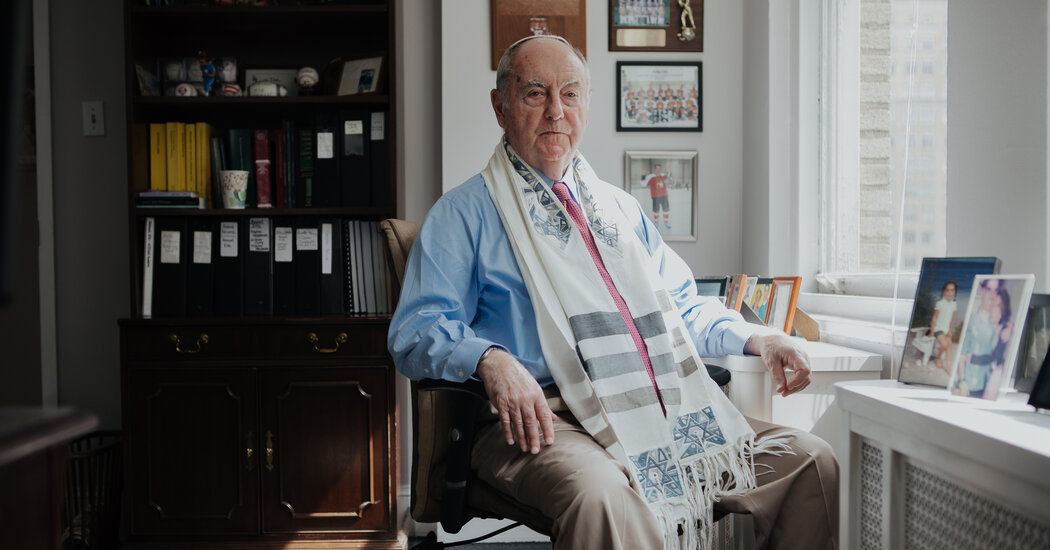
Rituals like graduations and weddings are few and far between for older adults. Some are finding ways to honor their momentous occasions.Harry Oxman’s bar mitzvah at the Society Hill Synagogue in Philadelphia looked much like the traditional Saturday morning event.He recited the customary prayers before and after the Torah reading. He discussed the meaning of the day’s Torah portion. He carried the sacred scrolls in a procession around the sanctuary. The rabbi offered a blessing; the congregation yelled a congratulatory “Mazel tov!” and tossed pieces of candy to symbolize the sweetness of the days ahead. Lunch followed, with toasts from family members.The difference was that the celebration, a tradition that normally marks Jewish adulthood for 13-year-olds, occurred in 2019, when Mr. Oxman was 83. Because the 90th Psalm says that age 70 represents a full life span, some congregations offer this rite of passage — often for the second time — to those turning 83.“It comes at a different transitional moment in life,” Rabbi Nathan Kamesar, who proposed the ritual to Mr. Oxman, said. “It’s the reflective moment, the opportunity to look back at the life you’ve led, and perhaps ahead to what the next chapter might be.”Younger people have many rituals that mark important passages — graduations, weddings, ceremonies for newborns, even milestones like acquiring drivers’ licenses or casting first votes — while older adults have few. Though birthday and anniversary parties may be great fun, they do not usually involve the same kind of life-cycle changes or the contemplation that rituals can bring later in life.That’s partly because ceremonies observed since antiquity don’t acknowledge the longevity of modern life, Jeanette Leardi, a social gerontologist and community educator in Portland, Ore., said. Americans born in 1900 didn’t expect to see age 50; why would they have planned rituals for later in life?But the lack of opportunities to celebrate, Ms. Leardi said, also reflects the ageist assumption that older adults have nothing much to look forward to, that they are incapable of change. Yet transitions lie at the heart of such rites of passage, she added: “As a culture, we don’t have an appreciation that this person has lived for decades and is ready to move into a new role, and that we should honor that.”Mr. Oxman is now 86 and still a practicing lawyer. Raised by secular Jewish parents, he did not have a bar mitzvah as a teen. Decades later, “it was important to me to have done it,” he said. Although he had served as president of the congregation, he said, the ceremony and the weeks of preparation were “extremely meaningful” and marked “the first time I felt like I really belonged.”Here and there, older adults are inventing or reinventing other rites of passage at important junctures in their lives.Katherine Spinner, a child care provider, spent many weekends commuting from her home in Seattle to classes at Evergreen State College in Olympia, Wash. Decades earlier, bouts of depression had interrupted her education. But later in life, she said, “I was not horribly depressed, and after a lot of work, I’d finished my degree.”In 2018, at age 60, she marked her graduation at the University Friends Meeting in Seattle, where she had long been a member. She organized a special meeting for worship in the unprogrammed Quaker tradition, where some participants were moved to speak.The gathering included a potluck dinner, an exhibit of her ceramic sculptures and lots of singing. “I felt I was offering something and also receiving appreciation from my community,” Ms. Spinner said.Mr. Oxman’s tallit. While most older adults will have, of course, the late-life ritual of a funeral or memorial, they do not hear the hymns or poems, remembrances or eulogies.Michelle Gustafson for The New York TimesAt Congregation Beth Elohim in Brooklyn, Senior Rabbi Rachel Timoner plans to add blessings for congregants entering retirement or becoming grandparents to sabbath services. She also intends to offer a ritual developed in the 1980s for older women called simchat chochmah, a celebration of aging and wisdom.“The second half of life includes so many moments that are worthy of attention and communal celebration,” Rabbi Timoner said.Other late-in-life rites take secular forms as well. Some proponents have devised rituals for common but fraught experiences such as handing over car keys and relinquishing driving, or leaving the family home for a senior living facility.Nancy Rhine, a gerontologist and marriage and family therapist in Mill Valley, Calif., has helped about 40 older adults prepare for and process late-life rituals involving hours of retrospection and introspection, art and music. “They’re looking at legacy, life review, taking stock,” she said. “It’s that searching, a contemplative practice.” Her oldest such client was 81.This spring, Kris Govaars was turning 70 and still mourning his wife, Vicki Govaars, who had died in 2019, just weeks after being diagnosed with pancreatic cancer. “I was a boat without a tether,” Mr. Govaars, a former architectural consultant in the Bay Area, said. “I was struggling, trying to figure out my next steps.”He came across the Center for Conscious Eldering, founded by Ron Pevny, author of “Conscious Living, Conscious Aging,” and decided to join its weeklong retreat at Ghost Ranch in Abiquiu, N.M. His group of 14, which included people in their 50s to their 80s, spent several days engaging in spiritual practices, exercises and discussions.For his culminating ritual, called a “solo journey,” Mr. Govaars selected a private spot on a riverbank. After passing through a portal formed by two trees (and having a close encounter with a bobcat), he fasted, maintained silence, read poetry, journaled and wrote “legacy letters” for his two children. “I just spent a lot of time in thinking and meditation,” he said, deeply moved by the experience.“The outcome is hopefully a greater sense of happiness and purpose,” he explained. “I feel calmer. I feel much more introspective. I listen with an open heart and mind. I may look the same, but I am different.”In addition to helping people see old age as a phase of life with purpose and rewards, along with the more commonly recognized challenges and deficits, rituals for older adults may affect others, Ms. Leardi pointed out.“They benefit the community,” she said. “You might have little kids there — young people, other elders — watching you go through this, hopefully aspiring to this. You cross the threshold and walk into your future.”Most older adults, of course, will have the late-life ritual of a funeral or memorial, a remembrance some may plan themselves. That, too, involves contemplation of their lives, their contributions and accomplishments. But while some older adults plan their own memorials, they do not hear the hymns or poems, remembrances or eulogies.But Mr. Oxman, however, did see his family and friends celebrate him and his role in his synagogue, his community and the world. He heard his rabbi bestow a blessing and tell the gathering that Mr. Oxman had spent his days wisely.“Your presence is felt,” Rabbi Kamesar said. “Your legacy is accounted for. You matter, in a significant way, and in some ways, that’s all we’re here to do in this world.”

Read more →

How Some Parents Changed Their Politics in the Pandemic

ORINDA, Calif. — They waved signs that read “Defeat the mandates” and “No vaccines.” They chanted “Protect our kids” and “Our kids, our choice.”Almost everyone in the crowd of more than three dozen was a parent. And as they protested on a recent Friday in the Bay Area suburb of Orinda, Calif., they had the same refrain: They were there for their children.Most had never been to a political rally before. But after seeing their children isolated and despondent early in the coronavirus pandemic, they despaired, they said. On Facebook, they found other worried parents who sympathized with them. They shared notes and online articles — many of them misleading — about the reopening of schools and the efficacy of vaccines and masks. Soon, those issues crowded out other concerns.“I wish I’d woken up to this cause sooner,” said one protester, Lisa Longnecker, 54, who has a 17-year-old son. “But I can’t think of a single more important issue. It’s going to decide how I vote.”Ms. Longnecker and her fellow objectors are part of a potentially destabilizing new movement: parents who joined the anti-vaccine and anti-mask cause during the pandemic, narrowing their political beliefs to a single-minded obsession over those issues. Their thinking hardened even as Covid-19 restrictions and mandates were eased and lifted, cementing in some cases into a skepticism of all vaccines.Nearly half of Americans oppose masking and a similar share is against vaccine mandates for schoolchildren, polls show. But what is obscured in those numbers is the intensity with which some parents have embraced these views. While they once described themselves as Republicans or Democrats, they now identify as independents who plan to vote based solely on vaccine policies.Their transformation injects an unpredictable element into November’s midterm elections. Fueled by a sense of righteousness after Covid vaccine and mask mandates ended, many of these parents have become increasingly dogmatic, convinced that unless they act, new mandates will be passed after the midterms.To back up their beliefs, some have organized rallies and disrupted local school board meetings. Others are raising money for anti-mask and anti-vaccine candidates like J.D. Vance, the Republican nominee for Senate in Ohio; Reinette Senum, an independent running for governor in California; and Rob Astorino, a Republican gubernatorial candidate in New York.In interviews, 27 parents who called themselves anti-vaccine and anti-mask voters described strikingly similar paths to their new views. They said they had experienced alarm about their children during pandemic quarantines. They pushed to reopen schools and craved normalcy. They became angry, blaming lawmakers for the disruption to their children’s lives.Many congregated in Facebook groups that initially focused on advocating in-person schooling. Those groups soon latched onto other issues, such as anti-mask and anti-vaccine messaging. While some parents left the online groups when schools reopened, others took more extreme positions over time, burrowing into private anti-vaccine channels on messaging apps like WhatsApp and Telegram.Eventually, some began questioning vaccines for measles and other diseases, where inoculations have long been proven effective. Activists who oppose all vaccines further enticed them by joining online parent groups and posting inaccurate medical studies and falsehoods.“So many people, but especially young parents, have come to this cause in the last year,” said Janine Pera, 65, a longtime activist against all vaccines who attended the Orinda protest. “It’s been a huge gift to the movement.”The extent of activity is evident on Facebook. Since 2020, more than 200 Facebook groups aimed at reopening schools or opposing closings have been created in states including Texas, Florida and Ohio, with more than 300,000 members, according to a review by The New York Times. Another 100 anti-mask Facebook groups dedicated to ending masking in schools have also sprung up in states including New Jersey, New York and Connecticut, some with tens of thousands of members.Since the outbreak of Covid-19, many Facebook groups have sprung up opposing mask mandates.Renée DiResta, a research manager at the Stanford Internet Observatory who has studied anti-vaccine activism, said the movement had indoctrinated parents into feeling “like they are part of their community, and that community supports specific candidates or policies.”Their emergence has confounded Republican and Democratic strategists, who worried they were losing voters to candidates willing to take absolute positions on vaccines and masks.“A lot of Democrats might think these voters are now unreachable, even if they voted for the party recently,” said Dan Pfeiffer, a Democratic political adviser to former President Barack Obama.Read More on Facebook and MetaA New Name: In 2021, Mark Zuckerberg announced that Facebook would change its name to Meta, as part of a wider strategy shift toward the so-called metaverse that aims at introducing people to shared virtual worlds.Morphing Into Meta: Mr. Zuckerberg is setting a relentless pace as he leads the company into the next phase. But the pivot  is causing internal disruption and uncertainty.Zuckerberg’s No. 2: In June, Sheryl Sandberg, the company’s chief financing officer announced she would step down from Meta, depriving Mr. Zuckerberg of his top deputy.Tough Times Ahead: After years of financial strength, the company is now grappling with upheaval in the global economy, a blow to its advertising business and a Federal Trade Commission lawsuit.Nathan Leamer, who worked at the Federal Communications Commission during the Trump administration and is now vice president of public affairs at the firm Targeted Victory, said Republican candidates — some of whom have publicly been against Covid vaccine mandates — were better positioned to attract these voters. He pointed to last year’s surprise win in Virginia of Gov. Glenn Youngkin, a Republican, after he gained the support of young parents by invoking their frustration over Covid-driven school closures.Even so, Mr. Leamer said, these parents were a wild card in November. “The truth is that we don’t really know what these voters will do,” he said.‘I Found My People’Natalya Murakhver, 50, once considered herself a Democrat who prioritized environmental and food sustainability issues. Sam James, 41, said he was a Democrat who worried about climate change. Sarah Levy, 37, was an independent who believed in social justice causes.That was before the pandemic. In 2020, when the coronavirus swept in and led to lockdowns, Ms. Murakhver’s two daughters — Violet, 5, and Clementine, 9 — climbed the walls of the family’s Manhattan apartment, complaining of boredom and crying that they missed their friends.In Chicago, Mr. James’s two toddlers developed social anxiety after their preschool shuttered, he said. Ms. Levy said her autistic 7-year-old son watched TV for hours and stopped speaking in full sentences.“We were seeing real trauma happening because programs for children were shut down,” said Ms. Levy, a stay-at-home mother in Miami.But when they posted about the fears for their children on Facebook, Instagram or Twitter, they were told to stop complaining, they said. Other parents called them “selfish” and “whiny.” Alienated, they sought other like-minded parents online.Many found a community on Facebook. New groups, mostly started by parents, were rapidly appearing on the social network, with people pushing for schools to reopen. In California, 62 Facebook groups dedicated to reopening or keeping elementary schools open popped up late last year, according to a review by The Times. There were 21 such groups in Ohio and 37 in New York. Most ranged in size from under 100 members to more than 150,000.Facebook, which is owned by Meta, declined to comment.The company has removed groups that spread misinformation about Covid-19 and vaccines.“We couldn’t stand by and watch our children suffer without their friends and teachers,” said Natalya Murakhver, a mother of two.Marko Dukic for The New York TimesMs. Murakhver joined some Facebook groups and became particularly active in one called “Keep NYC Schools Open,” which petitioned the city to open schools and keep them open through Covid surges. Last year, she became a group administrator, helping to admit new members and moderating discussions. The group swelled to 2,500 members.“We had the same cause to rally behind,” Ms. Murakhver said. “We couldn’t stand by and watch our children suffer without their friends and teachers.”In Chicago, Mr. James joined two Facebook groups pushing Chicago schools to reopen. In Miami, Ms. Levy jumped into national Facebook groups and discussed how to force the federal government to mandate that schools everywhere reopen.“I found my people,” Ms. Levy said. While she had been an independent, she said she found common ground with Republicans “who understood that for us, worse than the virus, was having our kid trapped at home and out of school.”Into the Online Rabbit HoleThe Facebook groups were just the beginning of an online journey that took some parents from more mainstream views of reopening schools toward a single-issue position.In Chico, Calif., Kim Snyder, 36, who has a 7-year-old daughter and 9-year-old son, said she was a longtime Republican. After her children had to stay home in the pandemic, she helped create a Facebook group in 2020 for Chico parents committed to reopening schools full-time.At the time, her local schools had partially reopened and children were learning both online and in-person, Ms. Snyder said. But frustration over hybrid learning was mounting, and schools were repeatedly shut down when Covid surged.By mid-2021, Ms. Snyder’s Facebook group had splintered. Some parents were satisfied with the safety measures and hybrid learning and stopped participating in online discussions, she said. Others were angry that they had not returned to a prepandemic way of living.Protesters demanded the removal of the indoor mask mandate for the Los Angeles Unified School District in March.Caroline Brehman/EPA, via ShutterstockMs. Snyder counted herself in the latter category. She channeled her discontent by attending in-person protests against mask requirements at public schools. At the rallies, she met activists who opposed all types of vaccines. She invited some to join her Facebook group, she said, “because we were all fighting for the same thing. We wanted a return to normalcy.”The focus of her Facebook group soon morphed from reopening schools to standing against masks in schools. By late last year, more content decrying every vaccine had also started appearing in the Facebook group.“I started to read more about how masks and vaccines were causing all this damage to our kids,” Ms. Snyder said.Scientific advisers to the Centers for Disease Control and Prevention have said the Pfizer-BioNTech and Moderna coronavirus vaccine shots are considered safe for young children. But Ms. Snyder said she became convinced they were wrong. She browsed other Facebook groups too, to meet more parents with similar beliefs.Activists posted statistics about Covid vaccines in those Facebook groups. Often that information came from the Vaccine Adverse Event Reporting System, a database maintained by the C.D.C. and the Food and Drug Administration, which allows anyone to submit data. The C.D.C. has warned that the database “cannot prove that a vaccine caused a problem.”Yet in a September 2021 post in Ms. Snyder’s Facebook group, parents pointed to VAERS figures that they said showed thousands of vaccine-induced deaths.“This is absolutely dangerous!” one parent wrote. “This hasn’t been really tested and is NOT NECESSARY….OMG!”Another post titled “If you want to really know what is going on, read this” linked to an article that falsely claimed vaccines could leave children sterile. The article was originally posted to a Facebook group named Children’s Health Defense, which supports an organization founded and chaired by the anti-vaccine activist Robert F. Kennedy Jr.That tipped some parents into repudiating every vaccine, from chickenpox to hepatitis, and against vaccine mandates of any kind. A right to self-determination so that parents could decide what vaccines their children took was paramount.“For the first time, I began to look at the statistics and questioned whether all the vaccines I had previously given my kids made sense,” Ms. Snyder said.Soon she joined explicitly anti-vaccine Facebook groups that activists linked to, including ones supporting Children’s Health Defense. In those forums, parents seethed at the authorities, arguing they had no right to tell them what to do with their children’s bodies. Activists posted other links to Twitter and Telegram and urged parents to join them there, warning that Facebook often removed their content for misinformation.One link led to a Telegram channel run by Denise Aguilar, an anti-vaccine activist in Stockton, Calif. Ms. Aguilar, who speaks about her experiences as a mother on social media and on conservative podcasts, also runs a survivalist organization called Mamalitia, a self-described mom militia. She has more than 100,000 followers across her TikTok and Telegram channels.Early in the pandemic, Ms. Aguilar posted conspiracy theories about the coronavirus’s origins and questioned the effectiveness of masking. Now her messaging has changed to focus on political activism for the midterms. Denise Aguilar, right, an anti-vaccine activist, joined other activists in blocking the door to Gov. Gavin Newsom’s office in Sacramento in September 2019.Rich Pedroncelli/Associated PressIn June, Ms. Aguilar encouraged her Telegram followers to vote for Carlos Villapudua, a Democrat running for California State Assembly who voted against a bill that would let children aged 12 and older get vaccinated without parental consent.“Patriots unite!” wrote Ms. Aguilar, who didn’t respond to a request for comment. “We need to support freedom loving Americans.”From Talk to ActionBy late last year, the talk among parent groups on Facebook, Telegram and Instagram had shifted from vaccine dangers to taking action in the midterms.Ms. Snyder said her involvement against vaccines would “100 percent determine” whom she voted for in November. She said she was disappointed in Gov. Gavin Newsom of California, a Democrat who encouraged masking and promoted the coronavirus vaccines.In New York, Ms. Murakhaver, who previously supported candidates who favored strong environmental protection laws, said she would vote based solely on a candidate’s position on mandates on all children’s vaccines.The Facebook group she helped operate, Keep NYC Schools Open, has shut down. But Ms. Murakhaver remains close with activists she met through the group, chatting with them on Signal and WhatsApp. While her children were vaccinated against measles and other diseases when they were babies, she now opposes any mandate that would force other parents to inoculate their children.“I’m a single-issue voter now, and I can’t see myself supporting Democratic Party candidates unless they show they fought to keep our kids in school and let parents make decisions about masks and vaccines,” she said, adding that she prefers Mr. Astorino for New York governor over the Democratic incumbent, Kathy Hochul.While states including California have deferred bills requiring Covid-19 vaccines for students attending public schools, many parents said they worried the mandates would be passed after the midterms.“If we don’t show up and vote, these bills could come back in the future,” Ms. Snyder said.A “Defeat the Mandate” rally in April to protest vaccine mandates.Damian Dovarganes/Associated PressAt the Orinda demonstration in April, more than 50 people gathered outside the office of Steve Glazer, a Democratic state senator to oppose coronavirus vaccine mandates.One was Jessica Barsotti, 56, who has two teenagers and was at her first rally. Previously a Democrat, Ms. Barsotti said elected officials had let her family down during the pandemic and planned to cast her ballot in November for candidates who were against vaccine mandates.“If that is Republicans so be it. If it is independents, fine,” she said. “I’m not looking at their party affiliation but how they fall on this one issue. It’s changed me as a person and as a voter.”

Read more →

New Zealand fully reopens borders after long pandemic closure

Published3 hours agoSharecloseShare pageCopy linkAbout sharingImage source, Getty ImagesNew Zealand’s borders are fully open for the first time since March 2020, when they shut in an effort to keep out Covid-19.Immigration authorities will now begin accepting visitors with visas and those on student visas again. Prime Minister Jacinda Ardern called it an “enormous moment”, adding it was part of a “cautious process”. Most visitors will still need to be fully vaccinated, but there are no quarantine requirements. The country’s maritime border has also reopened, with cruise ships and foreign recreational yachts now allowed to dock.New Zealand first announced a phased reopening plan in February. It allowed vaccinated citizens to return from Australia that month, and those coming from elsewhere to return in March. In May, it started welcoming tourists from more than 50 countries on a visa-waiver list.”We, alongside the rest of the world, continue to manage a very live global pandemic, while keeping our people safe,” said Ms Ardern in a speech at the China Business Summit in Auckland on Monday.”But keeping people safe extends to incomes and wellbeing too.”How New Zealand went ‘hard and early’ to beat Covid-19New Zealand unveils border reopening planTourism was one of the industries hardest hit by New Zealand’s tough Covid measures.In the year ending March 2021, the industry’s contribution to the GDP dropped to 2.9%, from 5.5% the year before.International tourism took an especially big hit, plunging 91.5% – or NZ$16.2bn ($10.2bn; £8.4bn) – to NZ$1.5bn, according to official data. The number of people directly employed in tourism also fell by over 72,000 during this period.You may also be interested in: This video can not be playedTo play this video you need to enable JavaScript in your browser.More on this storyUK and New Zealand expand working holiday visas1 JulyNew Zealand’s plan to tax cow and sheep burps9 JuneNew Zealand protesters inspired by Canada blockade9 February

Read more →

Love Island: 'I'm very proud of Tasha'

The final of Love Island airs tonight, but in recent weeks Tasha, the show’s first deaf contestant, has come under fire from fans for her emotional reaction to situations. The 23-year-old was born deaf and relies on a cochlear implant to hear.Her dad has spoken to the BBC’s Annabel Rackham about the challenges she faces.

Read more →

Cancer survivor objects to Spanish beach ad image

Published10 hours agoSharecloseShare pageCopy linkAbout sharingImage source, Spanish governmentA third woman has said she thinks her picture may have been used for a Spanish “beach body” advertising campaign without her permission.Cancer survivor Juliet FitzPatrick, who has had a mastectomy, thinks a woman in the advert may have been based on her. The advert by Spain’s equality ministry aimed to encourage women to go to the beach, regardless of how they look.But now three British women have come forward to say their pictures were used without permission.One of the complaints came on Friday. On Saturday another woman featured on the poster said her prosthetic leg had been edited out.The campaign’s creator, Arte Mapache, apologised for using those images without consent.Sixty-year-old Ms FitzPatrick, from southern England, said the face of the woman who had a mastectomy could be based on one of her pictures.But she told the BBC on Sunday that the body in the poster was not hers as the woman had one breast while she had a double mastectomy – as the picture below shows. What happened “seems to be totally against” the theme of the campaign, she added. “For me it is about how my body has been used and represented without my permission.” Image source, Ami BarwellAmi Barwell, a British photographer who took the above photo, suspects the body in the poster was lifted from her picture of another woman.”I think that the person who created the art has gone through my gallery and pieced them together,” Barwell told the BBC. “But without any clarification from the artist I can’t say for absolutely certain,” she added. Both Ms FitzPatrick and Barwell only found out about the poster after they received messages on social media on Saturday.Both of them have said they have contacted the artist Arte Mapache but are still waiting for a response.Over the past few days British models Nyome Nicholas-Williams and Sian Green-Lord said their pictures were used in the poster without their permission. Arte Mapache issued an apology.”Given the – justified – controversy over the image rights in the illustration, I have decided that the best way to make amends for the damages that may have resulted from my actions is to share out the money I received for the work and give equal parts to the people in the poster,” the artist said.”I hope to be able to solve all this as soon as possible, I accept my mistakes and that is why I am now trying to repair the damage caused,” she added.The BBC has reached out to both Arte Mapache and the Spanish government for comment but has received no response so far. In a statement earlier this week, Spain’s Women’s Institute said the campaign was a response to the “fatphobia, hatred and the questioning of non-normative bodies – particularly those of women, something that’s most prevalent in the summertime.”More on this storyBeach body ad edited out my prosthetic leg – model1 day agoBeach body ad used my image without asking – model2 days agoEvery woman’s body is beach ready, says Spain4 days ago

Read more →

US President Joe Biden tests positive for Covid after 'rebound' infection

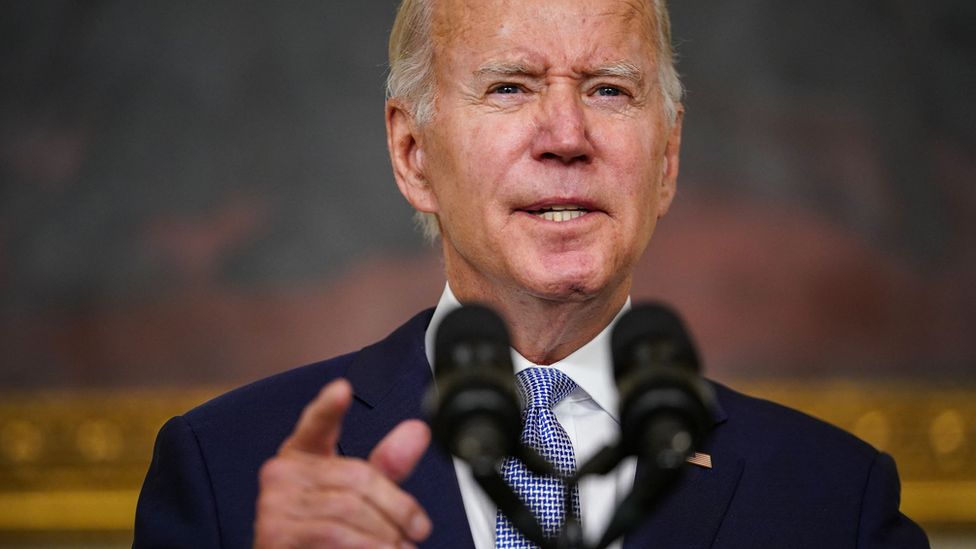
Published1 day agoSharecloseShare pageCopy linkAbout sharingImage source, Getty ImagesUS President Joe Biden has tested positive for Covid-19 again, in what has been described as a “rebound” infection by his doctor. The 79-year-old first contracted the virus on 21 July, when he was revealed to be experiencing mild symptoms.On Saturday Mr Biden said he was not experiencing symptoms but would isolate “for the safety of everyone around me”.The president had tested negative for the virus four times between Tuesday and Friday last week. In a letter describing the situation, Mr Biden’s physician Dr Kevin O’Connor said there was no need to resume treatment but the president would remain under “close observation”.Mr Biden has been taking Paxlovid, an antiviral medicine which Dr O’Connor said had led to a “small percentage” of Covid patients experiencing a “rebound” test.A quick update. pic.twitter.com/FgT1sGlZCY— President Biden (@POTUS) July 30, 2022
The BBC is not responsible for the content of external sites.View original tweet on TwitterMore on this storyBiden has ‘improved’ since Covid diagnosis – doctor23 JulyBiden ‘doing great’ after testing positive for Covid21 July

Read more →

Children who lack sleep may experience detrimental impact on brain and cognitive development that persists over time

Elementary school-age children who get less than nine hours of sleep per night have significant differences in certain brain regions responsible for memory, intelligence and well-being compared to those who get the recommended nine to 12 hours of sleep per night, according to a new study led by University of Maryland School of Medicine (UMSOM) researchers. Such differences correlated with greater mental health problems, like depression, anxiety, and impulsive behaviors, in those who lacked sleep. Inadequate sleep was also linked to cognitive difficulties with memory, problem solving and decision making. The findings were published today in the journal Lancet Child & Adolescent Health.
The American Academy of Sleep Medicine recommends that children aged 6 to 12 years of age sleep 9 to 12 hours per night on a regular basis to promote optimal health. Up until now, no studies have examined the long-lasting impact of insufficient sleep on the neurocognitive development of pre-teens.
To conduct the study, the researchers examined data that were collected from more than 8,300 children aged 9 to 10 years who were enrolled in the Adolescent Brain Cognitive Development (ABCD) study. They examined MRI images, medical records, and surveys completed by the participants and their parents at the time of enrollment and at a two-year follow-up visit at 11 to 12 years of age. Funded by the National Institutes of Health (NIH), the ABCD study is the largest long-term study of brain development and child health in the US.
“We found that children who had insufficient sleep, less than nine hours per night, at the beginning of the study had less grey matter or smaller volume in certain areas of the brain responsible for attention, memory and inhibition control compared to those with healthy sleep habits,” said study corresponding author Ze Wang, PhD, Professor of Diagnostic Radiology and Nuclear Medicine at UMSOM. “These differences persisted after two years, a concerning finding that suggests long term harm for those who do not get enough sleep.”
This is one of the first findings to demonstrate the potential long-term impact of lack of sleep on neurocognitive development in children. It also provides substantial support for the current sleep recommendations in children, according to Dr. Wang and his colleagues.
In follow-up assessments, the research team found that participants in the sufficient sleep group tended to gradually sleep less over two years, which is normal as children move into their teen years, whereas sleep patterns of participants in the insufficient sleep group did not change much. The researchers controlled for socioeconomic status, gender, puberty status and other factors that could impact how much a child sleeps and affect brain and cognition.
“We tried to match the two groups as closely as possible to help us more fully understand the long-term impact on too little sleep on the pre-adolescent brain,” Dr. Wang said. “Additional studies are needed to confirm our finding and to see whether any interventions can improve sleep habits and reverse the neurological deficits.”
The American Academy of Pediatrics encourages parents to promote good sleep habits in their children. Their tips include making sufficient sleep a family priority, sticking with a regular sleep routine, encouraging physical activity during the day, limiting screen time and eliminating screens completely an hour before bed.
The study was funded by NIH. Fan Nils Yang, PhD, a post-doctoral fellow in Dr. Wang’s laboratory is a study co-author. Weizhen Xie, PhD, a researcher at the National Institute of Neurological Disorders and Stroke, is also a study co-author. UMSOM faculty members Thomas Ernst, PhD, and Linda Chang, MD, MS, are co-principal investigators of the ABCD study at the Baltimore site but were not involved in the data analysis of this new study.
“This is a crucial study finding that points to the importance of doing long-term studies on the developing child’s brain,” said E. Albert Reece, MD, PhD, MBA, Executive Vice President for Medical Affairs, UM Baltimore, and the John Z. and Akiko K. Bowers Distinguished Professor and Dean, University of Maryland School of Medicine. “Sleep can often be overlooked during busy childhood days filled with homework and extracurricular activities. Now we see how detrimental that can be to a child’s development.”

Read more →