US doctor issues warning of many undiagnosed polio cases
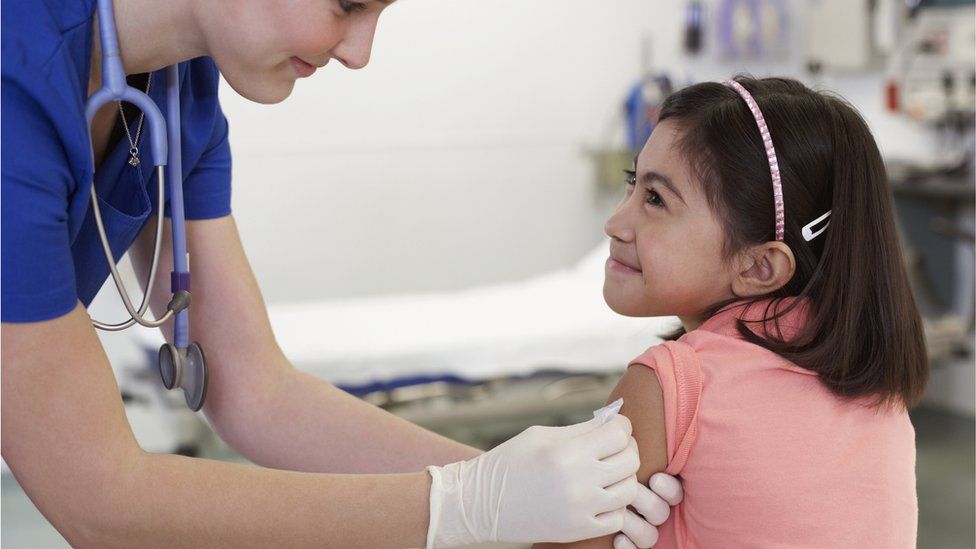
Published8 hours agoSharecloseShare pageCopy linkAbout sharingImage source, Getty ImagesA health official in New York State has told the BBC there could be hundreds or even thousands of undiagnosed cases of polio there. It follows an announcement last month that an unvaccinated man had been paralysed by the virus in Rockland County, New York.His case has been linked genetically to traces of polio virus found in sewage in London and Jerusalem. Developed countries have been warned to boost vaccination rates.Dr Patricia Schnabel Ruppert, health commissioner for Rockland County, said she was worried about polio circulating in her state undetected. “There isn’t just one case of polio if you see a paralytic case. The incidence of paralytic polio is less than 1%,” she said. “Most cases are asymptomatic or mildly symptomatic, and those symptoms are often missed. “So there are hundreds, perhaps even thousands of cases that have occurred in order for us to see a paralytic case.”What is polio and how can you protect yourself?The truth behind polio rumours spreading onlineDr Ruppert confirmed that scientists are looking at “a linkage” between the New York paralysis case and traces of poliovirus found in wastewater in London and Jerusalem, after genome sequencing was conducted on samples from the three locations. “This is a very serious issue for our global world – it’s not just about New York. We all need to make sure all our populations are properly vaccinated,” she said. Vaccine-derived polioThe US man who was paralysed has a form of “vaccine-derived” polio, which occurs because some countries use a weakened form of the virus in their vaccinations. In rare cases, it can mutate and then be transmitted through poor hygiene to others who are unvaccinated. Global travel means these cases can crop up in countries which are not used to seeing polio, but where there are pockets of low vaccination. Although weaker than the original or “wild” form of the disease, vaccine-derived polio can still cause serious illness. The virus can attack the nerves in the spine and base of the brain. This can cause paralysis, usually in the legs, but if the breathing muscles are affected too, it can also be life-threatening.The US and most developed countries use a newer form of the vaccine, which does not contain any live virus. Dr Ruppert said she never thought she would see a case of polio in the US in her lifetime. Some areas of Rockland County have historically low vaccination rates of only 60%. In 2018, there was an outbreak of measles there. Field teams are now being sent into these areas to encourage better uptake of polio vaccination, particularly in children.In the UK, more testing is currently being carried out after traces of polio virus were found over several weeks at Beckton sewage works during wastewater surveillance. The UK Health Security Agency is expected to release more details soon about which areas of London are most affected.More on this storyPolio virus found in New York wastewater6 days agoUS reports first polio case in nearly a decade21 JulyThe truth behind polio rumours spreading online25 JuneWhat is polio and how can you protect yourself?23 JunePolio virus detected in London sewage samples22 June

Read more →

Biden Administration to Allow New Injection Method for Monkeypox Vaccine

The approach — injecting one-fifth of the current dose into the skin instead of a full dose into underlying fat — would help stretch out the nation’s limited supply of vaccine.WASHINGTON — The Biden administration has decided to stretch out its limited supply of monkeypox vaccine by allowing a different method of injection that uses one-fifth as much per shot, according to senior administration officials familiar with the planning.In order for the Food and Drug Administration to authorize so-called intradermal injection, which would involve injecting one-fifth of the current dose into the skin instead of a full dose into underlying fat, the Department of Health and Human Services will need to issue a new emergency declaration allowing regulators to invoke the F.D.A.’s emergency use powers. That declaration is expected as early as Tuesday afternoon.The move would help alleviate a shortage of vaccine that has turned into a growing political and public health problem for the administration. The administration has faced a barrage of criticism that it was too slow to ship vaccine that was ready for use to the United States from Denmark, where it was manufactured, and too slow to order that bulk vaccine stocks be processed into vials after the disease first surfaced here in mid-May.In less than three months, more than 8,900 monkeypox cases have been reported. The disease spreads primarily through skin-to-skin contact during sex among gay and bisexual men. Federal officials are concerned about both the current infection rate and the risk that the disease could spread to other parts of the population.What to Know About the Monkeypox VirusCard 1 of 7What is monkeypox?

Read more →

Circadian clocks play a key role in fat cell growth

Disruption of the circadian clocks that keep the body and its cells entrained to the 24-hour day-night cycle plays a critical role in weight gain, according to a pair of studies by Weill Cornell Medicine investigators.
One study, published June 27, in Cell Reports revealed that stress caused by chronically administering glucocorticoid stress hormones and disturbing the normal daily cycle of release triggers a temporary protective mechanism in mice. This mechanism boosts fat cell growth and insulin production while reducing excess blood sugar and fat levels in the bloodstream and liver. The second study, published Aug. 8 in the Proceedings of the National Academies of Sciences, shows that fat cell precursors commit to becoming fat cells during the rest period of mice. The studies suggest that stress and other factors that throw the body’s “clocks” out of rhythm may contribute to weight gain and suggest new treatment approaches for obesity.
“A lot of forces are working against a healthy metabolism when we are out of circadian rhythm,” explained the senior author of both studies Dr. Mary Teruel, associate professor of biochemistry and a member of the Gale and Ira Drukier Institute for Children’s Health at Weill Cornell Medicine. “The more we understand, the more likely we will be able to do something about it.”
In the first study, Dr. Teruel and colleagues mimicked the disruptive effects conditions like Cushing’s disease or chronic stress have on the usual daily fluctuations in glucocorticoids, a class of stress-linked hormones. To do this, they implanted pellets that released glucocorticoids at a constant rate over 21 days under the skin of mice and compared them with normal mice who have normal daily fluctuations. The amount of brown and white fat in the mice with the glucocorticoid pellets doubled within 21 days, and insulin levels in their bodies skyrocketed even though the mice still ate the same healthy diet as the normal mice.
“If you stress the animals at the wrong time, it has a dramatic effect,” Dr. Teruel said. “The mice aren’t eating differently, but a big shift in metabolism causes weight gain.”
Surprisingly, these metabolic disruptions seemed to have a “protective effect” by keeping blood sugar levels low and preventing fat from accumulating in the blood or liver. When they removed the pellets, the metabolic changes quickly reversed.

Read more →

New target for therapies to treat preterm labor

Researchers have identified a cause of preterm labour, an enigma that has long challenged researchers. New research published in The Journal of Physiology suggests a protein, called Piezo1, is responsible for regulating the behaviour of the uterus. Piezo1 keeps the uterus relaxed ensuring that it continues to stretch and expand during the 40 weeks it takes a fetus to grow.
Preterm birth is the single biggest cause of neonatal mortality and morbidity in the UK. Every year around 60,000 babies are born prematurely in the UK. The identification of Piezo1 in the uterus, and its role to maintain stretch-activation channels in pregnancy, paves the way for drugs and therapies to be developed that could one day treat or delay preterm labour.
The muscular outer layer of the uterus is peculiar because it is the only muscle that it is not regulated by nerves and it must remain dormant for the 40 weeks despite significant expansion and stretch as the fetus develops into a baby. The researchers from University of Nevada USA studied tissue samples of the smooth muscle of the uterus to explore the mechanistic pathways to better understand the dynamics controlling the uterus, how pregnancy is maintained and what maintains quiescence (a state of relaxation of the muscle) until labour.
Stretching the uterus tissue, to mimic what happens during pregnancy, activates Piezo1 channels. This drives the flow of calcium molecules generating a signalling cascade that activates the enzyme nitric oxide synthase to produce the molecule nitric oxide. This Piezo1 cascade promotes and maintains the dormant state of the uterus.
Piezo1 controls the uterus by working in a dose-dependent manner, upregulated by the chemical Yoda1 and downregulated by a chemical called Dooku1. When Piezo1 is upregulated, the uterus remains in a relaxed state. However, in preterm tissue, the expression of Piezo1 is significantly decreased (downregulated), which ‘switches off’ the dormant signalling to the muscle, so the uterus contracts and initiates labour.
Professor Iain Buxton, Myometrial Research Group at the University of Nevada USA said, “Pregnancy is the most impressive example of a human muscle enduring mechanical stress for a prolonged period. Finding Piezo1 in the muscular layer of the uterus means the uterus is controlled locally and is coordinated by a stretch-activated mechanism rather than hormonal influence from the ovaries or the placenta, which has been the assumption.
“It is troubling that there are still no drugs available to stop preterm labour. Thanks to the Nobel Prize winning discovery of Piezo proteins, which are responsible for how the body responds to mechanical force, and our investigation we are now closer to developing a treatment. Piezo1 and its relaxation mechanism provide a target for us which we could potentially activate with drugs. We need to test this with further studies and we hope to carry out clinical trials in the future.”
Contraction and relaxation were assessed in tissue samples compared for the following gestational periods: non-pregnant, term non-labouring, term labouring, preterm non-labouring and preterm labouring. The presence of Piezo1 channels was discovered using molecular tools while pregnant tissues contracting in a muscle bath were stimulated with Piezo1 channel activator and inhibitor to characterise the regulation of quiescence.
More research is needed to improve our understanding of how all the molecular signals and steps involved in the Piezo1 channel regulate the relaxation of the uterus and whether more chemicals are working together with Piezo1.
Story Source:
Materials provided by The Physiological Society. Note: Content may be edited for style and length.

Read more →

Symptoms of insomnia may reduce likelihood of alcohol-induced blackout

Heavy drinkers with symptoms of insomnia, such as difficulty falling or staying asleep, may be less likely to suffer alcohol-induced blackouts, according to a study co-authored by a Rutgers researcher.
It’s the opposite of what they expected when they began the study. Historically, research has suggested that insomnia worsens alcohol-related consequences.
“Because insomnia has been shown to impair memory and cognitive functioning, we thought that participants in our study with severe insomnia and high rates of alcohol use would also have the highest rates of blackout frequency,” said Angelo M. DiBello, an assistant professor at the Rutgers Center of Alcohol and Substance Use Studies within the Graduate School of Applied and Professional Psychology and a coauthor of the study published in the journal Addictive Behaviors. “What we found was exactly the opposite.”
To measure alcohol-induced anterograde amnesia — commonly referred to as a blackout — among young adults, DiBello and colleagues from the University of Missouri (first author Mary Beth Miller) and the University of New Mexico (shared first author Cassandra L. Boness) used data collected from 461 college students from an introductory psychology course at a large Midwestern university.
Eligible participants were at least 18 years old and had reported heavy drinking in the past 30 days — defined as five or more drinks on a single occasion or 14 or more drinks a week for men and more than four and seven drinks, respectively, for women.
Participants were asked about their drinking habits, whether and how often they experienced alcohol-induced blackouts and if they suffered symptoms of insomnia. About a third — 146 — met the criteria for insomnia.

Read more →

Scientists identify novel molecular biomarkers in cells that spread a deadly form of breast cancer

Studying a deadly type of breast cancer called triple negative, Johns Hopkins Medicine scientists say they have identified key molecular differences between cancer cells that cling to an initial tumor and those that venture off to form distant tumors.
The research, using mouse models and human tissues, could pave the way for developing new treatments that target such molecular variations.
A report on the findings is published Aug. 3 in Science Translational Medicine.
“We have long needed new treatment targets and options for triple negative breast cancers,” says Andrew Ewald, Ph.D., the Virginia DeAcetis Professor in Basic Science Research and Director, Department of Cell Biology at the Johns Hopkins University School of Medicine and co-leader of the Cancer Invasion and Metastasis Program at the Johns Hopkins Kimmel Cancer Center. “These cancers often return within three years of diagnosis, and treatments used for other breast cancers don’t typically work for triple negative.”
An estimated 10%-20% of the 280,000 breast cancers diagnosed in the U.S. each year are triple negative, and the rate is higher among African American women, who are twice as likely as others to experience this form of the disease.
The lethal nature of this type of cancer is marked by the fact that its cells lack molecular flags on its surface that connect with the hormones estrogen and progesterone and a cancer growth-promoting protein called Her2-neu. Many current breast cancer therapies work by targeting those flags, rendering them of little use to those with triple negative tumors.

Read more →

Oil-based systems show promise for eradicating salmonella on food production machinery

Recent outbreaks of food-borne Salmonella have been associated with chocolate and peanut butter. Although Salmonella cannot grow in either of these low-water foods, the cells survive, becoming more resistant to heat treatment, which has contributed to recent outbreaks. New research published in Applied and Environmental Microbiology suggests that oil formulations with food-grade organic acids can kill dried Salmonella on stainless steel surfaces.
“Cleaning and sanitation of manufacturing environments are critical for a safe food supply,” said lead author Lynne McLandsborough, Ph.D., a professor of food science at University of Massachusetts Amherst. However, water-based cleaning is rarely used in processing peanut butter, because it promotes microbial growth. “Also, as anyone who has baked peanut butter cookies can tell you, peanut butter and water do not mix, and cleanup with water is challenging,” said McLandsborough.
Instead, manufacturers often remove residual peanut butter from manufacturing systems using heated oil, followed by overnight cooling and application of flammable alcohol-based sanitizing agents.
In the study, McLandsborough and collaborators dried Salmonella on stainless steel surfaces at controlled relative humidity. They then covered the dried bacteria with various oils with organic acids, varying the acid type, concentration, contact time and treatment temperature to identify highly antimicrobial formulations.
By using peanut oil mixed with acetic acid at a concentration about half that of household vinegar and applying heat, “killing was much greater than expected, indicating a synergistic effect,” said McLandsborough. “Our results show that acidified oils could be used as an effective means of sanitation in low-moisture food processing facilities, where water-based cleaning can be challenging.”
“To our knowledge, using oils as a carrier of organic acids is a novel approach to delivering antimicrobial compounds against food-borne pathogens,” said McLandsborough. The research may thus lead to adaptation of oil-based systems for industrial cleaning, for example, of machinery for processing chocolate and peanut butter, said McLandsborough. “That would enable more frequent cleaning, boosting the safety of these products.”
Story Source:
Materials provided by American Society for Microbiology. Note: Content may be edited for style and length.

Read more →

Simulations provide map to treasure trove of fluorinated compounds

Computer simulations are most often used as a guide, so chemists can more efficiently work out the exact details of a general reaction idea they have in mind — much like a compass helps guide an explorer efficiently to a destination on their map. However, researchers at ICReDD took things a big step further and used simulations to produce the general idea for an entirely unimagined reaction, effectively using computations to make the map itself. Using the design principle suggested by computational results, the team hit the motherlode in the lab, successfully developing a suite of 48 reactions that produce compounds potentially useful for novel drug development.
The presence and position of fluorine in a molecule often affects a molecule’s pharmacological activity. Researchers at ICReDD have utilized quantum chemical calculations to discover a reaction that selectively adds two fluorine atoms to a difficult-to-access position on an N-heterocycle — molecules with a carbon ring structure where at least one carbon in the ring is replaced with nitrogen. The ability to attach fluorine atoms to the previously difficult-to-access “alpha carbon” — the carbon immediately next to the nitrogen in the ring structure — could lead to the development of a host of novel drugs.
Before carrying out experiments in the lab, the researchers cast a wide net, computationally testing the viability of numerous 3-component reactions using the artificial force induced reaction (AFIR) method. They simulated the reaction of a difluorocarbene molecule, which acts at the source of fluorine atoms, with various pairs of small molecules featuring a double or triple bond. These simulations showed that a number of ring-forming reactions should be viable.
Researchers tried one of the promising reactions suggested by initial computational results but weren’t successful. A more narrowly focused, optimized computation of the transition state energy of the reaction in question showed that the difluorocarbene molecule more easily reacted with itself than with the desired starting molecules, signaling that an undesired side reaction was likely occurring. This result inspired researchers to change one of the starting materials to the cyclic molecule pyridine, which they anticipated would be able to compete with the unwanted side reaction. This change resulted in the successful synthesis of the desired N-heterocyclic product with two fluorines attached at the alpha carbon position.
The reaction developed here is also significant because it breaks the aromatic system of electrons in the pyridine molecule, a transformation that is especially difficult due to the high stability of aromatic systems. Additionally, the 3-component reaction framework was applied successfully in the lab to a wide range of starting materials, resulting in many new molecules with unique alpha position fluorine substitutions. The large scope of reactivity greatly increases the potential utility of this reaction framework in new drug development.
The researchers see their streamlined screening method as a way to broaden the scope of their search and discover new horizons in chemical reaction design.
“Our study’s highlight is the successful demonstration of an in silico reaction screening strategy for reaction development. The computational reaction simulation suggested less-explored three-component reactions of difluorocarbene and two unsaturated molecules, which we successfully realized in experiments,” explained lead author Hiroki Hayashi. “I think the AFIR method is a powerful tool for dictating new research directions in reaction discovery, and we plan to continue building a computation-based reaction development platform by integrating the computational and informatics techniques of ICReDD.”
Story Source:
Materials provided by Hokkaido University. Note: Content may be edited for style and length.

Read more →

New AI technology integrates multiple data types to predict cancer outcomes

While it’s long been understood that predicting outcomes in patients with cancer requires considering many factors, such as patient history, genes and disease pathology, clinicians struggle with integrating this information to make decisions about patient care. A new study from researchers from the Mahmood Lab at Brigham and Women’s Hospital reveals a proof-of-concept model that uses artificial intelligence (AI) to combine multiple types of data from different sources to predict patient outcomes for 14 different types of cancer. Results are published in Cancer Cell.
Experts depend on several sources of data, like genomic sequencing, pathology, and patient history, to diagnose and prognosticate different types of cancer. While existing technology enables them to use this information to predict outcomes, manually integrating data from different sources is challenging and experts often find themselves making subjective assessments.
“Experts analyze many pieces of evidence to predict how well a patient may do,” said Faisal Mahmood, PhD, an assistant professor in the Division of Computational Pathology at the Brigham and associate member of the Cancer Program at the Broad Institute of Harvard and MIT. “These early examinations become the basis of making decisions about enrolling in a clinical trial or specific treatment regimens. But that means that this multimodal prediction happens at the level of the expert. We’re trying to address the problem computationally.”
Through these new AI models, Mahmood and colleagues uncovered a means to integrate several forms of diagnostic information computationally to yield more accurate outcome predictions. The AI models demonstrate the ability to make prognostic determinations while also uncovering the predictive bases of features used to predict patient risk — a property that could be used to uncover new biomarkers.
Researchers built the models using The Cancer Genome Atlas (TCGA), a publicly available resource containing data on many different types of cancer. They then developed a multimodal deep learning-based algorithm which is capable of learning prognostic information from multiple data sources. By first creating separate models for histology and genomic data, they could fuse the technology into one integrated entity that provides key prognostic information. Finally, they evaluated the model’s efficacy by feeding it data sets from 14 cancer types as well as patient histology and genomic data. Results demonstrated that the models yielded more accurate patient outcome predictions than those incorporating only single sources of information.
This study highlights that using AI to integrate different types of clinically informed data to predict disease outcomes is feasible. Mahmood explained that these models could allow researchers to discover biomarkers that incorporate different clinical factors and better understand what type of information they need to diagnose different types of cancer. The researchers also quantitively studied the importance of each diagnostic modality for individual cancer types and the benefit of integrating multiple modalities.
The AI models are also capable of elucidating pathologic and genomic features that drive prognostic predictions. The team found that the models used patient immune responses as a prognostic marker without being trained to do so, a notable finding given that previous research shows that patients whose tumors elicit stronger immune responses tend to experience better outcomes.
While this proof-of-concept model reveals a newfound role for AI technology in cancer care, this research is only a first step in implementing these models clinically. Applying these models in the clinic requires incorporating larger data sets and validating on large independent test cohorts. Going forward, Mahmood aims to integrate even more types of patient information, such as radiology scans, family histories, and electronic medical records, and eventually bring the model to clinical trials.
“This work sets the stage for larger health care AI studies that combine data from multiple sources,” said Mahmood. “In a broader sense, our findings emphasize a need for building computational pathology prognostic models with much larger datasets and downstream clinical trials to establish utility.”
Story Source:
Materials provided by Brigham and Women’s Hospital. Note: Content may be edited for style and length.

Read more →

Impact of climate change on human pathogenic diseases subject of new study by UH researchers

A comprehensive assessment of scientific literature has uncovered empirical evidence that more than 58% of human diseases caused by pathogens, such as dengue, hepatitis, pneumonia, malaria, Zika and more, have been — at some point — aggravated by climatic hazards. That eye-opening and startling finding is the topic of a research paper published on August 8 in Nature Climate Change by a team of researchers from the University of Hawaii at Manoa.
The researchers carried out a systemic search for empirical examples about the impacts of 10 climatic hazards sensitive to greenhouse gas (GHG) emissions on each known human pathogenic disease. These hazards included warming, drought, heatwaves, wildfires, extreme precipitation, floods, storms, sea level rise, ocean biogeochemical change, and land cover change.
Combining two authoritative lists of all known infections and pathogenic diseases that have affected humanity in recorded history, researchers then reviewed more than 70,000 scientific papers for empirical examples about each possible combination of a climatic hazard impacting each of the known diseases.
The research revealed that warming, precipitation, floods, drought, storm, land cover change, ocean climate change, fires, heatwaves and sea level changes were all found to influence diseases triggered by viruses, bacteria, animals, fungi, protozoans, plants and chromists. Pathogenic diseases were primarily transmitted by vectors, although case examples were also found for waterborne, airborne, direct contact and foodborne transmission pathways. Ultimately, the research found that more than 58%, or 218 out of 375, of known human pathogenic diseases had been affected at some point, by at least one climatic hazard, via 1,006 unique pathways.
“Given the extensive and pervasive consequences of the COVID 19 pandemic, it was truly scary to discover the massive health vulnerability resulting as a consequence of greenhouse gas emissions,” said Camilo Mora, geography professor in the College of Social Sciences (CSS) and lead author of the study. “There are just too many diseases, and pathways of transmission, for us to think that we can truly adapt to climate change. It highlights the urgent need to reduce greenhouse gas emissions globally.”
An interactive web-page showing each connection between a climatic hazard and a disease case was developed by the research team. The tool allows users to query specific hazards, pathways and disease groups, and see the available evidence.

Read more →