Fauci Says He Will Step Down in December to Pursue His ‘Next Chapter’
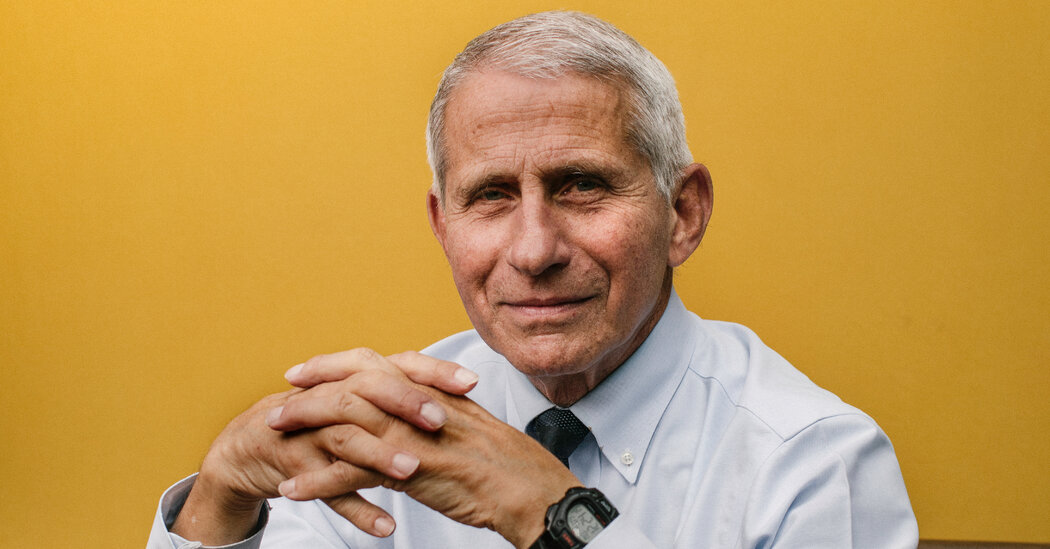
Dr. Anthony S. Fauci, who has advised seven presidents and spent more than half a century at the National Institutes of Health, will leave government service by the end of the year.Dr. Anthony S. Fauci said on Monday that he intended to leave government service in December to “pursue the next chapter” of his career, and that he would step down as President Biden’s top medical adviser and the director of the National Institute of Allergy and Infectious Diseases, which he has led for 38 years.The announcement by Dr. Fauci, 81, was not entirely unexpected. He has hinted for some time that he was thinking of retiring. In an interview Sunday evening, he said he was “not retiring in the classic sense” but would devote himself to traveling, writing and encouraging young people to enter government service.“So long as I’m healthy, which I am, and I’m energetic, which I am, and I’m passionate, which I am, I want to do some things outside of the realm of the federal government,” Dr. Fauci said in the interview, adding that he wanted to use his experience and insight into public health and public service to “hopefully inspire the younger generation.”In a statement on Monday, Mr. Biden thanked Dr. Fauci, whom he called a “dedicated public servant, and a steady hand with wisdom and insight.” The two had worked closely together during a global outbreak of the Zika virus when Mr. Biden was vice president.“Because of Dr. Fauci’s many contributions to public health, lives here in the United States and around the world have been saved,” the president said.Few scientists have had as large or as long-lasting an impact on public policy. Dr. Fauci joined the National Institutes of Health in 1968, when Lyndon Johnson was president; he was appointed the director of its infectious disease branch in 1984, when the AIDS epidemic demanded attention.Dr. Fauci has advised every president since Ronald Reagan — seven in all — and has been adept at navigating the nexus of science and politics. Among his proudest accomplishments, he said, was his work with President George W. Bush in developing a global program to combat H.I.V./AIDS, known as PEPFAR, which has saved an estimated 21 million lives. Mr. Bush — whose father, George Bush, called Dr. Fauci “a hero” during a 1988 presidential debate — awarded him the Presidential Medal of Freedom in 2008.But Dr. Fauci, who catapulted into the spotlight when the coronavirus began spreading in 2020, could not escape the politicization of the Trump era. President Donald J. Trump toyed openly with the idea of firing him (though that would have been difficult because Dr. Fauci is not a political appointee). Conservatives viewed Dr. Fauci as a symbol of lockdowns and masks, which they fiercely resisted.President George W. Bush honored Dr. Fauci with a Presidential Medal of Freedom in 2008.Ron Edmonds/Associated PressDr. Fauci clashed bitterly with Senator Rand Paul, Republican of Kentucky, who publicly accused him of lying about research his institute was funding in China, where the coronavirus emerged. (“If anybody is lying here, it is you, Senator,” Dr. Fauci shot back.) Mr. Paul and other Republicans have vowed to investigate Dr. Fauci if they win control of Congress this fall, and there has been speculation that Dr. Fauci would retire to avoid that possibility.Dr. Fauci dismissed that idea as “nonsense” and also said that he had no intention of going to work for the pharmaceutical industry, as some of his critics have suggested. He said he considered stepping down after Mr. Trump left the White House, but felt he could not refuse a request from Mr. Biden to serve as his medical adviser in the thick of the coronavirus crisis.“So I stayed on for a year, thinking that at the end of the year, it would be the end of Covid, and as it turned out, you know, that’s not exactly what happened,” Dr. Fauci said. “And now it’s my second year here, and I just realized that there are things that I want to do.”In addition to running the allergy and infectious diseases institute, Dr. Fauci also leads an immunology laboratory; he said he would leave that position as well. He said he had told Mr. Biden of his decision, and the president had been “very gracious about it.”Dr. Fauci did not set a specific departure date (he will turn 82 on Dec. 24). He said he hoped that by staying through the fall and into early winter, the United States would “get closer to living with” the coronavirus “in a steady state,” though there are no guarantees.“I’m not happy about the fact that we still have 400 deaths per day,” he said. “We need to do much better than that. So I don’t think I can say that I’m satisfied with where we are. But I hope that over the next couple of months, things will improve.”While he has been working on a memoir, Dr. Fauci said he did not yet have a publisher. In an interview last year, he said he was precluded from contracting with a publisher while he was still employed by the government.During more than five decades as a government scientist, Dr. Fauci has helped shepherd the United States through a number of infectious disease threats. But before the coronavirus, he was best known for his work on H.I.V./AIDS. He was polarizing then as well, a target of activists who accused him of being responsible for the deaths of gay men by not moving quickly enough to push new treatments through the approval process.Over time, he befriended many of those activists. In an email message on Monday, one of the activists, Peter Staley, recalled “parading an effigy of his bloody head on a stick in front of his building at the N.I.H.” But “he still never closed his door to us,” Mr. Staley said, adding, “I’ve never met a more decent human being.”Dr. Fauci was profoundly affected by caring for AIDS patients in an era when nearly all of them died. In a documentary released by National Geographic last year, he recalled arriving at the bedside of an AIDS patient who suddenly no longer recognized him; the man had lost his vision.As Dr. Fauci told the story, his voice cracked. The filmmakers asked why it was affecting him all these years later. He paused to gather himself. “Post-traumatic stress syndrome,” he said, pausing again. “That’s what it is.”Dr. Fauci became a household name in the early days of the coronavirus pandemic. His face was commemorated on sweatshirts, knee socks and mugs; a petition to name him People magazine’s “Sexiest Man Alive” garnered more than 28,000 signatures.When asked in an interview this year about why he had become such a polarizing figure, Dr. Fauci pointed to some of Mr. Trump’s aides, who, he said, sought to pillory him by insisting that everything he said was wrong. He did not take issue directly with Mr. Trump.Dr. Fauci catapulted into the spotlight during briefings at the White House when the coronavirus pandemic took hold in the United States in 2020.Doug Mills/The New York Times“Instead of throwing me out, they tried to discredit me,” Dr. Fauci said. Referring to the aides, he said, “If you are propagating lies, the person who is telling the truth based on science all of a sudden becomes the adversary.”In a formal statement announcing his departure, Dr. Fauci said he would use his remaining months in government to “continue to put my full effort, passion and commitment into my current responsibilities” and to help prepare his institute for a leadership transition.“N.I.H. is served by some of the most talented scientists in the world,” he said, “and I have no doubt that I am leaving this work in very capable hands.”

Read more →

Myocarditis risk significantly higher after COVID-19 infection vs. after a COVID-19 vaccine

In a detailed analysis of nearly 43 million people, ages 13 and older, who received at least one dose of a COVID-19 vaccine in England, the risk of myocarditis in unvaccinated individuals after COVID-19 infection was at least 11 times higher compared to people who developed myocarditis after receiving a COVID-19 vaccine or booster dose between December 1, 2020 and December 15, 2021, according to new research published today in the American Heart Association’s flagship, peer-reviewed journal Circulation.
Several previous studies and reports from public health agencies around the world including the U.S. Centers for Disease Control and Prevention have highlighted a possible connection and potentially increased risk of myocarditis after receiving an mRNA COVID-19 vaccine, generating considerable scientific, policy and public interest .
Typically trigged by a viral infection, myocarditis is the inflammation of the middle layer of the wall of the heart muscle, the myocardium. This condition is uncommon and may temporarily or permanently weaken the heart muscle and the heart’s electrical system, which keeps the heart pumping normally. An episode of myocarditis may resolve on its own or with treatment, and may result in lasting damage to the heart. In the general population not during a global pandemic, it is estimated that approximately 10 to 20 people per 100,000 are diagnosed with myocarditis each year, according to the American Heart Association’s 2021 scientific statement on myocarditis.
“We found that across this large dataset, the entire COVID-19-vaccinated population of England during an important 12-month period of the pandemic when the COVID-19 vaccines first became available, the risk of myocarditis following COVID-19 vaccination was quite small compared to the risk of myocarditis after COVID-19 infection,” says first author of the study Martina Patone, Ph.D., a statistician at the Nuffield Department of Primary Health Care Sciences at the University of Oxford in Oxford, England. “This analysis provides important information that may help guide public health vaccine campaigns, particularly since COVID-19 vaccination has expanded in many parts of the world to include children as young as 6 months old.”
In this study, Patone and colleagues evaluated England’s National Immunization database of COVID-19 vaccinations for all people ages 13 or older who had received at least one dose of the ChAdOx1 (a two-dose adenovirus-vector COVID-19 vaccine developed by the University of Oxford and AstraZeneca, most similar to the one-dose Johnson & Johnson/Janssen COVID-19 vaccine available in the U.S.), the Pfizer-BioNTech or the Moderna COVID-19 vaccine (the same mRNA vaccines available in the U.S.) between December 1, 2020 and December 15, 2021. This dataset totaled nearly 43 million people, which included more than 21 million who had received a booster dose of any of the COVID-19 vaccines (meaning they had received a total of 3 doses of a COVID-19 vaccine). The database detailed the type of COVID-19 vaccines received, dates received and dose sequencing, along with individual demographic information including age and sex for each individual. Nearly 6 million people tested positive for COVID-19 infection either before or after COVID-19 vaccination during the study period.
England’s National Immunization database records were then cross-referenced and matched to the national offices with data on COVID-19 infection, hospital admission and death certificates for the same time period, December 1, 2020 through December 15, 2021. Individuals were classified based on age and sex to reveal which groups had the highest risk of myocarditis after a COVID-19 vaccine or after COVID-19 infection and hospitalization. The authors used the self-controlled case series (SCCS) method, which was developed to estimate the relative incidence of an acute event in a pre-defined post-vaccination risk period (1-28 days), compared to other times (pre-vaccination or long after vaccination). Being a within-person comparison, the analyses were controlled to adjust for any fixed characteristics, including sex, race or ethnicity, or chronic health conditions.

Read more →

How recovery progresses following inflammation triggered by injury or illness

Inflammation is the body’s first line of defense, occurring as droves of immune cells rush to the site of injury or acute illness to make repairs and stem further damage.
When successful, inflammation helps the body survive and heal after trauma. However, when the recovery following an inflammatory response goes awry, it signals that damage is still occurring — and the inflammation itself can cause further injury, leading to more-severe illness or even death.
But what differentiates a good inflammatory recovery from a bad one?
A new study, led by researchers at Harvard Medical School and Massachusetts General Hospital, published August 22 in Nature Communications, yields critical clues.
The scientists identified universal features of the inflammatory responses of patients who successfully recovered after surgery or acute illnesses such as COVID-19, heart attack, and sepsis. These features, they discovered, include precise paths that white blood cell and platelet counts follow as they return to normal.
If reaffirmed in further studies and eventually codified as a clinical guideline, the findings could help clinicians more quickly recognize when an individual patient’s recovery isn’t going well, allowing them to intervene earlier.

Read more →

Dental biorhythm is associated with adolescent weight gain, study finds

Research led by the University of Kent has discovered evidence of a biorhythm in human primary teeth that is associated with weight gain during adolescence.
An international research team led by Dr Patrick Mahoney at Kent’s School of Anthropology and Conservation discovered the biorhythm in primary ‘milk’ molars (Retzius periodicity [RP]) is related to aspects of physical development during early adolescence. A faster dental biorhythm produced smaller gains in weight and mass.
RP forms through a circadian-like process, occurring with a repeat interval that can be measured with a resolution of days. The rhythm relates to the period in which tooth enamel forms and is consistent within the permanent molars of individuals that do not retain evidence of developmental stress. The human modal RP has a near seven-day cycle but can vary from five to 12 days.
The first-of-its-kind research published by Nature’s Communications Medicine found that adolescents with a faster biorhythm (five or six-day cycle) weighed less, gained the least weight, and had the smallest change in their body mass index over a 14-month period compared to those with a slower biorhythm. Those with a slow biorhythm (seven or eight-day cycle) produced the greatest weight gain.
Dental histologists have known about the biological rhythm for over 100 years, but its significance for body mass and growth emerged recently in studies that compare mammalian species. Research has now focused on the meaning of the rhythm for humans.
One surprising finding was that participants with slower biorhythms were six times more likely to have a very high body mass index. Rapid change in body size is a natural consequence of adolescence, but excessive weight gain during puberty can have vast consequences for health such as obesity in adulthood.
Dr Mahoney said: ‘This research is an exciting first step. The next step is to determine if the link we have discovered extends to related adverse health outcomes for adults. Potentially, milk teeth may hold a record of this information many years before those outcomes can manifest in adults.’
Dr Gina McFarlane, a histologist on the project (also based at Kent), said: ‘Our findings provide a new avenue from which to explore links between overweight children and adult health risks. Milk teeth are naturally exfoliated (drop out) during the childhood years. These discarded teeth contain precise information about a fundamental growth rhythm that we now know tracks adolescent weight gain.’
The research paper titled “Dental biorhythm associates with adolescent weight gain” is published by Nature’s Communications Medicine. This research project was funded by the Leverhulme Trust.
Story Source:
Materials provided by University of Kent. Note: Content may be edited for style and length.

Read more →

Eye test could screen children for autism, study finds

Measuring how the eyes’ pupils change in response to light — known as the pupillary light reflex — could potentially be used to screen for autism in young children, according to a study conducted at Washington State University.
First author Georgina Lynch said the proof-of-concept study builds on earlier work to support the continued development of a portable technology that could provide a quick and easy way to screen children for autism, a disorder that affects communication and social interaction with others. Such a tool would allow health care providers to catch children earlier in their development when interventions are more likely to benefit them.
“We know that when we intervene as early as ages 18 to 24 months it has a long-term impact on their outcomes,” said Lynch, an assistant professor in the WSU Elson S. Floyd College of Medicine who worked with children with autism while practicing as a speech-language pathologist. “Intervening during that critical window could be the difference between a child acquiring verbal speech and staying nonverbal. Yet, after 20 years of trying we still have not changed the average age of diagnosis here in the U.S., which is four years old.”
Published in the journal Neurological Sciences, the study tested 36 children aged 6 to 17 who had been previously diagnosed with autism along with a group of 24 typically developing children who served as controls. Children’s pupillary light reflexes were tested by trained clinical providers using a handheld monocular pupillometer device, which measures one eye at a time. Analyzing the results, the researchers found that children with autism showed significant differences in the time it took for their pupils to constrict in response to light. Their pupils also took longer to return to their original size after light was removed.
“What we did with this study is we demonstrated the parameters of interest that matter — speed of constriction and return to baseline,” Lynch said. “And we demonstrated it with monocular technology because we knew there is no significant difference between eyes in terms of the pupillary response in autism, unlike in head injury or concussion where it’s common to see unequal pupil sizes.
An earlier study led by Lynch tested children in a laboratory setting using binocular pupillometry, which uses an expensive, stationary setup that measures both eyes at once. The lower expense and portability associated with monocular technology made it possible to move testing into clinical settings similar to those in which the screening tool Lynch is developing might be used once it is commercially available.
Supported by funding from the Washington Research Foundation, Lynch is now working to expand testing to a group of 300 or more 2- to 4-year-olds across a larger number of clinical sites. Data from that study will be used to validate the earlier findings and will be integrated into the ultimate screening device to provide a benchmark providers can use to decide whether or not to refer a child for evaluation. Meanwhile, Lynch is preparing to file for Food and Drug Administration premarket approval for the screening device through Appiture Biotechnologies, a spinoff company she cofounded to help move this technology from an academic research setting toward widespread use in pediatric clinics.
Lynch’s desire to improve autism screening grew from her experiences watching parents struggle through the cumbersome process of pursuing a formal diagnosis for their child.
While an estimated one in 44 children in the U.S. are diagnosed with autism spectrum disorder (ASD) by age 8, many kids get misdiagnosed or missed altogether due to the subjective nature of the diagnostic process. Having a quick, objective screening method to bolster behavioral screening could help improve the accuracy and speed with which children are diagnosed. Looking at the pupillary light reflex as a potential screening biomarker made sense to Lynch given her own observations and earlier studies that found abnormalities in the pupillary light reflex of children with autism.
“Even as a clinician, I noticed this state in kids with ASD where their pupils were very dilated even in the presence of bright light,” Lynch said. “That system is modulated in the brain by cranial nerves rooted in the brainstem, and adjacent cranial nerves affect your ability to acquire speech and language. The pupillary light reflex tests the integrity of that system, so it seemed logical to try this very simple, noninvasive measure to determine whether there were differences between typical development and autism.”
Story Source:
Materials provided by Washington State University. Original written by Judith Van Dongen. Note: Content may be edited for style and length.

Read more →

Pickleball, Sport of the Future Injury?

It’s all fun and games till you strain your Achilles’ tendon, herniate a disc or do a face-plant in the Kitchen.During a recent pickleball match, Nish Nadaraja, 50, made a quick lunge for the ball. It was just a few feet away, but Mr. Nadaraja, an entrepreneur in Northern California, said he felt his feet tangle and he began falling to the pavement “in slow motion.” He still hoped to brace himself with his knees and make a play with his paddle.Nope. “I face-planted,” he said.The pain was mild and Mr. Nadaraja played through it, although his wife (and doubles opponent) thought he should have rested. “I did need antibiotics,” he conceded.It was another wound stemming from a national sensation that shares a name with a snack or a sandwich topping but that is proving a bit more hazardous than sometimes advertised. As a flock of middle-aged players migrate from tennis or start fresh with an easy-to-learn sport, the aches are defying the game’s low-impact reputation.Pickleball injuries were on the rise even before the pandemic. One analysis, published in 2019 in The Journal of Emergency Medicine, estimated that there were 19,000 pickleball injuries in 2017, with 90 percent of them affecting people 50 and older.Part Ping-Pong, tennis, badminton and chess, pickleball involves hitting a whiffle-ball-like sphere with a paddle over a net. The game, which is highly social, is typically played as doubles in a small space like a mini tennis court and requires little running. There’s even a small area near the net known invitingly as the Kitchen. What could go wrong?“Achilles’ strains or tears, shoulder problems, rotator cuff injuries, lower back problems such as disc injuries, muscle strains,” said Noe Sariban, a pickleball instructor, former pro player and physical therapist who markets himself as the Pickleball Doctor. And, of course, there’s lateral epicondylitis, commonly known as tennis elbow — now pickleball elbow.“Pickleball kind of sounds like a game with a silly name, but it’s a sport,” Mr. Sariban said. “It’s no bocce ball.”Nish Nadaraja, an entrepreneur in Northern California, recently face-planted during a pickleball match.Christie Hemm Klok for The New York TimesThe number of injuries “grew rapidly” from 2010 to 2019, according to an analysis of emergency-room visits related to pickleball published last year in the journal Injury Epidemiology. The article focused on injuries among people over 60 because players in that demographic accounted for 85 percent of the visits, the study found. The most common injuries were sprains, strains and fractures.The study found that by 2018 the number of emergency-room visits related to pickleball among people 60 and older equaled the number for tennis. Many pickleball players are older; the average age is 38, but half of all “core” players — meaning devotees — are 55 and above, according to USA Pickleball, which calls itself the sport’s governing body. In general, older bodies are more likely than younger ones to have existing strains, which are easily amplified.The Growing Appeal of PickleballA mash-up of tennis, badminton and Ping-Pong, this sport has long enjoyed a cult following. Now, it is going mainstream.Pandemic Pastime: Pickleball began soaring in popularity in recent years; the search for new activities during the coronavirus pandemic turned many people into “picklers.”A Business Opportunity: The growing sport has lured investors eager to cash in on its popularity, opening courts and adding food and other entertainment options.A Tennis Player’s Perspective: A Times columnist who grew up playing competitive tennis on Seattle courts took up a paddle to see what all the fuss was about.Married, With a Side of Pickleball: Couples are marrying on pickleball courts, hosting games at their receptions and finding other ways to incorporate the sport into their nuptials.But pickleball is deceptively demanding at any age. It involves quick stops and starts, and lots of lunging and twisting, said Dr. Neil Roth, an orthopedist in Westchester County, N.Y. Overhead shots tear at shoulder joints. And on a small court the effort seems innocuous, so players tend to reach or bend to make a play that is harder on the body than it looks. In tennis, a new player might not think to chase down a distant ball, whereas in pickleball the temptation is greater to bend, reach, charge.This month, Dr. Roth met with a 53-year-old patient who was experiencing excruciating pain when he lifted his right arm over his head. The injury, from pickleball, turned out to be a labrum tear, a condition that Dr. Roth saw quite often when he worked for the Los Angeles Dodgers and the California Angels; he has also treated cases caused by tennis and swimming.“You’re absolutely not just sitting around hitting the ball,” Dr. Roth said of pickleball. Players are engaging the “long muscles of the lower legs, the gastrocs, the quads and the hamstrings,” he added.Stops and starts lead to slips. That helps explain why the largest share of emergency-room injuries identified in the 2021 study fell (as it were) into a category that researchers labeled Slip/Trip/Fall/Dive.Injuries can include “Achilles’ strains or tears, shoulder problems, rotator cuff injuries, lower back problems such as disc injuries, muscle strains,” Noe Sariban, a pickleball instructor, said.Christie Hemm Klok for The New York Times“Most of it is from tripping,” said Dr. Amy Fenoglio, a hand and upper-extremity surgeon at the University of Colorado, where she has seen a surge in pickleball-related wrist fractures in the past 18 months.Then there’s the Kitchen. Its official name is the nonvolley zone, a seven-foot strip in front of the net on both sides. (An official pickleball court is 44 feet long and 20 feet wide.) Players are not allowed to step foot in the Kitchen, so when a ball heads there a player might bend forward to return a “dink,” a cunning shot that hops over the net and lands in the opponent’s Kitchen.Mr. Sariban knows the risks firsthand. A former junior college basketball player, he was in a small professional pickleball tournament in January 2018 — perfect Southern California day, a $200 gift certificate for the winner — when he found himself at the edge of the Kitchen.“I’m reaching to hit a routine rolling volley, one I’ve hit a million times,” he said. “I hit the ball and I feel my back lock up, and in my head I go, ‘Uh-oh.” Within minutes, he had to lie down on the court. “I could barely walk,” he said, adding, “I sat in the car and my wife had to swing my legs around” and into the passenger well. He had herniated two discs. “I thought I was never going to play a sport ever again in my life,” he said.Since then Mr. Sariban has become conscientious about stretching, and he teaches players at his clinics to do the same, which includes warming up without a paddle before any hitting starts. “It is amazing to me how no one warms up,” he said. “I’ve taught in a lot of states, and it’s the same thing everywhere. Pickleball players are notorious about not warming up.”Mr. Sariban and other pickleball experts note that the risk of injury isn’t higher than in other sports, but that the perception of risk is lower. And the risks should not discourage participation, say die-hards like Debbie Landa, a tech entrepreneur in her early 50s in San Francisco. Like many, Ms. Landa has taken up pickleball during the pandemic; she now plays five days a week. Among her mentors, she said, was an 82-year-old woman in Palm Springs “who motivated me everyday.”Ms. Landa has had various pickleball afflictions — pickleball elbow, sore hips — but those come with the sport, she said. The real pains, she said, are the nasty players who “get too aggressive and angry.”“I tell them: ‘You’ve got to loosen up. You’re playing pickleball — you’re playing a game called pickleball!’” she said.

Read more →

How Pharmacy Work Stopped Being So Great

If any group of workers might have expected their pay to rise last year, it would arguably have been pharmacists. With many drugstores dispensing coronavirus tests and vaccines while filling hundreds of prescriptions each day, working as a pharmacist became a sleep-deprived, lunch-skipping frenzy — one in which ornery customers did not hesitate to vent their frustrations over the inevitable backups and bottlenecks.“I was stressed all day long about giving immunizations,” said Amanda Poole, who left her job as a pharmacist at a CVS in Tuscaloosa, Ala., in June. “I’d look at patients and say to them, ‘I’d love to fill your prescriptions today, but there’s no way I can.’”Yet pay for pharmacists, who typically spend six or seven years after high school working toward their professional degree, fell nearly 5 percent last year after adjusting for inflation. Dr. Poole said her pay, about $65 per hour, did not increase in more than four years — first at an independent pharmacy, then at CVS.For many Americans, one of the pandemic’s few bright spots has been wage growth, with pay rising rapidly for those near the bottom and those at the top. But a broad swath of workers in between has lagged behind.In the two years after February 2020, income for those between the middle and the top tenth of earners grew less than half as quickly as income for those in the top 1 percent, according to data collected by a team of economists at the University of California, Berkeley.The gap is part of a long-term trend made worse by a slowdown in pay gains for middle- and upper-middle-income workers in the 2000s. “If you’re going to a hedge fund or investment bank or a tech company, you’ve done enormously well,” said Lawrence Katz, a labor economist at Harvard. Typical college graduates, he said, “have not done that great.”The stagnation appears to have moved up the income ladder in the last few years, even touching those in the top 10 percent.In some cases, the explanation may be a temporary factor, like inflation. But pharmacists illustrate how slow wage growth can point to a longer-term shift that renders once sought-after jobs less rewarding financially and emotionally.Growing Chains, Falling WagesIn 2018, Suzanne Wommack moved from western Missouri, where she had worked for several years as a pharmacist at a Hy-Vee supermarket, to the eastern part of the state, where she and her husband had relatives. The job she landed as a Walgreens pharmacy manager in Hannibal, roughly an hour-and-a-half outside St. Louis, paid her about $62 per hour — nearly $6 below her previous hourly wage, though regional pay differences helped to explain the drop.More striking was how few pharmacists Walgreens appeared to employ. At Hy-Vee, Dr. Wommack worked with one or two other pharmacists for most of the day. At Walgreens, the volume of business was similar, she said, but she was almost always the only pharmacist on duty during her shift, which often ran from 8 a.m. until the pharmacy closed at 8 p.m.Inflation F.A.Q.Card 1 of 5Inflation F.A.Q.What is inflation?

Read more →

Lettuce on Wendy’s Sandwiches Potentially Linked to E. Coli Outbreak

Federal health officials said that while 37 people had been sickened and 10 hospitalized, it was safe to eat at the fast-food chain and to buy romaine lettuce.Federal health officials said on Friday that romaine lettuce on sandwiches from Wendy’s restaurants was possibly responsible for the “fast-moving” E. coli outbreak that has sickened dozens and hospitalized 10 people.The U.S. Centers for Disease Control and Prevention said a specific food had not yet been confirmed, but most of those sickened reported having eaten sandwiches with romaine lettuce at Wendy’s restaurants in the week before their illness started. Of 26 people interviewed, 22 reported eating at a Wendy’s restaurant in Michigan, Ohio or Pennsylvania, the C.D.C. said.In total, 37 people have become ill though 11 of them have yet to be interviewed. No deaths have been reported.Lettuce used on the sandwiches differs from what is used in the chain’s salads, the company and C.D.C. said.“We are fully cooperating with public health authorities on their ongoing investigation of the regional E. coli outbreak reported in certain Midwestern states,” Wendy’s said in a statement. “While the C.D.C. has not yet confirmed a specific food as the source of that outbreak, we are taking the precaution of removing the sandwich lettuce from restaurants in that region.”Health officials said that people should not avoid eating at Wendy’s or buying romaine lettuce.“At this time, there is no evidence to indicate that romaine lettuce sold in grocery stores, served in other restaurants or in people’s homes is linked to this outbreak,” the C.D.C. said in a news release.On Wednesday, the agency said that 29 people had been sickened in an E. coli outbreak in Ohio and Michigan. By Friday, at least eight more people had been affected.A total of 19 cases were reported in Ohio and 15 in Michigan, including three patients who have hemolytic uremic syndrome, a type of kidney failure. Cases were also reported in two more states, Pennsylvania, with two, and Indiana, with one. In total, 10 people are hospitalized, the C.D.C. said.E. coli is commonly found in the intestines of people and animals, and infections can begin when someone ingests food contaminated with feces, according to the C.D.C.E. coli symptoms, which include cramps, diarrhea and vomiting, usually start about three to four days after swallowing the bacteria, health officials said. Most people who are infected recover without treatment within five to seven days, though people are encouraged to still contact their health care provider if they experience symptoms.In 2019, an E. coli outbreak linked to romaine lettuce infected 167 people in 27 states, the C.D.C. said. No deaths were reported but 85 people were hospitalized, including 15 people who had kidney failure.Those cases were caused by the same strain of E. coli that led to outbreaks linked to leafy greens in 2017 and to romaine lettuce in 2018, lab testing and data analysis showed.

Read more →

Ann McGuiness, Major Fund-Raiser for Women’s Health, Dies at 65

At Planned Parenthood and other organizations, she worked behind the scenes for reproductive rights and related causes.Ann McGuiness, a behind-the-scenes force in women’s health and reproductive rights who raised vast amounts of money for Planned Parenthood and other groups and then was a founder of the Contraceptive Access Initiative, which seeks to make hormonal birth control more available over the counter, died on Aug. 3 in Albany, N.Y. She was 65.Her family said the cause was leiomyosarcoma, an aggressive cancer.Over the years Ms. McGuiness, who lived in Selkirk, N.Y., south of Albany, applied her considerable skills as a fund-raiser to a variety of organizations, but her passion was women’s issues. Beginning in the mid-1980s she worked for the National Women’s Political Caucus, then for NARAL Pro-Choice America (originally the National Association for the Repeal of Abortion Laws), where she was development director.In 2006 she began a 12-year career at the Planned Parenthood Federation of America, where Cecile Richards, president of the organization during that time, traveled with her often and experienced her commitment to the cause.“It was simply the movement’s good fortune that she chose to pour her talent and energy into fund-raising,” Ms. Richards said by email. “But make no mistake — she was a great fund-raiser because of her belief in the cause of abortion rights. Her competitive streak — and it was fierce — was because to her the mission was so important.”Betsy Liley, who worked with Ms. McGuiness on fund-raising at Planned Parenthood, remembered her as a tireless colleague.“Ann would arrive at the Manhattan Planned Parenthood Federation of America offices after a couple of hours on the train from her home just south of Albany,” she said by email. “She’d pull this dog-eared list of names out of her pocket or purse. It was handwritten in pencil. Sometimes the list had red wine stains on it from work the night before.”“If your name was on that list,” Ms. Liley added, “you were going to hear from Ann. It could be years later. She was going to figure out how to connect you to the work she dedicated her life to.”Ms. Richards recalled a particular trip with Ms. McGuiness that demonstrated her tenacity.“One day we drove hours through southern Florida, to a remote and splendid villa on the coast, to meet with a potential donor who provided fresh-baked scones but no contribution,” she said. “We laughed all the way back, but Ann wasn’t despondent, she was simply committed. A year later, she got a million-dollar gift from the same woman. She didn’t take no for an answer.”After leaving Planned Parenthood in 2018, Ms. McGuiness helped found the Contraceptive Access Initiative in 2020, working on the continuing effort to make birth control pills and other contraception available to women without a prescription. Dana Singiser, who had worked with her at Planned Parenthood, was another founder of that initiative, though she said Ms. McGuiness was the driving force.“She is one of those unsung heroes — raised literally hundreds of millions of dollars for reproductive rights and justice, and was a key strategist everywhere she worked,” Ms. Singiser said by email. “And she was a motivator to all of us around her — always focused on the mission, not her own profile.”Ann Catherine McGuiness was born on July 27, 1957, in New Britain, Conn. Her mother, Catherine (Jones) McGuiness, taught elementary school, and her father, Edward, was a steamfitter.Ms. McGuiness grew up in Newington, Conn., and earned a bachelor’s degree in political science at what is now the University of St. Joseph in West Hartford in 1979. In 1984 she earned a master’s degree in public administration at Columbia University.After working for the National Political Women’s Caucus and for the campaign of the Colorado Democrat Tim Worth, during his successful 1986 run for the United States Senate, Ms. McGuiness joined NARAL in 1987. She worked for that organization for 17 years as a consultant and development director before her move to Planned Parenthood.One important aspect of her work in all her roles, Ms. Richards said, was mentoring a younger generation of fund-raisers for women’s causes.“She understood that her own success would be exponentially greater if there were hundreds more trained and committed as she was,” Ms. Richards said.Ms. McGuiness is survived by her husband, William T. Reynolds; a daughter, Nora McGuiness Reynolds; a son, Nicholas McGuiness Reynolds; two brothers, Patrick and Timothy McGuiness; and a sister, Mary Kate Hallisey.If Ms. McGuiness was passionate about particular causes, she also saw the value of giving in general. In an opinion article for The Times Union of Albany in 2010, when the American economy was still recovering from the recession of the previous three years, she made a plea aimed at non-millionaires.“Private support established schools, libraries, hospitals and firehouses,” she wrote. “As the high unemployment rate persists and the economy stalls, philanthropy will be called upon again to make our communities whole.“Open the letters from your favorite charities. Give and give again. Don’t be concerned that the gifts are not as big as Rockefeller’s. Our gifts have an impact — no matter the size.”

Read more →

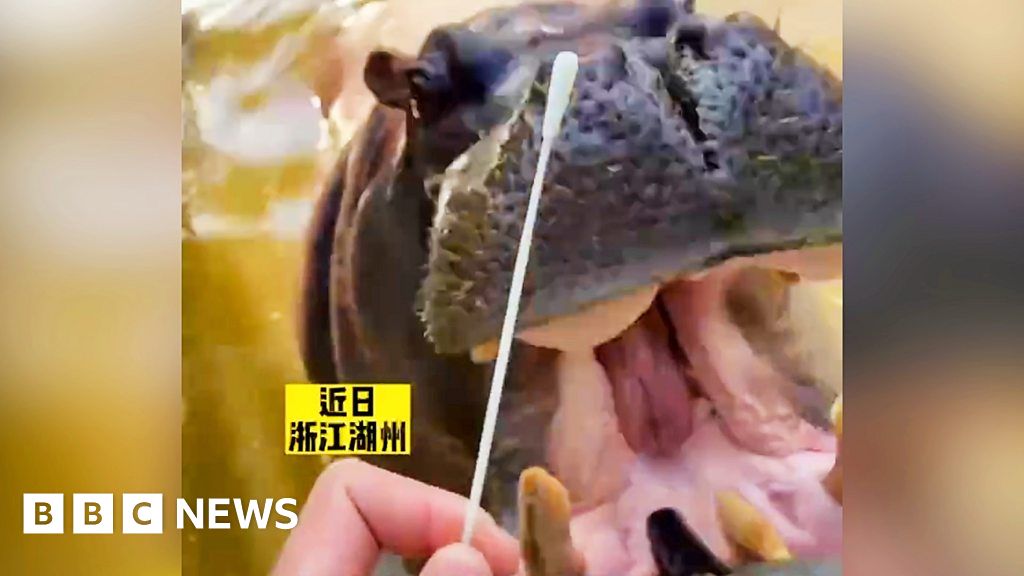
Covid in China: Hippo, fish and crabs get PCR tests

Earlier this year, footage emerged of a hippo being tested for Covid at a wildlife park near Shanghai.Now, clips of fish and crabs getting PCR tests have been going viral on Chinese social media. Officials in the coastal Chinese city of Xiamen ordered “both fishermen and their seafood” to be tested after some 40 people were diagnosed with the virus.More on this story here.

Read more →