Daily multivitamin may improve cognition and possibly protect against decline, study suggests

Could taking a daily multivitamin help maintain cognitive health with aging and possibly prevent cognitive decline? According to new research from Wake Forest University School of Medicine, conducted in collaboration with Brigham and Women’s Hospital in Boston, taking a daily supplement may improve cognition in older adults, but additional studies are needed to confirm these findings before any health recommendations are made. The study also showed that daily use of a cocoa extract supplement does not benefit cognition.
The findings were recently published in Alzheimer’s & Dementia: The Journal of the Alzheimer’s Association.
According to the Alzheimer’s Association, more than 6.5 million Americans are living with Alzheimer’s disease, and 1 in 3 seniors die with the disease or another form of dementia.
“There’s an urgent need for safe and affordable interventions to protect cognition against decline in older adults,” said Laura D. Baker, Ph.D., professor of gerontology and geriatric medicine at Wake Forest University School of Medicine and co-principal investigator of the trial, along with Mark Espeland, Ph.D., professor of gerontology and geriatric medicine at Wake Forest University School of Medicine.
The COcoa Supplement and Multivitamin Outcomes Study for the Mind (COSMOS-Mind), funded by the National Institute on Aging of the National Institutes of Health, was an ancillary study to the COSMOS trial led by Brigham and Women’s Hospital that randomized 21,442 men and women across the U.S. The study investigated whether taking a daily cocoa extract supplement or a daily multivitamin-mineral supplement reduces the risk of developing heart disease, stroke, cancer and other health outcomes.
According to Baker, cocoa extract is rich in compounds called flavanols, and past research suggests that these compounds may positively impact cognition. Baker also said that several micronutrients and minerals are needed to support normal body and brain function, and deficiencies in older adults may increase the risk for cognitive decline and dementia.
In COSMOS-Mind, researchers tested whether daily administration of cocoa extract versus placebo and a multivitamin-mineral versus placebo improved cognition in older adults. More than 2,200 participants, ages 65 and older, enrolled and were followed for three years. Participants completed tests over the telephone at baseline and annually to evaluate memory and other cognitive abilities.
“Our study showed that although cocoa extract did not affect cognition, daily multivitamin-mineral supplementation resulted in statistically significant cognitive improvement,” Baker said. “This is the first evidence of cognitive benefit in a large longer-term study of multivitamin supplementation in older adults.”
The researchers estimated that three years of multivitamin supplementation roughly translated to a 60% slowing of cognitive decline (about 1.8 years). The benefits were relatively more pronounced in participants with significant cardiovascular disease, which is important because these individuals are already at increased risk for cognitive impairment and decline.
“It’s too early to recommend daily multivitamin supplementation to prevent cognitive decline,” Baker said. “While these preliminary findings are promising, additional research is needed in a larger and more diverse group of people. Also, we still have work to do to better understand why the multivitamin might benefit cognition in older adults.”
The COcoa Supplement and Multivitamin Outcomes Study (COSMOS) is supported by an investigator-initiated grant from Mars Edge, a segment of Mars dedicated to nutrition research and products, which included infrastructure support and the donation of study pills and packaging. Haleon provided support through the partial provision of study pills and packaging. COSMOS is also supported in part by grants AG050657, AG071611, EY025623 and HL157665 from the National Institutes of Health, Bethesda, Md. The Women’s Health Initiative (WHI) program is funded by the National Heart, Lung, and Blood Institute, National Institutes of Health, U.S. Department of Health and Human Services through contracts 75N92021D00001, 75N92021D00002, 75N92021D00003, 75N92021D00004, 75N92021D00005. Neither Mars Edge nor Haleon provided input regarding data analyses, interpretation of results or manuscript development.
Read more →

Engineering an enzyme against antibiotic-resistant anthrax

In the 2001 “Amerithrax” attacks, anthrax-causing spores were sent through the mail to media outlets and members of Congress, sickening at least 22 people and killing five. Antibiotic-resistant strains of the bacteria are of growing concern, and researchers are preparing to fight back. Now, a team reporting in ACS Infectious Diseases has taken a step toward the development of a therapeutic that can treat the infection in mice without antibiotics.
Bacillus anthracis is a type of bacteria that can lead to anthrax infection through exposure to its spores, either by ingestion, inhalation or a cut in the skin. The infection can lead to difficulty breathing, skin ulcers or even death. Although antibiotics against anthrax infection exist, resistance to these drugs can occur over time.
One type of B. anthracis, called the Ames strain, is particularly virulent because it can wrap itself in a protective capsule of poly-D-glutamic acid that acts like a cloak of invisibility, helping the bacteria evade the human immune system. A B. anthracis enzyme called CapD anchors the capsule material to the bacteria, but previous studies have reported that the enzyme can be engineered to degrade the capsule instead, making the bacteria susceptible to the immune system. Studies have also shown that providing mice with the engineered CapD can help treat an Ames-strain anthrax infection without the use of antibiotics. In addition, Patricia Legler and colleagues have demonstrated that adding polyethylene glycol (PEG) to this version of CapD can help the enzyme stick around longer, increasing mouse survival. In this study, the team wanted to optimize the treatment even further.
To improve the re-engineered enzyme’s lifetime in the body and deliver a bigger punch, the researchers added PEG and fused the CapD protein with part of a mouse antibody. This resulted in two CapD enzymes bound together, which would essentially double its capsule-binding power. The researchers created several versions of the enzyme and subjected them to many rounds of optimization, deleting and inserting different segments until they achieved a sequence that both held its 3D shape and performed as expected in a range of pH values. When tested in a mouse model, this construct lasted longer than the previous version without the fused antibody, though it had reduced activity. The researchers say that more research is needed to produce the ideal construct, but the results are an important step toward a better treatment against antibiotic-resistant B. anthracis strains.
The authors acknowledge funding from the Defense Threat Reduction Agency.
Story Source:
Materials provided by American Chemical Society. Note: Content may be edited for style and length.

Read more →

Intelligent cooperation to provide surveillance and epidemic services in smart cities

The potential of unmanned aerial vehicles (UAVs) to provide a safe environment and epidemic prevention services to people is huge. This potential has been harnessed by the scientists at Incheon National University to design a cooperative infrastructure for artificial intelligence-assisted aerial and ground operations using UAVs and mobile robots. This infrastructure can provide surveillance and epidemic prevention activities to smart cities.
There has been a lot of interest in mobile robots and unmanned aerial vehicles (UAVs) in recent times, primarily because these technologies have the potential to provide us with immense benefits. With the rise of 5G technology, it is expected that UAVs or drones and mobile robots will efficiently and safely provide a wide range of services in smart cities, including surveillance and epidemic prevention. It is now well established that robots can be deployed in various environments to perform activities like surveillance and rescue operations. But till date, all these operations have been independent of each other, often working in parallel. To realize the full potential of UAVs and mobile robots, we need to use these technologies together so that they can support each other and augment mutual functions.
To this end, a team of researchers led by Associate Professor Hyunbum Kim from Incheon National University, South Korea, have designed an Artificial Intelligence (AI)-assisted cooperative infrastructure for UAVs and mobile robots. In a paper published in volume 36 issue 3 of IEEE Network on 13 July 2022, the researchers outline the entire structure that can use UAVs and mobile robots in public and private areas for multiple operations like patrolling, accident detection and rescue, and epidemic prevention. According to Dr Kim, “It is critical to look at surveillance and unprecedented epidemic spread such as COVID-19 together. This is why we designed the next generation system to focus on aerial-ground surveillance and epidemic prevention supported by intelligent mobile robots and smart UAVs.”
The system designed by the team is composed of two subsystems, one for public areas and one for private areas. Both systems comprise of a Centralized Administrator Center (CAC). The CAC is connected to various Unified Rendezvous Stations (URSs) that are situated in public areas. These URSs are where the UAVs and mobile robots receive replenishment and share data. Mobile robots are also equipped with charging facilities to recharge airborne docking UAVs. The public system aims at patrolling public areas, detecting accidents and calamities, providing aid, and performing epidemic prevention activities like transporting medical equipment. The private system can provide rapid medical deliveries and screening tests to homes.
But what about privacy under such surveillance? Dr Kim allays concerns, saying, “Privacy is indeed a major concern for any surveillance mechanism. Therefore, we have created different privacy settings for different systems. For the public system, there are restricted districts where only authorized public UAVs can enter. For the private system, there are permanent private zones where no UAVs can enter except in emergencies and temporal access zones where permitted UAVs can enter with legal permission from the owners.”
The authors are optimistic about the potential of this infrastructure to improve people’s lives. The system can provide a vast array of services, from detecting and preventing potential terror in public spaces to detecting and extinguishing fires in private homes. Indeed, two is better than one and we look forward to living in this cooperative and optimistic future!
Story Source:
Materials provided by Incheon National University. Note: Content may be edited for style and length.

Read more →

Tiny, caterpillar-like soft robot folds, rolls, grabs and degrades

When you hear the term “robot,” you might think of complicated machinery working in factories or roving on other planets. But “millirobots” might change that. They’re robots about as wide as a finger that someday could deliver drugs or perform minimally invasive surgery. Now, researchers reporting in ACS Applied Polymer Materials have developed a soft, biodegradable, magnetic millirobot inspired by the walking and grabbing capabilities of insects.
Some soft millirobots are already being developed for a variety of biomedical applications, thanks to their small size and ability to be powered externally, often by a magnetic field. Their unique structures allow them to inch or roll themselves through the bumpy tissues of our gastrointestinal tract, for example. They could someday even be coated in a drug solution and deliver the medicine exactly where it’s needed in the body. However, most millirobots are made of non-degradable materials, such as silicone, which means they’d have to be surgically removed if used in clinical applications. In addition, these materials aren’t that flexible and don’t allow for much fine-tuning of the robot’s properties, limiting their adaptability. So, Wanfeng Shang, Yajing Shen and colleagues wanted to create a millirobot out of soft, biodegradable materials that can grab, roll and climb, but then easily dissolve away after its job is done.
As a proof of concept, the researchers created a millirobot using a gelatin solution mixed with iron oxide microparticles. Placing the material above a permanent magnet caused the microparticles in the solution to push the gel outward, forming insect-like “legs” along the lines of the magnetic field. Then, the hydrogel was placed in the cold to make it more solid. The final step was to soak the material in ammonium sulfate to cause cross-linking in the hydrogel, making it even stronger. Changing various factors, such as the composition of the ammonium sulfate solution, the thickness of the gel or the strength of the magnetic field allowed the researchers to tune the properties. For example, placing the hydrogel farther away from the magnet resulted in fewer, but longer, legs.
Because the iron oxide microparticles form magnetic chains within the gel, moving a magnet near the hydrogel caused the legs to bend and produce a claw-like grasping motion. In experiments, the material gripped a 3D-printed cylinder and a rubber band and carried each one to new locations. In addition, the researchers tested the millirobot’s ability to deliver a drug by coating it in a dye solution, then rolling it through a stomach model. Once at its destination, the robot unfurled and released the dye with the strategic use of magnets. Since it’s made using water-soluble gelatin, the millirobot easily degraded in water in two days, leaving behind only the tiny magnetic particles. The researchers say that the new millirobot could open up new possibilities for drug delivery and other biomedical applications.
The authors acknowledge funding from the National Natural Science Foundation of China, Hong Kong RGC General Research Fund and Shenzhen Key Basic Research Project.
Video: https://youtu.be/1va-OQvfJDg
Story Source:
Materials provided by American Chemical Society. Note: Content may be edited for style and length.

Read more →

Current vaccine approach not enough to eradicate measles

Current vaccination strategies are unlikely to eliminate measles, according to a new study led by faculty at the University of Georgia. 
The paper, which published today in The Lancet Global Health, explores the feasibility of eliminating measles and rubella using predominant vaccination strategies in 93 countries with the highest disease burden.
Despite marked reductions in the number of new measles and rubella cases worldwide, gaps remain between current levels of transmission and disease elimination. 
“Measles is one of the most contagious respiratory infections out there, and it moves quickly, so it’s hard to control,” said lead author Amy Winter, an assistant professor of epidemiology and biostatistics at UGA’s College of Public Health. 
The basic reproduction number (R0) for measles, which represents the number of people that one infected person is likely to transmit that disease to in a fully susceptible population, is roughly 18. By comparison the R0 for the original SARS-CoV-2 virus is estimated to be around three.
In 2017, the World Health Organization director general requested a report on the feasibility of measles and rubella eradication. One component of this report was to use transmission models to evaluate the theoretical feasibility of eradication of the two viruses given different vaccination strategies.

Read more →

This fungus shrinks in size to better infect the brain

A fungus that is a common cause of fungal meningitis undergoes a remarkable transformation once it enters the body, allowing it to infect the brain, according to new research by scientists at University of Utah Health. Studies in mice show that as the fungal intruder travels through the body, it shrinks and acquires characteristics that help infection to spread, all in a matter of days.
The discovery could lead to new strategies for blocking Cryptococcus neoformans infection and preventing detrimental effects on the host. C. neoformans is the leading cause of a rare but deadly swelling of the brain that occurs in people with weakened immune systems.
“Cryptococcus cells in the lungs are very diverse with different sizes and different appearances. So, when my graduate student showed me pictures of the uniformity of cells from the brain, I was shocked,” says Jessica Brown, Ph.D., associate professor of pathology at U of U Health and the study’s senior author. “It suggested that there was some very strong reason why only this population of cells were making it that far into the body.” Her former graduate student, Steven Denham, PhD, is leading author on the study. Their research recently published online in the peer-reviewed journal Cell Host & Microbe.
The fungus adapts rapidly to withstand microenvironments in the body
Brown’s fascination with the funguscame from the observation that it thrives in so many different habitats. In the wild, the organism lives in rotting wood and bird droppings. If it is inadvertently inhaled, the fungus can survive in the lungs and then travel in the bloodstream to the brain and other organs, each of which has its own challenging micro-environment.
Previously, other scientists found that the fungus copes with living in the lungs by growing to 10 times its normal size, presumably becoming too large for the host immune system to destroy. But in other parts of the body, fungal cells are much smaller. Brown wondered, could the cells’ extra-small size be another type of advantage? Perhaps that characteristic helps them colonize other organs, such as the brain.

Read more →

What a High-Risk Pregnancy Looks Like After Dobbs

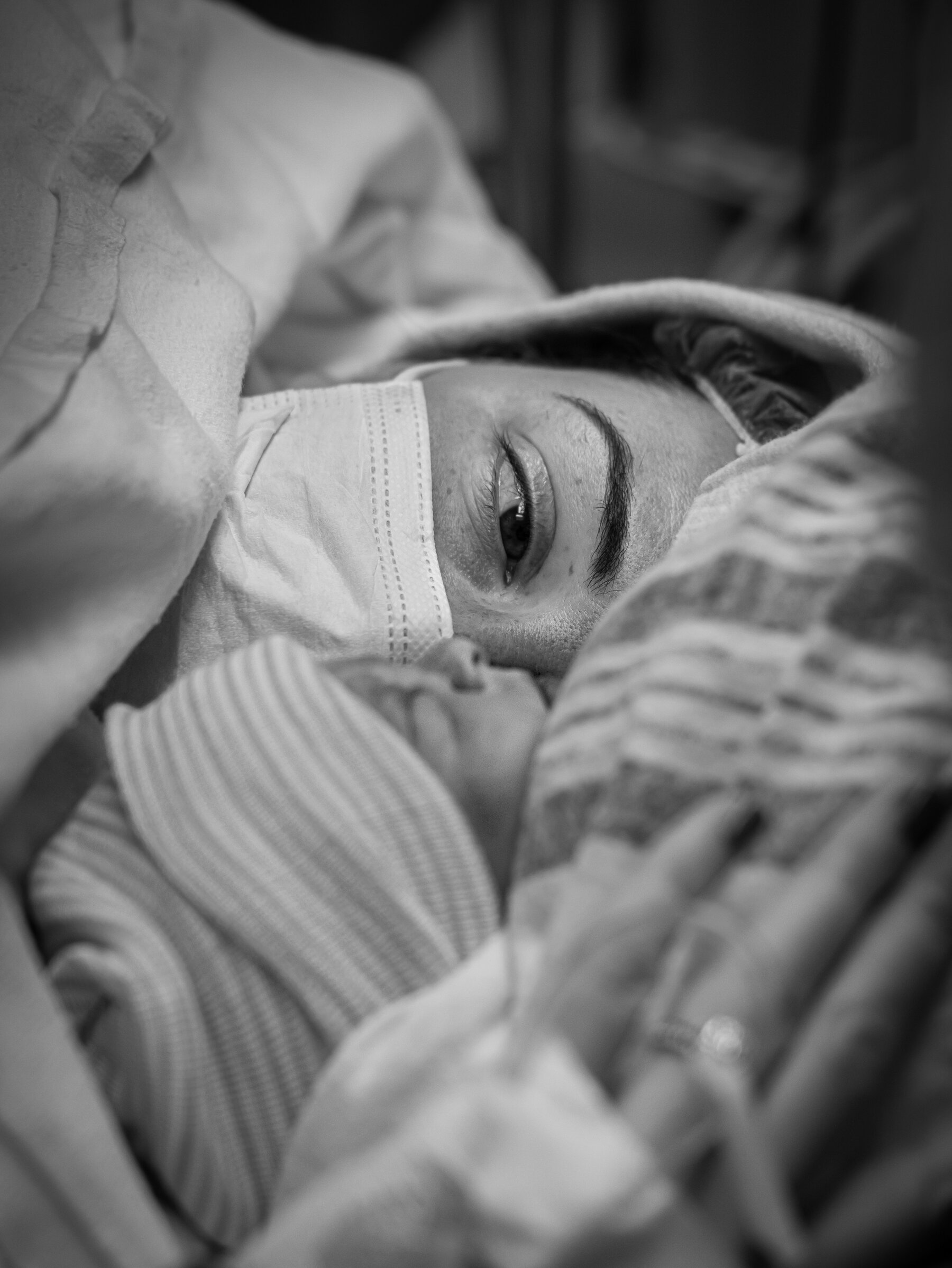
The Cleveland Clinic offers some of the best care for high-risk pregnancies in America.But the overturning of Roe v. Wade has drastically changed the options for doctors in states like Ohio.The photographer Stephanie Sinclair spent two weeks capturing this newly unsettled world.What a High-Risk Pregnancy Looks Like After DobbsPregnancy can be dangerous — occasionally fatal — for both women and the fetuses they hope to deliver. Fetal conditions, like a nonviable twin that threatens the health of its sibling, can also imperil the mother. So can disorders like cancer, heart disease, kidney dysfunction, diabetes and lupus. Even something as straightforward as age — becoming pregnant when younger than 17 or older than 35 — or carrying twins or having a history of multiple miscarriages can put women and pregnancies in jeopardy. That’s why so many obstetricians regard the ability to terminate a pregnancy as essential: Doctors need access to abortion procedures to be able to provide care and save lives.Catrina Rainey and James Packwood and their 9-year-old son at home, in August, one month before her due date. In May, Catrina learned that one of the twins she was carrying had a severe birth defect of the brain that meant it was unlikely to live past six months outside the womb and could, until birth, threaten the viability of the other fetus. A reduction — the termination of an unhealthy fetus to protect a healthy sibling — took place in May. It was one of the last such procedures performed in Ohio, after the state made them illegal, following the Dobbs decision.Default Headline

Read more →

COVID was deadlier for those with intellectual and development disabilities

Authors of a new peer-reviewed paper have discovered that COVID was the leading cause of death for people with intellectual and developmental disabilities (IDD) in 2020.
The study, “COVID-19 Mortality Burden and Comorbidity Patterns Among Decedents with and without Intellectual and Developmental Disability in the US,” looked at 2020 death certificate data to examine death patterns for people with or without IDD. They found that those without an IDD, COVID was the third leading cause of death, following heart disease and cancer. But for those with IDD, COVID was the number one cause of death.
IDD are conditions characterized by life-long impairments in mobility, language, learning, self-care, and independent living. Examples include Down Syndrome, cerebral palsy, and intellectual disabilities.
Syracuse University Associate Professor Scott Landes and lead author of the paper, published by the Disability and Health Journal, said that this study had confirmed earlier predictions that COVID-19 would be deadlier among people with IDD.
“Even when we adjusted for age, sex, and racial-ethnic minority status, we found that COVID-19 was far deadlier for those with IDD than those without,” said Landes. “Furthermore, people with IDD were dying at much younger ages.”
The research team for the study includes Landes, a faculty associate for the Aging Studies Institute at Syracuse University’s Maxwell School of Citizenship and Public Affairs; Julia Finan, a graduate student in the sociology department at the Maxwell School at Syracuse University; and Dr. Margaret Turk, Distinguished Service Professor of Physical Medicine and Rehabilitation at SUNY Upstate Medical Center in Syracuse, N.Y.

Read more →

Drug turns cancer gene into 'eat me' flag for immune system

Tumor cells are notoriously good at evading the human immune system; they put up physical walls, wear disguises and handcuff the immune system with molecular tricks. Now, UC San Francisco researchers have developed a drug that overcomes some of these barriers, marking cancer cells for destruction by the immune system.
The new therapy, described Sept. 12 in Cell Cancer, pulls a mutated version of the protein KRAS to the surface of cancer cells, where the drug-KRAS complex acts as an “eat me” flag. Then, an immunotherapy can coax the immune system to effectively eliminate all cells bearing this flag.
“The immune system already has the potential to recognize mutated KRAS, but it usually can’t find it very well. When we put this marker on the protein, it becomes much easier for the immune system,” said UCSF chemist and Howard Hughes Medical Institute Investigator Kevan Shokat, PhD, who helped lead the new work.
KRAS mutations are found in about one quarter of all tumors, making them one of the most common gene mutations in cancer. Mutated KRAS is also the target of sotorasib, which the Food and Drug Administration (FDA) has given preliminary approval for use in lung cancer, and the two approaches may eventually work well in combination.
“It’s exciting to have a new strategy leveraging the immune system that we can combine with targeted KRAS drugs,” said Charles Craik, PhD, a lead study author and professor of pharmaceutical chemistry at UCSF. “We suspect that this could lead to deeper and longer responses for cancer patients.”
Turning Cancer Markers Inside Out
The immune system typically recognizes foreign cells because of unusual proteins that jut out of their surfaces. But when it comes to cancer cells, there are few unique proteins found on their outsides. Instead, most proteins that differentiate tumor cells from healthy cells are inside the cells, where the immune system can’t detect them.

Read more →

Biologists glean insight into repetitive protein sequences

About 70 percent of all human proteins include at least one sequence consisting of a single amino acid repeated many times, with a few other amino acids sprinkled in. These “low-complexity regions” are also found in most other organisms.
The proteins that contain these sequences have many different functions, but MIT biologists have now come up with a way to identify and study them as a unified group. Their technique allows them to analyze similarities and differences between LCRs from different species, and helps them to determine the functions of these sequences and the proteins in which they are found.
Using their technique, the researchers have analyzed all of the proteins found in eight different species, from bacteria to humans. They found that while LCRs can vary between proteins and species, they often share a similar role — helping the protein in which they’re found to join a larger-scale assembly such as the nucleolus, an organelle found in nearly all human cells.
“Instead of looking at specific LCRs and their functions, which might seem separate because they’re involved in different processes, our broader approach allows us to see similarities between their properties, suggesting that maybe the functions of LCRs aren’t so disparate after all,” says Byron Lee, an MIT graduate student.
The researchers also found some differences between LCRs of different species and showed that these species-specific LCR sequences correspond to species-specific functions, such as forming plant cell walls.
Lee and graduate student Nima Jaberi-Lashkari are the lead authors of the study, which appears today in eLife. Eliezer Calo, an assistant professor of biology at MIT, is the senior author of the paper.

Read more →