Living donor transplantation offers a safe alternative for liver transplant patients

Demand for donor livers for transplant patients outstrips supply with over 15% of waitlist patients dying after a year. A new international study offers support for increasing the use of living donor liver transplantation (LDLT) in Western countries and reducing the imbalance between organ supply and demand. This study is reported in the Journal of Hepatology, the official journal of the European Association for the Study of the Liver, published by Elsevier.
LDLT is when a portion of the liver from a healthy living person is removed and placed into someone whose liver is no longer working properly. The donor’s remaining liver regrows and returns to its normal size, volume, and capacity within a few months after the surgery. Although the waiting period for a deceased donor transplant can be over five years, LDLT remains uncommon compared to deceased donor liver transplantation (DDLT) in Western countries compared to those in Asia.
Identifying differences in outcomes and other transplant characteristics may help identify areas for healthcare improvement and clarify whether expanding LDLT practices can be justified in countries that rely primarily on DDLT.
“There has been a growing interest in strategies to alleviate the increasing demand for transplantation and the unacceptably high mortality on the liver transplant waitlist,” explained Gonzalo Sapisochin, MD, PhD, MSc, Division of General Surgery, University Health Network, Toronto, ON, Canada. “One such approach is LDLT, which can expand the number of grafts available for transplantation. However, short- and long-term outcomes need to be maintained for both the donors and recipients. We therefore sought to compare donor and recipient characteristics and post-transplant outcomes after LDLT.”
This is a retrospective multicenter study of adults aged 18 years or older who underwent primary LDLT between January 2008 and December 2018 as reported by three national liver transplantation registries: United Network for Organ Sharing (UNOS; US), National Health Service Blood and Transplantation (NHSBT; UK), and the Canadian Organ Replacement Registry (CORR; Canada). Patients undergoing retransplantation or multi-organ transplantation were excluded. Investigators compared recipient and donor characteristics, temporal trends, and post-LDLT outcomes across the three registries. In addition, they sought to evaluate outcomes for LDLT compared with DDLT within each of the countries.
A total of 2,954 LDLTs were performed in these countries, 2,328 of which took place in the US, 529 in Canada, and 97 in the UK. Canada performed the highest proportion of LDLT procedures over time. Investigators were pleasantly surprised to see that long-term outcomes were excellent despite relatively low use of LDLT in Western countries. The one-, five-, and 10-year patient survival rates were 92.6%, 82.8%, and 70.0% in the USA; 96.1%, 89.9%, and 82.2% in Canada; and 91.4%, 85.4%, and 66.7% in the UK, respectively.
This analysis of LDLT demonstrates that despite the low use of LDLT in Western countries compared to Asian countries, long-term survival is excellent. In addition, the mortality risk is not statistically significantly different between these three countries.
“This study offers support for increasing the use of LDLT in Western countries because it provides an opportunity to reduce the imbalance between organ supply and demand and, as a result, offers waitlist candidates the possibility of earlier transplantation and decreased mortality on the transplant waitlist,” commented Dr. Sapisochin
Story Source:
Materials provided by Elsevier. Note: Content may be edited for style and length.

Read more →

They Were Entitled to Free Care. Hospitals Hounded Them to Pay.

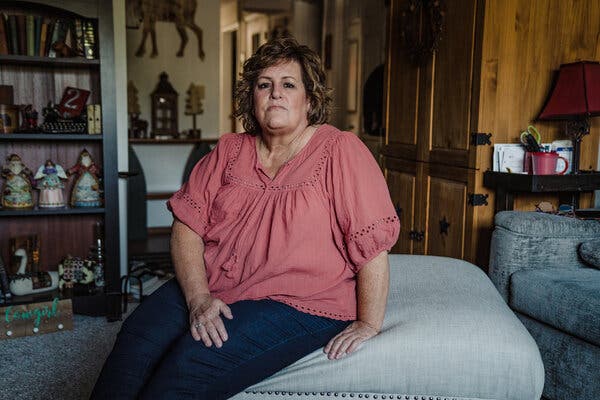
In 2018, senior executives at one of the country’s largest nonprofit hospital chains, Providence, were frustrated. They were spending hundreds of millions of dollars providing free health care to patients. It was eating into their bottom line.The executives, led by Providence’s chief financial officer at the time, devised a solution: a program called Rev-Up.Rev-Up provided Providence’s employees with a detailed playbook for wringing money out of patients — even those who were supposed to receive free care because of their low incomes, a New York Times investigation found.In training materials obtained by The Times, members of the hospital staff were instructed how to approach patients and pressure them to pay.“Ask every patient, every time,” the materials said. Instead of using “weak” phrases — like “Would you mind paying?” — employees were told to ask how patients wanted to pay. Soliciting money “is part of your role. It’s not an option.”If patients did not pay, Providence sent debt collectors to pursue them.More than half the nation’s roughly 5,000 hospitals are nonprofits like Providence. They enjoy lucrative tax exemptions; Providence avoids more than $1 billion a year in taxes. In exchange, the Internal Revenue Service requires them to provide services, such as free care for the poor, that benefit the communities in which they operate.But in recent decades, many of the hospitals have become virtually indistinguishable from for-profit companies, adopting an unrelenting focus on the bottom line and straying from their traditional charitable missions.To understand the shift, The Times reviewed thousands of pages of court records, internal hospital financial records and memos, tax filings, and complaints filed with regulators, and interviewed dozens of patients, lawyers, current and former hospital executives, doctors, nurses and consultants.The Times found that the consequences have been stark. Many nonprofit hospitals were ill equipped for a flood of critically sick Covid-19 patients because they had been operating with skeleton staffs in an effort to cut costs and boost profits. Others lacked intensive care units and other resources to weather a pandemic because the nonprofit chains that owned them had focused on investments in rich communities at the expense of poorer ones.And, as Providence illustrates, some hospital systems have not only reduced their emphasis on providing free care to the poor but also developed elaborate systems to convert needy patients into sources of revenue. The result, in the case of Providence, is that thousands of poor patients were saddled with debts that they never should have owed, The Times found.Founded by nuns in the 1850s, Providence says its mission is to be “steadfast in serving all, especially those who are poor and vulnerable.” Today, based in Renton, Wash., Providence is one of the largest nonprofit health systems in the country, with 51 hospitals and more than 900 clinics. Its revenue last year exceeded $27 billion.Providence is sitting on $10 billion that it invests, Wall Street-style, alongside top private equity firms. It even runs its own venture capital fund.In 2018, before the Rev-Up program kicked in, Providence spent 1.24 percent of its expenses on charity care, a standard way of measuring how much free care hospitals provide. That was below the average of 2 percent for nonprofit hospitals nationwide, according to an analysis of hospital financial records by Ge Bai, a professor at the Johns Hopkins Bloomberg School of Public Health.By last year, Providence’s spending on charity care had fallen below 1 percent of its expenses.The Affordable Care Act requires nonprofit hospitals to make their financial assistance policies public, such as by posting them in hospital waiting rooms. But the federal law does not dictate who is eligible for free care.Bev Kolpin, a former Providence employee in Oregon, was billed $8,000 despite being eligible for discounted care.Jovelle Tamayo for The New York TimesTen states, however, have adopted their own laws that specify which patients, based on their income and family size, qualify for free or discounted care. Among them is Washington, where Providence is based. All hospitals in the state must provide free care for anyone who makes under 300 percent of the federal poverty level. For a family of four, that threshold is $83,250 a year.In February, Bob Ferguson, the state’s attorney general, accused Providence of violating state law, in part by using debt collectors to pursue more than 55,000 patient accounts. The suit alleged that Providence wrongly claimed those patients owed a total of more than $73 million.Providence, which is fighting the lawsuit, has said it will stop using debt collectors to pursue money from low-income patients who should qualify for free care in Washington.But The Times found that the problems extend beyond Washington. In interviews, patients in California and Oregon who qualified for free care said they had been charged thousands of dollars and then harassed by collection agents. Many saw their credit scores ruined. Others had to cut back on groceries to pay what Providence claimed they owed. In both states, nonprofit hospitals are required by law to provide low-income patients with free or discounted care.“I felt a little betrayed,” said Bev Kolpin, 57, who had worked as a sonogram technician at a Providence hospital in Oregon. Then she went on unpaid leave to have surgery to remove a cyst. The hospital billed her $8,000 even though she was eligible for discounted care, she said. “I had worked for them and given them so much, and they didn’t give me anything.” (The hospital forgave her debt only after a lawyer contacted Providence on Ms. Kolpin’s behalf.)Gregory Hoffman, Providence’s chief financial officer, said in an interview that The Times’s findings about the hospital system’s treatment of poor patients “are very concerning and have our attention.” He said Providence wanted “to get things right, on behalf of our communities and on behalf of our patients,” though he acknowledged that the Rev-Up program initially had “some hiccups,” including sending Medicaid patients to debt collectors.Melissa Tizon, a spokeswoman for Providence, said the health system stopped doing that in December, although that was two years after an executive raised internal alarms about the practice. Providence has also instructed the debt collection firms it works with to not use “any aggressive tactics such as garnishing wages or reporting delinquent accounts to credit agencies,” she said.Ms. Tizon said Providence was the largest provider of charity care in Washington. While the hospital system has been providing less of that care in recent years, she said, Providence has been treating more patients on Medicaid, the federal-state insurance program for poor people.“Our practices comply with and in many instances exceed state requirements,” she said.Paying With PoultryThe Providence hospital in Olympia, Wash., billed Harriet Haffner-Ratliffe, who was eligible for charity care, almost $2,300 after she gave birth to twins.Jovelle Tamayo for The New York TimesProvidence’s transformation from a small charitable organization to a huge hospital system mirrors the story of the country’s nonprofit hospitals.Providence was founded in 1856 when, at the request of a local bishop, Mother Joseph and four other nuns from the Sisters of Providence trekked from Montreal to Vancouver, Wash., to provide services to the poor. Their first hospital, St. Joseph, was a single room with four beds. The hospital charged patients $1 a day, not including extras like whiskey.Patients rarely paid in cash, sometimes offering chickens, ducks and blankets in exchange for care.At the time, hospitals in the United States were set up to do what Providence did — provide inexpensive care to the poor. Wealthier people usually hired doctors to treat them at home.Given their work serving the indigent, hospitals were exempted from state and federal taxes.That system remained relatively unchanged until the federal government created Medicare and Medicaid in the 1960s. Millions more people suddenly had insurance that covered medical expenses.The I.R.S. began allowing hospitals to justify their tax exemptions by providing a broader range of loosely defined benefits to their communities beyond treating patients for free. Some hospitals took advantage of the new leeway, arguing that things like employees’ salaries counted toward the I.R.S. requirement.Top government officials warned that hospitals were abusing their privileged status as nonprofits.“Some tax-exempt health care providers may not differ markedly from for-profit providers in their operations, their attention to the benefit of the community or their levels of charity care,” the I.R.S. commissioner Mark W. Everson wrote to the Senate in 2005.Some hospital executives have embraced the comparison to for-profit companies. Dr. Rod Hochman, Providence’s chief executive, told an industry publication in 2021 that “‘nonprofit health care’ is a misnomer.”“It is tax-exempt health care,” he said. “It still makes profits.”Those profits, he added, support the hospital’s mission. “Every dollar we make is going to go right back into Seattle, Portland, Los Angeles, Alaska and Montana.”Since Dr. Hochman took over in 2013, Providence has become a financial powerhouse. Last year, it earned $1.2 billion in profits through investments. (So far this year, Providence has lost money.)Providence also owes some of its wealth to its nonprofit status. In 2019, the latest year available, Providence received roughly $1.2 billion in federal, state and local tax breaks, according to the Lown Institute, a think tank that studies health care.The greater the hospital system’s profits, the more money it could pump into expanding. In addition, the greater its cash reserves, the stronger its credit rating. A pristine rating allowed Providence to inexpensively borrow money, which it could then funnel into further growth.Over the past decade, Providence has opened or acquired 18 hospitals. Dr. Hochman earned $10 million in 2020.‘Don’t Accept the First No’Ms. Haffner-Ratliffe’s debt from the birth of her sons continues to have financial repercussions five years later.Jovelle Tamayo for The New York TimesEven before the Rev-Up program, Providence was collecting money from poor patients, sometimes in violation of state laws, according to five current and former executives and a review of patient complaints filed with regulators.Harriet Haffner-Ratliffe, 20, gave birth to twins at a Providence hospital in Olympia, Wash., in 2017. She was eligible under state law for charity care.Providence did not inform her. Instead it billed her almost $2,300. The hospital put her on a roughly $100-a-month payment plan.It was more than Ms. Haffner-Ratliffe, who was unemployed, could afford. She had to ration gas for her car. One day, her boyfriend walked into their apartment and found her surrounded by bills, crying. When she fell behind on the payments, Providence dispatched a debt collector to pursue her.For people already on the financial brink, debt collection companies can push them over the edge. The companies often inform credit-rating firms about patients’ debts, which can torpedo their credit scores. That, in turn, can make it much harder and more expensive to buy or rent a car or home or to borrow money.Ms. Haffner-Ratliffe’s ordeal chopped her credit score by about 200 points. For years, she couldn’t get a credit card. (Ms. Tizon, the Providence spokeswoman, said that the hospital had told Ms. Haffner-Ratliffe about how to seek financial aid but that she had not completed her application. Ms. Haffner-Ratliffe and her parents dispute that.)Around that time, in 2018, Providence was looking for ways to save money. It had recently merged with another nonprofit hospital system, and integrating the two was expensive.Providence turned to the consulting firm McKinsey & Company. The firm’s assignment was to maximize the money that Providence collected from its patients, the five current and former executives said. In essence, the hospital system wanted to apply the tactics it had used with Ms. Haffner-Ratliffe to even more patients.McKinsey’s solution was Rev-Up, whose name was an apparent reference to the goal of accelerating revenue growth.Training materials instructed administrative staff to tell patients — no matter how poor — that “payment is expected,” according to documents included in Washington’s lawsuit and training materials obtained by The Times. Six current and former hospital employees said in interviews that they had been told not to mention the financial aid that states like Washington required Providence to provide.One training document, titled “Don’t accept the first No,” led staff through a series of questions to ask patients. The first was “How would you like to pay that today?” If that did not work, employees were told to ask for half the balance. Failing that, staff could offer to set up a payment plan. Only as a last resort, the documents explained, should workers tell patients that they may be eligible for financial assistance.Another training document explained what to do if patients expressed surprise that a charitable hospital was pressuring them to pay. The suggested response: “We are a nonprofit. However, we want to inform our patients of their balances as soon as possible and help the hospital invest in patient care by reducing billing costs.”Staff members were then instructed to shift the conversation to “how would you like to take care of this today?”Exhorting employees to do their jobs well, some versions of the training materials invoked a famous line from a speech by the Rev. Dr. Martin Luther King Jr.: “If it falls your lot to be a street sweeper, sweep streets like Michelangelo painted pictures.”Ms. Tizon, the spokeswoman for Providence, said the intent of Rev-Up was “not to target or pressure those in financial distress.” Instead, she said, “it aimed to provide patients with greater pricing transparency.”“We recognize the tone of the training materials developed by McKinsey was not consistent with our values,” she said, adding that Providence modified the materials “to ensure we are communicating with each patient with compassion and respect.”But employees who were responsible for collecting money from patients said the aggressive tactics went beyond the scripts provided by McKinsey. In some Providence collection departments, wall-mounted charts shaped like oversize thermometers tracked employees’ progress toward hitting their monthly collection goals, the current and former Providence employees said.On Halloween at one of Providence’s hospitals, an employee dressed up as a wrestler named Rev-Up Ricky, according to the Washington lawsuit. Another costume featured a giant cardboard dollar sign with “How” printed on top of it, referring to the way the staff was supposed to ask patients how, not whether, they would pay. Ms. Tizon said such costumes were “not the culture we strive for.”The Rev-Up program alarmed some Providence employees.“It was awful working for this rich system and not being able to help people who were just crying in front of me,” said Stephanie Shufelt, who worked in patient registration at a Providence hospital in Portland, Ore., until February 2021.Taylor Davison, who worked in the emergency department of a Providence hospital in Santa Rosa, Calif., until last year, said Providence’s tactics had struck her as predatory. She was told to approach patients as soon as doctors had finished examining them. She would crouch at their bedside and ask for money. She was required to document in the patients’ charts that she had repeatedly pushed for payments.Employees were urged to collect any amount, no matter how small, she said. Some patients offered as little as $2, which she accepted.“Here are people coming in at the worst moment of their lives, and I’m asking them to empty their wallets,” Ms. Davison said.Providence paid McKinsey at least $45 million in 2019 for its assistance, tax filings show.Stephanie Shufelt said pushing poor patients to pay felt “awful.”Chris Creese for The New York TimesTaylor Davison was told to accept payments as small as $2.Preston Gannaway for The New York TimesWarning About Harm to PatientsWhen patients left a hospital without paying, Providence sent them at least three bills. If they still did not pay, they would receive one last warning.“This is your final opportunity to pay your account,” one such letter said. Otherwise, it went on, Providence would enlist “a third-party agency that may adversely affect your credit rating.”Under Washington’s law, Providence was supposed to screen patients at the hospital to assess whether they qualified for free or discounted care. But Providence often checked patients’ income only after months of hounding them had failed, according to depositions included in the Washington lawsuit and internal memos that a former Providence executive shared with The Times.At that point, Providence ran accounts through a screening tool provided by Experian, a credit reporting company, to determine whether accounts were eligible for free care.But despite Rev-Up, the amount of free care that Providence was providing was “spiking,” an executive later explained in an email to colleagues. So in 2019, Providence’s chief financial officer at the time, Venkat Bhamidipati, and other executives made a change, according to the five current and former Providence executives and depositions included in Washington’s lawsuit.Previously, when treating patients who were on Medicaid, Providence eventually waived any outstanding portion of their bill. In 2019, Providence stopped doing that. Medicaid patients were sent to debt collectors instead. That appeared to violate laws in Washington, Oregon and California that required nonprofit hospitals to provide free care to patients earning below certain thresholds, according to regulators.Some Providence executives warned that the changes were harming patients.“I just want it made clear to our leadership that patients that would normally have been eligible for charity care are going to bad debt,” Lesa Wood, a director of financial counseling and assistance, emailed colleagues in late 2019.In 2020, a Providence executive wrote to co-workers to report that the system’s charity care spending was down “across all markets.”Skimping on GroceriesProvidence put Alexandra Nyfors on a payment plan, forcing her to go without heat.Jovelle Tamayo for The New York TimesIn November 2020, Paulo Aguirre went to a Providence hospital in Orange County, Calif., with a splitting headache, blurred vision and nausea. Doctors gave him a shot that made the pain “go right away,” he said.Mr. Aguirre earned minimum wage working at a dental office and was on California’s version of Medicaid, known as Medi-Cal. Under California law and Providence’s financial assistance policy, his low income qualified him for free care.In early 2021, Mr. Aguirre said, he received a bill from Providence for $4,394.45. He told Providence that he could not afford to pay.Providence sent his account to Harris & Harris, a debt collection company. Mr. Aguirre said that Harris & Harris employees had called him repeatedly for weeks and that the ordeal made him wary of going to Providence again.“I try my best not to go to their emergency room even though my daughters have gotten sick, and I got sick,” Mr. Aguirre said, noting that one of his daughters needed a biopsy and that he had trouble breathing when he had Covid. “I have this big fear in me.”That is the outcome that hospitals like Providence may be hoping for, said Dean A. Zerbe, who investigated nonprofit hospitals when he worked for the Senate Finance Committee under Senator Charles E. Grassley, Republican of Iowa.“They just want to make sure that they never come back to that hospital and they tell all their friends never to go back to that hospital,” Mr. Zerbe said.Last October, an ambulance rushed Alexandra Nyfors to the Providence hospital in Everett, Wash. A diabetic, she was severely dehydrated, and her kidneys were failing. Providence put her on intravenous medications to treat an underlying infection. She spent about two weeks in the hospital.Ms. Nyfors, 66, is covered by Medicare, and her only income is about $1,700 a month in federal disability payments. Under Providence’s policies and state law, she was eligible for free care because of her low income.But Providence billed her $1,950 — the amount left over after Medicare covered its share. The remaining sum was daunting. It was getting colder, and Ms. Nyfors knew her heating bill would gobble up much of her monthly check. But when she went on the hospital’s website, she said, there were only two choices: Pay in full or set up a payment plan.Ms. Nyfors agreed to have $162.50 automatically withdrawn from her bank account each month until the bill was settled. She started buying fewer groceries, she said. She went without heat. She split her medication in two to make it last longer.She had no idea she qualified for free care until she read about Washington’s lawsuit. After Ms. Nyfors was interviewed by The Everett Daily Herald, Providence forgave her bill and refunded the payments she had made.In June, she got another letter from Providence. This one asked her to donate money to the hospital: “No gift is too small to make a meaningful impact.”Employees at the Providence hospital in Santa Rosa, Calif., were told to seek money from patients as soon as doctors finished examining them.Preston Gannaway for The New York TimesFollowing a Script ‘Like Robots’In 2019, Vanessa Weller, a single mother who is a manager at a Wendy’s restaurant in Anchorage, went to Providence Alaska Medical Center, the state’s largest hospital.She was 24 weeks pregnant and experiencing severe abdominal pains. “Let this just be cramps,” she recalled telling herself.Ms. Weller was in labor. She gave birth via cesarean section to a boy who weighed barely a pound. She named him Isaiah. As she was lying in bed, pain radiating across her abdomen, she said, a hospital employee asked how she would like to pay. She replied that she had applied for Medicaid, which she hoped would cover the bill.After five days in the hospital, Isaiah died.Then Ms. Weller got caught up in Providence’s new, revenue-boosting policies.The phone calls began about a month after she left the hospital. Ms. Weller remembers panicking when Providence employees told her what she owed: $125,000, or about four times her annual salary.She said she had repeatedly told Providence that she was already stretched thin as a single mother with a toddler. Providence’s representatives asked if she could pay half the amount. On later calls, she said, she was offered a payment plan.“It was like they were following some script,” she said. “Like robots.”Later that year, a Providence executive questioned why Ms. Weller had a balance, given her low income, according to emails disclosed in Washington’s litigation with Providence. A colleague replied that her debts previously would have been forgiven but that Providence’s new policy meant that “balances after Medicaid are being excluded from presumptive charity process.”Ms. Weller said she had to change her phone number to make the calls stop. Her credit score plummeted from a decent 650 to a lousy 400. She has not paid any of her bill.Susan C. Beachy

Read more →

How a Hospital Chain Used a Poor Neighborhood to Turn Huge Profits

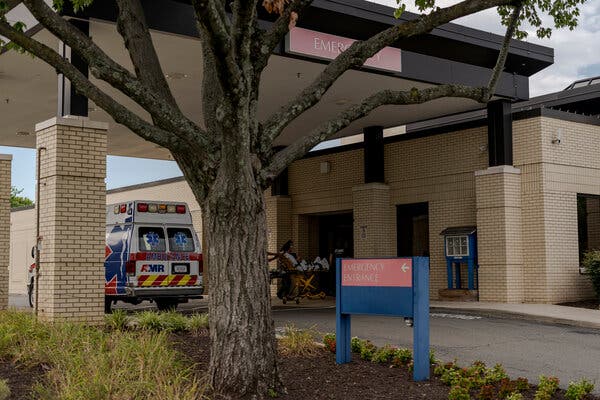
RICHMOND, Va. — In late July, Norman Otey was rushed by ambulance to Richmond Community Hospital. The 63-year-old was doubled over in pain and babbling incoherently. Blood tests suggested septic shock, a grave emergency that required the resources and expertise of an intensive care unit.But Richmond Community, a struggling hospital in a predominantly Black neighborhood, had closed its I.C.U. in 2017.It took several hours for Mr. Otey to be transported to another hospital, according to his sister, Linda Jones-Smith. He deteriorated on the way there, and later died of sepsis. Two people who cared for Mr. Otey said the delay had most likely contributed to his death.“He should have been able to go to the hospital and get the treatment he needed,” Ms. Jones-Smith said. “He should have been saved.”Ringed by public housing projects, Richmond Community consists of little more than a strapped emergency room and a psychiatric ward. It does not have kidney or lung specialists, or a maternity ward. Its magnetic resonance imaging machine frequently breaks, and was out of service for seven weeks this summer, said two medical workers at the hospital, who requested anonymity because they still work there. Standard tools like an otoscope, a device used to inspect the ear canal, are often hard to come by.Yet the hollowed-out hospital — owned by Bon Secours Mercy Health, one of the largest nonprofit health care chains in the country — has the highest profit margins of any hospital in Virginia, generating as much as $100 million a year, according to the hospital’s financial data.Linda Jones-Smith of Richmond, Va., sitting on the bench she used to share with her brother, Norman Otey, each morning.Carlos Bernate for The New York TimesA photo of Mr. Otey, who died at Richmond Community Hospital. “He should have been saved,” Ms. Jones-Smith said.Carlos Bernate for The New York TimesThe secret to its success lies with a federal program that allows clinics in impoverished neighborhoods to buy prescription drugs at steep discounts, charge insurers full price and pocket the difference. The vast majority of Richmond Community’s profits come from the program, said two former executives who were familiar with the hospital’s finances and requested anonymity because they still work in the health care industry.The drug program was created with the intention that hospitals would reinvest the windfalls into their facilities, improving care for poor patients. But Bon Secours, founded by Roman Catholic nuns more than a century ago, has been slashing services at Richmond Community while investing in the city’s wealthier, white neighborhoods, according to more than 20 former executives, doctors and nurses.“Bon Secours was basically laundering money through this poor hospital to its wealthy outposts,” said Dr. Lucas English, who worked in Richmond Community’s emergency department until 2018. “It was all about profits.”More than half of all hospitals in the United States are set up as nonprofits, a designation that allows them to make money but avoid paying taxes. Although Bon Secours has taken a financial hit this year like many other hospital systems, the chain made nearly $1 billion in profit last year at its 50 hospitals in the United States and Ireland and was sitting on more than $9 billion in cash reserves. It avoids at least $440 million in federal, state and local taxes every year that it would otherwise have to pay, according to an analysis by the Lown Institute, a nonpartisan think tank.In exchange for the tax breaks, the Internal Revenue Service requires nonprofit hospitals to provide a benefit to their communities. But an investigation by The New York Times found that many of the country’s largest nonprofit hospital systems have drifted far from their charitable roots. The hospitals operate like for-profit companies, fixating on revenue targets and expansions into affluent suburbs.A federal program allows hospitals like Richmond Community to buy drugs at a steep discount and then charge insurers a much higher price for them.Carlos Bernate for The New York TimesMany of these hospitals have for years slashed staffing levels, leaving them unprepared for a flood of severely ill Covid-19 patients. Others, borrowing tricks from business consultants, have trained staff to squeeze payments from poor patients who should be eligible for free care.In a statement, a spokeswoman for Bon Secours Mercy Health said the hospital system had spent nearly $10 million on improvements to Richmond Community Hospital since 2013, including opening a pharmacy and renovating the cafeteria, emergency department and other areas. The chain also invested nearly $9 million since 2018 in the neighborhood surrounding the hospital, she said.Bon Secours’s chief executive, John M. Starcher Jr., made about $6 million in 2020, according to the most recent tax filings.“Our mission is clear — to extend the compassionate ministry of Jesus by improving the health and well-being of our communities and bring good help to those in need, especially people who are poor, dying and underserved,” the spokeswoman, Maureen Richmond, said. Bon Secours did not comment on Mr. Otey’s case.In interviews, doctors, nurses and former executives said the hospital had been given short shrift, and pointed to a decade-old development deal with the city of Richmond as another example.In 2012, the city agreed to lease land to Bon Secours at far below market value on the condition that the chain expand Richmond Community’s facilities. Instead, Bon Secours focused on building a luxury apartment and office complex. The hospital system waited a decade to build the promised medical offices next to Richmond Community, breaking ground only this year.‘Glorified Emergency Room’Closing an intensive care unit, as Richmond Community did in 2017, “really takes the meat and potatoes out of being a hospital,” Dr. Richard Jackson said.Sarahbeth Maney/The New York TimesFor Dr. Richard Jackson, 69, an internal medicine specialist whose family has been caring for patients in this city for more than a century, walking the mostly empty halls of Richmond Community Hospital is a painful reminder of what has been lost.The hospital was founded in 1907 by Black doctors who were not allowed to work at the white hospitals across town. In the 1930s, Dr. Jackson’s grandfather, Dr. Isaiah Jackson, mortgaged his house to help pay for an expansion of the hospital. His father, also a doctor, would take his children to the hospital’s fund-raising telethons.In 1980, Richmond Community moved to its current site in the East End neighborhood, where there was no other hospital. The modest building did not have an emergency room or a maternity ward. But in addition to the intensive care unit, it had specialists in cancer as well as heart and lung disease. Dr. Jackson recruited many of them from Howard University, where he had attended medical school.But in the 1990s, the changing health care industry threatened the hospital’s survival. Large insurance companies began requiring customers to use specific networks of hospitals and doctors, in a bid to pressure providers to lower their rates. Independent institutions like Community — as it is known in the neighborhood — could not compete with larger chains, and the hospital struggled to attract patients.The doctors, who owned the hospital as part of a for-profit partnership, sold it to Bon Secours in 1995.Bon Secours was one of the dominant players in Richmond, with major medical centers throughout the city. It initially invested in the hospital, opening the emergency department, according to a history of Richmond Community by Cassandra Newby-Alexander at Norfolk State University.Dr. Jackson’s father, Reginald, right, and his grandfather Isaiah, second from right, were also Richmond doctors.Sarahbeth Maney/The New York TimesBut as the years passed, Bon Secours began stripping the hospital’s services, including the I.C.U. The unit had only five beds, but doctors regarded it as the heart of the hospital, the place to provide critical care for the sickest patients and those recovering from major surgery.Removing the I.C.U. “really takes the meat and potatoes out of being a hospital,” Dr. Jackson said. “It’s a glorified emergency room.”With the I.C.U. closed, the hospital’s two lung specialists had nowhere to treat critically ill patients. They retired, and Bon Secours did not replace them. A team of cardiologists left a few years later. Other specialists, including gastrointestinal doctors and neurologists who were part of Bon Secours’s broader network, rarely treated patients at Richmond Community.Doctors and nurses said that when they had protested the closure of the I.C.U. and other cuts, Bon Secours argued that patients could still receive care at the chain’s other hospitals.But that promise was undermined by the arrival of the coronavirus, which disproportionately affected Black and low-income residents in the East End. In the census tract that includes Richmond Community Hospital, the Covid death rate has been 81 percent higher than the city’s overall rate, according to data provided by the Virginia Department of Health.In the summer of 2021, as the Delta variant surged through the city, a woman in the emergency room with Covid declined and needed an I.C.U. with a ventilator, according to three people involved in her case.For hours, the staff couldn’t get her to another hospital. Eventually, she was transferred to Memorial Regional Medical Center, also owned by Bon Secours, but died after arriving. Her death left some who had cared for her at Community wondering if she would have survived had she shown up at a different hospital.Bon Secours declined to comment on whether the hospital’s lack of an I.C.U. contributed to the Covid death toll.The pandemic exacerbated a problem that doctors and nurses said they had long faced — getting patients access to other hospitals in the Bon Secours system.The East End is home to Richmond’s largest Black population and, despite recent interest from real estate investors, lacks some basic services. In 2019, it got its first supermarket.Dr. Samuel Hunter left Richmond Community in May after working more than four decades there.Sarahbeth Maney/The New York TimesIn some of the neighborhoods surrounding the hospital, more than half the households do not have a car, according to research done by Virginia Commonwealth University. The public bus route to St. Mary’s, a large Bon Secours facility in the northwest part of the city, takes more than an hour. There is no public transportation from the East End to Memorial Regional, nine miles away.“It became impossible for me to send people to the advanced heart valve clinic at St. Mary’s,” said Dr. Michael Kelly, a cardiologist who worked at Richmond Community until Bon Secours scaled back the specialty service in 2019. He said he had driven some patients to the clinic in his own car.Richmond Community has the feel of an urgent-care clinic, with a small waiting room and a tan brick facade. The contrast with Bon Secours’s nearby hospitals is striking.At the chain’s St. Francis Medical Center, an Italianate-style compound in a suburb 18 miles from Community, golf carts shuttle patients from the lobby entrance, past a marble fountain, to their cars.In December, Bon Secours kicked off a $108 million construction project at St. Francis to expand its I.C.U. and maternity ward. Not long before that, Bon Secours broke ground on a free-standing emergency room that would be an extension of St. Francis in suburban Chesterfield County. The news release boasted that it would offer CT, M.R.I. and ultrasound imaging.Dr. Samuel Hunter, 81, who worked for more than four decades as a pathologist at Richmond Community until he left in May, said the disparity reminded him of his childhood in segregated Florida, where Black children like him learned from textbooks that white students had already used.“I know what it feels like to have secondhand things,” he said.A Lucrative Drug ProgramThough better equipped, St. Mary’s Hospital in the city generated $27 million less for Bon Secours Mercy Health in 2020 than Richmond Community did.Sarahbeth Maney/The New York TimesWhen Bon Secours bought Richmond Community, the hospital served predominantly poor patients who were either uninsured or covered through Medicaid, which reimburses hospitals at lower rates than private insurance does. But Bon Secours turned the hospital’s poverty into an asset.The organization seized on a federal program created in the 1990s to give a financial boost to nonprofit hospitals and clinics that serve low-income communities. The program, called 340B after the section of the federal law that authorized it, allows hospitals to buy drugs from manufacturers at a discount — roughly half the average sales price. The hospitals are then allowed to charge patients’ insurers a much higher price for the same drugs.The theory behind the law was that nonprofit hospitals would invest the savings in their communities. But the 340B program came with few rules. Hospitals did not have to disclose how much money they made from sales of the discounted drugs. And they were not required to use the revenues to help the underserved patients who qualified them for the program in the first place.In 2019, more than 2,500 nonprofit and government-owned hospitals participated in the program, or more than half of all hospitals in the country, according to the independent Medicare Payment Advisory Commission.Starting in the mid-2000s, big hospital chains figured out how to supercharge the program. The basic idea: Build clinics in wealthier neighborhoods, where patients with generous private insurance could receive expensive drugs, but on paper make the clinics extensions of poor hospitals to take advantage of 340B.Since 2013, Bon Secours has opened nine such satellite clinics in wealthier parts of the Richmond area, according to federal records. Even though the outposts are miles from Richmond Community, they are legally structured as subsidiaries of the hospital, which entitles them to buy drugs at the discounted rate.The Bon Secours Cancer Institute at St. Mary’s, for example, administers cancer drugs to patients in an office suite on the tree-lined campus of St. Mary’s Hospital.Thanks to 340B, Richmond Community Hospital can buy a vial of Keytruda, a cancer drug, at the discounted price of $3,444, according to an estimate by Sara Tabatabai, a former researcher at Memorial Sloan Kettering Cancer Center.But the hospital charges the private insurer Blue Cross Blue Shield more than seven times that price — $25,425, according to a price list that hospitals are required to publish. That is nearly $22,000 profit on a single vial. Adults need two vials per treatment course.Richmond Community is the closest hospital for residents of Creighton Court, one of six nearby public housing complexes.Sarahbeth Maney/The New York TimesThe way hospitals use the 340B program is “nakedly capitalizing on programs that are intended to help poor people,” said Dr. Peter B. Bach, a biotechnology executive and researcher whose work has shown that hospitals participating in the 340B program have increasingly opened clinics in wealthier areas since the mid-2000s.Bon Secours did not disclose how much money it earned through the program, but said the funds “help us address health disparities while providing community support and outreach.” It said it had provided nearly $18 million in free care to poor patients at Richmond Community Hospital since 2018. In 2020, the hospital provided $3.8 million in free care to low-income patients, or about 2.6 percent of its total expenses, slightly above the national average.The federal agency that oversees the 340B program, the Health Resources and Services Administration, said that hospitals and clinics were regularly audited, and that the Biden administration had proposed requiring them to report how they spent profits generated through the program. Such a change would require congressional approval.In 2020, the most recent year for which data is available, Richmond Community Hospital — including its satellite offices — had a profit margin of nearly 44 percent, the highest in the state, according to an analysis by Virginia Health Information, a nonprofit group that collects financial data from hospitals.That year, the hospital brought in more than $110 million in revenue, after expenses and losses were deducted, according to Virginia Health Information. According to two former Bon Secours executives familiar with the hospital’s financial operations, the vast majority of Richmond Community’s profit since 2013 has come from the 340B program.Bon Secours’s other hospitals have not done as well. St. Mary’s, considered the most prestigious Bon Secours facility in Richmond, brought in $83 million in 2020.‘Unabashedly Profit-Oriented’This training center, used by the Washington Commanders football team, was part of a development plan that also promised the medical office building next to Richmond Community.Sarahbeth Maney/The New York TimesOn a sunny October day in Richmond in 2012, two cheerleaders for Washington’s National Football League team smiled for cameras as they gripped a large sign between them.“Bon Secours Training Center,” read the sign, which combined the Bon Secours fleur-de-lis logo with a bust of a Native American, the football team’s logo at the time.The team, Bon Secours and the State of Virginia were unveiling a major economic deal that would bring $40 million to Richmond, add 200 jobs and keep the Washington team — now known as the Commanders — in the state for summer training.The deal had three main parts. Bon Secours would get naming rights and help the team build a training camp and medical offices on a lot next to Richmond’s science museum.The city would lease Bon Secours a prime piece of real estate that the chain had long coveted for $5,000 a year. The parcel was on the city’s west side, next to St. Mary’s, where Bon Secours wanted to build medical offices and a nursing school.Finally, the nonprofit’s executives promised city leaders that they would build a 25,000-square-foot medical office building next to Richmond Community Hospital. Bon Secours also said it would hire 75 local workers and build a fitness center.“It’s going to be a quick timetable, but I think we can accomplish it,” the mayor at the time, Dwight C. Jones, said at the news conference.Today, physical therapy and doctors’ offices overlook the football field at the training center.On the west side of Richmond, Bon Secours dropped its plans to build a nursing school. Instead, it worked with a real estate developer to build luxury apartments on the site, and delayed its plans to build medical offices. Residents at The Crest at Westhampton Commons, part of the $73 million project, can swim in a saltwater pool and work out on communal Peloton bicycles. On the ground floor, an upscale Mexican restaurant serves cucumber jalapeño margaritas and a Drybar offers salon blowouts.The land next to Richmond Community Hospital, by contrast, remained inactive until February of this year, when Bon Secours broke ground on the complex.Former executives at the chain said a series of management changes in Bon Secours’s Richmond region, coupled with a change in mayoral administrations, had distracted attention from the project. And a merger with an Ohio hospital chain in 2018 accelerated the push for higher revenues, according to former administrators and doctors.“There was a major shift from being mission-oriented to being unashamedly, unabashedly profit-oriented,” said Dr. Jones, the former mayor who helped broker the original deal.Bon Secours said that since 2018, it had spent more than $19 million supporting organizations and initiatives throughout metropolitan Richmond, including more than $8 million on local businesses and charities in the East End. The work near Richmond Community Hospital is projected to be finished by the end of this year. Hospital executives have said they plan to house mental health, hospice and other services there.Bon Secours said it had made nearly $10 million in improvements to the hospital since 2013.Carlos Bernate for The New York TimesDisaster MedicineFor years, doctors and nurses at Richmond Community have often felt as if they were working on a battlefield, doing their best with severely limited supplies and facilities.Kristen Schnurman, who began her career as a physician assistant at Bon Secours in 2014 and left in 2019, said she had once confided in a doctor that she was not learning proper medical care.“He said to me — and this will always stick with me — ‘You’re not learning medicine, you’re learning disaster medicine,’” she said.In the summer of 2016, with temperatures soaring past 90 degrees, the hospital’s air-conditioning went out for several weeks, making it hotter inside than out on the street.When asked about the air-conditioning and lack of basic supplies at Richmond Community, Bon Secours declined to comment. Ms. Richmond, the Bon Secours spokeswoman, said it would replace the M.R.I. machine as part of a $5.3 million capital improvement plan.Dr. Kelly, the cardiologist, stopped treating patients at the hospital in 2019. But there is one man’s story that haunts him.The man, who was in his 50s, arrived at the emergency room showing signs of a heart attack. To prevent permanent damage, the man needed to be swiftly catheterized, a procedure that would insert a balloon into his blocked artery and force it open.Bon Secours did not have the tools for the catheterization, so Dr. Kelly arranged for the patient to be transferred quickly to Memorial Regional.But Memorial could not guarantee a bed would be ready, Dr. Kelly said. So the patient waited for several hours in the Community emergency room. “All we could do was watch it happen,” Dr. Kelly recalled.The patient survived, he said, but the delay damaged his heart. For the rest of his life, the man will be at risk for extreme fatigue and dangerously low blood pressure, Dr. Kelly said.Every time that Bon Secours took away a service from Community, executives gave doctors the same justification: Patients were just an ambulance ride away from hospitals in the broader system.But Dr. Kelly and other doctors said many patients had wound up like the man with the heart attack. “We very, very often were stuck for many hours with patients who absolutely needed advanced care,” Dr. Kelly said.Other patients faced a different problem: Specialists who saw patients at other Bon Secours locations would not travel to the hospital.This spring, Doris Scarborough, 79, went to Richmond Community to have her toe partly amputated. Poor circulation had turned the toe black and gangrenous. She said her podiatrist had told her that she would lose some of her toe, but was likely to keep her leg if she had a standard procedure known as revascularization.Richmond Community did not offer this procedure. Ms. Scarborough had to have it done at the specialist’s office, and it took more than two weeks to get an appointment. Weeks after the procedure, Ms. Scarborough lost her entire toe.Dr. Foluso Fakorede, a cardiologist and an expert on racial disparities in amputation, said many people in poor, nonwhite communities faced similar delays in getting the procedure. “I am not surprised by what’s transpired with this patient at all,” he said.Because Ms. Scarborough does not drive, her nephew must take time off work every time she visits the vascular surgeon, whose office is 10 miles from her home. Richmond Community would have been a five-minute walk. Bon Secours did not comment on her case.“They have good doctors over there,” Ms. Scarborough said of the neighborhood hospital. “But there does need to be more facilities and services over there for our community, for us.”Susan C. Beachy

Read more →

Arbitration Has Come to Senior Living. You Don’t Have to Sign Up.

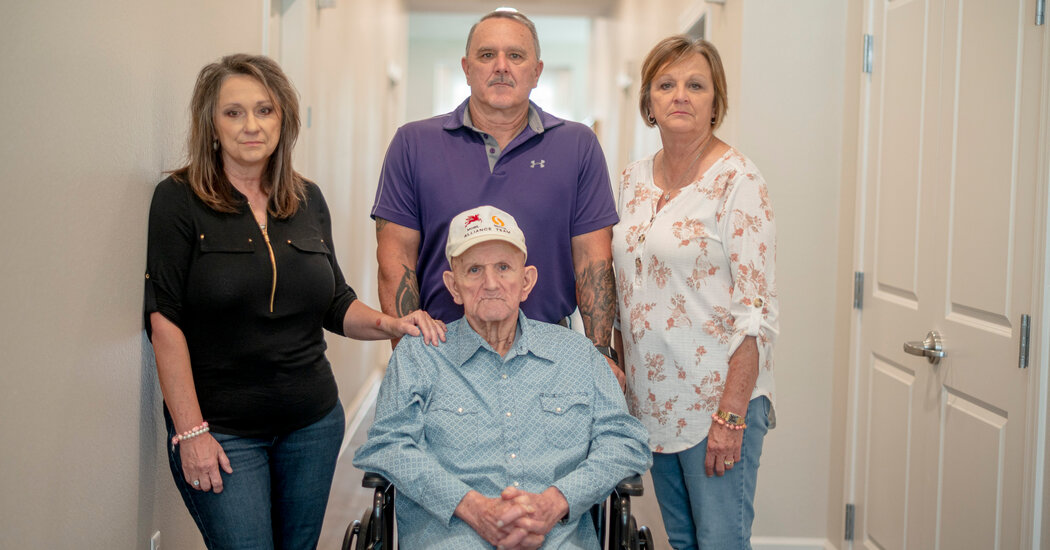
In the blizzard of paperwork needed to get into a nursing home or assisted living, some residents unwittingly surrender the right to a day in court.What the Jinks family wanted was to sue the memory care facility where their father, Charles, was attacked by another resident.It happened in October 2020, after Hurricane Laura forced his hasty evacuation from a similar facility in Louisiana. His three children moved him, at 80 years old and diagnosed with dementia, into Brookdale Dowlen Oaks in Beaumont, Texas. They installed a Ring camera in his room so they could keep an eye on him.That camera showed another resident entering his room while he slept one night and battering Mr. Jinks with the heavy lid of a toilet tank, sending him to an emergency room with fractured facial bones and lacerations. It took 11 staples to close the biggest wound.After Mr. Jinks recuperated and the family recovered from its shock, they consulted a lawyer. “We wanted Brookdale to be accountable for this,” said his daughter Charlene Jinks Young, 61. “I wanted 12 people” — a jury — “to hear this story.”But before a court could hear their lawsuit accusing the company of gross negligence, the family had to get past an arbitration clause in Brookdale’s residency agreement. Ms. Young, using her father’s power of attorney, had signed it the day the family moved him in.It stipulated that in the event of disputes, residents must submit to binding arbitration. A lawyer, not a judge or jury, would rule on their claims, with the parties required to split the proceeding’s costs.Arbitration clauses appear frequently, often little noticed, in contracts with businesses of many kinds: banks and financial firms, cellular companies, online marketers. The clauses are also “widespread in long-term care facilities, in nursing homes, assisted living, board and care homes,” said Lori Smetanka, executive director of the National Consumer Voice for Quality Long-Term Care.Brookdale Senior Living — the nation’s largest long-term care company, with 674 facilities in 41 states — would not comment on the Jinks case but said in email that arbitration “allows parties to resolve a dispute in a more expeditious and cost-efficient manner than litigating in court.”But advocates for residents, families and consumers have opposed mandatory arbitration for decades. Sometimes, parties trying to settle a dispute both agree to seek arbitration, but compulsory arbitration “binds the resident upfront,” Ms. Smetanka said. “Essentially, you’re saying, ‘No matter what happens, I waive my right to a court decision.’”Eric Carlson, directing attorney of the legal advocacy group Justice in Aging, said, “Arbitrators in general are less sympathetic to residents than a jury might be. The nursing home is probably doing business with these arbitrators over and over. They have an incentive to favor the nursing home.”A Stanford Business School study of arbitration in the securities industry, for instance, found that companies — which use arbitration far more often than individuals — learned which arbitrators would favor their positions and kept selecting them. (Some agreements specify an arbitration firm; others allow each party to veto a certain number of arbitrators from a common list.)Binding arbitration also avoids the public attention a lawsuit and trial could bring; some agreements require strict confidentiality. The Brookdale agreement Ms. Young signed, for example, said the parties agreed not to discuss any settlement, the parties’ names or the facility’s name and location.“It’s a private system with a gag rule, in effect,” Mr. Carlson said. “It’s in society’s interest that these cases not be secret. It’s important public knowledge if something horrific happens in an assisted living facility.”When residents or their representatives sign these agreements, which are part of admission packets that can include dozens of pages, they may not realize they’ve waived their court rights or understand what arbitration entails.From left, Clayton Jinks, Mr. Jinks’s son; Mr. Jinks; and Trudy Jinks-Young and Charlene Jinks-Young, Mr. Jinks’s daughters.Emily Kask for The New York TimesResidents and their families are dealing with paperwork at what is often a stressful time, after a hospitalization or health crisis, with limited opportunity to scrutinize documents or consult a lawyer.When Ms. Young signed her father’s agreement, her sister and brother-in-law were moving their father into his room. “It was very rushed,” she said. “I probably wasn’t in that office for 15 minutes.”Nobody explained the 13-page residency agreement in detail, she said. Cody Dishon, the lawyer whom the Jinks family later retained, had to explain that her signature could preclude a court date.“I can’t imagine any other constitutional right you can sign over without even knowing it’s happening,” Mr. Dishon said in an interview. “But courts are allowing consumers, without attorneys, to do this.”Since 2019, Medicare regulations have prevented nursing homes from requiring arbitration for admission or residence. Yet “they’re still being included in admissions packets, and family members or residents are still being told, ‘Sign the papers,’” Ms. Smetanka said.If they do sign, residents have 30 days in which to rescind their agreement to arbitration.But assisted living, including memory care, is not federally regulated, so those rules don’t apply.In July, when Mr. Dishon filed a gross negligence suit against Brookdale on behalf of the Jinks family, the company responded with a motion to compel arbitration.Mr. Dishon filed an objection, arguing that the arbitration provision was “unconscionable” and estimating that Mr. Jinks’s half of the expenses could reach $20,000 to $50,000.A district court judge, unpersuaded, ruled last month that the arbitration should proceed.He allowed a separate suit to go forward, however, based on Brookdale’s “involuntary transfer” of Mr. Jinks, whom the facility discharged shortly after the attack, claiming his behavior was problematic.His three children, who aren’t bound by the arbitration agreement, are also suing for “loss of consortium” — deprivation of the family relationship because of their father’s injuries.In challenging arbitration agreements, “sometimes residents win, and sometimes they lose,” said Mr. Carlson, who annually reviews such litigation. “It depends on the facts, and it depends on the court.”In 2016, a federal court in Kentucky ordered arbitration after a resident died in a nursing home and his wife sued for negligence and wrongful death.But in 2020, a California court refused to compel arbitration when a daughter sued a residential care facility for elder abuse and wrongful death after her father’s death. An appeals court affirmed the decision.Both the National Consumer Voice and Justice in Aging urge residents and their representatives to simply strike out arbitration clauses when signing the initial paperwork.In nursing homes, arbitration clauses are not required. Assisted living companies may require them but may not be willing to push the matter, Mr. Carlson said, especially if there are multiple competitors nearby.“You’re not negotiating with the general counsel,” he said. “You’re just talking with an administrative clerk doing his or her job, who needs your business. It’s a problem if you walk away.”In fact, asked if a resident could strike an arbitration clause, Brookdale responded in an email that “whether an individual strikes an arbitration clause is not a deciding factor in determining whether Brookdale can meet that individual’s needs.”The American Health Care Association and National Center for Assisted Living, an industry group, said that disputes requiring formal resolution arise for fewer than 1 percent of residents.“We support the right of residents and families to pursue legal remedies for poor and inadequate care, but we should not promote a system that attempts to bankrupt a critical aspect of our health care system,” the group said in an emailed statement.Mr. Dishon hopes public pressure will lead Congress to ban arbitration requirements for long-term care, as it did earlier this year in sexual harassment cases. “I believe the public has a right to know what happened to Mr. Jinks,” he said.Mr. Jinks now lives in a memory care center in Lake Charles, La. His children, who visit several times a week, are pleased with his care. But, Ms. Young said, “We still have a camera in his room.”

Read more →

More Than 700 Children Have Died in a Measles Outbreak in Zimbabwe

It is driven by a decline in child immunization during the pandemic and the influence of an anti-vaccination evangelical church.BULAWAYO, Zimbabwe — A measles outbreak has killed more than 700 children and infected thousands of others across Zimbabwe, highlighting the risks of faltering childhood immunization campaigns around the globe.As of Sept. 6, the country’s Ministry of Health and Child Care was reporting more than 6,500 cases and 704 deaths. It has not released numbers since then.The outbreak is the result of a grim confluence of factors endangering child health in many countries.Routine immunization dropped significantly in Zimbabwe during the Covid-19 pandemic. Anxious parents stayed away from health centers; health care workers were reassigned from routine vaccination programs to the Covid-19 pandemic response; and school closures and lengthy lockdowns scuppered the usual outreach campaigns.In July, the World Health Organization and UNICEF warned that millions of children, most of them in the poorest countries, had missed some or all of their childhood vaccinations because of Covid lockdowns, armed conflicts and other obstacles. The U.N. agencies called the situation the largest backslide in routine immunization in 30 years and warned that, combined with rapidly rising rates of malnutrition, it created conditions that could threaten the lives of millions of children.Vaccination coverage was already flagging in Zimbabwe before the pandemic, declining each year since 2017, because a decades-long political and economic crisis has gutted the public health system.Zimbabwe’s health system is desperately short-staffed. Health care workers have moved to neighboring South Africa or high-income countries for jobs where they will earn much higher salaries than the meager wages in Zimbabwe that often don’t arrive at all.Twenty-five years ago, Zimbabwe had one of the highest rates of vaccination coverage in sub-Saharan Africa, but vaccine hesitancy has swelled, amplified by influential churches that discourage immunization and urge members to rely on prayer and the intercession of pastors instead. The Johane Marange Apostolic Church, which has hundreds of thousands of members, is at the center of the measles outbreak.A gathering of the Apostolic Church outside Harare, where members were given vaccine information fliers.Tsvangirayi Mukwazhi/Associated PressSome Apostolic and evangelical pastors have long opposed vaccination, saying their prayers and sacred stones are enough to protect the faithful, and have threatened to expel women who take children to clinics. This rhetoric, fueled by social media, ramped up in opposition to Covid-19 shots, which some evangelical leaders warned would contain “the mark of the beast.” The hesitancy has spilled over into resistance to routine childhood shots.A spokesman for the federal health ministry said it was making clergy a focus of the government’s renewed efforts to get young children vaccinated.“Government has embarked on a mass vaccination campaign reaching out to faith leaders to garner support and awareness,” Donald Mujiri, the spokesman, said. “Children aged between 6 months and 15 years are the most affected, especially in those religious sects who do not believe in vaccination. The ministry remains committed that no child should die of measles.”The first measles cases in this outbreak were reported in April in the village of Makabvepi near the border with Mozambique. While district health officers were alerted to the presence of measles, the first children to die were buried quickly and their deaths were not reported, said Dr. Cephas Fonte, the medical officer for Mutasa District. The children who died came from families that belonged to the Johane Marange Apostolic Church; after the group held a large Easter service, and then a Passover celebration in July that drew worshipers from across the country, measles spread across Zimbabwe.The group publicly opposes vaccination. It represents a powerful voting bloc and is closely aligned with President Emmerson Mnangagwa, who attended the Passover gathering.The Ministry of Health and Child Care recognized by late 2020 that Covid had derailed vaccination campaigns, but a catch-up measles campaign targeting children from infancy to age 5 began only last month, as the reported death toll began to climb. Major international health agencies are supporting that campaign, but would not speak to The New York Times on the record because the subject is perceived as politically sensitive.Waiting for appointments at a clinic in Harare. The country last had a measles outbreak in 2009 during a hyperinflation crisis; that epidemic killed at least 500 children.Tsvangirayi Mukwazhi/Associated PressMonica Mutsvangwa, Zimbabwe’s information minister, said that she believed most evangelical families wanted to have their children vaccinated.“Contrary to the usual resistance, the Apostolic Church worshipers in Manicaland have come out in their numbers for measles vaccination,” she said. “The process was, however, slow at first. And there are still some religious groups that continue to resist. A lot of advocacy and work with leaders of these groups is ongoing.”Zimbabwean children are more susceptible to acute illness from measles because many are malnourished. Per capita income has dropped in each of the last four years, while food prices have surged because of numerous factors, including grain shortages caused by Russia’s invasion of Ukraine and drought and higher temperatures related to climate change.Zimbabwe last had a severe measles outbreak in 2009, at the peak of a hyperinflation crisis. There were more than 8,000 cases, and at least 500 children died. The cash-starved health system has struggled since then to boost vaccination coverage.A typhoid outbreak last year led to a 10-day campaign in which three million children were immunized against typhoid and polio and given vitamin A, which reduces the severity of measles, but they were not vaccinated against the measles virus.Viola Mombeyarara’s 20-month-old daughter, Anenyasha, died on Sept. 4. Measles struck each of her three older children, and they recovered, but vomiting, diarrhea and fever left the baby fatally dehydrated.Anenyasha was diagnosed with measles by a nurse at a clinic near her family’s home in Muzarabani in the north of the country, but her mother, a farmer who is a member of the Johane Marange church, believes there were other causes of her death.“We could see she was getting better when I brought her home, but witchcraft was used against us,” Ms. Mombeyarara said. “Why did she die, when the others overcame measles? This is the work of evil.”She said she was still hesitant about vaccinating her other children.“I don’t know — the herbs we used cured the other children, so they work,” she said, adding: “I still believe in our way. We can’t vaccinate.”Jeffrey Moyo

Read more →

‘Sobering’ Study Shows Challenges of Egg Freezing

Data from a fertility center showed many women did not get pregnant because of the age at which they froze their eggs and because they did not preserve enough of them.Claire Evans decided to freeze her eggs six years ago, when she was 36. She had just broken up with her fiancé and was worried that her time to have a baby was running out. A friend, whose own marriage had just ended, suggested the procedure.She took medications to stimulate her ovaries to overproduce eggs, which were frozen to use later and to have a baby at an age when it would be difficult to become pregnant without medical intervention.The procedure of egg-freezing is an increasingly popular, but expensive, option for women who want to delay childbirth. But new research documents some caveats: how old a woman is when she freezes her eggs and how many eggs she freezes make a significant difference in whether she will have a baby. Most women who tried to become pregnant, the study found, did not succeed, often because they had waited until they were too old to freeze eggs and had not frozen enough of them.That note of caution comes from data published this summer in a paper in the journal Fertility and Sterility from the clinic where Ms. Evans froze her eggs — New York University Langone Fertility Center.Dr. Marcelle Cedars, professor and director of the division of reproductive endocrinology at the University of California San Francisco who was not involved in the study, said that although it involved just a single fertility clinic, “it is a center that is unique for its long duration of follow-up.”The data, she said, “are sobering” and “should give women pause.” Dr. Cedars, who is also the president of the American Society for Reproductive Medicine, or A.S.R.M., added that many women “are overly optimistic” about their chances of having a baby when they freeze their eggs. It is not, as many assume, an insurance policy.“The pregnancy rate is not as good as I think a lot of women think it will be,” she said. “I always tell patients, ‘There’s not a baby in the freezer. There’s a chance to get pregnant.’”The study, led by Dr. Sarah Druckenmiller Cascante, a fellow at N.Y.U. Langone, and Dr. James Grifo, director of the fertility center, reported that the average age when women froze eggs was 38.3. On average, they waited four years to thaw and fertilize their eggs.The overall chance of a live birth from the frozen eggs was 39 percent. But among women who were younger than 38 when they froze their eggs, the live birthrate was 51 percent. It rose to 70 percent if women younger than 38 also thawed 20 or more eggs.The age of the woman when she used the eggs to try to have a baby did not make a difference — all that mattered was how old a woman was when she froze her eggs and how many she froze.“The reality is most eggs don’t make good embryos,” Dr. Grifo said. “The more eggs you have, the better the chance.”According to the Society for Assisted Reproductive Technology, the number of healthy women freezing eggs rose to 12,438 in 2020 from 7,193 in 2016. But national data on success rates are pretty much nonexistent, said Dr. Timothy Hickman, president of the society and medical director of CCRM Fertility in Houston.“I commend them for doing the study,” Dr. Hickman said of the N.Y.U. team.Dr. Alan Penzias, a fertility specialist at Boston IVF Fertility Clinic and Beth Israel Deaconess Medical Center who is chair of the practice committee of the American Society for Reproductive Medicine said data from his center are consistent with the N.Y.U. study. At his center, he said, women who froze their eggs had just one-third of a chance of having a baby when they thawed them.“Counseling should be clear that there is no guarantee and that the value of delaying having a child must exceed the benefit of delay,” Dr. Penzias said.That trade-off is an issue with his 29-year-old daughter, Rebecca, Dr. Penzias said. Ms. Penzias — who gave him permission to mention her situation and use her name — wants to freeze her eggs because she is studying for a Ph.D. and is not ready to have a baby. Having some eggs frozen would give her peace of mind.Dr. Penzias told her she does not need to freeze her eggs — she has plenty of years of fertility ahead of her — but he considers her reason for freezing sufficient.His wife, a bioethicist and Ms. Penzias’s stepmother, disagrees, and said she should finish her degree, then try to get pregnant without frozen eggs.Ms. Penzias decided to freeze her eggs, planning to do so in October.Before choosing to freeze their eggs, women also must be prepared for substantial costs. Each egg retrieval cycle can cost $10,000, Dr. Hickman said. The number of eggs collected varies from woman to woman, and, for many, the only way to get a sufficient number to make success likely is to have more than one cycle.It costs another $5,000 to $7,000 to thaw and fertilize the eggs, grow embryos in the lab for a few days, then transfer them to the woman’s uterus. Many women, including Ms. Evans, have the embryos tested for chromosomal anomalies. That costs another $3,000. And storage of frozen eggs can cost up to $1,000 a year.Some companies’ health insurance policies cover at least part of the costs. But many do not.Most women end up never using their frozen eggs after paying for egg retrieval and storage, often because they got pregnant on their own.Ms. Evans, though, is a success story. She was young enough when she froze eggs to have a good chance of success and to be able to have eggs retrieved twice to accumulate 20 that could be frozen.She married in 2019 — to the same man she had been engaged to. Last year, she had her eggs thawed and fertilized in a laboratory with her husband’s sperm. Seven months ago, she had a baby girl, Fiona.But the frozen eggs did not work for Ms. Evans’s friend who encouraged her to undergo the procedure. In 2020, she had the 10 or so eggs she’d frozen thawed and fertilized.None developed into viable embryos.

Read more →

Disarming the immune system's lethal lung response

Neutrophils, the most abundant type of white blood cell, are the body’s first line of defense against infection. Foreign pathogens can stress the body and activate neutrophils. When activated, neutrophils employ various weapons to protect the body. But if overactivated, these weapons can damage the body’s own tissues. Lung tissue is saturated with blood vessels, making them very susceptible to neutrophil attacks. If severe enough, acute lung injuries can lead to acute respiratory distress syndrome (ARDS), the leading cause of death due to COVID-19.
Nicholas Tonks, Caryl Boies professor of cancer research at Cold Spring Harbor Laboratory (CSHL), and his team have found a drug candidate that can prevent lethal lung inflammation in mice by inhibiting a protein called PTP1B. Their discovery may help develop better treatments for severe inflammatory conditions like sepsis and COVID-19.
“When you think about COVID-19, acute lung injury and ARDS underlie the fatal aspects of the disease,” Tonks says. “And so, when the pandemic took hold, we were wondering whether there was anything we could do to help, to provide an understanding of this aspect of the disease and suggest ways it could be treated.”
Tonks’ graduate student Dongyan Song investigated whether using a PTP1B inhibitor drug candidate could dampen the lethal consequences of overactive neutrophils in mice. She found that pretreating mice with the PTP1B inhibitor reduced lung tissue damage. When untreated, less than half of the mice survived acute lung injuries and ARDS. But when pretreated, they all survived.
The researchers exploited a natural process, called neutrophil aging, that the body uses to control the immune cell’s lifespan. As they age, neutrophils become less dangerous. Tonks’ team discovered PTP1B inhibition speeds up neutrophil aging. “An aged neutrophil is like a soldier without a weapon,” Song explains. “So regardless of how many neutrophils flood an area, they won’t be able to do serious damage.”
This project was part of a program of COVID-related research at CSHL. Tonks says collaborations with CSHL Professor Mikala Egeblad, postdoc Jose M. Adrover, and CSHL Research Associate Professor Scott Lyons were essential to this discovery. Going forward, he and Song are working to increase the understanding of how PTP1B inhibitors affect the immune system. Tonks hopes his lab’s continued research leads to new treatments and preventative measures for various inflammatory diseases. His lab is currently working with DepYmed, Inc. to take PTP1B inhibitor drug candidates into clinical trials.
Tonks’ lab studies signal transduction, the process that controls how cells respond to signals from their environment. In particular, they focus on the PTP protein family, which Tonks discovered over 30 years ago. Since then, he’s sought to develop small molecule drug candidates that target these proteins, which can provide new approaches for treating major human diseases including cancer and metabolic and neurodegenerative diseases.
Story Source:
Materials provided by Cold Spring Harbor Laboratory. Original written by Nick Wurm. Note: Content may be edited for style and length.

Read more →

Potential of precision genome editing in treating inherited retinal diseases

In a new paper, University of California, Irvine researchers explain how precision genome editing agents have enabled precise gene correction and disease rescue in inherited retinal diseases (IRDs). The study, titled, “Precision genome editing in the eye,” was published this week in the Proceedings of the National Academy of Sciences.
The paper describes current preclinical successes and clinical genome editing approaches for treating inherited retinal degenerative disease and stresses there is hope that in vivo gene editing will be the future treatment paradigm for IRDs. Currently, there are no effective treatments for these devastating diseases, which commonly result in blindness.
“Genome editing technologies are an excellent approach for targeting the root causes of genetic disorders,” explained Krzysztof Palczewski, PhD, Donald Bren Professor of Ophthalmology at the UCI School of Medicine and corresponding author. “Technologies in genome editing have continuously evolved to enable precise genome editing with fewer side effects and risks, making precision genome editing possible.”
The paper describes progress toward using genome editing for treating IRDs and important considerations for robust clinical translation.
“More and more CRISPR-based treatment approaches are being tested in clinical trials,” said Palczewski. “We believe that there will be an increasing number of clinical trials for targeting IRDs and that any mutation that causes them will be amenable to treatment with this approach.”
Programmable CRISPR-Cas nucleases are effective tools for gene disruption, but they are poorly suited for precisely correcting pathogenic mutations in most therapeutic settings. Improvements are needed for clinical translation.
Inherited retinal diseases (IRDs) are a genetically heterogeneous group of blinding disorders characterized by a progressive degeneration of the photoreceptors as well as the retinal pigment epithelium (RPE). These disorders affect ?1 in 3,000 individuals worldwide and profoundly impact patients’ quality of life. IRDs are caused by mutations in genes that are critical for development and/or function of the retina or RPE, and more than 270 causative genes have been identified.
Over the past two decades, major advances in gene therapy have engendered new hopes for successful treatment of these IRDs. Most recently, precision genome editing agents, including base editors (BEs) and prime editors (PEs), developed by The Liu Lab, have enabled efficient and precise target gene correction, rather than gene disruption, in various therapeutic settings, including mouse models of IRDs. Precise target gene correction greatly expands the potential therapeutic applications of genome editing technologies, since most genetic disorders cannot be treated by gene disruption.
“Precision medicine for IRDs has a promising outlook, as basic science has consistently led to the development of therapeutic tools to target patient-specific genetic mutations,” said Palczewski. “The results of initial clinical trials, that use in vivo gene editing to treat IRDs, will be essential for informing the design and translation of future precision genome editing therapies.”
This work was done in collaboration with David R. Liu, and supported in part by the National Institutes of Health, National Science Foundation, Howard Hughes Medical Institute and Research to Prevent Blindness.
Story Source:
Materials provided by University of California – Irvine. Note: Content may be edited for style and length.

Read more →

New research throws doubt on old ideas of how hearing works

The way in which we experience music and speech differs from what has until now been believed. This is the conclusion of a study by researchers at Linköping University, Sweden, and the Oregon Health and Science University, USA. The results have been published in Science Advances, and may make it possible to design better cochlear implants.
We are social creatures. The sound of other people’s voices is important for us, and our hearing is directed at experiencing and distinguishing voices and human speech. Sound that arrives at the outer ear is carried by the ear drum to the spiral-shaped inner ear, also known as the cochlea. The sensory cells of hearing, outer and inner hair cells, are located in the cochlea. The sound waves cause the “hairs” of the inner hair cells to bend, sending a signal through the nerves to the brain, which interprets the sound we hear.
For the past 100 years, we have believed that each sensory cell has its own “optimal frequency” (a measure of the number of sound waves per second). The hair cell responds most strongly to this frequency. This idea means that a sensory cell with an optimal frequency of 1000 Hz would respond much less strongly to sounds with a frequency slightly lower or higher. It has also been assumed that all parts of the cochlea work in the same way. Now, however, , a research team has discovered that this is not the case for sensory cells that process sound with frequencies under 1000 Hz, considered to be low-frequency sound. The vowel sounds in human speech lie in this area.
“Our study shows that many cells in the inner ear react simultaneously to low-frequency sound. We believe that this makes it easier to experience low-frequency sounds than would otherwise be the case, since the brain receives information from many sensory cells at the same time,” says Anders Fridberger, professor in the Department of Biomedical and Clinical Sciences at Linköping University.
The scientists believe that this construction of our hearing system makes it more robust. If some sensory cells are damaged, many others remain that can send nerve impulses to the brain.
It is not only the vowel sounds of human speech that lie in the low-frequency region: many of the sounds that go to make up music also lie here. Middle C on a piano, for example, has a frequency of 262 Hz.
These results may eventually be significant for people with severe hearing impairments. The most successful treatment currently available in such cases is a cochlear implant, in which electrodes are placed into the cochlea.
“The design of current cochlear implants is based on the assumption that each electrode should only give nerve stimulation at certain frequencies, in a way that tries to copy what was believed about the function of our hearing system. We suggest that changing the stimulation method at low frequencies will be more similar to the natural stimulation, and the hearing experience of the user should in this way be improved,” says Anders Fridberger.
The researchers now plan to examine how their new knowledge can be applied in practice. One of the projects they are investigating concerns new methods to stimulate the low-frequency parts of the cochlea.
These results come from experiments on the cochlea of guinea pigs, whose hearing in the low-frequency region is similar to that of humans. This work was funded by U.S. National Institutes of Health and Swedish Research Council.
Story Source:
Materials provided by Linköping University. Original written by Karin Söderlund Leifler. Note: Content may be edited for style and length.

Read more →

Uncovering the skin's secrets: Studies show how skin forms differently across the body

Two new UC Davis Health studies explored how differences in skin composition may lead to dermatological conditions, such as psoriasis and atopic dermatitis.
“Skin does not have a uniform composition throughout the body,” said Emanual Maverakis, professor of dermatology, molecular medical microbiology at UC Davis and senior author on both studies. “Different skin characteristics at different body sites may affect the skin’s susceptibility to certain diseases.”
Skin diseases affect about 84.5 million Americans. Aging, trauma, and environmental and genetic factors can lead to a wide range of skin conditions.
Body site determines skin structure and function and disease susceptibility
The skin is the largest organ in the body. It has an average area of about 20 square feet — that’s the size of a 4′ by 5′ room! Its outermost layer (epidermis) has a lipid matrix composed of free fatty acids, cholesterol and ceramides (a family of waxy lipid molecules).

Read more →