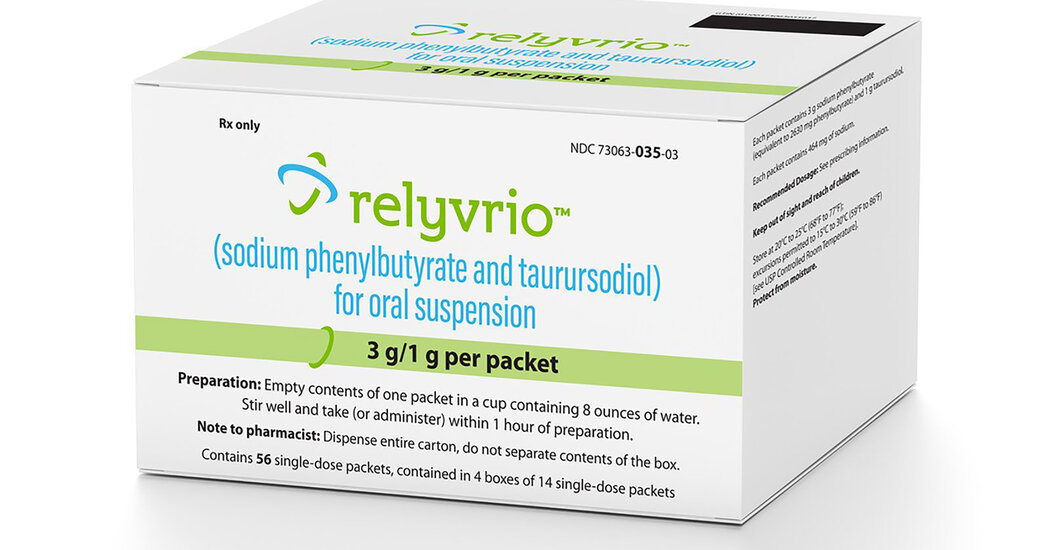
Price of New A.L.S. Treatment Will Be $158,000 Per Year, Maker Says

The list price of the therapy, Relyvrio, is much higher than an economic research group recommends, but the company says most patients will pay very little themselves.A new medication for A.L.S., the devastating neurological disorder that causes paralysis and death, will have a list price of $158,000 a year, its manufacturer disclosed Friday.The treatment, to be marketed as Relyvrio, is a combination of two existing drugs and will be available to patients in the United States in about four to six weeks, according to officials of the company, Amylyx Pharmaceuticals.Relyvrio was approved by the Food and Drug Administration on Thursday, even though the agency’s analysis concluded there was not yet sufficient evidence that the medication could help patients live longer or slow the rate at which they lose functions like muscle control, speaking or breathing without assistance.The F.D.A. decided to greenlight the drug instead of waiting until 2024 for results of a large clinical trial partly because the treatment is considered to be safe. The agency said that although the evidence of effectiveness was uncertain, “given the serious and life-threatening nature of A.L.S. and the substantial unmet need, this level of uncertainty is acceptable in this instance.”A.L.S., or amyotrophic lateral sclerosis — also called Lou Gehrig’s disease — often strikes patients in the prime of life and frequently causes death within two to five years. It is diagnosed in about 6,000 people worldwide each year, and Amylyx estimates that there are about 29,000 people living with the disease in the United States.The Fight Against A.L.S.The illness, also called Lou Gehrig’s disease, robs people of their ability to move, speak, eat and ultimately breathe.Relyvrio: The experimental treatment for A.L.S. conceived a decade ago by two college students received the Food and Drug Administration’s approval, despite questions about its effectiveness.A Runner’s Mission: After surpassing the average life expectancy for people with the disease, Andrea Peet decided to race a new kind of clock: 50 marathons in 50 states.Brain Implant: A man who is fully paralyzed by A.L.S. was able to communicate using only his thoughts.Rethinking Care: In 2017, Brian Wallach was diagnosed with A.L.S. Now, his startup aims to help other patients make the most of their time.Amylyx officials predicted that most patients would pay little or nothing for the treatment because the company expects insurers, both private and public, to cover it. Amylyx plans to provide it free to uninsured patients experiencing financial hardship.Still, the list price is much higher than that recommended by the Institute for Clinical and Economic Review, a nonprofit organization that evaluates the value of medicines. In a statement, the group’s chief medical officer, Dr. David Rind, said that while “there are clear benefits to patients with a rapidly fatal disease to have early access to a safe therapy,” his organization had concluded that “an annual price of $9,100 to $30,700 would be reasonable if the therapy actually works.”Dr. Rind added that “while awaiting proof, we believe that patients would benefit from a price closer to the price of production of Relyvrio rather than a price more than five times higher than the top of a value-based range.”During an investor conference call on Friday, Justin Klee, a founder of Amylyx, said the price was chosen after meeting with insurers, patients, doctors and others. He said the company considered what would allow it to “invest in new treatments so that A.L.S. first becomes a manageable chronic condition and ultimately is cured,” and added that the price “allows Amylyx to sustain programs to help people who can benefit from Relyvrio access it.”The F.D.A. has approved only two other A.L.S. medications. Riluzole, a tablet approved in 1995, can extend survival by several months and generally costs significantly less than $10,000 a year. Edaravone, marketed as Radicava, can slow symptom progression by about 33 percent. Radicava, which was originally approved in 2017 as an intravenous infusion, was approved this year in an oral form that carries a list price of $171,000 a year. Amylyx officials said they expected that, as in the company’s clinical trials, many patients would take Relyvrio, a powder that is mixed with water, along with one or both of the other medications.Relyvrio was conceived by the founders of Amylyx, Mr. Klee and Joshua Cohen, when they were undergraduate students at Brown University less than a decade ago. They proposed that combining taurursodiol, an over-the-counter supplement sometimes used to regulate liver enzymes, and sodium phenylbutyrate, a prescription medication for a pediatric urea disorder, could protect neurons in the brain from damage in diseases like A.L.S. by preventing dysfunction of two structures in cells: mitochondria and the endoplasmic reticulum.In an interview, Mr. Klee said the company expected that private insurers would cover the drug with no co-payments for patients, and he said that Amylyx would work to make it affordable for people on Medicare or Medicaid and provide it free to those without insurance who are financially struggling. Mr. Klee noted that patients had been obtaining the ingredients on their own for some time, buying the taurursodiol supplement from Amazon and paying up to $11,000 a month for the sodium phenylbutyrate.“Now that our product is approved, we have to be laser-focused on making sure that people can access it,” Mr. Klee said.Relyvrio’s clinical trials included patients who developed symptoms of A.L.S. within 18 months before the trial and were affected in at least three body regions, which is generally a sign of fast-progressing disease. The F.D.A.’s approval did not restrict which patients could use the medication. Mr. Cohen said in an interview that Amylyx didn’t have projections of how many would.“There are patients who are just receiving the diagnosis today, and there are patients who are making end-of-life decisions today, and I think that people in different circumstances are going to make very different treatment decisions,” he said.Amylyx has also conducted a small trial of Relyvrio in Alzheimer’s patients, and Mr. Cohen discussed plans to test it for other neurodevelopmental disorders.“We conceived the drug to try to target pathways of neuronal death,” he said, “and neuronal death is an important part of not just A.L.S. but potentially many diseases.”

Read more →

SuperAger brains contain 'super neurons'

Neurons in an area of the brain responsible for memory (known as the entorhinal cortex) were significantly larger in SuperAgers compared to cognitively average peers, individuals with early-stage Alzheimer’s disease and even individuals 20 to 30 years younger than SuperAgers — who are aged 80 years and older, reports a new Northwestern Medicine study.
These neurons did not harbor tau tangles, a signature hallmark of Alzheimer’s disease.
“The remarkable observation that SuperAgers showed larger neurons than their younger peers may imply that large cells were present from birth and are maintained structurally throughout their lives,” said lead author Tamar Gefen, an assistant professor of psychiatry and behavioral sciences at Northwestern University Feinberg School of Medicine. “We conclude that larger neurons are a biological signature of the SuperAging trajectory.”
The study of SuperAgers with exceptional memory was the first to show that these individuals carry a unique biological signature that comprises larger and healthier neurons in the entorhinal cortex that are relatively void of tau tangles (pathology).
The study will be published Sept. 30 in The Journal of Neuroscience.
The Northwestern SuperAging Research Program studies unique individuals known as SuperAgers, 80+ year-olds who show exceptional memory at least as good as individuals 20 to 30 years their junior.

Read more →

Inuit Greenlanders demand answers over Danish birth control scandal

Published2 days agoSharecloseShare pageCopy linkAbout sharingDenmark and Greenland have formally agreed to launch a two-year investigation into historic birth control practices carried out for many years on Inuit Greenlanders by Danish doctors.Thousands of Inuit women and girls were fitted with an intrauterine device (IUD), commonly known as a coil, during the 1960s and 70s. It is a contraceptive device placed inside the womb – or uterus – to prevent pregnancy. Among the women and girls fitted with an IUD was Naja Lyberth.It was in the 1970s that a doctor told Naja, who believes she was then aged about 13, to go to her local hospital to have a coil implanted following a routine school medical examination.”I didn’t really know what it [was] because he never explained or got my permission,” says Naja, who at the time was living in Maniitsoq, a small town on Greenland’s west coast. “I was afraid. I couldn’t tell my parents,” she says. “I was a virgin. I had never even kissed a boy.” Now 60, Naja is one of the first to speak out about what happened.”I can remember the doctors [in] white coats, and maybe there was a nurse. I saw the metal things [stirrups] where you should spread your legs. It was very frightening. The equipment the doctors used was so big for my child body – it was like having knives inside me.”Image source, Naja LyberthNaja says her parents’ permission had not been sought, and that her classmates were also sent to hospital but did not talk about it because “it was too shocking”. She has set up a Facebook group to allow women to share their common experiences and help each other cope with the trauma. More than 70 women have joined.A recent podcast, Spiralkampagnen (“coil campaign”), found records indicating that up to 4,500 women and girls – roughly half of all fertile females – had an IUD implanted in Greenland between 1966 and 1970. But the procedures continued into the mid-1970s. Of these, it is unclear how many cases lacked consent or proper explanation.Among those affected were girls as young as 12, and several have stated publicly that they were not properly informed. Some women unable to have children suspect the coil is to blame.”So many women contact me,” says Naja. “It seems that the younger the girls were, the more complications they get from this coil. It’s so sad.”Arnannguaq Poulsen had a coil fitted when she was 16, not in Greenland but on Danish soil. She was studying at a boarding school for Greenlandic children on the island of Bornholm in 1974.”They didn’t ask me before the procedure, and I had no idea what it was all about, or what the coil was,” she says.She could only travel home once a year and is certain her parents were not consulted. Arnannguaq describes suffering pains, and says she had the coil removed when she returned home to Greenland a year later, aged 17.”I feel that I didn’t get a choice back then, and I cannot accept that,” the 64-year-old says, tearfully. “How would people react if it was Danish women instead of Greenlandic?” There was little knowledge of the birth control programme in either Greenland or Denmark, and the reports have caused shock and indignation.Now, a committee will examine the pregnancy prevention practices carried out by Danish health authorities between 1960 and 1991, both in Greenland and at schools in Denmark with Greenlandic students. Greenland’s government only took control of health policy from Copenhagen in 1992.In a statement on Friday, Danish Health Minister Magnus Heunicke said the investigation would shed light on the decisions leading up to the practice, and how it was carried out. He said he had met several of the women affected, adding: “The pain, physically and emotionally, that they have experienced is still there today.”Greenland transitioned from a colony to a county of Denmark in 1953.Sweeping modernisation plans ushered in better healthcare and living conditions. Life expectancy and new-born survival rates improved.But those successes brought other challenges, says Soeren Rud, a historian at Copenhagen University.Greenland’s tiny population rocketed, and by 1970 it had almost doubled.Image source, Getty ImagesMr Rud believes the rationale for introducing the coil was partly financial, but also the result of colonial attitudes.”There’s an obvious interest in trying to limit the growth of the population,” he says, adding that it reduces “the challenges of providing housing and welfare services”.A high proportion of young single mothers was another concern that prompted family-planning initiatives.Doctors wrote about the coil initiative in journals, perceiving it a success, Mr Rud adds. Records show the birth rate halved in just a few years.Katrine Jakobsen, from Nuuk, says she was only 12 when she had a coil fitted. She remembers being taken to the doctor by a relative’s girlfriend in 1974.She had the coil for almost two decades and suffered pain and a string of complications. In her late 30s, her uterus was removed.BBCI remember right after the procedure, I was in so much pain that I just sat down in the snow.Katrine Jakobsen, from Nuuk, GreenlandDescribing having a coil fitted at a young age “It’s had a big impact on my life. I never had children,” she says. “I never told anyone. I always thought I was alone in this.”Today’s IUDs are small T-like devices, but earlier versions in the 1960s were S-shaped and much larger. “In a uterus that had never been pregnant, it would give more bleeding, more pain, a bigger risk of infection,” says Dr Aviaja Siegstad, a gynaecologist at Queen Ingrid’s Hospital in Nuuk.In the 1990s and 2000s, she and her colleagues came across patients struggling to conceive who were unaware they had a coil. It was not a big number, she says, but it was also not unusual. “In a couple of cases we were able to date the IUD back to women who had abortions and probably had it placed after an abortion without being told,” she adds.According to Greenland’s Human Rights Council, conventions on family life and privacy were breached.”We need to get it investigated to know whether or not it was actually a genocide,” says the council’s chairperson Qivioq Loevstroem, adding: “We don’t want a whitewashed report.”Greenland’s health minister, Mimi Karlsen, said involving Greenland in the investigation was “necessary to get to the bottom” of what happened.It follows other controversies that have seen Denmark’s past relationship with Greenland come under increased scrutiny. In March, Denmark apologised and paid compensation to six Inuit who were separated from their families and sent to Denmark as part of failed 1950s social experiment.During the summer, Greenland’s parliament voted for a separate commission to examine Denmark’s decolonisation after 1953.Counselling has been offered to those affected by the birth control practice, but Arnannguaq Poulsen hopes there will be compensation. “I know there are many women that cannot have children,” she says. More on this storyDenmark says sorry to children of failed experiment9 MarchInuit seek Denmark compensation over experiment23 November 2021

Read more →

Can Smartphones Help Predict Suicide?

A unique research project is tracking hundreds of people at risk for suicide, using data from smartphones and wearable biosensors to identify periods of high danger — and intervene.CAMBRIDGE, Mass. — In March, Katelin Cruz left her latest psychiatric hospitalization with a familiar mix of feelings. She was, on the one hand, relieved to leave the ward, where aides took away her shoelaces and sometimes followed her into the shower to ensure that she would not harm herself.But her life on the outside was as unsettled as ever, she said in an interview, with a stack of unpaid bills and no permanent home. It was easy to slide back into suicidal thoughts. For fragile patients, the weeks after discharge from a psychiatric facility are a notoriously difficult period, with a suicide rate around 15 times the national rate, according to one study.This time, however, Ms. Cruz, 29, left the hospital as part of a vast research project which attempts to use advances in artificial intelligence to do something that has eluded psychiatrists for centuries: to predict who is likely to attempt suicide and when that person is likely to attempt it, and then, to intervene.On her wrist, she wore a Fitbit programmed to track her sleep and physical activity. On her smartphone, an app was collecting data about her moods, her movement and her social interactions. Each device was providing a continuous stream of information to a team of researchers on the 12th floor of the William James Building, which houses Harvard’s psychology department.In the field of mental health, few new areas generate as much excitement as machine learning, which uses computer algorithms to better predict human behavior. There is, at the same time, exploding interest in biosensors that can track a person’s mood in real time, factoring in music choices, social media posts, facial expression and vocal expression.Matthew K. Nock, a Harvard psychologist who is one of the nation’s top suicide researchers, hopes to knit these technologies together into a kind of early-warning system that could be used when an at-risk patient is released from the hospital.He offers this example of how it could work: The sensor reports that a patient’s sleep is disturbed, she reports a low mood on questionnaires and GPS shows she is not leaving the house. But an accelerometer on her phone shows that she is moving around a lot, suggesting agitation. The algorithm flags the patient. A ping sounds on a dashboard. And, at just the right time, a clinician reaches out with a phone call or a message.There are plenty of reasons to doubt that an algorithm can ever achieve this level of accuracy. Suicide is such a rare event, even among those at highest risk, that any effort to predict it is bound to result in false positives, forcing interventions on people who may not need them. False negatives could thrust legal responsibility onto clinicians.Algorithms require granular, long-term data from a large number of people, and it’s nearly impossible to observe large numbers of people who die by suicide. Finally, the data needed for this kind of monitoring raises red flags about invading the privacy of some of society’s most vulnerable people.Dr. Nock is familiar with all these arguments but has persisted, in part out of sheer frustration. “With all due respect to people who’ve been doing this work for decades, for a century, we haven’t learned a great deal about how to identify people at risk and how to intervene,” he said. “The suicide rate now is the same it was literally 100 years ago. So just if we’re being honest, we’re not getting better.”The gray zoneSurvey questions popped up on an app Ms. Cruz was given by the researchers, one of several digital check-ins she receives each day.Kayana Szymczak for The New York TimesFor psychiatrists, few tasks are more nerve-racking than caring for patients they know to be at risk for suicide while they are at home and unsupervised.Dr. Karen L. Swartz, a professor of psychiatry at Johns Hopkins University, calls it “the gray zone.” She was fresh out of training when she first wrestled with this problem, caring for a prickly, intelligent woman who admitted she had suicidal thoughts, and even alluded to a plan, but dreaded the thought of being hospitalized.Dr. Swartz turned to the woman’s husband for advice. If you force her into the hospital, he said, she will fire you.So Dr. Swartz decided to take the risk, allowing the woman to remain at home, tweaking her medications and waiting. She spent the next weeks on tenterhooks, and, slowly, the patient improved. “It was one of those things where I just genuinely hoped I was right,” she said. It never gets easier, said Dr. Swartz, who now trains young psychiatrists: With experience, it only becomes clearer that suicidal thoughts can come and go without warning.“We are asked to predict something that is highly unpredictable,” she said.Increasingly, health care systems are turning to machine learning to make this call. Algorithms based on vast data sets — drawn from electronic medical records as well as scores of other factors — are used to assign patients a risk score, so that individuals at exceptionally high risk can be provided with extra attention.Algorithms have proven more accurate than traditional methods, which, according to a 2017 review of published research, had not improved in 50 years and were only slightly better than chance at predicting an outcome. These methods are already used in some clinical settings. Since 2017, the Department of Veterans Affairs has used an algorithm to flag the 0.1 percent of veterans at the highest risk for suicide, a few hundred patients in a population of six million.This approach has yielded some success. A study published last year in JAMA Network Open found that veterans enrolled in REACH VET, a program for at-risk patients, were 5 percent less likely to have a documented suicide attempt, and less likely to be admitted to a psychiatric facility or visit the emergency room. But the study found no significant change in the rate of suicide.The expectations that have built up around this research are so high that experts take pains to temper them. Michael Schoenbaum, a senior adviser at the National Institute of Mental Health, compared it to the excitement, 25 years ago, around the search for biological markers for mental illnesses — a case in which, he pointed out, “the optimists were wrong.”“We are waiting to see when and where and maybe even whether signals like that are valid and reliable,” he said. “The evidence so far, it’s exciting in the sense that any signal is promising. This is something that we couldn’t do before at all.” But, he warned, “we are looking for something we haven’t found yet.”And some of Dr. Nock’s colleagues say they doubt algorithmic predictions will ever be precise enough to intervene in the narrow window that precedes a suicide attempt.“It’s certainly not an easily solvable problem,” said Nick Allen, the director of the Center for Digital Mental Health at the University of Oregon, who helped develop EARS, an app that tracks mood based on factors like music choice, facial expression and the use of language.“It’s probably, in some senses, not a solvable problem, for the same reason that we have school shootings and the same reason that we can’t predict a lot of this kind of stuff,” Dr. Allen said. “You know, the math is just really daunting.”A fire hose of dataMatthew Nock, a professor of psychology at Harvard and a leading suicide researcher. “The suicide rate now is the same it was literally 100 years ago,” he said. “So just if we’re being honest, we’re not getting better.”Kayana Szymczak for The New York TimesOn an August afternoon in the William James building, a lanky data scientist named Adam Bear sat in front of a monitor in Dr. Nock’s lab, wearing flip-flops and baggy shorts, staring at the zigzagging graphs of a subject’s stress levels over the course of a week.When moods are mapped as data, patterns emerge, and it’s Mr. Bear’s job to look for them. He spent his summer poring through the days and hours of 571 subjects who, after seeking medical care for suicidal thoughts, agreed to be tracked continuously for six months. While they were being tracked, two died by suicide and between 50 and 100 made attempts.It is, Dr. Nock believes, the largest reservoir of information ever collected about the daily lives of people struggling with suicidal thoughts.The team is most interested in the days preceding suicide attempts, which would allow time for intervention. Already, some signs have emerged: Although suicidal urges often do not change in the period before an attempt, the ability to resist those urges does seem to diminish. Something simple — sleep deprivation — seems to contribute to that.Dr. Nock has been looking for ways to study these patients since 1994, when he had an experience that shocked him profoundly. During an undergraduate internship in the United Kingdom, he was assigned to a locked unit for violent and self-injurious patients. There, he saw things he had never encountered: Patients had cuts up and down their arms. One of them pulled out his own eyeball. A young man he befriended, who seemed to be improving, was later found in the Thames.Another shock came when he began to pepper the clinicians with questions about treating these patients and realized how little they knew: He recalls being told, “We give them some medicine, we talk to them and we hope they get better.”One reason, he concluded, was that it had never been possible to study a large number of people with suicidal ideation in the same way that we are able to observe patients with heart disease or tuberculosis. “Psychology hasn’t advanced as much as other sciences because we’ve been largely doing it wrong,” he said. “We haven’t gone out and found some behavior that is important in nature, and gone out and observed it.”But with the advent of phone-based apps and wearable sensors, he added, “we have data from so many different channels, and we have, increasingly, the ability to analyze those data, and observe people as they’re out living their lives.” One dilemma in designing the study was what to do when participants expressed a strong desire to hurt themselves. Dr. Nock decided they should intervene.“There’s a downside to this because you get fewer attempts and fewer suicides, because, scientifically, we’re now decreasing our likelihood of finding a signal,” he said. But, he added, “I keep coming back to the issue of, what if it was my child?”Interventions have become a routine part of life in the lab. If, in a routine questionnaire, a subject reports a strong desire to harm themselves, and it is between the hours of 9 a.m. and 9 p.m., they receive a call within 15 minutes from one of the researchers, who asks whether they have made an attempt.“We’re kind of this faceless person, so there’s less discomfort,” said Narise Ramlal, a research assistant in the lab. But Dr. Nock wonders — and hopes to test — whether digital interventions may prove to be more effective.“Many people don’t want a human to contact them when they’re a high risk,” he said. “Not to say that we’re going to replace humans with machines, but they can probably be a lot more efficient than we are now.”Telling the truth to a computerMs. Cruz said the app’s questions at first felt intrusive, then comforting. “It felt like I wasn’t being ignored,” she said. “To have somebody know how I feel, that takes some of the weight off.” Kayana Szymczak for The New York TimesIt was around 9 p.m., a few weeks into the six-month study, when the question popped up on Ms. Cruz’s phone: “Right now how strong is your desire to kill yourself?”Without stopping to think, she dragged her finger all the way to the end of the bar: 10. A few seconds later, she was asked to choose between two statements: “I am definitely not going to kill myself today” and “I am definitely going kill myself today.” She scrolled to the second.Fifteen minutes later, her phone rang. It was a member of the research team calling her. The woman called 911 and kept Ms. Cruz on the line until the police knocked on her door, and she passed out. Later, when she regained consciousness, a medical team was giving her a sternum rub, a painful procedure used to revive people after overdoses.Ms. Cruz has a pale, seraphic face and a fringe of dark curls. She had been studying for a nursing degree when a cascade of mental health crises sent her life swerving in a different direction. She maintains an A-student’s nerdy interest in science, joking that the rib cage on her T-shirt is “totally anatomically correct.”Right away, she had been intrigued by the trial, and she responded dutifully six times a day, when the apps on her phone surveyed her about her suicidal thoughts. The pings were intrusive, but also comforting. “It felt like I wasn’t being ignored,” she said. “To have somebody know how I feel, that takes some of the weight off.”On the night of her attempt, she was alone in a hotel room in Concord. She didn’t have enough money for another night there, and her possessions were mounded in trash bags on the floor. She was tired, she said, “of feeling like I had nobody and nothing.” Looking back, Ms. Cruz said she thought the technology — its anonymity and lack of judgment — made it easier to ask for help.“I think it’s almost easier to tell the truth to a computer,” she said.But many in the field are wary of the idea that technology can ever substitute for a clinician’s care. One reason is that patients in a crisis become skilled at deception, said Justin Melnick, 24, a doctoral student who survived a suicide attempt in 2019 and is now an advocate for people with mental illness.He recalled cutting short telephone conversations with his mother, the person best able to pull him off “the precipice,” and then switching his phone off. “And it was like, OK, that door has been closed,” he said. He described these evasions as “an act of defiance.” Why, he asked, would a person in that frame of mind agree to wear a sensor?In the end, he said, what helped him turn the corner was people — a support group, which met weekly in a circle of chairs for sessions of dialectical behavioral therapy, and a network of friends, family and clinicians who know him well enough to recognize his behavior. When that happens, he said, “we can generally ride that wave together.”Ms. Cruz does not have a network like that. Last month, as temperatures in Massachusetts were dipping into the 40s, she was living in a tent with her boyfriend, huddling together under a blanket for warmth. In the morning, they waited until McDonald’s opened so they could dry out their sweatshirts and shoes and charge their devices.She was faithful about taking her medications — five of them — but was scrambling to find a new therapist: The only one in her area who accepts Medicaid has an eight-month waiting list.Last week, as the six-month clinical trial came to an end, she filled out her final questionnaire with a twinge of sorrow. She would miss the $1 she received for each response. And she would miss the sense that someone was watching her, even if it was someone faceless, at a distance, through a device.“Honestly, it makes me feel a little bit safer to know that somebody cares enough to read that data every day, you know?” she said. “I’ll be kind of sad when it’s over.”If you are having thoughts of suicide, text the National Suicide Prevention Lifeline at 988 or go to SpeakingOfSuicide.com/resources for a list of additional resources.

Read more →

Molecular chaperones caught in flagrante

As task forces of the adaptive immune system, T lymphocytes are responsible for attacking and killing infected or cancerous cells. Such cells, like almost all cells in the human body, present on their surface fragments of all the proteins they produce inside. If these include peptides that a T lymphocyte recognises as foreign, the lymphocyte is activated and kills the cell in question. It is therefore important for a robust T-cell response that suitable protein fragments are presented to the T lymphocyte. The research team led by Simon Trowitzsch and Robert Tampé from the Institute of Biochemistry at Goethe University Frankfurt has now shed light on how the cell selects these protein fragments or peptides.
Peptide presentation takes place on so-called major histocompatibility complex class I molecules (MHC I). MHC I molecules are a group of very diverse surface proteins that can bind myriads of different peptides. They are anchored in the cell membrane and form a peptide-binding pocket with their outward-facing part. Like all surface proteins, MHC I molecules take the so-called secretory pathway: they are synthesised into the cell’s cavity system (endoplasmic reticulum (ER) and Golgi apparatus) and folded there. Small vesicles then bud off from the cavity system, migrate to the cell membrane and fuse with it.
The maturation process of the MHC I molecules is very strictly controlled: in the ER, proteins known as “chaperones” help them fold. The chaperone tapasin is essential for peptide loading in this process. “When an MHC I molecule has bound a peptide, tapasin checks how tight the binding is,” says Trowitzsch, explaining the chaperone’s task. “If the bond is unstable, the peptide is removed and replaced by a tightly binding one.” However, it has not yet been possible to clarify how exactly tapasin performs this task — especially because the loading process is extremely fast.
The biochemists and structural biologists from Goethe University Frankfurt have now succeeded for the first time in visualising the short-lived interaction between chaperone and MHC I molecule by means of X-ray structure analysis. To do this, they produced variants of the two interaction partners that were no longer embedded in the membrane, purified them and brought them together. A trick helped to capture the loading complex in action for crystallisation: first, the research team loaded the MHC I molecule with a high-affinity peptide so that a stable complex was created. A light signal triggered cleavage of the peptide, which greatly reduced its ability to bind the MHC I molecule. Immediately, tapasin entered the scene and remained bound to the MHC I molecule that lacks its peptide. “The photo-induced cleavage of the peptide was pivotal to the success of our experiment,” says Tampé. “With the help of this optochemical biology, we can now systematically reproduce complex cellular processes one by one.”
X-ray structure analysis of the crystals revealed how tapasin widens the peptide-binding pocket of the MHC I molecule, thereby testing the strength of the peptide bond. For this purpose, the interaction partners form a large contact area; for stabilisation, a loop of tapasin sits on top of the widened binding pocket. “This is the first time we have shown the process of loading at high resolution,” Tampé is pleased to report. The images also reveal how a single chaperone can interact with the enormous diversity of MHC I molecules, says the biochemist: “Tapasin binds precisely the non-variable regions of the MHC I molecules.” However, the new structure not only improves our understanding of the complex processes involved in loading MHC I molecules. It should also help select suitable candidates for vaccine development.
Story Source:
Materials provided by Goethe University Frankfurt. Note: Content may be edited for style and length.

Read more →

Another monkey virus could be poised for spillover to humans, study finds

An obscure family of viruses, already endemic in wild African primates and known to cause fatal Ebola-like symptoms in some monkeys, is “poised for spillover” to humans, according to new University of Colorado Boulder research published online Sept. 30 in the journal Cell.
While such arteriviruses are already considered a critical threat to macaque monkeys, no human infections have been reported to date. And it is uncertain what impact the virus would have on people should it jump species.
But the authors, evoking parallels to HIV (the precursor of which originated in African monkeys), are calling for vigilance nonetheless: By watching for arteriviruses now, in both animals and humans, the global health community could potentially avoid another pandemic, they said.
“This animal virus has figured out how to gain access to human cells, multiply itself, and escape some of the important immune mechanisms we would expect to protect us from an animal virus. That’s pretty rare,” said senior author Sara Sawyer, a professor of molecular, cellular and developmental biology at CU Boulder. “We should be paying attention to it.”
There are thousands of unique viruses circulating among animals around the globe, most of them causing no symptoms. In recent decades, increasing numbers have jumped to humans, wreaking havoc on naïve immune systems with no experience fighting them off: That includes Middle Eastern Respiratory Syndrome (MERS) in 2012, Severe Acute Respiratory Syndrome coronavirus (SARS-CoV) in 2003, and SARS-CoV-2 (the virus that causes COVID-19) in 2020.
For 15 years, Sawyer’s lab has used laboratory techniques and tissue samples from wildlife from around the globe to explore which animal viruses may be prone to jump to humans.

Read more →

Non-opioid compounds squelch pain without sedation

A newly identified set of molecules alleviated pain in mice while avoiding the sedating affect that limits the use of opiates, according to a new study led by researchers at UC San Francisco. The molecules act on the same receptor as clonidine and dexmedetomidine — drugs commonly used in hospitals as sedatives — but are chemically unrelated to them and may not be addictive.
Clonidine and dexmedetomidine are also both effective pain killers but so sedating that they are rarely used for pain relief outside of the hospital.
“We showed that it’s possible to separate the analgesic and sedative effects related to this receptor, said Brian Shoichet, PhD, professor in the School of Pharmacy, and one of four senior authors of the study, which appears in the Sept. 30, 2022, issue of Science. “That makes it a very promising target for drug development.”
The research is part of a five-year grant from the Defense Advanced Research Projects Agency (DARPA), and began shortly before the COVID-19 pandemic, with the aim of finding effective painkillers that can be used together or in conjunction with opioids.
The work brings together researchers from a variety of disciplines; Shoichet’s co-authors include UCSF anatomy chair Allan Basbaum, PhD, chemist Peter Gmeiner of Freidrichs Alexander University in Germany, structural biologist Yang Du, PhD, of the Chinese University of Hong Kong, and molecular biologist Michel Bouvier, PhD, of the University of Montreal.
“Together, we were able to take this from the most fundamental level to identifying new molecules that might be relevant, and then to demonstrating that, in fact, they are relevant,” said Basbaum. “That doesn’t happen very often.”
6 Molecules Out of 300 Million

Read more →

Gut bacteria may contribute to susceptibility to HIV infection

New UCLA-led research suggests certain gut bacteria — including one that is essential for a healthy gut microbiome — differ between people who go on to acquire HIV infection compared to those who have not become infected.
The findings, published in the peer-reviewed journal eBioMedicine, suggest that the gut microbiome could contribute to one’s risk for HIV infection, said study lead Dr. Jennifer Fulcher, assistant professor of medicine, division of infectious diseases, at the David Geffen School of Medicine at UCLA.
“This is an important area that needs further research to better understand if and how these bacteria could affect HIV transmission,” said Fulcher, who also has an appointment with VA Greater Los Angeles Healthcare System. “Microbiome-based therapies are becoming a hot area of research with great potential. With further research this could be a novel way to help in HIV prevention.”
It is known that there is link between chronic HIV and changes in gut bacteria, Fulcher said. The researchers wanted to get a better understanding of when following HIV infection these changes begin to take place.
To this end, they examined gut microbiome samples from 27 men who have sex with men that were collected both before and after they became infected. They then compared those samples with 28 men who were at similar behavioral risk for infection but did not have HIV.
The samples came from the UCLA-led Collaborating Consortium of Cohorts Producing NIDA Opportunities (C3PNO), a resource and data center for millions of pieces of research, lab samples, statistics and other data aimed at boosting investigations into the effects of substance abuse on HIV/AIDS.
The researchers found that during the first year there was very little change in the infected men’s gut bacteria. They found, however, that the men who acquired HIV had pre-existing differences in gut bacteria, even before they became infected, compared with their uninfected counterparts.
Specifically, these men had decreased levels of Bacteroides species, a type of bacteria prevalent in the lower intestinal tract that have important metabolic functions in maintaining a healthy gut environment, and increased levels Megasphaera elsdenii, whose role in the human gut is not yet known, compared with the uninfected at-risk controls. The researchers also found that prior to infection the men who acquired HIV had elevated inflammatory cytokines and bioactive lipids, both of which are associated with systemic inflammation, indicating that their bodies were constantly on the defense against infection or injury, compared to the matched controls.
Study limitations include the relatively small sample size, and the focus being on only young men who have sex with men, most of whom use drugs, which may reduce its generalizability to other populations.
Study co-authors in addition to Fulcher are Fan Li, Dr. Nicole Tobin, Sara Zabih, Julie Elliott, Dr. Jesse Clark, Steven Shoptaw, Pamina Gorbach, and Dr. Grace Aldrovandi of UCLA; Dr. Richard D’Aquila and Brian Mustanski of Northwestern University; and Michele Kipke of Children’s Hospital Los Angeles and USC.

Read more →

Australia ends Covid isolation rule as it moves beyond 'emergency phase'

Published4 hours agoSharecloseShare pageCopy linkAbout sharingImage source, Getty ImagesAustralia has said it will end mandatory Covid isolation requirements from next month.Currently anyone who tests positive to the virus must isolate for five days, but that will end from 14 October.At times nicknamed “Fortress Australia”, the country has had some of the strictest restrictions in the world since the pandemic began. Australia’s chief medical officer, Paul Kelly, said the “emergency phase” of its response was probably over. But Prof Kelly said the decision “does not in any way suggest that the pandemic is finished”.Mandatory isolation had been one of the few restrictions remaining. Australia continues to record about 5,500 virus cases each day, official figures show. It is one of the world’s most vaccinated countries.Prof Kelly said the country would see “future peaks” of the virus, but it currently had “very low” numbers of hospital admissions and aged-care outbreaks.The Australian Medical Association opposes the change, saying those who pushed for it are not “scientifically literate” and are putting lives at risk.About 15,000 people have died with the virus in Australia – fewer than many nations. The vast majority have happened this year after the country opened up. Australia had closed international borders for around two years and imposed strict limits on movement around the country.Australia revisited – a country changed by CovidIs Australia still a Covid success story? Prime Minister Anthony Albanese said most existing governments payments for people who have to miss work because of Covid would also be scrapped.”It was always envisaged that these measures were emergency measures,” he said.Casual workers and those in high-risk areas like aged care or health will still be able to get financial support.More on this storyIs Australia still a Covid success story?13 MayAustralia revisited – a country changed by Covid3 February

Read more →

Human 'blastoids' offer medical hope but also deep ethical challenges

The study of blastoids, a research model of an early embryo derived from stem cells rather than from a father’s sperm or a mother’s egg, offers great hope for researchers investigating why pregnancies are lost at an early stage, what causes birth defects, and other topics related to early human development. Their use potentially avoids the challenges of scarcity and potential ethical problems of using actual embryos for the same sort of research.
But a group of ethicists and a cellular biologist have warned that blastoids are not without their own set of ethical considerations. While mammalian blastoid research has advanced rapidly in recent years, often using mouse blastoids, there has been insufficient consideration of how to regulate the creation and research use of human blastoids — feasible only since 2021.
A paper outlining some of these ethical challenges appeared in the journal EMBO Reports on September 14.
Blastoids, sometimes called embryoids, resemble the cells, structure (morphology) and genetics of the very earliest form an embryo takes. Such an early embryo is called a blastocyst. Blastoids mimic early embryonic development up to and potentially just beyond the blastocyst stage five to six days after the first cell division. A major step forward in recent years has been the ability to grow blastocyst-like structures from pluripotent stem cells (cells that are able to take on many different cell types or tissue forms).
“But whereupon implantation into the uterus, blastocysts ultimately develop into a fetus, blastoids do not, and so are considered a model of an embryo rather than an actual embryo,” said bioethicist and Associate Professor Tsutomu Sawai of the Graduate School of Humanities and Social Sciences at Hiroshima University, a co-author of the paper. “Or, more precisely, there is so far no evidence that they can develop into a fetus, which is the crux of the ethical conundrum.”
The scholars in their paper did not set out to make an argument for or against different regulatory or ethical attitudes toward human blastoid research, but instead wanted to explore what problems might arise around regulation of them to inform political, scientific and societal conversation about this research.

Read more →