Medicare Advantage or Just Medicare?

It’s annual enrollment season once again. Here’s a look at the pros and cons of the two approaches to health insurance.The sales pitches show up in your mailbox and inbox, in robocalls and texts. Ads target you on radio and television and social media. Touting Medicare Advantage plans, these campaigns promise low premiums and all kinds of extra benefits.And they work. The proportion of eligible Medicare beneficiaries enrolled in Medicare Advantage plans, funded with federal dollars but offered through private insurance companies, has hit 48 percent. By next year, a majority of beneficiaries will probably be Advantage plan enrollees.The annual enrollment period is once again underway. Beginning last month and until Dec. 7, beneficiaries can switch from traditional Medicare to Medicare Advantage or vice versa, or switch between Advantage plans. So it’s a good moment to look at the differences between these two approaches.“It’s a very consequential decision, and the most important thing is to be informed,” said Jeannie Fuglesten Biniek, senior policy analyst at the Kaiser Family Foundation and co-author of a recent literature review comparing Advantage and traditional Medicare.A key finding, Dr. Biniek said: “Both Medicare Advantage and traditional Medicare beneficiaries reported that they were satisfied with their care — a large majority in both groups.”Examining 62 published studies, the researchers found that Advantage plans performed better on a few measures. For instance, beneficiaries were more likely to use preventive services such as the annual wellness visit and flu and pneumonia vaccinations. Advantage beneficiaries were also more likely to say that they had a doctor, a “usual source of care.”Traditional Medicare beneficiaries, on the other hand, experienced fewer affordability problems if they had supplementary Medigap policies, but worse affordability problems if they didn’t. And they were more likely to use high-quality hospitals and nursing homes.None of these differences, however, have prompted widespread shopping or shifting between the programs in either direction. (Dozens of lawsuits accusing some Medicare Advantage insurers of fraudulently inflating their profits have apparently not made much difference to consumers, either.)A prime rationale for Advantage plans is that consumers can compare them to find the best individual coverage. But in 2020, only three in 10 Medicare beneficiaries compared their current plans with others, a Kaiser Family Foundation survey reported.Even fewer beneficiaries changed plans, which may reflect consumer satisfaction or the daunting task of trying to evaluate the pluses and minuses. This year, the average beneficiary can choose from 38 Advantage plans, the Commonwealth Fund reports.Yet Medicare Advantage and traditional Medicare, also known as original or fee-for-service Medicare, operate quite differently, and the health and financial consequences can be dramatic.Advantage plans offer simplicity. “It’s one-stop shopping,” Dr. Biniek said. “You get your drug plan included and you don’t need a separate supplemental policy,” the kind that traditional Medicare beneficiaries often buy.Medicare Advantage may appear cheaper because many plans charge low or no monthly premiums. Unlike traditional Medicare, Advantage plans also cap out-of-pocket expenses. Starting next year, beneficiaries will pay no more than $8,300 in in-network expenses, excluding drugs — or $12,450 with the kind of plan that also permits participants to use out-of-network providers at higher costs.Only about one-third of Advantage plans allow that choice, however. “Most plans operate like an H.M.O. — you can only go to contracted providers,” said David Lipschutz, associate director of the Center for Medicare Advocacy.Advantage enrollees may also be drawn in by benefits that traditional Medicare can’t offer. “Vision, dental and hearing are the most popular,” Mr. Lipschutz said, but plans may also include gym memberships or transportation.“We caution people to look at what the scope of the benefits actually are,” he added. “They can be limited or not available to everyone in the plan. Dental care might cover one cleaning and that’s it, or it may be broader.” Most Advantage enrollees who use these benefits still wind up paying most dental, vision or hearing costs out of pocket.As for traditional Medicare, “the big pro is that there are no networks,” Dr. Biniek said. “You can see any doctor that accepts Medicare, which is just about any doctor,” and use any hospital or clinic.Traditional Medicare beneficiaries also largely avoid the delays and frustrations of “prior authorization.” Advantage plans require this advance approval for many procedures, drugs or facilities.“Your doctor or the facility says that you need more care” — in a hospital or nursing home, say — “but the plan says, ‘No, five days, or a week, or two weeks, is fine,’” Mr. Lipschutz said. The patient must either forgo care or pay out of pocket.Advantage participants who are denied care can appeal; when they do, the plans reverse their denials 75 percent of the time, according to a 2018 report by the Department of Health and Human Services’ Office of Inspector General. But only about 1 percent of beneficiaries or providers file appeals, “which means there’s a lot of necessary care that enrollees are going without,” Mr. Lipschutz said.Another Office of Inspector General report this spring determined that 13 percent of services denied by Advantage plans met Medicare coverage rules and would have been approved under traditional Medicare.Although people can switch between Medicare Advantage plans fairly easily, switching from traditional Medicare to Advantage involves a major caveat.Because traditional Medicare sets no cap on out-of-pocket expenses, the 20 percent co-pay can add up quickly for hospitalizations or expensive tests and procedures. Most beneficiaries therefore rely on supplemental insurance, also called Medigap policies, to cover those costs; either they buy a policy or they have supplementary coverage through an employer or Medicaid.Beneficiaries who leave traditional Medicare for Medicare Advantage plans give up those Medigap policies. If they later grow dissatisfied and want to return to traditional Medicare, insurers may deny their Medigap applications or charge high prices based on factors like pre-existing conditions.“Many people think they can try out Medicare Advantage for a while, but it’s not a two-way street,” Mr. Lipschutz said. Except in four states that guarantee Medigap coverage at set prices — New York, Massachusetts, Connecticut and Maine — “it’s one type of insurance that can discriminate against you based on your health,” he said.David Meyers, a health services researcher at Brown University, and his colleagues have been tracking differences between original Medicare and Medicare Advantage for years, using data from millions of people.The team has found that Advantage beneficiaries are 10 percent less likely to enter the highest-quality hospitals, 4 to 8 percent less likely to be admitted to the highest-quality nursing homes and half as likely to use the highest-rated cancer centers for complex cancer surgeries, compared with similar patients in the same counties or ZIP codes.In general, patients with high needs — they were frail, were limited in their daily living activities or had chronic conditions — were more likely to switch to traditional Medicare than those without high needs.Why was that? “When you’re healthier, you may run into fewer of the limitations of networks and prior authorization,” Dr. Meyers hypothesized. “When you have more complex needs, you come up against those more frequently.”Trying to figure out which kind of Medicare, including a Part D drug plan, is actually to your advantage can be difficult even for knowledgeable consumers. Advantage plan networks change frequently; doctors and hospitals that are in-network this year may be out the next. Drug formularies change, too. A new Senate report documented deceptive marketing and advertising practices that added to the confusion, prompting Medicare to promise increased policing.The best allies, along with Medicare’s website and its toll-free 1-800-MEDICARE number, are the federally funded State Health Insurance Assistance Programs, whose trained volunteers can help people assess Medicare and drug plans.These state programs “are unbiased and don’t have a pecuniary interest in your decision making,” Mr. Lipschutz said. But their appointments tend to fill up fast at this time of year. Don’t delay.

Read more →
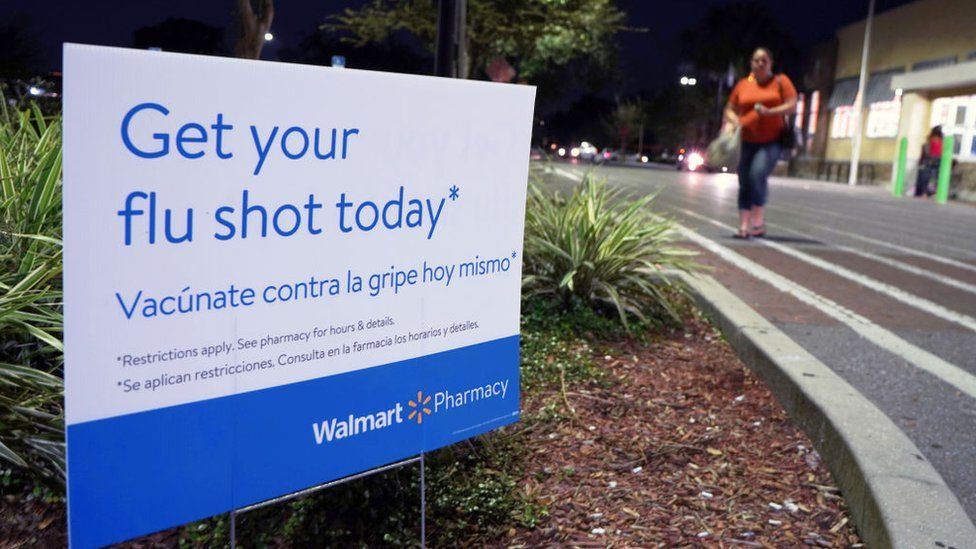
US hospital flu cases hit 10-year high as vaccinations fall

Published2 days agoSharecloseShare pageCopy linkAbout sharingImage source, Getty ImagesBy Sam CabralBBC NewsUS influenza hospital admissions have hit the highest rate in a decade as vaccinations sag, US officials say.They said adults have received five million fewer influenza jabs this year compared with the same time last year.Health experts are worried a so-called tripledemic of flu, respiratory syncytial virus (RSV) and coronavirus could swamp hospitals this winter.At least 730 people have died of flu this year, according to the Centers for Disease Control and Prevention (CDC).While older people are the most vulnerable age group, at least four children are among the dead.CDC data shows there have been at least 1.6 million flu cases overall and some 13,000 people have been taken to hospital. This season’s severity has not been matched at this point in the year since the H1N1 swine flu pandemic hit the US in 2009.”There’s no doubt we will face some challenges this winter,” Dawn O’Connell, the US Department of Health and Human Services’ (HHS) assistant secretary for preparedness and response, said at a media briefing on Friday.Flu season in the US typically peaks in December and January but has surged early and rapidly this year.Health officials said the coronavirus pandemic had sharply curbed the spread of flu and other respiratory viruses,So many young children are now encountering them for the first time, but may have little to no immunity, said the officials.The early arrival of flu season has been compounded by a rise in Covid hospital admissions, fuelled by the spread of different Omicron subvariants.It has also coincided with a country-wide surge in RSV, a cold-like infection that is estimated to claim more than 14,000 lives annually in the US, mostly among older Americans.

Read more →

Fecal microbial transplants show lack of predictability when no prior antibiotic treatment is given to recipient

A fecal microbial transplant — giving a recipient fecal matter from a donor to change the recipient’s gut microbial community in the colon — has been a successful last resort therapy for people with recurrent Clostridium difficile infection after multiple rounds of suppressive antibiotics have eliminated the recipient microbial community.
However, fecal microbial transplants have also been given to alter a recipient’s metabolism to reduce obesity or alter immunity to fight cancer, and in those transplants recipients are not given suppressive antibiotics to eliminate the microbial community prior to the transplant. In these cases, the initial gut community after transplant is a consortium of donor and recipient microbes that have to compete as new microbial strains are introduced into an established community.
University of Alabama at Birmingham researchers now report in the journal PLOS One that there is a lack of predictability for fecal microbial transplants to change the gut microbial community to correspond to that of the donor when there is no preconditioning to reduce the recipient microbe community. This contrasts with the C. difficile fecal microbial transplants after suppressive antibiotic therapy, where stable long-term colonization of donor strains is seen as long as two years post-transplant.
“The practical translation of our analysis suggests the use of pre-fecal microbial transplant treatments to reduce recipient microbial communities to facilitate a donor microbial strain-dominated gut microbial community following fecal microbial transplant,” said UAB researchers Hyunmin Koo, Ph.D., and Casey Morrow, Ph.D. “In addition, longitudinal sampling of individual fecal microbial transplant patients in combination with strain tracking analysis to monitor the status of the post-fecal microbial transplant microbial community would also be important to assess the stability and, ultimately, the success of the fecal microbial transplant.”
Koo and Morrow analyzed metagenomic sequencing published by Davar et al. in Science in 2021, using two established strain tracking methods, the WSS strain-tracking method developed at UAB and the strain-level population genomics tool StrainPhlAn. WSS can detect whether a donor strain or recipient strain of a particular species of gut microbes is dominant after fecal microbial transplants, and StrainPhlAn provides a phylogenetic tree of donor-related microbes or recipient-related microbes.
The Davar group gave fecal microbial transplants from patients who responded to anti-PD-1 immunotherapy for melanoma to recipient patients who were resistant to the immunotherapy, since it had been seen that the composition of the gut microbiota correlates with efficacy of anti-PD-1 therapy in animal models and cancer patients. Six out of 15 patients benefited.
Koo and Morrow analyzed five fecal microbial transplants by the Davar group where the recipient microflora was sampled multiple times for as long as 535 days post-fecal microbial transplant. This published metagenomic data allowed a time-series strain tracking analysis.
The UAB researchers found that three Alistipes bacterial species and one Parabacteroides species all had patterns, post-fecal microbial transplant, of either dominant donor or dominant recipient strains in the feces.
In contrast, Bacteroides uniformis and Bacteroides vulgatus showed inter-individual oscillation over time with the appearance of either donor or recipient fecal strain dominance. Adding further to the complexity, there were some instances of dominant strains of the two Bacteroides species that were unrelated to either the donor or the recipient strains. Also, one Bacteroides vulgatus strain showed a possible genetic recombination event between the donor and recipient strains.
“The complex oscillating patterns of the appearance of fecal dominant donor, recipient or unrelated strains following extended times post-fecal microbial transplant provide new insights into the dynamics of the microbial community interactions with the recipients following fecal microbial transplant,” Morrow said. “The result from our analysis has implications for the use of fecal microbial transplant to predictably change the biological functions of the gut community in metabolism and host immunity.”
Morrow is professor emeritus of the UAB Department of Cell, Developmental and Integrative Biology, and Koo is bioinformatician in the UAB Department of Genetics. Both departments are in the Marnix E. Heersink School of Medicine.
Story Source:
Materials provided by University of Alabama at Birmingham. Original written by Jeff Hansen. Note: Content may be edited for style and length.

Read more →

Words matter in food freshness, safety messaging

Changing the wording about expiration dates on perishable food items — which is currently unregulated and widely variable — could help reduce food waste, according to a new Cornell University-led study.
A survey of consumers found that certain wording — “best by,” as opposed to “best if used by,” for example — had the potential to reduce food waste, but that results varied depending on the type of food in question. Predictably, the more perishable a food item, the greater the likelihood of discarding it.
This work has implications for both policy proposals regarding date labels and the market impacts of reducing food waste.
“Some consumers might do a sniff test to see if food is still good, while others might just look at the date label and throw it away,” said Brad Rickard, professor in the Charles H. Dyson School of Applied Economics and Management, and senior author of “Date Labels, Food Waste and Supply Chain Implications,” which published in the European Review of Agricultural Economics.
“And the truth is, with very few exceptions, these date labels that are used in the United States are not regulated,” Rickard said. “And they’re not food safety dates; they’re just food quality dates.”
Co-authors were Shuay-Tsyr Ho, assistant professor of agricultural economics at National Taiwan University; Florine Livat, associate professor of economics at the Kedge Business School in Talence, France, and a former visiting scholar at Dyson; and Abigail Okrent of the U.S. Department of Agriculture’s Economic Research Service.

Read more →

The early bird may just get the worm

Night owls may be looking forward to falling back into autumn standard time but a new study from the University of Ottawa has found Daylight Saving Time may also suit morning types just fine.
Research from Dr. Stuart Fogel, a cognitive neuroscientist, professor at the University of Ottawa’s School of Psychology, and researcher at the Royal’s Institute for Mental Health Research, is shedding light into how the impact of a person’s daily rhythm and activity levels during both wake and sleep relate to human intelligence. Contrary to the adage “the early bird gets the worm,” previous work suggests that evening types, or “owls,” have superior verbal intelligence.
Yet, “once you account for key factors including bedtime and age, we found the opposite to be true, that morning types tend to have superior verbal ability,” says Stuart Fogel, Director of the University of Ottawa Sleep Research Laboratory. “This outcome was surprising to us and signals this is much more complicated that anyone thought before.”
Fogel’s team identified individual’s chronotype — their evening or morning tendencies — by monitoring biological rhythms and daily preferences. A person’s chronotype is related to when in the day they prefer to do demanding things, from intellectual pursuits to exercise.
Young individuals are typically “evening types” while older individuals and those more regularly entrenched in their daily/nightly activities are likely “morning types.” The juxtaposition here is that morning is critical for young people, especially school aged children and adolescents, who have their schedules set by their morning-type parents and their routines. This might be doing youngsters a disservice.
“A lot of school start times are not determined by our chronotypes but by parents and work-schedules, so school-aged kids pay the price of that because they are evening types forced to work on a morning type schedule,” says Fogel.
“For example, math and science classes are normally scheduled early in the day because whatever morning tendencies they have will serve them well. But the AM is not when they are at their best due to their evening type tendencies. Ultimately, they are disadvantaged because the type of schedule imposed on them is basically fighting against their biological clock every day.”
The study enlisted volunteers from a wide age range, who were rigorously screened to rule out sleep disorders and other confounding factors. They outfitted volunteers with a monitoring device to measure activity levels.
Establishing the strength of a person’s rhythm, which drives intelligence, is key to understanding the results of this nuanced study, says Fogel, with a person’s age and actual bedtime proving important factors.
“Our brain really craves regularity and for us to be optimal in our own rhythms is to stick to that schedule and not be constantly trying to catch up,” adds Fogel.
Story Source:
Materials provided by University of Ottawa. Original written by Paul Logothetis. Note: Content may be edited for style and length.

Read more →

Extreme temperatures take deadly toll on people in Texas prisons, study finds

The U.S. has the world’s largest population of prisoners, and Texas holds more incarcerated people than any other state. As climate change continues to increase the severity, frequency and duration of heat waves, the approximately 160,000 individuals in Texas prisons — as well as the people who work in these settings — come under intense physical duress in prisons without climate controls, according to a new study led by researchers at Brown University’s School of Public Health.
The study, published in JAMA Network Open on Wednesday, Nov. 2, examined the relationship between heat exposure and mortality risks in Texas prisons, focusing on how these risks vary between prisons with air conditioning and those without it.
The researchers analyzed data gathered between 2001 and 2019 showing that 271 people died due to extreme heat exposure during that timeframe.
Even a 1 degree increase above 85 degrees Fahrenheit can elevate the daily risk of dying by 0.7%, the researchers found.
The research team — which in addition to Brown also included scholars from Harvard University, Boston University and the organization Texas Prison Community Advocates — combined data from the U.S. Bureau of Justice Statistics on mortality in Texas prisons with temperature data from NASA and used a novel epidemiologic analysis to arrive at its findings. The team reported that approximately 13% of mortality during warm months may be attributable to extreme in Texas prison facilities without air conditioning.
It is important to note that while an average of 14 people died each year from heat-related causes in Texas prisons without air conditioning, not a single heat-related death occurred in climate-controlled prisons, said lead study author Julie Skarha, who received her Ph.D. in epidemiology from Brown in June 2022.
“The majority of Texas prisons do not have universal air conditioning,” Skarha said. “And in these settings, we found a 30-fold increase in heat-related mortality when compared to estimates of heat-related mortality in the general U.S. population.”
Study co-author Dr. David Dosa, an associate professor of medicine, and health services, policy and practice at Brown, pointed out that heat is often a silent killer.
“We have seen similar situations in nursing homes, where heat isn’t reported on the death certificate,” said Dosa, a practicing geriatrician with dual appointments at the Providence V.A. Medical Center and Rhode Island Hospital. “It’s only after we run these analyses that we can determine how much of a role heat played in someone’s death.”
The findings, the researchers said, suggest that an air conditioning policy for Texas prisons may be an important part of protecting the health of people living and working in these facilities.
Other study authors included Dr. Josiah Rich and David Savitz from Brown, Amite Dominick from Texas Prison Community Advocates, Keith Spangler from Boston University and Antonella Zanobetti from Harvard. The study was supported by grants from the National Institute on Minority Health and Health Disparities and from the National Institute of Environmental Health Sciences.
Story Source:
Materials provided by Brown University. Original written by Carl Dimitri, Senior Writer, School of Public Health. Note: Content may be edited for style and length.

Read more →

Potential secret to viral resistance unearthed

Scientists from Trinity College Dublin have unearthed a secret that may explain why some people are able to resist viral infections, having screened the immune systems of women exposed to hepatitis C (HCV) through contaminated anti-D transfusions given over 40 years ago in Ireland.
The extraordinary work, just published in leading journal Cell Reports Medicine, has wide-ranging implications from improving our fundamental understanding of viral resistance to the potential design of therapies to treat infected people.
Between 1977-79 in Ireland, several thousand women were exposed to the hepatitis C virus through contaminated anti-D, which is a medication made using plasma from donated blood and given to Rhesus negative women who are pregnant with a Rhesus positive fetus. The medication prevents the development of antibodies that could be dangerous in subsequent pregnancies. Some of the anti-D used during the 1977-79 period was contaminated with hepatitis C.
From this outbreak, three groups of people were identifiable: those who were chronically infected; those who cleared the infection with an antibody response; and those who appeared protected against infection without making antibodies against hepatitis C.
Cliona O’Farrelly, Professor of Comparative Immunology in Trinity’s School of Biochemistry and Immunology, is the senior author of the research article. Cliona, who is based in the Trinity Biomedical Sciences Institute, said:
“We hypothesised that women who seemed to resist HCV infection must have an enhanced innate immune response, which is the ancient part of the immune system that acts as a first line of defence.

Read more →

A new weapon against antibiotic-resistant bacteria

The over-use of antibiotics has pushed bacteria to develop resistance mechanisms to this type of treatment. This phenomenon, known as antibiotic resistance, is now considered by the WHO as one of the greatest threats to health. The lack of treatment against multi-resistant bacteria could bring us back to a time when millions of people died of pneumonia or salmonella. The bacterium Klebsiella pneumoniae, which is very common in hospitals and particularly virulent, is one of the pathogens against which our weapons are becoming blunt. A team from the University of Geneva (UNIGE) has discovered that edoxudine, an anti-herpes molecule discovered in the 60s, weakens the protective surface of Klebsiella bacteria and makes them easier to eliminate for immune cells. These results can be read in the journal PLOS One.
Klebsiella pneumoniae causes many respiratory, intestinal and urinary tract infections. Due to its resistance to most common antibiotics and its high virulence, some of its strains can be fatal for 40% to 50% of infected people. There is an urgent need to develop new therapeutic molecules to counter it. “Since the 1930s, medicine has relied on antibiotics to get rid of pathogenic bacteria,” explains Pierre Cosson, professor in the Department of Cell Physiology and Metabolism at the UNIGE Faculty of Medicine, who led this research. “But other approaches are possible, among which trying to weaken the bacteria’s defence system so that they can no longer escape the immune system. This avenue seems all the more promising as the virulence of Klebsiella pneumoniae stems largely from its ability to evade attacks from immune cells.”
An amoeba as a model
To determine whether or not the bacteria were weakened, the UNIGE scientists used an experimental model with surprising characteristics: the amoeba Dictyostelium. This single-cell organism feeds on bacteria by capturing and ingesting them, using the same mechanisms that immune cells use to kill pathogens. “We genetically modified this amoeba so that it could tell us whether the bacteria it encountered were virulent or not. This very simple system then enabled us to test thousands of molecules and identify those that reduced bacterial virulence,” explains Pierre Cosson.
Weakening the bacteria without killing them
Developing a drug is a long and expensive process, with no guarantee of results. The UNIGE scientists therefore opted for a quicker and safer strategy: reviewing existing drugs to identify possible new therapeutic indications. The research team evaluated the effect on Klebsiella pneumoniae of hundreds of drugs already on the market, with a wide range of therapeutic indications. A drug developed to combat herpes, edoxudine, proved particularly promising.
“By altering the surface layer that protects the bacteria from their external environment, this pharmacological product makes it vulnerable. Unlike an antibiotic, edoxudine does not kill the bacteria, which limits the risk of developing resistance, a major advantage of such an anti-virulence strategy,” says the researcher.
Although the effectiveness of such a treatment in human beings has yet to be confirmed, the results of this study are encouraging: edoxudine acts even on the most virulent strains of Klebsiella pneumoniae, and at lower concentrations than those prescribed to treat herpes. “Sufficiently weakening the bacteria without killing them is a subtle strategy, but one that could prove to be a winner in the short and long terms,” concludes Pierre Cosson.
Story Source:
Materials provided by Université de Genève. Note: Content may be edited for style and length.

Read more →

'Click' chemistry may help treat dogs with bone cancer

In September, researchers from California and Denmark were awarded a Nobel Prize in Chemistry for their development of ‘click’ chemistry, a process in which molecules snap together like LEGO, making them a potentially more efficient transportation device in delivering pharmaceuticals to cancer tumors.
Now, in a recent study, a researcher at the University of Missouri has successfully shown for the first time how click chemistry can be used to more efficiently deliver drugs to treat tumors in large dogs with bone cancer — a process that had previously only been successful in small mice.
“If you want to attack a tumor using the immune system, an antibody is an extremely specific way to deliver a drug or radioactive payload to the tumor, but the problem with antibodies is they are huge molecules that circulate in the bloodstream for days or even weeks,” said Jeffrey Bryan, an associate professor in the MU College of Veterinary Medicine and author on the study. “If you put a drug or radioactive molecule onto the antibody, you leave radioactivity circulating in the bloodstream for a long time, which can spread to and negatively impact organs, bone marrow and the liver while not getting as much dose to the specific tumor as you were hoping for.”
The goal with click chemistry is to maximize the delivery of therapeutic drugs specifically to the cancer tumor to increase effectiveness while minimizing the circulation of those drugs throughout the bloodstream and causing dangerous side effects.
From mice to man’s best friend
For years, many chemists assumed that while click chemistry has been successful in mice, the strategy would not work in large dogs or people because the size of the body might be too big for the two sides of therapy-delivering molecules to find each other and snap, or ‘click,’ together. Bryan collaborated with Brian Zeglis, an associate professor at Hunter College in New York who specializes in click chemistry, to conduct the first-ever successful ‘proof-of-concept’ study at the MU College of Veterinary Medicine. Using click chemistry, doses of radiopharmaceuticals were delivered specifically to the tumors in five dogs that weighed more than 100 pounds and had bone cancer.

Read more →