Masks Cut Covid Spread in Schools, Study Finds
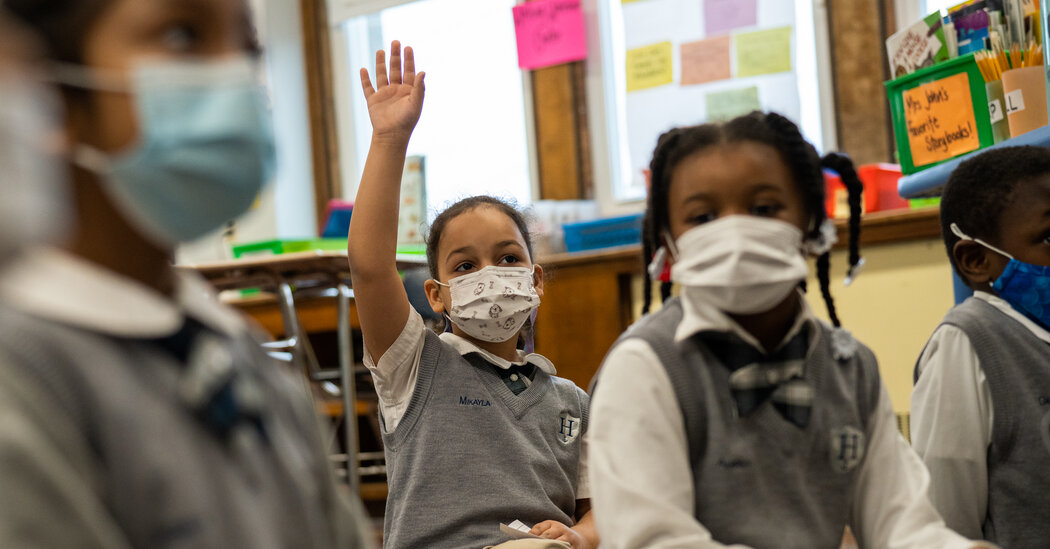
In a so-called natural experiment, two school districts in Boston maintained masking after mandates had been lifted in others, enabling a unique comparison.Masks have been a cultural flash point since the start of the pandemic, and mask mandates in schools have been especially incendiary. Critics have argued that there is no strong evidence to prove that masks slow the spread of Covid, and that in any case children weren’t wearing the right kinds of masks or weren’t wearing them properly.Now a research paper details a so-called natural experiment that occurred when all but two school districts in the greater Boston area lifted mask requirements in the spring. Researchers took that opportunity to make a direct comparison of the spread of Covid in masking and non-masking schools.The bottom line: Masking mandates were linked with significantly reduced numbers of Covid cases in schools.Infection rates were lower among masked students — even in Boston’s public schools, where many buildings are old and lack good ventilation systems, classrooms are crowded and students are more often from at-risk communities — than among unmasked students attending newer schools in communities like Cambridge and Newton.The study, by scientists at Harvard’s T.H. Chan School of Public Health and Massachusetts General Hospital, the Boston University School of Public Health and Boston’s Public Health Commission, was published on Wednesday in The New England Journal of Medicine.The data should help dispel misinformation about the effectiveness of universal masking requirements in stemming viral transmission in schools, said Julia Raifman, an assistant professor at the Boston University School of Public Health and an author of an editorial accompanying the new study.“Even as recently as this summer, people were saying, ‘Oh, Covid doesn’t spread in schools,’ and there was a misconception that kids don’t get Covid,” said Dr. Raifman, who was not involved in the new research. “But what we see in the study is that Covid does spread in schools, and it spreads back home, and it spreads to teachers.”The study did not specify the types of masks worn by the children, suggesting that any type was at least somewhat protective, she added.“This study shows that if people are wearing masks as a group, that it reduces transmission for everyone in the population, and it reduces school absences and teacher absences,” Dr. Raifman said.Even after the Centers for Disease Control and Prevention lifted mask requirements for schools last year, many states kept the mandates. Massachusetts, along with 18 other states and Washington, D.C., kept masking in place in public schools at the start of the 2021-22 school year but rescinded the policy in February.More on U.S. Schools and EducationCurriculum Wars: According to a new survey, most Americans are satisfied with their local schools. But one issue remains divisive: teaching children about gender diversity and L.G.B.T.Q. rights.Teaching Climate Change: Many middle school science standards don’t explicitly mention climate change. But some educators are finding ways to integrate it into lessons.Falling Scores: U.S. students in most states have experienced troubling setbacks in math and reading since the pandemic began, according to the National Assessment of Educational Progress.Teacher Shortage: While the pandemic has created an urgent search for teachers in some areas, not every district is suffering from shortages. Here are the factors in play.Until then, trends in Covid incidence were similar across school districts in the greater Boston area. After lifting the mask mandate, the state required districts to continue reporting all Covid cases among students and staff members and provided funding and support services for testing.The researchers involved in the study used that data to track Covid cases week by week in 72 school districts, comparing the two that had retained masking for 15 weeks — Boston and Chelsea — with 70 others that had lifted mask requirements at different times.Removing of mask mandates was associated with an additional 44.9 Covid cases per 1,000 students and staff members, corresponding to an estimated 11,901 cases during the 15-week period, the scientists concluded.“We saw sustained, increased rates of Covid incidence consistently in schools that lifted the mask requirement,” said Tori L. Cowger, the study’s first author and a postdoctoral fellow at the Harvard T.H. Chan School of Public Health.In 12 weeks of the 15-week period, “we saw increased incidence that was statistically significant,” she added.But just one in three Covid cases in schools where mask mandates had been lifted was attributable to the change in policy; four in 10 cases among staff members were attributable to the policy change, she said.Because people who tested positive were instructed to isolate for at least five days, the additional cases led to at least 17,500 missed school days for students and 6,500 missed school days for staff members, the study calculated.Cheryl Buckman said her 9-year-old son, a third-grader in a Boston public school, had developed symptoms of Covid within days after the school lifted masking requirements late last year.Both Ms. Buckman and her son have asthma and a blood disorder that makes it difficult to fight off infections, and she became ill just as he was recovering. Both ran high fevers for several days, she said, and he missed more than a week of school. She had to postpone needed surgery because of her illness.“Honestly, it’s careless to remove a mandate too soon,” Ms. Buckman said in an interview. “The whole district stopped masking, except on the buses, and when he wore a mask he got made fun of, so he was afraid to wear it.”Ms. Buckman’s son has autism, she added, and he was terrified of Covid. “He knew so many people had died from it,” she said.Opponents of masking in schools have criticized the data on its effectiveness, but they have also raised other concerns.Masking may cause communication problems and delays in speech development, may be particularly onerous for children with learning disabilities and makes it difficult to read or communicate emotional expressions, critics have said.And many adults, as well as children, just find masks very uncomfortable, especially when worn for a whole school day.Dr. Tracy Beth Hoeg, an epidemiologist and fierce critic of school masking, noted that the new study was observational and not a randomized, controlled clinical trial. As such, she said, it can point to a correlation but cannot prove a causal relationship between mandatory masking and a lower incidence of Covid.Dr. Shira Doron, an infectious-disease physician at Tufts Medical Center in Boston who has criticized mask mandates in schools in the past, said that the new study was just one publication and that the medical literature on mask mandates in schools was mixed.Schools did not abandon mask policies because they were ineffective at curbing viral transmission, Dr. Doron said, but because they could lead to other complications.“Children with language-learning difficulties are having trouble understanding their teachers and their peers,” Dr. Doron said. “Children with speech difficulties are having trouble being understood to the point that they withdraw. Children and staff with hearing difficulties are having trouble communicating and understanding each other.”She added, “Even teachers who chose to continue wearing a mask prefer there not be a mandate, so they don’t have to deal with discipline all day.”But a Boston parents’ group, BPS Families for Covid Safety, has already called for reinstating of universal masking in schools, saying that the new study provides evidence that the practice protects against both illness and lost days of learning in a district where vaccination rates are relatively low and families come from communities that have suffered disproportionately during the pandemic.At the very least, universal masking should be implemented if an outbreak occurs at the school or in the larger community, and after students return from vacations, which often involve traveling and family gatherings, said Sarah Horsley, a co-founder of the group and a parent of a fourth-grader.“We got an email a few weeks ago from school officials saying they were strongly encouraging masks because of wastewater testing showing high amounts of virus,” Ms. Horsley said. “But the majority of students still aren’t wearing them.”

Read more →
Deli meat linked to deadly listeria outbreak in US

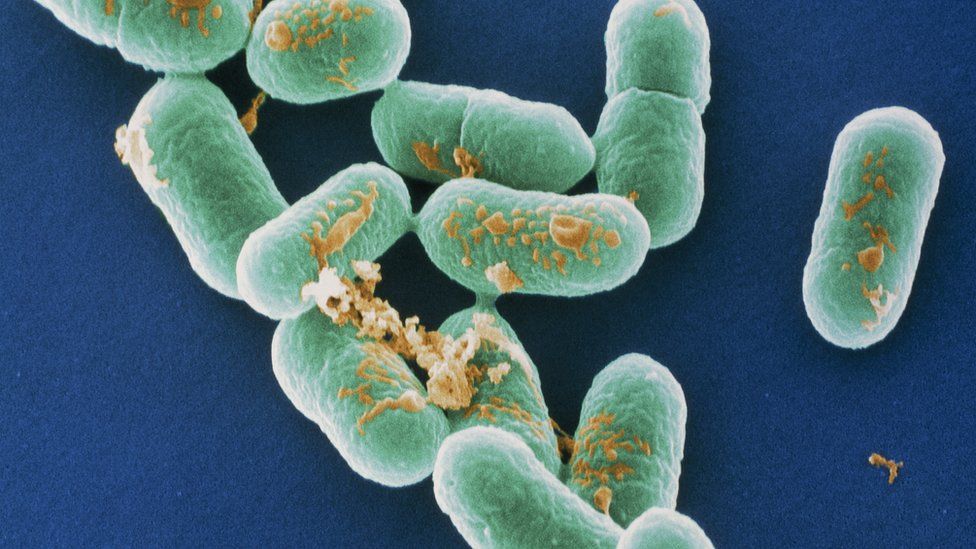
Published24 minutes agoSharecloseShare pageCopy linkAbout sharingImage source, Science Photo LibraryA listeria outbreak has hit six US states, infecting 16 people and killing one of them, health officials warn.At least 13 people have been admitted to hospital. One patient died in Maryland. Another miscarried because of the illness. The outbreak may be linked to meat or cheese from deli counters, said the US Centers for Disease Control (CDC).California, Illinois, Maryland, New Jersey, Massachusetts and New York have all seen cases.Eleven of the cases were found in people who speak Russian or are of Eastern European descent, said the CDC.Listeriosis is caused by eating contaminated food. About 1,600 Americans get the infection every year, and some 260 die.The bacteria can grow on food, even if it is chilled in the fridge.Pregnant women and people with weak immune systems or older people are most vulnerable.Symptoms – which include fever, confusion, fatigue and muscle aches – tend to start within two weeks of eating contaminated food.

Read more →

Low levels of air pollution deadlier than previously thought

The World Health Organization’s most recent estimates (2016) are that over 4.2 million people die prematurely each year due to long-term exposure to fine particulate outdoor air pollution (often referred to as PM2.5,). A recent study involving McGill researchers now suggests that the annual global death toll from outdoor PM2.5 may be significantly higher than previously thought. That’s because the researchers found that mortality risk was increased even at very low levels of outdoor PM2.5, ones which had not previously been recognized as being potentially deadly. These microscopic toxins cause a range of cardiovascular and respiratory diseases and cancers.
“We found that outdoor PM2.5 may be responsible for as many as 1.5 million additional deaths around the globe each year because of effects at very-low concentrations that were not previously appreciated,” said Scott Weichenthal, an Associate Professor in the Department of Epidemiology, Biostatistics, and Occupational Health at McGill University and the lead author on the recent paper in Science Advances.
Canadian data advances global understanding of effects of outdoor pollution
The researchers arrived at this conclusion by combining health and mortality data for seven million Canadians gathered over a twenty-five-year period with information about the levels of outdoor PM2.5 concentrations across the country. Canada is a country with low levels of outdoor PM2.5, making it the perfect place to study health impacts at low concentrations. Knowledge gained in Canada was then used to update the lower end of the scale that is used to describe how mortality risk changes with outdoor PM2.5 levels. The result? An improved understanding of how air pollution impacts health on a global scale.
The WHO recently set out ambitious new guidelines for annual average outdoor fine particulate air pollution, cutting its earlier recommendations in half, from concentrations of 10 to concentrations of 5 micrograms (ug) per cubic metre. The current United States Environmental Protection Agency standard of 12 (ug) per cubic metre is now more than double the value recommended by the WHO.
“One take away is that the global health benefits of meeting the new WHO guideline are likely much larger than previously assumed,” adds Weichenthal. “The next steps are to stop focussing only on particle mass and start looking more closely at particle composition because some particles are likely more harmful than others. If we can gain a better understanding of this, it may allow us to be much more efficient in designing regulatory interventions to improve population health.”
Story Source:
Materials provided by McGill University. Note: Content may be edited for style and length.

Read more →

Biomarkers that predict preeclampsia risk

In a study of pregnant women in the United States, Cedars-Sinai investigators found that a specific imbalance of two placental proteins could predict which women were at risk of developing a severe form of preeclampsia, a life-threatening blood pressure disorder.
The study is published in the journal NEJM Evidence.
“We discovered that a blood test measuring the ratio between two proteins involved in blood vessel development in the placenta could identify which of the women would develop preterm preeclampsia with severe features,” said study co-senior author Sarah Kilpatrick, MD, PhD, chair of the Department of Obstetrics and Gynecology at Cedars-Sinai. “This test was significantly better than all the standard-of-care markers for preeclampsia with severe features. It predicted with over 90% accuracy whether the patient would develop preeclampsia with severe features or not, while the usual markers were accurate less than 75% of the time.”
The blinded, prospective study of women initially hospitalized for preterm hypertension involved 1,014 patients from18 hospitals across the nation.
“This multicenter investigation is one of a few large studies of the risk for developing preeclampsia with severe features in the U.S. The women represented a more racially diverse cohort than previous studies and included patients from both smaller community hospitals and large academic medical centers, in both cities and rural areas,” said Kilpatrick.
Preeclampsia is the most common hypertensive disorder associated with pregnancy. The severe form of the disease can lead to dangerously high blood pressure, organ failure, vision loss or even stroke. It affects approximately 5% of pregnant women and is a leading cause of maternal and fetal death and serious illness.

Read more →

Mysterious outbreak of bone-eating tuberculosis resembled an ancestral form

Tuberculosis is usually encountered as a disease of the lungs, but in 2 percent of cases in the U.S. it can also be found in the bones. The 9,000-year-old skeletons of some Egyptian mummies show signs of having tuberculosis infection in their bones, a painful condition that leaves the bones looking like they’ve been gnawed.
So it was a weird puzzle when Duke physician Jason Stout M.D. encountered a Wake County TB outbreak in the mid-2000s in which the infection had spread beyond the lungs in six people. “Four out of six were in the bone,” Stout said. “That’s way more than 2 percent.”
The index case, the first person in Raleigh to have this strain of the disease, apparently contracted the bacterium in Vietnam, but he wasn’t feeling very sick and had been working around 400 people in his workplace.
“So it was prolonged exposure in a workplace,” said Stout, a Duke professor of medicine who tracked down and identified seven subsequent infections through contact tracing and health department records.
All eight people were treated with antibiotics and other co-workers received preventative care and then the strange outbreak went away. But the mystery was never really solved. “I’m an epidemiologist and clinical trial specialist and I was left scratching my head,” Stout said.
Until several years later when Stout had a chance conversation with his colleague and TB researcher David Tobin, Ph.D., an associate professor in molecular genetics and microbiology and immunology at Duke.

Read more →

Using SNAP benefits can help your memory, study finds

Eligible older adults who participate in the Supplemental Nutrition Assistance Program (SNAP) in the United States may have slower memory decline than eligible people who do not participate, according to a new study at Columbia University Mailman School of Public Health. The researchers found that those who used SNAP had about two fewer years of cognitive aging over a 10-year period compared with those who didn’t use SNAP.
The study is published online in Neurology®, the medical journal of the American Academy of Neurology. SNAP is a government program to help low-income households achieve food security through financial benefits used to purchase food.
“Less than half of the older adults who are eligible for SNAP actually participate, yet our findings showed that people using SNAP experienced two fewer years of cognitive aging over 10 years compared to those who did not use the program,” said senior author Adina Zeki Al Hazzouri, PhD, assistant professor of epidemiology at Columbia University Mailman School of Public Health. “With the number of people with Alzheimer’s disease and other dementias expected to increase, this low participation is a huge, missed opportunity for dementia prevention.”
Zeki Al Hazzouri said increasing education and outreach, reducing stigma and simplifying the application process could all help increase the participation rate for older adults.
The study involved 3,555 people with an average age of 66 who were eligible for SNAP benefits. Of those people, 559 were eligible SNAP users and 2,996 were eligible but did not use the program.
Researchers measured memory function every two years over 20 years. People were asked to complete memory and thinking tests, such as recalling a list of words and answering questions about what they can remember in their everyday lives.
At the beginning of the study, SNAP users had lower socioeconomic status and a greater number of chronic conditions than those who did not participate in the program, so researchers used techniques to account for those differences. After adjusting for the differences between the two groups, researchers found that while SNAP users had worse memory scores at the start of the study, they had slower rates of memory decline compared to non-users over the course of the study. In particular, researchers found that those who used SNAP had about two fewer years of cognitive aging over a 10-year period compared with those who didn’t use SNAP.
“While SNAP’s primary goal is to reduce food insecurity among low-income households and to increase access to higher quantity and quality foods, eating healthier may also benefit brain health,” said study first author Peiyi Lu, PhD and a postdoctoral research scientist in the Department of Epidemiology at Columbia Mailman School. “SNAP may also reduce stress and overall financial hardship, which has been linked to premature cognitive aging and reduced brain health. Future research should explore these underlying impacts.”
Co-authors are Katrina Kezios and Sebastian Calonico, Columbia University Mailman School of Public Health; Jongseong Lee and Christopher Wimer, Columbia University
Story Source:
Materials provided by Columbia University’s Mailman School of Public Health. Note: Content may be edited for style and length.

Read more →

Pandemic led to 7.5 percent decrease in 2020 U.S. energy consumption

Total energy consumption decreased 7.5% nationwide in 2020 compared with 2019 as the COVID-19 pandemic led to lockdowns, business closures and employees working from home, according to a new University of Wisconsin Oshkosh study.
The research conducted by Warren Vaz, an associate engineering professor on UWO’s Fox Cities campus, is the first to quantify the effects of pandemic disruptions on energy consumption trends across all 50 states and the District of Columbia.
“By capturing these trends, it is hoped that policymakers and utilities managers can be better prepared for future challenges,” Vaz said.
The study appeared recently in a special issue of the journal Energies focused on the economic and social consequences of the pandemic in the energy sector based on federal data available publicly.
“Lockdowns had a significant impact on energy consumption, about 30% in some cases,” Vaz said. “There were wide discrepancies in state’s consumption trends. Hawaii saw the largest decrease of about 26%, while Alaska at plus 4% was the only state to record an increase.”
Vaz attributed Hawaii’s large decrease in consumption to its isolation from other states and its dependence on the tourism industry, which was virtually shut down by the pandemic. Alaska’s small increase was likely due to a harsher winter in 2020 compared with 2019 as well as less strict lowdown practices across the state, he said.
Other results showed: Fossil fuel consumption decreased, particularly petroleum. Renewable energy increased but biofuels decreased, up to 88% in Nebraska. All major greenhouse gas emissions decreased. Carbon dioxide emissions fell by 10.4%.In addition, Vaz compared the U.S. energy consumption in 2020 to that of other populous countries around the globe, which all showed decreases except for China and Iran, which each experienced slight increases.
Story Source:
Materials provided by University of Wisconsin Oshkosh. Original written by Natalie Johnson. Note: Content may be edited for style and length.

Read more →

Pacemaker channel discovery could lead to better heart drugs

The mechanism by which fat-related molecules called lipids regulate pacemaker ion channel proteins, which help control the heart rhythm, has been revealed in a study from researchers at Weill Cornell Medicine.
In the study, published Nov. 9 in Nature Structural & Molecular Biology, the researchers used advanced methods including cryogenic electron microscopy (cryo-EM) to show in high-resolution detail how certain lipids interact with pacemaker ion channels to enhance their activity. In principle, modulating this lipid interaction with a drug could be a good strategy for treating cardiac arrhythmias and other conditions.
“Ion channels have been notoriously difficult to target with drugs, because of the challenge of identifying drug binding sites that are specific to particular channels, but this work reveals sites that might be highly specific and thus viable drug targets,” said senior author Dr. Crina Nimigean, professor of physiology and biophysics in anesthesiology at Weill Cornell Medicine.
The study’s first author is Dr. Philipp Schmidpeter, a research associate in the Nimigean Lab Laboratory in the Department of Anesthesiology at Weill Cornell Medicine.
Ion channels are tubelike protein structures that reside within the membranes of a cells, enabling and regulating flows of charged molecules of potassium, sodium and other electrolytes into and out of the cell. These flows of charged molecules, or ions, are key determinants of cell behavior. Specialized ion channels called pacemaker channels are particularly important for the rhythmic activities of heart cells and neurons. Understanding precisely how these pacemaker channels work could thus lead to better treatments for cardiac arrhythmias, chronic pain, epilepsy and other conditions. Arrhythmias alone are estimated to affect millions of people in the United States.
Scientists have known that lipids, the major constituents of cell membranes, are involved in modulating the activities of pacemaker channels. But they haven’t known much about how these interactions work. In general, methods for studying lipids have been less well developed than methods for studying proteins and other biological molecules. Moreover, ion channels function while embedded in the cell membrane, which is made of two thin layers of lipids — and that membrane and its lipid components have been hard to replicate in a way that allows detailed experimental manipulation.
Drs. Schmidpeter and Nimigean nevertheless were able to obtain important clues about lipid-pacemaker channel interactions by first examining a bacterial pacemaker channel, SthK. In prior studies, they had developed an experimental platform for studying SthK, including a membrane-like environment that they could alter experimentally. SthK is a useful model for pacemaker channels found in humans — known as HCN channels — because the two channels, despite the evolutionary gulf between them, have many important similarities, they said.
The SthK studies revealed that two lipids, phosphatidyl-glycerol and cardiolipin, can bind to the channel in a way that disrupts a specific molecular connection, known as a salt bridge, which normally tends to clamp the channel shut. When the salt bridge was disrupted by the lipids, the channel became more open and active. Similarly, removing the salt bridge by other means dramatically increased channel activity and abolished the ability of these lipids to affect that activity.
The same salt bridge is found in HCN channels, and experiments suggested that in the latter the same lipid-modulation mechanism is at work: Removing the salt bridge had the same effect on channel activity as in the SthK experiments, although for HCN channels the key lipid binding partner was a different lipid, phosphatidic acid.
The experiments included cryo-EM imaging of lipids binding to SthK — imaging that offers clues to how a future drug might disrupt or enhance this lipid interaction to modulate pacemaker channel function.
The researchers hope that in follow-on work they can illuminate the role of this lipid-pacemaker interaction in abnormal conditions such as arrhythmias or cancers.
“Various conditions can affect the lipid composition of the heart and other tissues, so it wouldn’t be surprising to see this pacemaker mechanism altered in diseases,” Dr. Schmidpeter said.

Read more →

Study analyzing often-overlooked racial/ethnic groups provides a new understanding of pain disparities in the U.S.

Racial and ethnic disparities in pain prevalence in the U.S. are far larger than previously realized, according to the results of a new study co-written by a University at Buffalo medical sociologist.
The current research represents the first portrait of U.S. pain prevalence across six major racial and ethnic groups, as defined by the U.S. Census Bureau. While earlier studies of pain disparities have focused on Black, white and Hispanic groups, the current study also includes Native Americans (American Indians/Alaska Natives), Asian Americans, and the fast-growing “multiracial” category. The study also uses six measures of increasing severity of pain to test whether the findings are sensitive to a specific definition of pain.
The findings, based on data provided by nearly 274,000 participants and published in the journal Pain, indicate that Native Americans and multiracial Americans have by far the highest pain prevalence, while Asian Americans have the lowest pain prevalence, regardless of which specific pain measure is being assessed.
For example, compared to Asian Americans, Native Americans are over four times as likely to experience severe pain, and multiracial Americans are over three times as likely. Meanwhile, those who self-identify as white, Black or Hispanic have intermediate levels of severe pain. Similar racial/ethnic patterns are observed across other pain measures as well.
The findings on pain prevalence among Native Americans, multiracial Americans and Asian Americans substantially expand the limited previous research documenting pain levels for these groups.
“This research identifies the groups that have the highest unmet need for pain prevention and management,” says Hanna Grol-Prokopczyk, PhD, associate professor of sociology in the UB College of Arts and Sciences, and co-author of the study, which was led by Anna Zajacova, PhD, professor of sociology at Western University in Canada.

Read more →

Identification of the cells responsible for colon cancer relapse

Colon cancer is the third most common cancer in the world, with about 2 million new cases each year. Most patients are diagnosed when the tumour is still located in the colon or rectum. These tumours are removed by surgery and, in many cases, are treated with chemotherapy in an attempt to prevent relapse. However, for between 20% and 35% of patients, the cancer reappears in the form of metastases in other vital organs. These are caused by residual tumour cells that remain hidden at the time of surgery. Metastases are the leading cause of death from almost all types of cancer, including colon cancer.
Most colorectal cancer research has focused on the primary disease. In recent years, there have also been important advances in the characterisation of metastatic disease once it manifests. However, until now, it had not been possible to study this small population of disseminated tumour cells that is invisible to the diagnostic techniques used in the clinic. This lack of knowledge has resulted in a dearth of effective therapies to eliminate residual disease and prevent metastatic recurrence, which has a poor prognosis. Scientists at IRB Barcelona, led by Dr. Eduard Batlle, ICREA researcher and group leader within the cancer CIBER network (CIBERONC), have for the first time identified residual tumour cells hidden in the liver and lung and have described how they evolve to give rise to the appearance of metastases in these organs.
“Understanding and avoiding the phenomenon of relapse after surgery is an unresolved medical need. After many years investigating colon cancer, we have taken the first step to prevent metastases in patients who present with localised disease,” explains Dr. Eduard Batlle, head of the Colorectal Cancer Laboratory at IRB Barcelona.
How does colon cancer recurrence occur?
Scientists have developed a new experimental mouse model that recreates the process undergone by patients who relapse. This typically goes through the stages of diagnosis, curative surgery, and subsequent relapse. In parallel, they have devised a technique that allows the isolation of the tiny fraction of disseminated tumour cells that are hidden in the liver.
“The model, which is very similar to the progression of metastatic colon cancer in patients, has allowed us to describe the dynamics of residual disease in detail. We have studied metastases ranging from the micro-scale of 3 or 4 cells to medium-sized or even larger ones and have detailed how each of them evolves during the progression of the disease,” comments Dr. Adrià Cañellas-Socias, a researcher at the laboratory headed by Dr. Batlle and first author of the study.

Read more →