Navigating urban spaces: Indoor and outdoor wayfinding technology for vision-impaired people

Navigating an unfamiliar place is uniquely challenging for people with disabilities. People with blindness, deafblindness, visual impairment or low vision, as well as those who use wheelchairs, can travel more independently in urban areas with the aid of effective wayfinding technology. A new report from the National Institute for Transportation and Communities (NITC) explores how to leverage low-cost methods to enable people to more easily move through public, urban indoor and outdoor spaces.
The study, led by Martin Swobodzinski and Amy Parker of Portland State University, used focus groups, two case studies, and an in-person structured wayfinding experience on the PSU campus to find the most helpful ways of getting around. Tactile maps were found to be a very useful resource, with an accessible mobile app also showing promise as an orientation and mobility aid.
The researcher will share more details about this project in a free webinar on December 15: Individual Wayfinding in the Context of Visual Impairment, Blindness, and Deafblindness.
Environments and wayfinding tools that support safe, confident mobility have been linked with improved employment outcomes, more access to higher education, and better quality of life. The results from this study improve our understanding of how people with visual impairment and blindness find their way through the world. Researchers are hopeful that the insights from the study will support the development of standards and innovation in mobile wayfinding as it relates to the integration of indoor and outdoor wayfinding, and routing for visually impaired, blind, and deafblind pedestrian travelers.
Despite the proliferation of wayfinding apps that are meant to benefit travelers, the effectiveness of such tools remains limited. This study gave voice to the experience of diverse travelers who use wayfinding technologies to accomplish important life tasks. In addition to the findings discussed in more detail below, researchers hope the analysis of the remaining data will drive forward a better understanding of the information needs of visually impaired, blind, and deafblind pedestrian travelers.
The project sought answers to three questions: What are the preference structures, information needs, and expectations of individuals with visual-impairment, blindness, and deafblindness towards wayfinding in public indoor/outdoor spaces? How can low-cost wayfinding technology (e.g., digital maps, spatial data, personal telecommunication devices, and low-energy beacons) be leveraged best to allow for the seamless wayfinding of pedestrian travelers with functional disabilities in public urban indoor/outdoor spaces? Which wayfinding technologies, data products, and technology platforms afford a sustainable, scalable deployment in a large academic institution?College campuses are notoriously complex to navigate, particularly for travelers with visual impairments. One of the key barriers for culturally and linguistically diverse people in accessing higher education is seeing themselves as full members of a college campus community. As a public university situated in the heart of downtown Portland, the PSU campus was an ideal setting for this experiment as it affords realistic wayfinding scenarios and mobility challenges in a public urban environment. In addition, PSU’s commitment to community service, equity, and inclusivity align with the project’s goals of promoting community participation and access.

Read more →

Efficient mRNA delivery by branched lipids

Messenger RNA (mRNA) are biological molecules that transfer the information coded by genes in the nucleus to the cytoplasm for protein synthesis by ribosomes. mRNA sequences can be designed to encode specific proteins; the most well-known example of this are the mRNA vaccines for COVID-19. mRNA molecules are large and chemically unstable, so a vector must be utilized to deliver mRNA to the cells. One of the most advanced technologies for the delivery of mRNA are lipid nanoparticles (LNPs), which are composed of ionizable lipids, cholesterol, helper lipids and polyethylene glycol.
A team of researchers led by Assistant Professor Yusuke Sato and Professor Hideyoshi Harashima at the Faculty of Pharmaceutical Sciences, Hokkaido University, and by Kazuki Hashiba at the Nitto Denko Corporation have developed a novel branched ionizable lipid which, when included in LNPs, greatly increases the efficiency of mRNA delivery. Their results were published in the journal Small Science.
Previous work has shown that ionizable lipids with branching tails increases the efficiency of mRNA delivery by LNPs. However, two major issues have prevented a systematic analysis of the effect of branching ionizable lipids. First, tail branching leads to an enormous diversity of chemicals; second, the number of commercially available branching ionizable lipids is limited. To overcome these hurdles, the researchers generated a systematic lipid library of branching ionizable lipids, and limited this library to a specific subset of branching lipids which could be described with just two parameters: total carbon number and symmetry. They then tested the 32 lipids in this library for their effect on the stability of LNPs containing mRNA (LNP-RNA).
The team discovered that LNP-RNAs which contained highly symmetric branched lipids exhibited greater microviscosity, and the higher microviscosity was positively correlated with increased stability of LNP-RNAs in storage. Highly symmetric branched lipids in LNP-RNAs are also positively correlated with protein expression in the liver and spleen in mice. They determined that the length of the branched chain affects organ selectivity.
The most stable storage and most efficient delivery of the mRNA was achieved by the branching lipid CL4F 8-6. The authors demonstrated that this particular lipid could be used in LNPs designed for gene editing, achieving a 77% suppression of the target gene in mice with just one dose of LNPs.
This study revealed that branched lipids with a high level of symmetry contributed to optimal LNP properties for efficient intracellular delivery and stable formulations. Future work will focus on developing expanded lipid libraries to understand the properties of other branched lipids, and may lead to design of novel lipids.
Story Source:
Materials provided by Hokkaido University. Note: Content may be edited for style and length.

Read more →

Immune system reboot in MS patients

Blood stem cell transplantation is a radical but highly effective therapy for multiple sclerosis. A study led by the University of Zurich has now examined in detail the way in which the treatment curbs the autoimmune disease and how the immune system regenerates afterwards. A better understanding of these mechanisms should help the treatment approach, currently approved in only a few countries, to gain wider acceptance.
Every day, one person in Switzerland is diagnosed with multiple sclerosis. MS is an autoimmune disease in which the body’s own immune system attacks the myelin sheath of the nerve cells in the brain and spinal cord. The disease leads to paralysis, pain and permanent fatigue, among other symptoms. Fortunately, there have been great advances in therapies in recent decades. A study by the Department of Neuroimmunology and MS Research at the University of Zurich (UZH) and the Department of Medical Oncology and Haematology Clinic at the University Hospital Zurich (USZ) has now pinpointed why the most effective currently available therapy — a stem cell transplant — works so well.
Wiping out unwanted immune cells
“80 percent of patients remain disease-free long-term or even forever following an autologous hematopoietic stem cell transplant,” says recently retired Professor Roland Martin, study lead and last author. The treatment is particularly suitable for younger people with aggressive forms of the disease. Four years ago, thanks to the high effectiveness of the treatment and the now low mortality rate, Martin’s department together with the USZ clinic were granted approval to administer the therapy. It is the only clinic in Switzerland approved for this treatment.
During the treatment, several chemotherapies completely destroy the patients’ immune system — including the subset of T cells which mistakenly attack their own nervous system. The patients then receive a transplant of their own blood stem cells, which were harvested before the chemotherapy. The body uses these cells to build a completely new immune system without any autoreactive cells.
Systematic analysis of immune cells
“Previous studies have shown the basic workings of the method, but many important details and questions remained open,” says Martin. Some unclear aspects were what exactly happens after the immune cells are eliminated, whether any of them survive the chemotherapy, and whether the autoreactive cells really do not return.

Read more →

Injections for diabetes, cancer could become unnecessary

Researchers at UC Riverside are paving the way for diabetes and cancer patients to forget needles and injections, and instead take pills to manage their conditions.
Some drugs for these diseases dissolve in water, so transporting them through the intestines, which receive what we drink and eat, is not feasible. As a result, these drugs cannot be administered by mouth. However, UCR scientists have created a chemical “tag” that can be added to these drugs, allowing them to enter blood circulation via the intestines.
The details of how they found the tag, and demonstrations of its effectiveness, are described in a new Journal of the American Chemical Society paper.
The tag is composed of a small peptide, which is like a protein fragment. “Because they are relatively small molecules, you can chemically attach them to drugs, or other molecules of interest, and use them to deliver those drugs orally,” said Min Xue, UCR chemistry professor who led the research.
Xue’s laboratory was testing something unrelated when the researchers observed these peptides making their way into cells.
“We did not expect to find this peptide making its way into cells. It took us by surprise,” Xue said. “We always wanted to find this kind of chemical tag, and it finally happened serendipitously.”
This observation was unexpected, Xue said, because previously, the researchers believed that this type of delivery tag needed to carry positive charges to be accepted into the negatively charged cells. Their work with this neutral peptide tag, called EPP6, shows that belief was not accurate.
Testing the peptide’s ability to move through a body, the Xue group teamed up with Kai Chen’s group in the Keck School of Medicine at the University of Southern California and fed the peptide to mice. Using a PET scan — a technique similar to a whole-body X-ray that is available at USC, the team observed the peptide accumulating in the intestines, and documented its ultimate transfer into the animals’ organs via the blood.
Having proven the tag successfully navigated the circulatory systems through oral administration, the team now plans to demonstrate that the tag can do the same thing when attached to a selection of drugs. “Quite compelling preliminary results make us think we can push this further,” Xue said.
Many drugs, including insulin, must be injected. The researchers are hopeful their next set of experiments will change that, allowing them to add this tag to a wide variety of drugs and chemicals, changing the way those molecules move through the body.
“This discovery could lift a burden on people who are already burdened with illness,” Xue said.
Story Source:
Materials provided by University of California – Riverside. Original written by Jules Bernstein. Note: Content may be edited for style and length.

Read more →

Copper a clue in the fight against cancer

For cancer cells to grow and spread around the human body, they need proteins that bind copper ions. New research about how cancer-related proteins bind the metal and how they interact with other proteins, opens up potential new drug targets in the fight against cancer.
Human cells need small amounts of the metal copper to be able to carry out vital biological processes. Studies have shown that the level of copper in tumour cells and blood serum from cancer patients is elevated, and the conclusion is that cancer cells need more copper than healthy cells. Higher levels of copper also mean more active copper-binding proteins.
“Therefore, these proteins are highly important to study when it comes to understanding the development of cancer and deeper knowledge about them can lead to new targets for treatment of the disease,” says Pernilla Wittung-Stafshede, Professor of Chemical Biology at Chalmers University of Technology, Sweden.
Most cancer-related deaths are due to the fact that metastases — secondary tumors — form in several places in the body, for example, in the liver or lungs. A protein called Memo1 is part of the signaling systems that cancer cells use to grow and spread around the body. Previous research has shown that when the gene for Memo1 is inactivated in breast cancer cells, their ability to form metastases decreases.
A research group from Chalmers wanted to take a closer look at the connection between Memo1 and copper. In a new study published in the scientific journal PNAS, the researchers examined the Memo1 protein’s ability to bind copper ions through a series of test tube experiments. They discovered that the protein binds copper, but only the reduced form of copper. It is this form of copper ions that is most common in living cells. It’s an important discovery because reduced copper, while it is needed in the body, also contributes to redox-reactions that damage — or even kill — the cells. The researchers found that when Memo1 interacted with copper, the metal’s toxic redox reactions were blocked.
“This poses a risk for the tumor to be dependent on a lot of copper because it can provoke chemical reactions that are harmful to the cancer cells. We believe that Memo1, by binding copper when needed, protects the cancer cells so that they can continue to live and spread,” says Pernilla Wittung-Stafshede, who is one of the study’s lead authors.
The researchers also saw that Memo1 can form a complex with another copper-binding protein found in our cells — Atox1. It is a copper transporter inside human cells and the research team has previously shown that Atox1, with the help of copper, contributes to breast cancer cells being able to move and form metastases. Overall, the findings in the new study mean that copper and copper-binding proteins could be targets for future cancer treatment.
“We saw how copper ions could transfer between the proteins Memo1 and Atox1 in test tubes, and when we looked in breast cancer cells, we found that the two proteins were close to each other in space. Based on this, we conclude that the exchange of copper between these proteins can take place in cancer cells as well as in test tubes and thus be of biological relevance,” says Pernilla Wittung-Stafshede.
The researchers now want to move forward with determining the copper ion binding sites in Memo1, and how the presence of copper affects Memo1’s activities in cancer development.
“When we expand our basic knowledge of the role of copper-binding proteins in cancer cells, we also open the door to new treatments,” says Pernilla Wittung-Stafshede.
The researchers are active at Chalmers University of Technology, the University of Gothenburg and the University of York.
The study was funded by Cancerfonden, the Swedish Research Council and the Knut and Alice Wallenberg Foundation.

Read more →

Smartphones are reservoirs of allergens according to new research

According to the 2018 U.S. Census, smart phones are present in 85% of American households. They are reportedly viewed 14 million times a day, making them potential receptacles for environmental hazards such as allergens. A new study being presented at this year’s American College of Allergy, Asthma and Immunology (ACAAI) Annual Scientific Meeting in Louisville, KY, showed elevated levels of cat and dog allergens, as well as β-D glucans (BDG) and endotoxin on simulated phone models.
“Smartphones showed elevated and variable levels of BDG and endotoxin, and cat and dog allergens were found on smartphones of pet owners” says Hana Ruran, lead author on the study. “BDGs are found in fungal cell walls and have been found in many environments and surfaces causing chronic airway and irritant symptoms — making BDGs a consistent marker to study problematic mold. Endotoxin is a potent inflammatory agent and a marker of exposure to Gram negative bacteria.”
The researchers created phone models that had a similar size and surface to a real phone and the front surface of the phone model was wiped as part of the test. Electrostatic wipes (ESW) were used to sample simulated phone models of 15 volunteers and the “phones” were then measured for allergens, BDG and endotoxin levels.
The chemicals used in the mixture solutions for cleaning (chlorhexidine, cetylpyridinium chloride, tannic acid and benzyl benzoate) can be purchased through laboratory or chemical suppliers but are not commercially available in the same concentrations as used in the study. Isopropyl alcohol wipes were also tested for their cleaning properties.
“Combination chlorhexidine/cetylpyridinium was the most effective in reducing BDG and endotoxin and combination benzyl benzoate/tannic acid most effectively reduced cat and dog allergens on smartphones,” says Peter Thorne, PhD, professor in the University of Iowa Department of Public Health and co-author of the study. “The study demonstrates exposure to inhalant allergens and molecules that trigger innate immune reactions from a source most people haven’t considered. If you have allergies or asthma, you may want to think about cleaning your smartphone more often to minimize exposure to these allergens and asthma triggers.”
Presenter: Hana Ruran
Story Source:
Materials provided by American College of Allergy, Asthma, and Immunology. Note: Content may be edited for style and length.

Read more →

Lowest pollen counts occur between 4:00 a.m. and noon

American College of Allergy, Asthma, and Immunology. “Lowest pollen counts occur between 4:00 a.m. and noon: Study shows peak pollen counts happen from 2:00 — 9:00 p.m.” ScienceDaily. ScienceDaily, 10 November 2022. .
American College of Allergy, Asthma, and Immunology. (2022, November 10). Lowest pollen counts occur between 4:00 a.m. and noon: Study shows peak pollen counts happen from 2:00 — 9:00 p.m. ScienceDaily. Retrieved November 10, 2022 from www.sciencedaily.com/releases/2022/11/221110101804.htm
American College of Allergy, Asthma, and Immunology. “Lowest pollen counts occur between 4:00 a.m. and noon: Study shows peak pollen counts happen from 2:00 — 9:00 p.m.” ScienceDaily. www.sciencedaily.com/releases/2022/11/221110101804.htm (accessed November 10, 2022).

Read more →

CRISPR treatment slows swelling in hereditary angioedema patients

Hereditary angioedema (HAE) is a rare, genetic disorder characterized by severe, recurring, and unpredictable swelling attacks in various organs and tissues of the body, which can be painful, debilitating, and life-threatening. A new study being presented at this year’s American College of Allergy, Asthma and Immunology (ACAAI) Annual Scientific Meeting in Louisville, KY shows a treatment using the CRISPR genome editing technology succeeded in alleviating swelling and reducing the frequency of attacks.
“NTLA-2002 is a one-time, systemically administered CRISPR genome editing candidate being developed for HAE,” says clinical immunologist Hilary Longhurst, MD, PhD, lead author of the study. “It is designed to knock out the KLKB1 gene in liver cells, thereby reducing the production of a specific protein called kallikrein whose uncontrolled activity is responsible for the recurring, debilitating and potentially fatal swelling attacks that occur in people living with HAE.”
The interim clinical data from the Phase 1, first-in-human study of NTLA-2002 is being presented at the ACAAI meeting this year, specifically for the patients with HAE (both males and females) treated to date at ascending doses of 25 mg, 50 mg and 75 mg.
“While the data is still emerging, all patients treated with a single dose of NTLA-2002 in the 25 and 75 mg dose cohorts had rapid and significant reductions in plasma kallikrein levels,” says Danny Cohn, MD, senior author on the study. “For the three patients in the 25mg dose cohort who reached a pre-determined time point where their HAE attacks were assessed, all patients had a significant reduction in HAE attacks as well.”
At both the 25 and 75mg dose levels, NTLA-2002 was generally well tolerated, and most adverse events were mild in severity. The most frequent adverse events were infusion-related reactions, which were mostly Grade 1 and resolved within one day. There have been no dose-limiting toxicities, no serious adverse events and no adverse events of Grade 3 or higher observed to date.
“These early data support NTLA-2002 as a potential one-time treatment to cure the symptoms of HAE,” says Dr. Longhurst. “Clinical development will continue for this program with the randomized, Phase 2 portion of the clinical trial to begin in the first half of 2023.”
Abstract Title: In vivo CRISPR/Cas9 editing of KLKB1 in Patients with Hereditary Angioedema: A First-in-Human Study
Presenter: Hilary Longhurst, MB
Story Source:
Materials provided by American College of Allergy, Asthma, and Immunology. Note: Content may be edited for style and length.

Read more →

Focused ultrasound treatment for essential tremor highly effective after 5 years

A scalpel-free, high-tech form of brain surgery pioneered at UVA Health offers long-term relief for patients with essential tremor, a common movement disorder, a five-year review shows.
The study offers important insights into the durability of the benefits of focused ultrasound treatment for essential tremor. Five years after treatment, clinical trial participants continued to their treated tremors reduced by more than 70%, the researchers report. There were no progressive or delayed complications.
“It is exciting to see such durable results after an outpatient procedure for a sometimes disabling problem like ET,” said researcher Jeff Elias, MD, a UVA Health neurosurgeon who served as the study’s Principle Investigator. “It is important to note that most of the patients had very long-lasting benefits, but there are some cases where tremor can recur.”
Focused Ultrasound for Essential Tremor
The focused ultrasound procedure focuses sound waves inside the brain to disrupt faulty brain circuits that cause unwanted movement. Unlike traditional brain surgery, it does not require incisions nor opening the skull. The minimally invasive procedure is guided by magnetic resonance imaging (MRI), so doctors can pinpoint the exact right spot in the brain before delivering the treatment.
Initial tests of the procedure at UVA and a small number of other sites often produced dramatic results: Study participants would enter an MRI with their hand shaking uncontrollably and emerge with their ability to write or feed themselves restored.

Read more →

Can New Technology Make Home Dialysis a More Realistic Option?

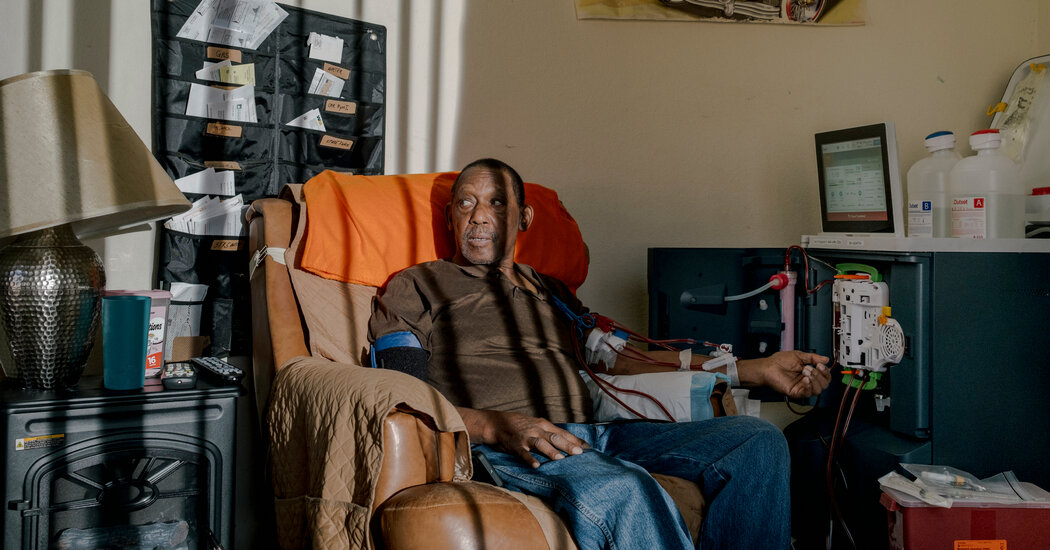
The Tablo System promises to make dialysis easier and more convenient for patients. But there are significant barriers to the technology.This article is part of Upstart, a series about companies harnessing new science and technology to solve challenges in their industries.Paul Hall was thinking about his pool. In his mind, he was far from the nondescript clinic in Orange, Calif., where he was sitting quietly, his blood traveling through a hemodialysis machine, clearing it of toxins. Soon, he would be watching his three grandchildren splash around while doing his treatment. Or watching TV. And he would do it all at any hour he pleased.“There’s no place like home,” Mr. Hall, 64, said.He had just a few more sessions left to be trained on using the Tablo Hemodialysis System, a home dialysis product made by Outset Medical, based in San Jose. When he was done, he hoped to plug it in at his home in Moreno Valley. The size of a college-dorm refrigerator, the hemodialysis machines of this generation look nothing like the hulking ones first introduced to the home market in the 1960s. A touch-screen, which uses 3-D animation to walk users through each step, is mounted atop a box with a built-in water purification system. After a 30-minute setup process, which included inserting two 14-gauge needles into his left arm, the machine commended him, “Good job, Paul!”Like most of the 780,000 Americans with the end-stage renal disease, Mr. Hall needs dialysis, or a transplant, to live. The number of people with chronic kidney disease in this country is expected only to grow. It already affects about one in seven adults, according to the 2022 annual report of the United States Renal Data System.Mr. Hall, who is hoping to receive a second kidney transplant, performed a three-hour treatment using a home hemodialysis system.Mark Abramson for The New York TimesA transplant wouldn’t be Mr. Hall’s first; the one from his oldest child about two decades ago is failing. Without working kidneys, extra fluid and toxic waste can build up and poison the body. Each year, about one in six patients undertaking maintenance dialysis dies, according to the U.S.R.D.S. Others forgo the treatment, most likely because of other life-limiting conditions, such as advanced cancer or heart failure.“Patient outcomes are definitely better, but are still unacceptably poor,” said Dr. Joseph Vassalotti, chief medical officer of the National Kidney Foundation. The company that would become Outset Medical started in 2010; it launched commercially in 2018, when Tablo entered hospitals and clinics. The Food and Drug Administration cleared Tablo for home use in March 2020, just as vulnerable populations needed to isolate because of the coronavirus pandemic. Later that year, the company went public in a virtual I.P.O.The only current alternative for home hemodialysis systems is the portable NxStage System One, made by Fresenius Medical Care, which has headquarters in Germany. It was introduced to homes in 2005, with a newer version, VersiHD, following more recently.Of the hemodialysis units examined in a market analysis, Tablo is the most expensive hemodialysis unit on the market, according to a market survey by ECRI, a federally certified nonprofit patient safety organization. Tablo costs an average price of $47,000, excluding service or operational costs, compared with $26,000 for the NxStage System One.Dialysis is indeed costly. The Centers for Medicare & Medicaid Services is hoping to reduce its expenditures and improve quality of care for its beneficiaries with end-stage kidney disease. Through financial incentives to dialysis providers, physicians, health systems and kidney transplant programs, the agency is seeking to increase home dialysis, as well as kidney donation.The R&D lab at Outset Medical. Mike Phan, a quality technician, adjusts the flow rate on a Tablo device. Christie Hemm Klok for The New York TimesThe clear need for home systems is another factor. A majority of dialysis patients travel to clinics for hemodialysis, with little flexibility for long distances, snowstorms or car trouble. Patients often rate themselves as having a low quality of life, as cramps, insomnia, depression and anxiety are all common.Mr. Hall has missed so many life events, he said. And while he doesn’t complain, when clinics close for long holiday weekends, he notices a difference.“I can tell how I feel after two days,” Mr. Hall said. “If it’s starting to get harder to breathe and I know there’s fluid on my lungs, I want to get that off of me.”Home dialysis is not a novel idea, said Leslie Trigg, Outset Medical’s chief executive. In the early 1970s, over 30 percent of dialysis patients were estimated to have done their treatment at home. Often, they had little choice, with dialysis units unable to meet the demand, according to a 2017 review in the journal Seminars in Dialysis.In 1972, this changed with the expansion of Medicare, which included coverage for people with end stage renal disease in need of dialysis or a kidney transplant; in turn, that funding from coverage allowed for the growth of outpatient dialysis clinics. In the half-century since, the patient population for dialysis has grown, as has for-profit in-center dialysis.Now about 14 percent of dialysis patients treat at home, either by themselves, or with a care partner, and that number is growing, according to the U.S.R.D.S. An estimated 2 percent are on home hemodialysis. Most do peritoneal dialysis, which involves infusing dialysis solution into the lining of the abdomen to filter the wastes from the body. It is usually prescribed daily, and for significantly longer periods each day than hemodialysis.Leslie Trigg, the chief executive of Outset Medical, at the company’s San Jose headquarters. Christie Hemm Klok for The New York TimesMr. Hall tried this, too, for two years. He preferred peritoneal, and wishes he could be back on it now, but developed an infection.Training is required for all home dialysis candidates and the person helping them, and the company or home health agency usually visits the home during the initial period.But even with these measures in place, there are other considerations.“It’s not for everyone,” said Dr. Mark Sarnak, chief of the nephrology division at Tufts Medical Center. “Some people have needle phobia, some people may not have the eyesight to do peritoneal dialysis, some people may be too sick.”And not all are comfortable with the technology, have the support of family members (if needed), or the extra room to store the supplies or machine. Others prefer having a trained professional overseeing treatment.For Mr. Hall to do his three-hour Tablo treatment, he connects one needle to an arterial line to move the blood through the machine’s dialyzer, also known as an artificial kidney. He attaches the other to the venous line, through which his cleaned blood returns. The most challenging part to him, though, is the end of treatment, when he has to remove the needles and apply just the right amount of pressure to avoid significant blood loss. His ex-wife and daughter have trained on how to assist.There are benefits to the easy access of home dialysis. Traditionally, in a clinic, a lot of fluid is removed within a short period of time, and many patients feel exhausted afterward. With peritoneal dialysis and more frequent hemodialysis, “it’s much gentler,” said Dr. Sarnak, the lead author of a recent statement by the American Heart Association. There are also potential cardiovascular benefits with more frequent hemodialysis, according to the statement.(Risk of infection, however, may increase with higher frequency. And although uncommon, infection is a risk for peritoneal dialysis patients as well.)Mr Hall fully hooked up to Tablo device, which will guide his treatment for for three full hours.Mark Abramson for The New York TimesThe Tablo device alerts users to the progress of their dialysis with imagery and messages.Mark Abramson for The New York TimesThe F.D.A. requires a care partner while using Tablo — another potential barrier to patients wishing to switch to home use; the clinic overseeing the patient at home confirms the availability of one, according to Outset Medical. (NxStage System One is cleared to be run alone, but if patients use it at night while sleeping, a care partner is encouraged.)Another issue is that home dialysis has not reached all of the populations in need. Black and Hispanic patients, disproportionately affected by kidney disease, are less likely to begin home dialysis than white patients, according to the U.S.R.D.S.More options may be on the horizon. One from Quanta Dialysis Technologies, already cleared for chronic and acute settings, is in clinical trials for the home. Another, from CVS and Deka Research & Development Corp., is in the final stages of a clinical study. At the start of this year, 2,300 of Outset’s systems were being used in hospitals, rehab facilities and long-term care facilities. But the company’s home rollout has been slow, with an estimated 300 devices being used by patients in the home or in training locations, according to the company’s latest public numbers. The research on Tablo is promising, doctors say, but limited because of its small sample size and relatively short-term follow up. Dr. Michael Aragon, a nephrologist based in Fort Worth, Texas, helped to oversee Tablo’s home safety and efficacy trial before joining the company as chief medical officer. The trial found that 28 patients with end-stage kidney failure who completed the study had adequate removal of toxins on Tablo, and the device was deemed to be safe both at home and in clinic.During Mr. Hall’s test treatment at the clinic, he also had to learn how to troubleshoot. Two hours in, as the leaves of a tree on the machine progressively turned green to show the time remaining, an alarm sounded. The machine had tried to take his blood pressure but couldn’t. A nurse repositioned the cuff. (Although it’s uncommon, losing consciousness from a drop in blood pressure is a risk at home or in the center.)Several reports of bleeding, loss of consciousness and deaths associated with the Tablo have been reported to the F.D.A.’s database of adverse events over the past four years. Ms. Trigg said none of the adverse events impacting patients had been adjudicated by the company as Tablo-related.NxStage System One also has its own share of similar adverse events, though a spokesman for Fresenius Medical Care said that no injuries or deaths have been adjudicated as the fault of the machine’s equipment.With in-home dialysis, Mr. Hall has time to do other things while keeping up with his treatments.Mark Abramson for The New York TimesIsmael Cordero, senior project officer for device evaluations at ECRI, the safety organization, reviewed reports from both companies. Any potential hazards, he said, become “even more concerning when the devices are used outside of a clinical setting.”Carly Kempler, a spokeswoman for the F.D.A. said that the database has limitations, and that “if the F.D.A. becomes aware of information that reveals a safety concern with a medical device, the F.D.A. will take action as appropriate.”Mr. Hall hopes to be given another transplant. In the meantime, he’s finally treating himself at home, with his family’s help. Though the first Tablo he received had glitches, its replacement is working smoothly. No longer commuting to the clinic, he’s happy for the choices each day holds — simple ones like, early morning treatment, or evening? “That’s a great feeling of knowing I can work around whatever comes up,” he said.

Read more →