Keeping indoor humidity levels at a 'sweet spot' may reduce spread of COVID-19

We know proper indoor ventilation is key to reducing the spread of Covid-19. Now, a study by MIT researchers finds that indoor relative humidity may also influence transmission of the virus.
Relative humidity is the amount of moisture in the air compared to the total moisture the air can hold at a given temperature before saturating and forming condensation.
In a study appearing today in the Journal of the Royal Society Interface, the MIT team reports that maintaining an indoor relative humidity between 40 and 60 percent is associated with relatively lower rates of Covid-19 infections and deaths, while indoor conditions outside this range are associated with worse Covid-19 outcomes. To put this into perspective, most people are comfortable between 30 and 50 percent relative humidity, and an airplane cabin is at around 20 percent relative humidity.
The findings are based on the team’s analysis of Covid-19 data combined with meteorological measurements from 121 countries, from January 2020 through August 2020. Their study suggests a strong connection between regional outbreaks and indoor relative humidity.
In general, the researchers found that whenever a region experienced a rise in Covid-19 cases and deaths prevaccination, the estimated indoor relative humidity in that region, on average, was either lower than 40 percent or higher than 60 percent regardless of season. Nearly all regions in the study experienced fewer Covid-19 cases and deaths during periods when estimated indoor relative humidity was within a “sweet spot” between 40 and 60 percent.
“There’s potentially a protective effect of this intermediate indoor relative humidity,” suggests lead author Connor Verheyen, a PhD student in medical engineering and medical physics in the Harvard-MIT Program in Health Sciences and Technology.

Read more →

Cannabis not made safer by increasing its CBD content, study finds

New research from the Institute of Psychiatry, Psychology & Neuroscience (IoPPN) at King’s College London has found no evidence that cannabidiol (CBD) reduces the negative effects of cannabis.
The research, published in Neuropsychopharmacology, challenges the commonly held belief that using cannabis that contains higher levels of CBD protects the user from psychotic experiences and memory problems, and suggests that this should be considered by policy makers currently exploring the topic of medicinal and recreational use.
46 healthy volunteers completed a randomised and double-blind trial. Over the course of four experiments, each participant inhaled cannabis vapour containing 10mg of THC and a differing level of CBD (0mg, 10mg, 20mg, or 30mg). They then completed a series of tasks, questionnaires and interviews designed to measure the effect on their cognitive abilities, severity of psychotic symptoms, and how pleasurable the drug was.
The same research team had previously found that pre-emptively taking a high dose of CBD in a capsule a few hours before using cannabis may reduce the adverse effects of THC
In this study, they explored the effect of altering the CBD:THC ratio in cannabis.However, they found increasing the dose of CBD did not significantly change the effects of THC on cognitive performance, psychotic symptoms or how pleasurable the drug experience was.
Dr Amir Englund, a research fellow at King’s IoPPN and the study’s lead author said, “None of the CBD levels studied protected our volunteers from the acute negative effects of cannabis, such as anxiety, psychotic symptoms, and worse cognitive performance. It also did not change the quality of the intoxication in any way. The only effect of CBD we saw was that as the concentration of CBD increased, the more the participants coughed. We asked volunteers to listen to a favourite song on each visit and taste a piece of chocolate. Although cannabis increased the pleasurability of music and chocolate compared to when volunteers were sober, CBD had no impact.”
“THC and CBD are both produced from the same compound in the cannabis plant, so a variety which produces higher of amounts of CBD will naturally be lower in THC. It may still be safer for users to choose cannabis with higher CBD:THC ratios, but that’s because the same amount of cannabis will contain less THC than a lower CBD:THC variety. Overall, our advice to people wanting to avoid the negative effects of THC is to use less of it.”
Professor Philip McGuire, the study’s senior author and former Head of the Department of Psychosis Studies at King’s IoPPN said, “These findings make an important contribution to the ongoing debate around the risks of cannabis use. While CBD on its own is known to have a number of positive effects in humans, our data suggest that, at the doses that are typically present in cannabis, it does not protect against the negative effects of THC. This challenges the commonly held view by many cannabis users that cannabis with a higher CBD content provides a buffer against the adverse effects of cannabis.”
This study was funded by a research grant from the Medical Research Council.
Story Source:
Materials provided by King’s College London. Note: Content may be edited for style and length.

Read more →

Swedes with high incomes have more children, study finds

In contrast to what many believe, Swedish men and women with higher incomes have more children, new research from Stockholm University shows. This pattern is particularly clear for men and grows stronger over time: the more money, the more children. But after four children, things change.
Unlike previous studies, where researchers looked at people’s income at certain points in life, the study examined how much people earned throughout their lifetime by analyzing Swedish income data over forty years for each birth cohort. For men born in 1940 and onwards, there is a clear relationship between a high accumulated income and more children.
“The very richest men have the most children and this pattern has grown stronger over time. The higher the income, the more children. Increasingly, men who have a very low income more often have no children at all,” says Martin Kolk, researcher in demography at the Stockholm University Demography Unit, Department of Sociology, and author of the study that was published recently in the scientific journal Population Studies.
“It’s not that the richest have a lot of children, but more often they have two, three or four children compared to those with lower income,” says Martin Kolk.
For women, the pattern has changed significantly over time. Among women born in the 1940s and 1950s, the study shows that those with lower income have the most children. Then the trend reverses — for later cohorts the pattern is more similar to that of men. Among women born in the 1960s and 1970s, those with higher income have more children, even if those with the very highest income do not have the most children. Men and women with five or more children have lower incomes than people with two or three children, but higher incomes than childless men and women. The findings are in contrast to many other high-income countries in the 20th and 21st centuries, where researchers have shown that it was more common to have many children among men and women with lower incomes.
Martin Kolk says that societal changes in relation to working life and Swedish family policy are the main reasons behind this, as women today no longer have to choose between having children and pursuing a career.

Read more →

Enzymes could be key to understanding how DNA mutates, quantum biologists find

Enzymes, which are crucial to controlling how cells replicate in the human body, could be the very ingredient that encourages DNA to spontaneously mutate — causing potentially permanent genetic errors, according to new research from the University of Surrey.
Using state-of-the-art quantum chemical calculations, researchers from Surrey’s Quantum Biology Doctoral Training Centre have found that the part of the process by which DNA replicates itself happens at speeds 100 times faster than previously predicted. This finding sheds new light on the assumed theory that suggests quantum effects would not survive long enough to be impacted by the replication process.
Max Winokan, a co-author of the study from the University of Surrey, said:
“We always thought that quantum mechanics would suffer in a biological environment. However, it was fascinating to find that the mutations caused by quantum tunnelling are more stable due to the action of the enzyme, helicase.
“While others have painted helicase as a gatekeeper to quantum mutation, our research suggests that the enzyme is deeply intertwined with the formation of these mutations.”
This famous double helix structure gives DNA its remarkable stability, along with its pairing rules between the genetic letters on opposite strands. Normally, A always binds to T, and G always binds to C due to the different structures of these biomolecules and the different number of hydrogen bonds formed between these base pairs. The protons (nuclei of hydrogen atoms) forming such bonds occasionally transfer across them to form rare states known as tautomers.
When a cell begins to copy itself, it must undergo DNA replication, in which the first step is the separation of the two DNA strands so that each can be used as a template for a new DNA. The strand separation is enabled by a type of enzyme called a ‘helicase’, which binds to one of the DNA strands and pulls it through itself, thereby forcing apart the DNA. Potential mutant DNA bases must survive this process to stand a chance of causing permanent genetic errors.
However, it was previously thought that the helicase action was too slow. As a result, any spontaneous point mutation would have found its way back to its natural and more stable position when the strands are separated. The new research starts to explain how quantum mechanical effects may hold the key to the secrets of genetic mutations and their many consequences for life on Earth. Additionally, this new report finds that such a mechanical separation in fact stabilises the mutated forms of DNA.
Dr Marco Sacchi from the University of Surrey, who leads the computational work for this study, says:
“There is little understanding of the role of quantum effects in DNA damage and genetic mutations. We believe that we can shed light on the elusive mechanism at the origin of DNA errors only by integrating quantum physics and computational chemistry.”
Professor Jim Al-Khalili, Co-Director of the Quantum Biology Doctoral Training Centre at the University of Surrey, said:
“What I find most exciting is that this work brings together cutting-edge research across disciplines: physics, chemistry and biology, to answer one of the most intriguing questions in science today, and the University of Surrey is fast becoming a world leader in this field where exciting results are emerging.”
Story Source:
Materials provided by University of Surrey. Note: Content may be edited for style and length.

Read more →

Synthetic biology meets medicine: 'Programmable molecular scissors' could help fight COVID-19 infection

Cambridge scientists have used synthetic biology to create artificial enzymes programmed to target the genetic code of SARS-CoV-2 and destroy the virus, an approach that could be used to develop a new generation of antiviral drugs.
Enzymes are naturally occurring biological catalysts, which enable the chemical transformations required for our bodies to function — from translating the genetic code into proteins, right through to digesting food. Although most enzymes are proteins, some of these crucial reactions are catalysed by RNA, a chemical cousin of DNA, which can fold into enzymes known as ribozymes. Some classes of ribozyme are able to target specific sequences in other RNA molecules and cut them precisely.
In 2014, Dr Alex Taylor and colleagues discovered that artificial genetic material known as XNA — in other words, synthetic chemical alternatives to RNA and DNA not found in nature — could be used to create the world’s first fully-artificial enzymes, which Taylor named XNAzymes.
At the beginning, XNAzymes were inefficient, requiring unrealistic laboratory conditions to function. Earlier this year, however, his lab reported a new generation of XNAzymes, engineered to be much more stable and efficient under conditions inside cells. These artificial enzymes can cut long, complex RNA molecules and are so precise that if the target sequence differs by just a single nucleotide (the basic structural unit of RNA), they will recognise not to cut it. This means they can be programmed to attack mutated RNAs involved in cancer or other diseases, leaving normal RNA molecules well alone.
Now, in research published today in Nature Communications, Taylor and his team at the Cambridge Institute of Therapeutic Immunology & Infectious Disease (CITIID), University of Cambridge, report how they have used this technology to successfully ‘kill’ live SARS-CoV-2 virus.
Taylor, a Sir Henry Dale Fellow and Affiliated Researcher at St John’s College, Cambridge, said: “Put simply, XNAzymes are molecular scissors which recognise a particular sequence in the RNA, then chop it up. As soon as scientists published the RNA sequence of SARS-CoV-2, we started scanning through looking for sequences for our XNAzymes to attack.”
While these artificial enzymes can be programmed to recognise specific RNA sequences, the catalytic core of the XNAzyme — the machinery that operates the ‘scissors’ — does not change. This means that creating new XNAzymes can be done in far less time than it normally takes to develop antiviral drugs.

Read more →

Leprosy: Ancient disease able to regenerate organs

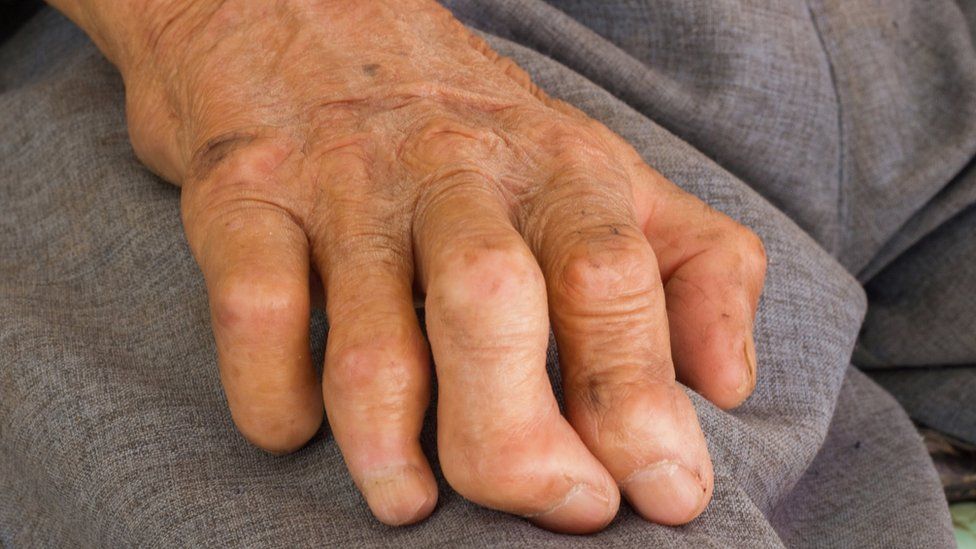
Published9 hours agoSharecloseShare pageCopy linkAbout sharingImage source, Getty ImagesBy James GallagherHealth and science correspondentLeprosy bacteria may hold the secret to safely repairing and regenerating the body, researchers at the University of Edinburgh say. Animal experiments have uncovered the bacteria’s remarkable ability to almost double the size of livers by stimulating healthy growth. It is a sneakily selfish act that gives the bacteria more tissue to infect. But working out how they do it could lead to new age-defying therapies, the scientists say.’Biological alchemy’ Leprosy causes disability when it infects the nerves, skin and eyes. Throughout history, those infected have been shunned. But the bacterium that causes it, Mycobacterium leprae, has other, unusual properties, including the ability to perform “biological alchemy”, converting one type of bodily tissue into another, which are fascinating scientists.So the researchers turned to the only other animals to catch the disease – armadillos. Image source, Getty ImagesThe infection heads to the armoured animals’ livers, where, the researchers found, it performed a controlled hijacking of the organ to reprogram it for its own purpose. “It was a totally unexpected,” Prof Anura Rambukkana, from the University of Edinburgh’s centre for regenerative medicine, told me.The results, published in Cell Reports Medicine, showed the liver nearly doubled in size. You might expect such growth to be defective or even cancerous – but detailed analysis showed it was both healthy and functional, complete with the usual array of blood vessels and bile ducts. “It is kind of mind-blowing,” Prof Rambukkana said. “How do they do that? There is no cell therapy that can do that.” Rapidly increaseIt appears the leprosy bug is rewinding the developmental clock in the liver. Fully grown liver cells are metabolic powerhouses with hundreds of jobs in the body. But the bacteria are taking them back a stage – like becoming a teenager again – where they can rapidly increase in number before maturing back into adulthood.Interrogating the activity of different parts of the cells’ DNA revealed a picture more akin to that of a much younger animal or even a fetus, when the liver is still forming. ‘Natural process’But the precise details of how this is all happening remain elusive. Nobel Prize-winning research has shown it is possible to forcibly turn the clock all the way back to the point at which cells regain the ability to become any other type of cell in the body – but this runs the risk of turning them cancerous. “The [leprosy] bugs use alternative pathways,” Prof Rambukkana told me. “It’s a much safer way and they take a longer time to do that, so this is a natural process.” ‘Promising results’The hope is the approach can be harnessed for repairing the livers of people waiting for a transplant – or even to reverse some of the damage caused by ageing elsewhere in the body. “The dream is to use the same bacterial strategy, to use the ingenuity of bacteria to generate new medicines for regeneration and repair,” Prof Rambukkana said.”If you can harness that, you should be able to turn that mechanism into a jab you have every three months or something.”All these ideas remain untested, however.Dr Darius Widera, of the University of Reading, said: “Overall, the results could pave the way for new therapeutic approaches to the treatment of liver diseases such as cirrhosis.”However, as the research has been done using armadillos as model animals, it is unclear if and how these promising results can translate to the biology of the human liver. “Moreover, as the bacteria used in this study are disease-causing, substantial refinement of the methods would be required prior to clinical translation.”Follow James on Twitter.

Read more →

Boots and balls made for men an injury risk to women footballers

Published9 hours agoSharecloseShare pageCopy linkAbout sharingImage source, Getty ImagesBy Philippa RoxbyHealth reporterSports scientists are highlighting the lack of football kit designed for women, saying the use of boots and balls created for male players could be putting them at higher risk of injury.Knee-ligament injuries in women are causing concern at an elite level.Despite some progress, the researchers say no large boot manufacturer has yet invested in a design to suit women.The profile and popularity of women’s football in the UK has soared since England won Euro 2022.But most products are still predominantly designed for men’s football and little attention has been paid to the requirements of the women’s game, a paper says.Stress fracturesWriting in the journal Sport Engineering, a group of sports and exercise researchers, doctors and staff involved in the elite women’s game – including England captain Leah Williamson – point to the need for more kit and technology tailored to women’s needs and body shape.For example, football boots fail to account for the fact women’s feet, heels and arches are shaped differently.And wearing boots designed for men is causing blisters and stress fractures in elite female players.Women also move and run in a different way to men and yet the length of studs on boots are designed around male movement and traction. This increases the risk of women getting their boot stuck in the surface and an injury being caused, author and sports rehabilitation lecturer Dr Kat Okholm Kryger, from St Mary’s University, Twickenham, says.Another factor in women’s injuries could be playing “on uneven surfaces where men’s teams have played the day before”, Dr Kryger says.Many major manufacturers are reportedly developing boots specific to women in time for the World Cup in 2023.Image source, Getty ImagesTottenham Hotspur club doctor Craig Rosenbloom, who is also a co-author of the paper, says anterior cruciate ligament (ACL) knee injuries are “at least twice as common in elite female footballers when compared to male footballers”.This is putting “a huge burden” on the players and the clubs, he adds.Most elite male footballers return within seven to eight months of the injury – but for elite female footballers, it is usually at least 10. “Elite female football squads are usually smaller than male squads, so missing players for longer has a big impact on player availability,” Dr Rosenbloom says.Dark-coloured shortsThe paper also highlights the need to design more comfortable and practical sports bras, shorts and hijabs.A number of clubs, including Manchester City, are switching to dark-coloured shorts for women because of worries over visible leakage when players are on their period.The FA says it wants players to feel fully supported on this issue and any feedback from women will be fed into future kit designs.The authors say technology, such as devices tracking health, performance and menstrual cycles, needs to be better designed for women too.And they call for more research into female players’ concussion risk from heading the ball.”There’s a higher level of microtrauma in the white matter in women’s brains,” Dr Kryger says.”That’s not seen in men’s football – so there could be a medical reason to change the ball.” More on this story’An inspiration’ – Queen leads tributes to England31 JulyEngland beat Germany to win first major women’s trophy31 JulyLivingston switch shorts over period concerns21 OctoberAround the BBCKicking off the Women’s Games – BBC Sounds podcast on celebrating the 50th Anniversary of the first women’s international between Scotland and England

Read more →

Flu shots can protect patients with heart failure from early death

Flu shots can save the lives of people with cardiovascular disease by reducing cardiac complications as well as preventing influenza.
An international study led by McMaster University researchers and published in The Lancet Global Health has found that influenza vaccines greatly reduce both pneumonia and cardiovascular complications in people with heart failure.
“If you have heart failure, you should get your flu shot because it can save your life — that is what we found in this study,” said the study’s principal investigator Mark Loeb.
Loeb is a McMaster professor of pathology and molecular medicine and a Hamilton infectious disease physician and microbiologist.
“It is underappreciated that influenza vaccine can save people from cardiovascular death,” he added.
The study showed that over the entire year the influenza vaccine reduced pneumonia by 40 per cent and hospitalization by 15 per cent in patients with heart failure. During influenza season in the fall and winter, the influenza vaccine reduced deaths by 20 per cent in these patients.

Read more →

A better model for type 2 diabetes: The Nile rat

Researchers have assembled the first reference genome for the Nile rat — a kind of genetic template of this species that may be used for laboratory and clinical studies. The hope, according to UC Santa Barbara researcher Huishi Toh, is that it will be useful for those who investigate Type 2 diabetes and neurological disorders associated with a disrupted diurnal rhythm. The Nile rat is prone to diet-induced diabetes, and exhibits a clear diurnal pattern, unusual in rodents.
“It was a risk, and it took a long time,” said Toh, an assistant project scientist in cell biologist Dennis Clegg’s lab, continuing work that she started in the lab of UCSB emeritus professor of biology Dr. Jamie Thomson. “But when you’re assembling a new genome, you have to be aware of various sequencing errors.” Toh is the lead author in a paper that appears in BMC Biology.
‘Highly Complete Genome’
Model organisms are among our best aids in understanding some of our more complex diseases, and are often chosen for, among other things, their similarity to humans in some physical or genetic way. Such is the case with the house mouse and the brown rat, which are used to investigate the underlying genetics of some human diseases.
But it’s not a one-size-fits-all situation, particularly in the case of Type 2 diabetes, which affects more than 35 million individuals in the U.S. today. While researchers have been using common laboratory mice and rats to improve our understanding of the disease, tracing the development of diet-induced diabetes and its complications in the more typical rodent models has not been very rewarding.
“A major problem in modeling Type 2 diabetes is that laboratory rats and mice are not particularly susceptible to diet-induced diabetes,” Toh said. “Obesity-induced mice are in fact models of pre-diabetes, and genetic or chemical manipulation are often required to push these conventional rodents to develop diabetes and its complications, thus not mimicking the natural progression of Type 2 diabetes in humans.”
Over the last couple of decades, however, the Nile rat has emerged as a potential model for Type 2 diabetes. Hailing from the grasslands of sub-Saharan Africa, these rodents live on a high-fiber, low carbohydrate diet, unlike their more city-dwelling cousins who may have already adapted to a more human-like high carbohydrate diet. Laboratory food, it turned out, was hypercaloric for the Nile rats, and they would, like humans, spontaneously develop diet-induced diabetes.
Previously, the Thomson lab demonstrated that the Nile rat could develop diabetic retinopathy with key vision loss features — similar to humans — and lacking in other rodent models, thus solidifying the Nile rat as a model of well-developed Type 2 diabetes. What was missing was a reference genome, a genetic sequence that represents the animal in general and can serve as a touchstone or starting point in the search for genetic variations that could indicate susceptibility to certain diseases and other gene-related conditions. In partnership with the Vertebrate Genome Project, Morgridge Institute for Research and University of Southern California, the international collaboration of researchers assembled a “highly complete and highly contiguous” genome.
Among the things they noticed in comparing the Nile rat genome to the genome of the laboratory mouse was that the Nile rat had fewer copies of a gene that encodes for the carbohydrate processing enzyme called amylase, possibly reflecting the lack of adaptation of high-starch diets.
“We think that the Nile rat is not adapted to eat high carbohydrate foods, which makes sense because they normally eat grass in Africa,” Toh said. “I think this is why they are so susceptible to diabetes.” Conversely, laboratory mice — having lived near and around humans — had more copies of this gene, a sign of evolutionary adaptation to their environment.
In fact, Toh said, one of the benefits of having a reference genome is that it becomes possible to witness the genetic consequences of environmental impact. “Currently, we are using this reference genome to study transcriptomic changes relevant to the initial development of diet-induced diabetes,” she said, “and eventually we hope to take a look at the epigenetics as well.”
This study was supported by the Garland Initiative for Vision, funded by the William K. Bowes Jr. Foundation.

Read more →