Clinical Center Doctors Testing 3D-Printed Miniature Ventilator

Caption: A USB flash drive (front) next to the 3D-printed miniature ventilator (back). Credit: William Pritchard, Clinical Center, NIH

Here at the NIH Clinical Center, we are proud to be considered a world-renowned research hospital that provides hope through pioneering clinical research to improve human health. But what you may not know is that our doctors are constantly partnering with public and private sectors to come up with innovative technologies that will help to advance health outcomes.

I’m excited to bring to you a story that is perfect example of the ingenuity of our NIH doctors working with global strategic partners to create potentially life-saving technologies. This story begins during the COVID-19 pandemic with the global shortage of ventilators to help patients breathe. Hospitals had a profound need for inexpensive, easy-to-use, rapidly mass-produced resuscitation devices that could be quickly distributed in areas of critical need.

Through strategic partnerships, our Clinical Center doctors learned about and joined an international group of engineers, physicians, respiratory therapists, and patient advocates using their engineering skills to create a ventilator that was functional, affordable, and intuitive. After several iterations and bench testing, they devised a user-friendly ventilator.

Caption: The miniature ventilator connected to an oxygen line (asterisk) and the breathing tube to the patient (crosshatch). The exhaust (dagger) is recessed to prevent accidental blockage. Credit: William Pritchard, Clinical Center, NIH

Then, with the assistance of 3D-printing technology, they improved the original design and did something pretty incredible: the team created the smallest single-patient ventilator seen to date. The device is just 2.4 centimeters (about 1 inch) in diameter with a length of 7.4 centimeters (about 3 inches).

A typical ventilator in a hospital obviously is much larger and has a bellows system. It fills with oxygen and then forces it into the lungs followed by the patient passively exhaling. These systems have multiple moving parts, valves, hoses, and electronic or mechanical controls to manage all aspects of the oxygen flow into the lungs.

But our miniature, 3D-printed ventilator is single use, disposable, and has no moving parts. It’s based on principles of fluidics to ventilate patients by automatically oscillating between forced inspiration and assisted expiration as airway pressure changes. It requires only a continuous supply of pressurized oxygen.

The possibilities of this 3D-printed miniature ventilator are broad. The ventilators could be easily used in emergency transport, potentially treating battlefield casualties or responding to disasters and mass casualty events like earthquakes.

While refining a concept is important, the key is converting it to actual use, which our doctors are doing admirably in their preclinical and clinical studies. NIH’s William Pritchard, Andrew Mannes, Brad Wood, John Karanian, Ivane Bakhutashvili, Matthew Starost, David Eckstein, and medical student Sheridan Reed studied and have already tested the ventilators in swine with acute lung injury, a common severe outcome in a number of respiratory threats including COVID-19.

In the study, the doctors tested three versions of the device built to correspond to mild, moderate, and severe lung injury. The respirators provided adequate support for moderate and mild lung injuries, and the doctors recall how amazing it was initially to witness a 190-pound swine ventilated by this miniature ventilator.

The doctors believe that the 3D-printed miniature ventilator is a potential “game changer” from start to finish since it is lifesaving, small, simple to use, can be easily and inexpensively printed and stored, and does not require additional maintenance. They recently published their preclinical trial results in the journal Science Translational Medicine [1].

The NIH team is preparing to initiate first-in-human trials here at the Clinical Center in the coming months. Perhaps, in the not-too-distant future, a device designed to help people breathe could fit into your pocket next to your phone and keys.

Reference:

[1] In-line miniature 3D-printed pressure-cycled ventilator maintains respiratory homeostasis in swine with induced acute pulmonary injury. Pritchard WF, Karanian JW, Jung C, Bakhutashvili I, Reed SL, Starost MF, Froelke BR, Barnes TR, Stevenson D, Mendoza A, Eckstein DJ, Wood BJ, Walsh BK, Mannes AJ. Sci Transl Med. 2022 Oct 12;14(666):eabm8351.

Links:

Clinical Center (NIH)

Andrew Mannes (Clinical Center)

Bradford Wood (Clinical Center)

David Eckstein (Clinical Center)Note: Dr. Lawrence Tabak, who performs the duties of the NIH Director, has asked the heads of NIH’s Institutes and Centers (ICs) to contribute occasional guest posts to the blog to highlight some of the interesting science that they support and conduct. This is the 21st in the series of NIH IC guest posts that will run until a new permanent NIH director is in place.

Read more →

One Step Closer to a Universal Flu Vaccine?

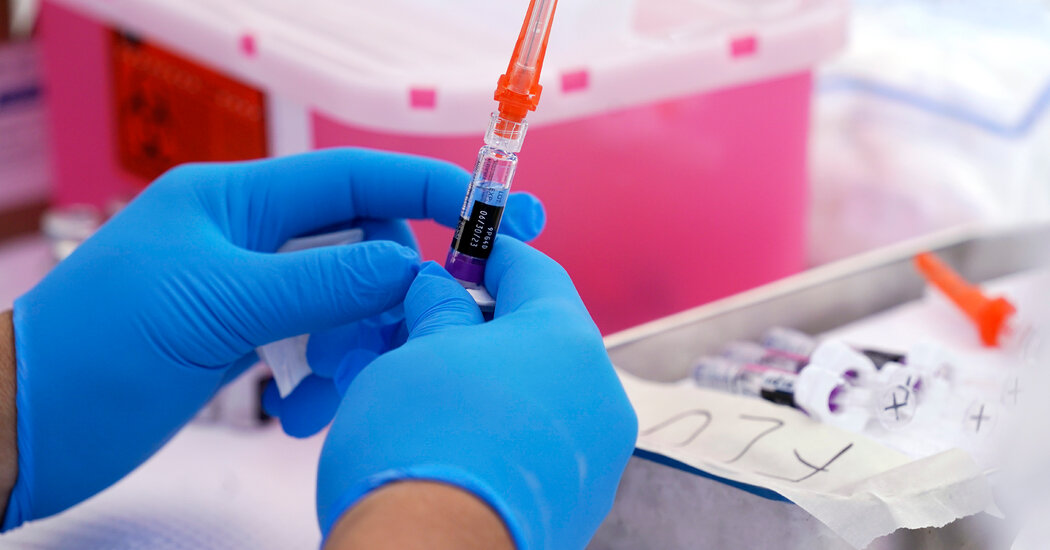
Scientist have tested in animals a vaccine that may protect against 20 strains of influenza, helping to prevent another pandemic. Imagine a single dose of vaccine that prepares your body to fight every known strain of influenza — a so-called universal flu vaccine that scientists have been trying to create for decades. A new study describes successful animal tests of just such a vaccine, offering hope that the country can be protected against future flu pandemics. Like the Covid vaccines made by Pfizer-BioNTech and Moderna, the experimental flu vaccine relies on mRNA. It is in early stages — tested only in mice and ferrets — but the vaccine provides important proof that a single shot could be used against an entire family of viruses. If the vaccine succeeds in people, the approach could be used against other virus families, perhaps including the coronavirus.The vaccine would not replace annual flu shots but would provide a shield against severe disease and death from potential pandemic threats.“There’s a real need for new influenza vaccines to provide protection against pandemic threats that are out there,” said Scott Hensley, an immunologist at the University of Pennsylvania who led the work.“If there’s a new influenza pandemic tomorrow, if we had a vaccine like this that was widely employed before that pandemic, we might not have to shut everything down,” he said. He and his colleagues described the vaccine last week in the journal Science.By the age of 5, most children have been infected with the flu multiple times and have gained some immunity — but only against the strains they have encountered.“Our childhood exposures to influenza lay down long-lived immune memory that can be recalled later in life,” Dr. Hensley. But “we’re sort of living the rest of our life dependent on the random chance of whatever we got infected with as a kid.”Current influenza vaccines protect against seasonal flu but would provide little protection against a new strain that may emerge as a pandemic threat. During the 2009 H1N1 swine flu pandemic, for example, the conventional vaccine offered little defense against the virus. But older adults who had been exposed to H1N1 strains in childhood developed only mild symptoms.Scientists have long tried to create a vaccine that would introduce children to every possible strain of flu they may encounter later in life. But researchers have been constrained by technical hurdles and by the diversity of the flu virus.Broadly speaking, there are 20 subgroups of influenza that each represent thousands of viruses. Current vaccines can target four subgroups at most. But the experimental vaccine contains all 20, and it would be faster to produce.The vaccine elicited high levels of antibodies to all 20 flu subtypes in ferrets and mice, the researchers found — a finding that several experts said was unexpected and promising.If the vaccine behaves similarly in people, “we’ll have a more broad coverage of influenza viruses — not only those that are circulating, but those that might spill over from the animal reservoir that might cause the next pandemic,” Alyson Kelvin, a vaccinologist at the University of Saskatchewan in Canada, said.Packing 20 targets into one vaccine does have a downside: Antibody levels in the test animals were lower than when they were given vaccines aimed at individual strains. But the levels were still high enough to be effective against influenza.Because a new pandemic strain of influenza might differ from the 20 targets included in the experimental vaccine, the researchers also tested it against viruses that were imperfectly matched. The vaccine still provided strong protection, suggesting that it would prevent at least severe illness, if not infection, from a novel pandemic flu virus.This phenomenon is akin to that with the current Covid vaccines: Although the latest Omicron variants are so different from the ancestral virus that the original vaccine does not prevent infections, it continues to help safeguard most people against severe illness.This quality may be a particular advantage of mRNA vaccines, Dr. Kelvin said. Conventional flu vaccines target only the specific viruses they are designed for. But mRNA vaccines seem to produce antibodies that defend the body against a broader range of viruses than those included.The experts noted some important caveats and questions that must be answered before the vaccine becomes a viable candidate.The animals in the study built defenses against all 20 flu strains equally. But “these animals have not seen flu before,” said Richard J. Webby, an expert in influenza viruses at St. Jude Children’s Research Hospital in Memphis.Such a complete lack of immunity against flu is only true of very young children, Dr. Webby noted. Older people are exposed to many different strains over their lifetimes, and it’s not clear whether their immune responses to a universal vaccine would be quite so uniform. “The proof of the pudding will be what happens when it goes into humans and how going into a preimmune population skews the response to it,” Dr. Webby said.Designing universal vaccines for varying age groups, if necessary, would be a challenge. It would also be important to see how long protection from such a vaccine lasts, some experts said.“The biggest issue about universal flu is what you need to target and how long you can continue to use the same vaccine,” Ted Ross, director of Global Vaccine Development at the Cleveland Clinic, said. “If you have to keep updating it, it may not increase the advantage of how we do vaccines today.”The next step for the vaccine would be to test it in monkeys and in people. But proving its effectiveness might be challenging. “How do you evaluate and regulate a vaccine where their targets aren’t circulating, and so you can’t really show effectiveness?” Dr. Kelvin said.Perhaps the vaccine could be tested in small sporadic outbreaks, or in poultry workers who are at risk of becoming infected with an avian flu virus, she said: “Those are questions that I think we need to answer before we have our next pandemic.”

Read more →

Can This Man Stop Lying?

Christopher Massimine is trying not to lie.He’s trying not to lie when his wife asks him whether he has sorted the recycling, or when his mother-in-law’s friend Mary Ann asks whether he liked the baked appetizers she brought over.He’s trying not to lie to his therapist, who has him on a regimen of cognitive behavioral therapy to help him stop lying. And he’s trying not to lie to me, a reporter who has come to interview him about how a lifetime of lying caught up with him.This effort began around 15 months ago, when Mr. Massimine resigned from his job as managing director of the Pioneer Theater Company in Salt Lake City after a local journalist reported that he had embellished his résumé with untrue claims.The résumé, it turned out, was the tip of the iceberg. Over the course of many years, he has since acknowledged, he lied prolifically and elaborately, sometimes without any discernible purpose.He told friends he had ascended Mount Everest from Tibet (he was actually in a hotel room in Cambodia) and attended Burning Man (on closer examination, his photographs proved to have been taken in Queens.)He told journalists he was born in Italy. (New Jersey.) He told school friends his birthday was in September. (May.) He told his wife he was having an affair with Kourtney Kardashian. (Not true.)When his binge of lying was exposed, it left Mr. Massimine’s life in tatters, threatening his marriage and discrediting his early success in the world of New York theater.He spoke to The New York Times to address what he described as a fundamental misunderstanding: These were not the lies of a calculating con artist, but of a mentally ill person who could not help himself.Mr. Massimine, talking with his wife, Maggie, has tried to identify the facial tics he experiences when lying.He is not the first to suggest that certain kinds of lying are a compulsion. In 1891, the German psychiatrist Anton Delbrück coined the term pseudologia fantastica to describe a group of patients who, to impress others, concocted outlandish fabrications that cast them as heroes or victims.That argument is advanced in a new book by the psychologists Drew A. Curtis and Christian L. Hart, who propose adding a new diagnosis, Pathological Lying, to the Diagnostic and Statistical Manual of Mental Disorders.Psychiatry, they argue, has long misidentified this subset of patients. Rather than “dark, exploitative, calculating monsters,” they argue, pathological liars are “often suffering from their own behavior and unable to change on their own.” These liars, the psychologists argue, could benefit from behavioral therapies that have worked with stuttering, nail-biting and trichotillomania, a hair-pulling disorder.Just before his fabrications were exposed, Mr. Massimine checked into a psychiatric hospital, where he was diagnosed with a cluster B personality disorder, a syndrome which can feature deception and attention-seeking. For many of the people close to him, a diagnosis made all the difference.“He’s not just a liar, he has no control over this,” said his wife, Maggie, 37, who admitted that, at several points, she had considered filing for divorce. “That really was the turning point for me, when I had an understanding of it as an illness.”Since then, she has thrown herself into the project of helping her husband recover. “It’s similar to Tourette’s,” she said. “You acknowledge that it’s their illness that’s causing them to do this, and it might be a little odd and uncomfortable, but you move past that.”A call from Mount EverestIn 2018, Mr. Massimine posted messages and photos on Facebook pretending to be near Mount Everest in Tibet.Maggie remembers, with painful clarity, the day in 2018 when she realized the breadth and depth of her husband’s problem.“I’m in tibet,” his email said. “Please don’t be mad.”He had attached a photograph of two men, a Sherpa and a fair-haired alpinist, with Himalayan peaks looming in the background. He had managed to sneak into China with the help of kind Buddhist monks, who led him as far as Everest Camp 2, he told her. “This is Tsomo,” he wrote. “He is awesome and if he comes to the USA you’ll love him.”Maggie stared at the picture, which he had also posted on Facebook; it didn’t make sense. Mr. Massimine, her husband of five years, had told her he was on vacation in Cambodia. He had not given himself time to acclimate to the elevation of Everest Base Camp; he had no mountaineering experience; he didn’t have a Chinese visa.“At first, I thought, Why is he posting this when it could get him killed?” she said. “And then, the crazier his posts got, I was like, This isn’t real. None of this is real.”That weekend, with help from her friend Vanessa, she began a “deep dive,” reviewing all of his Facebook posts and email accounts. She discovered elaborate deceptions — voice impersonators, dummy email accounts, forged correspondences. She was terrified, she said. “Who is this person?” she recalls thinking. “Who did I marry?”Christopher Massimine’s flair for theater emerged early.via Lawrence MassimineMr. Massimine is tall, handsome and eager to please. He grew up on a cul-de-sac in Somerset, N.J., the only child of a nurse and an auditor. His flair for theater emerged early — at 10, he wrangled the members of his Cub Scout troop into performing “A Knight’s Tale,” a play he wrote and scored. Family photos show him in costume, a fair-haired boy with fangs, a knight’s armor, an eye patch.The lying started early, too. He says it began in the second grade, when, nervous about bringing home a B plus in math, he told his parents that he had been invited onto the stage at school to sing a duet with an actor from “The Lion King.”Lying became a “defense mechanism,” something he did to calm his anxiety, usually without pausing to consider whether he would be believed. “It was just something where I kind of pulled the trigger and hoped for the best,” he said.In interviews, friends recalled this behavior, which they described as “tall tales” or “embellishments” or “campfire stories.” It never seemed malicious, said Jessica Hollan, 35, who was cast opposite him in a middle school production of “A Midsummer Night’s Dream.”“It was more just like, you caught a minnow, and then it became a swordfish,” she said.Maggie shared a wedding photo from 2013. No one called him out on it, said Lauren Migliore, 34, who got to know him in college. She recalled him as a loyal, affectionate friend but sensitive and needy, “like a little puppy.” “I always thought it came from a place of insecurity,” she said. “I never thought it was worthy of mentioning. It was an attention thing.”By the time he met Maggie, Mr. Massimine was a successful theater producer with a tendency to extreme workaholism. Co-workers recalled his pulling all-nighters as productions approached, sometimes forgetting to shower or change clothes.This intensity propelled him upward through the industry; at 29, he was named chief executive of the National Yiddish Theatre Folksbiene, where he laid the groundwork for a runaway hit, a production of “Fiddler on the Roof” in Yiddish.But it hadn’t been good for the marriage. Now, Maggie understood that her husband’s work habits were not her only problem. They separated for a few months. Then she softened — maybe, she told herself, he was lying because she made him feel inadequate — and they got back together. He started therapy and went on an antidepressant medication.They spent months sifting through everything he had ever told her about his life, “just figuring out fact from fiction,” she said.A small group of prolific liarsVironika Wilde said she lied frequently as a teenager to “produce a moment of empathy in other people.”Ian Willms for The New York TimesIn 2010, when researchers from Michigan State University set out to calculate how often Americans lied, they found that the distribution was extremely skewed.Sixty percent of respondents reported telling no lies at all in the preceding 24 hours; another 24 percent reported telling one or two. But the overall average was 1.65 because, it turned out, a small group of people lied a lot.This “small group of prolific liars,” as the researchers termed it, constituted around 5.3 percent of the population but told half the reported lies, an average of 15 per day. Some were in professions, like retail or politics, that compelled them to lie. But others lied in a way that had no clear rationale.This was the group that interested Dr. Curtis and Dr. Hart. Unlike earlier researchers, who had gathered data from a criminal population, the two psychologists set about finding liars in the general public, recruiting from online mental health forums. From this group — found “in mundane, everyday corners of life,” as Dr. Hart put it — they pieced together a psychological profile.These liars were, as a whole, needy and eager for social approval. When their lies were discovered, they lost friends or jobs, which was painful. One thing they did not have, for the most part, was criminal history or legal problems. On the contrary, many were plagued by guilt and remorse. “I know my lying is toxic, and I am trying to get help,” one said.This profile did not line up with the usual psychiatric view of liars, who are often diagnosed with Antisocial Personality Disorder, a group seen as manipulative and calculating. This misidentification, the authors argue, has led to a lack of research into treatments and a general pessimism that habitual liars are capable of change.In a new book, the psychologist Drew Curtis argues that prolific liars could benefit from behavioral therapies.For Vironika Wilde, 34, a writer whose first-person account is referenced in the book, it was possible to stop. She started lying as a teenager, a “chubby immigrant girl who spoke with an accent,” hoping to win sympathy with over-the-top stories of a drive-by shooting or a fall from a roof. Over time, though, keeping track of the lies became stressful and complicated. And as she developed deeper relationships, friends began calling her bluff.In her 20s, she stopped by imposing a rigid discipline on herself, meticulously correcting herself every time she told a lie. She looked for new ways to receive empathy, writing and performing poetry about traumatic experiences in her past. Telling the truth felt good. “You still have these internal mechanisms saying something is off,” said Ms. Wilde, who lives in Toronto. “That is what makes it so relieving to stop. Those pangs of guilt, they go away.”But she was never able to coach other compulsive liars through the process. Several approached her, but she could not get past a few sessions and was never convinced that they were ready to change. “I had the impression,” she said, “that they were trying to avoid negative consequences.”This was a common observation among researchers who have spent time with prolific liars: That it was difficult to build functioning relationships.“You can’t trust them, but you find yourself getting sucked into trusting them because, otherwise, you can’t talk to them,” said Timothy R. Levine, a professor at the University of Alabama Birmingham who has published widely on deception.“Once you can’t take people at their word, communication loses all its functionality, and you get stuck in this horrible place,” he said. “It puts you in this untenable situation.”BackslidingMr. Massimine is cautious about joining group conversations where people are swapping stories, knowing that he may feel the urge to fabricate.In October 2019, the year after the Tibet lie fell apart, Mr. Massimine called Maggie in a state of breathless excitement. There was news: He had won a Humanitarian of the Year Award, from a group called the National Performing Arts Action Association.The couple had just moved to Salt Lake City, where he had been named managing director of the Pioneer Theater Company at the University of Utah. Things weren’t going well at work, where, as he put it, “the people who were supposed to be listening to me weren’t listening to me.” Once again, he found himself pulling all-nighters, lashing out at interruptions from Maggie, who was pregnant.Aggrieved and raw, he reached for an old solution. It was a deception that went beyond what he had done in the past, and he needed Maggie to back him up. “I felt like, you know, this was a very big lie, and I want to make sure I got everyone on board, so that it feels like it’s a real thing,” he said.Maggie was, frankly, dubious. But then he flew to Washington for two days, coming back with a medal and photos that appeared to show him at a White House podium. “I was like, OK, I guess he really did get this award,” she said. “Like, he came back, and he’s got an award.”His new co-workers were keeping closer track. In his first month on the job, he asked colleagues to secure him a last-minute observer pass to a U.N. conference, then claimed that he had been a keynote presenter, said Kirsten Park, then the theater’s director of marketing. It seemed like an “enormous exaggeration,” but then again, it was theater, she said: “Everybody expects a little bit of fluff.”She watched him giving interviews to reporters and describing a career of dazzling breadth and achievement. When he brought Ms. Park a news release announcing his Humanitarian Award, she searched for the organization, then the award, online, and found nothing.Mr. Massimine takes daily walks, thinking through the moments when he felt an urge to lie.“I absolutely thought it was a lie,” she said, but hesitated to report her doubts to superiors. When he flew to Washington to collect the award at the university’s expense, she doubted herself. “Maybe the only worse thing than lying is accusing someone of lying who hasn’t.”Mr. Massimine’s behavior became harder to ignore in 2021. He began posting amateurishly written articles — he now admits paying for them — that described him in even more grandiose terms: He had been a vice chair of MENSA International, a consultant to Aretha Franklin and a minority owner of a diamond company. Even friends, watching from a distance, wondered what was going on.“I didn’t think half the stuff in it was real,” recalled Jill Goldstein, who worked with Mr. Massimine at the Folksbiene.Then it all blew up. In a painful conversation with university officials, Mr. Massimine learned that a group of staff members from the theater had filed a grievance about him, alleging mismanagement and absenteeism, and that a reporter from the local FOX affiliate was preparing an exposé on his fabrications.Looking back at this period, Mr. Massimine did not sound particularly remorseful, but instead indignant toward his co-workers: “The audacity that, you know, these employees who have just been fighting me and fighting and fighting and fighting and fighting. And I have been trying to work with them because I had no other choices.” That realization, he said, “sent me into a complete breakdown spiral.”Maggie recalls these days as the scariest she has ever lived through. She was so afraid he would hurt himself, she said, that she stood in the door when he used the toilet. Finally, she drove Mr. Massimine to the university hospital’s psychiatric institute, where he checked in for the first of three brief stays.Once again, she found herself at home alone, reviewing thousands of her husband’s emails.“I called my best friend, Vanessa, and I was just like, ‘He did it again,’” she said.A Smaller LifeMr. Massimine, with his wife, Maggie, and their son, Bowie, in the New York City borough of Queens.Dr. Jordan W. Merrill, a psychiatrist who treated Mr. Massimine in Utah that year, recalled him as exceptionally fragile during the weeks that followed.“There are times, as a psychiatrist, we have patients where we really worry we’re going to get a phone call the next morning that they are dead,” he said. “There was a period that he was that person.”Lying had not previously been a focus of Mr. Massimine’s psychiatric treatment, but now, the doctors swung their attention to it. Dr. Merrill described Mr. Massimine’s fabrications as “benign lying,” which functioned mainly as “a protection of his internal fragility.”“It’s not seeking to take something from you, it’s about just trying to cope,” Dr. Merrill said. “I don’t know if they know they’re doing it. It becomes reinforced so many times that this is just the way one navigates the world.”For Maggie, the diagnosis made all the difference. Mr. Massimine’s doctors, she recalled, “sent me to psychology websites and really walked me through it so I could have a better understanding.” As she came to see his actions as symptoms of an illness, her anger at him drained away.The diagnosis also mattered to his employer. Mr. Massimine negotiated a $175,000 settlement with the University of Utah in which neither party acknowledged wrongdoing, according to The Salt Lake Tribune, which acquired the agreement through a records request. Christopher Nelson, a university spokesman, confirmed Mr. Massimine’s resignation but declined to comment further.The Massimines sold their large Victorian house in Salt Lake City and moved in with Maggie’s parents in Queens.The Massimines recently closed on a three-bedroom house in Queens, away from the world of theater.These days, Mr. Massimine meets weekly with a therapist, unpacking the moments when he felt a strong urge to fabricate. He says he quiets the urges by writing, posting often on social media. When he finds himself on the edge of a group of people swapping stories, he steels himself, takes deep breaths and tries to stay silent.Now that some time has passed, he and Maggie can laugh about the more ridiculous episodes — “I called my general manager and I was like, I can’t talk very long, I’m on Mount Everest” — and that is a relief. The effort of keeping track of lies had become a mental strain, “a million different things in my brain that didn’t need to be there.”“I want to change,” he said. “I don’t want to be doing this for the rest of my life. It’s taken a toll on my memory. It’s taken a toll on my character.”Recently, the Massimines closed on a modest three-bedroom house in Hamilton Beach, a middle-class neighborhood in Queens overlooking Jamaica Bay. It’s a long way from the world of theater and the life they had envisioned when they went on their first date, at Sardi’s.Maggie is OK with that. Given his problem with fabrication, sending him back into the world of show business would be “like telling an alcoholic to become a bartender.”Early this month, as he watched their 20-month-old son, Bowie, kick a soccer ball across their narrow back yard, Mr. Massimine seemed impossibly far from that old world. He spoke, a little wistfully, about the fictional Chris, the one he has had to relinquish.“There was this wonderful character of me, and he did things nobody else could do,” he said. “In some ways, I’m sad to see him go.”‘Why would we expect any of this to be true?’Mr. Massimine wrote about his lying, attributing it to mental illness.This fall, Mr. Massimine made his first tentative re-entry into the public eye, publishing a column in Newsweek that attempted to explain his lying.“As part of my diagnosis, when I am in mental distress, I create fabrications to help build myself up, since that self-esteem by itself doesn’t exist,” he wrote. “I compensated in the only way I knew how to: I created my own reality, and eventually that spilled into my work.”The column, which ran under the headline “I Was Canceled, It Turned My Life Upside Down,” portrayed him as a victim of office politics and online trolls. Judging by the comments written anonymously, it did not win him the sympathy of many readers.“He made up and accepted a humanitarian award that DOES NOT EXIST,” one wrote. Another asked: “As a confirmed liar writing about how you lied, why would we expect any of this to be true?”Ms. Goldstein, a friend, said she admired Mr. Massimine for pushing the limit of the kinds of mental illnesses that are discussed publicly.“Some of them are still in the closet, and this is one of them,” she said. “Compulsive lying, that’s not something that’s out and open. That’s not acceptable. That’s considered wrong.”Other associates were less forgiving. Ms. Park, who worked for Mr. Massimine in Utah, was one of the few former co-workers willing to comment on the record.“I have no doubt that Chris struggles with mental health,” she said. “Nearly everyone did in 2020. But lying is still a choice. The urge to lie doesn’t mean you have to. Moreover, knowing this about yourself, continuing to lie and then not disclosing it is also a choice.”She noted that he had secured a competitive, well-paid position in Salt Lake City with a résumé that falsely claimed that he had a master’s degree and that he was a two-time Tony Award nominee, among other things.“If this is a characteristic of his illness as he has said, he has clearly been able to use it to his advantage to gain prestige, position and pay,” she said.Even friends wondered whether his public discussion of his mental illness was disingenuous, a form of reputation management. “A redemption arc,” as Ms. Hollan, his friend from middle school, put it.“I want him to get better,” she said. “I love him to death. But at the same time I don’t know how much of what he’s saying is actually true.”The diagnosis will not resolve this problem. For much of recorded history, lying has been counted among the gravest of human acts.This is not because of the damage done by particular lies, but because of what lying does to relationships. To depend on a liar sets you on queasy, uncertain ground, like putting weight on an ankle you know is broken. “You are always hurting another person with that kind of behavior,” Ms. Wilde said.As I reported this article, Mr. Massimine regularly checked in with me to report his progress at avoiding lies, a streak that eventually extended to nine weeks. He felt good about sharing his story, reasoning, “If there are 100 people who think I’m full of shit, but one person it does help, that’s enough.”But on my last visit, when Mr. Massimine had stepped out for a walk, Maggie sat with me at the kitchen counter and listed things in the Newsweek column that she thought he had exaggerated to make himself look better.“Embellishments,” she called them, like saying he was doing “townwide construction work” when he had actually helped his father-in-law dig a hole for a neighbor’s cesspool.“I worry about his conversation with his therapist,” she told me. “I’m like, are you being honest with your therapist? Are you telling them everything?”She tries to keep up with everything he has been posting on social media, but she has a job, and he writes so much. Maggie sounded tired.“I am not confident that he has totally stopped,” she said. “I can obviously not watch him all the time.”While we were talking, Mr. Massimine returned home from his walk and settled on the couch, listening.“I disagree,” he said. “I think I’ve been good.”Rebecca Ritzel and Alain Delaqueriere contributed reporting.

Read more →

Ebola in Uganda: The people spreading misinformation online

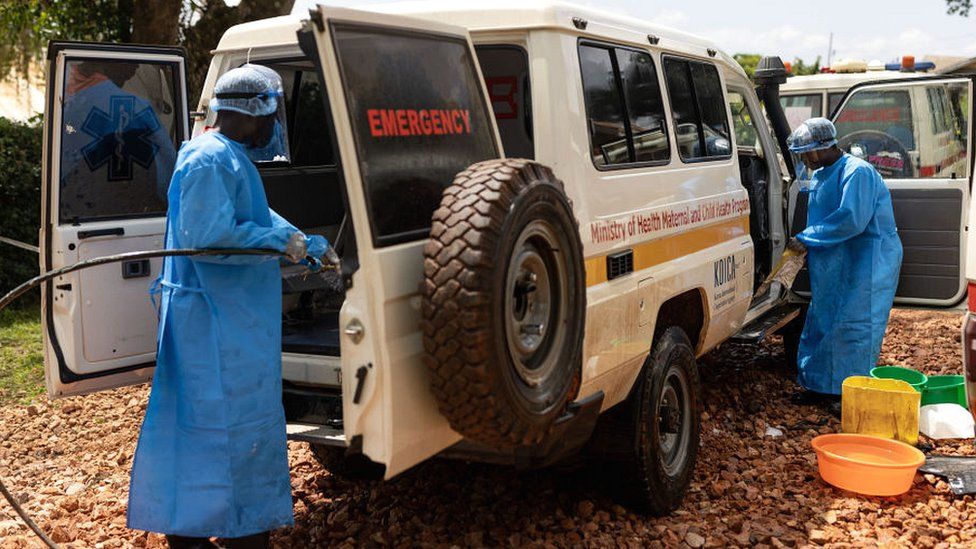
Published10 minutes agoSharecloseShare pageCopy linkAbout sharingImage source, Getty ImagesBy Peter Mwai & Rachel SchraerBBC Reality Check”I think there is no Ebola in Uganda.” Those are words of Battle Kay, as he is known online – a 28-year-old who lives in the capital, Kampala, and makes social media videos criticising the actions of the government. But he’s also part of a new wave of people making unsubstantiated claims that the current Ebola outbreak is either exaggerated or entirely made up by the authorities. Uganda has been battling Ebola for two months now. So far, there have been 141 cases with 55 deaths – confirmed by Medecins Sans Frontieres (MSF) – out of its 44.7 million population. Wider criticism of the government’s record has become mixed up with speculation and unfounded claims about the disease.What are the claims about Ebola?The key misleading messages which are spreading have been: the government is using it to justify locking down and controlling citizensthe outbreak is a cover to harvest body organs to sell illegallythe government is falsifying case numbers to attract funding or just to scare peopleFor example, a social media post claiming organs were being harvested with Ebola as a cover highlighted a visit in October by the UK’s Princess Anne, sister to King Charles.It said there was no way she would have toured a country which had “real” cases of Ebola. However, Princess Anne visited knowing there was an outbreak under way, partly because of her involvement with London’s School of Hygiene and Tropical Medicine, which is helping combat the outbreak.What is Ebola and why is it so serious?Although it is more deadly, Ebola is much less infectious than coronavirus since it does not spread via airborne transmission. It spreads between humans by direct contact with contaminated bodily fluids – blood, saliva, vomit, semen, vaginal discharge, urine, faeces and sweat.Uganda’s Health Minister Jane Ruth Aceng has dismissed the claims about organ harvesting as entirely false.And with the impending rollout of a trial vaccine against the virus, some claims allege that Ugandans will be used as guinea pigs.There are two vaccines in use against a different, more common Ebola strain, but this outbreak is being caused by the Sudan strain – for which there is currently no approved vaccine in use.Three vaccine candidates have been approved for testing in a clinical trial. But the vaccines are yet to be tested, let alone offered to the general population.Who are behind the claims?The first group of people are, like Mr Kay, generally critical of Yoweri Museveni’s government.He supports opposition leader Robert Kyagulanyi – popularly known as Bobi Wine – who lost Uganda’s 2021 presidential election to Mr Museveni. The vote was dogged by accusations of unlawful detentions, torture and killings of protesters by members of the security forces.These incidents have led some, like Mr Kay, to mistrust anything the authorities say. Patricia Ssewungu is a nurse based in the UK, who continues to be very involved in political activism against the government.She told the BBC that although she did believe there were Ebola cases, she thought they had been exaggerated.She added this was because of what she saw as the “unaccountable” way money is used by the government elsewhere on health, education and Covid.Others questioning the Ebola outbreak have previously spread misinformation about Covid.Joseph Kabuleta, another contender for the presidency in 2021, has claimed the government is using the outbreak to get money. But he has gone further to allege Ebola vaccines are not safe, without giving any evidence. “The ultimate purpose of all this is to use Ugandans as lab rats for an experimental vaccine, whose side effects might be very deadly,” he recently posted on Twitter.He had also made claims about the safety of Covid vaccines, which are not supported by the evidence.What has been the government’s response?Health Minister Margaret Muhanga recently told the country’s parliament that politicisation of the epidemic was one of the challenges the government is facing.Image source, Getty Images”Some politicians… are confusing the public by saying there is no Ebola and this epidemic is the government’s propaganda of mobilising resources,” she said.”They even confidently say the Ministry of Health should leave the disease to spread and people develop immunity, forgetting what happened in West Africa.”She says the negative talk could lead to an explosion of cases – even in areas where the government has made progress against the spread of the disease.Marion Apio, who works for an independent fact-checking initiative in Uganda, said the most common thing her team has found is not targeted misinformation, but gaps in people’s knowledge around the disease, how it spreads and how to prevent it, especially in areas not affected by the outbreak.Read more from Reality CheckSend us your questionsMore on this storyWhy is Uganda’s Ebola outbreak so serious?2 November

Read more →

Cancer scientist finds dramatic rise in anal cancer in Midwest and Southeast US

South Carolina is seeing one of the fastest rises in anal cancer incidence among women and anal cancer mortality among men, according to a study published Nov. 28 in the Journal of Clinical Oncology, led by MUSC Hollings Cancer Center researcher Ashish Deshmukh, Ph.D.
Deshmukh pinpointed state-level incidence, or disease frequency; mortality patterns; and associations with HIV/AIDS and smoking to provide clues to the rising anal cancer incidence and deaths. Deshmukh recently joined the Medical University of South Carolina as the co-leader of Hollings’ Cancer Control Program. His research focuses on understanding cancer incidence and mortality, estimating the impact of risk factors to cancer and identifying optimal cancer prevention strategies and algorithms.
Deshmukh’s current publication was motivated by observations from his 2020 findings, published in the Journal of the National Cancer Institute, where nationwide anal cancer trends were quantified for the first time. He documented a dramatic rise in human papillomavirus (HPV)-associated anal cancer incidence, advanced-stage disease and mortality.
“Anal cancer is often neglected and stigmatized. Also, it has been historically perceived as a rare malignancy,” said Deshmukh, who seeks to change the public perception, given the dramatic increase in the disease incidence and death rates that the U.S. is seeing. Nearly 10,000 new cases and over 1,600 deaths are expected to be attributed to anal cancer in 2022.
After detecting the alarming rise in anal cancer incidence and mortality between 2001 and 2015, the next goal was to understand where the incidence was rising and why the increase was occurring. Using the U.S. Cancer Statistics and National Center for Health Statistics datasets of 88,159 anal cancer cases and 14,483 deaths from all 50 U.S. states, Washington D.C., and Puerto Rico, the researchers estimated anal cancer incidence and mortality rates for each state from 2014 to 2018 versus 2001 to 2005, in association with HIV and smoking.
His team found that across the U.S., anal cancer incidence and mortality rates increased 1.5-fold in men and women over 50 years old. However, the most prominent increase — more than two-fold — occurred among people over 50 years of age living in the Midwestern and Southeastern states. In South Carolina, anal cancer incidence doubled in women and the death rate tripled in men from the time period 2001 to 2005 to the time period 2014 to 2018.
This paper also identifies key contributors to the rise in anal cancer among men and women. In states where HIV was more common, anal cancer incidence was greater among men. State-level incidence patterns were correlated with smoking among women. “HIV infection enhances the cancer-causing effects of HPV, leading to more rapid anal cancer development. Our study suggests that smoking may also be an important anal cancer risk factor among women,” Deshmukh added.
Anal cancer screenings are currently performed on HIV-infected individuals in a few states, generally in large medical centers. Screening for anal cancer currently lacks the infrastructure and support that is the foundation for other successful screening programs, like cervical cancer. For example, South Carolina has only two facilities that perform anal cancer screenings, and both are located in Charleston, one of which is at MUSC Health Women’s Health. “We need to overcome these significant challenges to ensure effective implementation of screening for equitable cancer prevention and reducing disparities,” Deshmukh said.
More than 90% of anal cancers are associated with HPV infections. HPV vaccination could potentially eliminate nearly all anal cancers in the future, highlighting the importance of rapidly improving HPV vaccination coverage among eligible adolescents. However, the majority of people experiencing the marked rise in anal cancer incidence — people older than 50 — aren’t eligible for the vaccine, which is generally recommended for those up to age 26 but can be given to people up to 45 years old if personal factors warrant it. This age disparity increases the importance of identifying novel screening approaches that could be widely implemented and adopted, Deshmukh said.
Deshmukh’s ongoing studies will shed more light on this challenge, allowing health care providers and policymakers to improve anal cancer screening guidelines. “For now, HPV vaccination really is the best available measure to prevent six cancers, including cervical, vaginal, vulvar, penile, anal and throat cancer. Hollings’ HPV vaccination van that reaches rural and underserved communities is an important asset for the state,” said Deshmukh.

Read more →

Bird flu: What is it and what's behind the outbreak?

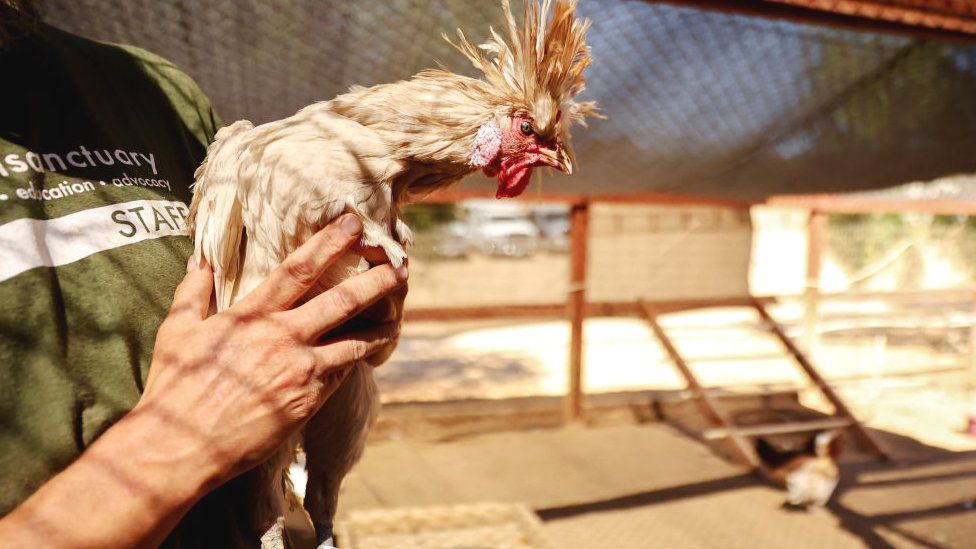
Published11 minutes agoSharecloseShare pageCopy linkAbout sharingImage source, Getty ImagesBy Helen BriggsEnvironment correspondentThe world is going through its worst-ever outbreak of bird flu. The highly infectious H5N1 strain of the disease is responsible for the deaths of hundreds of thousands of wild birds and millions of domestic ones. What is bird flu and how deadly is it?Bird flu is an infectious disease of poultry and wild birds that has been around for a century. It usually flares up in autumn before fading away. “It originated amongst ducks in Europe and Asia, and spread to other birds,” says Paul Digard, a professor of virology in the Roslin Institute at Edinburgh University. The H5N1 virus, which is the most prevalent strain now, was first reported in China in 1996 and has broken out sporadically ever since.However, this year the virus has persisted for much longer than usual. The H5N1 strain is deadly and can spread through entire flocks of domestic birds within a matter of days, through birds’ droppings and saliva, or through contaminated feed and water. Image source, Getty ImagesThe current wave of bird flu is the worst one ever in Europe, and in the US.”160 million domestic birds worldwide have been killed by this virus, or have had to be culled by farmers to contain it,” says Professor Munir Iqbal of the UK’s Pirbright Institute, which specialises in animal welfare. “This includes 100 million domestic birds in the US and Europe.”In western European countries, such as the UK, it has led to egg shortages in the shops and fears of a turkey shortage at Christmas.Christmas turkey fears as bird flu rules widenedRecord avian flu outbreak sees mass cull in UK, EU.Image source, Getty ImagesWhat’s so unusual about this outbreak?More wild birds than ever before have been killed by bird flu this year – with sea birds being especially hard hit.The current virus has affected 80 different bird species,” says Professor Iqbal. “For example, it has killed 40% of the skua population in Scotland, and 2,000 Dalmatian pelicans in Greece.” This “huge outbreak” has also spread into species such as seals and foxes, says veterinary expert Dr Louise Moncla of the University of Pennsylvania in Philadelphia, US.”These outbreaks began in Europe, then spread to North America, and unlike past outbreaks, have not died out,” she says. We are in the middle of an “unprecedented wildlife disease outbreak, the breadth and scope of which is staggering”, says Dr Rebecca Poulson of the University of Georgia, US. Scientists are unsure why this outbreak is so much worse than others. It may be that the virus has mutated to enable it to spread more readily from bird to bird, or to hang around longer in the environment.Image source, Getty ImagesDr Nancy Beerens, bird flu expert at Wageningen Bioveterinary Research in the Netherlands, which analyses suspected bird flu samples, says the virus may now be ubiquitous in wild birds. “As the virus now has infected many wild bird species, it becomes unlikely that it will disappear again from the bird population,” she says. What’s being done to tackle the outbreak?China has been vaccinating its domestic poultry flocks. However, other countries avoid this because it is hard to judge which birds have been made immune by the vaccine and which ones have not – and so the meat and eggs from vaccinated flocks cannot be sold abroad.”There are strict export controls when a country decides to vaccinate,” says Dr Maurice Pitesky of the School of Veterinary Medicine, University of California, Davis. Governments in EU countries and North America have instead generally told their farmers to cull all the poultry in any flock in which bird flu has broken out.Farmers in the UK and France have also been told to bring free range poultry flocks indoors, to stop them being infected by wild birds. Image source, Getty ImagesDespite the commercial drawbacks of vaccinating poultry, governments in France and the Netherlands have begun trials of vaccines to try and bring the bird flu epidemic under control.Is bird flu a risk to humans?In some instances, humans have caught bird flu when they have come into close contact with infected birds. “The current strain of H5N1 currently seems to be low risk for this,” says Prof Digard. However, he says: “We need proper surveillance of how far it is spreading, by monitoring wild birds and getting reports from vets dealing with domestic animals.” Follow Helen on Twitter @hbriggs.

Read more →

Big UK trial to find best drugs to fight flu

Published9 hours agoSharecloseShare pageCopy linkAbout sharingImage source, Getty ImagesBy Michelle RobertsDigital health editorWith flu cases rising, UK Covid scientists are turning their attention to finding the best life-saving drugs to fight the winter virus. A trial will run across 150 hospitals this year and next, recruiting thousands of patients. Flu vaccines help prevent infection but each year some people become very sick.And antiviral tablets – given within a couple of days of symptoms developing – are designed to reduce the severity of these bad infections. One of the pills the Imperial College London team will be testing is oseltamivir, or Tamiflu, which the government has been criticised for stockpiling and spending hundreds of millions of pounds on when there were concerns about swine flu.It is recommended to treat severe flu – but whether it saves lives is unclear.Funded by the National Institute for Health and Care Research, the Randomised, Embedded, Multi-factorial, Adaptive Platform Trial for Community-Acquired Pneumonia (Remap-Cap) will study how good the treatments are at reducing deaths and intensive care admissions. The ineffective will be dropped and new ones added.Winter pressuresChief investigator Prof Anthony Gordon told BBC News: “We want to learn at pace what works, just like we did during Covid.”We’ll test multiple treatments in different combinations. Some are antivirals that stop the virus, others are steroids or other treatments that work on how the body responds to infections.”We hope that our trial will help to find urgently needed flu treatments rapidly. Our Covid trial changed clinical practice globally and we hope we can impact flu treatment and reduce winter pressures on the NHS in the same way.”Minister for Health and Secondary Care Will Quince said: “This innovative trial will use the lessons we learned from Covid and deliver treatments to reduce serious illness in patients with flu, ease pressure on the NHS and ultimately save lives.”While this trial aims to prevent illnesses for future flu seasons, we are now seeing increased levels of flu this year and it is vital that all those eligible for a free vaccine come forward as soon as possible.”More on this storyUniversal flu vaccine could counter future pandemic4 days agoFlu is here early, with hospital cases rising21 OctoberRelated Internet LinksREMAP-CAP trialGuidance on antivirals for fluThe BBC is not responsible for the content of external sites.

Read more →

Novel method automates the growth of brain tissue organoids on a chip

A team of engineers at UC Santa Cruz has developed a new method for remote automation of the growth of cerebral organoids — miniature, three-dimensional models of brain tissue grown from stem cells. Cerebral organoids allow researchers to study and engineer key functions of the human brain with a level of accuracy not possible with other models. This has implications for understanding brain development and the effects of pharmaceutical drugs for treating cancer or other diseases.
In a new study published in the journal Nature Scientific Reports, researchers from the UCSC Braingeneers group detail their automated, internet-connected microfluidics system, called “Autoculture.” The system precisely delivers feeding liquid to individual cerebral organoids in order to optimize their growth without the need for human interference with the tissue culture.
Cerebral organoids require a high level of expertise and consistency to maintain the precise conditions for cell growth over weeks or months. Using an automated system, as demonstrated in this study, can eliminate disturbance to cell culture growth caused by human interference or error, provide more robust results, and allow more scientists access to opportunities to conduct research with human brain models.
Autoculture also addresses variation that arises in organoid growth due to “batch effect” issues, where organoids grown at different times or at different labs under similar conditions may vary just because of the complexity of their growth. Using this uniform, automated system can reduce variation and allow researchers to better compare and validate their results.
“One of the big challenges is that these cultures are not very reproducible, and in part it’s not surprising because these are months-long experiments. You have to change media every couple of days and try to treat these cultures uniformly, which is extremely challenging,” said Sofie Salama, an acting professor of molecular, cellular and developmental biology at UCSC and an author on the study.
Unique design
Autoculture uses a microfluidic chip designed by the researchers, spearheaded by Associate Professor of Electrical and Computer Engineering Mircea Teodorescu and Biomolecular Engineering Ph.D. student Spencer Seiler. Their novel chips, created from a unique bi-layer mold, have tiny wells and channels for delivering minute amounts of liquid to the organoid, which allow the scientists to have a high level of control over nutrient concentrations and byproducts. Overall, the system uses mostly off-the-shelf, low-cost components, making it accessible and modular.

Read more →

Enzyme drives cognitive decline in mice, provides new target for Alzheimer's

In a recent search for gene variants associated with Alzheimer’s disease (AD), several affected families showed a mutation in an enzyme called protein kinase C-alpha (PKCα). Family members with this mutation had AD; those without the mutation did not.
The M489V mutation has since been shown to increase the activity of PKCα by a modest 30 percent, so if and how it contributes to the neuropathology of AD has remained unclear.
In a new study, researchers at University of California San Diego School of Medicine found that the subtle increase in PKCα was sufficient to produce biochemical, cellular and cognitive impairments in mice, similar to those observed in human AD. The findings, published online on November 23, 2022 in Nature Communications, position PKCα as a promising therapeutic target for the disease.
PKCα regulates the function of many other proteins, particularly in the brain. The enzyme facilitates chemical reactions that add phosphate groups to other proteins, shaping their activity and ability to bind to other molecules. By tuning the phosphorylation state of proteins in the synaptic environment, PKCα may play an important role in synaptic function and neuronal signaling.
To assess its role in AD, several research teams collaborated to first generate a mouse model with the PKCα M489V mutation and then assess its biochemistry and behavior over the next year and a half (corresponding to approximately 55 years in human aging).
After three months, the brains of the mutated mice had significantly altered levels of protein phosphorylation compared to the brains of wild type control mice, indicating that neuronal proteins were being misregulated. By 4.5 months, the mice’s hippocampal neurons showed several cellular changes, including synaptic depression and reduced density of dendritic spines. By 12 months, the mice showed impaired performance in behavioral tests of spatial learning and memory, clear evidence of cognitive decline.
“We were surprised to find that just a slight increase in PKCα activity was enough to recreate the Alzheimer’s phenotype in a mouse,” said senior author Alexandra C. Newton, PhD, Distinguished Professor of Pharmacology at UC San Diego School of Medicine. “This is an amazing example of the importance of homeostasis in biology — even minor tweaks in kinase activity can result in pathology if the effects are allowed to accumulate over a lifetime.”
To confirm whether similar enzymatic changes could be observed in human patients, the researchers also measured protein levels in the frontal cortex of human brains from deceased patients with AD and control individuals. Brains from AD patients showed a 20 percent increase in PKCα. Furthermore, phosphorylation of a known PKCα substrate was increased by approximately four-fold in these brains, further suggesting that PKCα activity was enhanced in the human AD brain.
“The PKCα M489V mutation has been a great way to test the role of this enzyme in AD, but there are many other ways to have aberrant PKCα,” said Newton. “We’re finding that many mutations associated with AD are in genes that regulate PKCα, so a variety of gene variants may actually be converging onto this same important pathway.”
The authors note that several pharmacological inhibitors of PKCα have already been developed for use in cancer and could be repurposed to treat AD. Future drug development might focus on ways to selectively inhibit PKCα at the synapse.
“It’s increasingly clear that the amyloid plaques we see in AD are secondary to some other earlier process happening in the brain,” said Newton. “Our findings add to a growing body of evidence that PKCα may be an important part of that process, and is a promising target for treating or preventing Alzheimer’s disease.”
Co-authors include: Gema Lorden, Jacob M. Wozniak, Kim Dore, Laura E. Dozier, Gentry N. Patrick and David J. Gonzalez, all at UC San Diego; Amanda J. Roberts and Chelsea Cates-Gatto at The Scripps Research Institute; and Rudolph E. Tanzi at Harvard Medical School.
Story Source:
Materials provided by University of California – San Diego. Original written by Nicole Mlynaryk. Note: Content may be edited for style and length.

Read more →

Researchers find less-invasive treatment for certain head and neck cancers

A new study from researchers at the University of Colorado Anschutz Medical Campus has identified a less invasive way to treat a subset of head and neck cancers that could potentially change the standard of care for patients.
HPV-unrelated head and neck squamous cell carcinomas (HNSCC) typically do not trigger immune responses and have not responded well to immunotherapies. The current standard of care for these tumors begins with surgery that can require tongue or jaw removal and other facial and oral complications, followed by six weeks of radiation with or without chemotherapy
In a new study, just published in Nature Cancer, Anschutz researchers detail a different approach to treat these tumors that uses radiation combined with immunotherapy to invigorate the patient’s immune response and reduce immune exhaustion.
This approach, combined with just one cycle of the drug Durvalumab within a specific pre-operation timeframe primes the immune system to kill most or all of the cancer before surgery. The level of success observed in this preoperative marriage of treatments is remarkable.
Of the 21 HNSCC patients participating in the Phase I/Ib dose-escalation study, major pathological responses or complete responses was 75%, and 89% for those in the expansion cohort who received the optimal radiation dose. And for those on the expansion cohort with MPR/CR, none of them received adjuvant radiotherapy or chemotherapy despite large tumors at presentation and none have recurred to date. Time to surgery was also a critical element in allowing response to be observed and for immune system priming to happen.
“The response in our patients to this dual-treatment protocol surpassed our expectations,” says Sana Karam, MD, PhD, corresponding author, and member of the CU Cancer Center. “By combining treatment modalities, we were able to spare our patients’ lymph nodes and prime their immune systems, ultimately resulting in a less morbid treatment regimen.”
In conducting the translational analysis, Anschutz MD/PhD student Laurel Darragh observed a major increase in T-cell infiltration in the tumor and several biomarkers in the blood. The blood correlates could be detected preoperatively such that it was clear pre-surgery who was going to respond to the treatment. All patients went on to receive 4 additional cycles of postoperative Durvalumab, but those who failed the treatment did so despite the adjuvant treatment.
“Our biggest takeaway from these results is hope for our patients,” says Karam. “The response rates here are truly unparalleled, so we are hopeful that this work will lead to a significantly improved standard of care in how we treat these types of cancers.”
Researchers hope to move forward with these results to validate potential biomarkers in a larger, ongoing Phase II trial.
Story Source:
Materials provided by University of Colorado Anschutz Medical Campus. Original written by Kelsea Pieters. Note: Content may be edited for style and length.

Read more →