Why Many Older Women Are Getting Pap Tests They Don’t Need

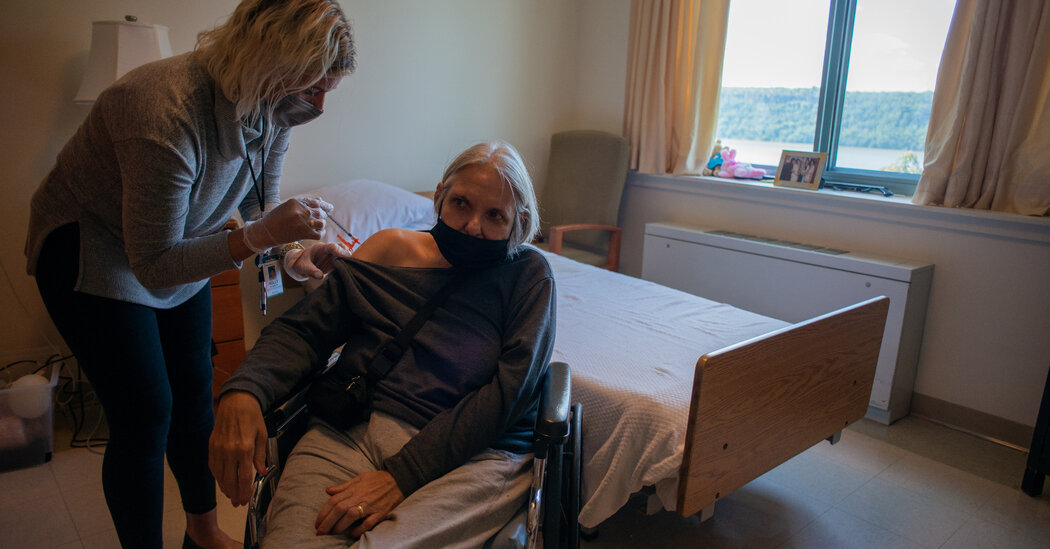
About a decade ago, Andrea Clay went online to read about newly revised guidelines on cervical cancer screening.None of her health care providers had mentioned that women over age 65 who were at average risk for cervical cancer could stop getting Pap tests if they had been adequately screened until then.But that’s what the United States Preventive Services Task Force recommended, Ms. Clay learned, along with the American College of Obstetricians and Gynecologists and the American Cancer Society.A nurse and emergency medical technician in Edison, Wash., Ms. Clay quietly cheered. Over decades of screening, she’d never had an abnormal Pap result and wasn’t in any high-risk group.“I didn’t want to be in those stirrups anymore,” she said. “I didn’t see the need for it.” She printed out the guidelines, ready for battle if a nurse practitioner or doctor insisted she continue screening. But nobody did.Now 74, she hasn’t undergone tests for cervical cancer in years. “I’m done,” she said.However, JB Lockhart, 70, a retired office worker in Lake Oswego, Ore., still schedules an annual Pap.Last year, she switched to a new obstetrician-gynecologist. “She told me I didn’t need to get tested any more,” Ms. Lockhart recalled. “I thought, you can still get cervical cancer over a certain age.”She told the doctor, “I’d rather set my mind at ease and be preventive.”Ms. Lockhart isn’t dissuaded by the fact that the task force and medical groups recommend cervical cancer screening only every three to five years (depending on which tests patients undergo), or by the recommendation that women with a specified number of normal results can stop at 65.The task force’s “D” rating for cervical cancer screening in older women, meaning “moderate or high certainty that the service has no net benefit or that the harms outweigh the benefits,” hasn’t discouraged her, either.A lot of other older women continue cervical cancer screening, a recent study in JAMA Internal Medicine reported.Using Medicare data to look at 15 million women over 20 years, the researchers found that the proportion who received at least one Pap or HPV (human papillomavirus) test dropped from almost 19 percent in 1999 to 8.5 percent in 2019 — a potential victory for those concerned about over-testing and overtreatment in older adults.“We expected the trend,” said the study’s lead author, Jin Qin, an epidemiologist at the Centers for Disease Control and Prevention’s Division of Cancer Prevention and Control. “But at this magnitude, this level, it’s a little surprising.”The guidelines specify that women at average risk can stop cervical cancer screening after age 65 if, within the past 10 years, they have had three consecutive negative Pap tests or two consecutive negative HPV tests (which can be done at the same time as a Pap). The most recent negative tests must have been performed within five years.Women who’ve had hysterectomies and no previous precancerous lesions can also forgo screening.Told that they can stop, “a lot of my patients are overjoyed,” said Dr. Hunter Holt, a family medicine practitioner at the University of Illinois Chicago and a co-author of the study. Not many looked forward to undressing and having a speculum inserted so that a health care professional could scrape off cervical cells for testing.Women at average risk for cervical cancer can stop screenings after age 65 if they have not had recent positive tests. But many women are uncomfortable doing so. Tony Dejak/Associated PressYet more than 1.3 million women over age 65 still received screening and related services in 2019; 10 percent were over 80, an especially low-risk group. “With millions of patients, it adds up quickly to a cost for everyone,” Dr. Qin said. The study put the Medicare cost at $83.5 million in 2019.Are those who continue screening over-tested, then? Not necessarily.“Stopping at 65 is not OK for every woman,” said Sarah Feldman, a gynecologic oncologist at Brigham and Women’s Hospital in Boston and the co-author of an editorial accompanying Dr. Qin’s study.Some women are deemed high-risk because of a history of cervical cancer or precancerous lesions, or because of compromised immune systems. These women should continue screening, sometimes for as long as 25 years after a positive test result, Dr. Feldman said. Women who were exposed in utero to the drug diethylstilbestrol, or D.E.S., are also considered high risk.Other women should continue screening because they haven’t had enough previous tests or aren’t sure how many they’ve had and when. Some may have been inadequately screened because they were uninsured before becoming eligible for Medicare and couldn’t afford testing.Because the Medicare records didn’t include medical histories before age 65, the researchers couldn’t determine how many tests were unnecessary. But a number of studies have found that many women don’t receive the recommended screenings before age 65 and thus shouldn’t stop the tests after then.About 20 percent of cervical cancer in the United States occurs in women older than 65, Dr. Feldman pointed out. “It’s a preventable disease if you screen the right people and treat it,” she said.All screening involves harms as well as benefits, however. In the case of cervical cancer testing, Dr. Holt said, the downsides can include discomfort, especially since vaginal tissues thin with age, and emotional distress for victims of sexual abuse.Moreover, “when we see something in the test, we have to respond,” he said. “Any screening test that’s positive can lead to anxiety and stress and stigma.”A positive result also leads to further procedures, typically a biopsy involving a colposcope, a viewing instrument that magnifies the cervix. Biopsies can occasionally cause bleeding and infection, and the results often show that the patient has no cancer or precancer (though those may develop in the future).False positives may also occur. Though data on screening outcomes for women over 65 is scarce, Dr. Holt and several co-authors published a 2020 study estimating false positive rates for younger women. On average, according to their model, women screened for 15 years starting at age 30 would be expected to have one colposcopy, perhaps two, depending on which tests were done and how frequently.Sixty to 75 percent of those procedures would find no precancerous lesions or cancer, indicating that the initial test results were false positives.It makes sense for women to talk with their health care providers about when they should stop testing. Seniors are a diverse population: Women over 65 may have multiple sexual partners, increasing their cancer risk, for example, or they may have serious illnesses that could very likely end their lives well before cervical cancer could.Researchers have found that older adults can be reluctant to give up cancer screenings, whatever the guidelines say.Dr. Mara Schonberg, an internist at Beth Israel Deaconess Medical Center in Boston, has worked for years to help older women reduce unnecessary mammograms, which the Preventive Services Task Force doesn’t recommend for those over 75, citing insufficient evidence of benefit.Dr. Schonberg developed a brochure to explain the pros and cons. She assembled a sample of 546 women over 75 and found that the half who received the brochure were more knowledgeable and more likely to discuss mammography with their doctors. Then, more than half of those who read it had a mammogram anyway. A similar “decision aid” failed to deter seniors from colon cancer screening.The Society of General Internal Medicine recommends against cancer screenings for patients with life expectancies of less than 10 years. But life expectancy can be a tough concept to discuss with patients.A survey of California providers who performed cervical cancer screening in low-risk women over 65, despite knowing the guidelines to the contrary, showed what makes it difficult. Fifty-six percent of the providers believed they might miss a cancer diagnosis if they stopped testing, but about the same number also acknowledged that it took less time to do the test than to explain to patients why it was unnecessary. And 46 percent reported “pressure” from patients to continue.Ms. Lockhart has made a February appointment for her next Pap test. The office scheduler explained that she didn’t need another screening, but Ms. Lockhart said she would continue anyway.

Read more →

U.S. Health Officials Seek New Curbs on Private Medicare Advantage Plans

Proposed regulations would crack down on misleading ads for the private plans and would enhance scrutiny of denials for coverage of medical care.Federal health officials are proposing an extensive set of tougher rules governing private Medicare Advantage health plans, in response to wide-scale complaints that too many patients’ medical claims have been wrongly denied and that marketing of the plans is deceptive.Medicare Advantage is the private-sector alternative to the federal program covering those 65 and over and the disabled. By next year, more than half of Medicare recipients are expected to be enrolled in private plans. These policies are often less expensive than traditional Medicare and sometimes offer attractive, additional benefits like dental care.Despite their popularity, the plans have been the subject of considerable scrutiny and criticism lately. A recent report by the inspector general of the U.S. Department of Health and Human Services found that several plans might be inappropriately denying care to patients. And nearly every large insurance company in the program, including UnitedHealth Group, Elevance Health, Kaiser Permanente and Cigna, has been sued by the Justice Department for fraudulently overcharging the government.The period leading up to this year’s enrollment deadline, Dec. 7, amplified widespread criticism about the deceptive tactics some brokers and insurers had used to entice people to switch plans. In November, Senate Democrats issued a scathing report detailing some of the worst practices, including ads that appeared to represent federal agencies and ubiquitous television commercials featuring celebrities.Federal Medicare officials had said they would review television advertising before it aired, and the new rule targets some of the practices identified in the Senate report that caused some consumers to confuse the companies with the government Medicare program. A proposed regulation would ban the plans from using the Medicare logo and require that the company behind the ad be identified.“It is certainly a shot across the bow for brokers and insurers in response to the rising number of complaints about misleading marketing activities,” said Tricia Neuman, the executive director of the center for Medicare policy at the Kaiser Family Foundation. Ms. Neuman and her team routinely review television ads from the plans.The proposal would also allow beneficiaries to opt out of marketing calls for plans and would limit how many companies can contact a beneficiary after he or she fills out a form asking for information. The Senate report described patients who had received dozens of aggressive marketing calls they did not request.David Lipschutz, an associate director at the Center for Medicare Advocacy, said that while the federally proposed rules did not include everything on his wish list, the goals were wide-reaching and significant.“This is really a meaningful response,” he said. “And where we sit, we don’t get to say that that often.”Mr. Lipschutz said that the changes would ultimately be judged by how effectively and aggressively Medicare enforced the standards. Much of the deceptive marketing is now conducted by brokers, agents and other third-party marketing firms who are paid commissions when they enroll people, not by the insurers themselves. The proposed rule would hold insurers accountable for the actions of the firms they hire.“These proposals are an important step toward protecting seniors in Medicare from scammers and unscrupulous insurance companies and brokers,” Senator Ron Wyden, the Oregon Democrat who chairs the Senate Finance Committee, said in a statement.The rules would also address the health plans’ use of techniques that require the company to approve certain care before it would be covered. Patients and their doctors complained to Medicare that the private plans were misusing prior authorization processes to deny needed care. The inspector general’s report estimated that tens of thousands of individuals had been denied necessary medical care that should be covered under the program.The new proposal would require plans to disclose the medical basis for denials and rely more heavily on specialists familiar with a patient’s care to be involved in the decision-making. Medicare has also established tighter time limits for answers on authorizations; patients now often wait up to 14 days. The new rules would also require authorization to cover the full length of a treatment so patients don’t have to continually request identical approvals.Dr. Meena Seshamani, the director of the Center for Medicare and a deputy administrator at the Center for Medicare and Medicaid Services, said the changes had been influenced by thousands of public comments solicited by the agency and by lawmakers.“The proposals in this rule we feel would really meaningfully improve people in Medicare’s timely access to the care they need,” she said.The insurance industry has said it is generally supportive of regulators’ efforts to protect Medicare enrollees from deceptive marketing, and the Better Medicare Alliance, a group that advocates for Medicare Advantage, said it agreed with officials “that there must be no room in the system for those who would deceive seniors,” according to a statement from the group’s chief executive, Mary Beth Donahue.Ms. Donahue added that her group was continuing to review the agency’s proposals on how patients have to seek prior authorization for treatment. She said the organization hoped to work with Medicare officials to improve the process.Hospitals, which have been pushing for changes that would address their concerns that insurers were abusing prior authorization, applauded the proposals. But they emphasized that the Biden administration’s health officials would have to commit to enforcing the stricter oversight.“The agency really needs to keep their eye on the ball,” said Molly Smith, the group vice president for public policy at the American Hospital Association, a trade organization.The proposed regulations are not yet final. Health officials are soliciting comments from the public and may make changes.

Read more →

Atomic structure of a staphylococcal bacteriophage using cryo-electron microscopy

Cryo-electron microscopy by University of Alabama at Birmingham researchers has exposed the structure of a bacterial virus with unprecedented detail. This is the first structure of a virus able to infect Staphylococcus epidermidis, and high-resolution knowledge of structure is a key link between viral biology and potential therapeutic use of the virus to quell bacterial infections.
Bacteriophages or “phages” is the terms used for viruses that infect bacteria. The UAB researchers, led by Terje Dokland, Ph.D., in collaboration with Asma Hatoum-Aslan, Ph.D., at the University of Illinois Urbana-Champaign, have described atomic models for all or part of 11 different structural proteins in phage Andhra. The study is published in Science Advances.
Andhra is a member of the picovirus group. Its host range is limited to S. epidermidis. This skin bacterium is mostly benign but also is a leading cause of infections of indwelling medical devices. “Picoviruses are rarely found in phage collections and remain understudied and underused for therapeutic applications,” said Hatoum-Aslan, a phage biologist at the University of Illinois.
With emergence of antibiotic resistance in S. epidermidis and the related pathogen Staphylococcus aureus, researchers have renewed interest in potentially using bacteriophages to treat bacterial infections. Picoviruses always kill the cells they infect, after binding to the bacterial cell wall, enzymatically breaking through that wall, penetrating the cell membrane and injecting viral DNA into the cell. They also have other traits that make them attractive candidates for therapeutic use, including a small genome and an inability to transfer bacterial genes between bacteria.
Knowledge of protein structure in Andhra and understanding of how those structures allow the virus to infect a bacterium will make it possible to produce custom-made phages tailored to a specific purpose, using genetic manipulation.
“The structural basis for host specificity between phages that infect S. aureus and S. epidermidis is still poorly understood,” said Dokland, a professor of microbiology at UAB and director of the UAB Cryo-Electron Microscopy Core. “With the present study, we have gained a better understanding of the structures and functions of the Andhra gene products and the determinants of host specificity, paving the way for a more rational design of custom phages for therapeutic applications. Our findings elucidate critical features for virion assembly, host recognition and penetration.”
Staphylococcal phages typically have a narrow range of bacteria they can infect, depending on the variable polymers of wall teichoic acid on the surface of different bacterial strains. “This narrow host range is a double-edged sword: On one hand, it allows the phages to target only the specific pathogen causing the disease; on the other hand, it means that the phage may need to be tailored to the patient in each specific case,” Dokland said.

Read more →

New Covid Booster Shots Cut Risk of Hospitalization by Half, CDC Reports

The research was conducted in part when older variants of the coronavirus were spreading. Other factors may have influenced the conclusions.Updated booster shots have bolstered Americans’ defenses against serious Covid, reducing the risk of hospitalization by roughly 50 percent compared with certain groups inoculated with the original vaccines, the Centers for Disease Control and Prevention reported in a pair of studies published on Friday.The research represents the agency’s first look at how the reformulated boosters, tailored to protect against recent Omicron variants, are performing in the prevention of severe consequences of infection with the virus, including emergency department visits and hospitalizations.Federal health officials are urging Americans to get the updated booster shots, hoping to revive a lagging vaccination campaign. So far, though, fewer than a fifth of American adults and only a third of people ages 65 and older have received updated shots, reflecting a retreat in many parts of the country from the more aggressive vaccination drives earlier in the pandemic.New virus variants that are better able to dodge the immune system have gained traction, and Covid cases and hospitalizations have climbed in recent weeks. About 375 Americans are dying each day on average, an increase of 50 percent over the past two weeks. Older people have been hit especially hard.The virus has exacerbated the difficulties facing a health care system already under strain from resurgences of the flu and respiratory syncytial virus after two years of reductions in those infections.Read More on the Coronavirus PandemicFree at-Home Tests: With cases on the rise, the Biden administration restarted a program that has provided hundreds of millions of tests through the Postal Service.Updated Shots: The Food and Drug Administration expanded eligibility for the updated coronavirus boosters to children as young as 6 months old.Contagion: Like a zombie in a horror film, the coronavirus can persist in the bodies of infected patients well after death, even spreading to others, according to two startling studies.Pregnant Women: Even though studies have shown that the Covid vaccine is safe for expectant women, many have avoided getting the shots, unaware of the risks that the virus poses.Even as federal health officials encourage testing and mask use in certain settings, precautions have become far less common in practice. Antiviral medication for Covid remains difficult to find for many who are infected.“We probably won’t see waves of Covid like we have in the past, which is a good thing, but it doesn’t mean people aren’t still dying and that those lives couldn’t still be saved if we got more shots in arms,” said Dr. David Dowdy, an epidemiologist at the Johns Hopkins Bloomberg School of Public Health.One C.D.C. study released on Friday examined how the updated shots protected people from Covid-related emergency department visits and hospitalizations in seven health systems.The study, which looked at about 15,000 hospitalizations, stretched from mid-September to mid-November, when Covid cases were largely being caused by the BA.5 Omicron variant — the target, in part, of the reformulated shots.Since then, however, more evasive versions of Omicron known as BQ.1 and BQ.1.1 have become more common, and it’s not clear how relevant the conclusions are to the newer variants.During the BA.5 period, people who had received the updated boosters had a 57 percent lower risk of hospitalization compared with unvaccinated people, a 38 percent lower risk compared with people who had recently received doses of the original vaccine, and a 45 percent lower risk compared with people whose last dose of the original vaccine was at least 11 months earlier.But the C.D.C.’s study did not account for whether patients had previously been infected with the virus, potentially making the updated vaccines appear less effective than they are. And the research did not take into account whether certain groups were more likely to have received treatments like Paxlovid, which might have skewed the results.A second study reported on the benefits of updated boosters for older Americans in 22 hospitals from early September to late November.Among people ages 65 and older, the updated vaccines reduced the risk of Covid hospitalization by 84 percent compared with unvaccinated people, and by 73 percent compared with people who had received at least two doses of the original vaccines.C.D.C. scientists said that the higher estimates of vaccine effectiveness in older age groups might reflect a variety of differences in the particular groups of patients being studied.

Read more →

How a Sprawling Hospital Chain Ignited Its Own Staffing Crisis

At a hospital in a Chicago suburb last winter, there were so few nurses that psychiatric patients with Covid were left waiting a full day for beds, and a single aide was on hand to assist with 32 infected patients. Nurses were so distraught about the inadequate staffing that they banded together to file formal complaints every day for more than a month.About 300 miles away, at a hospital outside Flint, Mich., similar scenes were unfolding. Chronic understaffing meant that patients languished in dried feces, while robots replaced nursing assistants who would normally sit with mentally impaired patients.Both hospitals are owned by one of the country’s largest health systems, Ascension. It spent years reducing its staffing levels in an effort to improve profitability, even though the chain is a nonprofit organization with nearly $18 billion of cash reserves.Since the start of the pandemic, nurses have been leaving hospitals in droves. The exodus stems from many factors, with the hospital industry blaming Covid, staff burnout and tight labor markets for acute shortages of staff.But a New York Times investigation has found that hospitals helped lay the groundwork for the labor crisis long before the arrival of the coronavirus. Looking to bolster their bottom lines, hospitals sought to wring more work out of fewer employees. When the pandemic swamped hospitals with critically ill patients, their lean staffing went from a financial strength to a glaring weakness.More than half of the roughly 5,000 hospitals in the United States are nonprofits. In exchange for avoiding taxes, the Internal Revenue Service requires them to offer services, such as free health care for low-income patients, that help their communities.But The Times this year has documented how large chains of nonprofit hospitals have moved away from their charitable missions.Some have skimped on free care for the poor, illegally saddling tens of thousands of patients with debts. Others have plowed resources into affluent suburbs while siphoning money from poorer areas.And many have cut staff to skeletal levels, often at the expense of patient safety.At a single hospital in Northern California, the sprawling nonprofit hospital chain Providence laid off dozens of medical staff in 2017 and 2018, resulting in long waits for crucial care. At a Washington State hospital that is part of CommonSpirit Health, another giant nonprofit chain, years of belt-tightening reached a breaking point in October when an overwhelmed nurse called 911 dispatchers, who sent the fire department to help care for patients.Ascension’s Genesys hospital in Michigan.Dieu-Nalio Chéry for The New York TimesAscension, which runs 139 hospitals, among the most of any chain in the United States, is emblematic of the industrywide movement to keep labor costs low.As recently as 2019, Ascension was trumpeting its success at reducing its number of employees per occupied bed, a common industry staffing metric. At one point, executives boasted to their peers about how they had slashed $500 million from the chain’s labor costs. In the years before the pandemic, they routinely refused requests to hire more medical workers or fill open jobs, according to current and former hospital administrators and employees.The yearslong effort — a combination of widespread layoffs and attrition — rarely attracted public attention. But it left Ascension flat-footed for Covid.During surges in the coronavirus, Ascension repeatedly reduced its capacity by more than 500 beds nationwide because it did not have enough workers. In Michigan alone late last year, the chain had 1,100 nursing vacancies. The head of an Ascension hospital in Baltimore last year blamed staffing shortages for the emergency room being dangerously overcrowded.To understand how Ascension’s strategies affected patients, The Times focused on two hospitals, St. Joseph in Illinois and Genesys in Michigan, where nurses belonged to unions that tracked staffing cuts and kept detailed logs of what they said were unsafe conditions. The Times reviewed more than 3,000 pages of those logs and interviewed 70 current and former nurses, executives and other employees at Ascension hospitals.Nurses said that Ascension’s downsizing had stark consequences.Nurses at Ascension hospitals filed formal complaints warning about inadequate staffing.Patients lingered for hours on gurneys with serious, time-sensitive problems. Surgeries were delayed. Other patients developed bed sores — gaping wounds that for frail patients can be deadly — because they were not repositioned often enough.“You feel awful because you know you’re not turning these patients,” said Jillian Wahlfors, a nurse at Genesys. “You know they’re getting their meds late. You don’t have time to listen to them. They’re having accidents, because you can’t get in fast enough to take them to the bathroom.”Nick Ragone, an Ascension spokesman, denied that cost-cutting contributed to staffing shortages during the pandemic. Such a claim, he said, “is fundamentally misguided, misleading and demonstrates a lack of understanding of the impact of Covid-19 on the health care work force.” He also said Ascension offers superior care that “has been improving over time” and that the hospital provides free treatment for many low-income patients.Unlike some rivals, Ascension avoided layoffs early in the pandemic, and Mr. Ragone said the chain has more employees relative to patients than many of its peers. From December 2015 to June 2021, he said, Ascension’s ratio of bedside nursing capacity to its discharged patients has increased by 64 percent, with staff increasing and discharges holding roughly steady.Academics who study hospital workforces cautioned that the metric makes Ascension’s staffing conditions seem better than they are. For example, the ratio’s increasing number of nurses over time at least partly reflects Ascension having added about 17 hospitals, while the data on discharges does not include outpatients, even though nurses are spending more and more time caring for them.Because it is difficult for outsiders to verify such industry-supplied data, hospitals can use it to serve their own purposes.“The complexity and the lack of transparency, all of these things make it impossible to try and figure out exactly what’s going on,” said Linda Aiken, a professor at the University of Pennsylvania School of Nursing, who has conducted large surveys of hospital staff. “That’s why we ask nurses.”A Ministry, Not a BusinessA statue of St. Francis of Assisi outside an Ascension hospital in Illinois.Taylor Glascock for The New York TimesAscension was created in 1999 through the merger of two networks of hospitals, many founded in the 1800s by nuns who ministered to the poor.The combined hospital system swiftly became a juggernaut, its profits soaring sixfold in its first decade. (As a nonprofit, Ascension describes this figure as “excess of revenues and gains over expenses and losses.”) By 2010, Ascension’s $15 billion in revenue rivaled that of companies like General Mills and Gap.Today, Ascension operates in 19 states, mostly in the South and the Midwest. It serves about six million patients.By many measures, Ascension is rich.In addition to its billions in cash, it runs an investment company that manages more than $41 billion. Last year it paid its chief executive, Joseph Impicciche, $13 million.Because of its nonprofit status, Ascension avoids more than $1 billion a year in federal, state and local taxes, according to the Lown Institute, a health care think tank. Until the pandemic, Ascension was consistently profitable, earning hundreds of millions a year. The past year was a rare exception: Because of the stock market downturn and soaring labor costs, Ascension lost $1.8 billion.Ascension and its executives have powerful incentives to be as profitable as possible. The more money the chain makes, the more its executives get paid. (Mr. Ragone said that a larger proportion of executives’ pay is based on other factors, like delivering high-quality care.) And stronger financial metrics allow the chain to borrow money at lower interest rates, enabling it to buy new hospitals and add services.Executives have described their profit-seeking strategies as key to the hospital system’s stability and its mission of serving the poor and vulnerable.“We are a ministry,” Anthony Tersigni, Ascension’s previous chief executive, said in 2007. “We’re not a business.” (Mr. Tersigni now leads Ascension’s investment arm, a job that paid him $11 million his first year.)Four former executives who joined Ascension from other nonprofit hospital systems said the profit-driven culture surprised them. There were few conversations, they recalled, about how profits could be used to advance Ascension’s charitable mission. The pressure to reach financial targets struck them as more befitting a for-profit company.“Their whole approach to the finances was right out of the Wall Street playbook,” said William Weeks, who until his retirement in 2019 was the chief operating officer of a five-hospital chain that Ascension owns in Oklahoma.For example, Ascension charged its hospitals management fees, which covered the cost of centralized services like human resources, that were so high that they sometimes drove hospitals into financial peril.In Washington, Ascension charged tens of millions of dollars in fees to Providence Hospital, which largely served poor, Black patients. The district’s attorney general investigated whether Ascension’s fees were excessive. In response, the chain in 2018 agreed to forgive $130 million of debt owed by the struggling hospital, which by then was being downsized into an urgent care center.But the heart of Ascension’s business strategy was cutting costs.A Late-Night Phone CallIn 2010, Dr. Michael Schatzlein, who had spent years at a for-profit hospital chain, was hired to run a handful of Ascension hospitals in Tennessee and Alabama.“The idea was to bring what I’d learned about containing costs through improving efficiencies to a mission-driven organization,” he said.It was a tumultuous time in the health care industry. The federal government was reducing the amounts that Medicare paid hospitals to care for older patients. Plus, the coming rollout of the Affordable Care Act created deep uncertainty about hospitals’ financial prospects.Around 2013, Ascension executives made a series of projections that showed that, over the next five years, their costs were expected to outpace their revenue by more than $5 billion.To close that anticipated gap, Ascension turned to its biggest expense: labor. That year, the chain laid off thousands of workers, including medical staff.Dr. Schatzlein, who by then had been promoted to run more than a dozen hospitals, was asleep at the JW Marriott in Indianapolis, where he was attending an industry conference with other Ascension executives. A phone call woke him. He was asked to come to a meeting downstairs, where executives decided they had to lay off thousands of workers across Ascension.For Dr. Schatzlein, that meant axing about 3 percent of the staff, or about 1,000 nurses and other employees, in his hospitals. “I felt horrible about it,” he said. “My entire career was based on avoiding across-the-board layoffs.”Across its network of hospitals, Ascension set individual financial targets, and executives whose hospitals did not achieve their goals would not get bonuses, according to three former executives. Keeping staffing low was one of the easiest ways to get paid, since labor costs make up about half of a hospital’s expenses.Ascension also closely tracked the number of nurses on duty relative to how many patients were treated in each hospital unit. Managers felt pressure to require fewer nurses to handle more patients. Some had to show they were hitting productivity targets before they could hire more workers, according to current and former Ascension employees.Ascension began showcasing its initiatives to cut labor costs. At a 2015 industry conference, two Ascension executives gave a presentation titled “Successful Labor Optimization Efforts” that detailed their tactics, which they said had saved nearly $500 million in just three years.In Michigan and Illinois, Ascension lobbied against legislation that would have required minimum nurse-to-patient ratios. The measures never became law. In the following years, staffing levels at Ascension hospitals in those states were routinely below what the bills would have required, according to nurses at those hospitals.Ascension’s fears about looming financial shortfalls never came to pass. Over the five years in which Ascension executives had projected the $5.2 billion loss, the system instead earned $2.7 billion in profits.Even so, it continued to cut workers.Running for SuppliesAscension’s St. Joseph is the only hospital in Joliet, Ill.Taylor Glascock for The New York TimesWhen the pandemic hit, nurses at St. Joseph, the only hospital in Joliet, Ill., were overwhelmed and feared for the safety of patients, according to state inspection records and thousands of pages of formal complaints that nurses filed with the hospital warning about unsafe conditions.“Every day it’s unsafe staffing!!!” one nurse wrote in June 2020, underlining “every day” four times.Nurses said they had been finding themselves in such situations more and more since 2018, when Ascension took over St. Joseph.Shortly after the acquisition, St. Joseph employed 791 nurses. That number has since dropped by 23 percent, according to the Illinois Nurses Association, which represents the hospital’s nurses and has clashed with Ascension’s management over pay and other issues.The staff reductions were largely the result of nurses leaving to pursue better pay and working conditions elsewhere. Ascension then left many vacant jobs open, though some slots were filled by nurses on short-term contracts, employees said. Nurses at St. Joseph generally make between $29 and $52 an hour and can earn multiples more working for medical staffing companies.Mr. Ragone said that St. Joseph’s number of employees per occupied bed went up 6 percent between 2018 and 2021. But that figure partly reflects Ascension having reduced its capacity. The data also includes many employees who do not treat patients. Mr. Ragone would not provide data specific to nurses.Some of the nurses’ grievances have been substantiated by state authorities.In April 2021, Illinois health inspectors cited St. Joseph for failing to care for patients who needed to be regularly repositioned. The inspectors found that some patients developed bed sores after they were not moved for as much as 20 hours, despite doctors’ orders that they be shifted often.Since then, the problems have intensified.In January 2022, as the Omicron wave pummeled the Chicago area, groups of nurses signed the formal complaints on more than 130 occasions.At the beginning of the month, an entire shift of eight nurses in one unit signed a complaint that there was only one nurses’ aide available for 32 patients with Covid, most of them on oxygen. The complaint said a supervisor told the nurses that the entire hospital was short-staffed.At the end of the month, no one showed up to staff the surgical supply room. When two patients needed emergency surgery, nurses were left to gather instruments themselves. One surgery was delayed, and a nurse had to abandon a 100-year-old patient to run for supplies.One night in October, nurses in St. Joseph’s intensive care unit learned that they would have to care for four patients each — double the industry standard. The hospital had to divert ambulances from delivering patients until more nurses arrived.Four nights later, nurses in the emergency room refused to clock in because they were being asked to care for 11 patients each, instead of the recommended four.“It was inevitable,” said Jillian Moffett, who was among the nurses who protested the staffing levels. “One of these days someone was going to put their foot down and say, ‘I’m not taking this anymore.’”The Rise of the RobotsAscension replaced some nurses’ aides with robotic devices that monitor and communicate with patients.AvaSureIn 2019, Ascension received an award from a company called AvaSure. The “AvaPrize” was bestowed upon the hospital chain because of its embrace of a new cost-cutting innovation: robots.Traditionally, Ascension, like other hospitals, sent nurses’ aides into the rooms of patients who needed close supervision. Left untended, these patients, many with dementia or psychiatric illnesses, might get out of bed and hurt themselves.But in the years before the pandemic, some Ascension hospitals switched course. Going forward, they would generally assign nurses’ aides only to patients who were deemed at high risk of dying by suicide.For other patients, aides would be replaced by AvaSure’s “TeleSitters.” By 2019, Ascension had installed 450 of the robots in more than 50 of its hospitals. The devices — essentially a video camera mounted on a metal pole — send live footage to an off-site command center, where workers talk to patients through speakers in the machine.In marketing materials, AvaSure boasts that the TeleSitter — which is used by about 1,000 hospitals nationwide — allows workers to monitor the movements of up to 16 patients at once.Its website features the testimonial of a top nurse at a Texas hospital that started using AvaSure devices during the pandemic. He said they would enable someone like him to “do three shifts in the E.R. and then do a shift at home using this.”AvaSure cites research showing its robots reduce dangerous falls. And some Ascension officials said the TeleSitters were invaluable during the pandemic. “Somebody had eyes on those patients,” Maureen Chadwick, an Ascension executive, said at an event this year.But at Ascension’s Genesys hospital in Michigan, nurses said patients, many of them already disoriented, were confused by the disembodied voices coming from TeleSitters. There were sometimes not enough robots — which nurses derided as “sitters on a stick” — to go around.And when workers at the command center 80 miles away called the hospital about wayward patients, there were often no secretaries at Genesys available to answer the phones.Ascension had cut those jobs.16-Hour ShiftsStephanie Bates, a nurse at Genesys hospital, said she refused orders to work extended shifts so that she can care for her children.Dieu-Nalio Chéry for The New York TimesPatients enter Genesys through a four-story atrium decorated with greenery and rock pools. Inside, the 400-bed hospital is reeling from years of downsizing.In 2018, Ascension had laid off workers, including at least 500 in Michigan — even as the chain that year reported profits of $2.2 billion. Genesys, one of a handful of unionized Ascension hospitals, avoided those layoffs. Instead, administrators froze hiring.That freeze eventually thawed. Even then, vacant positions were rarely advertised online.Since the hiring freeze was imposed, the number of permanent nurses working at Genesys has fallen by roughly 30 percent, according to the Teamsters union that represents the nurses.Ascension partially filled that gap by hiring temporary nurses, and Mr. Ragone said Genesys’s employees per occupied bed increased 12 percent between 2018 and 2021. (Like St. Joseph, Genesys reduced its patient capacity, which contributed to the rise in the staffing ratio, and Mr. Ragone would not provide data about the hospital’s nursing staff.)Yet nurses said that to keep things running, Genesys demanded they work 16-hour shifts, threatening to fire some who refused because of exhaustion or child-care commitments. Hospitals commonly require nurses to work past their scheduled shifts as an emergency stopgap, such as during a blizzard. But at Genesys, nurses said, the tactic is used to make up for chronic understaffing.Stephanie Bates, a Genesys nurse who works a 12-hour shift ending at 11:30 p.m., said that multiple times a week, she is ordered to work until 3:30 a.m. She said that she refuses so that she can care for her young children early in the morning. Other nurses echoed her experience.On at least four occasions this year, managers have written in nurses’ employment files that refusing to work 16-hour shifts “is not in line with our value of dedication,” according to internal disciplinary records reviewed by The Times.Nurses in nearly every unit at the hospital said in interviews that they were regularly required to care for more patients than allowed under their contract — restrictions that are supposed to ensure the safety of patients. “You just try to do damage control your whole shift,” said Stephanie Atchley, a Genesys nurse. “It just all snowballs into very poor care.”Dr. Dale Hanson, a physician who treats patients at Genesys, said that most days, there are not enough nurses, resulting in prolonged hospital stays for his patients. Some get marooned in the emergency room because of nursing shortages in other parts of the hospital.Dr. Hanson blamed Ascension’s aggressive cost-cutting, which he said has resulted in “miserable” conditions for patients and staff.‘Someone Is Going to Die’Jill Bruff, an I.C.U. nurse at Genesys, said she regularly finds patients lying in dried feces.Dieu-Nalio Chéry for The New York TimesEven as the pandemic has waned, nurses at St. Joseph and Genesys said, there remained so many unfilled positions that they felt like they were working in a perpetual crisis.As of this month, 24 of the 52 night-shift positions in Genesys’s medical and surgical intensive-care units were listed as unfilled, and 17 of the open jobs had yet to be advertised, according to the hospital’s internal tally, which The Times reviewed.Jill Bruff, a nurse who works in those I.C.U.s, said that about once a week, she arrives for her night shift to find patients who had been lying in their own feces for so long that the excrement had dried. On one recent occasion, Ms. Bruff said, the nurse working before her cried when she explained that she had not had time to clean up a soiled patient.“That patient shouldn’t ever had to sit for that long, and that nurse shouldn’t have had to cry because she felt so awful,” Ms. Bruff said. Four other nurses said their patients have had similar experiences as a result of understaffing.Mr. Ragone said that “the publication of an assertion from an unsubstantiated claim that our dedicated nursing staff would allow a patient in the I.C.U. to be left improperly unattended, without evidence, is irresponsible.”Nurses at St. Joseph in Illinois also were at their breaking point.“MAKE THIS BETTER ASCENSION. SHAME ON YOU!!!” one nurse wrote in a formal complaint in June. The nurse described a chaotic scene in the emergency room where there were not enough nurses or beds for seriously ill patients.“Someone is going to die if this continues,” another nurse wrote in July, “and there is no indication that anyone is concerned.”Susan Beachy and Sheelagh McNeill contributed research.

Read more →

Study examines bacteria living in and on mosquitoes

Avoiding mosquitoes to protect against bites is always a good idea. But a new North Carolina State University study shows that the bacteria-ridden exteriors of mosquitoes may be another reason to arm yourself with a swatter.
The first-of-its-kind study, published in PLOS ONE, examined both the exterior surface and interior microbiome of mosquitoes found in homes in Africa’s Cote d’Ivoire — the Ivory Coast.
“When you’re exposed to mosquitoes, you worry about blood feeding,” said R. Michael Roe, William Neal Reynolds Distinguished Professor of Entomology at NC State and co-corresponding author of the study. “Our hypothesis is that mosquitoes can physically transfer bacteria by landing on you or by defecating on household surfaces, like flies do.
“They may not, but no one has studied it before.”
Research collaborators at the Centre Suisse de Recherches Scientifiques collected 79 adult female Anopheles coluzzii mosquitoes from homes in a rice-producing province in Cote d’Ivoire. The mosquitoes were sent to NC State for analysis of the microbiome inside and on external body surfaces.
Some of the findings were surprising.

Read more →

Physician, heal thyself?

Following established guidelines about prescription drugs would seem to be an obvious course of action, especially for the professionals that do the prescribing. Yet doctors and their family members are less likely than other people to comply with those guidelines, according to a large-scale study co-authored by an MIT economist.
Depending on your perspective, that result might seem surprising or it might produce a knowing nod. Either way, the result is contrary to past scholarly hypotheses. Many experts have surmised that knowing more, and having easier communication with medical providers, leads patients to follow instructions more closely.
The new study is based on over a decade of population-wide data from Sweden and includes suggestive evidence about why doctors and their families may ignore medical advice. Overall, the research shows that the rest of the population adheres to general medication guidelines 54.4 percent of the time, while doctors and their families lag 3.8 percentage points behind that.
“There’s a lot of concern that people don’t understand guidelines, that they’re too complex to follow, that people don’t trust their doctors,” says Amy Finkelstein, a professor in MIT’s Department of Economics. “If that’s the case, you should see the most adherence when you look at patients who are physicians or their close relatives. We were struck to find that the opposite holds, that physicians and their close relatives are less likely to adhere to their own medication guidelines.”
The paper, “A Taste of Their Own Medicine: Guideline Adherence and Access to Expertise,” is published this month in the American Economic Review: Insights. The authors are Finkelstein, the John and Jennie S. MacDonald Professor of Economics at MIT; Petra Persson, an assistant professor of economics at Stanford University; Maria Polyakova PhD ’14, an assistant professor of health policy at the Stanford University School of Medicine; and Jesse M. Shapiro, the George Gund Professor of Economics and Business Administration at Harvard University.
Millions of data points
To conduct the study, the scholars examined Swedish administrative data from 2005 through 2016, as applied to 63 prescription drug guidelines. The data enabled the researchers to determine who is a doctor; the study largely defined close relatives as partners, parents, and children. All told, the research involved 5,887,471 people to whom at least one of the medication guidelines applied. Of these people, 149,399 were doctors or their close family members.

Read more →

Wearable skin patch monitors hemoglobin in deep tissues

A team of engineers at the University of California San Diego has developed an electronic patch that can monitor biomolecules in deep tissues, including hemoglobin. This gives medical professionals unprecedented access to crucial information that could help spot life-threatening conditions such as malignant tumors, organ dysfunction, cerebral or gut hemorrhages and more.
“The amount and location of hemoglobin in the body provide critical information about blood perfusion or accumulation in specific locations. Our device shows great potential in close monitoring of high-risk groups, enabling timely interventions at urgent moments,” said Sheng Xu, a professor of nanoengineering at UC San Diego and corresponding author of the study.
The paper, “A photoacoustic patch for three-dimensional imaging of hemoglobin and core temperature,” is published in the December 15, 2022 issue of Nature Communications.
Low blood perfusion inside the body may cause severe organ dysfunctions and is associated with a range of ailments, including heart attacks and vascular diseases of the extremities. At the same time, abnormal blood accumulation in areas such as in the brain, abdomen or cysts can indicate cerebral or visceral hemorrhage or malignant tumors. Continuous monitoring can aid diagnosis of these conditions and help facilitate timely and potentially life-saving interventions.
The new sensor overcomes some significant limitations in existing methods of monitoring biomolecules. Magnetic resonance imaging (MRI) and X-ray-computed tomography rely on bulky equipment that can be hard to procure and usually only provide information on the immediate status of the molecule, which makes them unsuitable for long-term biomolecule monitoring.
“Continuous monitoring is critical for timely interventions to prevent life-threatening conditions from worsening quickly,” said Xiangjun Chen, a nanoengineering PhD student in the Xu group and study co-author. “Wearable devices based on electrochemistry for biomolecules detection, not limited to hemoglobin, are good candidates for long-term wearable monitoring applications. However, the existing technologies only achieve the ability of skin-surface detection.”
The new, flexible, low form-factor wearable patch comfortably attaches to the skin, allowing for noninvasive long-term monitoring. It can perform three-dimensional mapping of hemoglobin with a submillimeter spatial resolution in deep tissues, down to centimeters below the skin, versus other wearable electrochemical devices that only sense the biomolecules on the skin surface. It can achieve high contrast to other tissues. Due to its optical selectivity, it can expand the range of detectable molecules, integrating different laser diodes with different wavelengths, along with its potential clinical applications.

Read more →

Immune surprise: Recently evolved alarm molecule drives inflammation

Scientists from Trinity College Dublin have made an important breakthrough in understanding how inflammation is regulated. They have just discovered that a key immune alarm protein previously believed to calm down the immune response actually does the opposite.
Their work has numerous potential impacts, especially in the context of understanding and responding to autoimmune disorders and inflammation.
While our immune system serves a very important function protecting us from infection and injury, when immune responses become too aggressive this can lead to damaging inflammation, which occurs in conditions such as rheumatoid arthritis and psoriasis. Inflammation is triggered when our bodies produce “alarm proteins” (interleukins), which ramp up our defenses against infection and injury by switching on different components of our immune system.
Understanding how and when such alarm proteins are produced and how they activate our immune system has led to major breakthroughs in the treatment of many immune conditions.
Now, scientists from the Smurfit Institute of Genetics at Trinity College Dublin, led by Seamus Martin, Smurfit Professor of Genetics, have found that Interleukin-37 has an unexpected function as an immune-activating molecule, as previous studies suggested that this interleukin instead served as an “off switch” for the immune system.
Professor Martin said:
“Interleukins play key roles in regulating our immune systems in response to bacterial and fungal infections. However, Interleukin-37 has long remained an enigma, as it isn’t found in mammals such as mice. This has presented a major obstacle to figuring out what it does as much of what we know about the human immune system has first been discovered in model organisms whose biological make-ups are similar to ours.”

Read more →