Newly identified neuromarker reveals clues about drug and food craving

Craving is known to be a key factor in substance use disorders and can increase the likelihood of future drug use or relapse. Yet its neural basis — or, how the brain gives rise to craving — is not well understood.
In a new study, researchers from Yale, Dartmouth, and the French National Centre for Scientific Research (CNRS) have identified a stable brain pattern, or neuromarker, for drug and food craving. Their findings were published Dec. 19 in Nature Neuroscience.
The discovery may be an important step toward understanding the brain basis of craving, addiction as a brain disorder, and how to better treat addiction in the future, researchers say. Importantly, this neuromarker may also be used to differentiate drug users from non-users, making it not only a neuromarker for craving, but also a potential neuromarker that may one day be used in diagnosis of substance use disorders.
For many diseases there are biological markers that doctors can use to diagnose and treat patients. To diagnose diabetes, for example, physicians test a blood marker called A1C.
“One benefit of having a stable biological indicator for a disease is that you can then give the test to any person and say that they do or do not have that disease,” said Hedy Kober, an associate professor of psychiatry at Yale School of Medicine and an author of the study. “And we don’t have that for psychopathology and certainly not for addiction.”
To determine if such a marker could be established for craving, Kober and her colleagues — Leonie Koban from CRNS and Tor Wager from Dartmouth College — used a machine learning algorithm. Their idea was that if many individuals experiencing similar levels of craving share a pattern of brain activity, then a machine learning algorithm might be able to detect that pattern and use it to predict craving levels based on brain images.

Read more →

Thank You, Dr. Fauci

It was an honor to take part last week in a special NIH program to bid Dr. Anthony Fauci farewell and wish him the very best as he prepares to step down this month as director of the National Institute of Allergy and Infectious Diseases (NIAID). During this two-hour program, Tony reflected on his 54-year career of public service, advising seven U.S. presidents, and following the science through several major infectious disease outbreaks, from HIV to Ebola to COVID-19. In my brief introductory remarks, I stated that Tony has been a constant source of knowledge and inspiration for me and other NIH leaders. No send-off could adequately express our gratitude. This photo shows me offering my congratulations immediately after Tony finished addressing those in attendance. The live program was held on December 16 in NIH’s Wilson Hall and was also available for NIH staff to attend in real-time via videocast. Credit: NIH

Post Link

Thank You, Dr. Fauci

NIH Blog Post Date

Monday, December 19, 2022

Read more →

High doses of statins increase osteoporosis risk, shows study in animals

Researchers from the Complexity Science Hub (CSH) and the Medical University of Vienna (MedUni) have demonstrated for the first time that high doses of cholesterol-lowering statins impair bone quality in mice. The finding came as no surprise for the scientists, who observed the correlation in a big data analysis of the Austrian population in 2019.
“This is the first study to prove the connection between a high dose of statins and osteoporosis in mice,” says Peter Klimek, leader of the data analysis team at CSH and one of the authors of the study published in the Journal Biomedicine & Pharmacotherapy. “This makes it more likely that this is also happening in humans, in addition to the previous cross-sectional study with population data,” adds Klimek.
“The results of our new study confirm and prove those of our previous analysis of the Austrian population in 2019. In both investigations, we found that high doses of statins may increase the risk for osteoporosis,” states Michael Leutner, from MedUni and first author of the study. “Now, with the animal experiment, we demonstrate the cause and effect relationship.”
How it started
The paper published in 2019 laid the groundwork for this new study, according to Leutner. It was the first time a dose-dependent link was shown between the cholesterol-lowering drugs and osteoporosis diagnosis. The team discovered that high doses of statins may increase the risk of the bone-damaging condition, but also saw a protective effect, where a low dose of statins may protect against it. At that time, a health database of over 7.9 million Austrians was searched and 353,502 statin users were found. Of these, 11,701 had a diagnosis of osteoporosis.
In the new study, the team sought to better understand the observational data, as well as provide additional evidence that the mechanism is at work in animals and humans. “As a result of the first publication, we started with a translational project, which includes (an ongoing) clinical study, as well as basic science with a mouse model, and big data analysis,” explain Leutner and Alexandra Kautzky-Willer, from MedUni and last author of the paper.

Read more →

New findings on memory impairment in epilepsy

Suppose you go to visit an acquaintance you have not been to see in a long time. Nevertheless, you ring the correct doorbell without hesitation: The apple tree in the front yard with the wooden birdhouse next to it, the bright red painted fence, the clinkered facade — all this signals that you are in the right place.
Each place has numerous characteristics that distinguish it and make it unmistakable as a whole. In order to remember a place, we therefore need to store the combination of these features (this can also include sounds or smells). Because only then can we confidently recognize it when we visit it again, and tell it apart from similar places.
It is possible that this retention of the exact combination of features is impaired in people with chronic epilepsy. At least the findings of the current study point in this direction. “In the study, we looked at neurons in the hippocampus of mice,” explains neuroscientist Dr. Nicola Masala of the Institute of Experimental Epileptology and Cognitive Sciences at the University Hospital Bonn.
Specific neurons fire when a place is visited
The hippocampus is a region in the brain that plays a central role in memory processes. This is especially true for spatial memory: “In the hippocampus there are so-called place cells,” Masala says. “These help us remember places we have visited.” There are about one million different place cells in the mouse hippocampus. And each responds to a combination of specific environmental characteristics. So, to put it simply, there is also a place cell for “apple tree/birdhouse/fence.”
But how is it ensured that the place cell only responds to a combination of these three features? This is ensured by a mechanism known as “dendritic integration.” Because place cells have long extensions, the dendrites. These are dotted with numerous contact points where the information that the senses convey to us about a place is received (de facto, there are often hundreds or thousands of them). These contacts are called synapses. When signals arrive at many neighboring synapses at the same time, a strong voltage pulse may form in the dendrite — a so-called dendritic spike.
In this way, the dendrite integrates different types of location information. Only when they all come together it may generate a spike. And only then is this combination stored, so that we recognize the house of our acquaintance the next time we visit it.
“In mice with epilepsy, however, this process is impaired,” explains Prof. Dr. Heinz Beck, in whose research group Dr. Masala did her doctorate and who is also speaker of the Transdisciplinary Research Area “Life and Health” at the University of Bonn. “In them, the spikes already occur when only a few synapses are stimulated. Nor does the stimulation have to occur at exactly the same time.” One might say: The place cells of the sick rodents do not look so carefully. They fire at all the houses with an apple tree in the front yard. As a result, the information stored is less specific. “We were able to show in our experiments that the affected animals had significantly greater problems distinguishing familiar places from unfamiliar ones,” Masala points out.
Active substances improve memory
But what is the reason for this? For a spike to form, large amounts of electrically charged particles (the ions) must flow into the cell. For this purpose, pores open in the membrane that surrounds the dendrite — the ion channels. “In our lab animals, a special channel for sodium ions was significantly more prevalent than normal in the dendrite membrane,” Dr. Tony Kelly of the Institute of Experimental Epileptology and Cognitive Sciences, who co-supervised the study, explains. “This means that just a few poorly synchronized stimuli at the synapses are enough to open many channels and elicit a spike.”
There are inhibitors that very specifically block the affected channel, preventing the influx of sodium ions. “We administered such a substance to the animals,” Masala says. “This normalized the firing behavior of their dendrites. They were also better able to remember places they had visited.”
The study thus provides insight into the processes involved in memory retrieval. In addition, in the medium term it gives rise to hopes of producing new drugs that can be used to improve the memory of epilepsy patients. These promising results are also the result of fruitful cooperation, Masala emphasizes: “Without the collaboration especially with the laboratories of Prof. Dr. Sandra Blaess, Prof. Dr. Laura Ewell and Prof. Dr. Christian Henneberger at the University of Bonn, this success would not have been possible.”
Story Source:
Materials provided by University of Bonn. Note: Content may be edited for style and length.

Read more →

The Austere Beauty of Egypt’s Long-Distance Hiking Trails

Ben Hoffler has heard one sound more than any other during the past dozen years: that of footsteps — crunch, crunch, crunch — pressing into the sandy gravel that carpets the desert valleys of South Sinai, a seemingly endless landscape of granite mountains, colorful canyons and verdant oases.While on a 2008 climb to the summit of Mount Sinai, Mr. Hoffler, an Oxford-educated Englishman, was so moved by the power of Egypt’s mountains — believed to be where Moses received the Ten Commandments — that he went on to traverse some 7,000 miles of this high desert wilderness with its Bedouin inhabitants.He wrote a trekking guide to South Sinai in 2013, and shortly after began working with the area’s Bedouin tribes to create one of Egypt’s most extraordinary tourism projects: the Sinai Trail, the country’s first long-distance hiking path.“There’s something very special about the desert — very harsh and austere and beautiful in a way that I don’t find in lush, easy-to-survive-in landscapes,” Mr. Hoffler, who’s 39 and resembles a young Elton John, told me during a walk on the trail just months before the Covid-19 pandemic upended global tourism.The first parts of the Sinai Trail opened in 2015. In 2018, it was extended into a 350-mile loop across the bottom half of the triangular Sinai Peninsula. Along with the Red Sea Mountain Trail, another long-distance path on Egypt’s mainland that Mr. Hoffler helped the Maaza tribe open in 2019, the trail has put Egypt firmly in the ranks of a booming hiking movement in North Africa and the Middle East.A safari truck navigates through the Red Sea Mountains.Sima Diab for The New York TimesNew trails throughout the regionOver the past 15 years, new long-distance trails, some inspired by America’s Appalachian Trail, have been developed in Lebanon, Jordan, Egypt and the occupied West Bank, ranging between 300 and 400 miles in length. Those routes joined lengthy trails already established in Israel and Turkey in the 1990s. Other long-distance trails are currently under development in Saudi Arabia, as part of futuristic megaprojects being created by the kingdom in its western deserts, and in the autonomous Kurdistan Region of Iraq.And now, some of the key players in the hiking movement in the region are envisioning clusters or transnational trails that, for the first time, would physically or symbolically link these rediscovered ancient nomadic pathways and newly forged routes, traversing modern national borders.For the past three years, Mr. Hoffler has been working in southern Jordan with Bedouin tribes and Tony Howard, a hiking and climbing pioneer in the region, to create a sister trail to the Bedouin-governed routes in the Sinai and the Red Sea Mountains. There has long been talk, though nothing conclusive has come of it yet, of a route that would link the Nabatean archaeological sites at Petra, in Jordan, and the Al Ula sites in Saudi Arabia, some 300 miles to the southwest. And a new long-distance trail network is taking shape to unite the Jordan Trail, the Palestine Heritage Trail and the Lebanon Mountain Trail, in a partnership with European backers and a trail system in France. All of this echoes the efforts of the Abraham Path Initiative, an American nonprofit that has been promoting trail building and trail networks in the region since 2007, though its main focus now is funding and supporting work on the Kurdistan trail.Separately, what many of the trails have in common is a determination by their creators to bring tourists and jobs to distressed villages in the deserts and mountains. These creators are also intent on preserving — and introducing to visitors, and their own citizens — long-overlooked natural wonders, and on using the trails to dispel negative perceptions of the historically turbulent region.Mohammed Muteer, a Bedouin guide, and Ben Hoffler start a fire and prepare tea.Sima Diab for The New York TimesAs a cluster, the embryonic network that includes the Jordan, Palestine and Lebanon routes could share best practices for the marking of trails, the establishment of emergency services and the cross-promotion of hiking, according to the organizers. Trekking exchanges, however, run into the reality of geographic and political impediments. Physically linking the trails in Jordan, Palestine and Lebanon, for example, is impossible, since Lebanon shares no border with the West Bank or Jordan. And the political obstacles seem equally insurmountable, since Israeli and Palestinian passport holders are barred from entering Lebanon.To Mr. Howard, who spearheaded the popularization of climbing and hiking in Wadi Rum, a valley in Jordan, in the mid 1980s, the orchestration of what he calls super trails in the region makes too much sense not to bring to fruition.“In itself, it’s an exciting thing — it sounds good, and it’s easy to promote, and people will walk it,” Mr. Howard said. But trails also benefit the areas they pass through by increasing tourism and helping to preserve both nature and culture. Before the trails were blazed, “there was very little realization in Jordan that people wanted to visit villages and walk hills,” he explained. “It started the need to protect some of these areas.”Mohamad, a Bedouin guide, leads a camel as it carries hikers’ belongings through a wadi along the Sinai Trail.Sima Diab for The New York TimesBedouin influences and originsAmong all the long-distance routes in the region, Egypt’s trails are unique in that they are owned and managed by Bedouins, whose nomadic ancestors, centuries ago, forged many of the pathways on foot and camelback. Unlike the self-guided trails in Lebanon, Israel and Jordan, the Sinai and Red Sea Mountain trails require Bedouin guides. And in contrast to the planned Neom megaproject in northwest Saudi Arabia, whose website promises 750 miles of trails in the coming years, features renderings of luxury chalets and boasts of “immersive digital experiences,” Egypt’s trails try to replicate how the nomads’ forebears moved through the wilderness. Hikers drink from wells, sleep fireside, under the stars (or in tents) and dine on flatbread baked in acacia coals and seasoned with mountain salt. The Bedouins are relying more on camels to haul the cooking and camping supplies and colorful woven rugs.The Sinai Trail was founded by Mr. Hoffler and three Bedouin tribes, whose members serve as guides, cameleers and cooks. And when it was extended in 2018, five more tribes joined the group. The tribes saw the trail as a way to create sustainable tourism while preserving ancient pathways and traditions that were fading in this era of smartphones and pickup trucks.The Bedouin guides on the trail say they find peace in the desert wilderness, feeling a strong connection to their tribes and lands. They know the way over sprawling passes and through mazelike gorges, which plants can be used to make soap and poultices, which animals leave behind what kinds of droppings and tracks. They also maintain the legends tied to the most prominent places on the route, like the tale of the sisters who tied their long locks of hair together and jumped to their deaths from Jebel El Banat, a mountain peak along the route, to escape arranged marriages.Clockwise from top left: etchings on a rock in the Red Sea Mountains near Wadi Nagaata; a hermit cell, also near Wadi Nagaata; a trail marker used by Bedouins to navigate difficult terrain; and a collection of pottery shards.An initial end-to-end hikeWhen I first met Mr. Hoffler in the autumn of 2019, I was joining a handful of trekkers on the first end-to-end hike of the Sinai’s western side — a 125-mile section reaching from Saint Catherine, a town and tourist hub in the center of the trail, to Serabit el Khadem, near the Gulf of Suez. We crunched along a high winding path of pea-size granite strewn with jagged boulders. To the left was a mountainside of crumpled dark granite; to the right was a soaring granite curtain in beige. Nearly 5,000 feet up, at the crest of the pass, called Naqb el Hawa, or Pass of the Wind, I almost expected to hear the swell of an orchestra as a far-off vista of sandy flats and striated peaks came into view.We were stepping on rock that dated back some 600 million years, on a footpath trod by nomads thousands of years ago and, around the sixth century specifically, by Christian settlers journeying from Cairo to Mount Sinai.“The desert has always been a place of insight, a place of transformation for people,” Mr. Hoffler said as we made our way down the pass. “All of the prophets, they’ve come out with very deep insights that have changed the course of human history.”The landscape continuously changes: from craggy olive hills to bulbous beige outcroppings, from charcoal gray peaks to rose-colored cliffs. Constants are the black veins of granite running through the mountains like arrows on a fever chart. Where two lines intersect near the base, the Bedouins tell us, there is certain to be water and a stand of flat-topped acacia trees.The ghost town of Um Bogma, along the northwest corner of the Sinai Trail.Sima Diab for The New York TimesShorter segmentsOf course, many visitors simply hike for a day or two on shorter sections of the trails, which feature dozens of desert valleys (known as wadis), sites of historic interest and named mountains.Atop my list of recommendations are hikes around Um Bogma, a ghost town atop rugged tablelands in the northwest corner of the trail, near the Suez Canal. An abandoned manganese mining camp run by the British in the 1900s during their occupation of Egypt, with breathtaking views of mountain ranges unfurling into the horizon, the tiered settlement of Um Bogma is frozen in time. Rusted steel cables stretch like ski lifts for miles down to the sea. Pitched-roof barracks have been stripped bare, as has a manager’s house with a wraparound porch overlooking a massive cliff that divides the Sinai.Members of the Hamada tribe, which oversees this section of the trail, extracted the manganese when the British occupied Egypt, until the 1950s. Egypt took over the Um Bogma mines for a number of years, but they were shut down, and the site abandoned, during the Israeli occupation of Sinai from 1967 to 1982.To some hikers, the scarred landscape is a legacy of colonial exploitation. To the Hamada, though, it was a source of jobs. And to Mr. Hoffler, it’s a rich opportunity for tourism. “I think this is just a jewel for the Hamada,” he told me.Julie Paterson, a trip organizer, and Jacobus Nederpelt, a hiker, at the summit of a 650-foot ascent through a mountain pass.Sima Diab for The New York TimesOther standout segments can be found in the Red Sea Mountains, a two-hour drive from the seaside city of Hurghada. Unlike in the Sinai, where you’re surrounded by mountains soon after landing in Sharm el Sheikh, the mountains in this section of mainland Egypt seem more jagged and imposing, clustered into massifs with fanglike peaks. Here, the government has not yet allowed overnight camping on the 100-mile Red Sea Mountain Trail, so the Bedouins can run only day hikes.The trail is contained within the territory of the Khushmaan clan of the Maaza tribe, and features Roman ruins and the mainland’s highest peak, Jebel Shayib el Banat, which rises to about 7,200 feet. The clan’s 1,500 families trace their origins to Arabia a few centuries ago, and most still live in the desert mountains, according to its leader, Sheikh Merayi Abu Musallem.At Wadi Abul Hassan, the hike starts up a steep slope blanketed by boulders and turns down into a secret enclosed wilderness — a narrow canyon lined with pink granite on one side and charcoal-colored granite on the other. Few outsiders have entered the wadi since the American academic Joseph J. Hobbs visited while researching his book “Bedouin Life in the Egyptian Wilderness,” in the early 1980s. The depth of perspective in the canyon is astonishing, especially when cottony white clouds in a sapphire sky and pyramid-shaped peaks in the distance add an extra dimension to the tableau.Elsewhere, the trek through Jebel Gattar and Wadi Nagaata is a strenuous climb up a series of massive granite shelves that reveal the historical origins of Christian monasticism. Atop the barren ledges are several hermit cells made of stacked rocks where, as early as the 300s, ascetics lived in extreme deprivation. Hikers can enter the silence of one of the small, semicircular chambers and imagine a contemplative looking out from the same entrance — toward a wall of beige granite honeycombed with scoop-like craters. On a nearby plateau stands a roofless, three-room stone building that was likely once a worship space, and a forerunner to the earliest monasteries, like Saint Catherine’s Monastery, built in the sixth century at the foot of Mount Sinai.Safety concernsDeveloping these trails was less about clearing new paths than it was about recovering existing routes that highlighted the myriad landscapes and legends. It was also about challenging the notion that the Sinai is a hostile and dangerous place. Egypt has been battling Islamist militants in North Sinai much of the past decade. The U.S. government advises against travel in Sinai. For the rest of Egypt, including the seaside resort of Sharm el Sheikh in South Sinai, the State Department advises citizens to “reconsider travel to Egypt due to terrorism.”According to the Sinai Trail’s website, “There has never been an attack on tourists in the interior Bedouin parts of South Sinai, where the Sinai Trail is.” Mr. Hoffler maintains that, in addition to Egyptian security forces across the peninsula, hikers have a safety net in an extensive Bedouin network that keeps tabs by camel, pickup and foot and shares information about visitors.One of our fellow hikers on the Sinai Trail’s western side, Leena El Samra, a 33-year-old from Cairo who works at a development bank, told me that some of her friends were worried about her taking the hike.Camels accompany hikers in places where support trucks can’t reach.Sima Diab for The New York Times“It’s a part of Egypt that’s ignored and we know nothing about, to some extent,” Ms. El Samra said, motoring through the gravelly sand. “This is a part of Egypt where you feel very safe with the people. It’s very nice, it’s pristine, it’s undiscovered. It’s very different than most of what we do all over Egypt. And I like building some muscles.”Ms. El Samra was among a small but growing circle of Egyptian adventure travelers and endurance athletes who turned to hiking, running and competing in triathlons after the failed revolution and subsequent military takeover early last decade. Many saw the activities as a way to release frustrations and exert their independence, or simply to discover their country.Hiking is still a niche activity in Egypt. The Sinai Trail hosted a few hundred hikers before the pandemic, which forced the trails closed for most of 2020. Numbers dwindled to the dozens in 2021 because of travel restrictions. But more hikers returned this year, including 70 people from around the world who arrived for a weekend hike in October tied to the United Nations annual climate conference, known as COP27, held the following month in Sharm el Sheikh. If all goes as planned, the Sinai Trail will host its first end-to-end hike of the 350-mile route next October.Returning to traditionsFor the Bedouins, the trails are a way to return to their roots and make a living in the mountains.During a drought in the 1990s, many Sinai Bedouins moved to coastal cities or farms in the Nile Valley for work, said Youssuf Barakat of the Alegat tribe, who spent two years with Mr. Hoffler mapping out the trail’s South Sinai routes and served as a guide during the COP27-related hike in October. Modernity and the collapse of tourism early in the last decade also pulled Sinai Bedouins away. Mr. Barakat, 36, returned to the mountains to work on the trail after working as a cook in his family’s restaurant in Abu Zenima on the west coast, he said.The Bedouins have been forced to change, Mr. Barakat told us after a dinner of grilled sheep and vegetable soup, which was followed by Mr. Barakat singing a traditional love song while thwacking a tabla drum.“We have internet, we have phones,” he said. Very quickly, he and his people have “become like the Egyptians,” he said.With the Sinai Trail, though, Mr. Barakat and his fellow tribespeople have an opportunity to return to their time-honored way of life.“We start step by step,” he said. “We hope in five, 10 years, the Bedouin life will come again.”A Bedouin guide makes tea and coffee over a campfire along the Sinai Trail.Sima Diab for The New York TimesPatrick Scott is a writer based in Thailand. You can follow his work on Instagram.Follow New York Times Travel on Instagram, Twitter and Facebook. And sign up for our weekly Travel Dispatch newsletter to receive expert tips on traveling smarter and inspiration for your next vacation. Dreaming up a future getaway or just armchair traveling? Check out our 52 Places for a Changed World for 2022.

Read more →

Health Secretary Steve Barclay grilled about NHS by ill child's mother

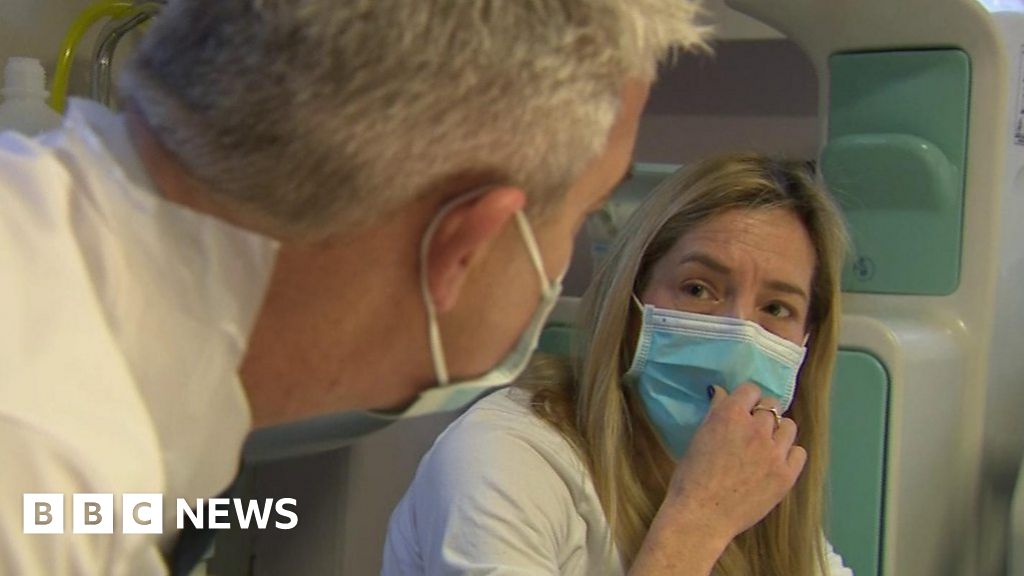
Health secretary Steve Barclay was told by the mother of a child with cystic fibrosis that she was scared for “the length” of her daughter’s life and what the government “might do to the NHS”, during a visit to King’s College Hospital in south London. Mr Barclay defended the government, saying that an extra £6.6bn for the NHS over the next two years was announced in the Autumn Statement.

Read more →

They Created a Drug for Susannah. What About Millions of Other Patients?

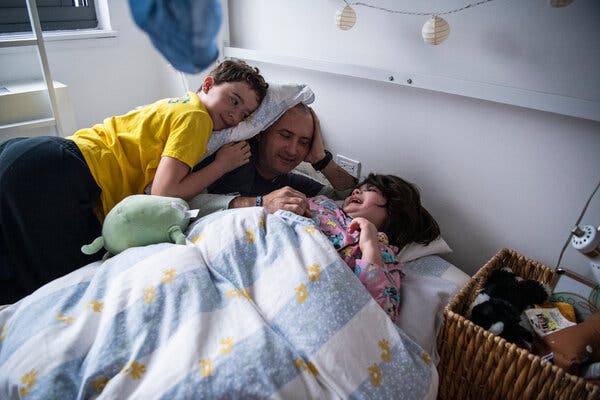
Susannah Rosen, 8, spent much of her childhood in hospitals in New York City as doctors documented the gradual loss of her ability to stand, walk and see.But on a visit this October, her parents thought for the first time that she might leave the hospital better off than before. That’s when surgeons infused a drug into her spine to fix the ultrarare genetic glitch that had vexed her nervous system since infancy.“Every other time we go into the hospital, it’s because something terrible has happened,” said Susannah’s father, Luke Rosen. “This time, there was hope for something that will heal her.”Susannah was the first person to receive a drug designed to treat KIF1A-associated neurological disorder, or KAND, a progressive disease caused by genetic mutations that affect just 400 people in the world. In doing so, the young girl and her parents have found themselves on the edge of personalized medicine.Since the technology for such bespoke genetic drugs debuted in 2018, about two dozen patients have received the infusions — costing as much as $2 million per patient — to treat a range of neurological syndromes. But hundreds of millions of others, mostly children, live with rare genetic diseases and have no treatment options.Susannah’s drug, almost two years in the making, was paid for by a nonprofit organization, n-Lorem, that aims to do the same for at least 1,000 patients over the next decade. By raising funds and negotiating discounts and in-kind donations from biotechnology companies to make its drugs, n-Lorem’s founder believes, the organization can fulfill its mission to “leave no child behind.”But other rare-disease experts doubt that a funding model based on donations will ever be large or sustainable enough to help millions of patients. They are searching for other ways to accelerate the technology’s development, which includes seeking help from for-profit businesses.Susannah at home with her brother, Nat, and her father, Luke Rosen. Susannah being brought into the back of a taxi in the streets of New York City.Susannah greeting Dr. Jennifer Bain, a pediatric neurologist at NewYork-Presbyterian Morgan Stanley Children’s Hospital in Manhattan, who infused Susannah’s drug into her spine.Groups developing therapies for these diseases must also grapple with how to share valuable — and rare — data. N-Lorem has been criticized for not pledging to share ‌information about its patients and methods swiftly and transparently, an issue that became more urgent after a girl died last year from complications in a clinical trial.“These are really complex questions that this field has opened up,” said Issi Rozen, a venture partner at GV, formerly known as Google Ventures, a firm that has invested in the field. “The worst thing I can imagine is those technologies exist that can treat the kids, but there’s no framework for doing that.”Cutting CostsSusannah’s parents first noticed something wrong with their daughter when she was a baby and couldn’t kick her legs in the bathtub. As a toddler, she used leg braces to stand and walk and would fall suddenly. When Susannah was 2, doctors discovered that she had seizures while she slept.In 2016, her parents learned that she carried a glitch in a gene, called KIF1A, which caused KAND. The untreatable disease, her doctor said, would cause developmental delays, vision loss, seizures and physical disabilities that would worsen with time.“What can we do to fix that?” Mr. Rosen recalled asking Wendy Chung, Susannah’s doctor and a pediatrician and geneticist at Columbia University.Dr. Chung advised them to find other patients. Mr. Rosen and his wife, Sally Jackson, started a foundation in 2017, found about 400 other patients, raised $2 million for research and began lobbying scientists to develop treatments.One of the companies Mr. Rosen called was Ionis Pharmaceuticals, based in Carlsbad, Calif. Ionis used snippets of genetic material — known as antisense technology — to make drugs for diseases that are somewhat rare, affecting tens of thousands of people in the United States, but much more common than KAND.The next year, Dr. Timothy Yu, a neurologist and genetic researcher at Boston Children’s Hospital, announced that over the course of just 10 months he had developed a customized antisense drug for an 8-year-old girl named Mila Makovec. The drug, named milasen after its patient, treated Mila’s rare neurological condition, Batten disease.Mr. Rosen and Ms. Jackson helped Susannah out of her shoes for a walking test.Results from Susannah’s walking test. Mr. Rosen at the finish line to encourage Susannah’s steps. The founder of Ionis, Dr. Stanley Crooke, also wanted to treat extremely rare diseases, but he believed companies could not profit from drugs used by fewer than 30 people. So in 2020, he and his wife, Rosanne Crooke, started the n-Lorem foundation with two founding partners, Ionis and Biogen, a biotechnology company in Cambridge, Mass. Since then, n-Lorem has raised $40 million to make such drugs.Ionis and other companies agreed to provide discounted or free equipment and services, including drug manufacturing and safety testing. In turn, n-Lorem would provide the infusions to patients for free, indefinitely.“Developing, manufacturing and then giving it away for life for free is an amazing concept, for the most desperate, most underserved patient population we know of,” Dr. Crooke said.N-Lorem has so far enrolled more than 80 patients, including Susannah, for this lifetime treatment plan, and its leaders hope to treat many more in the coming years. Dr. Crooke said that drug manufacturing discounts and efficiencies cut the cost of making each individualized therapy by as much as 40 percent. Dr. Yu at Boston Children’s needed $2 million to make the drug for Mila, for example. But n-Lorem has cut that cost to an average of $800,000 per patient, Dr. Crooke said.It took 17 months for scientists at n-Lorem to create a drug to shut down Susannah’s specific glitch in the KIF1A gene, which is not shared by any other patient in the country.While waiting, Susannah grew sicker. She had broken several bones from falls and used a wheelchair much of the time. Her vision gradually faded. Whenever Mr. Rosen traveled, he worried that his daughter wouldn’t be able to see his face when he got home.The new drug would not cure Susannah, her parents knew, but they hoped it would alleviate her seizures and difficulties with motor control. Maybe by Christmas, they thought, she would be able to walk to her brother and hug him.On Oct. 10, Dr. Jennifer Bain, a pediatric neurologist at NewYork-Presbyterian Morgan Stanley Children’s Hospital in Manhattan, injected Susannah’s drug into her spine.The next morning, Susannah woke up smiling. Her parents wondered if the drug was already working, though they knew that was unlikely.Mr. Rosen and Ms. Jackson logged her seizures and falls daily. Neurologists planned to examine Susannah’s mental abilities, brain activity and movement skills every few weeks.Susannah was the first patient to receive an n-Lorem drug, followed by two adult patients in October and November.Ms. Jackson styled Susannah’s hair at home.With some coaxing, Susannah took her daily medicine. Susannah packed her own lunch for the day.Growing PainsSome rare disease experts are skeptical that one nonprofit organization will be able to serve every patient who needs help.Some are searching instead for a viable business model that could bring millions or billions of dollars of investor funding. The money is needed to hasten the competition necessary to drive down costs, prove the medicines work and convince insurers to pay for them.In 2021, Julia Vitarello, the mother of Mila, co-founded EveryONE Medicines, a for-profit company in Boston that is exploring how to make customized genetic drugs sustainably.And Jeff Milton, a former Ionis scientist, hopes to develop rare-disease-drugs that target biological systems that are also affected in more common diseases. That could coax investors to invest in his start-up, La Jolla Labs, to develop drugs that could treat both rare and common diseases, he said.Both are also focused on how various outfits can share data.Ms. Vitarello also founded a nonprofit organization with Dr. Yu, called the N=1 Collaborative, that aims to make personalized medicines more accessible. Its 311 members, including parents, patients, investors and scientists from academia, companies and other institutions, have pledged to share information with each other.“We’re talking about dying children,” Ms. Vitarello said. Mila died at age 10, three years after receiving the first dose of her customized drug. “Companies, academic institutions and foundations should all have a mandate to share data so we can learn what works, because it is unethical not to.”These tensions have increased since the recent death of a child who received a customized antisense drug.On Oct. 23, Dr. Yu reported at a scientific meeting that two of his patients developed a buildup of fluid in the brain, called hydrocephalus, after receiving a drug for a severe form of epilepsy, and one died. He and other scientists are studying whether other antisense drugs might cause the same problem.Dr. Yu announced the results before publishing them in a peer-reviewed journal article, he said, partly to highlight the importance of sharing data through channels such as the N=1 Collaborative.Tying Susannah’s shoes to prepare for another hospital visit.Kissing her service dog goodbye.Susannah and her father arriving at the Columbia University Irving Medical Center in Manhattan. Dr. Crooke said that n-Lorem would not contribute its data to the N=1 Collaborative database. The organization has presented data at scientific conferences, he said, and will publish data on its patients in peer-reviewed journals. It will also alert the Food and Drug Administration if a death or serious adverse event occurs.He said he did not think n-Lorem’s data should be compared with others’ because the n-Lorem team had more expertise in making antisense drugs, also known as ASOs. “We’re not going to mix data from our optimized ASOs with data from ASOs that are not optimized,” Dr. Crooke said.But Dr. Yu said that Dr. Crooke’s assertion that n-Lorem’s drugs were superior was “unjustified and easily refutable.” For instance, a clinical trial using an antisense drug licensed from Ionis caused hydrocephalus in patients with Huntington’s disease who received the highest doses.About two dozen patients have received customized antisense drugs since Dr. Yu’s announcement about Mila in 2018. His team has treated four other patients, including the two children who developed hydrocephalus.N-Lorem is racing to make drugs for the patients it has enrolled. The organization hopes to add 100 to 150 patients to its list per year, reaching about 1,000 patients within a decade.Dr. Yu and others say that if they can show that the drugs save lives, investors might step in.“Ultimately, before this explodes into treating dozens of families per year, they’re going to have to show that it works,” said David Corey, a biochemist at the University of Texas Southwestern Medical Center at Dallas, who is not involved in the antisense field.On Nov. 9, Susannah returned to the hospital for the second dose of her drug. After the procedure, she nestled with dolls in bed and chatted with her parents, at times looking them straight in the eye. This was unusual; her vision problems usually forced her to use her peripheral vision.Susannah unscrewed the lid of a doll’s pink plastic sippy cup and held the cup out to Mr. Rosen.“Daddy, can you fill this up with water?” she asked.Mr. Rosen obliged. He thought that her speech had recently improved and was impressed with her ability to focus her gaze more clearly.Less than a month later, Susannah surprised her parents by standing up on her own for the first time in two years. After pulling herself up from the living room carpet, Susannah, face flushed with exertion, stood tall and high-fived Ms. Jackson.Susannah received her third dose of the drug on Dec. 7. With four months to go in the trial, Mr. Rosen and Ms. Jackson felt cautiously optimistic.“It’s just not easy to be Susannah because there’s no road map,” Mr. Rosen said. “She’s creating it.”

Read more →

Pregnancy: IVF clinics 'can't just tell women to lose weight'

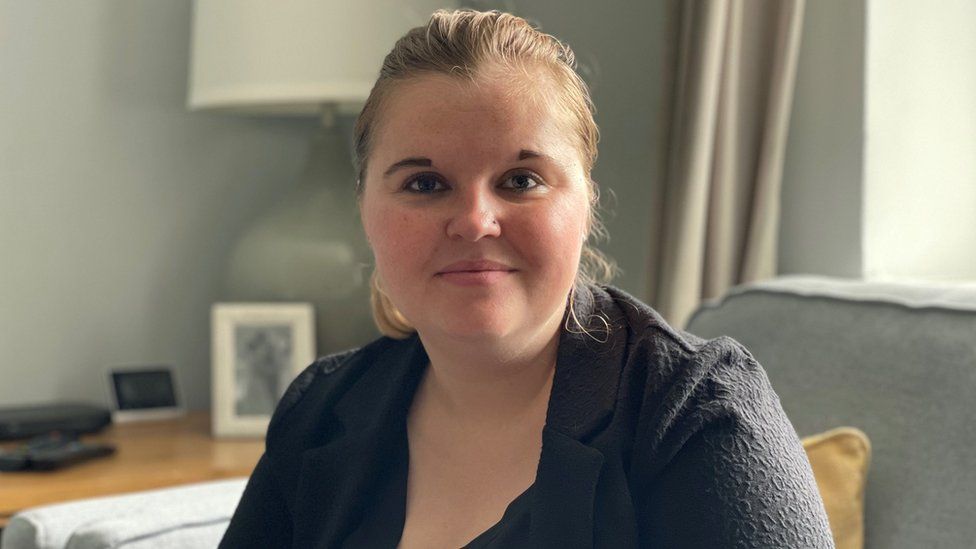
Published1 hour agoShareclose panelShare pageCopy linkAbout sharingThis video can not be playedTo play this video you need to enable JavaScript in your browser.By Nicola SmithBBC NewsA woman who has been trying to have a baby for more than two years said she was told to “lose weight and come back” by a fertility clinic.Rachel Rowlands said she was not given any help or support about how best to get her body mass index (BMI) down to the appropriate range.The 33-year-old of Nelson, Caerphilly county, said it left her “devastated”.The Welsh government said all clinicians should support families with fertility issues.Ms Rowlands said she was upset at the lack of support offered to address how her long-term health problems were preventing her losing the weight she knew she needed to in order to access fertility treatment. Calculate your BMIWoman who shed weight to get IVF becomes pregnantWomen regret cut-price weight loss surgery abroadThe university lecturer, who is a clothes size 16-18, has endometriosis and a chronic pelvic pain condition, and was referred to a fertility service.She understood the need to lose weight, but after being told her BMI was 36, was upset at the way she was spoken to. Ms Rowlands recalled how she walked into the room with the doctor and, before she had sat down, was told “you need to lose weight, you’re overweight, you’re quite overweight, and the first thing you need to do is go away and lose weight, and then come back to us”.NICE guidelines say women should be informed that female BMI should ideally be 19-30 before commencing assisted reproduction, as being outside that range reduces the likelihood of success.Consultant obstetrician and gynaecologist Dr Sean Watermeyer said if women with a BMI of more than 30 do get pregnant there is an increased risk of miscarriage, stillbirth and congenital abnormalities.Campaigners have said patients should be shown how to get help because “desperate women take desperate measures”. Ms Rowlands said: “I had no offer of any professional support or advice whatsoever. “I do understand how to lose weight, but weight issues are multifactorial, and it’s not just about going away and eating less food, or doing more exercise, there are a lot of things that can impact somebody’s weight, and those need to be addressed as well.” Image source, Rachel RowlandsShe has since been diagnosed with an eating disorder. “I want doctors and nurses to really think about how they address weight management issues with people who are struggling with fertility, and just approach it in a kinder way.” Dee Montague-Coast at the Fair Treatment for the Women of Wales charity, said Ms Rowlands’ experience was “not rare”.”There’s often a lot of assumption why someone is in a bigger body, from what we see with our members often they’re living with really complex, chronic health conditions that can really impact their energy levels, their ability to exercise, and their ability to eat well. “Desperate women will take desperate measures – they will crash diet, go into exercise overdrive, and this can be catastrophic for their health, so what we need is person-centred care.” The charity suggested signposting patients to services such as mental health support, a nutritionist or exercise referral schemes. Cwm Taf Morgannwg University health board, which did not treat Ms Rowlands, is launching a weight management service for its patients in the new year. Dr Watermeyer said he was “excited” to be able to refer into it.”We’ve a doctor who’s there to advise, who’s got experience in this and may also prescribe, we’ve got a psychologist because it’s behavioural patterns that we need to sometimes change within these patients who need to lose BMI.”He added that there were also physiotherapists and dieticians to further support patients. The Welsh government said it believed in an equal Wales, where anyone who wanted to have a family could access the clinical support they need to achieve that goal.”All clinicians should support families with fertility issues, and may refer them into specialist services where appropriate,” it added.More on this storyIVF patient devastated over weight comments. Video, 00:02:22IVF patient devastated over weight comments1 hour agoWoman who shed weight to get IVF becomes pregnant20 NovemberWomen regret cut-price weight loss surgery abroad23 OctoberPatients choose surgery abroad as wait lists grow22 SeptemberWoman sheds 23 stone in bid to have a baby1 July 2021Obesity set to overtake smoking as risk17 January 2019’Cheap junk food to blame’ for obesity8 January 2019Where are you on the UK fat scale?24 April 2018

Read more →

China Covid: Health expert predicts three winter waves

Published18 hours agoShareclose panelShare pageCopy linkAbout sharingImage source, Getty ImagesBy Kathryn ArmstrongBBC NewsA top Chinese health official says he believes China is experiencing the first of three expected waves of Covid infections this winter. The country is seeing a surge in cases since the lifting of its most severe restrictions earlier this month. The latest official figures appear to show a relatively low number of new daily cases. However, there are concerns that these numbers are an underestimate due to a recent reduction in Covid testing. The government reported only 2,097 new daily cases on Sunday. Epidemiologist Wu Zunyou has said he believes the current spike in infections would run until mid-January, while the second wave would then be triggered by mass travel in January around the week-long Lunar New Year celebrations which begin on 21 January. Millions of people usually travel at this time to spend the holiday with family.The third surge in cases would run from late February to mid-March as people return to work after the holiday, Dr Wu said.He told a conference on Saturday that current vaccinations levels offered a certain level of protection against the surges and had resulted in a drop in the number of severe cases. Overall, China says more than 90% of its population has been fully vaccinated. However, less than half of people aged 80 and over have received three doses of vaccine. Elderly people are more likely to suffer severe Covid symptoms.China has developed and produced its own vaccines, which have been shown to be less effective at protecting people against serious Covid illness and death than the mRNA vaccines used in much of the rest of the world. Dr Wu’s comments come after a reputable US-based research institute reported earlier this week that it believed China could see over a million people die from Covid in 2023 following an explosion of cases. The government hasn’t officially reported any Covid deaths since 7 December, when restrictions were lifted following mass protests against its zero-Covid policy. That included an end to mass testing. However, there are anecdotal reports of deaths linked to Covid appearing in Beijing. Hospitals there and in other cities are struggling to cope with a surge, which has also hit postal and catering services hard.Meanwhile, China’s largest city, Shanghai, has ordered most of its schools to take classes online as cases soar.More on this storyHow is China tackling Covid?4 days agoChina abandons key parts of zero-Covid strategy7 December

Read more →