When the body's B cell training grounds stay open after hours

If B cells are the munitions factories of the immune system, manufacturing antibodies to neutralize harmful pathogens, then the tiny biological structures known as germinal centers are its weapons-development facilities. Formed in response to infection and vaccination, these microscopic training grounds allow B cells to perfect the antibodies they deploy against specific viruses and bacteria.
Figuring out how germinal centers work is therefore crucial to understanding immunity and developing more effective vaccines. Now, a new study in Cell reveals why some germinal centers persist for months rather than weeks, providing insights that could inform future vaccine design.
Old bottle, new wine
Germinal centers form in the body’s lymphatic tissues shortly after vaccination or infection. Once inside a germinal center, B cells undergo rapid mutations and, through a process of natural selection, only B cells with antibodies that most effectively bind to their target antigens survive. These superior B cells then become either plasma cells, antibody factories that secrete copious amounts of antibodies into serum, or memory B cells, which patrol the body for signs of return of the pathogen they evolved to fight.
“The goal of the germinal center is to generate high-affinity plasma cells and memory B cells, that it then exports” says Renan V.H. de Carvalho, a postdoctoral fellow in the laboratory of Gabriel D. Victora at The Rockefeller University.
In mice, most germinal centers shut down after a few weeks, having accomplished their goal of producing high-affinity B cells. But those that form in response to certain respiratory infections, including the flu, can stay in business for more than six months, roughly a quarter of a mouse’s normal lifespan. De Carvalho and his colleagues wanted to understand why these germinal centers are so long-lived, and what precisely goes on inside them.

Read more →

Study identifies key neurons that maintain body temperature at 37°C in mammals

A research group at Nagoya University in Japan has reported that a group of neurons, called EP3 neurons, in the preoptic area of the brain play a key role in regulating body temperature in mammals. The finding could pave the way for the development of a technology that artificially adjusts body temperature to help treat heat stroke, hypothermia, and even obesity. The new study was published in the journal Science Advances.
Body temperature in humans and many other mammals is regulated at around 37°C (98.6°F), which optimizes all regulatory functions. When their body temperature noticeably deviates from the normal range, the functions are impaired, which could lead to heat stroke, hypothermia, and, in the worst case, death. However, these conditions might be treated if body temperature can be artificially adjusted to the normal range.
The brain’s temperature regulation center resides in the preoptic area, a part of the hypothalamus that controls the body’s vital functions. For example, when the preoptic area receives signals from a mediator called prostaglandin E (PGE2) that is produced in response to infections, this area releases a command to raise body temperature to fight against viruses, bacteria, and other disease-causing organisms.
However, it is still unclear exactly which neurons in the preoptic area release commands to increase or decrease body temperature. To identify such neurons, Professor Kazuhiro Nakamura, Lecturer Yoshiko Nakamura, and their colleagues at Nagoya University, in collaboration with Professor Hiroyuki Hioki at Juntendo University, conducted a study using rats. They focused on EP3 neurons in the preoptic area, which express EP3 receptors of PGE2, and investigated the function for regulating body temperature.
Professor Nakamura and his colleagues first investigated how the activity of EP3 neurons in the preoptic area varies in response to changes in ambient temperature. A comfortable environmental temperature for rats is around 28°C. For two hours, the researchers exposed the rats to cold (4°C), room (24°C) and hot (36°C) temperatures. Results showed that exposure to 36°C activated EP3 neurons, while exposure to 4°C and 24°C did not.
The group then observed nerve fibers of EP3 neurons in the preoptic area to identify where the signals from EP3 neurons are transmitted. The observation revealed that nerve fibers are distributed to various brain regions, particularly to the dorsomedial hypothalamus (DMH), which activates the sympathetic nervous system. Their analysis also showed that the substance that EP3 neurons use for the signal transmission to DMH is gamma-aminobutyric acid (GABA), a major inhibitor of neuronal excitation.
To further investigate the role of EP3 neurons in temperature regulation, researchers artificially manipulated their activity using a chemogenetic approach. They found that activating the neurons led to a decrease in body temperature, whereas suppressing their activity led to their increase.
Taken together, this study showed that EP3 neurons in the preoptic area play a key role in regulating body temperature by releasing GABA to send inhibitory signals to DMH neurons to control sympathetic responses. “Probably, EP3 neurons in the preoptic area can precisely regulate the signal strength to fine-tune body temperature,” said Prof. Nakamura, the lead author of the study.
“For example, in a hot environment, signals are augmented to suppress sympathetic outputs, resulting in increased blood flows in the skin to facilitate the radiation of the body’s heat to prevent heat stroke. However, in a cold environment, signals are reduced to activate sympathetic outputs, which promote heat production in brown adipose tissue and other organs to prevent hypothermia. Furthermore, at the time of infection, PGE2 acts on EP3 neurons to suppress their activity, resulting in activation of sympathetic outputs to develop fever.”
This study’s findings could pave the way for the development of a technology that artificially adjusts body temperature, which can be applied to a wide range of medical fields. Interestingly, this technology may be helpful in the treatment of obesity, by keeping body temperature slightly higher than normal to promote fat burning.
“On top of that, this technology could lead to new strategies for survival of people in hotter global environments, which are becoming a serious worldwide problem,” said Prof. Nakamura.

Read more →

New bacterial therapy approach to treat lung cancer

Lung cancer is the deadliest cancer in the United States and around the world. Many of the currently available therapies have been ineffective, leaving patients with very few options. A promising new strategy to treat cancer has been bacterial therapy, but while this treatment modality has quickly progressed from laboratory experiments to clinical trials in the last five years, the most effective treatment for certain types of cancers may be in combination with other drugs.
Columbia Engineering researchers report that they have developed a preclinical evaluation pipeline for characterization of bacterial therapies in lung cancer models. Their new study, published December 13, 2022, by Scientific Reports, combines bacterial therapies with other modalities of treatment to improve treatment efficacy without any additional toxicity. This new approach was able to rapidly characterize bacterial therapies and successfully integrate them with current targeted therapies for lung cancer.
“We envision a fast and selective expansion of our pipeline to improve treatment efficacy and safety for solid tumors,” said first author Dhruba Deb, an associate research scientist who studies the effect of bacterial toxins on lung cancer in Professor Tal Danino’s lab in Biomedical Engineering, “As someone who has lost loved ones to cancer, I would like to see this strategy move from the bench to bedside in the future.”
The team used RNA sequencing to discover how cancer cells were responding to bacteria at the cellular and molecular levels. They built a hypothesis on which molecular pathways of cancer cells were helping the cells to be resistant to the bacteria therapy. To test their hypothesis, the researchers blocked these pathways with current cancer drugs and showed that combining the drugs with bacterial toxins is more effective in eliminating lung cancer cells. They validated the combination of bacteria therapy with an AKT-inhibitor as an example in mouse models of lung cancer.
“This new study describes an exciting drug development pipeline that has been previously unexplored in lung cancer — the use of toxins derived from bacteria,” said Upal Basu Roy, executive director of research, LUNGevity Foundation, USA. “The preclinical data presented in the manuscript provides a strong rationale for continued research in this area, thereby opening up the possibility of new treatment options for patients diagnosed with this lethal disease.”
Deb plans to expand his strategy to larger studies in preclinical models of difficult-to-treat lung cancers and collaborate with clinicians to make a push for the clinical translation.
Story Source:
Materials provided by Columbia University School of Engineering and Applied Science. Original written by Holly Evarts. Note: Content may be edited for style and length.

Read more →

How the brain stores remote fear memory

A remote fear memory is a memory of traumatic events that occurred in the distant past — a few months to decades ago. A University of California, Riverside, mouse study published in Nature Neuroscience has now spelled out the fundamental mechanisms by which the brain consolidates remote fear memories.
The study demonstrates that remote fear memories formed in the distant past are permanently stored in connections between memory neurons in the prefrontal cortex, or PFC.
“It is the prefrontal memory circuits that are progressively strengthened after traumatic events and this strengthening plays a critical role in how fear memories mature to stabilized forms in the cerebral cortex for permanent storage,” said Jun-Hyeong Cho, an associate professor of molecular, cell and systems biology, who led the study. “Using a similar mechanism, other non-fear remote memories could also be permanently stored in the PFC.”
The brain uses distinct mechanisms to store recent versus remote fear memories. Previous studies have suggested that while the initial formation of fear memory involves the hippocampus, it progressively matures with time and becomes less dependent on the hippocampus. Much research now explains how recent fear memory is stored, but how the brain consolidates remote fear memories is not well understood.
The researchers focused on the PFC, a part of the cerebral cortex that has been implicated in remote memory consolidation in previous studies.
“We found a small group of nerve cells or neurons within the PFC, termed memory neurons, were active during the initial traumatic event and were reactivated during the recall of remote fear memory,” Cho said. “When we selectively inhibited these memory neurons in the PFC, it prevented the mice recalling remote but not recent fear memory, suggesting the critical role of PFC memory neurons in the recall of remote fear memories.”
In the experiments, the mice received an aversive stimulus in an environment called a context. They learned to associate the aversive stimulus with the context. When exposed to the same context a month later, the mice froze in response, indicating they could recall remote fear memories. The researchers showed that connections (synapses) between memory neurons in the PFC, termed prefrontal memory circuits, were gradually strengthened with time after fear learning, and such strengthening helped the PFC permanently store remote fear memories.

Read more →

Some guts are better than others at harvesting energy

New research from the University of Copenhagen suggests that a portion of the Danish population has a composition of gut microbes that, on average, extracts more energy from food than do the microbes in the guts of their fellow Danes. The research is a step towards understanding why some people gain more weight than others, even when they eat the same.
Unfair as it, some of us seem to put on weight just by looking at a plate of Christmas cookies, while others can munch away with abandon and not gain a gram. Part of the explanation could be related to the composition of our gut microbes. This, according to new research conducted at the University of Copenhagen’s Department of Nutrition, Exercise and Sports.
Researchers studied the residual energy in the faeces of 85 Danes to estimate how effective their gut microbes are at extracting energy from food. At the same time, they mapped the composition of gut microbes for each participant.
The results show that roughly 40 percent of the participants belong to a group that, on average, extracts more energy from food compared to the other 60 percent. The researchers also observed that those who extracted the most energy from food also weighed 10 percent more on average, amounting to an extra nine kilograms.
“We may have found a key to understanding why some people gain more weight than others, even when they don’t eat more or any differently. But this needs to be investigated further,” says Associate Professor Henrik Roager of the University of Copenhagen’s Department of Nutrition, Exercise and Sports.
May increase the risk of obesity
The results indicate that being overweight might not just be related to how healthily one eats or the amount of exercise one gets. It may also have something to do with the composition of a person’s gut microbes.

Read more →

The I.C.U. Nurse: A Symbol of Endurance

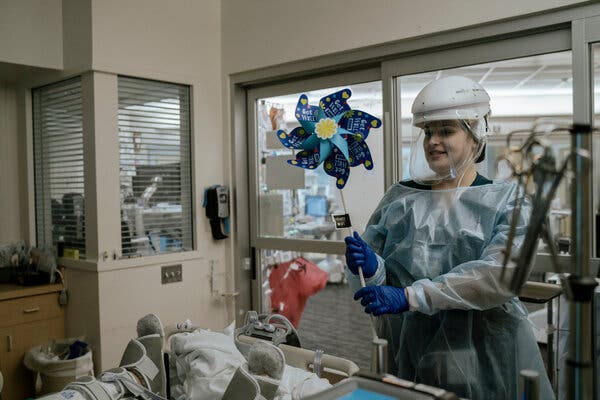
An alphabet soup of respiratory illnesses has been spreading misery across the United States, once again pushing hospital staff to the brink. But Gena Oppenheim, an intensive care nurse in Santa Monica, Calif., was taking it all in stride last week as the bed count at Providence Saint John’s Health Center continued the ominous rise that had begun around Thanksgiving.Like countless other health care workers throughout the country, Ms. Oppenheim, 32, feels emotionally battered by the past three years and the loss of so many Covid patients under her care, many of them young people who lingered on life support for months.But as family members of those patients texted her with holiday greetings in recent days, Ms. Oppenheim found herself feeling oddly comforted even as she was subsumed by melancholy.“I still value the fact that I can connect with those people,” she said, noting that before the pandemic it was unusual for I.C.U. nurses to stay in touch with the relatives of those who didn’t make it. “In this case, it’s like we’re the only link they had to their loved one. It’s an experience we share.”Nursing is in crisis, fueled by burnout, exhaustion and the politicization of a virus that left many frontline workers feeling unappreciated and, at times, abused. But the tale of how the pandemic has decimated hospital staff counts and dented patient care tells only half the story: For every bedside nurse who has left the field or transferred to a less stressful job at an insurance company or a school clinic, there are stalwarts like Nick Vargas, Bonifacio Deoso and Mariana Marquez, who, like Ms. Oppenheim, have endured and in some cases thrived.“At its core, if you love your job and that’s why you became a nurse, as long as you take care of yourself and you have good people around you, you’re going to come back to nursing,” Ms. Oppenheim said. “That’s how I look at it.”Ms. Oppenheim presented a gift sent to Ms. Flores, a 32-year-old visual artist who was intubated and unconscious.“I’m just going to wipe your eyes, OK? Don’t be scared,” Ms. Oppenheim would warn an unconscious Ms. Flores.Manny Garcia, a 26-year-old construction worker and avid soccer player from Oxnard, in the I.C.U. of Providence Saint John’s.Ms. Oppenheim has an unusually powerful connection to Providence Saint John’s. Her father, who was chronically ill most of her life, spent many nights there. She last saw him in Room 2230 shortly before he died.A month later, she applied to nursing school, and in March 2020, just as the novel coronavirus began its deadly cascade across the country, Ms. Oppenheim took a job alongside the nurses who cared for her father that final night.“Even in the darkest times at the hospital, I feel my dad there,” she said.When Ms. Oppenheim saw that Hanny Virginia, a 24-year-old nursing student, had been wheeled into Room 2230, she thought, “OK, Dad, do your magic.”Although Ms. Virginia was heavily sedated, Ms. Oppenheim spoke to her new patient as if they were old friends. She explained various medical procedures and the extracorporeal membrane oxygenation machine, or ECMO, that was keeping her alive. Perhaps the information might seep in and help prepare Ms. Virginia for the exams she had been planning to take before she fell ill.Read More on the Coronavirus PandemicBoosters: Americans who received updated shots for Covid-19 saw their risk of hospitalization reduced by roughly 50 percent this fall compared with certain groups inoculated with the original vaccines, the Centers for Disease Control and Prevention reported.Seniors Forgo Boosters: Nearly all Americans over 65 got their initial Covid vaccines. But only 36 percent have received the bivalent booster, according to C.D.C. data.Free at-Home Tests: With cases on the rise, the Biden administration restarted a program that has provided hundreds of millions of tests through the Postal Service.Contagion: Like a zombie in a horror film, the coronavirus can persist in the bodies of infected patients well after death, even spreading to others, according to two startling studies.“Come on, hurry up, get better, so we can give you a job here,” the staff members would whisper in her ear.By the summer of 2021, the nurses found themselves caring for surging numbers of patients in their 20s and 30s. The demographic shift, after months in which most patients were older, was bracing for the I.C.U. nurses at Providence Saint John’s, many of whom were also young. “It’s like looking at yourself in the mirror,” one nurse, Andrea Taylor, said.From left, Ms. Oppenheim placed a comforting hand on Ms. Virginia’s forehead; holding an iPad so that Ms. Flores’s sister, Dolores, could see her; the grave of Ms. Flores, who died Aug. 26, 2021, with a bottle from her favorite bar, San Fernando Brewing Company, where she would sit and draw.Cathy Kim at a memorial in the family apartment to Angela Kim, her sister who died July 1, 2020, and her father, Sammy Kim, who also died of Covid on May 19, 2020.They saw themselves in patients like Angela Kim, a 30-year-old social worker for at-risk youth who had hoped to become a foster mother and who spent summers building ramps for disabled children in Mexico. She died in July 2020 not knowing that her father had succumbed to the same virus three weeks earlier.Despite such unfathomable loss, the Kim family savored the lasting bond they had forged with the people who had administered the intravenous sedatives, kept an eye on the whirling machinery and brushed their loved one’s hair in those rare moments of calm.The bonds were fortified by the long, painful months of forced separation that rendered staff members the only link between patient and family.At Ms. Kim’s funeral, her sister looked up to find four of Angela’s nurses sitting among the bereaved.“I think they will forever be a part of our lives,” the sister, Cathy Kim, said. “If you really want to know a patient, you have to talk to a nurse.”Connections over timeThere is a deep intimacy that forms between an I.C.U. nurse and their patients, most of whom are heavily sedated. Over time, nurses can sense when something is wrong, sometimes even before the arrival of confirmatory diagnostics and data.“It’s kind of like with a spouse or a family member, where you can just tell when something’s off,” Mr. Vargas said. “Just by small little signals on their face they’re making. It just becomes like a sixth sense.”Ms. Oppenheim was constantly in motion. One moment, she was entering digits into a file, then dashing to mute a sharp beep from a vitals monitor before squatting on the floor of Jessica Flores’s room to change a bag of fluid from a dialysis machine.Elaine Sai and Victor Murio, I.C.U. nurses, tended to Ms. Flores.Ms. Oppenheim on the first day of work after a three-week sick leave from a Covid infection.Ms. Oppenheim napped during a break.“I’m just going to wipe your eyes, OK? Don’t be scared,” Ms. Oppenheim said in a playful voice as she dabbed the eyes of an unconscious Ms. Flores, 32, a visual artist and freight office manager.Bonifacio Deoso, a night shift nurse, spent much of the pandemic sitting in silence with patients like Catalina Gonzalez, a housekeeper from Santa Clarita who survived 119 days on an ECMO machine.“It becomes a little more intimate for us at night,” Mr. Deoso said. “That’s the time you have your patient all to yourself and you grieve with them.”Against all oddsMs. Oppenheim rarely hears the voices of her patients, and when their condition improves, she is often the first to hear them break what can be a monthslong silence.“I don’t want you to be discouraged,” Ms. Oppenheim said, leaning over Manny Garcia, 26, a construction worker and avid soccer player from Oxnard whose respiratory distress meant he would have to be intubated again.A day later, he was alert for the first time in months. He deliriously mouthed “I love you” to his girlfriend as Ms. Oppenheim held the phone to his ear. Later, she held a pad of paper beneath his hands as he penned a series of dots that might one day become words.Mr. Garcia had been given a slim chance of survival when he was first hospitalized. But two months later, he emerged from slumber to recall vivid dreams filled with dinosaurs, car crashes and social media posts mourning his untimely departure.“When I was asleep, I thought I was dead,” Mr. Garcia said.Nurse Chasa Moore took Garcia’s temperature.A television screen offered an escape from the I.C.U.Mr. Garcia, with his girlfriend, Aluxis Estrada, at Silver Strand Beach in Oxnard after he was discharged.His only true memory was that of a nurse standing at the foot of his bed.The nurses were always there. They followed him as he took his first steps down the hallway, and when he made it to the hospital’s rose garden, where his father took a knee in disbelief and gasped, “It’s a miracle.”It is stories like these that helped health care workers endure the pandemic’s darkest days.Yet as Mr. Garcia was taking those first halting steps toward recovery, Ms. Virginia was ailing in Room 2230. She was bleeding profusely from her nose, and Ms. Oppenheim had a knot in her stomach.“Are you OK?” Jake Childs, another nurse, asked as Ms. Oppenheim sat down in front of her computer and tried to push down the emotion.“Yes,” she said, unconvincingly.Two weeks later, Ms. Oppenheim held the arm of Ms. Virginia’s mother, Fitri Sho, as another nurse tried to explain that her daughter was nearly brain-dead. Ms. Sho listened with disbelief. “She looked at me to save her,” Ms. Oppenheim recalled afterward.On Oct. 5, 2021, Manny Garcia was discharged. On the same day, two doors down, Hanny Virginia died.Evan Stephenson, with his wife, Heather. He died on Oct. 17, 2022, waiting for a lung transplant after being on ECMO for 360 days. “We are looking to them to tell us what is next when nobody really knows,” Heather said of the nurses.Dolores Flores visited her sister’s grave in the San Fernando Mission Catholic Cemetery this spring.Fitri Sho, Ms. Virginia’s mother, released doves at her funeral in Covina Hills.Questions on life and deathNick Vargas left his shift as Ms. Virginia’s family members were gathering around her bed for their final goodbyes. Once inside his car, he burst out sobbing.Mr. Vargas, 38, reflected on the sense of invincibility he carried in his 20s. He empathized with Ms. Virginia and imagined that like her, he might have chosen to avoid being vaccinated. “That could have been me,” he said.A year later, Ms. Oppenheim, Mr. Vargas and the other nurses were still reckoning with questions about why some patients survived and others died despite having received the same level of care. Their deaths felt mysterious, and in vain.Ms. Virginia’s bedroom in her parents’ home in Indio.Ms. Oppenheim spoke to Nick Vargas through a door of the I.C.U.A goodbye party for a colleague in the I.C.U.’s breakroom.Some view nursing as a combination of creative art and science. Others emphasize the importance of spirituality and human tenderness.Nurses like Mariana Marquez, who sang hymns to the intubated, have grown more confident in the healing power of holding a patient’s hand. “Praying with the patient absolutely relieves a lot of sadness and pain for me,” said Ms. Marquez, who has been a nurse for two decades and can still recall patient names from her first year on the job. “I will never forget them because they became a part of me.”Andrea Taylor, another I.C.U. nurse agreed. “I see their faces. I see the rooms they were in,” she said. “It is a part of nursing to carry with you.”

Read more →

10 years after UK's first hand transplant, patient and surgeon meet again

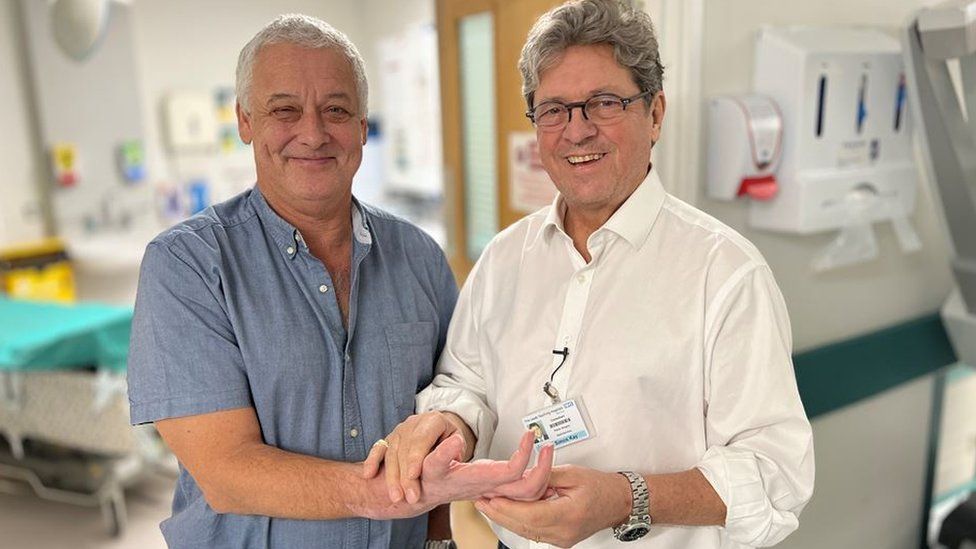
Published1 hour agoShareclose panelShare pageCopy linkAbout sharingOn 27 December 2012, the UK’s first hand transplant took place at Leeds Teaching Hospitals NHS Trust (LTHT). A decade on, we spoke to the patient and his pioneering surgeon.”Many patients say after surgery it is the small things that are the most significant to them,” says Prof Simon Kay OBE, a consultant plastic surgeon. “Being able to brush their daughter’s hair, take money out of a purse or turn on the tap and fill a glass of water, and to feel complete again.”Or, in the case of former West Yorkshire pub landlord Mark Cahill, save his wife’s life after she suffered a heart attack.Leeds, the home of the UK Hand Transplant Unit, is the UK’s only provider of this type of complex surgery. It is also now considered one of the leading hand transplant services in the world. It’s an area of medicine that would have seemed implausible just a few decades ago. Mr Cahill is the poster boy for this unit. In 2012, his right hand had become so badly infected following years of gout that it required amputating. He addresses Prof Kay as “Prof”, revealing a familiarity forged through years of interaction. When the consultant takes hold of his patient’s hand and inspects his work, the connection and pride is clear for all to see.Some patients who have walked these corridors over the past decade lost their hands or limbs due to accidents. Others lost theirs to medical conditions such as sepsis or scleroderma. “My mother had seen Professor Kay on the television saying he was going to do hand transplants,” recalls Mr Cahill, of Greetland near Halifax. “I managed to get to see him, and he said I was an ideal candidate. I talked it over with my family and thought I may as well go for it, it’s got to be better than what I’ve got, which it turns out it has been.”Key facts about hand transplant Very few donors or their families agree to donate their handsHand donation is not an option that can be selected from the donor registerFinding a match is more complex than for other organs as physical look and psychological acceptance play a key role in transplant successA one-year assessment of the patient is key and includes psychological as well as immunological assessmentRecovery and full usage of the new transplants can take between one and three yearsHand transplant is not yet available for children, but this is an area the team aims to developSource: Leeds Teaching Hospitals NHS TrustOnly after intense psychological interviews, did he go under the surgeon’s knife. “They test your psychological being to see if you’re suitable,” he says.On Boxing Day, the call he and his family had been waiting for finally came. “They said, ‘can you come across?’ They said you might spend a while in hospital while we do the tests to see if you’re suitable. All sorts run through your mind – will it be successful, will I like it? You don’t know these things until after the operation.”To him, the decision to have the transplant was a no-brainer. The surgical team liaised with surgeons in France who performed the first hand transplant in 1998.”They put me to sleep and I woke up with a new hand,” says Mr Cahill, who underwent the transplant the following day. “I remember waking up in the high dependency unit afterwards and Prof came in and said, ‘let’s have a look’. “I could move my fingers just a slight bit and Prof said, ‘don’t do that just yet’. So I thought, it’s working already. It’s incredible that it moved so quickly.”This video can not be playedTo play this video you need to enable JavaScript in your browser.Months of physiotherapy followed. “It was difficult at the start,” he recalls. “Your nerves take a long time to grow back and without them your movement and feeling is not altogether there.”The operation has changed his life, giving him back his independence. He says: “I used to have to ask people to do things for me. Driving, for instance, I can steer with my right hand that makes it so much easier.”Double hand transplant is UK’s firstUK’s first hand transplant operationDouble hand transplant surgeon gets OBEHand transplant patient in exhibitionIt also proved life-saving when, in 2016, Mr Cahill’s wife Sylvia suffered a heart attack. “She died for 19 minutes and for at least 10 of them I kept her alive with heart compressions using my right hand,” he says. He says he will forever be grateful to the team.”They have been absolutely fantastic,” says Mr Cahill. “Life is fine now. It’s great.”Exceptional expertise Prof Kay also looks back with pride. “In 10 years, we have moved from performing what was seen as a pioneering surgery, to establishing this service as accessible, well-coordinated and one of the top two units in the world,” he says. Image source, Leeds Teaching Hospitals NHS Trust”The level of expertise and quality of care in this team is exceptional and of course our surgeries would not be possible without the courage and generosity of the donors and their families. Their contribution has enabled us to change lives and to work in this field is a privilege.”But, 10 years on from that first operation, hand donation is still not an option that can be selected on the donor register. “We need donors,” says Mr Cahill. “It’s a very difficult question for nurses to ask people (next of kin).” Follow BBC Yorkshire on Facebook, Twitter and Instagram. Send your story ideas to yorkslincs.news@bbc.co.uk.More on this storyDouble hand transplant is UK’s first22 July 2016Hand transplant patient in exhibition4 May 2019UK’s first hand transplant operation4 January 2013Honour for city’s ‘first of a kind’ organ donor3 NovemberRelated Internet LinksLeeds Teaching Hospitals NHS TrustThe BBC is not responsible for the content of external sites.

Read more →

Tewkesbury hospital patients get penguin pick-me-up

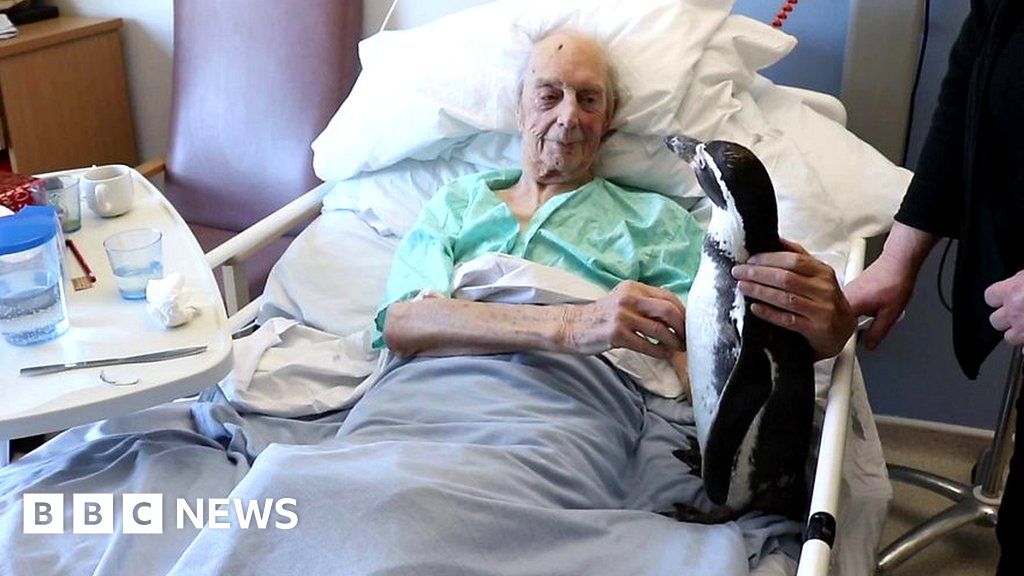
Two penguins have been visiting Tewkesbury Community Hospital to cheer up patients.It is an annual tradition to have an animal visit – last year it was alpacas that went around the ward.The penguins, named Pringle and Widget, are Humboldt penguins originally from Peru.Video Journalists: Francesca Osborne and Dan Ayers

Read more →

The F.D.A. Now Says It Plainly: Morning-After Pills Are Not Abortion Pills

Labels of Plan B One-Step had previously said, without scientific evidence, that the pill might block fertilized eggs from implanting in the womb.The Food and Drug Administration on Friday significantly changed the information that will be in every box of the most widely used emergency contraceptive pills to make clear that they do not prevent a fertilized egg from implanting in the womb. The agency explained in an accompanying document that the products cannot be described as abortion pills.Up to now, packages of the brand-name pill, Plan B One-Step, as well as generic versions of it have said that the pill might work by preventing a fertilized egg from implanting in the womb — language that scientific evidence did not support. That wording led some abortion opponents and politicians who equate a fertilized egg with a person to say that taking the morning-after pill could be the equivalent of having an abortion or even committing murder.The F.D.A. revised the leaflets inserted in packages of pills to say that the medication “works before release of an egg from the ovary,” meaning that it acts before fertilization, not after. The package insert also says the pill “will not work if you’re already pregnant, and will not affect an existing pregnancy.”In a question-and-answer document posted on the F.D.A.’s website, the agency explicitly addressed the abortion issue. In answer to the question, “Is Plan B One-Step able to cause an abortion?” the agency writes: “No.” It added: “Plan B One-Step prevents pregnancy by acting on ovulation, which occurs well before implantation. Evidence does not support that the drug affects implantation or maintenance of pregnancy after implantation, therefore, it does not terminate a pregnancy.”Since the Supreme Court overturned the ruling that ensured the national right to abortion, advocates of abortion rights have warned that some conservative states may outlaw or restrict morning-after pills on the erroneous grounds that they might cause abortions. Advocates and reproductive health providers have also worried that people who are misinformed about how the pills work may decline to use an effective tool to prevent unwanted pregnancies.For at least a decade, the pills have figured in political debates about abortion. During the 2012 presidential election, Mitt Romney called emergency contraceptives “abortive pills,” and two other Republican presidential candidates, Newt Gingrich and Rick Santorum, made similar statements.Some conservative states allow pharmacists or pharmacies to refuse to carry Plan B, which was approved in 1999 and is available without a prescription. And a recent study found that more than 60 percent of about 1,400 people surveyed believed that morning-after pills work by preventing the implantation of a fertilized egg.But scientific evidence has never shown that Plan B affects a fertilized egg’s ability to attach to the uterus. The F.D.A. acknowledged as much 10 years ago, after a 2012 investigation by The New York Times, when a spokeswoman for the agency said that “the emerging data on Plan B suggest that it does not inhibit implantation.”As a result of The Times’s reporting, MedlinePlus, a website run by the National Institutes of Health, deleted passages suggesting emergency contraceptives could disrupt implantation. Other health and medical websites made similar changes. In 2013, European health authorities revised the label of Norlevo, a pill that is identical to Plan B, to say that it “cannot stop a fertilized egg from attaching to the womb.”The F.D.A. said it made the change now because it had completed a review of a 2018 application to alter the label that was submitted by Foundation Consumer Healthcare, a company that in 2017 bought the Plan B brand from Teva Pharmaceutical Industries. Agency officials said the pandemic delayed the review process and that the timing was not motivated by political considerations.Plan B One-Step and its generic versions — including brands like Take Action, My Way and Option 2 — contain levonorgestrel, one of a class of hormones called progestins that are also found at lower doses in birth control pills and intrauterine devices. The pills are most effective in preventing pregnancy if taken within 72 hours of sexual intercourse, although they can sometimes work if taken within five days.Another type of morning-after pill, marketed as Ella and containing a compound called ulipristal acetate, is only available by prescription and is not affected by the F.D.A.’s label change. There has been less research on this type of pill, but studies suggest that it is highly unlikely to prevent implantation of a fertilized egg. In 2009, after months of scrutiny, Ella was approved for sale in overwhelmingly Catholic Italy, where laws would have barred it if it had been considered to induce abortions.According to data published in 2021 by the Centers for Disease Control and Prevention, nearly one-quarter of women of reproductive age who have sex with men answered yes to the question: “Have you ever used emergency contraception, also known as ‘Plan B,’ ‘Preven,’ ‘Ella,’ ‘Next Choice,’ or ‘Morning after’ pills?” The agency did not break down the data by the type of pills taken.As far back as the 1999 approval process, the maker of Plan B — Barr Pharmaceuticals, later acquired by Teva — asked the F.D.A. not to list an implantation effect on the label, The Times reported in 2012.Experts said implantation was likely placed on the label partly because daily birth control pills, some of which contain Plan B’s active ingredient, appear to alter the endometrium, the lining of the uterus into which fertilized eggs implant. Altering the endometrium has not been proven to interfere with implantation. But in any case, scientists said that unlike the accumulating doses of daily birth control pills, morning-after pills do not have time to affect the uterine lining.By 2007, evidence was accumulating that morning-after pills did not block implantation. In 2009 to 2010, during discussions about making Plan B available over the counter for all ages, Teva also asked that implantation be deleted from the label.

Read more →

Understanding the 'eating just one potato chip is impossible' gene

High-calorie foods — high in fat, oil, and sugar — can taste good but often cause overeating, leading to obesity and major health problems. But what stimulates the brain to cause overeating?
Recently, it has become clear that a gene called CREB-Regulated Transcription Coactivator 1 (CRTC1) is associated with obesity in humans. When CRTC1 is deleted in mice, they become obese, indicating that functioning CRTC1 suppresses obesity. However, since CRTC1 is expressed in all neurons in the brain, the specific neurons responsible for suppressing obesity and the mechanism present in those neurons remained unknown.
To elucidate the mechanism by which CRTC1 suppresses obesity, a research group led by Associate Professor Shigenobu Matsumura from the Graduate School of Human Life and Ecology at Osaka Metropolitan University focused on neurons expressing the melanocortin-4 receptor (MC4R). They hypothesized that CRTC1 expression in MC4R-expressing neurons suppressed obesity because mutations in the MC4R gene are known to cause obesity. Consequently, they created a strain of mice that expresses CRTC1 normally except in MC4R-expressing neurons where it is blocked to examine the effect that losing CRTC1 in those neurons had on obesity and diabetes.
When fed a standard diet, the mice without CRTC1 in MC4R-expressing neurons showed no changes in body weight compared to control mice. However, when the CRTC1-deficient mice were raised on a high-fat diet, they overate, then became significantly more obese than the control mice and developed diabetes.
“This study has revealed the role that the CRTC1 gene plays in the brain, and part of the mechanism that stops us from overeating high-calorie, fatty, and sugary foods,” said Professor Matsumura. “We hope this will lead to a better understanding of what causes people to overeat.”
Story Source:
Materials provided by Osaka Metropolitan University. Note: Content may be edited for style and length.

Read more →