A checkerboard pattern of inner ear cells enables us to hear

A Japanese research group has become the first to reveal that the checkerboard-like arrangement of cells in the inner ear’s organ of Corti is vital for hearing. The discovery gives a new insight into how hearing works from the perspective of cell self-organization and will also enable various hearing loss disorders to be better understood.
The research group included Assistant Professor TOGASHI Hideru of Kobe University’s Graduate School of Medicine and Dr. KATSUNUMA Sayaka of Hyogo Prefectural Kobe Children’s Hospital.
These research results were published online in Frontiers in Cell and Developmental Biology on December 8, 2022.
Main Points In the organ of Corti in the inner ear, there are two types of cells arranged in a checkerboard-like mosaic pattern; hair cells responsible for hearing and their support cells. However, the relationship between this checkerboard pattern and hearing function has long remained unclear. In mice in which the cells in the organ of Corti could not form into this checkerboard pattern, only the hair cells died (apoptosis), which resulted in deafness. For the first time in the world, it was understood that the checkerboard layout plays a fundamental structural role in preserving hair cells and their functionality as the arrangement prevents hair cells from adhering to each other. This mosaic pattern of cells has been observed in various sensory organs in many different kinds of animals. Understanding the mechanism behind how cell self-organization forms these mosaic patterns will help illuminate the functions of a variety of sensory organs and the mechanisms behind disorders.Research Background
The inner ear cochlea is necessary for hearing sound, and located inside it is the organ of Corti (*1). When the organ of Corti is viewed from above under a microscope, two types of cells arranged in a precisely ordered layout resembling a chess or checkerboard can be seen. Hair cells that convey sound waves to the brain are separated by support cells, which prevent the hair cells from touching each other. Although it has been thought that this checkerboard arrangement is necessary for the organ of Corti to function properly, the relationship between this pattern and hearing function has long remained unclear.

Read more →

Unlocking cancer's ancestry

Could knowing where your ancestors came from be the key to better cancer treatments? Maybe, but where would that key fit? How can we trace cancer’s ancestral roots to modern-day solutions? For Cold Spring Harbor Laboratory (CSHL) Research Professor Alexander Krasnitz, the answers may lie deep within vast databases and hospital archives containing hundreds of thousands of tumor samples.
Krasnitz and CSHL Postdoctoral Fellow Pascal Belleau are working to reveal the genealogical connections between cancer and race or ethnicity. They’ve developed new software that accurately infers continental ancestry from tumor DNA and RNA. Their work may also help clinicians develop new strategies for early cancer detection and personalized treatments.
“Why do people of different races and ethnicities get sick at different rates with different types of cancer?” Krasnitz says. “They have different habits, living conditions, exposures — all kinds of social and environmental factors. But there may be a genetic component as well.”
Krasnitz’s team trained their software tools using hybrid DNA profiles. They created these profiles from cancerous and unrelated cancer-free genomes of a known background. They then tested the software’s performance against pancreatic, ovarian, breast, and blood cancer specimens from patients with known ancestry. The team found the software matched their hybrid profiles to continental populations with over 95% accuracy.
“We have a good model to build on,” Krasnitz says. “But very few individuals come from a single ancestry. We’re all mixed to some extent. So now we’re working to look deeper, test tumor samples of unknown ancestry, reveal ancestral mixtures, and achieve more regional specificity.” How specific? For now, think West Africa as opposed to East Africa.
Krasnitz and Belleau recently joined a colorectal cancer study in collaboration with Northwell Health and SUNY Downstate Medical Center. The study allows them to explore how colorectal cancer mutates genes in different ways depending on specific races or ethnicities. They hope to further refine their software to infer ancestry of not only whole genomes but every individual sequence therein.
“If we can identify more localized ancestries that are susceptible to different cancers or other aggressive diseases, it could help us pinpoint the specific part of the genome responsible and target it for treatment,” Belleau says.
Right now, a simple DNA swab can tell you where you came from and which diseases you stand to inherit. In the future, it might give you the means to beat them too.
Story Source:
Materials provided by Cold Spring Harbor Laboratory. Original written by Nick Wurm. Note: Content may be edited for style and length.

Read more →

Epidemics That Weren’t: How Countries Shut Down Recent Outbreaks

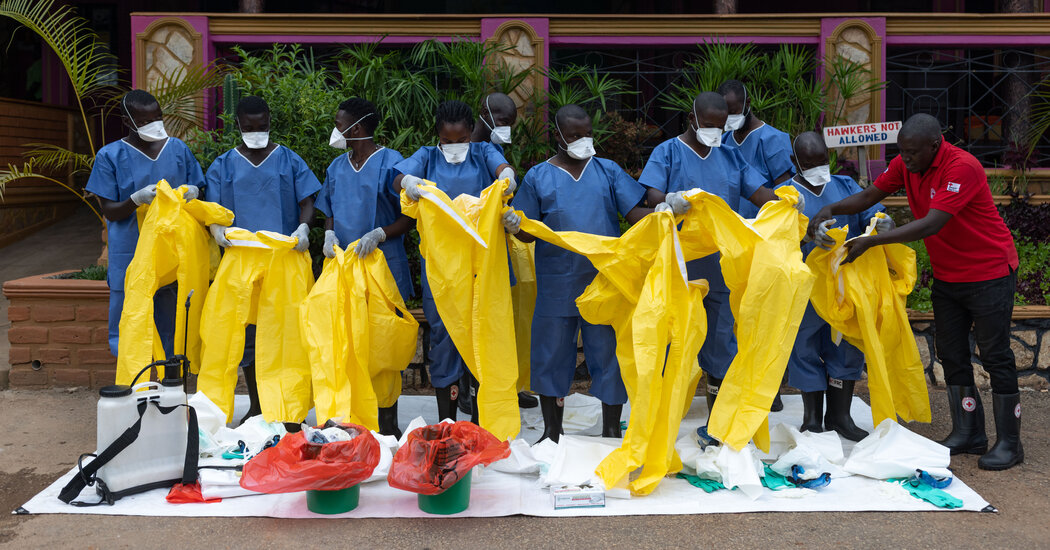
Some of the most fragile health systems in the world can teach us ways to respond to public health threats early and effectively.When Ebola swept through the eastern Democratic Republic of Congo in 2018, it was a struggle to track cases. Dr. Billy Yumaine, a public health official, recalls steady flows of people moving back and forth across the border with Uganda while others hid sick family members in their homes because they feared the authorities. It took at least a week to get test results, and health officials had difficulty isolating sick people while they waited.It took two years for the country to bring that outbreak under control, and more than 2,300 people died.A similar disaster threatened the D.R.C. last September. Members of a family in North Kivu Province fell ill with fevers, vomiting and diarrhea, one after the other. Then their neighbors became sick, too.But that set off a series of steps that the D.R.C. put in place after the 2018 outbreak. The patients were tested, the cases were quickly confirmed as a new outbreak of Ebola and, right away, health workers traced 50 contacts of the families.Then they fanned out to test possible patients at health centers and screened people at the busy border posts, stopping anyone with symptoms of the hemorrhagic fever. Local labs that had been set up in the wake of the previous outbreak tested more than 1,800 blood samples.It made a difference: This time, Ebola claimed just 11 lives.“Those people died, but we kept it to 11 deaths, where in the past we lost thousands,” Dr. Yumaine said.You probably didn’t hear that story. You probably didn’t hear about the outbreak of deadly Nipah virus that a doctor and her colleagues stopped in southern India last year, either. Or the rabies outbreak that threatened to race through nomadic Masai communities in Tanzania. Quick-thinking public health officials brought it in check after a handful of children died.Officials in Kerala, India, inspected a well to catch bats, which carry the deadly nipah virus, in 2018.Agence France-Presse — Getty ImagesOver the past couple of years, the headlines and the social feeds have been dominated by outbreaks around the world. There was Covid, of course, but also mpox (formerly known as monkeypox), cholera and resurgent polio and measles. But a dozen more outbreaks flickered, threatened — and then were snuffed out. While it may not feel that way, we have learned a thing or two about how to do this, and, sometimes, we get it right.A report by the global health strategy organization Resolve to Save Lives documented six disasters that weren’t. All emerged in developing countries, including those that, like the D.R.C.., have some of the most fragile health systems on earth.More on IndiaUrdu Poetry Festival: More than 300,000 people came to celebrate Urdu poetry during a three-day festival in New Delhi. It was testament to the peculiar reality of the language in India.Tourism in Kashmir: Visitors are flocking back to the region. Тhat is proof, India says, that its imposition of control worked. But people who live there say fear and uncertainty persist.A Deadly Bridge Collapse: After 134 people were killed when a pedestrian bridge collapsed in Gujarat, the country is asking why its infrastructure has failed so calamitously once again.Coal Baron or Climate Warrior?: The business decisions of Gautam Adani, Asia’s richest man, could go a long way in determining whether India helps the world avert a climate catastrophe.While cutting-edge vaccine technology and genomic sequencing have received lots of attention in the Covid years, the interventions that helped prevent these six pandemics were steadfastly unglamorous: building the trust of communities in the local health system. Training local staff in how to report a suspected problem effectively. Making sure funds are available to dispense swiftly, to deploy contact tracers or vaccinate a village against rabies. Increasing lab capacity in areas far from the main urban centers. Priming everyone to move fast at the first sign of potential calamity.“Outbreaks don’t occur because of a single failure, they occur because of a series of failures,” said Dr. Tom Frieden, the chief executive of Resolve and a former director of the United States Centers for Disease Control and Prevention. “And the epidemics that don’t happen don’t happen because there are a series of barriers that will prevent them from happening. .”Dr. Yumaine told me that a key step that made a difference in shutting down Congo’s Ebola outbreak in 2021 was having local health officials in each community trained in the response. The Kivu region has lived through decades of armed conflict and insecurity, and its population faces a near-constant threat of displacement. In previous public health emergencies, when people were told they would have to isolate because of Ebola exposure, they feared it was a trick to move them off their land.“In the past, it was always people from Kinshasa who were coming with these messages,” he said, referring to the country’s capital. But this time, the instructions about lockdowns and isolation came from trusted sources, so people were more willing to listen and be tested.Ebola prevention signage at a local health center in Madudu, Uganda, in October. Luke Dray/Getty Images“We could give local control to local people because they were trained,” he said.Because labs had been set up in the region, people with suspected Ebola could be tested in a day — two, at most — instead of waiting a week or more for samples to be sent more than 1,600 miles to Kinshasa. In the State of Kerala in southern India, Dr. Chandni Sajeevan, the head of emergency medicine at Kozhikode Government Medical College hospital, led the response to an outbreak of Nipah, a virus carried by fruit bats, in 2018. Seventeen of the 18 people infected died, including a young trainee nurse who cared for the first victims.“It was something very frightening,” Dr. Chandni said. The hospital staff got a crash course in intensive infection control, dressing up in the “moon suits” that seemed so foreign in the pre-Covid era. Nurses were distraught over the loss of their colleague.Three years later, in 2021, Dr. Chandni and her team were relieved when the bat breeding season passed with no infections. And then, in May, deep into India’s terrible Covid wave, a 12-year-old boy with a high fever was brought to a clinic by his parents. That clinic was full, so he was sent to the next, and then to a third, where he tested negative for Covid.But an alert clinician noticed that the child had developed encephalitis. He sent a sample to the national virology lab. It swiftly confirmed that this was a new case of Nipah virus. By then, the child could have exposed several hundred people, including dozens of health workers.The system Dr. Chandni and her colleagues had put in place after the 2018 outbreak kicked into gear: isolation centers, moon suits, testing anyone with a fever for Nipah as well as Covid. She held daily news briefings to quell rumors and keep the public on the lookout for people who might be ill — and away from bats and their droppings, which litter coconut groves where children play. Teams were sent out to catch bats for surveillance. Everyone who had been exposed to the sick boy was put into 21 days of quarantine.“Everyone, ambulance drivers, elevator operators, security guards — this time, they knew about Nipah and how to behave not to spread it,” she said.Health workers in Kerala collected blood samples from a goat to test for Nipah virus after a 12-year-old boy died in September 2021.Shijith. K/Associated PressDr. Amanda McLelland, who leads epidemic prevention at Resolve, told me that when she heard of new Ebola cases in Guinea in West Africa in 2021, she feared disaster. An outbreak that began in Guinea in 2014 had spread to two neighboring countries, and by the time it was declared over two years later, nearly 30,000 people had been infected and 11,325 had died.But this time, although Guinea was already struggling to respond to Covid, it managed to bring the Ebola outbreak in check in six months, with just 11 deaths.“That was a fantastic example of learning those lessons and investing and building sustainably in the capacity,” Dr. McLelland said.It should be celebrated, she added. While public health failures, such as those in the face of Covid, receive plenty of attention, she said, “our success is invisible.”Nevertheless, progress can be fitful: A new Ebola outbreak is slowly being brought under control in Uganda, and neighboring nations have watched it with concern. Dr. Frieden said he was discouraged to see this, because Uganda has a strong public health system with a track record of detecting and responding to outbreaks quickly.“I think what we’re seeing there is the unfortunate harvest of Covid. Covid broke a lot of things,” he said. “It broke health care worker resilience, it broke the willingness of many people to follow public health advice, it broke trust in the health care system and communities that was there before. Progress is possible, but it’s also fragile.”But Dr. Yumaine said he had growing confidence that even if Ebola were to spill back across the border from Uganda, the D.R.C. could respond swiftly, with surveillance systems that grow better all the time.“We’re encouraged by our improvements,” he said. “But we’re not stopping there.”

Read more →

Somalia's opioid overdose: Young, female and addicted

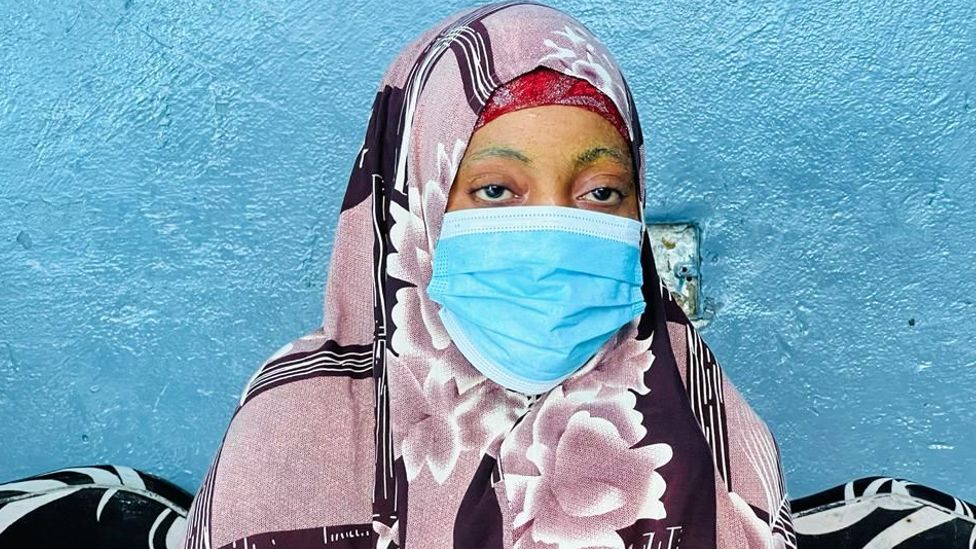
Published23 minutes agoShareclose panelShare pageCopy linkAbout sharingImage source, Fathi Mohamed AhmedBy Fathi Mohamed AhmedMogadishuIt was the discovery of the body of a 22-year-old woman on the streets of the Somali capital, Mogadishu, last year that brought into the open the problem of female drug addiction in the city. Health workers said she died from an opioid overdose.Friends of the social media influencer said she had been injecting drugs for a long time. They said she was high when she recorded some of her popular TikTok videos. Police have registered an increase in substance abuse in Mogadishu and elsewhere in Somalia, including among women. They say people are turning to new types of drugs.Whereas they used to chew the narcotic leaf khat – which is not illegal – drink alcohol, sniff glue or smoke hashish, more and more people are abusing opioids which they inject directly into their veins. These include morphine, tramadol, pethidine and codeine.In early December, police seized a large consignment of prescription drugs, mainly opioids, at Mogadishu’s international airport. They arrested the importers.Image source, Getty Images”Pills and injectable drugs are especially popular with young women and girls,” said a doctor in Mogadishu, who asked not to be named because of the sensitivity of the subject.”Many of these substances are addictive and they are readily available to buy without prescription in pharmacies all over the city.”‘I started sleeping in cars’Another popular drug used by young women is a form of chewing tobacco known as “tabbuu”, which can cause mouth and throat cancer.Amino Abdi, 23, has been abusing drugs for the past five years. Although female drug addiction is a taboo subject in Somalia, she has decided to speak about it openly to the BBC in the hope that she can help break the silence and reduce prejudice.Image source, Fathi Mohamed Ahmed”I started off chewing tabbuu with the girls I lived with,” she says.”They were a bad influence on me. I became addicted to tobacco then moved on to harder drugs, especially those I could inject intravenously, mainly tramadol and pethidine.”Ms Abdi says her drug use skyrocketed after she started having problems with her husband. She is now divorced and lives with her young daughter.”My ex is the reason I became addicted to hard drugs. My addiction got so bad that I lost my mind. I started sleeping in cars and on the streets.”Ms Abdi is trying to come off drugs but says it is very difficult to do so because there are no proper rehabilitation centres in Somalia to manage her withdrawal.She says it is impossible to stop all the drugs at the same time. She has managed to reduce her habit of injecting opioids but still chews tobacco and smokes shisha.Parents, especially mothers, are desperately worried about the growing drug problem among their daughters, some of whom are still at school.Fathi Mohamed AhmedShe was sleeping at strange times and acting out of character… I confronted her and she told me she had started taking drugs because of peer pressure”Khadijo Adan about her daughterKhadijo Adan noticed her 14-year-old daughter was behaving in an unusual way.”She was sleeping at strange times and acting out of character,” she says. “One day I found tramadol pills and chewing tobacco in her bag. I confronted her and she told me she had started taking drugs because of peer pressure.”Ms Adan sent her child to live in a centre run by Muslim sheikhs. She is no longer taking drugs because it is impossible for her to access them there.Many parents send their “problem” children to such institutions, especially those with mental illnesses, those involved in crime or drugs and those suspected of being gay. Serious abuses have taken place in some centres, including the chaining and beating of inmates.Street children at riskAs it struggles to cope with the worst drought in 40 years and more than three decades of conflict, Somalia’s limited resources are unable to cover the most basic of human needs, let alone tackle problems like drug addiction. A few small organisations are trying to fill the gap by spreading awareness about the dangers of drugs.Image source, AFPThe Green Crescent Society visits schools and universities to warn students about different types of addiction, including substance abuse, gambling, gaming and social media.Sirad Mohamed Nur runs the Mama Ugaaso Foundation, which focuses on drug abuse among young people, including girls.”We do our best to discourage the youth from taking drugs by holding awareness programmes which highlight the health risks associated with substance abuse. “We also lobby the government to step in and do something. But this is not enough. Drastic measures are needed to prevent this scourge from getting out of hand, especially among street children.”According to the Ministry of Women and Human Rights Development, more than 40% of street children take drugs. About a fifth of street children in Somalia are girls. Some 10% are under six years old, some as young as three.Although khat, glue and chewing tobacco are the most common substances abused by street children, a study conducted by the ministry found that nearly 10% use opioids and about 17% use sleeping tablets.Increased drug abuse among marginalised youth has led to an increase in crime, including violence against women and girls. According to the research body, Somali Public Agenda, it has also led to the recent phenomenon of street gangs, known as “Ciyal Weero”, which have been striking terror across Mogadishu. In some cases, drugs are used to take advantage women such as in the south-western city of Baidoa, where a woman was reportedly raped after being given an opioid.There is a risk that the rise in intravenous drug-taking will overturn Somalia’s relatively low prevalence of HIV and Aids.”The recent growth of people injecting drugs, especially opioids, is putting a whole new group of Somalis at risk of catching the virus,” says Dr Sadia Abdisamad Abdulahi, the HIV programme manager at the Somali health ministry.Crackdown on chemistsHealth professionals say one of the most effective ways of tackling the opioid problem is to target the people who sell the drugs, most of whom are pharmacists. Image source, Fathi Mohamed AhmedPolice have started to crack down on them.A pharmacist who did not want to give his name says he and his colleagues are not at all happy about the police intervention.”I have run a pharmacy in Mogadishu for many years. It used to be so easy to sell drugs to young people, including girls, partly because nobody knew what kind of effect the drugs would have on them,” he said.”We used to sell to everyone and we made good money.”But parents are now working with the police who have started to monitor and sometimes arrest us. We now fear selling drugs to young people and are losing income as a result.”By speaking out about female drug abuse, brave young women like Amino Abdi and mothers like Khadijo Adan have taken the important first step of bringing the issue into the open. Police intervention and drug awareness programmes will also help, but without more resources and attention, it is unlikely the problem will go away anytime soon.Fathi Mohamed Ahmed is the chief editor of Bilan Media, an all-female news outfit in Somalia.You may also be interested in:What beauty parlours reveal about Somali womenRehab nightmare: Drugs, canes and chainsThe sand doodler who conquered her Islamic criticsThe women breaking tradition to write novelsIf you have been affected by any of the issues in this story, the BBC Action Line has links to organisations which can offer support and adviceAround the BBCAfrica Today podcastsRelated Internet LinksBilan MediaThe BBC is not responsible for the content of external sites.

Read more →

The truth about 'medbeds' – a miracle cure that doesn't exist

Published11 minutes agoShareclose panelShare pageCopy linkAbout sharingBy Mike WendlingBBC News, East DubuqueStrange corners of the internet are awash with chatter about miracle devices that can cure nearly any ailment you can think of using the power of mystical energy. Some companies charge thousands for these “medbeds” – but their claims are far from proven.A converted motel in a small town on the Mississippi River seems an unlikely home for a world-changing technology – what a flyer in the mostly deserted lobby calls a “new wave of scientific healing”.But since last summer, this building in East Dubuque, Illinois – three hours west of Chicago – has been outfitted with medical devices that supposedly imbue patients with “life force energy”. It’s one of a number of locations run by Tesla BioHealing – no relation to the car company – dotted around the US.I tried out a medbed on a recent gloomy weekday afternoon. After being greeted at the front desk, a doctor tested my energy levels by having me place my fingers inside a metal box.Then I was ushered into one of the rooms, mostly unchanged from its motel days, and I waited for “pure biophoton life-force energy” to stream into my body.The idea of medbeds – short either for “medical beds” or “meditation beds” – has become increasingly popular on fringe medical channels, on mainstream social networks and chat apps.But people have very different ideas about what they actually are. Some insist that the technology is secret, unlikely to be encountered by mere mortals, hidden from the public by billionaires and the “deep state”. The more conspiratorial theorising includes speculation about “alien technology” and bizarre claims like the idea that John F Kennedy is still alive, strapped to a medbed.A separate, more earthly avenue of thought holds that medbeds are very real and publicly available, just not part of the medical mainstream. It’s this strand that Tesla BioHealing and a range of other companies are staking their rather expensive claims on. Tesla BioHealing offers home generators for prices up to $19,999 (£16,500), although an hour in one of their medbed motel rooms will only set you back $160 (£130).But even in the consumer-focused medbed world, where there is no talk of aliens or JFK, there’s disagreement about what a medbed actually is. And there’s a very good reason for that, says Sara Aniano, a disinformation analyst at the Anti Defamation League’s Centre on Extremism.”It’s really hard to define something that doesn’t exist,” she says.Ms Aniano has been researching the spread of medbed chat online, and as part of her inquiries signed up for trial with a different medbed company, 90.10.”The trial is nothing,” she says. “It tells you to lay on your bed and think really hard about the medbed.””In their defence, they do list on their website in the very fine print down at the bottom that the medbed is not meant to treat or diagnose illnesses,” she says.It’s a common disclaimer that we saw used in some form by just about every company offering a medbed-related product. Even though companies put out long lists of ailments that can supposedly be helped by their technologies, and provide testimonials from satisfied customers, they say that their products are not meant to replace treatments by a qualified doctor.Tesla BioHealing is no exception. The top of the company’s website clearly states: “We cannot diagnose, treat, cure, or prevent any disease or condition.”And yet their promotional material states: “Many people note improvements in their wellbeing even after only an hour of resting on a Tesla MedBed.” They also make a number of specific, unsupported claims about particular diseases.Image source, Tesla BioHealingThe staff at the Tesla BioHealing motel in East Dubuque told me about legions of customers with all manner of ailments, all of whom they said had been helped by medbeds. But in my room, I felt nothing more than curiosity and a slight sense of unease as I gazed out the window at a mostly empty car park. The Tesla Medbed cannisters were sealed in wooden boxes and a bedside table.Cutting short my hour, I returned to the doctor’s office where she repeated the test with my fingers in the metal box. Sure enough, my energy, as measured by the doctor’s laptop, was already rising.But neither the doctor nor anyone else at Tesla BioHealing could tell me what was inside the medbed cannisters themselves.Some enterprising customers have taken it upon themselves to try to find out. We came across a TikTok video where an upset punter appears to have opened up a cannister, only to find a concrete-like substance.”For anyone who’s thinking about buying one of those Tesla biohealers, don’t waste your money,” she says.The company wouldn’t be drawn on what active ingredients, if any, are inside the cannisters. But they told us in an email: “There is much more going on with our technology than meets the eye.”And while they said the Tesla cannisters were not intended to replace a doctor’s care, they also made further claims of cures and said: “Health benefits are priceless.” Both Tesla BioHealing and 90.10 pointed us to thousands of positive customer testimonials. And despite the prominent claim on the company website that 90.10 offers “Quantumfrequency medicine with scientific proof”, 90.10 chief executive Oliver Schalke told us: “It is not a medical product and was never intended to be.”How, then, are the medbed companies allowed to offer their products, hint at miraculous effects, but escape any regulatory oversight?Image source, 90.10Dr Steven Barrett, a retired psychiatrist who has been investigating questionable claims for decades, says the health care regulator in the United States – the Food and Drug Administration (FDA) – is partly to blame.”FDA registration is required by any manufacturer who wants to market products, but it just means that you’ve notified the FDA that you exist,” he says.Tesla BioHealing and other companies advertise that they are FDA registered – but that is next to meaningless.”FDA registration says nothing about whether a device is useful,” says Dr Barrett.When it comes to making vague claims about general well-being or unprovable statements about increased energy, authorities “do almost nothing about it”, he says.He speaks with a note of weariness, perhaps because of a lack of “biophotons” but more likely the result of spending decades tracking dubious health claims.”Do I think that exposure to whatever it is that they’re giving you in the bed is going to make you more energetic? I seriously doubt that,” he says. Indeed, as I began a long evening drive home from East Dubuque under cloudy skies, I felt distinctly lacking in life force energy.With reporting by Elizabeth Hotson and Shayan Sardarizadeh

Read more →

The town giving sober teens free beer

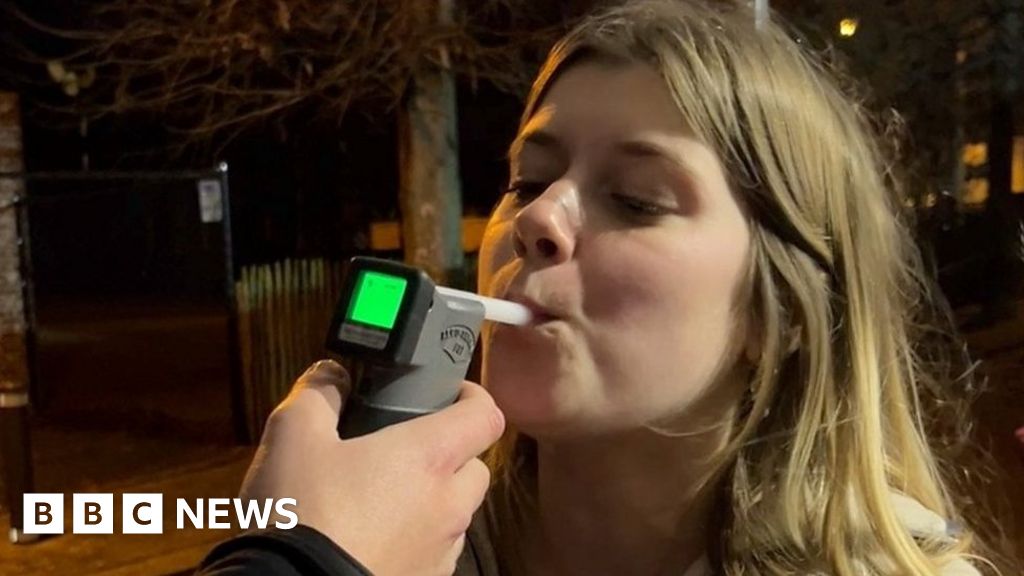
People in the Belgian town of Balen noticed more young people getting drunk, so they invented the “sobercoin”. It encourages people to arrive at parties sober – by rewarding them with free drinks.For more positive stories listen to the People Fixing the World podcast.Video by Richard Kenny

Read more →

Spontaneous baby movements have purpose

Spontaneous, random baby movements aid development of their sensorimotor system, according to new research led by the University of Tokyo. Detailed motion capture of newborns and infants was combined with a musculoskeletal computer model, to enable researchers to analyze communication among muscles and sensation across the whole body. Researchers found patterns of muscle interaction developing based on the babies’ random exploratory behavior, that would later enable them to perform sequential movements as infants. Better understanding how our sensorimotor system develops could help us gain insight into the origin of human movement as well as earlier diagnosis of developmental disorders.
If you’ve spent time with a baby, you’ll probably have noticed that they hardly keep still. Right from birth — and even in the womb — babies start to kick, wiggle and move seemingly without aim or external stimulation. These are called “spontaneous movements” and researchers believe that they have an important role to play in the development of the sensorimotor system, i.e., our ability to control our muscles, movement and coordination. If we can better understand these seemingly random movements and how they are involved in early human development, we might also be able to identify early indicators for certain developmental disorders, such as cerebral palsy.
Currently, there is limited knowledge about how newborns and infants learn to move their body. “Previous research into sensorimotor development has focused on kinematic properties, muscle activities which cause movement in a joint or a part of the body,” said Project Assistant Professor Hoshinori Kanazawa from the Graduate School of Information Science and Technology. “However, our study focused on muscle activity and sensory input signals for the whole body. By combining a musculoskeletal model and neuroscientific method, we found that spontaneous movements, which seem to have no explicit task or purpose, contribute to coordinated sensorimotor development.”
First, the team recorded the joint movements of 12 healthy newborns (less than 10 days old) and 10 young infants (about 3 months old) using motion capture technology. Next, they estimated the babies’ muscle activity and sensory input signals with the aid of a whole-body, infant-scale musculoskeletal computer model which they had created. Finally, they used computer algorithms to analyze the spatiotemporal (both space and time) features of the interaction between the input signals and muscle activity.
“We were surprised that during spontaneous movement, infants’ movements “wandered” and they pursued various sensorimotor interactions. We named this phenomenon ‘sensorimotor wandering,'” said Kanazawa. “It has been commonly assumed that sensorimotor system development generally depends on the occurrence of repeated sensorimotor interactions, meaning the more you do the same action the more likely you are to learn and remember it. However, our results implied that infants develop their own sensorimotor system based on explorational behavior or curiosity, so they are not just repeating the same action but a variety of actions. In addition to this, our findings provide a conceptual linkage between early spontaneous movements and spontaneous neuronal activity.”
Previous studies on humans and animals have shown that motor behavior (movement) involves a small set of primitive muscular control patterns. These are patterns that can typically be seen in task-specific or cyclic movements, like walking or reaching. The results of this latest study supports the theory that newborns and infants can acquire sensorimotor modules, i.e., synchronized muscle activities and sensory inputs, through spontaneous whole-body movements without an explicit purpose or task. Even through sensorimotor wandering, the babies showed an increase in coordinated whole-body movements and in anticipatory movements. The movements performed by the infant group showed more common patterns and sequential movements, compared to the random movements of the newborn group.
Next, Kanazawa wants to look at how sensorimotor wandering affects later development, such as walking and reaching, along with more complex behaviors and higher cognitive functions. “My original background is in infant rehabilitation. My big goal through my research is to understand the underlying mechanisms of early motor development and to find knowledge that will help to promote baby development.”
Story Source:
Materials provided by University of Tokyo. Note: Content may be edited for style and length.

Read more →

China to Drop Covid Quarantine for Incoming Travelers

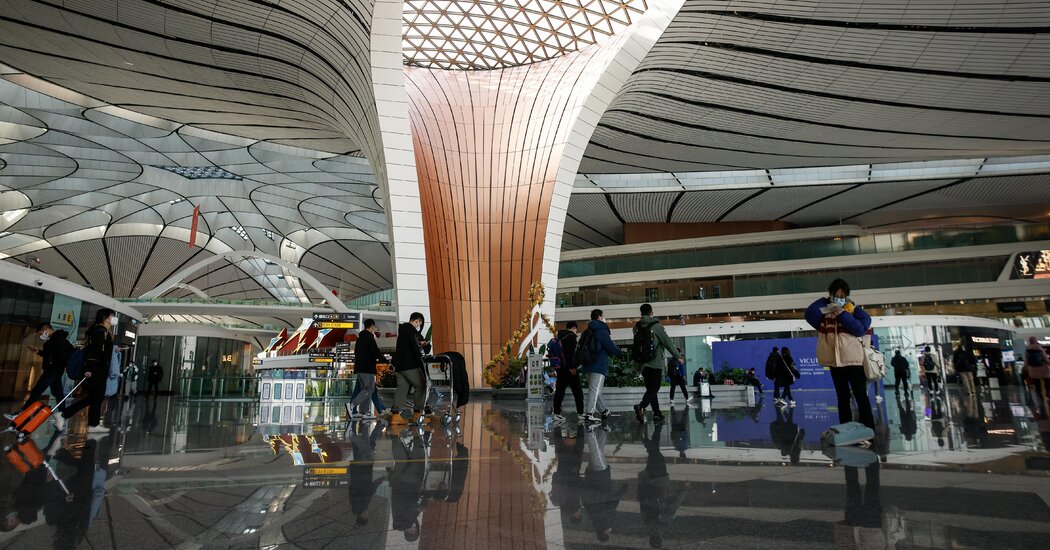
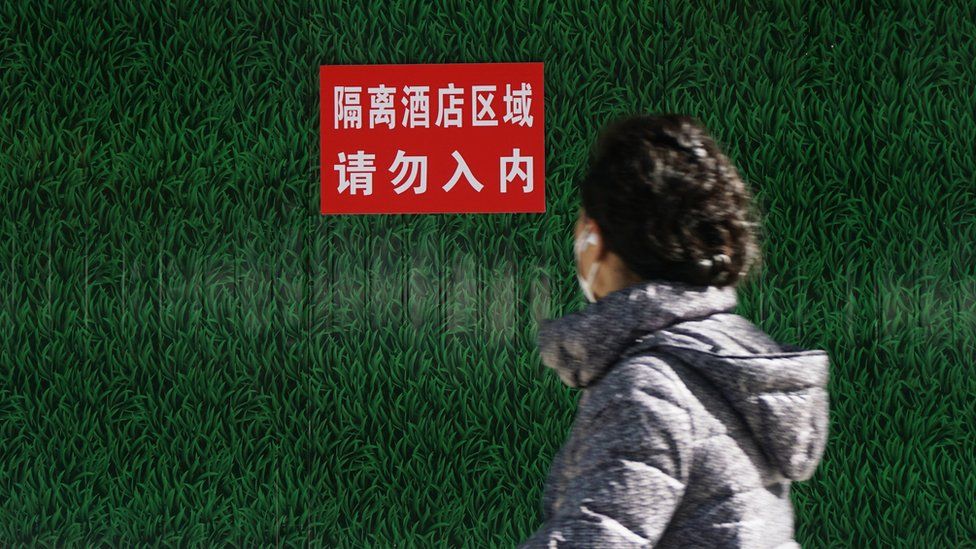
From Jan. 8, visitors will be required to show only a negative P.C.R. test taken within 48 hours. The restrictions had cut the country off from the rest of the world for nearly three years.China on Monday announced that travelers from overseas would no longer be required to enter quarantine upon arrival, in one of the country’s most significant steps toward reopening since the coronavirus pandemic began.From Jan. 8, incoming travelers will be required to show only a negative polymerase chain reaction, or P.C.R., test within 48 hours before departure, China’s National Health Commission said. Limitations on the number of incoming flights will also be eased.The travel restrictions had isolated the world’s most populous country for nearly three years. Foreigners were essentially barred from entering China in 2020, and even when they were allowed back in months later, it was generally only for business or family reunions.Even some Chinese nationals were unable to return home initially, and travelers allowed to enter were required to undergo extensive health screening and quarantine at their own expense — sometimes for as long as two months.The announcement on Monday was the latest reversal in China’s “zero Covid” approach to the virus, which for years saw Beijing seek to eliminate infections. But the policy, which involved harsh and prolonged lockdowns of hundreds of millions of people, crushed the economy and stirred public discontent.Understand the Situation in ChinaThe Communist Party cast aside restrictive “zero Covid” policy, which set off mass protests that were a rare challenge to the Communist leadership.Medicine Shortages: As Covid rips through parts of China, millions are struggling to find treatment — from the most basic cold remedies to take at home to more powerful antivirals for patients in hospitals.Traumatized and Deflated: Gripped with grief and anxiety, many in China want a national reckoning over the hard-line Covid policy. Holding the government accountable may be a quixotic quest.A Cloudy Picture: Despite Beijing’s assurances that the situation is under control, data on infections has become more opaque amid loosened pandemic constraints.In Beijing: As Covid sweeps across the Chinese capital, Beijing looks like a city in the throes of a lockdown — this time, self-imposed by residents.In November, after a fire led to the deaths of 10 people in the Xinjiang region, with many people suspecting that a Covid lockdown had hampered rescue efforts, protests erupted across the country. It was one of the boldest and most widespread outbreaks of dissent in decades. Within days, the government began loosening restrictions.The easing of travel restrictions “basically signals the final end of zero Covid,” said Yanzhong Huang, a senior fellow for global health at the New York-based Council on Foreign Relations. Though China had relaxed many of its zero-Covid domestic policies this month — scrapping regular mandatory tests for urban residents and allowing home quarantine for the infected, for example — it had held on to its international limitations.The new measures do not amount to China’s throwing open its borders, however. Many details remained unclear. The government has not said when it will resume issuing tourist visas — all such visas that were valid at the start of the pandemic have been canceled. Officials said that they would “further optimize” the ability of foreigners to apply for visas for business, study or family reunions, without offering specifics.Chinese officials also did not say how many flights would be allowed to enter the country. In November, the number of international flights to China was 6 percent of what it was in 2019, according to the flight tracker VariFlight. Xiamen Gaoqi International Airport in Fujian Province this month. It was unclear just how soon international travelers would be willing to visit China.Mark R Cristino/EPA, via ShutterstockChina will also allow its citizens to resume traveling abroad for leisure in an “orderly” fashion, officials said. During the pandemic, the government stopped issuing or renewing Chinese nationals’ passports except in limited circumstances, and in May it said it would “strictly restrict nonessential exit activities.”The end to the international Covid quarantine was part of a broader announcement on Monday that China would downgrade its classification of the coronavirus. Previously, the government treated Covid-19 as a Category A infectious disease, on par with cholera or the bubonic plague. Under that categorization, officials had to put in place extensive restrictions to control the spread, including lockdowns and quarantines. Going forward, Covid will be treated as a Category B disease, which includes AIDS and bird flu.That change will further formalize China’s shift away from zero Covid domestically, Dr. Huang said. While the earlier easing of restrictions had left local officials some leeway to decide how fast to reopen, Beijing was now signaling to officials nationwide that they should prioritize reviving the economy over disease control, he said.It was unclear, however, just how soon international travelers would be willing to visit China, and how much the economy would benefit from it. The recent loosening of restrictions has led to an explosion in infections. Many older Chinese are not vaccinated or have received only two shots. The number of infections and deaths is also unclear, as mass testing in the country has ended and China counts Covid deaths differently from most of the rest of the world. But reports of overwhelmed hospitals and funeral homes are widespread.Some social media users celebrated the fact that Chinese students studying overseas would be able to return more easily to visit their families.Mark R Cristino/EPA, via ShutterstockAt a news conference on Sunday, an official in Zhejiang Province, home to about 5 percent of China’s population, estimated that there were more than one million new Covid cases a day there.Dr. Huang said that while China had pursued zero Covid for too long, he was now worried that policymakers had swung too quickly in the opposite direction.“I’m afraid the mitigation strategy that is supposed to be focusing on the elderly and the vulnerable will be relegated to the back burner,” he said.The speed, and shock, of China’s Covid pivot was reflected on its social media platforms, where users greeted the news of the rollback on Monday with a mix of disbelief and elation. Some celebrated the fact that Chinese students studying overseas would be able to return more easily to visit their families. In the minutes after the announcement, Chinese news media reported, searches for international plane tickets on one travel platform soared.Others said, however, that they could not bring themselves to be happy about the changes, given the scale of China’s outbreak and deaths. Others noted that less than one month earlier, huge swaths of cities, including Beijing, had been under lockdown.Claire Fu

Read more →

Covid Masking: What It’s Like Now That Many Have Moved On

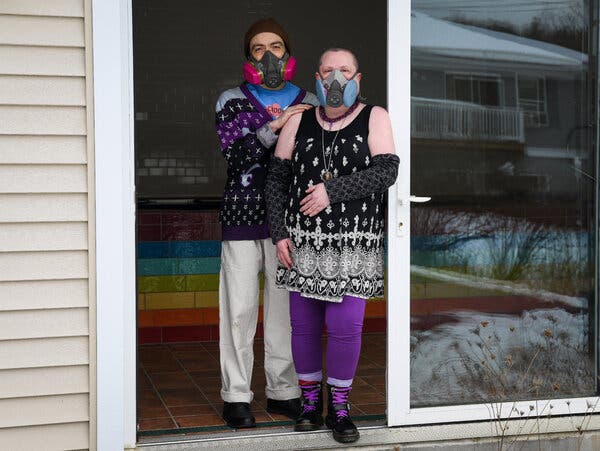
Bitsy Cherry had been bracing for the question ever since most of the members of a board game group that had started meeting online during the pandemic began attending in-person meetings a few months ago.Like many of the dwindling group of Americans still taking precautions like masking indoors and limiting face-to-face interactions, Mx. Cherry, who uses gender-neutral courtesy titles and pronouns, had been fielding nudges to return to pre-Covid routines from all corners. Doctors’ offices that have dropped mask protocols encouraged Mx. Cherry to come in for a physical exam. Friends suggested repeatedly that gathering on the porch might be safe enough. And there was President Biden, who in remarks on CBS’s “60 Minutes” had declared the pandemic “over.”But when the board-game organizer finally asked this month if Mx. Cherry was ready to go back to gathering on the Cornell University campus, Mx. Cherry fumbled for an answer. The online gaming group on Saturday afternoons had become a key social outlet for Mx. Cherry, who has remained largely confined at home with Nathanael Nerode, Mx. Cherry’s partner, since March 2020 because of an autoimmune disorder that raises the risk of a severe outcome from Covid.“I found that one upsetting,’’ Mx. Cherry said in an interview. “I’ve been worried in the back of my mind the whole time: When are they going to decide they don’t want to do this anymore?’’For many Americans still at pains to avoid infection with the coronavirus, this has become the loneliest moment since the pandemic began.Exercise classes have largely suspended remote workouts. Families and employers have expected attendance at holiday events. The vulnerable and the risk-averse are finding themselves the rare mask-wearers on public transportation, in places of worship, and at offices and stores.Even as Covid cases and hospitalizations have climbed across the nation over the last month, public officials are avoiding mask mandates — though officials in some cities, including New York and Los Angeles, have recently recommended wearing masks in public places, citing a “tripledemic” that includes influenza and R.S.V., or respiratory syncytial virus.It is hard to avoid the feeling of being judged as histrionic, some say, even when evidence suggests they are right to be cautious. And many say they face pressure, internal and external, to adjust to changing social norms around a virus that others are treating as a thing of the past.“I feel now that I’m getting stares wearing the mask, and I’m not a paranoid person,’’ said Andrew Gold, 66, who was recently the only guest masking at a small housewarming party in his Upper West Side neighborhood in Manhattan. “The vibe I’m getting is: ‘Is this really necessary?’’’More than 90 percent of Americans said they wore masks at least some of the time in December 2020, and 69 percent did so in December 2021, according to polls by Ipsos, a research firm. That number has this month dropped to 30 percent, with only 10 percent saying that they use masks at all times outside of their home.Read More on the Coronavirus PandemicBoosters: Americans who received updated shots for Covid-19 saw their risk of hospitalization reduced by roughly 50 percent this fall compared with certain groups inoculated with the original vaccines, the Centers for Disease Control and Prevention reported.Seniors Forgo Boosters: Nearly all Americans over 65 got their initial Covid vaccines. But only 36 percent have received the bivalent booster, according to C.D.C. data.Free at-Home Tests: With cases on the rise, the Biden administration restarted a program that has provided hundreds of millions of tests through the Postal Service.Contagion: Like a zombie in a horror film, the coronavirus can persist in the bodies of infected patients well after death, even spreading to others, according to two startling studies.The decline in mask wearing occurred after the Centers for Disease Control and Prevention eased its mask recommendations this spring. The virologist Trevor Bedford, at the Fred Hutchinson Cancer Institute in Seattle, has estimated that the risk of Covid is similar to that of the flu, with one death in 2,000 infections, about one tenth of what it was originally, with one death in 200 infections.But data from England, and the decrease in publicly reported P.C.R. tests, suggests there is likely a tenfold increase in unreported Covid cases compared with a year ago, Dr. Bedford said. Because there are more Covid infections than flu infections each year, more Americans are likely to die from Covid even if the death rate is similar. Moreover, Dr. Bedford wrote on Twitter that the risk of long Covid, a constellation of symptoms that can plague people for months, places the “health burden of Covid substantially higher than influenza.’’The risks fall most heavily on those who are immune-compromised, over age 65, or lack the resources to treat infections or take time off work. A Kaiser Family Foundation poll this month found that Americans making less than $40,000 per year were on average much more likely to express worries about getting seriously ill from Covid than those with higher incomes.Hospitalizations have begun to level off recently, but cases are rising in some states, and the Northeast remains a troubling hot spot. Experts fear that holiday gatherings and lagging vaccination rates could lead to an increase in hospitalizations and cases in January. Covid-19 is still the nation’s third leading cause of death, killing about 400 people a day.But avoiding infection comes with new trade-offs.Alice Barton, 69, a retired physician and committed mask wearer, at her home in Austin, Texas.Matthew Busch for The New York TimesDr. Burton, who has a degree in art history, has created a collection of unique masks, which she displays at her home.Matthew Busch for The New York TimesAlice Barton, 69, a retired doctor in Austin, Texas, who has severe asthma, for instance, has become accustomed to being the only person wearing a mask, even in doctors’ offices. And she has resisted entreaties by members of her prepandemic yoga class to return.“People are constantly commenting about how I must just be scared, there must be something the matter with me,” Dr. Barton said. “It’s the most isolated I’ve ever been.”Jennifer Rutherford, a clerical worker in Davis, Calif., has come to take it as a sign of subtle pressure when people tell her it is hard to hear her through her mask. Sometimes, she obliges by taking it off. But she remains the only member of her musical theater group to mask during rehearsals, because of her concerns about long Covid.“Most people seem to be fine,’’ Ms. Rutherford said. “But then someone will say, ‘My lungs haven’t recovered.’ ‘I still have heart palpitations.’ ‘I’m really weak.’ I have no reason to believe I’m not going to be one of those people.’’Public health experts emphasize the need for staying current with booster shots. But while many recommend masks indoors, they also say individual risk calculations should take into account that the virus is almost certainly here to stay and people need to ask: Do I want to mask, perhaps, for decades?“It’s absolutely reasonable that people would differ in terms of what risks they think is worth it,” said Jennifer Nuzzo, director of the pandemic center at Brown University School of Public Health.On social media, many of the Covid risk-averse have reported entreaties to attend holiday gatherings they fear would expose them to unacceptable health risks. Many declined to speak on the record, for fear of reprisal or ridicule from employers or social groups. Others say the shift in attitudes has sometimes made them question themselves.“I feel like there’s been a reordering of the risk universe,’’ said Tanya Keith, 51, of Des Moines, a member of the Facebook group for parents still taking Covid precautions called “Still COVIDing: Parents Edition.” “Now it’s like, I’m one of the crazy people.”Ms. Keith avoids restaurants and always wears a mask indoors. Her children mask at school. She has no health conditions that would put her at higher Covid risk, but she has had Covid once, suffered from lingering symptoms and has no time to be sick, she said.The hardest part, Ms. Keith said, has been feeling out of step with the circle of liberal-leaning friends who once shared her own family’s Covid-safety protocols. Now, some of the people with whom she had commiserated over an Iowa law that prohibited schools from requiring masks are no longer routinely wearing masks themselves.At a synagogue where masks were once required, Ms. Keith found herself and her family almost alone in wearing them for her daughter’s consecration ceremony. And though she allowed herself to be coaxed by a friend into going to a bar to watch a World Cup game, a social activity she especially missed this year, she said she felt incapable of enjoying the usual soccer camaraderie.“I just felt like, ‘What are we doing here? Nothing has changed. Covid is still not ‘just a cold,’’’ Ms. Keith said.For people like the friend, Steve Wilke-Shapiro, navigating the resistance of people with whom they were once in lock step is also a new challenge. Mr. Wilke-Shapiro, an architect, said he had become resigned to getting Covid, and that with vaccinations and booster shots, he would “do what I can to avoid it and still for the most part do the things I enjoy doing.’’“I told her it would be fun, there would be people there she hadn’t seen in a while,’’ he recalled. But when she declined to return for the next game, he did not push back. “I try to read the room,’’ he said.Sometimes family members and friends can get a little exasperated by the hyper concern. Rafael Oro, 64, a business analyst in Union, N.J., said he has chafed at his wife’s continuing caution. While he is ready to return to prepandemic routines, “we have yet to see a play,” he noted.“If you have an underlying condition, of course, put it on,’’ Mr. Oro said. “But if you’re vaccinated, you’re boosted, are you really still afraid?’’For Nathanael Nerode, 46, the partner of Mx. Cherry, the imperative now is to educate others about the risks that remain. When friends say they are not worried about Covid because they have already had it, Mx. Nerode, who also uses gender-neutral courtesy titles and pronouns, sends them a link to academic papers that suggest reinfection is relatively common and each infection adds to the risk of severe outcomes. When friends say they do not mind if they get Covid because it will be only a cold, Mx. Nerode sends a paper suggesting that even mild cases can result in cognitive impairment.“I’m fairly blunt,’’ said Mx. Nerode, who is also a member of Mx. Cherry’s game group. “So when somebody’s like, ‘Oh, I’m inviting you to this event,’ my response is, ‘You’re crazy. That event is dangerous. Don’t come crying to me when you get sick.’”That does not mean life has to shut down, the couple said. If everyone at the board game group would commit to wearing well-fitting, high-quality masks — they prefer elastomeric p100s — and the group invested in a HEPA filter, Mx. Cherry says the couple could safely attend. Mx. Nerode’s 90-year-old father, for instance, a math professor at Cornell, has taught all semester with the same equipment.Bitsy Cherry, right, and Nathanael Nerode wearing industrial face masks at their home in Ithaca, N.Y. Heather Ainsworth for The New York TimesAt the same time, Mx. Cherry worried that the other members of the game group would continue to meet online solely out of a sense of obligation.“I didn’t want them to do that,’’ Mx. Cherry recalled.But when the couple explained at the recent online meeting that neither of them felt comfortable meeting in person under the current conditions, the three other members did not press further for in-person sessions.Instead, at the end of the afternoon session, they gave their usual sign-off.“They said, ‘See you next Saturday,’ Mx. Cherry recalled. “So it seems like we will keep playing.’’Neelam Bohra contributed reporting and Kitty Bennett contributed research.

Read more →

China to end Covid quarantine for foreign arrivals

Published9 minutes agoShareclose panelShare pageCopy linkAbout sharingImage source, Getty ImagesBy Robert PlummerBBC NewsChina has announced that its requirement for travellers arriving in the country to go into quarantine will end on 8 January. The measure is the latest in a series of restrictions to be lifted as China abandons its zero-Covid policy. China is seeing an explosion in Covid-related infections and medical workers have said they are struggling to cope.In his first comments on the changes, President Xi Jinping urged officials to do what was “feasible” to save lives. State media quoted him as saying the country faced new situations demanding a more targeted response. China has stopped publishing Covid statistics, but it is thought thousands of people may be dying every day.Since March 2020, all passengers arriving in China have had to undergo mandatory centralised quarantine. But the length of time has been progressively reduced, from three weeks originally to just five days at present.Under the new rules, Covid will be downgraded from a Class A infectious disease to Class B, meaning that quarantine will no longer be enforced.How many Covid cases are there in China?China’s about-turn on how it manages the pandemic has left Mr Xi in an uncomfortable position, analysts say.He was the driving force behind the zero-Covid policy, which was blamed for restricting people’s lives excessively and harming the economy. But having abandoned it, he now has to take responsibility for the huge wave of infections and hospital admissions, mainly among older people. Public anger over the president’s handling of the pandemic is one of the areas in which he is most vulnerable.More on this storyChina’s hospitals seem to be filling up – WHO4 days ago’Everyone I know is getting a fever’ – Covid hits China4 days agoHow many Covid cases are there in China?4 days ago

Read more →