Covid in China: Checks on visitors under review – UK defence minister
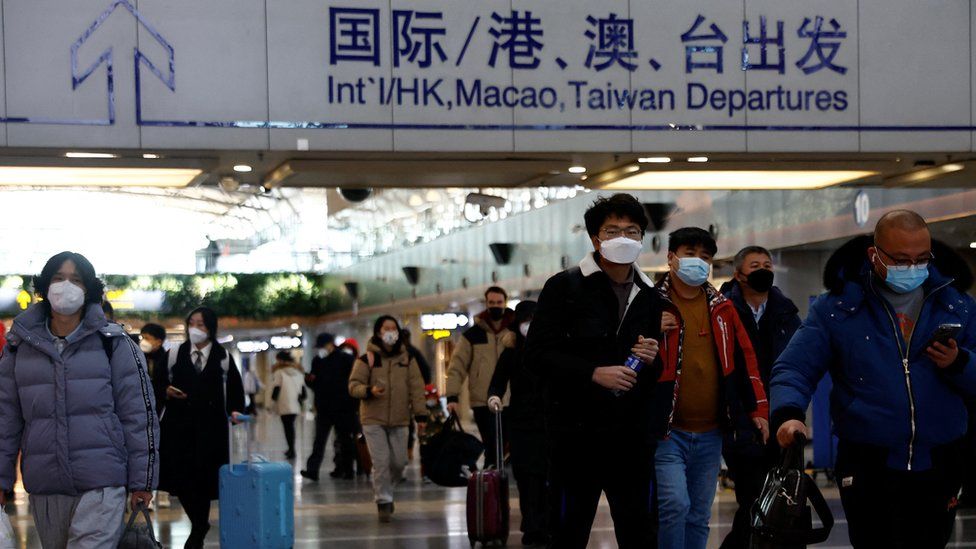
Published33 minutes agoShareclose panelShare pageCopy linkAbout sharingImage source, ReutersBy Nathan WilliamsBBC NewsThe UK government is reviewing whether to introduce Covid restrictions on visitors from China, the defence secretary has said.Ben Wallace said he expected to see clarification from the Department for Transport “in the next day or so”.Earlier, an ex-health minister urged the government to consider testing arrivals from China for Covid.A number of countries are introducing mandatory testing in response to China’s coronavirus surge. Asked whether the government would consider restrictions, Mr Wallace said: “The government is looking at that, it’s under review, we noticed obviously what the US has done and India and I think Italy has looked at it.””We keep under review all the time, obviously, health threats to the UK, wherever they may be.”He said the Department for Transport would take medical advice and talk to the Department of Health before reaching a decision.UK Covid modelling data to stop being publishedCovid-19 in the UKA number of countries – including the US, Japan and Italy – are now enforcing testing on visitors from China. This follows a surge in cases in China after Beijing’s decision to effectively end its zero-Covid policy.Lord Bethell, who was health minister during the pandemic, said there was a good reason to look at testing people when they land, a policy Italy has adopted. “What the Italians are doing is post-flight surveillance of arrivals in Italy, in order to understand whether there are any emerging variants and to understand the impact of the virus on the Italian health system,” he told BBC Radio 4’s Today programme.”That is a sensible thing to do and something the British government should be seriously looking at.”He added: “You’ve got to appreciate that a lot of people who get on these flights, we know from experience, will be people who are poorly themselves and are coming to the West for medical help.”That is quite a daunting prospect for our healthcare system and it’s important that we know which of them have got the virus and what kind of virus they’ve got.”However, he cast doubt on the policy of pre-flight testing, as the Americans are doing. This is designed to slow the spread of the virus, but Lord Bethell said trying to contain coronavirus was “like trying to stop the sea”.There are concerns that a new variant may emerge in China and that international travel could quickly spread it. When there is lots of virus circulating in any population, there will be opportunities for it to change or mutate in potentially harmful ways.Covid is circulating in lots of countries around the world. According to latest estimates for the UK, one in every 45 people in Britain is infected. Vaccines are saving lives but they can’t stop infections. Instead, experts are tracking the virus and seeing if the vaccines need updating to be a better match for any significant new mutations. So far, science is keeping up with the virus and there are no particularly worrying new variants. China is reporting about 5,000 cases a day, but analysts say such numbers are vastly undercounted – and the daily caseload may be closer to one million. Prof Paul Hunter, professor in medicine at the University of East Anglia, said he did not think the current situation in China was likely to generate many more Covid cases in the UK or elsewhere in the world.While China was in a “dark” and “difficult” place, the current evidence suggested the particular variant causing most infections in the country was “very common elsewhere in the world”, he told BBC Radio 4’s PM programme on Wednesday. The UK has seen many such cases since it appeared in the summer, he added.On Wednesday, the US said a lack of “adequate and transparent” Covid data in China had contributed to the decision to require Covid tests from 5 January for travellers entering the country from China, Hong Kong and Macau.Others countries have also announced restrictions:In Japan, from Friday, travellers from China will be tested for Covid on arrival. Those who test positive will have to quarantine for up to seven daysIn India, people travelling from China and four other Asian countries must produce a negative Covid test before arriving. Positive passengers will also be put in quarantineTaiwan says people arriving on flights from China, as well as by boat at two islands, will have to take Covid tests on arrival throughout January. Those who test positive can isolate at homeMalaysia has put additional tracking and surveillance measures in placeItaly has also imposed mandatory Covid testing on travellers from ChinaThe European Commission said its health security committee was convening on Thursday to discuss “possible measures for a coordinated EU approach”.Beijing’s foreign ministry has said coronavirus rules should only be put in place on a “scientific” basis and accused Western countries and media of “hyping up” the situation.China only announced on Monday its decision to end quarantine for arrivals – effectively reopening travel in and out of the country for the first time since March 2020. More on this storyUS demands Covid tests for visitors from China1 hour agoUK Covid modelling data to stop being published3 days agoCovid-19 in the UK5 days ago

Read more →

China Covid: U.S. Testing Rule Meets a Collective Shrug

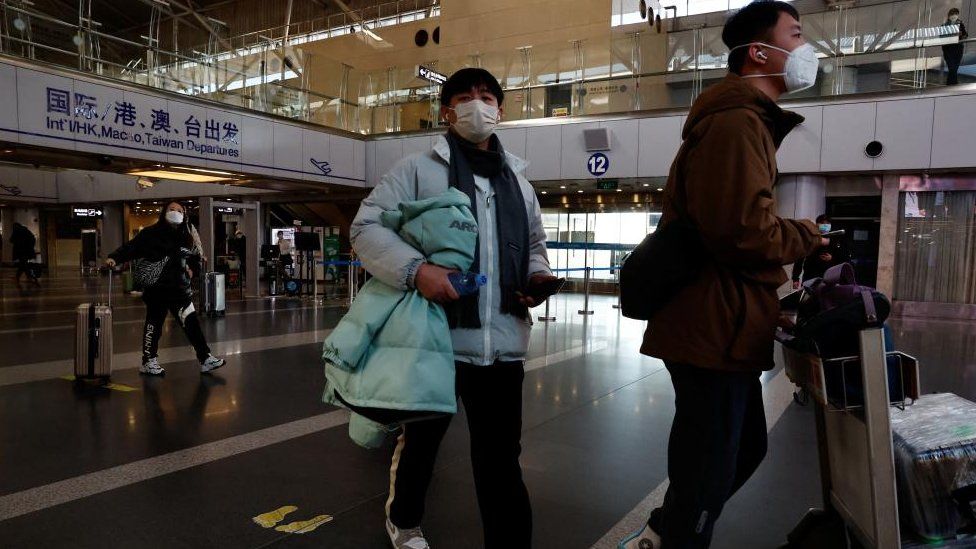
The U.S. travel rule drew a muted response in a country grappling with outbreaks and where mass, regular Covid testing was up until recently a daily reality for many millions of people.Some Chinese were disappointed by the Biden administration’s new testing requirement for travelers coming from their country. Others radiated contempt, calling it the latest Western effort to contain China’s rise. But many were simply indifferent.For many Chinese, the U.S. rule that they must present negative Covid tests to visit is a tangential development. China is grappling with severe outbreaks that have sickened countless people and overwhelmed hospitals and funeral parlors. Many are focused on trying to hold on to their jobs and homes as the economy sputters.And to many of those who have been considering travel, an extra Covid test is not a major inconvenience. Such testing had until recently been — for many tens of millions of citizens — a near-daily routine mandated by the authorities. And Chinese tourists know that they’re welcome in a lot of places across Asia and beyond.“It’s just a Covid test before traveling,” said Li Kuan, 33, a software engineer at a technology start-up in the southern Chinese city of Guangzhou. “We’ve been doing a bunch of tests like this for the past three years.”The rule from the U.S. Centers for Disease Control and Prevention, announced on Wednesday, will require negative tests from anyone, regardless of nationality or vaccination status, who wants to board a U.S.-bound flight in China. It will apply to travelers in Hong Kong and Macau, as well as to anyone coming from China who transits in the United States or enters it through a third country.The rule will take effect on Jan. 5, three days before China plans to drop the strict quarantine requirements that have been in place for inbound travelers for nearly three years.People around the world are excited about the potential boon for business and tourism that would accompany a surge in Chinese tourists. But some also worry about how cases have exploded in the country since early December, when China abruptly lifted its “zero Covid” policy after mass protests over lockdowns that threatened the ruling Communist Party.Officials in the United States fear that the coronavirus will spread rapidly in China, allowing new variants to develop and spread around the world.A Covid patient being moved through a packed hallway at a hospital in Tianjin, China, on Wednesday.Noel Celis/Agence France-Presse — Getty ImagesOn Wednesday, the C.D.C. said that it was requiring a negative Covid test for travelers from China to slow the spread of the virus in the United States. As new variants of the virus emerge around the world, China’s “reduced” testing and case reporting and “minimal” sharing of epidemiological data could delay their identification, the agency said.Italy and Japan recently imposed similar travel restrictions, and India now requires negative Covid test results and random screening at airports for passengers arriving from China, including Hong Kong, as well as from Japan, South Korea and Thailand.Understand the Situation in ChinaThe Communist Party cast aside restrictive “zero Covid” policy, which set off mass protests that were a rare challenge to the Communist leadership.Medicine Shortages: As Covid rips through parts of China, millions are struggling to find treatment — from the most basic cold remedies to take at home to more powerful antivirals for patients in hospitals.Traumatized and Deflated: Gripped with grief and anxiety, many in China want a national reckoning over the hard-line Covid policy. Holding the government accountable may be a quixotic quest.A Cloudy Picture: Despite Beijing’s assurances that the situation is under control, data on infections has become more opaque amid loosened pandemic constraints.In Beijing: As Covid sweeps across the Chinese capital, Beijing looks like a city in the throes of a lockdown — this time, self-imposed by residents.On Thursday in China, the Communist Party’s main propaganda outlets, usually quick to criticize countries that impose restrictions on Chinese travelers, appeared to downplay the U.S. news. The C.D.C. rule itself was barely mentioned on many of the party’s main platforms.Some sites instead highlighted the positive reception China’s easing has been getting in other countries. “China’s new measures ‘enhance global economic hope,’” read the headline of an article in the Global Times, the Communist Party newspaper.Shi Yinhong, a professor of international relations at Renmin University in Beijing, said that China’s official media could be wary of reporting too much on the U.S. restriction out of fear that doing so would draw attention to China’s domestic outbreaks and fuel public anger.“If you talk about this too much, you’re bound to make mistakes,” he said.For Beijing, it could be difficult to make the argument that the United States should not impose a testing requirement, when China itself still plans to maintain one, even after it eases the rules. The government will require incoming travelers to show a negative polymerase chain reaction, or P.C.R., test within 48 hours before departure.At a routine news briefing in Beijing on Thursday, Wang Wenbin, a spokesman for the Foreign Ministry, did not directly address the Biden administration’s move. He repeated talking points Beijing has used in the past week as some countries started imposing limits on Chinese travelers, saying that those pandemic measures should be “scientific and appropriate.”But this time, he made a pointed reference to the question of discrimination, saying that such measures should also “treat citizens of all countries equally.”Some Chinese citizens shrugged off the U.S. testing requirement, calling it a minor inconvenience for a population that has grown accustomed to near-constant P.C.R. testing throughout the pandemic.China’s Covid-era testing requirements for international travelers have been “way more complicated” than what the United States is now requiring of travelers from the country, said Wang Xiaofei, 29, who works for a technology company in the southern megacity of Shenzhen.“It is what it is,” she said of the testing policy, adding that she would still travel to the United States if she had the opportunity. “Just cooperate.”Others were less accommodating.Iris Su, 22, a university student in New York City, said that her parents, who live in the eastern city of Qingdao, had been thinking of visiting her after the weeklong Lunar New Year holiday in late January. “Now they aren’t so sure,” she said. “They are a bit unhappy with the U.S. restrictions.”Ms. Su said she saw the C.D.C. rule as a political move, not a scientific one. “Ultimately, this is all confrontation between great powers,” she added.Several epidemiologists said on Thursday that the new U.S. policy would be ineffective, based on evidence from other places — including Hong Kong, a Chinese territory, where a raft of testing requirements for incoming travelers earlier this year failed to prevent a sharp rise in the number of imported cases.Travelers in an airport terminal in Beijing on Thursday. As China loosens its inbound-traveler rules, several countries are tightening them.Noel Celis/Agence France-Presse — Getty ImagesKaren Grépin, a global health policy expert at the University of Hong Kong, said that while the C.D.C.’s new rule may prevent superspreader conditions on airplanes, it would not stop new variants — just as earlier bans on international travel did very little to stop the spread of the Omicron variant. “What we should really be doing now as a global community is thinking about how to support the Chinese people through this transition, not shutting them off,” she said.It was unclear on Thursday how or whether the new C.D.C. rule would affect China’s delicate relationship with the United States. When President Biden and Xi Jinping, China’s powerful leader, met in Indonesia last month, they appeared eager for a soft reset of a relationship that had been careening toward confrontation. Yet the relationship remains stuck at its lowest point in years amid disagreements over the future of Taiwan, technology restrictions and China’s mass detentions of its citizens, among other issues.Yanzhong Huang, a senior fellow for global health at the Council on Foreign Relations in New York, described the C.D.C. rule as “epidemiologically unconvincing and diplomatically unjustified.”“The overall reopening should be encouraged,” he said, referring to China’s plan to gradually dismantle its Covid testing infrastructure and travel restrictions. “Now you’re giving Chinese people the impression that you’re punishing them.”Mr. Huang said that he sympathized with international criticism of China’s perceived reluctance to share coronavirus data with other countries. But he also worries that the C.D.C. requirement may be fodder for Chinese nationalists who argue that the United States is trying to contain China’s rise.That was the tone on Thursday on some pages of the Global Times.“The Covid outbreak this time tells China that it must recognize a basic fact,” Shen Yi, a professor of international politics at Fudan University in Shanghai, wrote in a column.“That is that China’s words, deeds and various policies will face electron microscope-level scrutiny by American and Western public opinion and anti-China politicians,” he wrote. “If there is a slight flaw, it will be infinitely magnified; if a flaw can’t be found, they’d create it artificially.”

Read more →

He Had Blood in His Urine and a Strange Rash. What Was Going On?

At the E.R., the patient learned his blood wasn’t clotting. His mother had the same condition — but the trigger turned out to be a surprise.“Hey, come here,” the 19-year-old man called out to his girlfriend. “This isn’t right.” Although it was nearly 2 a.m., the young woman jumped out of bed and hurried to the bathroom. Her partner had been sick on and off for the past few weeks, and they were both too worried to sleep. The water in the bowl was a deep red — the color of cranberry juice. It looked like pure blood when it came out, the young man told her. “You should go to the emergency room,” the girlfriend urged. Not yet, he said. He would rather get a little sleep and call his mother in the morning. She had something like this several years before.The next morning, his mother agreed that he should go to the emergency room, and so the couple drove to the Yale New Haven Hospital. It was a Wednesday morning, and the place was quiet. He explained the bloody urine and was immediately brought back to be evaluated. He didn’t feel sick, but he was worried.The previous night he noticed a strange rash on his arms and legs, he explained to the physician assistant in the E.R. Tiny red dots. They didn’t hurt or itch — just a bunch of flat dots, like freckles, only red. He immediately went to the internet. The specks, he learned, were called petechiae, from a 17th-century Italian word for freckles. Each dot marks the spot where a tiny bit of blood has been deposited under the skin. It usually suggests an abnormally low level of a blood cell type known as platelets. These tiny cell fragments are the first step in creating a clot after an injury. His mother had a platelet problem, he told the physician assistant, and now he thought maybe he did, too.The young woman looked closely at the dots that covered his arms and legs; he was right — they were petechiae. There were other signs that his platelets were low: He had a blood blister on his tongue and a scattering of bloody spots on the inside of his cheek. And of course, he came in because of bloody urine.In Danger of Bleeding to DeathThe blood tests proved the patient right. His platelets were scarily low. He had a platelet count of 2 — that means he had two thousand platelets per microliter of blood. Normal is 150 to just over 400. With so few platelets, the young man was in danger of bleeding to death if he were injured. He was admitted to the hospital for treatment and observation.A hematologist called to the emergency department diagnosed the young man with a disorder known as immune thrombocytopenia (ITP). This is a somewhat mysterious disorder in which a patient’s own immune system destroys completely normal platelets. The cause is often not found. But just over a third of the time, the disorder can be linked to an infection or other disease process that somehow triggers the body’s antibodies to attack these essential clotting components.In either case, the first step is to stop the destruction of the platelets. The patient was given intravenous immunoglobulin while he was still in the E.D. This treatment is made up of antibodies taken from thousands of blood donors. After 40 years of use, it’s still not clear exactly how it works, but these donated antibodies significantly increase platelet counts in most patients with ITP.Dr. Emily Fishman, the intern assigned to care for the patient in the hospital, met the young man when he finally came to the floor. His story, he told her, actually started nearly a month before the rash began to dot his arms and legs. He caught what seemed like a bad cold. He tested himself for Covid-19: negative. And he started to feel better after just a couple of days. But even as he began to recover, he noticed a lump on the left side of his neck. At first it was just a little tender. But soon it became big and tender. It was as if he had a marshmallow buried under his skin. It got so big it scared him. That was the first time he went to the E.D. A CT scan showed what looked like an inflamed lymph node. A test for mononucleosis was negative, so they sent him home after arranging for him to follow up with an ear, nose and throat doctor.Over the next several days, the mass on his neck stopped hurting and then started to shrink. But while his neck felt better, the rest of him felt worse. He was feverish, sweaty and tired. He had no appetite. He considered going back to the E.D. but didn’t feel quite that sick. And after a few days, he felt fine again. That’s when he saw the rash.Photo illustration by Ina JangA Rash of Little ScabsFishman listened to the young man’s story and then examined him. The lump on his neck was obvious. She had seen it from the doorway. But it wasn’t tender and moved easily, the way lymph nodes are supposed to. The rash was also easily seen, but on his arms she noticed something different. “What’s this?” she asked, pointing to some dots that looked like tiny scabs. That’s from my cats, the patient replied. They had four at home. They liked to play and sometimes left marks.After the exam, Fishman excused herself and went out to look for the senior resident she was working with, Dr. Neeharika Namineni. The resident had also seen the patient and reviewed his records. Fishman described what she found and went over the test results from the E.D. His thyroid was normal. He didn’t have antibodies for Lyme or the other tick-borne diseases frequently seen in the Northeast, anaplasmosis and babesiosis. He didn’t have any antibodies for H.I.V. Fishman paused. Still, he could have early H.I.V., at the stage before antibodies are present. It takes four to six weeks to develop a measurable number of antibodies to most infections. Moreover, an acute H.I.V. infection can start with a fever and a rash. So first she would like to send off a test to look for the H.I.V. itself, to make sure he wasn’t in the earliest stages of that infection. He also had these cat scratches. Could this be cat-scratch fever or toxoplasmosis? Each of those diseases can be transmitted from cats to humans through scratches; each can cause a febrile illness and enlarged lymph nodes. Finally, could this be evidence of a hidden cancer — maybe a testicular cancer — that had spread to his lymph nodes?Namineni thought infection more likely, but certainly cancer was possible. Fishman added tests for these pathogens to their orders. If all the tests came back negative, they would look for a cancer.The next morning they met with the attending for the patient, Dr. Lloyd Friedman. Again Fishman described the patient and her thoughts. Friedman’s eyes lit up when the young woman mentioned the cat scratches. “I’m betting on cat-scratch fever,” he announced enthusiastically once she finished her presentation. Friedman wondered aloud if that infection can cause ITP. A quick search of the internet turned up a single case report. So it was uncommon but still possible. Friedman doubled down. The scratches, the fever, the hugely swollen lymph node: This felt to him like cat-scratch fever.The patient got several doses of intravenous immunoglobulin over the next few days. It did its job — his platelet count began to inch back toward normal, going from 2 to 6 to 15 to 30 to 60. The patient hadn’t felt sick since he got to the hospital, and the blood in his urine and the sores in his mouth cleared up after the first dose of immunoglobulin.With his platelet counts improving — though still far from normal — the patient was safe (and eager) to leave the hospital. Even after he left, Fishman monitored the labs for results. It wasn’t toxoplasmosis. It wasn’t acute H.I.V. Finally, they got their answer: He had cat-scratch fever, an infection caused by a bacterium called Bartonella henselae. By then the patient’s symptoms were long gone. Even the swollen lymph node was barely visible.A few weeks later, a test revealed that the young man’s platelets were back to normal. He still wonders if there is a genetic connection from his mother involved in all this. She has ITP that has lasted for years. She has to get infusions of immunoglobulin when her platelets drop. Was it just a coincidence that he got this, too? It’s a question for his mother’s hematologist. But he thinks it’s kind of cool that it’s all in the family.Lisa Sanders, M.D., is a contributing writer for the magazine. Her latest book is “Diagnosis: Solving the Most Baffling Medical Mysteries.” If you have a solved case to share, write her at Lisa.Sandersmdnyt@gmail.com.

Read more →

Marion Biotech: Uzbekistan links child deaths to India cough syrup

Published1 hour agoShareclose panelShare pageCopy linkAbout sharingImage source, Getty ImagesUzbekistan’s health ministry has said that 18 children have died after drinking a cough syrup manufactured by Indian drug maker Marion Biotech.The ministry said that preliminary tests showed a batch of the medicine contained ethylene glycol, a toxic substance.The children were given the Dok-1 Max syrup without a doctor’s prescription, it said.The amount they consumed also exceeded the standard dose for children.The allegation from Uzbekistan comes weeks after The Gambia also linked child deaths to cough syrups made by another Indian firm. India’s health ministry and Marion Biotech have not responded to the BBC’s request for comment yet. Reuters cited a government source as saying that “the health ministry was looking into the matter”. News agency ANI quoted a Marion Biotech executive as saying that the company has halted production of the syrup temporarily. He added that the government was conducting an enquiry and that the firm would take action accordingly.Marion Biotech is based in Noida, near India’s national capital Delhi. Its website is currently down, but the company’s LinkedIn page says it was founded in 1999 and that its products are “household names in Central Asian countries, Central and Latin America, South East Asia and Africa”.India produces a third of the world’s medicines, mostly in the form of generic drugs.The country, home to some of the fastest-growing pharmaceutical companies, is known as the “world’s pharmacy” and meets much of the medical needs of developing countries.The Uzbek ministry statement, dated 27 December, says that Dok-1 Max tablets and syrup have been sold in the country since 2012. “It was found that the deceased children, before admission to hospital treatment, took this drug at home for 2-7 days, 3-4 times a day, 2.5-5ml, which exceeds the standard dose of the drug for children,” the ministry said.The statement did not specify over what time period the deaths occurred. BBC Monitoring had reported on 23 December, citing news website Gazeta.uz, that Uzbek authorities were investigating “claims that 15 children died in central Samarkand region over the past two months after taking a cough syrup made in India”.On 26 December, Podrobno.uz news website reported that 21 children – 15 of them under the age of three – were treated for acute kidney failure “allegedly caused by the India-made cough syrup Dok-1 Max between September and December”. Three of the patients recovered.The ministry also said that “preliminary laboratory studies have shown that this series of Dok-1 Max syrup contains ethylene glycol”.In October, the World Health Organization (WHO) had sounded a global alert and linked four India-made cough syrups to the deaths of 66 children from kidney injuries in The Gambia. It said tests on samples of the syrup showed that they contained unacceptable amounts of toxic substances diethylene glycol and ethylene glycol.Both the Indian government and the company, Maiden Pharmaceuticals, have denied the allegations.India said earlier in December that tests on the four syrups showed that they complied with specifications, and a government official told the BBC that the WHO had been “presumptuous” in blaming the syrups. But the WHO said it stood by the action taken.Last week, a parliamentary committee in The Gambia recommended prosecution of Maiden Pharmaceuticals after weeks of investigation. The committee also recommended banning all products by the firm in the country.Read more India stories from the BBC:The young Indians saving crumbling ancestral homesIndians told not to panic over China’s Covid surgeThe indie music stars knocking Bollywood off the chartsGujarat man killed over daughter’s viral videoThe sweet story of India’s ‘first’ Christmas cakeMore on this storyIndia investigates cough syrups after Gambia deaths7 OctoberWHO stands by ‘dangerous’ India cough syrup claim16 DecemberWhy drugs made in India are sparking safety concerns17 October

Read more →

Covid in China: US imposes Covid testing for visitors from China

Published2 hours agoShareclose panelShare pageCopy linkAbout sharingImage source, ReutersBy Alys Davies and Frances MaoBBC NewsThe US has become the latest country to impose Covid testing on visitors from China, after Beijing announced it would reopen borders next week.Italy, Japan, Taiwan and India also announced mandatory tests, but Australia and UK said there were no new rules for travellers from China.After three years of being closed to the world, China will let people travel more freely from 8 January.But the country’s ongoing Covid surge has sparked wariness. China is reporting about 5,000 cases a day, but analysts say such numbers are vastly undercounted – and the daily case load may be closer to a million. Hospitals are overwhelmed and residents are struggling to find basic medicines, according to reports. On Wednesday, the US said a lack of “adequate and transparent” Covid data in China had contributed to the decision to require Covid tests from 5 January for travellers entering the country from China, Hong Kong and Macau.How many Covid cases are there in China?’Everyone I know is getting a fever’ – Covid hits China The US Centers for Disease Control and Prevention said this was needed “to help slow the spread of the virus as we work to identify… any potential new variants that may emerge”.But Beijing’s foreign ministry on Wednesday had said coronavirus rules should only be instated on a “scientific” basis and accused Western countries and media of “hyping up” the situation.Some people reacted angrily on China’s censored social media. “I thought all of the foreign countries had opened up. Isn’t this racism?” read one comment that was liked 3,000 times on Weibo. The US has said testing is required of anyone coming from China, or via a third country, regardless of nationality.But others said they understood the reason for the conditions: “This is nothing compared to all the restrictions we had for people coming into China,” one user wrote. Beijing only announced on Monday its decision to end quarantine for arrivals – effectively reopening travel in and out of the country for the first time since March 2020. Until this week, anyone entering China had to undergo quarantine in state facilities. Before the pandemic, China had been the world’s largest outbound tourism market. But it’s unclear how many Chinese people will travel abroad after 8 January given that the number of flights are limited, and many citizens need to renew their passports. The international community’s reaction has varied with the UK and Australia saying they were monitoring China’s Covid situation but were not planning on announcing new testing requirements. Others have moved swiftly to announce restrictions:In Japan, from Friday, travellers from China will be tested for Covid upon arrival. Those who test positive will have to quarantine for up to seven days. The number of flights to and from China will also be restrictedIn India, people travelling from China and four other Asian countries must produce a negative Covid test before arriving. Positive passengers will also be put in quarantineTaiwan says people arriving on flights from China, as well as by boat at two islands, will have to take Covid tests on arrival from 1 January to 31 January. Those who test positive will be able to isolate at homeMeanwhile Malaysia has put additional tracking and surveillance measures in placeItaly has also imposed mandatory Covid testing on travellers from ChinaThe European Commission said its health security committee would convene on Thursday to discuss “possible measures for a coordinated EU approach” to China’s Covid surge. But Italy, an EU member state and an epicentre of the virus in late 2019 and 2020, said it was moving first to “ensure the surveillance and identification” of any new variants of the virus.Flights arriving in Milan this week were already testing passengers from China. Authorities found 52% of passengers were infected with Covid on one flight which landed on 26 December, la Repubblica reported.China’s foreign ministry said on Wednesday that: “Currently the development of China’s epidemic situation is overall predictable and under control”. However the true toll of daily cases and deaths in China is unknown as officials have stopped requiring cases to be reported, and changed classifications for Covid deaths. On Sunday, officials said they would also stop releasing daily case counts.”The infection surge in China is on expected lines,” Dr Chandrakant Lahariya, an Indian epidemiologist and health systems specialist told the BBC in a recent interview. “If you have a susceptible population that is not exposed to the virus, cases will rise. Nothing has changed for the rest of the world.”China’s decision to reopen its borders marks the end of the country’s controversial zero-Covid policy, which President Xi Jinping had personally endorsed. Even as the rest of the world transitioned to living with the virus, Beijing insisted on an eradication policy involving mass testing and stringent lockdowns.The economy took a hit and people grew both exhausted and angry – in November, the frustration spilled onto the streets in rare protests against Mr Xi and his government. Week later, Beijing began to roll back the restrictions.More on this storyChinese rush to book travel as Covid rules lifted1 day agoChina to begin reopening to the world in January1 day agoChina’s hospitals seem to be filling up – WHO7 days agoHow many Covid cases are there in China?6 days ago

Read more →

Multi-institutional collaboration unveiling the mysteries of senescent cells and their effect on aging and human health

Multiple researchers at the Jackson Laboratory are taking part in an ambitious research program spanning several top research institutions to study senescent cells. Senescent cells stop dividing in response to stressors and seemingly have a role to play in human health and the aging process. Recent research with mice suggests that clearing senescent cells delays the onset of age-related dysfunction and disease as well as all-cause mortality.
Could therapies that remove senescent cells — called senotherapeutics — also improve the health of humans as we age? Answering this question and more has the potential to significantly advance human health, and the National Institutes of Health (NIH) has launched an extensive research initiative for this very purpose.
The SenNet Consortium, a collaboration of institutions from throughout the United States, was initially launched in 2021 with centers established to gather and analyze human data. The researchers will collect and analyze 18 tissues from healthy humans across lifespan to discern the full scope of senescent cells and how they may contribute to the aging process. The work of the SenNet Consortium was recently presented in a paper published in Nature Aging.
Along with colleagues from Mayo Clinic, University of Texas Health Science center at San Antonio, and UConn Health, JAX Professor Paul Robson, Ph.D. is taking part in the mapping of four human tissue types (kidney, adipose, pancreas, and placenta) within the KAPP-Sen Tissue Mapping Center. The Robson Lab also leads the Biological Analysis Core, and the Data Analysis Core of KAPP-Sen TMC is led by JAX Associate Professor Duygu Ucar, Ph.D., and JAX Professor Jeff Chuang, Ph.D.
SenNet has also grown over the past year to add mouse-focused investigators, and JAX was designated as a Tissue Mapping Center (TMC) for SenNet in August 2022, supported by a four-year, $10.7 million grant from the National Institute on Aging. JAX-Sen is led by Professor and Maxine Groffsky Endowed Chair Nadia Rosenthal, Ph.D., FMedSci with co-principal investigators Robson, JAX Associate Professor Ron Korstanje, Ph.D., and UConn Health’s Ming Xu, Ph.D. Associate Professor Sheng Li and Principal Computational Scientist Matt Mahoney lead the Data Analysis Core of the JAX-Sen TMC.
JAX is poised to make substantial contributions to SenNet by profiling senescent cells in kidney, placenta, pancreas, and heart, all tissues that are relevant to chronic diseases of aging. The team will draw upon its genetically diverse mouse resources, including Diversity Outbred mouse populations, to model a range of molecular senescence traits, as well as inbred mice specifically engineered to help visualize senescent cell subsets.
As three of the tissues (kidney, pancreas, and placenta) in the mouse JAX-Sen TMC are shared with the human KAPP-Sen TMC, these efforts align well with the JAX institutional initiative to continue to build the human-mouse interface. The goal of SenNet goes beyond building an atlas of senescent cells in the body and knowing more about senescent cell biology. The potential benefits of senotherapeutics for healthy human aging are exciting, as are other possible clinical advances, such as identifying individuals at higher risk for age-related disease.
Story Source:
Materials provided by Jackson Laboratory. Original written by Mark Wanner. Note: Content may be edited for style and length.

Read more →

U.S. Announces New Covid Test Requirements for Travelers From China

The Biden administration said those coming from China, Hong Kong and Macau must show negative coronavirus tests before entering the United States.The Biden administration announced on Wednesday that travelers from China, Hong Kong and Macau must present negative Covid-19 tests before entering the United States, a move that it says is intended to slow the spread of the coronavirus. The requirement will take effect on Jan. 5.The announcement, by the Centers for Disease Control and Prevention, came amid growing concern over a surge of cases in China and the country’s lack of transparency about the outbreak there.C.D.C. officials said the requirement for testing will apply to air passengers regardless of their nationality and vaccination status. It will also apply to travelers from China who enter the United States through a third country, and to those who connect through the United States to other destinations.China’s Covid outbreak has been worsening in recent days, with local governments reporting hundreds of thousands of infections a day. Videos obtained by The New York Times show sick patients crowding hospital hallways. But the situation is difficult to track in real time because China does not release reliable Covid data.This is a developing story. Check back for updates.

Read more →

Modelling the collective movement of bacteria

Biofilms form when microorganisms such as certain types of bacteria adhere to the surface of objects in a moist environment and begin to reproduce resulting in the excretion of a slimy glue-like substance.
These biofilms aren’t just unpleasant and unappealing however, they can be seriously troublesome. For example, in the medical field, the formation of biofilm can reduce the effectiveness of antibiotic treatments. The key to understanding biomass formation lies in understanding how bacteria behave en masse.
A new paper in EPJE by Heinrich-Heine-Universität, Düsseldorf, Germany, researcher Davide Breoni and his co-authors presents a mathematical model for the motion of bacteria that includes cell division and death, the basic ingredients of the cell cycle.
The team developed a mathematical model of bacterial movement in process creating a link between statistical physics and biophysics.
“Our new model belongs to a class of models for ‘active matter’ that currently encounter a lot of interest in statistical physics,” Breoni says. “This field studies the collective properties of particle systems that have their own energy source — bacteria are an exemplary case.”
The model devised by the team delivered a surprise by suggesting that when it comes to movement bacteria can act as a unit.
“In the course of our investigation, we found out that the model predicts that the formation of bacterial colonies can occur through the build-up of travelling waves, concentrated ‘packages’ of bacteria,” Breoni adds. “We did not expect this to arise from such a simple model as ours.”
He believes that the results should be interesting to the general public who may be aware of bacterial colonies, but not know how they move in a collective way.
Breoni concludes by pointing out this is a very simple model suggesting how the research could proceed from here. “We could try to make the model more realistic and confront the results to experiment to test its predictions,” he says. “On the other hand, this research is very much curiosity-driven and results from intense discussions among the researchers — an approach we’d like to maintain so we can continue to surprise ourselves with our findings.”
Story Source:
Materials provided by Springer. Note: Content may be edited for style and length.

Read more →

A glimpse of a cell's sense of touch

A research team at the Cluster of Excellence Physics of Life of TU Dresden and the University of California, Santa Barbara, reveals how cells sense their mechanical environment as they build tissues during embryogenesis.
Building tissues and organs is one of the most complex and essential tasks that cells must accomplish during embryogenesis. In this collective task, cells communicate through a variety of communication methods, including biochemical signals — similar to a cell’s sense of smell — and mechanical cues — the cell’s sense of touch. Researchers in a variety of disciplines have been fascinated by cell communication for decades. Professor Otger Campàs together with his colleagues from the Physics of Life (PoL) Cluster of Excellence at Technische Universität Dresden and from the University of California Santa Barbara (UCSB) have now been able to unravel another mystery surrounding the question of how cells use their sense of touch to make vital decisions during embryogenesis. Their paper has now been published in the journal Nature Materials.
Testing the surroundings In their paper, the researchers report how cells within a living embryo mechanically test their environment and what mechanical parameters and structures they perceive. “We know a lot about how cells sense and respond to mechanical cues in a dish. However, their microenvironment is quite different within an embryo and we did not know what mechanical cues they perceive in a living tissue,” said Campàs, Chair of Tissue Dynamics and PoL Managing Director.
The mechanical cures helps cells make important decisions, such as whether or not to divide, move or even differentiate, the differentiation process by which stem cells turn into more specialized cells able to perform specific functions. Previous works revealed that stem cells placed on a synthetic substrate rely heavily on mechanical cues to make decisions: Cells on surfaces with a stiffness similar to bones became osteoblasts (bone cells), whereas cells on surfaces with a stiffness similar to brain tissue became neurons. The findings greatly advanced the field of tissue engineering as researchers used these mechanical cues to create synthetic scaffolds to coax stem cells to develop into desired outcomes. These scaffolds are used today in a variety of biomedical applications.
From a dish to the living embryo
However, a dish is not the cell’s natural habitat. While building an organism, cells are not in contact with synthetic scaffolds in a flat dish, but rather with complex living materials in three dimensions.
Over the last decade, Prof. Campàs’ research group uncovered the mechanical cues that guide cells in the complex tissues of an embryo. Using a unique technique developed in his lab, the researchers could probe the living tissue in a similar way as cells do and find out what mechanical structures the cells sense. “We first studied how cells mechanically test their micro-environment as they differentiate and build the body axis of a vertebrate, as they differentiate,” Campàs said. “Cells used different protrusions to push and pull on their environment. So we quantified how fast and strong they were pushing.” Using a ferromagnetic oil droplet that they inserted between developing cells and subjecting it to a controlled magnetic field, they were able to mimic these tiny forces and measure the mechanical response of the cells surroundings.
Sensing the tissue architecture and cells change fate
Critical to these embryonic cells’ actions is their collective physical state, which Campàs and his research group described in a previous paper to be that of an active foam, similar in consistency to soap suds or beer froth, with cells clumped together by cell adhesion and tugging of each other. What the cells are mechanically probing, Campàs and team found out, is the collective state of this “living foam” — how stiff it is and how confined the assemblage is. “And right at the moment that cells differentiate and decide to change their fate, there is a change in the material properties of the tissue that they perceive.” According to him, at the moment the cells within the tissue decide on their fate, the tissue falls its stiffness.
Going forward
What’s not yet proven in this study is the complex question of whether — and if so, how — the change in the stiffness in the embryonic environment drives the change in the cell state. “There is an interplay between the mechanical characteristics of the structures that cells collectively build, such as tissues or organs, and the decisions they make individually, as these depend on the mechanics cues that cells sense in the tissue. This interplay is at the core of how nature builds organisms.”
The findings from this study might also have important implications for tissue engineering. Potential materials that mimic the foam-like characteristics of the embryonic tissue, as opposed to the widely used synthetic polymer or gel scaffolds, may allow researchers to create more robust and sophisticated synthetic tissues, organs and implants in the lab, with the appropriate geometries and mechanical characteristics for the desired functions.
Story Source:
Materials provided by Technische Universität Dresden. Original written by Magdalena Selbig. Note: Content may be edited for style and length.

Read more →

Tissue-specific immunity may be the future, if we can first learn its rules

Recent pressure to maximize vaccine efficacy has stirred up many new discoveries within immunology, revealing numerous paradigms with untapped therapeutic potential. One growing branch of research is focused on tissue-resident memory T cells (TRM cells), a type of immune cell that provides long-lasting protection against pathogens attacking specific organs and tissues.
In a new study published December 28, 2022 in Immunity, scientists at University of California San Diego School of Medicine revealed a previously unappreciated complexity of TRM cell biology in the gut, which may inspire a new generation of precision therapeutics against infection, cancer and auto-immune disease.
After experiencing an infection, the immune system leaves behind memory T cells, which maintain a long-lasting molecular memory of the pathogen and are ready to sound the alarm if it ever returns. While some memory T cells are designed to circulate through the bloodstream and provide whole-body protection, others reside in specific organs and are specialized to fight the pathogens that target that part of the body. These TRM cells can provide life-long immunity at the target tissue, but can also contribute to autoimmune diseases if overactivated.
“TRM cells are the first responders, right at the front lines of infection,” said senior author John T. Chang, MD, professor at UC San Diego School of Medicine. “Most of our vaccines are designed to provide systemic immunity, but we may be able to get even better protection by instead focusing on boosting the tissue-specific cells that encounter the pathogen first.”
For example, a respiratory virus may be best fought by strengthening TRM cells in the nose and lungs, and a pathogenic gut microbe best treated by enhancing TRM cells in the intestines. Thus the goal is to develop therapeutics that could boost the formation and maintenance of TRM cells, or in the case of autoimmune disease, remove the immune cells by disrupting these same pathways.
The issue is, scientists still have a lot to learn about what helps TRM cells form and survive, and these rules may be quite different in each tissue type.
To explore this, the researchers performed a series of experiments to characterize TRM cells in mice from four different compartments of the gut: two organs (the small intestine and the colon) and two different tissue layers in each (the intraepithelial and lamina propria layers).
The experiments revealed that TRM cells in each tissue type exhibited distinct patterns of cytokine and granzyme expression, along with substantial transcriptional, epigenetic and functional heterogeneity. In other words, the same type of immune cells in each part of the gut appeared to be very different in their molecular makeup, function and the chemical signals they depend on.
Reinforcing this further, each population of cells also showed differential dependence on Eomesodermin (Eomes), a transcriptional factor known to affect TRM cell development. Eomes was canonically thought to repress TRM cells based on previous data collected from the skin, liver and kidney, but the new experiments revealed the opposite was true in the small intestine. There, Eomes proved to be surprisingly important in the survival of TRM cells. However, this was not the case in the colon, highlighting the high context-specificity even within the gut.
Future research will continue to define the rules of TRM cell formation and maintenance in other tissues and explore what drives their specificity. For example, the authors suggest that differences in the microbiome of the small intestine and the colon may contribute to the unique needs of their TRM cells, so manipulating the microbiome may be another approach to regulating immune cells in the gut.
“In the future, we want to be thinking about vaccines and other therapeutics that are tailored to the specific needs of each organ,” said Chang. “By knowing what each tissue type needs to support the formation and maintenance of TRM cells, we can provide the most efficient immune defenses against disease.”
Co-authors of the study include: Yun Hsuan Lin, Han G. Duong, Abigail E. Limary, Eleanor S. Kim, Paul Hsu, Shefali A. Patel, William H. Wong, Cynthia S. Indralingam, Yi Chia Liu, Priscilla Yao, Natalie R. Chiang, Sara A. Vandenburgh, Taylor R. Anderson, Jocelyn G. Olvera, Amir Ferry, Kennidy K. Takehara, Wenhao Jin, Matthew S. Tsai, Gene W. Yeo and Ananda W. Goldrath, all at UC San Diego.

Read more →