
Silver nanoparticles show promise in fighting antibiotic-resistant bacteria

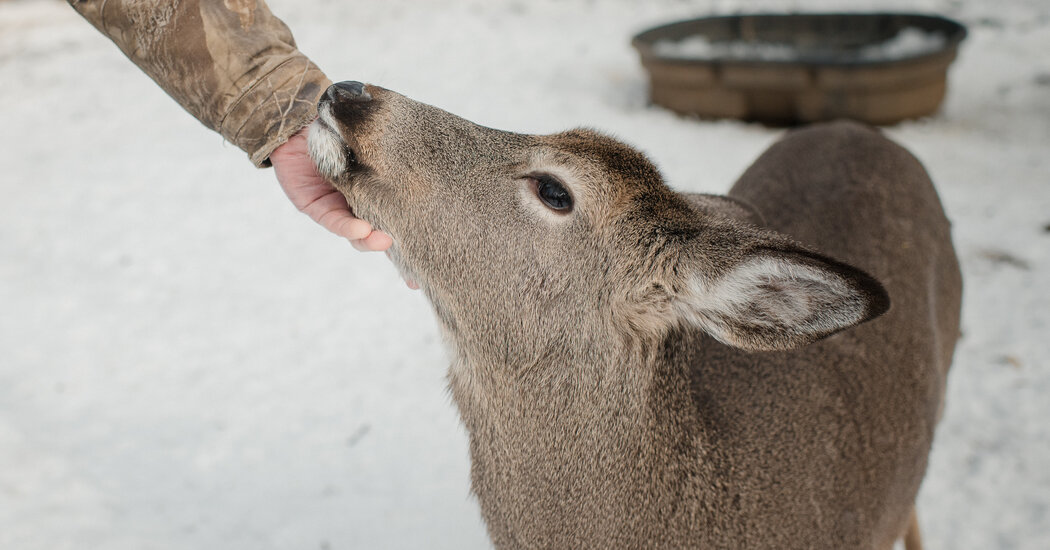
Even after Delta became the dominant variant in humans, Alpha and Gamma continued to circulate in white-tailed deer, according to new research.The Alpha and Gamma variants of the coronavirus continued to circulate and evolve in white-tailed deer, even after they stopped spreading widely among people, a new study suggests.Whether the variants are still circulating in deer remains unknown. “That’s the big question,” said Dr. Diego Diel, a virologist at Cornell University and an author of the study, which was published in Proceedings of the National Academy of Sciences on Tuesday.But the findings, which are based on samples collected through December 2021, provide more evidence that deer could be a reservoir of the virus and a potential source of future variants, which could spill back into human populations.“It is a very large wildlife population in North America that has constant and very intense contact with humans,” Dr. Diel said.Previous studies of deer have suggested humans have repeatedly introduced the coronavirus into white-tailed deer populations in the United States and Canada and that deer can spread the virus to one another. Scientists are not sure how people are passing the virus to deer, but they have speculated that it might happen when people feed deer or deer encounter human trash or waste.More on the Coronavirus PandemicEnd of an Era: The Biden administration plans to let the coronavirus public health emergency expire in May, a sign that federal officials believe the pandemic has moved into a new, less dire phase.Long Covid: An analysis of workers’ compensation claims in New York found that 71 percent of claimants with long Covid needed continuing medical treatment or were unable to work for six months or more.Annual Boosters: The Food and Drug Administration proposed that most Americans be offered a single dose of a Covid vaccine each fall, much as they are given flu shots.The scale of the risk that infected deer pose to humans remains unclear. Scientists have documented one case that most likely resulted from deer-to-human transmission in Ontario, and they note that hunters and others who have regular contact with the animals could potentially catch the virus from them.For the new study, Dr. Diel and his colleagues analyzed about 5,500 tissue samples collected from deer killed by hunters in New York State from September through December in the years 2020 and 2021.During the 2020 season, just 0.6 percent of the samples tested positive for the virus, a figure that rose to 21 percent during the 2021 season.Genetic sequencing revealed that three different variants of concern — Alpha, Gamma and Delta — were all present in deer during the 2021 season.At the time, Delta was still prevalent among New York’s human residents. But Alpha and Gamma had practically vanished, especially in the rural parts of the state where the infected deer were found.The scientists also compared the genomic sequences of the viral samples they detected in deer to those that had been collected from humans. In the deer, all three variants had new mutations that set them apart from the human sequences. But the Alpha and Gamma samples from deer diverged more significantly from the human sequences than the Delta samples from deer did, the researchers found.Together, the results suggested that Alpha and Gamma had likely been circulating among deer and accumulating new mutations for months after spilling over from the human population, experts said.“It supports the argument that deer can sustain lineages or variants that are no longer circulating in humans,” said Dr. Suresh Kuchipudi, a veterinary microbiologist at Pennsylvania State University, who was not involved in the new research.The finding not only raises concerns that deer could be a source of new coronavirus variants that could spread back to people; it also raises the possibility that the virus might evolve in ways that pose a greater risk to wild animals, he added. “It could also end up becoming an animal health problem,” Dr. Kuchipudi said.The study highlights the need for ongoing surveillance of wild deer populations, Dr. Kuchipudi and Dr. Diel said. Dr. Diel and his colleagues are preparing to analyze deer samples from the 2022 hunting season to determine whether the virus remains widespread among deer and which variants may be circulating.The Centers for Disease Control and Prevention recommends that deer hunters take a variety of basic precautions to reduce the risk of infection, including wearing masks while handling game and washing hands thoroughly afterward.
Read more →
Kevin Garey, professor of pharmacy practice and translational research at the University of Houston College of Pharmacy is reporting the first well-controlled study to demonstrate that a microbiome therapeutic, SER-109, is associated with significant quality of life improvement in patients with the debilitating recurrent infection and disease caused by Clostridium difficile (or C. diff).
SER-109 is a pill with live, purified Firmicutes bacterial spores designed to compete metabolically with C. diff and restore colonization resistance to C. diff.
In the world of superbugs (bacteria that have grown resistant to antibiotics), C. diff is among the most stubborn. Symptoms of C. diff infection are not only life-threatening but can persist for long periods, especially in persons with recurrent disease.
“In this exploratory analysis patients treated with SER-109 had significantly greater improvements in health-related quality of life (HRQOL) scores compared to placebo-treated patients as early as Week 1, with continued steady and durable improvements by Week 8,” reports Garey in the Journal of the American Medical Association (JAMA) Network Open. He developed the disease-specific Quality of Life Survey (Cdiff32) measurement. “These findings suggest that an investigational microbiome therapeutic may improve HRQOL, an important patient-related outcome.”
A new medicine to fight C. diff is highly in demand: C. diff is the most common health care-associated infectious agent in the U.S. and is estimated to cause more than 460,000 infections and 20,000 deaths annually. C. difficile infection (CDI) is a debilitating disease causing up to 10 to 20 watery bowel movements daily leading to poor HRQOL, loss of productivity, anxiety and depression.
“Currently approved antibiotics generally lead to symptom resolution through reduction of toxin-producing bacteria. However, sustained efficacy rates remain modest since antibiotics do not kill dormant C. difficile spores nor address the disrupted microbiome, the underlying cause of recurrent disease,” said Garey.
The effectiveness of SER-109 to improve quality of life was tested in 182 adults with C. diff infections using a quality-of-life questionnaire originally developed by Garey and his colleagues.
Another positive finding was the observed improvements in the mental domain and subdomain scores in the eighth week of the study in patients taking SER-109 regardless of clinical outcome.
“Several interesting hypotheses arise from this novel observation, which may be related to the potential role of the microbiome in disorders related to the gut-brain axis. CDI is associated with a disrupted microbiome which has been associated with mood disorders, including anxiety and depression,” said Garey.
When noninvasive sound waves break apart tumors, they trigger an immune response in mice. By breaking down the cell wall “cloak,” the treatment exposes cancer cell markers that had previously been hidden from the body’s defenses, researchers at the University of Michigan have shown.
The technique developed at Michigan, known as histotripsy, offers a two-prong approach to attacking cancers: the physical destruction of tumors via sound waves and the kickstarting of the body’s immune response. It could potentially offer medical professionals a treatment option for patients without the harmful side effects of radiation and chemotherapy.
Until now, researchers didn’t understand how histotripsy was activating the immune system. A study from last spring showed that histotripsy breaks down liver tumors in rats, leading to the complete disappearance of the tumor even when sound waves are applied to only 50% to 75% of the mass. The immune response also prevented further spread, with no evidence of recurrence or metastases in more than 80% of the animals.
“We found that histotripsy somehow not only kills cancer cells, but causes them to undergo a unique pathway of cell death that draws the attention of the immune system,” said Clifford Cho, the C. Gardner Child Professor of Surgery and vice chair of surgery, whose lab designed immune study protocols and measured immune responses for the study published this month in Frontiers in Immunology.
The key turned out to be tumor antigens — proteins only found in cancer cells and hidden behind their cell walls. When cells die by chemotherapy or radiation, these antigens are destroyed in the process. In contrast, sound waves kill the cancer cells by breaking their cell walls, releasing tumor antigens that then trigger the body’s defense systems.
The immune response occurred throughout the body, not simply in the area where the histotripsy was applied.
“With histotripsy, we’re not destroying the antigens, we’re releasing them while killing the tumor cells,” said Zhen Xu, U-M professor of biomedical engineering and an inventor of the histotripsy approach. “Once they’re no longer hidden, the body can see them and attack them.”
The team was able to discover the mechanism due to the way mice in cancer studies are typically given genetically identical tumors. After breaking up a tumor in one mouse using histotripsy, the team extracted some of that material, homogenized it and injected it into another mouse. Both mice developed immune protection from that cancer.
“Injecting the debris into a second mouse had almost a vaccine-like property,” Xu said. “Mice that received this debris were surprisingly resistant to the growth of cancers.”
Since 2001, Xu’s laboratory at the University of Michigan has pioneered the use of histotripsy in the fight against cancer, leading to the multi-center clinical trial #HOPE4LIVER sponsored by HistoSonics, a U-M spinoff company. More recently, the group’s research has produced promising results on histotripsy treatment of brain cancer therapy and immunotherapy.
This work was supported by VA Merit Review, the National Institutes of Health, U-M’s Forbes Institute for Discovery, Histosonics-Michigan, and Michigan Medicine-Peking Health Sciences University Joint Institute for Clinical and Translational Research.
When nature designed lignin — the fibrous, woody material that gives plants their rigid structure — it didn’t cut any corners. Incredibly slow to break down, lignin is so sturdy and long lasting that it is resistant to bacteria and rot.
So, what happens to all the lignin waste from farmlands, breweries and paper mills? Most of it is burned or buried, generating pollution and wasting a potential renewable resource.
Now, Northwestern University researchers have developed a sustainable, inexpensive two-step process that can upcycle organic carbon waste — including lignin. By processing waste through a microbe-driven biorefinery, the researchers turned lignin into carbon sources that could be used in high-value, plant-derived pharmaceuticals and antioxidant nutraceuticals as well as carbon-based nanoparticles for drug or chemical delivery.
The study was featured on the cover of the January issue of the journal ACS Sustainable Chemistry and Engineering.
“Lignin should have tremendous value, but it’s intrinsically regarded as waste,” said Northwestern’s Kimberly Gray, who led the research. “Lignin makes up 20-30% of biomass but 40% of the energy, which is a lot, but it’s difficult to tap this energy source. Nature made lignin so recalcitrant to processing that people haven’t figured out how to use it. Researchers have been trying to solve this problem for decades. Using an oil refinery as a template, we developed a biorefinery that takes in waste streams and produces high-value products.”
Gray is the Roxelyn and Richard Pepper Family Chair in Civil and Environmental Engineering and professor of civil and environmental engineering in Northwestern’s McCormick School of Engineering.
Nature’s building material
One of the most abundant organic polymers in the world, lignin is present in all vascular plants. Found between cell walls, lignin gives strong, sturdy plants — like trees — structural support. Without lignin, wood and bark would be too weak to support trees. And wooden houses and furniture would simply collapse.
But most industries that use plants — such as the paper manufacturing and brewing industries — strip out lignin, leaving behind cellulose, a type of sugar. Instead of making use of nature’s ultra-resistant material, industrial teams burn lignin as a cheap fuel.
“Humans want to get rid of lignin to reach the sugars,” Gray said. “They ferment cellulose to make alcohol or process it to make pulp. Then what do they do with the lignin? They burn it as a low-quality fuel. It’s a waste.”
Bacteria-powered fuel cell
To develop a biorefinery for breaking down carbon waste, including lignin, the researchers first engineered a microbial electrolysis cell (MEC). Similar to a fuel cell, the MEC exchanges energy between an anode and a cathode. But instead of a metal-based anode, Northwestern’s bio-anode comprises exoelectrogens — a type of bacteria that naturally generate electrical energy by eating organic matter.
“The microbes act as the catalyst,” said study co-author George Wells, associate professor of civil and environmental engineering at McCormick. “Instead of using chemical catalysts, which are often very expensive and require high temperatures, we’re using biology as the catalyst.”
The beauty of the MEC is that it can process any type of organic waste — human, agricultural or industrial. The MEC cycles waste-filled water through the bacteria, which eat up the carbon. Here, they degrade the organic carbon into carbon dioxide and then naturally respire electrons. During this process, extracted electrons flow from the bio-anode to the cathode (made of a carbon cloth), where they reduce oxygen to generate water. The process consumes protons, driving up the water’s pH to turn it into a caustic solution. From there, the caustic solution could be used for any number of applications, including wastewater treatment.
“Another benefit of this process is that it effectively treats wastewater to remove detrimental organic carbon,” Wells said. “So, a key product is clean water.”
But the researchers took the caustic substance and turned their attention back to the lignin. Lignin compounds are durable because they contain complex chains of aromatic carbon, which have a special bonding pattern that forms a ring of six carbon atoms. Each aromatic ring comprises alternating double and single bonds, which are incredibly difficult to break apart.
Busting ‘unbreakable’ bonds
When the researchers exposed lignin to the bio-based caustic chemical, however, lignin’s polymers broke apart in a way that preserved the aromatic rings. About 17% of the processed lignin turned into rings of carbon called flavonoids, an antioxidant-rich phytonutrient often found in supplements. Commonly used in medicinal chemistry, these rings could be used as plant-derived, sustainable precursors to inexpensive pharmaceuticals and supplements.
“It breaks apart the polymer bonds but selectively leaves the ring,” Gray said. “If you can preserve that ring, then you can make high-value materials. Chemists have developed catalysts that break apart the whole compound, and then they have to rebuild the ring. But we were able to break it selectively to preserve the valuable structures.”
The rest of the processed lignin (about 80%) became carbon-based nanoparticles, which could be used to encompass substances for targeted drug delivery in humans or targeted nutrient delivery in plants. The nanoparticles also could offer a sustainable, plant-derived alternative for sunscreens and cosmetics.
“It’s exciting to identify and explore a route for sustainable resource recovery from multiple waste streams,” Wells said. “We have massive wastewater and lignin streams that are expensive to treat on their own. We’re trying to reimagine those as sources of value.”
Recovering resources without hazardous chemicals
Although researchers could have used a commercially available caustic substance to process lignin, their MEC-based approach has many advantages. First, the green bio-based chemical just works better. Second, it’s safer, less expensive, can be used in ambient conditions and can generate chemicals at the point of need.
“There are many caustic substances, such as sodium hydroxide, which is commonly used in many industrial processes and wastewater treatment,” Wells said. “But that involves shipping and storing large amounts of toxic chemicals. Not only is that expensive, it also is hazardous for public health. It’s much safer and more sustainable to generate chemicals on site from waste products. We avoid having to ship or store large quantities of hazardous chemicals and are not reliant on supply chains or trucks arriving on time. It gives us flexibility and adaptability to generate chemicals right on site when they are needed.”