Infected blood inquiry: Five things we have learned
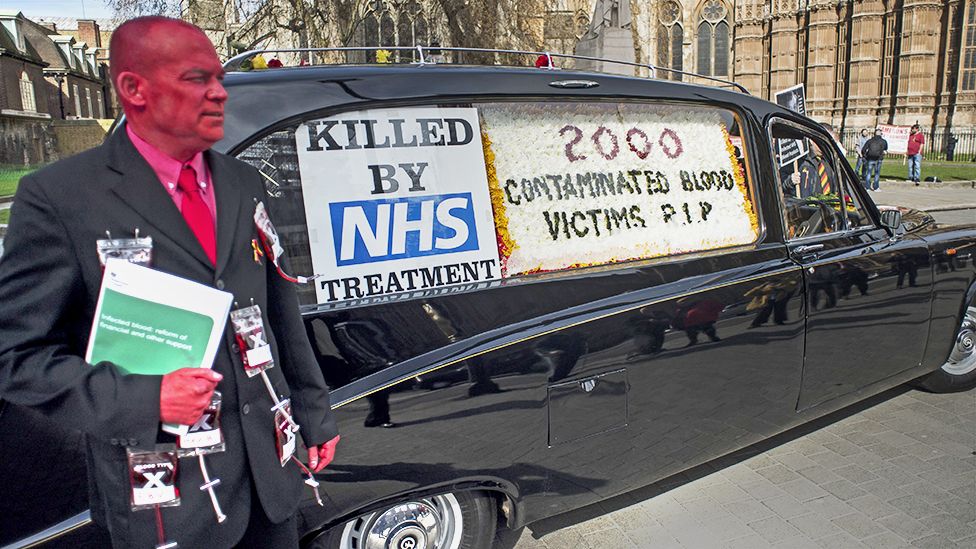
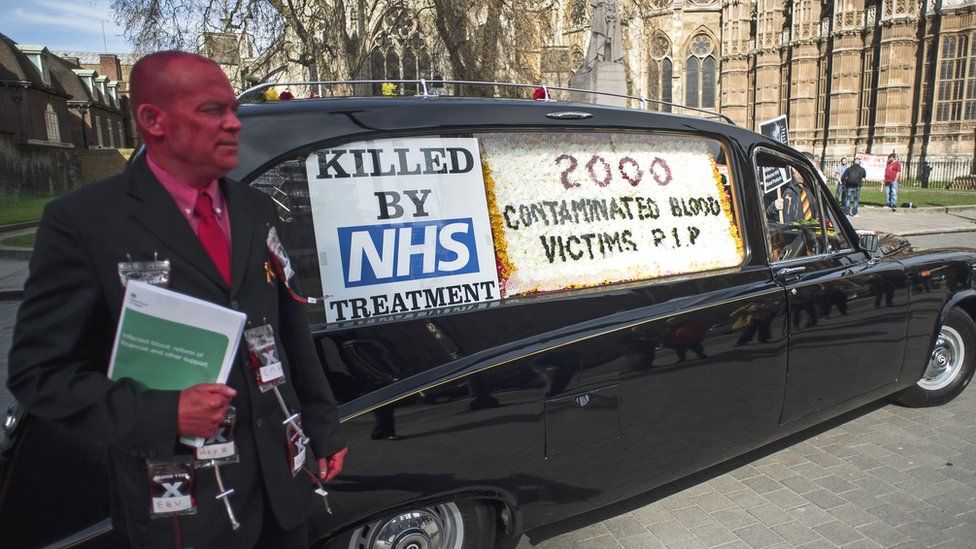
Published3 February 2023Shareclose panelShare pageCopy linkAbout sharingImage source, ShutterstockBy Jim ReedHealth reporterA long-running public inquiry into what has been called the worst treatment disaster in the history of the NHS has heard its final evidence. It is thought tens of thousands were infected with HIV and hepatitis between 1970 and 1991 after being given a contaminated drug or blood transfusion. The inquiry, which started in 2018, has reviewed thousands of documents and heard testimony from 370 witnesses.It now plans to publish its formal conclusions and recommendations in the autumn.Here are five important things that have been revealed by the inquiry over the past five years. 1. How big the contaminated blood scandal isA group of academics hired by the inquiry produced detailed estimates of the numbers infected in the 1970s and 80s. A total of 1,250 people with haemophilia and other bleeding disorders contracted HIV after being given a protein made from blood plasma known as Factor VIII or, less commonly, Factor IX.About half of that group later died of an Aids-related illness.At the time, the UK was not self-sufficient in factor concentrate, so it was often imported from the United States – where prisoners and other at-risk groups were paid to donate. Another 30,000 NHS patients probably contracted a different virus – hepatitis C – through the same contaminated treatment, or a blood transfusion after surgery or childbirth.It is thought about 2,050 of that group later died of liver failure or cancer caused by hepatitis C, before an effective treatment became widely available.Image source, Richard Warwick2. How many children were infectedResearchers found that 380 of those infected with HIV – about one in three – were children, including some very young toddlers.When that figure was read out at the public inquiry, there was an audible gasp from survivors and relatives in the room.At Treloar’s College, a state-run boarding school in Hampshire, 72 pupils – all haemophiliacs – later died after being given the contaminated treatment.The inquiry heard devastating testimony from survivors in a week of special hearings about the school.”I often just think, why me? Why am I still here?” said Richard Warwick, a former pupil who was infected with HIV as a young boy in 1978. “It’s just the guilt of losing all those friends. I can name 10 that I know who are just gone. It’s horrific.”Parents and pupils kept in dark at infected blood schoolI lost baby after contaminated blood transfusion’I’ll keep fighting until everyone is compensated’3. Who knew what and when?One of the key questions the inquiry will now have to answer is whether more could and should have been done to prevent those infections and deaths.Former Prime Minister Sir John Major drew more gasps from families watching his testimony when he described the scandal as “bad luck”.He later apologised for his choice of language.The inquiry was shown a letter written in May 1983 by Dr Spence Galbraith, then director of the UK’s Communicable Disease Surveillance Centre, to the Department of Health. It warned that haemophiliacs were being infected with an ‘Aids agent’, as HIV was then called, and concluded that “all products made from blood donated in the USA… should be withdrawn”.There was no evidence the letter was acted on at the time. In his testimony, Lord John Patten, a junior health minister from 1983 to 1985, said he “unequivocally” believed ministers should have been told about the warning and said – if he had – he “would have pressed the panic button”.4. A ‘failure of democracy’There was detailed questioning of ministers and civil servants about the internal workings of government.Former Conservative health secretary Jeremy Hunt – now chancellor – was asked about official briefings he received as recently as 2012 suggesting the scandal had been an “unavoidable problem”. He described how state institutions can “close ranks around a lie” and said it was a “huge failure of democracy” that it has taken so long to get to the truth. Another ex-health secretary Andy Burnham, now the Labour mayor of Manchester, said successive governments had “comprehensively failed” the victims over five decades and suggested there may be a case for charges of corporate manslaughter in the future.This video can not be playedTo play this video you need to enable JavaScript in your browser.5. How people will be compensatedHundreds of victims of the scandal have received annual support payments but – before this inquiry – no formal compensation had ever been awarded for loss of earnings, care costs and other lifetime losses.Many of those infected had had to give up jobs and live on benefits because of a series of health problems. In July 2022, inquiry chairman Sir Brian Langstaff made his first formal recommendation – an unusual move in the middle of a public inquiry. He said there was a “compelling case” to quickly make some interim compensation payments of £100,000 each. The government agreed and – in October 2022 – the first payments were made to about 4,000 surviving victims and widows. But many children, siblings and parents of those who had died have missed out. That included Laura Palmer, 39, who lost both her parents to HIV/Aids in August 1993, when she was nine years old. “There are still a lot of bereaved families excluded, so there is more work for us to do,” she told the BBC.In his final comments to the inquiry, Sir Brian said he plans to publish a second interim report dealing with the question of compensation “before Easter”. The inquiry team is then expected to produce a final report into the scandal, with a list of recommendations, at some point in the autumn.More on this storyBlood scandal: 1 in 3 infected with HIV was a childPublished9 November 2022Blood scandal victims to get £100k this weekPublished22 October 2022Black and Asian infected blood victims ‘let down’Published30 September 2022

Read more →

‘My Watch Thinks I’m Dead’

911 dispatchers are buried under an avalanche of false, automated distress calls from skiers and other Apple device owners who are very much alive.FRISCO, Colo. — On a recent sunny Sunday morning, following a night of fluffy snowfall, tens of thousands of skiers flocked to the resorts of Summit County. Just minutes after the lift lines opened, sirens began blaring in the 911 emergency service center, where four staff members were taking calls and dispatching help.Each jarring alert was a new incoming call, heralding a possible car crash, heart attack or other life-threatening situation. Often, the phone operators heard a chilling sound at the far end of the line: silence, perhaps from a caller too incapacitated to respond.At 9:07 a.m., one dispatcher, Eric Betts, responded to such a call. From the map on one of the seven monitors on his desk, he could see that the distress call originated from a slope at the Arapahoe Basin Ski Area. Mr. Betts tried calling back. A man picked up.“Do you have an emergency?” Mr. Betts asked. No, the man said, he was skiing — safely, happily, unharmed. Slightly annoyed, he added, “For the last three days, my watch has been dialing 911.”Winter has brought a decent amount of snowfall to the region’s ski resorts, and with it an avalanche of false emergency calls. Virtually all of them have been placed by Apple Watches or iPhone 14s under the mistaken impression that their owners have been debilitated in collisions.As of September, these devices have come equipped with technology meant to detect car crashes and alert 911 dispatchers. It is a more sensitive upgrade to software on Apple devices, now several years old, that can detect when a user falls and then dial for help. But the latest innovation appears to send the device into overdrive: It keeps mistaking skiers, and some other fitness enthusiasts, for car-wreck victims.Lately, emergency call centers in some ski regions have been inundated with inadvertent, automated calls, dozens or more a week. Phone operators often must put other calls, including real emergencies, on hold to clarify whether the latest siren has been prompted by a human at risk or an overzealous device.“My whole day is managing crash notifications,” said Trina Dummer, interim director of Summit County’s emergency services, which received 185 such calls in the week from Jan. 13 to Jan. 22. (In winters past, the typical call volume on a busy day was roughly half that.) Ms. Dummer said that the onslaught was threatening to desensitize dispatchers and divert limited resources from true emergencies.“Apple needs to put in their own call center if this is a feature they want,” she said.Trina Dummer, interim director of Summit County’s emergency services. “My whole day is managing crash notifications,” she said.Theo Stroomer for The New York TimesDavid Benson, one of Summit County’s 911 dispatchers.Theo Stroomer for The New York TimesHer call center and others have alerted Apple to the issue. In mid-January, the company sent four representatives to observe Ms. Dummer and her team for a day; she said they had plenty of examples to show off.In a written statement, Alex Kirschner, an Apple spokesman, said, “We have been aware that in some specific scenarios these features have triggered emergency services when a user didn’t experience a severe car crash or hard fall.” The company noted that when a crash is detected, the watch buzzes and sends a loud warning alerting the user that a call is being placed to 911, and it provides 10 seconds in which to cancel the call.Apple also said that updates to the software late last year had been intended to “optimize” the technology and reduce the number of false calls. Mr. Kirschner added, “Crash Detection and Fall Detection are designed to get users help when they need it most, and it has already contributed to saving several lives.”Apple maintains a collection of incidents in which the two technologies have come to the rescue. In one case, an Apple Watch alerted the authorities after a driver in Indianapolis had crashed into a telephone pole and the device dialed for assistance. In another, a watch called for help after a New Jersey man fell down a steep cliff while hiking.In Colorado, call dispatchers had trouble recalling an instance in which a watch had saved a skier in distress. (Ms. Dummer added that her team had “very rarely” received false 911 calls from other companies’ devices, such as Android phones.)The problem extends beyond skiers. “My watch regularly thinks I’ve had an accident,” said Stacey Torman, who works for Salesforce in London and teaches spin classes there. She might be safely on the bike, exhorting her class to ramp up the energy, or waving her arms to congratulate them, when her Apple Watch senses danger.“I want to celebrate, but my watch really doesn’t want me to celebrate,” she said. Oh great, she thinks, “now my watch thinks I’m dead.”Recently she fell while racing to catch a bus in the rain. “I went down hard, really hard,” she said. Her watch did not call 911, however. “When I did actually fall running for the bus?” she said. “Crickets.”Skiers and snowboarders at the Breckenridge Ski Resort on a recent Sunday.Theo Stroomer for The New York TimesJeff Fitch, a rookie dispatch supervisor, taking a call at the Summit County 911 Center.Theo Stroomer for The New York TimesJon Baron, who works in real estate in Golden, Colo., has an Apple Watch that has twice dialed the authorities. Once, he was at an amusement park playing the strongman game, in which the goal is to hit a lever with a hammer firmly enough to ring a bell. Mr. Baron swung, the bell rang, his wife and children seemed duly impressed — until “my watch started making this noise like an air-raid siren,” he said.“I was trying to show I was physically able, which I thought I’d demonstrated fairly aptly, but my watch thought different,” he added.Another time, Mr. Baron was in the Tampa airport when the intercom summoned him to a white paging telephone. An emergency services operator at the other end told him his device had dialed 911 for help. Was he OK? “I’m doing all right,” he said he had told the operator. “But I have a plane to catch.”Apple introduced fall detection technology in 2018 after developing an algorithm based on the trajectory of a wrist wearing a watch and acceleration at time of impact. Its crash-detection technology, introduced in September, was tested in crash tests and labs on iPhones and Apple Watches.But something about the way skiers accelerate and stop, or jostle, seems to set the technology on edge. And skiers, in helmets and layers of clothing, often do not to detect the warning, so they may not cancel the call or respond to the 911 dispatcher.“A lot of people don’t feel it or hear it,” said Brett Loeb, emergency services communications director in Pitkin County, Colo., home to Aspen Mountain. Or, he proposed, even when they feel the vibration, “they think, ‘I don’t want to answer my phone right now — I’m having a great time; my phone is killing my buzz.’”He noted that Aspen Mountain had recently posted signs at lift lines and ticket offices alerting Apple Watch and iPhone 14 users to the problem and encouraging them to upgrade to the latest software version or disable the service, to “prevent unnecessary trips to the slopes” by 911-dispatched ambulances.“I’m struggling to get my daily job done,” Sgt. Mark Watson said. “I don’t have all day to do Apple products.”Theo Stroomer for The New York TimesMr. Fitch, in training, fielding a 911 call.Theo Stroomer for The New York TimesAt the Summit County call center on Sunday morning, Ms. Dummer was training a rookie dispatch supervisor, Jeff Fitch, to field 911 calls, while Mr. Betts and another dispatcher, David Benson, handled the overflow and communicated with ambulances and the police.The siren went off, and Mr. Fitch picked up the call. “911,” he said into his headset. “Hello?” A monitor displayed the caller’s location on the ski slope; another displayed the caller’s number. Mr. Fitch leaned forward into the silence: “Hello?”The watch calls kept coming; the siren kept blaring. Amid it all, Ms. Dummer and Mr. Fitch fielded a genuine distress call from a 78-year-old driver who was having trouble breathing. Traffic was bad, hindering ambulance access, and the dispatch team was calling two nearby counties for help.Just before noon, Mark Watson, a sergeant with the sheriff’s office, walked into the dispatch room looking glum. “This is not a good day,” he said.Ordinarily, he had other duties, including patrolling the backcountry on snowmobile, but the ghost calls had kept him at his desk. Whenever the 911 operators were unable to reach the owner of the watch or phone, the case was referred to Sergeant Watson, who would try calling and sending a text; if he didn’t hear back, he forwarded the issue to the ski patrol.So far that day, Sergeant Watson had fielded seven referrals from 911, four of which he forwarded to the ski patrol. He turned to Ms. Dummer: How many crash-detection calls had come in overall? Eleven, she said, out of 30 calls total.“I wanted to check the numbers,” he said. “I was writing a letter to Apple.” He described his basic message to the company: “I’m struggling to get my daily job done. I don’t have all day to do Apple products.”In Grand County, home to a busy mountain called Winter Park, Sheriff Brett Schroetlin decided in late December to devote less attention to the crash-detection calls. Now if a 911 operator receives one from the slopes and no one is on the other end of the line, they know to ignore the call; no more referrals or follow-ups. None of the ghost calls so far have been real emergencies, Sheriff Schroetlin reasoned, and he couldn’t afford to waste limited resources. Besides, he said, there was a better technology: human beings.“It’s rare that someone falls on the mountain and there’s not a passer-by,” he said. “We’re hoping to get an actual 911 call from the person or someone on the scene.”

Read more →

Infected blood scandal: Five facts we have learned

Published38 minutes agoShareclose panelShare pageCopy linkAbout sharingImage source, ShutterstockBy Jim ReedHealth reporterA long-running public inquiry into what has been called the worst treatment disaster in the history of the NHS will hear from its final witness on Friday.It is thought tens of thousands were infected with HIV and hepatitis between 1970 and 1991 after being given a contaminated drug or blood transfusion. The inquiry, which started in 2018, has reviewed thousands of documents and heard testimony from 370 witnesses.It will publish its formal conclusions and recommendations in the summer.Here are five facts that have been revealed by the inquiry over the past five years. 1. The extent of the scandal A group of academics hired by the inquiry produced detailed estimates of the numbers infected in the 1970s and 80s. A total of 1,250 people with haemophilia and other bleeding disorders contracted HIV after being given a protein made from blood plasma known as Factor VIII.About half of that group later died of an Aids-related illness.At the time, the UK was not self-sufficient in Factor VIII, so it was often imported from the United States – where prisoners and other at-risk groups were paid to donate. Another 30,000 NHS patients probably contracted a different virus – hepatitis C – through the same contaminated treatment, or a blood transfusion after surgery or childbirth.It is thought about 2,050 of that group later died of liver failure or cancer caused by hepatitis C, before an effective treatment became widely available.Image source, Richard Warwick2. The impact on childrenResearchers found that 380 of those infected with HIV – about one in three – were children, including some very young toddlers.When that figure was read out at the public inquiry, there was an audible gasp from survivors and relatives in the room.At Treloar’s College, a state-run boarding school in Hampshire, 72 pupils – all haemophiliacs – later died after being given the contaminated treatment.The inquiry heard devastating testimony from survivors in a week of special hearings about the school.”I often just think, why me? Why am I still here?” said Richard Warwick, a former pupil who was infected with HIV as a young boy in 1978. “It’s just the guilt of losing all those friends. I can name 10 that I know who are just gone. It’s horrific.”Parents and pupils kept in dark at infected blood schoolI lost baby after contaminated blood transfusion’I’ll keep fighting until everyone is compensated’3. Who knew and when?One of the key questions the inquiry will now have to answer is whether more could and should have been done to prevent those infections and deaths.Former Prime Minister Sir John Major drew more gasps from families watching his testimony when he described the scandal as “bad luck”.He later apologised for his choice of language.The inquiry was shown a letter written in May 1983 by Dr Spence Galbraith, then director of the UK’s Communicable Disease Surveillance Centre, to the Department of Health. It warned that haemophiliacs were being infected with Aids and concluded that “all products made from blood donated in the USA… should be withdrawn”.There was no evidence the letter was acted on at the time. In his testimony, Lord John Patten, a junior health minister from 1983 to 1985, said he “unequivocally” believed ministers should have been told about the warning and said – if he had – he “would have pressed the panic button”.4. A ‘failure of democracy’There was detailed questioning of ministers and civil servants about the internal workings of government.Former Conservative health secretary Jeremy Hunt – now chancellor – was asked about official briefings he received as recently as 2012 suggesting the scandal had been an “unavoidable problem”. He described how state institutions can “close ranks around a lie” and said it was a “huge failure of democracy” that it has taken so long to get to the truth. Another ex-health secretary Andy Burnham, now the Labour mayor of Manchester, said successive governments had “comprehensively failed” the victims over five decades and suggested there may be a case for charges of corporate manslaughter in the future.This video can not be playedTo play this video you need to enable JavaScript in your browser.5. Compensation agreedHundreds of victims of the scandal have received annual support payments but – before this inquiry – no formal compensation had ever been awarded for loss of earnings, care costs and other lifetime losses.Many of those infected had had to give up jobs and live on benefits because of a series of health problems. In July 2022, inquiry chairman Sir Brian Langstaff made his first formal recommendation – an unusual move in the middle of a public inquiry. He said there was a “compelling case” to quickly make some interim compensation payments of £100,000 each. The government agreed and – in October 2022 – the first payments were made to about 4,000 surviving victims and widows. But many children, siblings and parents of those who had died have missed out. That included Laura Palmer, 39, who lost both her parents to HIV/Aids in August 1993, when she was nine years old. “There are still a lot of bereaved families excluded, so there is more work for us to do,” she told the BBC.Further recommendations on compensation are expected when the inquiry publishes its final report, which is likely to be around the middle of the year. More on this storyBlood scandal: 1 in 3 infected with HIV was a child9 November 2022Blood scandal victims to get £100k this week22 October 2022Black and Asian infected blood victims ‘let down’30 September 2022

Read more →

'A blood test saved my life' says young cancer patient

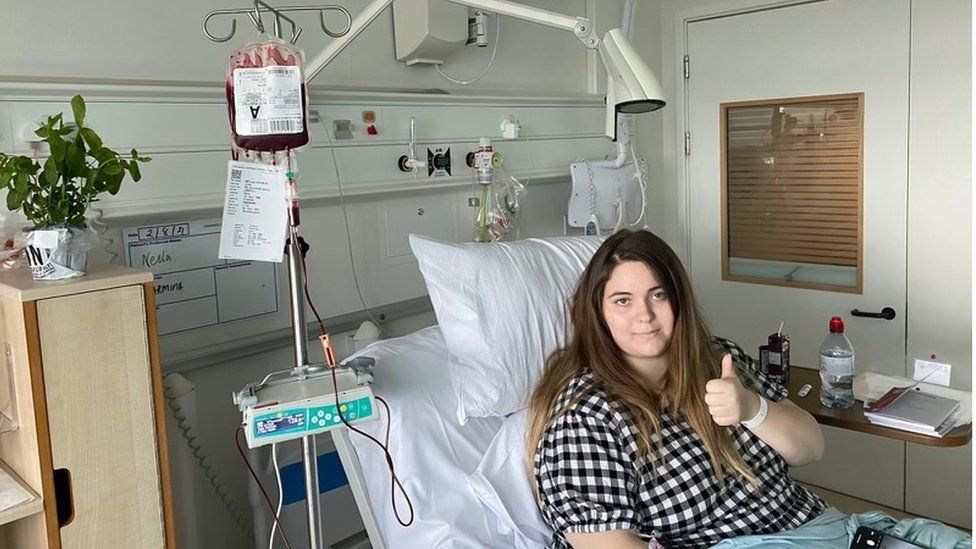
Published42 minutes agoShareclose panelShare pageCopy linkAbout sharingImage source, Nella PignatelliBy Annabel RackhamBBC News”A simple blood test saved my life,” Nella Pignatelli tells the BBC, and she wants others to have one too if they don’t feel right.Nella, 24, was diagnosed with leukaemia 18 months ago after feeling fatigued and out of breath when walking, something she passed off as long Covid.”I started a new job and just felt really tired all the time, but I associated everything that was happening to me with things that were going on in my life,” she says.”When I had two nosebleeds that lasted an hour – it had got to the point that after three months of dealing with the symptoms, I was losing my mind.”According to the charity Teenage Cancer Trust, 56% of those aged 18-24 would not know what five signs and symptoms they should look out for.The most recognisable signs of cancer within this age group are:lumps, bumps and swellings unexplained tirednessmole changespainsignificant weight changeHalf of the 2,000 people surveyed also admitted they’d put off going to the GP with health concerns, with many saying it was because they were too scared to find out what was wrong with them. Other reasons given included it being too difficult to get an appointment and fears that they were wasting their GP’s time.’You know your body’Nella went to her GP for a blood test, followed by a bone marrow test, which revealed she had acute leukaemia and needed immediate chemotherapy.Leukaemia is cancer of the white blood cells. Acute leukaemia means it progresses quickly and aggressively, and usually requires immediate treatment.”You know your body better than anyone – I regret not seeking help sooner, because it would have meant I could have been treated quicker,” she says.Image source, Lauren Aneesa AngrishLauren Aneesa Angrish also didn’t know what the main things are to look out for when it comes to identifying cancer.The 25-year-old also put feeling fatigued and getting coughs and colds regularly down to her “busy life”.”I originally thought I’m just overworked and need to take a holiday,” she tells the BBC.Working as a make-up artist, she got free spray tans at work, and thought they might be the reason she had started to develop a rash.”I stopped tanning and the rash got even worse, it started on my legs and then it was literally all over my body – on my eyelids and face,” she says.Lauren tried a course of steroids to remove the rash, but it continued to get worse so she went to A&E and asked for a blood test.’Don’t stress or worry’The next day she was contacted and later diagnosed with acute leukaemia, for which she had to undergo treatment including a stem cell transplant. Like Nella, Lauren also wants to encourage people who are worried to book an appointment with their GP.”Any health issue, any worry – even a little mole that’s changed colour, I’d say don’t stress about it or worry, just make sure to go check on it.”Teenage Cancer Trust’s chief nurse, Dr Louise Soanes, says: “It can be scary to think about cancer, particularly if you’re a young person, but it can happen to anyone of any age.   “Always listen to your body and if you have concerns never be afraid to seek help – the likelihood is that is isn’t cancer, but it’s always best to check.”  Twin’s tumour awareness bid after brother’s deathFilm for teens who met during cancer treatmentStem cell drive to boost diversity among donorsThere are thought to be around 2,400 new cancer cases in young people every year in the UK, but that accounts for less than 1% of all new cases. These findings from the Teenage Cancer Trust come at a time when cancer diagnoses are rising, with projections showing that the number of people diagnosed with cancer will rise by a third by 2040.Analysis by Cancer Research UK finds that, if current trends continue, cancer cases will rise from the 384,000 cases per year now to 506,000 in 2040.Most of the rise is thought to be due to an ageing population because older people are more likely to get cancer.However, smoking and obesity are also contributing to the rise and are the two biggest preventable causes of cancer, says the charity. More on this storyTwin’s tumour awareness bid after brother’s death2 days agoFilm for teens who met during cancer treatment30 July 2021Stem cell drive to boost diversity among donors24 January

Read more →

Low immunity, overwhelmed hospitals fuel Covid-19 deaths in ageing Japan

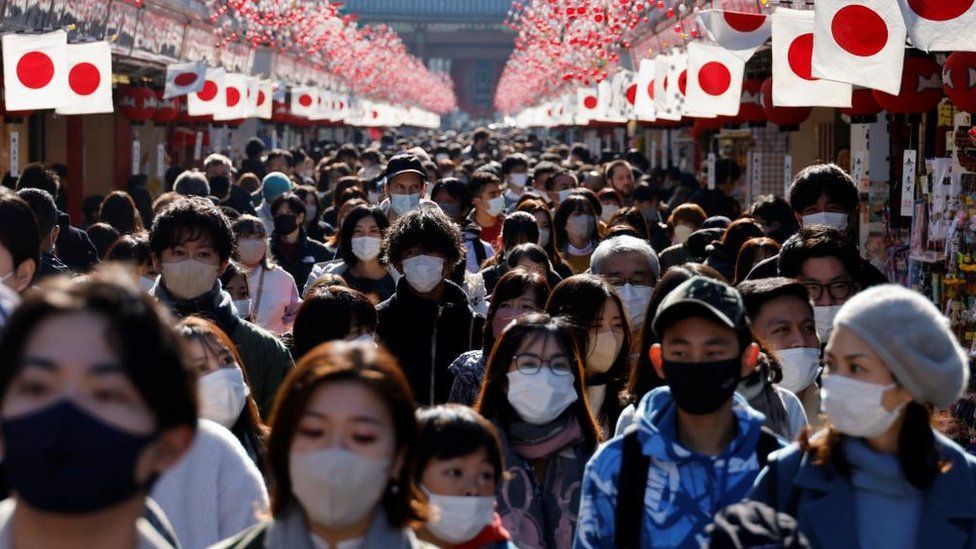
Published3 days agoShareclose panelShare pageCopy linkAbout sharingImage source, ReutersBy Kelly NgBBC NewsLow immunity against Covid-19 and a growing population of frail elderly is driving a surge in coronavirus deaths in Japan which had, for a long time, upheld some of the strictest pandemic restrictions.Japan once boasted one of the lowest Covid mortality rates, but the figure has been trending upwards since the end of 2022. It hit an all-time high on 20 January this year, surpassing the UK, US and South Korea, according to Oxford University’s Our World in Data.Japan was largely closed to foreign visitors from 2020 till mid-June last year. It opened its borders cautiously – at first, travellers had to be part of a package tour, buy medical insurance, and be masked in all public places. Some schoolchildren had meals in silence for over two years as schools imposed bans on lunchtime conversations. As restrictions are eased, however, the population’s low Covid immunity may be causing infections to spike, local health experts told the BBC.Most of the latest Covid fatalities are elderly people with underlying medical conditions, experts said. This contrasts with the initial spate of deaths that were due to pneumonia and were often treated in intensive care.”It is also difficult to prevent these deaths by treatment,” says Hitoshi Oshitani, one of Japan’s leading virologists, adding that Covid was only the trigger. “Due to the emergence of immune-escaping variants and sub-variants and the waning of immunity, it is getting more difficult to prevent infections,” he says. “Immune escape” is when the human host’s immune system becomes incapable of responding against an infectious agent. New versions of the Omicron variant are known to be masters of immune evasion.Before the Omicron variant struck, Covid deaths mostly occurred in cities like Tokyo and Osaka, but there are now cases across the country, said Dr Oshitani, who was once regional adviser to the WHO on communicable disease surveillance and response. “In smaller prefectures and rural areas, the proportion of the elderly population is even higher than the national average. This changing geographic pattern may also contribute to the increasing trend of deaths,” he said.Japan is the oldest society in the world by various measures, and its share of elderly people has been increasing every year since 1950. How Japan went from vaccine hesitancy to successThe puzzle of Japan’s low virus death rateElderly people who are getting infected in nursing homes or in community clusters are not receiving prompt treatment, says epidemiologist Kenji Shibuya, a director at the Foundation for Tokyo Policy Research. Faster treatment can help, he says, but because of Japan’s classification of Covid as a Class 2 or “very dangerous” illness, only government-designated hospitals can treat the infected. And they have been overwhelmed by the surging caseload. Dr Shibuya has called for Covid to be downgraded and treated as a form of influenza, allowing all clinics and hospitals to treat patients who have the virus. Prime Minister Fumio Kishida announced earlier this month that the classification would be lowered, but only on 8 May. Experts, including Japan’s top coronavirus adviser Shigeru Omi, have been calling for this since last year.Image source, Getty ImagesDr Oshitani and Dr Shibuya also say that the death rate could have been inflated by under-reporting of Covid cases due to asymptomatic infections and tweaks to physicians’ reporting requirements last year. That said, Japan is one of few countries still providing daily Covid tallies. Yasuharu Tokuda, a physician at the Health and Global Policy Institute, noted that the Japanese population’s natural immunity – acquired through infection – had been low before the middle of last year.He says natural immunity is stronger than that obtained from vaccination – and so low infection rates have led to low immunity in Japan, which in turn is causing more deaths.Dr Oshitani pointed to a similar phenomenon in Australia, where the Covid death rate has been creeping up since it reopened borders early in 2022 after keeping them shut for two years. Experts are divided on the trajectory of Covid in Japan. Dr Tokuda, for instance, believes future rates of infection and death will be lower. Dr Oshitani, on the other hand, expects a bigger surge in deaths in the months ahead as affordable antiviral drugs are still not widely available. More on this storyJapan may relax travel restrictions to boost yen12 September 2022Japan to lift restrictions on foreign tourists23 September 2022

Read more →

Sugar is processed differently in the brains of obesity-prone vs. obesity-resistant rats

On a diet? Perhaps you’re avoiding sweets or carbs altogether or curbing late-night munchies. These are examples of behavior modifications and when it comes to food, avoiding those diet triggers can be pretty hard to do.
To understand what drives people to overeat, scientists are looking more closely at a brain structure involved in motivation, called the nucleus accumbens. This small region drives reward-seeking behaviors underlying the pursuit of sex, recreational drugs like nicotine and alcohol, and food.
“These brain motivation centers evolved to help us survive; finding food and having sex are essential to the survival of an individual and of a species,” said Carrie Ferrario, Ph.D., associate professor in the Department of Pharmacology at U-M Medical School.
“What was advantageous when food was hard to find has become a disadvantage and unhealthy in the current food dense environment. This is compounded by the over-abundance of over-processed, low nutrition foods that may satisfy our taste but leave our bodies unnourished. People don’t tend to find it difficult to turn down an extra serving of broccoli, but just one more french-fry or making room for a bit of chocolate dessert…that’s a different story. The real challenge is overcoming these urges and changing our behavior when it comes to food,” Ferrario added.
Given the immense toll obesity takes on virtually all body systems, Ferrario, Peter Vollbrecht, Ph.D., of Western Michigan University, and their colleagues are using rat models to understand potential brain differences between animals who are prone to over-eating and obesity and those who are not.
Previous research from Ferrario’s lab pinpointed differences in the nucleus accumbens in obesity-prone and obesity-resistant rats. Their latest study, published in the Journal of Neurochemistry, tracked what was happening in real time in the brain when these animals were presented with glucose, a type of sugar, labeled with a tracer. The tracer allowed the researchers to measure this new sugar in the brain.

Sugar is the brain’s main fuel source and once there, the molecule is broken down and used to create new molecules such as glutamine, glutamate, and GABA, each with an important role in influencing the activation of neurons in the brain and nervous system.
“Glucose that is consumed gets broken down and then its carbons get incorporated into neurotransmitters. We see those labelled carbons showing up in those molecules — glutamate, glutamine, and GABA — over time,” explained Vollbrecht.
They found that glucose was taking longer to get into the nucleus accumbens of obesity-prone animals.
Furthermore, when measuring the concentration of the glutamate, glutamine, and GABA, they discovered excess levels of glutamate, an excitatory neurotransmitter. This, said the team, implied a defect in a neurotransmitter recycling process, typically maintained in the nervous system by star-shaped cells called astrocytes.
Normally, astrocytes will pull glutamate out of the space between neurons, called the synapse, convert it into glutamine, and then shuttle it back to cells that produce GABA or glutamate. This sequence is crucial for turning neurons off and on. “The findings suggest that we’re getting too much glutamate and it’s not being taken out of the synapse,” said Vollbrecht.
Ferrario added, “The balance between glutamate and GABA (the main inhibitory transmitter) is really important for brain function and will influence activity of the neurons in the nucleus accumbens.”
This balance, and therefore brain activity, is different in obesity-prone vs. obesity-resistant rats.
The fact that these rats are either prone to obesity or not is important for disentangling cause and effect, says Vollbrecht. “It allows us to remove diet as one of the variables.”
The team hopes to next study the role of inflammation in the development of obesity, and how differences in brain function contribute to susceptibility and resistance to obesity.

Read more →

Study links adoption of electric vehicles with less air pollution and improved health

Electric vehicles are widely hailed as a key way to mitigate climate change through reduced emissions, but research on the dual benefits of reduced air pollution and improved health has been largely hypothetical.
A team of researchers from the Keck School of Medicine of USC have now begun to document the actual impact of electric vehicle adoption in the first study to use real-world data to link electric cars, air pollution and health. Leveraging publicly available datasets, the researchers analyzed a “natural experiment” occurring in California as residents in the state rapidly transitioned to electric cars, or light-duty zero emissions vehicles (ZEVs). The results were just published in the journal Science of the Total Environment.
The team compared data on total ZEV registration, air pollution levels and asthma-related emergency room visits across the state between 2013 to 2019. As ZEV adoption increased within a given zip code, local air pollution levels and emergency room visits dropped.
“When we think about the actions related to climate change, often it’s on a global level,” said Erika Garcia, PhD, MPH, an assistant professor of population and public health sciences at the Keck School of Medicine and the study’s lead author. “But the idea that changes being made at the local level can improve the health of your own community could be a powerful message to the public and to policy makers.”
The researchers also found that while total ZEVs increased over time, adoption was considerably slower in low-resource zip codes — what the researchers refer to as the “adoption gap.” That disparity points to an opportunity to restore environmental justice in communities that are disproportionately affected by pollution and related health problems.
“The impacts of climate change on health can be challenging to talk about because they can feel very scary,” said Sandrah Eckel, PhD, an associate professor of population and public health sciences at the Keck School of Medicine and the study’s senior author. “We’re excited about shifting the conversation towards climate change mitigation and adaptation, and these results suggest that transitioning to ZEVs is a key piece of that.”
Benefits for health and the climate

To study the effects of electric vehicle adoption, the research team analyzed and compared four different datasets. First, they obtained data on ZEVs (which includes battery electric, plug-in hybrid, and hydrogen fuel cell cars) from the California Department of Motor Vehicles and tabulated the total number registered in each zip code for every year between 2013 and 2019.
They also obtained data from U.S. Environmental Protection Agency air monitoring sites on levels of nitrogen dioxide (NO2), an air pollutant related to traffic, and zip code level asthma-related visits to the emergency room. Asthma is one of the health concerns long linked with air pollutants such as NO2, which can also cause and exacerbate other respiratory diseases, as well as problems with the heart, brain and other organ systems.
Finally, the researchers calculated the percentage of adults in each zip code who held bachelor’s degrees. Educational attainment levels are frequently used as an indicator of a neighborhood’s socioeconomic status.
At the zip code level, for every additional 20 ZEVs per 1,000 people, there was a 3.2% drop in the rate of asthma-related emergency visits and a small suggestive reduction in NO2 levels. On average across zip codes in the state, ZEVs increased from 1.4 to 14.6 per 1,000 people between 2013 and 2019. ZEV adoption was significantly lower in zip codes with lower levels of educational attainment. For example, a zip code with 17% of the population having a bachelor’s degree had, on average, an annual increase of 0.70 ZEVs per 1,000 people compared to an annual increase of 3.6 ZEVs per 1,000 people for a zip code with 47% of the population having a bachelor’s degree.
Past research has shown that underserved communities, such as lower-income neighborhoods, tend to face worse pollution and associated respiratory problems than more affluent areas. If ZEVs replace gas-powered cars in those neighborhoods, they could stand to benefit substantially.

“Should continuing research support our findings, we want to make sure that those communities that are overburdened with the traffic-related air pollution are truly benefiting from this climate mitigation effort,” Garcia said.
More to learn
While climate change is a massive health threat, mitigating it offers a massive public health opportunity, Eckel said. As one of the first studies to quantify the real-world environmental and health benefits of ZEVs, the research can help demonstrate the power of this mitigation measure, including possibly reduced health care utilization and expenditures.
The findings are promising, Garcia said, but many questions remain. Future studies should consider additional impacts of ZEVs, including emissions related to brake and tire wear, mining of materials for their manufacture, and disposal of old cars. The researchers also hope to study additional types of pollutants and other classes of vehicles, in addition to conducting a follow-up study of the effects of the ever-growing share of ZEVs in the state.
Moving forward, transitioning to ZEVs is just one part of the solution, Eckel said. Shifting to public transport and active transport, including walking and biking, are other key ways to boost environmental and public health.
This work was supported by the University of Southern California Office of Research Strategic Directions for Research Award and the National Institute of Environmental Health Sciences [P30ES007048, P2CES033433].

Read more →

This one-atom chemical reaction could transform drug discovery

Pharmaceutical synthesis is often quite complex; simplifications are needed to speed up the initial phase of drug development and lower the cost of generic production. Now, in a study recently published in Science, researchers from Osaka University have discovered a chemical reaction that could transform drug production because of its simplicity and utility.
Pharmaceuticals generally contain a few tens of atoms and a similar number of chemical bonds between the atoms. Thus, designing complex drug architectures from simple precursors using the techniques of organic chemistry usually requires careful planning and tedious, incremental steps. The gold standard in drug synthesis is to create, in one step, as many chemical bonds as possible. In principle, adding one carbon atom — by forming four bonds in one step — to a drug precursor can be a means of doing so. Unfortunately, atomic carbon is generally too unstable for use in common chemical reaction conditions. This is the problem that the researchers sought to address.
“Because atomic carbon is too unstable for use in organic synthesis, reagents such as dihalocarbenes are basically all that’s available as atomic carbon equivalents,” explains Miharu Kamitani, the lead author of the study. “We have expanded the toolkit for such reactions and have applied our technique to an established pharmaceutical.”
The Osaka University researchers’ discovery is based on a class of molecules known as N-heterocyclic carbenes. By a chemical process known as resonance, these molecules contain a stabilized version of a carbon atom equivalent. By a straightforward reaction with alpha, beta-unsaturated amides (an important molecule in cancer progression), various gamma-lactams (cyclic molecules that are common in antibiotics) were produced in one step, often in greater than 60% yield. Particularly noteworthy is a one-step chemical modification of aminoglutethimide — a drug for treating seizures and other conditions — in 96% yield. Thus, even complex drugs can be modified for drug targeting and activity studies, as well as a myriad of other procedures that are otherwise synthetically complex aspects of drug discovery.
“Pharmaceutical companies are always on the lookout for straightforward reactions that achieve complex chemical transformations,” says Mamoru Tobisu, senior author of the study. “We envision that our single carbon atom doping reaction will be broadly useful in this context.”
This work succeeded in using an atomic carbon equivalent to form four chemical bonds in one step, synthesize pharmaceutically useful chemical architectures, and fundamentally transform the chemical nature of an established drug molecule. The Osaka University researchers’ approach will be useful for quickly preparing potential pharmaceuticals, which will speed up drug research and development as well as production of currently established drugs — especially if the approach is extended to additional classes of transformations in organic chemistry.

Read more →

Eye Drops Linked to One Death and Vision Loss Among Some Are Recalled

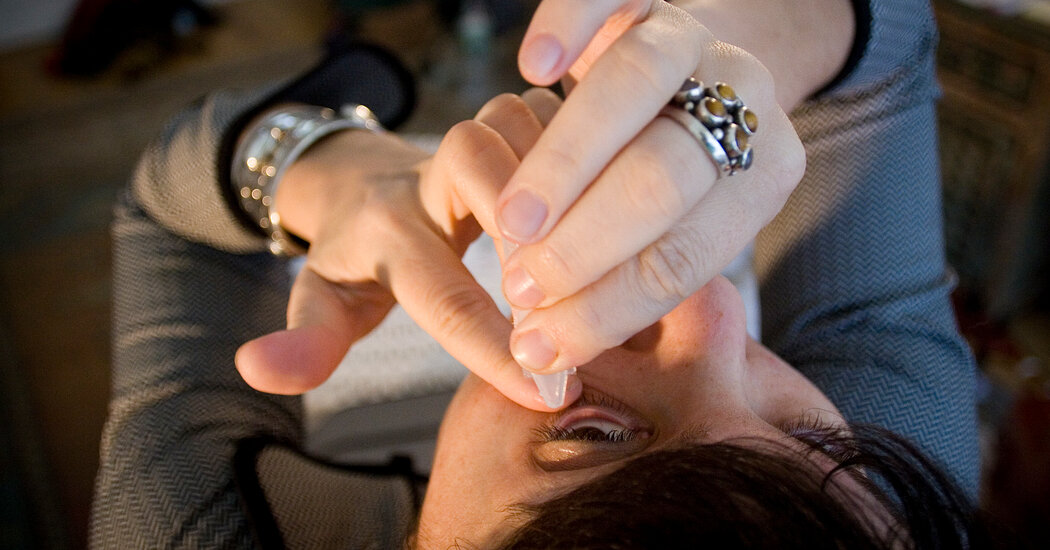
The maker of EzriCare Artificial Tears said it was recalling the eye drops after U.S. health authorities linked the product to a drug-resistant bacteria strain.The manufacturer of a brand of over-the-counter eye drops said that it was recalling the product, EzriCare Artificial Tears, after it was linked to a drug-resistant bacteria strain that has caused at least one person’s death and vision loss in five others.The Centers for Disease Control and Prevention has advised people to stop using the eye drops, as the agency investigates an outbreak of a strain of the bacteria pseudomonas aeruginosa, which can cause infections in the blood, lungs and other parts of the body. This strain of the bacteria had never been identified in the United States before the current outbreak and is resistant to a class of antibiotics called carbapenems, which are generally considered a last resort.The bacteria strain had been found in 55 people in 12 states as of Tuesday, the C.D.C. said. The agency said that the infections had caused one death, vision loss in five of 11 people who had eye infections, and some hospitalizations.Global Pharma, the Indian company that manufactures the EzriCare eye drops, said that it was recalling the eye drops “out of an abundance of caution.”“Global Pharma is fully cooperating with U.S. federal authorities, and is continuing to investigate this matter, but thus far we have not determined whether our manufacturing facility is the source of the contamination,” the company said in an emailed statement.Most of the people affected by the outbreak used artificial tears before the infections, the C.D.C. said. They had reported using more than 10 brands of artificial tears, and some patients used more than one, but EzriCare Artificial Tears is the most common brand, the agency said.The C.D.C. said that it had found the drug-resistant bacteria strain in opened bottles of the EzriCare eye drops collected from patients with and without eye infections. The agency is testing unopened bottles to determine if contamination occurred during the manufacturing process.The bacteria strain was found in people in California, Colorado, Connecticut, Florida, New Jersey, New Mexico, New York, Nevada, Texas, Utah, Washington and Wisconsin between May 2022 and January, according to the C.D.C. Of those 55 cases, 35 were linked to four health-care facility clusters, the agency said.The C.D.C. said that people who have used EzriCare Artificial Tears and who have signs of an eye infection should seek medical care immediately. The symptoms can include yellow, green or clear discharge from the eye, redness of the eye or eyelid, increased sensitivity to light and eye pain or discomfort.The manufacturer of EzriCare Artificial Tears said it was recalling the product out of “an abundance of caution.” EzriCareDr. Thomas L. Steinemann, a spokesman for the American Academy of Ophthalmology, said that people did not need to be “too terribly concerned” about using other types of eye drops.“We use them for tears, we use them for antibiotics, we use them to treat glaucoma.” Dr. Steinemann said. “We use eye drop bottles every day, and I think for the vast majority of users of eye drop bottles there’s no cause for alarm.”Dr. Steinemann, an ophthalmologist at MetroHealth Medical Center in Cleveland, noted that the C.D.C. report said the EzriCare artificial tears were preservative-free, which means that, if contaminated, they do not have anything to prevent the growth of bacteria.He said that doctors often recommend preservative-free artificial tears to patients if they are using them more than four times a day because preservatives can worsen eye irritation. He said that he had only ever heard of preservative-free eye drops that were available in single-use vials that cannot be closed and used again later.“That to me stuck out when I read the C.D.C. report is that, at least for EzriCare, these products are dispensed in what we call multidose bottles, meaning that people are reusing the bottle,” Dr. Steinemann said. “But the bottle doesn’t have any preservatives, which I think might set the stage for either contamination or bacterial overgrowth in the bottle.”When people use any type of eye drops, Dr. Steinemann said, they should wash their hands, close the bottle after using it and not touch the tip, because that would risk making the drops not sterile. “Don’t touch the bottle to your eye or to your face or to your nose,” he said.EzriCare, a drug company based in New Jersey, said in a statement on Wednesday that it did not manufacture the eye drops and was involved only in designing the product’s label and in marketing it to customers.EzriCare said that it was first told about the C.D.C. investigation on Jan. 20 and “immediately took action to stop any further distribution or sale of EzriCare Artificial Tears.” The company said it had also been trying to contact customers to tell them to stop using the eye drops.Public health officials have warned that more must be done globally to stem the spread of drug-resistant infections, which occur when bacteria and fungi evolve to outsmart the antibiotic and antifungal drugs that have been developed to destroy them. The more antibiotics and antifungal medicines are given to people and livestock, the more likely resistance will occur, health officials have said.Nearly 30,000 people in the United States died in 2020 from drug-resistant infections, according to an analysis by the C.D.C., 15 percent more than in 2019. The increase was driven mostly by the coronavirus, which in the early days of the pandemic was a mystery to medical professionals. Many turned to antibiotics to try to treat the illness before vaccines and other treatments were available.Each year, more than 700,000 people across the world die from drug-resistant infections. The United Nations warned in 2019 that, without concerted action, these infections could kill 10 million people annually by 2050 and trigger a global economic crisis.

Read more →