
Toddlers' attention to 'motherese' speech may be used to diagnose autism

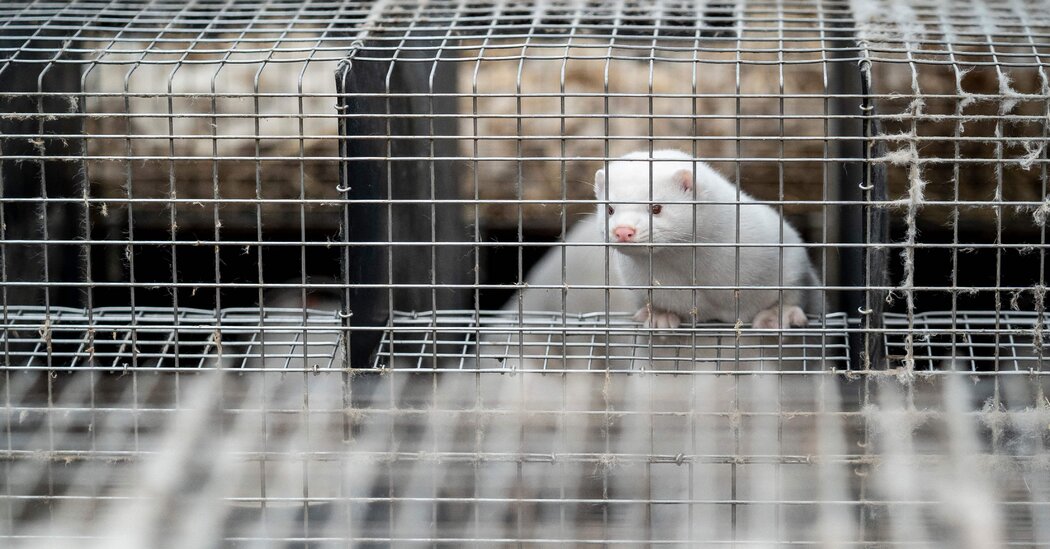
A new variant of avian influenza appears capable of spreading among mammals, highlighting the need for more proactive surveillance, experts said.Early last October, the mink on a fur farm in Spain suddenly began to fall ill. They stopped eating and began salivating excessively. They became clumsy, started to experience tremors and developed bloody snouts.At first, experts suspected that the coronavirus might be to blame. It was a reasonable assumption; since the beginning of the Covid-19 pandemic, the virus has repeatedly found its way onto mink farms, sparking large animal outbreaks, triggering mass mink culls and prompting temporary moratoriums on mink farming.But it was not the coronavirus that had infiltrated the Spanish mink farm, scientists soon discovered. It was H5N1, a highly pathogenic strain of avian influenza.Over the last few years, a new variant of H5N1 has spread widely through wild and domestic bird populations around the world. It has taken an unusually heavy toll on wild birds and repeatedly spilled over into mammals, such as foxes, raccoons and bears, that might feed on infected birds.But the mink farm outbreak was a new and troubling development, scientists said. In Spain, the virus appeared to spread from mink to mink. It also contained an unusual mutation that might be a sign of adaptation to mammals, scientists reported in a recent paper in the journal Eurosurveillance.The outbreak “confirmed a fear that I had” that the virus could spread efficiently among mammals, said Dr. Thijs Kuiken, a veterinary pathologist at Erasmus University Medical Center in the Netherlands. There is no evidence that the mink, which were all culled, transmitted the virus to humans, and experts stressed that the outbreak was not a cause for panic. But it is a reminder of some of the risks posed by mink farms — places in which large numbers of susceptible animals are housed in facilities with porous borders to the outside world — and highlights the need for more proactive disease surveillance and other precautions, experts said.“Should we freak out about this? No,” said Dr. Chrissy Eckstrand, a veterinary pathologist at the College of Veterinary Medicine at Washington State University. “But should we stay vigilant and prepared? I think absolutely we should.”Peruvian health officials collected dead pelicans suspected of having H5N1 flu on San Pedro Beach in December.Paolo Aguilar/EPA, via ShutterstockMink mortalityIn Spain, the first signs of trouble came during the first week of October, when the mortality rate spiked on a mink farm in Carral. At first, the deaths were confined to a subset of the farm’s barns, which collectively housed more than 50,000 mink. But in the weeks that followed, the outbreak spread throughout the entire farm.“The mechanism of transmission inside the farm is still unknown, but it’s clear that the virus was able to move,” said Dr. Isabella Monne, a veterinarian at the European Union Reference Laboratory for Avian Influenza and Newcastle Disease, and an author of the Eurosurveillance paper.Laboratory testing revealed that the mink were infected with H5N1, and all the animals were subsequently culled.Precisely how the virus got into the mink remains unknown. Farmed mink, including those on the Spanish farm, are often fed raw poultry, which presents a potential risk.“If they were to be given infected poultry and poultry byproducts with an avian influenza strain, those mink could potentially get avian influenza,” said Dr. Casey Barton Behravesh, who directs the One Health Office at the Centers for Disease Control and Prevention.But in this case, there was no evidence that the poultry farms that supplied feed to the mink farms had experienced avian influenza outbreaks, and scientists said that the most likely source of the virus was a wild bird.In the weeks before the mink farm outbreak, the virus was detected in wild birds in the region. And the mink on the Spanish farm were housed in barns that were not completely enclosed on the sides. That is a common feature of mink barns, which are generally left partially open to improve airflow, said Dr. Kuiken, who has studied the possibility of coronavirus transmission between wild animals and farmed mink on Dutch mink farms.“It was really quite disturbing to us to see how open they were to the environment,” Dr. Kuiken said, “and how easy it was for both mammals and wild birds to get into these mink farms and have contact with mink.”Wild birds and other animals may be especially attracted by the minks’ food, a meaty mush or paste that is typically smeared across the top of the animals’ wire cages, experts said.“It’s like a free buffet for these animals to come and eat,” Dr. Barton Behravesh said.(Dr. Monne stressed that wild birds were also “victims” of the virus, however, and should not be blamed or targeted.)Creature containmentCleaning out a mink farm in Denmark in December 2020. Mink are housed in high densities with cages close together.Andrew Kelly/ReutersMink are typically housed in high densities, with their cages close together. This housing arrangement, combined with a lack of genetic diversity among farmed mink, could make it easier for a virus that finds its way into a mink to spread quickly through a farm, scientists said.And once a virus starts to spread, it begins picking up new mutations and adapting to its new hosts. Indeed, researchers found that the flu virus they isolated from the mink in Spain had multiple mutations that set it apart from sequences isolated from birds. One of these mutations, in particular, has been previously shown to help influenza replicate better in mammalian cells.Still, the significance of some of the mutations remains unknown, and researchers cannot rule out the possibility that they were present in the virus before it found its way onto the farm, scientists cautioned.Globally, the H5N1 variant that has been spreading in birds has led to fewer than 10 known cases in people since December 2021, and there have been no documented instances of human-to-human transmission, according to the C.D.C.“The H5 virus is not well adapted to humans,” said Dr. Jim Lowe, a veterinarian at the College of Veterinary Medicine at the University of Illinois at Urbana-Champaign.The fact that the virus showed up on a mink farm is not particularly surprising, he said, and not necessarily cause for alarm. “It’s not, in my mind, a particularly worrisome situation for human health,” Dr. Lowe said. “Obviously it’s not very good for the mink.”But a mink-adapted version of the virus could present a greater potential risk to people. “It’s more likely that such a virus will be more easily efficiently spread among humans,” Dr. Kuiken said.Eleven farm workers had contact with the mink; all tested negative for the virus, Dr. Monne and her colleagues reported. That fact is “reassuring,” Dr. Monne said. “But clearly, what is worrisome is that this virus is spreading everywhere.” That means that there will be more opportunities for the virus to infect, and potentially spread, in mink and other mammals.The permeability of mink farms also means that a virus that begins spreading in mink could make its way off the farm. Mink sometimes escape from farms, and dogs and cats on mink farms with coronavirus outbreaks have also been infected with the virus, scientists have found.These animals could potentially act as intermediate hosts, passing a mutated mink version of the virus on to humans or wild animals. In one recent study, Dr. Barton Behravesh and her colleagues used GPS collars to track the movements of free-roaming cats living on or around several Utah mink farms that had experienced coronavirus outbreaks. The cats roamed widely, the researchers found.“They made frequent visits to the mink sheds, moved freely around affected farms, visited surrounding residential properties and neighborhoods on multiple occasions,” Dr. Barton Behravesh said.Highly pathogenic avian influenza has not been detected on any mink farms in the United States to date, said Lyndsay Cole, a spokeswoman for the for the Animal and Plant Health Inspection Service at the U.S. Department of Agriculture.But with the virus so widespread, more proactive influenza surveillance — including regularly sampling animals for asymptomatic infections — is needed on mink farms, scientists said.Mink are “definitely an animal that warrants heightened attention,” Dr. Barton Behravesh said. Ensuring that mink have clean food and water sources and that farm workers adhere to basic hygiene and sanitation practices can also help reduce the risks on mink farms, experts said.But Dr. Kuiken said that more sweeping changes might be needed. “You have to also think in the first place whether you want to have mink farms,” he said. “We need to be thinking much more about our human activities in a way that we try to prevent the problems that we’re seeing, for example, with the emergence of infectious diseases, rather than trying to mitigate them or solve them after they’ve appeared.”
Read more →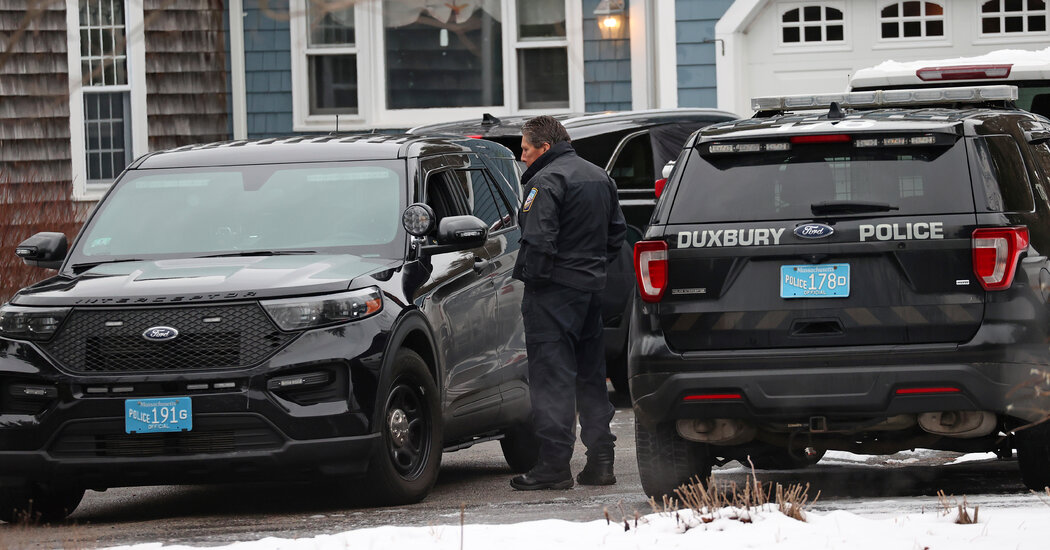
Chilling details emerged at an arraignment of Lindsay Clancy, accused of strangling her three children. Her lawyer argued she was mentally ill, but prosecutors outlined methodical planning leading to the deaths.DUXBURY, Mass. — Lindsay Clancy lay paralyzed in a hospital bed on Tuesday afternoon, occasionally blinking or shutting her eyes, unable to do anything but listen as lawyers told two narratives about how she had strangled her three children.The prosecutor said it had been meticulously planned: She had concocted an errand that would keep her husband, Patrick, out of the house for about 25 minutes, just long enough so she could do it.And she had then strangled each of her children with an exercise band, an act that would require holding each of them down for at least four minutes. Then she leapt from a second-story window, a fall that fractured her spine.“The defendant stated that after he left the house that night, she killed the kids because she heard a voice, and had, quote unquote, a moment of psychosis,” Assistant District Attorney Jennifer Sprague said during a virtual arraignment via Zoom.“She heard a man’s voice, telling her to kill the kids and kill herself because it was her last chance,” Ms. Sprague said.The defense lawyer told a different story. Since the birth of her youngest child, eight months ago, he said, Ms. Clancy had repeatedly sought help for postpartum depression, eventually being prescribed 13 psychiatric medications in a four-month period. But suicidal thoughts kept surfacing, culminating in a break on Jan. 24.“This is not a situation, your honor, that was planned by any means,” said Ms. Clancy’s lawyer, Kevin Reddington. “This is a situation that clearly was a product of mental illness.”In the last two weeks, since Mr. Clancy arrived home to a horrific scene, this community has been trying to make sense of it. Ms. Clancy, 32, worked as a labor and delivery nurse. She was known as a generous friend and a doting mother. She had no criminal record, nor any reported history of abusing her children — Cora, 5; Dawson, 3; and the baby, Callan.Ms. Clancy has received a good deal of sympathy, much of it from women who have experienced postpartum depression and psychosis. Online supporters have adopted the hashtag LAOL, which stands for Lindsay’s Army of Love. Mr. Clancy appealed to the public to “find it deep within yourselves to forgive Lindsay, as I have.”But Tuesday’s arraignment made it clear how difficult it would be to untangle Ms. Clancy’s mental state from her actions.Tips for Parents to Help Their Struggling TeensCard 1 of 6Are you concerned for your teen?
Read more →
Researchers at the University of East Anglia have helped develop a new blood test to detect prostate cancer with greater accuracy than current methods.
New research shows that the Prostate Screening EpiSwitch (PSE) blood test is 94 per cent accurate — beating the currently used prostate-specific antigen (PSA) blood test.
The research team say that the new test shows significant potential as an accurate and rapid cancer screening diagnostic.
The test was developed by Oxford Biodynamics in collaboration with UEA, Imperial College London and Imperial College NHS Trust.
Prof Dmitry Pshezhetskiy, from UEA’s Norwich Medical School, said: “Prostate cancer is the most common cancer in men and kills one man every 45 minutes in the UK.
“There is currently no single test for prostate cancer, but PSA blood tests are among the most used, alongside physical examinations, MRI scans and biopsies.
“However, PSA blood tests are not routinely used to screen for prostate cancer, as results can be unreliable.
“Only about a quarter of people who have a prostate biopsy due to an elevated PSA level are found to have prostate cancer.
“There has therefore been a drive to create a new blood test with greater accuracy.”
The UEA team evaluated the new PSE test, which combines the traditional PSA test with an epigenetic EpiSwitch test, in a pilot study involving 147 patients.
They compared its results with those of the standard PSA test — and found that PSE significantly enhances overall detection accuracy for at-risk men.
Prof Pshezhetskiy said: “When tested in the context of screening a population at risk, the PSE test yields a rapid and minimally invasive prostate cancer diagnosis with impressive performance. This suggests a real benefit for both diagnostic and screening purposes.”
Dr Jon Burrows, Chief Executive Officer at Oxford Biodynamics said: “There is a clear need in everyday clinical practice for a highly accurate blood test that can screen men for prostate cancer and accurately identify those at risk, while sparing those who up to now would be subject to unnecessary, expensive and invasive procedures.
“This is another example of how our product portfolio can contribute to reducing the total cost of care for global health.”
‘Circulating chromosome conformation signatures significantly enhance PSA positive predicting value and overall accuracy for prostate cancer detection’ is published in the journal Cancers.
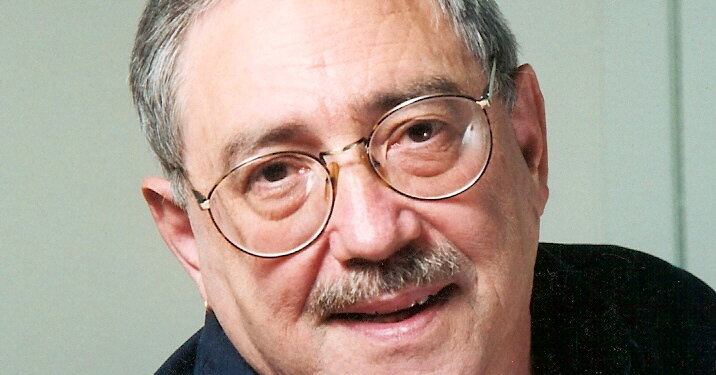
He was at the forefront in persuading the American Psychiatric Association to reassess its classification of homosexuality as a mental disorder.In February 1973, when it was his turn to speak before an American Psychiatric Association panel on why it should stop classifying homosexuality as a mental disorder, Charles Silverstein chose an unexpected tool for his response: humor.“What I did,” he recalled decades later in an interview for the Rutgers Oral History Archives, “was write a parody, a satire, of all the absurd things that the American Psychiatric Association had diagnosed” — illnesses like “syphilophobia” (irrational fear of syphilis).“I threw back at them their diagnoses over the decades and how funny it all sounds now, and pointed out that their fun had hurt a lot of people,” Dr. Silverstein told The Journal of Gay and Lesbian Psychotherapy in 2003. “I ended by saying to them, ‘Don’t do it anymore.’”The testimony of Dr. Silverstein, who at the time was completing his Ph.D. work in social psychology at Rutgers University, helped persuade the psychiatric association to change the language in its Diagnostic and Statistical Manual of Mental Disorders later that year. That revision, while not completely ending the profession’s pathologizing of homosexuality, was a watershed moment that led to further reassessments.“A.P.A.’s 1973 diagnostic revision was the beginning of the end of organized medicine’s official participation in the social stigmatization of homosexuality,” Dr. Jack Drescher wrote in the journal Behavioral Sciences in 2015.It was also the beginning of an influential career for Dr. Silverstein. He went on to write books — like “The Joy of Gay Sex,” with the novelist Edmund White, and “A Family Matter: A Parents’ Guide to Homosexuality” — served as founding editor of The Journal of Homosexuality, and worked to break down prejudices associated with being gay.“The Joy of Gay Sex,” a manual for men who have sex with men, ran into censorship issues after it was released in 1977.Dr. Silverstein died at 87 on Jan. 30 at his home in Manhattan. The cause was lung cancer, his executor, Aron Berlinger, said.About the time Dr. Silverstein was giving that crucial presentation in 1973, he was also starting the Institute for Human Identity, to provide mental health services to lesbian, gay, bisexual and transgender clients. In a post on the institute’s website, Tara Lombardo, its executive director, called him “a fearless fighter for L.G.B.T.Q. rights and the mental health needs of our community.”“We truly stand on his shoulders,” she wrote.Reflecting on Dr. Silverstein’s impact, Dr. Drescher, a gay psychiatrist who has spoken out against conversion therapy, said by email:“Although I was not yet in medical school when Charles was already advocating for me, I can say without hesitation that my own career in psychiatry and psychoanalysis would not have been possible without his contributions. Many of us owe him a deep debt of gratitude — but Charles’s generosity was such that he never acted like anyone owed him anything.”Charles Silverstein was born on April 23, 1935, in Brooklyn. His father, Sam, delivered newspapers by truck, and his mother, Ida (Berlly) Silverstein, was a homemaker.He mainly grew up in New York, although there was a moment when he was 11 that almost made him a Californian while introducing him to discrimination. His father was offered a job in California by a former co-worker, but when the family arrived on the West Coast after a nine-day drive, they were welcomed less than hospitably.“The other men in the shop came to the foreman and said, ‘Either you get rid of that Jew, or we go on strike,’” Dr. Silverstein recalled in an oral history recorded for The Outwords Archive in 2018. His parents received a refund of the deposit they had put down on a house, loaded the family back into the car and made the long trip back to New York.Dr. Silverstein said he first realized that he was gay when he was a teenager, but his advocacy was still years in the future. In his early attempts at psychoanalysis, he said, he specifically asked to be “cured.”“I was very much the kind of person who had this low self-esteem, depression and feelings of shame that I wrote about later,” he said.Charles Silverstein with his partner William Bory, who died of complications from AIDS in 1993.via Rutgers Oral History ArchivesHe graduated from the State University of New York at New Paltz with an education degree in 1959 and taught elementary school for six years in Larchmont, N.Y., before deciding to become a psychologist. He studied clinical psychology at the City University of New York for three years but failed the comprehensive exams; he ultimately earned his Ph.D. in social psychology at Rutgers in 1974.Dr. Silverstein said he did not have his first experience with gay sex until the late 1960s, when he was in his early 30s. The experience, with a man he had met at a gay bar in Greenwich Village, soon transformed him from a closeted gay man who wanted to be “cured” into a gay activist.“I dropped my analyst, and I joined the Gay Activists Alliance,” he said in the Outwords oral history. “That’s an organization that many people will tell you it saved their lives, and I think it did for me.”The alliance began challenging the psychiatric profession over its views on homosexuality, and Dr. Silverstein was one of the several members who gave testimony in the 1973 session.In 1977, he and Mr. White, who was still early in his career as a novelist, produced the first edition of “The Joy of Gay Sex,” seeking to capitalize on the popularity of “The Joy of Sex,” which was first published in 1972. “The Joy of Gay Sex,” a manual for men who have sex with men, was explicit in its language and its illustrations and ran into censorship issues, especially in Canada.Within a few years the book seemed out of step with the AIDS epidemic of the early 1980s. In 1992, Dr. Silverstein and Felice Picano published a revised edition, “The New Joy of Gay Sex,” that took into account safe-sex practices and newly relevant topics like writing wills.In 1993, Dr. Silverstein’s partner of 20 years, William Bory, died of complications of AIDS, a painful episode that Dr. Silverstein wrote about in his memoir, “For the Ferryman: A Personal Journey” (2011). His other books include “Man to Man: Gay Couples in America” (1981) and “Gays, Lesbians and Their Therapists” (1991).Dr. Silverstein’s marriage to Bill Bartelt ended in divorce. He is survived by a son he recently adopted, Shahrukh Khalique, and a brother, Robert.Dr. Silverstein reissued “For the Ferryman” last year. In a preface to the new edition, he noted the progress made on the issues that concerned him, but also cautioned about complacency.“There are still religious groups that claim they can ‘cure’ us,” he wrote. “State legislatures often vote on bills to take away our rights, and make no mistake, most Americans would like to do just that.”Most L.G.B.T.Q. groups, he said, had become service oriented, had acquired tax-exempt status and “have to keep their noses clean and eschew politics.”“It has led to listlessness in the L.G.B.T. movement,” he wrote. “One wonders whether to call it a movement any longer.”
Read more →
Published2 hours agoShareclose panelShare pageCopy linkAbout sharingThis video can not be playedTo play this video you need to enable JavaScript in your browser.By Lucy AdamsBBC Scotland social affairs correspondentIn the first project of its kind in Scotland, a hostel in Glasgow aims to stabilise alcoholics by giving them alcohol.It is 10:00 and Peter is getting his first “pour” of the day – an agreed measure of lager deemed sufficient to curb his cravings to binge.Peter is 60 and has been a chronic alcoholic since he was a teenager. He is one of 10 men at the Managed Alcohol Programme (MAP) in Glasgow, which is based on a model used in Canada I visited three years ago.It is for the most chaotic homeless alcoholics who have already tried and failed traditional abstinence programmes. Every hour or two hours the residents are given a measure of wine or beer to keep sufficient alcohol in their bloodstream to prevent a seizure but not enough to get them drunk.In addition they get a home, stability and some structure, the chance to engage with mental health services and develop their interests. The proposal was controversial with some but it has now been up and running for 12 months. For the past few months we have had exclusive access to the pilot.’I think I was an alcoholic when I was 16’The first time we go in with the camera in October 2022 one resident seems a little inebriated, lurching from wall to wall. There’s been an argument between one man who has been buying extra alcohol and another who is trying his best to reduce his intake. Peter admits he has had a lot to drink. His best friend has just died from an alcohol-related illness. He doesn’t want to die the same way but for today, he is drowning his pain.He says: “I think I was an alcoholic when I was 16, because I used to drink two bottles of wine, two bottles of Buckfast every night with my mum.” She bought it for him, he says.When we return two weeks later, Peter is doing better.He has been to the dentist for the first time in decades, started eating meals, and getting in touch with his family after years of silence and shame.Every Monday he has a music lesson. His voice – deep and hoarse – tells a story in itself.I ask him where he would be if he wasn’t here.”I’d be dead,” he says. “Because I just kept doing it – buying drink. This has helped me a lot, this place.”Now, eight months after he entered the house, Peter is talking about getting a flat of his own and a dog. ‘My body isn’t going to take much more’Paul is making lunch for himself and the other residents. Pork chops, mashed potatoes and vegetables. Eating hot meals together is one of the benefits of the programme.The 51-year-old says he has an appetite for the first time in decades.He spent much of his childhood in hospital because of a serious skin condition. Paul says he already had a problem with alcohol by the time he was a teenager. When he was referred to the MAP he says he was consuming around 30 units – equivalent to almost a bottle of vodka – a day. “I was seeing the police every day because I was doing my drinking on the street,” he says. “I was getting lifted by the police every Friday or Saturday. “I need to start slowing down. My body isn’t going to take much more. This place has opened my eyes to that.”After lunch he receives his ‘pour’ – a can of lager in his room. He sips it while sketching Glasgow’s iconic statue of the Duke of Wellington with a traffic cone on his head. “I am a wee bit happier, believe it or not, but the thing is when you come out of drunkenness after 20 or 30 years then your regrets come back as well,” he says. “You realise what a mess you have made of your life. And then the guilt comes in.”Paul says he feels much more positive about his future. But just the next day staff say his drinking and behaviour spirals out of control and he is asked to leave the project. Bumps along the wayFor some the MAP will not work. Paul and another man have already been told to leave the project and a third has left through mutual agreement. Manager Peter McLachlan says the first year has been a “learning curve” with “bumps” along the way.”For some guys this might not be the right place, it might not be the right treatment, they might not be ready for it at this particular time,” he says. But those still in the service have significantly cut their drinking, Mr McLachlan says. They have started to look after themselves, started going to the dentist, optician, and GP, and significantly reduced their run-ins with police and paramedics. Not every applicant is accepted. Blood tests, liver scans and psychological assessments are done to see if the men are physically strong enough. The economic argumentThe project is funded by the homeless charity the Simon Community with support from the Scottish government.Not everyone supported the idea or methodology. Traditionally alcohol rehabilitation has focused on detox.But views have changed since the MAP opened and there is already interest from other areas in Scotland, England and other European countries.Karyn McCluskey, the head of Community Justice Scotland, was behind piloting the Canadian model here.She analysed the cost to emergency services of these men street-drinking before they entered the project and believes the cost of not having the MAP would run into “millions” of pounds.”One of the men that I looked at had been taken to Glasgow Royal Infirmary by ambulance over 400 times in a period of two and a bit years,” she tells the BBC. “That is extortionate. I mean serious amounts of money. Probably millions.”She says some people may have a “visceral reaction” to the MAP but that telling these men to stop has not worked. She says: “The tears of their children and families would have made them stop but they can’t so we have to try to give them less.” More on this storyAlcohol deaths at highest level for a decade17 August 2021The shelter giving wine to alcoholics4 February 2020
Read more →
Characterized by antisocial behaviors and low academic achievement, conduct disorder (CD) impacts an estimated 9.5% of individuals in the United States. Childhood maltreatment is a major risk factor for CD. Past CD studies have identified structural alterations in various brain regions, such as those implicated in emotion processing, learning, and social cognition. A new study appearing in Biological Psychiatry: Cognitive Neuroscience and Neuroimaging, published by Elsevier, has now assessed whether youths with CD who experienced childhood maltreatment differ at the brain level from those with CD without a history of maltreatment.
The research, led by Marlene Staginnus, a PhD student at the University of Bath, UK, tested the ecophenotype model, which proposes that maltreatment-related psychopathology is distinct from forms of psychopathology that do not develop as a result of childhood maltreatment. The study included 146 healthy controls and 114 youths with CD. The researchers collected structural MRI data to study cortical structure, including the volume, area, and thickness of the cortex, the outer layer of the brain.
Graeme Fairchild, PhD, Department of Psychology, University of Bath, Bath, UK, the senior author on the paper, said, “Our findings have important implications for theory, research, and clinical practice for those working in mental health or forensic services for young people. First, they suggest that, despite having the same diagnosis, conduct disordered youths with and without maltreatment differ from each other in brain structure and also differ from healthy youth in different ways. To be more specific, the conduct disordered youth with a history of childhood maltreatment showed far more extensive changes in brain structure than the non-maltreated youth with CD — multiple brain regions were affected, and several different aspects of cortical structure (cortical thickness, surface area, and folding) were altered. The maltreated youth with CD also differed more in comparison to the healthy youth than their non-maltreated counterparts.”
In line with the researchers’ hypotheses, maltreated and non-maltreated CD youths displayed distinct alterations compared to healthy controls. When combining the CD youths with and without maltreatment into a single group, the CD group displayed lower cortical thickness in the right inferior frontal gyrus. However, when the maltreated and non-maltreated youths were separately compared with healthy controls, those who had experienced maltreatment displayed more widespread structural changes in comparison to healthy controls that did their non-maltreated counterparts.
Cameron Carter, MD, editor of Biological Psychiatry: Cognitive Neuroscience and Neuroimaging, said of the study, “the authors use structural MRI to measure the changes in brain structure associated with CD and highlight the unique contribution of childhood maltreatment to these changes. The study provides neurobiological insights into the heterogeneity of CD with implications for understanding pathophysiology and informing future treatment development.”
These findings may help guide research toward better understanding the prevention, assessment, and treatment of CD. They also beckon to researchers to explore whether there is a distinct pathway between maltreatment and antisocial behavior, or if such brain differences translate to differences in treatment responsiveness.
Dr. Fairchild recommends that “maltreatment history be assessed in future neuroimaging studies of conduct disorder and other psychiatric disorders of childhood and adolescence.”