
The marathon runners of the immune system

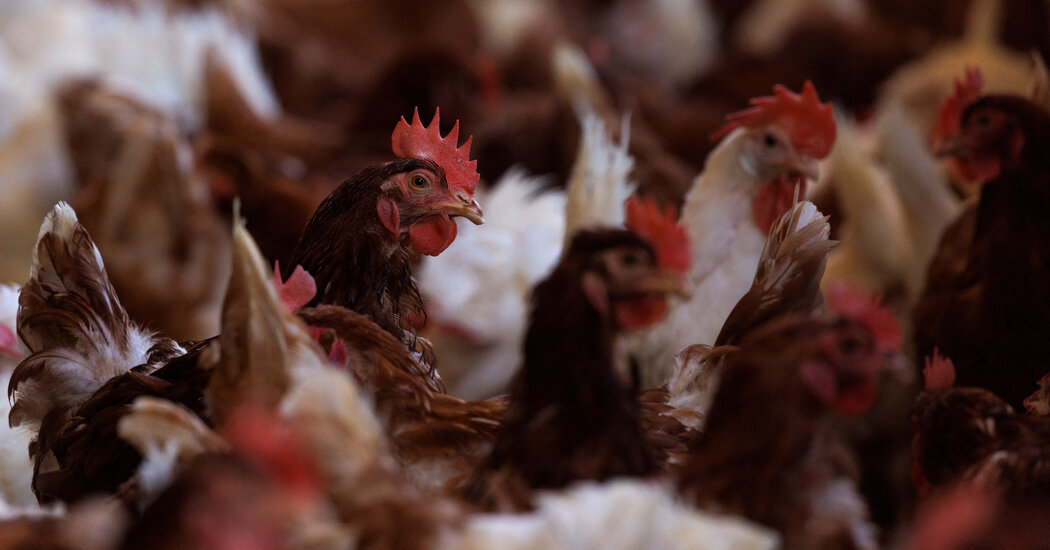
The largest outbreak of avian influenza in U.S. history has driven up egg prices and raised concerns about a human pandemic, though C.D.C. experts say the risk of that is low.WASHINGTON — The Biden administration, keeping a watchful eye on an outbreak of avian influenza that has led to the deaths of tens of millions of chickens and is driving up the cost of eggs — not to mention raising the frightening specter of a human pandemic — is contemplating a mass vaccination campaign for poultry, according to White House officials.The bird flu outbreak, which began early last year, is the biggest in the nation’s history, affecting more than 58 million farmed birds in 47 states, as well as birds in the wild. It has already spilled over into mammals, such as mink, foxes, raccoons and bears, raising fears that the virus that causes it, known as H5N1, could mutate and start spreading more easily among people.Experts at the Centers for Disease Control and Prevention, whose focus is human health, say the risk of a pandemic is low. As a precaution, the agency has sent drug manufacturers flu virus samples that could form the basis of vaccines for people. The C.D.C. is also exploring whether commercial test manufacturers would be willing to develop tests for H5N1, similar to those used for the coronavirus.Bird flu infections in humans are rare, and transmission of bird flu between humans is extremely rare. Worldwide, there have been nine H5N1 cases reported in people since the beginning of last year, according to the World Health Organization. In Cambodia, an 11-year-old girl recently died from H5N1 and her father was also infected with it, though the virus was a different version than the one currently circulating in birds in the United States.Cases typically involve people exposed to poultry. In the United States, the C.D.C., in partnership with state and local public health departments, is monitoring people who are exposed to H5N1. As of last week, 6,315 people had been monitored; 163 reported symptoms; and one tested positive, according to Dr. Tim Uyeki, the chief medical officer of the C.D.C.’s influenza division.At the same time, officials at the federal Agriculture Department, which is responsible for the health of farm animals, say they have begun testing potential poultry vaccines and initiated discussions with industry leaders about a large-scale bird flu vaccination program for poultry, which would be a first for the United States.Farm birds are already vaccinated against infectious poultry diseases, such as fowlpox. But an avian influenza vaccination program would be a complex undertaking, and poultry trade associations are divided over the idea, in part because it might spawn trade restrictions that could destroy the $6 billion poultry export industry. Dr. Carol Cardona, an expert on avian health at the University of Minnesota, said that the fear of trade bans was a huge barrier to the mass vaccination of poultry.“This is the undeclared war — trade,” Dr. Cardona said.Avian influenza experts, however, say they believe the Biden administration should move ahead with a vaccination campaign, in part to reduce the risk of a human pandemic. In interviews, several called for the administration to act quickly.“My own opinion is under the present circumstances, we should be vaccinating the poultry population of the United States against H5N1 — absolutely,” said Robert G. Webster, an expert in avian influenza at St. Jude Children’s Research Hospital in Memphis. Such a campaign could “prevent the inevitable transmission to humans,” he said.For President Biden, there are also political considerations at work. Egg prices, which soared in 2022, were 70 percent higher in January than they were a year earlier. Those high prices have given Republicans another opportunity to attack Mr. Biden over inflation just as he is preparing to run for re-election in 2024.What to Know About Avian FluCard 1 of 6The spread of H5N1.
Read more →
A cheap charcoal air filter can reduce nitrogen dioxide (NO2) inside vehicles by as much as 90%, compared to levels outside the vehicle.
Research presented in a report by WM Air, the West Midlands Air Quality Improvement Programme at the University of Birmingham, shows that charcoal filters, which costs around £10-£20, can effectively remove NO2 from the air within vehicle cabins.
NO2 is a common air pollutant that can aggravate diseases such as asthma and increase the risks of respiratory infections. Traffic emissions are a dominant source of NO2, and so road users inside vehicles are exposed as air circulates into vehicle cabins from outside through open windows and ventilation systems.
While ventilation systems do currently filter air, this is typically via a pollen filter. These prevent tiny particles and pollen getting inside the vehicle, but they have little effect on gases such as NO2. The activated carbon filters, in contrast, remove NO2 through a process called adsorption, in which the NO2 reacts with the carbon to stick to the surface area of the filter.
As with the pollen filter, the effectiveness of the carbon filter decreases over time, meaning it should be replaced regularly when the vehicle is serviced.
Lead researcher Dr Vasileios Matthaios said: “Our findings show clearly that there are benefits to switching to activated carbon air filters, reducing exposure to NO2 and the risk of related adverse health effects. These filters are simple, effective and inexpensive and should be considered, particularly for people who spend long periods of time in vehicles such as professional drivers.”
A research paper outlining the findings is published in Science of the Total Environment. In this study, the researchers tested NO2 in 10 different vehicles, ranging in size and type (petrol, diesel, hybrid and electric were all included). Air quality measurements inside the vehicles were taken with a range of ventilation conditions (AC turned on or off and windows either closed or partially open).
Each vehicle was tested three times, firstly with its original air filter in place, then with a pollen filter, and lastly with the activated charcoal filter.
The researchers found that overall, in-vehicle NO2 concentrations were on average 1.6 times lower when the windows were closed and the ventilation system recirculated air, compared to levels when the windows were open. When new standard pollen filters were fitted, NO2 concentrations were almost unchanged between closed windows and fresh air coming through the ventilation system and with windows open.
However, with activated carbon filters fitted, in-vehicle NO2 levels were on average 14.3 times lower with closed windows and recirculated air. Even with fresh air coming through the ventilation system, NO2 levels were 6.6 times lower than levels with windows open. Maintaining appropriate ventilation is also important to prevent drowsiness.
Professor William Bloss, co-author on the paper, said: “These results show a fairly simple way to improve air quality inside vehicles, although as the main source of NO2 is our cities is diesel vehicles, reducing traffic emissions overall will bring the greatest air quality benefit across the general population.”
Regular visits to the dentist might help keep joint pain at bay, too.
When Rice University computational biologist Vicky Yao found traces of bacteria associated with periodontal disease in samples collected from rheumatoid arthritis patients, she was not sure what to make of it.
Her finding helped spark a series of experiments that confirmed a connection between arthritis flare-ups and periodontitis. The study is published in Science Translational Medicine.
Tracing this connection between the two conditions could help develop therapies for rheumatoid arthritis, an autoimmune inflammatory disease that attacks the lining of the joints and can cause heart-, lung- and eye-problems. The approach that led to the study could prove fruitful in other disease contexts, such as cancer.
“Data gathered in experiments from living organisms or cells or tissue grown in petri dishes is really important to confirm hypotheses, but, at the same time, this data perhaps holds more information than we are immediately able to derive from it,” Yao said.
Yao’s hunch was confirmed when she took a deeper look into data collected from rheumatoid arthritis patients by Dana Orange, an associate professor of clinical investigation and a rheumatologist, and Bob Darnell, a professor and attending physician at Rockefeller University and the Howard Hughes Medical Institute.
Yao was collaborating with Orange and others on a different project that tracked changes in gene expression during rheumatoid arthritis flare-ups.
“Orange, working with Darnell, collected data from arthritis patients at regular intervals while, at the same time, monitoring when the flares happened,” Yao said. “The idea was that perhaps looking at this data retroactively, some pattern would become visible giving clues as to what might cause the arthritis to flare up.
“While I was working on that project, I went to this talk that I thought was really cool because it pointed out that in the data that gets ignored or thrown out, you can actually find traces of microbes. You’re looking at a human sample but you get a snapshot of the microbes floating around. I was intrigued by this.”
When she looked into it, Yao found that the germs in the samples that changed consistently across patients prior to flares were largely ones associated with gum disease.
“I was curious about this tool that allowed you to detect microbes in human samples. It was sort of like, for free, you’re getting an extra perspective on the data,” Yao said. “At the time, I hadn’t worked much on microbial data at all. Since then, Dana leveraged all this expertise and got together with people studying these bacteria.
“One of the things that came up when we were discussing this was, how cool would it be if you could prescribe some kind of mouthwash to help prevent rheumatoid arthritis flares.”
Yao’s focus since joining Rice in 2019 has shifted to cancer research. The discovery of meaningful information in data that would usually be ignored or discarded inspired Yao to take a similar approach in looking at data from cancer patients.
“I got really interested in what else we can find mining for microbial signatures in human samples,” Yao said. “Now, we’re doing something similar in looking at cancer.
“The hope here is that if we find some interesting microbial or viral signatures that are associated with cancer, we can then identify productive experimental directions to pursue. For instance, if having a tumor creates this hotbed of specific microbes that we recognize, then we can maybe use that knowledge as a means to diagnose the cancer sooner or in a less invasive or costly way. Or, if you have microbes that have a very strong association with survival rates, that can help with prognosis. And if experiments confirm a causal link between a specific virus or bacteria and a type of cancer, then, of course, that could be useful for therapeutics.”
One of the better known examples of a pathogen associated with cancer is the human papillomavirus (HPV). Yao used this well-documented connection to verify her approach.
“When we did the same exercise looking at cervical cancer tumor samples, we consistently detected the virus,” she said. “It’s a nice proof-of-principle finding that shows that the presence of specific pathogens can be meaningful for certain types of cancer.
“I’m really interested in using computational approaches to bridge the gap between available experimental data and ways to interpret it. Computational analysis is a way to help interpret data and prioritize hypotheses for clinicians or experimental scientists to test.”
The National Institutes of Health (R01 AR063676, R01 AR078268, U19 AI110491, U01 AI101981, T32 HG003284, R01 GM071966, T32 AI007290-35, P30 AR079369), the National Science Foundation Graduate Research Fellowship, the Robertson Foundation, Rockefeller University (UL1 TR001866), the Bernard and Irene Schwartz Foundation, the Iris and Jungming Le Foundation, Rockefeller Clinical and Translational Science Award Program Pilot Award, the Rheumatology Research Foundation and the National Cancer Institute (F30 CA243480) supported the research.
Over the past fifty years, there have been remarkable claims about the effects of Wolfgang Amadeus Mozart’s music. Reports about alleged symptom-alleviating effects of listening to Mozart’s Sonata KV448 in epilepsy attracted a lot of public attention. However, the empirical validity of the underlying scientific evidence has remained unclear. Now, University of Vienna psychologists Sandra Oberleiter and Jakob Pietschnig show in a new study published in the journal Nature Scientific Reports that there is no evidence for a positive effect of Mozart’s melody on epilepsy.
In the past, Mozart’s music has been associated with numerous ostensibly positive effects on humans, animals, and even microorganisms. For instance, listening to his sonata has been said to increase the intelligence of adults, children, or fetuses in the womb. Even cows were said to produce more milk, and bacteria in sewage treatment plants were said to work better when they heard Mozart’s composition.
However, most of these alleged effects have no scientific basis. The origin of these ideas can be traced back to the long-disproven observation of a temporary increase in spatial reasoning test performance among students after listening to the first movement allegro con spirito of Mozart’s sonata KV448 in D major.
More recently, the Mozart effect experienced a further variation: Some studies reported symptom relief in epilepsy patients after they had listened to KV448. However, a new comprehensive research synthesis by Sandra Oberleiter and Jakob Pietschnig from the University of Vienna, based on all available scientific literature on this topic, showed that there is no reliable evidence for such a beneficial effect of Mozart’s music on epilepsy. They found that this alleged Mozart effect can be mainly attributed to selective reporting, small sample sizes, and inadequate research practices in this corpus of literature. “Mozart’s music is beautiful, but unfortunately, we cannot expect relief from epilepsy symptoms from it” conclude the researchers.

Published18 hours agoShareclose panelShare pageCopy linkAbout sharingImage source, TEK IMAGE/SCIENCE PHOTO LIBRARYBy Pallab GhoshScience correspondentNew rules in China to regulate gene editing in humans don’t go far enough, a leading expert has warned scientists.Dr Joy Zhang of Kent University, a global expert on the governance of gene editing in China, said authorities are susceptible to “regulatory negligence”. The regulations were updated following an outcry five years ago when a Chinese scientist said he had created the world’s first gene-edited babies.China says the new laws are in line with international rules.They set requirements for ethical approval, supervision and inspection, but experts worry that they may not apply to the private sector.China jails ‘gene-edited babies’ scientistGene editing technique could transform futureDr Zhang, one of the main speakers at an international human genome editing summit in London, told BBC News: “My biggest concern is that the new measures fail to cover a chronic and increasing problem in trying to deal with private ventures that are taking place outside of conventional scientific institutes.”The new rules may struggle to keep up with the burgeoning innovation that is happening in China.”Gene editing is a new technique that enables scientists to make precise changes to DNA. Scientists believe it could be used to correct many inherited diseases. It is controversial, though, because it raises the possibility of making permanent changes to a person’s genetic makeup that will be passed down to their offspring. A controversial experimentThe world’s leading scientists in the field were stunned when Dr He Jiankui, from Shenzhen in Guangdong Province, claimed five years ago that he had created the world’s first gene-edited babies – twins nicknamed Lulu and Nana.The girls’ DNA had been altered while they were at an early embryonic stage in a way that Dr He claimed would make them resistant to HIV infection. He was fined and sentenced to three years in prison in 2019. No-one, other than Dr He, has had access to the twins. But he said at a recent scientific meeting that they were in good health.Upon his release, it emerged last month that he was planning to set up a clinic in Hong Kong to research using gene editing to develop a treatment for children with a rare inherited muscular disorder, called Duchenne Muscular Dystrophy. Immigration officials announced that they had rescinded his visa after they discovered he had a criminal record.The new rules close the loopholes that enabled Dr He to evade regulations, which previously only applied to experiments on human beings in hospitals, for example for drug trials. The updated regulations cover all research institutions and everything relating to humans, including work on tissues, organs and embryonic cells. Image source, He JiankuiLabThe summit organiser, Prof Robin Llovell-Badge from the Crick Institute, where the meeting is being held, said he was concerned that there was still too much secrecy in Chinese research.”I understand why China wants to be leaders in technology, but there are some areas that require special attention and gene editing is one of them,” he said. ”It has to be done properly and with the appropriate governance and oversight, and I’m concerned that they are not there yet.”Speaking at the summit, Dr Yangin Peng of the Chinese Academy of Science said the government has “accelerated” laws and regulations in gene editing.”China has considerably tightened its legislation and regulations,” he said. “Permanent, inherited changes are banned, governance has adopted a precautionary approach and our laws are in line with international rules.”Image source, SPLDr Francoise Baylis, a Canadian bioethicist from Dalhousie University said she wanted more details of the updates to China’s rules.”I saw [that in the updated rules] research should be in line with ethical principles and I would want to know which ethical principles, where they are set out and whether they are open to questioning,” she said.She added that China was not alone in grappling with how to regulate the private sector.”We have similar issues in North America, so I think it is wrong to focus on China,” she said.Dr Piers Millett of the International Biosafety and Biosecurity Initiative, based in Washington, acknowledged that: ”China is probably leading the way in revising the rules in this area.”Image source, SEBASTIAN KAULITZKI/SCIENCE PHOTO LIBRARYMany scientists have wondered how Dr He could be allowed to return to clinical research after prison. “I like many people had been wondering whether there had been an individual or institution in China that had been backing or protecting He Jiankui,” said Dr Zhang.But she said she now thought that “we are looking at a simple case of regulatory negligence”.That led her to believe that “without getting clarifications on Dr He’s case, the recent talk of good governance is hypocritical”.”I worry less about what He Jiankui is up to and more about the Chinese authorities are doing,” she said.Follow Pallab on Twitter
Read more →
Published3 hours agoShareclose panelShare pageCopy linkAbout sharingImage source, Getty ImagesBy Sam HancockBBC NewsChristian politicians in Iraq are attempting to overturn legislation banning the import and sale of alcohol.Customs officials were given orders on Saturday to enforce the ban. It became law last month despite opposition. The group, which has five seats in Iraq’s parliament, filed a lawsuit saying it was undemocratic.Public alcohol consumption is frowned upon in Iraq, a predominantly Muslim country, but it can be bought at liquor stores or licensed bars.The law, originally passed by parliament in 2016, imposes a fine of up to 25m Iraqi dinars (£14,256). It prohibits the sale, import or production of alcohol – and only became official last month, seven years since it was passed, after appearing in the official gazette.It remains unclear how strictly the law could be enforced, and whether the country’s Federal Supreme Court will knock it back.In their appeal to the court, members of the Babylon Movement insisted the legislation was unconstitutional because it ignores the rights of minorities and restricts freedom.It also contradicts a government decree, adopted less than a week before the gazette was published on 20 February, setting duty at 200% on all imported alcoholic drinks for the next four years, they say.Sarmad Abbas, an estate agent based in Iraq’s capital Baghdad, told the AFP news agency that the ban would merely push alcohol sales onto the black market.He acknowledged that Muslim teachings forbid the consumption of alcohol. “But these are personal freedoms that you cannot forbid citizens from practising,” he said.According to reports at the time, the bill was originally proposed by Mahmoud al-Hassan, then a judge and lawmaker for Iraq’s State of Law Coalition.He said it was in keeping with Article 2 of Iraq’s 2005 constitution, which prohibits any legislation that goes against Islam, the AP news agency wrote.More on this storyIraq in ‘surprise’ move to ban alcohol23 October 2016
Read more →