Wearable health sensor for monitoring muscle atrophy

Researchers at The Ohio State University have fabricated the first wearable sensor designed to detect and monitor muscle atrophy.
A condition involving the loss of skeletal muscle mass and strength, muscle atrophy can happen for a variety of reasons, but is typically a side effect of degenerative disease, aging or muscle disuse.
While physicians currently rely on MRI to assess whether a patient’s muscle size and volume have deteriorated, frequent testing can be time-consuming and costly.
However, this new study published in the journal IEEE Transactions on Biomedical Engineering suggests that an electromagnetic sensor made out of conductive “e-threads'” could be used as an alternative to frequent monitoring using MRI.
To validate their work, researchers fabricated 3D-printed limb molds and filled them with ground beef to simulate the calf tissue of an average-sized human subject. Their findings showed that they were able to demonstrate the sensor could measure small-scale volume changes in overall limb size, and monitor muscle loss of up to 51%.
“Ideally, our proposed sensor could be used by health care providers to more personally implement treatment plans for patients and to create less of a burden on the patient themselves,” said Allyanna Rice, lead author of the study and a graduate fellow in electrical and computer engineering at The Ohio State University.

The first known approach to monitoring muscle atrophy using a wearable device, the study builds on Rice’s previous work in creating health sensors for NASA. The space agency is interested in monitoring the health of astronauts in a variety of ways, as spending large amounts of time in space can often have detrimental effects on the human body.
Researchers have spent decades trying to understand and combat these effects, and this study was inspired by the goal of finding solutions to health issues facing astronauts.
For instance, while scientists know that even crew members on short spaceflights can experience up to a 20% loss in muscle mass and bone density, there isn’t much data on what effect living in space for much longer missions could have on their bodies, Rice said.
“Our sensor is something that an astronaut on a long mission or a patient at home could use to keep track of their health without the help of a medical professional,” she said.
But creating a wearable device capable of accurately measuring minute muscle changes in the human body is easier said than done. Rice and her co-author Asiminia Kiourti, a professor in electrical and computer engineering at Ohio State, designed the device to work by employing two coils, one that transmits and one that receives, as well as a conductor made out of e-threads that run along the fabric in a distinct zig-zag pattern.

Though the final product resembles a blood pressure cuff, Rice said it was originally a challenge to find a pattern that would allow for a wide range of changes to the size of the sensor’s loop so it would be able to fit a large portion of the population.
“When we first proposed the sensor, we didn’t realize that we would need a stretchable material until we realized that the person’s limbs were going to be changing,” she said. “We need a sensor that can change and flex, but it also needs to be conformal.”
After some trial and error, they found that while sewing in a straight line would limit the sleeve’s elasticity, a zig-zag pattern was ideal for amplifying it. This same novel pattern is the reason the sensor may be scalable across multiple different body parts or even several locations on the same limb.
Though the wearable is still years away from implementation, the study notes that the next major leap would most likely be to connect the device to a mobile app, one that could be used to record and deliver health information directly to health care providers.
And to improve life for future patients both on Earth and in space, Rice is looking forward to combining the sensor with other kinds of devices for detecting and monitoring health issues, such as a tool for detecting bone loss.
“In the future, we would like to integrate more sensors and even more capabilities with our wearable,” Rice said.
This work was supported by NASA.
Read more →

Discovery of an unexpected function of blood immune cells: Their ability to proliferate

The ability of a cell to divide, to proliferate, is essential for life and gives rise to the formation of complex organisms from a single cell. It also allows the replacement of used cells from a limited number of “stem” cells, which then proliferate and specialize. In cancer, however, cell proliferation is no longer controlled and becomes chaotic. Researchers from the GIGA Institute at the University of Liège have discovered that, in a healthy individual, certain blood immune cells, the monocytes, also have this ability to proliferate, with the aim to replace tissue macrophages, which are essential for the proper functioning of our body. This study is published in Nature Immunology.
The formation of complex multicellular organisms, which human beings belong to, requires the generation of billions of cells from a limited number of progenitor cells that have first proliferated and then acquire particular morphologies and functions while assembling into tissues and organs. Our current knowledge indicates that most of the cells that constitute a living organism arise from so-called “stem” cells, which have divided by a process called mitosis in order to give rise to a greater number of cells. These cells then stop proliferating to specialize, differentiate and form muscles, brain, bones, immune cells, etc. When proliferation is no longer properly regulated, this can lead to the development of various diseases, among which cancers represent the most striking example. In a study published in Nature Immunology, Professor Thomas Marichal (Professor at ULiège, Welbio investigator at the WEL Research Institute) and his team from the GIGA Institute at ULiège discovered that this ability to proliferate is not merely restricted to stem cells, but is also an as-yet-unknown function of blood immune cells, the monocytes. Indeed, blood monocytes, previously considered as differentiated cells, are capable of proliferating and generating a pool of monocytes in the tissues in order to give rise to macrophages, which are important immune cells that protect us against microbes and support the proper functioning of our organs.
“This is a major fundamental discovery, which changes our conception of the involvement of cell proliferation in the constitution and maintenance of our immune system.” explains Thomas Marichal, director of the study. “Our finding also suggests that the information that can be drawn from an enumeration of blood monocytes, classically carried out during a blood test, would reflect only little of what is happening at the level of the tissues, during ‘infection or inflammation, for example, since monocytes can proliferate when they enter tissues.” He also adds: “Fortunately, this proliferation is extremely well controlled and does not lead to a tumoral process. It has only one goal: to allow, as effectively as possible, the replacement of immune cells that populate our tissues: the macrophages.”

Read more →

Key role identified for nervous system in severe allergic shock

A key feature of the severe allergic reaction known as anaphylaxis is an abrupt drop in blood pressure and body temperature, causing people to faint and, if untreated, potentially die.
That response has long been attributed to a sudden dilation and leakage of blood vessels. But in a study using mice, Duke Health researchers have found that this response, especially body temperature drop, requires an additional mechanism — the nervous system.
Appearing online March 17 in the journal Science Immunology, the study could point to new targets for therapies to prevent or treat anaphylactic shock, which occurs in up to 5% of people in the U.S. annually in response to food allergies or bites from insects or venomous animals.
“This finding for the first time identifies the nervous system as a key player in the anaphylactic response,” said senior author Soman Abraham, Ph.D., professor in the departments of Pathology, Immunology, and Molecular Genetics and Microbiology at Duke University School of Medicine.
“The sensory nerves involved in thermal regulation — especially the nerves that sense high environmental temperatures — send the brain a false signal during anaphylaxis that the body is exposed to high temperatures even though it is not the case,” Abraham said. “This causes a rapid drop in body temperature as well as blood pressure.”
Abraham and colleagues, including first author Chunjing “Evangeline” Bao, a Ph.D. candidate in Abraham’s lab at Duke, tracked the sequence of events when allergens activate mast cells — the immune cells that trigger the chemical reactions leading to swelling, difficulty breathing, itchiness, low blood pressure and hypothermia.
The researchers found that one of the chemicals mast cells unleash when they are activated is an enzyme that interacts with sensory neurons, notably those involved in the body’s thermoregulatory neural network.
When stimulated as part of an allergic reaction, this neural network gets the signal to immediately shut down the body’s heat generators in the brown fat tissue, causing hypothermia. The activation of this network also causes a sudden drop in blood pressure.
The researchers validated their findings by showing that depriving mice of the specific mast cell enzyme protected them against hypothermia, whereas directly activating the heat sensing neurons in mice induced anaphylactic reactions such as hypothermia and hypotension.
“By demonstrating that the nervous system is a key player — not just the immune cells — we now have potential targets for prevention or therapy,” Bao said. “This finding could also be important for other conditions, including septic shock, and we are undertaking those studies.”
In addition to Bao and Abraham, study authors include Ouyang Chen, Huaxin Sheng, Jeffrey Zhang, Yikai Luo, Byron W. Hayes, Han Liang, Wolfgang Liedtke, and Ru-Rong Ji.
The study received funding from the National Institutes of Health (R01-GM144606).

Read more →

Drug giant Sanofi becomes latest to cap US insulin prices

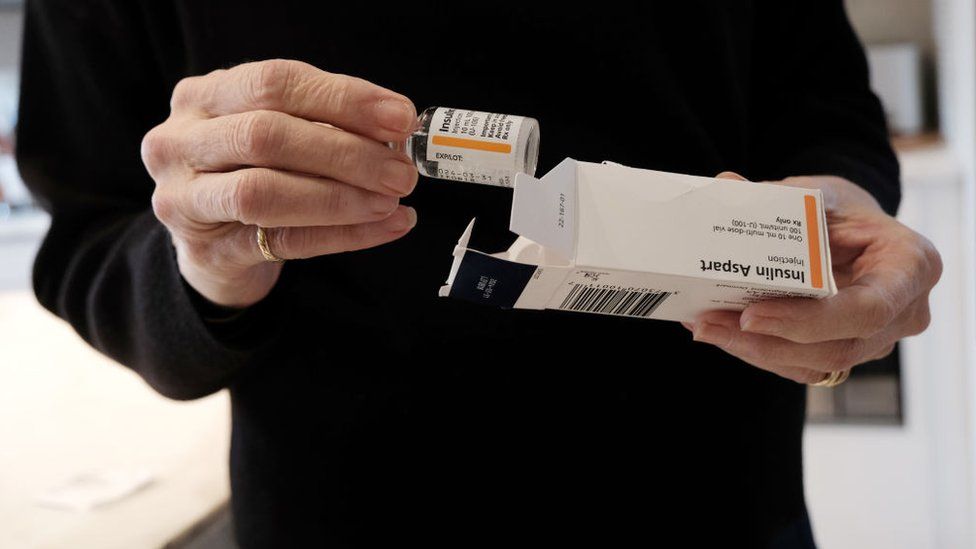
Published43 minutes agoShareclose panelShare pageCopy linkAbout sharingImage source, Getty ImagesPharmaceutical giant Sanofi has capped the price of its insulin, becoming the last of three major manufacturers of the drug to curb soaring costs of the lifesaving medication in the US.The French firm announced a $35 (£28) per month price cap on Lantus for those with private insurance. Sanofi’s changes follow in the footsteps of other drugmakers, Eli Lilly and Novo Nordisk.The move saves patients money, but it also may help the firm’s bottom line.The three companies make up 90% of the US insulin market and have faced public backlash and political pressure to reduce costs of the drug. More than eight million Americans use insulin to control their diabetes, the American Diabetes Association says.The human cost of insulin in AmericaSanofi is also reducing the price of its insulin drug, Apidra, by 70%. Eli Lilly announced earlier this month it would be lowering insulin prices by 70%. Novo Nordisk followed suit earlier this week, announcing it would cut prices up to 75% for some insulin drugs. Insulin costs in the US have often been five to 10 times higher than in other countries, a Rand study found.The Inflation Reduction Act, which went into effect this year, capped insulin costs for some older patients at $35 a month. US President Joe Biden, who has led calls for costs of the drug to be cut, said in a statement on Thursday: “As of this afternoon, all three of the leading insulin producers in America have agreed to substantially reduce their prices, following my calls to expand my $35 cap for seniors to all Americans.” The companies’ new pricing will go into effect on 1 January 2024, the same day that a US pricing rule comes into effect.The measure will impose a financially cost on pharmaceutical companies that hike the price of their medication faster than the rate of inflation.More on this storyThe human cost of insulin in America14 March 2019Eli Lilly caps monthly insulin costs in US at $351 March

Read more →

Why Do Japan’s Animal Cafes Have So Many Endangered Creatures?

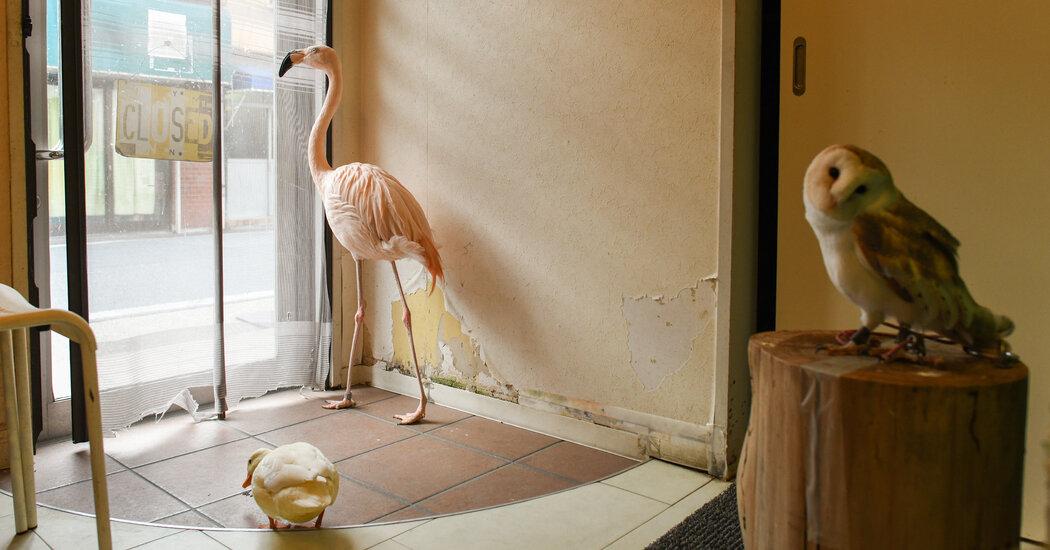
Critically endangered species and ones banned from international trade are among the hundreds of types birds, reptiles and mammals that researchers identified at 142 animal cafes.In Japan, it’s possible to enjoy a coffee while an owl perches on your head, or to sit at a bar where live penguins stare out at you from behind a plexiglass wall. The country’s exotic animal cafes are popular with locals as well as visitors seeking novelty, cuteness and selfies. Customers can even buy animals at some of the cafes and bring them home.But visitors of these venues may not realize that many of these cafes put wildlife conservation, their own and public health, and animal welfare at risk.In an exhaustive survey of Japan’s animal cafes published earlier this year in the journal Conservation Science and Practice, researchers found 3,793 individual animals belonging to 419 different species, 52 of which are threatened with extinction. Nine of the exotic species they found, including endangered slow lorises and critically endangered radiated tortoises, are strictly banned from international trade.“Some species we saw are of very questionable origins,” said Marie Sigaud, now a veterinarian and wildlife biologist at the National Museum of Natural History in Paris, who conducted the study as a postdoctoral researcher at Kyoto University. Many of the animals are “most likely caught in the wild, and this has implications for their long-term survival.”The potential for transmission of disease from animals to humans is also worrying, Dr. Sigaud said.At a typical cafe, individual animals of different species are crammed together in a small room where people are allowed to touch them while having a drink, said Cécile Sarabian, a cognitive ecologist at Nagoya University and co-author of the findings. Many of the animals are under stress and “it’s an excellent interface for the exchange of potential pathogens,” she said.The laws governing animal cafes are “quite weak,” Dr. Sarabian added — and the researchers are calling on Japan’s government to strengthen them.In Japan, exotic animal cafes are popular with locals as well as visitors. Customers can even buy some of the creatures.Noriko Hayashi for The New York TimesAn owl brought to the table for customers so that they can touch it an animal cafe in Tokyo, Japan.Noriko Hayashi for The New York TimesA customer touches a ferret inside an animal cafe in Tokyo.Noriko Hayashi for The New York TimesOfficials at Japan’s Ministry of the Environment did not respond to requests for comment.Exotic animal cafes are not uniquely Japanese. Since the first known animal cafe opened in Taiwan in 1998, featuring cats and dogs, the concept has rapidly spread across the region. A 2020 study identified 111 such businesses in Asia, primarily in Japan but also in China, Thailand, Taiwan, Indonesia, South Korea, Vietnam, the Philippines and Cambodia. Japan, however, seems to have become “the epicenter of the phenomenon,” Dr. Sigaud said.The researchers visited some cafes in Japan in person and also searched online and across social media in both English and Japanese for keywords such as “pet cafe,” “otter cafe” and “petting zoo.” They found 142 exotic animal cafes across the Japanese archipelago and made a list of all the species they observed in photos posted on the cafes’ websites and social media accounts, excluding insects.The number and diversity of animals came as a surprise, Dr. Sigaud said. Birds accounted for 62 percent of species, and 40 percent of them were owls. But the researchers also recorded dozens of reptiles and mammals.Thirty-eight of the cafes also offered options for buying the animals they displayed — owls, primarily, but also species as diverse as sugar gliders for $150 to $300; ball pythons for $455 to $1,290; secretary birds for $20,500; and red-tailed black cockatoos for $23,250.Some of the species were of particular concern, including critically endangered ones such as the pancake tortoise and the Central American river turtle. Others were of questionable origin. Bengal slow lorises and Sunda slow lorises, for example, are endangered species from South and Southeast Asia that are frequently the victims of poaching and are strictly banned from international trade. They are difficult to breed in captivity, Dr. Sigaud said, and no professional facilities for these species exist in Japan.“So where are they coming from?” Dr. Sigaud said. “It’s hard to believe they’re legal.”The international trade of 60 percent of the species the researchers identified in cafes is regulated by the Convention on the International Trade in Endangered Species of Wild Fauna and Flora, or CITES, and most of these animals were registered as coming from captive breeding facilities when they were imported into Japan. Only 14 percent were marked as coming from the wild, though the researchers say this is likely an underestimate, because no records exist for the 40 percent of species not regulated by CITES. Wild animals such as otters are also known to be laundered as captive bred to make their trade legal, they point out.The laws governing animal cafes are “quite weak,” said Cécile Sarabian, a cognitive ecologist at Nagoya University.Noriko Hayashi for The New York TimesFor this study, researchers looked at the 142 exotic animal cafes across the Japanese archipelago.Noriko Hayashi for The New York TimesA staff member cleans the space of African spurred tortoise at Funny Creature Forest in Kyoto.Noriko Hayashi for The New York TimesIn a CITES database search spanning 1975 to 2019, the researchers also found no records of any imports into Japan of seven species whose trade is strictly controlled but that are present at animal cafes, including the Bengal slow loris, spotted pond turtle and barred eagle-owl.“These gaps trigger more questions than answers,” Dr. Sarabian said.She and her colleagues also flagged welfare concerns at cafes. Animals can become stressed through constant handling, birds of prey are chained to perches and nocturnal species are made to interact with visitors throughout the day, Dr. Sarabian said. Nearly all species are kept in small cages and artificial environments, and are looked after by people with no specific training or qualifications to work with wildlife.Kohei Kimura, the owner of Funny Creatures Forest, an animal cafe in Kyoto that specializes in reptiles, said he often heard criticisms like the ones raised by the new study, including that cafes keep protected species and that the animals there are mistreated. Mr. Kimura — whose cafe exhibits around 40 types of reptiles, plus three owls and some tropical fish — said he took extra care to ensure he was not contributing to these problems. He sources all of his animals from wholesalers in Japan or breeds them himself. He forbids customers from touching the owls while they are sleeping, he said, and has built his own specialized cages for the reptiles because “the commercially available cages are too small.”Mr. Kimura, who has loved coldblooded creatures since he was a child, said he opened his cafe to share “the charm of reptiles” with others. “A big lizard can make you feel like you’re raising a dinosaur.”Exotic animal cafes are not uniquely Japanese. The first known animal cafe opened in Taiwan in 1998.Noriko Hayashi for The New York Times“In Japan, reptiles are often disliked and thought to be scary, but in reality, many of them are gentle,” he added.Timothy Bonebrake, a conservation biologist at the University of Hong Kong who was not involved in the research, said that the new study demonstrated the need for stronger regulations and oversight for Japan’s exotic animal cafes. “Overall, I think the analysis makes clear that there is an alarming number of threatened species in these cafes with questionable origin,” he said.But he noted that with proper regulation, it may be possible for animal cafes to play an active role in conservation, much as many zoos do: by raising public awareness and fondness for wildlife. “I do wonder often about the possible benefits,” he said.

Read more →

Covid tests for China travellers to England ending

Published2 days agoShareclose panelShare pageCopy linkAbout sharingImage source, ANDY RAIN/EPA-EFE/REX/ShutterstockBy Nadeem Shad & Jemma DempseyBBC NewsTravellers flying into England from mainland China will no longer have to provide proof of a negative pre-departure test from next month.The change will come into effect on 5 April – exactly three months after the measures started.Ministers brought in controls after a spike in cases following Beijing’s relaxation of its zero-Covid policy.Their removal comes after greater transparency from China, the government said.In a statement, the Department of Health and Social Care (DHSC) said that there has been increased information on “testing, vaccination and genomic sequencing results” on China’s domestic disease levels.The data indicates that Covid variants seen in China “continue to be the same as those already circulating in the UK”, it added.The Chinese Centre for Disease Control and Prevention also reported that all regions had passed their infection peak, the statement reported.The DHSC also announced that the UK Health Security Agency’s (UKHSA) voluntary on-arrival testing programme of travellers from China to Heathrow airport has come to an end. Heathrow sees busiest January since start of CovidRelics of zero-Covid dot China as life moves on The temporary testing programme was implemented in January. The government said its aim was to improve Covid surveillance of travellers arriving at London’s main airport from China by helping to detect potential new variants.The government said an average of 99 people per flight had been tested, totalling 3,374 passengers.During that period, 14 positive cases were identified, but none was deemed to be a variant of concern.The DHSC said from Friday, 17 March “passengers aged 18 or over travelling from mainland China and arriving at Heathrow Airport will no longer be invited to take a voluntary test on arrival”.”The ending of this enhanced surveillance is in line with international partners such as the EU who are reducing border measures to monitor new variants from China” .Officials said the government would maintain a range of contingency measures to “enable detection, and swift and proportionate action, for potential new harmful variants” should the need arise.Last December, ministers confirmed that passengers arriving to England from China would have to provide a negative Covid test before they boarded their flights. The Chinese government was reporting about 5,000 cases a day at the time, but analysts said the numbers were vastly undercounted – and that the daily caseload could have been closer to one million.Other countries around the world such as the US, France India also implemented testing.While the decision only affected English airports, the government said that despite their being no direct flights from China to Scotland, Wales or Northern Ireland, that it was working with the devolved administrations to ensure the policy was applied UK-wide.In January, China reopened its borders to international visitors for the first time since it imposed travel restrictions in March 2020 while officials declared later that month that the country’s current wave of Covid-19 infections was “coming to an end”.China’s National Health Commission stopped publishing data on Covid cases and deaths on 25 December after the relaxation of its zero-Covid policy and in February declared a “decisive victory” over the pandemic.More on this storyHeathrow sees busiest January since start of Covid13 FebruaryRelics of zero-Covid dot China as life moves on7 FebruaryChina’s Covid wave ‘coming to an end’ – officials30 JanuaryCovid test to be required for China arrivals in England31 December 2022

Read more →

Give babies peanut butter to cut allergy by 77%, study says

Published24 minutes agoShareclose panelShare pageCopy linkAbout sharingImage source, Getty ImagesBy James GallagherHealth and science correspondentGiving young babies – between four and six months old – tiny tastes of smooth peanut butter could dramatically cut peanut allergies, say scientists. Research shows there is a crucial opportunity during weaning to cut allergy cases by 77%. They say the government’s advice on weaning – which says no solids until around six months – needs to change. Experts warn whole or chopped nuts and peanuts are a choking risk and should not be given to children under five.The current NHS guidance does say peanut (crushed, ground or butter) can be introduced from around six months old.A baby is ready for their first solid food if:they can stay in a sitting position, holding their head steadyco-ordinate their eyes, hands and mouth so they can look at their food, pick it up and put it in their mouthswallow food, rather than spit it back outWhy do food allergies happen?Peanut allergy has been rising in the UK with an estimated one-in-50 children now affected.Food allergies are the result of our immune system mistaking something harmless for a severe threat. For some, even a small amount of peanut can lead to such an overwhelming immune reaction that it becomes life-threatening. Peanut allergy has become so common that some schools ban the ingredient.There had been long-standing advice to avoid foods that can trigger allergies during early childhood. At one point, families were once told to avoid peanut until their child was three years old. However, evidence over the last 15 years has turned that on its head. Instead, eating peanut while the immune system is still developing – and learning to recognise friend from foe – can reduce allergic reactions, experts say. It also means the body’s first experience of peanut is in the tummy where it is more likely to be recognised as food rather than on the skin, where it may be more likely to be treated as a threat. Israel, where peanut snacks are common in early life, has much lower rates of allergy.Other studies have suggested introducing other foods linked to allergies – such as egg, milk and wheat – early also reduced allergy.Image source, Getty ImagesThe latest research, published in the Journal of Allergy and Clinical Immunology, calculated when is the best time to start introducing foods containing peanut.The analysis was conducted by the University of Southampton, King’s College London and the research arm of the NHS – the National Institute for Health and Care Research.They found the critical period to start was between four and six months, during which the allergy could be cut by 77%.That is the equivalent of preventing 10,000 out of the roughly 13,000 cases of peanut allergy each year.Delaying the introduction of peanut-based foods until the child was one-year-old would only cut allergy cases by 33%, according to the research.For babies with eczema, which is a risk factor for allergy, the investigators recommend starting at four months – as long as the baby is ready. They say parents should start by offering small amounts of fruit or vegetables. Then when the baby is comfortable, around three tablespoons of peanut butter a week should be introduced and maintained for years. Peanut butter, which can be quite dry, can be given with breastmilk.Prof Graham Roberts, from the University of Southampton, said decades of advice to avoid peanut had “understandably led to parental fear” of giving children peanut and shifting rules led to large amounts of confusion from both within medicine and from parents.However, he said this was a “simple, low-cost, safe intervention” that would “deliver vast benefits for future generations”.Official advice is to start offering solid foods alongside milk at around six months old, and the government has launched a campaign on the correct time to wean due to parents starting earlier.More on this storyParents worry after peanut allergy drug sales flop2 December 2022’If this works, I won’t worry about peanuts’28 June 2022Give peanut to babies early – advice5 January 2017Related Internet LinksJournal of Allergy and Clinical ImmunologyUS Guidance – Peanut allergy early exposureFood allergies in babies and young children – NHSAllergy UKThe BBC is not responsible for the content of external sites.

Read more →

A new combination therapy regimen shows promising results for prostate cancer

TALAPRO-2, a study led by Neeraj Agarwal, MD, FASCO demonstrated that using TALZENNA, in combination with XTANDI, may reduce the risk of disease progression or death by 37%.
Agarwal, Presidential Endowed Chair of Cancer Research at Huntsman Cancer Institute, presented the results of one of his many Phase III trials at the American Society of Clinical Oncology Genitourinary Cancers Symposium last month.
According to the National Cancer Institute, prostate cancer is the most common cancer and second leading cause of cancer death among men in the United States. Castration-resistant prostate cancer, or CRPC, is a late state of prostate cancer that continues to grow despite androgen blockade.
TALAPRO-2 combines two oral medications, TALZENNA and XTANDI, to treat metastatic prostate cancer. The trial looks at the effectiveness of adding TALZENNA to the standard treatment of XTANDI, an androgen receptor blocker that prevents male hormones from feeding the cancer. TALZENNA is a PARP inhibitor typically used to treat breast cancer.
During the global study, the treatment plan for each of the participants was randomly selected. Some received the combination of the two drugs, while others received the standard treatment of XTANDI and a placebo pill. Huntsman Cancer Institute’s clinical trials team played a critical role in the monitoring of participants enrolled at the institute. The comparison of side effects and results between the two groups is a key feature of all Phase III trials.
“As a physician, I want my patients to be able to enjoy life while being treated for cancer,” says Agarwal. “Clinical trials help us find better cancer treatments with fewer side effects. Those who are impacted by cancer can have hope that their treatment is constantly improving.”
Phase III trials are the last phase before the FDA can approve a new treatment. The FDA decision on this investigatory drug combination is expected in 2023.
Huntsman Cancer Institute is home to over 200 clinical trials. At any given time, 250 research teams are learning more about cancer, its origins, and how to prevent and treat cancer. To learn more about clinical trials, contact the Cancer Learning Center.

Read more →

An extra X chromosome-linked gene may explain decreased viral infection severity in females

It has long been known that viral infections can be more severe in males than females, but the question as to why has remained a mystery — until possibly now. The key may lie in an epigenetic regulator that boosts the activity of specialized anti-viral immune cells known as natural killer (NK) cells.
In a study published March 16 in the peer-reviewed journal Nature Immunology, a collaborative team of UCLA researchers have found that female mouse and human NK cells have an extra copy of an X chromosome-linked gene called UTX. UTX acts as an epigenetic regulator to boost NK cell anti-viral function, while repressing NK cell numbers.
“While it is well-known that males have more NK cells compared to females, we did not understand why the increased number of NK cells was not more protective during viral infections. It turns out that females have more UTX in their NK cells than do males, which allows them to fight viral infections more efficiently,” said co-senior author Dr. Maureen Su, professor of microbiology immunology and molecular genetics, and of pediatrics, at the David Geffen School of Medicine at UCLA.
The researchers noted that this held true whether or not the mice had gonads (ovaries in females; testes in males), indicating that the observed trait was not linked to hormones. Furthermore, female mice with lower UTX expression had more NK cells which were not as capable of controlling viral infection.
“This implicates UTX as a critical molecular determinant of sex differences in NK cells,” said the study’s lead author Mandy Cheng, graduate student in molecular biology at UCLA.
The findings suggest that therapies involving immune responses need to move beyond a “one-size-fits-all” approach and toward a precision medicine model, also known as personalized medicine, that tailors treatments that take into account people’s individual differences, such as genetics, environment and other factors that influence health and disease risk, the researchers write.
“Given the recent excitement with using NK cells in the clinic, we will need to incorporate sex as a biological factor in treatment decisions and immunotherapy design,” said co-senior author Tim O’Sullivan, assistant professor of microbiology, immunology and molecular genetics at the Geffen School.
The researchers were supported by grants from the National Institutes of Health (AI145997, NS107851, AI143894, DK119445, HD100298), National Institute of Arthritis and Musculoskeletal and Skin Diseases (T32AR071307), UC CRCC (CRN-20-637105), UCLA CFAR (5P30 AI028697), Department of Defense (USAMRAA PR200530), Ruth L. Kirschstein National Research Service Awards (GM007185 and AI007323), National Organization of Rare Diseases, Whitcome Fellowship from the Molecular Biology Institute at UCLA, and the Warsaw Fellowship from the UCLA Department of Microbiology, Immunology, and Molecular Genetics.
Study co-authors are Joey Li, Luke Riggan, Bryan Chen, Rana Yakhshi Tafti, Scott Chin, Feiyang Ma,Matteo Pellegrini, Haley Hrncir, and Arthur Arnold, all of UCLA.

Read more →

Death, blindness and eyeballs removed after US eyedrops recall

Published8 hours agoShareclose panelShare pageCopy linkAbout sharingImage source, Getty ImagesBy Max MatzaBBC NewsUS health officials say that eyedrops may have killed one person and severely injured several others due to drug-resistant bacterial contamination.The Centers for Disease Control and Prevention (CDC) have identified 68 patients across 16 states with a rare strain of Pseudomonas aeruginosa.The strain had never been found in the US before this latest outbreak. In addition to the one death, eight patients have suffered vision loss, and four have had eyes surgically removed. Most of the patients diagnosed with the infection reported using eyedrops and artificial tears, according to the CDC.Ten different brands were initially identified as possibly linked to the outbreak, the CDC said. Eyedrops that are made in India and imported to the US under two brands were subsequently pulled from shelves in January and February.In January, the CDC warned people to stop using EzriCare Artificial Tears and Delsam Pharma’s Artificial Tears. The next month, the company that owns the brands – Global Pharma – issued a voluntary recall following a formal recommendation from the Food and Drug Administration (FDA). Opened bottles taken from patients were found through testing to contain the bacteria, the CDC said. Unopened bottles are currently being tested to determine whether contamination occurred during the manufacturing process. Last week, a woman in Florida sued the drug company, claiming that an infection she suffered after using their product forced doctors to remove one of her eyes. A lawyer for the woman blamed the contamination on a lack of preservatives in the eyedrops. “There’s likely many more people who have suffered infections who are unaware,” lawyer Natasha Cortes told NBC News. Image source, EzricareA representative for EzriCare has said that testing so far has not definitively linked the outbreak to their products. “To the greatest extent possible, we have been contacting customers to advise them against continued use of the product,” a spokesperson said.”We also immediately reached out to both CDC and FDA and indicated our willingness to cooperate with any requests they have of us.”The CDC said that anyone who has used the recalled products and are now experiencing symptoms should contact a doctor. Symptoms include yellow, green, or clear discharge from the eye, discomfort or pain, redness, blurry vision and increase sensitivity to light. Last week, the FDA published separate recall notices for some eyedrop products distributed by Pharmedica and Apotex after the companies said they voluntarily pulled them from shelves.Eyedrops and eyewash products were used by approximately 117 million Americans in 2020, according to Statista, a market research firm.Related Internet LinksGlobal Pharma Healthcare Issues Voluntary Nationwide Recall of Artificial Tears Lubricant Eye Drops Due to Possible ContaminaThe BBC is not responsible for the content of external sites.

Read more →