Welcome to Response Team Members

It was my pleasure to interact with several members of the White House COVID-19 Response Team during their recent visit to NIH. While on our Bethesda campus, team members met with select researchers and leadership from the NIH Vaccine Research Center and the NIH Clinical Center. This photo shows Ashish Jha (r), the White House COVID-19 Response Coordinator, while addressing staff during a meeting in the NIH Clinical Center. Tara Schwetz (l), NIH’s acting principal deputy director, is seated next to me. The visit took place on the afternoon of March 23. Credit: NIH

Post Link

Welcome to Response Team Members

NIH Blog Post Date

Friday, March 24, 2023

Read more →

Cleaner Air Helps Everyone. It Helps Black Communities a Lot.

A new study quantified the benefits of pollution reduction in terms of race and class.The Environmental Protection Agency is considering new standards for the maximum amount of fine particulate matter, tiny specks about one-thirtieth the diameter of a human hair that can penetrate the lungs, in outdoor air. A recent study examined how the benefits of stricter limits would be distributed across American society.What’s new in this researchImplementing stricter limits on fine particulate matter could reduce mortality rates by up to 7 percent for Black and low-income Americans over 65 who are already exposed to some of the dirtiest air in the United States, according to the study, led by researchers from the Harvard T.H. Chan School of Public Health.There is already overwhelming evidence that people of color, and Black communities in particular, are disproportionately exposed to harmful air pollutants like the fine particulate matter examined in the study, which is known as PM 2.5 because it is no more than 2.5 micrometers in diameter.The new research, published Friday in The New England Journal of Medicine, found that tightening the limit on fine particulate matter by 4 micrograms per cubic meter of air would result in a 4 percent reduction in the mortality rate for higher-income white adults. The same change would result in a reduction of 6 percent to 7  percent for higher-income Black adults, lower-income white adults and lower-income Black adults.“We need to look at the intersection of race and socioeconomic status to really understand how structural racism, differences in access to health care, and economic disparity play a role,” said Francesca Dominici, a biostatistics professor at Harvard and senior author on the study.Why this is importantThe new research could inform a crucial Environmental Protection Agency decision to tighten limits on fine particulate matter, including soot, which can come from construction sites, smokestacks, diesel trucks, power plants and other industrial activity. Wildfire smoke is also a major source of particulate matter pollution.In January, the E.P.A. proposed a draft rule that would tighten limits on fine particulate matter from the current standard of 12 micrograms per cubic meter to a level between 9 and 10 micrograms per cubic meter. The administration has estimated that the guidance could prevent as many as 4,200 premature deaths each year.However, some environmental justice advocates have said that the rule should strengthen the standard even more to protect the most vulnerable communities. The findings from the new research reveal that there are potentially “real, meaningful differences” between setting the limit at 10 micrograms versus a stricter 8 micrograms, said Scott Delaney, an author on the study and an epidemiologist at Harvard.There are likely tens of millions of Americans who live in communities with levels of PM 2.5 between 8 and 10 micrograms per cubic meter, said Joshua Apte, an associate professor of civil and environmental engineering at the University of California, Berkeley, who did not work on the study. “Those people could be left behind by the new standard.”The new rule, which will likely be finalized later this year after a period of public comment, is a central component of the Biden administration’s effort to address environmental justice, Michael Regan, the E.P.A. administrator, has said.Understand the bigger pictureIn a separate study last year, researchers uncovered stark disparities between white Americans and people of color across thousands of categories of pollution, including trucks, industry, agriculture and even restaurants.A study from 2020 quantified how air pollution ignores borders: In most states, about half of the premature deaths caused by poor air quality are linked to pollutants that blow in from other states.And policies made decades ago have been shown to have long-lasting effects. A study in March last year found that urban neighborhoods that were subject to redlining, the discriminatory practice of withholding banking and other services from nonwhite communities, in the 1930s tended to have higher levels of harmful air pollution eight decades later.

Read more →

California’s Plan for Cheaper Insulin Collides With Big Pharma’s Price Cuts

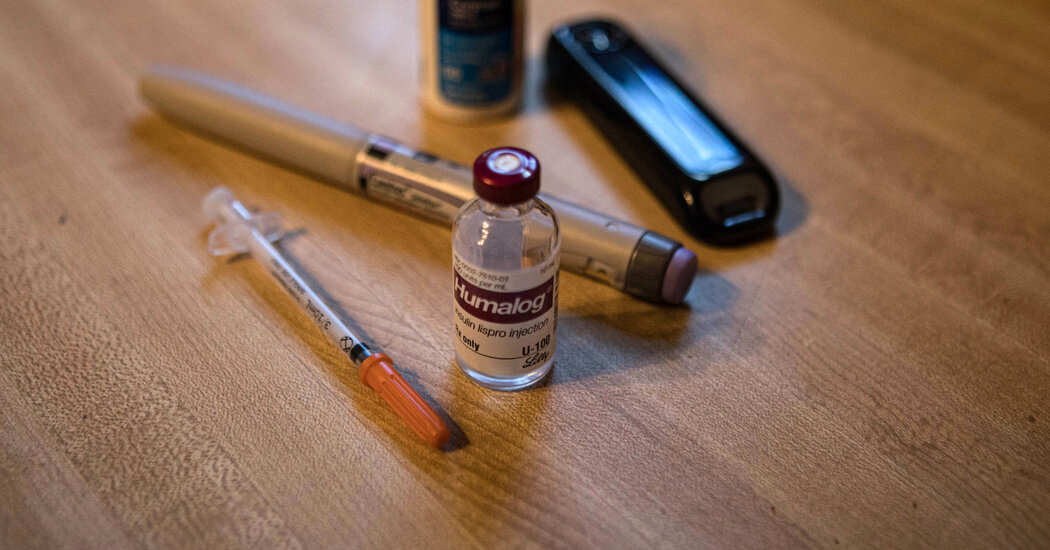
The state awarded a $50 million contract to produce less costly treatments, but moves by major suppliers might undercut the initiative before any new product emerges.California is moving ahead with its plan to produce state-sponsored insulin, but its goal of offering cheaper medicine than brand-name companies may be much harder to achieve now that those major drug makers have decided to significantly drop sticker prices on some products.So while some experts welcomed the news last weekend that the state had awarded a $50 million contract to Civica, a nonprofit organization, to manufacture low-cost insulin, others wondered if the initiative remained viable given the changing marketplace. Civica’s planned products would still need federal approval, which means it could take at least two years before they become available for sale.For years, the high costs associated with insulin for people with diabetes have forced some to ration their medicines, jeopardizing their health.For the estimated eight million Americans with diabetes who need insulin, including about one million Californians, the average price has more than quadrupled in 20 years. There have been wild variations in pricing, however, with Eli Lilly raising the sticker price of its most popular product, Humalog, more than tenfold.Many people with private health insurance pay nothing or no more than a $20 to $35 co-payment for a monthly insulin supply. And since January, the Inflation Reduction Act has imposed a $35 price cap for the nearly four million insulin users with Medicare Part D.But those with high-deductible health plans or the uninsured — an estimated 12 percent and 7 percent, respectively, of California’s insulin users — often face much higher costs, costing them hundreds of dollars per month.“This is a space where seemingly everybody seems to be making a quick buck,” Gov. Gavin Newsom said at a Saturday news conference announcing the new pharmaceutical contract in Downey, Calif., before a backdrop of insulin-stocked refrigerators. “Time for disruption.”Mr. Newsom, who was on a four-day state tour to promote his policies, also announced plans for California to develop its own naloxone, which reverses opioid overdose.The insulin contract is the outcome of the state Legislature’s appropriation last year of $100 million for the program, called the CalRx Biosimilar Insulin Initiative. (Competitor versions of so-called biologic treatments like insulin are known as biosimilars.) Under the 10-year deal, Civica said it planned to develop and produce these products at a new plant in Petersburg, Va., and would begin filing applications for approval of the biosimilar products with the Food and Drug Administration next year. Half of the $100 million budget would go toward establishing a California plant for further production.The biosimilar versions are expected to be comparable to Eli Lilly’s Humalog, Novo Nordisk’s NovoLog and Sanofi’s Lantus. These three companies control about 90 percent of the insulin market.Gov. Gavin Newsom of California announced the state’s partnership with Civica Rx during a visit to a Kaiser Permanente warehouse in Downey, Calif., last week.Damian Dovarganes/Associated PressEli Lilly, Sanofi and Novo Nordisk have announced sticker-price cuts, mostly in the 70 percent range, and some caps on out-of-pocket costs for certain insulin products. The lower prices should begin late this year into next year, depending on the company.President Biden and Democratic lawmakers have taken credit for the drug makers’ moves, but the companies had fewer financial incentives to keep prices high on their older insulin products, and they now rely more on newer drugs for diabetes and obesity. The drug makers also were facing penalties that would have forced them to pay Medicaid back for raising their prices faster than inflation.Civica was founded in 2018 by a collective of health systems seeking to mitigate chronic drug shortages. Ned McCoy, chief executive of Civica, said the company announced its pricing a year ago “with the goal of forcing the market to respond.”While many academic experts in insulin pricing expressed optimism about California’s move, some remained skeptical that its plans and others in early stages in Maine, Michigan and Washington could live up to their hype.Andrew Mulcahy, a senior policy researcher at the RAND Corporation whose 2020 study found the average U.S. list price for insulin was 10 times that of other nations, was measured in his assessment.“It’s one important change in a time where there’s a lot in flux for insulin,” he said. “There’s potential for savings for Californians and others. But it’s not clear this is going to fundamentally change the market. It already has in some ways. There are already these cheaper alternatives that are cropping up in the market.”He noted that Walmart sells a store-brand version of NovoLog, called ReliOn, for about $73 per vial. And the list price for a vial of NovoLog, a widely used product, will drop to $72, from $289, according to Novo Nordisk’s plan.CalRx will set recommended maximum retail prices of $30 for a 10-milliliter insulin vial and $55 for a set of five prefilled 3-milliliter pens. California residents will be given priority for the supply.Whether Civica’s insulin will be that much cheaper than the big-brand names once the new price cuts are imposed is open for debate, especially as Civica’s products won’t be available anytime soon.Before the new cuts were announced, a JAMA editorial suggested that a successful launch could provide a potent model for state-driven disruption of the pharmaceutical industry.“The best-case scenario is that the CalRx plan provides some sunshine on a path forward to state interventions in curbing drug prices,” Jacob S. Sherkow, a professor of law and medicine at the University of Illinois Urbana-Champaign and the editorial’s lead author, said.“A lot of previous attempts in that area have just failed completely, either by dint of economics or through legal challenges,” Mr. Sherkow continued. “This is one way that states can get back in the business of providing public goods.”Several states’ attorneys general, including California’s, recently filed suit against the three big insulin drug makers over high prices, and also against pharmacy benefit managers — companies that negotiate discounts off sticker prices on behalf of insurers, pocketing some of the difference.Doses of insulin stored at a Kaiser warehouse in Downey, Calif.Damian Dovarganes/Associated PressCalifornia’s generic drug plan would prohibit pharmacy benefit managers from profiting off rebates, undermining what critics charge is a relationship between the companies and the drug makers that is imbued with a perverse incentive to inflate sticker prices.Reid Porter, a representative for PhRMA, the major trade group for drug companies, joined a Sanofi representative in pointing the finger at pharmacy benefit managers for, they said, not passing savings on to the consumer.Mr. Newsom, Mr. Porter said, “wants to score political points and villainize the industry responsible for making California a global leader in developing lifesaving treatments and cures and infusing more than $200 billion into the economy and supporting nearly 700,000 jobs.”Reached for comment on the California program, representatives for Eli Lilly and Novo Nordisk highlighted their plans to lower some of their insulin prices.On Saturday, Mr. Newsom said, “I think it would be spectacular if all these other companies fell even further in their price considerations and dropped well below” the state’s price points. He expressed confidence that Civica could “dynamically address” such underselling.Still, the recent changes will mean many Californians with diabetes will most likely be able to spend less on their insulin next year.Once the three pharmaceutical companies’ new discounts are in place, annual out-of-pocket costs for people who are uninsured or have high-deductible plans and who use the three products that the California program seeks to replicate would range from $420 to $1,200, according to Dr. Mariana Socal, an associate scientist at the Johns Hopkins Bloomberg School of Public Health.The state program is expected to charge those individuals $200 to $375 a year for its versions of these products. Annual costs for well-insured people would drop from about $350 to $550 currently down to $140 to $250 because of the program.Baylee Bakkila, a Yale University medical student, led a study published in Health Affairs in July finding that 14 percent of insulin users spent more than 40 percent of their disposable income on the drug.Ms. Bakkila has reservations about the California program, noting that the prices are set by the insulin vial or set of pens, not a set monthly fee. She pointed to the Medicare price cap; Eli Lilly’s similar $35 cap for a monthly insulin supply, which is typically two to three vials; and Sanofi’s plan for a comparable cap.“CalRx will provide benefits to patients spending exorbitantly on insulin,” Ms. Bakkila said of the estimated 190,000 Californians with high-deductible plans or no insurance. “But, by comparison, these programs already in place cut spending even more.”Niketa Calame-Harris, 42, is an actress, acting teacher and advocate for the American Diabetes Association whose Type 1 diabetes was diagnosed in college. A resident of Los Angeles, she is covered through an Obamacare private health plan, and she pays about $5,000 a year for Humalog insulin. She said she had had to ration her doses at times.She expected she would save about $3,000 a year under the state plan. But she could save about $3,500 a year once Eli Lilly’s cut goes into effect in the last three months of this year. And possibly more if she is eligible for its $35 cap.Anticipating the savings, Ms. Harris thought of her 2-year-old daughter and said, “That money could go toward her getting a better education.”Rebecca Robbins contributed to this article.

Read more →

Should You Get Another Covid Booster?

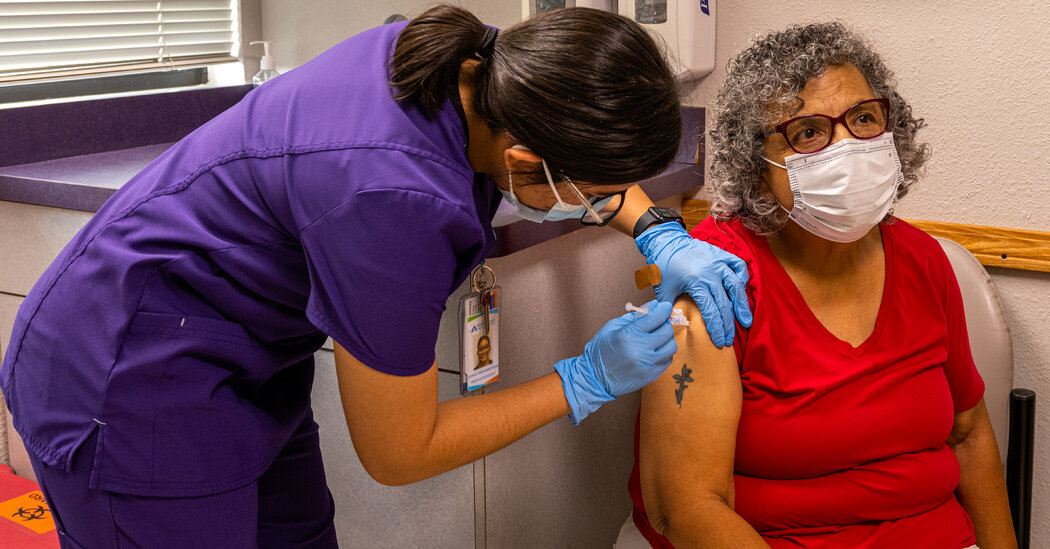
Britain and Canada have authorized another round of booster shots for older and immunocompromised citizens. So far, U.S. officials haven’t followed suit.For most Americans, the coronavirus has become a tolerable threat, on par with the flu, and requires minimal precautions, if any. But for older people and the immunocompromised, the virus still poses a formidable risk.Roughly 300 people in the United States are still dying from Covid-related causes each day, a vast majority of them adults over 70 and people who are medically frail or have impaired immune systems. So should they get another booster shot now?That’s the thorny question facing federal health officials.About 53 million adults 65 and older live in the United States, accounting for about 16 percent of the population, according to the Census Bureau. And seven million Americans have weak immune systems because of an illness or a medication.While infection with the coronavirus can be a matter of inconvenience or a mild illness for a relatively young and healthy adult, Covid can spell severe disease, hospitalization and death for older adults and immunocompromised people, said Dr. Céline Gounder, an infectious disease physician and senior fellow at the Kaiser Family Foundation.“I think it’s reasonable to boost immunocompromised people and people in nursing homes every six months,” Dr. Gounder said. “I do not think that annual boosters for everyone makes sense.”Some Americans who got their latest boosters in the fall are asking their doctors when they should get the next dose. Britain and Canada have already recommended additional shots for older adults and immunocompromised people starting this spring.It’s unclear whether the Food and Drug Administration will follow suit. In a bid to simplify what had become a bewildering array of guidelines on vaccination, the agency said in January that it would move to a single shot offered each fall to all Americans, as is the case for flu.“We hope that simplifying the Covid-19 vaccine regimen in the not-too-distant future will lead to the vaccination of more individuals in the coming years,” the agency said in a statement.A one-size-fits-all approach may not work. Americans are “diverse in our age, we’re diverse in our risk, we’re diverse in our perceptions of risk,” said Dr. Ofer Levy, director of the precision vaccines program at Boston Children’s Hospital and an adviser to the F.D.A.Ideally, Dr. Levy said, a high-risk person would be able to consult with a health care provider and decide whether an additional dose of the vaccine was needed.Immunity against infection declines after just a few months in nearly everyone who is vaccinated. But in people with weak immune systems, protection from a booster shot in the fall “wanes fast enough that by the spring or summer they are no longer distinguishable from people who didn’t get boosted,” said Dr. Jeremy Faust, an emergency medicine physician and health policy expert at Brigham and Women’s Hospital in Boston.“Immunocompromised people have a very, very short period of benefit from the booster,” Dr. Faust said. “And so you have to re-up it.”Dr. Faust cited data on the first round of boosters, which were offered in the fall of 2021 and which targeted the original version of the virus. There is much less research on the effectiveness of the bivalent boosters that were released last fall, and there is no data on the ideal timing for the next round of additional vaccines.The dearth of information leaves some experts hesitant to recommend another shot for any group of people, even the most vulnerable.“Given the lack of data, I don’t think it’s fair to say to people, ‘Inject yourself with a biological agent,’” said Dr. Paul Offit, director of the Vaccine Education Center at Children’s Hospital of Philadelphia and an adviser to the F.D.A.“It’s incumbent upon them when they make recommendations to show the data on which that recommendation is based,” Dr. Offit said of federal health officials. “Otherwise, they’re just saying, ‘Trust us.’”The F.D.A. did not comment on plans to consider offering boosters more frequently than once a year.“We continue to closely monitor the emerging data in the United States and globally, and we will base any decision on additional updated boosters upon those data,” the agency said in a statement.Even if the F.D.A. were to authorize another booster shot this spring, it’s unclear how many people would choose to get it. Just over 16 percent of Americans, and only 42 percent of adults over 65, have opted for the bivalent shots.“If boosters work, they’ll only work if people get them,” said Dr. Eric Rubin, editor in chief of The New England Journal of Medicine and an adviser to the F.D.A. “That’s a much larger issue than an additional booster.”Dr. Camille Kotton, who treats immunocompromised patients at Massachusetts General Hospital in Boston, said a majority of them were not up to date with their vaccines. She cited many possible reasons: They are not aware of the recommendations, they find the information too confusing or they are simply ready to move on from the pandemic.“It’s nice to focus on another dose of bivalent vaccine, but I do worry that we haven’t even given the bivalent vaccine to the majority of immunocompromised and elderly,” she said. “Maybe we should focus on those populations.”

Read more →

Use age, not weight, to screen for diabetes

Focus on age, not weight, to capture the greatest number of people in all racial and ethnic groups with prediabetes and diabetes, reports a new Northwestern Medicine study.
Screening all adults aged 35 to 70 years, regardless of weight, identifies the greatest proportion of adults with prediabetes and diabetes in the U.S. This approach will also maximize the ability to diagnose prediabetes and diabetes across all racial and ethnic groups, Northwestern investigators found.
“All major racial and ethnic minority groups develop diabetes at lower weights than white adults, and it’s most pronounced for Asian Americans,” said lead investigator Dr. Matthew O’Brien, an associate professor of medicine at Northwestern University Feinberg School of Medicine and a Northwestern Medicine physician.
The study will be published March 24 in the American Journal of Preventive Medicine.
“It might sound counterintuitive because we think of being overweight or obese as the primary cause of diabetes,” O’Brien said.
The U.S. Preventive Services Task Force (USPSTF) currently recommends screening only individuals 35 to 70 who are overweight or obese.

“But if we make decisions about diabetes testing based on weight, we will miss some people from racial and ethnic minority groups who are developing prediabetes and diabetes at lower weights,” O’Brien said.
Diagnosing diabetes in adults from racial and ethnic minority groups is often delayed when compared with white adults. A delayed diagnosis means the disease is harder to control, and individuals are more likely to develop diabetes complications in the heart, eyes and kidneys, while also having a higher risk of dying.
“Diabetes is a condition in which unacceptable racial and ethnic disparities persist,” O’Brien said. “That’s why we need a screening approach that maximizes equity. If we can find everyone earlier, it helps us reduce these disparities and the bad outcomes that follow.”
Approximately half of U.S. adults have Type 2 diabetes or prediabetes, representing a major public health concern. Overall, 81% of adults with prediabetes are not aware of having the condition, and 23% of diabetes cases remain undiagnosed. Up to 70% of adults with prediabetes will eventually develop diabetes.
Asian American adults with prediabetes, diabetes are the most likely to be missed
Asian American adults often develop diabetes and prediabetes at a normal weight. As a result, they are the most likely racial group to be missed in the recent 2021 guidelines for prediabetes and diabetes screening, reports the new study. An estimated 6 million Asian Americans have prediabetes or undiagnosed diabetes, according to the new study.

This is the first study to examine the health-equity implications of the current screening recommendations. Northwestern investigators examined the clinical performance of the 2021 USPSTF prediabetes and diabetes screening recommendation, as well as alternate age and Body Mass Index (BMI) cutoffs. The performance was assessed in the entire U.S. adult population, and separately by race and ethnicity.
The Task Force also suggested that clinicians consider earlier screening in racial and ethnic groups with high diabetes risk at younger ages or lower BMI. However, these alternatives were not formally included in their recommendation. The current study evaluated several options for earlier screening, which provides evidence that can inform future changes to the Task Force’s guideline.
“It’s imperative that we identify a screening approach that is equitable across the entire U.S. population,” O’Brien said. “Our findings illustrate that screening all adults aged 35 to 70 years, regardless of weight or body mass index, performs equitably across all racial and ethnic groups.”
Many studies have found that only half of eligible adults, or fewer, are tested for prediabetes and diabetes.
Making screening decisions based on age alone is also simpler for clinicians to implement, which may result in greater uptake of this screening approach, O’Brien said.
“There are many ways to nudge patients and providers to complete this testing, which should be the focus of future research.”
This epidemiologic study was conducted in collaboration with researchers from the U.S. Centers for Disease Control and Prevention and Emory University using nationally representative data from the National Health and Nutrition Examination Surveys.
Other Northwestern authors include Stacy Bailey, Dr. Sadiya Khan and Dr. Ronald Ackermann.
This study was funded in part by grant P30-DK092949 from the National Institute of Diabetes and Digestive and Kidney Diseases of the National Institutes of Health.

Read more →

A readily available dietary supplement may reverse organ damage caused by HIV and antiretroviral therapy

MitoQ, a mitochondrial antioxidant that is available to the public as a diet supplement, was found in a mouse study to reverse the detrimental effects that HIV and antiretroviral therapy (ART) have on mitochondria in the brain, heart, aorta, lungs, kidney and liver.
The researchers used a molecular method to measure the ratio of human and murine mitochondrial (mtDNA) to nuclear DNA (ntDNA) ratio, a measure of mitochondrial dysfunction. Reduction in this ratio reflects mitochondrial dysfunction. Compared to uninfected mice, HIV infected mice treated with ART had mitochondrial dysfunction in the human immune cells in the brain, heart, liver, lungs, and gut. ART itself also affected mitochondrial function in mouse heart cells. When treated with MitoQ for 90 days, HIV infected mice had reduced mitochondrial dysfunction in organs compared to HIV infected mice on ART.
Mitochondria are the key cell structures that are important for the smooth function of organs such as the brain, heart, liver and kidney. HIV causes a chronic state of inflammation and immune dysfunction that contribute to organ damage organs. The reasons for this are unclear, but it is known that mitochondrial dysfunction contributes to organ damage and is present in chronic HIV. There are no therapies for HIV associated diseases that affect organs such as the brain, heart and liver.
The researchers used humanized mice, which have human immune cells that can be infected with HIV. They infected them with the virus, treated them with ART consisting of tenofovir disoproxil fumarate, emtricitabine, and raltegravir, then fed them MitoQ through drinking water for three months. The control mice were not given MitoQ.
The researchers note that humanized mice do not exactly recreate HIV infection in humans. Also, the infected mice were exposed to both the virus and the ART and they could not dissect the exact contribution of the virus versus the ART to mitochondrial dysfunction in human cells.
These preclinical findings could serve as the foundation for clinical trials in humans with HIV.
“MitoQ is a diet supplement that is known to be safe in humans and is readily available for use,” said senior author Dr. Theodoros Kelesidis, associate professor of medicine in the division of infectious diseases at the David Geffen School of Medicine at UCLA. “Our findings support clinical trials of MitoQ in people with HIV who take antiretrovirals to determine whether it can be a potential treatment for comorbidities associated with chronic HIV infection. Until then people with HIV should not take this diet supplement for treatment of any conditions associated with HIV infection.”
The study was funded by the National Institutes of Health (R01AG059501, R21AI36708, R21HL134444, R03AG059462, R03AG059462, K08AI108272), the California HIV/AIDS Research Program (OS17-LA-002), and Campbell Foundation.

Read more →

Novel regulatory mechanism of blood clotting discovered

When our blood vessels are injured by cuts, abrasions, or bruises, it is vital that the bleeding is stopped, and the wound is sealed. This process is called hemostasis and involves two main components: First, blood platelets attach to the wound edges, form a plug and provisionally seal the injury. Secondly, blood coagulation or the coagulation cascade is initiated, leading to the formation of long fibrin fibers, which together with platelets seal the wound tightly.
However, if fibrin is formed in excess, e.g. in chronic wounds, thrombosis and subsequent vascular occlusions can occur. Therefore, the strict regulation of fibrin formation is important. How blood clotting is limited was not fully understood until now.
In an international project coordinated by the University Hospital of Würzburg, researchers have now deciphered a central regulatory mechanism of fibrin formation and propose new therapeutic approaches. The results have been published in the journal Nature Cardiovascular Research.
GPV controls thrombin activity and fibrin formation
In this study, the research group led by Professor Bernhard Nieswandt identified a fundamentally new mechanism:
“For the first time, we were able to uncover a new switching point that regulates both hemostasis and thrombosis. This switch is glycoprotein V, GPV, which is expressed on the surface of blood platelets. GPV controls the activity of the enzyme thrombin, which is responsible for the formation of fibrin,” explains Bernhard Nieswandt, head of the Institute of Experimental Biomedicine I and member of the board of the Rudolf Virchow Center — Center for Integrative and Translational Bioimaging (RVZ) at the University of Würzburg.

Thrombin is a crucial enzyme in blood clotting and its activity must therefore be precisely spatio-temporally controlled. Until now, it was known that the surface receptor GPV is cleaved by thrombin during platelet activation. This releases GPV as a soluble form.
However, the physiological function of this receptor was largely unknown. Using genetic and pharmacological approaches, the researchers showed that thrombin-mediated cleavage of GPV limits fibrin formation. By remaining bound to thrombin, soluble GPV alters the activity of thrombin so that it can form less fibrin.
“Findings will change textbook knowledge”
In experimental thrombosis models, soluble GPV was shown to prevent, among other things, the formation of vaso-occlusive thrombi and to lead to a significant protection from experimental stroke and associated brain damage.
Bernhard Nieswandt is convinced that these new findings will change textbook knowledge. He thanks all participating scientists from the RVZ and the University Hospital Würzburg (UKW), who were supported by colleagues from Mainz, Maastricht, and the USA.

Antibodies against GPV offer great clinical potential in the treatment of disturbed hemostasis
In another approach, the research group generated antibodies against GPV that prevent thrombin-mediated cleavage of GPV.
“In our studies, we were able to show that these antibodies increase thrombin activity, resulting in increased fibrin formation. Our idea was therefore to use these antibodies in the context of impaired hemostasis to increase fibrin formation,” says Professor David Stegner, head of the Vascular Imaging Group at RVZ and one of the study’s last authors.
In addition to genetic causes, a reduced platelet count or impaired function can also be caused by pharmacological treatment and therefore lead to an impaired hemostasis. Treatment with platelet aggregation inhibitors, such as clopidogrel, which are used to prevent heart attacks or strokes and to treat circulatory disorders, e.g. impairs platelet function.
“In an experimental model of hemostasis, our new antibody was indeed able to restore hemostasis under conditions where hemostasis is otherwise not possible. This indicates a support of hemostasis by enhancing thrombin-dependent fibrin formation,” adds Dr Sarah Beck, scientist at the Würzburg Institute for Experimental Biomedicine and first author of the study. “Anti-GPV treatment could have great clinical potential. This will be investigated in more detail in the future.”

Read more →

Now, Poorer Children Are Falling Behind on the Playing Field

Nationwide, poor children and adolescents are participating far less in sports and fitness activities than their more affluent peers.Over the last two decades, technology companies and policymakers warned of a “digital divide” in which poor children could fall behind their more affluent peers without equal access to technology. Today, with widespread internet access and smartphone ownership, the gap has narrowed sharply.But with less fanfare a different division has appeared: Across the country, poor children and adolescents are participating far less in sports and fitness activities than more affluent youngsters are. Call it the physical divide.Data from multiple sources reveal a significant gap in sports participation by income level. A Centers for Disease Control and Prevention study found that 70 percent of children from families with incomes above about $105,000 — four times the poverty line — participated in sports in 2020. But participation was around 51 percent for families in a middle-income range, and just 31 percent for families at or below the poverty line.A 2021 study of Seattle-area students from fifth grade through high school found that less affluent youth were less likely to participate in sports than their more affluent peers. The study also found that middle schoolers from more affluent families were three times as likely to meet physical exercise guidelines as less affluent students.A combination of factors is responsible. Spending cuts and changing priorities at some public schools have curtailed physical education classes and organized sports. At the same time, privatized youth sports have become a multibillion-dollar enterprise offering new opportunities — at least for families that can afford hundreds to thousands of dollars each season for club-team fees, uniforms, equipment, travel to tournaments and private coaching.“What’s happened as sports has become privatized is that it has become the haves and have-nots,” said Jon Solomon, editorial director for the Aspen Institute Sports and Society Program.Recent Aspen Institute research found that among children from families making less than $25,000 a year, participation in a healthy level of activity fell to 26.6 percent in 2021 from 34.1 percent in 2013. For children from families with $25,000 to $50,000 in income, participation fell during that time to 35.7 percent from 38.1 percent.But among families with incomes above $100,000, participation rose in that period, to 46 percent from 43.9 percent, the Aspen Institute found.“Particularly for low-income kids, if they don’t have access to sports within the school setting, where are they going to get their physical activity?” Mr. Solomon said. “The answer is nowhere.”Schools are not always filling the gap. A recent report from the Physical Activity Alliance, a nonprofit organization, gave schools nationwide a grade of D– for physical fitness. That is a downgrade from a C– in 2014, with the new grade reflecting even less access to regular physical education classes, gym time and equipment in schools.Ann Paulls-Neal, varsity track coach at Highland High, has noticed that more affluent students, with access to club sports, “are more comfortable moving, where the students in low-income areas are not.” Adria Malcolm for The New York TimesAnn Paulls-Neal, a longtime physical education teacher and track coach in Albuquerque, has watched the trend play out. For nearly 20 years, until 2017, she taught at John Baker Elementary, which drew students largely from middle- and higher-income families (less than one-third qualified for free or reduced-price lunch). There, “all of my students did at least one sport after school,” she said. “Club soccer or pretty much club anything.”Then she moved to a school, Wherry Elementary, where 100 percent of the students qualified for free or reduced-price lunch. Students played on the playground, she said, “but we had just three kids that were playing any kind of sport outside of school.”She speculated about the reasons. Families couldn’t afford private sports or didn’t have cars or time to ferry their children to practice, she proposed, and clubs were unthinkable “if these sites or clubs don’t hold practice on a bus line.”In 2019, Ms. Paulls-Neal became the department chair of health and physical education at Highland High School, where 100 percent of students qualify for free lunch. Here, she said, she was seeing the impact of “this club and school divide.”More affluent children are often highly trained in sports — “a little bit ahead,” said Ms. Paulls-Neal, who is also the executive director of the New Mexico chapter of the Society of Health and Physical Educators, or SHAPE America. “And they are more comfortable moving, where the students in low-income areas are not.”A similar pattern is emerging in Unit District No. 5 in McLean County, Ill. Faced with budget shortfalls, the district’s board of education voted this year to make a series of cuts, including to sports. Next year all the junior high sports will be gone: boys’ and girls’ basketball, cross-country, track, boys’ wrestling and baseball, and girls’ softball and volleyball.The cuts also include freshman sports at the district’s two high schools; proposed cuts for the 2024-25 school year include junior varsity high school sports. In November, district voters rejected a proposal to raise taxes to fund those programs.Kristen Weikle, superintendent of Unit 5 District Schools in McLean County, Ill. Faced with budget shortfalls, the district’s board of education voted this year to eliminate numerous sports, including basketball, baseball and track.Mustafa Hussain for The New York Times“It’s devastating for the kids,” said Kristen Weikle, the district’s superintendent. She said that school sports promote good grades and boost physical and emotional health among students who participate.Private sports are accessible to some lower-income families, she added, but not to all. “It’s not just the cost to participate,” Ms. Weikle said. “It’s the cost to travel to competitions. It’s the time to take their child to club activities and then purchase the equipment.”To improve equity, Valentine Walker, the coach of high school boys’ and girls’ soccer in the district, started a free soccer club in 2008. At the time, his 8-year-old son was participating in baseball and soccer clubs that cost hundreds of dollars a season. Mr. Walker noticed “an influx of Jamaicans and Africans and Hispanic kids whose families could not afford pay-to-play.”Mr. Walker, who grew up in a poor family in Jamaica, saved money by borrowing school equipment and a 13-seat van from a friend for travel to tournaments and by having six or seven players share a hotel room. “I had to stick my nose under the door so I could get some fresh air,” Mr. Walker said with a laugh.Mr. Walker is now fielding the second generation of that team, at a cost of around $400 per season; families that can’t afford it don’t pay, and more affluent families and sponsors subsidize the experience.He conceded that his private team tended to take players who were more gifted or showed particular potential. But on his public high school teams he makes no cuts, because many less affluent students who lack club experience would not be able to play otherwise. In the summer, he holds open soccer workouts from 6:30 to 8:30 a.m., followed by strength training in the weight room.“This is not a policy — it’s just me,” he said. “It’s because of my desire to reduce the inequities.”Valentine Walker, coach of high school boys’ and girls’ soccer in Unit District No. 5. In 2008, he started a free soccer club for children who “could not afford pay-to-play.”Mustafa Hussain for The New York TimesAs public schools grapple with the economics of physical activity, a private youth sports industry has blossomed. Annual market revenue from team registrations, travel, apparel, equipment and other expenses grew to $28 billion in 2021 from $3.5 billion in 2010, according to WinterGreen Research, a private data company.“It started with software” that enabled teams to organize and collect money, said Susan Eustis, WinterGreen’s president. And then, she said, “schools started defunding their sports.”At first, she added, “these two things didn’t have much to do with each other.” But increasingly, entrepreneurs and private coaches used technology to market, organize and create tournaments and to serve a growing population of parents who wanted deeper experiences for their children, and whose schools were divesting from sports and gym programs.She cited cost as a barrier to lower-income children’s participation in private sports. The Aspen Institute found that families spend on average $1,188 per year per child for soccer, $1,002 for basketball, $714 for baseball and $581 for tackle football.Ms. Eustis largely champions private youth sports, which she says provide “elite” training, reduce bullying with professional coaches and start at young ages, as early as 3. Then there is the chance to travel with family as a group activity — “dynamic new travel teams that consume nights and weekends for families,” she wrote in her 2022 report. “The best and the brightest want top-notch sports training for their children.”

Read more →

Tennessee’s Rejection of Federal Funds to Curb HIV Alarms Prevention Groups

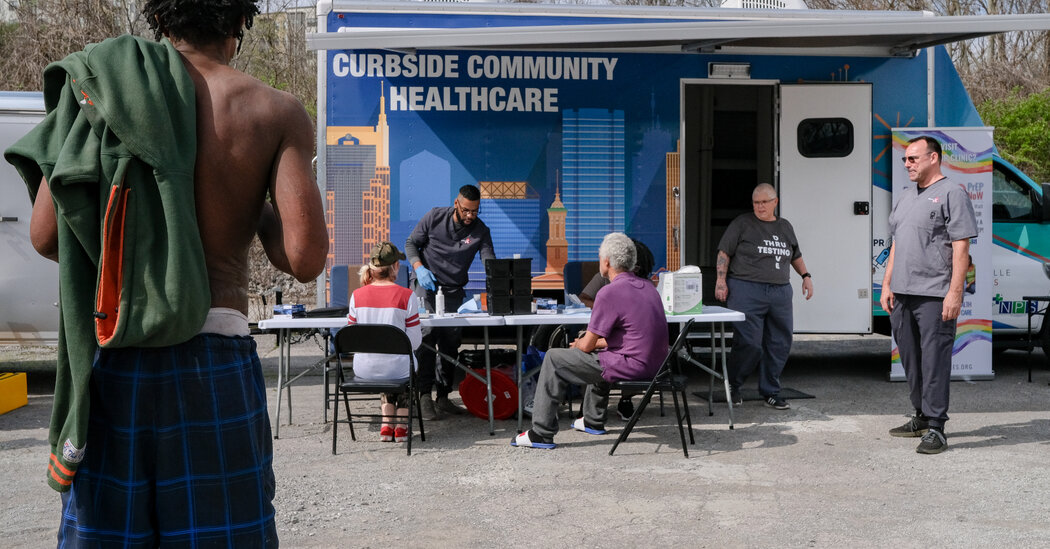
The state plans to use state funds, which a spokeswoman for Gov. Bill Lee said would be more efficient than receiving federal dollars. Some organizations are concerned they will be cut off if they don’t align with his conservative politics.NASHVILLE — After offering free H.I.V. testing at a drive-through event last year, staff members at Nashville CARES, a nonprofit sexual health clinic, made an alarming discovery: a cluster of positive tests from a single neighborhood.“There was one person who had unknowingly passed it to multiple partners, and we were able to intervene quickly before it became a full-blown outbreak,” said Lisa Binkley, who leads the clinic’s H.I.V. prevention team.For this work and other efforts to try to curb the spread of H.I.V. in the Nashville region, Ms. Binkley and her colleagues have relied heavily on federal grant money. So they were stunned when Tennessee’s health commissioner announced earlier this year that the state would no longer accept $8.8 million in federal grant money, which for more than a decade has been distributed among nonprofit groups, county health departments and health care organizations.Tennessee is the only state to have rejected the funding; Gov. Bill Lee, a Republican, instead plans to allocate $9 million in new state funding for H.I.V. prevention and monitoring in July. The governor said the move would offer the state greater independence in its decision-making. But some organizations say they are concerned that the state will not offer them funding if they do not align with the governor’s conservative positions on issues like transgender rights, and his opposition to abortion access.“You can’t politicize public health,” said Mia Cotton, the chief programs officer of Friends for Life, a Memphis nonprofit that has received the federal funding.The state has not announced which groups will receive the funds, or the rules on how they can be used, but the governor’s office has indicated that its priorities include “vulnerable populations, such as victims of human trafficking, mothers and children, and first responders.”Public health experts say Mr. Lee’s listed examples are at odds with the reality on the ground, as those groups represent only a tiny fraction of new H.I.V. cases in Tennessee, according to a recent report from the AIDS charity amfAR. Some of the highest-risk groups in the state are sexually active gay men, transgender women and those who inject drugs, according to Greg Millett, the director of amfAR and an epidemiologist.Gov. Bill Lee in Phoenix in 2022. A spokeswoman for Mr. Lee said the new approach would be more efficient than the “cumbersome” process of receiving grant dollars from the Centers for Disease Control and Prevention.Caitlin O’Hara for The New York TimesIn a letter last month to the Centers for Disease Control and Prevention, which gives out the grants, the state health commissioner, Dr. Ralph Alvarado, cited Governor Lee’s desire to reduce the state’s “reliance on federal funding” and “assume increased independence.”Jade Byers, a spokeswoman for Mr. Lee, said the new approach would also be more efficient than the “cumbersome” process of receiving C.D.C. grant dollars, which requires organizations to spend their own money and then seek reimbursement from the federal government.Tennessee currently relies on the nonprofit United Way of Greater Nashville to select the recipients and distribute the federal grant money. No other states have refused C.D.C. funding for H.I.V. prevention and monitoring, according to a federal health official.The C.D.C. requires that recipients of its H.I.V. prevention and monitoring grants focus on groups that are most vulnerable to H.I.V., using federal data to identify the most vulnerable populations in a particular area. Among the groups identified by the C.D.C. as high-risk are men who have sex with men, transgender people, and Black and Hispanic people. The C.D.C. declined to comment on Mr. Lee’s decision.The mobile clinic in Nashville.Kevin Wurm for The New York TimesAt State Senate committee hearing last week, Senator Jeff Yarbro, a Democrat, asked Dr. Alvarado if the new funding approach would allow Tennessee to “continue focusing the bulk of these efforts where the bulk of the risk is.”Dr. Alvarado said he “would imagine the same populations” that currently benefit from the C.D.C. funds “will continue to receive benefits.” But he did not say whether organizations and programs that focus on L.G.B.T.Q. populations would be affected by the funding change, nor did the governor’s office when contacted for clarification.Governor Lee, whose signing of a total abortion ban and proposed tax cuts have been broadly applauded by Tennessee Republicans, has faced questions from within his party of the H.I.V. funding decision.State Senator Becky Massey, a Republican, asked Dr. Alvarado at the hearing last week if the state planned to continue funding local nonprofits that have been effective at H.I.V. outreach in rural areas. Dr. Alvarado said he could not answer her question on the record. Among those who fear that the state will politicize its funding choices is Ray Holloman, who leads the Tennessee Transgender Task Force, a volunteer group that the state health department established in 2018, during the previous administration. The team received an annual budget of $10,000, with the goal of connecting transgender residents to H.I.V. prevention resources; the money came from the C.D.C. grants.Mr. Holloman said he and his colleagues tried to be discreet about their ties to the state health department.“We knew from the start, if we got any kind of visibility, they were going to take our funding away from us,” he said.His fears appeared to be confirmed last fall, when The Daily Wire, a right-wing media outlet, published an article accusing the state task force of moving beyond its original mission of H.I.V. prevention to “promote transgender surgeries and abortion.” A spokeswoman for the governor told the outlet that he did not support the task force.Mr. Holloman said the allegations were baseless, but, in the weeks that followed, he saw his work unravel. The Tennessee Health Department removed from its website information about the task force and other health resources for trans people, as well as information about the state’s H.I.V. prevention programs. Then, Mr. Holloman learned that the funding for the task force would end on Dec. 31, 2022.  Supporters of L.G.B.T.Q. rights gathered at the State Capitol in Nashville in February to oppose a series of bills moving through the legislature.Jonathan Mattise/Associated PressThe task force is currently fund-raising to replace the money previously offered through the C.D.C. grant, and is hoping to continue offering H.I.V. prevention education with nonprofit partners.Planned Parenthood of Tennessee and North Mississippi, another recipient of the federal H.I.V. funding, was also notified last fall that the Lee administration planned to cut off its access to the C.D.C. grant. In a statement released in January, Planned Parenthood said that it had “attempted to work with the governor’s office following this latest effort, but the state abruptly announced their withdrawal from the federal program altogether.”For Mr. Holloman and other L.G.B.T.Q. people in Tennessee, the move to eliminate funding to the Tennessee Transgender Task Force is seen as part of a broader attack on trans rights. Governor Lee has approved legislation that bans all gender-affirming treatment, hormone therapies and referrals for transgender children to receive medical care in the state. He also called for an investigation of the Clinic for Transgender Health at the Vanderbilt University Medical Center.Tennessee lawmakers have also advanced legislation that would block trans people from changing the gender listed on their drivers’ licenses.Over the past decade, the South has emerged as the epicenter of the nation’s H.I.V. epidemic. People in Southern states account for over half of new H.I.V. cases each year, even though just 38 percent of the U.S. population lives in the region. Shelby County, which includes Memphis, has one of one of the highest rates of new H.I.V. infections nationwide.H.I.V. and hepatitis C testing strips at the mobile clinic in Nashville.Kevin Wurm for The New York TimesMs. Cotton, of Friends for Life, said there was an extra, hidden cost to Tennessee’s decision to refuse the federal funding. Friends for Life receives approximately $500,000 per year from the C.D.C. grants, and the organization’s status as a federal grant recipient makes it eligible to buy drugs from manufacturers at a steep discount, as part of a program that began in the 1990s to help improve public health in low-income communities.Without the grant money and the drug discounts, Ms. Cotton said, the Friends for Life clinic would most likely have to close down. Ms. Cotton and other H.I.V. prevention experts across the state have been scrambling to find alternative sources of funding since Dr. Alvarado told the C.D.C. that the state no longer wanted the grant money.“It’s been scary, because you want to give people consistent health resources, and we just don’t know what’s going to happen come June without the federal money in place,” said Amna Osman, the chief executive of Nashville CARES, referring to the end of the federal grand contract. The organization serves 50,000 people across 17 counties.Ms. Osman said she and her colleagues were worried about what might happen if they could no longer afford to offer H.I.V. testing; the organization currently receives more than 40 percent of its budget for H.I.V. prevention and education, or $315,000 a year, from the C.D.C. grants.Last month, Ms. Binkley, Ms. Osman and other CARES staff members brought a mobile clinic to a homeless encampment alongside the Cumberland River in downtown Nashville, offering free H.I.V. and hepatitis C testing, while also distributing test strips that detect fentanyl in street drugs and handing out Narcan, a medicine that can rapidly reverse an opioid overdose.Lisa Binkley leads the H.I.V. prevention team at Nashville CARES.Kevin Wurm for The New York TimesMinutes after they pulled into an empty lot at the center of the encampments, they set up three folding tables stacked with medical history forms, testing supplies, sandwiches and bottled water.“Doesn’t matter where we are, everybody always says, ‘Oh, don’t worry, I got tested last week,’” Ms. Binkley said. “People just don’t want to know, a lot of the time. It’s scary to know if you’re positive, but we’re good at setting people at ease.”

Read more →

These Devices Sickened Hundreds. The New Models Have Risks, Too.

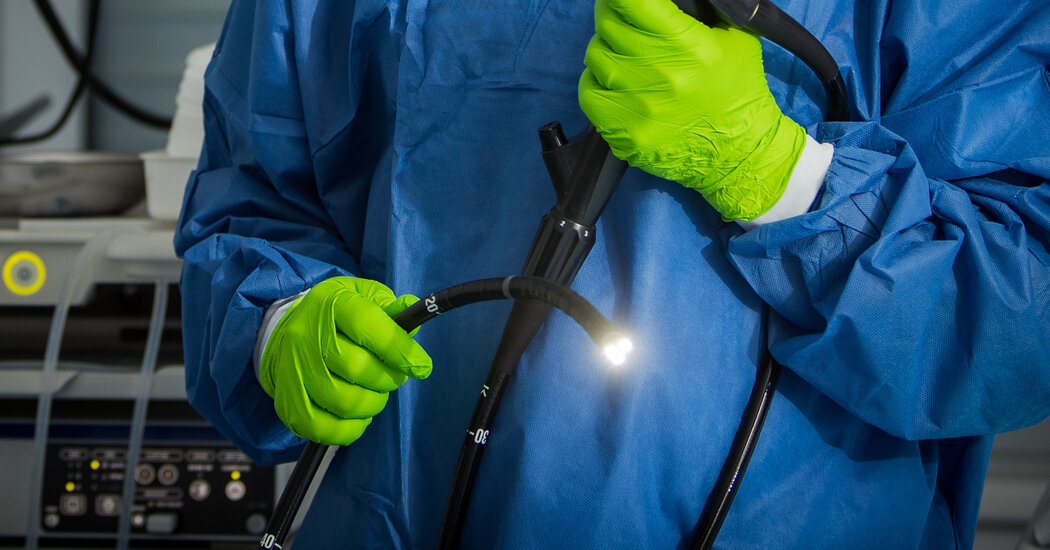
Duodenoscopes — tubular cameras threaded into the intestine — with disposable parts were supposed to be safer. But the parts can fall off in the body, the F.D.A. warned.After medical instruments called duodenoscopes sickened hundreds of patients in hospital outbreaks a few years ago, the Food and Drug Administration urged health care facilities to switch to models with disposable components less likely to carry bacteria from one patient to another.Now the agency says there are problems with those instruments, too.Duodenoscopes are long, snakelike cameras inserted into the upper part of the small intestine through the mouth to diagnose and treat diseases of the pancreas and the bile duct. They are used in about 500,000 procedures a year in the United States, but are difficult to clean completely and can harbor disease-causing microbes like E. coli.Olympus Medical Systems produces duodenoscopes with disposable tip covers shaped like tiny thimbles that cover the camera at the far end of the instrument.But in scores of procedures, the tips have fallen off in patients’ mouths or stomachs, according to reports filed with the F.D.A. Some of these bits had sharp edges that cut patients, leading to internal bleeding.In a case report dated May 20, 2021, a physician was removing a scope from a patient’s stomach “when the soft tip cover of the scope fell off into the patient’s stomach.”“It was decided to allow the tip cover to pass naturally through the GI system than to subject the patient to further anesthesia time in attempting to remove it,” the report said.The F.D.A. sent an inspector to the Olympus Medical Systems facility in Tokyo late last year. Agency officials warned the company this month that the inspector had found that disposable parts made for two scopes — covers for duodenoscopes and suction valves for bronchoscopes, used to examine the lungs — were adulterated or defective.The agency said that it had received about 160 complaints about caps falling off duodenoscopes, and noted that Olympus’s own analysis had determined that the tally “was above the expected numbers for that type of complaint.”The warning was not the F.D.A.’s first communication with the company, and the responses so far were “not adequate,” the agency said: “The F.D.A. does not agree that the risk to the patient is of a low enough risk to not warrant further action at this time.”A spokeswoman for Olympus, Jennifer Bannan, said that while the company had already taken a number of measures to address the deficiencies, it “will further evaluate these actions” and “expand those efforts” in order to ensure that Olympus fully addresses the problems identified by the F.D.A.“Olympus takes this Warning Letter very seriously,” Ms. Bannan said in an emailed statement. “The company is working diligently to address the issues raised in the letter in a timely manner.”Other companies manufacture scopes with disposable components, and some are already making fully disposable duodenoscopes, which the F.D.A. first cleared in 2019. At the moment, it is not clear whether hospitals and patients should opt for those alternatives.In January, Dr. Jeff Shuren, director of the F.D.A.’s Center for Devices and Radiological Health, issued a statement describing the problems at Olympus, but noted that the risk of infection from inadequate cleaning of duodenoscopes was relatively low.The center did not recommend canceling or postponing procedures “without discussion of the benefits and risks” with patients, he said.But the latest warning letter to Olympus noted other deficiencies, including wrinkles and air bubbles in the sealed packaging of single-use suction valves for bronchoscopes. The irregularities raised questions about the sterility of the valves, the F.D.A. said.The agency also expressed concern about reports of cracked duodenoscope caps that malfunctioned during use, causing injuries.Some of the reports filed with the F.D.A. described lacerations that caused bleeding episodes with serious consequences. In one case, a doctor noticed the patient was bleeding from the mouth after inserting the scope.The doctor withdrew the scope, stopped the procedure and transferred the patient to another hospital, where a blood transfusion was administered. The patient experienced painful swallowing for several days afterward.When the doctor repeated the procedure later on the same patient with an older scope lacking the disposable component, the doctor discovered a 13-centimeter-long laceration in the esophagus that was in the process of healing.

Read more →