More Girls Are Being Diagnosed With Autism

Autism rates in girls have steadily risen in recent years. But as more women are diagnosed in adulthood, some wonder how many girls are still missed.Morénike Giwa Onaiwu was shocked when day care providers flagged some concerning behaviors in her daughter, Legacy. The toddler was not responding to her name. She avoided eye contact, didn’t talk much and liked playing on her own.But none of this seemed unusual to Dr. Onaiwu, a consultant and writer in Houston.“I didn’t recognize anything was amiss,” she said. “My daughter was just like me.”Legacy was diagnosed with autism in 2011, just before she turned 3. Months later, at the age of 31, Dr. Onaiwu was diagnosed as well.Autism, a neurodevelopmental disorder characterized by social and communication difficulties as well as repetitive behaviors, has long been associated with boys. But over the past decade, as more doctors, teachers and parents have been on the lookout for early signs of the condition, the proportion of girls diagnosed with it has grown.In 2012, the Centers for Disease Control and Prevention estimated that boys were 4.7 times as likely as girls to receive an autism diagnosis. By 2018, the ratio had dipped to 4.2 to 1. And in data released by the agency last month, the figure was 3.8 to 1. In that new analysis, based on the health and education records of more than 226,000 8-year-olds across the country, the autism rate in girls surpassed 1 percent, the highest ever recorded.More adult women like Dr. Onaiwu are being diagnosed as well, raising questions about how many young girls continue to be missed or misdiagnosed.“I think we just are getting more aware that autism can occur in girls and more aware of the differences,” said Catherine Lord, a psychologist and autism researcher at the University of California, Los Angeles.In the first study of autism, published in 1943, Dr. Leo Kanner, a psychiatrist at Johns Hopkins University, identified 11 children — eight boys and three girls — with “the powerful desire for aloneness and sameness.”It wasn’t until 1980 that autism was officially recognized in the Diagnostic and Statistical Manual of Mental Disorders, the primary classification system used by psychiatrists. But the diagnosis was narrowly defined, requiring a pervasive lack of interest in people, as well as language impairments and particular fixations, all detected before an infant was 30 months old.A card of Legacy and Dr. Onaiwu in Legacy’s room. The photo was taken just months after Legacy’s diagnosis.Annie Mulligan for The New York TimesOver time, as experts gained understanding of autism as a wide spectrum of behaviors, the D.S.M.’s criteria broadened. Children could have difficulty making friendships or imitating others; verbal or nonverbal communication delays; or restricted or repetitive interests, such as a preoccupation with specific topics.Most girls diagnosed with autism in those early days had intellectual disabilities, making it easier to identify them, Dr. Lord said.And many clinicians, she said, did not know that autism could manifest differently in girls who have less noticeable physical manifestations of the condition. Studies since have shown that girls with autism are more likely than boys to camouflage their social challenges, sometimes by mimicking the behaviors of the girls around them. What’s more, girls are often treated differently by adults, such as being told to smile or being encouraged to participate more in group play. Even the toys clinicians used to evaluate children for autism were later criticized for being more appealing to boys.“There have always been autistic girls,” Dr. Lord said. “I think people didn’t knock themselves out to be aware that girls might be treated slightly differently.”The most recent edition of the D.S.M., published in 2013, acknowledged an even broader spectrum of behaviors that might indicate autism and specified that autism in girls could go unrecognized because of “subtler manifestations of social and communication difficulties.”Kevin Pelphrey, a neuroscientist and autism researcher at the University of Virginia Brain Institute, said that more than 15 years ago, when his own daughter began to show signs of autism, even he didn’t recognize them. Pediatricians told him, “‘It’s probably not autism — she’s a girl,’” he recalled.The brain systems involved in social behavior develop more quickly in girls, he said, which may be a “protective factor” for girls with autism, especially in early childhood.But as they grow older and social relationships among girls become more complex, girls with autism begin to stand out more and are often bullied, Dr. Pelphrey said.“That leads to another big difference between boys and girls: Girls can be much more likely to develop anxiety and depression,” he said.Those psychiatric problems can also obscure the underlying autism and lead to misdiagnoses.Dena Gassner, 61, an autism rights advocate in Garden City, N.Y., had social and emotional challenges since she was young, but doctors never mentioned autism as a possible diagnosis. Like many girls with the disorder, Mrs. Gassner had been sexually abused, and her emotional problems were later attributed to the abuse. She was also incorrectly diagnosed with bipolar disorder.She wasn’t diagnosed with autism until she was 40, six years after her son was diagnosed. She was initially taken aback by the diagnosis, she said, partly because her son’s struggles — including language delays and fixations on certain activities and movies — were so different from hers.“I could never have looked at my son and seen myself in his reflection,” she said.A bound copy of Dr. Onaiwu’s Ph.D. thesis, “Bringing Fire to the People: Activist Scholarship, Creative Collaboration, and International Advocacy Through the Lens of Black Disability Studies,” alongside other accolades and awards earned by her children.Annie Mulligan for The New York TimesMrs. Gassner and Dr. Onaiwu are members of the Interagency Autism Coordinating Committee, a group of federal scientists, academics, parents and autistic adults who advise the Department of Health and Human Services on research and policies.Now that they have met many other women who were diagnosed in adulthood, both women said they suspect that autism’s true sex gap is smaller than what the data shows.“They’re not evaluating how many autistic girls exist,” Mrs. Gassner said. “They’re evaluating how many autistic girls we’re finding.”In a 2017 review of dozens of studies, researchers from Britain estimated that the true sex ratio was closer to 3 to 1. Some online surveys that include people who have self-diagnosed show an even lower skew of males to females.Although autism is no doubt underdiagnosed in girls, most experts say that it’s more prevalent in boys. Autism has strong genetic roots, and some studies have suggested that the sex differences may stem at least in part from innate biological differences. For example, girls with autism tend to carry larger genetic mutations than boys do. Girls may need a bigger “genetic hit” to be impacted, Dr. Pelphrey said, possibly because they carry protective genetic factors.The shifting demographics of autism are not limited to sex. The proportion of nonwhite children with autism has also grown swiftly over the past decade. In the C.D.C.’s new report, autism rates among Black and Latino 8-year-olds surpassed those of white children for the first time.“Autism was this thing that happened to little white boys, and sometimes those little white boys grew up to be Trekkies or Silicon Valley programmers,” Dr. Onaiwu said. “It didn’t happen to the rest of us — but it did.”

Read more →


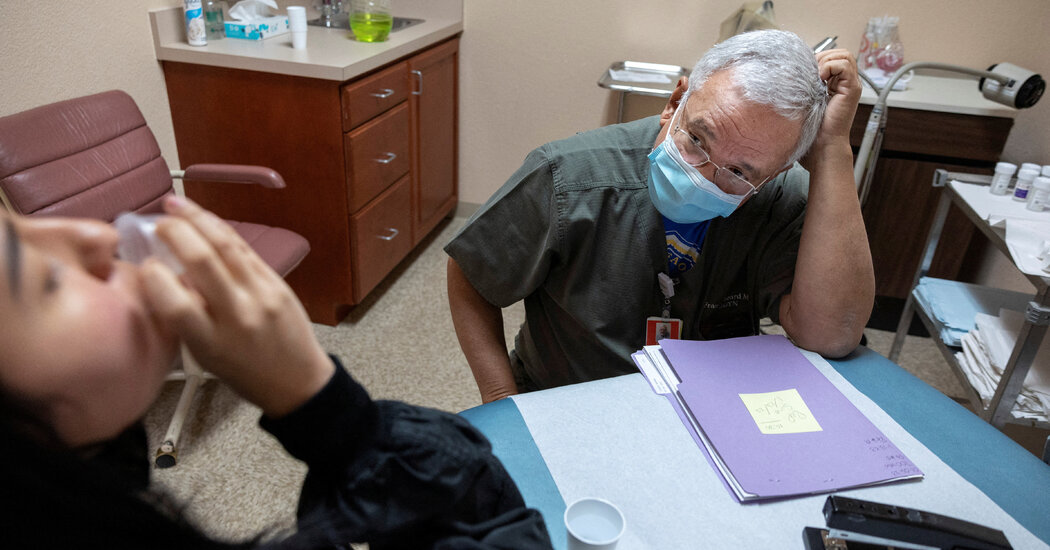
Abortion Ruling Could Undermine the F.D.A.’s Drug-Approval Authority

Legal scholars say the ruling by a Texas judge, if upheld, could spur disputes over many medications and upend the drug industry’s reliance on the agency.A federal judge’s ruling to revoke the Food and Drug Administration’s longstanding approval of the abortion pill mifepristone poses threats to the U.S. government’s regulatory authority that could go far beyond one drug, legal experts say.The decision by a Texas judge appears to be the first time a court has moved toward ordering removal of an approved drug from the market over the objection of the F.D.A.If the initial ruling, a preliminary injunction issued on Friday, withstood appeals, it could open the door to lawsuits to contest approvals or regulatory decisions related to other medications. And if upheld, the Texas decision would shake the very framework of the pharmaceutical industry’s reliance on the F.D.A.’s pathways for developing new drugs, legal experts said.“This is a frontal assault on the legitimacy of the F.D.A. and their discretion to make science-based decisions and gold standard approval processes,” said Lawrence O. Gostin, director of the O’Neill Institute for National and Global Health Law at Georgetown University. “It ultimately takes us on an extraordinarily dangerous path for F.D.A. as an agency, and for science-based public health decision-making more broadly.”Congress gave the F.D.A. overarching authority to determine whether drugs are safe and effective in the Food, Drug and Cosmetic Act of 1938. Drug companies must conduct a series of animal studies and human clinical trials that can take years and millions of dollars to provide enough evidence to the agency that a drug is a safe and effective treatment for a disease or a medical condition.For nearly a century, courts have usually deferred to the federal agency’s scientific expertise and oversight. Yet the use and approval of a wide array of medications have increasingly become the focus of political rifts and state-level disputes over such disparate issues as the opioid crisis, Covid vaccines and gender-related treatments.Now, the ruling in the Texas case — and a contradictory ruling the same day by another federal judge in a separate case in Washington State — have thrust the issue of F.D.A. authority into the spotlight as never before, and the issue is almost certain to land before the Supreme Court.“If this ruling were to stand, then there will be virtually no prescription, approved by the F.D.A., that would be safe from these kinds of political, ideological attacks,” President Biden said in a statement on Friday night about the Texas decision.The powerful pharmaceutical industry has not officially weighed in on the Texas ruling, or indicated whether it will file briefs in support of the F.D.A. In a statement, Priscilla VanderVeer, vice president of public affairs for the Pharmaceutical Research and Manufacturers of America, or PhRMA, echoed others in referring to the F.D.A. as the gold standard for drug approvals.“While PhRMA and our members are not a party to this litigation, our focus is on ensuring a policy environment that supports the agency’s ability to regulate and provides access to F.D.A.-approved medicines,” Ms. VanderVeer said.Mifepristone is the first pill in the two-drug medication abortion regimen. The plaintiffs in the Texas lawsuit are also targeting the second drug, misoprostol, which is approved for other medical conditions but used off-label for abortion. A spokeswoman for Pfizer, which makes a small percentage of the misoprostol sold in the United States, said it did not support off-label use of any of its medicines and declined to comment about whether the company would submit a court brief supporting the F.D.A.But, she said that “the agency serves a critical role in the U.S. public health system — bringing new medicines to patients and conducting ongoing safety reviews that support the continued use of them — that must be maintained.”The federal courthouse in Amarillo, Texas, where a hearing occurred last month in the lawsuit challenging the abortion pill. Nick Oxford for The New York TimesIn the Texas case, which was filed by a consortium of anti-abortion groups, the judge, Matthew J. Kacsmaryk of the U.S. District Court for the Northern District of Texas, declared the F.D.A.’s approval of mifepristone in 2000 to be invalid. Judge Kacsmaryk, who has longstanding affiliations with conservative Christian organizations and has written critically of Roe v. Wade, stayed his injunction for seven days to allow the F.D.A. to appeal to a higher court. So, for now, mifepristone remains available.In the Washington State case, Democratic attorneys general from 17 states and the District of Columbia challenged extra restrictions that the F.D.A. imposes on mifepristone. In a preliminary injunction, Judge Thomas O. Rice of the U.S. District Court for the Eastern District of Washington, ordered the F.D.A. not to limit the drug’s availability in those jurisdictions, which make up a majority of the states where abortion remains legal.The Justice Department, which is representing the F.D.A., immediately said it would appeal the Texas injunction to the Fifth Circuit Court of Appeals.In response to the Texas ruling, the F.D.A. said its “approval was based on the best available science and done in accordance with the laws that govern our work.”The agency added, “F.D.A. stands behind its determination that mifepristone is safe and effective under its approved conditions of use for medical termination of early pregnancy, and believes patients should have access to F.D.A.-approved medications.”R. Alta Charo, a professor emerita of law and bioethics at the University of Wisconsin and an author of a brief by drug-policy scholars in support of the F.D.A., said, “The biggest threat that a decision like this brings is the threat of creating chaos.” The ruling, she added, could empower a range of groups to begin “looking over the shoulder of the F.D.A., re-evaluating their risk-benefit analyses.”The agency has faced a series of reputational broadsides in recent years. Under President Donald J. Trump, the F.D.A. was maligned for bowing to political pressure to authorize Covid treatments that turned out not to be helpful. It faced searing criticism over its approval of Aduhelm, a controversial Alzheimer’s drug with uncertain benefits and significant safety risks. And it continues to face the wrath of the public and lawmakers who question several opioid drug approvals granted amid rising overdose deaths.Some experts in reproductive health law and drug policy say that, while the Supreme Court decision overturning Roe v. Wade allowed each state to decide whether to ban or permit abortion, it did not allow states to take actions to bar the medications used in abortion, because those are regulated by the F.D.A. States are allowed to adopt some laws and regulations that supplement federal rules on drugs and to regulate the practice of medicine within their jurisdiction. But states cannot impose policies that interfere with or contradict F.D.A. standards or requirements, so they cannot ban or drastically restrict a medication the federal government has approved, these experts say.This year, two federal lawsuits have been filed against state bans or restrictions on medication abortion, claiming that the F.D.A.’s authority cannot be second-guessed by states. The lawsuits — one filed by a mifepristone manufacturer, GenBioPro, challenging West Virginia’s abortion ban and the other filed by an obstetrician-gynecologist challenging the additional restrictions North Carolina applies to medication abortion — assert that the actions of these two states are unconstitutional.The cases contend that state abortion bans and restrictions violate the Constitution’s commerce clause, which prohibits states from impairing interstate commerce, and the supremacy clause, which says that federal laws — in this case, Congress’s decision to authorize the F.D.A. to regulate drugs like mifepristone — have priority over conflicting state laws.“Under the U.S. Constitution, federal law preempts state law when the two clash,” Patricia Zettler, a law professor at Ohio State, and Ameet Sarpatwari, a lawyer and assistant professor of medicine at Harvard Medical School, wrote in an article in The New England Journal of Medicine last year.This theory has rarely been tested in court. One of the few relevant cases involved an effort by Massachusetts about a decade ago to ban a new opioid, Zohydro ER, because state officials worried that the drug could be abused, leading to addiction or overdose. A federal judge sided with the drug company, Zogenix. If the state “were able to countermand the F.D.A.’s determinations and substitute its own requirements, it would undermine the F.D.A.’s ability to make drugs available to promote and protect the public health,” the judge wrote. Subsequent efforts by Massachusetts to restrict Zohydro were also rejected by the courts.A decision like the one in Texas “represents judicial interference in really the core function of the F.D.A. and handcuffs F.D.A. in making future safety and effectiveness decisions,” Dr. Sarpatwari said.The F.D.A.’s drug-approval authority is at the center of a series of lawsuits involving medication abortion. Andrew Kelly/ReutersUpending the F.D.A.’s authority could be disruptive to the U.S. pharmaceutical industry, which banks on a yearslong window of drug sales as it funds the risky and expensive process of drug discovery, said I. Glenn Cohen, a Harvard Law School professor and bioethics expert.“If your approval can be withdrawn at a moment’s notice by a single judge,” said Professor Cohen, who was also an author of a brief supporting the F.D.A., “it’s really kind of a scary thing.”The F.D.A. often reviews new data on drugs after they have been approved. That is especially the case with mifepristone, which is one of only 60 drugs that is regulated under a framework of extra restrictions and which has repeatedly been re-evaluated.The agency has, on rare occasions, pressured drugmakers to pull medications from the market when there was new evidence of greater safety and health risks to patients. For example, in 2020, the agency asked Eisai to revoke its weight-loss drug Belviq after data found an increased risk of cancer.In 2004, Merck volunteered to take the blockbuster pain medication Vioxx off the market when it discovered that the drug doubled patients’ risk of heart attacks and strokes.Professor Charo said a decision to invalidate an F.D.A. drug approval could have ripple effects for other federal agencies with technical expertise, including those that oversee regulations related to the environmental, energy and digital communications.“Imagine what you could do when you’ve got commercial interests that are upset about a whole slew of” issues, Professor Charo said, adding, “There’s just no end to this really.”

Read more →

Will North Carolina Be the ‘Beginning of the End’ of the Medicaid Expansion Fight?

Intense patient advocacy, shifting politics, a determined Democratic governor and a handful of maverick Republicans led the state to join 39 others that have expanded Medicaid.RALEIGH, N.C. — People who watch politics in North Carolina say that Phil Berger, a Republican who calls himself a fiscal conservative and a “social traditionalist,” is the most powerful man in the state. For years, as the top Republican in the State Senate, he blocked North Carolina from expanding Medicaid under the Affordable Care Act.But in a sunny outdoor ceremony at the governor’s mansion late last month, with the dogwoods blooming in a sign of spring, Mr. Berger looked on with pride as Gov. Roy Cooper, a Democrat, signed Medicaid expansion into law. State officials estimate that the expansion will cover more than 600,000 North Carolinians.Thirteen years after the adoption of the Affordable Care Act under President Barack Obama, Republicans are abandoning their opposition to Medicaid expansion. Lingering reservations about the welfare state and the cost of expansion are giving way to arguments about Medicaid as an engine for economic growth and a lifeline for struggling hospitals.Mr. Berger cites a string of reasons for his change of heart: North Carolina, where the legislature is controlled by Republicans, revamped its Medicaid program into one that relies on managed care, which made it financially stable. New federal incentives made expansion difficult to resist. Hospitals, which stand to benefit from Medicaid reimbursement, will pick up 10 percent of the cost of the new program — ordinarily paid by states — and the federal government will pay the rest. Most North Carolinians who will benefit have jobs.“I felt that I had a certain responsibility — that if the reasons that I had articulated for 10 years no longer exist, then I had a responsibility to be honest with myself and be honest with other people about that,” Mr. Berger said in an interview. “And so I talked to my members, and I told them where I was — and why.”Ten states remain where Republicans have refused to expand Medicaid, most of them in the South, leaving an estimated 1.9 million uninsured adults in the so-called coverage gap. Too poor to qualify for subsidized private insurance through the Affordable Care Act but ineligible for traditional Medicaid, they are forced to get by with patchwork charity care or skip care altogether. They are disproportionately people of color.Nationally, the coverage gap is expected to grow in the coming months because of the end of a pandemic-era policy that provided states with additional funding in exchange for guaranteeing that recipients of Medicaid would not lose their coverage.Since 2017, voters in seven states — most recently South Dakota — have approved ballot measures to expand Medicaid, despite longstanding Republican objections. Now the question is whether North Carolina will be a turning point.State Representative Donny Lambeth, a North Carolina Republican who pushed for Medicaid expansion, said Republican lawmakers in Tennessee had reached out to him, “curious as to how we did this.” Backers of expansion are looking toward Alabama, whose governor, Kay Ivey, a Republican, can act without legislative approval.“This is the beginning of the end of the Medicaid expansion story,” said Lawrence O. Gostin, an expert in public health law at Georgetown University. Noting North Carolina’s place as a traditionally conservative state in the South, he added, “The recognition that even the state’s Republican legislature would sign onto Medicaid expansion will begin to chip away at the reluctance by conservative states.”Penelope Wingard, a breast cancer survivor, was among those who advocated Medicaid expansion. “I never thought this would happen in North Carolina,” she said.Eamon Queeney for The New York TimesFor Penelope Wingard, 59, who worked with children who have behavioral disabilities until she became sick with breast cancer in 2013, the Republicans’ turnabout is life changing. Ms. Wingard lost Medicaid when she finished radiation treatment and is now uninsured; she stitched together charity care when she needed eye surgery, racking up $50,000 in medical debt. She turned to advocacy, sharing her experience, but it was painful, she said.“I’m proud that I didn’t give up,” said Ms. Wingard, who lives in Charlotte. “I wanted to give up. I didn’t want to talk about it anymore. I was just so angry. But today I can say I’ve been crying all day, tears of happiness, because I never thought this would happen in North Carolina.”Years of AdvocacyNorth Carolina Republicans did not change their views on Medicaid overnight. The story of how they got from no to yes is one of intense patient advocacy, smart messaging, shifting politics, a determined Democratic governor and a handful of maverick Republicans. Support from local officials and sheriffs, as well as eager hospital executives, also played a role, as did Mr. Obama’s fading presence.“If they had some kind of A.C.A. hangover, my guess is it has probably worn off,” Steve Lawler, the president and chief executive of the North Carolina Healthcare Association, a trade group for hospitals, said of Republican lawmakers.Progressives set the table for expansion, partly by helping to elect Mr. Cooper, said the Rev. Dr. William J. Barber II, a prominent civil rights leader and longtime pastor in North Carolina. He described Mr. Berger as “a very regressive force” in state politics.“They didn’t just change,” Dr. Barber said of Republican lawmakers. “They were forced to change.”Phil Berger, the top Republican in North Carolina’s State Senate, blocked Medicaid expansion for years before throwing his support behind it.Eamon Queeney for The New York TimesIn addition to its creation of marketplaces for buying private insurance, the Affordable Care Act also required states to expand Medicaid to cover people earning up to 138 percent of the federal poverty level — currently about $41,000 for a family of four. The program was drawn up to be a good deal for states, with the federal government picking up all of the costs at first and then eventually paying for 90 percent of them, a higher share than for traditional Medicaid.But conservative state officials balked, saying they did not trust the federal government to live up to its end of the bargain and did not want to contribute to what they saw as the welfare state. A group of states sued, claiming in part that forcing states to expand Medicaid was unconstitutional. In 2012, the Supreme Court upheld the Affordable Care Act but ruled that states could not be required to adopt expansion.The following year, Dr. Barber began leading demonstrations every Monday at the North Carolina General Assembly to protest cuts to unemployment benefits, education and Medicaid. “Moral Mondays” made national news; as the weeks and months went on, thousands turned out and hundreds were arrested.Mr. Berger, who had ridden a Tea Party wave to help deliver his party control of the State Senate for the first time in more than 100 years, had little inclination to bend. Republicans had a supermajority — enough votes to override a governor’s veto. Mr. Berger said unpredictable Medicaid costs had driven the state into the red.“The thought of signing on to Obamacare, when the memory of that budget debacle was so fresh in our minds, was not something that was very appealing to us,” he said.Hospitals, especially rural ones, were struggling and desperate for Medicaid reimbursement dollars. In the summer of 2014, the Republican mayor of tiny Belhaven, N.C., made a two-week trek to Washington to try to save a hospital that had closed. Dr. Barber walked part of the way with him.Mr. Lambeth, the Republican state representative, who had recently retired after a long career as a hospital executive, was eager to put his own expertise to use. He led an effort to transform Medicaid in North Carolina from a fee-for-service program, in which doctors are reimbursed for each service they provide, into a managed care system with a fixed budget and metrics to monitor health outcomes.Mr. Berger and Mr. Lambeth say their work fixing what they called “a broken system” cleared the way for expansion. Their critics blame Republicans for breaking Medicaid by starving it of cash so they could claim they had fixed it.But Mr. Cooper, in an interview, said, “I don’t think there is any question that we made Medicaid more efficient.”A Republican ReversalThe early push for Medicaid expansion in North Carolina came from the political left, led by the North Carolina Justice Center, a progressive research and advocacy group, which enlisted Ms. Wingard and others to tell their stories. But Peg O’Connell, a longtime health policy consultant, said backers needed a less liberal look. She helped found a new group, Care4Carolina, to take the lead.“The most important thing we did,” she said, was to ditch the phrase “Medicaid expansion” and replace it with “closing the coverage gap” — a message that conservatives could embrace. She knew it had worked when a Republican lawmaker told her, without a trace of irony, “I will never vote for Medicaid expansion, but I will vote to close the coverage gap.”Mr. Cooper, who is more than halfway through his second term, called for Medicaid expansion in his 2016 campaign for governor.Eamon Queeney for The New York TimesMr. Cooper called for expanding Medicaid when he ran for governor in 2016, and upon taking office the next year, he tried to fulfill that goal by working with the outgoing Obama administration. That did not sit well with Mr. Berger and the speaker of North Carolina’s House of Representatives, Tim Moore, a Republican.“They sued me in federal court to stop it,” Mr. Cooper said, “and we kind of set it aside.”But in the House, Mr. Lambeth and a small group of colleagues were at work on legislation. They looked at Indiana, which had expanded when Mike Pence, the former vice president, was governor. They examined Ohio and later invited John Kasich, a Republican who oversaw that state’s expansion when he was governor, to speak.Mr. Lambeth took “a lot of grief” from his fellow Republicans, he said. But he found an ally in a Republican state senator, Kevin Corbin, who was in the insurance industry and tired of being unable to help working people.“We’d see it all the time,” Mr. Corbin said. “A 27-year-old single mother comes in. She has two children and she makes $15 an hour. Her kids are already on Medicaid; she doesn’t have insurance. So I give her a quote and it’s $600 a month, and she’s not going to do that because she has to pay rent.”By 2020, research was confirming what backers of Medicaid expansion had been saying; health outcomes were better in expansion states. Mr. Cooper tried to build bipartisan support by partnering with Republican county commissioners and sheriffs who backed expansion. After President Biden took office in 2021, Congress passed a coronavirus relief package that offered states additional financial incentives to expand.But the most important thing that happened, people in the state agree, is that Mr. Berger changed his mind. That opened the door for other Republicans to fall in line.“It’s like Nixon going to China,” Ms. O’Connell said.Adam Searing, a health policy expert in Chapel Hill, N.C., who is affiliated with Georgetown University, sees politics at work. Polls show Medicaid expansion is popular. Mr. Cooper is more than halfway through his second term and cannot run again because of term limits, and Mr. Searing said Republicans seeking to reclaim the governorship wanted to “get Medicaid expansion off the table.”The expansion does not go into effect immediately. It is tied to passage of the state budget. But in the days after last month’s signing ceremony, the mood in the North Carolina General Assembly was upbeat. Ms. O’Connell beamed as lawmakers and lobbyists congratulated her. Mr. Lambeth said Mr. Kasich, the former Ohio governor, had called to congratulate him.The expansion bill contains a priority of Mr. Berger’s: a provision aimed at encouraging competition in health care by making it easier for companies to open new surgical centers and M.R.I. clinics.Even so, Mr. Berger still has concerns. He worries that a shortage of health care providers has already restricted access to care. What good is having coverage, he asks, if you cannot find a doctor? Medicaid is not the system he would have crafted, he said, if he had “a blank slate.”But he said he was able to reconcile his support for expansion with his philosophical opposition to big government programs: “We do not live in a perfect world.”

Read more →

Abortion Pill Cases Appear Headed to the Supreme Court

One federal judge said the F.D.A.’s approval of the drug mifepristone was invalid, while another federal judge ordered the agency to keep the pill available. The legal fallout is just beginning.WASHINGTON — The dramatic dueling rulings by two federal district judges on Friday about access to a widely used abortion pill set up a lower court conflict that legal experts say will almost certainly send the dispute to the Supreme Court.“It really turbocharges the imperative for the Supreme Court to step in and to do so sooner rather than later,” said Stephen I. Vladeck, a law professor at the University of Texas at Austin.A federal judge in rural Texas issued a preliminary ruling on Friday invalidating the Food and Drug Administration’s 23-year-old approval of the abortion pill mifepristone, which could make it more difficult for patients across the country to access the medication. Less than an hour later, a federal judge in Washington State issued a ruling in another case that contradicted the Texas judge by ordering the F.D.A. to make no changes to the availability of the drug in the 18 states involved in that suit.For now, mifepristone continues to be available. The Texas judge, Matthew J. Kacsmaryk, an appointee of President Donald J. Trump, stayed his order for seven days to allow the F.D.A. time to seek intervention from an appeals court. But “the two decisions are in conflict and the conflict between them is not sustainable,” said Samuel L. Bray, a law professor at the University of Notre Dame.The Justice Department has already filed a notice that it is appealing the Texas ruling to the U.S. Court of Appeals for the Fifth Circuit.The department has not yet said whether it will file an appeal in the Washington State case. That lawsuit, filed against the F.D.A. by 18 Democratic attorneys general, challenged restrictions that the agency imposes on the prescribing and dispensing of mifepristone. The judge in the case, Thomas O. Rice, an appointee of President Barack Obama, did not lift the existing restrictions in his ruling on Friday but did order the F.D.A. not to do anything to limit current access to mifepristone.Mifepristone, the first pill in the two-drug medication abortion regimen, continues to be available for now.Allen G. Breed/Associated PressTypically, parties to cases will wait for an appeals court ruling before seeking emergency review from the Supreme Court, Mr. Vladeck said. But the Justice Department could ask the highest court to examine the case even sooner.“Formally, the Supreme Court can step in literally the moment D.O.J. files an appeal in the Fifth Circuit,” he said.As startling as the two rulings are, legal experts said dueling injunctions were not unheard-of and that the courts were able to handle them. “Our judicial system, the way it’s set up, it expects there will be conflicts with courts,” said Amanda Frost, a law professor at the University of Virginia School.When a direct conflict arises, courts can look for ways to narrow injunctions or for other solutions so that a party is not put into an impossible situation, she said. She cited a conflict in Florida over buffer zones at abortion clinics — areas kept clear from anti-abortion protesters to allow for unimpeded access by patients and doctors.In 1993, an injunction was issued in Florida to protect the Aware Woman Center for Choice — one of dozens of similar injunctions issued by state and local judges as abortion clinic operators sought help on how to deal with protests. In the fall of 1993, within weeks of each other, the Florida Supreme Court upheld the injunction and the U.S. Court of Appeals for the 11th Circuit, in Atlanta, struck it down.The Supreme Court took the case and upheld the core of the Florida state court injunction.In 2015, the issue of same-sex marriage led to another collision between courts. After a federal judge in Alabama declared the state’s prohibitions against same-sex marriage unconstitutional, the chief justice of the Alabama Supreme Court ordered the state’s probate judges not to issue marriage licenses to gay couples.Later that year, the Supreme Court ruled in Obergefell v. Hodges that the Constitution guaranteed a right to same-sex marriage.“In both cases, the Supreme Court steps into the issue,” Ms. Frost said. “There was a period of time during which there was a conflict, and the world didn’t fall apart. There is built into our system the understanding that there will be conflicts.”The federal judge in Texas, Matthew J. Kacsmaryk, an appointee of President Donald J. Trump, has written critically about Roe v. Wade and has long supported conservative causes.Senate Judiciary Committee, via Associated PressIf the Texas case reaches the Supreme Court, it could have implications far beyond access to abortion pills. The court could be asked to consider the effects of the Texas ruling not only for abortion but also for the F.D.A.’s authority to approve and regulate other drugs.Legal experts said Judge Kacsmaryk’s decision appeared to be the first time a court had ordered a drug’s approval to be revoked over the objection of the F.D.A. and that such a ruling could open the door to legal challenges against other drugs, such as vaccines, morning-after pills and other medications at the center of controversial issues. The ruling could also undermine the confidence that pharmaceutical companies place in the agency and influence the companies’ decisions about which drugs to develop and market, experts said.Because of those broader implications for federal authority and commercial interests, some legal experts said that all six conservative justices on the Supreme Court might not automatically uphold an order that would undercut the F.D.A.’s authority.Ameet Sarpatwari, a lawyer and assistant professor of medicine at Harvard Medical School, said that at least a couple of the conservative justices had judicial track records that suggested they might reject the Texas ruling because of “the sort of incredible disturbance of a district judge’s national injunction coupled with the extreme volatility that that’s going to lead to in the pharmaceutical market.”The Texas case has drawn additional scrutiny because it was filed in Amarillo, a single-judge division overseen by Judge Kacsmaryk. The judge has written critically about Roe v. Wade and has long supported conservative causes, including working for a conservative legal organization and serving on the board of an organization that seeks to offer pregnant women alternatives to abortion.The lead plaintiff, the Alliance for Hippocratic Medicine, is a consortium of anti-abortion groups that are not based in Amarillo, but the alliance was incorporated there in August 2022, not long after the Supreme Court overturned Roe v. Wade.Forum shopping, as it is called, is a common legal strategy used increasingly by both the right and the left to seek out a friendly judge or sympathetic court and press for a nationwide stay or injunction on a hot-button, partisan issue. Experts agree that these tactics have increased with political polarization.“There’s nothing inherently wrong about trying to find a court that you think is more inclined to your way of thinking about a case,” Mr. Bray said. “What makes these unusual is that, if in one case, you can win everything, then the stakes go up.”Concerns about Judge Kacsmaryk’s personal views on abortion playing a role in the case were heightened by the language in his ruling on Friday, legal experts said.“This does not read like a judicial opinion, it reads like an activist complaint,” Dr. Sarpatwari said. “There were several ways in which Judge Kacsmaryk could have come to the same outcome without this degree of vitriol and this reassessment of every action that the F.D.A. took.”He continued: “I think that actually weakens his case, because it shows a real lack of credibility in the sense that most of the F.D.A. decisions are very carefully backed by evidence and he’s opened himself up to tremendous criticism that he’s ignoring about 95 percent of the science that’s out there.”Greer Donley, an associate professor at the University of Pittsburgh School of Law, concurred with that assessment. “It’s pretty clear from the tone that he wasn’t attempting in any way to be evenhanded in his language,” she said. “He was showing his cards.”In his ruling, the judge often used the language of the anti-abortion movement.Mifepristone “ultimately starves the unborn human until death,” Judge Kacsmaryk wrote. He added that the F.D.A. mandated “a two-step drug regimen: mifepristone to kill the unborn human, followed by misoprostol to induce cramping and contractions to expel the unborn human from the mother’s womb.”

Read more →

Overlooked No More: Alice Ball, Chemist Who Created a Treatment for Leprosy

After she died — and just a year after her discovery — another scientist took credit for her work. It would be more than half a century until her story resurfaced.This article is part of Overlooked, a series of obituaries about remarkable people whose deaths, beginning in 1851, went unreported in The Times.On New Year’s Day in 1922, a scientific paper in an obscure medical journal described a drug that would help revolutionize the treatment of leprosy in Hawaii and beyond. It would also give belated credit to the drug’s developer.The report, by Harry Hollmann, extolled the therapeutic potential of chaulmoogra oil, originally a folk remedy for leprosy with ancient roots in India and China. For centuries, chaulmoogra tree oil had been known as a nasty medicine — foul-tasting and stomach-wrenching, it was so vile that some people refused to take it. But in his paper, Hollmann named the process that transformed chaulmoogra into a 20th-century leprosy medicine: the Ball Method, a simple injection that freed dozens of people in the Territory of Hawaii from draconian quarantines. The Ball Method wasn’t a cure, but it was as close to one as anybody got by 1922.It was named for Alice Ball, a Black chemist who had developed her formula in 1915 when she was 23. She had recently earned a master’s in chemistry and was an instructor at the College of Hawaii (now the University of Hawaii) in Honolulu.Her method became the most widely used treatment for leprosy in the pre-antibiotic years of the 1920s and ’30s. Modified chaulmoogra oil, based on the Ball Method, was distributed worldwide and helped free countless people from isolated leper colonies. (The injections would eventually fall out of favor with the emergence in the late 1930s of sulfa drugs, the first class of antibiotics ever developed.) ‌‌For roughly 20 years, when the Ball Method was in vogue, few outside the tiny College of Hawaii knew that a Black woman had developed it, and barely anyone even referred to it as the Ball Method. Ball died suddenly before she could publish her findings. The research she left behind at the college was fair game for people who wanted to claim her breakthrough as their own.“Two men did steal her work and didn’t give her any credit for her contributions — specifically Arthur Dean, who was president of the College of Hawaii, and Richard Wrenshall, a chemistry professor,” Sibrina Collins, executive director of the Marburger STEM Center at Lawrence Technological University in Michigan, said in a telephone interview.“They published a 1920 paper in the Journal of the American Chemical Society and a second 1922 paper” — in Public Health Reports — “with her research and failed to mention her or list her contributions,” added Collins, who holds a doctorate in chemistry and has written extensively about Black scientists, including Ball.Arthur Dean, a chemist with a Ph.D. from Yale, capitalized on Ball’s research by naming it after himself: the Dean Method. He also produced the medication in large quantities at the College of Hawaii, shipping it domestically and abroad. The chaulmoogra venture was his first and only foray into pharmaceutical chemistry.It would take more than half a century for Ball to receive credit for her work. Hollmann, a physician and bacteriologist, was her first public advocate.In 1915, Hollmann was the acting assistant surgeon at Hawaii’s Leprosy Investigation Station when he was given a copy of Ball’s master’s thesis, a 44-page analysis of the kava plant’s chemical properties. He contacted Ball and asked if she would tackle another complicated puzzle: chaulmoogra’s mystifying chemistry.The storied oil is produced by seeds of Hydnocarpus wightianus, a tree native to Asia. When people took it orally, they became nauseated. As an ointment, its viscosity hindered absorption. Injecting the unprocessed oil caused it to ulcerate the skin, further disfiguring those whose skin was already damaged by leprosy.Ball accepted Hollmann’s challenge and, in a series of arduous but elegant steps, cracked the complex chemical code concealed in the oil. She first identified its two main components: chaulmoogric and hydnocarpic acids. From each she isolated the active constituents, several fatty acids. She chemically modified the fatty acids by converting them to ethyl esters, a form that was water soluble and could be injected without the harm done by the raw oil.Hollmann tested her treatment on his patients, and he saw that the ethyl esters were bactericidal, capable of killing bacteria. He acknowledged her innovation, coining the term “the Ball Method,” in his 1922 paper, published in the journal Archives of Dermatology and Syphilology.“After a great deal of experimental work,” Hollmann wrote, “Miss Ball solved the problem for me.”“Eighty-four patients who have been on the treatment for periods ranging from four years to three months have become bacteriologically negative and free from all lesions of the disease and have been discharged from segregation,” he added.Hollmann also tested the treatment on two tuberculosis patients; one improved; the other didn’t. Although the medicine was imperfect and didn’t work for everyone, Hollmann was buoyed by its power to set people with leprosy free.Hansen’s disease, commonly called leprosy, is a slow-growing infection caused by Mycobacterium leprae, a cousin of Mycobacterium tuberculosis, the bacteria responsible for tuberculosis. During the time of Ball’s chaulmoogra research, leprosy was still steeped in stigma, just as it was in the biblical era. Those afflicted were dealt with harshly and forced into permanent isolation, even though leprosy was not easily transmitted. Untreated, it can cause paralysis and become disfiguring. Leprosy damages the nerves and also affects the eyes, nasal passages and skin.In Hawaii, people with leprosy were shipped out of sight, marooned on Molokai Island for life. Most of the isolated were Native Hawaiians. Until the Ball Method, death was their only relief.Alice Ball died at 24 on Dec. 31, 1916, in Seattle. She had taken a leave of absence from her teaching position because of an illness that an article in The Pacific Commercial Advertiser, a Honolulu newspaper, attributed to exposure to chlorine gas during a laboratory demonstration. (The college denied that claim.) Her death certificate cites the cause as tuberculosis.“What a waste that she died in her 20s,” Gregory Petsko, an adjunct professor of bioengineering at Harvard Medical School and emeritus professor of chemistry at Brandeis University in Waltham, Mass, said in a phone interview. “Most chemists don’t hit their stride until their 30s or 40s. Just imagine what she could have done if she had lived.”People with leprosy in Hawaii were once sent to the Kalaupapa colony on the island of Molokai, where they were marooned for life. Most of the isolated were Native Hawaiians. KGPA Ltd/AlamyAlice Augusta Ball was born on July 24, 1892, in Seattle, one of four children of James Presley Ball Jr., a lawyer and newspaper editor, and Laura Louise (Howard) Ball, a studio photographer. Alice’s paternal grandfather was James Presley Ball Sr., a noted 19th-century photographer and abolitionist.On her birth registration and death certificate, Alice is listed as white, although her parents described themselves as Black on their marriage certificate and in U.S. census records. “This may have had less to do with phenotype and more to do with what the Balls thought about themselves culturally,” Quintard Taylor, an emeritus professor of American history at the University of Washington in Seattle and the founder of the history website Blackpast.org, said by phone.Throughout her secondary education, Ball excelled in science. She was one of the few girls in her 1909 graduating class at Broadway High School to concentrate in its scientific program. She earned two Bachelor of Science degrees from the University of Washington: one in pharmaceutical chemistry in 1912 and the other in pharmacy in 1914.As an undergraduate, she wrote a paper with the chemist William Dehn, a professor at the University of Washington, based on their research involving a type of reaction called a benzoylation. The paper was published in the prestigious Journal of the American Chemical Society.It wasn’t until the 1970s that Kathryn Takara and Stanley Ali, two University of Hawaii professors who had heard rumors of Ball’s work, dug through the institution’s archives to find evidence of the true developer of the chaulmoogra treatment. In 2019 the London School of Hygiene and Tropical Medicine honored Ball by placing her name in the frieze of its main building. In February 2022, Gov. David Ige of Hawaii declared Feb. 28 Alice Augusta Ball Day.Twenty-first century scientists marvel at Ball’s ability to hunt down chaulmoogra’s active constituents using her era’s bare-bones technology. “A lot of techniques back then were not as sophisticated as they are now so chemical intuition was very important,” Gregory Petsko said. “To do what she did when she did it was remarkable. She was a very talented chemist.”

Read more →

What’s Going On With the Abortion Pill Rulings by Federal Judges?

One invalidated the F.D.A.’s approval of the abortion pill mifepristone. The other ordered the F.D.A. to do nothing to restrict the pill’s availability.The ruling by a federal judge in Texas invalidating the Food and Drug Administration’s approval 23 years ago of the abortion pill mifepristone has the potential to be the most consequential abortion decision since the Supreme Court overturned Roe v. Wade last June.But there are a lot of uncertainties — especially because a federal judge in Washington State issued a contradictory ruling less than an hour later saying the F.D.A. should do nothing to restrict the pill’s availability in most states that allow abortion.So the situation is complicated. Here is what we know and what it could mean.What did the two rulings say?Both rulings are preliminary injunctions, issued before the full cases have been heard. But the dueling injunctions set up a legal showdown that is likely to reach the Supreme Court.The ruling by Judge Matthew J. Kacsmaryk of the U.S. District Court for the Northern District of Texas, a Trump appointee who has written critically about Roe v. Wade, declares the F.D.A.’s approval of mifepristone in 2000 to be invalid. It also suspends the F.D.A.’s subsequent decisions that expanded the use of mifepristone in terminating early pregnancies.Legal experts said Judge Kacsmaryk’s ruling appeared to be the first time that a court had acted to order that an approved drug be removed from the market over the objection of the F.D.A. If it stands, they said, it could have repercussions for the federal government’s authority to regulate other types of drugs.The ruling by Judge Thomas O. Rice of the U.S. District Court for the Eastern District of Washington, an Obama appointee, orders the F.D.A. to maintain the status quo and blocks it from restricting the availability of mifepristone in the states that filed the lawsuit before that court. That lawsuit, filed by Democratic attorneys general, challenged restrictions the F.D.A. still imposes on the prescribing and dispensing of mifepristone.What does this mean for the availability of abortion pills?For now, mifepristone, the first pill in the two-drug medication abortion regimen that is used in over half of pregnancy terminations in the United States, is still available. Judge Kacsmaryk immediately stayed his ruling for seven days to give the Department of Justice, which represents the F.D.A., a chance to appeal it to the U.S. Court of Appeals for the Fifth Circuit, and the Justice Department has already filed notice of its appeal.If the appeals court upholds the judge’s order or declines to put it on pause until the full case is heard, the Justice Department will most likely appeal that decision to the Supreme Court, which could quickly decide whether or not to suspend the injunction. The Supreme Court would also take into account the contradictory ruling by the federal judge in the Washington district court case, legal experts said.Even if the Texas ruling is upheld, several scenarios would allow mifepristone to remain available in the United States, at least for the time being. And if the drug does eventually become unavailable in the United States, patients would probably still be able to get it from overseas. Read on for details.How can a judge withdraw an approval of a drug that has been legal for 23 years?The lawsuit in the Texas district court, filed by a consortium of groups and doctors opposed to abortion, argues that the F.D.A. did not adequately review the scientific evidence or follow proper protocols when it approved mifepristone in 2000 and that it has since ignored safety risks of the medication.The F.D.A. and the Department of Justice have strongly disputed those claims and said that the agency undertook rigorous reviews of mifepristone over the years that repeatedly reaffirmed its decision to approve mifepristone, which blocks a hormone that allows a pregnancy to develop. They point to numerous studies showing that serious complications are rare, with patients needing hospitalization in less than 1 percent of cases.In his ruling, Judge Kacsmaryk, who previously worked for a conservative Christian legal organization, repeatedly used the language of abortion opponents, calling medication abortion “chemical abortion,” calling abortion providers “abortionists” and referring to a fetus as an “unborn human” or “unborn child.”He appeared to agree with virtually all of the anti-abortion groups’ claims, writing: “Here, F.D.A. acquiesced on its legitimate safety concerns — in violation of its statutory duty — based on plainly unsound reasoning and studies that did not support its conclusions. There is also evidence indicating F.D.A. faced significant political pressure to forgo its proposed safety precautions to better advance the political objective of increased ‘access’ to chemical abortion.”The F.D.A. has regulated mifepristone more stringently than many other drugs and applied a special framework of restrictions that is currently used for only 60 drugs in the country. In the case filed in federal court in Washington State, Democratic attorneys general from 17 states and the District of Columbia are seeking to eliminate that special framework of extra restrictions on mifepristone. Judge Rice did not grant that request in his ruling Friday but did order the F.D.A. not to do anything to limit current access to mifepristone.Judge Matthew J. Kacsmaryk, a Trump appointee who has written critically of Roe v. Wade, issued a ruling saying that the F.D.A.’s approval of the abortion pill mifepristone was invalid.U.S. Senate Committee on the JudiciaryWhat are the options for preserving access if the Texas ruling is upheld?If the Texas judge’s injunction stays in place as the full case makes its way through the courts, the F.D.A. will most likely assert that it needs to follow its official process for withdrawing the approval of a drug. That process is lengthy. It requires reviews of extensive studies and data and could involve advisory committee hearings and a public comment period. The process can take months or years, and while it is underway, the drug being reviewed remains available.Legal experts say the F.D.A. also has the authority to decide not to enforce a regulation or prohibition of a drug, if the agency considers the drug to be safe and effective, as it does with mifepristone. The agency could issue a determination saying it had decided not to enforce the ruling, or it could argue that it did not have the resources to try to stop the drug from reaching patients all over the country.Because the judge’s ruling applies only to the F.D.A. and not to abortion providers, several medication abortion services have said they will continue prescribing and dispensing mifepristone unless there is an official F.D.A. decision to withdraw the drug that the agency plans to enforce.It’s also possible that one or both of the companies that make mifepristone in the United States, Danco Laboratories and GenBioPro, could file suit against the F.D.A. to block its enforcement of the Texas judge’s order, legal experts say.Demonstrators gathered in February for a rally organized by Women’s March, which supports abortion rights, outside the federal courthouse in Amarillo, Texas, where anti-abortion groups filed suit against the F.D.A.Meridith Kohut for The New York TimesWhat if efforts to keep mifepristone available fail?Abortion providers and supporters of abortion rights are actively preparing for this possibility. Many of them have developed plans to prescribe only the second medication in the two-drug abortion regimen: misoprostol. This drug, which has been available for decades and is authorized for medical conditions like ulcers, causes contractions that result in a process resembling a miscarriage.The World Health Organization has endorsed a misoprostol-only regimen for abortion, and it is used in many countries, especially where there is limited availability of mifepristone. Studies suggest that using misoprostol on its own may be slightly less effective than the two-drug combination and can cause more side effects like nausea, but it is safe and, in a majority of cases, terminates a pregnancy without requiring a follow-up surgical procedure or other intervention.In the Texas lawsuit, the anti-abortion organizations also seek to ban the use of misoprostol for abortion, but their request for a preliminary injunction focused on mifepristone.Could patients still order pills from abroad?Many patients would probably continue to order both mifepristone and misoprostol from telemedicine abortion services based in other countries, especially Aid Access, an organization based in Europe that for years has provided the two-drug combination to patients in the United States after they complete medical consultation forms.Currently, for patients in states with abortion bans or restrictions, Aid Access has the pills shipped from a pharmacy in India, while patients in states where abortion is legal receive their pills from providers within the United States.If the Texas ruling stands, Aid Access would most likely ship the pills from India to patients in every state, the organization’s founder, Dr. Rebecca Gomperts, a Dutch physician, said in an interview. In 2019, the F.D.A. tried unsuccessfully to get Aid Access to halt overseas shipping. Dr. Gomperts said she would remain committed to supplying patients in the United States.Would revoking the approval of mifepristone have effects beyond abortion?Mifepristone is also frequently used to assist patients who are experiencing miscarriages. It is prescribed along with misoprostol to help expel the tissue from a pregnancy that has failed to develop. So, if access to mifepristone is blocked, miscarriage patients will lose access to that treatment and will either have to undergo surgical removal of the tissue or wait days or weeks until it passes on its own, in a process that can be medically risky for some patients.Revoking the federal approval of mifepristone could also undermine the F.D.A.’s longstanding and previously unquestioned authority — granted by Congress — to regulate virtually any drug. Legal experts say it could lead to challenges over the approval or use of medications involved in other controversial issues, such as vaccines or emergency contraception. In addition, if pharmaceutical companies cannot rely on the F.D.A.’s regulatory authority, that could affect their decisions about which drugs to develop.

Read more →

Texas Judge Invalidates FDA Approval of the Abortion Pill Mifepristone

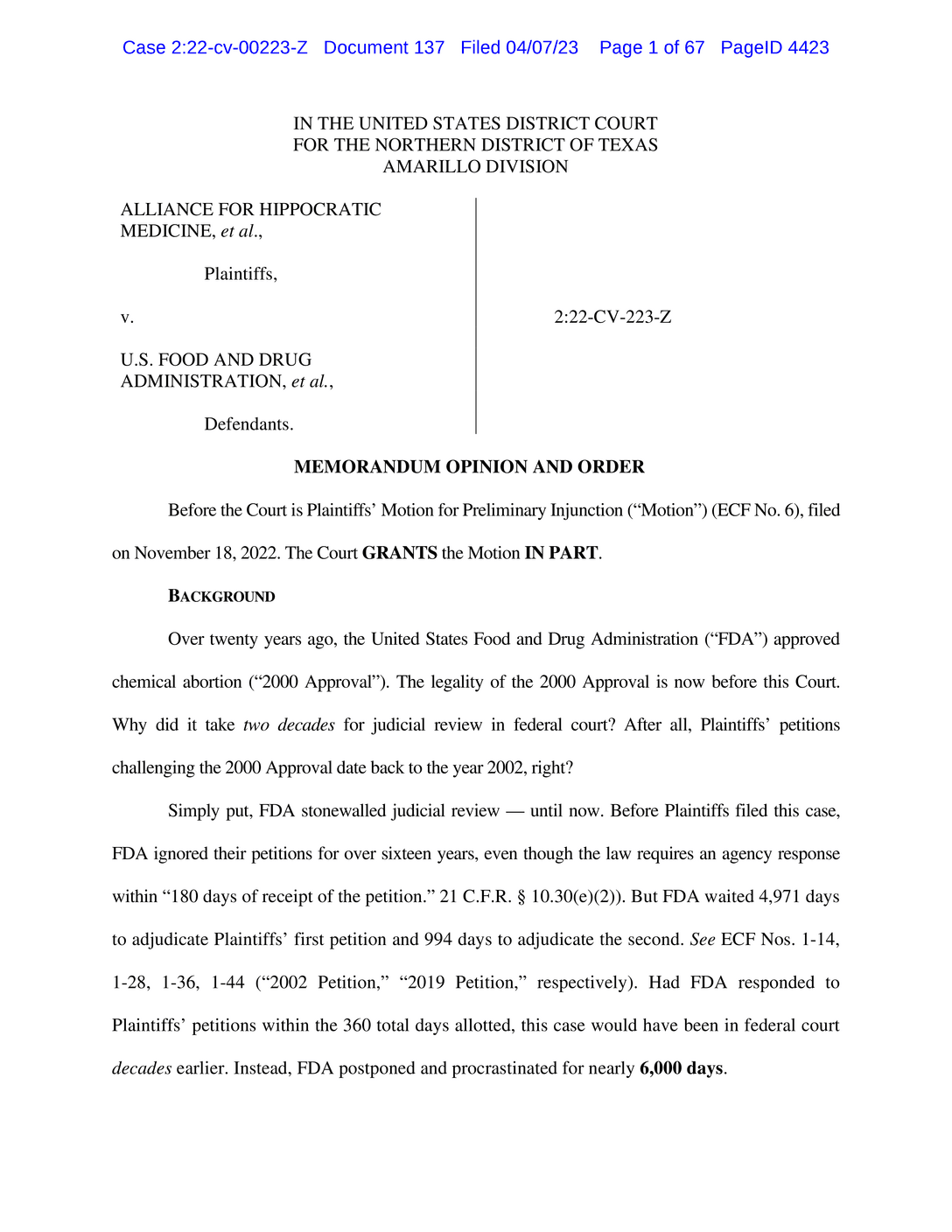
The Texas judge’s ruling was quickly contradicted by another federal judge in Washington State who ordered the F.D.A. to keep mifepristone available.A federal judge in Texas issued a preliminary ruling invalidating the Food and Drug Administration’s 23-year-old approval of the abortion pill mifepristone, an unprecedented order that — if it stands through court challenges — could make it harder for patients to get abortions in states where abortion is legal, not just in those trying to restrict it.The drug will continue to be available at least in the short-term since the judge, Matthew J. Kacsmaryk, stayed his own order for seven days to give the F.D.A. time to ask an appeals court to intervene.Less than an hour after Judge Kacsmaryk’s ruling, a judge in Washington state issued a ruling in another case, which contradicted the Texas decision, ordering the F.D.A. to make no changes to the availability of mifepristone in the 18 states that filed that lawsuit.The conflicting orders by two federal judges, both preliminary injunctions issued before the full cases have been heard, appear to create a legal standoff likely to escalate to the Supreme Court. President Biden said his administration would fight the Texas ruling. “This does not just affect women in Texas,” he said in a statement. “If it stands, it would prevent women in every state from accessing the medication, regardless of whether abortion is legal in a state.”The order by Judge Kacsmaryk, a Trump appointee who has written critically about Roe v. Wade, is an initial ruling in a case that could result in the most consequential abortion decision since the Supreme Court overturned Roe v. Wade last June.Read the Court Decision Invalidating F.D.A. Approval of MifepristoneA federal judge in Texas issued a preliminary ruling invalidating the Food and Drug Administration’s 23-year-old approval of the abortion pill mifepristone on Friday, clashing with another court’s ruling in a legal standoff likely to escalate to the Supreme Court.Read Document 67 pagesOn Friday night, the Justice Department filed a notice that it is appealing the Texas ruling.“Today’s decision overturns the F.D.A.’s expert judgment, rendered over two decades ago, that mifepristone is safe and effective,” Attorney General Merrick B. Garland said in a statement, adding that the Justice Department would ask that the decision be stayed while the appeal is pending. He said the department is reviewing the ruling in the Washington case.The lawsuit, filed by a coalition of anti-abortion groups and doctors, seeks to end more than 20 years of legal use of mifepristone, the first pill in the two-drug medication abortion regimen.The lawsuit in Washington State was filed against the F.D.A. by 18 Democratic attorneys general who were challenging the agency’s restrictions on the prescribing and dispensing of mifepristone. In a preliminary injunction in that case that he applied to the states that had sued, Judge Thomas O. Rice, who was appointed by President Barack Obama, blocked the agency from taking “any action to remove mifepristone from the market or otherwise cause the drug to become less available.”Read the Court Decision Ordering the F.D.A. to Keep Mifepristone AvailableA federal judge in Washington State issued a ruling ordering the Food and Drug Administration to make no changes to the availability of the abortion pill mifepristone on Friday, directly contradicting another judge’s ruling in a legal standoff likely to escalate to the Supreme Court.Read Document 31 pagesMedication abortion is the method used in more than half of abortions in the United States. The lawsuit claims that the F.D.A. did not adequately review the scientific evidence or follow proper protocols when it approved mifepristone in 2000 and that it has since ignored safety risks of the medication.The F.D.A. and the Justice Department have strongly disputed the claims in the lawsuit and said that the federal agency’s rigorous reviews of mifepristone over the years had repeatedly reaffirmed its decision to approve mifepristone, which blocks a hormone that allows a pregnancy to develop. In a statement Friday night, the agency said: “F.D.A. stands behind its determination that mifepristone is safe and effective under its approved conditions of use for medical termination of early pregnancy, and believes patients should have access to F.D.A.-approved medications that F.D.A. has determined to be safe and effective for their intended uses.”In the 67-page Texas ruling, Judge Kacsmaryk appeared to agree with virtually all of the claims made by the anti-abortion groups and repeatedly used the language of abortion opponents, calling medication abortion “chemical abortion” and referring to a fetus as an “unborn human” or “unborn child.””The court does not second-guess F.D.A.’s decision-making lightly,” the judge wrote. “But here, F.D.A. acquiesced on its legitimate safety concerns — in violation of its statutory duty — based on plainly unsound reasoning and studies that did not support its conclusions. There is also evidence indicating F.D.A. faced significant political pressure to forgo its proposed safety precautions to better advance the political objective of increased ‘access’ to chemical abortion.”Are Abortion Pills Safe? Here’s the Evidence.The Times reviewed 101 studies of medication abortion, spanning continents and decades. All concluded that the pills are a safe method for terminating a pregnancy.A lawyer for Danco Laboratories, which makes the branded version of mifepristone, called Mifeprex, and had joined the lawsuit on the side of the F.D.A., forcefully disagreed with the judge’s characterizations.“The court’s ruling rewrites the facts and the law to tell its preferred narrative — which is a story line that conflicts with established legal principles and with Mifeprex’s well-established safety profile,” the lawyer, Jessica Ellsworth, said in a statement. Danco filed a notice that it was appealing the ruling.Erik Baptist, a lawyer for the anti-abortion groups that filed the Texas case called the decision “a significant victory for the doctors and medical associations we represent, and more importantly, the health and safety of women and girls.” Mr. Baptist, who is senior counsel for the Alliance Defending Freedom, a conservative Christian legal organization, said, “by illegally approving dangerous chemical abortion drugs, the F.D.A. put women and girls in harm’s way, and it’s high time the agency is held accountable for its reckless actions.”Legal experts said that even if the Texas ruling is ultimately upheld, there would be several legal options that could allow the manufacturers of mifepristone to continue supplying the drug and providers to continue prescribing it to patients.A still taken from a livestream of Judge Matthew Kacsmaryk’s nomination hearing to the federal bench in 2017.U.S. Senate Committee on the JudiciaryShortly after the rulings on Friday night, the chief executive of GenBioPro, one of the two manufacturers of mifepristone in the United States, issued a statement saying the company was reviewing the decisions of both judges.“We will take any steps necessary to lawfully make mifepristone available and accessible to as many people as possible in the country,” the statement from the C.E.O., Evan Masingill, said.And if legal access to mifepristone is blocked, some abortion providers plan to provide only the second abortion medication, misoprostol, which is used safely on its own in many countries where mifepristone is less available. Misoprostol, a drug that is approved for other medical uses, causes contractions similar to a miscarriage and is considered slightly less effective on its own than in combination with mifepristone and more prone to cause side effects like nausea.Where Restrictions on Abortion Pills Could Matter Most in the U.S.A lawsuit is challenging the F.D.A.’s approval of medication abortion. Data shows the consequences could be far-reaching.In the Texas lawsuit, the plaintiffs also seek to ban the use of misoprostol for abortion, but their request for a preliminary injunction focused on mifepristone.Since last year’s Supreme Court ruling overturning the national right to abortion, the pills used in medication abortions have increasingly become the focus of political and legal battles. Some conservative states, in addition to banning or restricting abortion in general, have begun considering legislation that specifically targets abortion pills. And several recent lawsuits have been filed in efforts to preserve or expand access to medication abortion.The lawsuit filed in Washington state was intended to be a direct challenge to the Texas case. The Democratic attorneys general filed the case in late February on the first day that Judge Kacsmaryk could have issued a ruling. While its main claims sought to eliminate a framework of extra restrictions that the F.D.A. has long applied to mifepristone, the suit also asked the judge to declare that the F.D.A.’s “approval of mifepristone is lawful and valid” and to enjoin the F.D.A. “from taking any action to remove mifepristone from the market or reduce its availability.”In a news conference earlier this week, Washington’s attorney general, Bob Ferguson, characterized the lawsuit he and the other attorneys general filed as “the opposite of what’s going on in Texas.” He added “So the potential is there for two decisions or judges that are, in effect, contrary to one another. In other words, one judge in Texas could potentially say ‘Hey I’m issuing a ban on mifepristone nationwide’ and a judge in Washington State in the case with 17 other states could say ‘no, no, not only is it available, you got to expand access to it.’”People marched in Amarillo, Texas, in February to protest the lawsuit seeking to force the withdrawal of the F.D.A.’s approval of mifepristone.Meridith Kohut for The New York TimesThe case has caused a frenzy of concern in the reproductive health community. It was filed by the Alliance for Hippocratic Medicine, an organization that lists five anti-abortion groups as its members and was incorporated in August in Amarillo, Texas, where the case was filed. Judge Kacsmaryk is the only federal judge covering the Amarillo division in the U.S. District Court of the Northern District of Texas. The F.D.A. has regulated mifepristone more stringently than many other drugs and has regularly reviewed evidence for its safety and effectiveness.For a dozen years, the agency has imposed an additional framework of restrictions and monitoring for the drug. Called a Risk Evaluation and Mitigation Strategy, or REMS, that framework has been used for only about 300 other drugs, only 60 of which it currently covers.In recent years, the F.D.A. has extensively reviewed new data on mifepristone and has lifted several of the restrictions, including the requirement that patients obtain the drug in person from a provider.Some of the same anti-abortion organizations that filed the Texas lawsuit had previously filed, in 2002 and 2019, citizen petitions opposing the F.D.A.’s actions on mifepristone. Both were rejected by the agency as unfounded. And a 2008 review by the Government Accountability Office found no irregularities in the F.D.A.’s mifepristone approval.Legal experts said that the ruling appeared to be the first time that a court had acted to order that a drug be removed from the market over the objection of the F.D.A. and that if the ruling stood, it could have repercussions for federal authority to regulate other types of drugs.In his statement, Mr. Biden said, “If this ruling were to stand, then there will be virtually no prescription, approved by the F.D.A., that would be safe from these kinds of political, ideological attacks.”Adam Liptak

Read more →

Why Older People Can’t Get New Mortgages

Despite solid financial track records, many older Americans have a hard time refinancing because of their mortality risks and lower retirement incomes.In late 2019, Molly Stuart’s contract ended at the community college where she worked. “Normally, I’d just get a new job, but then Covid happened,” she said. So she collected unemployment for awhile, then retired.In 2021, hoping to give herself some financial breathing room, she tried to refinance the three-bedroom ranch house she had bought 18 years earlier on an acre of land in Sacramento County, Calif.“I’m an extremely good risk,” said Ms. Stuart, 60, a lawyer. She had a 30-year work history and a credit rating above 800. Her remaining mortgage was $102,000, but she estimated that the house was worth about $500,000. She had already paid off the mortgage on another house in Sacramento, which she rented out.But her mortgage company denied her application. “I didn’t qualify for a refinance because I didn’t have enough income,” she said. “It was extremely frustrating.”But not uncommon. Older adults have higher credit ratings than any other age cohort, yet recent studies have shown that they’re substantially more likely to be rejected for most kinds of mortgages. That raises barriers for older Americans hoping to renovate or retrofit their homes, or to extract home equity as a buffer against medical expenses, widowhood or other crises.Much of older adults’ wealth is tied up in real estate. Among homeowners aged 65 to 74, home equity represented about 47 percent of their net worth in 2019, according to federal data; among those over 75, it was 55 percent. Among Black homeowners over 62, it accounted for almost three-quarters of their net worth.But a house is not a financial asset, noted Lori Trawinski, director of finance and employment at the AARP Public Policy Institute in Washington. “It only turns into a financial asset if you take out a loan or you sell it.”Getting that loan may be harder than owners expect.In February, Natee Amornsiripanitch, an economist at the Federal Reserve Bank of Philadelphia, published an analysis of more than 9 million mortgage applications collected through the Home Mortgage Disclosure Act from 2018 to 2020. He found that rejection rates rose steadily with age, particularly accelerating for applicants over 70.Focusing on refinancing applications, he reported a rejection rate of 17.5 percent for all ages. But for those in their 60s, it topped 19 percent, and among those 70 and older it was more than 20 percent — statistically significant differences.What’s more, older applicants paid slightly higher interest rates when they took out either refinances or new purchase mortgages.The study’s methodology controlled for credit scores and property types, as well as economic and demographic factors, said Alicia Munnell, director of the Center for Retirement Research at Boston College, which republished Dr. Amornsiripanitch’s work. “He’s looking at the well-heeled and the less well-heeled. Age is still a factor.”Although the federal Equal Credit Opportunity Act has long prohibited discrimination by age (as well as race, color, religion, national origin, sex and marital status), lenders are allowed to consider age if they deem it pertinent to creditworthiness.Dr. Amornsiripanitch determined, for example, that lenders attributed more than half of their rejections of older applicants to “insufficient collateral.” He speculated that lenders didn’t find those homes to be worth as much as applicants had thought, possibly because older owners occupy older homes, and might have deferred maintenance.Lenders also worry about older borrowers’ mortality risks. During the course of a 30-year loan, “someone dying is really inconvenient to a lender and can be costly,” Dr. Munnell explained. If the mortgage gets paid off early, a bank or mortgage company then re-lends the money, possibly at lower interest rates. If the property winds up in foreclosure after a death, the bank faces legal action.And, as in Ms. Stuart’s case, lenders care about reduced income after retirement. “People who are employed are lower risk than people who aren’t,” said Teresa Ghilarducci, a labor economist at The New School for Social Research in New York City. “It’s harder to get a mortgage after you retire.”That’s particularly true because today’s seniors are more apt to have debt, and more of it, than previous generations. That affects their debt-to-income (D.T.I.) ratios, a metric that lenders pay keen attention to.“High D.T.I. is a key denial reason,” said Linna Zhu, a research economist at the Urban Institute in Washington whose research has also documented higher rejection rates at older ages.A study she published in 2021 found mortgage denial rates of 18.7 percent for people over 75, 15.4 percent for those 65 to 74 and 12 percent for people under 65.Dr. Zhu and her colleagues reported, however, that the likelihood of denial depends on the type of loan. Home equity lines of credit, which don’t start charging interest or requiring repayment until the homeowner uses the credit, had similarly high rejection rates across all age groups.In contrast, cash-out refinances that provide a lump sum — a popular product during the recent period of rising home prices and super-low interest rates — were denied to more than 21 percent of applicants over 75 in 2020, compared with just 14.6 percent of would-be borrowers under 65.And for home equity conversion mortgages — a type of reverse mortgage secured by the Federal Housing Administration — younger borrowers actually had higher rejection rates.Extremely low interest rates in recent years have made borrowing easier for everyone, masking these age discrepancies, Dr. Zhu said. But as rates have climbed sharply, “it will be more challenging to tap your home equity,” she said.Policy changes could reduce these age-related barriers. Rather than lenders’ relying so heavily on income and debt to assess creditworthiness, “it’s important to look at alternate sources of wealth for a more comprehensive picture of someone’s financial background,” Dr. Zhu said.Changing these assessments would require “a collective effort,” Dr. Zhu said, involving commercial lenders, the federally sponsored Fannie Mae and Freddie Mac and federal agencies like the F.H.A. and the Department of Housing and Urban Development.That approach would have helped Ms. Stuart, who had substantial assets but modest income after retiring. After her mortgage company turned her down for refinancing, she used her savings to pay six months of her mortgage in advance — the maximum length of time her lender would allow. That lessened the pressure of monthly payments, and she may choose to do it again.But compared to refinancing, which would have lowered her monthly payments for the next 30 years without depleting her savings, it’s a temporary solution. “It’ll be fine,” she said of her experience. “But it was unreasonable.”

Read more →

Two different regulatory T cell populations

A regulatory class of human T cells descends from two different origins, one that relates to autoimmunity and one that relates to protective immunity, according to a new study led by Children’s Hospital of Philadelphia (CHOP). The findings, published today in Science Immunology, could pave the way for new treatments for autoimmune diseases that target the immune system selectively.
“When it comes to autoimmunity, the prevailing wisdom has been that the only way to stop inflammation is to suppress the immune system broadly, making patients more susceptible to infection,” said senior author Neil D. Romberg, MD, an attending physician in the Division of Allergy and Immunology at Children’s Hospital of Philadelphia. “However, that is only true if all T cells come from the same place. What this study shows is that there are two different T cell lineages, which means you might be able to have your cake and eat it too — suppressing inflammation due to autoimmunity while allowing T cells that fight infection to thrive.”
Germinal centers (GCs) are spherical collections of cells inside tonsils, lymph nodes, and the spleen that orchestrate interactions between T follicular helper (Tfh) cells and B cells. The action within these GCs is locally governed by FOXP3+ T follicular regulatory (Tfr) cells. Although the proper function of Tfr cells is likely important to immunologic health — and their dysfunction a potential contributor to various disease states — few studies have assessed the biologic roles of human Tfr cells and none have addressed where they come from or how they develop within tissues.
To solve this problem, the researchers, led by Carole Le Coz, PhD, a former postdoctoral researcher in the Romberg Lab, used a combination of computational, in vitro, and in vivo techniques to describe the origins, functions, and positions of Tfr cells within GCs. Since GCs are located in secondary lymphoid tissues like lymph nodes, spleens, and tonsils, the researchers analyzed tonsils that had been removed from healthy donor patients.
Using an interlocking suite of single cell technologies, the researchers were able to show that there is one subpopulation of Tfr cells that is induced by Tfh cells, which they called iTfrs, and another subpopulation that were “naturally” derived from Tregs, a subpopulation of T cells that are responsible for moderating the immune system, which they called nTfrs. In doing so, the demonstrated that there are two developmental trajectories: Treg-to-nTfr and Tfh-to-iTfr.
Once the researchers identified these two subpopulations of Tfr cells, they analyzed whether these two regulatory T cells express the surface protein CD38 differently. They found that iTfr cells express CD38, whereas nTfr cells do not. They were also able to catalogue the precise location of these different subpopulations within the GCs, in addition to demonstrating their developmental path and ability so support B cell function.
“This study raises the question of whether we could selectively deplete iTfr cells through anti-CD38 treatments, while leaving nTfrs intact — using a silver bullet rather than a bomb to target specific T cells,” Dr. Romberg said. “A similar approach could also potentially be used in a therapeutic context to boost immunity in patients with weakened immune systems.”
This work was supported by grants from the National Institutes of Health, National Institute of Allergy and Infectious Diseases (AI146026), National Institute of Allergy and Infectious Diseases (AI155577, AI115712, AI117950, AI108545, CA210944, AI114852), National Heart, Lung, and Blood Institute (R38 HL143613, T32 HL 7775-28), and the National Cancer Institute (T32 CA009140). Additional funding was provided by the Parker Institute for Cancer Immunotherapy, the Parker Bridge Fellow Award, the Gray Foundation, the Chan Zuckerberg Initiative Pediatric Networks for the Human Cell Atlas, the Gail B. Slap Department of Pediatrics Fellowship Award, and the Sayer family.

Read more →

Here's how a worm's embryonic cells changed its development potential

Researchers have spotted how specific proteins within the chromosomes of roundworms enable their offspring to produce specialized cells generations later, a startling finding that upends classical thinking that hereditary information for cell differentiation is mostly ingrained within DNA and other genetic factors.
The Johns Hopkins University team reports for the first time the mechanisms by which a protein known as histone H3 controls when and how worm embryos produce both highly specific cells and pluripotent cells, cells that can turn certain genes on and off to produce varying kinds of body tissue. The details are published today in Science Advances.
The new research could shed light on how mutations associated with these proteins influence various diseases. In children and young adults, for example, histone H3 is closely associated with various cancers.
“These mutations are highly prevalent in different cancers, so understanding their normal role in regulating cell fate and potentially differentiation of tissues may help us understand why some of them are more prevalent in certain diseases,” said lead author Ryan J. Gleason, a postdoctoral fellow in biology at Johns Hopkins. “The histones that we’re looking at are some of the most mutated proteins in cancer and other diseases.”
Histones are the building blocks of chromatin, the structural support of chromosomes within a cell’s nucleus. While histone H3 is particularly abundant in multicellular organisms such as plants and animals, unicellular organisms teem with a nearly identical variant of H3. That’s why scientists think the difference in rations of H3 and its variant hold crucial clues in the mystery of why pluripotent cells are so versatile during early development.
The researchers revealed that as C. elegans roundworm embryos grew, increasing H3 levels in their systems restricted the potential or “plasticity” of their pluripotent cells. When the team changed the worm’s genome to lower the amount of H3, they successfully prolonged the window of time for pluripotency that is normally lost in older embryos.

“As cells differentiate, you start to get a hundredfold histone H3 being expressed at that time period, which coincides with that lineage-specific regulation,” Gleason said. “When you lower the amount of H3 during embryogenesis, we were able to change the normal path of development to adopt alternative paths of cell fate.”
In pluripotent cells, histones help switch certain genes on and off to commit to specific cell types, be they neurons, muscles, or other tissue. Highly regulated by histones, genes act as a voice that tell cells how to develop. How quiet or loud a gene is determines a cell’s fate.
The new findings come from the gene-editing technique CRISPR, which helped the team track the role the two histones played as the worm’s offspring developed. CRISPR has made it much easier for scientists in the last decade to study the nuts and bolts of changing genetic material and spot what that does to animal, plant, and microbe traits, Gleason said.
Even though the C. elegans roundworm gives finer insights into how these pluripotent cells evolve, further research is needed to zero in on how histones might also underpin embryogenesis in humans and animals composed of hundreds of types of cells, said Xin Chen, a Johns Hopkins biology professor and co-investigator.
“Even though we are using this small worm to make these discoveries, really this finding should not be specific to one animal,” Chen said. “It’s hard to imagine the findings are only going to be applicable to one histone or one animal but, of course, more research needs to be done.”
The team includes Yanrui Guo of Johns Hopkins, Christopher S. Semancik of Tufts University, Cindy Ow of University of California, San Francisco, and Gitanjali Lakshminarayanan of Dana-Farber Cancer Institute.
The research is supported by grants NIGMS/NIH F32GM119347, NICHD/NIH K99HD09605, NIGMS/NIH R35GM127075, and a Faculty Scholarship and Investigator program from Howard Hughes Medical Institute.

Read more →