Thousands receive diagnosis after 60 new diseases found

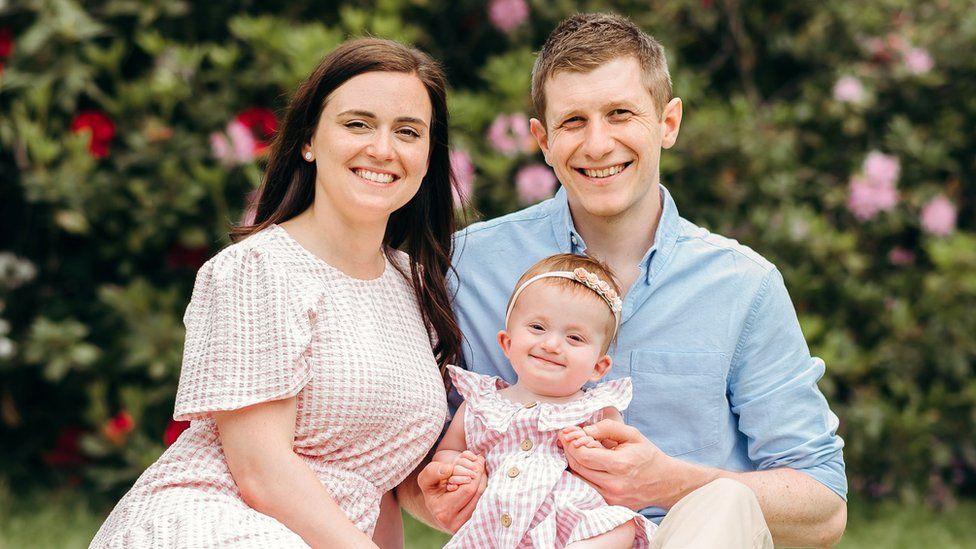
Published29 minutes agoShareclose panelShare pageCopy linkAbout sharingImage source, Brogden familyBy James GallagherHealth and science correspondentThousands of children with severe developmental disorders have finally been given a diagnosis, in a study that found 60 new diseases. Children, and their parents, had their genetic code – or DNA – analysed in the search for answers to their condition. There are thousands of different genetic disorders. Having a diagnosis can lead to better care, help parents to decide whether to have more children, or simply provide an explanation for what is happening.Taken individually the disorders are rare, but collectively they affect one in every 17 people in the UK.The Deciphering Developmental Disorders study, conducted over 10 years, was a collaboration between the NHS, universities and the Sanger Institute, which specialises in analysing DNA.Among the findings, researchers discovered Turnpenny-Fry syndrome. It is caused by errors in one genetic instruction within our DNA and leads to learning difficulties. It also affects growth, resulting in a large forehead and sparse hair. Jessica Fisher’s son, Mungo – who took part in the study – was diagnosed with the syndrome.At the time, he was one of only two people in the world to be diagnosed with it. The other child was in Australia, but Jessica recalls that the Australian child’s physical similarities to Mungo were so strong they “could have been his sibling”.Image source, Fisher familyJessica subsequently started an online support group, which is now made up of 36 families from around the world, including America, Brazil, Croatia and Indonesia.”It’s devastating to learn that your child has a rare genetic disorder, but getting the diagnosis has been key to bringing us together,” said Jessica.The study analysed the genetic code of 13,500 families with unexplained disorders – and was able to give a diagnosis to 5,500 of them. The results, published in the New England Journal of Medicine, revealed 60 of those disorders were new conditions. Most were errors that had occurred spontaneously at conception, rather than being inherited. Prof Caroline Wright, from the University of Exeter, told the BBC: “We were able to find new genetic conditions, which means that not only people in the study benefit, but there are huge benefits to future generations.”Getting a genetic diagnosis is hugely important to families. It allows them to speak to other families who might be affected by the same condition, and hopefully target much more personalised management and ultimately treatment.”Around a quarter of children in the study had their treatment changed once a clear diagnosis was given. Image source, Brogden familyThis kind of genetic analysis is becoming more routine within NHS care.The discovery of Turnpenny-Fry syndrome meant Dasha Brogden’s daughter, Sofia, was diagnosed when she was just one month old.Her diagnosis made everyone aware heart conditions were a possibility, and a scan led to Sofia – now aged nearly three – having surgery when she was two months old.Dasha, from Oxfordshire, said: “For us, getting a diagnosis really helped us to understand what to expect. Compared to families who came before the condition had an official diagnosis, we were lucky. Follow James on Twitter.

Read more →

Beber con moderación no tiene beneficios en la salud, según estudio

Un análisis de más de 100 estudios encontró fallas en sus metodología y resultados. La nueva revisión concluye que las bebidas alcohólicas no aportarían beneficios significativos a la salud ni a la longevidad.Durante décadas, los estudios científicos sugirieron que el consumo moderado de alcohol era mejor para la salud de la mayoría de las personas que no beber en absoluto, e incluso podía ayudarles a vivir más tiempo.Un análisis nuevo de más de 40 años de investigaciones concluyó que muchos de esos estudios tenían fallas y que en realidad sucede lo contrario.El estudio reveló que, en el caso de las mujeres, los riesgos de morir de manera prematura aumentan significativamente una vez que beben 25 gramos de alcohol al día, lo que equivale a menos de dos cócteles estándar que contienen 44 mililitros de licores destilados, dos cervezas de 355 mililitros o dos copas de vino de 150 mililitros. Los riesgos en los hombres aumentan de manera significativa a partir de los 45 gramos de alcohol al día, es decir, poco más de tres bebidas.El nuevo informe, en el que se analizaron más de 100 estudios realizados en casi 5 millones de adultos, no se diseñó para elaborar recomendaciones sobre el consumo de alcohol, sino para corregir los problemas metodológicos que afectaban muchos de los estudios observacionales más antiguos. Esos informes concluyeron sistemáticamente que los bebedores moderados tenían menos probabilidades de morir por todas las causas, incluidas las no relacionadas con el consumo de alcohol.La mayoría de esos estudios eran observacionales, lo que significa que identificaban vínculos o asociaciones, pero podían ser engañosos y no demostraban la relación causa-efecto. Los científicos afirmaron que los estudios más antiguos no reconocían que los bebedores de consumo leve y moderado tenían una infinidad de otros hábitos y ventajas saludables, y que los abstemios utilizados como grupo de comparación a menudo incluían a antiguos bebedores que habían dejado de beber después de desarrollar problemas de salud.“Cuando comparas este grupo poco saludable con los que siguen bebiendo, hace que los bebedores actuales parezcan más sanos y como si tuvieran una mortalidad más baja”, afirmó Tim Stockwell, científico del Instituto Canadiense de Investigación sobre el Consumo de Sustancias y uno de los autores del nuevo informe, que se publicó a finales de marzo en la revista JAMA Network Open.Una vez que Stockwell y sus colegas corrigieron estos y otros errores, dijo, “resulta que los supuestos beneficios para la salud de la bebida se reducen drásticamente, y se convierten en estadísticamente no-significativos”.Stockwell afirmó que las comparaciones entre bebedores moderados y no bebedores eran erróneas por varias razones. Las personas que se abstienen del alcohol por completo son una minoría, y las que no son abstemias por motivos religiosos tienen más probabilidades de padecer problemas crónicos de salud, sufrir una discapacidad o pertenecer a entornos con ingresos más bajos.Los bebedores moderados suelen serlo en todos los sentidos. Suelen ser más adinerados, es más probable que hagan ejercicio y sigan una dieta sana, y tienen menos probabilidades de padecer sobrepeso. Incluso tienen mejores dentaduras, señalaron los científicos.“Tienen muchas cosas a su favor que protegen su salud y que no tienen nada que ver con el consumo de alcohol”, comentó Stockwell.La idea de que el consumo moderado de alcohol puede ser benéfico se remonta a 1924, cuando un biólogo de la Universidad Johns Hopkins llamado Raymond Pearl publicó un gráfico con una curva en forma de J, en la que el punto bajo del centro representaba a los bebedores moderados, que tenían los índices más bajos de mortalidad por todas las causas.El punto alto de la J representaba los riesgos bien conocidos del consumo excesivo de alcohol, como las enfermedades hepáticas y los accidentes automovilísticos. El gancho de la izquierda representaba a los abstemios.En décadas más recientes, el vino (y en particular el tinto) ganó fama de ser benéfico para la salud después de que las noticias destacaron su alta concentración de un antioxidante protector llamado resveratrol, que también se encuentra en los arándanos azules y rojos.No obstante, la hipótesis relacionada a beber alcohol con moderación ha sido objeto de crecientes críticas a lo largo de los años, pues salió a la luz el papel de la industria del alcohol en el financiamiento de las investigaciones, además de que estudios más recientes han descubierto que incluso el consumo moderado de alcohol (incluido el vino tinto) puede contribuir a desarrollar cáncer de mama, esófago y cabeza y cuello, a la hipertensión arterial y a una grave arritmia cardiaca llamada fibrilación auricular.En enero, Canadá publicó nuevas directrices en las que advertía que el consumo de alcohol no es saludable en ninguna cantidad, e instaba a la población a reducir su ingesta en lo posible. Las nuevas directrices, publicadas por el Centro Canadiense sobre Consumo de Sustancias y Adicciones, suponen un cambio radical con respecto a las publicadas en 2011, que recomendaban a las mujeres limitarse a un máximo de 10 bebidas estándar a la semana y a los hombres a un máximo de 15.Ahora, la agencia canadiense afirma que consumir incluso dos bebidas estándar a la semana está asociado a riesgos para la salud, y siete o más bebidas semanales conllevan un nivel de riesgo alto.Las directrices dietéticas actuales de Estados Unidos no son tan estrictas, y recomiendan que los hombres se limiten a no más de dos copas al día y las mujeres a no más de una.No obstante, las pautas sobre el consumo de alcohol publicadas por numerosas organizaciones de salud se modificaron para incluir la salvedad de que las personas no deben beber alcohol con el propósito explícito de mejorar su salud.Esta advertencia fue reiterada por una científica del Distilled Spirits Council, una organización de productores de licores, aunque discrepó de las conclusiones del nuevo informe.Amanda Berger, vicepresidenta de ciencia y salud del Distilled Spirits Council, afirmó que el análisis nuevo sigue “sugiriendo que quienes beben con moderación viven más que quienes no lo hacen”, pero añadió que “nadie debería beber alcohol para obtener posibles beneficios para la salud, y algunas personas no deberían beber en absoluto”.Sin embargo, según los autores del estudio, el análisis nuevo muestra que quienes beben moderadamente no tienen ninguna ventaja significativa a nivel estadístico en el aspecto de la longevidad en comparación con los abstemios de toda la vida.

Read more →

Court Says Abortion Pill Can Remain Available but Imposes Temporary Restrictions

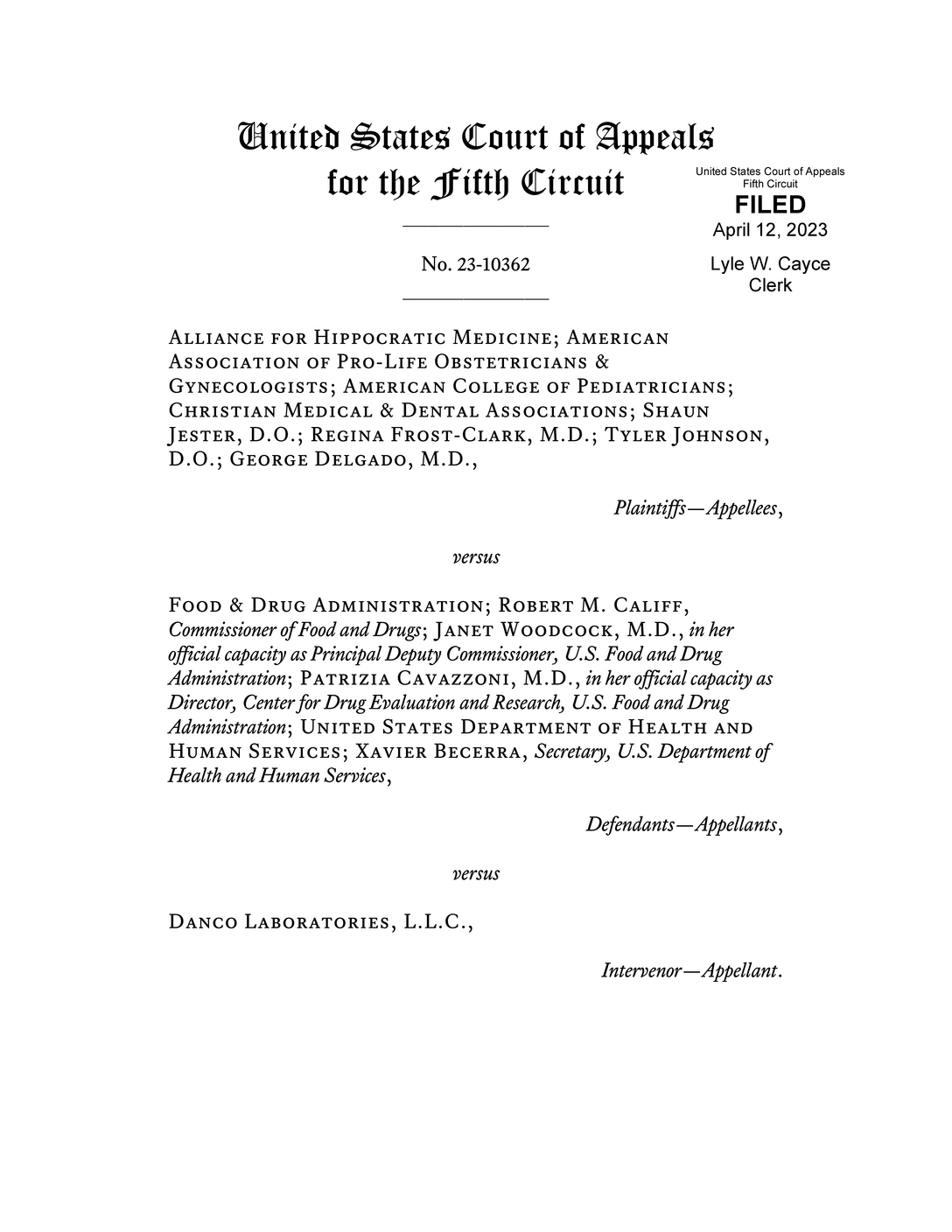
The judges blocked the drug from being sent to patients through the mail and rolled back other steps the government had taken to ease access.A federal appeals court ruled late Wednesday that the abortion pill mifepristone could remain available, but the judges blocked the drug from being sent to patients through the mail and rolled back other steps the government had taken to ease access in recent years.The three-judge panel said its ruling would hold until the full case is heard on appeal.In its order, the U.S. Court of Appeals for the Fifth Circuit, said the Food and Drug Administration’s approval of mifepristone in 2000 could stand because too much time had passed for the plaintiffs, a consortium of groups and doctors opposed to abortion, to challenge that decision.But the court said that it was not too late for the plaintiffs to challenge a set of steps the F.D.A. took beginning in 2016 that lifted restrictions and made it easier for more patients to have access to the pill.Those steps included not requiring that the pill be prescribed only by doctors, approving the pill for use up to 10 weeks into pregnancy instead of seven weeks and allowing the pill to be mailed to patients instead of requiring it to be picked up from a health care provider in person.All of those restrictions were temporarily reinstated. The Justice Department is likely to appeal the order to the Supreme Court.Fifth Court of Appeals Order on Abortion Pill CaseRead Document 42 pagesMike Ives

Read more →

Time out: We all need a three-day weekend

As a four-day work week is trialled in countries across the globe, health researchers at the University of South Australia say they’re ‘all in’ when it comes to a long weekend, especially as new empirical research shows that the extra time off is good for our health.
Assessing changes in daily movements before, during and after holidays, researchers found that people displayed more active, healthy behaviours when they were on holiday, even when they only had a three-day break.
Across the 13-month study period, people generally took an average two to three holidays, each being around 12 days. The most common holiday type was ‘outdoor recreation’ (35 per cent), followed by ‘family/social events’ (31 per cent), ‘rest and relaxation’ (17 per cent) and ‘non-leisure pursuits’ such as caring for others or home renovations (17 per cent).
Specifically, it showed that on holiday people: engaged in 13 per cent more moderate-to-vigorous physical activity (MVPA) each day (or five min/day more) were five per cent less sedentary each day (or 29 min/day less) slept four per cent more each day (or 21 min/day more).UniSA researcher Dr Ty Ferguson says that the research indicates that people display healthier behaviours when they are on holiday.
“When people go on holiday, they’re changing their everyday responsibilities because they’re not locked down to their normal schedule,” Dr Ferguson says.

“In this study, we found that movement patterns changed for the better when on holiday, with increased physical activity and decreased sedentary behaviour observed across the board.
“We also found that people gained an extra 21 minutes of sleep each day they were on holiday, which can have a range of positive effects on our physical and mental health. For example, getting enough sleep can help improve our mood, cognitive function, and productivity. It can also help lower our risk of developing a range of health conditions, such as obesity, diabetes, cardiovascular disease, and depression.
“Interestingly, the size of these changes increased in line with the length of the holiday — so the longer the holiday, the better the health benefits.”
The study used data from the Annual rhythms in adults’ lifestyle and health (ARIA) study where 308 adults (mean age 40.4 years) wore fitness trackers 24 hours a day for 13 months. Minute-by-minute
movement behaviour data were aggregated into daily totals to compare movement behaviours pre-holiday, during holiday and post-holiday.

Senior researcher UniSA’s Prof Carol Maher says that the study offers support for the growing movement for a four-day week.
“A shorter working week is being trialled by companies all over the world. Not surprisingly, employees reported less stress, burnout, fatigue, as well as better mental health and improved work-life balance,” Prof Maher says.
“This study provides empirical evidence that people have healthier lifestyle patterns when they have a short break, such as a three-day weekend. This increase in physical activity and sleep is expected to have positive effects on both mental and physical health, contributing to the benefits observed with a four-day work week.
“Importantly, our study also showed that even after a short holiday, people’s increased sleep remained elevated for two weeks, showing that the health benefits of a three-day break can have lasting effects beyond the holiday itself.
“As the world adapts to a new normal, perhaps it’s time to embrace the long weekend as a way to boost our physical and mental health.”

Read more →

Research identifies new target that may prevent blood cancer

An international coalition of biomedical researchers co-led by Alexander Bick, MD, PhD, at Vanderbilt University Medical Center has determined a new way to measure the growth rate of precancerous clones of blood stem cells that one day could help doctors lower their patients’ risk of blood cancer.
The technique, called PACER, led to the identification of a gene that, when activated, drives clonal expansion. The findings, published in the journal Nature, suggest that drugs targeting this gene, TCL1A, may be able to suppress clonal growth and associated cancers.
“We think that TCL1A is a new important drug target for preventing blood cancer,” said Bick, the study’s co-corresponding author with Stanford University’s Siddhartha Jaiswal, MD, PhD.
More than 10% of older adults develop somatic (non-inherited) mutations in blood stem cells that can trigger explosive, clonal expansions of abnormal cells, increasing the risk for blood cancer and cardiovascular disease.
Since arriving at VUMC in 2020, Bick, assistant professor of Medicine in the Division of Genetic Medicine and director of the Vanderbilt Genomics and Therapeutics Clinic, has contributed to more than 30 scientific papers that are revealing the mysteries of clonal growth (hematopoiesis).
With age, dividing cells in the body acquire mutations. Most of these mutations are innocuous “passenger” mutations. But sometimes, a mutation occurs that drives the development of a clone and ultimately causes cancer.

Prior to this study, scientists would measure clonal growth rate by comparing blood samples taken decades apart. Bick and his colleagues figured out a way to determine the growth rate from a single timepoint, by counting the number of passenger mutations.
“You can think of passenger mutations like rings on a tree,” Bick said. “The more rings a tree has, the older it is. If we know how old the clone is (how long ago it was born) and how big it is (what percentage of blood it takes up), we can estimate the growth rate.”
The PACER technique for determining the “passenger-approximated clonal expansion rate” was applied to more than 5,000 individuals who had acquired specific, cancer-associated driver mutations in their blood stem cells, called “clonal hematopoiesis of indeterminate potential” or CHIP, but who did not have blood cancer.
Using a genome-wide association study, the investigators then looked for genetic variations that were associated with different clonal growth rates. To their surprise, they discovered that TCL1A, a gene which had not previously been implicated in blood stem cell biology, was a major driver of clonal expansion when activated.
The researchers also found that a commonly inherited variant of the TCL1A promoter, the DNA region which normally initiates transcription (and thus activation) of the gene, was associated with a slower clonal expansion rate and a markedly reduced prevalence of several driver mutations in CHIP, the second step in the development of blood cancer.

Experimental studies demonstrated that the variant suppresses gene activation.
“Some people have a mutation that prevents TCL1A from being turned on, which protects them from both faster clone growth and from blood cancer,” Bick said. That’s what makes the gene so interesting as a potential drug target.
The research is continuing with the hope of identifying additional important pathways relevant to precancerous growth in other tissues as well as blood, he added.
Researchers from more than 50 institutions across the United States, as well as Germany, Sweden, and the Netherlands participated in the study. Other VUMC co-authors were Taralyn Mack, Benjamin Shoemaker, MD, MSCI, and Dan Roden, MD.
The research at VUMC is supported by National Institutes of Health grant OD029586, a Burroughs Wellcome Fund Career Award for Medical Scientists, the E.P. Evans Foundation & RUNX1 Research Program, a Pew-Stewart Scholar for Cancer Research Award, the VUMC Brock Family Endowment, and a Young Ambassador Award from the Vanderbilt-Ingram Cancer Center.

Read more →

Assisted reproduction kids grow up just fine — but it may be better to tell them early about biological origins, twenty-year study suggests

Landmark study finds no difference in psychological wellbeing or quality of family relationships between children born by assisted reproduction (egg or sperm donation or surrogacy) and those born naturally at age 20. However, findings suggest that telling children about their biological origins early — before they start school — can be advantageous for family relationships and healthy adjustment.
The study, by University of Cambridge researchers, is the first to examine the long-term effects of different types of third-party assisted reproduction on parenting and child adjustment, as well as the first to investigate prospectively the effect of the age at which children were told that they were conceived by egg donation, sperm donation or surrogacy.
The results, published today in Developmental Psychology, suggest that the absence of a biological connection between children and parents in assisted reproduction families does not interfere with the development of positive relationships between them or psychological adjustment in adulthood. These findings are consistent with previous assessments at age one, two, three, seven, ten and 14.
The findings overturn previous widely held assumptions that children born by third-party assisted reproduction are at a disadvantage when it comes to wellbeing and family relationships because they lack a biological connection to their parents.
“Despite people’s concerns, families with children born through third-party assisted reproduction — whether that be an egg donor, sperm donor or a surrogate — are doing well right up to adulthood,” said Susan Golombok, Professor Emerita of Family Research and former Director of the Centre for Family Research, University of Cambridge, who led the study.
However, they found that mothers who began to tell their children about their biological origins in their preschool years had more positive relationships with them as assessed by interview at age 20, and the mothers showed lower levels of anxiety and depression. Most of the parents who had disclosed did so by age four and found that the child took the news well. This suggests that being open with children about their origins when they are young is advantageous.

In addition, in the final stage of this 20-year study, mothers who had disclosed their child’s origins by seven years old obtained slightly more positive scores on questionnaire measures of quality of family relationships, parental acceptance (mother’s feelings towards young adult), and family communication. For example, only 7% of mothers who had disclosed by age 7 reported problems in family relationships, compared with 22% of those who disclosed after age 7.
The young adults who had been told about their origins before seven obtained slightly more positive scores on questionnaire measures of parental acceptance (young adult’s perception of mother’s feelings towards them), communication (the extent to which they feel listened to, know what’s happening in their family and receive honest answers to questions), and psychological wellbeing. They were also less likely to report problems on the family relationships questionnaire; whereas 50% of young adults told after age 7 reported such problems, this was true of only 12.5% of those told before age 7.
“There does seem to be a positive effect of being open with children when they’re young — before they go to school — about their conception. It’s something that’s been shown by studies of adoptive families too,” said Golmobok.
Researchers from the University of Cambridge followed 65 UK families with children born by assisted reproduction – 22 by surrogacy, 17 by egg donation and 26 by sperm donation — from infancy through to early adulthood (20 years old). They compared these families with 52 UK unassisted conception families over the same period.
“The assisted reproduction families were functioning well, but where we did see differences, these were slightly more positive for families who had disclosed,” said Golombok.

Reflecting on their feelings about their biological origins, the young adults were generally unconcerned. As one young adult born through surrogacy put it, “It doesn’t faze me really, people are born in all different ways and if I was born a little bit differently — that’s OK, I understand.”
Another young adult born through sperm donation said, “My dad’s my dad, my mum’s my mum, I’ve never really thought about how anything’s different so, it’s hard to put, I don’t really care.”
Some young adults actively embraced the method of their conception as it made them feel special, “I think it was amazing, I think the whole thing is absolutely incredible. Erm…I don’t have anything negative to say about it at all.”
Researchers found that egg donation mothers reported less positive family relationships than sperm donation mothers. They suggest that this could be due to some mothers’ insecurities about the absence of a genetic connection to their child. This was not reflected in the young adults’ perceptions of the quality of family relationships.
The team also found that young adults conceived by sperm donation reported poorer family communication than those conceived by egg donation. This could be explained by the greater secrecy around sperm donation than egg donation, sometimes driven by greater reluctance of fathers than mothers to disclose to their child that they are not their genetic parent, and a greater reluctance to talk about it once they have disclosed.
In fact, researchers found that only 42% of sperm donor parents disclosed by age 20, compared to 88% of egg donation parents and 100% of surrogate parents.
“Today there are so many more families created by assisted reproduction that it just seems quite ordinary,” said Golombok. “But twenty years ago, when we started this study, attitudes were very different. It was thought that having a genetic link was very important and without one, relationships wouldn’t work well.
“What this research means is that having children in different or new ways doesn’t actually interfere with how families function. Really wanting children seems to trump everything — that’s what really matters.”
This research was funded by a Wellcome Trust Collaborative Award.
The Centre for Family Research is collaborating with the Fitzwilliam Museum on a new exhibition, Real Families: Stories of Change(October — 7 January 2024), curated by Professor Golombok. The exhibition will explore the intricacies of families and family relationships through the eyes of artists including Paula Rego, Chantal Joffe, JJ Levine, Lucian Freud and Tracey Emin.
Professor Susan Golombok is author of We Are Family: What Really Matters for Parents and Children (Scribe) which describes researching new family forms from the 1970s to the present day.

Read more →

'Every time she falls asleep, she might die'

Published2 hours agoShareclose panelShare pageCopy linkAbout sharingImage source, FamilyBy Megan Jones & Maisie OlahBBC Radio WMParents of a girl with a rare breathing condition which means she could die when asleep have fundraised for life-changing surgery.Six-year-old Sadie has Congenital Central Hypoventilation Syndrome (CCHS) which affects how her nervous system manages her breathing. Her parents, from Birmingham, said a battery-powered system put in her chest will help stimulate breathing.They hope it will give their daughter more independence.”She has to be watched 24/7,” Sadie’s mother Star said.Sadie cannot breathe on her own when asleep and so she relies on a ventilator, breathing via a tube through a hole in her neck. The machine only has eight hours of battery life.The phrenic nerve pacer Sadie’s parents have fundraised for works a little like a cardiac pace maker as it will tell the diaphragm when to move and breathe, her father Andrew said.Guidance set out by the National Institute for Health and Care Excellence (NICE) does not recommend NHS funding for the issue.”Every time our beautiful daughter falls asleep she might die,” Star said.The family have currently raised £33,000 our of £39,000 needed and surgery, which was supposed to be last month, has been delayed until 19 April due to complications with her cardiac pacemaker.The money raised is not only to help pay for the surgery, but for accommodation near her hospital, as the family mainly now live in Dubai and rent their house in Birmingham out.Star said getting this surgery for Sadie, “is a journey worth while”.Follow BBC West Midlands on Facebook, Twitter and Instagram. Send your story ideas to: newsonline.westmidlands@bbc.co.ukMore on this storyChildren home from intensive care22 December 2010Rare breathing disorder baby home2 December 2011Related Internet LinksNICE – The National Institute for Health and Care ExcellenceCCHS UK – A CCHS Support CharityNHS EnglandThe BBC is not responsible for the content of external sites.

Read more →

Ghana first to approve 'world-changer' malaria vaccine

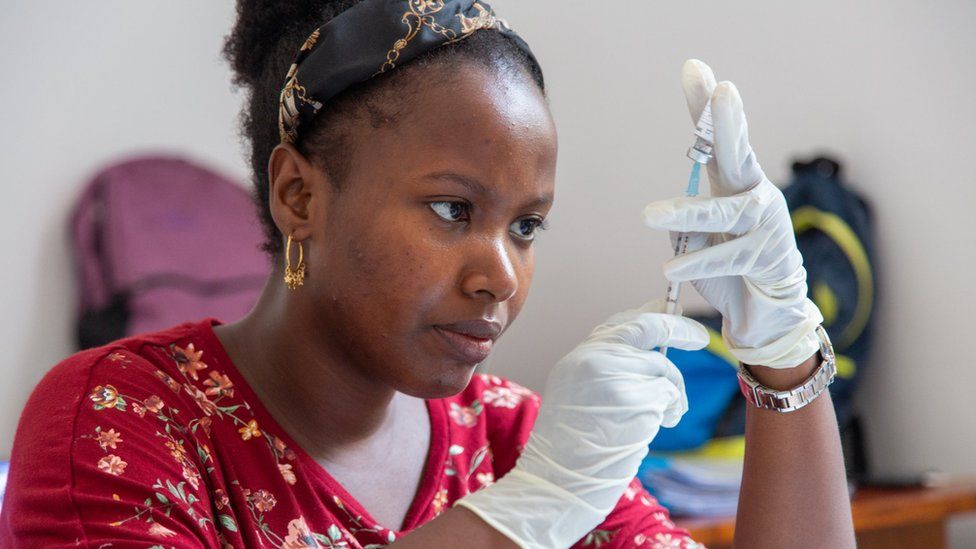
Published6 minutes agoShareclose panelShare pageCopy linkAbout sharingImage source, University of OxfordBy James GallagherHealth and science correspondentGhana is the first country to approve a new malaria vaccine that has been described as a “world-changer” by the scientists who developed it. The vaccine – called R21 – appears to be hugely effective, in stark contrast to previous ventures in the same field.Ghana’s drug regulators have assessed the final trial data on the vaccine’s safety and effectiveness, which is not yet public, and have decided to use it.The World Health Organization is also considering approving the vaccine.Malaria kills about 620,000 people each year, most of them young children. It has been a massive, century-long, scientific undertaking to develop a vaccine that protects the body from the malaria parasite. Trial data from preliminary studies in Burkina Faso showed the R21 vaccine was up to 80% effective when given as three initial doses, and a booster a year later. New malaria vaccine is world-changing, say scientistsBut widespread use of the vaccine hinges on the results of a larger trial involving nearly 5,000 children. These had been expected to take place at the end of last year, but have still not been formally published. However, they have been shared with some government bodies in Africa, and scientists. I have not seen the final data, but have been told it shows a similar picture to the earlier studies.Ghana’s Food and Drugs Authority, which has seen the data, has approved the vaccine’s use in children aged between five months to three years old.Other African countries are also studying the data, as is the World Health Organization. Prof Adrian Hill, director of the Jenner Institute at the University of Oxford, where the vaccine was invented, says African countries are declaring: “we’ll decide”, after being left behind in the rollout of Covid-19 vaccines during the pandemic. He told me: “We expect R21 to make a major impact on malaria mortality in children in the coming years, and in the longer term [it] will contribute to overall final goal of malaria eradication and elimination.” The Serum Institute of India is preparing to produce between 100-200 million doses per year, with a vaccine factory being constructed in Accra, Ghana. Each dose of R21 is expected to cost a couple of dollars.Adar Poonawalla, CEO of the Serum Institute, said: “Developing a vaccine to greatly impact this huge disease burden has been extraordinarily difficult.”He added that Ghana, as the first country to approve the vaccine, represents a “significant milestone in our efforts to combat malaria around the world”.Follow James on Twitter.

Read more →

Juul Labs agrees $462m deal to settle claims

Published42 minutes agoShareclose panelShare pageCopy linkAbout sharingImage source, Getty ImagesBy Michael RaceBusiness reporter, BBC NewsE-cigarette manufacturer Juul Labs has agreed to pay $462m (£372m) to settle claims by six US states after being accused of targeting teenagers.Several states also accused the firm of falsely marketing its vapes as less addictive than cigarettes.The firm did not admit wrongdoing and said the latest deal was part of its “commitment to resolve issues from the company’s past”.The deal means Juul has now settled cases for more than $1bn.Juul has been accused of fuelling an increase in teenage vaping in its rise to be one of the top e-cigarette firms in the US.The firm has repeatedly denied targeting young people, but critics have pointed to its colourful packaging, variety of flavours and use of young models in ad campaigns.In 2022, more than 2.5m US school students used e-cigarettes, according to the Centers for Disease Control and Prevention.Vaping – is it a risk-free option?Following the settlement, Letitia James, New York attorney general, said: “Juul’s lies led to a nationwide public health crisis and put addictive products in the hands of minors who thought they were doing something harmless.””Today they are paying the price for the harm they caused,” she added.California Attorney General Rob Bonta added: “Today is another step forward in our fight to protect our kids from getting hooked on vaping and nicotine.”E-cigarettes have helped many thousands of people stop smoking by removing the dangerous and toxic tobacco smoke from their habit, giving a huge health boost.But the e-cigarette vapour which is inhaled can still contain small amounts of chemicals, including nicotine, which could carry risks of their own. There are concerns that young people are taking up vaping because they see it as completely risk-free.Juul said that use of its products by people under the age of 18 had fallen by 95% since the autumn of 2019, when it changed its marketing practices as part of a “company-wide reset”.”With this settlement, we are nearing total resolution of the company’s historical legal challenges and securing certainty for our future,” the company added.Juul’s will pay the $462m over eight years.New York, California, Colorado, Illinois, Massachusetts and New Mexico, along with the District of Columbia, were involved in Wednesday’s settlement which stemmed from separate lawsuits filed against the company.In September last year, the firm agreed to pay $438.5m to end a probe of its advertising to underage buyers.The deal with more than 30 states restricted Juul’s marketing, for example barring use of people under the age of 35 in its adverts.Juul still faces lawsuits in other states.More on this storyMarket flooded by unsafe vapes aimed at children13 July 2022Juul to pay $438.5m in youth vaping probe6 September 2022

Read more →

Father's alcohol consumption before conception linked to brain and facial defects in offspring

According to the U.S. Surgeon General, women should not drink alcoholic beverages during pregnancy because of the risk of birth defects in their unborn child. Now, research at Texas A&M University demonstrates that a father’s alcohol consumption before conception also links to growth defects that affect the development of his offspring’s brain, skull and face.
Research investigating fetal alcohol syndrome (FAS) exclusively examines maternal alcohol exposure. However, because men drink more and are more likely to binge drink than women, Dr. Michael Golding, an associate professor in the School of Veterinary Medicine & Biomedical Sciences’ Department of Veterinary Physiology & Pharmacology, and his team set out to challenge the existing dogma, using a mouse model to examine what happens when the mother, father and both parents consume alcohol.
In a new article published in the Journal of Clinical Investigation, Golding and his team found that male alcohol consumption before conception caused FAS brain and facial growth defects.
“We found that male exposures actually drive certain craniofacial differences much stronger than maternal exposures do, so this programming effect that’s coming through sperm has a profound effect on the organization of the face and the growth and proportion of different facial features,” Golding said. “When it was the dad drinking, we saw a profound shift in the organization of the face.”
According to the Centers for Disease Control and Prevention (CDC) and the National Institutes of Health (NIH), FAS is a fetal disorder caused by maternal alcohol consumption during pregnancy.
FAS is hard to diagnose, but when doing so, doctors currently look for abnormal facial features; lower-than-average weight, height or both; central nervous system problems such as a small head size, problems with attention and hyperactivity or poor coordination; and verification of maternal alcohol use during pregnancy.

“When doctors suspect a child has FAS, they sit down with the mother to confirm the diagnosis by discussing her drinking habits during pregnancy,” Golding said. “It’s not uncommon for the mother to deny consuming alcohol while pregnant. When they do, there’s this stigma or this notion that women are lying about their alcohol use.”
Golding said this research, which was funded by a Medical Research Grant from the W.M. Keck Foundation and the NIH National Institute on Alcohol Abuse and Alcoholism, reveals a potential blind spot in the current diagnostic criteria for FAS, the most severe form of Fetal Alcohol Spectrum Disorder (FASD), which requires documentation of maternal alcohol use during pregnancy.
“Our research proves there’s a plausible alternative explanation — the father’s contribution, which has never been examined before,” he said. “In this study, we call into question the dismissal of the mother’s denial and really examine the capacity of male alcohol use to induce FAS growth defects.”
Golding explained that findings from his holistic approach that examines both parents’ contributions to FAS reveal the need for two critical changes.
“First is the recognition of the importance of male health in pregnancy outcomes and fetal health,” he said.

Golding pointed out that paternal health before conception is a novel consideration in terms of pregnancy outcomes and fetal health; as a result, raising awareness of the role a father’s health plays in his offspring’s health is just as important as awareness of the mother’s contributions from preconception and through gestation.
“Research examining fetal health is overwhelmingly focused on maternal health,” he said. “I’m not saying that this is not appropriate; I’m just saying it’s not the complete picture and we need some balance.
“The second,” he said, “is the fact that both parents are responsible for preventing alcohol-related birth defects.”
FAS has significant, life-changing consequences for children.
Because their study identified FAS-related craniofacial differences in offspring born to fathers who regularly consumed alcohol at or more than the legal limit, Golding pointed out that both parents should commit to limiting or omitting their alcohol consumption before trying to become pregnant.
Ultimately, Golding emphasizes that the first step in this process is expanding messaging outreach about the reproductive dangers of alcohol use to both parents.
“Change the alcohol warning label to remove the maternal emphasis and put it on both parents to say, ‘The decision to consume this beverage can have significant, life-changing consequences to a future child,'” he said. “Right now, the warning label only conveys part of the story. We must get that message out into the world as quickly as possible.”

Read more →