A backpack full of multiple sclerosis therapy

Multiple sclerosis (MS) is a devastating autoimmune disease that destroys the protective myelin covering around nerves, disrupting communication between the brain and body, and causing patients’ ability to move and function to progressively decline. The MS atlas reported in 2020 that someone is diagnosed with MS every five minutes around the world, adding to about 2.8 million individuals that currently have to live with the disease. Alarmingly, since 2013, the world-wide prevalence of MS has risen by 30%.
A key driver of MS is the sudden inflammation of nerves caused by so-called myeloid cells of the “innate” immune system in vulnerable regions of the brain and spinal cord, which together form the central nervous system (CNS). These “acute inflammatory lesions” then attract other myeloid cells, as well as self-reactive T and B cells that belong to the immune system’s second arm, known as the “adaptive immune system” and directly attack the myelin covering. While no cure is available for MS, existing disease-modifying therapies in the form of small molecule and protein drugs either directly target the self-reactive immune cells or broadly dampen inflammation. However, many of those therapies cause severe side effects in different parts of the body, including the immune system itself, and thus carry significant health risks.
Now, a research team at the Wyss Institute for Biologically Inspired Engineering at Harvard University and Harvard John A. Paulson School of Engineering and Applied Sciences (SEAS) has developed a cell therapy as a strong alternative to existing small molecule and protein therapies that leverages myeloid cells, the very type of immune cells that cause the MS-triggering nerve inflammation in patients.
To transform potentially inflammatory myeloid cells into therapeutic cells, they isolated and cultured monocytes (a type of myeloid cell) from the bone marrow of donor mice and stably attached tiny microparticles, termed “backpacks,” to the cells’ surfaces. These backpacks are loaded with anti-inflammatory molecules that direct the carrier cells’ differentiation into anti-inflammatory cells in vivo. When infused back into a mouse model of MS, the backpack-laden monocytes were able to affect MS-specific immune responses, and partially reverse hind limb paralysis and improve motor functions. The results are published in the Proceedings of the National Academy of Sciences (PNAS).
“Current MS therapies do not specifically target myeloid cells. These are very plastic cells that can toggle between different states and are thus hard to control. Our biomaterial-based backpack approach is a highly effective way to keep them locked into their anti-inflammatory state,” said senior author Samir Mitragotri, Ph.D., who is a Core Faculty member at the Wyss Institute. “In many ways simpler than other cell therapies, myeloid cells can be easily obtained from patients’ peripheral blood, modified with backpacks in a short culture step, and reinfused back into the original donor, where they find their way to inflammatory lesions and affect the MS-specific immune response not only locally, but more broadly.” Mitragotri is also the Hiller Professor of Bioengineering and Hansjörg Wyss Professor of Biologically Inspired Engineering at SEAS.
Many cell therapies, such as the famed CAR-T cell therapies, require the mobilization of immune cells from specific tissue compartments in the body with drugs, genetic modification, and then amplification over weeks outside of the body. Myeloid cells can be directly retrieved using established methods and modified with backpacks within hours, making the therapy more easily translatable. In addition, some myeloid cell types possess the ability to traverse the blood-brain barrier, which makes them particularly suitable for treating CNS diseases.

New spin for cellular backpacks
Mitragotri’s group had previously found that when they attached small disc-shaped backpacks to cells of the myeloid lineage, they remained stably exposed on the cells’ surface, whereas many other cells would readily internalize and inactivate them. Adding certain molecules to the backpacks allowed the team sustained control over the cells’ behavior. They made use of this finding in a tumor-fighting cell therapy consisting of backpack-laden macrophages, which is a specific type of myeloid cell. In their new study, they focused on monocytes, which also belong to the myeloid differentiation lineage and are a precursor to macrophages. Monocytes can effectively infiltrate the brain and then differentiate into macrophages, which are one of the predominant inflammatory cell types in active MS lesions.
“Because of their ability to invade the CNS, infiltrate inflammatory lesions, and differentiate into macrophages, a backpack strategy allowing control over monocyte differentiation made extreme sense,” said first author Neha Kapate, a graduate student working with Mitragotri. “We decided on backpacks that contained interleukin-4 [IL-4] and dexamethasone, two molecules that we later found to provide a synergistic anti-inflammatory effect.”
The team fabricated their micrometer-size backpacks via a process known as serial “spin coating,” in which thin films made up of a PLGA polymer and other biocompatible substances, and containing the anti-inflammatory molecules are layered on top of each other like layers of an onion. As a final step, the outer surface of the backpack was furnished with an antibody fragment to allow it to stick to monocytes.
Cellular backpacks get legs
To test the backpack-laden monocytes for their therapeutic efficacy, the researchers isolated monocytes from healthy donor mice and, in a short cell culture step, attached the backpacks to them. They then infused the modified cells into a mouse model of MS, known among researchers as experimental autoimmune encephalomyelitis (EAE) model. “When we infused backpack-carrying monocytes and, in parallel, unaltered control monocytes into EAE mice with ongoing nerve inflammation, backpack-carrying monocytes more effectively infiltrated into inflamed CNS lesions. They also reduced inflammation inside the lesions and shifted the local and systemic MS-associated immune response towards a therapeutic outcome,” said Kapate. “The resulting anti-inflammatory monocytes also elicited cross-talk effects with other immune cell populations, such as specific T helper cells that are linked to the self-directed adaptive auto-immune response.”
The disease symptoms in EAE mice treated with backpack-laden monocytes were significantly improved and, by the end of the study, the animals merely exhibited a limp tail, compared to complete a paralysis in the control animals’ hind limbs. The treatment also extended the animals’ survival — all mice receiving backpack-carrying monocytes survived to the end of the study, whereas a significant number of the control mice had died. Importantly, the magnitude of therapeutic benefit the team observed is on par with reported therapeutic treatments that had been tested in other studies using the same model. Since the EAE model mainly mimics the progressive form of MS and not the more prevalent “relapsing-remitting” form, with which the disease begins in about 85% of MS patients, and which at later stages can also become progressive, the team plans to also investigate their approach in models of relapsing-remitting MS. Being able to suppress inflammation early on could have enormous benefits for patients.
“The ability of this team to convert a potentially pathogenic type of immune cell into a therapeutic one for MS, which is extremely hard or impossible to treat, could open an entirely new path to treat patients with a variety of neurological diseases,” said Wyss Founding Director Donald Ingber, M.D., Ph.D., who is also the Judah Folkman Professor of Vascular Biology at Harvard Medical School and Boston Children’s Hospital, and the Hansjörg Wyss Professor of Bioinspired Engineering at SEAS.
Other authors on the study are Michael Dunne, Ninad Kumbhojkar, Supriya Prakash, Lily Li-Wen Wang, Amanda Graveline, Kyung Soo Park, Vineeth Chandran Suja, Juhee Goyal, and John Clegg. The study was supported by the Wyss Institute at Harvard University, SEAS, National Science Foundation (under award# ECCS-2025158 and 1122374).

Read more →

New tool facilitates clinical interpretation of genetic information

Despite the increasing use of genomic sequencing in clinical practice, interpreting rare genetic mutations, even among well-studied disease genes, remains difficult. Current predictive models are useful for interpreting those mutations, but they are prone to misclassify those that do not cause diseases, contributing to false positives. Researchers from the Max Planck Institute of Molecular Cell Biology and Genetics (MPI-CBG) in Dresden, the Center for Systems Biology Dresden (CSBD) in Germany, and the Harvard Medical School in Boston, USA, have developed a tool called Deciphering Mutations in Actionable Genes (DeMAG) published in the journal Nature Communications. DeMAG is an open-source web server (demag.org) that offers an interpretation of the effects of all potential single amino acid mutations could occur in 316 clinically relevant genes that cause diseases for which preventive diagnostics and treatments are already available. DeMAG provides medical professionals with a tool that allows them to more accurately assess the effect of mutations in those genes by reducing the false positive rate, which means that less benign mutations are predicted as pathogenic. As a result, the tool can support clinical decision-making.
In recent years, genomic sequencing has become less expensive and more advanced. On the one hand, this allows clinicians to increasingly use sequencing for diagnostic purposes while also allowing scientists to explore more research hypotheses. On the other hand, many detected mutations do not have a clear clinical interpretation. The uncertainty over whether a mutation causes disease can be stressful for patients and lead to psychological burden, morbidity and health-care expenses associated with under- and overdiagnosis. While existing tools are already used to predict the functional impact of these variants, their performance is biased due to limited clinical data that makes distinguishing between pathogenic (disease-causing) and benign (neutral) variants within a given gene difficult and often lead to misclassifying mutations that do not cause disease as pathogenic. Addressing these difficulties is critical for developing a reliable predictor for clinical applications.
The research group of Agnes Toth-Petroczy at the MPI-CBG and the CSBD teamed up with Christopher Cassa, assistant professor of medicine at the Brigham and Women’s Hospital Division of Genetics at the Harvard Medical School, and Ivan Adzhubei, research associate at the Department of Biomedical Informatics at Harvard Medical School, to develop a statistical model and web server DeMAG that reaches high accuracy in the interpretation of genetic mutations in disease genes. To do this, the researchers carefully selected known pathogenic and benign mutations for training the model. “We used clinical and various population databases. We selected only mutations whose clinical interpretation is agreed upon among multiple submitters such as medical doctors and genetics laboratories. And we also included data from ancestries that are underrepresented in the current population databases, such as Korean or Japanese, to make it even more representative and accurate,” explains Federica Luppino, first author of the research paper and PhD student in the Toth-Petroczy group. DeMAG includes a novel feature, the “partners score,” that identifies clusters of amino acids in a protein that share the same clinical effect. With the partners score, DeMAG takes advantage of the amino acid relationships based on evolutionary information from the genomes of many organisms and the recent AI (Artificial Intelligence) revolution of predicting the 3D shapes of proteins using the AlphaFold algorithm developed by Google DeepMind.
Agnes Toth-Petroczy, who supervised the study, concludes, “We provide a basic framework for integrating clinical and protein data to aid assessing the impact of mutations. We hope that our tool and web server will ease variants effect assessment and clinical decision-making. Furthermore, the newly developed features can be applied to other genes and organisms beyond humans.”

Read more →

Biological age is increased by stress and restored upon recovery

The biological age of humans and mice undergoes a rapid increase in response to diverse forms of stress, which is reversed following recovery from stress, according to a study publishing on April 21 in the journal Cell Metabolism. These changes occur over relatively short time periods of days or months, according to multiple independent epigenetic aging clocks.
“This finding of fluid, fluctuating, malleable age challenges the longstanding conception of a unidirectional upward trajectory of biological age over the life course,” says co-senior study author James White of Duke University School of Medicine. “Previous reports have hinted at the possibility of short-term fluctuations in biological age, but the question of whether such changes are reversible has, until now, remained unexplored. Critically, the triggers of such changes were also unknown.”
The biological age of organisms is thought to steadily increase over the life course, but it is now clear that biological age is not indelibly linked to chronological age. Individuals can be biologically older or younger than their chronological age implies. Moreover, increasing evidence in animal models and humans indicates that biological age can be influenced by disease, drug treatment, lifestyle changes, and environmental exposures, among other factors.
“Despite the widespread acknowledgment that biological age is at least somewhat malleable, the extent to which biological age undergoes reversible changes throughout life and the events that trigger such changes remain unknown,” says co-senior study author Vadim Gladyshev of Brigham and Women’s Hospital, Harvard Medical School.
To address this knowledge gap, the researchers leveraged the power of DNA methylation clocks, which were innovated based on the observation that methylation levels of various sites throughout the genome predictably change over the course of chronological age. They measured changes in biological age in humans and mice in response to various stressful stimuli. In one set of experiments, the researchers surgically attached pairs of mice that were 3 months old and 20 months old in a procedure known as heterochronic parabiosis.
The results revealed that biological age may increase over relatively short time periods in response to stress, but this increase is transient and trends back toward baseline following recovery from stress. At epigenetic, transcriptomic, and metabolomic levels, the biological age of young mice was increased by heterochronic parabiosis and restored following surgical detachment.
“An increase in biological age upon exposure to aged blood is consistent with previous reports of detrimental age-related changes upon heterochronic blood-exchange procedures,” says first author Jesse Poganik of Brigham and Women’s Hospital, Harvard Medical School. “However, reversibility of such changes, as we observed, has not yet been reported. From this initial insight, we hypothesized that other naturally occurring situations might also trigger reversible changes in biological age.”
As predicted, transient changes in biological age also occurred during major surgery, pregnancy, and severe COVID-19 in humans or mice. For example, trauma patients experienced a strong and rapid increase in biological age following emergency surgery. Nevertheless, this increase was reversed and biological age was restored to baseline in the days following the surgery. Similarly, pregnant subjects experienced postpartum recovery of biological age at varying rates and magnitudes, and an immunosuppressive drug called tocilizumab enhanced the biological age recovery of convalescent COVID-19 patients.
“The findings imply that severe stress increases mortality, at least in part, by increasing biological age,” Gladyshev says. “This notion immediately suggests that mortality may be decreased by reducing biological age and that the ability to recover from stress may be an important determinant of successful aging and longevity. Finally, biological age may be a useful parameter in assessing physiological stress and its relief.”
Additional findings showed that second-generation human DNA methylation clocks give consistent outputs, whereas first-generation clocks generally lack the sensitivity to detect transient changes in biological age. “Whatever the underlying reason, these data highlight the critical importance of judicious selection of DNA methylation clocks appropriate to the analysis at hand, especially in light of the many clocks continuously coming to the fore,” says Gladyshev.
While this study highlights a previously unappreciated aspect of the nature of biological aging, the researchers acknowledge some important limitations. Although they characterized the parabiosis model at multiple omics levels, they relied mainly on DNA methylation clocks to infer biological age in the human studies because these tools are the most powerful aging biomarkers currently available. In addition, the findings are limited in their ability to probe the connections between short-term fluctuations in biological age and lifelong biological aging trajectories.
“Our study uncovers a new layer of aging dynamics that should be considered in future studies,” White says. “A key area for further investigation is understanding how transient elevations in biological age or successful recovery from such increases may contribute to accelerated aging over the life course.”

Read more →

Study shows most children recover from Lyme disease within six months of treatment

A majority of parents of children diagnosed with Lyme disease reported that their kids recovered within six months of completing antibiotic treatment, according to a new joint study from Children’s National Research Institute and the National Institute of Allergy and Infectious Diseases (NIAID), part of the National Institutes of Health, published in Pediatric Research. The findings, based on Lyme disease treatment outcome data from 102 children in the United States, also revealed that a notably small percentage of children took longer than six months to recover and experienced a significant impact on their daily functioning.
Lyme disease is the most common vector-borne disease in the United States, with most cases caused by the bacterium Borrelia burgdorferi transmitted through the bites of infected blacklegged or deer ticks. Children between the ages 5 and 9 years account for a large proportion of the approximately 476,000 Lyme disease cases diagnosed and treated annually in the United States. Common symptoms of Lyme disease include: fever; headache; fatigue; and a distinct skin rash called erythema migrans. Without treatment, the infection can spread to joints, the heart and the nervous system. Antibiotic treatment resulting in full recovery is successful in most Lyme cases. For some, however, symptoms of pain, fatigue, or difficulty thinking persist or return after antibiotic treatment. Symptoms that substantially reduce levels of activity and impact quality of life for more than six months after treatment are classified as post-treatment Lyme disease (PTLD) syndrome.
This research studied the long-term outcomes of children with Lyme disease through a cross-sectional evaluation using validated surveys. The study collected survey responses from the parents of 102 children ages 5 to 18 years who had been diagnosed with Lyme disease between six months and 10 years before enrollment. Adolescents ages 10 to 18 years old were also invited to complete adolescent-specific questionnaires. According to these parent survey responses, 75% of children fully recovered within six months of completing treatment: 31% of all children recovered within one month; 30% recovered in one-to-three months; and 14% recovered in four-to-six months. Approximately 22% of children in the study experienced at least one symptom that persisted six or more months after completing treatment; of those, 9% had symptoms classified as PTLD syndrome. Six percent of the children were not fully recovered at the time of the survey, with 1% experiencing symptoms significant enough to impair daily functioning, the authors noted.
According to the authors, this study supports previous data showing an excellent overall prognosis for children with Lyme disease, which should help alleviate understandable parental stress associated with lingering non-specific symptoms among infected children. They note that the findings of this study can help clinicians manage families’ expectations about the varying post-treatment recovery times of pediatric Lyme disease patients. The researchers suggest this new data could help reduce the potential for families seeking dangerous alternative therapies for children who experience prolonged recovery times. PTLD syndrome remains poorly understood in children and adults, and more research is needed to better understand these prolonged symptoms and identify treatment targets, according to the authors.
This study was supported through a partnership between NIAID and the Children’s National Research Institute (CNRI). Researchers at the Center for Translational Research at CNRI and the NIAID Laboratory of Clinical Immunology and Microbiology conducted the study.

Read more →

Researchers publish ground breaking clinical trial in lung transplantation

Storing donor lungs for transplant at 10 degrees Celsius markedly increases the length of time the organ can live outside the body according to research led by a team of scientists at the Toronto Lung Transplant Program in the Ajmera Transplant Centre at the University Health Network (UHN).
The prospective multicenter, nonrandomized clinical trial study of 70 patients demonstrated that donor lungs remained healthy and viable for transplant up to four times longer compared to storage at the current standard of ice cooler preservation of around 4 degrees Celsius.
“The clinical impact of this study is huge. It’s a paradigm shift for the practice of lung transplant.,” says lead author Dr. Marcelo Cypel, Surgical Director of the Ajmera Transplant Centre and a surgeon within the Sprott Department of Surgery at UHN.
“I have no doubt that this will become the gold standard practice of lung preservation for the foreseeable future.”
Lungs available for transplant are currently limited by the length of time a donor organ can be kept viable. Increasing storage time allows for viable donor lungs to come from greater distances, increasing the potential for greater numbers of lungs becoming available for transplant and overcoming many of the hurdles around transplant logistics.
“In transplant, we still see a critical shortage of organs and people dying on the waitlist because there are not enough lungs to be transplanted.,” says Dr. Cypel, who is also a Professor in the Division of Thoracic Surgery, Department of Surgery at U of T.
“It’s a great accomplishment to see that our research is now having an impact, and that we can actually have more cases done at our centre, with continued outstanding clinical results. Better organ preservation also means better outcomes for patients.”
Results of the trial were published today in the New England Journal of Medicine Evidence.
The trial took place over 18 months at UHN’s Toronto General Hospital, the Medical University of Vienna, and Hospital Universitario Puerta de Hierro-Majadahonda in Madrid.
“The ability to extend the lifespan of the donor organ poses several advantages. Ultimately, these advantages will allow for more lungs to be utilized across farther geographies and the ability to improve recipient outcomes by converting lung transplantation into a planned rather than urgent procedure.,” says study first author Dr. Aadil Ali, Adjunct Scientist at the Toronto General Hospital Research Institute.
Some advantages of this new 10 degrees Celsius standard for lung storage include the potential to reduce or eliminate the 24/7 schedule and urgency of lung transplant procedures. By increasing the length of time donor lungs are viable, transplant surgeries could become planned procedures, which avoids bumping scheduled surgeries and overnight transplantation. This advancement on practice comes at a critical time when hospital resources are stretched and there are increased surgical backlogs due to the pandemic.
The study also suggests the new preservation temperature will allow more time to optimize immunologic matching between donor and recipients, and the possibility of performing lung transplantation in a semi-elective rather than urgent fashion.

Read more →

Supreme Court Expected to Decide on Abortion Pill Access: What to Know

The court is expected to weigh in on whether a commonly used pill, mifepristone, should remain widely available. Here is what’s at stake.WASHINGTON — The future of a commonly used abortion pill is at the center of a pitched legal battle before the Supreme Court, which is poised for the second time in a year to consider a major effort to severely limit access to abortion.The court is expected to decide by Friday night whether to grant the Biden administration’s emergency request to maintain the Food and Drug Administration’s approval of the pill, mifepristone, after a lower court limited the availability of the drug while an appeal moves forward.Justice Samuel A. Alito Jr. had paused the lower court’s ruling, but that freeze is set to expire at midnight. That means the justices are likely to decide before then, although they could extend the deadline or fail to act.When the justices overturned Roe v. Wade in June, the conservative majority said that the political branch, not the courts, should make decisions on abortion policy. But the issue has quickly made its way back to the Supreme Court, in a case that may have wide-ranging consequences even in states where abortion is legal, as well as for the F.D.A.’s regulatory authority over other drugs.Here’s what could happen next.What’s at stake?At issue is the availability of mifepristone, part of a two-drug regimen that now accounts for more than half of the abortions in the United States. More than five million women have used mifepristone to terminate their pregnancies in the United States, and dozens of other countries have approved the drug for use.Federal judges have questioned steps the F.D.A. has taken to expand the drug’s distribution, and the U.S. Court of Appeals for the Fifth Circuit, in New Orleans, imposed significant barriers to access last week, even as it said that it would allow the pill to remain on the market.Its decision essentially turns back the clock to 2016, when the F.D.A. added a series of guidelines that eased access to the pill. The restrictions would include blocking patients from receiving the drug by mail.Experts say removing the mail option would have significant consequences: Patients would have to take time off work, pay travel costs to get to a medical office and endure the stigma of going out in public to seek an abortion.The case could also pave the way for all sorts of challenges to the F.D.A.’s approval of medications. Legal experts said medical providers anywhere in the country might be enabled to challenge government policy that might affect a patient, as did the anti-abortion medical coalition that filed the original lawsuit against the pill.What happens next?When the Biden administration asked the Supreme Court to intervene, the application was assigned to Justice Alito, who oversees the Fifth Circuit. Justice Alito issued an order last Friday temporarily ensuring that the pill would remain widely available. The order was extended on Wednesday for another two days.That the court said Wednesday that it would give itself more time to consider the pill’s availability suggests that there may be disagreement among the justices.The justices are likely to decide whether to grant the administration’s request and have several options: ensure full access to mifepristone; impose significant restrictions, but stop short of sharply curtailing the drug’s availability; or suspend the pill from the market entirely, as a federal judge in Texas did in the original case.Whatever the justices do in the interim, the litigation will continue, probably in the appeals court. But the Supreme Court may take the unusual step of leapfrogging the appeals court and hearing the case itself right away.If the Supreme Court decides not to act on the Biden administration’s request, the Fifth Circuit’s decision remains in place.How did we get here?The dispute traces back to a lawsuit by an umbrella group of medical organizations and a few doctors who oppose abortion, challenging the F.D.A.’s approval of the pill more than two decades ago.The suit, filed in the Amarillo division of the U.S. District Court for the Northern District of Texas, came before a single federal judge: Matthew J. Kacsmaryk, a Trump appointee who is known as a longtime opponent of abortion.The plaintiffs have claimed that the pill is unsafe and that the agency’s approval process for the drug was flawed. The F.D.A. has forcefully countered those claims, contending that the drug is very safe and effective. It has cited a series of studies that show that serious complications are unusual and that less than 1 percent of patients need hospitalization.In his preliminary ruling, Judge Kacsmaryk said that the Food and Drug Administration had improperly approved the drug. But he gave the agency a week to seek emergency relief before his ruling would take effect.The Biden administration immediately appealed, and a divided three-judge panel of the U.S. Court of Appeals for the Fifth Circuit said that mifepristone could remain available as the lawsuit makes its way through the courts.But in addition to prohibiting sending the pills by mail, the panel blocked health care providers who are not doctors from prescribing them.What about the Washington State case?A second case about the abortion pill is proceeding in a federal courtroom in Washington State, after Democratic attorneys general of 17 states and the District of Columbia filed a lawsuit challenging the renewed F.D.A. restrictions on access to mifepristone.Less than an hour after Judge Kacsmaryk issued his ruling, Judge Thomas O. Rice of the U.S. District Court for the Eastern District of Washington, an Obama appointee, blocked the agency from curbing the availability of mifepristone in those 17 states and the District of Columbia. Although his order did not affect the entire country, the states in that lawsuit represent a majority of states where abortion remains legal.Legal experts say the direct conflict between the Washington State case and the Fifth Circuit’s decision to block specific parts of the F.D.A.’s rules for the abortion drug potentially increases the chances the Supreme Court will quickly address the merits of the dispute.Adam Liptak

Read more →

Woman's bowel cancer spotted by artificial intelligence

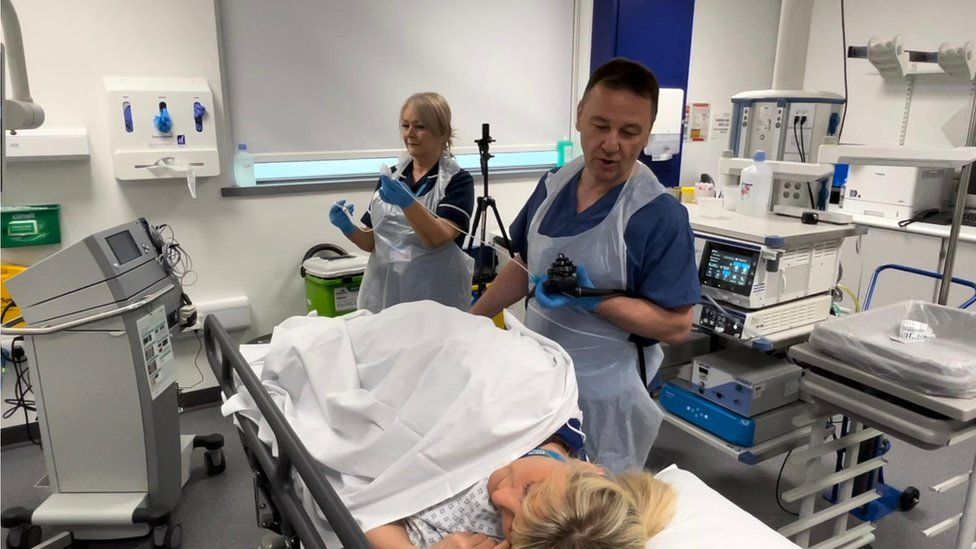
Published3 days agoShareclose panelShare pageCopy linkAbout sharingA woman who was part of a study using artificial intelligence (AI) to detect bowel cancer is free of the disease after it was found and removed.Jean Tyler, 75, from South Shields, took part in a study called Colo-Detect as part of a trial at 10 NHS Trusts.In the trial the AI flags up tissue potentially of concern to the medic carrying out the colonoscopy, which could be missed by the human eye.About 2,000 patients from 10 NHS trusts have been recruited for the trial.The AI detected a number of polyps and an area of cancer on Mrs Tyler’s colonoscopy about a year ago after she agreed to be part of the trial.She then underwent surgery at South Tyneside District Hospital and has since recovered.’Well looked after'”I had fantastic support, it was unbelievable,” she said.”I had about seven or eight visits last year and I was so well looked after.”I always say yes to these research projects because I know that they can make things a lot better for everybody.”Gastroenterology consultant Professor Colin Rees, based at Newcastle University, led the study alongside a team of colleagues working in South Tyneside and Sunderland NHS Trust.The trial also includes North Tees and Hartlepool NHS Foundation Trust, South Tees NHS Foundation Trust, Northumbria NHS Foundation Trust and Newcastle Upon Tyne Hospitals NHS Foundation Trust.Professor Rees described it as “world-leading” in improving detection, adding AI was likely to become “a major tool used by medicine in the coming years”.The findings will studied to see how it can help save lives from bowel cancer – the second biggest killer cancer, claiming around 16,800 lives a year in the UK. The results are expected to be published in the autumn.Follow BBC North East & Cumbria on Twitter, Facebook and Instagram. Send your story ideas to northeastandcumbria@bbc.co.uk.More on this storyDeborah James: ‘Don’t leave things unsaid’11 AprilBowel cancer: How to check your poo29 June 2022Tech Tent: Can AI revolutionise health?20 September 2019NHS to set up national artificial intelligence lab8 August 2019Related Internet LinksBowel cancer – NHSCOLO-SPEED – OverviewThe BBC is not responsible for the content of external sites.

Read more →

The Drug in ‘Tranq Dope’ Is Great for Horses but Horrific for Humans

Drug dealers are mixing xylazine, an animal tranquilizer relied on by veterinarians, into fentanyl, with deadly results. But controlling it is tricky.Penny, a 3-year-old sorrel mare with a white blaze, had been slobbering her feed and fighting her bit, signs of a likely toothache. An exam confirmed that she needed two wolf teeth extracted and the sharp edges of some molars ground down, procedures that required propping her jaws open with a speculum.To protect Penny from pain, and protect himself from the kick of a horse who outweighed him tenfold, Boyd Spratling, Penny’s veterinarian, gave her a shot of xylazine, a common animal tranquilizer. Within moments, her long neck drooped and her eyelids fluttered at half-mast. Forty-five minutes later, dental surgery done, Penny sauntered out of the clinic in rural Nevada and into her trailer.To Dr. Spratling, xylazine is a vital analgesic and sedative, which he also occasionally uses in cattle, for procedures like C-sections in cows and penile injury repairs in bulls. It’s a staple for zoo veterinarians, too. But in the last few years, the drug has also turned into something else: a cheap, addictive adulterant to illicit fentanyl that is contributing to the rise in overdose deaths around the country. The xylazine-fentanyl combo, known in the drug trade as “tranq dope,” is a life-threatening mix that depresses breathing, heart rate and blood pressure, and can cause blackened, chemical burn-like flesh wounds that can lead to amputation.In a xylazine alert in March, the Drug Enforcement Administration said that in 2022, it had detected the drug in nearly a quarter of the confiscated fentanyl samples in 48 states.Last week, the White House’s Office of National Drug Control Policy designated the drug mix as an “emerging drug threat,” a classification that requires the office to devise a governmentwide intervention plan. But addressing the threat is proving to be a tricky balancing act involving stakeholders in areas as disparate as addiction medicine, commercial livestock and law enforcement. The challenge is to walk a careful line by managing a drug that is essential for veterinarians but is fueling a public health crisis.Law enforcement agents are pressing for xylazine to be listed as a controlled substance, which would criminalize distribution for human use. Currently, the police can’t arrest a person for sales or distribution of xylazine. Their resources to track down its production are modest. A controlled-substance designation would make a crucial difference, law enforcement officials said.But veterinarians fear that if that happened, their access to the medicine would be heavily regulated. They would have to maintain separate logbooks for federal inspection. More worrisome: Production of a classified drug would require additional quality control and security measures so costly that a manufacturer could raise the drug’s price or just stop making it altogether.“When we first starting seeing on the news that xylazine was being mixed with fentanyl, we were horrified,” said Dr. Spratling, who keeps his xylazine in a double-locked container.But, he added, “let’s not shoot from the hip because then the people who really pay the price, regulatory-wise, are the ones who have been using it in a responsible manner all along.”Some addiction medicine specialists and harm reduction groups have different worries. They fear that new tough restrictions could set off a domino effect of the sort that contributed to the fentanyl crisis, including criminal charges against people with substance use disorders.Dr. Spratling gave a dose of xylazine to a horse before setting to work to clean out a puncture wound.Kim Raff for The New York TimesAuthorizing a drug to be listed as a federal controlled substance can be done either by Congress or jointly by the Food and Drug Administration and the D.E.A.A state can also list the drug. On Tuesday, Gov. Josh Shapiro of Pennsylvania, where the Philadelphia neighborhood of Kensington is ground zero for tranq dope, announced that his administration was doing so.A spokesman for the governor, Manuel Bonder, said Mr. Shapiro had decided to move ahead with the designation “rather than wait for any future possibilities in D.C.”Xylazine was approved by the F.D.A. for veterinary procedures in 1972. Since then, it has been used for procedures on sheep, deer, elk and even cats and dogs, as well as on horses and cattle. Earlier trials in humans had been shut down because the drug led to respiratory depression, so manufacturers never sought approval for human use. Until now, there has been insufficient incentive to research its impact on people. Its causal relationship to the flesh wounds that can result from its use is not understood. And unlike the protocols for opioids, those for reversing tranq dope withdrawal or managing rehabilitation have not been standardized.Last month, a bipartisan bill introduced in both chambers of Congress by members from rural states — including Nevada, Iowa, New Hampshire, California, Florida, Texas and Colorado — offered a compromise. Rather than listing xylazine as a controlled substance, the bill proposes that a person who employs it for “illicit” purposes — sales or distribution for human use — would face the same penalties as if it were listed as a Schedule III drug, including fines up to $500,000 and a first-offense sentence of up to 10 years in prison.Controlled substances are classified according to medical need and potential for abuse and addiction. Schedule III includes buprenorphine, the medication used to treat opioid use disorder. By comparison, Schedule I includes heroin and L.S.D. Schedule II includes oxycodone and fentanyl, which can be prescribed for pain.Legislators said this path represented a hard-fought middle ground for bipartisan buy-in and, they hope, a fast track to passage.“We need to make sure that we make it illegal for human use because of the devastating impact we see, but I also know, working with cattlemen and the ranchers in my state, that they need to be able to treat their horses and large animals with this drug,” said Sen. Catherine Cortez Masto, a Nevada Democrat, who introduced the bill with Sen. Chuck Grassley, an Iowa Republican, and Sen. Maggie Hassan, a New Hampshire Democrat.Their bill has been endorsed by veterinary, rancher and police associations. If enacted, it would require manufacturers to enhance xylazine record-keeping and send tracking reports to a D.E.A. database. Law enforcement agents could pursue dealers.But it exempts the legal use of xylazine for “administration to nonhuman species.” With that carve out, veterinarians would not face the restrictions of a controlled substance.Outreach workers attended to a man who they believed had just injected tranq dope, in the Kensington section of Philadelphia.Hilary Swift for The New York TimesTypically, domestic, veterinary-grade xylazine comes as liquid in a vial while bulk xylazine shows up as a cheaper powder, possibly imported. The F.D.A. already announced it was ramping up surveillance of imported xylazine.Beau Kilmer, the co-director of the RAND Drug Policy Research Center, said, “It’s important to know where xylazine is being mixed. The D.E.A. reports finding empty xylazine bottles at U.S. stash houses, so some mixing is happening here, but does mixing in the U.S. account for the majority or minority of cases?” But at this stage, he said, it was unclear what impact scheduling would actually have on human consumption and health.Many harm reduction groups and drug policy experts question the long-term efficacy of scheduling xylazine.The recent history of efforts to tighten controls on prescription painkillers highlights some of their concerns. As federal and state agencies imposed strict controls on prescription opioids, drug dealers and people who use drugs shifted to using illegal opioids — heroin, counterfeit pills and illicit fentanyl. Many people arrested as sellers are themselves dependent on those drugs.Maritza Perez Medina, the federal affairs director of the Drug Policy Alliance, a nonprofit harm reduction organization, said she worried that criminalizing xylazine would not substantially address its problems. “Simply put: Crackdowns put us in a game of whack-a-mole. When we try to eradicate one drug, a new one comes up.”Xylazine began appearing sporadically as an addictive substitute for heroin in the 2000s: In 2011, a study observed that people in farming areas of Puerto Rico were injecting horse anesthesia and developing serious lesions.Around 2006, the drug was found in Kensington, the Philadelphia neighborhood, which has a substantial Puerto Rican population. Its use there began escalating around 2018, after which it spread throughout the Northeast, following the path of fentanyl.Addiction medicine experts said their chief concern was abating the health dangers created by xylazine. They urged that newly introduced xylazine test strips, which people can use to check the drugs they buy, be as widely distributed as fentanyl test strips.But Dr. Joseph D’Orazio, the head of medical toxicology and addiction medicine at Temple University Hospital in Philadelphia, which has treated hundreds of patients for the effects of tranq dope, says that street drugs are mixed with so many different additives that even test strips fall short of what is needed to save lives.He said the immediate focus should be on developing better treatments to manage acute withdrawal from xylazine. “So many patients avoid or abandon treatment because our current medications are not adequate to combat the dose of fentanyl and xylazine found on the street.”For his part, Dr. Spratling remains aghast at the wildfire that xylazine has become. “I’ve been using xylazine for 45 years, and I’ve never seen the skin ulcerations and lesions on a horse that people are getting. It’s terrible. I’m dumbfounded,” he said.Penny, the young mare, not only sprang back from her xylazine shot but also quickly recovered from her dental surgery. Her spirits and mouth healed, she performed well a few weeks ago at a local county stock horse competition.But Dr. Spratling, who uses xylazine at least a half-dozen times a week for procedures, is uneasy. He said that if the government were to regulate the drug for him and his colleagues, many veterinarians would have a simple response. “They’ll just stop using it,” he said.Kim Raff for The New York Times

Read more →

Researchers reveal a map to study novel form of cell-to-cell communication

An international team led by researchers at Baylor College of Medicine with the National Institutes of Health Extracellular RNA Communication Consortium and the Bogdan Mateescu laboratory at the ETH Zürich and University of Zürich has developed a new powerful resource to study extracellular RNA (exRNA), a novel form of cell-to-cell communication. The study, published in the journal Cell Genomics, lays the foundation to examine how exRNA and its carrier proteins found in bodily fluids function in a healthy as well as a diseased setting, potentially providing a means to accurately implement early detection and monitor disease processes.
“Ribonucleic acid or RNA is one type of genetic material that is present inside all living cells. It is mostly known to act as a messenger carrying instructions encoded in the DNA for the synthesis of proteins,” said co-corresponding author, Dr. Aleksandar Milosavljevic, professor and Henry and Emma Meyer Chair in Molecular Genetics at Baylor. He also is the director of the Graduate Program in Quantitative & Computational Biosciences and a member of the Dan L Duncan Comprehensive Cancer Center at Baylor. The Milosavljevic Lab is the host of the exRNA Atlas, the data management and resource repository of the Extracellular RNA Communication Consortium, an NIH Common Fund project exploring the biology of exRNA.
In recent years research has shown that RNA not only exists inside cells, but also is exported from cells as extracellular RNA and plays a role in cell-to-cell communication.
“ExRNAs exist in bodily fluids outside of cells where they can associate with a variety of carriers including RNA binding proteins (RBPs), but the cargo and distribution of RBPs across biofluids is largely unknown,” said coauthor Robert Fullem, a graduate student in the Milosavljevic lab. “Our goal in this study was to fill that gap. This major gap in knowledge limited our understanding of the role of RBPs as carriers of exRNA in human bodily fluids. Our findings open a new road toward understanding exRNA biology and provide new opportunities for the development of exRBP/exRNA liquid biopsy biomarkers.”
The researchers applied computational analyses to identify exRBPs in plasma, serum, saliva, urine and cerebrospinal fluid. The computational predictions were validated experimentally at about 80% in both plasma and cell cultures in the lab, suggesting high specificity for the computational method.
“With this information, we developed a map of candidate exRBPs and their exRNA cargo in bodily fluids expanding the landscape of potential biomarkers that can now be studied in liquid biopsies and used to track normal and disease processes,” Milosavljevic said. “We present this map as a resource available at no cost to the scientific community.”
Other contributors to this work include co-first authors Emily L. LaPlante and Alessandra Stürchler, David Chen, Anne C. Starner, Emmanuel Esquivel, Eric Alsop, Andrew R. Jackson, Ionita Ghiran, Getulio Pereira, Joel Rozowsky, Justin Chang, Mark Gerstein, Roger P. Alexander, Matthew E. Roth, Jeffrey Franklin, Robert Coffey, Robert L. Raffai, Isabelle M. Mansuy, Stavros Stavrakis, Andrew deMello, Louise C. Laurent, Yi-Ting Wang, Chia-Feng Tsai, Tao Liu, Jennifer Jones, Kendall Van Keuren-Jensen and Eric Van Nostrand. 
This publication was supported in part by the NIH Common Fund (1UG3TR002881-01, 1U54DA036134-01,1U54DA049098-01, 1U54DA049098-01S1, 1UH3TR002881, OT2OD030547-01S1 and 5UG3TR002881-02). Further support was provided by CPRIT Scholar in Cancer Research grants RR200040, 4UH3CA241703-03, and a Swiss National Center of Competence (NCCR) in Research RNA & Disease grant.

Read more →

British Man Died of Rare Blood Syndrome Linked to AstraZeneca’s Vaccine

One expert said the blood-clotting syndrome was estimated to occur in one in 50,000 people under 40 and one in 100,000 over 40 who received AstraZeneca’s vaccine.A 32-year-old psychologist in Britain developed blood clots and died 10 days after he took his first dose of AstraZeneca’s Covid vaccine, a report released by a London coroner on Wednesday found, in a highly rare case of a fatal reaction to the vaccine.The inquest, which was requested by Charlotte Wright, the widow of Dr. Stephen Wright, found that he died on Jan. 26, 2021, as a result of “unintended consequences of vaccination.” Ms. Wright is suing AstraZeneca.According to the report, Dr. Wright, of Kent, England, had a stroke and bleeding in the brain, as well as vaccine-induced thrombosis, or blood clots, and thrombocytopenia, a condition that occurs when the platelet level in the blood is abnormally low.Since 2021, researchers have cited rare cases in which people have developed the blood-clotting syndrome known as TTS after receiving the Johnson & Johnson or AstraZeneca Covid vaccines, which are similar. The cases typically occur within weeks of vaccination.Experts still strongly recommend vaccination, saying that although vaccines are associated with certain rare side effects, those risks are dwarfed by the risks of the coronavirus itself.“It’s really quite rare and, at the end of the day, you need to consider the risks versus the benefits with anything you do,” said Daniel Salmon, director of the Institute for Vaccine Safety at Johns Hopkins Bloomberg School of Public Health. “And when you look at the vaccines, they’re very safe and very effective.”He added: “Nothing is risk-free. And if you choose not to get the vaccine, then you’re at greater risk for getting the disease and serious consequences.”Researchers have estimated that coronavirus vaccines have saved millions of lives, including an estimated 507,000 in the United Kingdom in the first year they were administered.Dr. Beverley Hunt, a thrombosis expert in London, said that the blood-clotting syndrome was a “very rare event” following the use of the AstraZeneca vaccine, estimated to occur in one in 50,000 people under 40 and one in 100,000 over 40. Dr. Adam Finn, a professor of pediatrics at the University of Bristol, said that very approximate figures suggest that about 50 million doses of the AstraZeneca vaccine have been given in the United Kingdom, with about 200 cases and 40 deaths linked to the blood-clotting syndrome.Britain curbed the use of AstraZeneca’s vaccine for people under 30 in April 2021, citing the risk of rare blood clots.In the United States, the Food and Drug Administration limited the use of Johnson & Johnson’s vaccine in May 2022 to adults who cannot or who refuse to get the Pfizer-BioNTech or Moderna vaccines, also citing the risk of rare blood clots. AstraZeneca’s Covid vaccine has not been approved for use in the United States, and last year the company withdrew its application for F.D.A. approval.In Australia, the country’s Department of Health and Aged Care described TTS as a rare syndrome that had occurred in around two to three people per 100,000 who had been given the AstraZeneca vaccine.Symptoms — including severe, persistent headache and blurred vision — typically occur between four and 42 days after a first dose of the AstraZeneca vaccine, the department said.Australia stopped the use of AstraZeneca’s vaccine last month, saying newer vaccines better targeted current strains of the virus.In an analysis released last month of immunization and death records in Britain, researchers found that young women who received at least one dose of AstraZeneca’s vaccine might have been more likely to die of a heart problem in the 12 weeks after their vaccination.The researchers did not find a significantly elevated risk of death in any other subgroup or with the Pfizer-BioNTech vaccine, which was also widely used in Britain. And the study did not prove that the vaccines caused the deaths.Andrew Harris, a senior coroner who presented the results of Dr. Wright’s inquest at London Inner South Coroner’s Court on Wednesday, described Dr. Wright’s death as a “very unusual and deeply tragic case,” the BBC reported.The inquest found that Dr. Wright was a “fit and healthy man” who received his first dose of the AstraZeneca vaccine on Jan. 16, 2021. He awoke with a headache on Jan. 25, 2021, and later developed left arm numbness, the inquest found.He went to a hospital emergency room just after midnight and was found to have high blood pressure and sagittal sinus venous thrombosis. He was transferred to another hospital at about 6:30 a.m. but was unfit for surgery because of bleeding and a very low platelet level. He died at 6:33 p.m.Ms. Wright said in a message on Instagram that she had asked for the inquest so that she could change her husband’s death certificate, which said he had died of “natural causes,” including a stroke. She said she wanted it to list the vaccine-induced blood syndrome as his cause of death.“The inquest yesterday confirmed this change, over 2 years later,” Ms. Wright said.Ms. Wright also said the inquest “allows us to be able to continue our litigation against AstraZeneca. This is the written proof,” the BBC reported.Mr. Harris told the court that it was “very important to record as fact that it is the AstraZeneca vaccine — but that is different from blaming AstraZeneca,” the BBC reported.Ms. Wright, who has described herself as a “vaccine widow,” indicated that she was not opposed to vaccines in general. “I think they should be given with appropriate informed consent,” she said.AstraZeneca, which has named its vaccine Vaxzevria, said in a statement: “We are very saddened by Stephen Wright’s death and extend our deepest sympathies to his family for their loss.” The statement said that patient safety was the company’s highest priority.“From the body of evidence in clinical trials and real-world data, Vaxzevria has continuously been shown to have an acceptable safety profile and regulators around the world consistently state that the benefits of vaccination outweigh the risks of extremely rare potential side effects,” the statement said.Derrick Bryson Taylor

Read more →