Chinese Censorship Is Quietly Rewriting the Covid-19 Story

Under government pressure, Chinese scientists have retracted studies and withheld or deleted data. The censorship has stymied efforts to understand the virus.Early in 2020, on the same day that a frightening new illness officially got the name Covid-19, a team of scientists from the United States and China released critical data showing how quickly the virus was spreading, and who was dying.The study was cited in health warnings around the world and appeared to be a model of international collaboration in a moment of crisis.Within days, though, the researchers quietly withdrew the paper, which was replaced online by a message telling scientists not to cite it. A few observers took note of the peculiar move, but the whole episode quickly faded amid the frenzy of the coronavirus pandemic.What is now clear is that the study was not removed because of faulty research. Instead, it was withdrawn at the direction of Chinese health officials amid a crackdown on science. That effort kicked up a cloud of dust around the dates of early Covid cases, like those reported in the study.“It was so hard to get any information out of China,” said one of the authors, Ira Longini, of the University of Florida, who described the back story of the removal publicly for the first time in a recent interview. “There was so much covered up, and so much hidden.”That the Chinese government muzzled scientists, hindered international investigations and censored online discussion of the pandemic is well documented. But Beijing’s stranglehold on information goes far deeper than even many pandemic researchers are aware of. Its censorship campaign has targeted international journals and scientific databases, shaking the foundations of shared scientific knowledge, a New York Times investigation found.Under pressure from their government, Chinese scientists have withheld data, withdrawn genetic sequences from public databases and altered crucial details in journal submissions. Western journal editors enabled those efforts by agreeing to those edits or withdrawing papers for murky reasons, a review by The Times of over a dozen retracted papers found.Groups including the World Health Organization have given credence to muddled data and inaccurate timelines.Checking on a man who collapsed near a hospital in Wuhan in January 2020. The chaotic early weeks of the pandemic are a focus for Chinese censors.Hector Retamal/Agence France-Presse — Getty ImagesThis scientific censorship has not universally succeeded: The original version of the February 2020 paper, for example, can still be found online with some digging. But the campaign starved doctors and policymakers of critical information about the virus at the moment the world needed it most. It bred mistrust of science in Europe and the United States, as health officials cited papers from China that were then retracted.The crackdown continues to breed misinformation today and has hindered efforts to determine the origins of the virus.Such censorship spilled into public view recently, when an international group of scientists discovered genetic sequence data that Chinese researchers had collected from a Wuhan market in January 2020 but withheld from foreign experts for three years — a delay that global health officials called “inexcusable.”The sequences showed that raccoon dogs, a fox-like animal, had deposited genetic signatures in the same place that genetic material from the virus was left, a finding consistent with a scenario in which the virus spread to people from illegally traded market animals.The Chinese Embassy in Washington did not respond to requests for comment. At a news conference this month, scientists from the Chinese Center for Disease Control and Prevention called such criticism “intolerable.”It is impossible to ascribe a single motive to the crackdown. Beijing controls and shapes information as a matter of course, particularly in moments of crisis. But some of the censorship changed the timeline of early infections, a delicate topic as the government faced criticism over whether it responded to the outbreak quickly enough.There is no evidence that the censorship is designed to conceal a specific scenario for the origins of the pandemic. Some scientists believe that Covid-19 spread naturally from animals to humans. Others argue that it may have spread from a Chinese laboratory. Both sides have pointed to censored data to support their theories.Outside the Wuhan Institute of Virology while a World Health Organization team was visiting in February 2021. The agency’s relationship with China has drawn criticism. Ng Han Guan/Associated PressBut they have come to agree on one point: The Chinese government’s grip on science has stifled the search for truth.“I think there’s a major political agenda that is impacting the science,” said Edward Holmes, a University of Sydney biologist who was part of the group that analyzed the sequences containing raccoon dog DNA.Soon after the group alerted Chinese researchers to their findings, the genetic sequences temporarily disappeared from a global database. “It’s just pathetic that we’re in this stage where we’re having cloak-and-dagger conversations about deleted data,” Dr. Holmes said.Ever-Changing DatesFor a brief moment, the coronavirus appeared to challenge China’s notoriously tough hold on information. On Feb. 6, 2020, when averting a pandemic still seemed possible, the Chinese internet lit up with the death of Li Wenliang, a Wuhan doctor who had been punished for warning about the outbreak before falling ill himself.Anger boiled over. People sensed that officials had withheld lifesaving information. Across China, they asked: How many had caught the virus in December? Who had known? Why hadn’t more been done?Around that time, researchers confirmed that the virus had been spreading for weeks from human to human, a fact that Chinese officials had initially dismissed.The Chinese government reacted by tightening online censorship and wresting control of research. The censorship was piecemeal at first. The Ministry of Science and Technology told scientists to prioritize handling the outbreak, not publishing papers. One European scientist recalled his Chinese collaborators asking him to sign a nondisclosure agreement promising not to share data — on research that had already been published.Soon, Chinese researchers were asking journals to retract their work. Journals can withdraw papers for a number of legitimate reasons, like flawed data. But a review of more than a dozen retracted papers from China shows a pattern of revising or suppressing research on early cases, conditions for medical workers and how widely the virus had spread — topics that could make the government look bad. The retracted papers reviewed by The Times had been flagged by Retraction Watch, a group that tracks withdrawn research.Among them were a study that included infected children in southern China; a survey of depression and anxiety among Chinese medical workers who had been treating Covid-19 patients; and even a letter published in The Lancet Global Health by two nurses who described the desperation they felt while working in hospitals in Wuhan.“Even experienced nurses may also cry,” they wrote.Journals are typically slow to retract papers, even when they are shown to be fraudulent or unethical. But in China, the calculus is different, said Ivan Oransky, a founder of Retraction Watch. Journals that want to sell subscriptions in China or publish Chinese research often bend to the government’s demands. “Scientific publishers have really gone out of their way to placate the censorship requests,” he said.As the virus spread, China formalized its controls. A government task force was put in charge of all coronavirus research. Officials in the eastern province of Zhejiang discussed “strengthening the management” of scientific results, records show.Then on March 9, scientists from top Chinese laboratories published a paper about how the coronavirus might be mutating. The research appeared in Clinical Infectious Diseases, a prestigious journal published by Oxford University Press.The topic was seemingly apolitical, but it relied on samples collected from patients in Wuhan starting in mid-December 2019. That added to evidence that the virus was spreading widely before the Chinese government took action.In a hospital in Wuhan in January 2020. A letter about the stress of nursing in Wuhan was pulled from a scientific journal.Hector Retamal/Agence France-Presse — Getty ImagesThe paper landed just as the government formalized its censorship policy. The following day, China’s Ministry of Education ordered universities to submit research topics to the government task force for approval, according to a directive posted on a university’s website.Those who did not vet their scientific projects or who caused “serious adverse social impacts” would be punished, the directive said.The move sent a chill through Chinese science. Schools tightened restrictions on faculty media interviews and instructed professors to comply with the directive, university notices show.The journal retractions continued, and for unusual reasons.One group of authors noted that “our data is not perfect enough.” Another warned that its paper “cannot be used as the basis for the origin and evolution of SARS-CoV-2.” A third said its findings were “incomplete and not ready for publication.” Several scientists promised in retraction notices to update their findings but never did.Because Chinese scientists have been muzzled, it is difficult to neatly distinguish between censored papers and those retracted for legitimate scientific reasons.The censorship helped the government tell a story.“China emerged from the pandemic as an early winner,” said Yanzhong Huang, a global health expert at Seton Hall University. “They started to present a new narrative on the outbreak, in terms of not just the origin, but also in terms of the government’s role in responding to the pandemic.”Two months after posting the paper on coronavirus mutations, Clinical Infectious Diseases published an update. The new version said that the Wuhan samples were not collected in December after all, but weeks later, in January.The paper’s corresponding author, Li Mingkun of the Beijing Institute of Genomics, did not respond to requests for comment.After Jesse Bloom of the Fred Hutchinson Cancer Center in Seattle tweeted about the discrepancy, the journal’s editors posted a third version of the paper, adding yet another timeline. This revision says the samples were collected between Dec. 30 and Jan. 1.A correction merely says that the previous dates had been “unclear.”In an email to The Times, the journal editors said the correction was “the most appropriate approach to clarify the scientific record.”An Origin MysteryChinese scientists ignored requests for years to release information about swabs taken from surfaces at the Wuhan market. That refusal has hindered efforts to determine how the pandemic began.Dr. Holmes, the University of Sydney biologist, said that as far back as two years ago, he stressed to Chinese researchers the importance of those samples. He even sent them a raccoon dog genome sequence, hoping they would compare it with samples from the market. The researchers did not make the data public until this year.The World Health Organization, the supposed repository for reliable information about the virus, has only added to confusion about the pandemic’s origins. After errors were found in a major March 2021 report from the organization and China, an agency spokesman, Tarik Jasarevic, promised that officials would correct the mistakes.Two years later, they have not. The flawed report remains online, painting an inaccurate timeline of the earliest known cases. Mr. Jasarevic now refers questions about the report to the scientists who prepared it.“That’s a deep and in many ways unforgivable mystery, when the data were demonstrated to be false,” said Lawrence Gostin, the faculty director of Georgetown University’s O’Neill Institute for National and Global Health Law and a longtime W.H.O. adviser. “It either shows that W.H.O. wasn’t insistent enough with China, or that China simply didn’t cooperate.”Some scientists have become similarly suspicious that China’s censorship has affected the genetic databases that underpin worldwide research.Dr. Bloom, the Seattle evolutionary virologist, was poring over tables in a scientific paper in June 2021 when he discovered that dozens of gene sequences had been deleted from the Sequence Read Archive, a U.S. government database. The sequences, from early 2020, had been submitted by scientists from Wuhan University. But they had curiously vanished.The U.S. government’s National Library of Medicine, which manages the database, said at the time that the Wuhan researchers had asked that the sequences be withdrawn — and implied that it was the only instance during the pandemic in which data was removed at the request of scientists in China.But a March 2022 review by an outside consultant showed that the scientists withdrew another, unrelated sequence on the same day. After Dr. Bloom published a paper about the deleted Wuhan University sequences, they reappeared online — but most had been moved to a database affiliated with the Chinese government.This controversy and the recent dust-up over the discovered-then-deleted-then-recovered raccoon dog DNA from a separate database have prompted calls for transparency from these genetic archives.A building of Wuhan University in 2020. Chinese scientists have been urged to publish at home, rather than in international journals.Roman Pilipey/EPA, via ShutterstockVirginie Courtier-Orgogozo, an evolutionary biologist at the French National Center for Scientific Research, said all pandemic-related sequences should be released to global health experts, particularly from early samples. “Among people who were sick in December, we have less than 20 sequences,” she said. (The National Library of Medicine said that sharing withdrawn data was against its policy.)The Chinese government’s grip on science continues.The laboratory of a Chinese scientist who studies the wildlife trade was recently shuttered while the authorities investigated unfounded concerns that its research related to the origins of the pandemic, according to a scientist outside China who collaborated on the work.On April 1, Beijing limited foreign access to the China National Knowledge Infrastructure, an academic portal, curtailing insight into research there. Leaders have urged Chinese scientists to publish in domestic journals rather than international publications.And this month, Chinese government scientists said it was time to start investigating outside China for the virus’s origins.It was a nod to the widely refuted claim that the pandemic began somewhere else.Vivian Wang

Read more →

Sacklers Gave Millions to Institution That Advises on Opioid Policy

Even as the nation’s drug crisis mounted, the National Academies of Sciences, Engineering and Medicine continued to accept funds from some members of the Sackler family, including those involved with Purdue Pharma.For the past decade, the White House and Congress have relied on the National Academies of Sciences, Engineering and Medicine, a renowned advisory group, to help shape the federal response to the opioid crisis, whether by convening expert panels or delivering policy recommendations and reports.Yet officials with the National Academies have kept quiet about one thing: their decision to accept roughly $19 million in donations from members of the Sackler family, the owners of Purdue Pharma, the maker of the drug OxyContin that is notorious for fueling the opioid epidemic.The opioid crisis has led to hundreds of thousands of overdose deaths, spawned lawsuits and forced other institutions to publicly distance themselves from Sackler money or to acknowledge potential conflicts of interest from ties to Purdue Pharma. The National Academies has largely avoided such scrutiny as it continues to advise the government on painkillers.“I didn’t know they were taking private money,” Michael Von Korff, a prominent pain care researcher, said. “It sounds like insanity to take money from principals of drug companies and then do reports related to opioids. I am really shocked.”Unlike the World Health Organization, which was accused of being manipulated by Purdue and later retracted two opioid policy reports, the National Academies has not conducted a public review to determine if the Sackler donations influenced its policymaking, despite issuing two major reports that influenced national opioid policy.One of those reports, released in 2011 and now largely discredited, claimed that 100 million Americans suffered from chronic pain — an estimate that proved to be highly inflated. Still, it gave drugmakers another talking point for aggressive sales campaigns, primed doctors to prescribe opioids at an accelerating rate and influenced the Food and Drug Administration to approve at least one highly potent opioid.Another problem arose in 2016, months after the National Academies received a $10 million Sackler family donation. The F.D.A. had tapped the institution to form a committee to issue new recommendations on opioids. But one senator took exception to some of the members selected by the Academies, complaining they had “substantial ties” to opioid makers, including Purdue. Before work began, four people were removed from the panel.The headquarters of Purdue Pharma in Stamford, Conn., in 2018.George Etheredge for The New York TimesThe National Academies is a nongovernmental institution, chartered by Abraham Lincoln in 1863, to serve as an independent adviser to the nation on science and medicine. Members of the Academies are elected each year — a career-capping honor for scientists and doctors.In recent years, though, the advisory group has come under criticism for lapses over disclosing conflicts of interest in reports on biotechnology, genetically modified food and pharmaceutical pricing. Lisa Bero, chief scientist at the University of Colorado Center for Bioethics and Humanities, said the group’s longtime failure to disclose financial ties between committee members and industry placed the Academies in the “dark ages” of research integrity.Accepting millions of dollars from the Sackler family while advising the federal government on pain policy “would be considered a conflict of interest under almost any conflict-of-interest policy I’ve ever seen,” Dr. Bero said.Lawmakers and others have issued investigations into the business practices of members of the Sackler family and lavish spending by Purdue that amplified the voices of doctors and medical organizations wanting more opioid prescriptions despite soaring overdose deaths.Yet aside from an article in a medical journal in 2019, the National Academies has not drawn public attention. After internal meetings, it quietly removed the Sackler name from the conferences and awards the family once helped sponsor.Megan Lowry, a spokeswoman for the National Academies, said in a statement that the Sackler donations “were never used to support any advisory activities on the use of opioids or on efforts to counter the opioid crisis.” Ms. Lowry added that the organization had been prevented from returning the Sackler money because of legal restrictions and “donor unwillingness to accept returned funds.” The Academies declined to make senior officials available for interviews.The Sackler donations emerged as an internal issue for the advisory group in 2019, when members of the governing council were briefed about the money. Sylvester Gates, known as Jim, a prominent Brown University physicist on the council, said members were “outraged” and wanted to ensure the funds did not influence the work of the Academies. But returning the money, Dr. Gates said, “was more complicated than the string theory I studied.”The Lincoln SocietyRaymond and Beverly Sackler in 2004. The family branch’s donations to the National Academies began in 2008.Taco van der Eb/Hollandse Hoogte, via Redux PicturesThe National Academies receives 70 percent of its budget from federal funding, with the remainder from its endowment and private donors, including corporations that sell fossil fuels, chemicals and myriad prescription drugs. Members of the Sackler family who were among the most heavily involved in running Purdue Pharma made their first donations to the National Academies in 2008, when Dr. Raymond Sackler, and his wife, Beverly Sackler, and the couple’s foundation, started contributing, according to Academy treasurer reports. Dr. and Ms. Sackler died in 2017 and 2019, respectively.Daniel S. Connolly, a lawyer for the Raymond and Beverly Sackler branch of the family, said the couple gave $13.1 million, which differs slightly from the $14 million listed in the National Academies treasurer reports. The donations were intended to support the National Academy of Sciences “in ways that are clearly described publicly as having nothing at all to do with pain, medications or anything related to the company,” Mr. Connolly said.The reports from the National Academies treasurer describe science-related events, prizes and studies supported by Raymond and Beverly Sackler. Donations from Dame Jillian Sackler, whose husband, Arthur, died years before OxyContin arrived on the market, began in 2000 in amounts that by 2017 reached $5 million, reports show. Those donations funded a series of scientific meetings, the treasurer reports say. The gifts qualified the Sackler donors for the institution’s Lincoln Society, consisting of top givers who enhance the Academies’ “impact as advisers to the nation,” according to the 2021 treasurer report. The Academies invested the funds, which grew to more than $31 million by the end of 2021, the most recent accounting available.A Flawed ReportA worker removed the Sackler name from the Tufts Medical Center campus in Boston in 2019.Cody O’Loughlin for The New York TimesAs the Sackler donations grew, a Purdue Pharma lobbyist was trying to make inroads with the Academies, according to records released in lawsuits against opioid makers. The Pain Care Forum, a group co-founded by Burt Rosen, the Purdue lobbyist, pushed for legislation introduced in 2007 and 2009 that included calling for a National Academies report to “increase the recognition of pain as a significant public health problem.”Soon after the measure passed in a 2010 law, Mr. Rosen convened the Pain Care Forum at a 10 p.m. gathering to focus on “meetings with the Institute of Medicine,” the former name for the National Academy of Medicine, and for “membership on I.O.M. Committee.”At the same time, the National Academies was forming the committee that would produce its 2011 opioids report, which included the estimate that about 100 million or 42 percent of American adults were in pain, a figure that other researchers later found to be significantly inflated. The report described chronic pain that limited function and cost the nation billions of dollars in lost salary and wages. Later estimates from the Centers for Disease Control and Prevention defined chronic pain by different categories of severity, saying the condition affects 7 percent to 21 percent of Americans.The report did not disclose any conflicts of interest for committee members nor did it disclose the Sackler funds. A spokeswoman for the National Academies said it did not release members’ conflict statements.But among the panelists chosen, Dr. Richard Payne was president of the American Pain Society, a physicians group, in 2003 and 2004, which at the time drew more than $900,000 from Purdue. Dr. Payne died in 2019.Another panelist, Myra Christopher, was swapping emails in 2007 with Purdue staff about “talking points” to respond to a news broadcast critical of opioids, records released in a Senate Finance Committee investigation in 2020 show.At the time that the 2011 report was written, Ms. Christopher was president of the Center for Practical Bioethics, a nonprofit based in Kansas City, Mo. Purdue gave $934,770 to the organization that year. Asked about the funding, John Carney, a former chief executive at the center, sent an opinion article that stated the group’s donors did not dictate any of its work. Ms. Christopher declined to comment.The 2011 report, which allowed pharmaceutical companies to argue that doctors should prescribe more opioids, came out even as the White House announced a very different message — that the nation was facing an opioid addiction crisis.Soon after the National Academies report was issued, Dr. Andrew Kolodny, president of Physicians for Responsible Opioid Prescribing, emailed the institution and asked whether it would disclose that Ms. Christopher’s organization had received funds from Purdue.“No, sorry, can’t do that,” Clyde Behney, an official with the Academies replied in an email in August 2011 reviewed by The New York Times. “Keep in mind that the report is done and released, so the future is more important than the past.”Mr. Behney declined to comment. In a statement, the National Academies said it published an article in JAMA to explain how the committee arrived at the estimate that 100 million Americans were in pain. And the article, by Dr. Victor Dzau, president of the National Academy of Medicine, said that “conflict of interest is not an issue for the authors of the report,” who he said were carefully vetted. The JAMA article made no mention of Sackler family donations.Dr. Dzau later wrote a letter to JAMA clarifying that he should have disclosed — in that article and others — conflicts of his own, including funds he received from Medtronic, which made a device to infuse pain medication.The outsize pain figure was invoked routinely over the years — including in 2012 by Purdue’s own lawyers, who described the figure as evidence of pain that was “untreated or under-treated” in response to a Senate inquiry. Federal officials also highlighted the statistic. In 2014, Dr. Margaret Hamburg, the F.D.A. commissioner at the time, cited the figure of 100 million people “living with severe chronic pain” to explain why the agency approved a controversial and potent opioid called Zohydro.Another Panel QuestionedDr. Robert Califf, the F.D.A. commissioner, in April convened a meeting of experts to review study methods for evaluating long-term use of opioids.Anna Rose Layden for The New York TimesBy 2016, a new set of National Academies committee members would face scrutiny.Opioid overdose deaths were soaring that year and would soon overtake car crashes as the leading cause of death in the United States. Dr. Robert Califf, then the acting commissioner of the F.D.A., was under pressure from Congress to do something.He turned to the National Academies. Citing the 100 million people in pain, Dr. Califf and other top F.D.A. officials wrote in an article in The New England Journal of Medicine that the institution “brings an unbiased and highly respected perspective on these issues that can help us revise our framework.” (Dr. Califf was elected to be a member of the Academies later that year.)Soon after, names were floated to sit on the committee, leading Senator Ron Wyden, a Democrat of Oregon, to raise concerns about “potential conflicts of interest and bias” in a letter to Dr. Dzau, the National Academy of Medicine president. One person’s work, funded by Purdue, used the term “pseudoaddiction” to downplay the lure of opioids, the senator noted.The National Academies then replaced four panelists. The committee’s final report was widely respected and remains a key document for the F.D.A., which said it had consulted a variety of sources to address the drug crisis. Dr. Califf continues to rely on the report, which called for a “fundamental shift” in the nation’s approach to prescribing opioids.Shannon Hatch, an agency spokeswoman, said that the F.D.A. was not aware that the Sackler family donated to the Academies and that the 2017 report speaks for itself.Two members of the panel — Richard Bonnie, chairman of the committee and director of the University of Virginia Institute of Law, Psychiatry and Public Policy, and Dr. Aaron Kesselheim, a Harvard Medical School professor — said they were not aware of the Sackler family donations until asked about it by The Times. “I certainly didn’t feel any influence or pressure or expectations of what we would say from anyone at the National Academies,” Dr. Kesselheim said.Two years after that report was released, The BMJ examined the potential conflicts of Dr. Dzau and of members of yet another Academies committee convened to examine opioid-prescribing guidelines.Since then, the Justice Department announced an $8 billion civil and criminal settlement with Purdue Pharma and a civil settlement with members of the Sackler family. Those Sackler family members agreed to pay $225 million to resolve civil claims, and said they acted “ethically and lawfully.” Members of the family have not faced criminal charges.A bankruptcy plan to reorganize Purdue and resolve thousands of opioid cases was challenged over the Sacklers’ proposed conditions and is under appellate review.Purdue Pharma was asked by The Times to respond to a list of questions about its contacts with the Academies. But Michele Sharp, a Purdue spokeswoman, did not respond directly to any of those issues. Instead, she said the company was focused on its bankruptcy and settlement proceedings. “The settlement would deliver over $10 billion of value for opioid crisis abatement, overdose rescue medicines, and victim compensation,” she said.Institutions that more publicly examined their use of Sackler donations include Tufts University, which released a review of possible conflicts of interest related to pain research education funded by Purdue Pharma. Concerns noted in the report included a senior Purdue executive’s delivering lectures to students each semester.The World Health Organization in 2019 retracted two guidance documents on opioid policy after lawmakers aired concerns about ties to opioid makers, including a Purdue subsidiary, among report authors and funders.Going forward, experts in nonprofit law said the National Academies was in the unusual position of having millions of dollars with no plans for their use.Some universities, including Brown and Tufts, have dedicated their respective funds from the Sacklers to address the prevention or treatment of addiction.Given the devastation of the opioid crisis, Michael West, senior vice president of the New York Council of Nonprofits, said that it would be worth the effort for the Academies to follow their lead.“This would be a way,” he said, “of trying to make it right.”Alain Delaquérière

Read more →

Many States Are Trying to Restrict Gender Treatments for Adults, Too

Missouri has imposed sweeping rules to limit health care for trans adults. Other states have banned Medicaid coverage or introduced bills outlawing care for young adults.Missouri this month became the first state in the country to severely restrict gender treatments for people of all ages, following a series of quieter moves across the country that have been chipping away at transgender adults’ access to medical care.Last year, Florida joined six other states in banning Medicaid from covering some form of gender care for transgender people of all ages. These bans affect an estimated 38,000 beneficiaries of the public insurance program, according to the Williams Institute, a research center at U.C.L.A.’s law school.And in at least five states, Republican legislators have proposed bills that would abolish gender care for minors as well as young adults. Some are attempting to ban it for anyone under 21, and others for those under 26.Missouri’s sweeping new policy took a different approach. Citing consumer protection laws meant to regulate fraud, the state attorney general, Andrew Bailey, issued an emergency rule prohibiting doctors from providing gender treatments to patients — of any age — unless they adhere to a slew of significant restrictions, including 18 months of psychological assessment. The rule also said that patients should not receive gender treatments until any mental health issues are “resolved.”The onerous restrictions amount to a “de facto ban,” said Gillian Branstetter, a communications strategist at the American Civil Liberties Union, whose Missouri chapter announced its intent to file a legal challenge to the rule.“The political situation regarding trans people’s health care was always headed here,” Ms. Branstetter said.The rule excludes people who are currently receiving treatments, so long as they and their doctors “promptly” comply with the psychological assessments and other restrictions.Aro Royston, a 35-year-old transgender man in St. Louis, said he was shocked by the new policy. He said he had been taking testosterone for eight years, with monthly refills prescribed by his doctor. If he could no longer have access to the treatments, he would be “devastated,” he said, and would travel out of state to receive care.“I think what upsets me most is, I’m a functioning member of this society,” said Mr. Royston, a program manager at a U.S. defense contractor. “I’ve worked on defense programs to protect my nation. And my nation can’t protect me?”Missouri’s new policy goes into effect on April 27 and expires in February 2024, when the state legislature will be back in session. (Two bills that would have banned care for minors — and prohibited Medicaid from covering it for all ages — have not advanced in this year’s session.)Andrew Bailey, Missouri’s attorney general, issued the emergency rule prohibiting doctors from providing gender treatments to patients of any age unless they adhere to a slew of significant restrictions.Valerie Plesch/BloombergAlthough Mr. Bailey’s order applies to all ages, his public comments have focused on children, echoing the rhetoric of Republican politicians across the country and in Missouri. “As Attorney General, I will always fight to protect children because gender transition interventions are experimental,” Mr. Bailey said on Twitter.In February, his office launched an investigation of a youth gender clinic at Washington University in St. Louis after a former employee filed a whistle-blower complaint claiming that patients there were rushed into treatment and not given adequate psychological screenings. (The clinic said that it followed the accepted standards of care.)When asked why his order includes adults, Madeline Sieren, a spokeswoman for Mr. Bailey, said, “We have serious concerns about how children are being treated throughout the state, but we believe everyone is entitled to evidence-based medicine and adequate mental health care.”Fourteen other states — Alabama, Arizona, Arkansas, Georgia, Idaho, Indiana, Iowa, Kentucky, Mississippi, South Dakota, Tennessee, Utah and West Virginia and, as of Wednesday, North Dakota — have passed laws restricting gender care for minors.Although there is some debate among medical professionals about which children will benefit from gender-affirming care and when they should begin treatments, several large medical groups in the United States, including the American Academy of Pediatrics, have condemned the legislative bans.For transgender adults, many studies have shown that transition care can improve psychological well-being and quality of life.Terry Schilling, the president of the American Principles Project, a right-wing advocacy group pushing for restrictions on transgender rights, said in an interview earlier this year that focusing on minors had been a short-term political calculation. His organization’s long-term goal, he said, was to eliminate transition care altogether.“I view this whole issue the same as I view lobotomies or eugenics — it’s a bad medical fad,” he said.Mr. Schilling said policies might include outright bans for people of all ages, or bills to make it easier for people to sue medical providers if they regret transitioning. He also raised the possibility of classifying transition care as “consumer fraud” — the same approach put forward by Mr. Bailey — because he contends that it is impossible to change genders.Over many years, seven states — Arizona, Florida, Missouri, Nebraska, South Carolina, Tennessee and Texas — have enacted policies banning Medicaid from covering some type of gender-affirming care. (The federal insurance program for low-income people is partly funded by states, which also have wide latitude to determine eligibility.).State Senator Nathan Dahm of Oklahoma introduced a bill that would withhold Medicaid reimbursement for any procedure or treatment from any health center that offered gender care.Sue Ogrocki/Associated PressThe Medicaid bans are “on shaky legal ground,” said Christy Mallory, legal director of the Williams Institute. Courts in Wisconsin and West Virginia have ruled that such bans violate the Affordable Care Act, which prohibits sex discrimination, as well as other federal rules.But some legislators are introducing broader bills that would prohibit gender-related care at government-owned or operated health centers, or at those that accept state funding.In Oklahoma, for example, a bill introduced this year by State Senator Nathan Dahm would withhold Medicaid reimbursement — for any procedure or treatment — from any health center that offers gender care or works with a provider who offers it.In an interview in January, Mr. Dahm said that his only goal was to stop taxpayer money from covering transition procedures. “If an adult wants to make that decision and pay for it themselves, then they can do so,” he said. He also acknowledged, however, that the policy could spur some health care providers to stop offering care to adults.Over the past few decades, doctors have increasingly removed barriers, such as psychological evaluations, for adults to get hormone treatments, shifting decision-making to patients themselves.“There’s very, very broad consensus that gender-affirming care for adults is appropriate and helpful,” said Erica Anderson, a clinical psychologist and former president of the U.S. Professional Association for Transgender Health.Dr. Anderson, a transgender woman, has publicly voiced concerns about the rising number of adolescents, especially those with complex psychiatric issues, seeking gender-related care. She has also supported the policies of certain European countries, including Sweden and Britain, that have recently limited when children can undergo certain medical treatments.But last month, Dr. Anderson joined hundreds of clinicians in signing a letter that emphasized gender-affirming care is beneficial and important for many transgender children and denounced the legislative bans in the United States. The efforts to extend such restrictions to adults will add significant harm, she said.“The blurring between youth and adult care is ominous,” she said. “It’s an ominous sign of overreach by people who think that the state should decide people’s personal lives.”The Missouri rule has also received pushback among some conservatives in the state. Secretary of State Jay Ashcroft, a Republican who recently announced he was running for governor, told St. Louis public radio that although he supported bans for children, he did not believe the state should restrict care for adults.“I don’t think people should do it,” Mr. Ashcroft said, referring to gender treatments for adults. “But there’s a difference between what I think and where I think the government should be involved.”Maggie Astor

Read more →

They May Be Just Acquaintances. They’re Important to You Anyway.

The people at the dog park, the bank teller, the regular waiter — these casual relationships may be “weak ties,” but they’re also a key to well-being.Victoria Tirondola and Lam Gong first struck up a conversation last spring at the dog run in Brookdale Park in Bloomfield, N.J., when they realized that each owned a dog named Abby. Ms. Tirondola, 65, an insurance sales representative who lives in nearby Cedar Grove, has a tiny bichon-poodle mix. Mr. Gong’s Abby, older and portlier, is a terrier-beagle.They chatted about dogs at first. Then they learned that they both cooked, so “we talked about food and restaurants,” said Mr. Gong, 67, a retiree living in Clifton.“And how much better my cooking is than his,” put in Ms. Tirondola. They were sitting on a bench, as the dogs dashed around on a warm spring afternoon, with a third member of a growing collection of regulars: Pattie Marsh, dog walker for a miniature Australian shepherd named Ollie.“All of us live alone,” Ms. Tirondola said. “My mom just passed away in July, and we were very close. Lam lost his wife a few years ago.”“It gives us companionship” to meet at the Bark Park, said Ms. Marsh, 55. She and Ms. Tirondola, who bonded as born-again Christians, come daily. Mr. Gong joins them once or twice a week. So does Lee Geanoules, 69, a part-time restaurant server from Clifton, who soon arrived with Charlie, a pug and beagle blend.Psychologists and sociologists call these sorts of connections “weak ties” or “peripheral ties,” in contrast to close ties to family members and intimate friends. Some researchers investigating weak ties include in that category classmates, co-workers, neighbors and fellow religious congregants. Others look into interactions with near-strangers at coffee shops or on transit routes.People who cross paths at the dog run, for instance, may recognize other regulars without knowing their names (though they probably know their dogs’ names) or anything much about them. Nevertheless, impromptu chats about pets or the weather often arise, and they’re important.Such seemingly trivial interactions have been shown to boost people’s positive moods and reduce their odds of depressed moods. “Weak ties matter, not just for our moods but our health,” said Gillian Sandstrom, a psychologist at the University of Sussex in England who has researched their impact.“If I asked who you confided in, you wouldn’t mention them,” she said. Yet the resulting sense of belonging that weak ties confer is “essential to thriving, feeling connected to other people” — even among introverts, which is how Dr. Sandstrom defines herself.From left, Charlie, Ollie and Abby, Ms. Geanoules’s, Ms. Marsh’s and Ms. Tirondola’s dogs, respectively. (Mr. Gong’s dog was kept home that day by a foot injury.)Bryan Anselm for The New York TimesIn her early studies, hand-held clickers were distributed to groups of undergraduate students and people over 25 to track how many classmates or others they interacted with, however minimally, over several days. Those who interacted with more weak ties reported greater happiness, and a greater sense of well-being and belonging, than those with fewer interactions.The researchers found “within-person differences,” too, showing that the effects were not a result of personalities. The same individuals reported being happier on days they had more interactions. Other studies found similar benefits when people smiled and undertook brief conversations with baristas at a Starbucks in Vancouver, British Columbia, or greeted university shuttle bus drivers in Ankara, Turkey.Most of these participants were quite young, but one study, published in 2020, followed an older sample of more than 800 adults in metropolitan Detroit over 23 years.The researchers asked subjects (average age at the start: 62) to draw three concentric circles, with “you” in the center, and to arrange people in their lives by degree of closeness. Those in the innermost circle of close ties were almost always family, said Toni Antonucci, a psychologist at the University of Michigan and senior author of the study. The weak ties in the outermost circle included friends, co-workers and neighbors.Over time, the number of weak ties more strongly predicted well-being than the number of close ties. Weak ties “provide you with a low-demand opportunity for interaction,” Dr. Antonucci said. “It’s cognitively stimulating. It’s engaging.”The Covid pandemic, striking when social scientists were already raising alarms about the health risks of loneliness and isolation for older adults, suspended many of these everyday exchanges.Seniors often kept in touch with their families, one way or another, but where were the waiters who knew their breakfast orders, the bank tellers, crossing guards and dog walkers? “I hope it made people realize how much weak ties matter,” Dr. Sandstrom said. Though they can’t replace close ones, “we missed the novelty and the spontaneity,” she said.At older ages, when social networks tend to shrink, people may have to work at expanding them. “Make the effort,” Dr. Antonucci advised. “You can’t create new children at 70, but you can create new weak ties.”The Brookdale Park dog owners have become real friends beyond the park, going to dinner, movies and comedy shows together.Bryan Anselm for The New York TimesIlze Earner, 67, retired last year after 25 years of teaching at Hunter College in Manhattan. Life in rural Claverack, N.Y., had its satisfactions and friendships, but after a few months, “I started feeling like I was missing something,” she said. She began taking herself to lunch weekly, sitting at the bar at the nearby Chatham House.Soon, the bartender had learned her name (and vice versa) and of her love of lobster rolls. Ms. Earner won a bar-top game of ice cube bocce against the highway crew who also came in for lunch. “They noticed when I disappeared because I had a knee replacement, and when I came back it was, ‘Hey, bionic woman!’” she recalled. “It’s nice.”In Placerville, Calif., David Turoff, 72, a veterinarian, chats with his mail carrier and UPS deliveryman, and sometimes drops in on the mechanic who repairs his truck just to say hello or leave a gift of firewood. “They make me feel good,” Mr. Turoff said of such brief interactions. “I like having connections with people.”Toby Gould’s day begins with a 7 a.m. visit to Chez Antoine, a bakery and coffee shop in Hyannis, Mass. Mr. Gould, 77, a retired minister, buys a takeout latte and speaks French, haltingly, with the Belgian proprietor, who bestows a slice of ham on Mr. Gould’s Australian shepherd, Layla. If the shop closed, “it would leave a hole in my life,” Mr. Gould said.Weak ties, including those developed online, don’t necessarily turn into close ones and don’t have to. Close relationships, after all, can involve conflicts, demands for reciprocity and other complications.But sometimes, weak ties do evolve.The Brookdale Park dog owners, for instance, have become real friends. They go out to dinner together and see movies and comedy shows. In bad weather, they walk in a local mall. Mr. Gong, who is handy, hung curtains for Ms. Tirondola and shellacked cabinets for Ms. Geanoules; he gave Ms. Marsh a ride home when she left her car at a garage for repairs.A bit hesitant at first to exchange phone numbers, “we took a giant step,” Ms. Geanoules said, pausing to pat and coo at one of the Abbys. “You can change a lifetime by talking to someone for 10 minutes.”

Read more →

Supreme Court Ensures, for Now, Broad Access to Abortion Pill

WASHINGTON — The Supreme Court said Friday evening that the abortion pill mifepristone would remain widely available for now, delaying the potential for an abrupt end to a drug that is used in more than half of abortions in the United States.The order halted steps that had sought to curb the availability of mifepristone as an appeal moves forward: a ruling from a federal judge in Texas to suspend the drug from the market entirely and another from an appeals court to impose significant barriers on the pill, including blocking access by mail.The unsigned, one-paragraph order, which came hours before restrictions were set to take effect, marked the second time in a year that the Supreme Court had considered a major effort to sharply curtail access to abortion.The case could ultimately have profound implications, even for states where abortion is legal, as well as for the F.D.A.’s regulatory authority over other drugs.If the ruling by the judge in Texas, which revoked the F.D.A.’s approval of the pill after more than two decades, were to stand, it could pave the way for all sorts of challenges to the agency’s approval of other medications and enable medical providers anywhere to contest government policy that might affect a patient.The Biden administration had asked the Supreme Court to intervene after the U.S. Court of Appeals for the Fifth Circuit let stand a number of restrictions in the Texas ruling, even as it said it would allow the pill to remain on the market.In Friday’s order, Justices Clarence Thomas and Samuel A. Alito Jr. dissented.Justice Thomas gave no reasons, but Justice Alito noted that the Fifth Circuit had already narrowed the most far-reaching aspects of the Texas ruling. The F.D.A. and the manufacturer of the branded version of mifepristone, Danco Laboratories, had “not shown that they are likely to suffer irreparable harm” as the case proceeds through the appeals court, he added.Justice Alito expressed skepticism of the F.D.A.’s claims that “regulatory ‘chaos’” would ensue if the lower court ruling went into effect. In a nod to a competing case filed by Democratic state attorneys general in Washington State, which is seen as a direct challenge to the case in Texas, he accused the F.D.A. of leveraging the court system to carry out “a desired policy while evading both necessary agency procedures and judicial review.”This is most likely not the final word from the justices. After the Fifth Circuit hears the appeal, the matter is likely to make its way back to the Supreme Court.None of the justices appointed by President Donald J. Trump publicly dissented.The court’s decision is, at least temporarily, a victory for the Biden administration.President Biden welcomed the decision, saying the “administration will continue to defend F.D.A.’s independent, expert authority to review, approve and regulate a wide range of prescription drugs.”The Texas ruling, he added, “would have undermined F.D.A.’s medical judgment and put women’s health at risk.”A spokesman for the F.D.A. declined to comment.The reaction from the plaintiffs — a coalition of anti-abortion groups and several doctors — was muted.Erik Baptist, senior counsel for Alliance Defending Freedom, a conservative legal organization that represents the coalition, said the battle would continue.“The F.D.A. must answer for the damage it has caused to the health of countless women and girls and the rule of law by failing to study how dangerous the chemical abortion drug regimen is and unlawfully removing every meaningful safeguard, even allowing for mail-order abortions,” Mr. Baptist said. After the Supreme Court eliminated a constitutional right to an abortion in June, political and legal battles shifted to medication abortion, a two-drug regimen that is typically used in the first 12 weeks of pregnancy.The first drug, mifepristone, blocks the reproductive hormone progesterone, and the second, misoprostol, taken one or two days later, prompts contractions and helps the uterus expel its contents.More than five million women have used mifepristone to terminate their pregnancies in the United States, and dozens of other countries have approved the drug for use.The case reached the justices after a swift-moving and tangled fight over the pill’s legal status.In November, the plaintiffs filed a lawsuit in the Amarillo division of the federal court system in Texas, guaranteeing that the case would come before a single judge: Matthew J. Kacsmaryk of the U.S. District Court for the Northern District of Texas.Judge Kacsmaryk, an appointee of Mr. Trump, is a longtime opponent of abortion and joined the bench after working at First Liberty Institute, a conservative legal group that focuses on issues of religious liberty.The coalition that brought the suit, the Alliance for Hippocratic Medicine, argued that the F.D.A. had improperly approved the pill in 2000 and that mifepristone is unsafe. The agency has strongly disputed those claims, pointing to studies that show that serious complications are rare and that less than 1 percent of patients need hospitalization.This month, Judge Kacsmaryk, in a temporary ruling, declared invalid the F.D.A.’s approval of the drug and gave both parties a week to seek emergency relief before the decision took effect.Less than an hour later, a federal judge in Washington State, Thomas O. Rice, an appointee of President Barack Obama, issued a contradictory ruling in a separate lawsuit over mifepristone. Judge Rice blocked the F.D.A. from limiting the availability of the pill in 17 states and the District of Columbia, which were parties in that suit.The competing rulings meant that the matter was almost certainly headed to the Supreme Court.The F.D.A. immediately appealed Judge Kacsmaryk’s decision, and a divided three-judge panel of the Fifth Circuit, in New Orleans, upheld the agency’s approval of the drug, ensuring that mifepristone would remain on the market.But the panel imposed several barriers to access, siding in part with Judge Kacsmaryk, while the lawsuit moved through the courts. It blocked a series of steps the F.D.A. had taken since 2016 to increase the availability and distribution of the drug, such as allowing it to be sent by mail and to be prescribed by medical providers who are not doctors.Adam Liptak

Read more →

Argentina dengue: Record fever outbreak kills over 40

Published2 days agoShareclose panelShare pageCopy linkAbout sharingImage source, ReutersArgentina is battling a record outbreak of dengue fever, which has killed more than 40 people and infected more than 60,000, mainly in the north-west.The infection is spread by Aedes aegypti mosquitoes, and the last big outbreak to hit Argentina was in 2020.The health ministry says dengue cases are starting to plateau, however.Biologists are irradiating thousands of male mosquitoes in labs, to be released later, in the hope that their offspring will be unviable because of DNA damage.”This mosquito, due to the rise in temperature in our country and the world… is able to spread more. Their population keeps on moving further south,” biologist Marianela Garcia Alba said, quoted by Reuters news agency.The aim is to make the mosquitoes that have been exposed to radiation the dominant type, to curb the spread of dengue, she added.The north-western provinces of Salta, Tucumán and Jujuy, near Argentina’s borders with Chile and Bolivia, have recorded the highest numbers of deaths.Dengue symptoms include fever, headaches, nausea and aching joints. The health ministry has urged people to step up anti-mosquito measures, including mosquito netting on doorways and windows, use of insect repellent and removal of any water containers that may act as breeding grounds.More on this story’Miraculous’ mosquito hack cuts dengue by 77%10 June 2021Bacterial allies make dengue fever cases dive22 November 2019

Read more →

How alcohol consumption contributes to chronic pain

Chronic alcohol consumption may make people more sensitive to pain through two different molecular mechanisms — one driven by alcohol intake and one by alcohol withdrawal. That is one new conclusion by scientists at Scripps Research on the complex links between alcohol and pain.
The research, published in the British Journal of Pharmacology on April 12, 2023, also suggests potential new drug targets for treating alcohol-associated chronic pain and hypersensitivity.
“There is an urgent need to better understand the two-way street between chronic pain and alcohol dependence,” says senior author Marisa Roberto, PhD, the Schimmel Family Chair of Molecular Medicine, and a professor of neuroscience at Scripps Research. “Pain is both a widespread symptom in patients suffering from alcohol dependence, as well as a reason why people are driven to drink again.”
Alcohol use disorder (AUD), which encompasses the conditions commonly called alcohol abuse, alcohol dependence and alcohol addiction, affects 29.5 million people in the U.S. according to the 2021 National Survey on Drug Use and Health. Over time, AUD can trigger the development of numerous chronic diseases, including heart disease, stroke, liver disease and some cancers.
Among the many impacts of long-term alcohol consumption is pain: more than half of people with AUD experience persistent pain of some type. This includes alcoholic neuropathy, which is nerve damage that causes chronic pain and other symptoms. Studies have also found that AUD is associated with changes in how the brain processes pain signals, as well as changes to how immune system activation occurs. In turn, this pain can lead to increased alcohol consumption. Moreover, during withdrawal, people with AUD can experience allodynia, in which a harmless stimulus is perceived as painful.
Roberto and her colleagues were interested in learning the underlying causes of these different types of alcohol-related pain. In the new study, they compared three groups of adult mice: animals that were dependent on alcohol (excessive drinkers), animals that had limited access to alcohol and were not considered dependent (moderate drinkers), and those that had never been given alcohol.

In dependent mice, allodynia developed during alcohol withdrawal, and subsequent alcohol access significantly decreased pain sensitivity. Separately, about half of the mice that were not dependent on alcohol also showed signs of increased pain sensitivity during alcohol withdrawal but, unlike the dependent mice, this neuropathy was not reversed by re-exposure to alcohol.
When Roberto’s group then measured levels of inflammatory proteins in the animals, they discovered that while inflammation pathways were elevated in both dependent and non-dependent animals, specific molecules were only increased in dependent mice. This indicates that different molecular mechanisms may drive the two types of pain. It also suggests which inflammatory proteins may be useful as drug targets to combat alcohol-related pain.
“These two types of pain vary greatly, which is why it is important to be able to distinguish between them and develop different ways to treat each type,” says first author Vittoria Borgonetti, PhD, a postdoctoral associate at Scripps Research.
Roberto’s group is continuing studies on how these molecules might be used to diagnose or treat alcohol-related chronic pain conditions.
“Our goal is to unveil new potential molecular targets that can be used to distinguish these types of pain and potentially be used in the future for the development of therapies,” says co-senior author Nicoletta Galeotti, PhD, associate professor of preclinical pharmacology at the University of Florence.
In addition to Roberto, authors of the study, “Chronic alcohol induced mechanical allodynia by promoting neuroinflammation: a predictive mice model of alcoholic neuropathy,” include Amanda Roberts, Michal Bajo and Vittoria Borgonetti of Scripps Research; and Nicoletta Galeotti of University of Florence.
This work was supported by funding from the National Institutes of Health (The Integrative Neuroscience Initiative on Alcoholism Consortium AA013498, AA027700, AA021491, AA017447, AA006420, and AA029841), The Schimmel Family Chair, The Pearson Center for Alcoholism and Addiction Research, and The Scripps Research Institute’s Animal Models Core Facility.

Read more →

Too much insulin can be as dangerous as too little

Just over a century has passed since the discovery of insulin, a time period during which the therapeutic powers of the hormone have broadened and refined. Insulin is an essential treatment for type 1 diabetes and often for type 2 diabetes, as well. Roughly 8.4 million Americans use insulin, according to the American Diabetes Association.
One hundred years of research have greatly advanced medical and biochemical understanding of how insulin works and what happens when it is lacking, but the reverse, how potentially fatal insulin hyper-responsiveness is prevented, has remained a persistent mystery.
In a new study, published in the April 20, 2023 online edition of Cell Metabolism, a team of scientists at the University of California San Diego School of Medicine, with colleagues elsewhere, describe a key player in the defense mechanism that safeguards us against excessive insulin in the body.
“Although insulin is one of the most essential hormones, whose insufficiency can result in death, too much insulin can also be deadly,” said senior study author Michael Karin, PhD, Distinguished Professor of Pharmacology and Pathology at UC San Diego School of Medicine.
“While our body finely tunes insulin production, patients who are treated with insulin or drugs that stimulate insulin secretion often experience hypoglycemia, a condition that if gone unrecognized and untreated can result in seizures, coma and even death, which collectively define a condition called insulin shock.”
Hypoglycemia (low blood sugar) is a significant cause of death among persons with diabetes.

In the new study, Karin, first author Li Gu, PhD, a postdoctoral scholar in Karin’s lab, and colleagues describe “the body’s natural defense or safety valve” that reduces the risk of insulin shock.
That valve is a metabolic enzyme called fructose-1,6-bisphosphate phosphatase or FBP1, which acts to control gluconeogenesis, a process in which the liver synthesizes glucose (the primary source of energy used by cells and tissues) during sleep and secretes it to maintain steady supply of glucose in the bloodstream.
Some antidiabetic drugs, such as metformin, inhibit gluconeogenesis but without apparent ill effect. Children born with a rare, genetic disorder in which they do not produce sufficient FBP1 can also remain healthy and live long lives.
But in other cases, when the body is starved for glucose or carbohydrates, an FBP1 deficiency can result in severe hypoglycemia. Without a glucose infusion, convulsions, coma and possibly death can ensue.
Compounding and confounding the problem, FPB1 deficiency combined with glucose starvation produces adverse effects unrelated to gluconeogenesis, such as an enlarged, fatty liver, mild liver damage and elevated blood lipids or fats.

To better understand the roles of FBP1, researchers created a mouse model with liver specific FBP1 deficiency, accurately mimicking the human condition. Like FBP1-deficient children, the mice appeared normal and healthy until fasted, which quickly resulted in the severe hypoglycemia and the liver abnormalities and hyperlipidemia described above.
Gu and her colleagues discovered that FBP1 had multiple roles. Beyond playing a part in the conversion of fructose to glucose, FBP1 had a second non-enzymatic but critical function: It inhibited the protein kinase AKT, which is the primary conduit of insulin activity.
“Basically, FBP1 keeps AKT in check and guards against insulin hyper-responsiveness, hypoglycemic shock and acute fatty liver disease,” said first author Gu.
Working with Yahui Zhu, a vising scientist from Chongqing University in China and second author of the study, Gu developed a peptide (a string of amino acids) derived from FBP1 that disrupted the association of FBP1 with AKT and another protein that inactivates AKT.
“This peptide works like an insulin mimetic, activating AKT,” said Karin. “When injected into mice that have been rendered insulin resistant, a highly common pre-diabetic condition, due to prolonged consumption of high-fat diet, the peptide (nicknamed E7) can reverse insulin resistance and restore normal glycemic control.”
Karin said the researchers would like to further develop E7 as a clinically useful alternative to insulin “because we have every reason to believe that it is unlikely to cause insulin shock.”
Co-authors include: Kosuke Watari, Maiya Lee, Junlai Liu, Sofia Perez, Melinda Thai, Joshua E. Mayfield, Bichen Zhang, Karina Cunha e Rocha, Alexander C. Jones, Igor H. Wierzbicki, Xiao Liu, Alexandra C. Newton, Tatiana Kisseleva, Wei Ying, David J. Gonzalez and Alan R. Saltiel, all at UC San Diego; Fuming Li, University of Pennsylvania and Fudan University, China; Laura C. Kim and M. Celeste Simon, University of Pennsylvania; Jun Hee Lee, University of Michigan.
Funding for this research came, in part, from the National Institutes of Health (grants R01DK120714, R01CA234128, R01DK133448, P01CA104838, R35CA197602, R01DK117551, R01DK125820, R01DK76906, P30DK063491, R21HD107516, R00DK115998, R01DK125560 AND R35GM122523), the UC San Diego Graduate Training Program in Cellular and Molecular Pharmacology (GM007752) and the National Science Foundation Graduate Research Fellowship (#DGE-1650112).

Read more →

Red Cross Expresses Alarm Over Detainee Health at Guantánamo Bay

As the prisoners age, their physical and mental health needs are increasingly challenging, the leader of a visiting delegation said.GUANTÁNAMO BAY, Cuba — A senior official with the International Committee of the Red Cross issued a rare statement of alarm on Friday about deteriorating health conditions and inadequate preparations for aging prisoners at Guantánamo Bay.The U.S. military must do a better job of providing care for prisoners who are “experiencing the symptoms of accelerated aging, worsened by the cumulative effects of their experiences and years spent in detention,” Patrick Hamilton, the head of the Red Cross delegation for the United States and Canada, said in the statement.In March, Mr. Hamilton and other delegates made a routine quarterly visit to the detention facility, the organization’s 146th since the wartime prison opened in January 2002. He said the detainees’ “physical and mental health needs are growing and becoming increasingly challenging.”“Consideration must be given to adapting the infrastructure for the detainees’ evolving needs and disabilities, as well as the rules that govern their daily lives,” said Mr. Hamilton, who had last visited the prison in 2003, when 660 men and boys were held there. Today, 30 detainees remain.Red Cross officials generally do not comment publicly on the conditions at the detention facility, preferring to keep their communications with the U.S. government confidential.Ordinarily, quarterly visits include meetings with the detention facility commander, who is currently a brigadier general with the Michigan National Guard. Members of the delegation, which generally includes a doctor, also meet with detainees, interview those who will soon be released and deliver messages from family.Mr. Hamilton said military officials at Guantánamo were “offering some temporary solutions” to the prisoners’ increasing physical and mental health needs.He urged the Biden administration and Congress to, as a priority, “find adequate and sustainable solutions to address these issues.”Lawyers for some of the prisoners, particularly those who spent years in harsh, secret C.I.A. custody before Guantánamo, have said detainees have brain damage and disorders from blows and sleep deprivation, damaged gastrointestinal systems from rectal abuse and issues possibly linked to prolonged shackling and other confinement.One of the most debilitated prisoners is Abd al-Hadi al-Iraqi, who is in his 60s and is the prison’s oldest detainee. He has undergone six operations on his spine and back at Guantánamo Bay since 2017 by Navy medical teams who were airlifted to the base.His lawyer, Susan Hensler, said Friday that Mr. Hadi was recently diagnosed with “severe osteoporosis” that likely contributed to problems in his most recent operation, in November. Doctors inserted metal inside his back, but the device slipped and screws became loose, she said. Navy doctors plan to bring a team to the base this year for another surgery, using bigger screws.The Red Cross statement comes less than a month after a group of United Nations investigators made public a complaint they had presented to the United States on Jan. 11 about health care provisions at the prison, and for Mr. Hadi in particular.Mr. Hamilton said the United States needed to adopt a “more comprehensive approach” to detainee health care. “All detainees must receive access to adequate health care that accounts for both deteriorating mental and physical conditions — whether at Naval Station Guantánamo Bay or elsewhere. This includes cases of medical emergencies.”“At the same time, consideration must be given to adapting the infrastructure for the detainees’ evolving needs and disabilities, as well as the rules that govern their daily lives,” he said.Government employees, who were not authorized to be identified by name, have complained about air conditioning problems at the prison for detainees through the month of Ramadan, which is ending.The military had no immediate comment on either the Red Cross concern or the air conditioning issue.The Red Cross official also urged the Pentagon to grant its prisoners longer, more frequent phone calls with family members, “bearing in mind the total absence of in-person visits.”Lawyers have said detainees are generally entitled to speak with family members four times a year.

Read more →

U.S. to Fund Opioid Addiction Treatment in Jails and Prisons

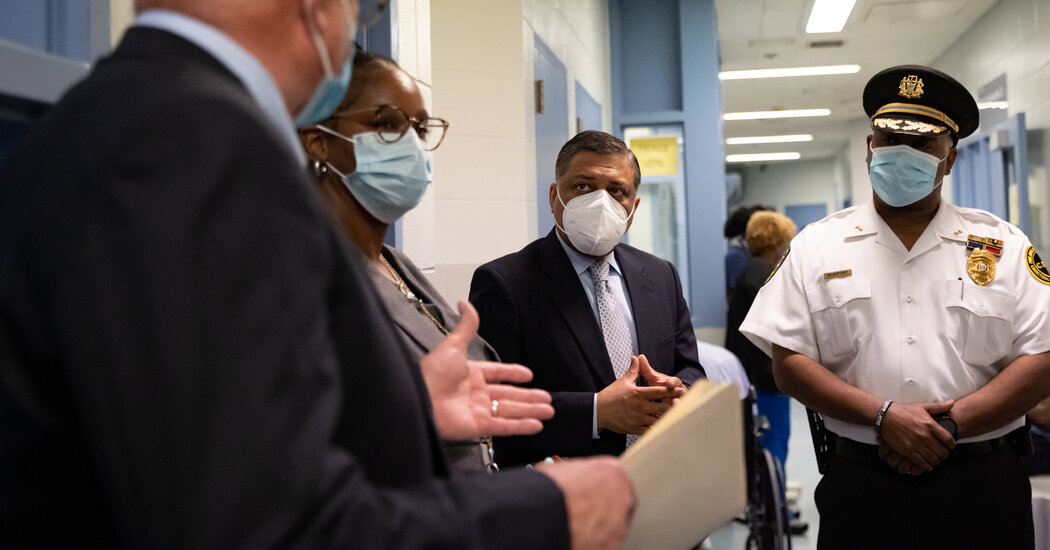
The Biden administration is asking states to use Medicaid funds to cover opioid addiction treatment in correctional facilities, where many people suffer intense cravings and withdrawal.The Biden administration this week accelerated efforts to fund opioid addiction treatment in jails and prisons, a core part of its drug policy agenda, calling on states to adopt a novel Medicaid program that will cover health care for incarcerated people.Under new guidance from the Centers for Medicare and Medicaid Services, states can ask the federal government to allow Medicaid to cover addiction treatment for up to 90 days ahead of someone’s release. Public health experts say that providing treatment during that critical period could help people survive the often harsh conditions of jails and prisons, then more easily transition back to the community.Correctional facilities, where inmates disproportionately have opioid use disorder and often cannot find treatment during and after their incarceration, have claimed a spot on the forefront of the nation’s devastating overdose epidemic, which now kills more than 100,000 Americans each year.“That’s where most people are, and that’s where you’re going to get the most benefit,” said Dr. Rahul Gupta, the director of the White House’s Office of National Drug Control Policy, referring to the high concentration of incarcerated Americans with opioid use disorder. Neglecting to treat addiction in jails and prisons, he added, comes at the “highest cost to society, to taxpayers.”The stakes of the issue are neatly represented by a row of white bars looming over a common area of the Curran-Fromhold Correctional Facility, a jail in Philadelphia along the Delaware River that Dr. Gupta visited on Thursday. The bars, which line a second-story walkway, are meant in part to prevent residents with opioid use disorder from jumping to attempt suicide while they have withdrawal symptoms, according to officials at the facility.Federal law prohibits incarcerated Americans from receiving coverage through Medicaid, the federal-state health insurance program for low-income people, unless in an inpatient setting such as a hospital. The prohibition, known as the inmate exclusion policy, means that states, counties and cities typically foot the bill for programs that help opioid users manage or prevent the debilitating cravings and withdrawal symptoms that follow them through incarceration.Curran-Fromhold’s medication treatment program offers methadone and buprenorphine, the two most common, effective opioid addiction treatments, which have been shown to ease cravings. It is funded by the City of Philadelphia, making it an obvious target for Medicaid coverage, Dr. Gupta said. Medication programs in jails and prisons can be expensive to operate.Bruce Herdman, the chief of medical operations for Philadelphia’s jail system, said that if Pennsylvania were to secure Medicaid funds for the jail, the move would allow the system to save money for other key programs and medications.“They will allow us to provide services that we at present can’t afford,” he said, referring to the possible Medicaid funds.Even before issuing the new guidance, the Biden administration had encouraged states to apply for the Medicaid program. In January, California became the first state to be approved for it, and more than a dozen other states have applications pending. Dr. Gupta said the new guidance would most likely compel more states to ask for Medicaid coverage for the kind of work that Curran-Fromhold offers.A row of white bars over a common area of the Curran-Fromhold Correctional Facility prevent inmates from hurting themselves.Hannah Beier for The New York TimesOne state that could seek funds is Pennsylvania, which has contended with a devastating rise in drug overdoses in recent years. A spokesman for the Pennsylvania Department of Human Services said that state officials were still evaluating plans to apply for the Medicaid program and were focused in the meantime on reinstating the Medicaid benefits of inmates after they are released.Regina LaBelle, who served as the acting director of the Office of National Drug Control Policy under President Biden, said she worried that state health departments might not have the resources to apply for the program.“It takes a lot of staff time,” she said. “Do they have people in their Medicare and Medicaid services office who can put time and energy into that document?”Some conservative critics of opioid addiction treatment say that because buprenorphine and methadone are opioids, their use should not be encouraged. But the Medicaid program already has shown bipartisan appeal, with some conservative-leaning states, such as Kentucky, Montana and Utah, applying for it.For states that want to participate in the program, the federal government is calling for correctional facilities to offer methadone and buprenorphine. The guidance also asks states to suspend, rather than terminate, Medicaid coverage while people with the insurance are incarcerated, allowing them to more quickly transition back into their health plans once they are released.Dr. Gupta said that such an approach could better allow those who are newly released to see a doctor they had seen before their incarceration. Correctional facilities will also be expected to provide inmates with a 30-day supply of treatment upon their release, giving people a head start as they re-enter society.“It’s all of the transitions where things fall apart, both from the transition from outside to inside, then inside to outside,” said Dr. Josiah D. Rich, an epidemiologist at Brown University.People in jails and prisons are especially vulnerable to fatal overdoses shortly after they are released, when their tolerance for drugs has weakened. Studies show that the risks of overdosing in the days and weeks after release are reduced substantially if an incarcerated person uses either buprenorphine or methadone.About two million people are held in jails and prisons on any given day in the United States, and a substantial portion of them have opioid use disorder, federal officials say. Withdrawal symptoms can be especially acute during shorter stays in jails, many of which do not have treatment programs. Around nine million people cycle through jails every year, the federal government estimates.Buprenorphine and methadone typically require sustained, uninterrupted use to help drug users gradually dull cravings. The average length of a stay in a Philadelphia jail is around 120 days, meaning that the Medicaid program, with its 90-day coverage period, could pay for treatment for most or all of a person’s time there.Researchers from the Jail and Prison Opioid Project, a group that Dr. Rich helps lead that studies treatment among incarcerated people, estimate that only about 630 of the nation’s roughly 5,000 correctional facilities offer medication treatment for opioid use disorder. About 2 percent of incarcerated people in the United States are known to have received such treatment while in jail or prison, the researchers estimate.Dr. Gupta pointed to what he said was a glaring irony in a large segment of the American prison population: People are incarcerated for their drug use, then denied treatment for it.Neglecting to treat addiction in jails and prisons comes at the “highest cost to society, to taxpayers,” Dr. Gupta said.Hannah Beier for The New York TimesThe Biden administration’s push for states to use Medicaid funds in jails and prisons is overlapping with a bipartisan effort in the House and Senate to pass the Medicaid Re-entry Act, which would grant coverage in the 30 days before an inmate’s release.The administration has said that by the summer, all 122 Federal Bureau of Prisons facilities will be equipped to offer medication treatment. But most incarcerated people are in state and local prisons and jails, which feature a patchwork of medication policies that can vary by site. Some correctional facilities allow only one treatment, while others allow medication only for those who were receiving it before they were incarcerated.“There is stigma both around using medications for treatment but also stigma around opioid use disorder in general,” said Dr. Elizabeth Salisbury-Afshar, an addiction physician at the University of Wisconsin-Madison who has advised jails on treatment programs. “There is a broader educational gap.”Dr. Dorian Jacobs, a physician who helps run the Curran-Fromhold jail’s addiction treatment program, said she had encountered residents with opioid use disorder who did not realize it is a disease that should be treated like any other.“It’s just a part of who we are,” she said.

Read more →