Can a diet really ease lipoedema? Sunniva’s journey to pain relief and weight loss

Lipoedema is thought to be a common, but little-known disease that mainly affects women. The disease is painful. Lipoedema is characterized by disproportionate and excess fatty tissue on the thighs and calves, and sometimes on the arms, while the hands and feet are unaffected. A new doctoral thesis at NTNU investigated the relationship between two different diets and the effect on pain, quality of life, body weight and body composition, appetite and inflammation.It all started when she was in lower secondary school.Her thighs, calves and upper arms suddenly began to grow, and she could not understand why it was so painful. It was not until she was over 40 years old that Sunniva Kwapeng was diagnosed with lipoedema.
However, before a correct diagnosis was made, she tried all sorts of diets — with little success.
A recent NTNU study shows that her experience is quite typical. It is unlikely that the body fat associated with lipoedema can be lost through dieting.
Limited knowledge
“Despite this being a disease that affects many women, little is known about it, which is rather thought-provoking,” said Julianne Lundanes, a former PhD candidate at NTNU.

Lipoedema is a poorly understood disease that primarily affects women.
The disease is characterized by disproportionate and excess fatty tissue on the thighs and calves, and sometimes on the arms, while the hands and feet remain unaffected.
Lundanes recently submitted her doctoral thesis at NTNU on the relationship between two different diets and their effects on pain, quality of life, body weight and composition, appetite and inflammation.
Some people also become obese
Lipoedema is painful. It can be painful to move, and it is easy for people with the disease to get caught up in a vicious cycle of inactivity and reduced quality of life. Lipoedema is often mistaken for obesity, but they are two distinct conditions.
If a person with lipoedema loses weight, it is common to see normal fat disappear, such as on the stomach, while the calves and thighs remain the same size. When a person is obese, fat can be stored all over the body, both under the skin and around the internal organs.

In lipoedema, the accumulation of fatty tissue occurs mainly under the skin on the hips, thighs, calves and arms.
The pain associated with the disease can have a significant impact on quality of life, making movement difficult.
“We don’t know why the disease is so painful. We believe it involves an inflammatory condition in the fat, and that this is what causes the pain,” said Lundanes.
Lipoedema is often hereditary
There are currently no Norwegian national guidelines for the treatment or follow-up of women with lipoedema.
“We also don’t know much about why some women develop lipoedema, except that it appears to be hereditary. It is often the case that several people in the same family are affected by it. The disease often manifests during hormonal changes such as puberty, pregnancy and menopause,” Lundanes said.
The aim of Lundanes’s study was to determine whether a low-carbohydrate diet could serve as an alternative form of treatment for patients with the disease.
She had a sample of 70 women with lipoedema aged 19-73 years old, which was divided into two groups.
One group followed a low-carb diet, while the other followed a low-fat diet. Both groups ate the same number of calories each day, but the amount of carbohydrates and fat varied.
The participants received weekly follow-up for eight weeks and were tested at the beginning and end of the study. Pain and quality of life were measured through a questionnaire.
The results showed clear differences between the two groups.
Similar degrees of inflammation
“The women in the low-carb group had less pain. The participants in the other group did not experience any change in pain, but both groups reported better quality of life,” said Lundanes.
Tests were also carried out to see if the reduction in pain was due to the low-carb diet leading to less inflammation in the body. This turned out not to be the case.
“There was no difference in changes in inflammation between the two groups. We also measured inflammation through blood tests, so inflammation in the fatty tissue itself still needs to be investigated in order to draw any conclusions,” Lundanes said.
Greater weight loss on the low-carb diet
The women who followed the low-carb diet lost more weight than those who followed the low-fat diet.
“At the end of the study, we found that the women who ate fewer carbohydrates were less hungry than the other group. The feeling of being less hungry is a well-known benefit of low-carb diets once ketosis is achieved. This may have helped these women lose more weight than the other group,” Lundanes said.
There is no treatment that can eliminate the causes of or cure lipoedema. There’s only treatment that can alleviate some of the symptoms.
Liposuction is one option, but it is currently only offered as part of a research study at Haraldsplass Hospital in Bergen. The only other alternative is to pay for private surgery, and that can cost hundreds of thousands of Norwegian kroner.
“The long-term effects of lipoedema liposuction have still not been fully investigated. There is a lack of research in this area too,” Lundanes said.
Compression reduces pain
Most people currently receive help in the form of physical therapy and compression garments that squeeze and support the fatty tissue.
“Compression garments give many people relief,” says Lundanes.
For Kwapeng, compression garments have been a great help in managing the pain.
“I’ve also lost many centimeters on my legs because of the compression garments. My expenses for compression are covered, but in other parts of the country, they’re not. It’s completely random what kind of help you get,” says Kwapeng.
At home, she has a machine that’s also used by patients with other conditions. The machine is called a pulsator and is a vacuum treatment for the lymphatic vessels designed to activate the lymphatic system. Lymphatic drainage initiates several cleansing processes in the body and can help improve blood circulation.
The machine is like a giant pair of pants used while lying down.
“It works really well for me. It takes away the pain. I also get more energy. If I have low energy and lie down in it, it’s like my body wakes up,” says Kwapeng.
Over time, she has learned to live with the disease.
“It’s frustrating to have a condition that is so poorly understood. A doctor once told me that at least I won’t die from having lipoedema — but I die a little every time I can’t sit on the floor with my daughter. I die a little every time I can’t go on a hike I want to take because of the pain. And I die a little every time people think I’m just fat and lazy,” Kwapeng said.


Read more →

Scientists just found a tiny molecule that could change how we lose weight

The obesity rate has more than doubled in the last 30 years, affecting more than one billion people worldwide. This prevalent condition is also linked to other metabolic disorders, including type 2 diabetes, cardiovascular diseases, chronic kidney disease, and cancers. Current treatment options include lifestyle interventions, bariatric surgery, and GLP-1 drugs like Ozempic or Wegovy, but many patients struggle to access or complete these treatments or to maintain their weight loss afterwards.
Salk Institute scientists are looking for a new treatment strategy in microproteins, an understudied class of molecules found throughout the body that play roles in both health and disease. In a new study, the researchers screened thousands of fat cell genes using CRISPR gene editing to find dozens of genes that likely code for microproteins — one of which they confirmed — that regulate either fat cell proliferation or lipid accumulation.
The findings, published in Proceedings of the National Academy of Sciences on August 7, 2025, identify new microproteins that could potentially serve as drug targets to treat obesity and other metabolic disorders. The study also showcases the value of CRISPR screening in future microprotein discovery.
“CRISPR screening is extremely effective at finding important factors in obesity and metabolism that could become therapeutic targets,” says senior author Alan Saghatelian, a professor and holder of the Dr. Frederik Paulsen Chair at Salk. “These new screening technologies are allowing us to reveal a whole new level of biological regulation driven by microproteins. The more we screen, the more disease-associated microproteins we find, and the more potential targets we have for future drug development.”
Current obesity and metabolic disorder therapeutics
When our energy consumption exceeds our energy expenditure, fat cells can grow in both size and number. Fat cells store the excess energy in the form of fatty molecules called lipids. But while some excess storage is manageable, too much can cause fat deposits to accumulate around the body — leading to whole-body inflammation and organ dysfunction.
Many factors regulate this complex energy storage system. The problem is, how do we find them all, and how do we filter for factors that may make good therapeutic candidates?

This has been a longstanding question for Salk scientists. In fact, Salk Professor Ronald Evans has been working on it for decades. Evans is an expert on PPAR gamma, a key regulator of fat cell development and a potent target for treating diabetes. Several drugs have been developed to target PPAR gamma to treat obesity, but they resulted in side effects like weight gain and bone loss. An ideal PPAR gamma-based obesity therapeutic has yet to hit the market.
When PPAR gamma drugs fell short, GLP-1 drugs entered the scene. GLP-1 is a peptide small enough to be considered a microprotein, and it serves as a blood sugar and appetite regulator. But, like PPAR gamma, GLP-1 drugs have their own shortcomings, such as muscle loss and nausea. Nonetheless, the popularity of GLP-1 drugs demonstrates a promising future for microprotein drugs in the obesity therapeutic space.
Saghatelian’s team is now searching for the next microprotein therapeutic with new genetic tools that bring microproteins out of the “dark.” For many years, long stretches of the genome have been considered “junk” and thus left unexplored. But recent technological advances have allowed scientists to look at these dark sections and find a hidden world of microproteins — in turn, expanding protein libraries by 10 to 30 percent.
In particular, the Salk team is using innovative CRISPR screening to scour the “dark” for possible microproteins. This approach is enabling the simultaneous discovery of thousands of potential microproteins involved in lipid storage and fat cell biology, accelerating the search for the next PPAR gamma or GLP-1 drug.
How CRISPR screening accelerates the search for microproteins
CRISPR screens work by cutting out genes of interest in cells and observing whether the cell thrives or dies without them. From these results, scientists can determine the importance and function of specific genes. In this case, the Salk team was interested in genes that may code for microproteins involved in fat cell differentiation or proliferation.

“We wanted to know if there was anything we had been missing in all these years of research into the body’s metabolic processes,” says first author Victor Pai, a postdoctoral researcher in Saghatelian’s lab. “And CRISPR allows us to pick out interesting and functional genes that specifically impact lipid accumulation and fat cell development.”
This latest research follows up on a prior study from Saghatelian’s lab. The previous study identified thousands of potential microproteins by analyzing microprotein-coding RNA strands derived from mouse fat tissues. These microprotein-coding RNA strands were filed away to await investigation into their functions.
The new study first expanded this collection to include additional microproteins identified from a pre-fat cell model. Notably, this new model captures the differentiation process from pre-fat cell to a fully mature fat cell. Next, the researchers screened the cell model with CRISPR to determine how many of these potential microproteins were involved in fat cell differentiation or proliferation.
“We’re not the first to screen for microproteins with CRISPR,” adds Pai, “but we’re the first to look for microproteins involved in fat cell proliferation. This is a huge step for metabolism and obesity research.”
Microproteins of interest and next steps
Using their mouse model and CRISPR screening approach, the team identified microproteins that may be involved in fat cell biology. They then narrowed the pool even further with another experiment to create a shortlist of 38 potential microproteins involved in lipid droplet formation — which indicates increasing fat storage — during fat cell differentiation.
At this point, the shortlisted microproteins were all still “potential” microproteins. This is because the genetic screening finds genes that may code for microproteins, rather than finding the microproteins themselves. While this approach is a helpful workaround to finding microproteins that are otherwise so small they elude capture, it also means that the screened microproteins require further testing to confirm whether they are functional.
And that’s what the Salk team did next. They picked several of the shortlisted microproteins to test and were able to verify one. Pai hypothesizes this new microprotein, called Adipocyte-smORF-1183, influences lipid droplet formation in fat cells (also known as adipocytes).
Verification of Adipocyte-smORF-1183 is an exciting step toward identifying more microproteins involved in lipid accumulation and fat cell regulation in obesity. It also verifies that CRISPR is an effective tool for finding microproteins involved in fat cell biology, obesity, and metabolism.
“That’s the goal of research, right?” says Saghatelian. “You keep going. It’s a constant process of improvement as we establish better technology and better workflows to enhance discovery and, eventually, therapeutic outcomes down the line.”
Next, the researchers will repeat the study with human fat cells. They also hope their success inspires others to use CRISPR screenings to continue bringing microproteins out from the dark — like Adipocyte-smORF-1183, which until now, was considered an unimportant bit of “junk” DNA.
Further validation or screening of new cell libraries will expand the list of potential drug candidates, setting the stage for the new-and-improved obesity and metabolic disorder therapeutics of the future.
Other authors include Hazel Shan, Cynthia Donaldson, Joan Vaughan, Eduardo V. De Souza, Carolyn O’Connor, and Michelle Liem of Salk; and Antonio Pinto and Jolene Diedrich of Scripps Research Institute.
The work was supported by the National Institutes of Health (F32 DK132927, RC2 DK129961, R01 DK106210, R01 GM102491, RF1 AG086547, NCI Cancer Center P30 014195, S10- OD023689, and S10-OD034268), Ferring Foundation, Clayton Foundation, and Larry and Carol Greenfield Technology Fund.

Read more →

Drinks that make you chill – do they really do what it says on the tin?

1 day agoShareSaveRuth CleggHealth and wellbeing reporterShareSaveGetty ImagesCalm in a can. Relaxation after a few sips.That’s what some drinks companies are promising with beverages formulated specifically to help you chill out.Lucy and Serena swear by them. They’re good friends who, like many, are juggling careers, the chaos of having small children, trying to stay fit, and everything else in between.”These drinks aren’t going to get rid of all my worries and anxieties,” Serena says, “but if they give me a little boost – then I’ll take it.”Lucy finds them really useful too, especially when she’s feeling a bit overwhelmed.”If I get that low-level panic, then with a drink of Trip or something like it, I can bring it back round.”But after an advert by one of the industry’s best-known brands was banned for suggesting its drinks helped with stress and anxiety, there have been questions about whether drinks of this kind are quite as effective as they make out.BBC News has spoken to nutritionists and dietitians who are sceptical the small amounts of supplements the drinks contain could really bring about that sense of zen.One psychologist has suggested that we might actually “create our own calm” when we set aside time for ourselves with something that feels like a treat.Steven OakesThe “functional beverage” market – that’s drinks with additional health benefits – is booming, with British supermarkets seeing sales jump by 24.5% in the last 12 months, according to one market research firm. Almost 30% of UK households now buy these functional drinks, Worldpanel by Numerator says.So, what’s actually in them that’s supposed to help you feel more mellow or give your health a boost? Well, that’s where things can get complicated, as each brand takes a different approach.Along with Trip’s Mindful Blend, other companies like Rheal, Grass&Co, Goodrays and supermarket own-brands, advertise that their drinks contain supplements including:Lion’s Mane extract – a type of mushroom found in east Asian countriesL-theanine – an amino acid found primarily in green and black teaAshwagandha – a herb cultivated in areas of Asia, Africa, and EuropeMagnesium – a mineral the human body needs to function properlyThese supplements are all commonly found in many health and wellbeing products and are associated with enhancing mood, boosting energy, supporting cognition, and helping with stress.But how robust is the evidence for that? It’s tricky because there are many studies of varying credibility each suggesting different levels of efficacy.Trip’s advert, which suggested its ingredients were stress and anxiety busters, breached the Advertising Standards Agency’s (ASA) code, with the ASA ruling that Trip’s claims their drinks could “prevent, treat or cure disease” were a step too far.Trip told BBC News the ruling related to “a single page on the website” and it has made the “changes requested”. It says it’s confident its ingredients permit the use of the word “calm” which is “widely and lawfully used by many brands”.Getty ImagesDietitian Reema Patel is concerned the amount of supplement in these drinks may not give consumers the emotional balance, feelings of calm, or stress relief that is advertised across the industry. She highlights a growing body of evidence around the funghi Lion’s Mane, but says there are no conclusive findings about whether it can have any impact – as yet.”The research is still very much in its infancy,” she says. “In one of the more advanced clinical trials, a small number of participants were given 1800mg – that’s at least four times more than what is in some of these drinks.”Studies suggest women are more likely to consume these kinds of supplements, but they’re not always front and centre in the research. The lack of research that includes female participants is partly down to menstrual cycles and fluctuating hormones, making it more “complicated to track”, Ms Patel explains.But these drinks can make a good alternative to drinking alcohol she says, and she has clients who have made the switch from having a wine or a gin and tonic every night to opening a can of one of these drinks to help them unwind.”I think you can take a lot of the claims with a pinch of salt, but they are definitely giving people that other option.”Emily MayDr Sinead Roberts, a performance nutritionist, says supplements can make a difference, but they tend to work for certain groups of people in specific circumstances – such as high-performing athletes who want that extra edge, or people who are deficient in a certain nutrient – not necessarily for the general population.If you enjoy the taste, “crack on”, Dr Roberts says, but if you want to reduce stress and anxiety you’re probably best saving your £2 or £3 and putting it towards a “therapy session or a massage at the end of the month”.”A trace of Lion’s Mane or Ashgawanda in a fizzy drink is not going to make any difference,” she adds.Emily May, 25, first discovered these drinks at Glastonbury a couple of years ago. She’s not overly bothered about trying to reach a state of zen through them – she just likes the taste.”I’m ADHD,” Emily says, “so I would definitely need a lot more than one of those drinks to calm me down.”TRIP via ASAThere is a fine line between advertising that a product will give you a feeling of calm and quiet, and claiming these kinds of drinks will help with mental health problems.Psychologist Natasha Tiwari says mental health and well-being are “increasingly conflated” in the wellness sector, creating a “toxic mix”. There can be a positive – yet temporary – change in mood and consumers might feel a buzz, she says, not because of the ingredients necessarily, but because “everything around the experience of the product is real”.”So you’ve bought a drink which, let’s say, is a little bit pricier than the alternatives in the market. Therefore you make a commitment to sit down quietly and enjoy it nicely,” she says. “You look at the branding – which is lovely and calming – you’re processing your environment in the moment, and then actually what you’re experiencing truly is a calm moment in your otherwise busy day. That’s not fake.”And it’s that little window of peace that Lucy and Serena yearn for – and for a few minutes a fizzy drink in a can gives them that, whether the science really agrees, or not.BBC News contacted all the brands mentioned in this article. Grass&Co told us it’s their mission “to deliver high-strength natural adaptogen and vitamin-packed blends formulated by experts… which are supported by approved health claims.”Goodrays said it wasn’t “offering a panacea”, but that it was “certainly offering a healthier alternative” with the “best efficacy possible”.Additional reporting by Megan FisherMore Weekend picks

Read more →

Scientists uncover hidden brain shortcut to weight loss without the nausea

Weight loss and diabetes drugs on the market often do not achieve long-term weight loss for patients. GLP-1 drugs target brain neurons that control appetite but frequently cause side effects. Nausea and vomiting force 70% of patients to stop treatment within a year. Syracuse University chemistry professor Robert Doyle is leading a multidisciplinary team that has identified a different brain target for treating obesity and diabetes, potentially offering weight loss without gastrointestinal distress.
Neurons are the most well-known and obvious target in research and drug development for brain conditions. GLP-1 drugs, for example, target brain neurons in the hindbrain involved in appetite control. But researchers are looking beyond neurons to study “support” cells such as glia and astrocytes that could aid appetite reduction.
A collaborative research effort has revealed that support cells play a role in reducing feelings of hunger, although this process has not been studied in-depth.
“We wanted to know whether support cells might produce new peptides or new signaling molecules that might be critical in body weight reduction,” says Doyle, a medicinal chemist and the Jack and Laura H. Milton Professor of Chemistry in the College of Arts and Sciences at Syracuse University. Doyle is also a professor of pharmacology and medicine at SUNY Upstate Medical University.
How it works
Think of each brain neuron as a light bulb and support cells as the components that allow the light bulb to brighten, including the wiring, switch and filament.
“All of those supporting parts beyond the light bulb play a role in making the light shine,” says Doyle.

The research team discovered that some support cells in the hindbrain naturally produce a molecule named octadecaneuropeptide (ODN), which suppresses appetite. In lab tests, injecting ODN directly into rats’ brains made them lose weight and improved how they processed glucose.
However, injecting directly into the brain isn’t a practical treatment for people, so researchers created a new version of the molecule named tridecaneuropeptide (TDN). This molecule version could be given to human patients through regular injections akin to today’s Ozempic or Zepbound. When tested in obese mice and musk shrews, TDN helped the animals lose weight and respond better to insulin without causing nausea or vomiting.
Marathon shortcut
One goal of the research team is to produce weight loss without aiming new therapeutic molecules at neurons. The new TDN molecule bypasses neurons, taking a shortcut to directly target neurons’ downstream support cells, which researchers found also produce appetite suppression. TDN cuts short the “marathon” of chemical reactions and negative side-effects caused by GLP-1 drugs.
“Instead of running a marathon from the very beginning like current drugs do, our targeting downstream pathways in support cells is like starting the race halfway through, reducing the unpleasant side effects many people experience,” says Doyle. “If we could hit that downstream process directly, then potentially we wouldn’t have to use GLP-1 drugs with their side effects. Or we could reduce their dose, improving the toleration of these drugs. We could trigger weight loss signals that happen later in the pathway more directly.”
A new company called CoronationBio has been launched to turn this discovery into a real-world treatment. The company has licensed intellectual property related to ODN derivatives for the treatment of obesity and cardio-metabolic disease from Syracuse University and the University of Pennsylvania, with a focus on translating candidates into the clinic. They’re now teaming up with other companies to develop this treatment and aim to start human trials in 2026 or 2027.

Read more →

Scientists find brain cell switch that could reverse obesity’s effects

Researchers show astrocytes can be tuned to reverse some obesity-driven brain and metabolic changes, revealing untapped therapeutic potential. Credit: Shutterstock

Fatty diets and obesity affect the structure and function of astrocytes1, the star-shaped brain cells located in the striatum, a brain region involved in the perception of pleasure generated by food consumption. What is even more surprising is that by manipulating these astrocytes in vivo in mice can influence metabolism and correct certain cognitive changes associated with obesity (ability to relearn a task, for example). These results, described by scientists from the CNRS2 and the Université Paris Cité, were recently published in the journal Nature Communication.

These discoveries reinforce the idea that astrocytes (long neglected in favour of neurons) play a key role in brain function. They also demonstrate, for the first time, the ability of astrocytes to restore cognitive function in the context of obesity, opening up new avenues of research to identify their exact role in energy metabolism.
These conclusions were reached using a combination of ex vivo and in vivo approaches in rodents, including chemogenetic techniques3, brain imaging, locomotion tests, cognitive behaviour and measuring the body’s energy metabolism.
Notes Unlike neurons, astrocytes (nervous system cells) do not generate electrical activity, which has made them less easy to study in the past. However, thanks to improvements in observation techniques, we now know that their close cooperation with neurons is essential to the proper functioning of the nervous system. Reporting to l’Unité de biologie fonctionnelle et adaptative (CNRS/Université Paris Cité). Scientists from l’Institut de biologie Paris-Seine (CNRS/Inserm/Sorbonne Université) were also involved. Calcium is an essential chemical element for astrocyte function, enabling synaptic activity to be modulated. The chemogenetic technique employed was based on the use of a virus, to express, in a targeted manner in the astrocytes, a protein that could modulate calcium flow in the cell, rather like a switch. The scientists were thus able to study the effect of these calcium flows on the activity of the astrocytes and surrounding neurons.

Read more →

Scientists discover amino acid switch that turns fat into a calorie-burning furnace

Consuming fewer calories is largely accepted as a way to improve health and lose weight, but a recently published study in Nature Metabolism points to a specific sulfur-containing amino acid cysteine as a key component in weight loss. In the study “Cysteine depletion triggers adipose tissue thermogenesis and weight loss,” researchers discovered that when study participants restricted their calorie intake, it resulted in reduced levels of cysteine in white fat.
Pennington Biomedical researchers Dr. Eric Ravussin and Dr. Krisztian Stadler contributed to the study in which they and colleagues examined cysteine and discovered that it triggered the transition of white fat cells to brown fat cells, which are a more active form of fat cells that burn energy to produce heat and maintain body temperature. When researchers restricted cysteine in animal models entirely, it drove high levels of weight loss and increased fat burning and browning of fat cells, further demonstrating cysteine’s importance in metabolism.
“In addition to the dramatic weight loss and increase in fat burning resulting from the removal of cysteine, the amino acid is also central to redox balance and redox pathways in biology,” said Dr. Stadler, who directs the Oxidative Stress and Disease laboratory at Pennington Biomedical. “These results suggest future weight management strategies that might not rely exclusively on reducing caloric intake.”
The article is based on results from trials involving both human participants and animal models. For the human trials, researchers examined fat tissue samples taken from trial participants who had actively restricted calorie intake over a year. When examining the fat tissue samples, they looked for changes in the thousands of metabolites, which are compounds formed when the body breaks down food and stores energy. The exploration of these metabolites indicated a reduced level of cysteine.
“Reverse translation of a human caloric restriction trial identified a new player in energy metabolism,” said Dr. Ravussin, who holds the Douglas L. Gordon Chair in Diabetes and Metabolism at Pennington Biomedical and oversees its Human Translation Physiology Lab. “Systemic cysteine depletion in mice causes weight loss with increased fat utilization and browning of adipocytes.”
The tissue samples came from participants in the CALERIE clinical trial, which recruited healthy young and middle-aged men and women who were instructed to reduce their calorie intake by an average of 14% over two years. With the reduction of cysteine, the participants also experienced subsequent weight loss, improved muscle health, and reduced inflammation.
In the animal models, researchers provided meals with reduced calories. This resulted in a 40% drop in body temperature, but regardless of the cellular stress, the animal models did not exhibit tissue damage, suggesting that protective systems may kick in when cysteine is low.
“Dr. Ravussin, Dr. Stadler, and their colleagues have made a remarkable discovery showing that cysteine regulates the transition from white to brown fat cells, opening new therapeutic avenues for treating obesity,” said Dr. John Kirwan, Executive Director of Pennington Biomedical Research Center. “I would like to congratulate this research team on uncovering this important metabolic mechanism that could eventually transform how we approach weight management interventions.”

Read more →

Scientists crack the mystery of brain cell clumps, and make them vanish

Look inside a brain cell with Huntington’s disease or ALS and you are likely to find RNA clumped together.
These solid-like clusters, thought to be irreversible, can act as sponges that soak up surrounding proteins key for brain health, contributing to neurological disorders.
How these harmful RNA clusters form in the first place has remained an open question.
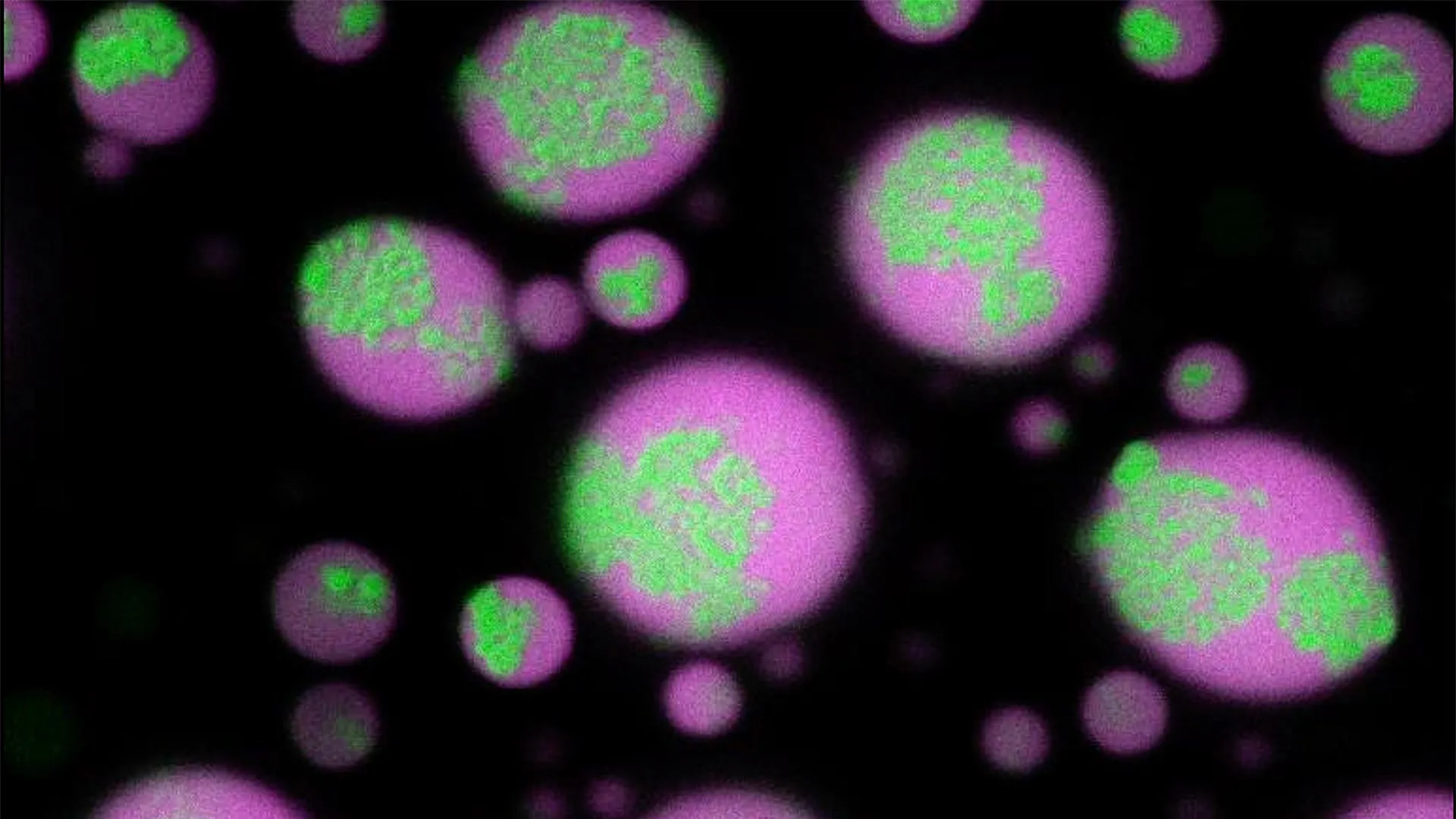
Now, University at Buffalo researchers have not only uncovered that tiny droplets of protein and nucleic acids in cells contribute to the formation of RNA clusters but also demonstrated a way to prevent and disassemble the clusters.
Their findings, described in a study published recently in Nature Chemistry, uses an engineered strand of RNA known as an antisense oligonucleotide that can bind to RNA clusters and disperse them.
“It’s fascinating to watch these clusters form over time inside dense, droplet-like mixtures of protein and RNA under the microscope. Just as striking, the clusters dissolve when antisense oligonucleotides pull the RNA aggregates apart,” says the study’s corresponding author, Priya Banerjee, PhD, associate professor in the Department of Physics, within the UB College of Arts and Sciences. “What’s exciting about this discovery is that we not only figured out how these clusters form but also found a way to break them apart.”
The work was supported by the U.S. National Institutes of Health and the St. Jude Children’s Research Hospital.

How RNA clusters form
The study sheds new light on how RNA clusters form within biomolecular condensates.
Cells make these liquid-like droplets from RNA, DNA and proteins — or a combination of all three. Banerjee’s team has researched them extensively, investigating their role in both cellular function and disease, as well as their fundamental material properties that present new opportunities for synthetic biology applications.
The condensates are essentially used as hosts by repeat RNAs, disease-linked RNA molecules with abnormally long strands of repeated sequences. At an early timepoint, the repeat RNAs remain fully mixed inside these condensates, but as the condensates age, the RNA molecules start clumping together, creating an RNA-rich solid core surrounded by an RNA-depleted fluid shell.
“Repeat RNAs are inherently sticky, but interestingly, they don’t stick to each other just by themselves because they fold into stable 3D structures. They need the right environment to unfold and clump together, and the condensates provide that,” says the study’s first author, Tharun Selvam Mahendran, a PhD student in Banerjee’s lab.
“Crucially, we also found that the solid-like repeat RNA clusters persist even after the host condensate dissolves,” Mahendran adds. “This persistence is partly why the clusters are thought to be irreversible.”
Preventing — and reversing — clusters

The team was first able to demonstrate that repeat RNA clustering can be prevented by using an RNA-binding protein known as G3Bp1 that is present in cells.
“The RNA clusters come about from the RNA strands sticking together, but if you introduce another sticky element into the condensate, like G3BP1, then the interactions between the RNAs are frustrated and clusters stop forming,” Banerjee says. “It’s like introducing a chemical inhibitor into a crystal-growing solution, the ordered structure can no longer form properly. You can think of the G3BP1 as an observant molecular chaperone that binds to the sticky RNA molecules and makes sure that RNAs don’t stick to each other.”
In order to reverse the clusters, the team employed an antisense oligonucleotide (ASO). Because ASO is a short RNA with a sequence complementary to the repeat RNA, it was able to not only bind to the aggregation-prone RNAs but also disassemble the RNA clusters.
The team found that ASO’s disassembly abilities were highly tied to its specific sequence. Scramble the sequence in any way, and the ASO would fail to prevent clustering, let alone disassemble the clusters.
“This suggests our ASO can be tailored to only target specific repeat RNAs, which is a good sign for its viability as a potential therapeutic application,” Banerjee says.
Banerjee is also exploring RNA’s role in the origin of life, thanks to a seed grant from the Hypothesis Fund. He is studying whether biomolecular condensates may have protected RNA’s functions as biomolecular catalysts in the harsh prebiotic world.
“It really just shows how RNAs may have evolved to take these different forms of matter, some of which are extremely useful for biological functions and perhaps even life itself — and others that can bring about disease,” Banerjee says.

Read more →

The hidden ways light at night damages your brain, mood, and metabolism

In a comprehensive Genomic Press Innovators & Ideas interview published today, distinguished neuroscientist Dr. Randy J. Nelson shares insights from his pioneering research on how disrupted circadian rhythms affect brain function and overall health. The interview, published in Brain Medicine, traces Dr. Nelson’s unconventional path from farm work and autopsy assistant to becoming one of the world’s leading authorities on biological rhythms.
Dr. Nelson, who chairs the Department of Neuroscience at West Virginia University, has spent the past decade uncovering the hidden dangers of artificial light exposure. His research demonstrates that light at night doesn’t just affect sleep quality; it fundamentally alters immune function, triggers neuroinflammation, disrupts metabolism, and influences mood regulation.
From Turkey Processing Plant to Top Research Institution
The interview reveals Dr. Nelson’s remarkable journey to academic prominence. After working night shifts at a turkey processing plant during high school and later conducting postmortem examinations at two Cleveland hospitals, he eventually found his way to the University of California, San Diego, through an unexpected job opportunity at the San Diego Zoo.
“My path to academia is typical in the sense that it is not ‘typical,'” Dr. Nelson reflects in the interview. His unique background, including becoming the first person in the United States to simultaneously earn two separate PhDs (in Psychology and Endocrinology from UC Berkeley), shaped his integrative approach to neuroscience research.
Circadian Disruption: A Modern Health Crisis
Dr. Nelson’s laboratory has published groundbreaking findings on how exposure to artificial light at night affects multiple body systems. The research goes beyond simple sleep disturbance to reveal profound effects on physiological processes that evolved over millions of years to function in sync with natural light-dark cycles.

Key areas of impact identified by Dr. Nelson’s research include immune system dysfunction, where light exposure at inappropriate times can suppress typical immune responses or trigger excessive inflammation. The work also demonstrates clear links between circadian disruption and metabolic disorders, potentially contributing to the obesity epidemic. Perhaps most concerningly, the research shows direct effects on mood regulation, with implications for understanding depression and anxiety disorders.
What specific wavelengths of light are most disruptive to circadian rhythms? How quickly can the body recover from chronic light exposure? What is the contribution of time-of-day as a biological variable? These questions drive ongoing investigations in Dr. Nelson’s laboratory.
Translating Discovery to Clinical Practice
Moving beyond foundational research, Dr. Nelson’s team currently conducts clinical trials examining whether blocking disruptive light effects can improve outcomes for intensive care patients. Two major trials focus on stroke recovery and cardiac surgery patients, populations particularly vulnerable to the harsh lighting conditions typical of hospital ICUs.
“Circadian rhythms are a fundamental aspect of biology, and much is known from foundational science about them,” Dr. Nelson explains. “However, little of this foundational science has been translated to clinical medicine.”
The research also extends to healthcare workers themselves. A third clinical trial investigates whether bright blue light visors can help night shift nurses reset their circadian rhythms, potentially improving their sleep quality, cognitive performance, and mood. Could similar interventions help other shift workers across various industries maintain better health despite irregular schedules?

Time as a Biological Variable
One of Dr. Nelson’s most provocative proposals involves recognizing time-of-day as a crucial biological variable in all research. He argues that experimental results can vary dramatically depending on when studies are conducted, yet this information rarely appears in scientific publications.
“The answer to an experimental question may depend in part on the time-of-day when the question is asked,” Dr. Nelson notes. This observation has profound implications for research reproducibility and could explain why some studies fail to replicate previous findings.
Building the Next Generation of Neuroscientists
Throughout his career at Johns Hopkins University, Ohio State University, and now West Virginia University, Dr. Nelson has mentored 25 PhD students and 16 postdoctoral researchers. His leadership philosophy emphasizes creating supportive environments where young scientists can thrive. His mentoring philosophy has been featured in a recent Society for Neuroscience Neuronline podcast.
As current president of the Association of Medical School Neuroscience Department Chairs, Dr. Nelson advocates for resources and policies that support early-career researchers. He particularly values helping faculty members navigate the challenging early stages of their careers through strategic resource allocation and mentorship.
What role might circadian rhythm research play in addressing the mental health crisis among graduate students and postdocs? How can academic institutions better support work-life integration for researchers studying around-the-clock biological processes?
A Vision for Healthier Living
Dr. Nelson’s research carries immediate practical implications for public health. Simple interventions like reducing evening screen time, using warmer light colors after sunset, and maintaining consistent sleep schedules could significantly impact population health. His work suggests that respecting our evolutionary heritage by aligning modern life more closely with natural light patterns could prevent numerous chronic health conditions. He recently published a trade book with Oxford University Press entitled, “Dark Matters,” to help the general public appreciate the importance of good circadian hygiene for health and wellness.
The interview also touches on Dr. Nelson’s personal interests, including travel, biking, and gardening, activities that keep him connected to natural rhythms. His favorite place remains Southern California, where his academic journey began through that serendipitous opportunity at the San Diego Zoo decades ago. Dr. Randy J. Nelson’s Genomic Press interview is part of a larger series called Innovators & Ideas that highlights the people behind today’s most influential scientific breakthroughs. Each interview in the series offers a blend of cutting-edge research and personal reflections, providing readers with a comprehensive view of the scientists shaping the future. By combining a focus on professional achievements with personal insights, this interview style invites a richer narrative that both engages and educates readers. This format provides an ideal starting point for profiles that explore the scientist’s impact on the field, while also touching on broader human themes.

Read more →

How safe are wireless headphones?

Do noise-cancelling headphones protect our hearing?Other Side of the Story spoke to Claire Benton, president of the British Academy of Audiology, to find out more abut noise-cancelling headphones. Claire explained that they can help protect people’s hearing as focusing on one sound with all others cancelled out, means it doesn’t need to be listened to at a loud level.”You still have to follow good listening hygiene,” Claire said. “Give your ears breaks from listening, keep the level down at a safe listening level regardless, because the temptation is still to turn it up. Some people really enjoy loud music and we do know that is really dangerous if you do it for too long. Eighty-five decibels(db) for eight hours is what the [official] regulations say is safe, without any hearing protection.”Eighty-five db is the equivalent of the noise made by heavy traffic or a food blender. If you listened to something just three db louder, Claire said, the amount of time you could listen to it safely suddenly halves from eight hours to four.

Read more →