A new cancer vaccine just wiped out tumors in mice
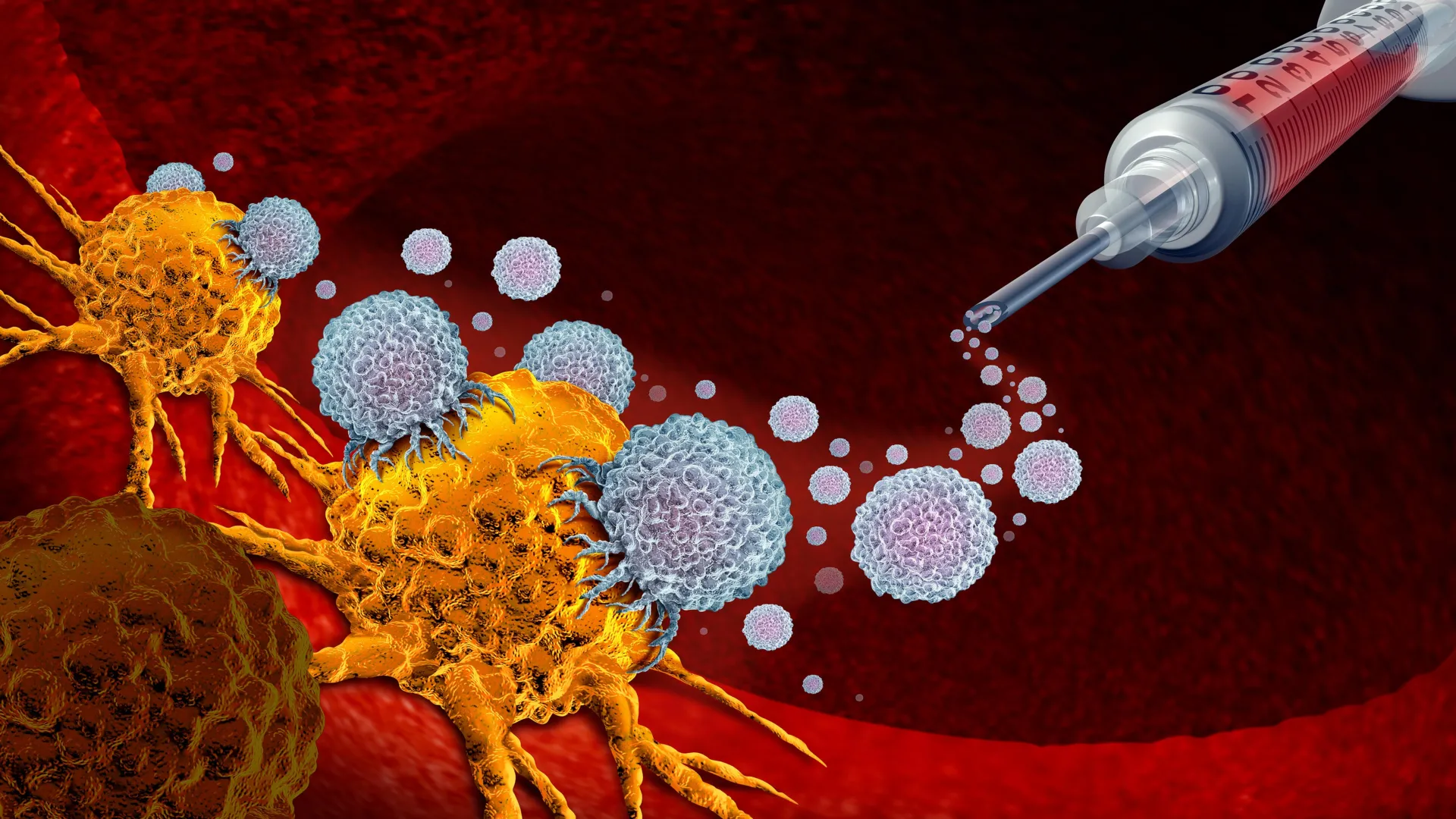
An experimental mRNA vaccine boosted the tumor-fighting effects of immunotherapy in a mouse-model study, bringing researchers one step closer to their goal of developing a universal vaccine to “wake up” the immune system against cancer.
Published recently in Nature Biomedical Engineering, the University of Florida study showed that like a one-two punch, pairing the test vaccine with common anticancer drugs called immune checkpoint inhibitors triggered a strong antitumor response.
A surprising element, researchers said, was that they achieved the promising results not by attacking a specific target protein expressed in the tumor, but by simply revving up the immune system — spurring it to respond as if fighting a virus. They did this by stimulating the expression of a protein called PD-L1 inside of tumors, making them more receptive to treatment. The research was supported by multiple federal agencies and foundations, including the National Institutes of Health.
Senior author Elias Sayour, M.D., Ph.D., a UF Health pediatric oncologist, said the results reveal a potential new treatment path — an alternative to surgery, radiation and chemotherapy — with broad implications for battling many types of treatment-resistant tumors.
“This paper describes a very unexpected and exciting observation: that even a vaccine not specific to any particular tumor or virus — so long as it is an mRNA vaccine — could lead to tumor-specific effects,” said Sayour, principal investigator at the RNA Engineering Laboratory within UF’s Preston A. Wells Jr. Center for Brain Tumor Therapy.
“This finding is a proof of concept that these vaccines potentially could be commercialized as universal cancer vaccines to sensitize the immune system against a patient’s individual tumor,” said Sayour, a McKnight Brain Institute investigator and co-leader of a program in immuno-oncology and microbiome research.
Until now, there have been two main ideas in cancer-vaccine development: To find a specific target expressed in many people with cancer, or to tailor a vaccine that is specific to targets expressed within a patient’s own cancer.

“This study suggests a third emerging paradigm,” said Duane Mitchell, M.D., Ph.D., a co-author of the paper. “What we found is by using a vaccine designed not to target cancer specifically but rather to stimulate a strong immunologic response, we could elicit a very strong anticancer reaction. And so this has significant potential to be broadly used across cancer patients — even possibly leading us to an off-the-shelf cancer vaccine.”
For more than eight years, Sayour has pioneered high-tech anticancer vaccines by combining lipid nanoparticles and mRNA. Short for messenger RNA, mRNA is found inside every cell — including tumor cells — and serves as a blueprint for protein production.
This new study builds upon a breakthrough last year by Sayour’s lab: In a first-ever human clinical trial, an mRNA vaccine quickly reprogrammed the immune system to attack glioblastoma, an aggressive brain tumor with a dismal prognosis. Among the most impressive findings in the four-patient trial was how quickly the new method — which used a “specific” or personalized vaccine made using a patient’s own tumor cells — spurred a vigorous immune-system response to reject the tumor.
In the latest study, Sayour’s research team adapted their technology to test a “generalized” mRNA vaccine — meaning it was not aimed at a specific virus or mutated cells of cancer but engineered simply to prompt a strong immune system response. The mRNA formulation was made similarly to the COVID-19 vaccines, rooted in similar technology, but wasn’t aimed directly at the well-known spike protein of COVID.
In mouse models of melanoma, the team saw promising results in normally treatment-resistant tumors when combining the mRNA formulation with a common immunotherapy drug called a PD-1 inhibitor, a type of monoclonal antibody that attempts to “educate” the immune system that a tumor is foreign, said Sayour, a professor in UF’s Lillian S. Wells Department of Neurosurgery and the Department of Pediatrics in the UF College of Medicine.
Taking the research a step further, in mouse models of skin, bone and brain cancers, the investigators found beneficial effects when testing a different mRNA formulation as a solo treatment. In some models, the tumors were eliminated entirely.

Sayour and colleagues observed that using an mRNA vaccine to activate immune responses seemingly unrelated to cancer could prompt T cells that weren’t working before to actually multiply and kill the cancer if the response spurred by the vaccine is strong enough.
Taken together, the study’s implications are striking, said Mitchell, who directs the UF Clinical and Translational Science Institute and co-directs UF’s Preston A. Wells Jr. Center for Brain Tumor Therapy.
“It could potentially be a universal way of waking up a patient’s own immune response to cancer,” Mitchell said. “And that would be profound if generalizable to human studies.”
The results, he said, show potential for a universal cancer vaccine that could activate the immune system and prime it to work in tandem with checkpoint inhibitor drugs to seize upon cancer — or in some cases, even work on its own to kill cancer.
Now, the research team is working to improve current formulations and move to human clinical trials as rapidly as possible.


Read more →

‘Eating disorder misdiagnosis left me with PTSD’

5 hours agoShareSaveNicola GilroyBBC Investigations, East MidlandsShareSaveBBCWeighing six stone and on the brink of organ failure, Charlotte Chapman-Hart is admitted to hospital in excruciating pain. It’s assumed the former model and dancer has an eating disorder. But Charlotte, who repeatedly denies she’s starving herself, has a rare disease. She’s been prescribed a new pain relief medication, which should have been monitored by her GP and wasn’t. A side effect is rapid weight loss – but it’s been overlooked by those treating her. Charlotte’s experience over the next three months would leave her adding post-traumatic stress disorder (PTSD) to the list of her symptoms. She now fears the care that she needs to stay alive.”I think the hardest thing I’ve ever had to face is trying to convince people that I am of sound mind, and that what I’m telling you is the absolute truth,” says Charlotte, sitting in the garden of her home in Cuckney in Nottinghamshire.”I told them that I’ve never had an issue with eating. I’m just not hungry. Things don’t taste the same. “But rather than think differently, I was put into a diagnosis box that was wrong.”Charlotte, who is now 32, has always lived in the same rented house with her mum and dad, who she relies on to look after her.Since a young age, she’s loved dancing, starting classes when she was two.Charlotte performed with the English Youth Ballet three times, between the age of eight and 16 after successfully auditioning.”Dancing was my life, I was always known as Charlotte the dancer,” she says.Charlotte Chapman-HartWhen she was 13, she started experiencing chronic head and back pain. She said doctors blamed her training schedule and hormones.”My mum took me to all these appointments explaining, ‘Charlotte will only complain if she’s really, really in pain’,” she says.”But none of that was enough for people to do some diagnostic investigation.”She continued dancing despite the pain, taking dance as one of her GCSEs at school and training with the Northern Ballet.”Any time that I was in pain it was like, ‘it’s because you dance, it’s because of what you put your body through’,” she says.Charlotte Chapman-HartBy the time Charlotte graduated from university with a health and human sciences degree, she remembers being in physical agony almost constantly.”It felt like an axe down the middle of my head,” she says.”Sneezing and coughing created a huge amount of pain, I felt like my head was going to explode.”At the age of 21, in 2014, Charlotte was diagnosed with chiari malformation type 1 – a condition in which part of the brain pushes down into the spinal canal – and syringomyelia, a rare neurological disorder.She remembers the shock of hearing the results.”He [the doctor] turned the monitor round and showed us the scans,” says Charlotte.”It was like, ‘this is what you’ve got, this is how you spell it, this is what we’ve got to do’, and having just graduated, it was just like, ‘right, park that for a moment, we’re going to cut your head open’.”Chartlotte Chapman-HartWhat is chiari malformation type 1 and syringomyelia?According to the NHS, there are four types of chiari malformation, with type 1 the most common.It is thought to affect one in 1,000 births, and can cause painful headaches, movement problems, dizziness and muscle weakness.She also developed syringomyelia, which affects roughly eight in 100,000 people, in which cysts form on the spinal column.Syringomyelia is one of an estimated 7,000 rare diseases under the UK Rare Diseases Framework.Charlotte’s dreams of dancing were put on hold while she had emergency brain surgery.She added: “I was really scared about the nature of it and I did genuinely have a fear of, am I going to survive this?”Although no-one could have predicted what was to happen, she says there was no time to acknowledge that this was a significant moment in her life.”Just to have a human kind of conversation with somebody would’ve been invaluable,” she says. “Because it does impact your sense of identity and nobody ever talks to you about that.”Charlotte Chapman-HartSurgery in 2015 to remove the base of her skull was successful. It alleviated the pressure and unblocked the cerebral spinal fluid so it could flow from the brain to her spine.After recovering from surgery, Charlotte briefly returned to teaching dance, but had to stop completely due to worsening head and neck pain because of the surgery.In November 2018, Charlotte unexpectedly started losing weight. By January, she’d lost a third of her body weight and was admitted to hospital with organ failure.She didn’t know the new drug she’d been prescribed – which is used to treat epilepsy and migraine – could cause rapid weight loss, nor that it should have been monitored by her GP.Charlotte Chapman-HartBut when she was admitted to hospital in early 2019, doctors misdiagnosed her with an eating disorder.During her three-month hospital stay, Charlotte says she experienced “domineering” and “dehumanising” care.On one occasion, she says she was threatened with being sectioned if she didn’t admit to having an eating disorder. The whole experience, she says, caused her severe anxiety and PTSD.”I felt like I was alone and had a lot of people and things to fear,” she says. “All of which were beyond my control to effect. I just felt very vulnerable.”Charlotte Chapman-HartAfter a brief recovery, a year later – in 2020 – Charlotte discovered that, when she got a Covid-19 jab – her prescribed pain medication had caused her severe weight loss. A consultant later confirmed that she should have been closely monitored by her GP.”That could have really, really made a difference to my quality of life, acknowledgement of that earlier on,” she says.Then, in 2023, Charlotte suffered a sudden respiratory arrest and had to be resuscitated by neighbours.She was never told what may or may not have caused it, but she believes things can change if patients like her are listened to.”There’s been a lack of accountability,” she says. “I don’t want somebody to hold up their hands so that I can apportion blame.”It’s so that we can learn. There’s no funding for research, but we are research. Our lived experience is research – capture it.”Charlotte Chapman-HartThis year, Charlotte became an ambassador for the charity Medics4RareDiseases, and is helping to raise awareness among health professionals.It’s one of four priorities set out in the government’s Rare Diseases Action Plan, which aims to focus on faster diagnoses and better co-ordination of care.”To contribute to something that could have the potential to really transform care is an incredible honour,” she says.”It really makes all of the challenges, all the pain, absolutely worthwhile.”Dr Lucy McKayIt’s real-life experiences like Charlotte’s that is being captured by Dr Lucy McKay, CEO of the charity.”What people are asking for over and over again is to be listened to, is to be believed, is to be involved in their healthcare,” says Dr McKay.”If technology, fast diagnosis and treatment alone were going to improve the lives of people with rare conditions, then we would already be fine.”According to Medics4RareDisease, more than 3.5 million people in the UK live with rare conditions and often face the burden of constantly explaining themselves.She adds Charlotte’s experiences are all too common, and can prove fatal.Charlotte Chapman-HartCharlotte now uses her role, as an assistant project manager for the North West Anglia NHS Foundation Trust – which she does from home – to share her experiences with clinicians.This saw her recognised by the trust on 3 July as “individual of the year”, during an awards ceremony.Despite Charlotte’s unpredictably debilitating symptoms, her ambition is to drive change.She adds: “If I go to bed at night, knowing I couldn’t have done any more, then even if I don’t wake up the morning after, I’m content.”The government says “it is clear that Ms Chapman-Hart’s care fell far below acceptable standards”.”Our Rare Diseases Framework aims to improve awareness of rare diseases among health professionals and help patients get a faster diagnosis,” a Department of Health and Social Care spokesperson says.”Our 10-year health plan will give more power and control to the patient.”If you have been affected by this story or would like support, then you can find organisations that offer help and information at the BBC Action LineMore on this storyRelated internet links

Read more →

‘Pip tick-box system is not targeting the right people’

5 hours agoShareSaveNikki FoxBBC health correspondent, East of EnglandShareSaveJOHN FAIRHALL/BBCA man living with kidney failure said the system for personal independence payments (Pip) was not fit for purpose after he was rejected for the benefit twice.Tony Henderson, 55, from Bacton, Norfolk, has dialysis for about four hours a day, six days a week, and has had three heart attacks in 12 months due to strain being put on his heart from blood being pumped around his body. Despite the government reversing plans to tighten eligibility criteria for Pip in July, Mr Henderson said that the “tick-box system” was still not “targeting the right people”.The Department of Work and Pensions said an ongoing review would ensure Pip was “fit and fair for the future”.Pip is paid to people in England and Wales who have difficulty completing everyday tasks or getting around as a result of a long-term physical or mental health condition.JOHN FAIRHALL/BBCMr Henderson’s kidneys first failed in 1998 after a routine medical discovered protein in his urine.He received a donor kidney from his wife, Sarah, which his body rejected. A second donor kidney failed in 2020, and he has been on dialysis since.Some people with kidney failure cannot urinate, so a machine cleans the body of toxins and excess fluid. Mr Henderson, who has worked as a chef for 40 years, is on 20 medications and currently works three days a week.After being turned down for Pip, he has been concerned he may have to work more days.”It’s the fatigue it’s the not knowing day-to-day what you’re going to be like,” he said.”When you come off [dialysis], you don’t really want to do anything for a while. You just want to reset.”Pip would be the only thing that I could get that would help me not have to worry about having to take on more hours,” he added. JOHN FAIRHALL/BBCHe said not being eligible for the benefit was “disappointing and very frustrating”, especially as he had received it while previously living in Hertfordshire. “I’m actually three times as bad, health-wise and apparently [the government hasn’t] changed the criteria,” he said.”I’d work 50-55 hours, now I can barely struggle to do 25,” he said. “I don’t want to give up work because it’s part of who I am, and I enjoy my job,” he added.He said he now cannot stand for 10 hours, but his employer had been “brilliant” and given him a chair and allowed him regular breaks.Mr Henderson said he would work full-time if he had a kidney transplant, but that looked to be a long way off as he had to be “operation free” for a year.NIKKI FOX/BBCMr Henderson said shortly after being turned down for Pip, he had his first heart attack and had two further heart attacks when he was attached to a dialysis machine.He then appealed the decision in March and was again refused the benefit after a telephone assessment.Mr Henderson said he had been waiting five months for a tribunal date to challenge the decision.”No-one seemed to know during my last appraisal what dialysis actually was or how it makes you feel,” he said.’Smack in the face’His wife, Sarah Henderson said she felt there was not enough awareness of kidney failure.”A lot of people think it’s down to drinking too much or an unhealthy lifestyle and it’s not,” she said. She called the decision to deny her husband Pip a “smack in the face”.”We’ve both worked since we left school. We’ve both contributed, paid all the national insurance and tax.”When we really need it, we’re now not getting any help at all. We’re told he’s not unwell enough and he’s too independent. “It makes me angry because I know the more he does, the worse he feels,” she said. “I think if [Tony] said… he couldn’t go to work, if he said he couldn’t drive any more, he’d probably stand a good chance of getting it. We’re just too honest.”He’s getting penalised for going to work, even though it makes his mental health better.. the whole Pip system needs to change,” she said. Department of Work and PensionsA review of Pip assessments is being led by disabilities minister Sir Stephen Timms and is expected to conclude in 2026.Fiona Loud, the policy director for the charity Kidney Care UK, said she heard from people who had been turned down for the benefit and hoped they would be involved in the review.”Once your kidneys are failing, you feel frequently sick, you will be absolutely exhausted most of the time and your bones ache, you may be swollen and breathless and on a restricted diet.”If you are on dialysis you use more electricity and water which also affects your income.”She said the current Pip system did not support people with “the compassion and dignity” that they needed.A Department for Work and Pensions spokesperson said: “We cannot comment on ongoing legal action [Mr Henderson’s tribunal appeal].”We are changing the social security system so it helps people to live with dignity, genuinely supporting those who can work into employment and ensuring the safety net will always be there for the most vulnerable – and puts the spiralling welfare bill on a more sustainable footing.”More on this storyRelated internet links

Read more →

This overlooked trait could explain anxiety and depression in millions

The meta-analysis of 33 studies, the first of its kind, looked at the relationship between sensitivity and common mental health problems such as depression and anxiety. Researchers found there was a significant, positive relationship between the two, concluding that highly sensitive people are more likely to experience depression and anxiety compared to those who are less sensitive.
In the study, sensitivity was defined as a personality trait that reflects people’s capacity to perceive and process environmental stimuli such as bright lights, subtle changes in the environment and other peoples’ moods. Often overlooked in mental health studies and clinical practice, which tend to focus on neuroticism and its association with mental health conditions, this research shows that understanding a person’s sensitivity level is important and can have therapeutic implications.
For example, people with more sensitive personality traits may be more likely to benefit from treatment plans which involve techniques such as applied relaxation and mindfulness, which can also prevent relapse.
Tom Falkenstein, a psychotherapist and a PhD student at Queen Mary University of London, said: “This is the most extensive systematic review on sensitivity and mental health in adolescents and adults to date, and is the first ever meta-analysis on the topic to estimate the impact of this relationship. We found positive and moderate correlations between sensitivity and various mental health problems such as depression, anxiety, post-traumatic stress disorder, agoraphobia and avoidant personality disorder. Our findings suggest that sensitivity should be considered more in clinical practice which could be used to improve diagnosis of conditions.”
“In addition, our findings could help improve treatment for these individuals. Around 31% of the general population are considered highly sensitive, and, as our findings show, are more likely to respond better to some psychological interventions than less sensitive individuals. Therefore, sensitivity should be considered when thinking about treatment plans for mental health conditions. Our work shows it is crucial that the awareness of sensitivity is improved among mental health care professionals, so clinicians and practitioners can recognize the trait in their patients, and tailor treatment to their sensitivity.”
Michael Pluess, Professor in Developmental Psychology at University of Surrey and Visiting Professor at Queen Mary University of London said:
“This is the first meta-analysis providing robust evidence that highly sensitive people are more prone to common mental health problems. However, it is important to remember that highly sensitive people are also more responsive to positive experiences, including psychological treatment. Our results provide further evidence that sensitive people are more affected by both negative and positive experiences and that the quality of their environment is particularly important for their well-being.”
The systematic review and meta analysis of 33 studies was carried out by an academic team from several universities including Queen Mary University and the University of Surrey.
Authors include Tom Falkenstein (Queen Mary University of London), Luke Satori (Kings College London), Margherita Malanchini, (Queen Mary University of London) Kristin Hadfield (Trinity College Dublin) and Michael Pluess (University of Surrey).

Read more →

Even mild Covid may leave blood vessels five years older

A Covid infection, particularly in women, may lead to blood vessels aging around five years, according to research published today (August 18) in the European Heart Journal.
Blood vessels gradually become stiffer with age, but the new study suggests that Covid could accelerate this process. Researchers say this is important since people with stiffer blood vessels face a higher risk of cardiovascular disease, including stroke and heart attack.
The study was led by Professor Rosa Maria Bruno from Université Paris Cité, France. She said: “Since the pandemic, we have learned that many people who have had Covid are left with symptoms that can last for months or even years. However, we are still learning what’s happening in the body to create these symptoms.
“We know that Covid can directly affect blood vessels. We believe that this may result in what we call early vascular aging, meaning that your blood vessels are older than your chronological age and you are more susceptible to heart disease. If that is happening, we need to identify who is at risk at an early stage to prevent heart attacks and strokes.”
The study included 2,390 people from 16 different countries (Austria, Australia, Brazil, Canada, Cyprus, France, Greece, Italy, Mexico, Norway, Turkey, UK and US) who were recruited between September 2020 to February 2022. They were categorized according to whether they had never had Covid, had recent Covid but were not hospitalized, hospitalized for Covid on a general ward or hospitalized for Covid in an intensive care unit.
Researchers assessed each person’s vascular age with a device that measures how quickly a wave of blood pressure travels between the carotid artery (in the neck) and femoral arteries (in the legs), a measure called carotid-femoral pulse wave velocity (PWV). The higher this measurement, the stiffer the blood vessels and the higher the vascular age of a person. Measurements were taken six months after Covid infection and again after 12 months.
Researchers also recorded demographic information such as patient’s sex, age and other factors that can influence cardiovascular health.

After taking these factors into consideration, researchers found that all three groups of patients who had been infected with Covid, including those with mild Covid, had stiffer arteries, compared to those who had not been infected. The effect was greater in women than in men and in people who experienced the persistent symptoms of long Covid, such as shortness of breath and fatigue.
The average increase in PWV in women who had mild Covid was 0.55 meters per second, 0.60 in women hospitalized with Covid, and 1.09 for women treated in intensive care. Researchers say
an increase of around 0.5 meters per second is “clinically relevant” and equivalent to aging around five years, with a 3% increased risk of cardiovascular disease, in a 60-year-old woman.
People who had been vaccinated against Covid generally had arteries that were less stiff than people who were unvaccinated. Over the longer term, the vascular aging associated with Covid infection seemed to stabilize or improve slightly.
Professor Bruno said: “There are several possible explanations for the vascular effects of Covid. The Covid-19 virus acts on specific receptors in the body, called the angiotensin-converting enzyme 2 receptors, that are present on the lining of the blood vessels. The virus uses these receptors to enter and infect cells. This may result in vascular dysfunction and accelerated vascular aging. Our body’s inflammation and immune responses, which defend against infections, may be also involved.
“One of the reasons for the difference between women and men could be differences in the function of the immune system. Women mount a more rapid and robust immune response, which can protect them from infection. However, this same response can also increase damage to blood vessels after the initial infection.

“Vascular aging is easy to measure and can be addressed with widely available treatments, such as lifestyle changes, blood pressure-lowering and cholesterol-lowering drugs. For people with accelerated vascular aging, it is important to do whatever possible to reduce the risk of heart attacks and strokes.”
Professor Bruno and her colleagues will continue to follow the participants over the coming years to establish whether the accelerated vascular aging they have found leads to an increased risk of heart attacks and strokes in the future.
In an accompanying editorial Dr Behnood Bikdeli from Harvard Medical School, Boston, USA and colleagues said: “Although the acute threat of the COVID-19 pandemic has waned, a new challenge emerged in its aftermath: post-acute COVID-19 syndrome. Defined by the World Health Organization as symptoms appearing three months post-infection and lasting at least two months, studies suggest that up to 40% of initial COVID-19 survivors develop this syndrome.
“This large, multicentre, prospective cohort study enrolled 2390 participants from 34 centres to investigate whether arterial stiffness, as measured by PWV, persisted in individuals with recent COVID-19 infection. […] sex-stratified analyses revealed striking differences: females across all COVID-19-positive groups had significantly elevated PWV, with the highest increase (+1.09 m/s) observed in those requiring ICU admission.
“The CARTESIAN study makes the case that COVID-19 has aged our arteries, especially for female adults. The question is whether we can find modifiable targets to prevent this in future surges of infection, and mitigate adverse outcomes in those afflicted with COVID-19-induced vascular aging.”

Read more →

Is ketamine the answer for chronic pain? New findings cast doubt

The off-label use of ketamine to treat chronic pain is not supported by scientific evidence, a new Cochrane review has found.
Ketamine is an anaesthetic commonly used for procedural sedation and short-term pain relief. Ketamine is also frequently prescribed off-label to manage chronic pain conditions such as nerve pain, fibromyalgia and complex regional pain syndrome. It is one of several NMDA receptor antagonists — a group of drugs thought to reduce pain by blocking certain brain receptors involved in pain signalling.
The review, conducted by researchers from UNSW Sydney, Neuroscience Research Australia (NeuRA), and Brunel University of London, examined 67 trials involving over 2,300 adult participants. It assessed five NMDA receptor antagonists: ketamine, memantine, dextromethorphan, amantadine, and magnesium. Results show no clear evidence of benefit for ketamine in chronic pain and identified an increased risk of adverse effects such as delusions, delirium, paranoia, nausea, and vomiting. Evidence was rated low to very low certainty, due to small study sizes and poor methodological quality.
“We want to be clear – we’re not saying ketamine is ineffective, but there’s a lot of uncertainty,” said Michael Ferraro, Doctoral Candidate at UNSW and NeuRA, first author of the review. “The data could point to a benefit or no effect at all. Right now, we just don’t know.”
Researchers looked at the effects across various chronic pain conditions and dosing strategies but found no clear evidence of benefit in any specific condition or dose. Side effects were a major concern, particularly with intravenous use.
“The most common adverse events we saw were psychotomimetic effects such as delusions, delirium and paranoia, as well as nausea and vomiting.” said Ferraro. “These effects are distressing for many patients. Clinicians often try to balance the dose for pain relief without triggering those symptoms, but this isn’t always achieved.”
The review also found no studies that reported on two key outcomes: whether ketamine reduced depressive symptoms or opioid use. This is notable, as ketamine is often proposed for patients with depressive symptoms or opioid tolerance.
“This group of drugs, and ketamine in particular, are in relatively common use for chronic pain around the world. Yet we have no convincing evidence that they are delivering meaningful benefits for people with pain, even in the short term,” said Neil O’Connell, Professor at Brunel University of London, co-senior author of the review. “That seems a good reason to be cautious in the clinic and clearly indicates an urgent need to undertake high quality trials.”
The authors hope the review will help inform patients and clinicians weighing up potential benefits and harms, and guide future research. While more evidence is needed, this review highlights the importance of high-quality trials to understand whether ketamine has a role in chronic pain care.
“We’ve seen the harm that can come from taking medicines developed for acute pain and applying them to chronic pain, opioids are a prime example. Now we’re seeing a similar pattern with ketamine,” said co-senior author James McAuley, Professor at UNSW and senior researcher at NeuRA. “As opioid prescribing is slowly reduced, there’s a growing demand for alternatives, but we need to be careful not to rush into widespread use without strong evidence.”

Read more →

Forget LASIK: Safer, cheaper vision correction could be coming soon

Millions of Americans have altered vision, ranging from blurriness to blindness. But not everyone wants to wear prescription glasses or contact lenses. Accordingly, hundreds of thousands of people undergo corrective eye surgery each year, including LASIK — a laser-assisted surgery that reshapes the cornea and corrects vision. The procedure can result in negative side effects, prompting researchers to take the laser out of LASIK by remodeling the cornea, rather than cutting it, in initial animal tissue tests.
Michael Hill, a professor of chemistry at Occidental College, will present his team’s results at the fall meeting of the American Chemical Society (ACS). ACS Fall 2025 is being held Aug. 17-21; it features about 9,000 presentations on a range of science topics.
Human corneas are dome-shaped, clear structures that sit at the front of the eye, bending light from surroundings and focusing it onto the retina, where it’s sent to the brain and interpreted as an image. But if the cornea is misshapen, it doesn’t focus light properly, resulting in a blurry image. With LASIK, specialized lasers reshape the cornea by removing precise sections of the tissue. This common procedure is considered safe, but it has some limitations and risks, and cutting the cornea compromises the structural integrity of the eye. Hill explains that “LASIK is just a fancy way of doing traditional surgery. It’s still carving tissue — it’s just carving with a laser.”
But what if the cornea could be reshaped without the need for any incisions?
This is what Hill and collaborator Brian Wong are exploring through a process known as electromechanical reshaping (EMR). “The whole effect was discovered by accident,” explains Wong, a professor and surgeon at the University of California, Irvine. “I was looking at living tissues as moldable materials and discovered this whole process of chemical modification.”
In the body, the shapes of many collagen-containing tissues, including corneas, are held in place by attractions of oppositely charged components. These tissues contain a lot of water, so applying an electric potential to them lowers the tissue’s pH, making it more acidic. By altering the pH, the rigid attractions within the tissue are loosened and make the shape malleable. When the original pH is restored, the tissue is locked into the new shape.
Previously, the researchers used EMR to reshape cartilage-rich rabbit ears, as well as alter scars and skin in pigs. But one collagen-rich tissue that they were eager to explore was the cornea.

In this work, the team constructed specialized, platinum “contact lenses” that provided a template for the corrected shape of the cornea, then placed each over a rabbit eyeball in a saline solution meant to mimic natural tears. The platinum lens acted as an electrode to generate a precise pH change when the researchers applied a small electric potential to the lens. After about a minute, the cornea’s curvature conformed to the shape of the lens — about the same amount of time LASIK takes, but with fewer steps, less expensive equipment and no incisions.
They repeated this setup on 12 separate rabbit eyeballs, 10 of which were treated as if they had myopia, or nearsightedness. In all the “myopic” eyeballs, the treatment dialed in the targeted focusing power of the eye, which would correspond to improved vision. The cells in the eyeball survived the treatment, because the researchers carefully controlled the pH gradient. Additionally, in other experiments, the team demonstrated that their technique might be able to reverse some chemical-caused cloudiness to the cornea — a condition that is currently only treatable through a complete corneal transplant.
Though this initial work is promising, the researchers emphasize that it is in its very early stages. Next up is what Wong describes as, “the long march through animal studies that are detailed and precise,” including tests on a living rabbit rather than just its eyeball. They also plan to determine the types of vision correction possible with EMR, such as near- and far-sightedness and astigmatism. Though the next steps are planned, uncertainties in the team’s scientific funding have put them on hold. “There’s a long road between what we’ve done and the clinic. But, if we get there, this technique is widely applicable, vastly cheaper and potentially even reversible,” concludes Hill.
Title Electrochemical corneal refraction
Abstract The cornea is a transparent, highly organized anatomical structure that is responsible for ~2/3 of the refractive power of the eye. The corneal stroma consists of orthogonally stacked collagen- fibril lamellae whose molecular composition and precise macromolecular geometry eliminate backscattered light and maintain the shape of the cornea. Anatomical variation, birth defects, trauma, and various pathologies can alter the shape, structural stability, and transparency of the cornea, thus affecting vision. Surgical interventions to treat myopia, hyperopia, and astigmatism include laser-assisted in situ keratomileusis (LASIK) and photorefractive keratectomy (PRK). Despite their popularity, these procedures are expensive and permanently lower the biomechanical strength of the cornea. Here we report our efforts to apply electromechanical reshaping (EMR) as a molecular- based, non-ablative/non-incisional alternative to laser vision refraction, using ex vivo rabbit globes. EMR relies on short electrochemical pulses to electrolyze interstitial water, with subsequent diffusion of protons into the extracellular matrix of collagenous tissues; protonation of immobilized anions within this matrix disrupts the ionic-bonding network that provides structural integrity. This leaves the tissue transiently responsive to mechanical remodeling; subsequent re-equilibration to physiological pH restores the ionic matrix, resulting in persistent shape change of the tissue. Optical coherence tomography (OCT), second-harmonic generation (SHG), and confocal microscopy suggest that EMR enables control over corneal contouring while maintaining the underlying macromolecular collagen structure and stromal cellular viability.
This research was funded by the National Eye Institute of the National Institutes of Health and the John Stauffer Charitable Trust.

Read more →

Columbia scientists may have found a universal antiviral

For a few dozen people in the world, the downside of living with a rare immune condition comes with a surprising superpower — the ability to fight off all viruses.
Columbia immunologist Dusan Bogunovic discovered the individuals’ antiviral powers about 15 years ago, soon after he identified the genetic mutation that causes the condition.
At first, the condition only seemed to increase vulnerability to some bacterial infections. But as more patients were identified, its unexpected antiviral benefits became apparent. Bogunovic, a professor of pediatric immunology at Columbia University’s Vagelos College of Physicians and Surgeons, soon learned that everyone with the mutation, which causes a deficiency in an immune regulator called ISG15, has mild, but persistent systemic inflammation.
“The type of inflammation they had was antiviral, and that’s when it dawned on me that these individuals could be hiding something,” Bogunovic recalls. When he and his colleagues looked at the individuals’ immune cells, they could see encounters with all sorts of viruses — flu, measles, mumps, chickenpox. But the patients had never reported any overt signs of infection or illness.
“In the back of my mind, I kept thinking that if we could produce this type of light immune activation in other people, we could protect them from just about any virus,” Bogunovic says.
Today, Bogunovic is closing in on a therapeutic strategy that could provide that broad-spectrum protection against viruses and become an important weapon in next pandemic.
In his latest study, published Aug. 13 in Science Translational Medicine, Bogunovic and his team report that an experimental therapy they’ve developed temporarily gives recipients (hamsters and mice, so far) the same antiviral superpower as people with ISG15 deficiency. When administered prophylactically into the animals’ lungs via a nasal drip, the therapy prevented viral replication of influenza and SARS-CoV-2 viruses and lessened disease severity.

In cell culture, “we have yet to find a virus that can break through the therapy’s defenses,” Bogunovic says.
Mimicking the immune superpowers of a rare condition
Bogunovic’s therapy is designed to mimic what happens in people with ISG15 deficiency, but only for a short time.
Instead of turning off ISG15 directly — which leads to the production of more than 60 proteins — Bogunovic’s therapeutic turns on production of 10 proteins that are primarily responsible for the broad antiviral protection.
The current design resembles COVID mRNA vaccines but with a twist: Ten mRNAs encoding the 10 proteins are packaged inside a lipid nanoparticle. Once the nanoparticles are absorbed by the recipient’s cells, the cells generate the ten host proteins to produce the antiviral protection.
“We only generate a small amount of these ten proteins, for a very short time, and that leads to much less inflammation than what we see in ISG15-deficient individuals,” Bogunovic says. “But that inflammation is enough to prevent antiviral diseases.”
Foundation for future therapy

Bogunovic’s team sees their technology as a weapon for the next pandemic — providing protection for first responders, people in nursing homes, and family members of infected individuals — regardless of the responsible virus.
“We believe the technology will work even if we don’t know the identity of the virus,” Bogunovic says. Importantly, the antiviral protection provided by the technology will not prevent people from developing their own immunological memory to the virus for longer-term protection.
But the technology’s drug delivery and absorption properties still need optimization. When delivered to animals via nanoparticles, the 10 proteins were produced in the lungs, “but probably not at high enough levels that makes us comfortable going into people immediately,” Bogunovic says.
“Once the therapy reaches our cells, it works, but the delivery of any nucleic acid, DNA or RNA, into the part of the body you want to protect is currently the biggest challenge in the field.” The researchers also need to determine how long the therapy’s antiviral protection will last, currently estimated at three to four days.
“Our findings reinforce the power of research driven by curiosity without preconceived notions,” Bogunovic says. “We were not looking for an antiviral when we began studying our rare patients, but the studies have inspired the potential development of a universal antiviral for everyone.”
The study, “An mRNA-based broad-spectrum antiviral inspired by ISG15 deficiency protects against viral infections in vitro and in vivo,” was published Aug. 13 in Science Translational Medicine.
All authors: Yemsratch T. Akalu (Columbia), Roosheel S. Patel (Columbia and Icahn School of Medicine at Mount Sinai), Justin Taft (Columbia and Mount Sinai), Rodrigo Canas-Arranz (Mount Sinai), Rachel Geltman (Columbia and Mount Sinai), Ashley Richardson (Mount Sinai), Sofija Buta (Columbia), Marta Martin-Fernandez (Columbia and Instituto de Salud Carlos III), Christos Sazeides (Columbia and Mount Sinai), Rebecca L. Pearl (Mount Sinai), Gayatri Mainkar (Mount Sinai), Andrew P. Kurland (Columbia and Mount Sinai), Haylen Rosberger (Mount Sinai), Diana D. Kang (Mount Sinai), Ann Anu Kurian (Mount Sinai), Keerat Kaur (Mount Sinai), Jennie Altman (Mount Sinai), Yizhou Dong (Mount Sinai), Jeffrey R. Johnson (Mount Sinai), Lior Zangi (Mount Sinai), Jean K. Lim (Mount Sinai), Randy A. Albrecht (Mount Sinai), Adolfo García-Sastre (Mount Sinai), Brad R. Rosenberg (Mount Sinai), and Dusan Bogunovic (Columbia).
This research was supported by grants and contracts from the National Institute of Allergy and Infectious Diseases (R01AI151029, R01AI127372, R41AI164999, R21AI134366, R21AI129827, R01AI150837, R01AI124690, T32AI07647, U19AI135972, and 75N93021C00014); the March of Dimes; the Department of Microbiology, Icahn School of Medicine at Mount Sinai Fund; and the Defense Advancement Research Projects Agency (grant HR0011-19-2-319 0020).
Dusan Bogunovic reports ownership in Lab11 Therapeutics.

Read more →

Warning issued over branded kids’ magnesium gummies

Parents are being warned to stop using Nutrition Ignition Kids Magnesium Glycinate Gummies, due to them containing an undeclared drug called melatonin that could cause issues for children.Melatonin is a prescription-only medicine, which can cause drowsiness, headaches, dizziness and nausea.Testing of two batches by the UK’s Medicines and Healthcare products Regulatory Agency (MHRA) found the products, which have now been pulled from sale, contained between 1.5mg and 1.7mg of melatonin.Anyone who has given the product to a child is advised to speak to a healthcare professional if they notice any adverse side effects, although lasting harm is not expected.Melatonin can be given to children over the age of six for sleep management if other methods have failed.It is often used for children with attention deficit hyperactivity disorder (ADHD) or delayed sleep wake phase disorder (DSWPD) and for the short-term treatment of insomnia. Children can be prescribed a starting dose of 1mg, up to 5mg of melatonin per day and no serious side effects have been identified in studies of children.The gummies in question were recommended for children above the age of four to help support “calm, focus and digestion”.Magnesium glycinate is supposed to help support muscle function, improve sleep quality and regulate the body’s nervous system.Parents are being advised to dispose of the item at a local pharmacy and report any side effects to the MHRA Yellow Card scheme.The Nutrition Ignition brand website has now been deleted and products have been removed from online retailers such as Amazon and eBay.As reported by The Guardian in June, the gummy brand was owned by Surrey-based NHS clinical therapy lead Sally Westcott.She was ordered to remove the raspberry-flavoured gummies from sale more than a month ago by the MHRA after they were alerted to the sweets’ hidden ingredients by two concerned mothers.The women had the gummies tested when they noticed their young children falling asleep more quickly than usual after consuming them and it was then discovered that they contained melatonin. Westcott, who is yet to comment on the MHRA report, said in June that she had “never knowingly sold products containing undeclared ingredients”.

Read more →