Nasal spray safely treats recurrent abnormal heart rhythms, clinical trial suggests

A clinical trial led by Weill Cornell Medicine investigators showed that a nasal spray that patients administer at home, without a physician, successfully and safely treated recurrent episodes of a condition that causes rapid abnormal heart rhythms. The study, published March 25 inthe Journal of the American College of Cardiology, provides real-world evidence that a wide range of patients can safely and effectively use the experimental drug, called etripamil, to treat recurrent paroxysmal supraventricular tachycardia (PSVT) episodes at home, potentially sparing them the need for repeated hospital trips for more invasive treatments.
The study is the latest in a series of studies by lead author Dr. James Ip, professor of clinical medicine at Weill Cornell Medicine and a cardiologist at NewYork-Presbyterian/Weill Cornell Medical Center, and colleagues to demonstrate the potential of nasal spray calcium-channel blocker etripamil as an at-home treatment PSVT. Dr. Ip received compensation as a steering committee member for Milestone Pharmaceuticals, the maker of etripamil and sponsor of the trial.
Patients with PSVT experience sudden and recurrent rapid heart rhythms triggered by abnormal electrical activity in the upper chambers of the heart. Though the episodes are not commonly life-threatening, they can be frightening and cause shortness of breath, chest pain, dizziness or fainting and lead to frequent emergency department visits. Treatment for PSVT often requires hospitalization to receive intravenous medication. Some patients undergo a procedure called cardiac ablation, where the physician threads thin wires through their blood vessels to the heart and uses them to treat the short circuits the cause the abnormal normal heart rhythm.
Dr. Ip and colleagues previously showed that almost two-thirds of patients with PSVT who took one or more doses of the calcium channel blocker etripamil without a physician present experienced symptom relief on average in 17 minutes. The latest study builds on those findings, showing that etripamil is safe and effective under more real-world circumstances in a larger patient population, and could be safely used to treat multiple episodes of PSVT.
The new study enrolled 1116 patients at 148 sites in the United States, Canada and South America. It did not require a pretest dose supervised by a physician as the previous studies did. It also included patients with a history of atrial fibrillation or atrial flutter, who were excluded from the previous studies. Patients monitored their heart for one hour with a home electrocardiogram monitor after self-administering the first dose, took an additional dose if necessary, and were allowed to self-treat up to four PSVT episodes with etripamil. Two-thirds of the patients experienced relief within an hour, and the average time needed for symptom relief was 17 minutes. Mild, temporary nasal symptoms such as runny nose, nasal congestion or discomfort, and bloody nose were common after the first use of etripamil but became less common with subsequent use.

Read more →

Targeting RAS proteins may prevent relapse in Acute Myeloid Leukemia

Relapses in a common form of leukemia may be preventable following new research which has identified how the cancer develops resistance to first line treatments.
New research published in iScience by researchers from the University of Birmingham, the Institute of Cancer Research (ICR), Newcastle University, the Princess Maxima Centre of Pediatric oncology and the University of Virginia identified changes in a mutated form of acute myeloid leukemia (AML) samples from patients who relapsed after receiving FLT3 inhibitor treatment.
The team found that the resistant cancer had up-regulated multiple other signalling pathways to overcome the drug’s action, and that the genetic change was able to be replicated in lab tests.
These experiments revealed that by targeting RAS family proteins, using a small molecule inhibitor developed from a chemical library screen using the paratope of an inhibitory intracellular antibody by Terry Rabbitts’ team at the Weatherall Institute of Molecular Medicine University of Oxford and the ICR, increased signalling no longer rescued the cells from cell death.
The team identified that the transcription factors AP-1 and RUNX1 were at the heart of mediating drug resistance. The two factors cooperate and bind to their target genes together, but only in the presence of growth factor signalling. The drugs targeting FLT3 rewire the cell, resulting in the upregulation of other signalling pathway associated genes, which then restored AP-1 and RUNX1 binding. Drugging RAS, which is a key component in multiple signalling pathways, prevented this restoration of RUNX1 binding, and therefore signalling from growth factors no longer rescued the cancer cells from death.
Professor Constanze Bonifer from the Institute of Cancer and Genomic Sciences at the University of Birmingham, who has just taken up a position at the University of Melbourne, and is one of the senior authors of the paper said:
“The pharmaceutical industry had high hopes that drugs targeting aberrant growth factor receptors such as the FLT3-ITD would prevent people from relapse. However, cancer cells are smart, and rewire their growth control machinery to use other growth factors present in the body. Targeting RAS family members prevents the cancer from rewiring and using different signalling pathways to escape cell death.”
Targeting RAS blocks rewiring

The small molecule inhibitors used to target RAS in this study were developed using intracellular antibody technology. This technology involves screening a large number of antibody fragments to identify those which bind to the target protein in cells and prevent their protein-protein interactions. Small molecule inhibitors are can be screened from chemical libraries that interact with the parts of the target protein where these antibody fragments bind (the paratope). Due to the unparalleled natural specificity of these antibody fragments, this technology (called Antibody derived or Abd technology) can be used to target difficult to drug proteins and identify new parts of the protein which can be targeted to prevent protein-protein interactions.
Professor Terry Rabbitts from the Institute of Cancer Research who developed these drugs said:
“The strength of the Antibody-derived technology approach is that intracellular antibodies can selected to essentially any protein. In turn, their specific binding sites can be employed to select chemical compounds for drug discovery against hard to drug proteins. Mutant RAS was considered undruggable, but the Abd technology facilitated the development of the RAS-binding compounds used in the current study of cancer cell re-wiring. Abd technology will allow development of a new generation of drugs to hard-to-drug and intrinsically disordered proteins.”
AML with a FLT3-ITD mutation occurs in nearly 30% of all patients and is a highly aggressive disease with a poor prognosis. This genetic change causes the expression of a mutant growth factor receptor which is always active and therefore cancer cells expressing it grow uncontrollably. While inhibitors which specifically target the FLT3 protein are now in use in the clinic, patients treated with these inhibitors frequently relapse.
This work was funded by Leukaemia Research UK, the Medical Research Council, Blood Cancer Research UK, the Royal Society, the Wellcome and Cancer Research UK. The first author, Daniel Coleman is a John Goldman Fellow of Leukaemia UK.

Read more →

Machine learning method reveals chromosome locations in individual cell nucleus

Researchers from Carnegie Mellon University’s School of Computer Science have made a significant advancement toward understanding how the human genome is organized inside a single cell. This knowledge is crucial for analyzing how DNA structure influences gene expression and disease processes.
In a paper published by the journal Nature Methods, Ray and Stephanie Lane Professor of Computational Biology Jian Ma and former Ph.D. students Kyle Xiong and Ruochi Zhang introduce scGHOST, a machine learning method that detects subcompartments — a specific type of 3D genome feature in the cell nucleus — and connects them to gene expression patterns.
In human cells, chromosomes aren’t arranged linearly but are folded into 3D structures. Researchers are particularly interested in 3D genome subcompartments because they reveal where chromosomes are located spatially inside the nucleus.
“One of the ultimate goals of single-cell biology is to elucidate the connections between cellular structure and function across a wide variety of biological contexts,” Ma said. “In this case, we are exploring how chromosome organization within the nucleus correlates with gene expression.”
While new technologies allow the study of these structures at the single-cell level, poor data quality can hinder precise understanding. scGHOST addresses this problem by using graph-based machine learning to enhance the data, making it easier to pinpoint and identify how chromosomes are spatially organized. scGHOST builds upon the Higashi method Ma’s research group previously developed.
With the ability to accurately identify 3D genome subcompartments, scGHOST adds to the growing array of single-cell analysis tools scientists use to delineate the intricate molecular landscape of complex tissues, such as those in the brain. Ma anticipates that scGHOST could open new avenues to understanding gene regulation in health and disease.

Read more →

New consensus statement aims to improve endometriosis evaluation

A new Society of Radiologists in Ultrasound (SRU) expert consensus statement to improve endometriosis evaluation was published today in the journal Radiology.
Endometriosis is a common condition with substantial diagnostic delay, leading patients to experience pain, infertility, lost wages and interrupted relationships.
The consensus provides recommendations for augmenting routine pelvic ultrasounds through additional maneuvers and imaging to improve diagnosis of deep endometriosis.
Endometriosis, the presence of endometrium-like tissue outside the uterus, is a prevalent and potentially debilitating condition. The condition is estimated to affect 10% of women of reproductive age and occurs in 21% of women undergoing hysterectomy with chronic pelvic pain. In the United States, there is an over seven-year delay between the onset of symptoms and a diagnosis of endometriosis.
Endometriosis is also associated with infertility and subfertility, affecting 20-50% of patients with these conditions. Deep endometriosis, extending to any depth beneath the peritoneal surface, is the most severe form of endometriosis.
Ultrasound is usually the first-line imaging modality used when patients report chronic pelvic pain or have issues of infertility, both common symptoms of endometriosis, but few centers in the U.S. utilize ultrasound to screen for deep endometriosis. Existing scan protocol limitations and lack of awareness lead to suboptimal detection of deep endometriosis on pelvic ultrasounds.
SRU convened a multidisciplinary panel of experts to make recommendations aimed at improving the screening process for endometriosis.

“The purpose of this consensus panel is to recommend methods that increase the diagnostic sensitivity for endometriosis on pelvic ultrasound by increasing awareness, improving interpretation, adding simple techniques that are high yield for deep endometriosis, and improving protocols to triage patients,” said the statement’s first author Scott W. Young, M.D., diagnostic radiology consultant, Division of Ultrasound, at the Mayo Clinic in Phoenix, Arizona.
The panel was composed of experts in the imaging and management of endometriosis, including radiologists, sonographers, gynecologists, reproductive endocrinologists, and minimally invasive gynecologic surgeons. A comprehensive literature review combined with a modified Delphi technique achieved a consensus.
“The statement defines the targeted screening population, describes techniques for augmenting pelvic ultrasound, establishes direct and indirect observations for endometriosis on ultrasound, creates an observational grading and reporting system and makes recommendations for additional imaging and patient management,” Dr. Young said.
Panel recommendations include transvaginal ultrasound of the posterior compartment, observation of the relative positioning of the uterus and ovaries, and the uterine sliding sign maneuver to improve the detection of endometriosis.
“These additional techniques typically can be performed in less than five minutes and could ultimately decrease the delay of an endometriosis diagnosis in at-risk patients,” Dr. Young said.
The panel also recommends that direct and indirect observations of deep endometriosis should be assessed during the exam, and results should be reported using four categories: Incomplete (APU-0), Normal (APU-1), Equivocal (APU-2) and Positive (APU-3) with associated management recommendations.
“The SRU consensus on routine pelvic ultrasound for endometriosis aims to enhance deep endometriosis detection even at an initial ultrasound and with minimal additional time during imaging and no special patient preparation,” Dr. Young said. “Focusing imaging on anatomic regions where deep endometriosis is common can increase detection and decrease diagnostic delay.”
Dr. Young noted that these guidelines are meant for symptomatic patients at typical risk for endometriosis. Patients at high risk because of prior diagnostic or therapeutic laparoscopy for endometriosis or strong clinical indications may benefit from proceeding directly to advanced endometriosis imaging, particularly if they are likely to undergo surgery or if monitoring is needed in the setting of infertility and medical treatment.
The authors advise that validation studies will be necessary to prove the accuracy of augmented pelvic ultrasound in widespread clinical application.

Read more →

A smarter city skyline for flood safety

A city’s skyline — the distinctive shapes and arrangements of its buildings — impacts the safety of its population during floods. When the streets flood, pedestrians can be swept under the current and injured or killed. With climate change and rising urbanization, the likelihood and severity of urban flooding are increasing.
Not all city blocks are created equal. In Physics of Fluids, an AIP Publishing journal, researchers from Beijing Normal University, Beijing Hydrological Center, and the China Institute of Water Resources and Hydropower Research investigated how city design contributes to pedestrian safety during flooding.
“Climate change leads to an increasing trend of extreme precipitation events in terms of frequency and intensity,” said author Zhong-Fan Zhu. “Rapid urbanization alters the hydrological properties of the underlying surface in urban areas. For example, previous forestland, wetland, and agricultural land have been paved to construct impervious, urban lands. These factors contribute to frequency occurrences of urban flood events.”
The researchers experimentally identified the flood conditions that make pedestrians vulnerable and utilized computer simulations of different city block patterns, building heights, and street widths to assess the configurations that best protect people.
Each city has unique buildings and building configurations. The team simulated three different urban block layouts: buildings neatly arranged and equally spaced in columns and rows, buildings offset and staggered, and a square tightly outlined by buildings with just four buildings enclosed within.
When buildings are arranged in a line, as in the grid and enclosed layout, they provide a zone of safety by blocking some of the water and wind. The staggered approach has none of this protection and more danger zones due to increased water and wind circulation.
Altering the building shape can also protect pedestrians. Rounding or adding recesses to building corners significantly reduced areas of dangerously high floodwater and windspeed. However, this intervention also somewhat decreased the safety zone.

Wind was a critical, yet complex, factor in determining safety.
“In some cases, the floodwater does not cause pedestrian instability, but adding the wind force will lead to a dangerous situation,” said Zhu. “However, in other cases, the wind will help to maintain pedestrian stability and protect against floodwater. It seems like that wind is like a ‘double-edged sword.'”
Different building height arrangements can help mitigate the negative impacts of wind.
Cities looking to expand should consider enclosed block arrangements, buildings with rounded or even circular footprints, and potentially consult with a physicist.

Read more →

Bacteria in cancer unmasked

Researchers at the Netherlands Cancer Institute have compiled a detailed catalogue of bacteria living in cancer metastases. Having analyzed over 4000 tumors, they shed light on the diversity of these co-inhabitants and how they might interact with cancer cells and their surroundings. For example, certain bacteria were linked to a worse response to immunotherapy. This study paves the way to a better understanding of how bacteria help or hinder cancer (therapy), and how we can use this for patients’ advantage. The researchers publish their findings today in the scientific journal Cell.
On and in our bodies live billions of microorganisms: bacteria, viruses and yeasts — our microbiome. We need them, and they need us. Bacteria help us digest our food, for example, and cooperate with our immune system in the fight against pathogens. Gut bacteria in particular have been extensively studied, including in the context of cancer. For example, they can influence the effectiveness of immunotherapy and chemotherapy.
Metastases
But these tiny co-inhabitants also house outside the gut. Bacteria are found in tumors, for example. With new techniques, researchers are getting better at finding out which microbes they are. But how bacteria get to a tumor and what exactly they do there remains largely unknown, making it unclear how important they are to disease and the effect of treatments.
26 cancer types
Because many patients eventually die from metastases, and many treatments target them, the research groups of Emile Voest and Lodewyk Wessels took a closer look at those metastases. After all, little was known about bacteria in these tumors. Together with their colleagues at, among others, the Netherlands Cancer Institute and Oncode Institute they have now mapped which bacteria are present in cancer metastases. Both groups are
In tissue from more than 4,000 metastases of 26 types of cancer, the researchers analyzed the code of the DNA present. From that genetic material you can see not only which human cells are there, but also which bacteria — because these also have DNA. For this purpose they used clinical information and DNA data generated by Hartwig Medical Foundation.

Terabytes
With that unimaginably large mountain of information (400 terabytes), they used computer power to figure out which bacteria congregate in which places. This required a lot of clever programming, because there is relatively little bacterial DNA in such a piece of tissue.
“Surprisingly, it’s not just metastases from colon cancer that contain a lot of bacteria,” says researcher Thomas Battaglia. One might expect that because most of our bacteria reside in the colon, from where they could possibly travel along during metastasis to elsewhere in the body. “Also, which bacteria are present in a metastasis is strongly related to the location in the body, the conditions there, and the cancer type.”
Therapy response
They also discovered a link between bacteria and therapy efficacy. Patients with lung cancer and Fusobacterium in their metastasis, for example, responded worse to immunotherapy than peers without that bacteria. Thomas: “We also noted that the more diverse the bacterial community, the more active the adjacent tumor cells.”
“Our work opens doors for exploring new forms of treatments, for example against bacteria that might help the tumor,” co-author Iris Mimpen says. “It helps us understand how the complex environment of tumors works, an environment in which all kinds of cells — including bacteria — live together and influence each other.”
This research was financially supported by the AVL Foundation, KWF Dutch Cancer Society and Oncode Institute.

Read more →

Periostin shows promise to help fight a common form of esophageal cancer

Esophageal squamous cell carcinoma (ESCC) accounts for around 90% of esophageal cancers, especially in East Asia. New findings in The American Journal of Pathology, published by Elsevier, indicate that periostin, or POSTN, promotes ESCC progression by enhancing cancer and stromal cell migration in cancer-associated fibroblasts (CAFs). Therefore, it may be a novel therapeutic target for treating ESCC.
Lead investigator Yu-ichiro Koma, MD, PhD, Division of Pathology, Department of Pathology, Kobe University Graduate School of Medicine, explained, “Though CAFs in the tumor microenvironment are involved in the progression of various cancers, including ESCC, the underlying mechanisms are unclear. Therefore, it is critical to further investigate the mechanisms of esophageal cancer development and progression.”
To better understand the mechanisms of ESCC progression by CAFs, investigators generated CAF-like cells by directly coculturing human bone marrow-derived mesenchymal stem cells (MSCs) with ESCC cells, revealing elevated periostin expression. Recombinant human periostin activated the serine/threonine protein kinase (Akt) and extracellular signal-regulated kinase (Erk) signaling pathways in ESCC cells, which enhanced the survival and migration of these cancer cells. Periostin also enhanced MSC and macrophage migration and conferred tumor-associated macrophage (TAM)-like properties to macrophages. Immunohistochemistry demonstrated the clinical significance of periostin, associating its high expression with tumor invasiveness, vessel invasion, advanced pathological stage, CAF marker expression, and TAM infiltration. After direct coculture, ESCC cells showed increased characteristics of malignancy, such as tumor survival, growth, and migration, as well as increased phosphorylation of Akt and Erk.
Dr. Koma commented: “We discovered that periostin, up-regulated in CAFs upon direct contact with cancer cells, promotes ESCC progression and the migration of stromal cells like CAFs and TAMs. Periostin also enhanced mesenchymal stem cell and macrophage migration and endowed macrophages with tumor-associated macrophage-like properties. Thus, CAF-secreted periostin contributed to tumor microenvironment development.”
Dr. Koma concluded: “The present study established a direct coculture system between ESCC cells and MSCs, which promoted the malignant phenotype of ESCC cells. Patients with ESCC with high periostin expression exhibited poorer postoperative outcomes, indicating that periostin may be a novel therapeutic target for treating this form of esophageal cancer and may serve as a prognostic indicator.”
Esophageal cancer is the seventh most common cancer worldwide and the sixth leading cause of cancer-related death. The most common histological subtype is ESCC. The histologic types of esophageal cancer are broadly classified into ESCC and esophageal adenocarcinoma, with ESCC accounting for approximately 90% of esophageal cancers, especially in East Asia. In East Asia and East Africa, esophageal cancer is one of the top five causes of overall cancer mortality, and the five-year overall survival of ESCC is approximately 20%, with a poor prognosis. This prognosis is associated with a high propensity for metastasis, even if the tumor is superficial, Early esophageal cancer is often asymptomatic and diagnosis typically occurs at an advanced stage.

Read more →

Research could unlock more precise prognoses and targeted treatments for children with cancer

Researchers have identified new variations in neuroblastoma that could lead to a more accurate prognosis and better-targeted treatments for this devastating childhood cancer.
A study published in the British Journal of Cancer reveals three new subgroups of the most common type of neuroblastoma, each with different genetic traits, expected outcomes, and distinguishing features that offer clues as to which treatments may be most effective.
Dr Yihua Wang from the University of Southampton, a senior author on the paper said: “This research represents a pivotal advancement in our understanding of MYCN non-amplified neuroblastomas. The results are striking. These kinds of neuroblastomas can be classified into three distinct subgroups, each demonstrating unique prognostic implications and varying vulnerabilities to investigational therapies.”
Around 100 children are diagnosed with neuroblastoma each year in the UK, representing six to ten per cent of all childhood cancers. Neuroblastoma is a cancer that starts in a type of nerve cell called a neuroblast. It can present in the abdomen, chest neck or pelvis and can spread to other parts of the body.
The overall prognosis of the disease is poor, with just 20 per cent of patients still alive at 5 years after diagnosis, but the likelihood of the cancer being cured varies widely, with some tumours spontaneously regressing and others proving resistant to therapy and progressing.
One of the key indicators of risk is the amplification of a gene called MYCN, where tumours have too many of this type of gene. This occurs in around 20 per cent of cases and accounts for about 40 per cent of high-risk neuroblastomas.
Researchers from the University of Southampton and China wanted to find out more about cases where the MYCN gene isn’t amplified to better understand the diversity of outcomes within these cases. Using advanced analytical techniques, the research team analysed over 1,500 biopsy samples from 16 different datasets sourced from Gene Expression Omnibus (GEO) and ArrayExpress.

The team were able to identify three distinct subtypes of these MYCN non-amplified cases based on their transcriptional signatures — patterns of gene expression that can provide valuable insights into biological processes.
The first subgroup makes up around half of MYCN non-amplified cases and has the best prognosis, with a long-term survival rate of over 85 per cent, despite some cases being clinically classified as high risk.
Subgroup 2, representing a quarter of MYCN non-amplified cases, had the worst outcomes with a long-term survival rate of 50%. Interestingly, this group had a similar genetic signature to cases where MYCN is amplified. Researchers found a protein called Aurora Kinase A (AURKA) was expressed at significantly higher levels than in the other two subgroups. On further analysis, they found that AURKA mRNA levels alone could predict overall survival. This suggests that patients within the subgroup may benefit from treatment with AURKA inhibitors.
Meanwhile, Subgroup 3, which made up another quarter of MYCN non-amplified cases, is characterised by an ‘inflamed’ gene signature, with significantly higher levels of activity in immune cells. Further analysis indicates that patients in this subgroup were predicted to respond better to immunotherapy.
Dr Wang added: “This research opens new avenues for personalised medicine in the treatment of neuroblastomas. By leveraging transcriptional subtyping, we are now equipped to offer more precise prognosis and tailor therapies accordingly for patients with MYCN non-amplified neuroblastomas, potentially improving outcomes and quality of life.”
The project was supported by the UK Medical Research Council and the Natural Science Foundation of China.

Read more →

Nasal laser treatment rolled out after trial

Published44 minutes agoShareclose panelShare pageCopy linkAbout sharingImage source, Mid Yorkshire Teaching TrustBy Rachel RussellBBC NewsPatients in West Yorkshire have become the first in the country to access a new pre-surgery laser treatment, following a successful trial.Mid Yorkshire Teaching NHS Trust has started to roll out Steriwave on those coming in for hip and knee surgery.The treatment involves a probe shining a red light into patients’ nostrils to kill off bacteria which cause surgical site infections.Dr Stuart Bond called it an “important new technology”.”We are very excited to be the first Trust to be giving patients access to this important new technology which kills viruses, bacteria, and fungi with a five-minute treatment,” Dr Bond, a consultant antimicrobial pharmacist and director of innovation, said. The treatment was rolled out following a successful trial at Pontefract Hospital last year, with the aim of helping to prevent patients getting infections during surgery. The NHS has previously said it hopes it could be an alternative to nasal antibiotics, which are currently given to patients before their surgery to prevent infections such as MRSA.Carolyn Cross, chief executive officer at Ondine Biomedical, said: “We are delighted the Trust has adopted Steriwave, particularly as the NHS is seen around the world as a leader in antibiotic stewardship in response to the growing threat of antimicrobial resistance.”Follow BBC Yorkshire on Facebook, X (formerly Twitter) and Instagram. Send your story ideas to yorkslincs.news@bbc.co.uk.More on this storyHospital trials nasal lasers to stop infectionsPublished10 August 2023Related Internet LinksMid Yorkshire Teaching NHS TrustThe BBC is not responsible for the content of external sites.

Read more →

Measles outbreak declared as new cases confirmed

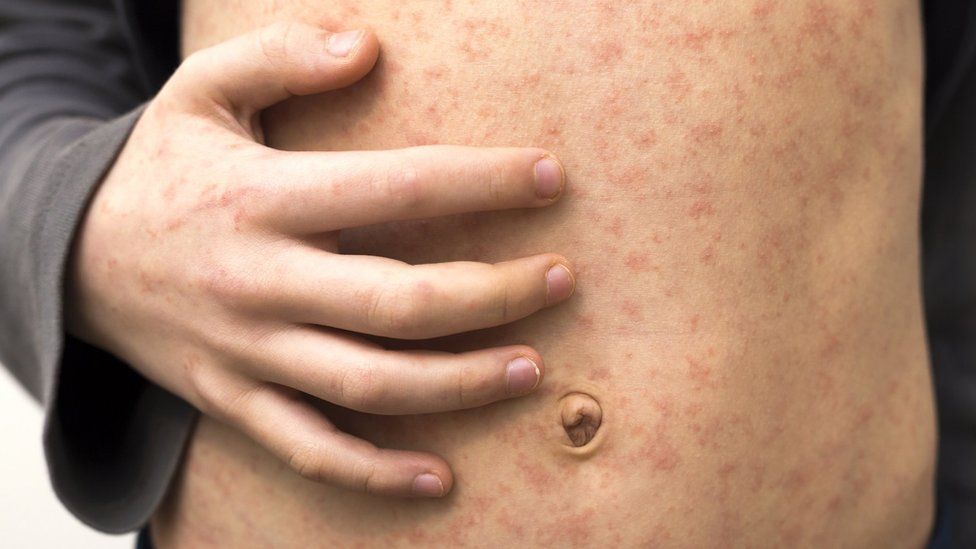
Published48 minutes agoShareclose panelShare pageCopy linkAbout sharingImage source, Getty ImagesA measles outbreak has been declared after two new cases were recorded in south-east Wales.Public Health Wales said there had been four confirmed cases in total, all of whom were children “in the Gwent area”.The cases were linked after one of the four was in the children’s emergency assessment unit at The Grange University Hospital in Cwmbran, Torfaen, on 21 March, the agency said.The children were receiving appropriate care and contacts had been identified.”Measles is a highly infectious disease and cases have been rising across the UK and Europe in recent months, so this development is not unexpected,” Beverley Griggs, consultant in health protection for PHW said.Children who visited hospital traced over measles Measles fear as parents urged to vaccinate childrenThe health organisation said if any contacts of the sick children were not immunised, it would request withdrawal from nursery, education or other high-risk settings. “This is a routine public health action to help prevent further cases of measles in those who are most at risk,” Ms Griggs said in a statement.”If your child has a fever and a rash, it is really important that you telephone before arrival, or immediately notify staff on arrival at your GP surgery or other healthcare setting, so they can be promptly isolated and avoid any further transmission.”Measles can be prevented by the MMR vaccine and PHW urged parents and guardians to check the vaccine status of their child by checking their red book or visiting their health board’s website.More on this storyMeasles fear as parents urged to vaccinate childrenPublished5 FebruaryMeasles outbreak prompts MMR vaccination pleaPublished1 November 2023Rise in UK measles cases causing concernPublished4 May 2023

Read more →